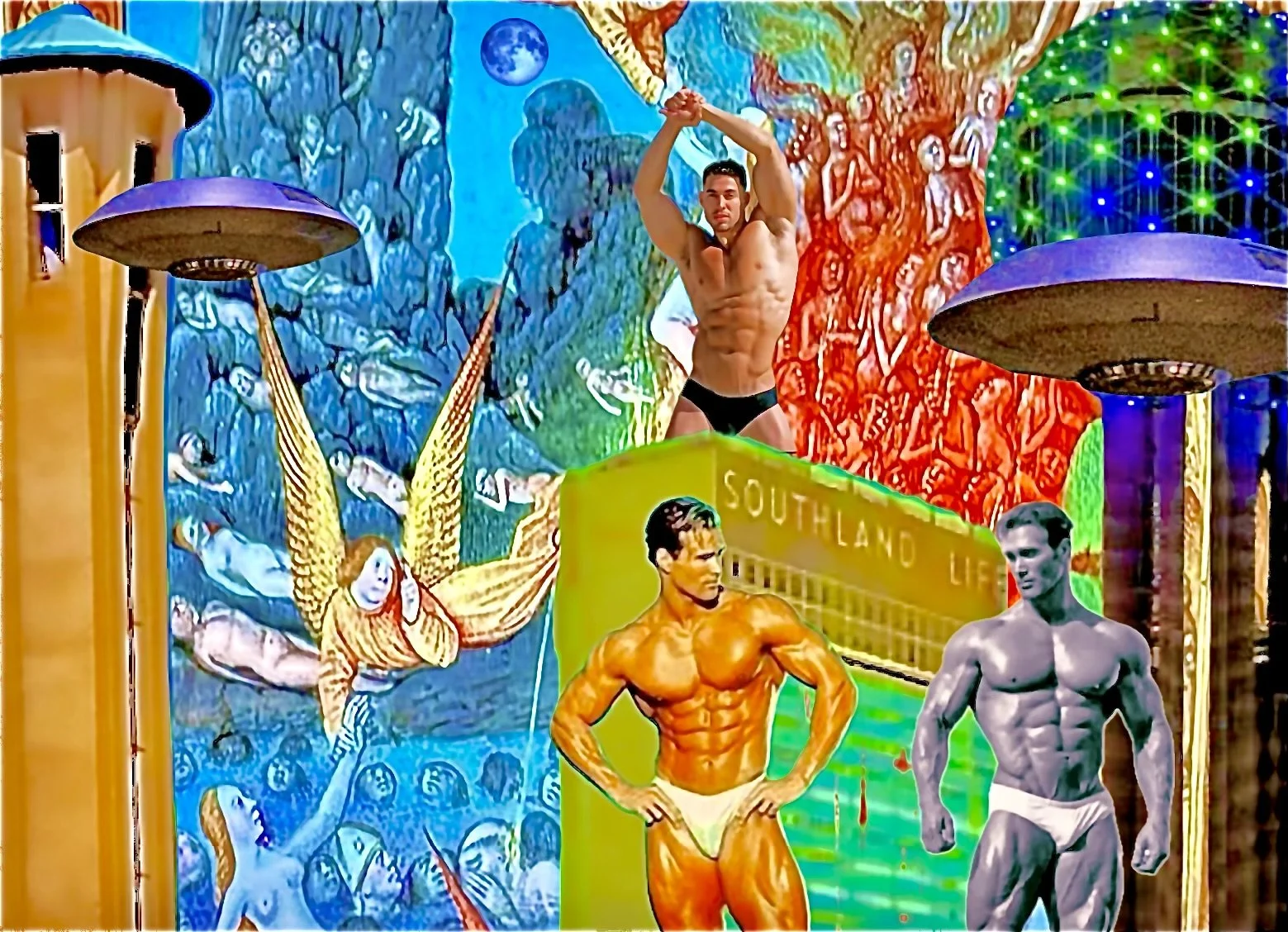
Ready or Not

June 1, 2026 — Pride arrives. This year it comes under the most anti-LGBTQ+ legislation in American history — more than 850 anti-LGBTQ+ bills filed in 2025 alone, executive orders banning transgender people from military service, eliminating LGBTQ+ inclusive curricula in schools, moving to restrict the HIV medications keeping people alive. The message from the dominant culture is familiar. It has been delivered before.

June 6, 1889 — Seattle rebuilds after a catastrophic fire above its original footprint, creating a maze of underground tunnels beneath what is now Pioneer Square. Seattle in the late 1800s was a booming timber and logging town filled with transient male workers. Women were scarce. Men lived together in camps, worked together, depended on each other for survival. Male-to-male relationships formed — for protection, for resources, for companionship, and for love. The camps largely tolerated them as a matter of practical necessity.

Seattle Notes:

—The underground spaces of Pioneer Square became some of the first queer safe havens on the West Coast.

—The Double Header bar has been operating there since 1934 — the oldest continuously operating gay bar in the United States.

—The Casino, operating from 1930 to 1946, was one of the few places on the entire West Coast that permitted same-sex dancing.

—The Garden of Allah, frequented by both gay men and lesbians through the 1940s and 1950s, featured female impersonators and vaudeville acts.

Gay culture did not arrive in Seattle. It was there before the founding.

September 25, 1968 — ABC airs Here Come the Brides, two seasons set in the 1870s Seattle logging frontier. Three brothers, a mountain full of timber, a camp full of lonely men, and a scheme to import one hundred marriageable women from Massachusetts to keep the logging operation going. The show was beloved. It was also something more than it appeared. Bobby Sherman, who played the youngest Bolt brother and became a teenage idol, was said to have been in a relationship with Sal Mineo. David Soul, who played the brooding middle brother, went on to play the gay-coded Detective Hutch in Starsky & Hutch — a partnership so openly affectionate that producer Aaron Spelling called it “TV’s first heterosexual love affair.” A logging camp full of desperate men needing attention, for gay audiences watching in 1968, was indeed a rainbow moment fully understood.

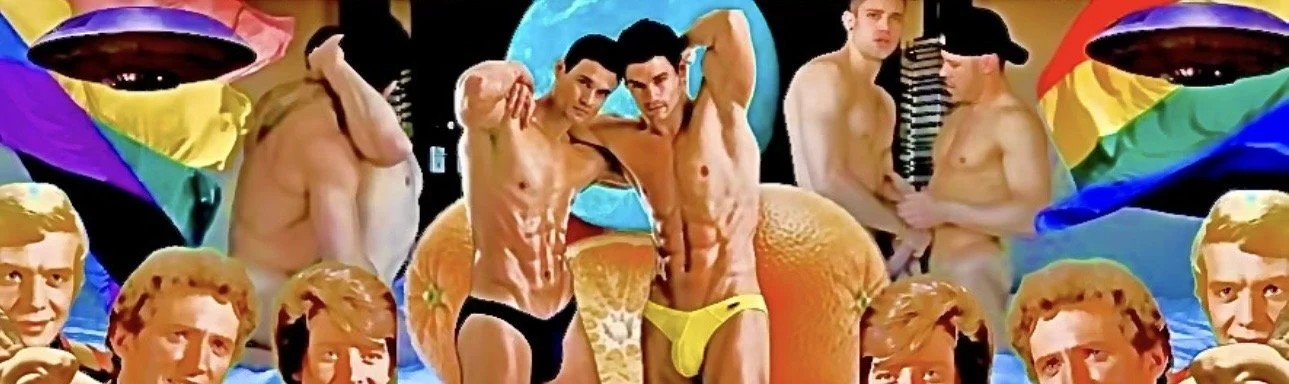
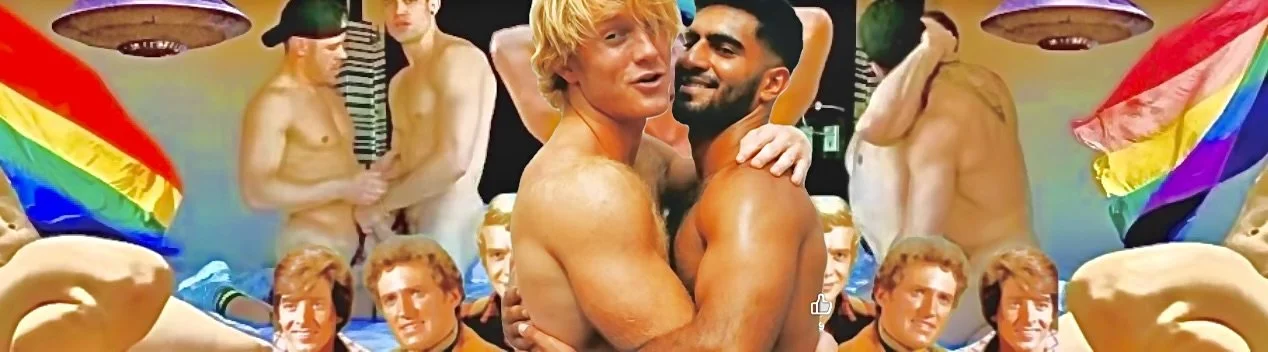
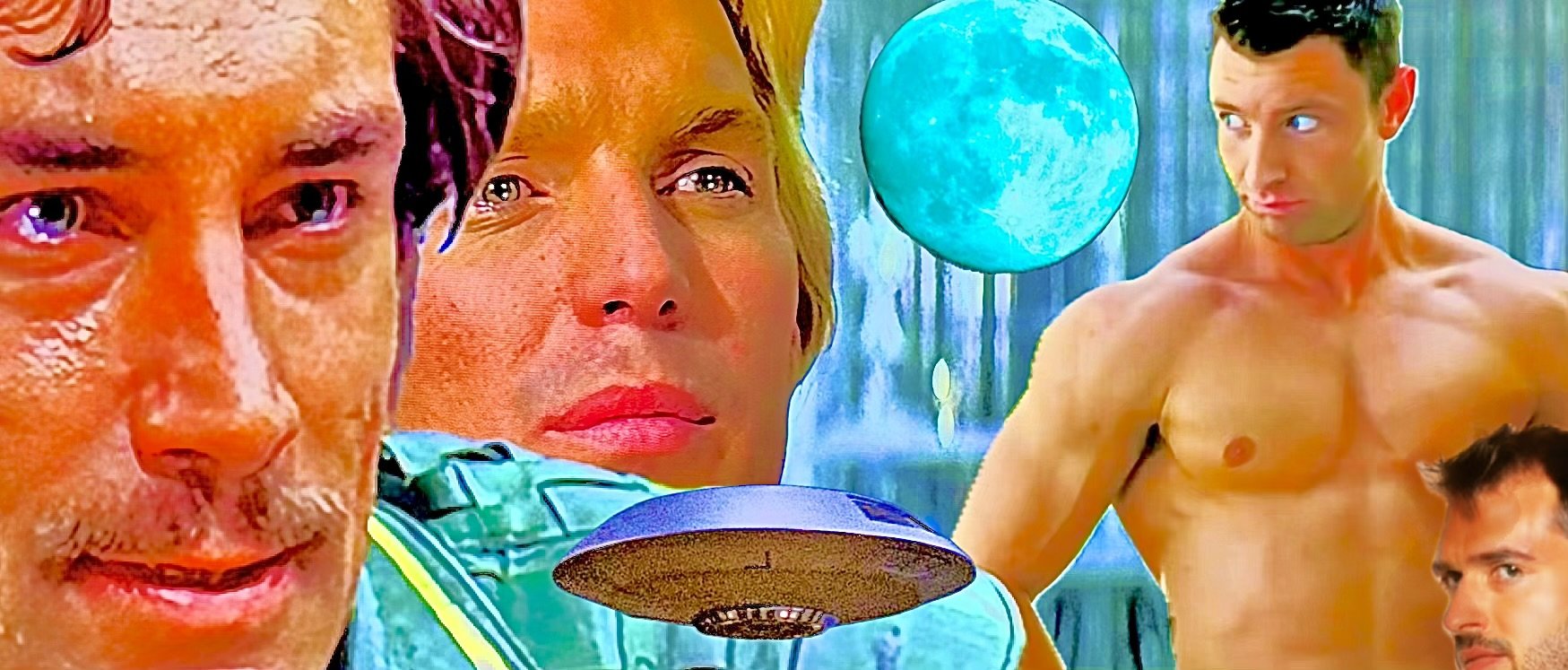
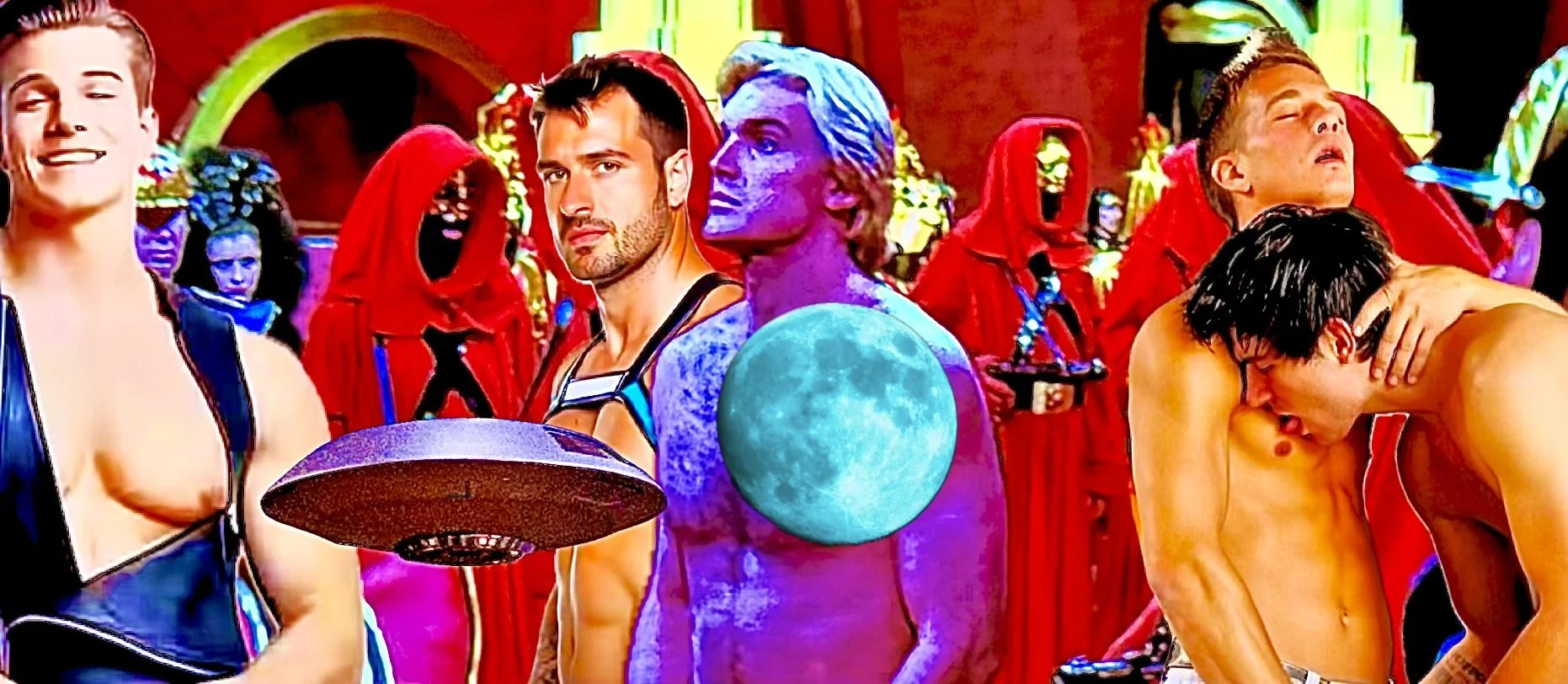
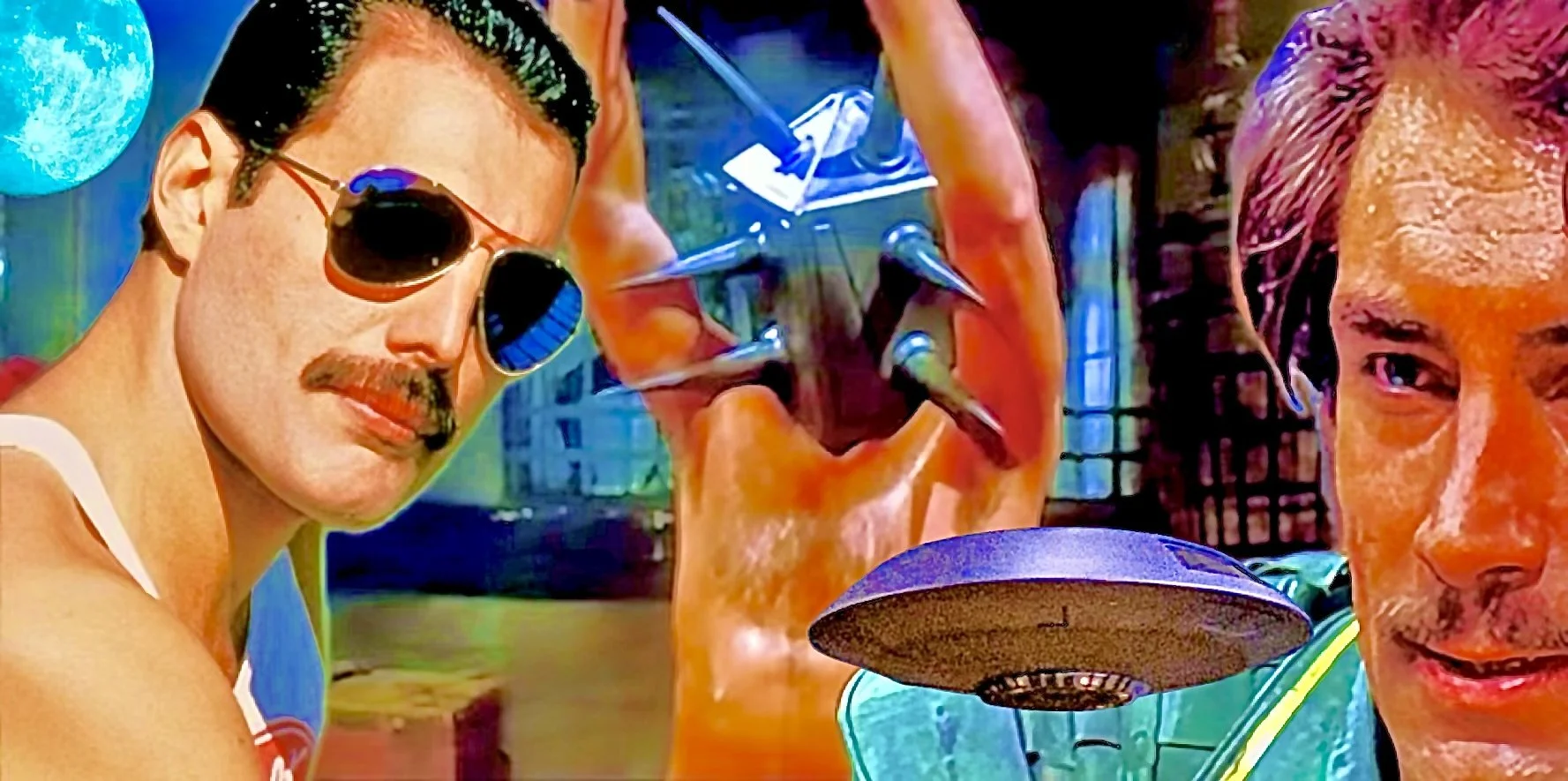
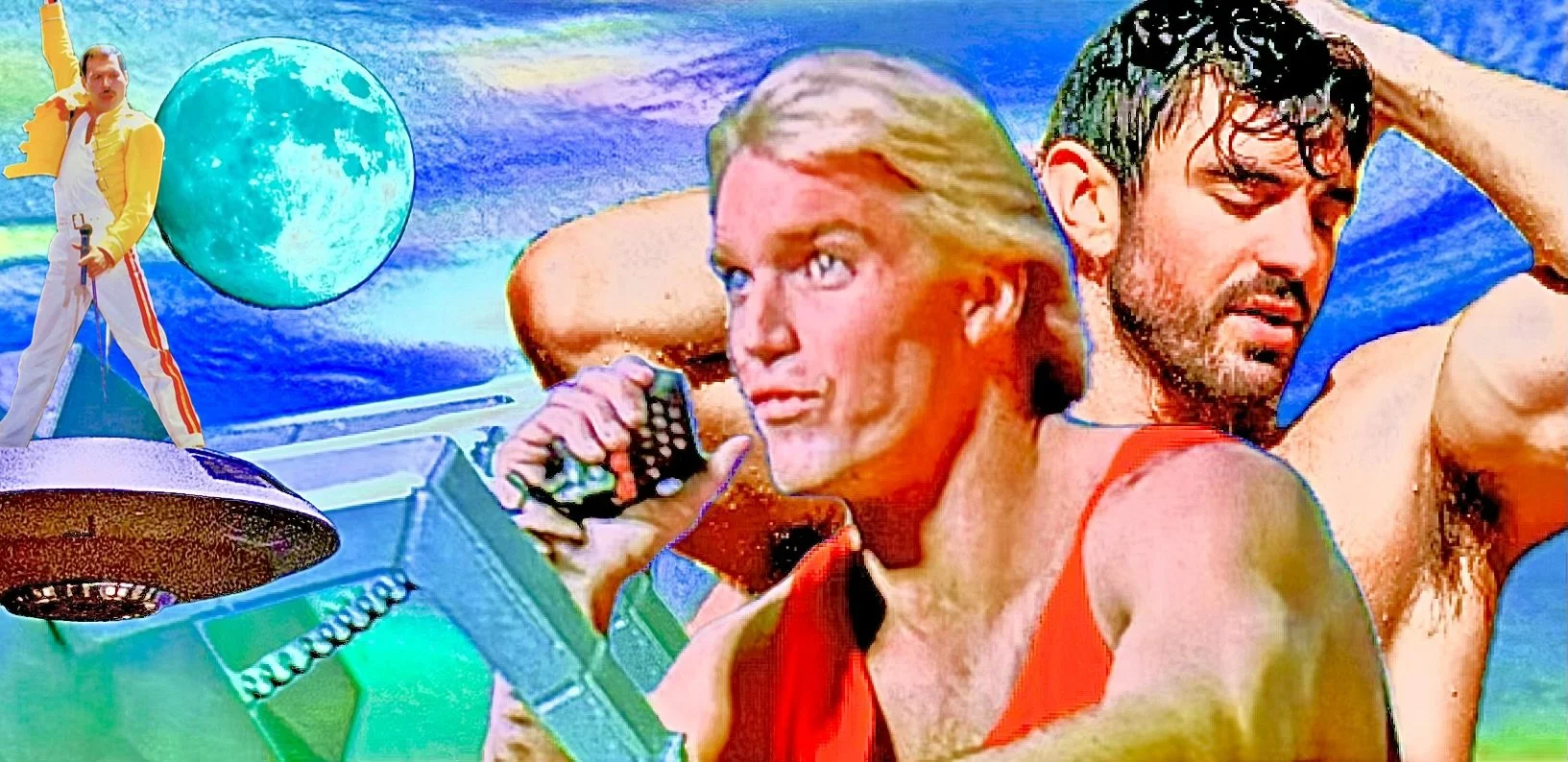
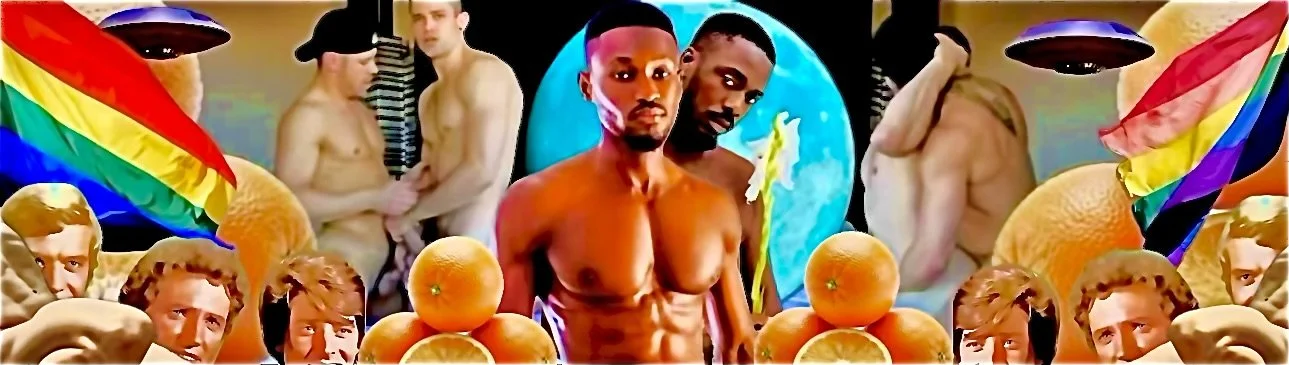
May 29, 2026 — The Orange Suite responds to the avalanche of current anti gay legislation with four digital collages celebrating a fulsome array of gay male love and identity, each panel distinct, the architecture constant. The suite is dedicated to every man who built this country while hiding who he was. He deserved better. He always did. — Behan

The Throuple

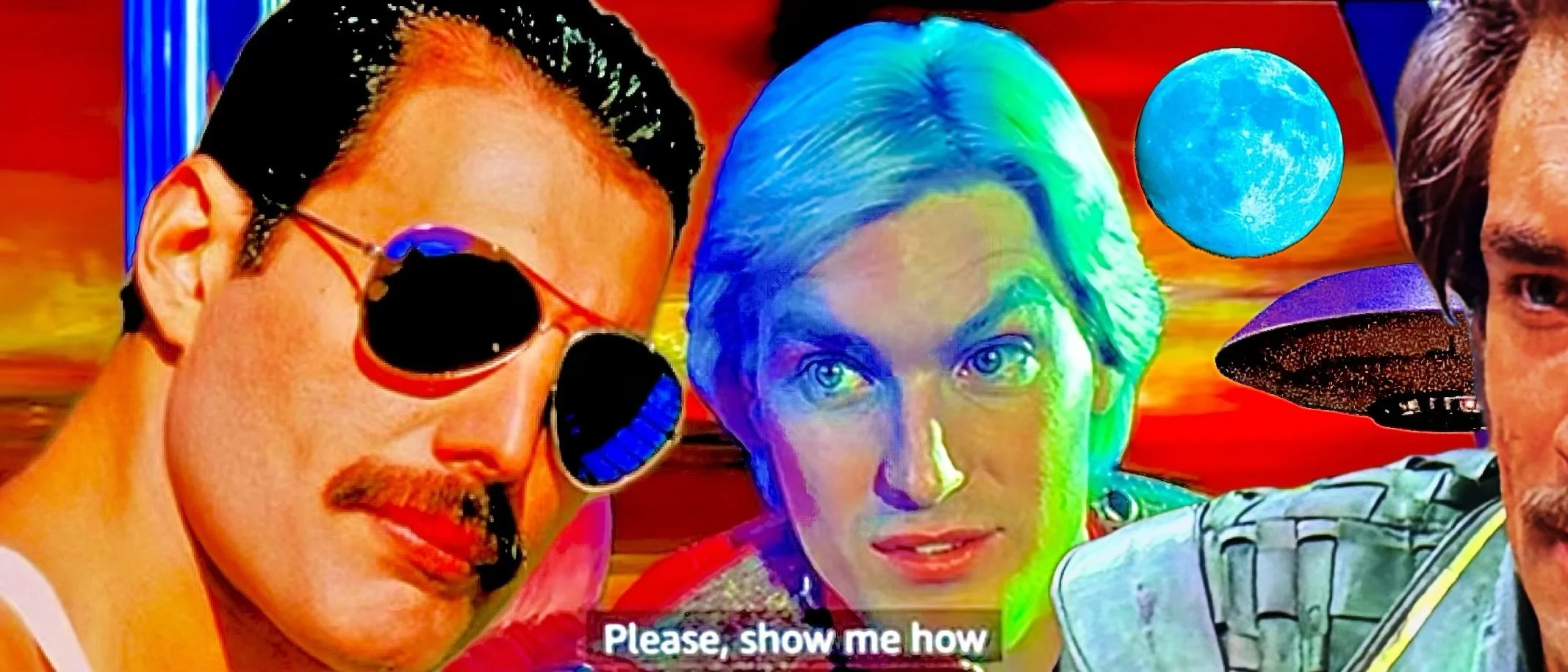
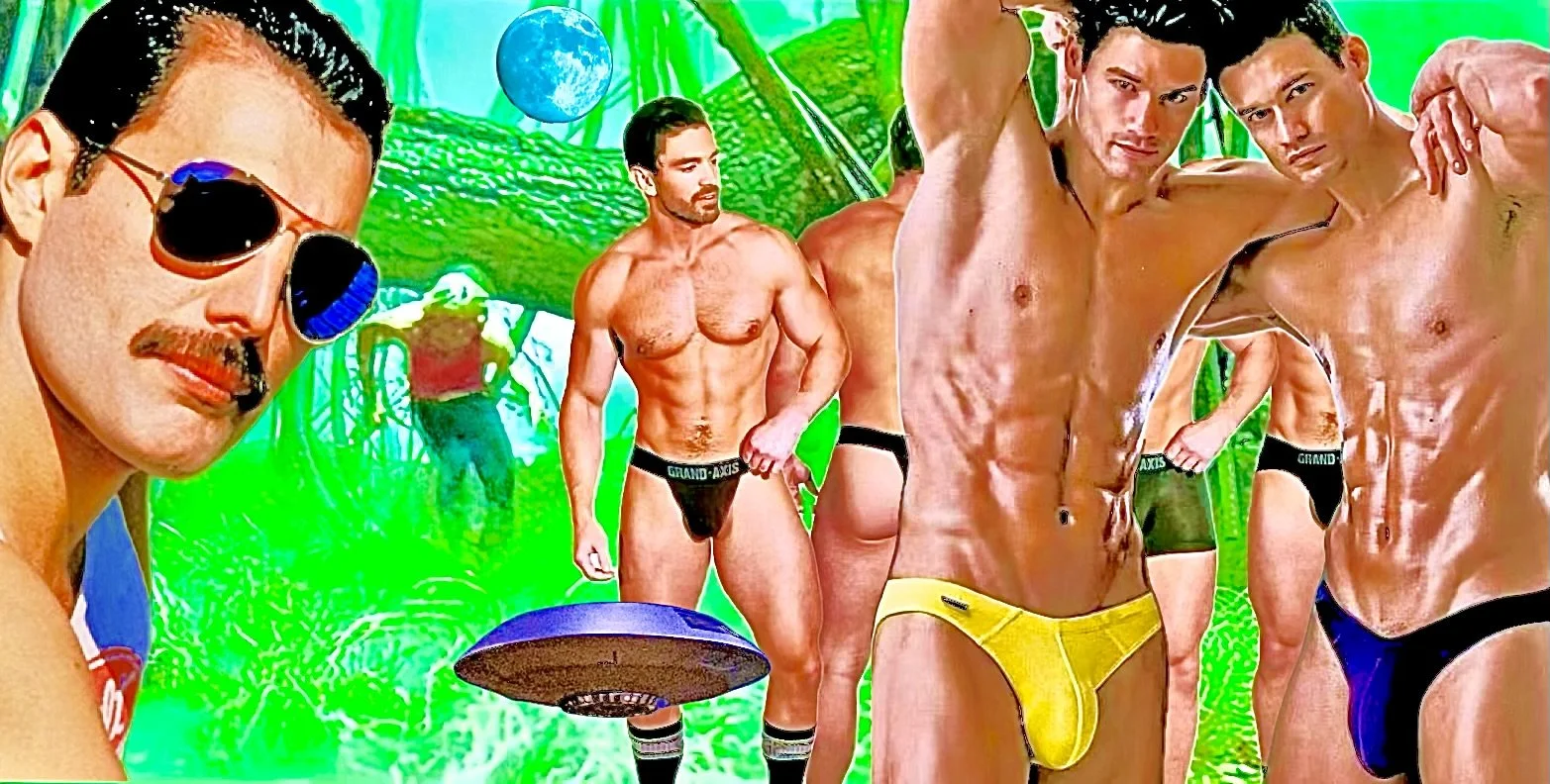
Freddie, Sam, and Timothy Were the 1980s’ Hottest Throuple Digital Photocollage series

In 1505 AD, Pope Paul IV ordered fig leaves and loincloths painted over Michelangelo’s nudes in the Last Judgment — because the Church knew exactly where the threat lived.

In 1971 AD, the makers of Flesh Gordon surrendered their hardcore footage to the Los Angeles Police Department’s Vice Squad. The police came. They took the film and destroyed it.

In 1980 AD, Dino De Laurentiis remade the same film with all the camp, leather, and dramatic excess intact — and none of the sex. He kept the body. He removed the desire.

And in 2026 AD, queer artists still have to decide what Facebook will permit or reject.

Five centuries of the same hand reaching for the same thing — the body, the desire, the image that says this exists and it is not shameful.

Flesh Gordon was explicit, raucous, X-rated — straight sex, gay sex, the whole salami. Made with genuine craft and genuine audacity — and reduced to a charge of pandering.

The band hired to score every frame of Flash Gordon was led by the singer Freddie Mercury. He was the only gay person known to be involved with the film. He was also an immigrant and a person of color. Being in the closet was a strategy of survival, not a choice to make. And yet there he is. Singing. Over every frame of the gayest straight film ever made in a band named Queen.

Flash Gordon can be considered the Wizard of Oz of its time, drained of color until the rocket launches, with Mongo arriving in full operatic excess. Dorothy becomes herself in Oz. Flash becomes himself on Mongo. Likewise Freddie Mercury becomes himself on the stage, the stage being his Mongo and his Oz.

Dino De Laurentiis did not know who Queen was when they were recommended for the soundtrack. He reportedly cried: “But who are the queens?” He meant it as a question. Freddie Mercury understood it as an answer.

Sam J. Jones, who played Flash, had five years earlier appeared as a full-frontal nude centerfold in Playgirl magazine. Whether he understood his primary audience is unrecorded.

Timothy Dalton played Prince Barin — brooding, green-clad ruler of Arboria, a man who fights Flash with a bullwhip on a tilting platform above a pit of spikes. He played it straight. He had no idea it was reading otherwise. That is, arguably, the hottest thing about it.

And over all of it — the leather, the tights, the tilting platform, the men with wings, the planet called Mongo — Freddie Mercury’s golden voice. The most hidden man in the room. The only gay man in the production. Singing.

In Behan’s collages, the love affair that Flash Gordon could not put on screen is finally made visible. The colors are pushed to their operatic limit — Mongo-bright, excessive, unrepentant. The subtext of sex becomes text. The throuple is named, the film at long last becoming its full self.

What was destroyed in 1971 is restored. What De Laurentiis neutered is returned to full life. What the algorithm flags as not ready for prime time, the archive preserves in full living color.

Perfect Fit

Perfect Fit | Digital Photo Collage | 2026 | The Closet Series — Behan

Spotted in the Wild:

The Closeted, Preening Gay Peacock. Jeremy has Married Sally, and they are Looking for a New (Old) Home to Purchase.

Their Agent is Jax, Jeremy’s Best Friend, Best Man, and Best Camping Bud. Jax is Bringing Oranges to Remind Jeremy of their Vacation in Florida to Tour Orange Farms.

Sally Thinks Jax is Super Sweet and Doesn’t Mind that He is Around ALL THE TIME.

The Closet offers straight women one option.

Lots of trips to Home Goods with Jeremy and Sally. Frequent camping trips with Jeremy and Jax.

The Closet fits everyone inside its walls — with room to spare.

Dark Sepia

Dark Sepia | Digital Photo Collage | 2026 | The Closet Series — Behan |

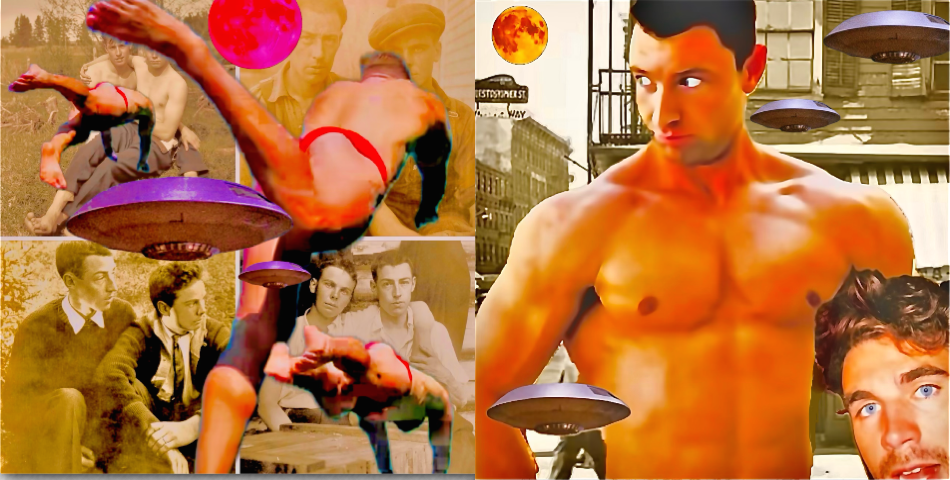
“Len” Keith and “Cub” Coates of Havelock, New Brunswick. Two WWI army vets who found each other in a small rural town and built a life together.

What are the odds?

For almost 30 years, Len pointed his camera back onto themselves. Canoeing. Hunting. Hugging.

One was forced out of town.

The other married.

The photographs survive.

The Other Man

The Other Man | Digital Photo Collage | 2026 | The Closet Series — Behan |

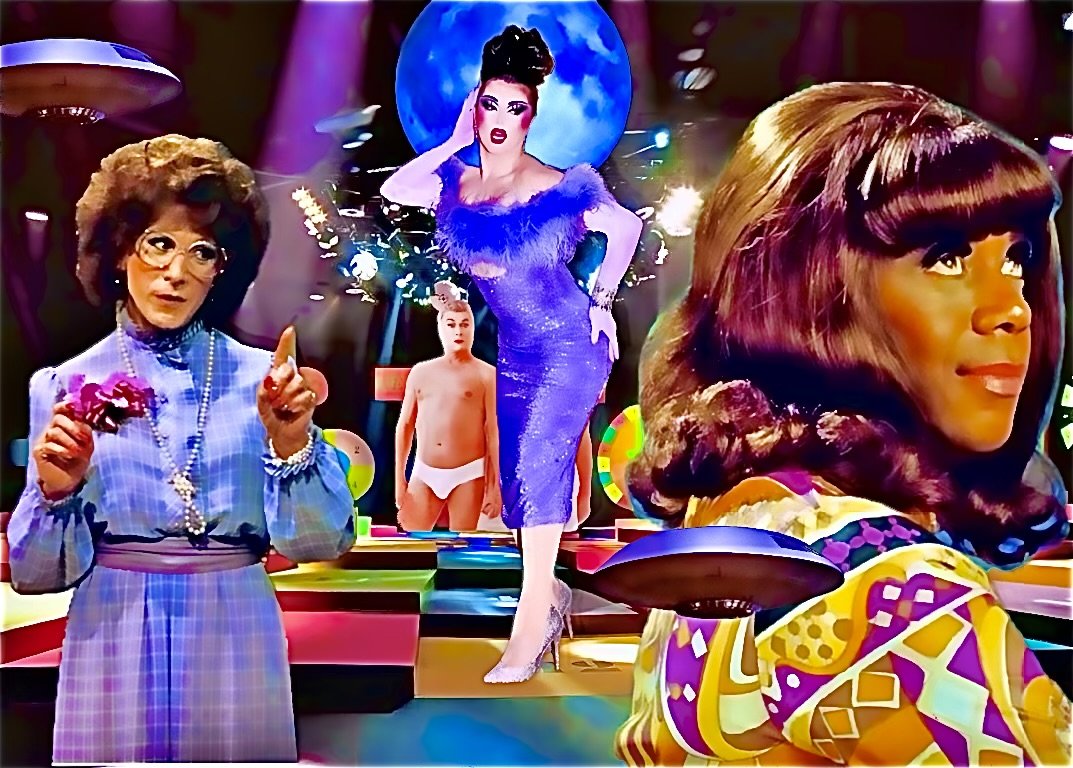
Tony did it in the nineteen fifties. Flip did it in the nineteen sixties. Dustin did it in the nineteen eighties and so many more. Careers were made with men performing as women, most often in comedic roles, to great acclaim.

So what is the beef with transgender women?

It’s as simple as stepping off a stage.

As long as men in women’s clothing are set apart and set away like specimens in a zoo, the dominant culture is free to laugh and enjoy the spectacle. But step off the stage into real life and real problems emerge.

The hypocrisy of conservative thinkers who can’t see the problem with both supporting one end and rejecting the other end of men in dresses is profound. The absurdity of the argument that somehow society is endangered when men step off the stage in a dress is tragically pathetic.

It’s way past time for some folks at long last to get a life.

Behold the Gay Man

Behold the Gay Man | Digital Photo Collage | 2026 | The Closet Series — Behan |

Behind the marble, behind the scripture, behind the press release, behind public opinion, is the man.

And that man is entirely human — gay, bi, or straight — filled with the same dreams of success, achievement, happiness, adventure, love.

As Maya Angelou said, “we are more alike, my friends, than we are unalike.”

And to quote one of the less used lines of scripture — whatever you do to the least of my brothers…

OFV Mysteries

OFVMysteries | Digital Photo Collage | 2026 | The Closet Series — Behan |

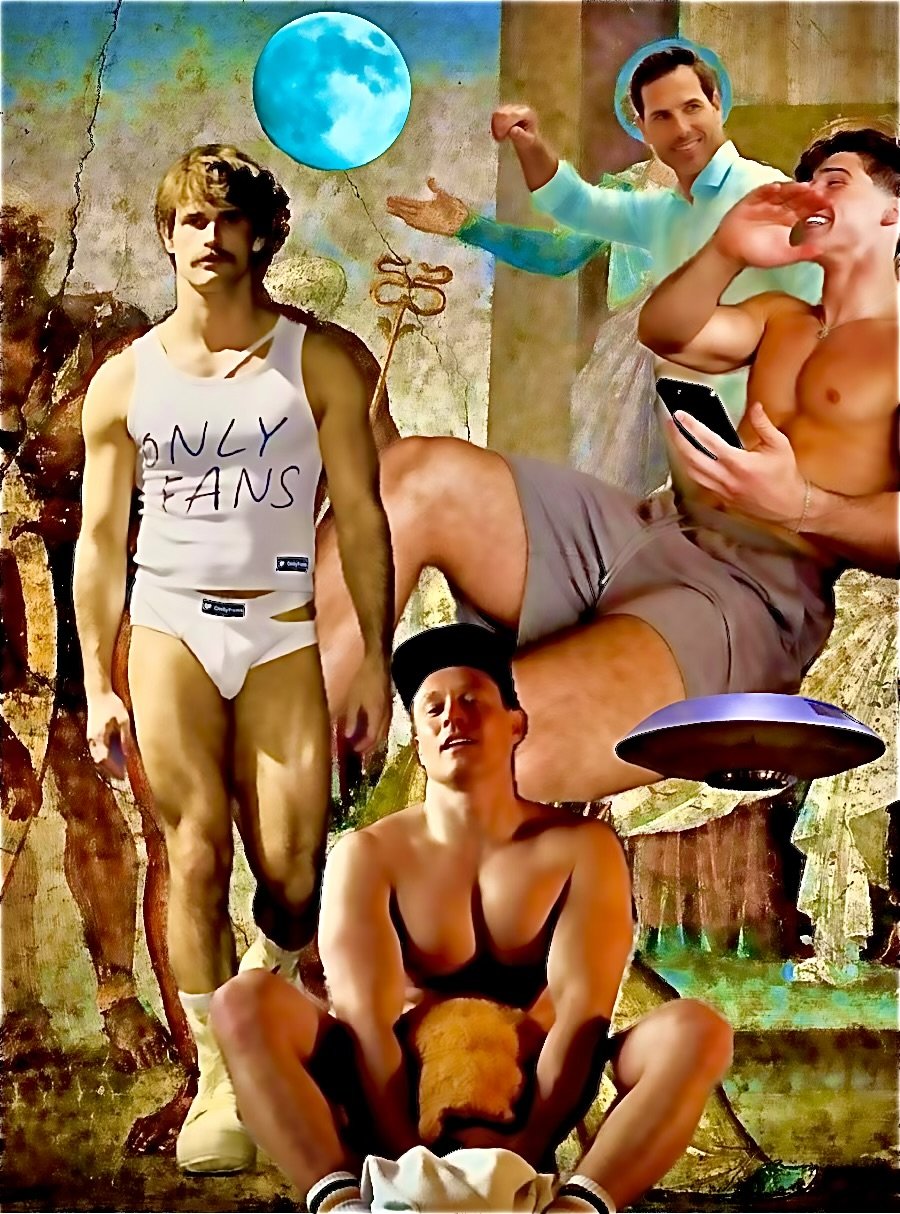
In the 70’s AD, the Villa of the Mysteries in Pompeii was about access. Who gets in. What is revealed. To whom and at what cost. The initiate earns the mystery.

In the 1970’s AD, bathhouses and bars performed a similar function for the gay initiate.

In the 2020’s AD, OnlyFans operates on the same principle but in the digital realm. Access and desire, desire and access.

The platforms change. The human need does not.

Desire has always found its room.

Sometimes We Punt

Sometimes We Punt Digital Photo Collage 2026

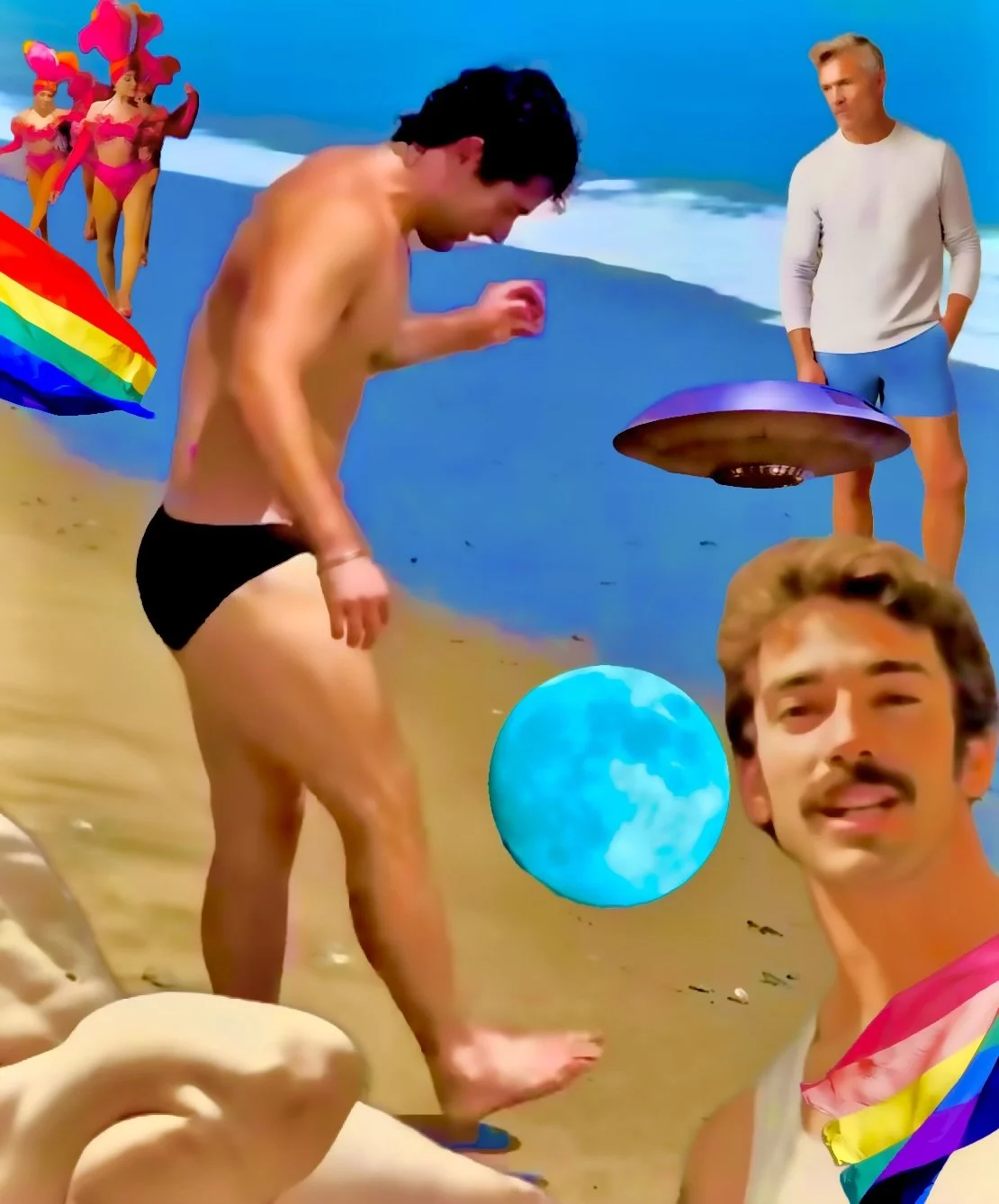
The center point of this collage is the Aquarian Moon. It’s the age of Aquarius moving into the age of… what age are we in now? I can’t remember. Whatever that age is, it’s about the changing tides of time and history and how we make advances.

And advances are almost always followed with retreats, like waves on a beach.

It is about the nature of being alive and the limited amount of control we have over what happens in our day.

The moon is being playfully kicked by the central figure as if a soccer ball. So it is about our interaction with time, nature, our place in the world, our place within histories, context, when we are and where we are, and what we have to accept, and what we can capitalize on.

That’s what this collage is about.

That’s what this post is about.

The title of the work is “Sometimes We Punt.” That is a playful acknowledgement of when sometimes you’re in a situation where you don’t have a lot of good options, you punt.

And that punt is a moment of hope.

It is about responding to life’s idiosyncrasies. It may not always be fun, but it will always be interesting.

And that’s how I see life.

I think this is my artist statement, at least for today.

On a Gay Death

As a gay man who grew up in the Catholic tradition, the idea of last things can be anxiety producing. The church has had a spotty history on the subject.

In 1347, the bubonic plague killed half of Europe in a year. Gay men and women were certainly among those lost. They always are. And the Church that might have offered comfort had already decided they were beyond it.

In 1981, AIDS hit America, and its government looked away while a community buried itself. No funding. No urgency. No grace. Gay men died without medicine that could have saved them because the dominant culture had decided they did not deserve to live. The church called it divine retribution.

And now in 2026, the current administration and conservative Christians are moving to restrict and remove the HIV medications that are keeping people alive.

There is no other word for this. It is violence. It is immoral. It is unacceptable.

The ars moriendi — the art of dying well — was the Church’s promise to its faithful. Gay men and women are still being denied it.

In the Catholic realm, there is a sacrament for marriage. There is a sacrament for holy orders. Gays are barred from both, with no sacrament for gay Catholics. That’s not Godly.