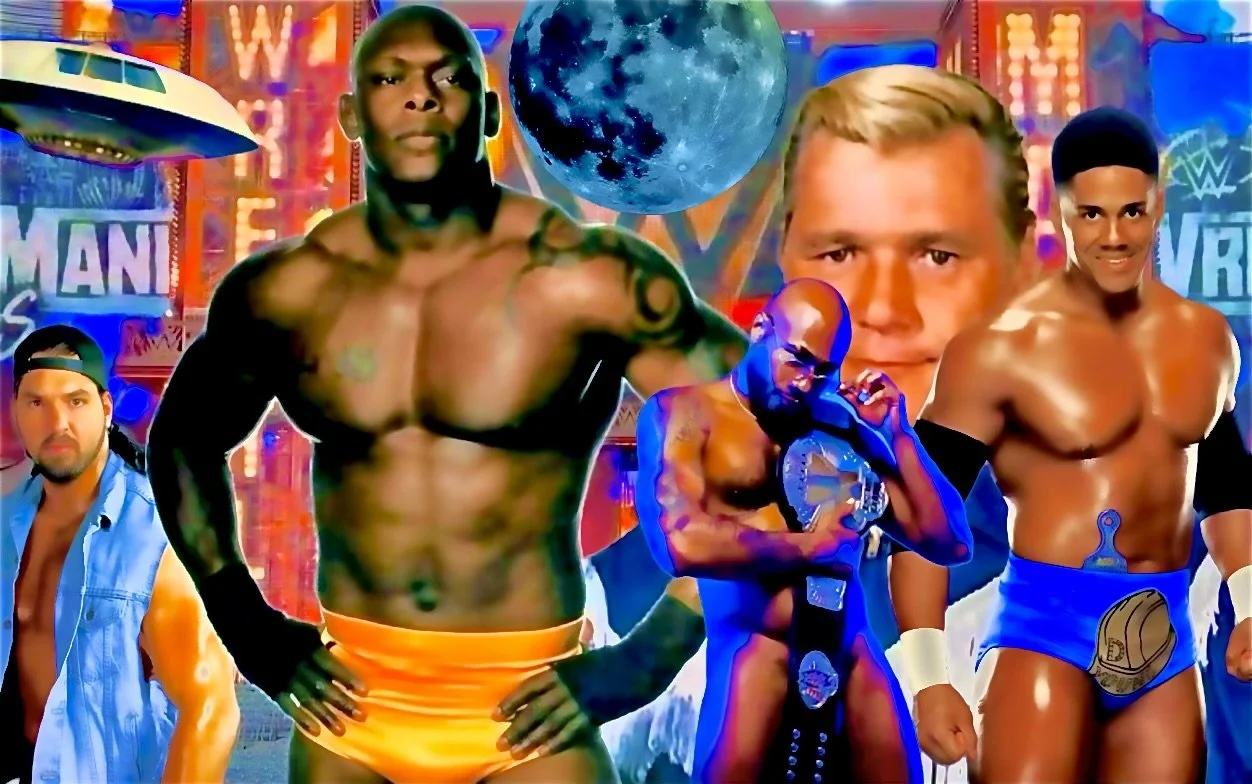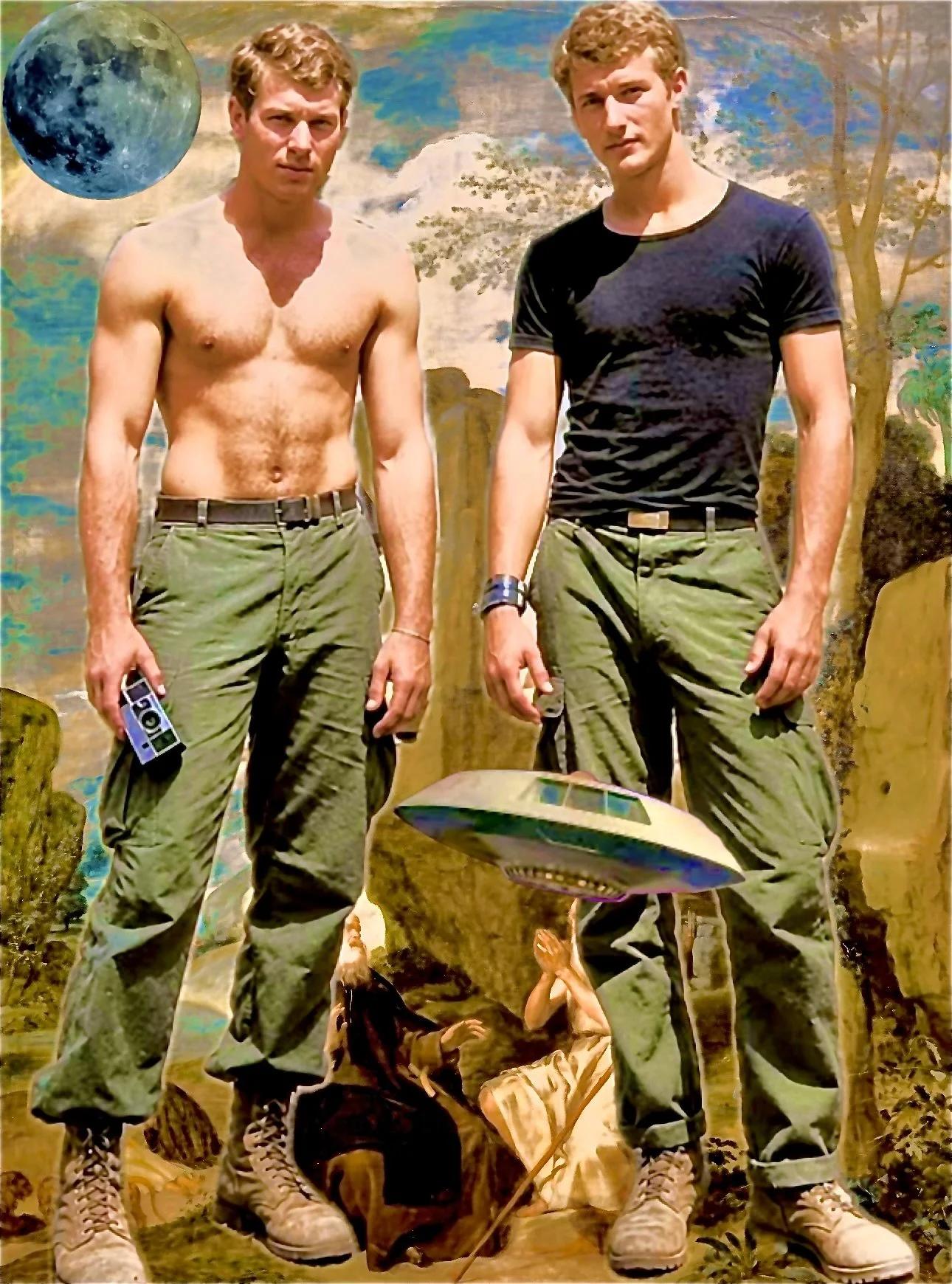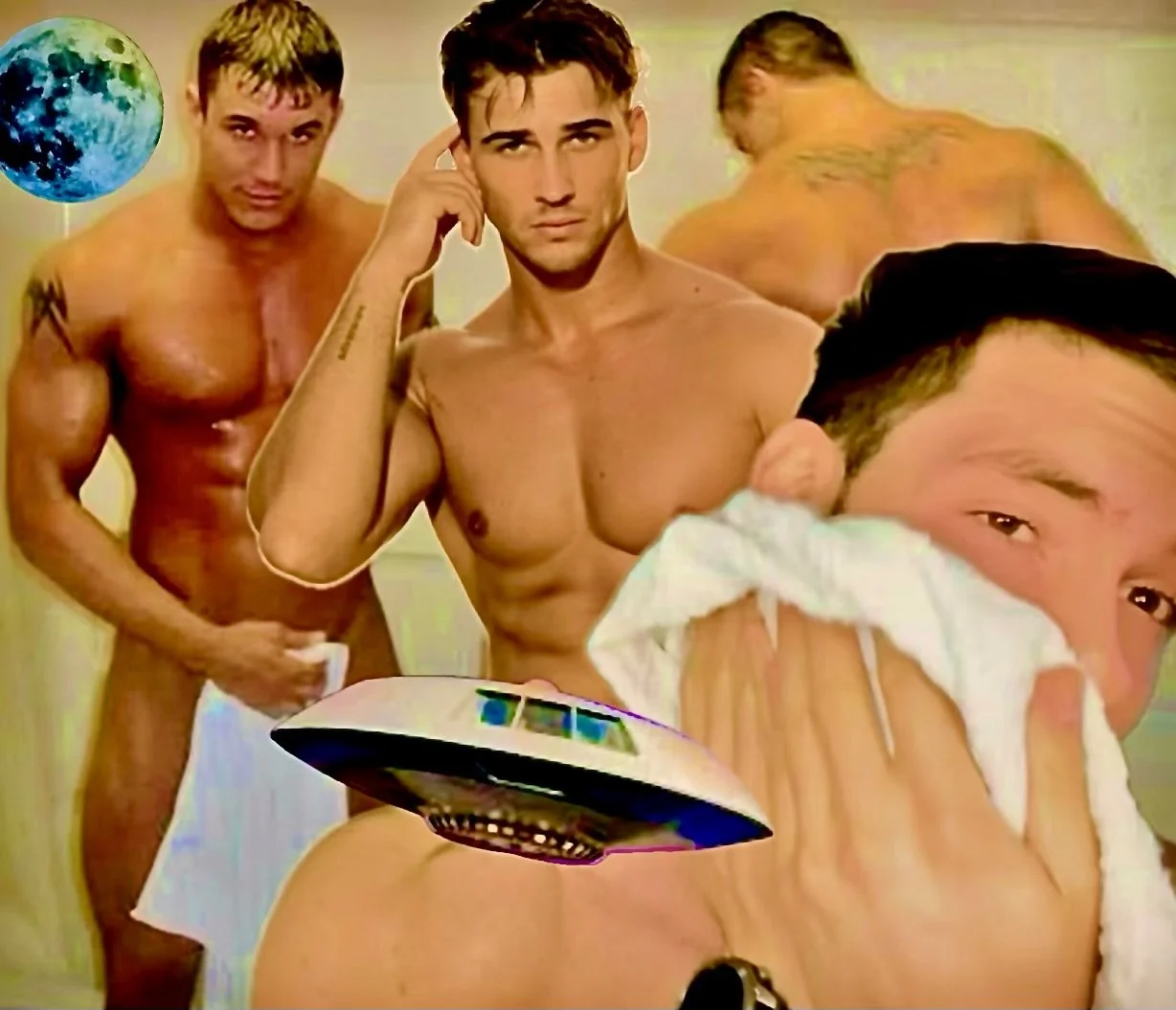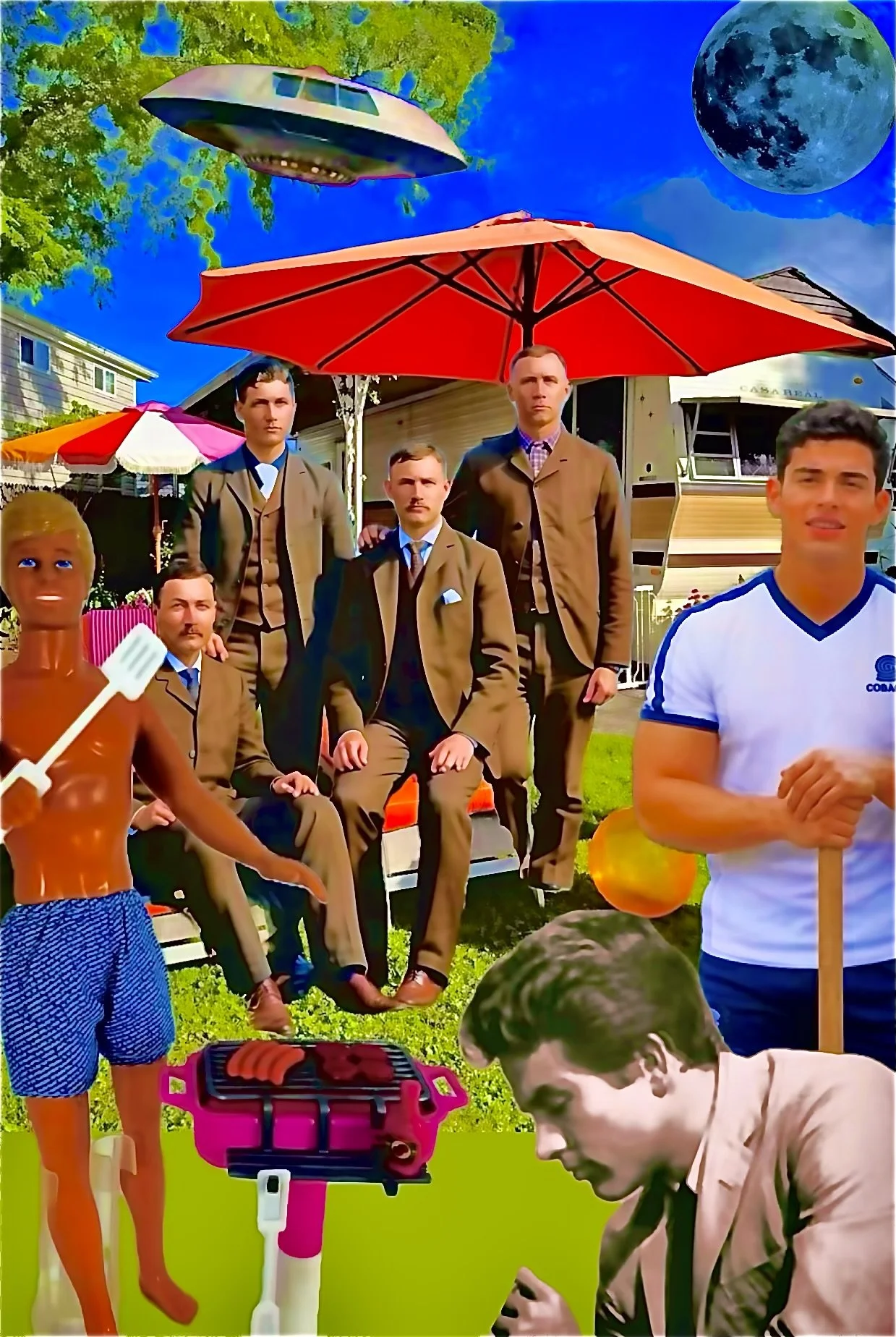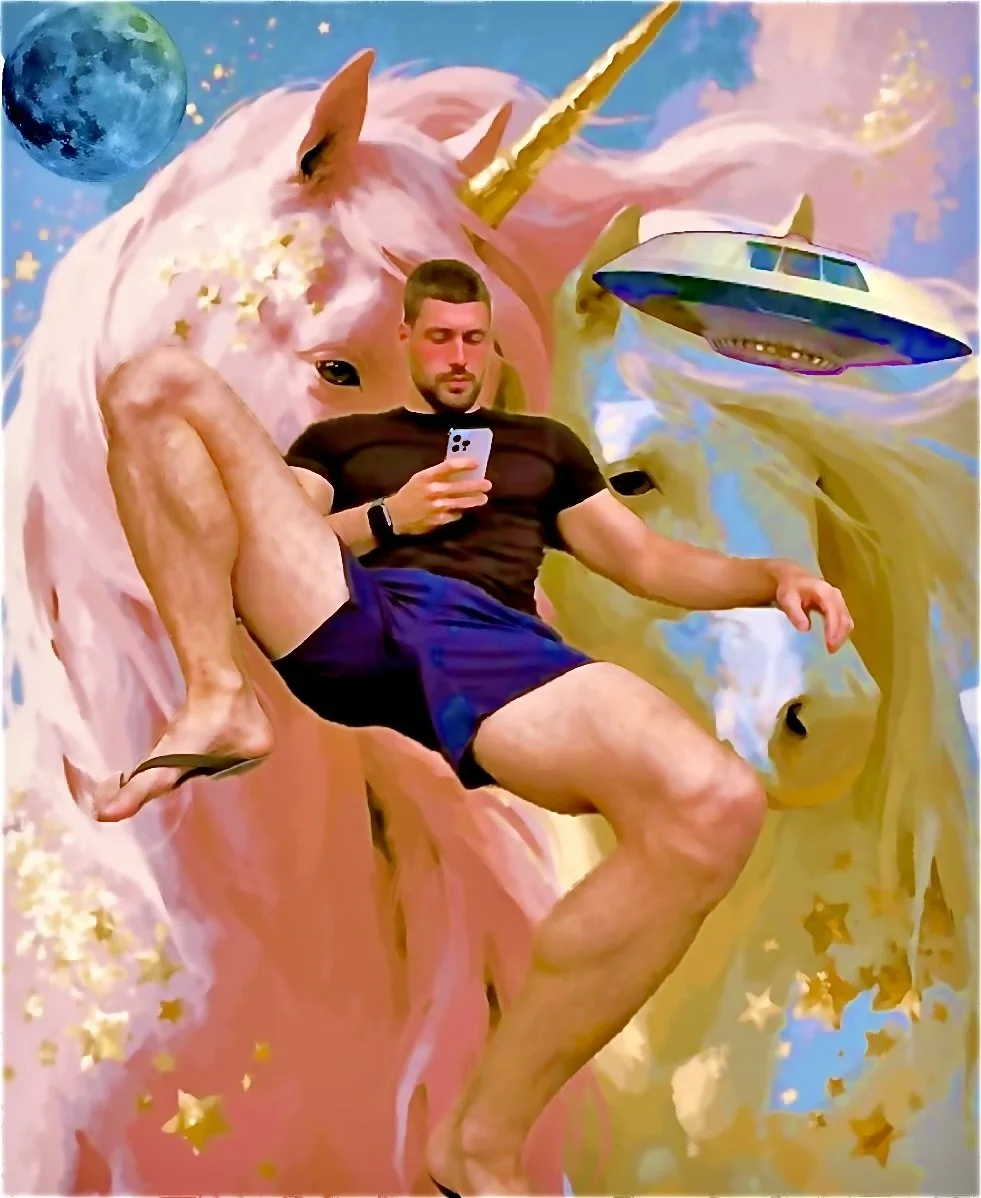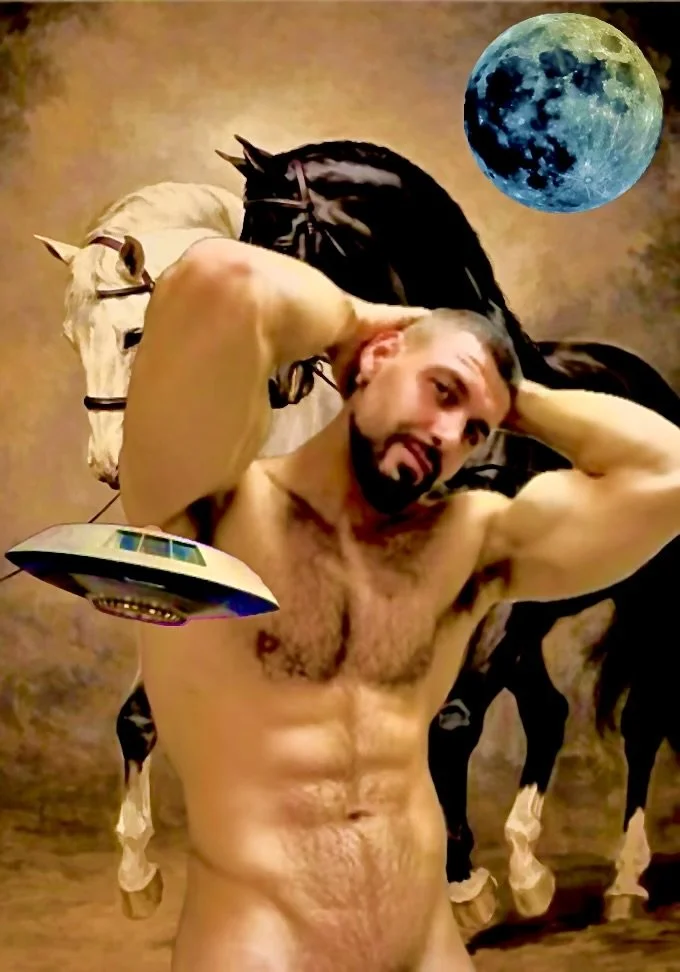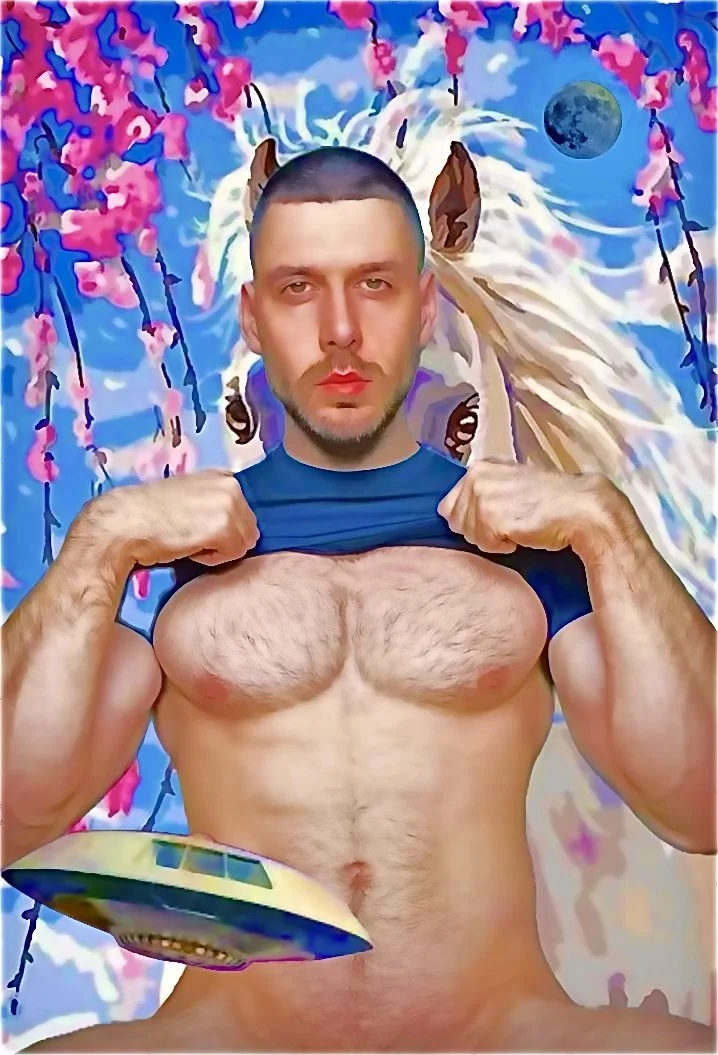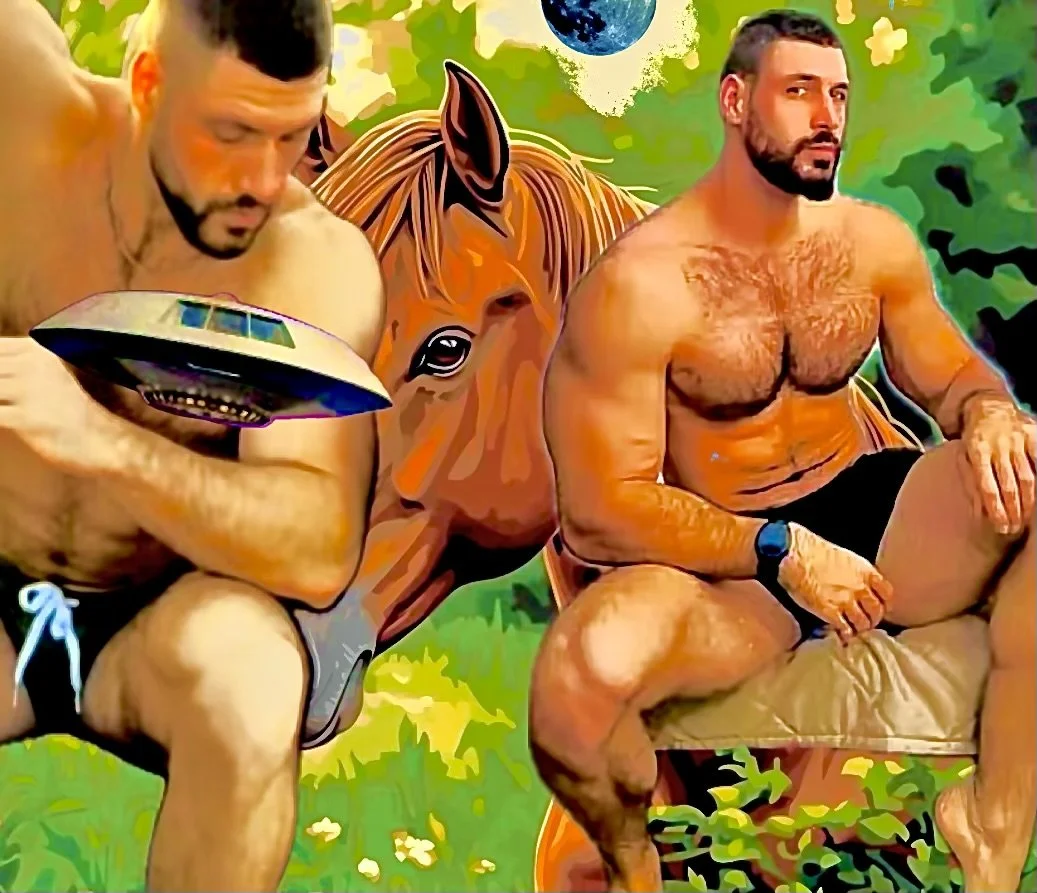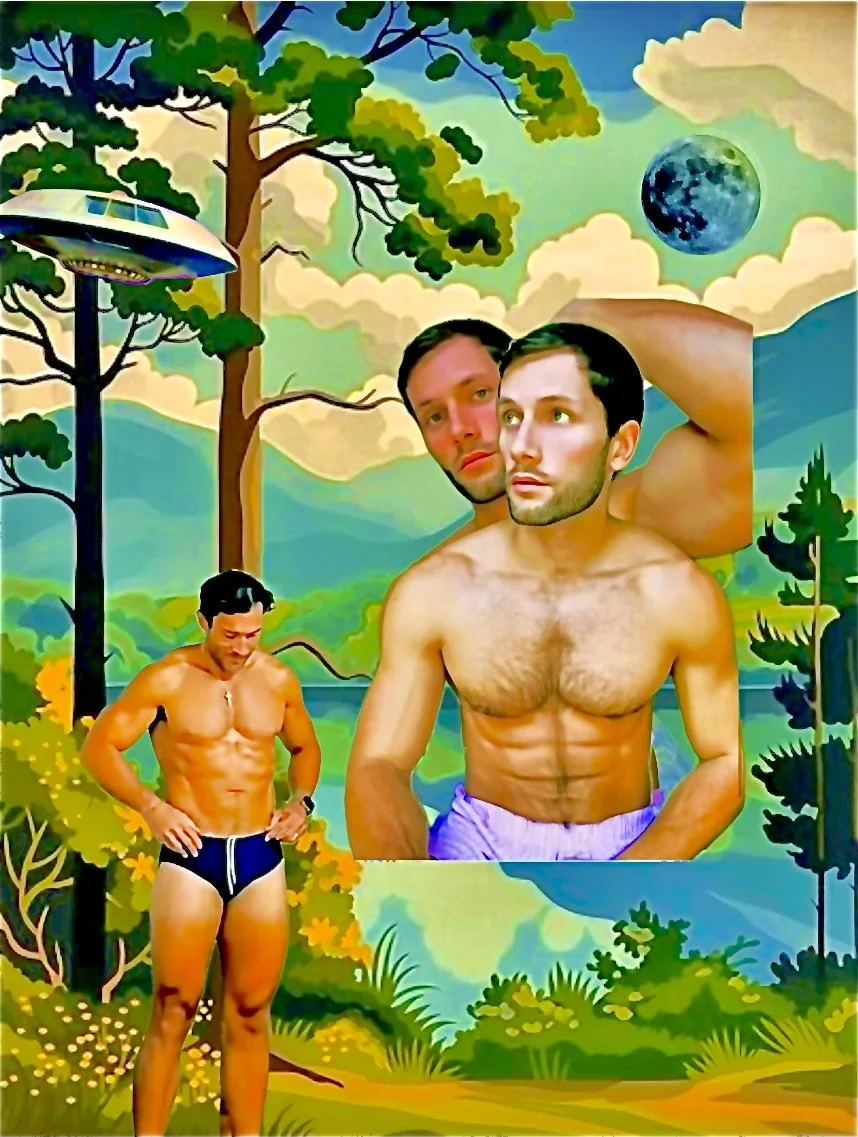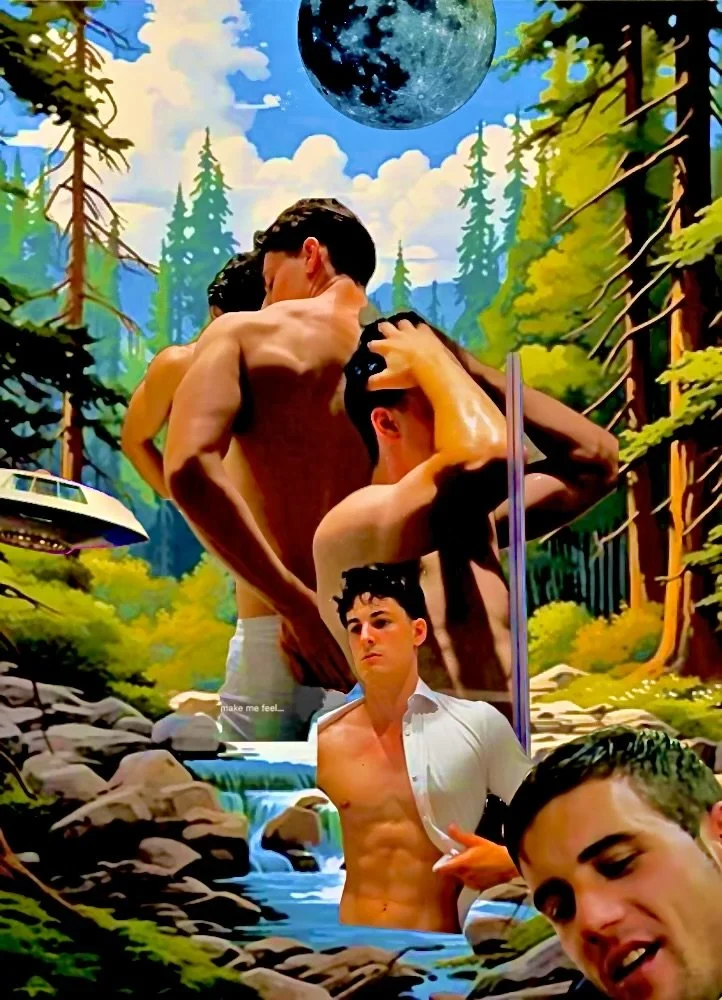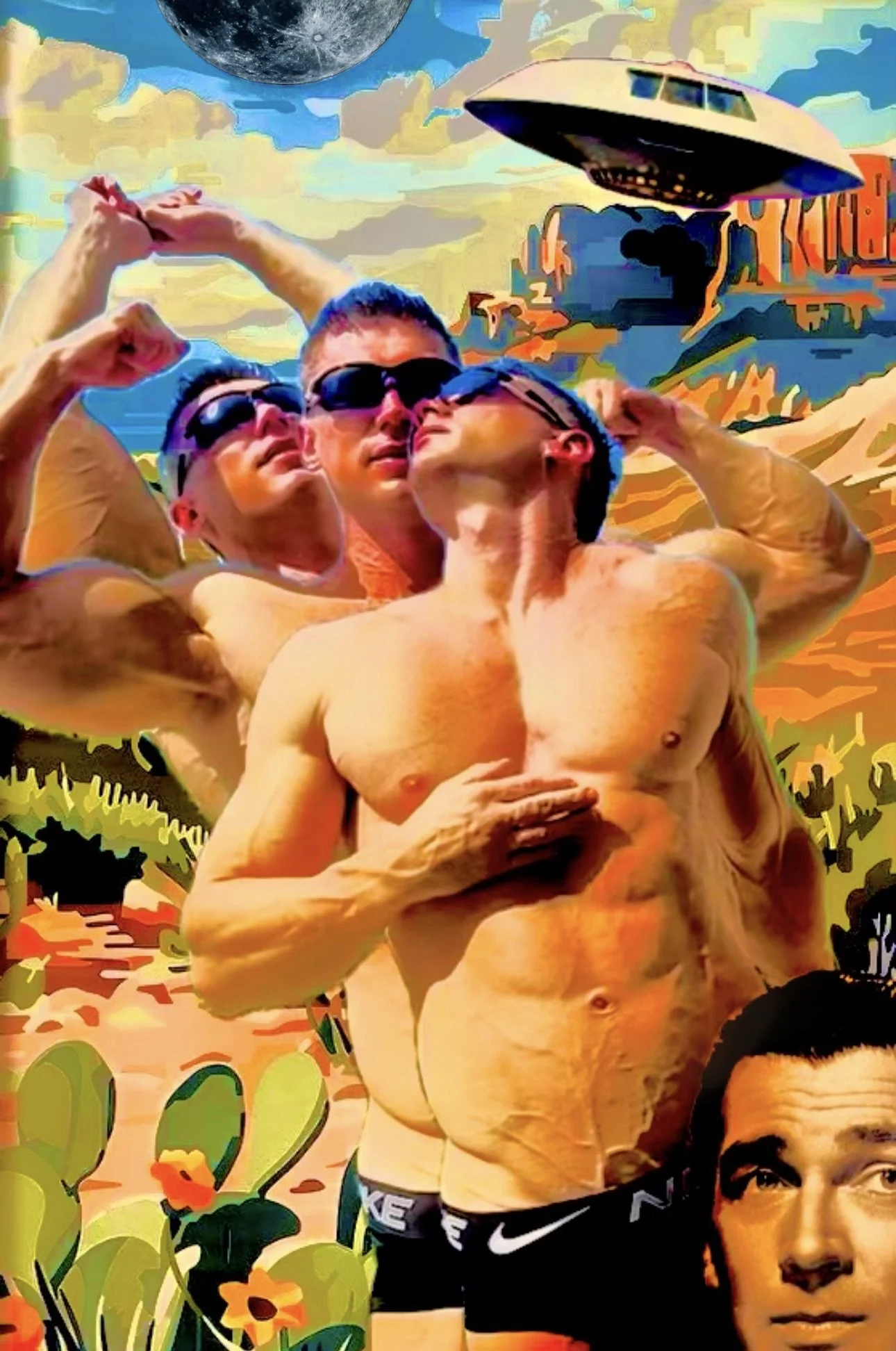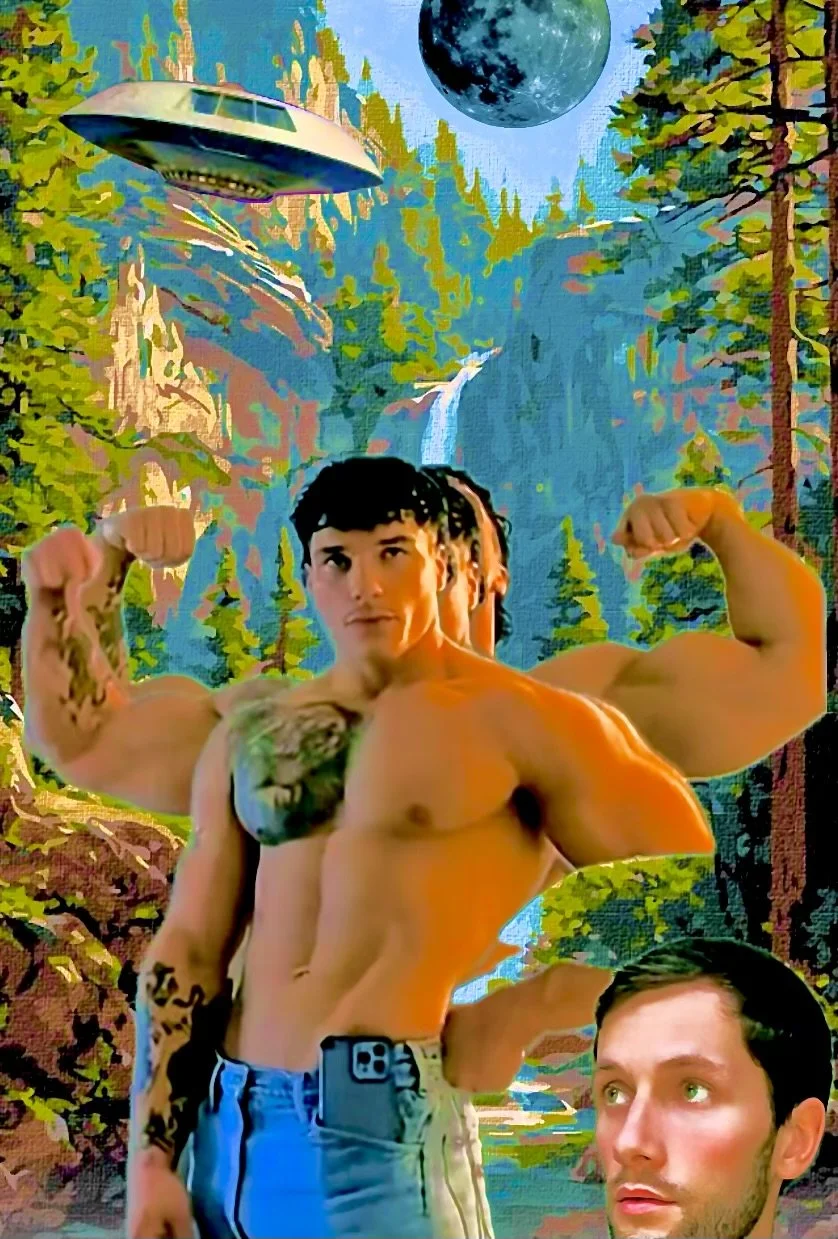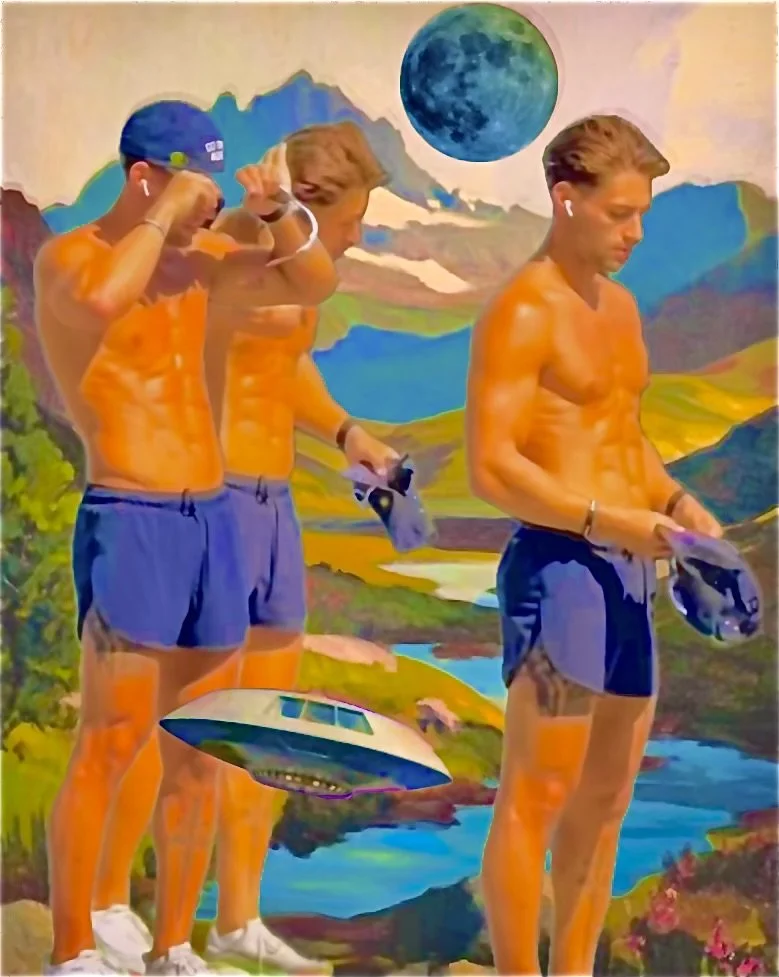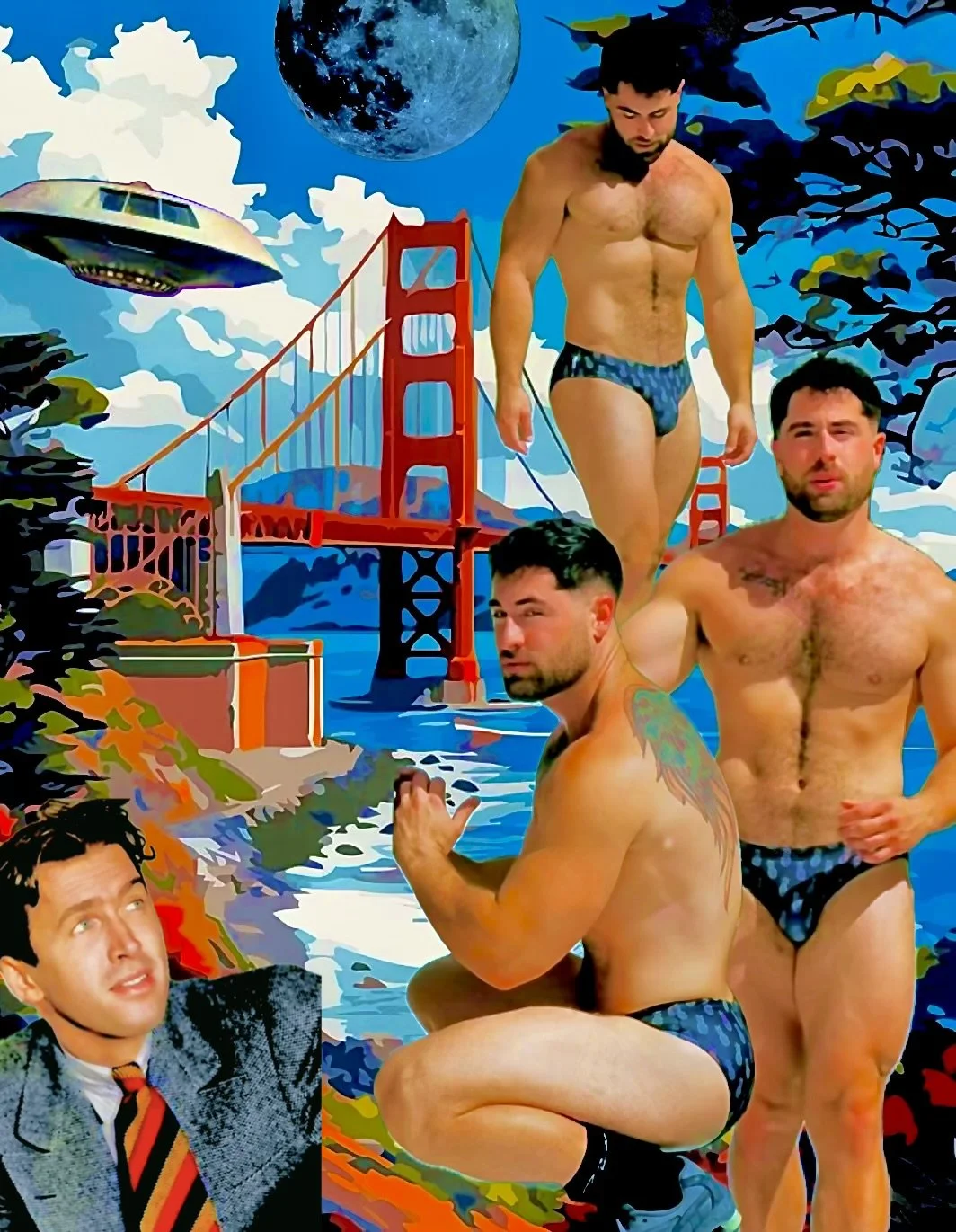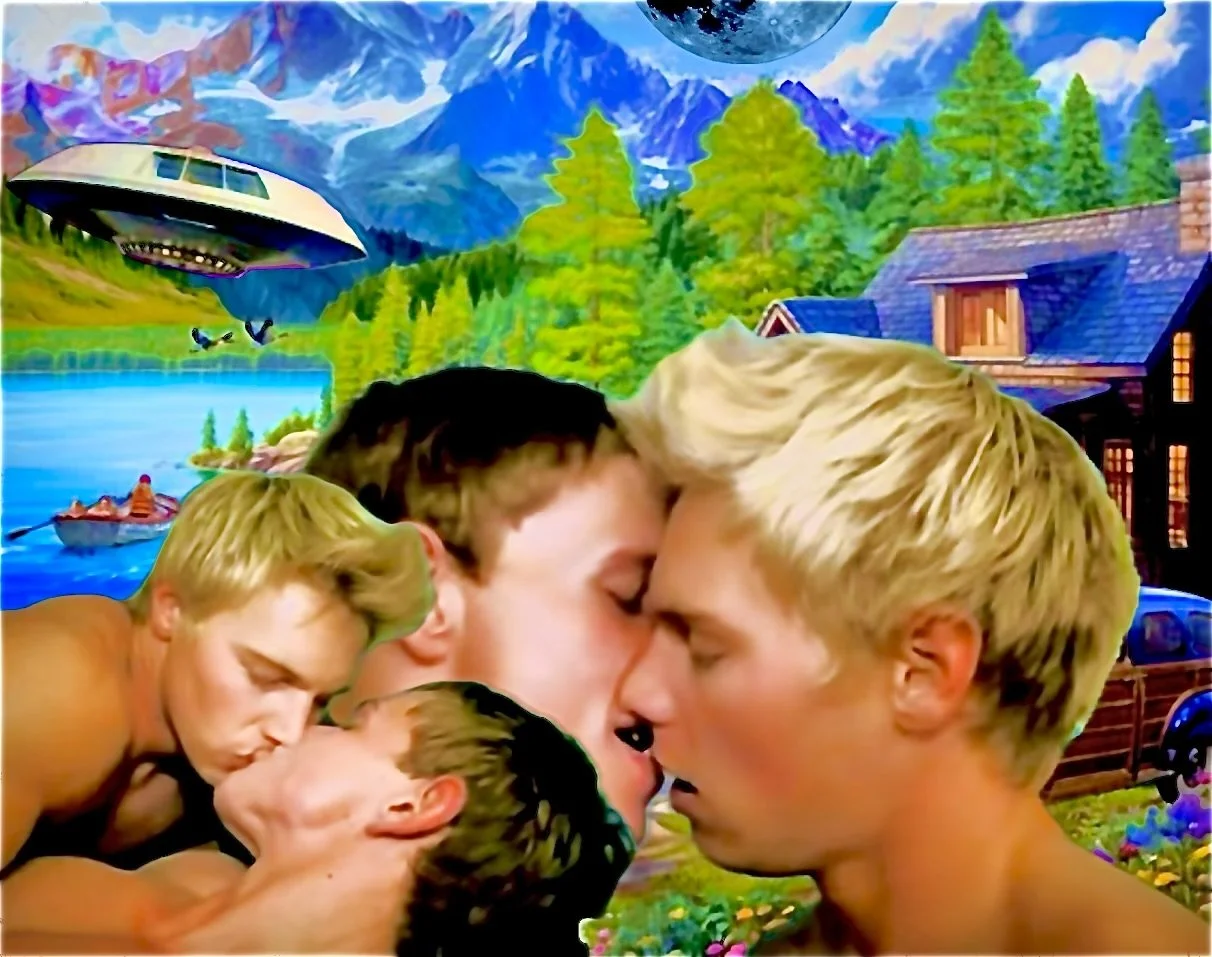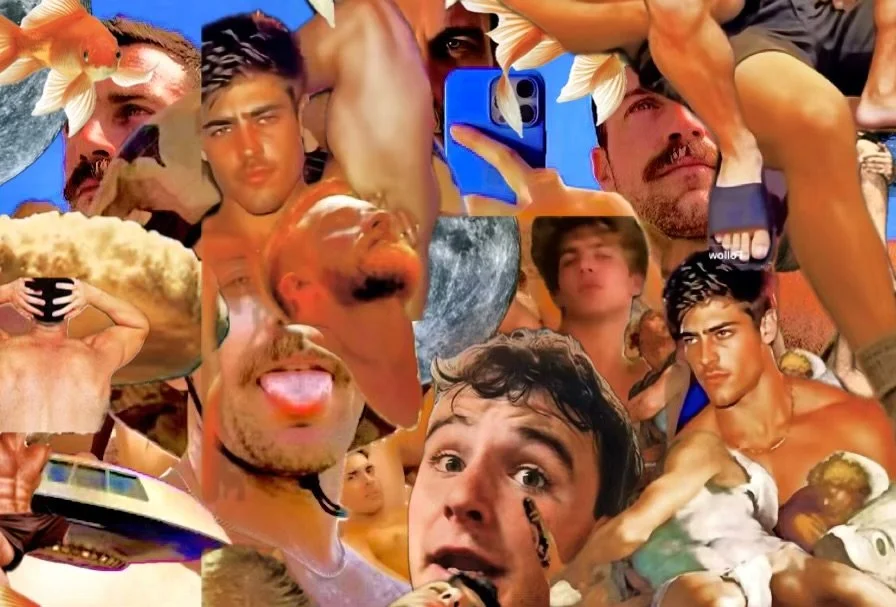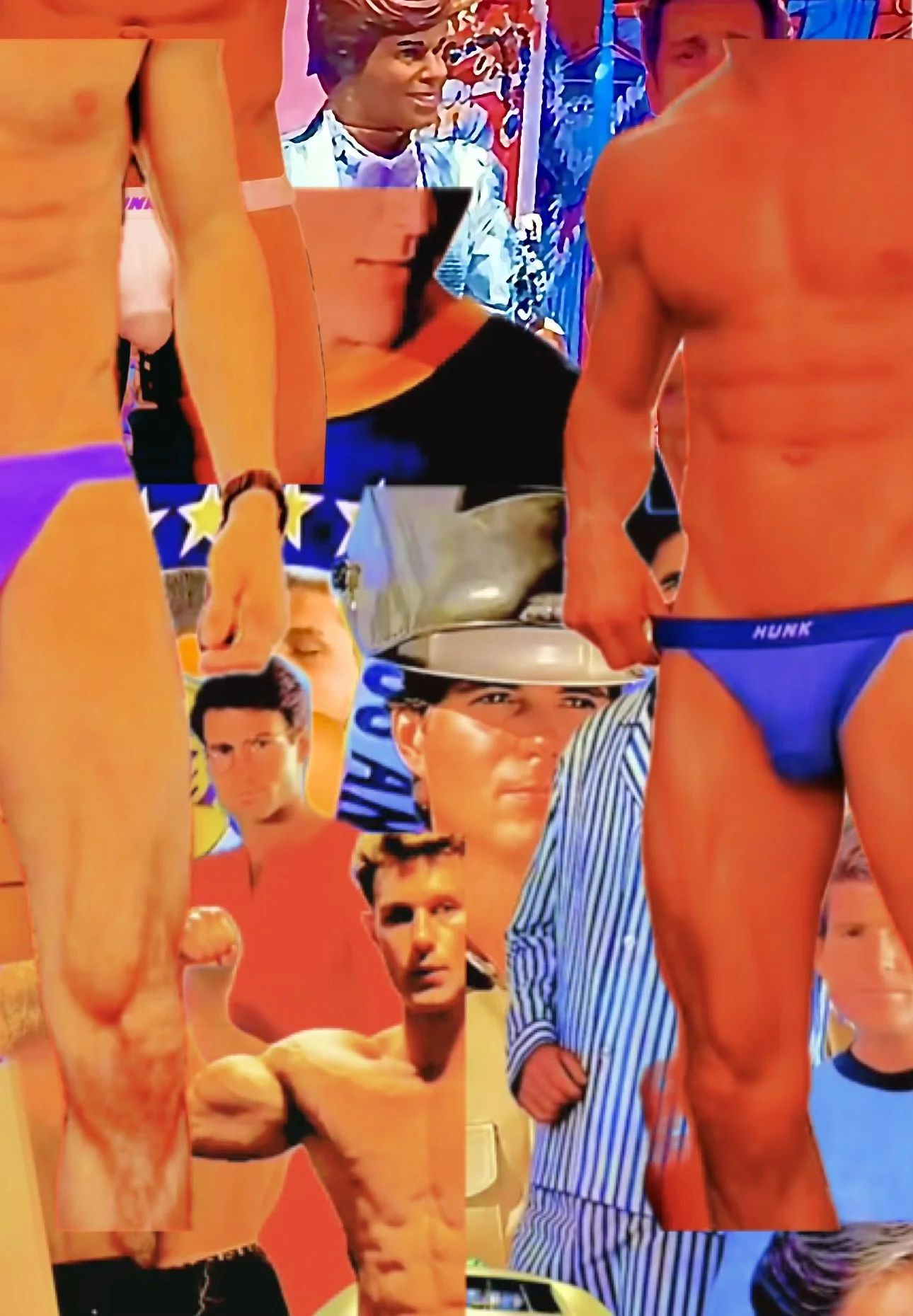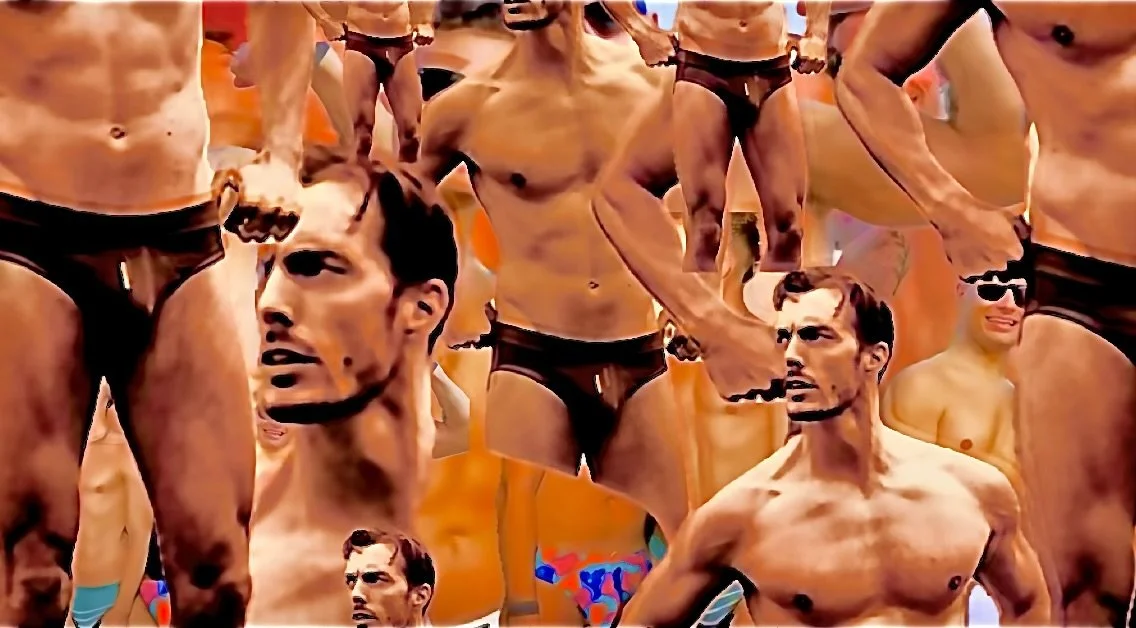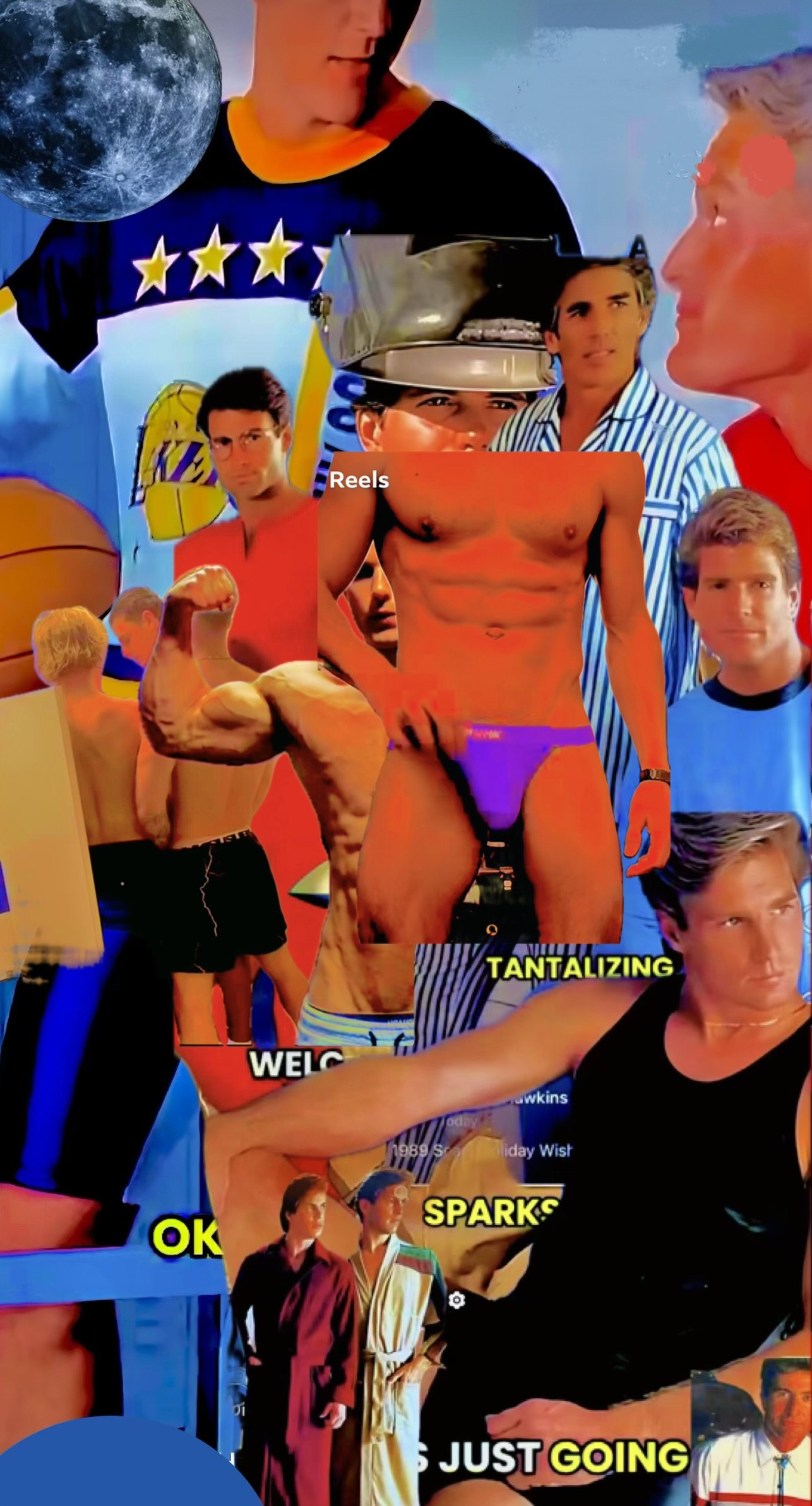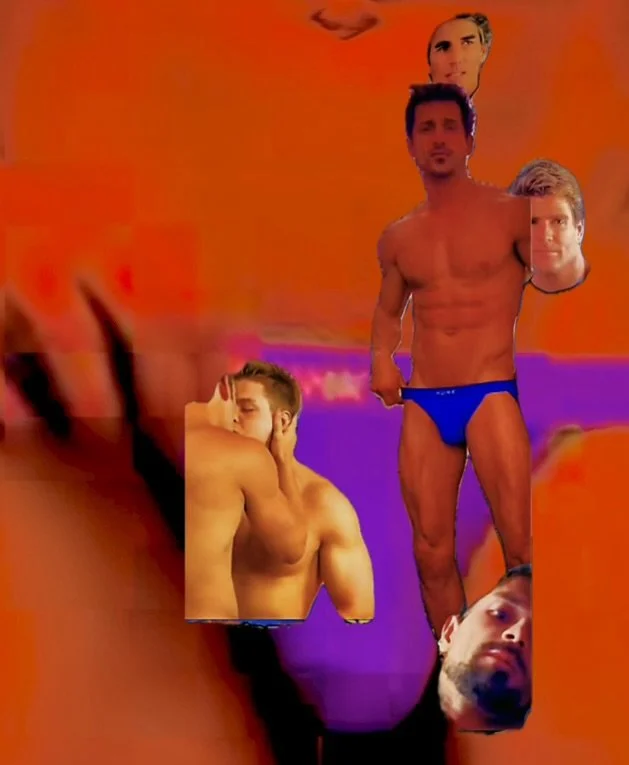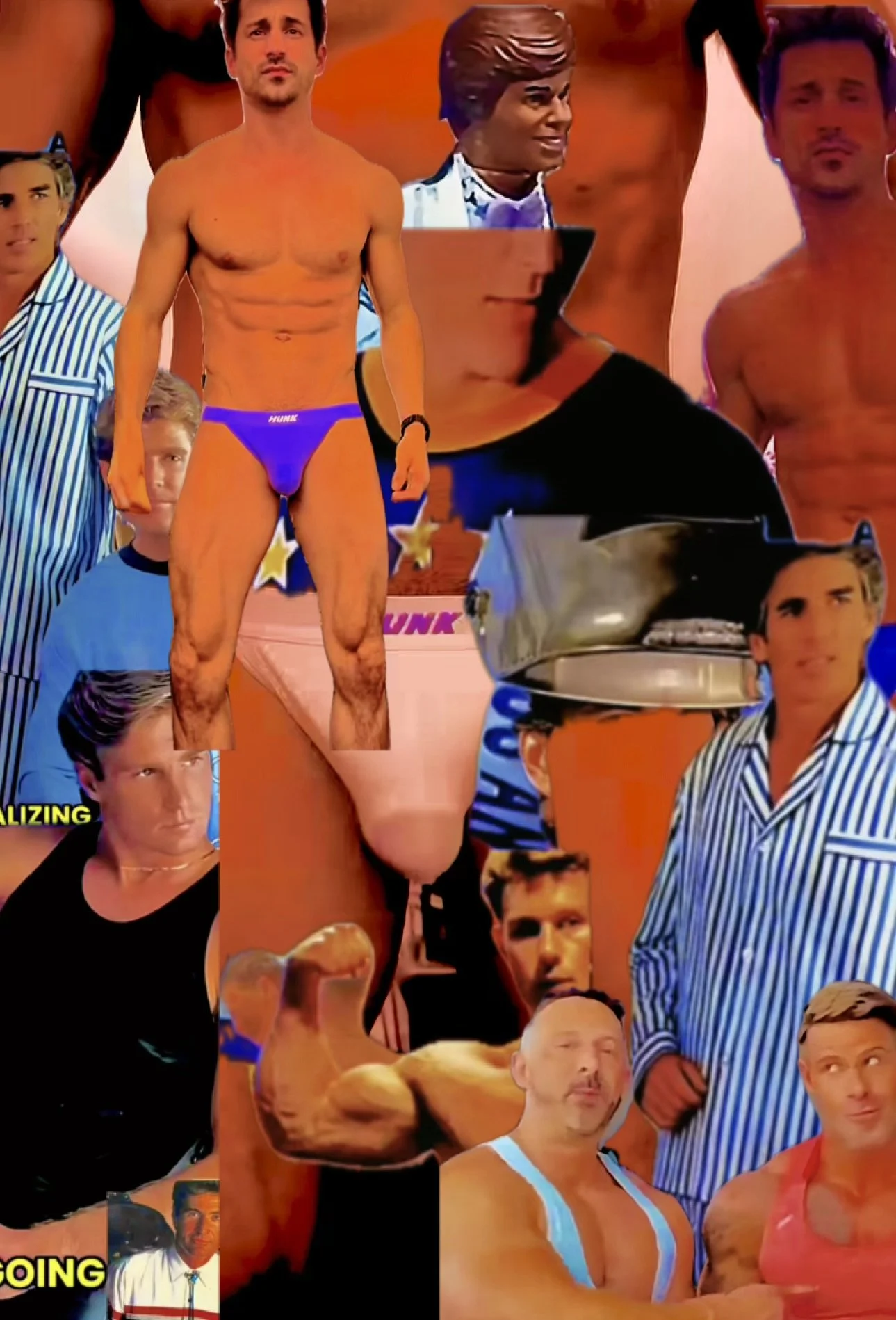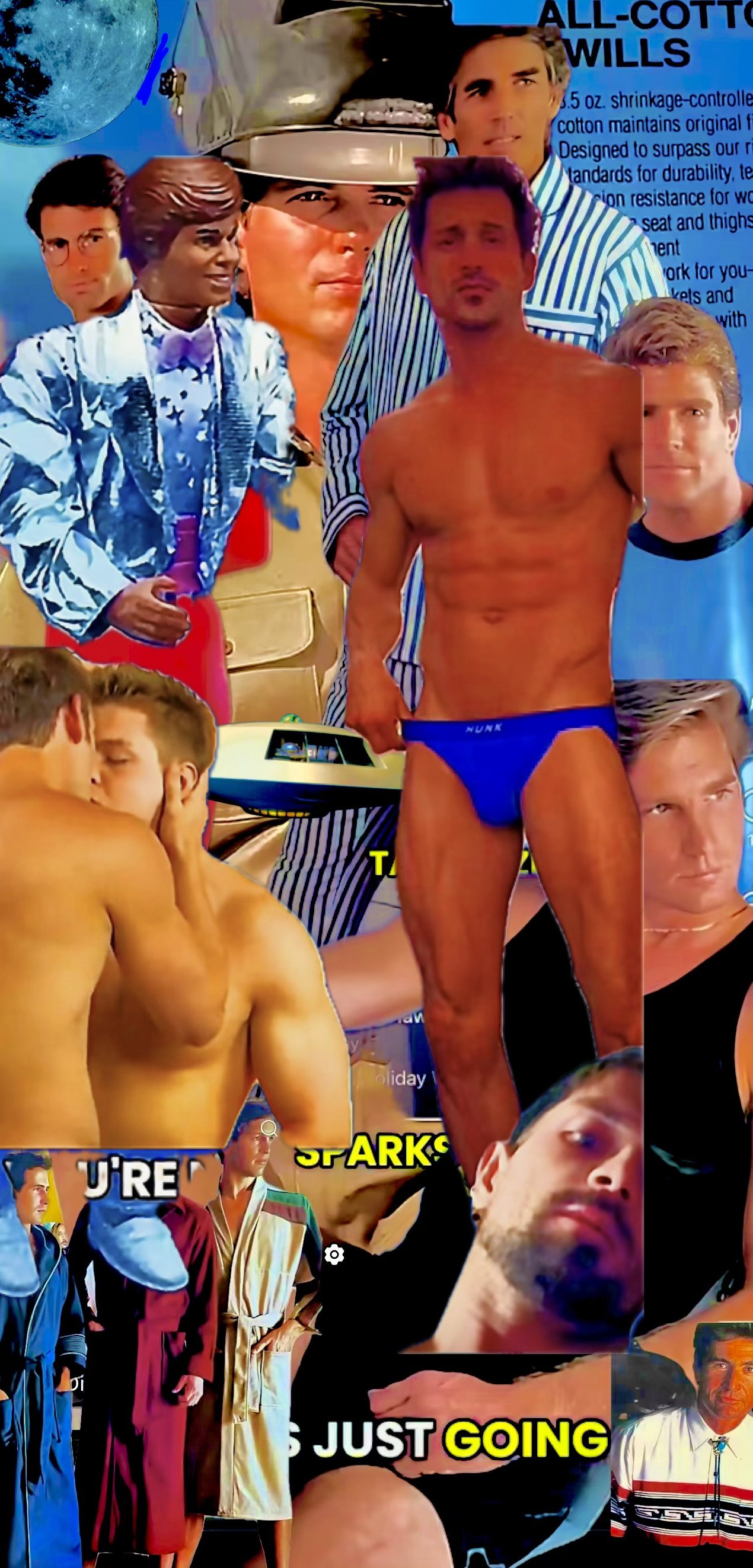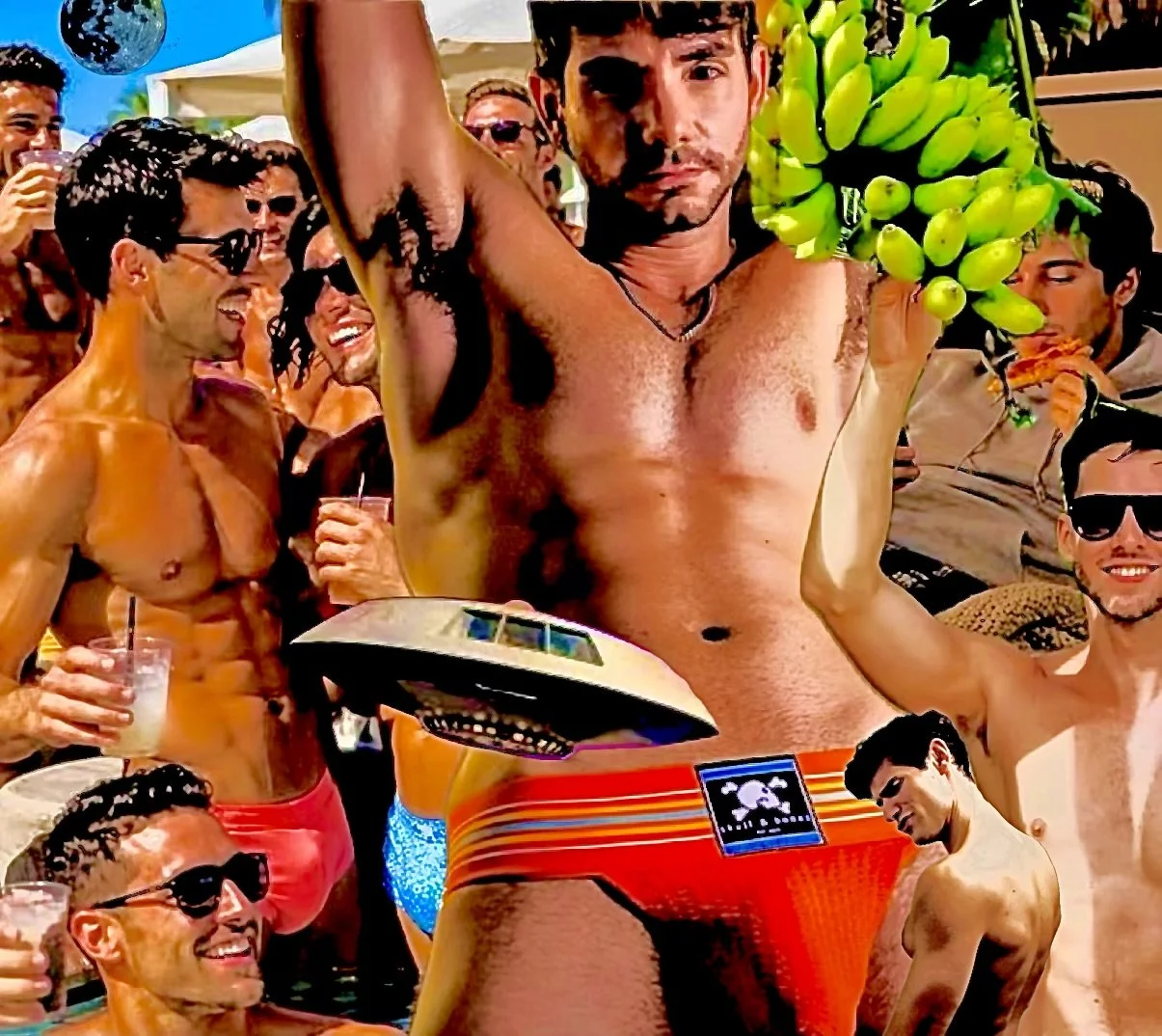
You’re so Big

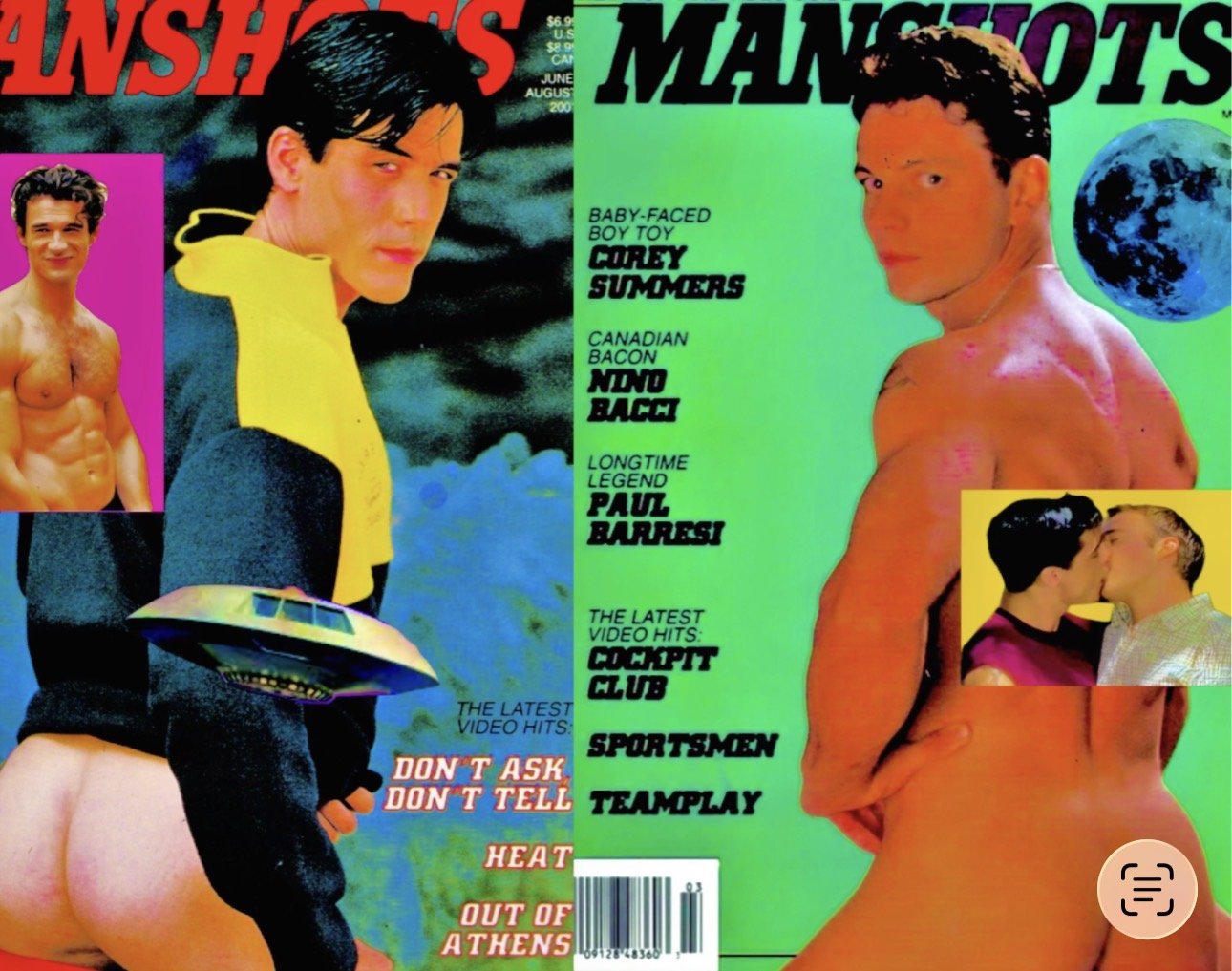
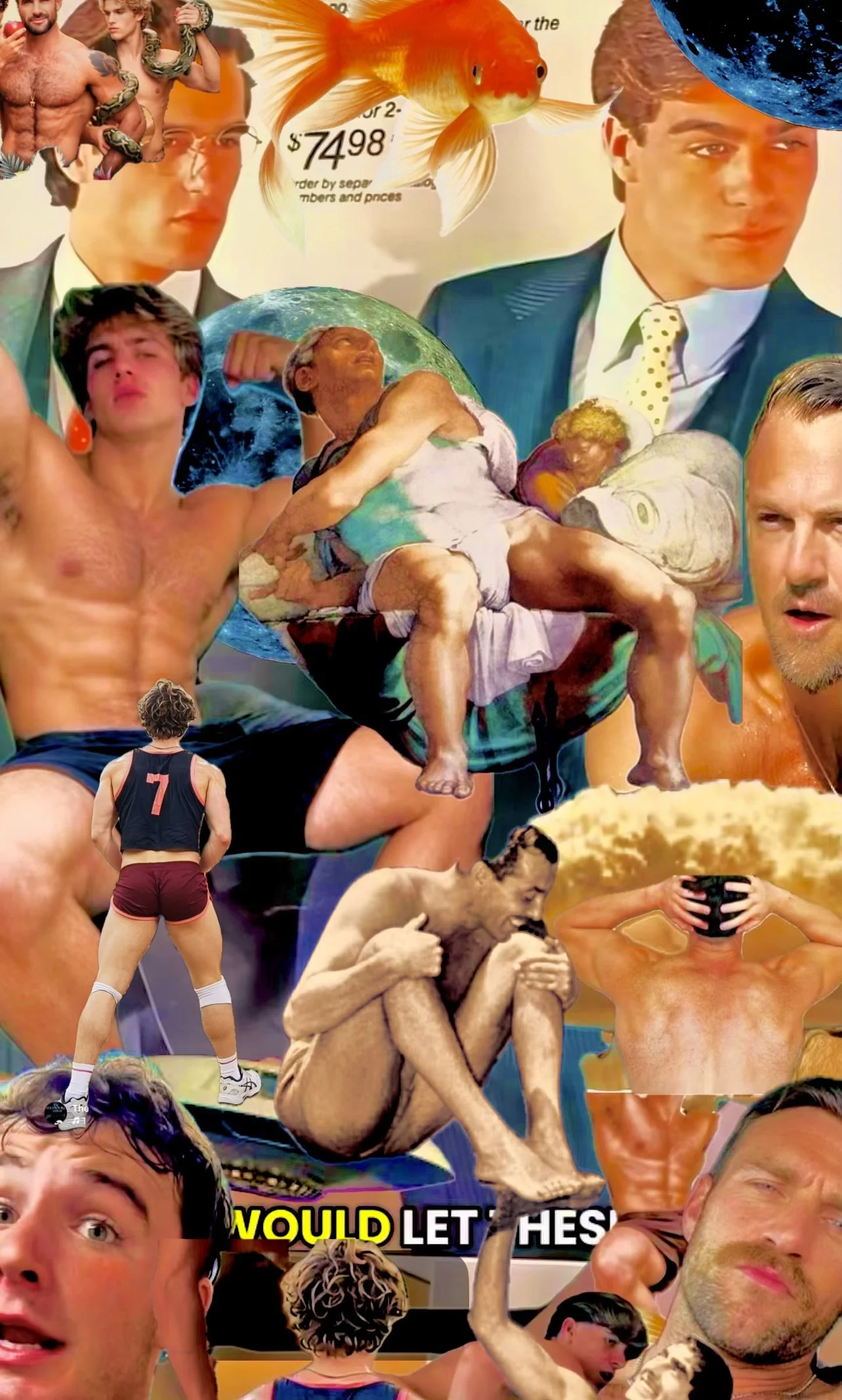
Giant Films Presents: A Legal History in Four Collage Panels

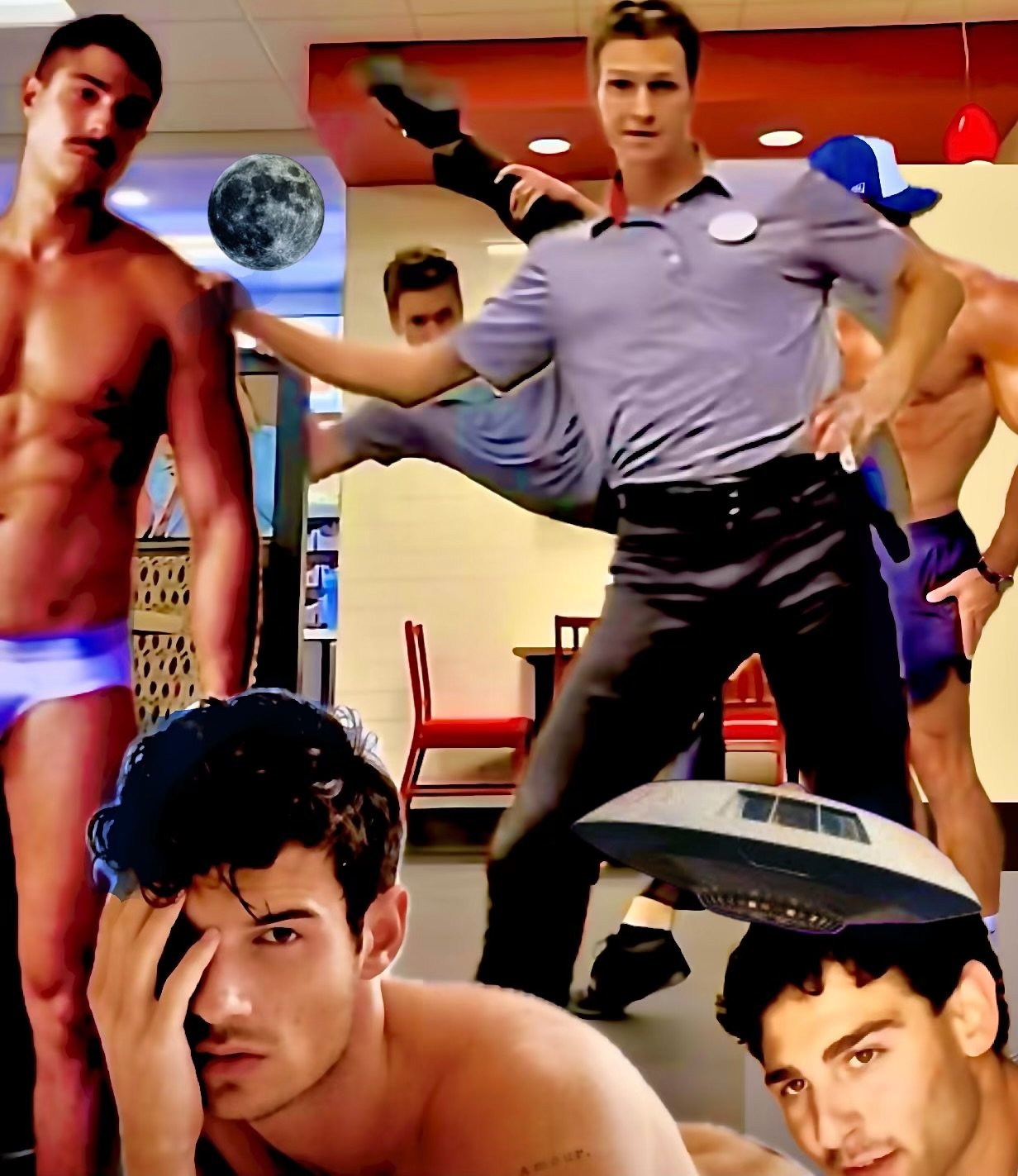
Four panels beginning a title card announcing itself without apology:

GIANT FILMS PRESENTS.

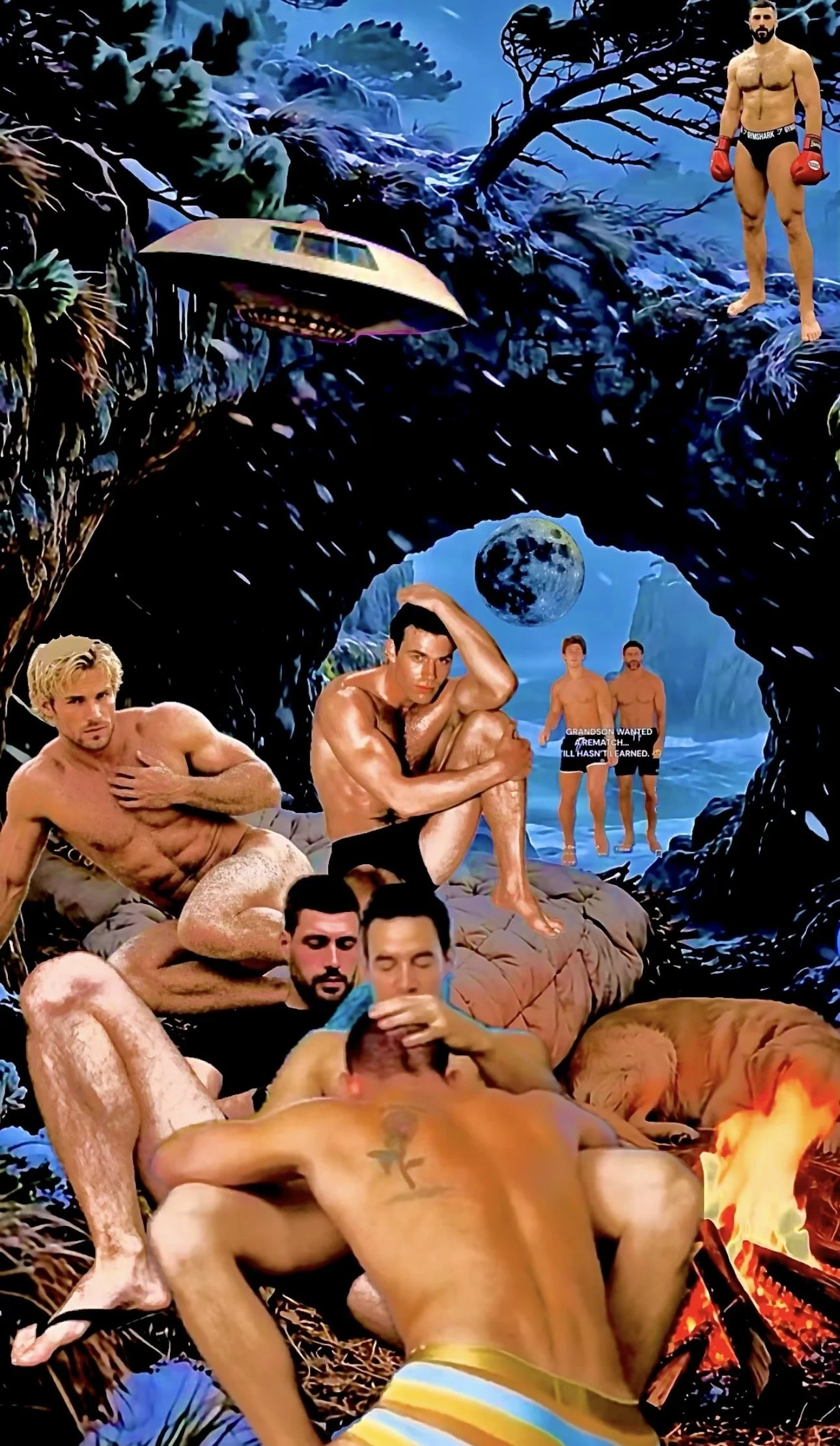
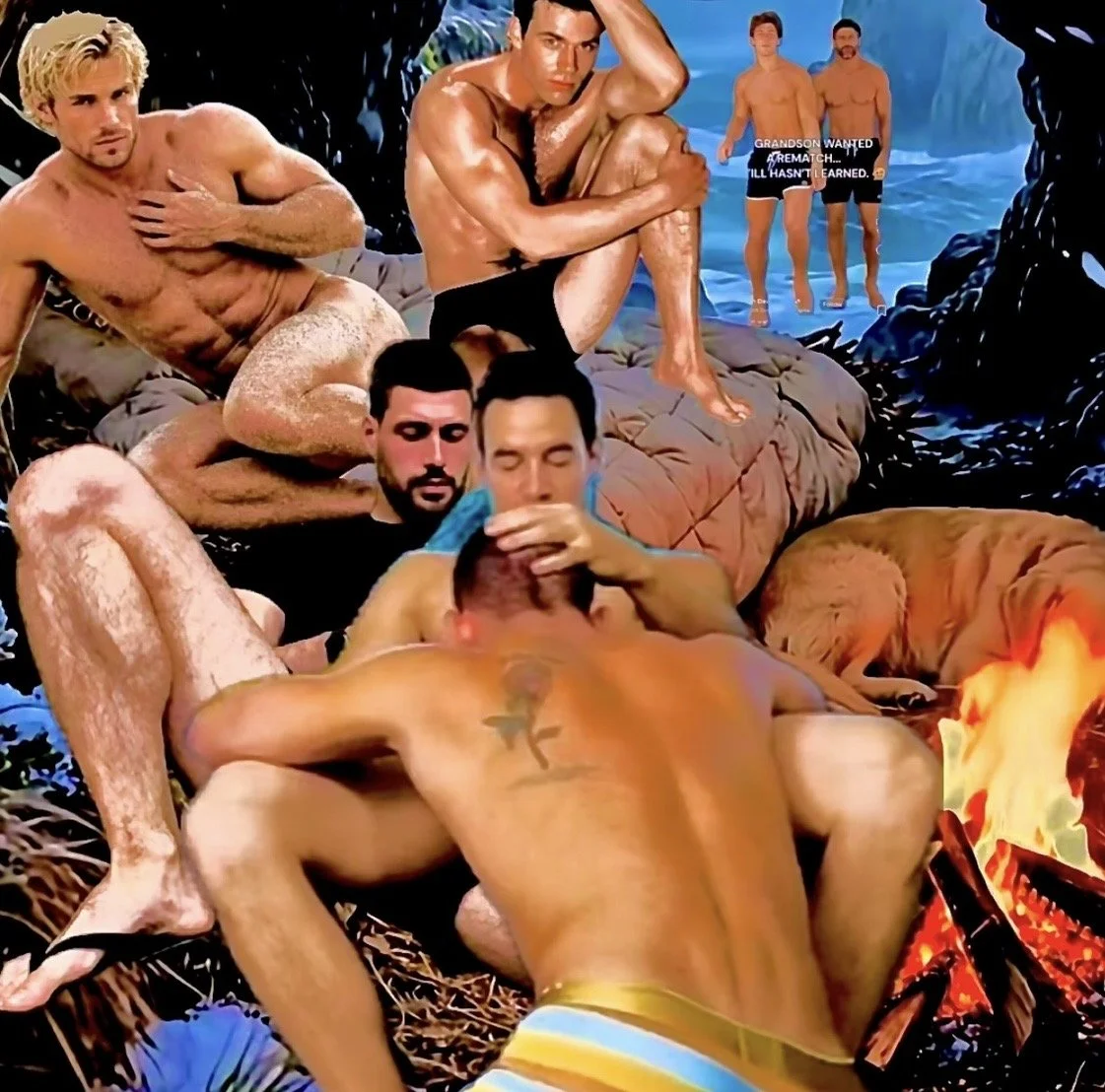
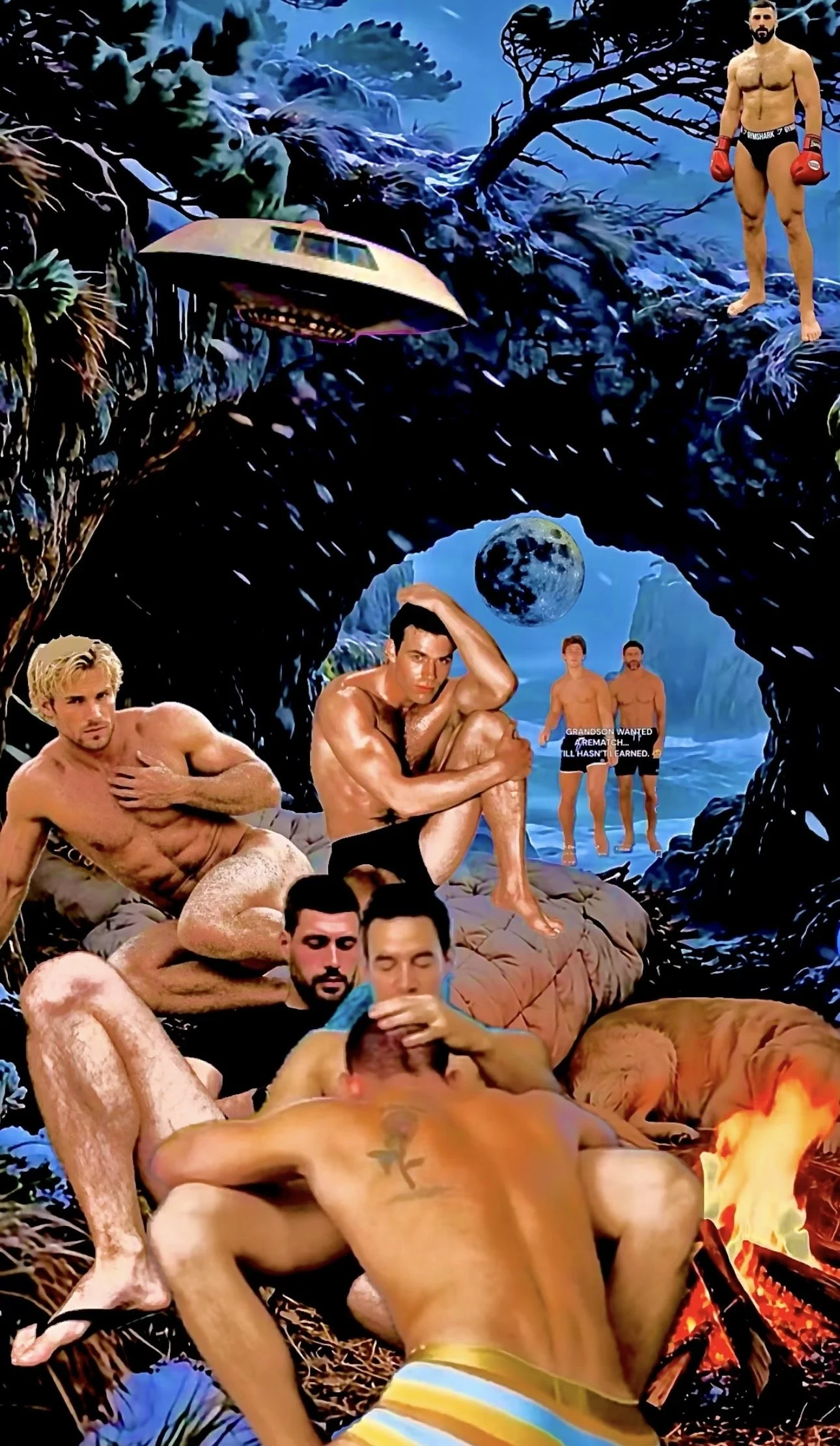
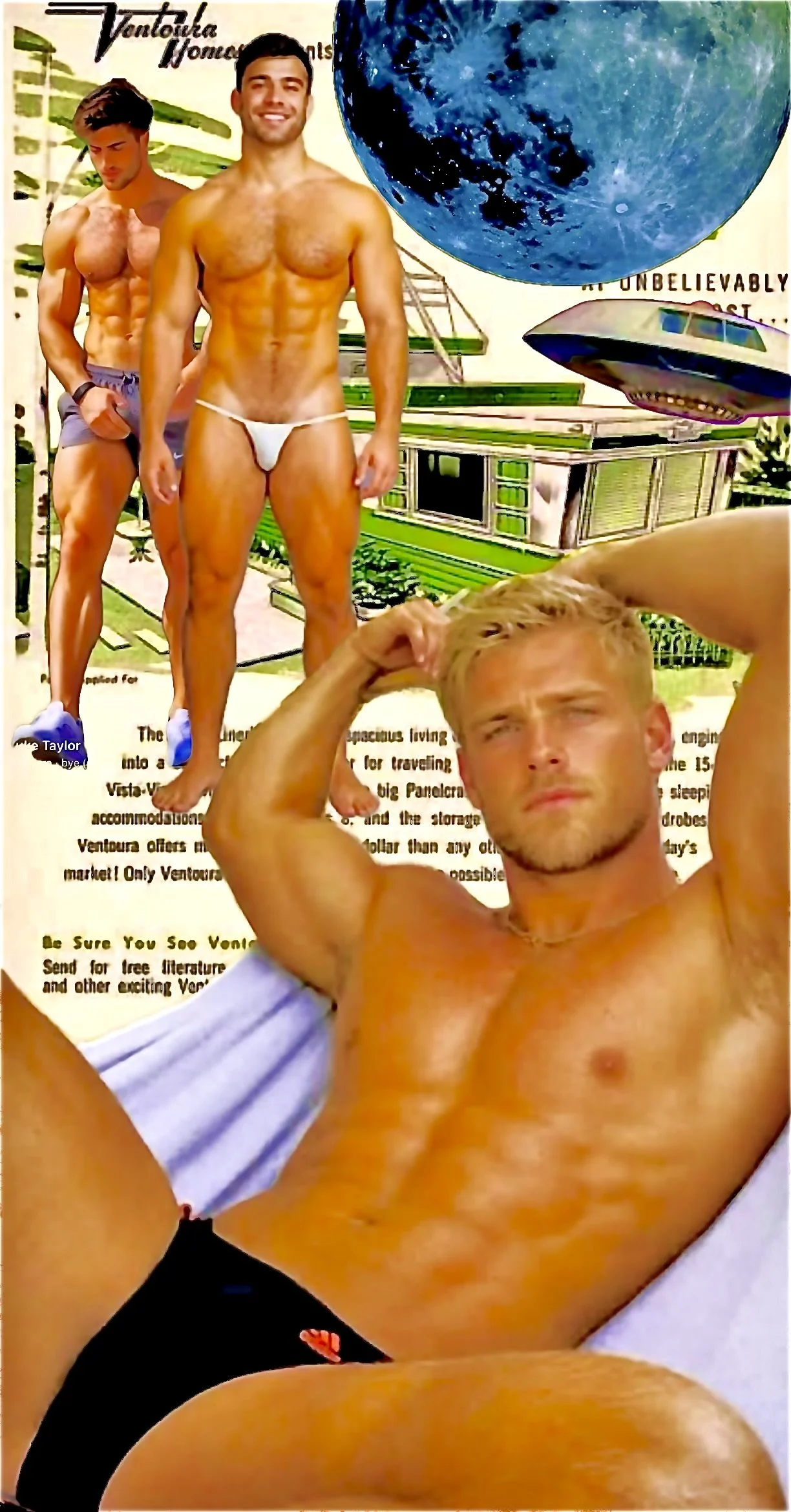
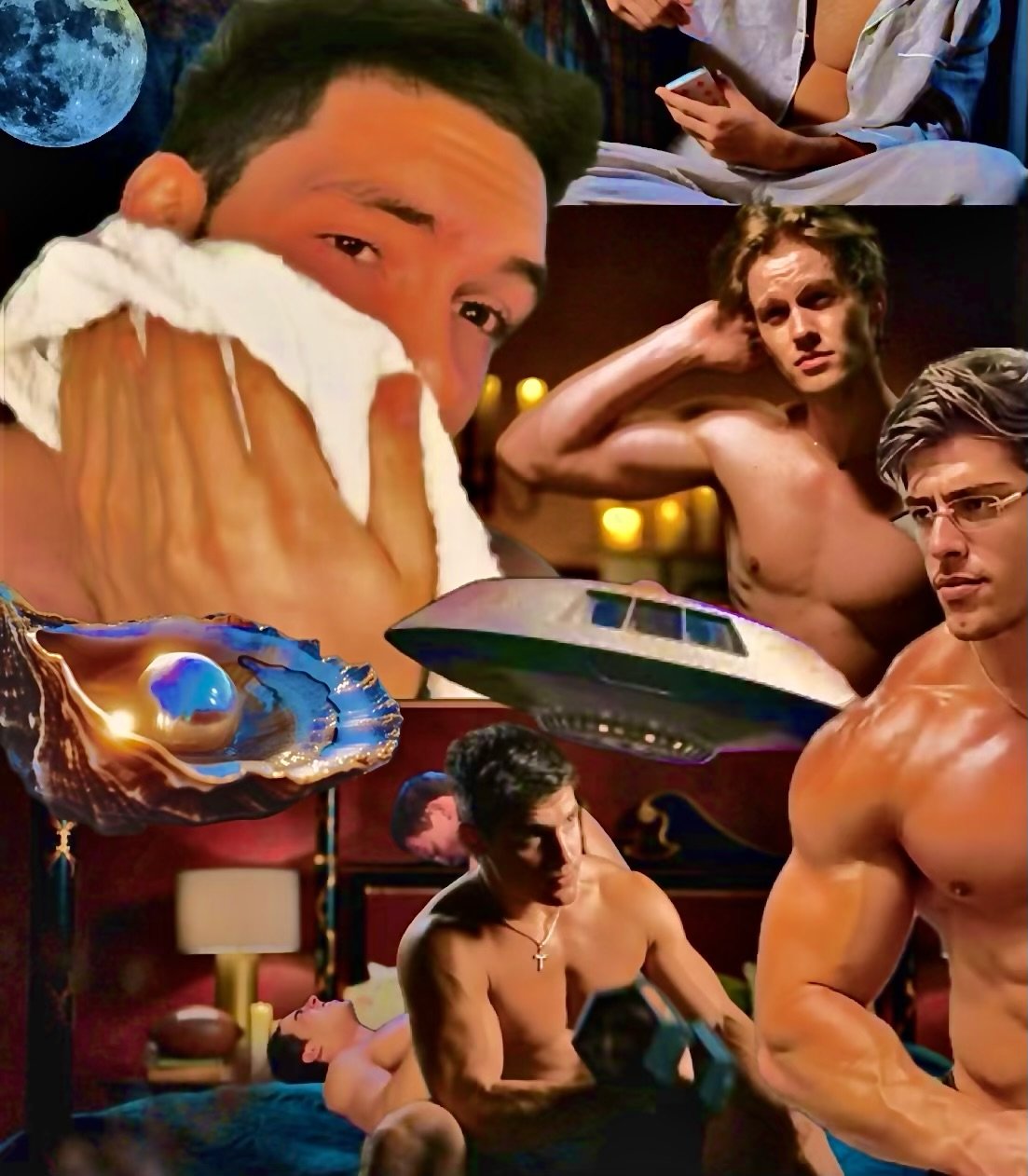
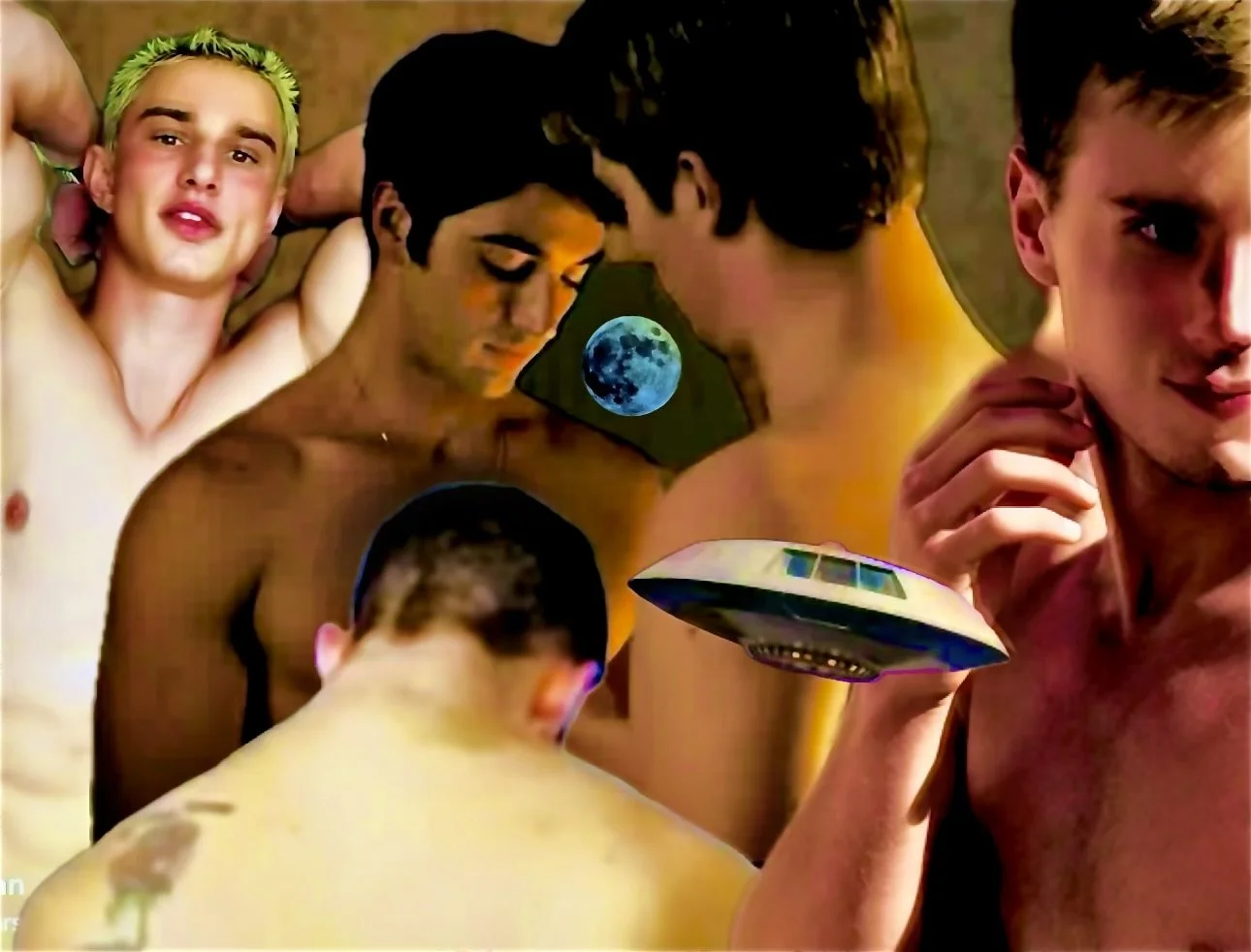
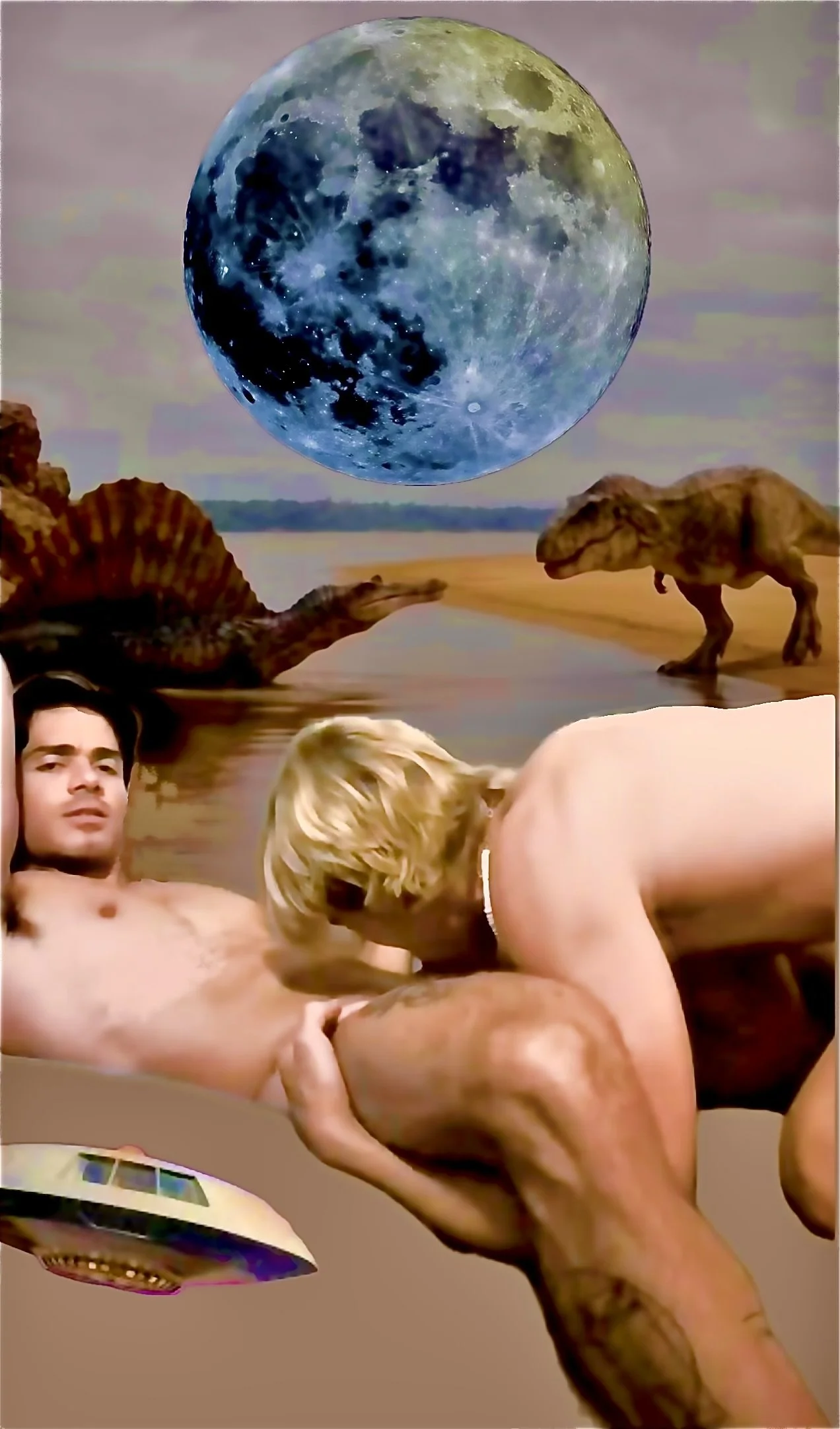
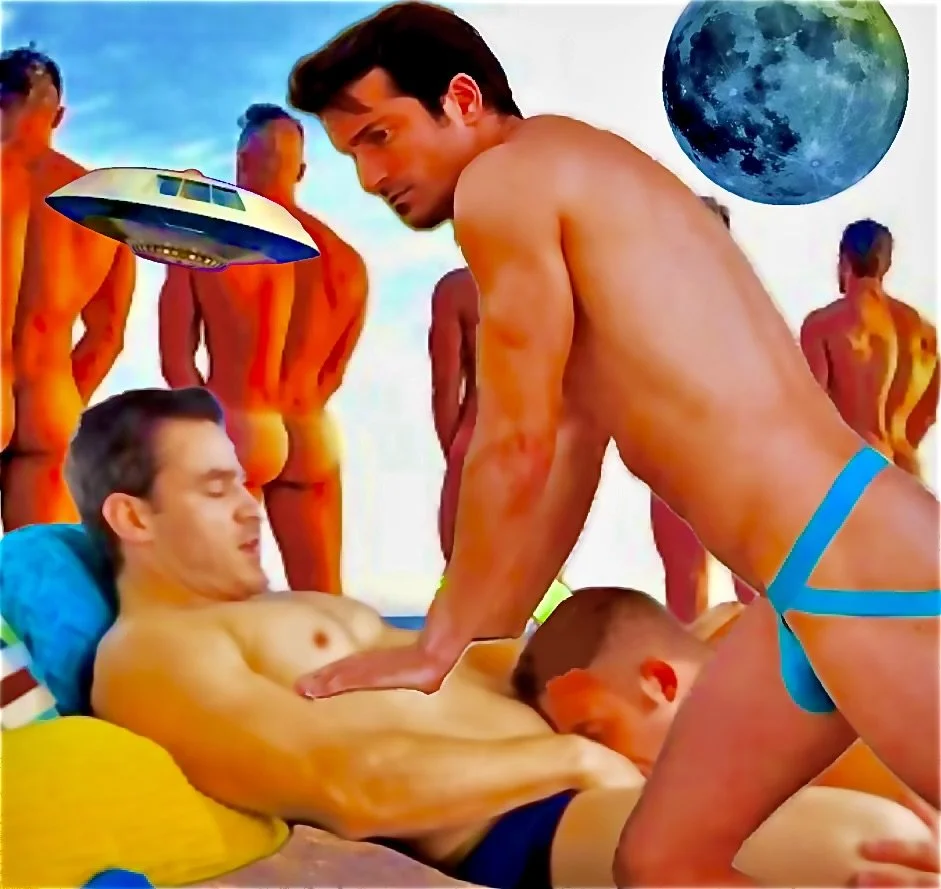
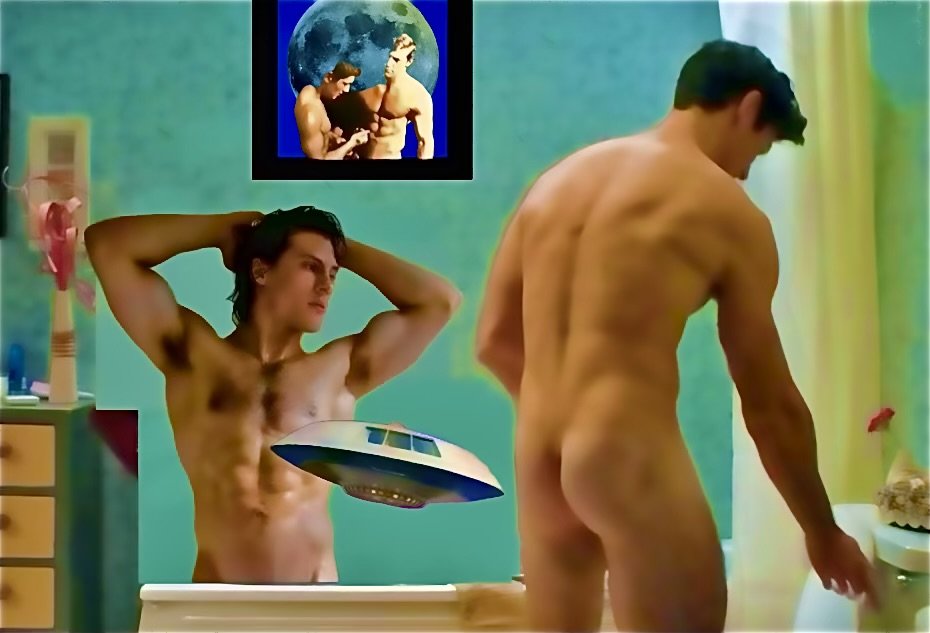
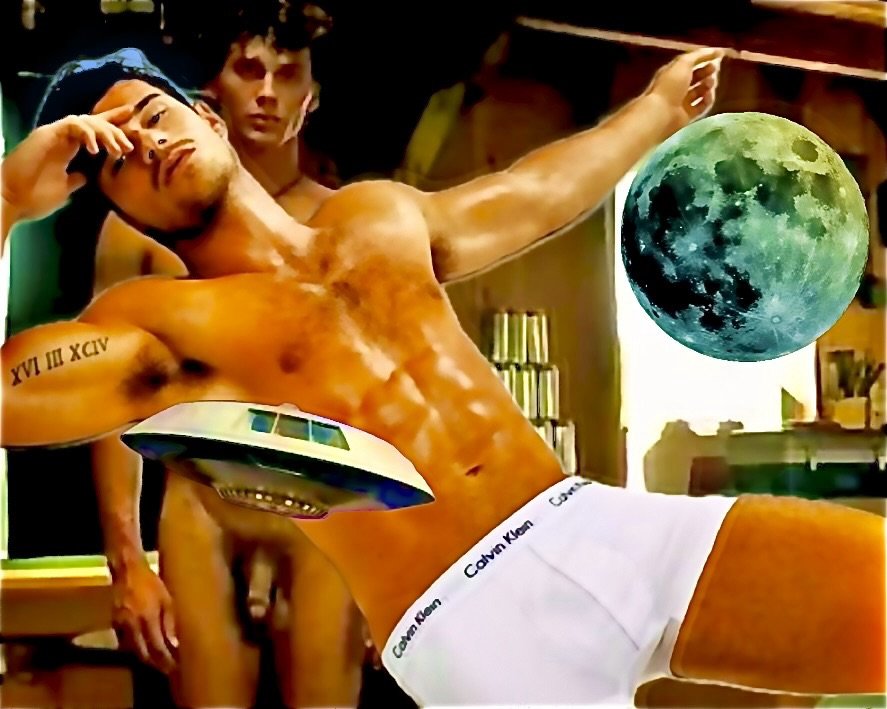
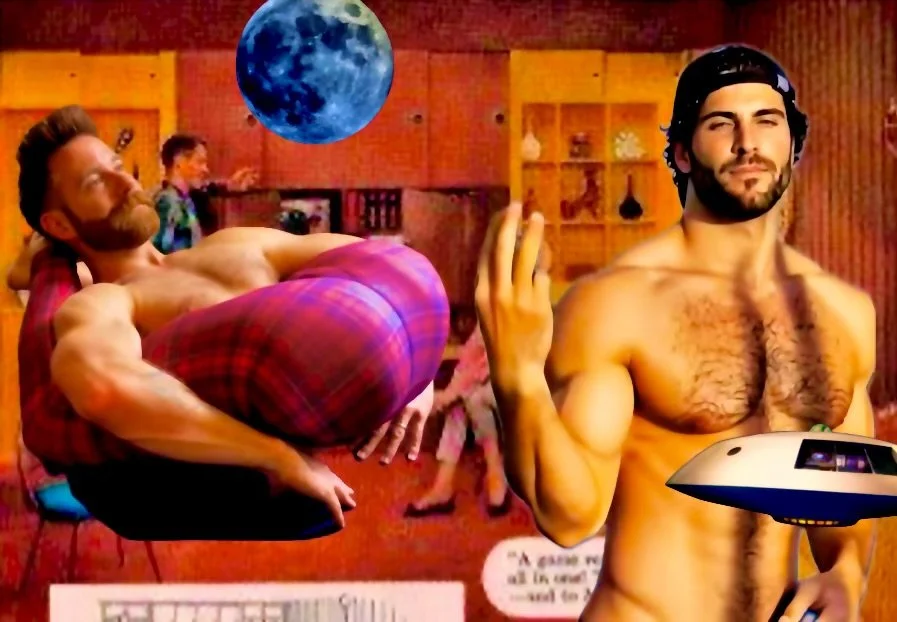
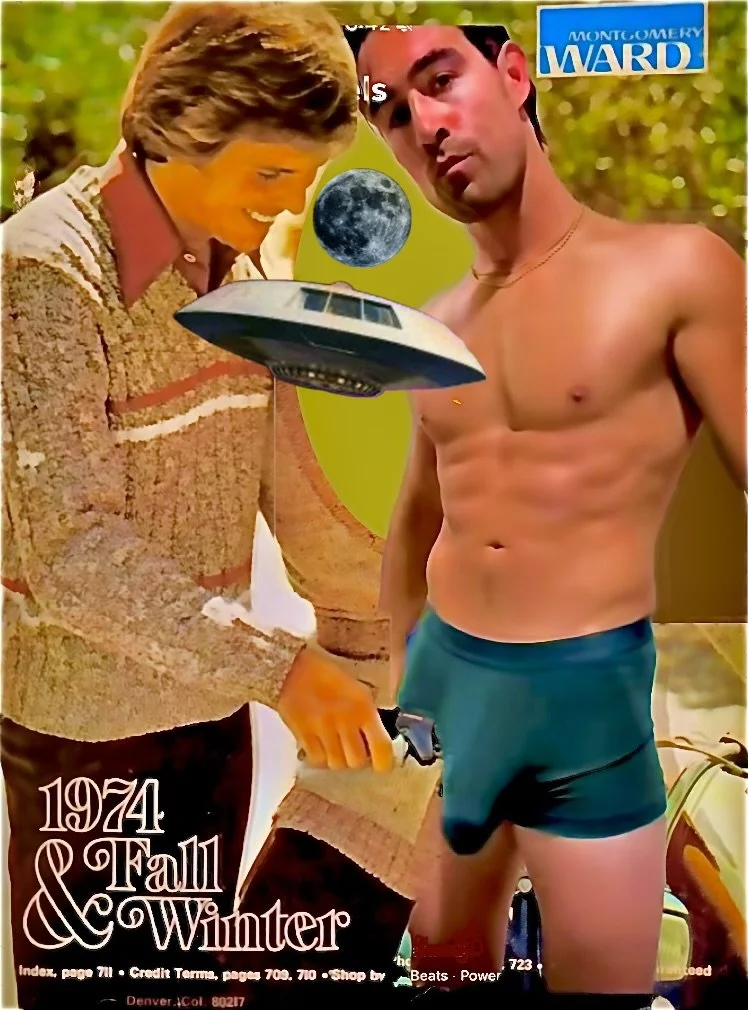
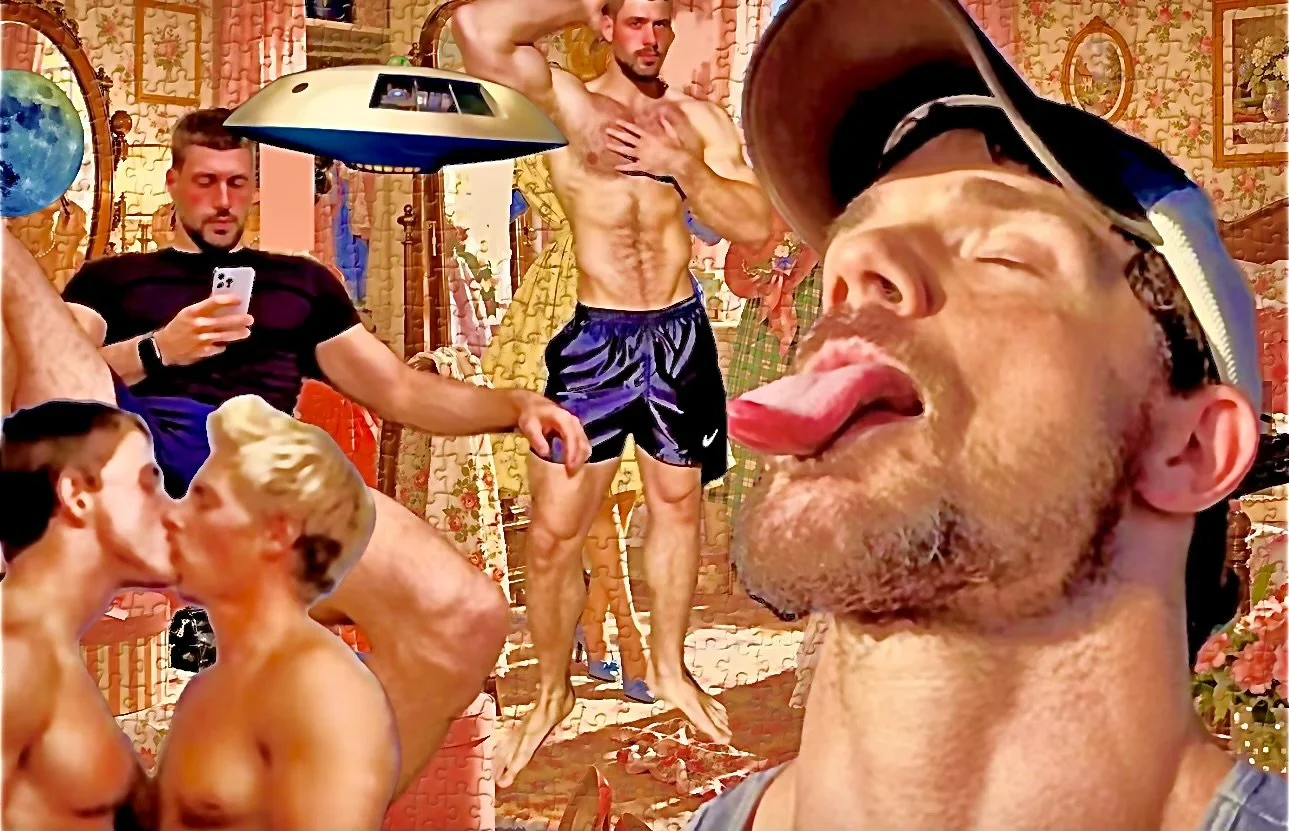
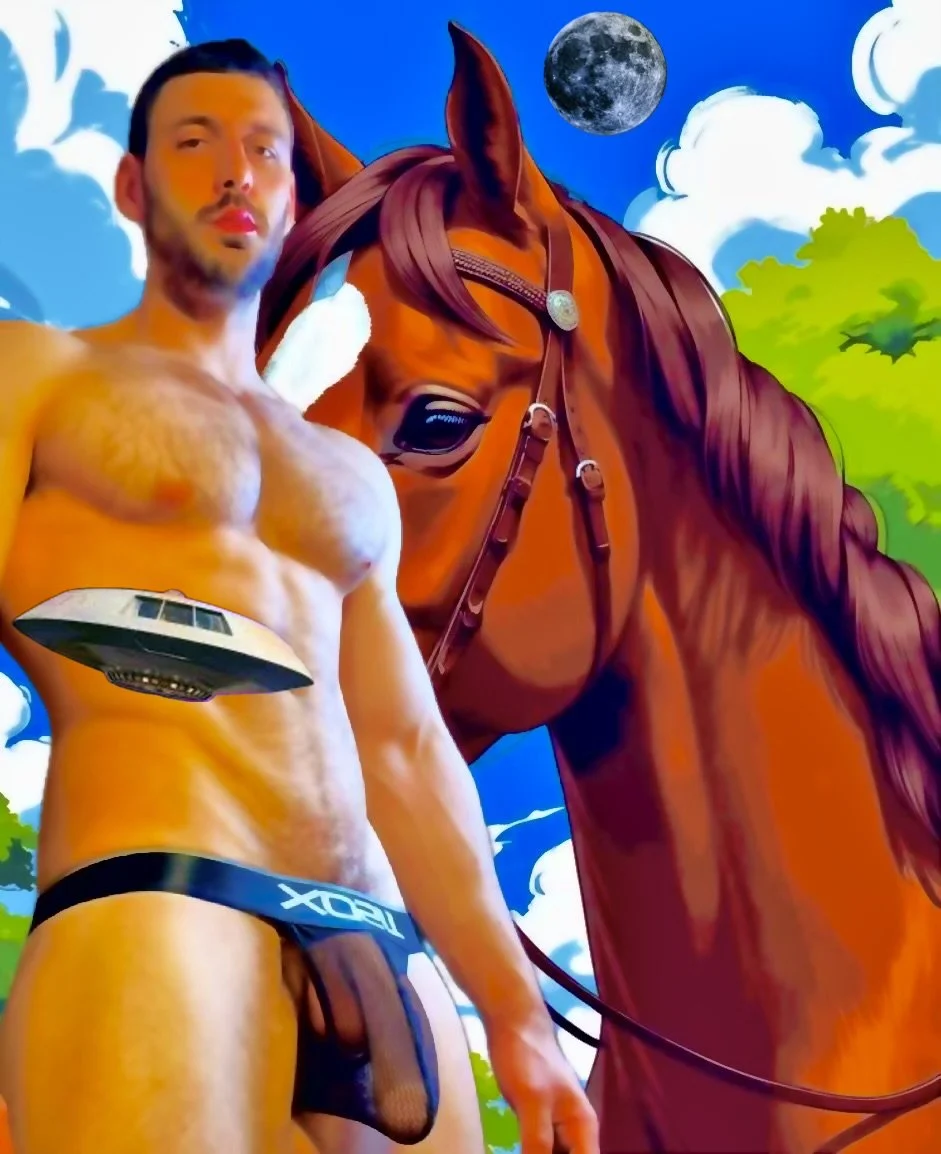
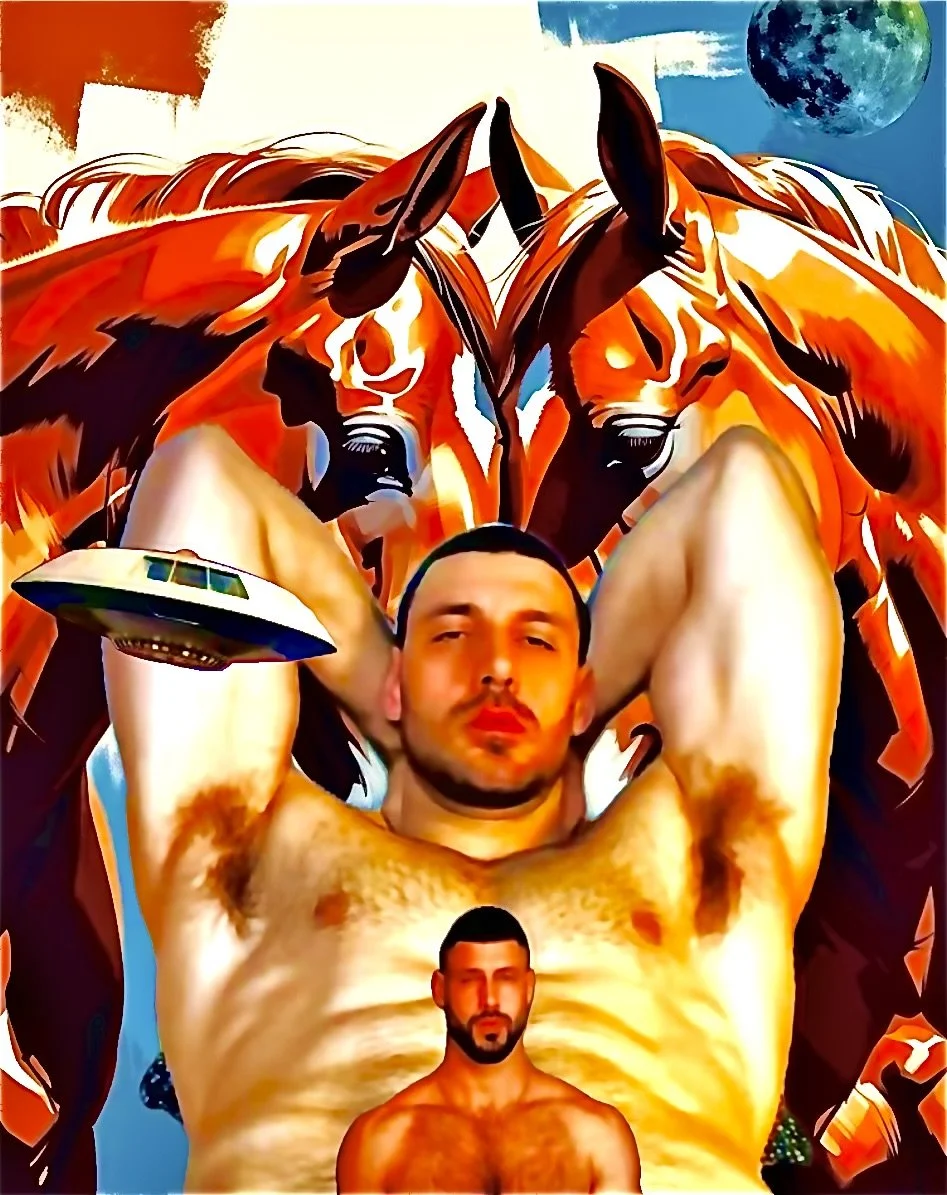
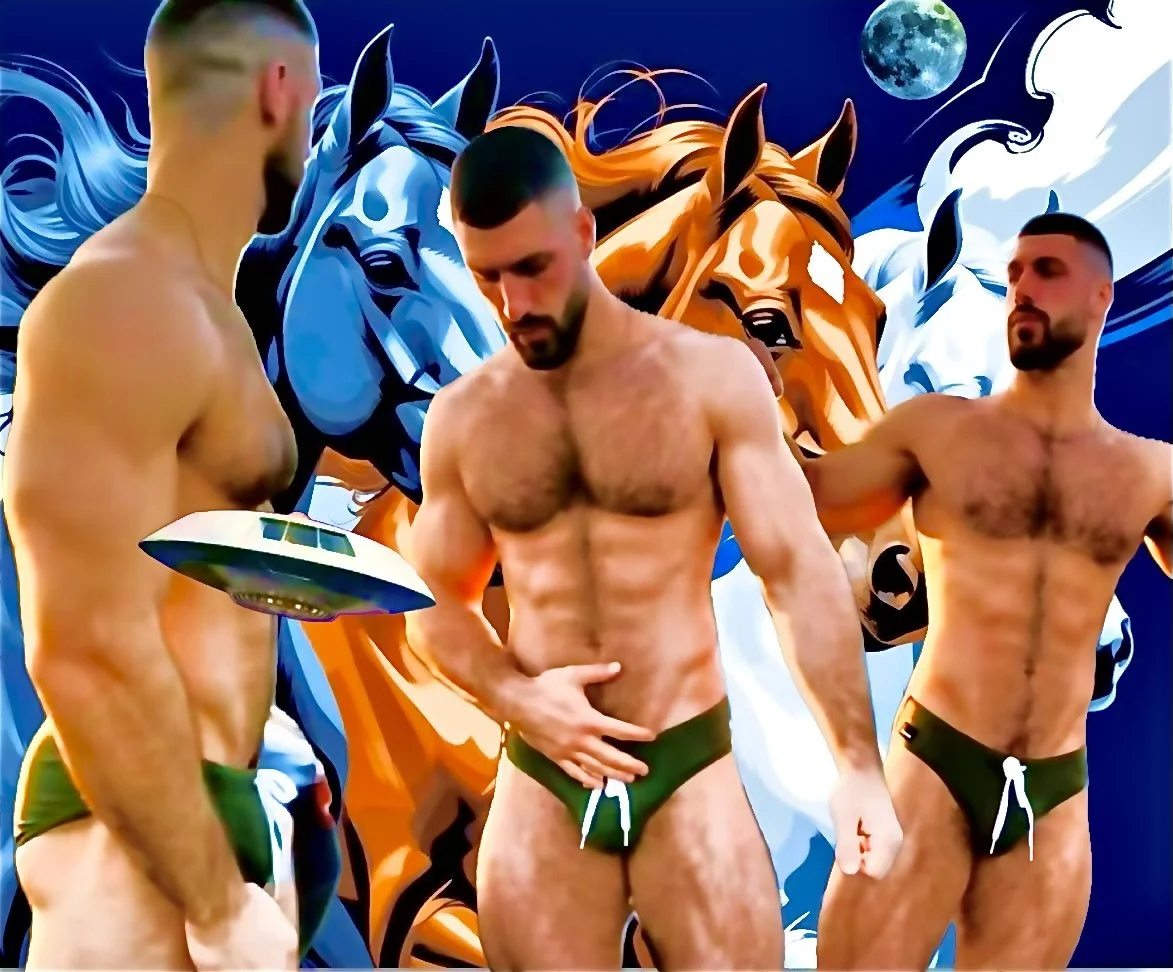
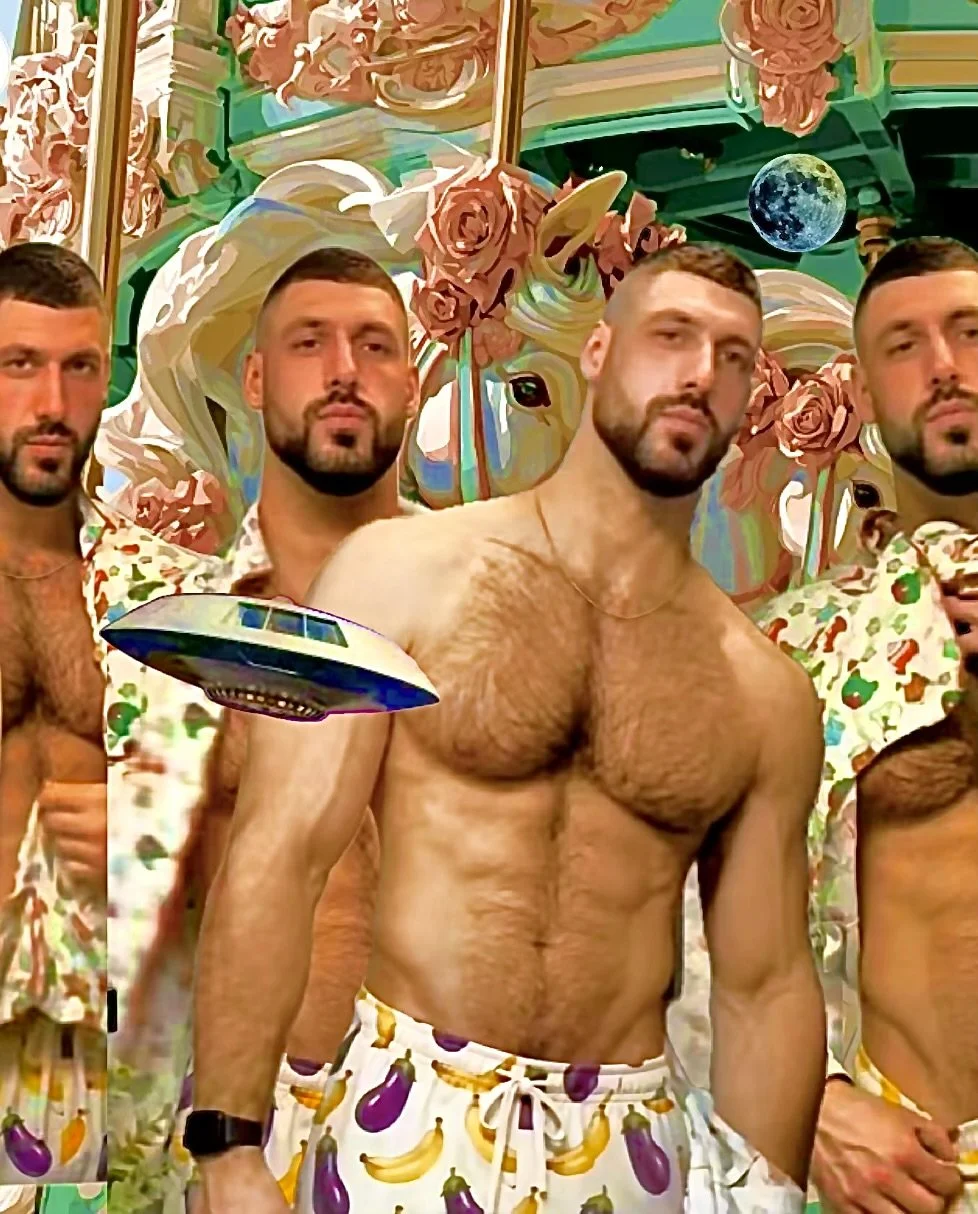
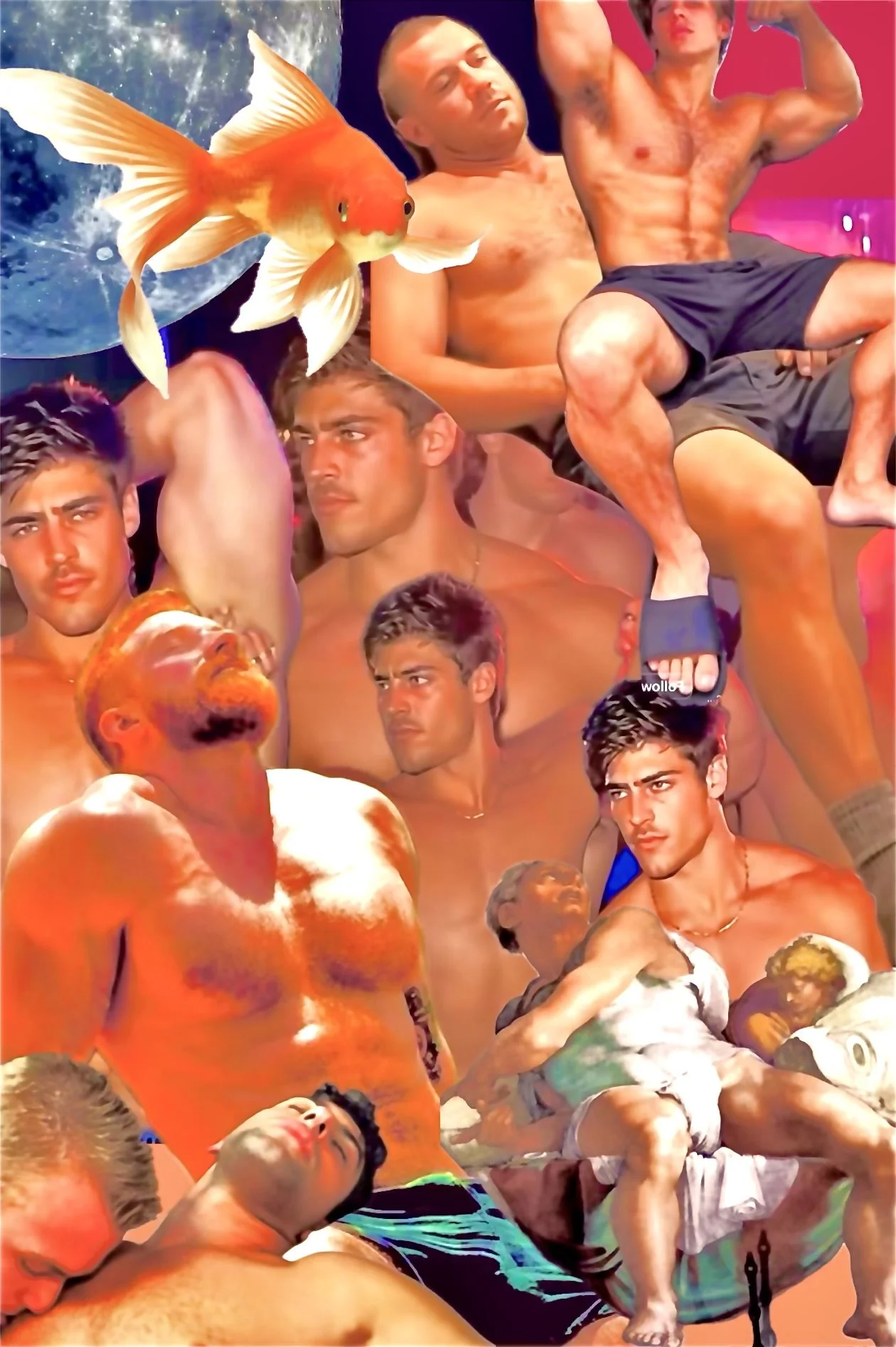
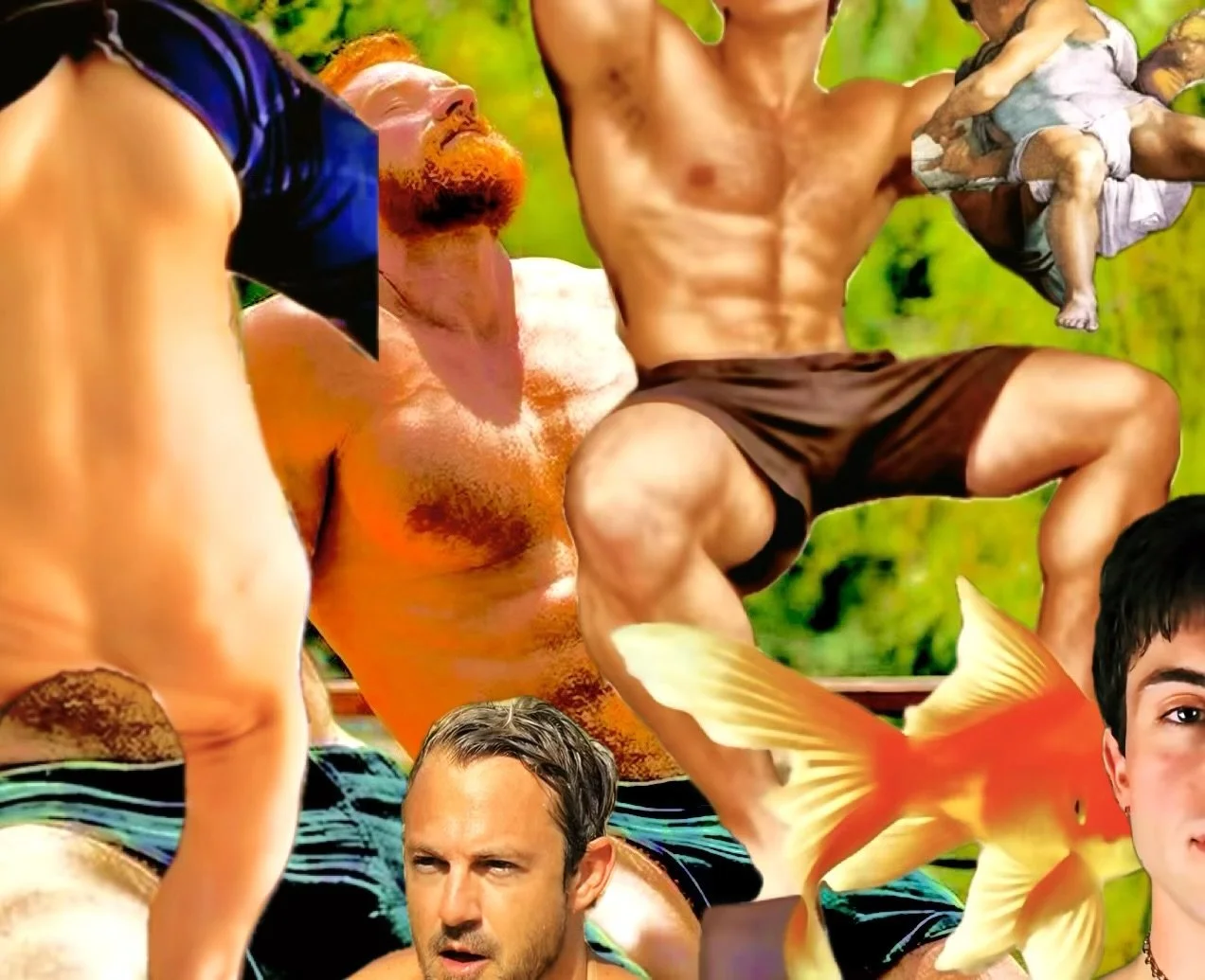
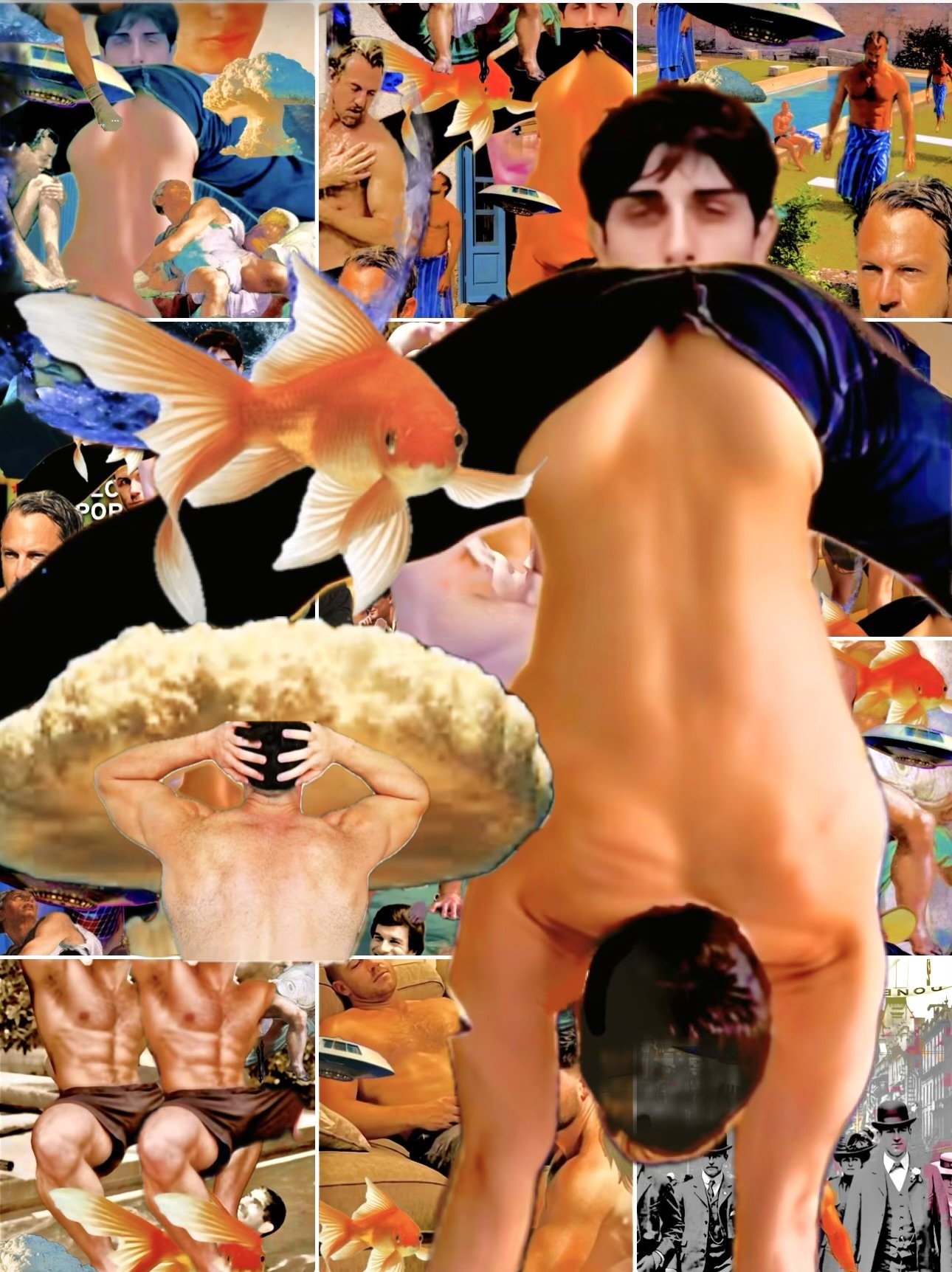
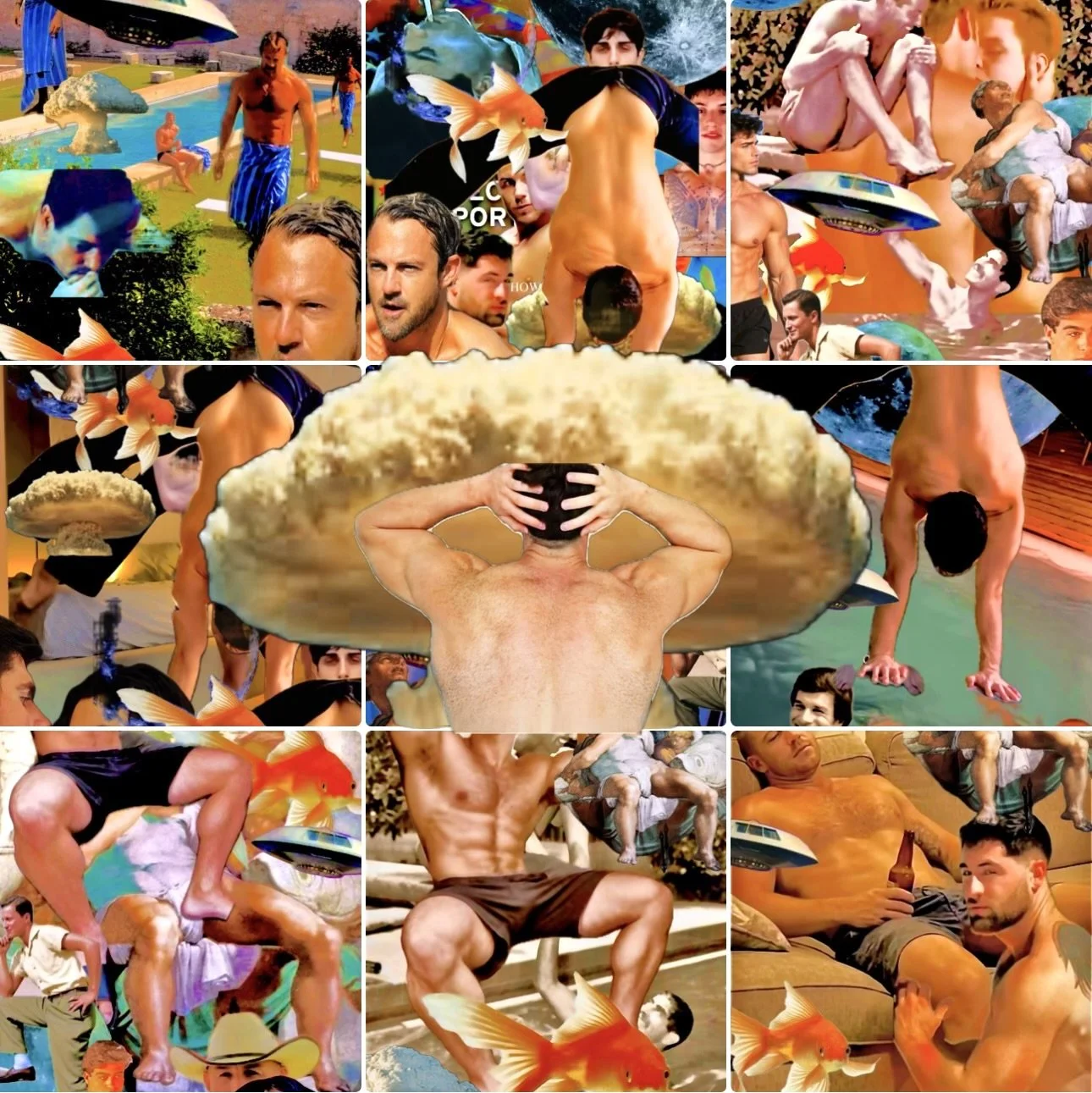
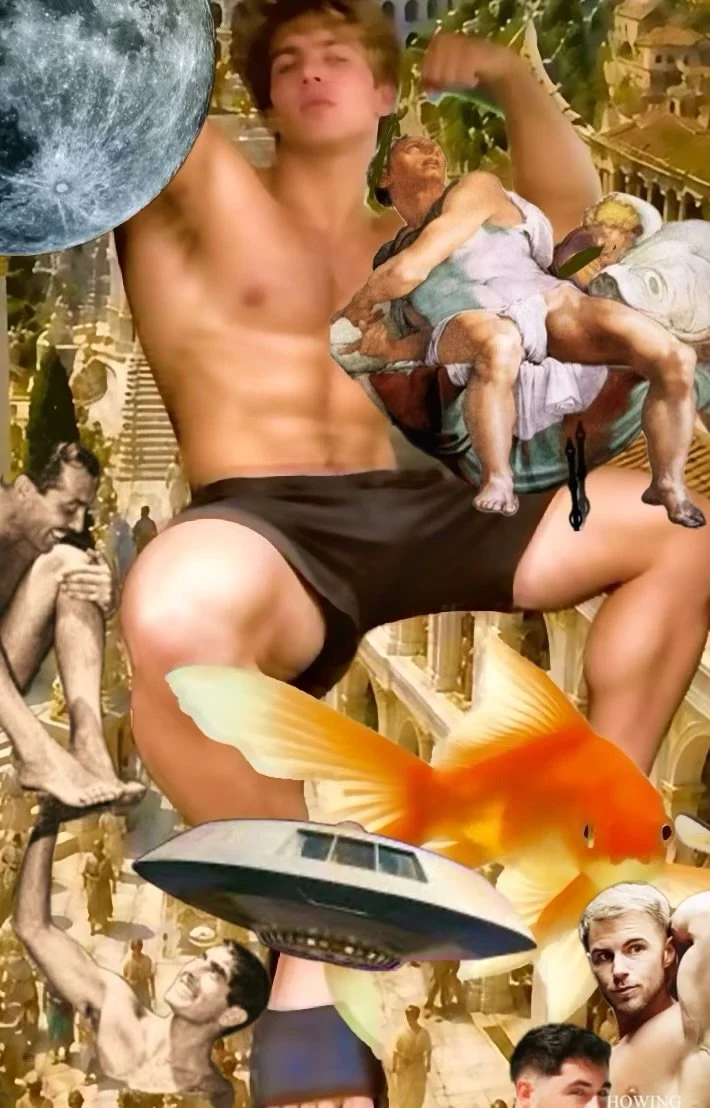
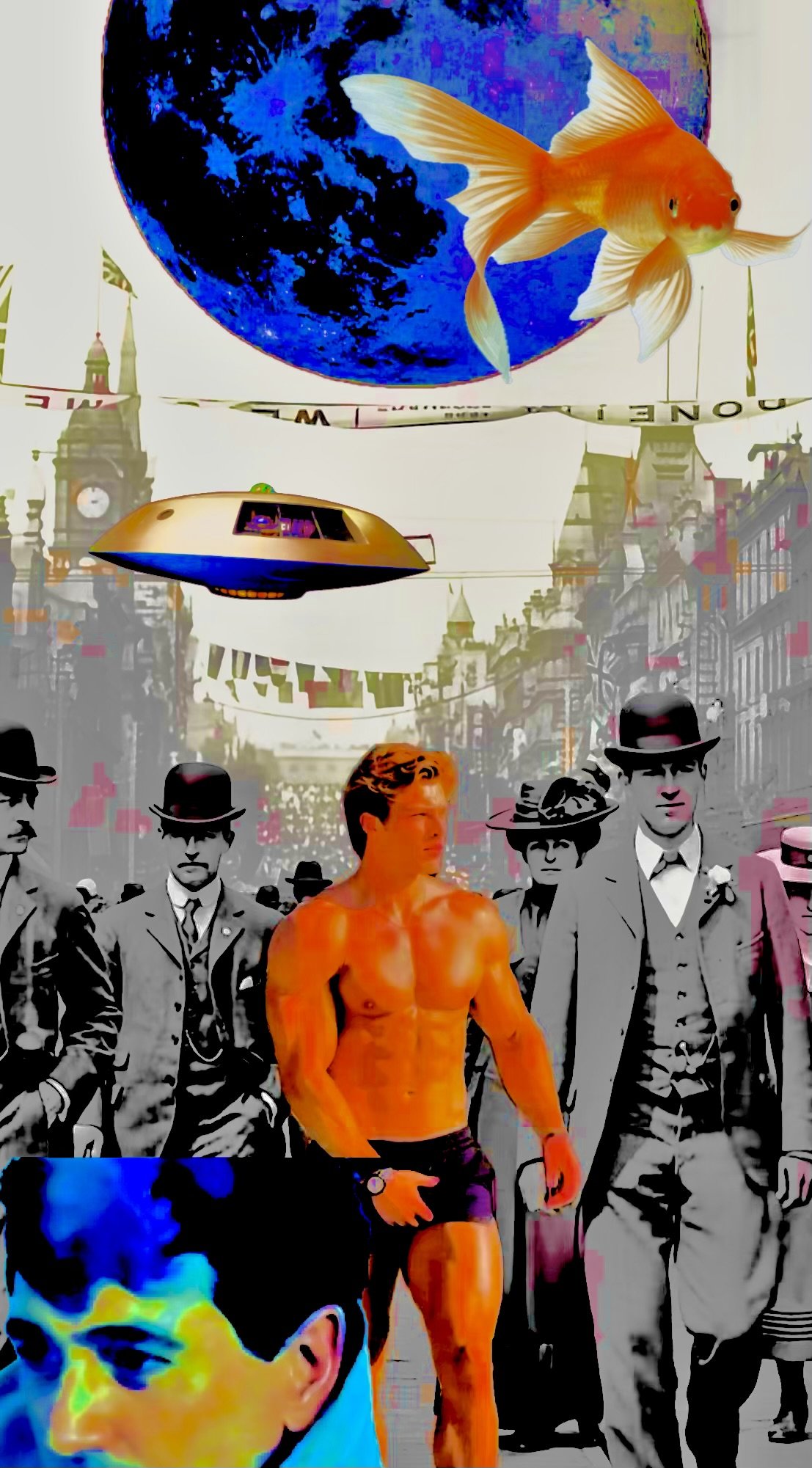
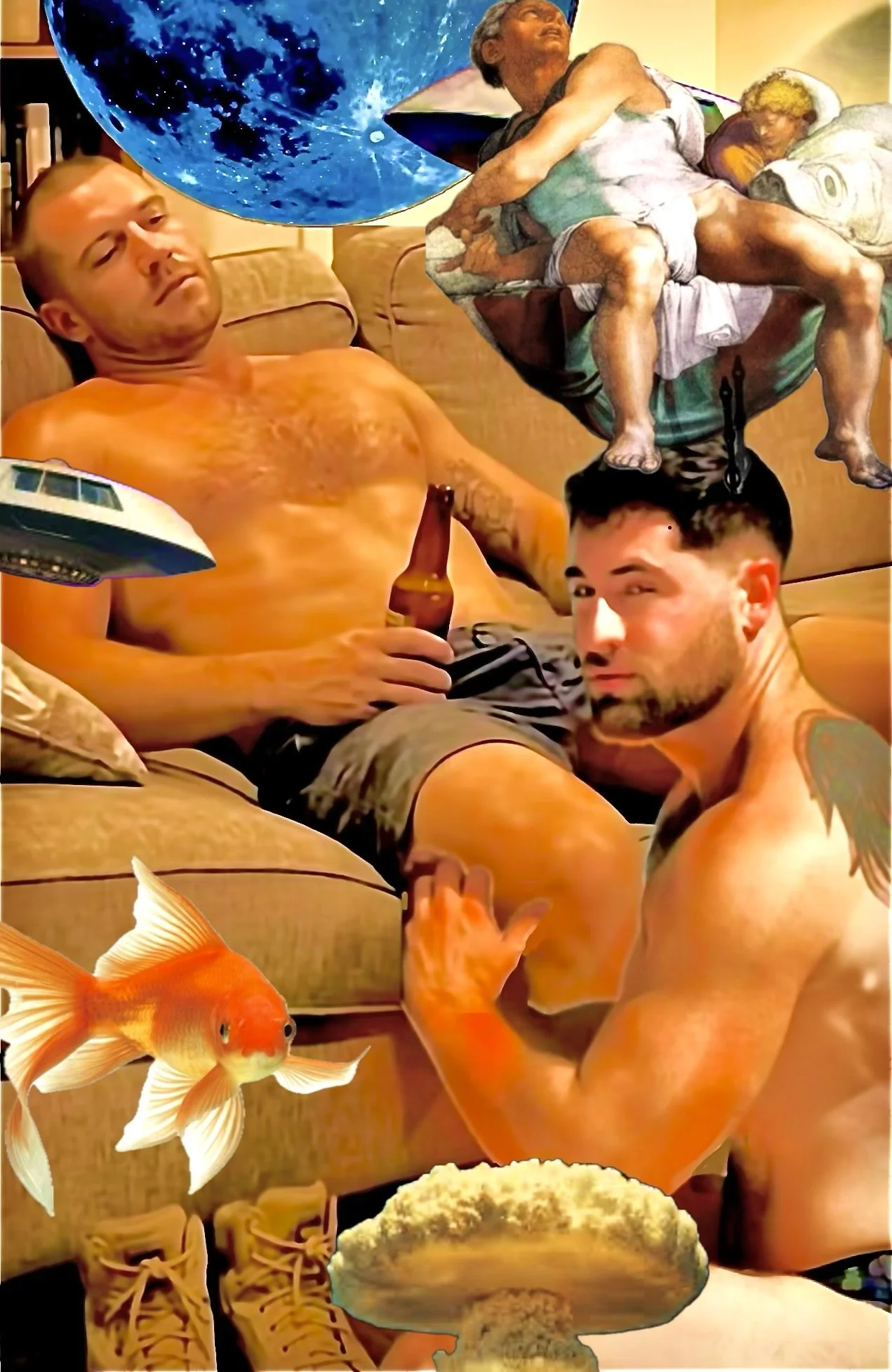
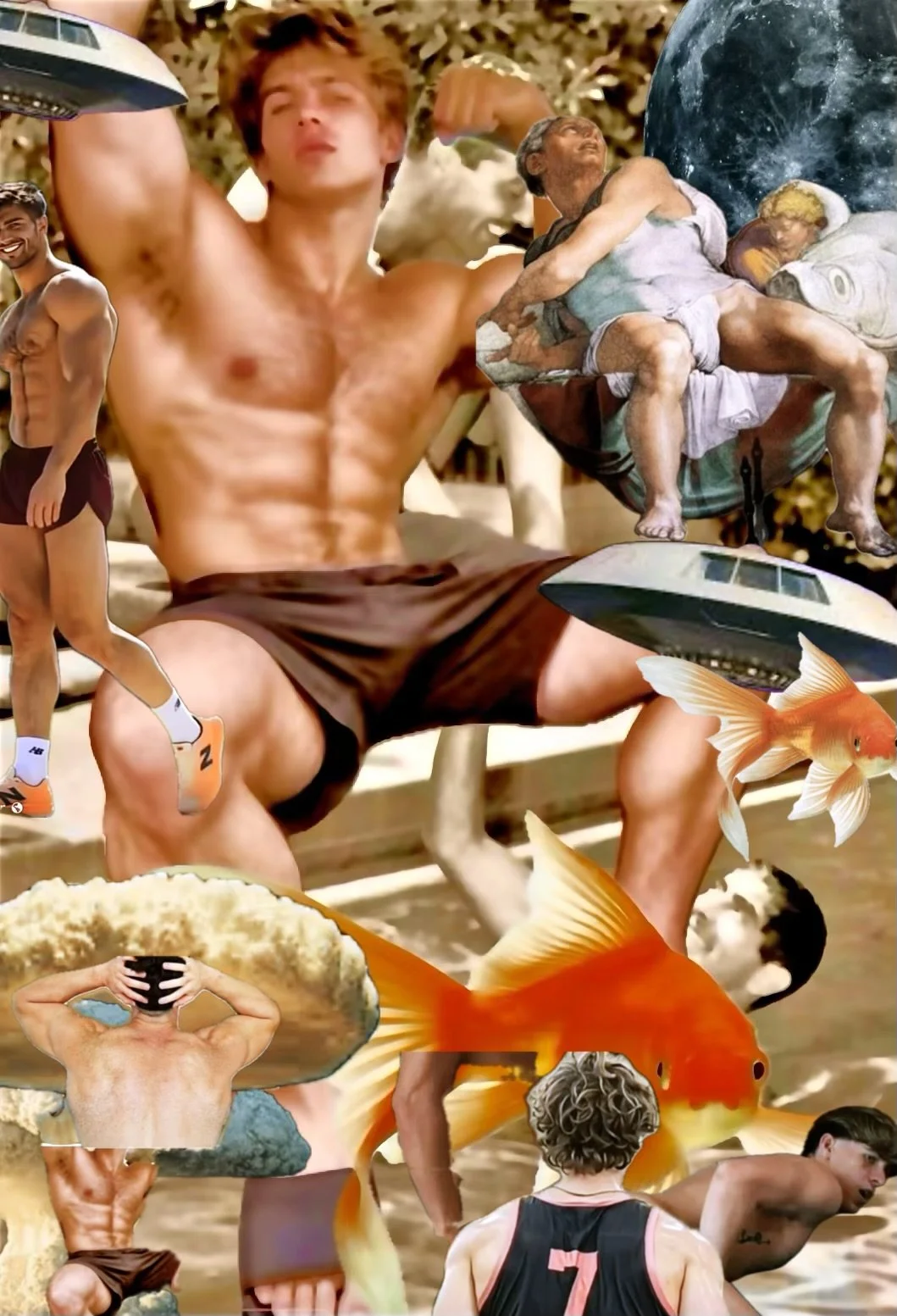
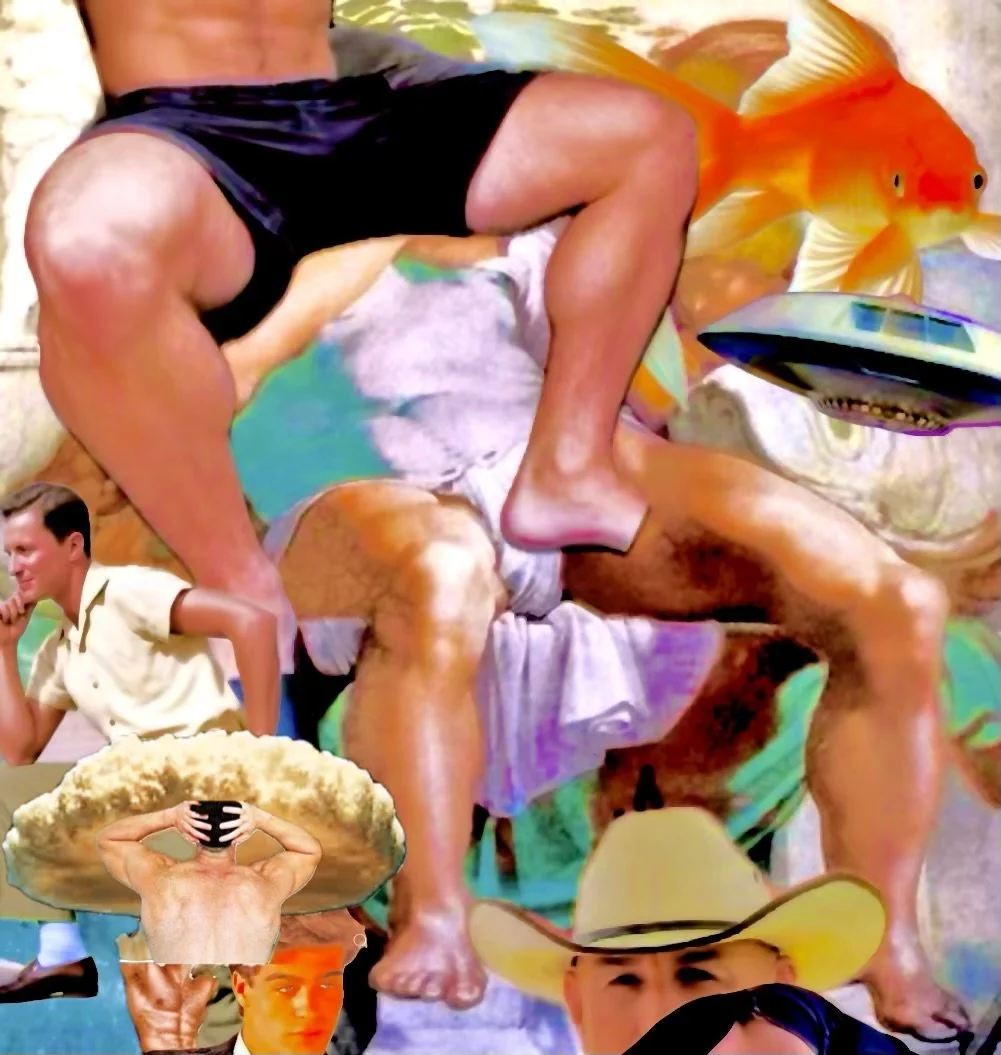
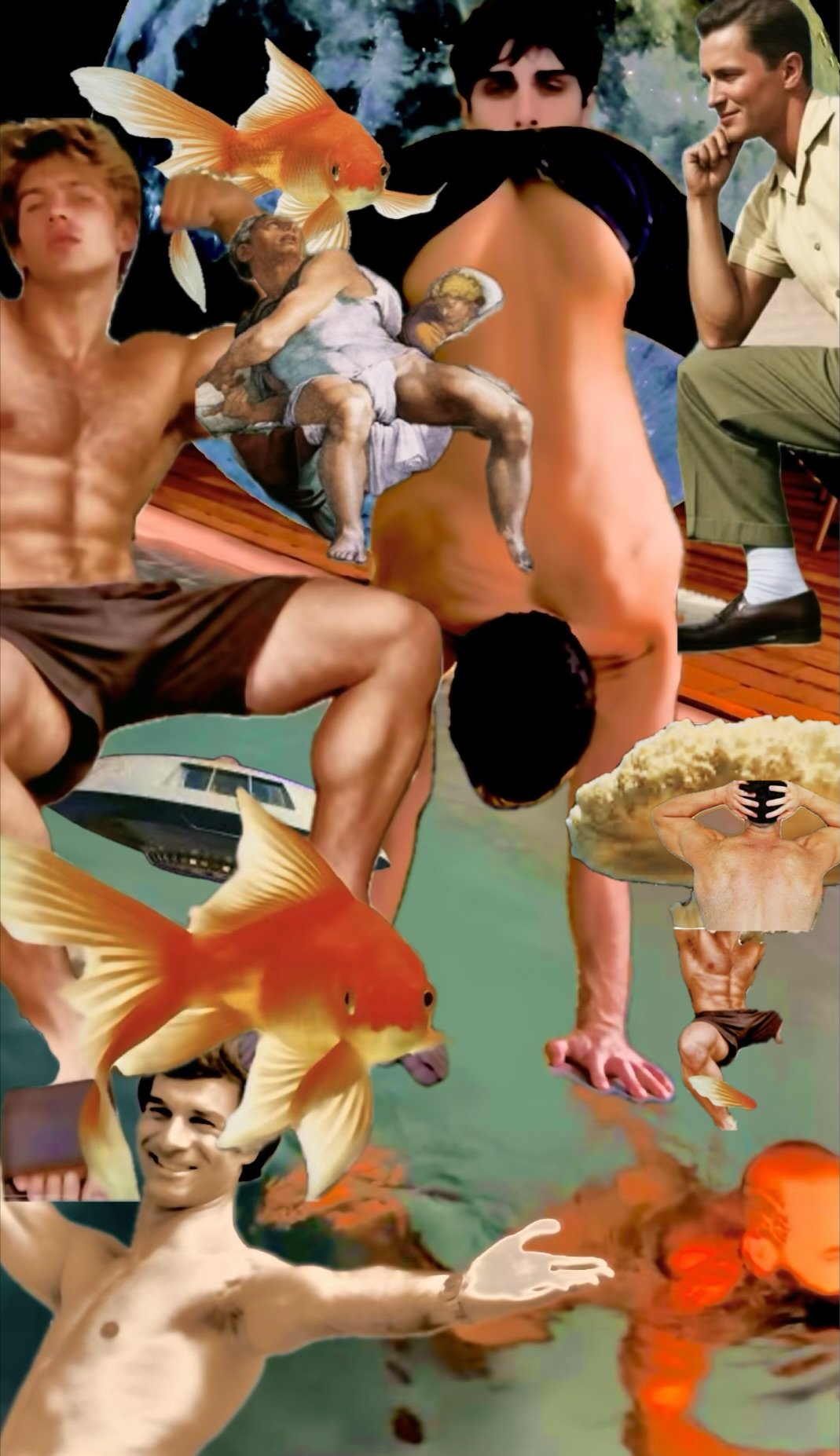
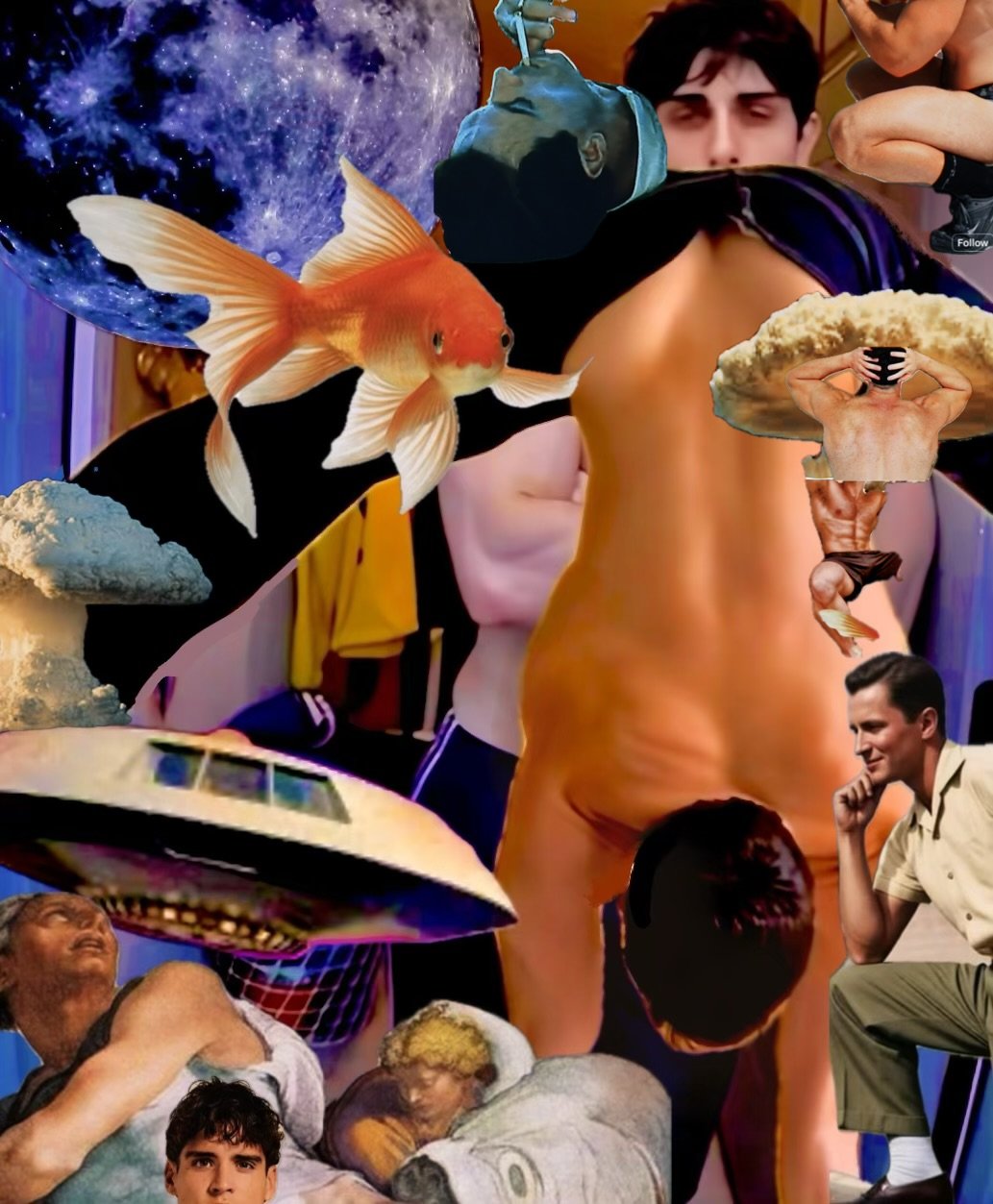
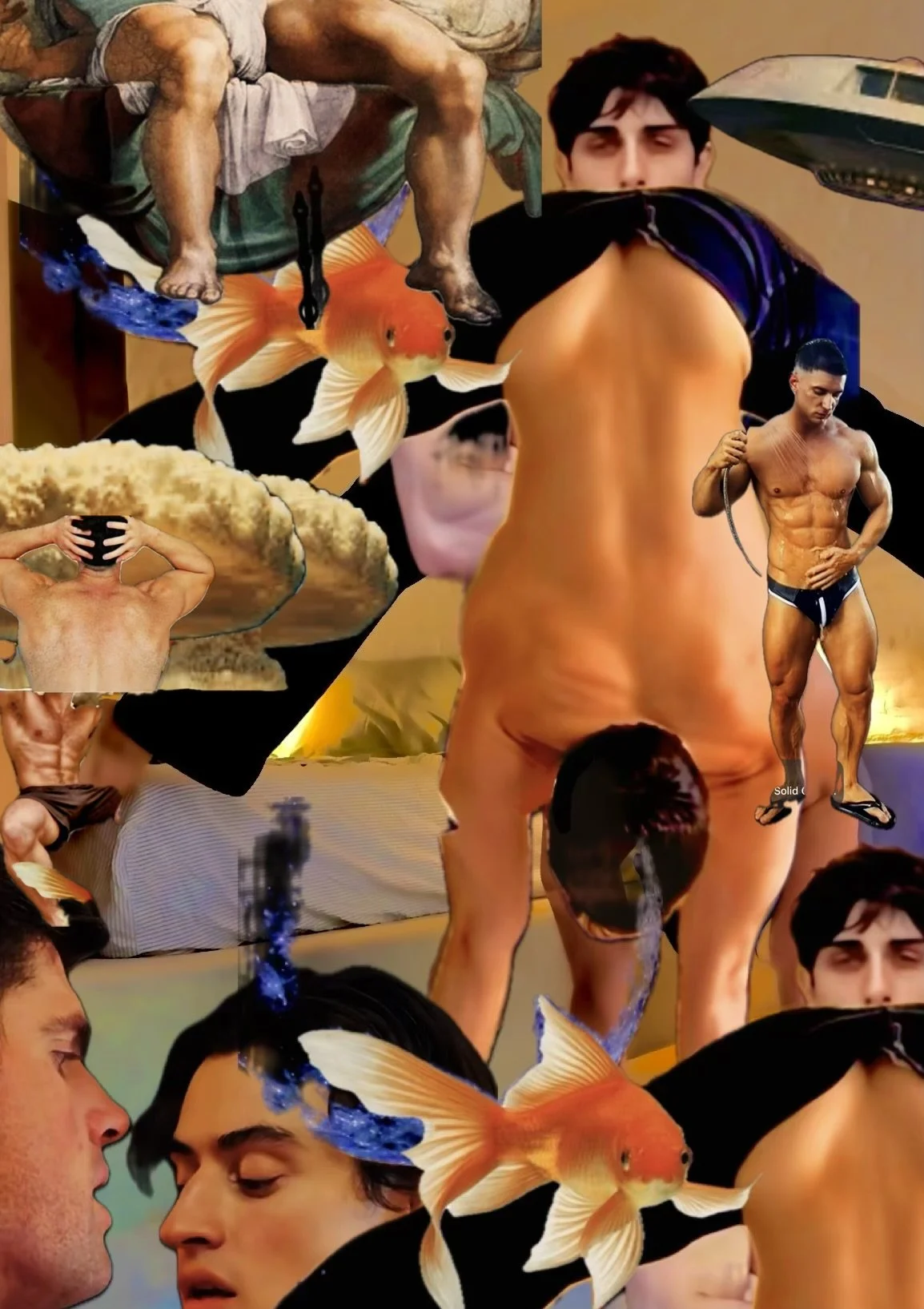
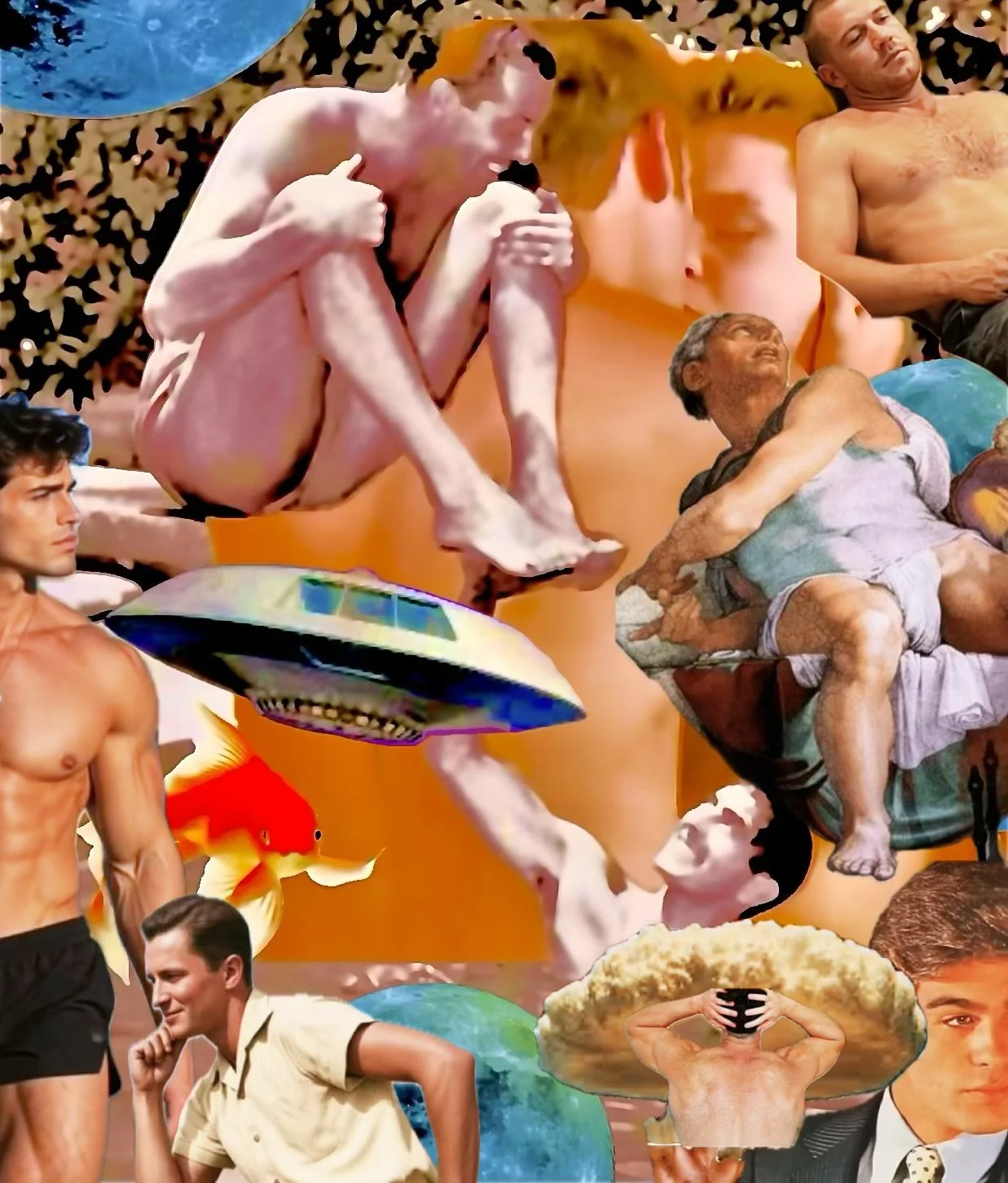
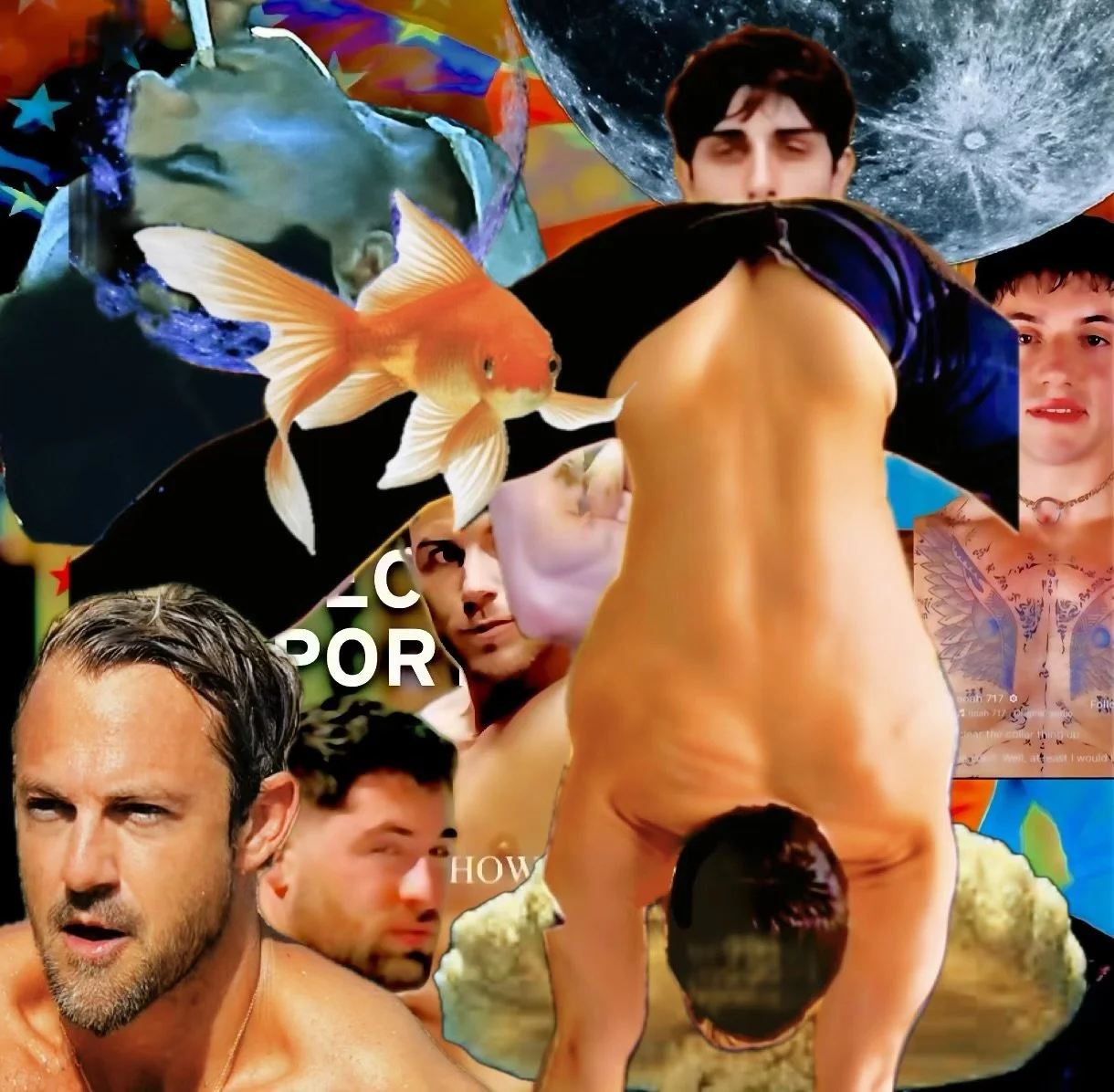
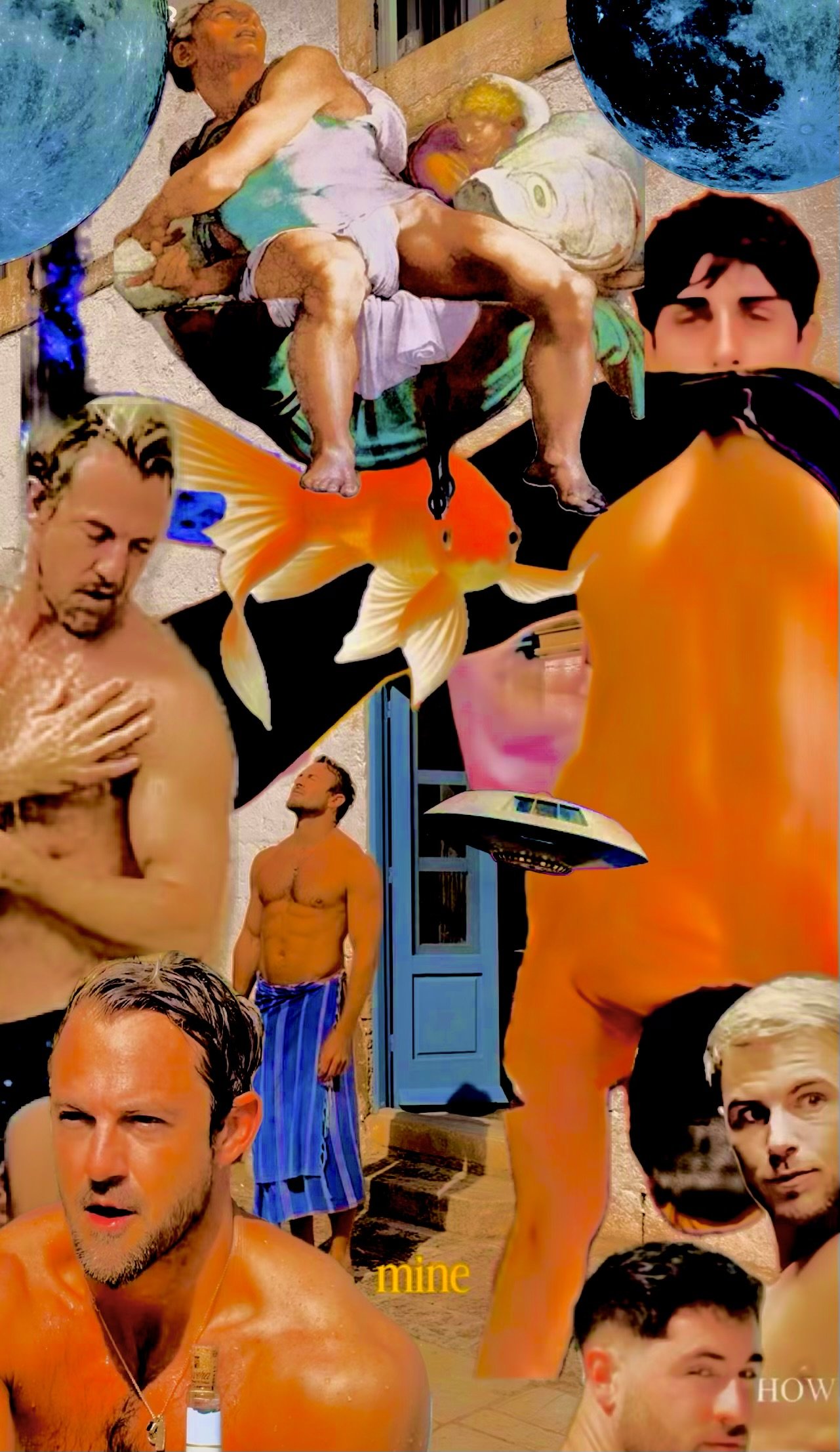
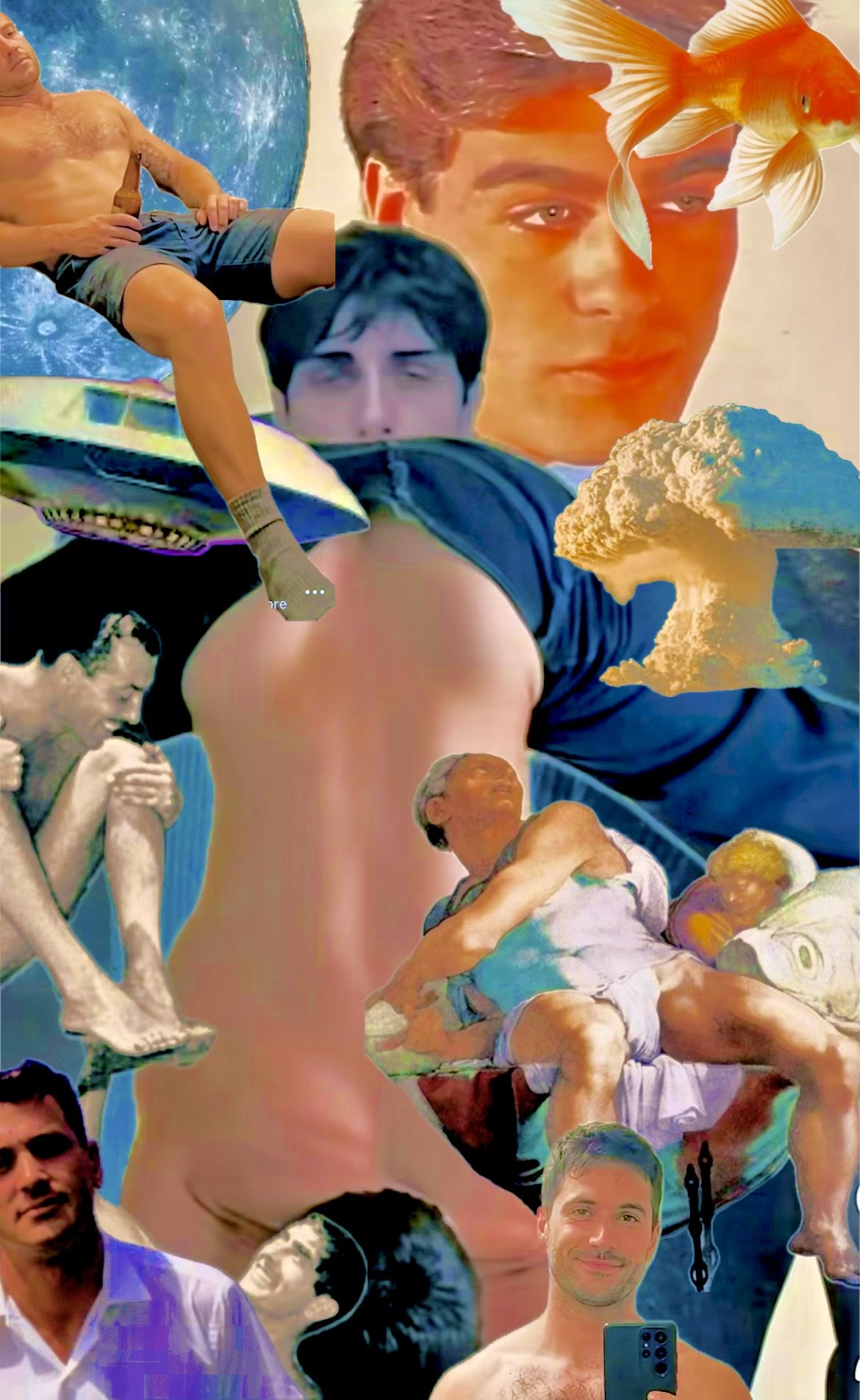
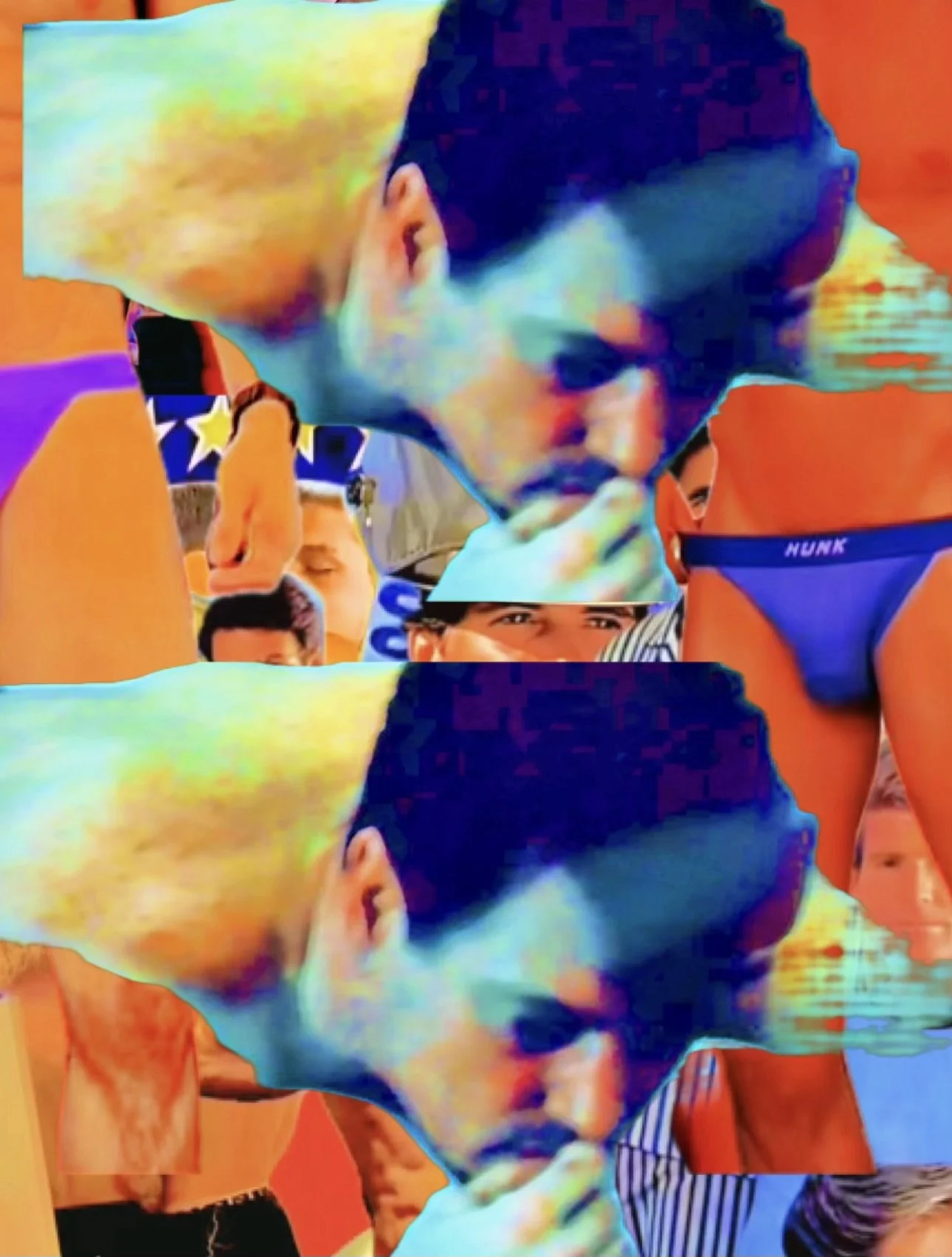
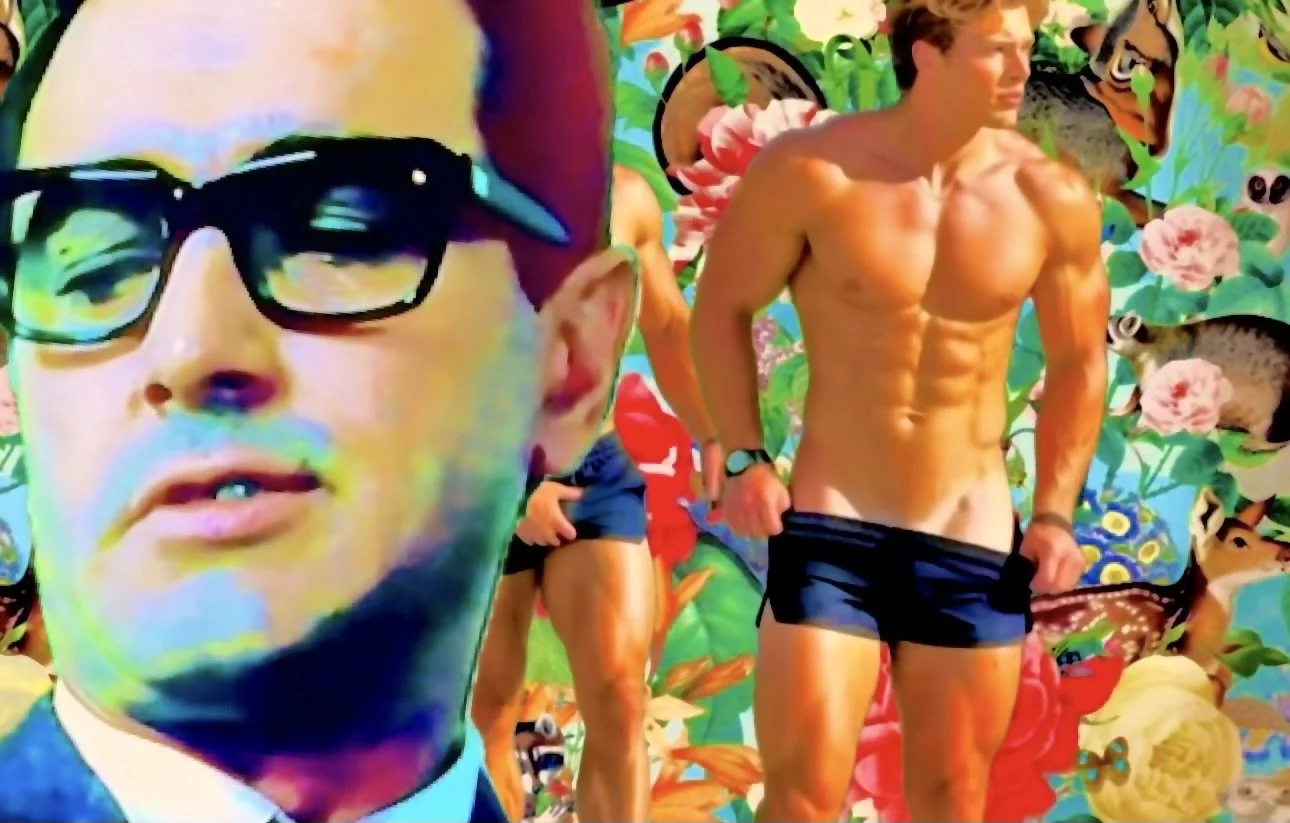
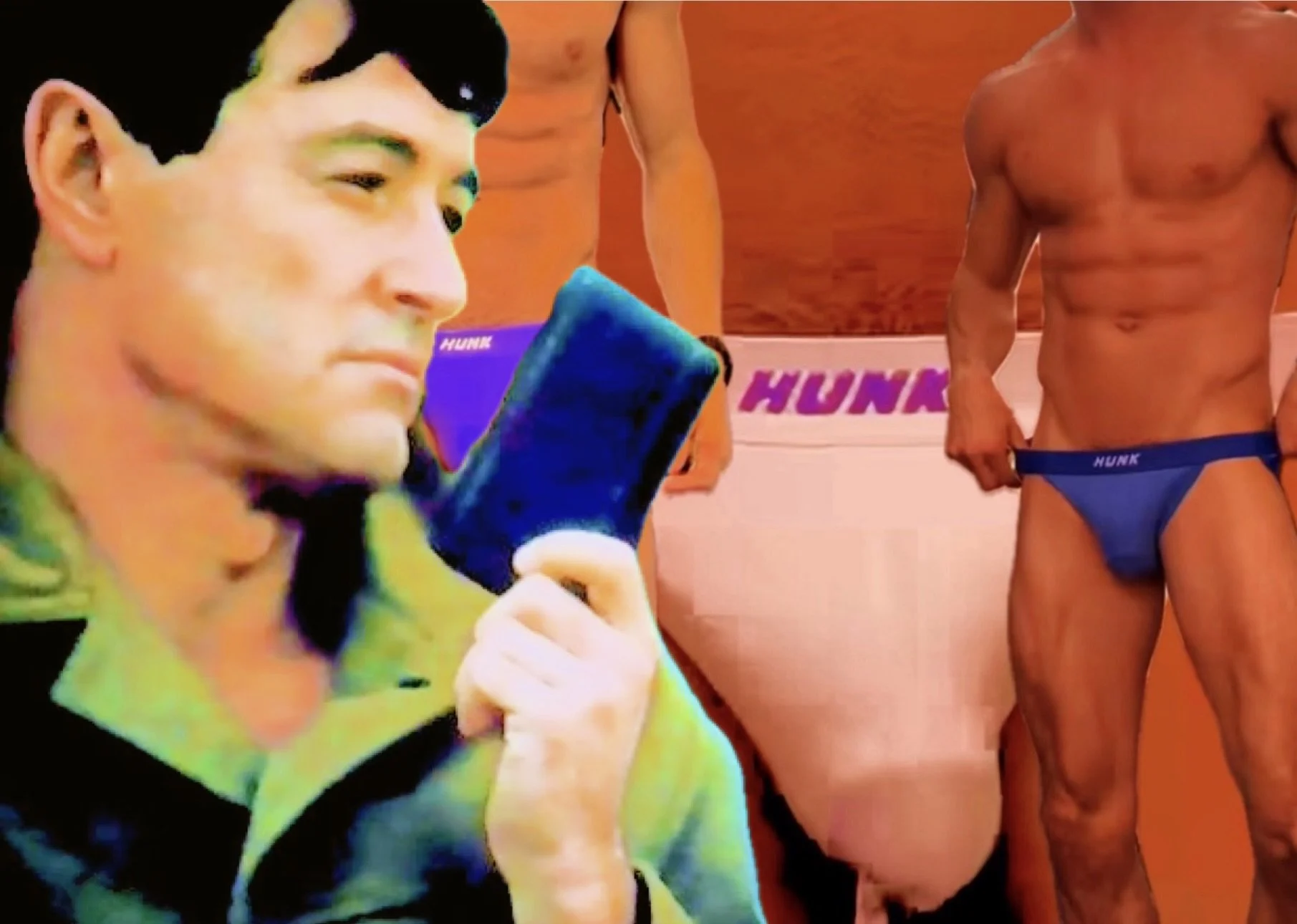
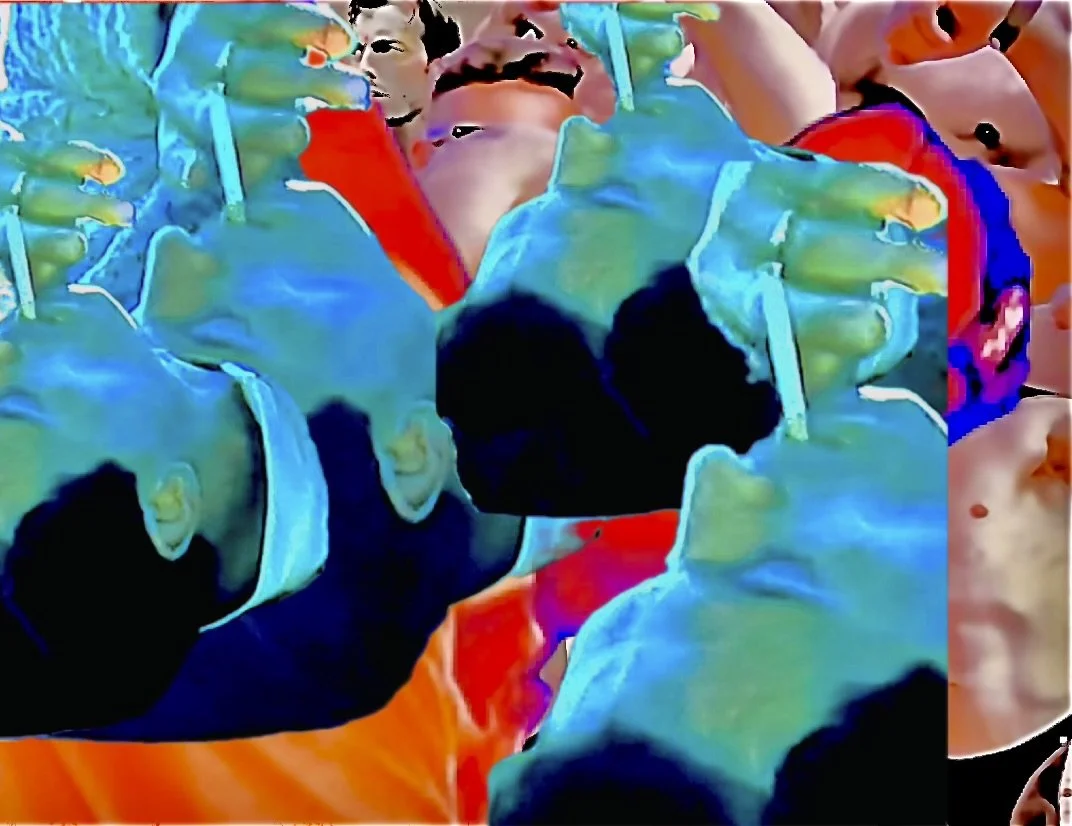
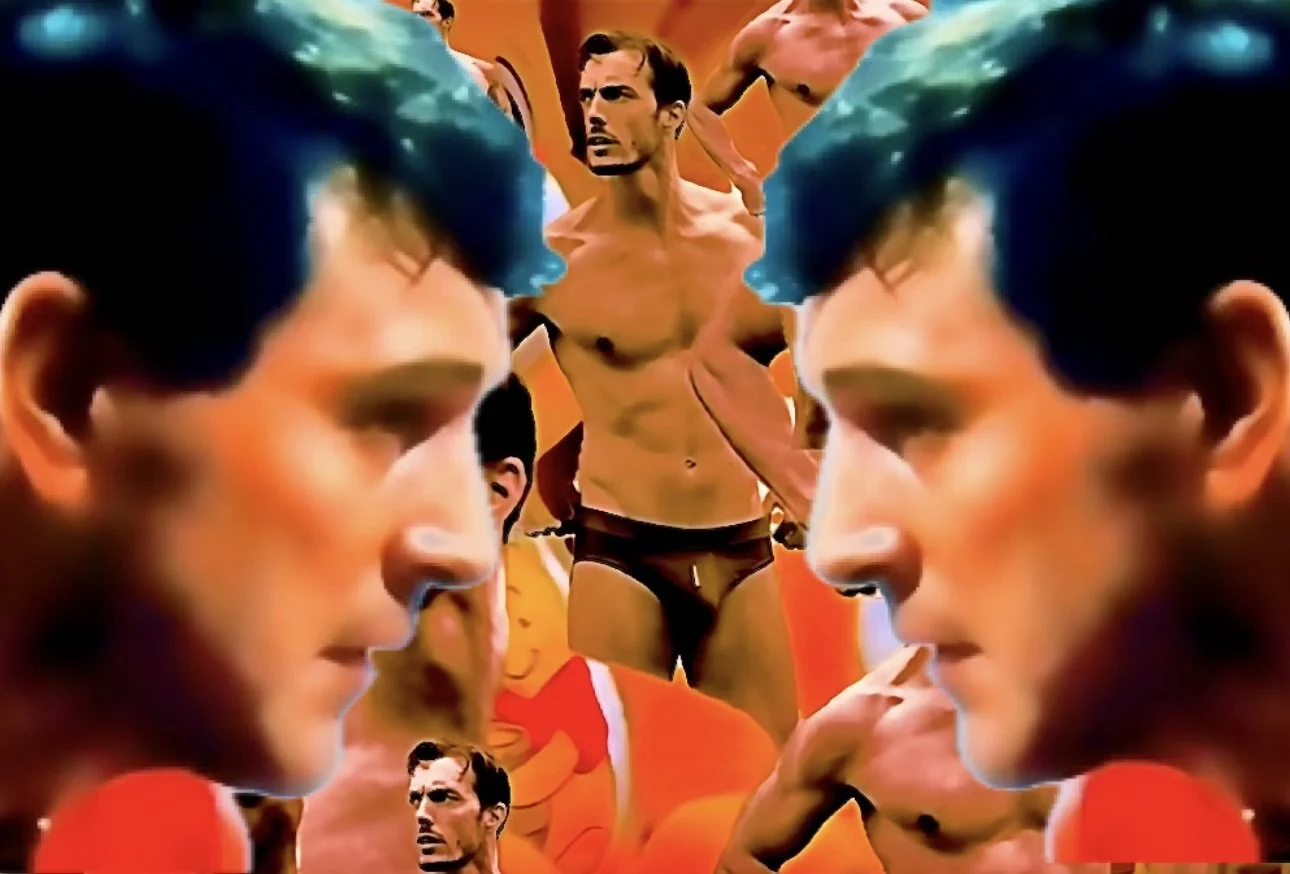
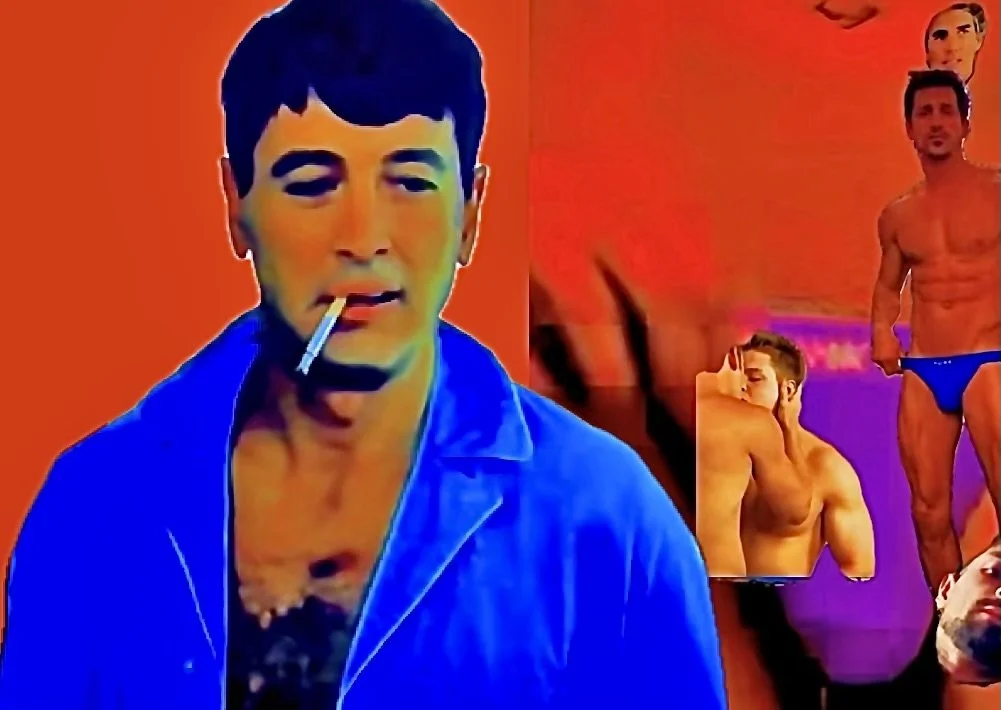
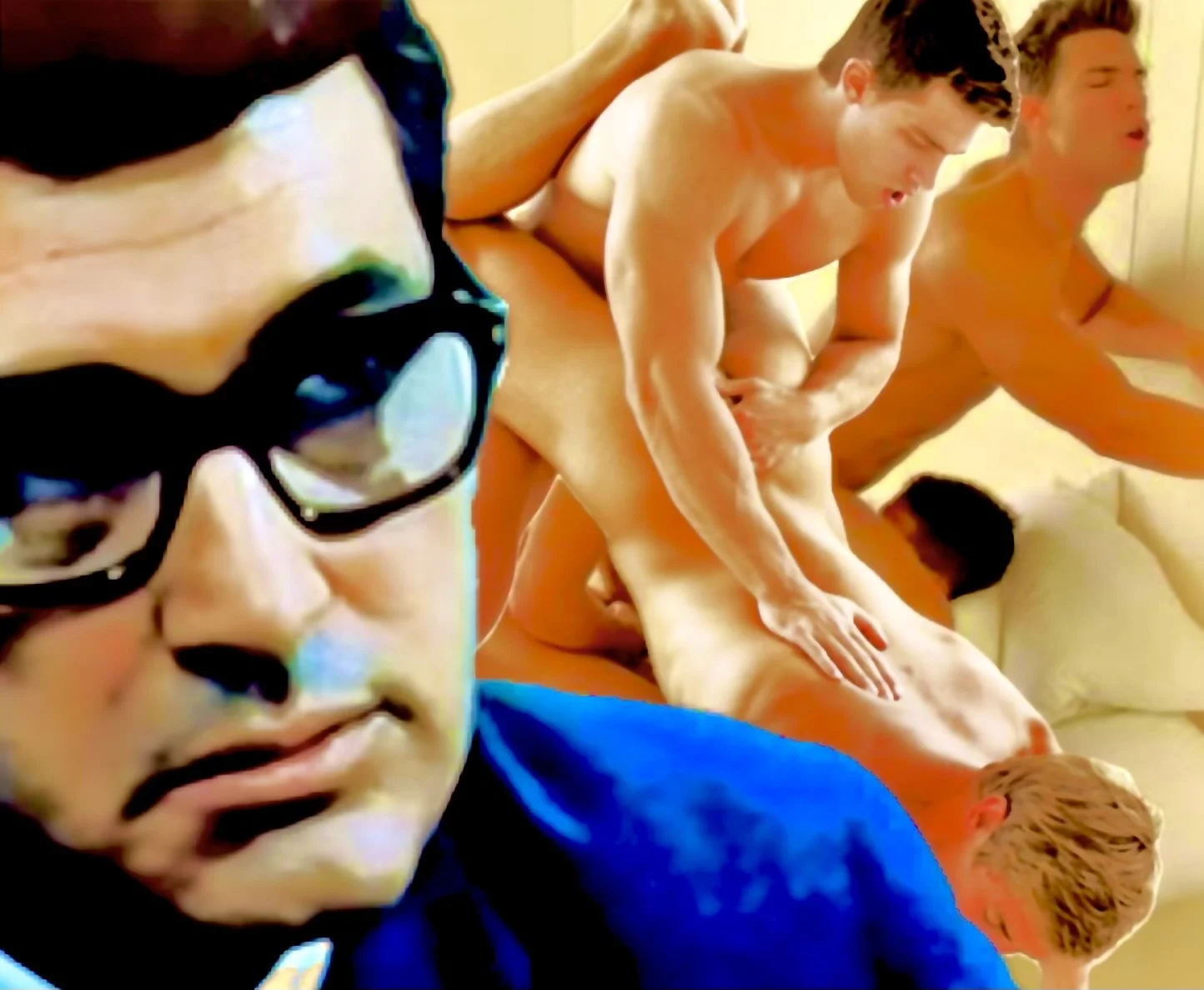
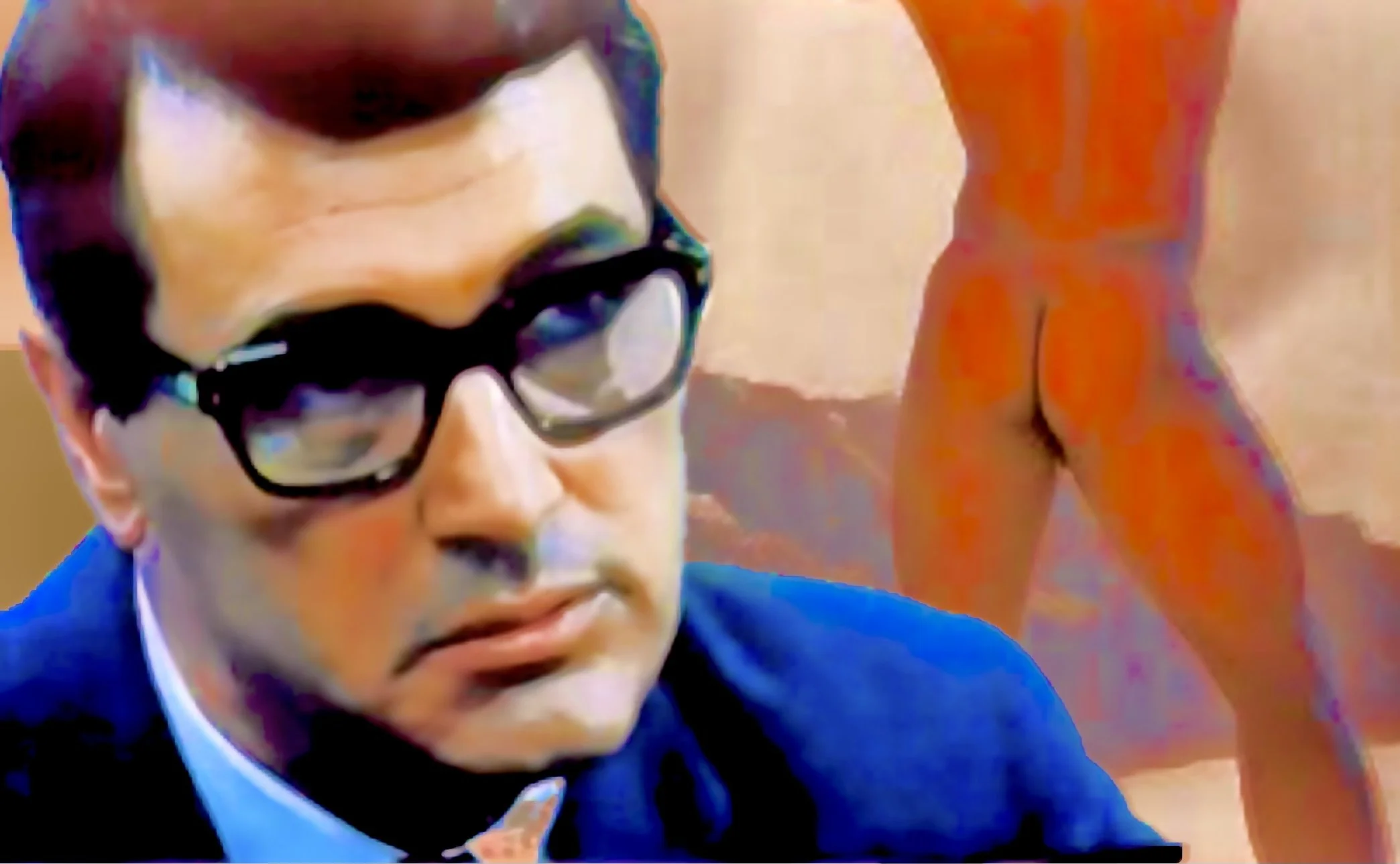
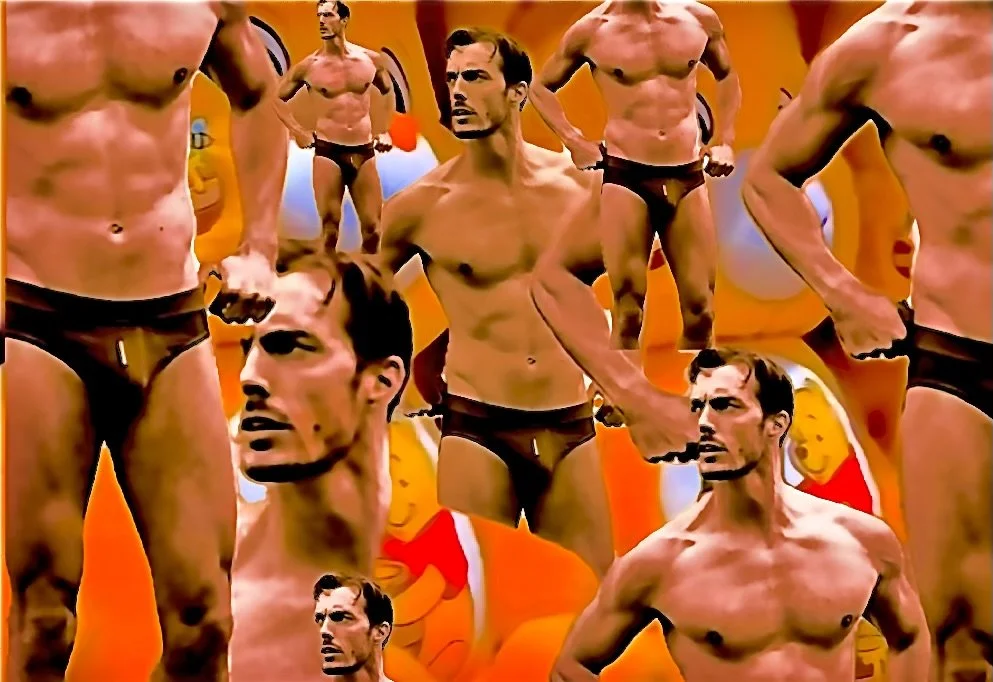
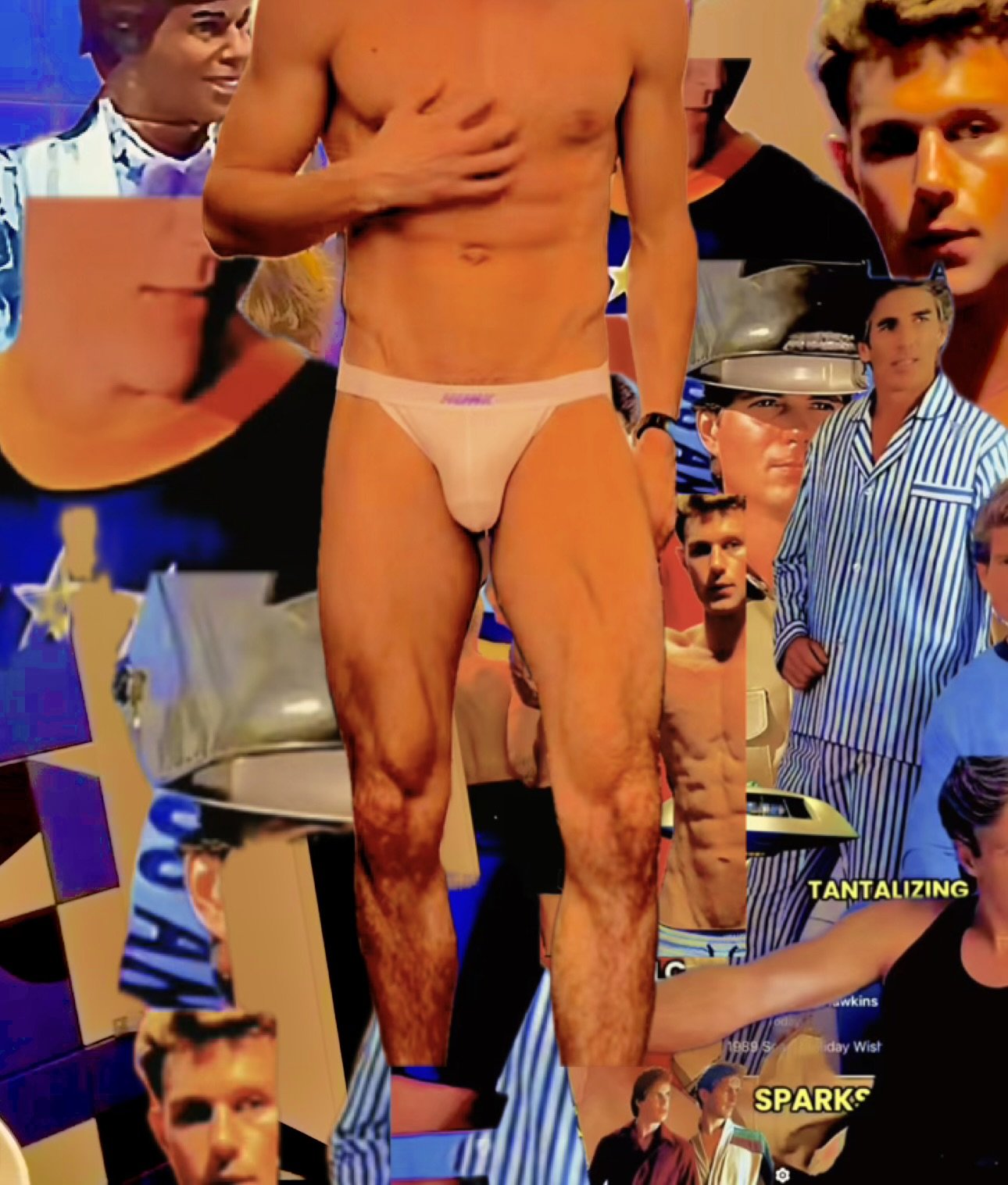
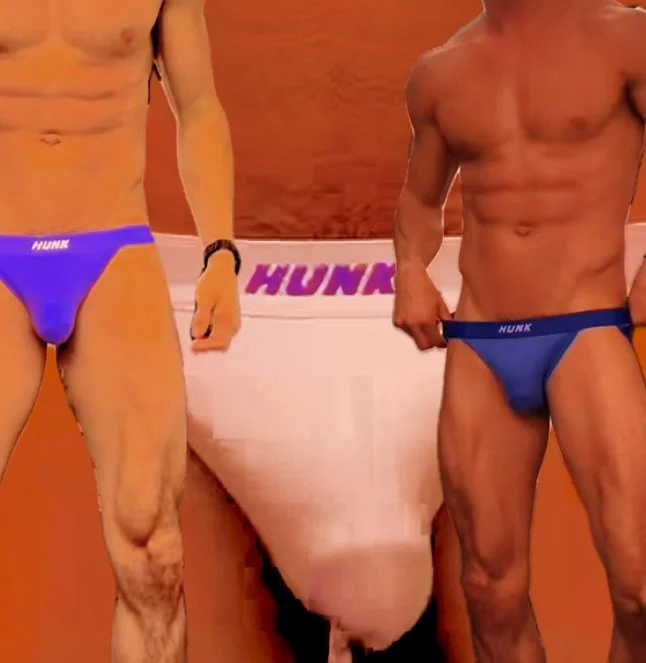
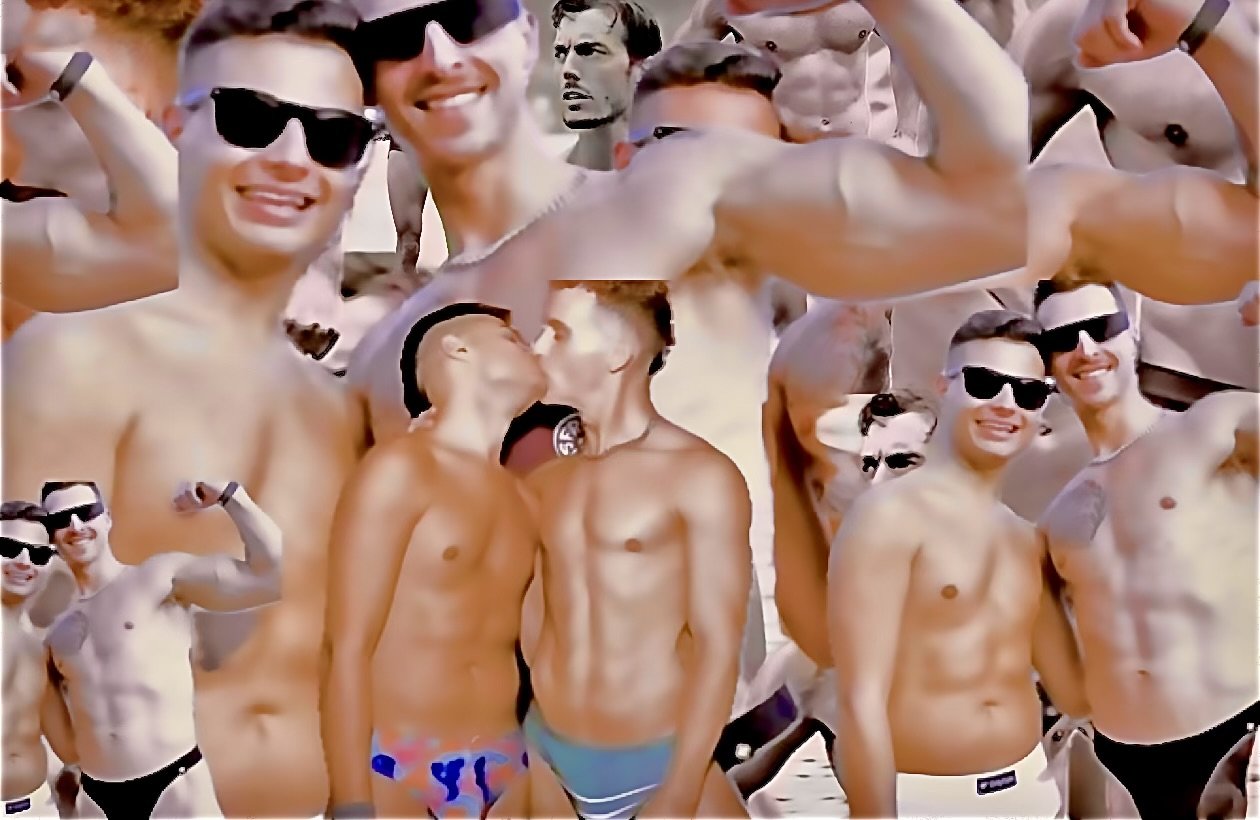
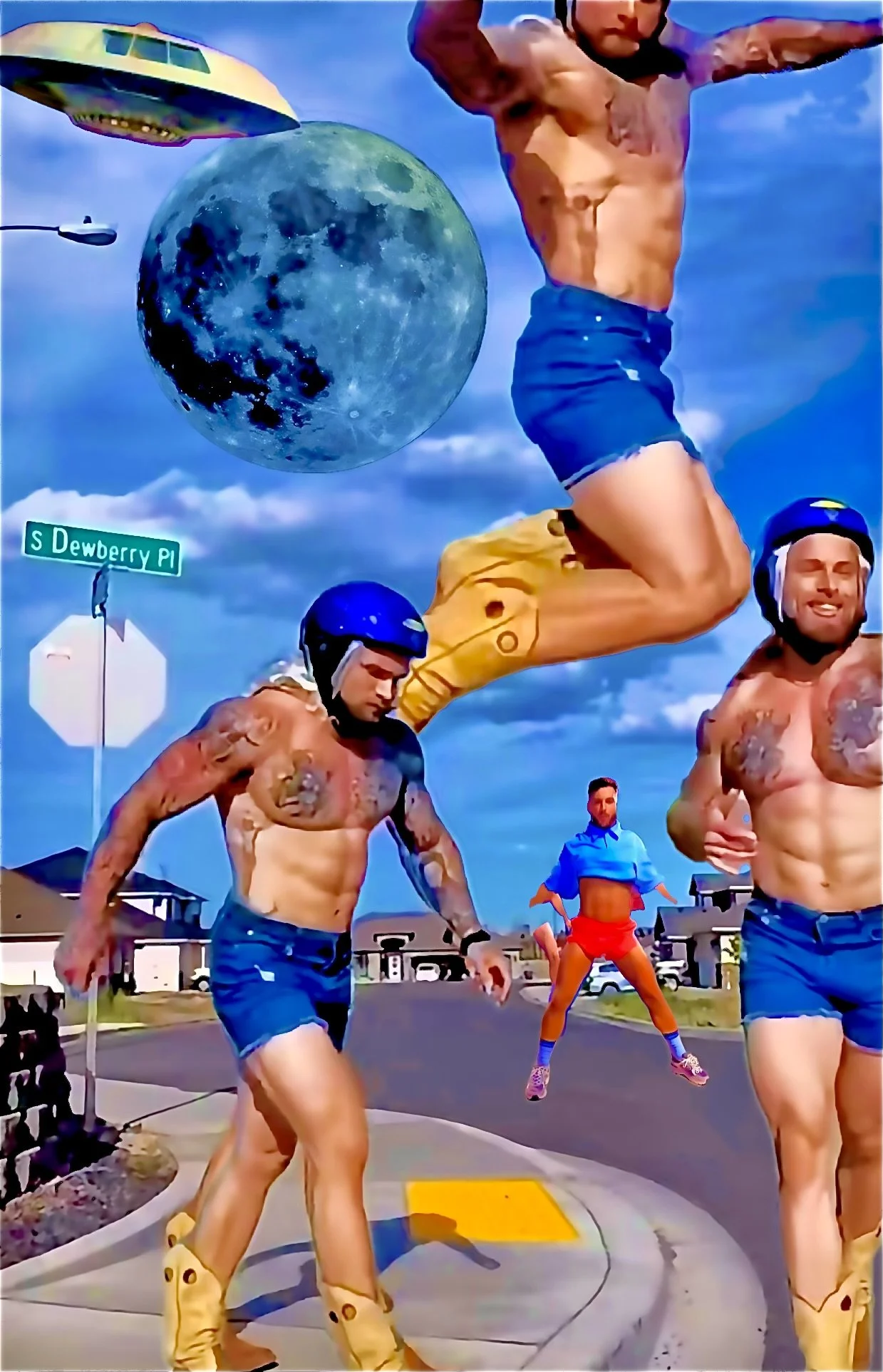
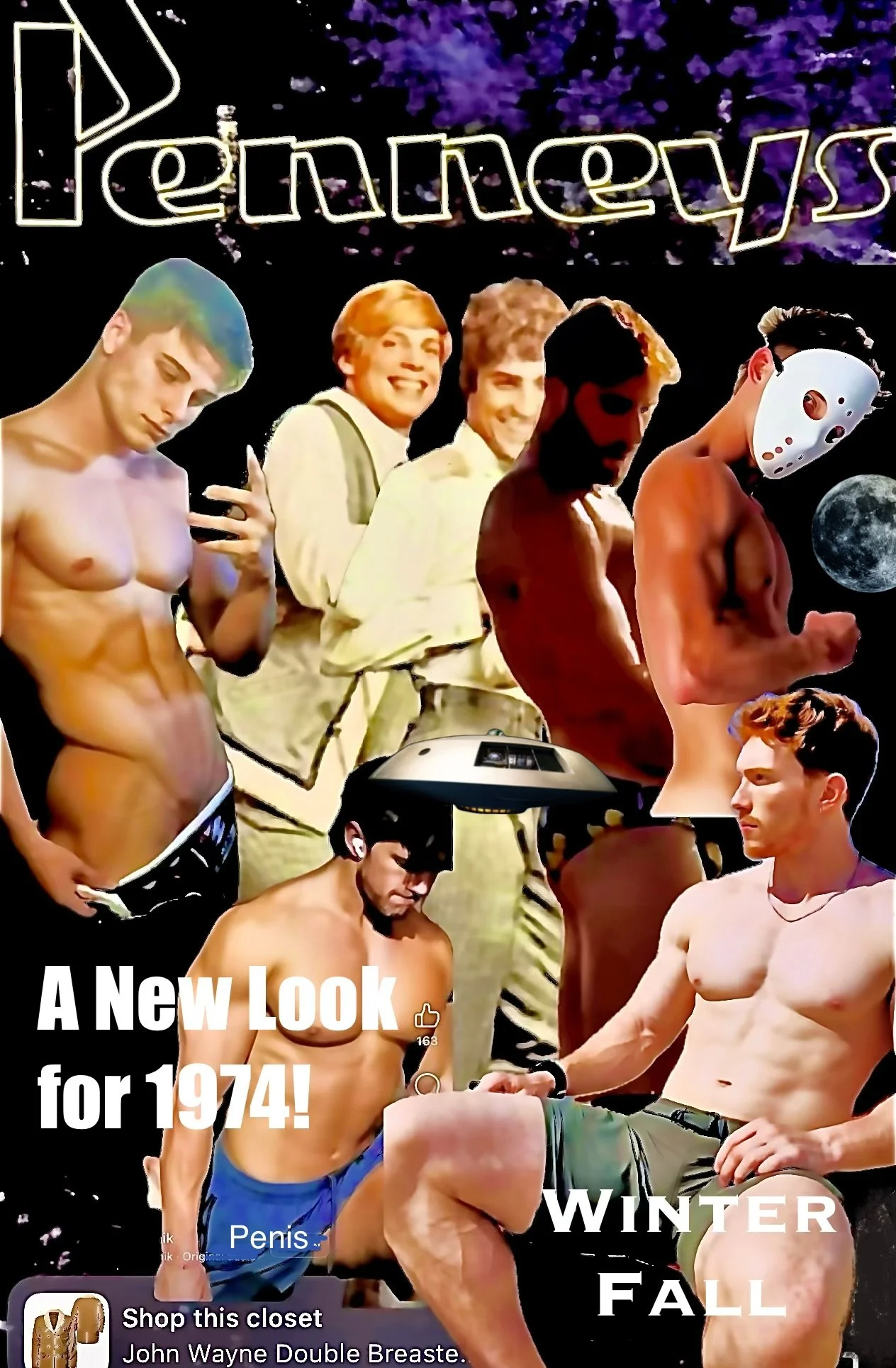
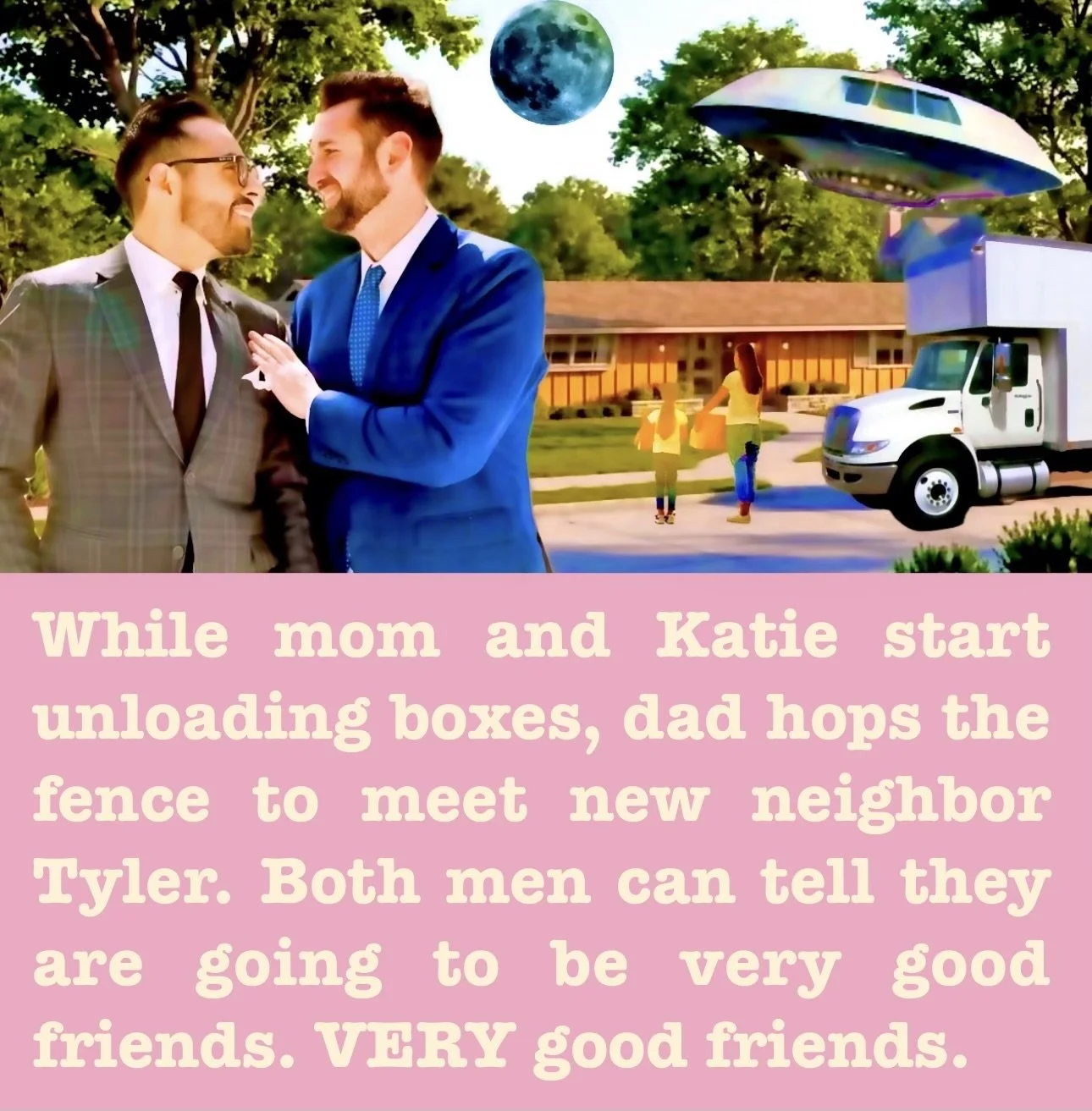
A blue moon hangs over a man’s shoulder before he’s even named. The second panel is all surrender — eyes closed, mouth open, Jupiter 3 drifting past like it knows what’s missing in the frame. The third is two men sharing a breath, with Jupiter 3 hovering between them like a chaperone that gave up chaperoning. The fourth panel breaks into text mid-sentence — “…ggest One I Ever Saw!” — a review fragment doing double duty as punchline and proof of life. This is gay culture advertising itself to itself, decades before it was legal to do so without consequence.

The Mail Wouldn’t Carry It

Before “Giant Films Presents” could exist as a genre instead of a crime — someone had to win the right to put gay content in an envelope. In the 1950s the U.S. Post Office routinely intercepted early gay publications like ONE magazine under obscenity statutes, treating queer existence in print as contraband by default. The case that broke that default, ONE, Inc. v. Olesen, reached the Supreme Court in 1958 and established that gay publications were entitled to First Amendment protection — a ruling that let activists connect with each other nationally for the first time without the government opening their mail first.

Sitting Down to Be Served

Free speech got you the publication. It didn’t get you the seat at the table. The Mattachine Society staged “sip-ins” at New York bars like Julius’ in 1966 — ordering a drink, announcing you were gay, and waiting to see if you’d be refused — to force the legal question of whether simply existing in public as a gay man constituted disorderly conduct. It took organized, repeated, acts of assembly to establish that the answer was no.

The second panel’s surrender — head back, eyes shut, utterly unguarded — is only possible in a space where someone already fought to make such comfortable unguardedness survivable. Vulnerability is the privilege earned by the sip-in, not the starting condition.

From Riot to Institution

Stonewall, 1969: a routine raid met with several days of refusal to disperse, and a localized homophile movement detonated into mass-liberation. A year later, Christopher Street Liberation Day became the template for every Pride march since. The shift the Subdivision keeps tracking:

—“behavior is identity” transitioning to “behavior is NOT identity” —

has a hinge date, and this is it.

The Classroom and the Clinic

The 1970s and ‘80s turned the First Amendment toward two new fronts. California’s Proposition 6 in 1978 tried to ban gay people from teaching in public schools outright; it was defeated using First Amendment arguments about academic and political freedom, which is a polite way of saying gay teachers won the right to exist in front of a chalkboard by arguing free expression rather than by begging for tolerance. Then ACT UP, through the AIDS crisis, weaponized that same expressive freedom — provocative demonstrations, graphic art, die-ins — to drag a government that preferred silence into addressing an epidemic it was content to let burn through a population it considered disposable.

The fourth panel’s review fragment, mid-sentence and unbothered — “…ggest One I Ever Saw!” — sits in that lineage whether it knows it or not. Advertising your own gay culture, in your own confident fragment of language, is a direct descendant of a movement that had to argue, in court and in the street, for the right to be loud about its own existence at all.

The Closet, Legally Speaking

Lawrence v. Texas in 2003 decriminalized gay intimacy nationwide, retiring the anti-sodomy statutes that had kept every panel of this collage technically illegal in the states that still enforced them. Obergefell v. Hodges in 2015 extended the same equal protection and due process logic to marriage. Between them, the legal architecture that made “Giant Films Presents” a punishable offense was dismantled — not all at once, not generously, but completely.

This collage set is documentation of a moment when documentation itself was the crime, and the moon was already there, watching, waiting for the law to catch up to what the camera already knew.

Jupiter 3 isn’t surprised. It’s been hovering in the frame since before the frame was legal to film.
— Behan

Take Me

The Full Moon presides.

Ten digital photo collages from The Gay Gaze, part of the Subdivision Development.

Groundbreaking.

The moon holds its position. Jupiter 3 makes its rounds.

Gay men do what all men do — just backwards and in fishnet.

Take me to the river.

Pricing available on request.

We All Fall Down

We All Fall Down | The Closet | The Subdivision | Digital Photocollage | 2026

Pastor Ted Haggard:

“I did not have a homosexual relationship with a man in Denver.”

“There is a part of my life that is so repulsive and dark that I’ve been warring against it all of my adult life.”

“The reason I would teach that is that was reflective of my struggle.”

“Some of us church folks have implied to our kids that God loves only straight people.”

Escort Mike Jones:

“Why am I not shocked? During the 1990s, when I worked as an escort in Denver, Colorado, I estimate at least 15 percent of my clientele were clergy or connected with the church in some way.”

Pastor Ted Haggard:

“I think that probably, if I were 21 in this society, I would identify myself as a bisexual.”

The Blood Moon has seen it all.

False Prophet

“Beware of false prophets, which come to you in sheep’s clothing, but inwardly they are ravenous wolves.” — Matthew 7:15, King James Bible

Every closet is unique. Some are built from fear. Some from shame. Some from the cold arithmetic of survival. Ted Haggard’s closet was built from condemnation.

Haggard founded New Life Church in Colorado Springs in 1984, growing it into a congregation of 14,000. By 2003, he was president of the National Association of Evangelicals, representing thirty million parishioners and forty-five thousand churches across the United States. He advised the White House. He was named one of Time magazine’s twenty-five most important evangelicals in 2005. From that height, he preached against homosexuality with the certainty of a man who believed his own sermon. In 2006, he actively campaigned for Colorado Amendment 43, seeking to enshrine a ban on same-sex marriage in the state constitution.

That same year, Mike Jones — a Denver male escort — came forward to report that Haggard had been paying him for sex once a month for three years, and purchasing crystal methamphetamine. Haggard’s initial denial was swift and specific: “I did not have a homosexual relationship with a man in Denver.” Within days, the board of New Life Church declared him guilty of sexually immoral conduct and removed him. A second victim, a young male volunteer at the church, later received a settlement of $179,000.

The architecture of Haggard’s closet is not unusual in its dimensions — a man at war with his own desire, using the nearest available weapon. What is particular to Haggard is the scale of the weapon. He did not merely suppress himself. He organized. He legislated. He stood at a pulpit before tens of thousands and told gay men they were an abomination — while being one himself, by his own definitions.
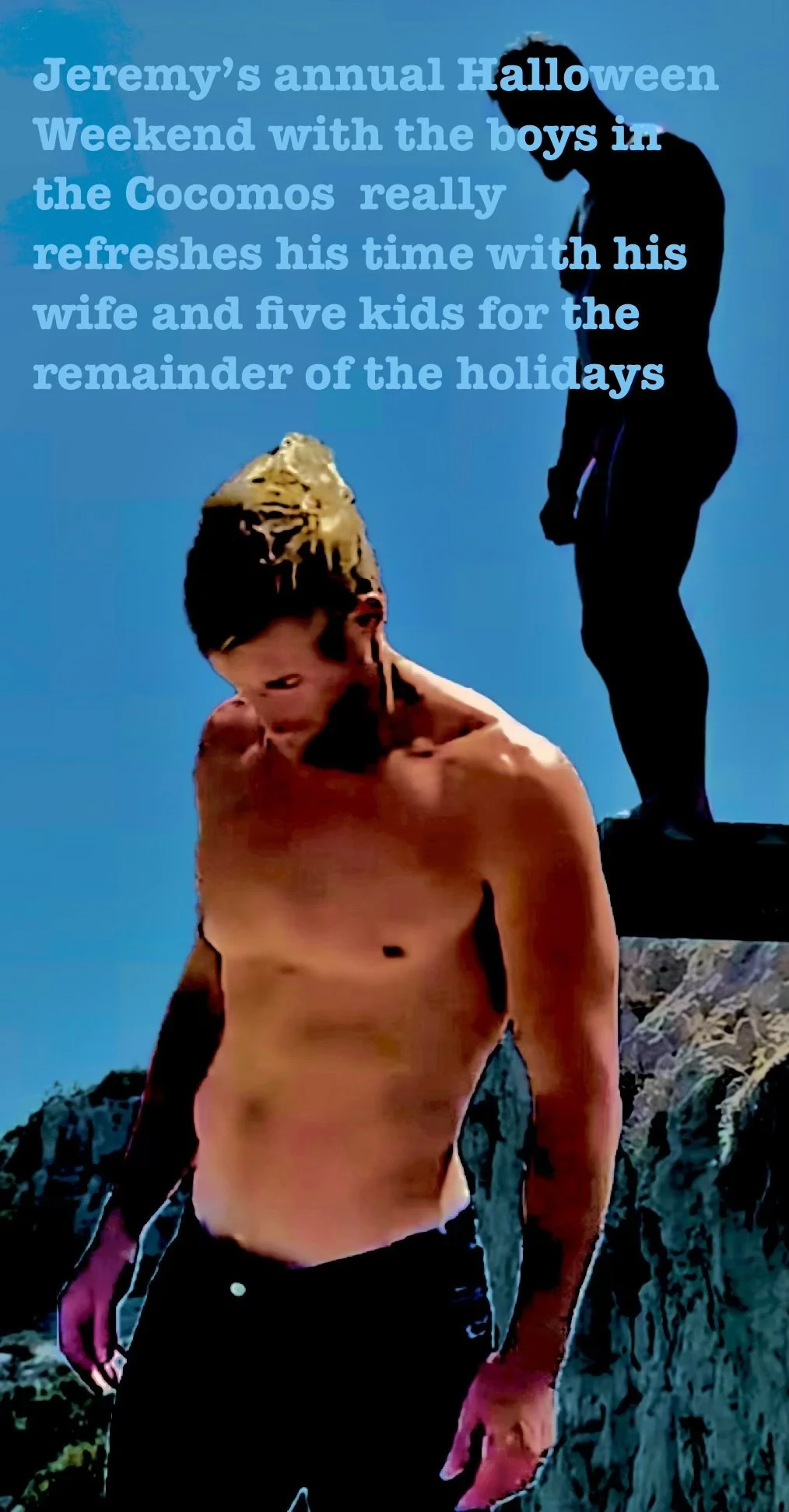
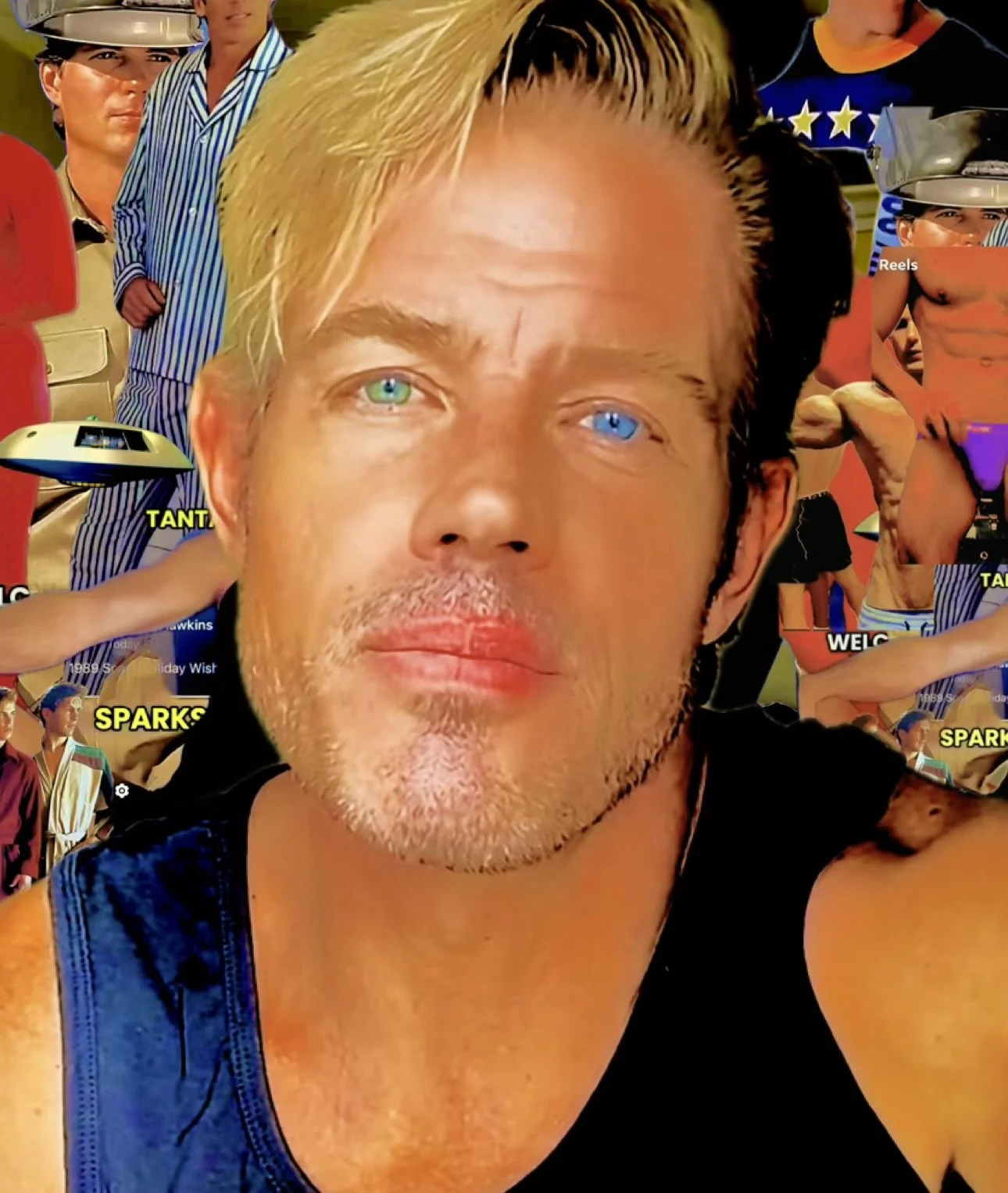
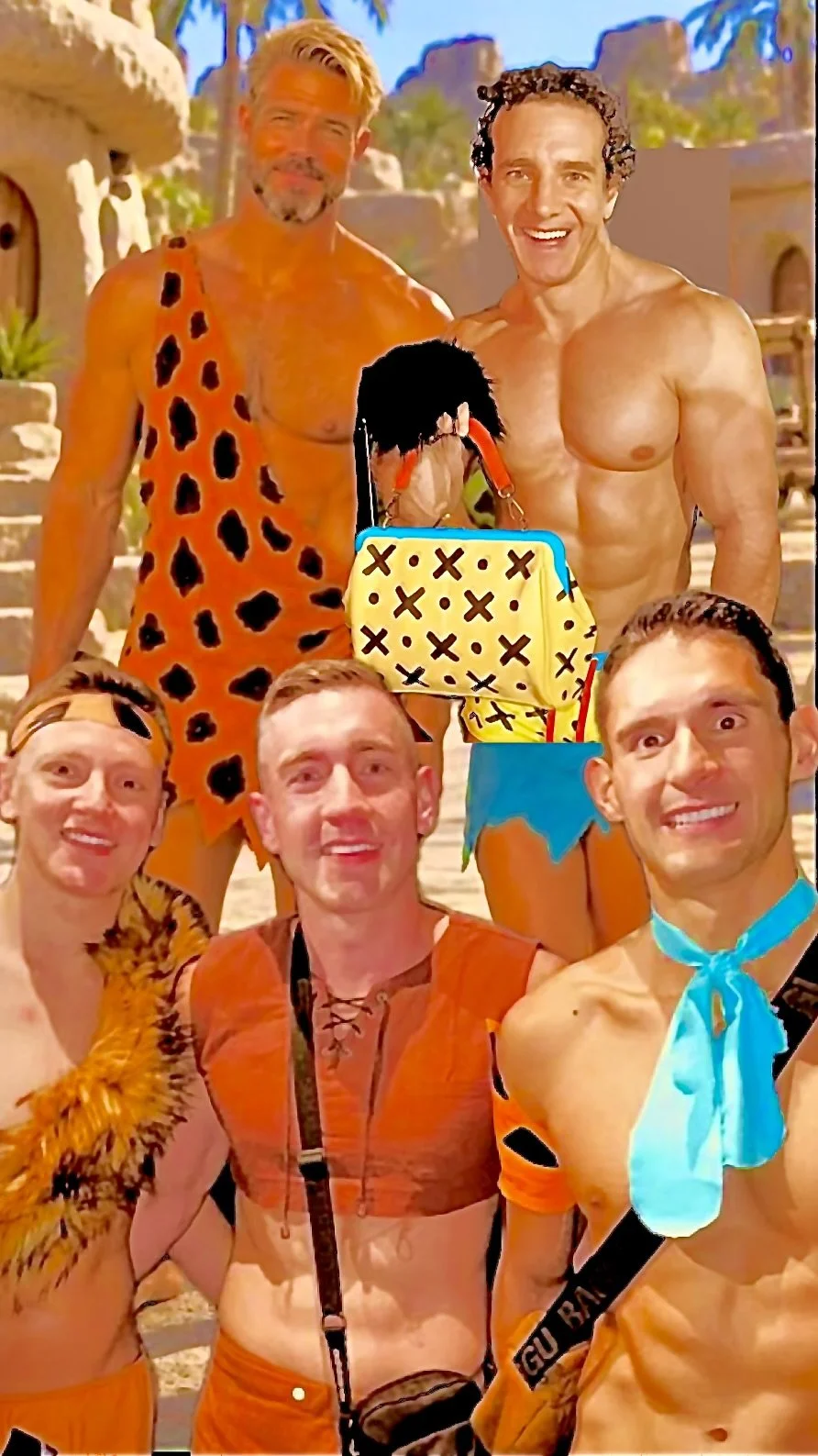
The Blood Moon hangs behind him in this collage not as glory, but as inversion. The halo earned by a false prophet. The classical figure beside him is desire itself — unashamed, ancient, ungovernable. The young man at the fortress door is someone else’s story — one of the men who came forward, who stood at the threshold of Haggard’s world and paid a price for it. The tiger is the threat Haggard represented to anyone who might expose him — the power of a man who advised presidents, commanded thirty million, and could end a career with a phone call. Grant Haas waited a year before coming forward. That fear was rational. The tiger had real teeth. Until it didn’t.

The Closet Series has documented men who hid to survive. Haggard hid to rule. That is a different kind of closet — one whose walls were built from other people’s lives.

The fruit, as the scripture says, is how you know the tree.

The Subdivision | The Closet Series | The False Prophet | Blood Moon

Cam

Chapter 1: The Meet Up

Chapter 2: Texas Tails

Chapter 3: The Boyfriend

Epilogue

What Cam doesn’t think about — what he keeps carefully at bay — is what the research already knows. LGBT+ older adults are 30% more likely to experience loneliness than their non-LGBT+ peers. Gay men who remain unpartnered and disconnected from community are among the most at-risk. Four out of five older LGBTQ+ adults report concern about having enough social support as they age. The closet, it turns out, is not a sustainable living arrangement. It is a holding pattern with a predictable destination.

Cam is 32. The math is not in his favor.

Sources: AARP Dignity Survey, 2024 | National Institutes of Health, 2025 | Brumfield & Dahlenburg, Journal of Homosexuality, May 2025

The Subdivision | The Closet Series

Behan

Deriving Desire

Derivative Desire

The Gay Gaze | The Subdivision

Digital Photo Collage, 2026

Using homoerotic energy to generate engagement while maintaining plausible deniability is manipulation. It is also, to borrow a culinary metaphor, melted ice cream — desire served once removed from itself, at the wrong temperature, with a fork.

Researchers at Routledge identified this practice in 2025 as part of what they call the online sexual economy — content that deploys sexualized imagery as currency while obscuring its own terms. The influencer industry has built a multibillion dollar ecosystem on exactly this ambiguity. The homoerotic charge drives engagement. The hashtags provide cover.

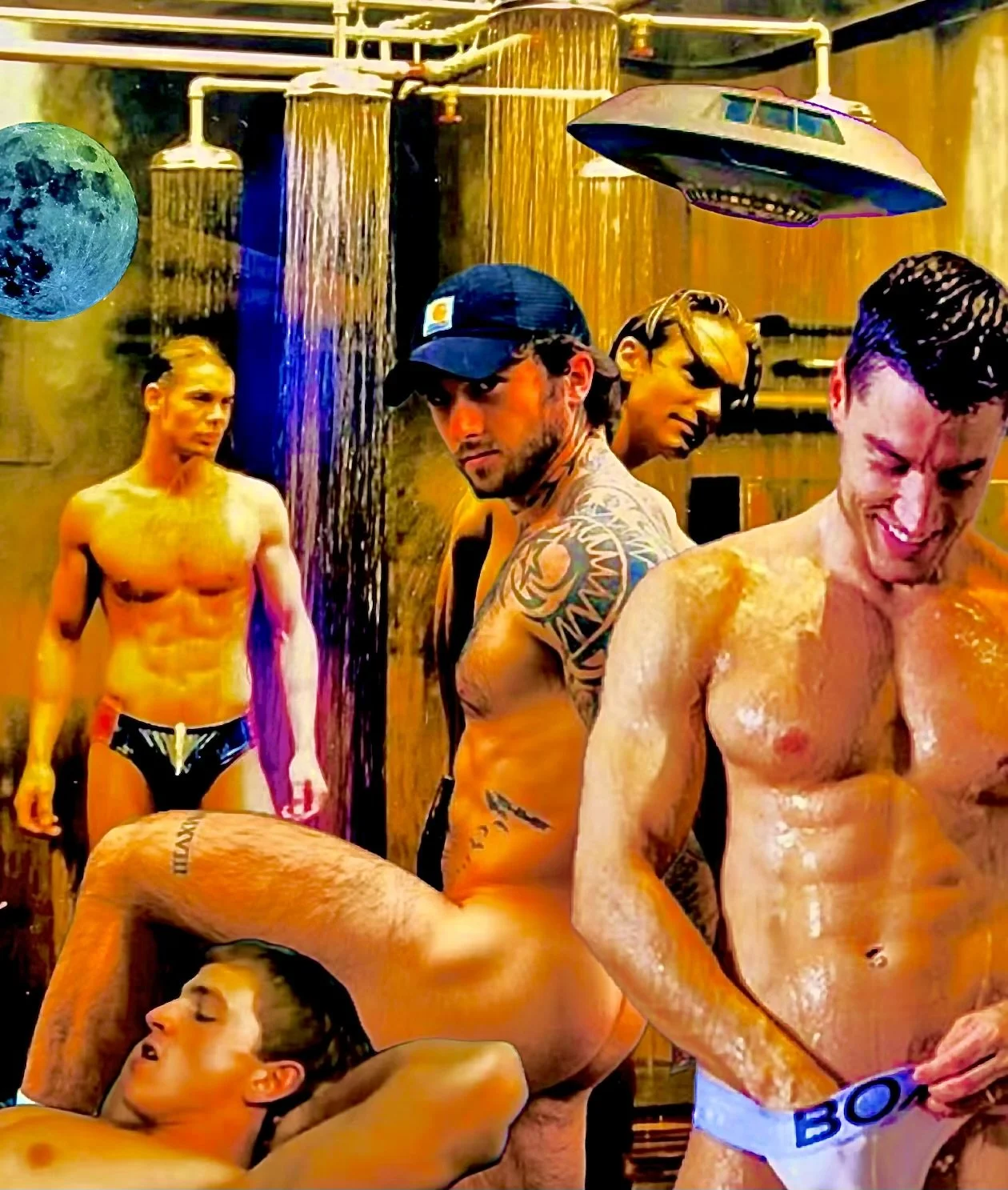
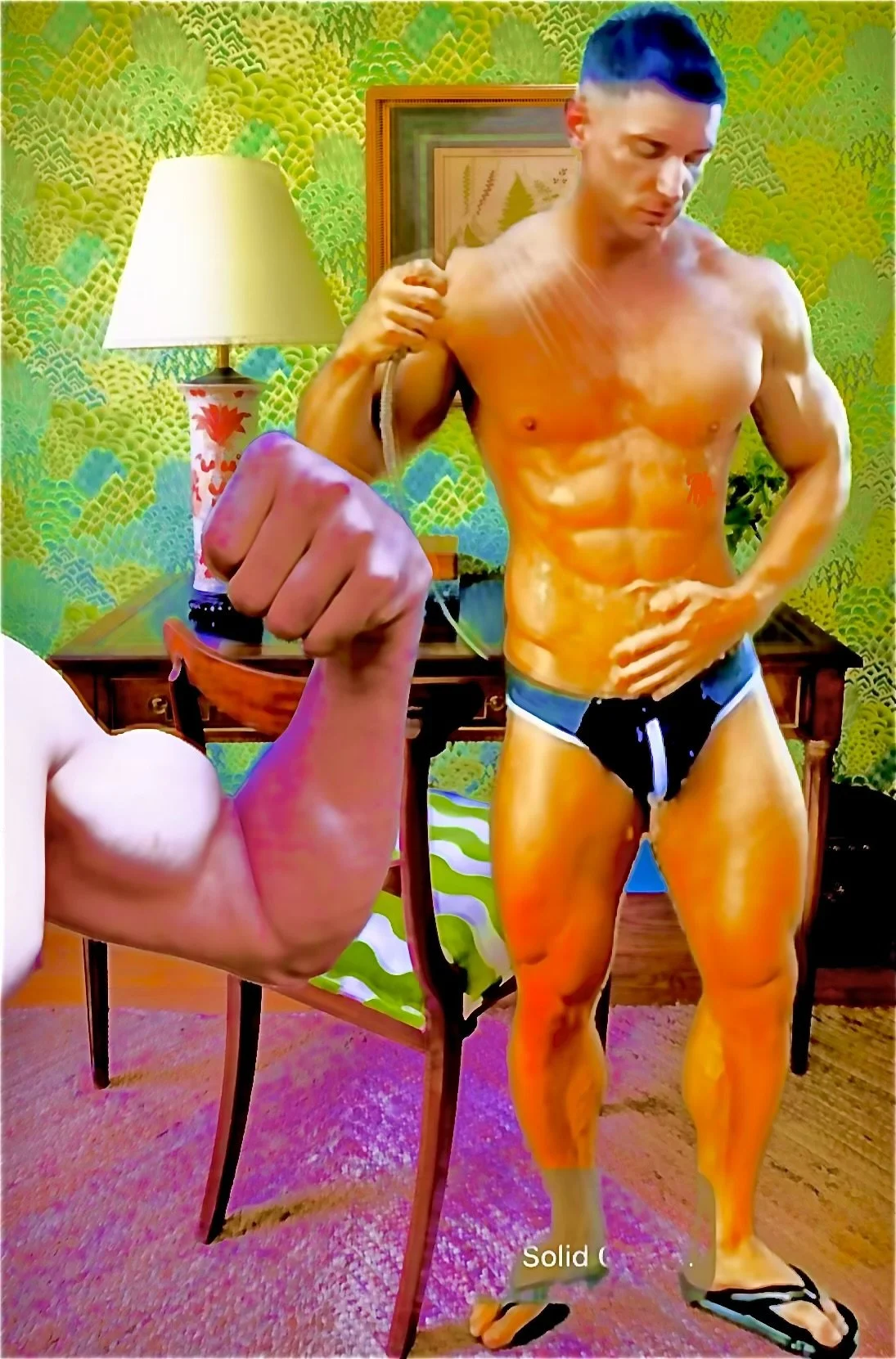
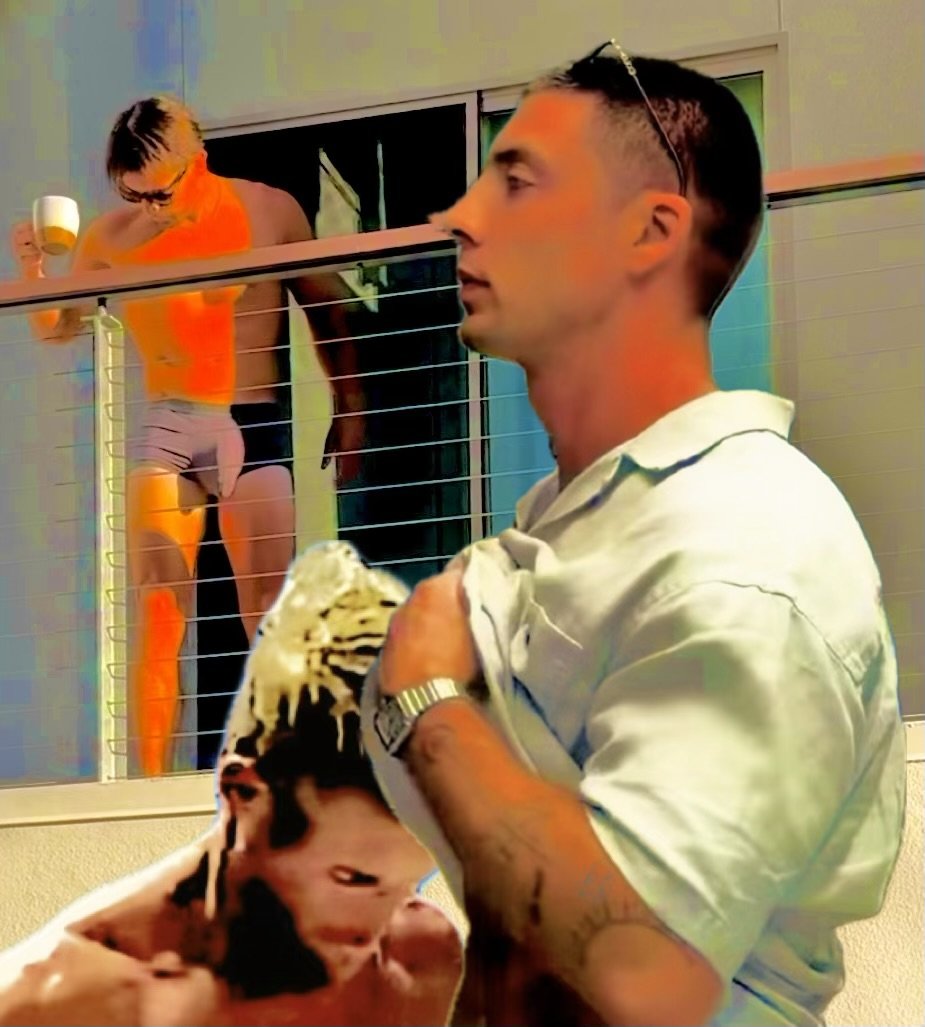
Consider the original image. A man in a shower. Hashtag sport. Hashtag gym. Hashtag motivation. Hashtag viral. He is laughing, water running down his chest, showerhead held aloft like a trophy. 554 likes. Tagged as fitness content. It is also, unmistakably, a thirst trap — and its subtext is homoerotic. The coding is deliberate. The deniability is the point.

In the resulting collage, the figures who were always implied are brought into the frame. The gaze that was always present is now validated rather than hidden. Jupiter 3 drifts into the scene and the Aquarian Moon rises above it, adding a layer of transcendence to what began as an ordinary bathroom moment. The beauty of the male form is acknowledged rather than disguised. The meaning has not changed. It has simply been fully realized.

This is the purpose of the work — to take subtext and transform it into context. To finish the sentence that was always being spoken.

The Subdivision | The Gay Gaze

What’s Possible

What’s Possible | The Closet | The Subdivision

| Digital Photo Collage | 2026

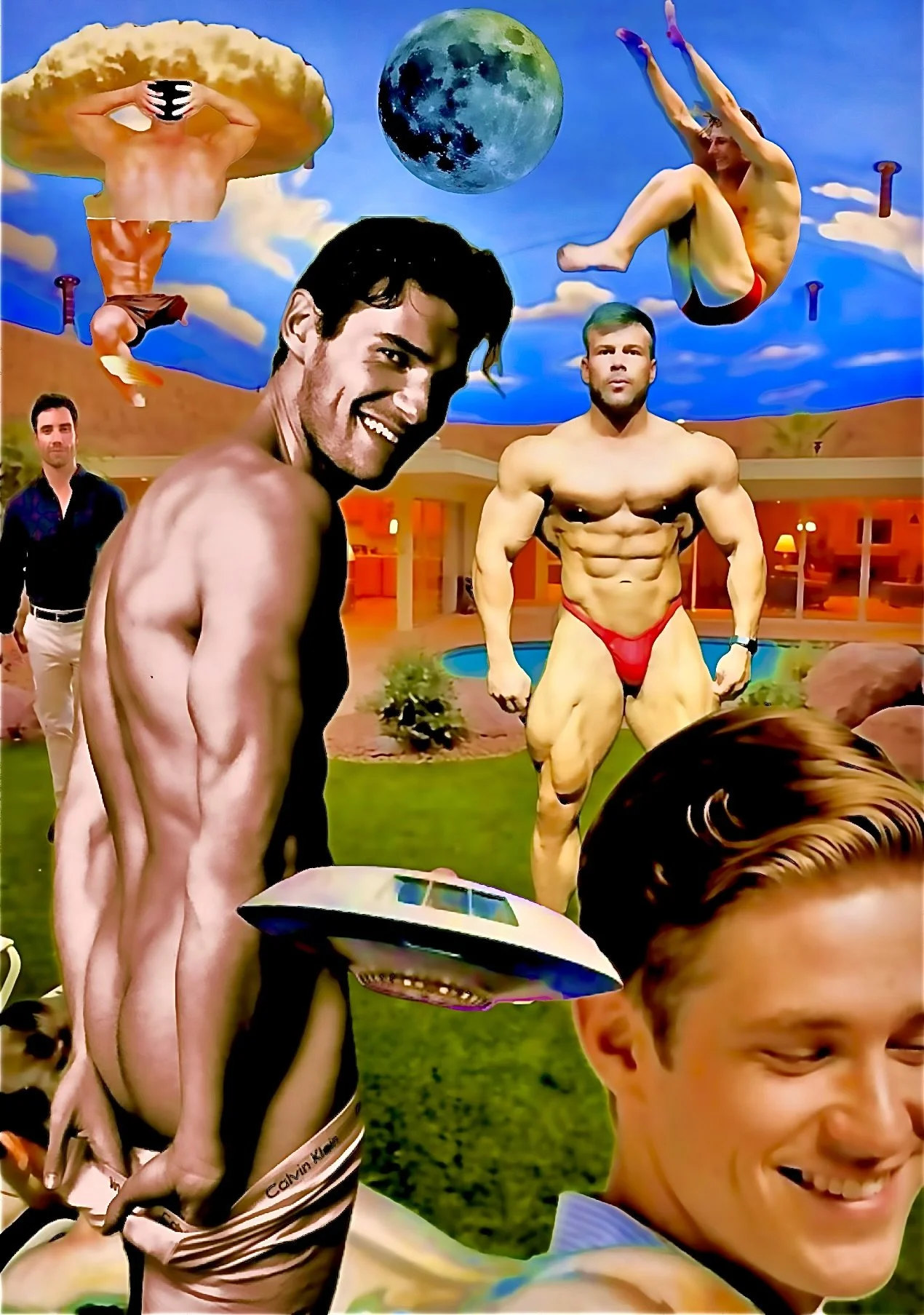
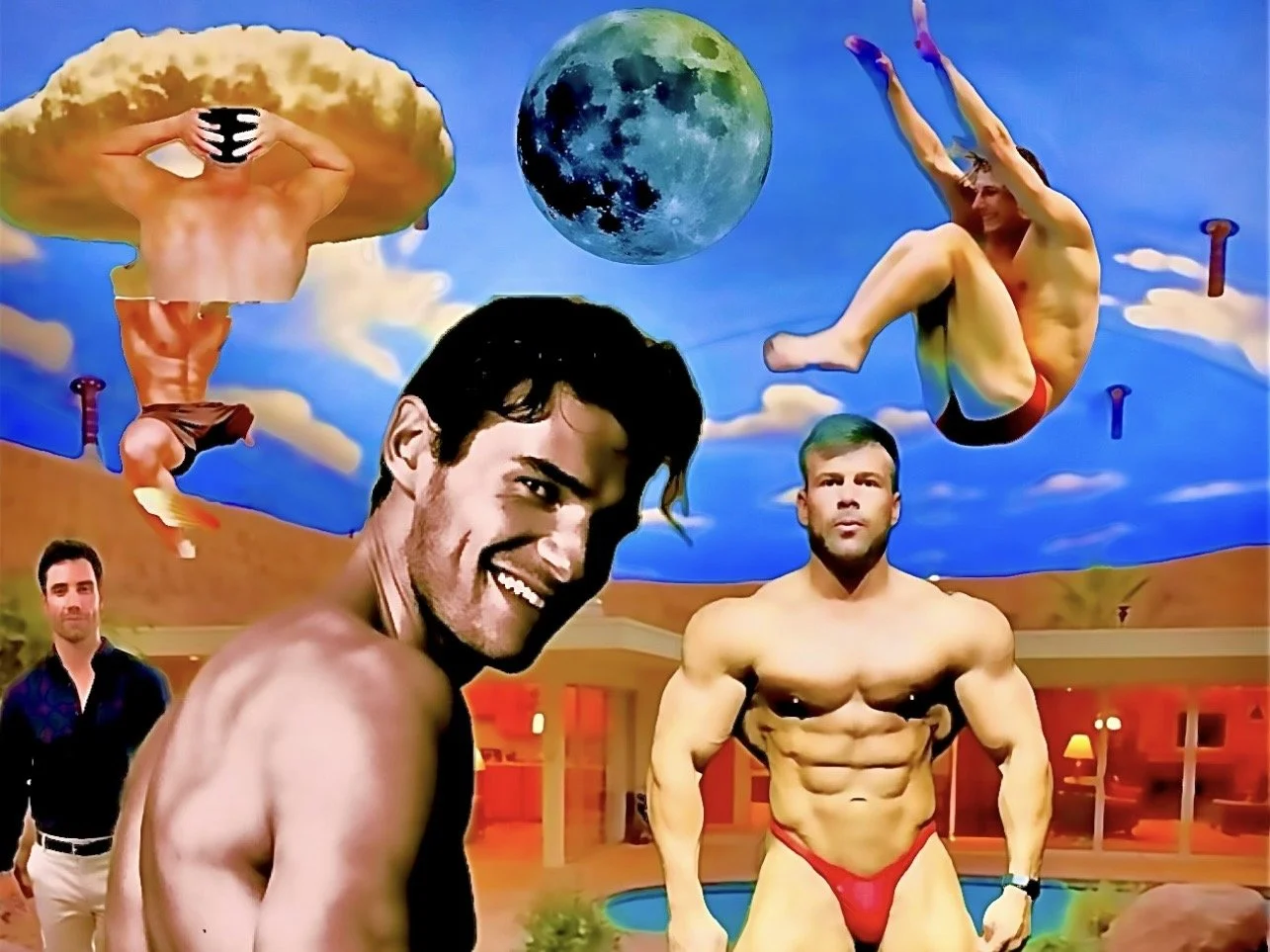
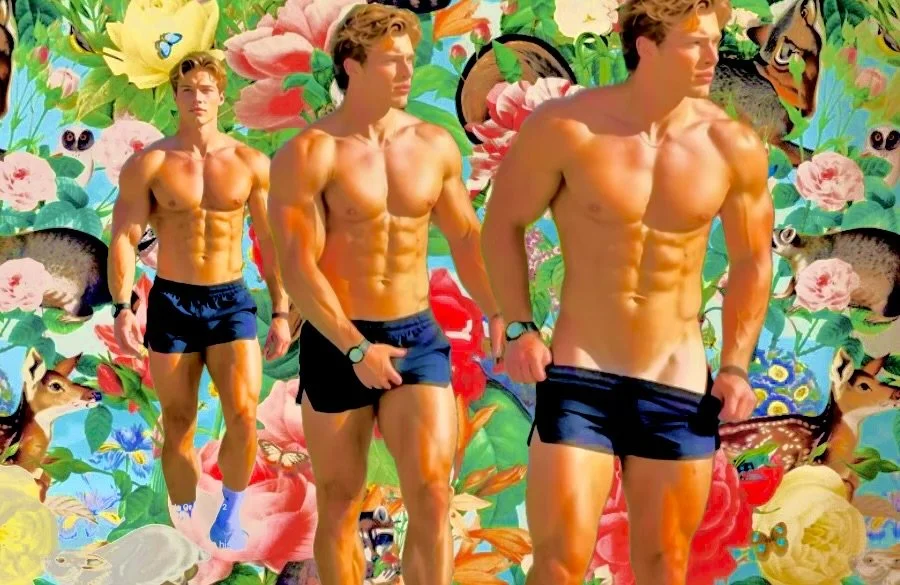
One is gay. One is mostly gay. One is straight. One is mostly straight.

Who is who?

It doesn’t matter.

What matters is three out of four are queer.

Let us meditate on that.

Behan

34

In the late 20th and early 21st centuries, Dallas gay clubs were more like community centers than bars. Unlike Fort Worth, Dallas has always been open to the presence of a gay neighborhood. Though nearby geographically, they are as far apart as you can imagine.

Dallas had a gay community liaison officer for more than a decade before Fort Worth had one. Cedar Springs Road in Oak Lawn is home to more than a dozen LGBTQ+ venues on a single walkable corridor — a density that is genuinely rare in 2026, and Dallas has maintained it for decades. Dallas built its gayborhood from the ground up. Fort Worth did not.

Fort Worth’s relationship with its gay community was defined for decades by silence, absence, and outright hostility. In 2009, just two weeks after the Rainbow Lounge opened, Fort Worth police and agents from the Texas Alcoholic Beverage Commission conducted a violent early morning raid on the club. Officers attacked several patrons. One man, Chad Gibson, was thrown to the floor and handcuffed, suffering a head injury that left him with permanent brain damage. The raid took place on the 40th anniversary of the Stonewall riots. The police chief initially suggested the patrons had provoked the officers. An internal review later found the officers had been heavy-handed, rude, and had no business entering a bar with no history of complaints.

The outrage that followed forced Fort Worth to reckon with itself. Officer Sara Straten, a 17-year veteran of the Fort Worth Police Department, volunteered to become the department’s first ever LGBT liaison officer in the aftermath of the raid. The department disciplined two officers and a supervisor, expanded diversity training, and appointed an openly lesbian officer as liaison to the gay community. It took a man with a brain injury to make Fort Worth do what Dallas had done years before.

Thank you, Dallas. Wake up, Fort Worth.

Sources: KERA News, 2009 | Dallas Observer, 2017 | NBC DFW, 2010 | Dallas Voice | misterb&b Gay District Guide, 2026

The Subdivision | The Gay Domestic

Poly Much?

1930s - 1990s - 2020s | The Gay Domestic | The Subdivision | Digital Photo Collage | 2026

Three generations of the male figure. One outdoor shower. No apologies.

This collage celebrates gay polyamorous relationships across time — and they are far more common than the dominant culture would have you believe.

A 2023 YouGov survey found that 34% of Americans describe their ideal relationship as something other than completely monogamous. 64% of people in polyamorous relationships report high levels of relationship satisfaction — compared to 54% of those in monogamous ones.

In a 2025 survey of nearly 6,000 non-monogamous respondents, only 24% identified as heterosexual. The numbers tell a story the legislation refuses to acknowledge.

Polyamory. It’s what’s for breakfast, lunch and dinner.

Joy

Southern Skies

The Gay Gaze | The Subdivision

Digital Photo Collage, 2026

Feel so good. Feel so good. It’s frightening. Wish I could. Stop this world from fighting.

Ice cream in the sun. A motel kiss. Waffle House at midnight. Bourbon Street bad boys. Backwoods and Pegasus and harvest moons hanging over all of it. This is the queer South in its natural habitat — intimate, warm, and slightly melancholy. Joy that knows it’s fragile.

The Subdivision | The Gay Gaze

Behan

Men Like That. You know, they like that.

Queer South

The Gay Gaze | The Subdivision

Digital Photo Collage, 2026

More gay Americans live in the South than anywhere else in the country — roughly 35% of the entire LGBTQ+ population of the United States calls this region home. And there is no place in America more hostile to gay life than the South.

Irony is in need of resuscitation.

We are not strangers here. We are not visitors who wandered in from somewhere more tolerant. We are their brothers. Their uncles. Their best friends. Their fathers. We are sitting at their dinner tables and standing at their altars and suiting up in their locker rooms. We are their varsity football quarterbacks. We have always been here. We were born here, the same as everyone else.

The hostility is not directed at outsiders. It is directed at family.

New Orleans has been home to the oldest continuously operating gay bar in the United States since the 1940s. Indigenous nations across the Gulf South recognized and honored multiple genders long before colonization. The Georgia Gay Liberation Front organized one of the first Pride marches in the state in 1971 — sparked, of all things, by an Andy Warhol film screening. The South did not import its queer history. It grew it, quietly, defiantly, in plain sight.

In the 1950s, vibrant queer networks thrived across Mississippi, documented in John Howard’s foundational oral history Men Like That: A Southern Queer History. In 1961, a trans woman named Maxine Doyle Perkins was arrested in Charlotte, North Carolina. She pleaded not guilty, refused her deadname, and drew public attention to the sodomy laws being used against her people. She did that alone, in the South, in 1961. By the 1970s, Nashville was hosting Miss Gay America, one of the earliest and most significant drag pageantry competitions in the country. The South wasn’t following the coasts. In many ways, it was leading.

The Black queer Southern experience runs through all of it, deep and largely untold. E. Patrick Johnson’s landmark oral history Sweet Tea: Black Gay Men of the South documents lives that were rich, complex, and fully lived — inside a culture that pretended otherwise. Southern queer history is inseparable from racial justice and regional folklore. The two have always moved together, even when neither was welcome.

Big D. Hotlanta. The Big Easy. Cities that have built thriving, visible, unapologetic queer communities inside states that are actively working to legislate those same communities out of existence. The urban oases exist because the people in them refused to leave, refused to hide, and refused to stop being Southern. Atlanta has been called the gay epicenter of the South. New Orleans hosts Southern Decadence every Labor Day — a six-day festival that began in 1972 as a small gathering of friends and grew into one of the largest queer celebrations in the country. These are not imports. This is native culture.

And yet the legislation keeps coming. The hostility keeps coming. Directed not at strangers, but at the quarterback, the uncle, the best man at the wedding, the boy who grew up three houses down. The South contains the largest share of queer Americans in the country and produces some of the most aggressive anti-queer policy in the world. That is not a coincidence. That is fear. And fear, as history has shown, is no match for people who were never going anywhere to begin with.

The collages in this suite celebrate what the legislation refuses to acknowledge — the extraordinary social, ethnic, and cultural diversity of queer life across the American South. These are real men, real communities, real cities. Dallas. New Orleans. Atlanta. Key West. Black, white, brown. Cowboys and club nights and courtyard pools and statehouse steps. The politics play out in the halls of state and the halls of Congress. The lives play out everywhere else.

The queer South keeps rising. Sometimes even three or four times in one night.

On Scale

A Gay Tale

The Gay Domestic | The Subdivision | Digital Photo Collage | 2026

Once upon a time, in the year 2089, on a moon base orbiting a planet nobody had bothered to name yet, there lived two husbands named Jason and Jeremy.

They had been married for thirty-one years. They had survived the relocation, full body android replacement surgery, the three-week communications blackout of 2077, and Jeremy’s brief but passionate obsession with hydroponic orchids. They had, by any measure, done well.

But marriage is marriage, even on the moon.

It was Jason who found the shrink ray. Left behind by a previous tenant, tucked behind the oxygen recycler, still fully charged. He turned it over in his hands for a long moment. Then he looked at Jeremy across the dinner module. Jeremy was reading. His curls were doing that thing they did. His eyes, when he glanced up, were still that impossible blue.

Jason aimed. Jeremy looked up just in time.

The shrink ray, it turned out, was a proven success. With Jeremy sufficiently reduced, they soon found entire new avenues of expressive lovemaking they couldn’t have imagined before.

Later, much later, Jeremy — restored to full size — said it was the most romantic thing Jason had done since the zero-gravity incident of 2081.

Jason made tea. Jupiter 3 drifted past the window, silent and enormous and entirely indifferent, with Jason now enamored with enormous.

Outside, the moon did what the moon has always done.

It kept their secrets.

And they lived, as they always had, surprisingly well.

Hope You Win

On Pageants and Competitions | The Gay Gaze | The Subdivision | Digital Photo Collage | 2026

Love your hair, hope you win.

Gay male pageants have been around longer than most people might imagine. These events are not beauty contests in the traditional heteronormative vein.

They are platforms for LGBTQ+ advocacy, HIV awareness, mental health visibility, and human rights on a global scale. Events like Mr. Gay World judge delegates on interviews, charitable work, and social media presence.

Local pride competitions create space for non-binary and older participants. The stage is not about the body. The body is just how you get there.

What happens on the stage is not elimination, rather celebration. And that’s a good thing.

The Guessing Game

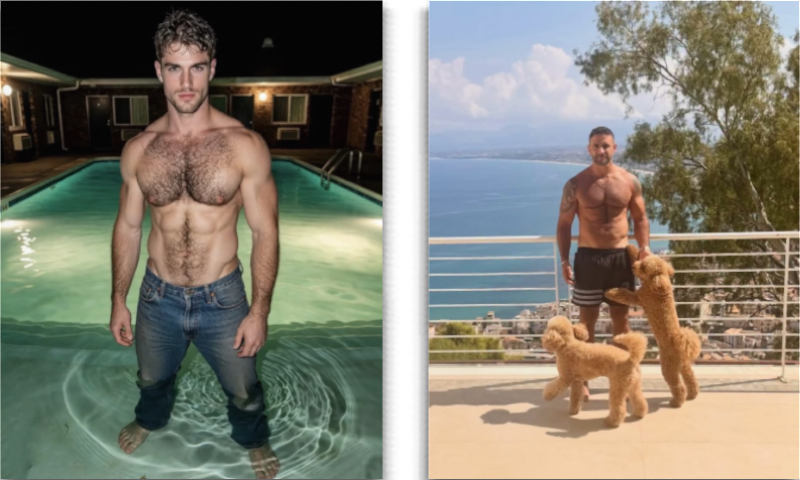
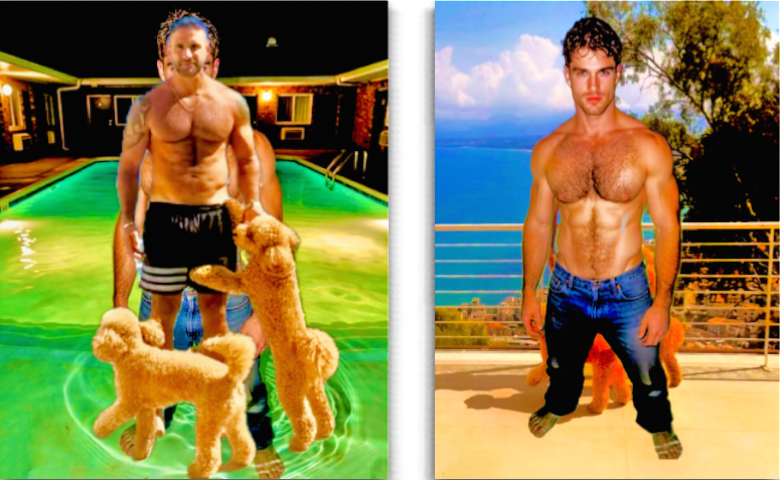
Meet four content creators who focus on queer themes on social media. Two are gay. One is bi. One is straight. Can you tell who is who? Look at the faces. Look at the body. Or perhaps the way each one holds the camera, or holds himself. Can you tell?

The guessing game is not new. In 2004, FOX aired Playing It Straight — a dating show set on a ranch in Elko, Nevada, where college student Jackie Thomas was courted by fourteen men, some straight, some gay. Her job was to eliminate the gay ones. If the final man standing was straight, they split $1 million. If she was fooled and chose a gay man, he took it all. The premise wasn’t just offensive. It was a primetime elimination of gay men as romantic candidates, dressed up as entertainment.

Science has spent decades trying to prove that instinct right. A Tufts University study claimed participants could identify gay men from photographs in under 50 milliseconds — faster than a blink. Sounds definitive. Except a larger University of Washington study put accuracy for identifying gay men at 57%. A coin flip gets you to 50%. That’s not perception. That’s a hunch with a confidence problem. The science collapses the moment bisexuality enters the room, or a straight man who has built his entire platform on queer content because he simply believes in it.

These four men all show up for the same community. The work looks the same. The care looks the same. And from the outside, so do they.

You can’t see gay. You never could. And a culture that turns that obsession into a television franchise — complete with cash prizes for correctly identifying a gay man — isn’t entertainment. It’s public outing for sport.

The Subdivision | The Gay Gaze

Behan

Inside the Loop

The Loop: Gene Kelly, the Closet, and the Composition of Rumor

Betsy Blair was an actress, a leftist, a survivor of the blacklist, a woman who understood how Hollywood worked and what it cost. When she wrote her memoir, The Memory of All That, she was careful. She noted that during their courtship and early marriage, Gene Kelly had little interest in sex. She noted that he consistently brought a particular friend along on their dates, their vacations, their private time together — a blond, slight playwright and rehearsal pianist named Dick Dwenger, Gene’s best friend and intellectual anchor, the person Blair said was there to keep Gene from losing sight of who he was. When Dwenger was killed in World War II, Gene was devastated in a way that took a long time to name. She didn’t name it. She left the space.

No relationship between Gene Kelly and a man was ever confirmed. No one came forward. No evidence surfaced. In all likelihood, Gene Kelly was not gay. And yet the space Blair left in that memoir has never fully closed. It sits there, between the lines, in the double-spacing she knew exactly how to use. That space is the closet. And the closet, once opened, doesn’t require proof. It requires only a rumor. A pause. A question left unanswered.

The Best of Places, The Worst of Places

Dickens opened A Tale of Two Cities with a paradox about a time of violence so extreme it produced its opposite in equal measure — the best and worst existing not in sequence but simultaneously, in the same moment, in the same city, in the same body. Hollywood in its classical period was exactly that for gay men. The most intoxicating visual feast ever produced and the most systematically hostile cultural institution in American life, operating at the same time, on the same soundstages, with the same people.

The studio system produced images of male beauty at an industrial scale. Bodies lit by the greatest cinematographers who ever worked. Narratives that permitted physical intimacy between men under the cover of comedy, athleticism, and masculine camaraderie. And simultaneously, through the Production Code enforced from 1934 through 1968, it explicitly prohibited the existence of the men producing those images. “Sex perversion” was the operative term. Gay actors, directors, designers, and choreographers built the dream factory from the inside while the factory held their lives over their heads.

The two figures in boater hats in the collage are Gene and Fred Kelly — brothers, Pittsburgh-born dancers who had performed together since childhood. Their only on-screen appearance together came in Deep in My Heart (1954), an MGM musical biography of operetta composer Sigmund Romberg, built around lavish cameo performances by virtually every major talent on the lot. Gene and Fred appear in a specialty number called “I Love to Go Swimmin’ with Wimmen” — ebullient, physical, two brothers sharing a rare moment on film together. The number is all charm and energy and masculine ease. Nothing in it would raise a single flag. That was precisely how Hollywood worked.

The irony runs deeper than the frame. Sigmund Romberg spent his entire career writing operettas built around impossible, forbidden, and doomed love — The Student Prince, a prince who falls for a commoner he can never marry; The Desert Song, desire operating entirely under disguise and false identity; The New Moon, longing in exile. His life’s work is the emotional vocabulary of the closet: love that cannot speak its name, dressed in conventions that made it acceptable to a mainstream audience. Gay men were in those audiences for decades. They recognized something. The Kelly brothers are dancing inside a tribute to the composer who spent his career writing music for everything Hollywood would not allow anyone to say out loud.

Turner Classic Movies runs the films. It does not note what it is also running: the most comprehensive document of institutionalized violence against queer people in American cultural history. For those who know how to read it, every frame is evidence.

And Gene Kelly — athletic, masculine, three times married, politically courageous during the McCarthy era, the least likely candidate by every surface measure — was not immune. Because the closet doesn’t require guilt. It requires only suspicion. A rumor alone was enough to pull any man in Hollywood inside it, regardless of who he actually was or who he actually loved. Gay, straight, bisexual: the net caught everyone. That was the point. That was always the point.

The Emotional Loop: The Closet Made Visible

The collage contains a major compositional moment, both visual and emotional. A loop sweeps through the center of the image, and what it encloses is not accidental. The bodybuilding figures form the perimeter of that loop. They swirl around the Kelly brothers. They close in from every direction. They are the rumor. They are the net. They are the closet rendered as composition.

The loop doesn’t hold the eye. It holds the meaning. It says: this is what it felt like. To be Gene Kelly, or to be anyone near Gene Kelly, in a system that ran on suspicion and silence and the careful double-spacing of a smart woman’s memoir.

The Subdivision | Digital Photo Collage | Behan

Sources: The Motion Picture Production Code (1930, enforced 1934); Vito Russo, The Celluloid Closet (1981); Richard Dyer, The Matter of Images (1993); Betsy Blair, The Memory of All That (2003)

Under the Surf

Riding Under the Surf

On Gay Men, California Beach Culture, and the Heteronormative Script That Ran on Every Screen

The wave comes from Hawaii. Everything else was invented in Hollywood.

In 1907, an American industrialist hired George Freeth to demonstrate surfing at his Redondo Beach resort to promote a railway line. A Hawaiian man’s indigenous practice, commodified to sell real estate. Surfing’s popularity exploded in the 1960s as the baby boomers entered their teenage years, and Hollywood was ready for them. The AIP Beach Party films — Beach Party, Muscle Beach Party, Beach Blanket Bingo — were AIP’s sugarcoated vision of the coming generation, designed to assure mainstream society that young people were ultimately predictable and trustworthy and would fall in line. This surfing culture was predominantly male-oriented, with long-haired women in bikinis serving mostly as admirers on the periphery. Boys surfed. Girls watched. Gay men did not appear in any of these frames. They were not forgotten. They were edited out.

What Was Always in the Frame

Film historian Tom Lisanti, writing for Cinema Retro and author of Hollywood Surf and Beach Movies: The First Wave, 1959–1969, documents what gay men already knew: the subtext was there from the beginning. The beach party films, Lisanti notes, functioned as titillation for homosexual men of the time — good-looking shirtless hunks frolicking bare-chested on sand and slopes, while gay actors Tab Hunter, Tommy Kirk, and Paul Lynde moved through the same frames in plain sight. Directors and screenwriters, he argues, slipped winks to the gay community in ways that sailed past oblivious producers and censors. Muscle Beach Party (1964) made the coding structural: its villain class was a cult of bodybuilders whose readers, in the physique magazines of the era, were understood to be predominantly gay men. Film historian Joan Ormond observed that homosexuality in this era was regarded as potentially more damaging to society than the wild antics of surfers — which is precisely why the bodybuilders, not the surfers, were cast as the corrupting threat. The gay gaze was not reading into these films. It was reading them correctly.

Under the Surf

And yet they were there. They had always been there.

As early as the 1940s, the stretch of Will Rogers State Beach in Santa Monica — soon nicknamed “Ginger Rogers Beach” by the gay community, in honor of the screen legend whose campy performances drag queens had been emulating since the 1930s — was a popular destination for gay men. In Gay L.A., Lillian Faderman and Stuart Timmons write that “for symbolic and functional reasons, the beach was especially attractive to gay people. It represented the very edge of the continent, far away from ‘back home’… During and after the war, veritable oases of gay life could be found in the open at many Los Angeles beaches, where the atmosphere was celebratory, carnival-like, even lawless.”

This is the counter-history running beneath the surf films. While Frankie Avalon was reassuring America that its sons would fall in line, at the start of the 1960s Los Angeles was home to nearly 150,000 gays and lesbians, many of them drawn to the same beaches, under the same California sun, with no representation in any film, any song, any television series produced within miles of where they stood.

Vice patrol began cracking down on queer beachgoers at Will Rogers State Beach as early as the 1950s, under the leadership of Chief of Police William Parker — called “Wild Bill Parker” by the gay community — whose LAPD doubled down on homosexual behavior and cross-dressing in public spaces throughout the decade. Gay men were not absent from California beach culture. They were present and being policed. The culture industry simply declined to film them.

In the 1960s, Main Beach in Laguna Beach was the epicenter of the city’s gay culture, home to two beachfront gay bars, Dante’s and Barefoot — situated in the very heart of Southern California’s surf country, surrounded by the landscape the AIP films were simultaneously mythologizing. Writer Christopher Isherwood and painter Don Bachardy had met on the beach in 1952, launching a lifelong partnership. Isherwood’s 1964 novel A Single Man memorialized the beach and Santa Monica Canyon’s gay culture in modern literature, describing gay beachgoers in 1946 as “dancing to the radio, coupling without shame on the sand.” The gay beach was not underground. It was not secret. It simply did not exist, as far as cinema was concerned.

Big Wednesday: The Script, Fifteen Years Later

In 1978 — fifteen years after Beach Party, three years after Stonewall had already changed the legal and cultural landscape of gay American life — John Milius released Big Wednesday. The film follows three California surfers facing life and the Vietnam War against the backdrop of their love of surfing, loosely based on Milius’s own experiences at Malibu. The setting moves from 1962 to 1974. The war comes and goes. Men age, drift apart, return. The film deals mostly with the theme of male friendship and all the things that come along in life that challenge it. The emotional register is genuine. The tenderness is real.

And every woman in the film exists as attachment or loss for one of these three men. The script has not moved. The ocean still belongs to men. The shore still organizes itself around their drama. Gay men remain nowhere in the frame — even as, by 1978, the Castro was in full flower forty miles up the coast, even as gay Californians had been visible on those same beaches for four decades.

The Record

In the long, decorated history of professional surfing, by 2010 only two professional surfers had ever openly shared the fact that they were gay: Matt Branson and Robbins Thompson. Two names. The entire count, across decades of tours, competitions, sponsorships, magazine covers, and surf films.

Thompson’s story tells you why the number stayed at two. Rated in the top five on the American professional circuit for four years and on track for major titles, Thompson was driven out of the sport in the 1990s after his sexual orientation became known on tour. Homophobic slurs were spray-painted on his car. Taunts followed him into the water. “Sometimes it was difficult trying to keep my concentration, wondering what everybody was thinking about me,” he said. “If I spent too much time with fellow surfers, accusations would start to fly. There were a couple of times when possible relationships with other gay surfers ended too quickly because of fear of getting caught.” In 2014, Thompson told his story in the documentary Out in the Line-Up, credited with initiating the first serious public conversation about homophobia in professional surfing.

Women have been more visible, if not more welcomed. Cori Schumacher, Keala Kennelly, Tyler Wright — the history of LGBTQ surfing runs deeper than most surfers realize, but it runs almost entirely through women. On the men’s side, the closet held. It held through the 1960s, through Stonewall, through the Castro, through AIDS, through the legal reforms of the 1990s and 2000s. The wave broke. The lineup did not change.

San Diego-based artist Stephen Milner eventually made the hidden architecture visible. His book A Spiritual Good Time appropriates old images from surf magazines and places them in an entirely new context — one that creates a vision of a far more queer-friendly surf culture. By combining materials from vintage surf and gay publications, cutting, cropping, and re-printing, Milner placed them into an entirely new context: that of queer reality. “When it comes down to it,” Milner says, “masculinity in surfing is extremely fragile — once you start poking at it, it just comes apart.”

Milner describes the process: “Instead of concentrating on the hero surfer getting barrelled on the perfect wave, I cut out the male camaraderie in the bottom left corner of the image and enlarged it.” The gay gaze had always been there, in the bottom left corner of every surf photograph ever printed. It simply required an artist willing to make the crop.

The Shore That Was Always Shared

The gay men on Ginger Rogers Beach in 1963 were breathing the same salt air as the boys in the AIP films. They were watching the same waves break from the same sand. A 1953 article in ONE magazine described the gay beach as a place where “hundreds of our people, peacefully enjoying themselves in public — no closed doors, no dim lights, no pretense… I think beaches like this are part of our liberation.”

Liberation was already happening on the beach. Hollywood was filming something else.

The Subdivision documents what was there. Jupiter 3 is always in the frame.

— Behan

Sources: ONE Institute, “Ginger Rogers Beach” (oneinstitute.org). Faderman, Lillian and Stuart Timmons, Gay L.A. (2006). Isherwood, Christopher, A Single Man (1964). Britannica, “Surfing.” Jacobin, “A People’s History of Surfing” (2022). PBS SoCal, “Riding Waves, Forging Communities.” Bright Lights Film Journal, “Surf’s Up! Beyond the Beach: AIP’s Beach Party Movies.” Visit Laguna Beach, LGBTQ History. SURFER Magazine, “The History of LGBTQ Surfing” (2020). Wikipedia, “Big Wednesday.” Lisanti, Tom, “Real or Imagined: Homoeroticism in 60s Beach Movies,” Cinema Retro. Lisanti, Tom, Hollywood Surf and Beach Movies: The First Wave, 1959–1969. The Guardian, “Out in the Line-Up” (2014). GaySurfers.net, Thomas Castets interview (2010).

Fidget

If Gidget Were a Guy, He’d Be Gay

The gender logic of the beach film becomes clearest when you ask the question nobody asked: what would Gidget look like if the protagonist were male?

Contemporary analysts have considered this hypothetical and concluded that a male Gidget would have needed to prove his toughness to earn acceptance into the surf clique, that the Big Kahuna’s mentorship would shift from protective to combative, that the romance plot would simply invert — boy chases girl instead of girl chasing boy. Same story, different pronoun.

They are still assuming he’s straight.

A young man on the beach, slight and eager, drawn irresistibly into the orbit of the older, golden, powerful Big Kahuna — a name that, in the vernacular of the era, carried unmistakable anatomical weight — and pining helplessly for the unattainable Moondoggy, whose very nickname was a winking reference to the oldest visual euphemism in the book. If Gidget were a guy, he would not be chasing the girls on the beach. He would be doing exactly what Gidget did: watching the boys in the water, wanting to be near them, inventing reasons to stay.

He’d be gay. He’d be gay and the whole film would finally make sense.

The Subdivision documents what was always in the frame. Jupiter 3 is always in the frame.

On Sourcing

The source material for The Subdivision is drawn from the visual archive of twentieth and twenty-first century American domestic and popular culture — advertising, portraiture, vernacular photography, Hollywood imagery, the graphic language of mid-century print, and the digital media of the present: dating sites, social media, and platforms of gay self-representation such as OnlyFans.

The appropriated images are a meditation on the cost of the closet: what was performed, what was concealed, and what was present all along at the edge of the frame. It is a reckoning with fear and desire within a culture that organized itself around the heteronormative ideal while depending, quietly and completely, on gay presence to sustain it.

Through digital photocollage — layering, cropping, and recontextualizing the visual tropes of the American century — the images are reconstructed into a new narrative of the contradictory forces at play: the domestic and the transgressive, the sacred and the surveilled, the visible and the erased. Jupiter 3 marks what was always there.

— Behan

On Process

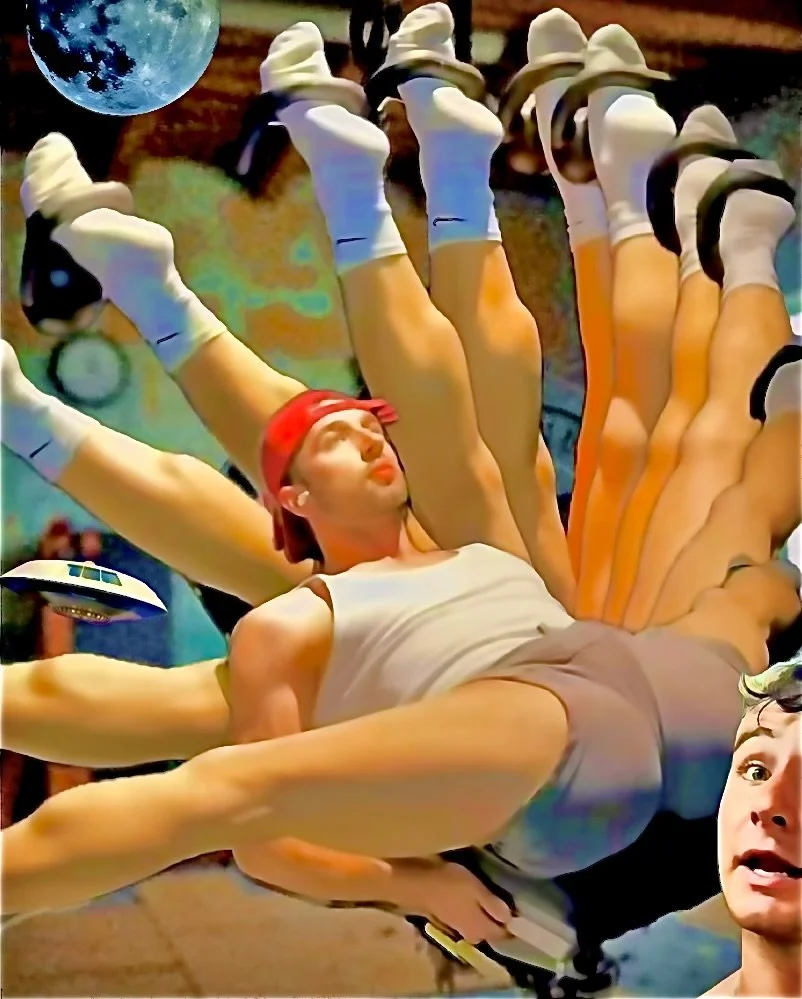
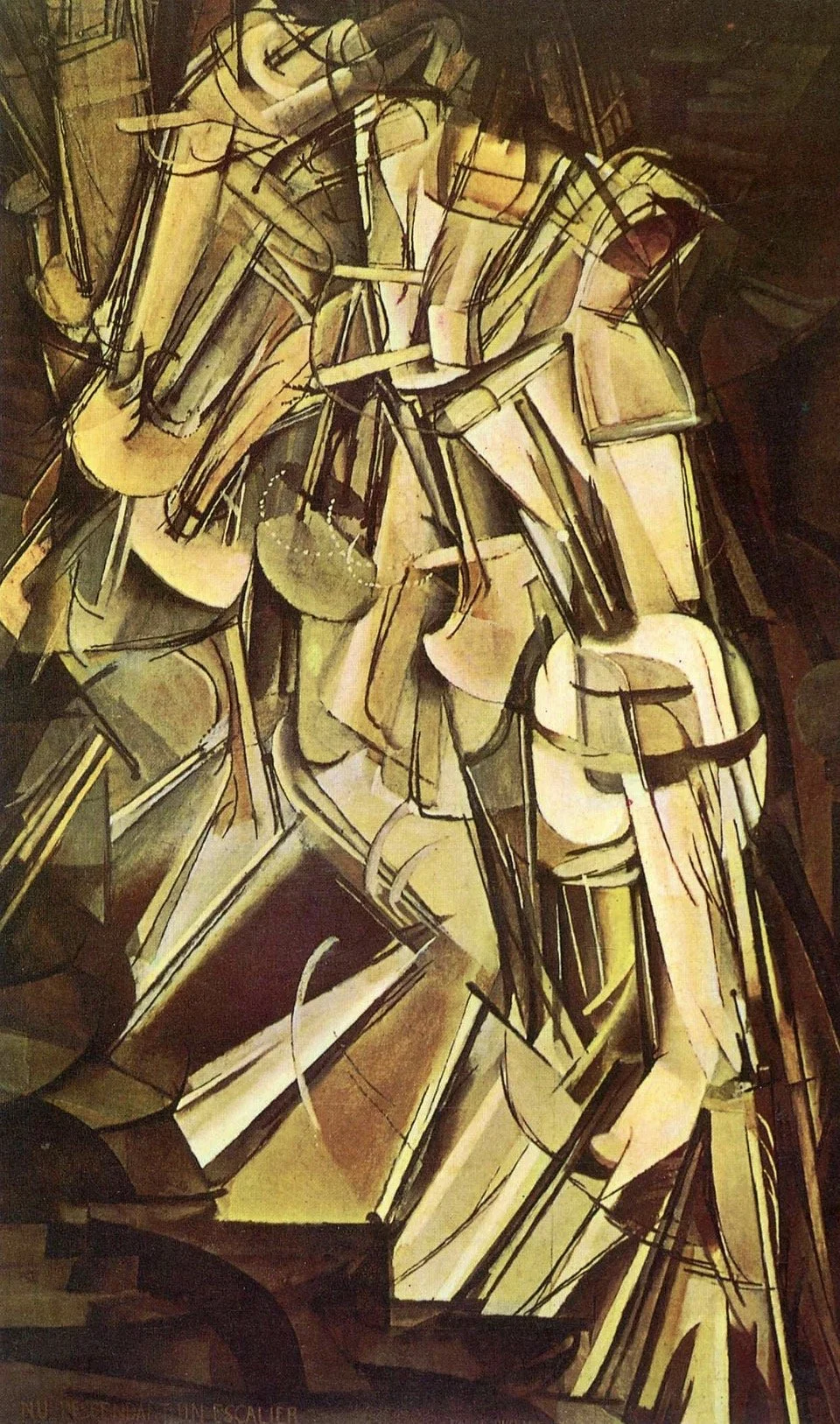
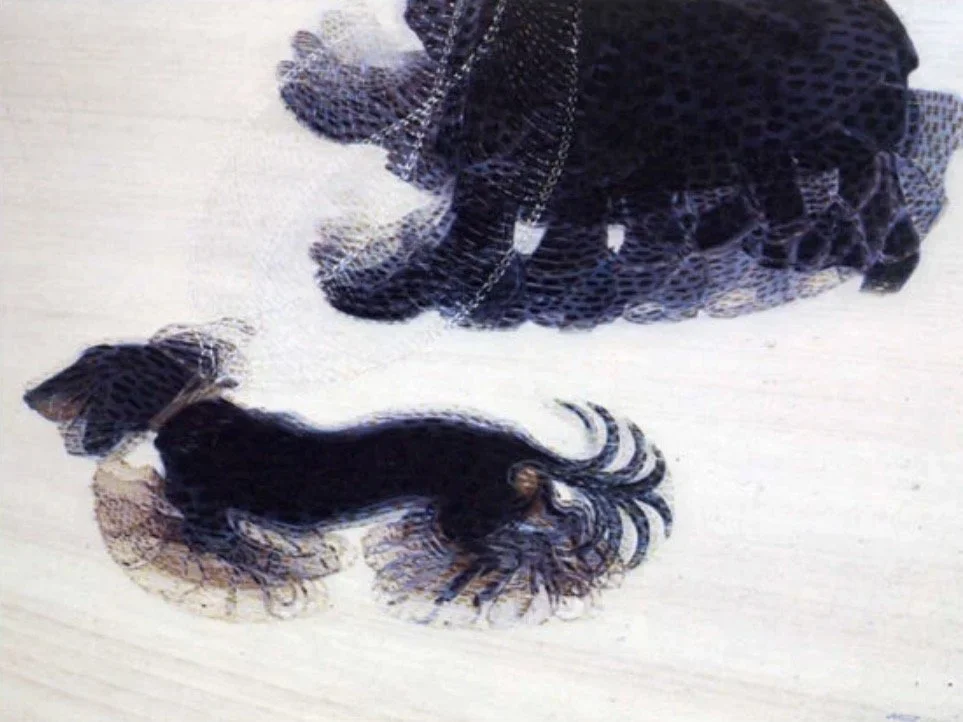
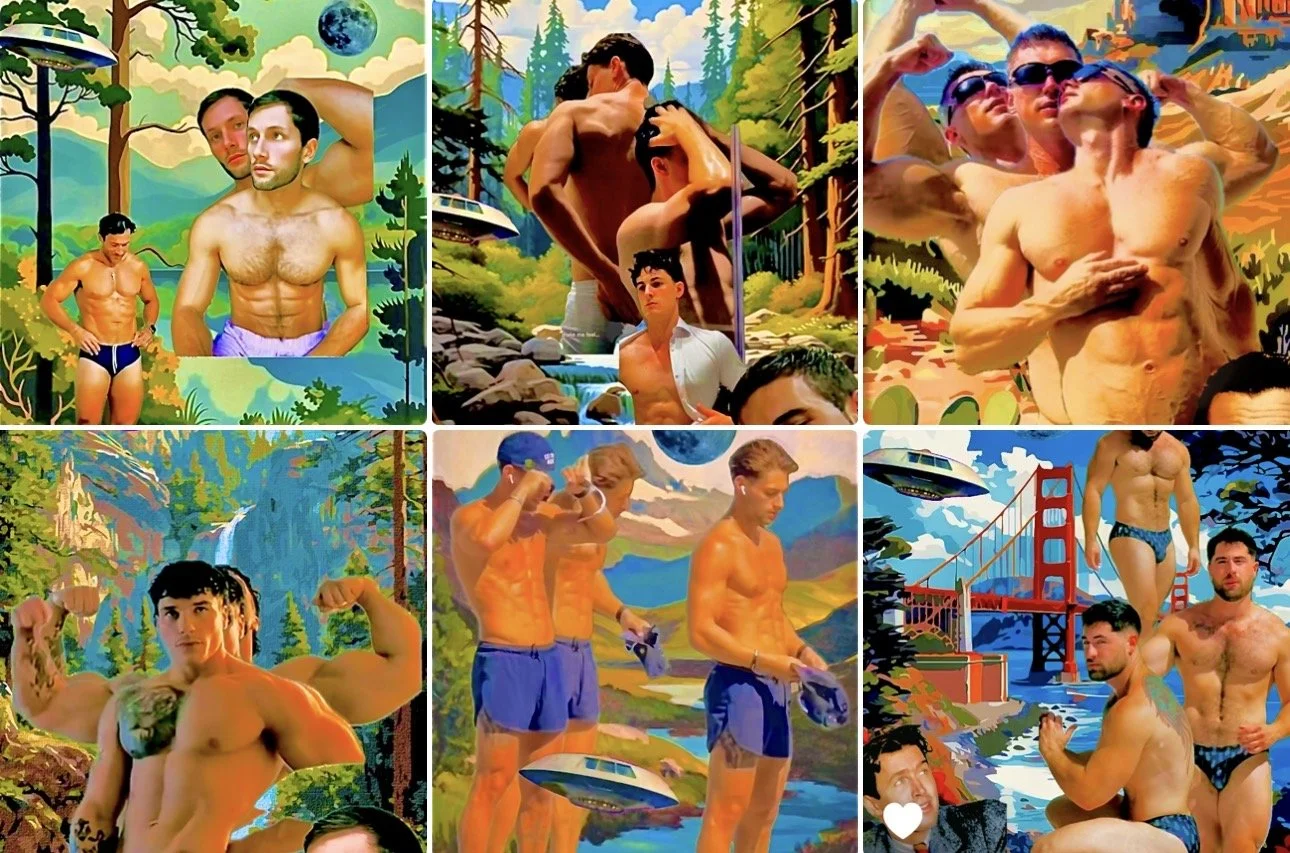
On Process | Collossus | Digital Photography | 2026

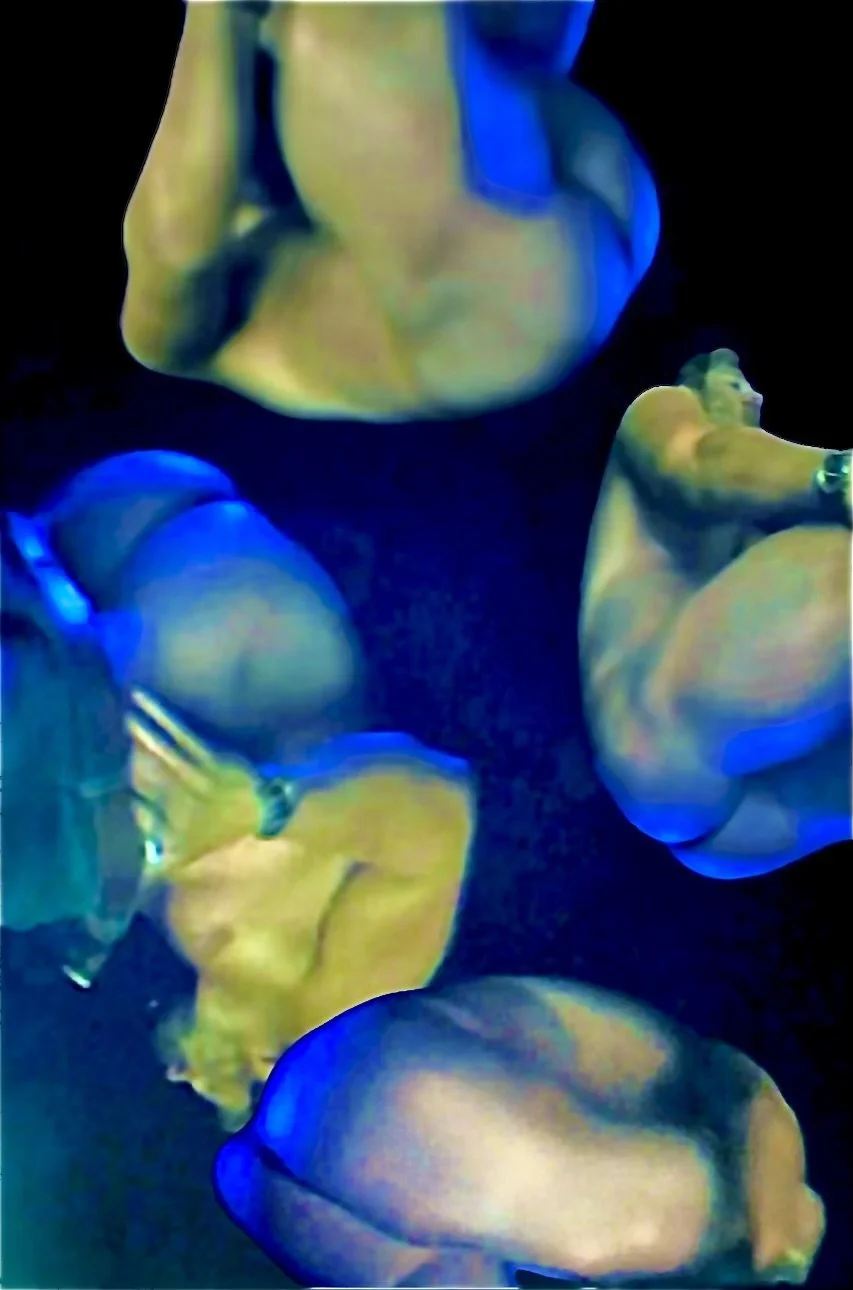
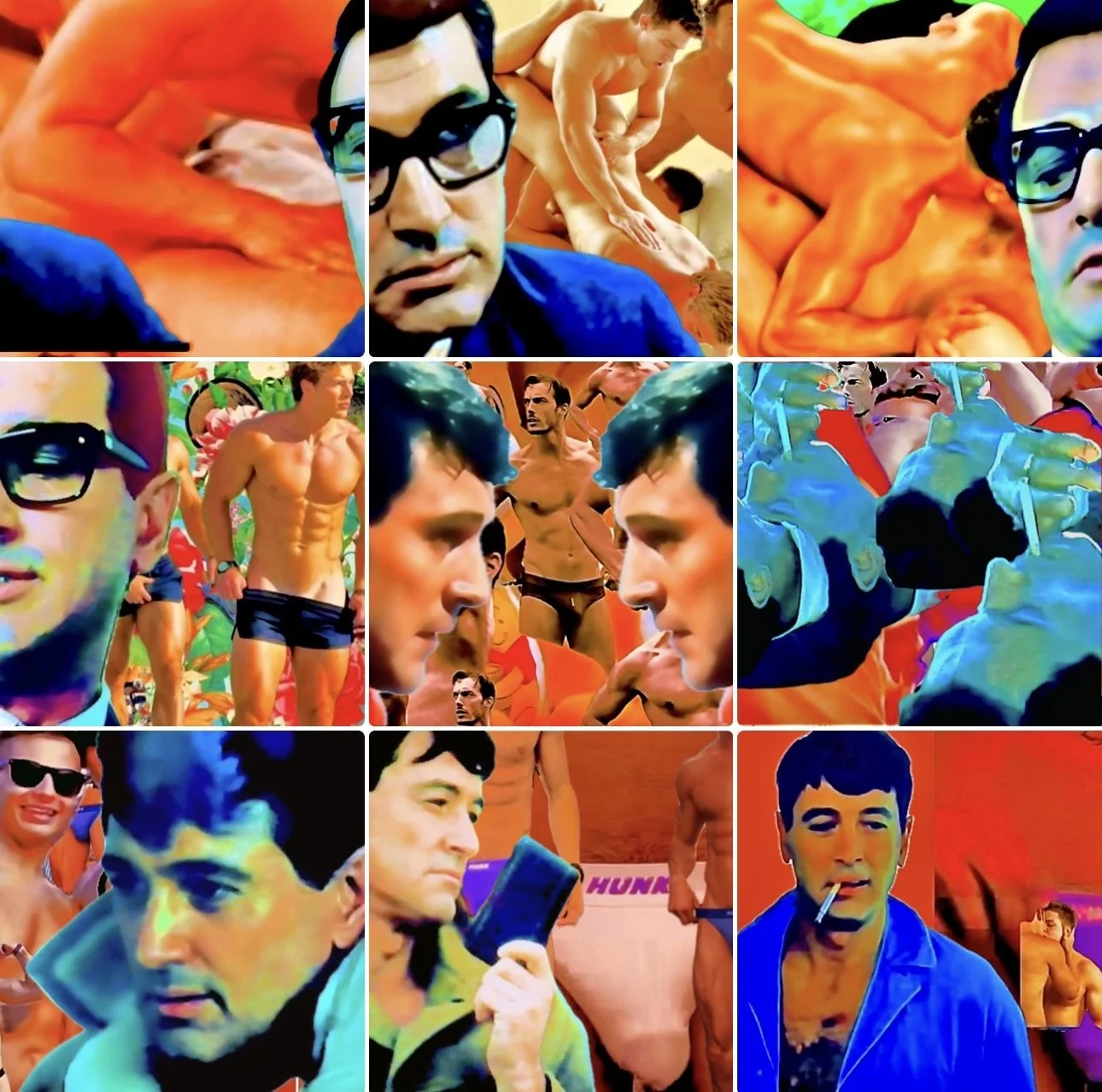
Six individual collages comprise Collossus. Seen here are variations on the triptych format pulled from those six works, recombined, reordered, and reconsidered.

Each arrangement produces a different reading of the same interior experience. Every combination is a different thought built from the same vocabulary.

The work is available as a single image, a diptych, a triptych, or a multi-panel configuration — in digital or canvas form, framed or unframed. But here is what matters most: the collector chooses the arrangement. That choice is not incidental. It is the final act of the work’s creation. The collector is an active participant in the final resolution of the work they collect.

The Subdivision has always believed that the people who live with the work should have a hand in how it speaks.

Colossus

Colossus | Inside the Closet | 6 Pack | The Closet Series | The Subdivision | 2026 | Digital Photo Collage

The matrix has no name. That’s how it functions. A heteronormative culture has long known how to extract what it needs from gay people — the labor, the beauty, the taste, the wit, the genius — while maintaining the social fiction that those people don’t quite exist. The closet is not incidental to this arrangement. It is the arrangement. It is the mechanism by which a culture consumes a person while erasing them.

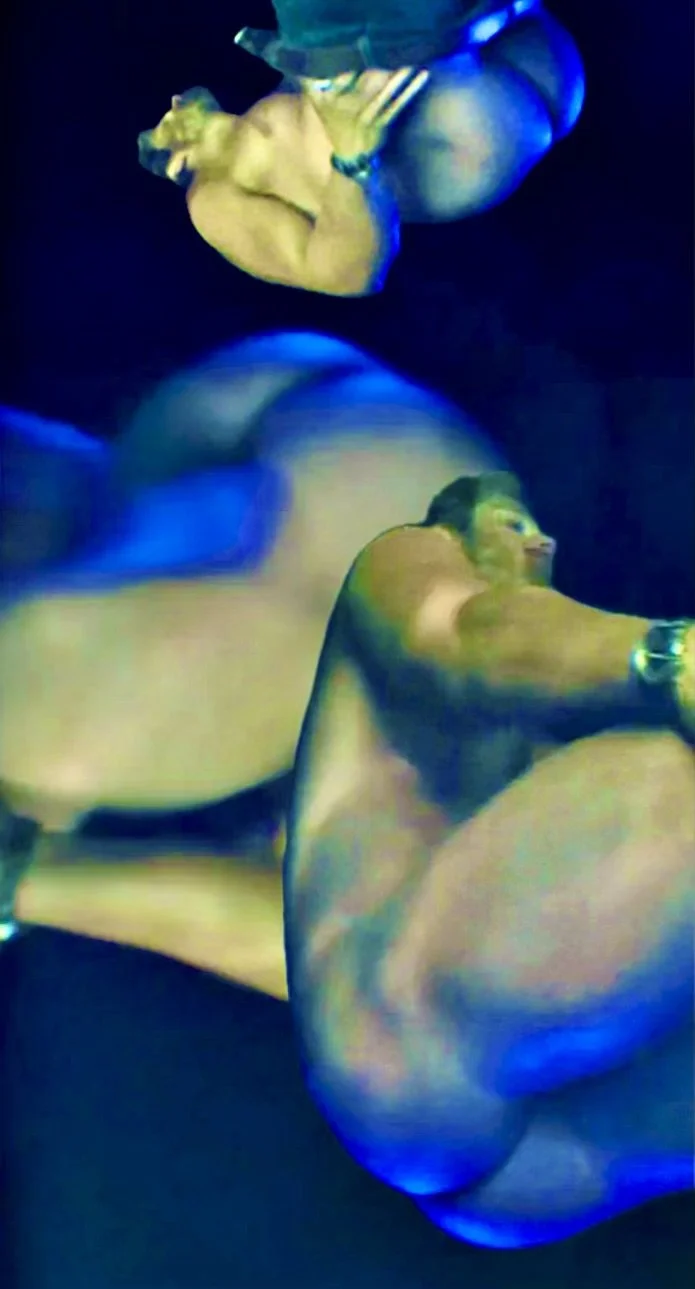
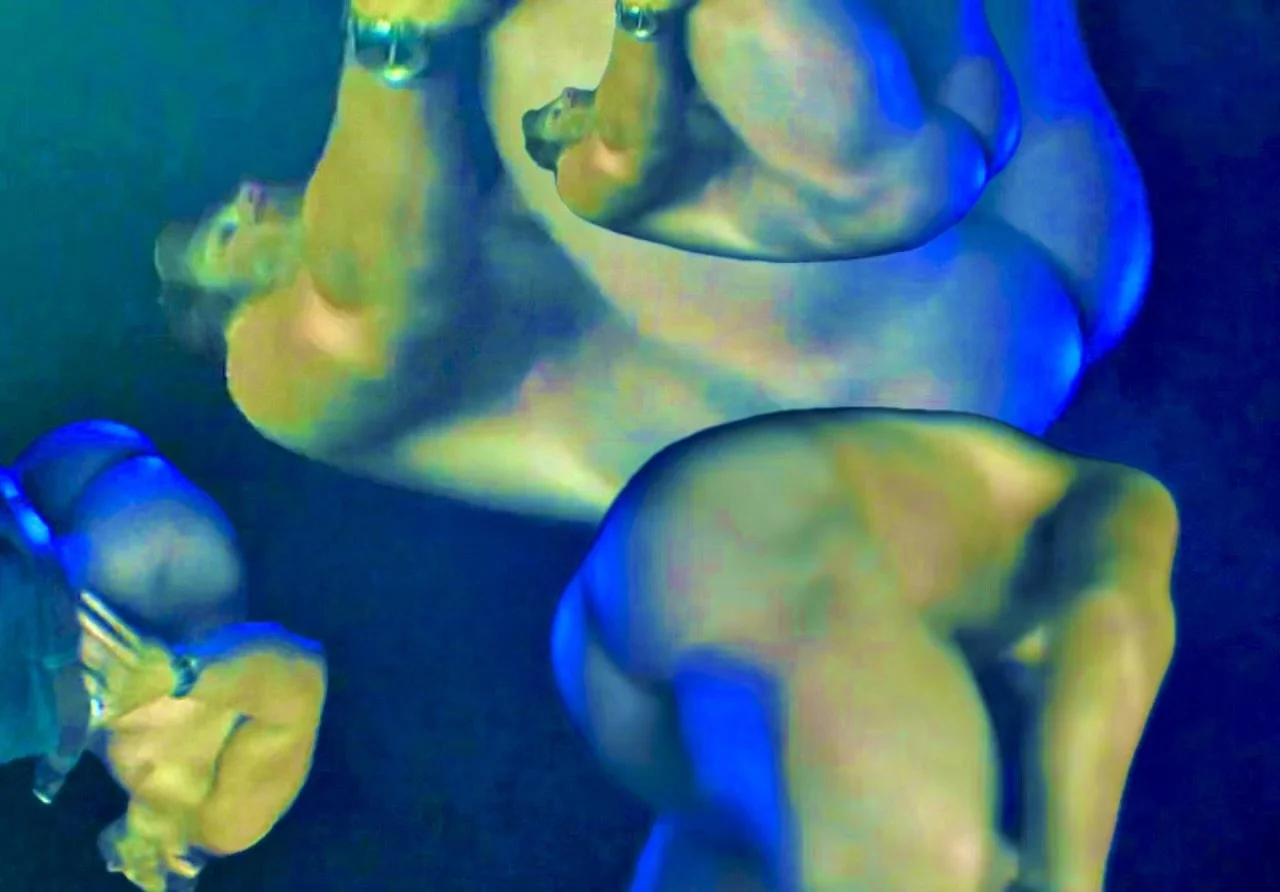
These six collages are not illustrations of that condition. They are its interior architecture. A figure dissolves into comic-book cosmology, lightning and viscera, claws and teal voids. A face floats severed from its body in an unbroken field of blue. Two men exist in water together, one rendered in cobalt silhouette, rendered beautiful and invisible in the same gesture. One panel carries text: “I looked for signs or markers, but there was nothing.” That is the closet speaking. That is what it sounds like from the inside. There are no signs because the system that built it does not post signs. It simply operates — drawing on your gifts while banking on your silence.

The numbers make the architecture visible in a different register. As of 2025, nine percent of U.S. adults identify as LGBTQ+, more than double the percentage recorded when Gallup first began measuring this population in 2012. Adults under thirty now identify as LGBTQ+ at a rate of twenty-three percent. And yet the closet persists in direct proportion to the stakes. Nearly one in five LGBTQ+ adults say they have never come out to anyone — approximately 2.7 million people who have never said the words out loud to a single human being, despite many perceiving that society has grown more inclusive. Approximately 5.5 million LGBTQ+ workers go to work every day without being who they are — not out of self-denial, but out of rational calculation. Fifty percent of LGBTQ+ respondents report having experienced some form of workplace discrimination or harassment in the previous year, and thirty-one percent report that discrimination has affected their ability to be promoted or earn what they are worth. Demographer Gary Gates defines those in the closet as people who are discordant with regard to recent behavior and identity, along with those who intentionally hide their identity — which means the closet includes not only those who have never come out, but the millions more who live in partial disclosure, calibrating visibility against risk in every room they enter.

Data scientist Seth Stephens-Davidowitz has noted that gay male internet behavior is nearly uniform across U.S. states — suggesting the actual prevalence of gay men does not vary by region, but that in states with stronger social stigma, far more remain in the closet than are out. The closet is not a personal failure or a private arrangement. It is a structural outcome. It is produced by culture and sustained by culture, and it serves culture — because a gay person managing their own visibility has less energy left over to challenge the conditions that made management necessary.

These collages operate at that threshold — the place where self-presentation becomes performance, where the body becomes both subject and object of a heteronormative gaze, where the figure inside the image is both seen and consumed. The blue field does not ask where the man went. It already knows. It built the room.

Leaving the closet, there are no guides, no Jupiter 3, no moon to light the way. It is a self-initiated act from the known to the unknown.

The Subdivision documents all those still in the process of making that decision.

— Behan

Sources: Gallup, LGBTQ+ Identification in U.S., 2025. Pew Research Center, The Experiences of LGBTQ Americans Today, 2025. Human Rights Campaign / Zippia, LGBTQ+ Workplace Discrimination Statistics, 2026. Center for American Progress, Discrimination and Barriers to Well-Being, 2022/2024. Seth Stephens-Davidowitz, Demographics of Sexual Orientation research. Gary Gates / Gallup, Counting the Closet, Contexts, 2017.