On Fabric

Fabric

Two materials. Two very different ways of being seen.

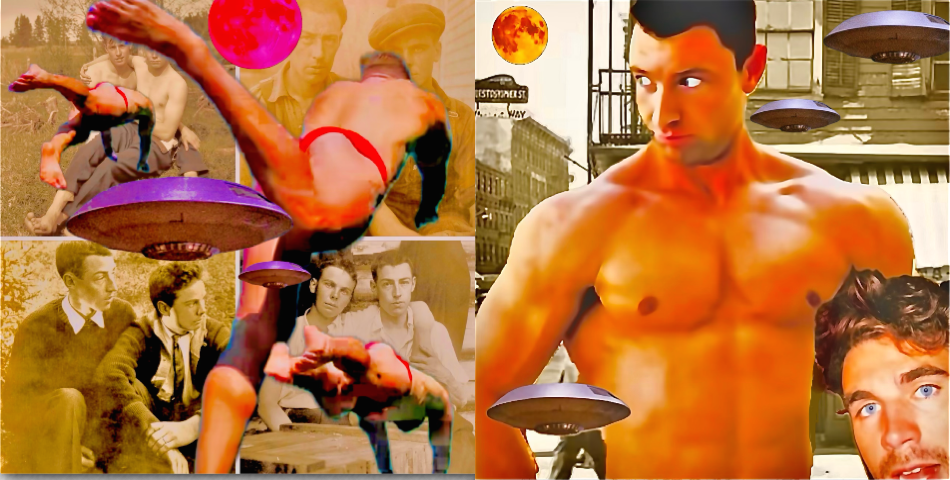
Leather came into gay culture after World War II, carried in by men who had fought in the war and returned to a world that had no place for them. They found each other in motorcycle clubs, in bars, in cities willing to look the other way. The black leather jacket said what couldn’t be said out loud — masculine, defiant, coded. By the 1970s, leather had become an entire grammar: harnesses, chaps, wristbands, caps. What you wore told other people exactly who you were and what you wanted. During the AIDS crisis, leather communities organized to care for the sick and lead safer sex education. The armor held.

Cotton moved differently. Jeans and dungarees and plain T-shirts were the anti-fashion — particularly for queer people who refused to perform femininity or legibility for straight audiences. By the time the graphic tee arrived, cotton had become wearable politics: brand names, slogans, pride flags pressed into breathable fabric and worn on the body as public declaration.

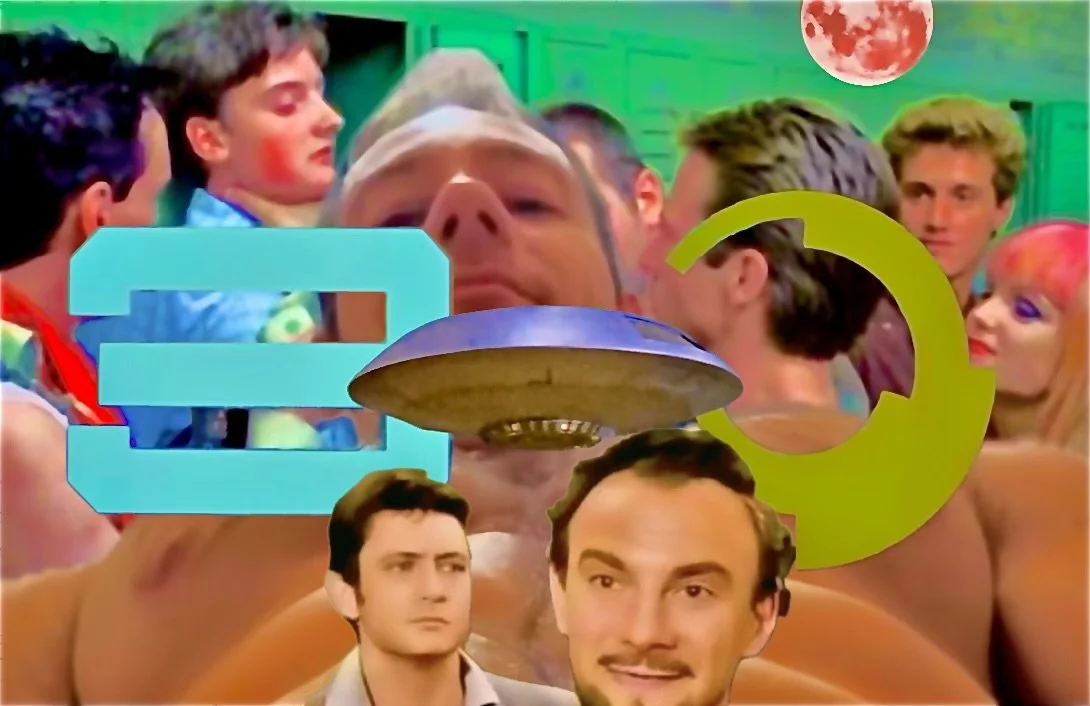
What interests me is the overlap. A leather harness over a cotton T-shirt. Chaps over denim. The two fabrics have always cross-pollinated, which makes sense — identity is never one thing. The leather man at brunch. The cotton boy at the bar.

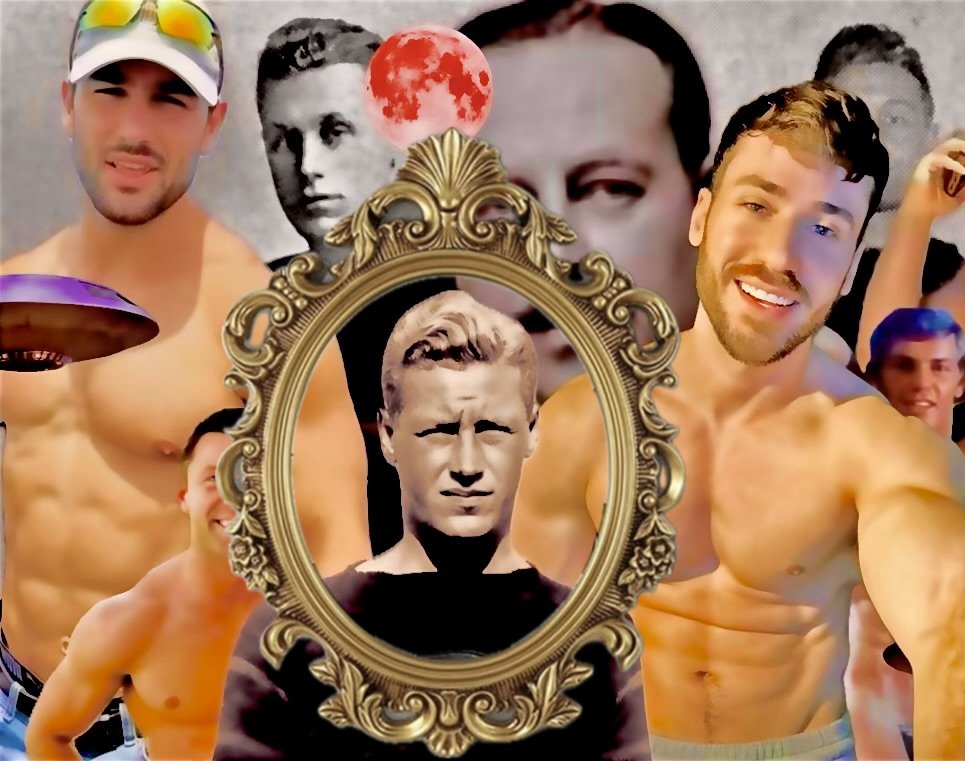
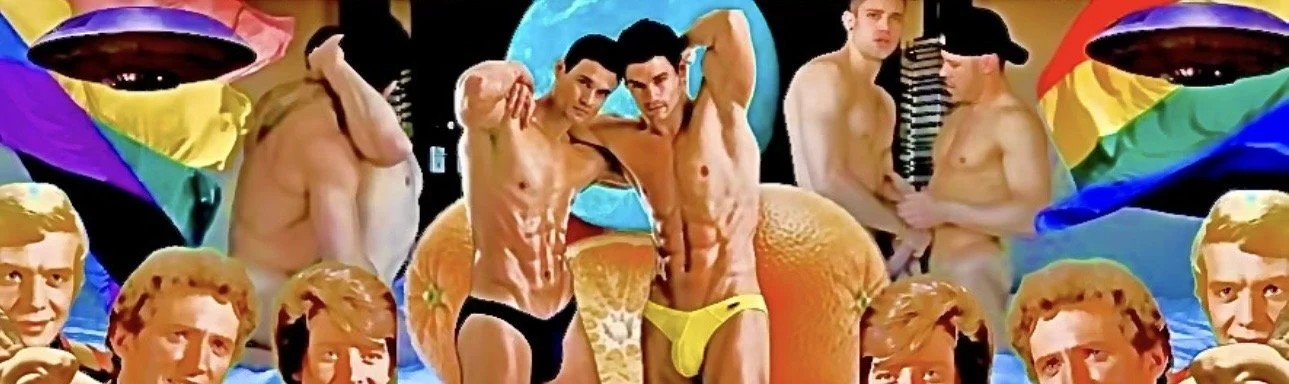
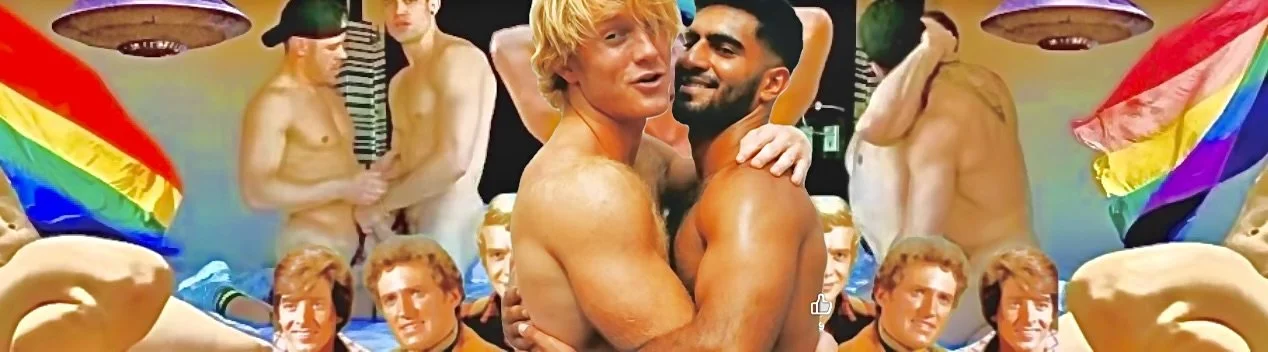
This collage lives at the intersection. The blood moon hangs over a room full of leather, and right there in the middle, a man in a yellow polo shirt. Cotton. Soft. Watching.

The Closet Series has been watching. The blood moon knows. Jupiter 3 isn’t surprised. — Behan.

On Lost in Space and Queer Subs

Dr. Zachary Smith, Major Don West, and the Hidden Language of Lost in Space 2026

“Don’t let him answer that or we’ll be standing here hours listening to the miseries of a galactic castaway.”

“Major, you irk me.”

— Don West and Dr. Zachary Smith, Lost in Space, “A Change of Space,” Season 1, 1966

Lost in Space ran for 83 episodes on CBS between 1965 and 1968. Its official premise — a pioneering family lost in space after their mission is sabotaged — was the main plot. Produced by Irwin Allen and loosely based on The Swiss Family Robinson, the show was a product of its moment: the space race, the Cold War, the heteronormative American family as cultural ideal. It was popular, occasionally thrilling, and it ran for three seasons before CBS cancelled it in 1968.

Within that run, threading through the main plot without displacing it, was a subplot that this essay proposes to examine as if a main plot — not because it was, but because in holding it up to the light, something precise and historically significant becomes visible.

That subplot was the relationship between Major Don West and Dr. Zachary Smith. And what it encoded, for two very different audiences watching the same screen in 1966, was nothing less than the entire architecture of the closet, straight and gay male identity in mid-century America.

Don West: The Straight Man

Major Don West, played by Mark Goddard, was the show’s action hero. Square-jawed, physically seductive, projecting the uncomplicated masculinity that the 1960s demanded of its leading men — he was, in the language we’d now use, straight-coded apparel in a silver space suit. He had a nominal romance with the Robinson’s oldest child Judy. Since the Jupiter 2 was crashed through most of the series, he didn’t have a lot to do as a pilot.

Enter Dr. Smith.

Don West despised Dr. Smith openly, vocally, and with remarkable consistency across all three seasons. His contempt was performative, ritualized, and ongoing.

He could never get rid of Smith. The ship kept crashing. Smith kept surviving. Don kept fuming.

What straight male viewers recognized in Don West was their own reaction to effeminacy. And more deeply homosexuality, which in 1966 was a word that could not be spoken on network television. Don West’s fury gave straight male America a weekly fare of boundary-enforcement that felt entirely natural, entirely justified. It was the acceptable face of a reaction that ran deeper than anyone was prepared to admit.

As Don himself once put it, through gritted teeth, when Smith announced his arrival with “Never fear, Smith is here!” — “I had to open my big mouth.”

Dr. Smith as Fay Wray

Jonathan Harris played Dr. Smith as a type of femme fatale, a Fay Wray — the perpetual object of a monster’s attention, always imperiled, never quite consumed.

Harris created the character as an effete villain — a Russian spy and general meddler whose inability to adjust robotic mechanisms in a manly way provided the engine that drove the series. He was cowardly, vain, dramatically self-pitying, and constitutionally allergic to physical labor. He described himself as “much too fragile” for work. He was, by every available cultural signal of the era, coded as gay.

And here is where the trope broke down — or rather, where the closet revealed its own anxiety.

Most gay men in the 1960s did not read like Dr. Smith. They read like Don West. They were the pilots, the athletes, the stoic ones, the men who showed up and did the work and kept their mouths shut about everything that mattered. The effeminate villain was what the dominant culture needed gay men to be backwards in heels. Dr. Smith gave straight America a gay man it could manage: laughable, obvious, dependent, ultimately harmless.

Gay viewers watching Dr. Smith saw something quite different. They saw a man who had entered a hostile environment without invitation, made himself indispensable through sheer force of personality, and refused absolutely to be ejected.

They saw a survivor.

Every week Don West threatened to throw him off the ship. Every week Dr. Smith was still there. That persistence, that refusal, that immunity to shame — gay audiences in 1966 recognized it as a survival strategy because it was one they knew intimately.

When Smith silenced West with “Major, you irk me” — four words delivered with the quiet confidence of a man who has decided that other people’s opinions are not his problem — gay viewers heard something beyond comedy. They heard defiance.

Camp and Queer Subs

The shift Lost in Space made in its second season toward a more openly comic register is often described as the show going camp.

Susan Sontag, writing in her landmark 1964 essay “Notes on Camp,” defined camp not as frivolity but as a serious aesthetic position — a sensibility that sees the world in quotation marks, that insists on the artificiality of performance, that refuses to take the dominant culture’s pretensions at face value. Camp, she argued, neutralized moral indignation by adopting a playful relationship to what others treated as deadly serious.

For gay men in particular, camp was not a choice or failing so much as a method of survival. The closet is, among other things, a training ground in the reading of subtext — in understanding that what is performed and what is felt are entirely different things. Gay audiences of the 1960s were extraordinarily fluent in the distance between surface and meaning. They read Dr. Smith not as the show intended — as comic relief, as cautionary figure — but as something more truthful. A man living, as they were, in the gap between the performance and the reality.

That gap was not trivial. The Lavender Scare was still sending federal employees home for the crime of homosexuality. The DSM still classified gay men as mentally ill. Don West’s contempt for Dr. Smith was, in this context, not merely a television trope. It was a weekly rehearsal of social enforcement. And Dr. Smith’s survival of it, week after week, was something gay audiences in 1966 were not accustomed to seeing.

Two Audiences, One Subplot

What is historically significant about the West-Smith dynamic is that it served two large and culturally opposed audiences simultaneously.

For straight male viewers, the subplot provided ritual confirmation. Don West’s exasperation was recognizable and morally uncomplicated. The effeminate man was the problem. The straight man’s contempt was the appropriate response. The boundary was maintained. Nothing required further examination.

For gay male viewers, the subplot provided representation by inversion. Dr. Smith was not who gay men were. He was what the culture imagined gay men to be. But in watching him survive, persist, and refuse to disappear, gay audiences found something sustaining. Their relationship was not incidental to the series — it helped create its tension and kept both audiences

The dynamic was repeatable, reliable, and utterly writable, never requiring resolution. It was, in the most precise sense, a cultural pressure valve — releasing tension for one audience while quietly providing sustenance for another.

The Trope and the Reality

The cultural machinery that produced Dr. Smith was the same machinery that produced the Lavender Scare, the pathologizing of homosexuality, and the entire apparatus of mid-century American homophobia and the closet. Gay men were characterized as weak, effeminate, untrustworthy — a threat to the masculine order that Don West represented and enforced.

The reality was entirely different. The gay men of the 1960s were largely invisible precisely because they looked like everyone else — like Don West, not like Dr. Smith. They were in the military, the police force, the corporation, the suburb. They were stoic. They were competent. They kept their expressions neutral, their counsel private, their suits blue. And they watched Dr. Smith on Tuesday nights and felt, in ways they may not have been able to articulate, something complicated and true.

The trope was wrong. It was always wrong. But it was what the culture asked for, and Lost in Space delivered it with sufficient intelligence and Jonathan Harris’s sufficient genius to make it endure across three seasons and two subsequent revivals.

The Collages

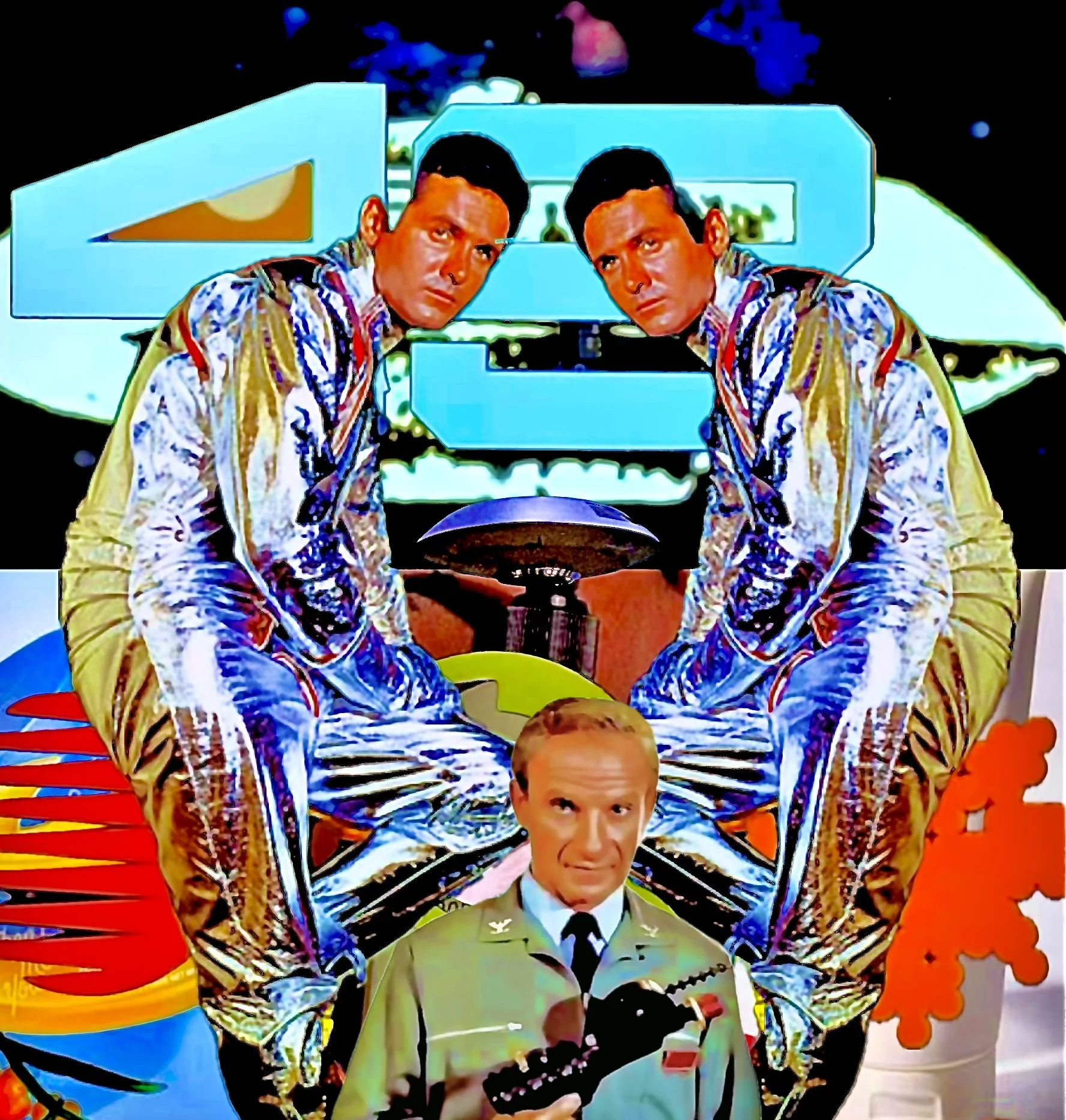
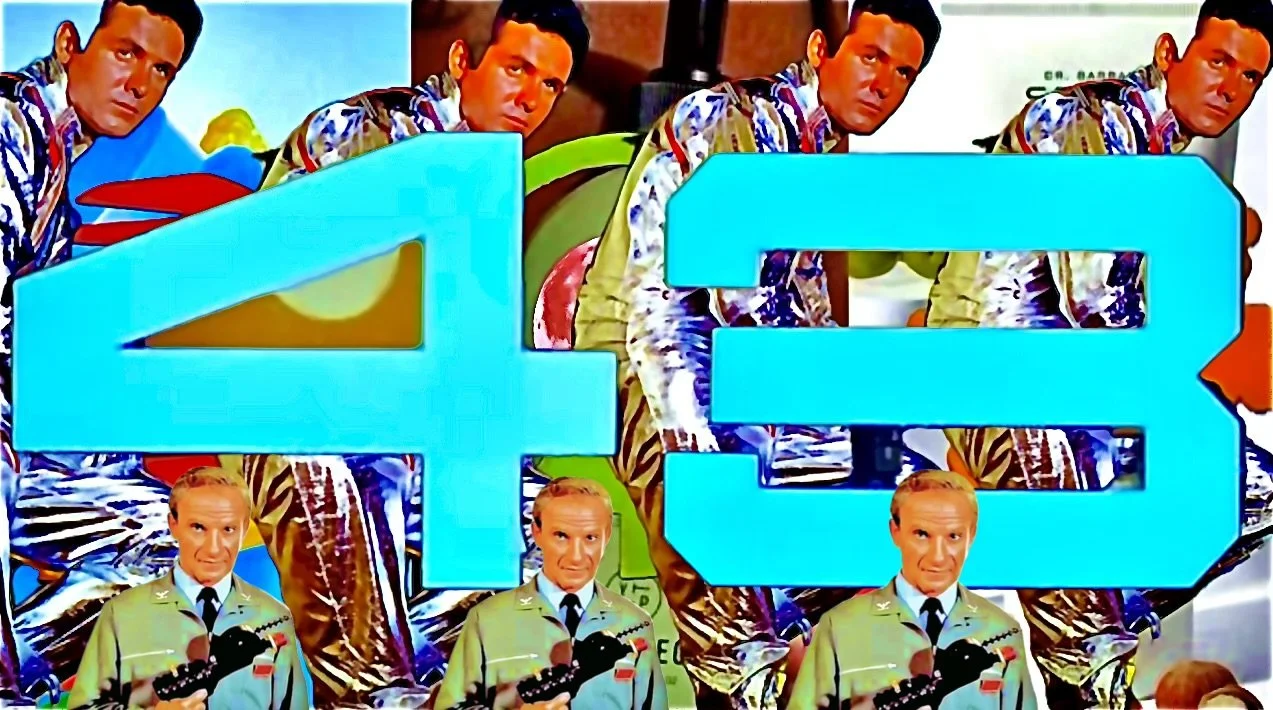
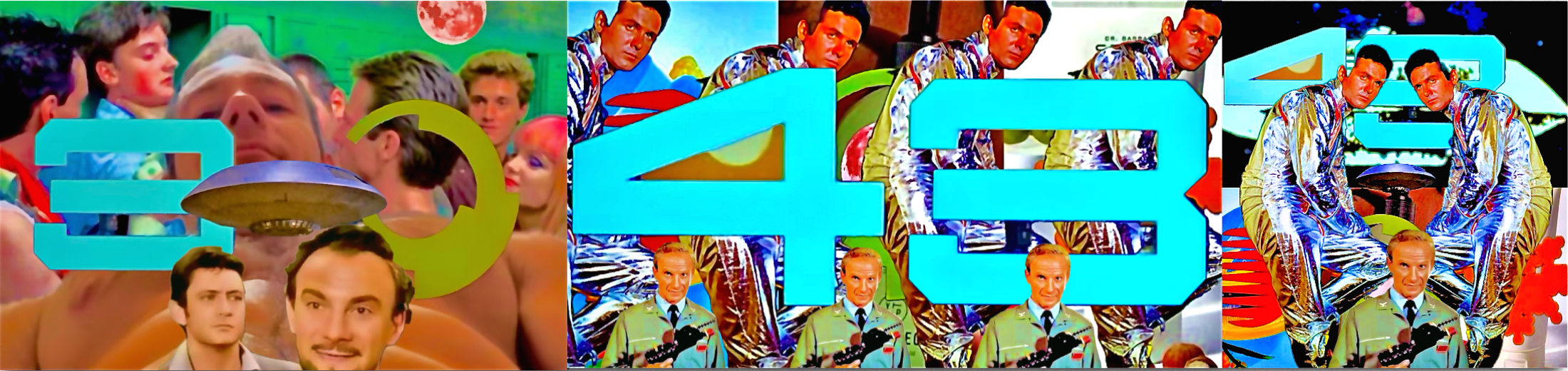
Behan’s collages look directly at this dynamic and render it in visual form. Dr. Smith is present alongside the multiplied, mirrored figure of Don West. The 4:3 ratio of the triptych is not accidental — four Don Wests to three Dr. Smiths, majority to minority, straight to gay. The blood moon watches. Jupiter 3 hovers. The Closet Series documents what the show itself could never name.

What It Means Now

Lost in Space ended in 1968, one year before Stonewall. It was never formally a queer show. It could not be. But embedded in its weekly ritual of contempt and survival was a precise map of how gay and straight male identity operated in America at a moment when neither could speak directly to the other.

The subplot was doing serious work. Don West’s contempt and Dr. Smith’s four words of quiet defiance were the whole of it — hiding in plain sight, on CBS, on Tuesday nights, in 1966. Who could ask for more?

Dueling Pistols

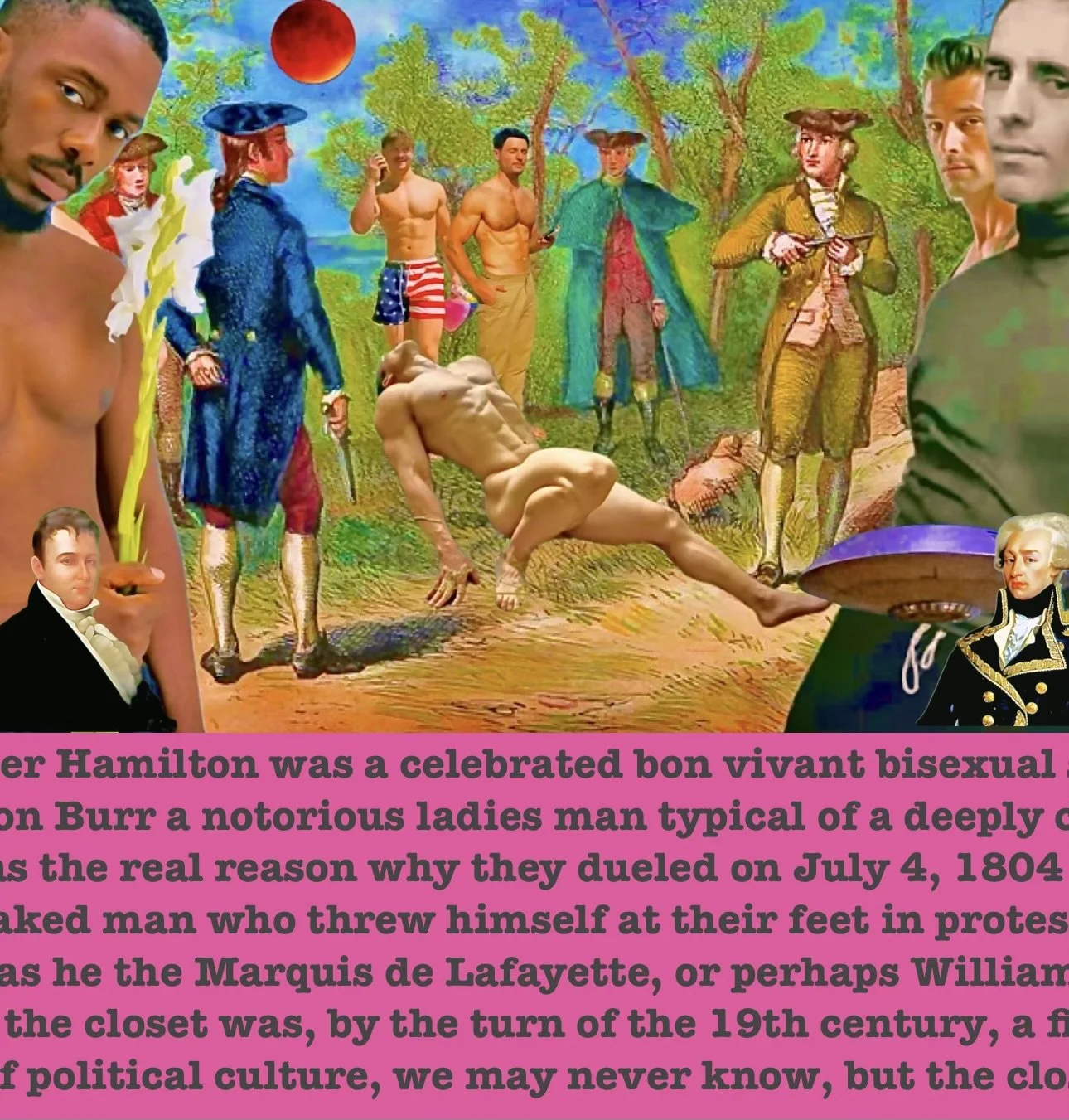
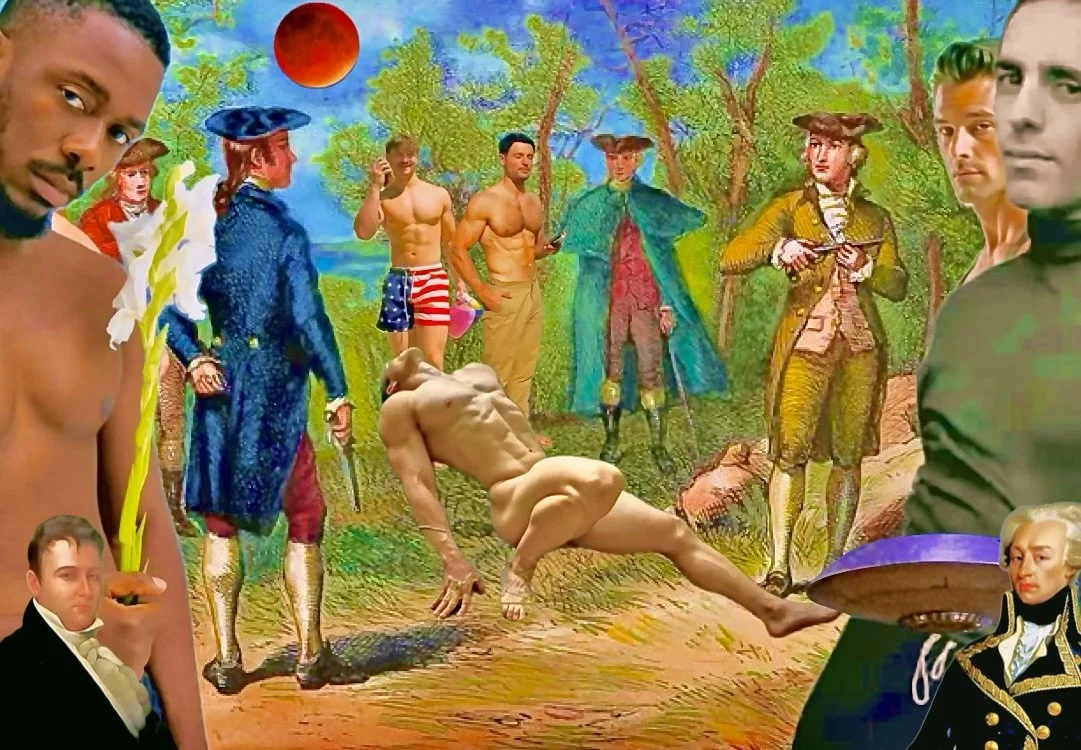
Alexander Hamilton was a celebrated bon vivant bisexual sodomite, and Aaron Burr a notorious ladies man typical of a deeply closeted tortured soul. What was the real reason why they dueled on July 4, 1804 and who was the handsome young naked man who threw himself at their feet in protest, declaring his love for them both? Was he the Marquis de Lafayette, or perhaps William Charles Cole Claiborne? Because the closet was, by the turn of the 19th century, a firmly entrenched reality of political culture, we may never know, but the closet knows, the closet always knows, and, like the secretive Mona Lisa, the closet will not incur any revelations. 
Rainbow Economics

Gay Americans generate nearly $2 trillion annually through consumer spending and business ownership. That’s 1.4 million businesses. Tens of thousands of jobs. An economic force woven into every sector of American life — from luxury goods to skin care to the corner coffee shop.

So here’s a thought for the boardroom: when you decide that ten percent of your population isn’t welcome — in your store, your state, your country — you may also be deciding that ten percent of your economy isn’t welcome either.

That’s not a values statement. That’s just a bad business model.

The Closet Series is meeting Conservative America exactly where they live. In the transaction. Do the math.

The Closet Series. 2026. Behan

Composition Notes

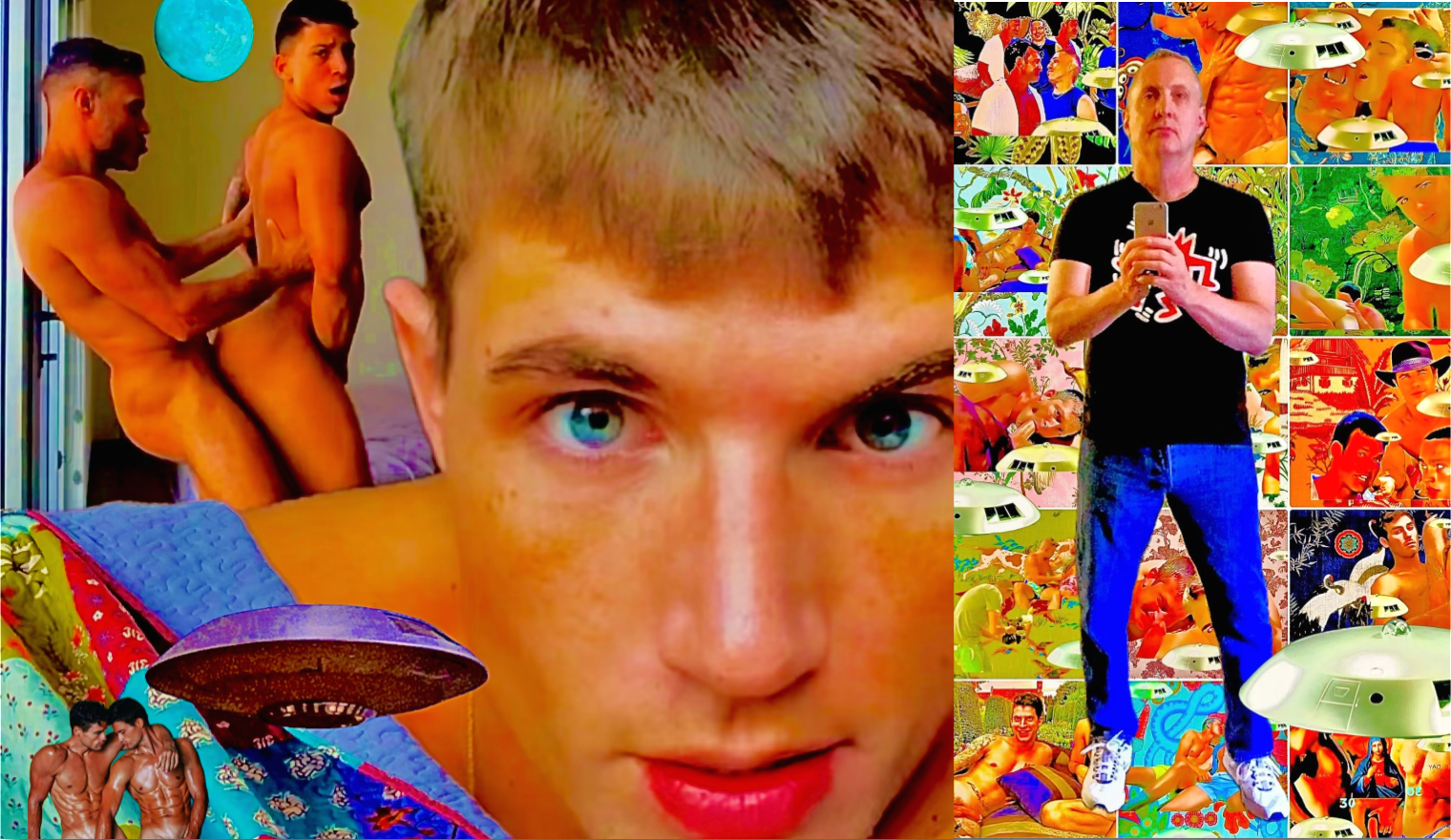
On the Nature of Space

Two compositions. Two strategies. One argument.

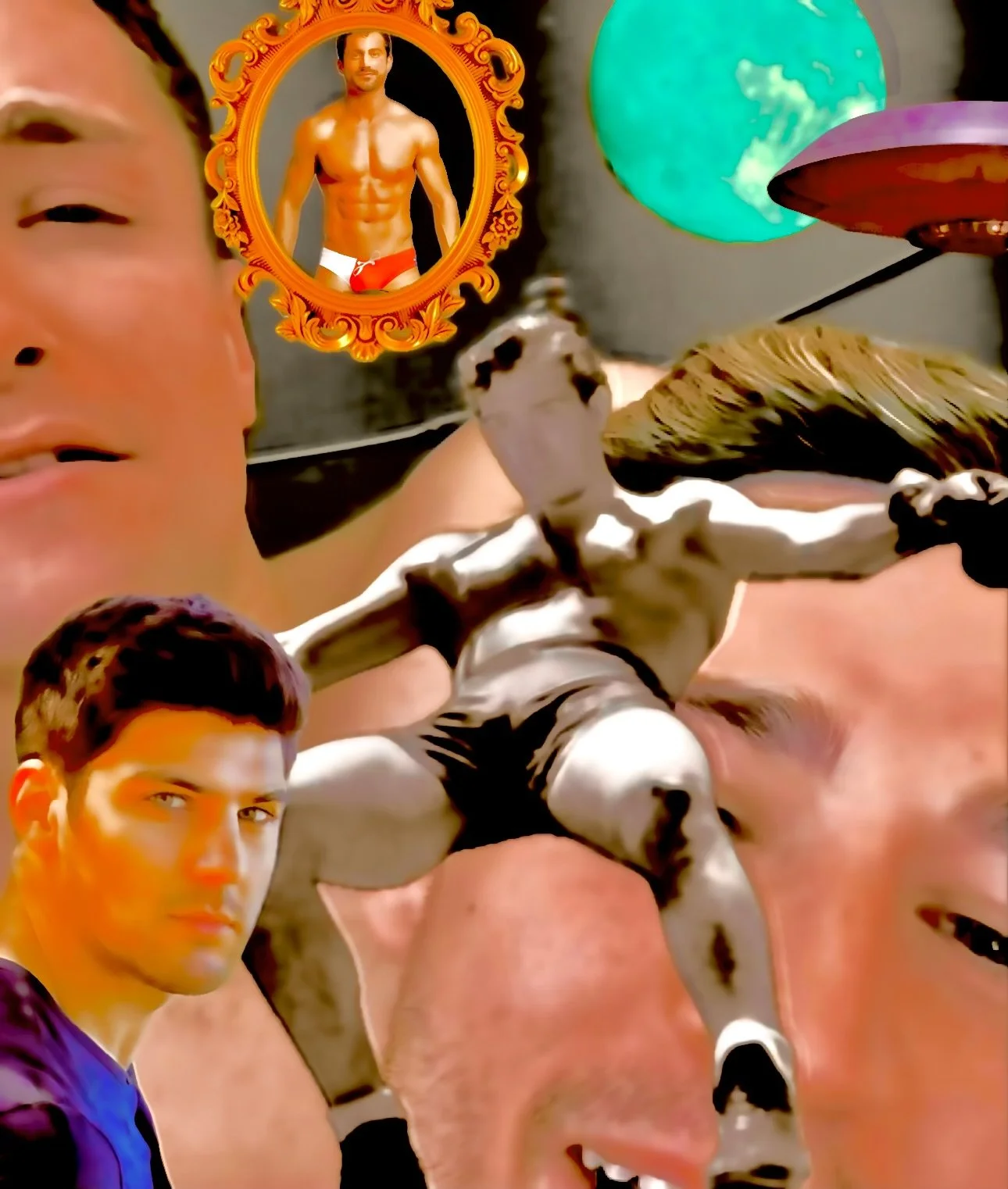
The first follows recognizable space — a room, a bed, a window, warmth. Gay life rendered as ordinary and inhabited. The radical act is simply showing it as if it belongs. Because it does.

The second breaks space entirely. Faces become architecture. Scale collapses. There’s no floor, no room, no wall. The disruption is the point — queer existence doesn’t fit inside conventional pictorial logic because it was never meant to fit inside conventional social logic.

Different formats. Same truth.

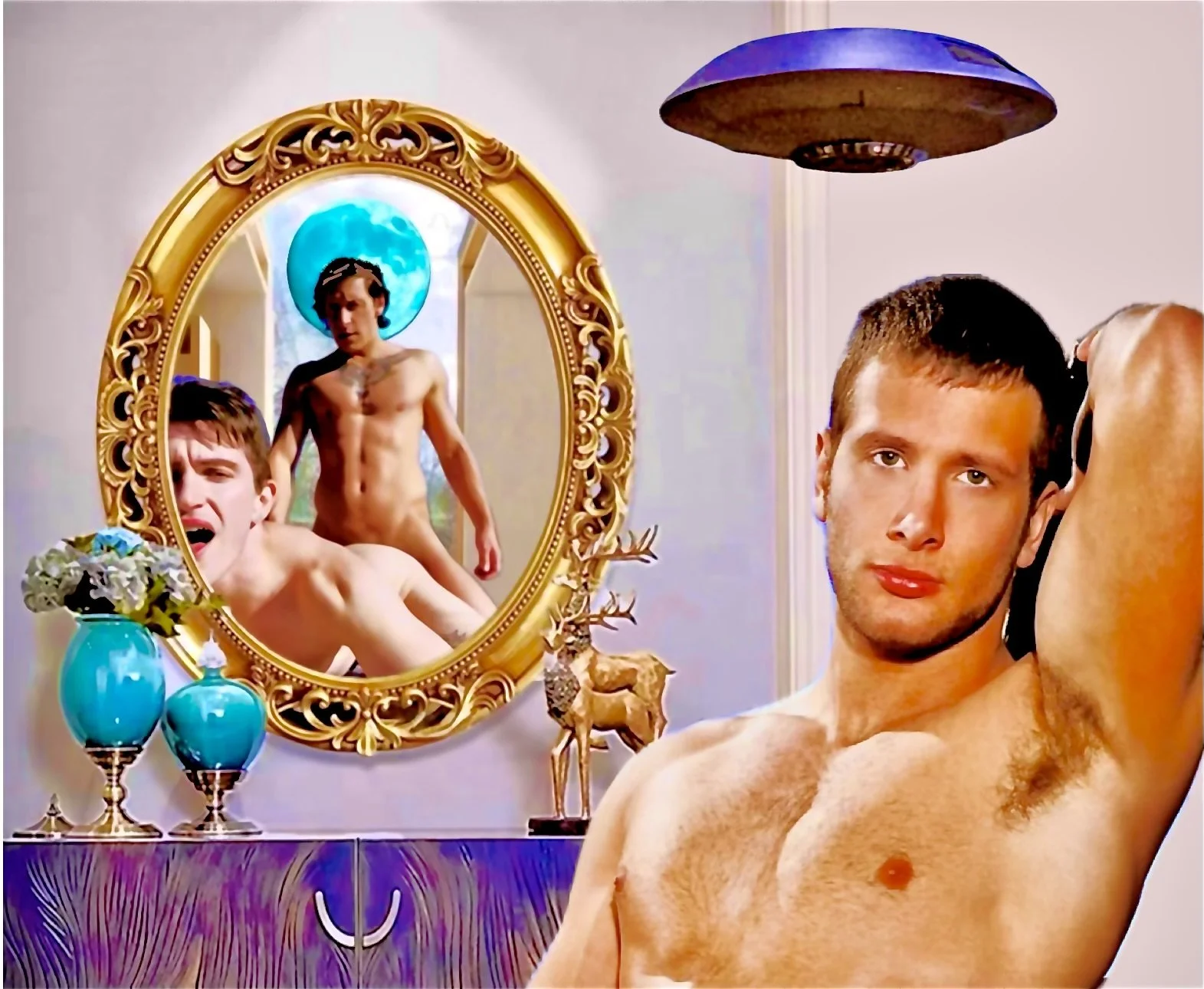
Mirror Mirror

The myth of Narcissus is usually told as a cautionary tale. A beautiful boy falls in love with his own reflection and wastes away. But queer artists have always read it differently. The mirror doesn’t have to be a trap. Sometimes it’s the first honest thing you’ve ever seen.

For gay men growing up in a culture that rendered them invisible — or worse, rendered them monstrous — the mirror was a radical act. Seeing yourself clearly, fully, without apology, is not vanity. It is survival.

Psychologists who study sexual identity development describe self-acceptance as the resolution of internal conflict — moving from awareness, through tolerance, to genuine integration of identity into the self. That journey, for gay men, has never been purely private. It happens against the backdrop of a culture that spent most of the 20th century insisting you didn’t exist, or shouldn’t.

Which is why the mirror matters so much in queer art. Queer artists return again and again to figures gazing through windows, staring into mirrors — gestures of vulnerability that quietly affirm queer presence. The mirror is where the private self meets the evidence. Where you stop taking the world’s word for who you are.

Queer artists looked backward not with nostalgia but with defiance. They saw in ancient myths a mirror — one that reflected not sanitized identities, but the wild, restless truths of love, body, and spirit.

The Closet Series keeps returning to mirrors too. Not because the men in them are in love with themselves. Because they finally can be.

The Closet Series. 2026.

10 Spot

Ten at 10

Clark sat at the breakfast table, mindlessly thumbing his spoon in front of the oatmeal Susan prepared for him. He stared out into the distance, thinking about the magazine he saw on the rack at the A&B drugstore yesterday.

“I guess there really are gay men,” he thought to himself. “God, how does that work? I mean, I guess they do this. And, well, if I were gay, I’d certainly wanna do this. I bet they’re doing it all the time, I bet one minute they’re stocking the canned corn, and the next minute they’re banging it out on the stockroom floor. I wonder if it hurts?”
“Clark,” Susan called out, “your oatmeal getting cold; and you have that conference call at 11.”

“I can’t stand cold oatmeal,” Clark thought in reply. “At least I’m not gay.”

“Yes, dear.” Clark mumbled.

Three questions Clark isn’t asking:

Why do straight men fixate on gay men?

Sociologist Michael Kimmel argues that what we call homophobia is less a fear of gay men than a fear of being perceived as one. Gay men function as the boundary marker — the “other” against which straight men continuously measure and prove their own identity. The fixation isn’t incidental. It’s structural. You can’t maintain the wall without checking it constantly.

Are there men so far in the closet they don’t know they’re in it?

Yes. Clinicians have a name for what happens when desire becomes so unacceptable to a person that it can’t enter conscious awareness at all. The attraction is present. The man is simply not home to receive it. Psychiatrists Sullivan and Roughton documented how closeted individuals routinely separate their same-sex feelings from their sense of self so completely that they lead a double life they are genuinely unaware of. Not lying. Not performing. Actually not knowing.

What happens when they’re confronted with gay sexuality?

In 1996, researchers at the University of Georgia measured physiological arousal in self-identified straight men while showing them gay pornography. The homophobic men in the study showed measurable genital response. The non-homophobic men did not. The researchers’ interpretation: the arousal was already there. The hostility was the management strategy.

Clark stares out the window. The oatmeal is cold. The conference call is about to begin.

“Did you need me to reheat it?” Susan asked.

Clark looked up and said, “No, thanks, dear, I like it cold.”

Gaycay

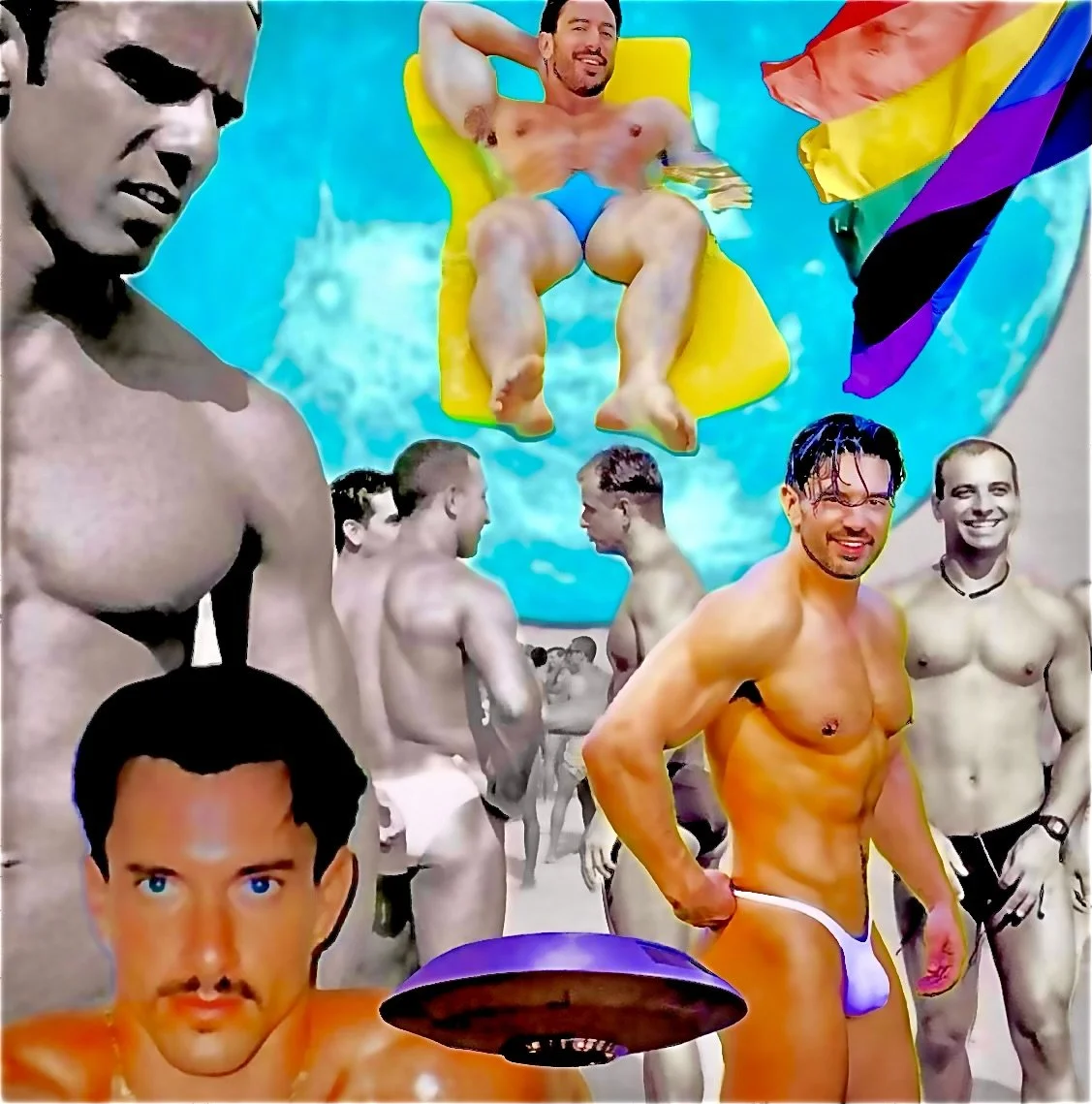
Gaycay: History of Boy Beach

Digital Photo Collage 2026

At the tip of Cape Cod, past the marshes, down a ten minute walk from Province Lands Road, there is a beach with no sign, no facilities, and no official name. Everyone knows where it is. Everyone knows what it is. Boy Beach — Provincetown’s legendary clothing-optional gay beach — has been a sanctuary, a rite of passage, and a gathering place for over a century. Tennessee Williams was famously photographed nude there. He was not alone and he was not surprised. The remote dunes near Herring Cove became, in an era of intense homophobia, exactly what they needed to be — a place where the law couldn’t easily follow and the community could simply be. No Bob Damron guide needed. Just walk through the marshes and follow the sound of people exhaling. It’s still there. Jupiter 3 has landed. The moon is out. Come as you are.

— Behan

Gay Travel History

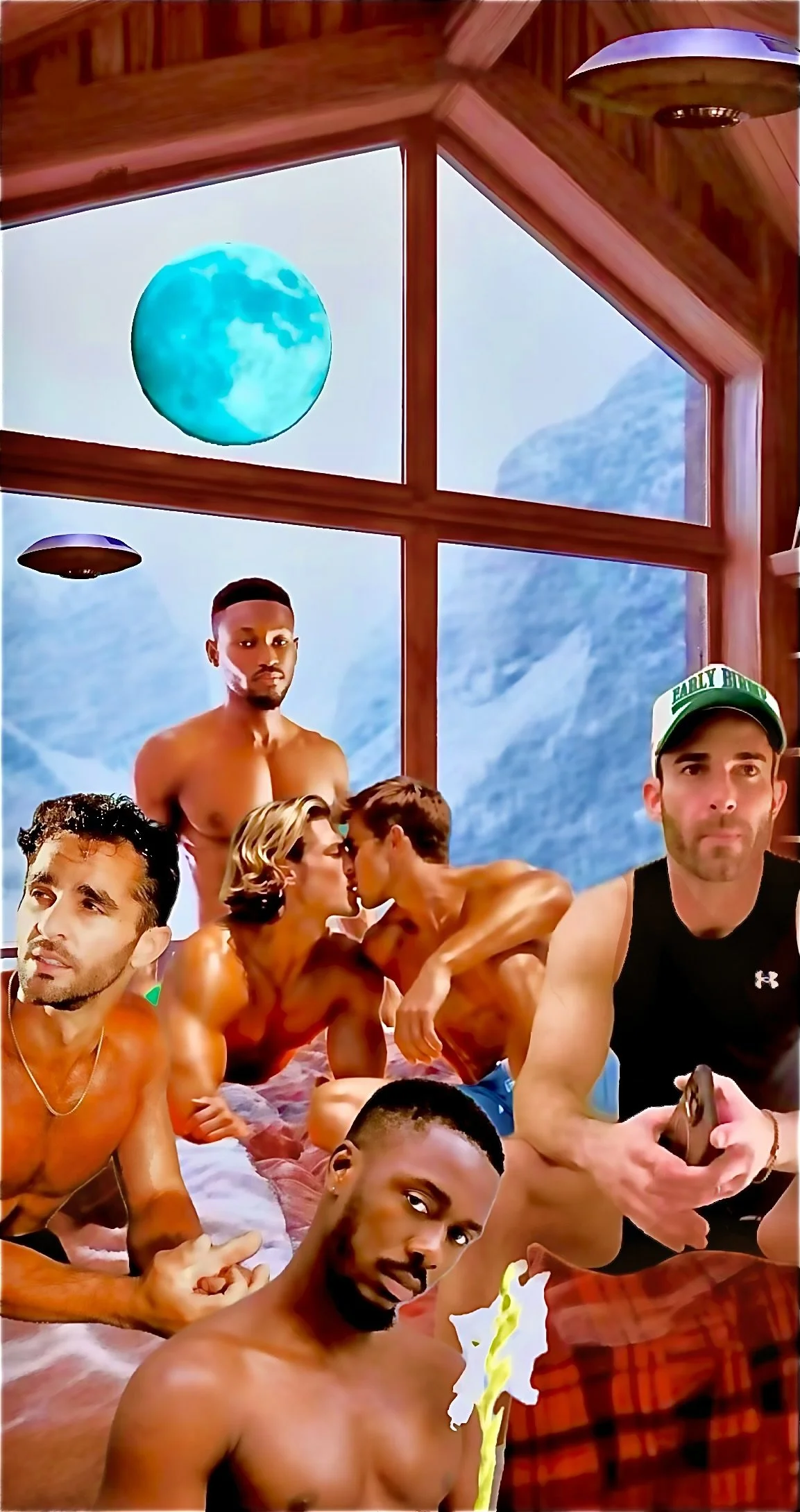
Colorado Calling Digital Photo Collage 2026

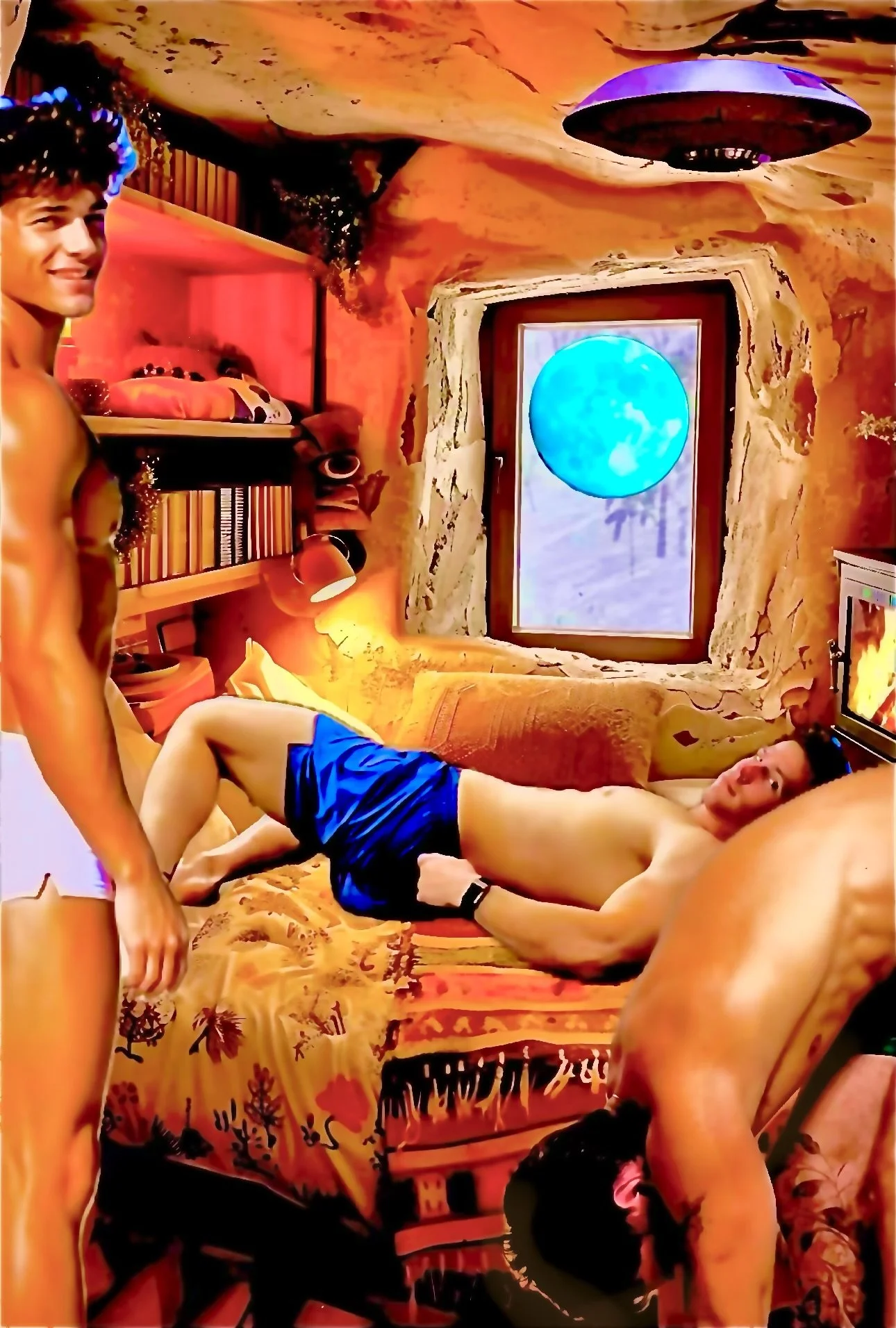
Long before Airbnb and gay travel influencers, getting from here to there safely required something closer to a secret handshake. For decades, queer travelers navigated America with underground knowledge — which bar, which hotel, which town would let you be who you were without consequence.

In the mid-1960s, a man named Bob Damron started writing it all down. His Address Book — first published in 1965 — was the Green Book for gay Americans. A discreet pocket guide mapping out safe bars, bathhouses, coffee shops, and hotels across the country. You kept it in your jacket. You didn’t leave it on the dashboard.

Then Stonewall happened. And slowly, carefully, joyfully, the gaycation was born. Provincetown. Fire Island. Palm Springs. Key West. Places where you could exhale. Places where the moon was yours and nobody was watching the door.

Colorado Calling imagines what gay travel always dreamed of being — a mountain cabin, good company, the Aquarian Moon outside the window, Jupiter 3 keeping watch. No secret handshake required. Just people, being people, in a place that finally said yes.

Take that vacation. It’s earned. — Behan

Making Way

Make Way for the Artist in the Room This is a self-portrait. Not the traditional kind — no easel, no dramatic lighting, no studied pose. Just a person standing in front of their own work with a phone, in a Keith Haring t-shirt, looking back at you.

The left panel is the work itself. The right panel is the artist who makes it. A diptych. The two halves of the same statement.

As Pride Month begins, this image is about what the work has always been about.

“Even if you disagree with us,” Behan says, “you have to acknowledge that we exist. At the very least.”

The Closet Series is a visibility zone — not an argument, not a petition, not a plea. A fact. Rendered in full color. Posted to the internet.

Breathing without permission.

Jupiter 3 has landed. The Aquarian Moon is watching. The artist responsible is right there in the frame. — Behan

Craft Notes

Edgar Degas made over 300 monotypes — prints pulled from inked metal plates — and routinely broke the rules of the medium. A monotype is supposed to produce a single impression. Degas scoffed at this rule, pulling as many as four works from one plate, using the leftover ink or paint to produce a degraded or ghost image that he then enhanced with pastel. He called these second and third pulls cognates. Same plate, different pressure, different pastel combinations applied over the ghost image — four distinct works from one foundation.

Degas often used monoprints as a base for pastel drawings, adding layers of texture and color to create vibrant, impressionistic works. The base stayed constant. What changed was the color, the pressure, the hand moving across the surface.

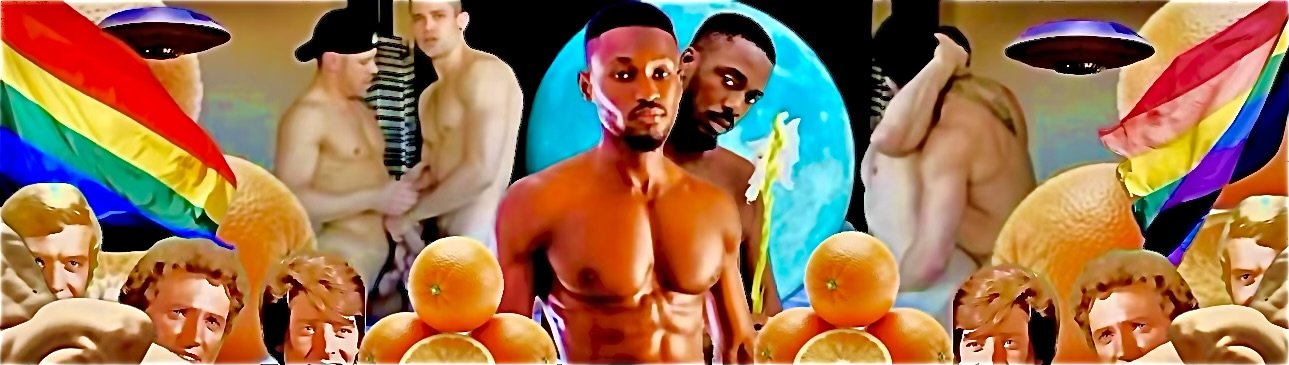
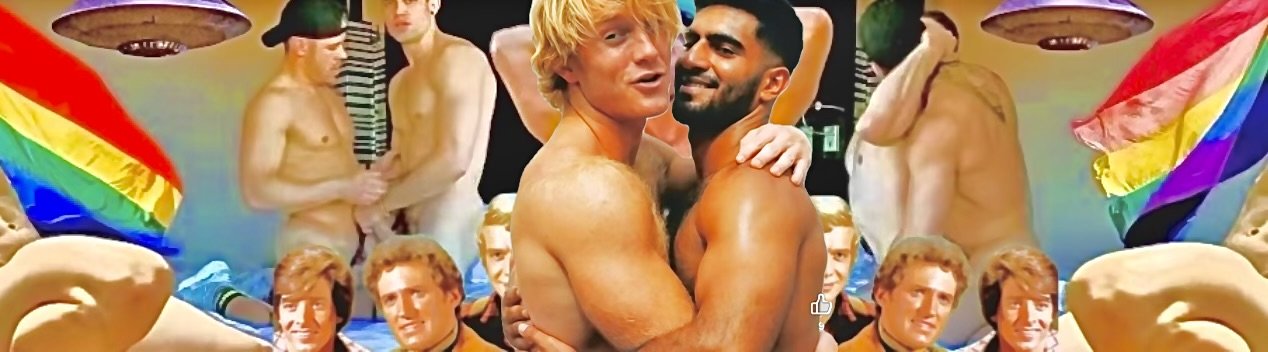
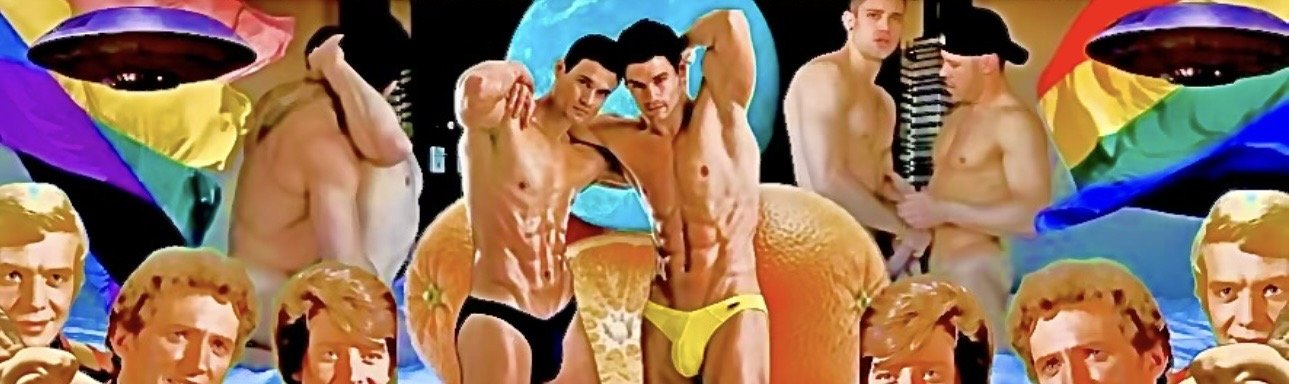
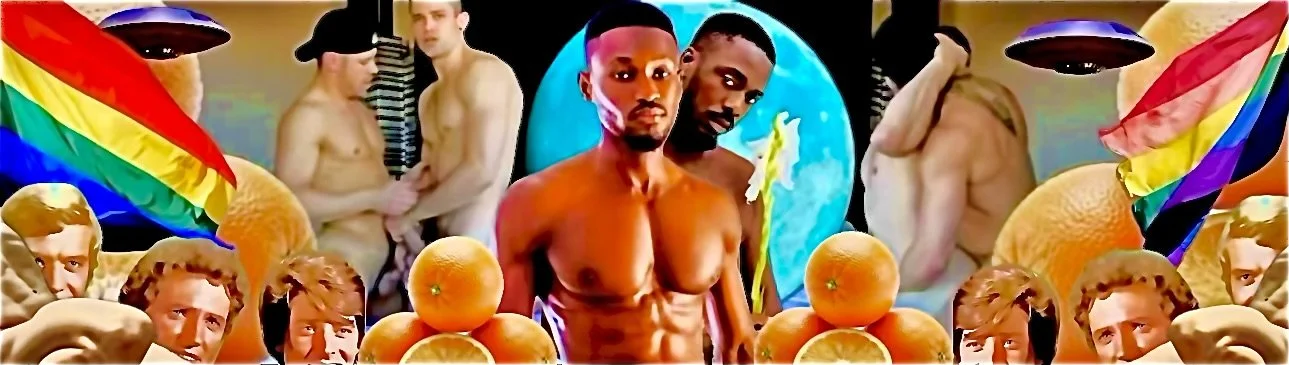
The Orange Suite works from the same principle. One digital foundation — the same compositional architecture, the same symbolic elements, the same base image — four versions, each with a different central figure and a different color relationship. The Aquarian Moon. The pride flags. Jupiter 3. The classical busts. The oranges. All constant. What changes is who stands at the center and what colors surround them.

Same plate. Different pull.

The medium is digital rather than inked metal, the pastel is light rather than chalk, but the instinct is identical to what Degas was doing in Paris in the 1870s. The monotype tradition understood something important: the ghost image, the degraded version, the second pull — these are not lesser works. They are a different kind of truth pulled from the same source.

The base image is shown here first. Then the four pulls. The plate, and what it becomes. — Behan

Ready or Not

June 1, 2026 — Pride arrives. This year it comes under the most anti-LGBTQ+ legislation in American history — more than 850 anti-LGBTQ+ bills filed in 2025 alone, executive orders banning transgender people from military service, eliminating LGBTQ+ inclusive curricula in schools, moving to restrict the HIV medications keeping people alive. The message from the dominant culture is familiar. It has been delivered before.

June 6, 1889 — Seattle rebuilds after a catastrophic fire above its original footprint, creating a maze of underground tunnels beneath what is now Pioneer Square. Seattle in the late 1800s was a booming timber and logging town filled with transient male workers. Women were scarce. Men lived together in camps, worked together, depended on each other for survival. Male-to-male relationships formed — for protection, for resources, for companionship, and for love. The camps largely tolerated them as a matter of practical necessity.

Seattle Notes:

—The underground spaces of Pioneer Square became some of the first queer safe havens on the West Coast.

—The Double Header bar has been operating there since 1934 — the oldest continuously operating gay bar in the United States.

—The Casino, operating from 1930 to 1946, was one of the few places on the entire West Coast that permitted same-sex dancing.

—The Garden of Allah, frequented by both gay men and lesbians through the 1940s and 1950s, featured female impersonators and vaudeville acts.

Gay culture did not arrive in Seattle. It was there before the founding.

September 25, 1968 — ABC airs Here Come the Brides, two seasons set in the 1870s Seattle logging frontier. Three brothers, a mountain full of timber, a camp full of lonely men, and a scheme to import one hundred marriageable women from Massachusetts to keep the logging operation going. The show was beloved. It was also something more than it appeared. Bobby Sherman, who played the youngest Bolt brother and became a teenage idol, was said to have been in a relationship with Sal Mineo. David Soul, who played the brooding middle brother, went on to play the gay-coded Detective Hutch in Starsky & Hutch — a partnership so openly affectionate that producer Aaron Spelling called it “TV’s first heterosexual love affair.” A logging camp full of desperate men needing attention, for gay audiences watching in 1968, was indeed a rainbow moment fully understood.

May 29, 2026 — The Orange Suite responds to the avalanche of current anti gay legislation with four digital collages celebrating a fulsome array of gay male love and identity, each panel distinct, the architecture constant. The suite is dedicated to every man who built this country while hiding who he was. He deserved better. He always did. — Behan

The Throuple

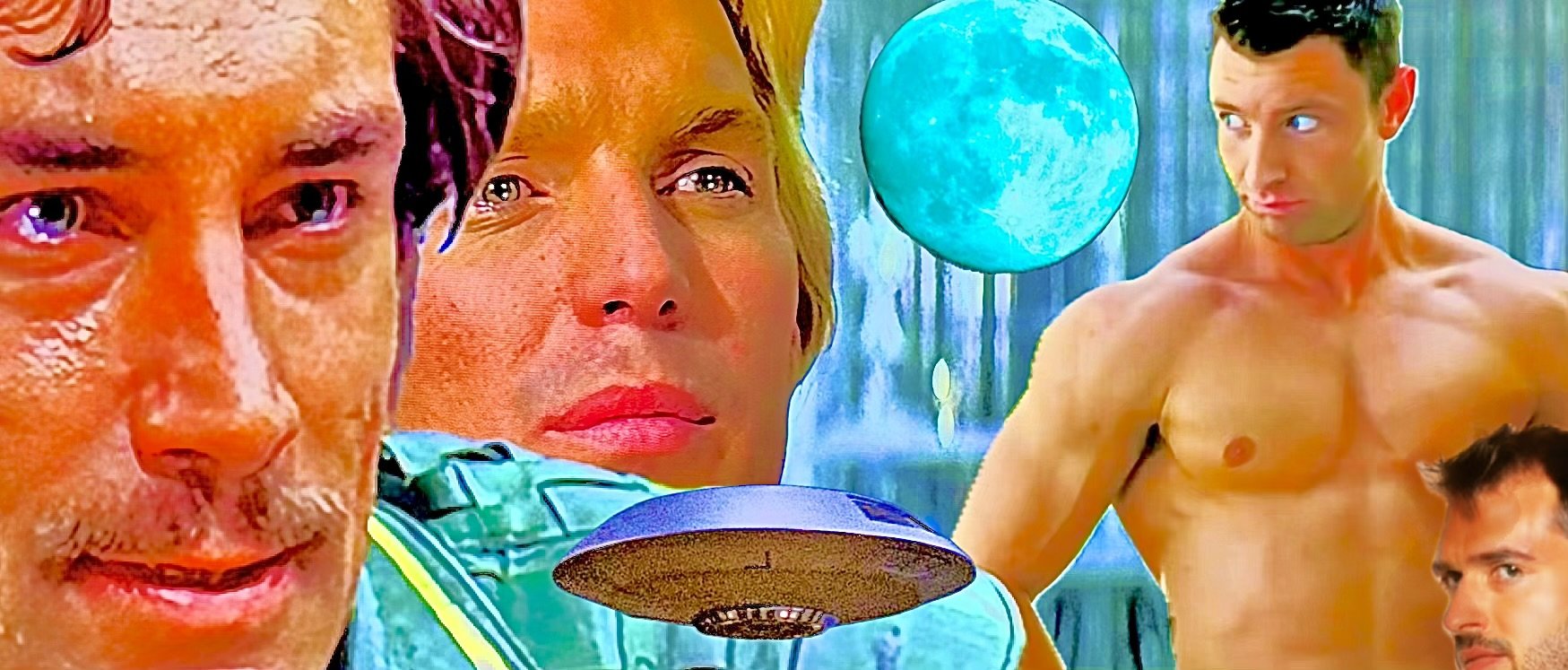
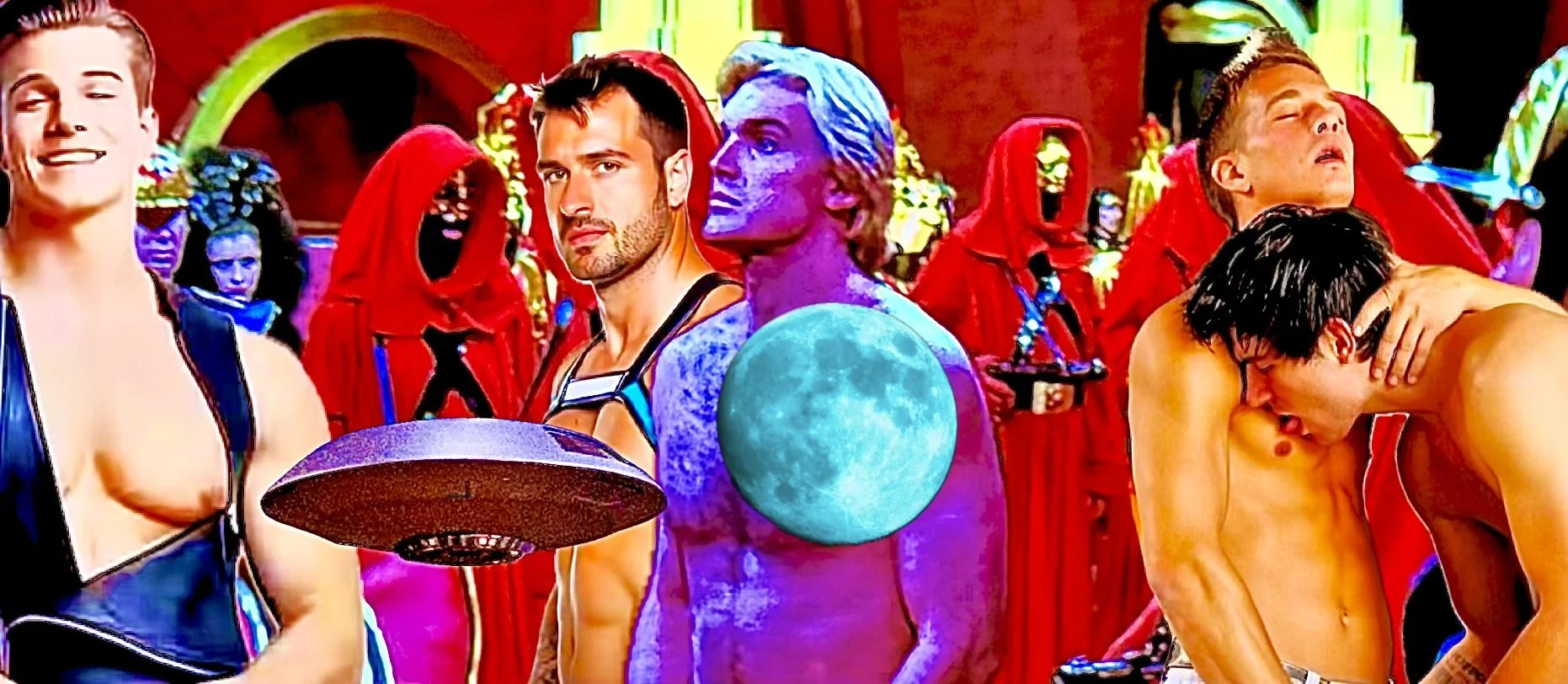
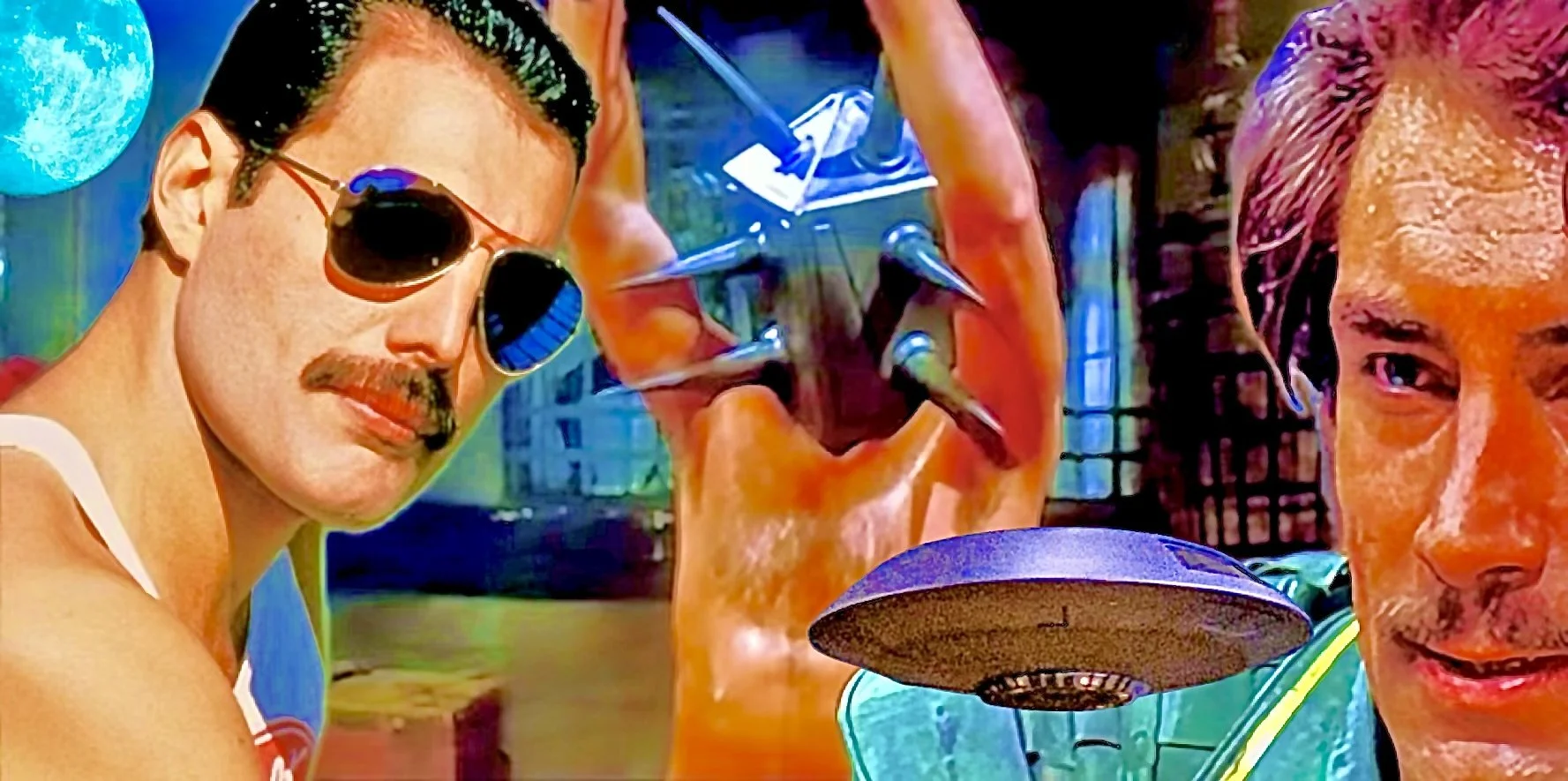
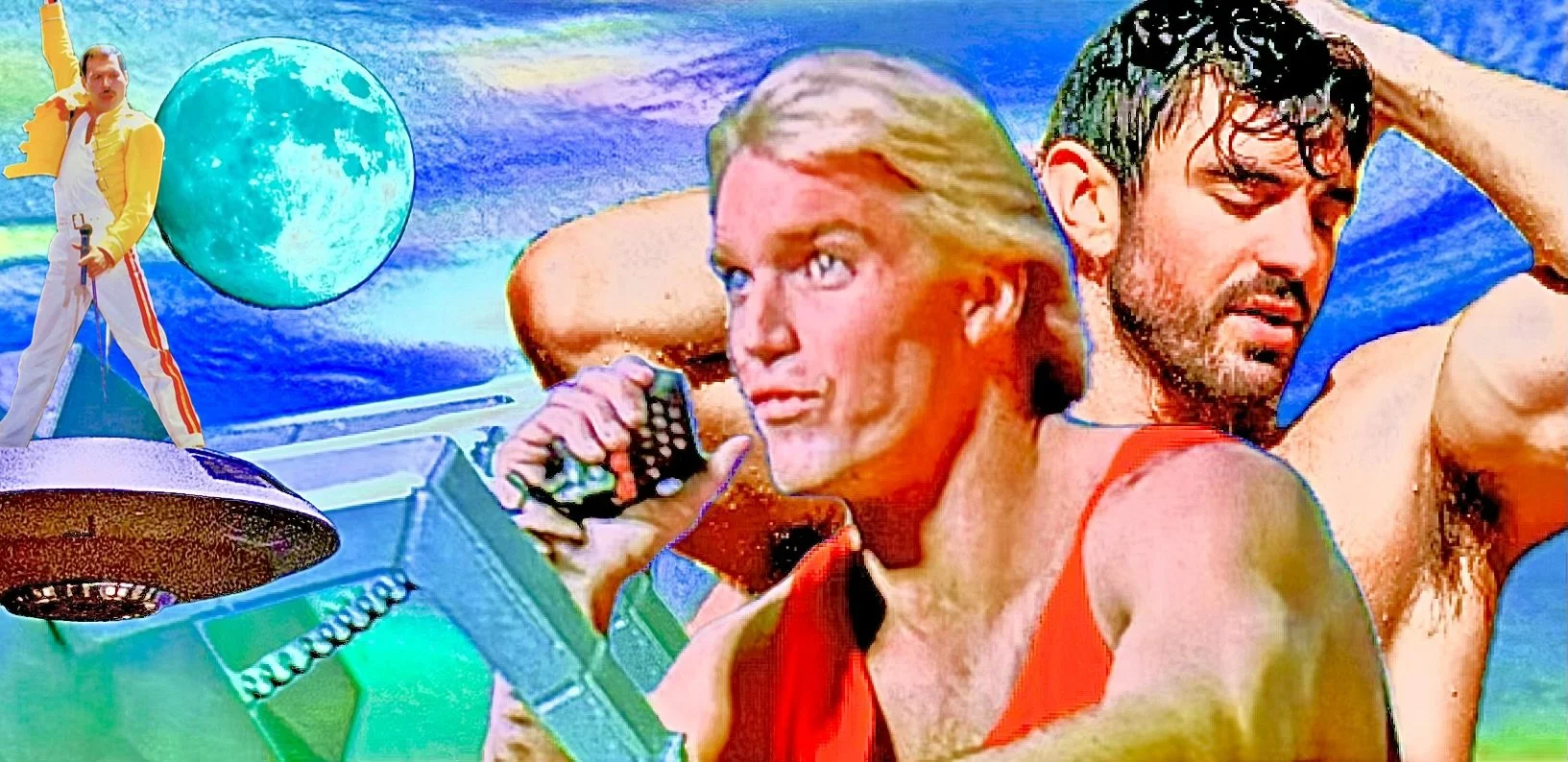
Freddie, Sam, and Timothy Were the 1980s’ Hottest Throuple Digital Photocollage series

In 1505 AD, Pope Paul IV ordered fig leaves and loincloths painted over Michelangelo’s nudes in the Last Judgment — because the Church knew exactly where the threat lived.

In 1971 AD, the makers of Flesh Gordon surrendered their hardcore footage to the Los Angeles Police Department’s Vice Squad. The police came. They took the film and destroyed it.

In 1980 AD, Dino De Laurentiis remade the same film with all the camp, leather, and dramatic excess intact — and none of the sex. He kept the body. He removed the desire.

And in 2026 AD, queer artists still have to decide what Facebook will permit or reject.

Five centuries of the same hand reaching for the same thing — the body, the desire, the image that says this exists and it is not shameful.

Flesh Gordon was explicit, raucous, X-rated — straight sex, gay sex, the whole salami. Made with genuine craft and genuine audacity — and reduced to a charge of pandering.

The band hired to score every frame of Flash Gordon was led by the singer Freddie Mercury. He was the only gay person known to be involved with the film. He was also an immigrant and a person of color. Being in the closet was a strategy of survival, not a choice to make. And yet there he is. Singing. Over every frame of the gayest straight film ever made in a band named Queen.

Flash Gordon can be considered the Wizard of Oz of its time, drained of color until the rocket launches, with Mongo arriving in full operatic excess. Dorothy becomes herself in Oz. Flash becomes himself on Mongo. Likewise Freddie Mercury becomes himself on the stage, the stage being his Mongo and his Oz.

Dino De Laurentiis did not know who Queen was when they were recommended for the soundtrack. He reportedly cried: “But who are the queens?” He meant it as a question. Freddie Mercury understood it as an answer.

Sam J. Jones, who played Flash, had five years earlier appeared as a full-frontal nude centerfold in Playgirl magazine. Whether he understood his primary audience is unrecorded.

Timothy Dalton played Prince Barin — brooding, green-clad ruler of Arboria, a man who fights Flash with a bullwhip on a tilting platform above a pit of spikes. He played it straight. He had no idea it was reading otherwise. That is, arguably, the hottest thing about it.

And over all of it — the leather, the tights, the tilting platform, the men with wings, the planet called Mongo — Freddie Mercury’s golden voice. The most hidden man in the room. The only gay man in the production. Singing.

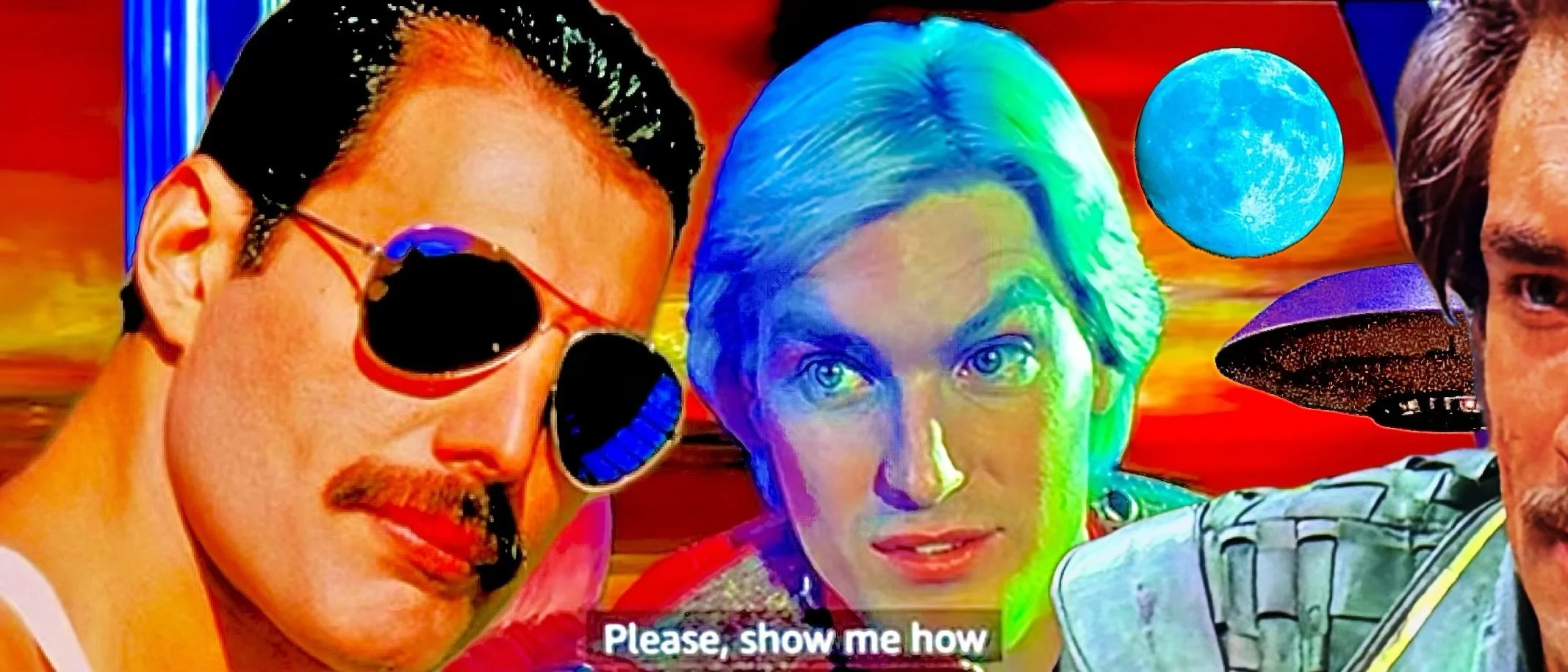
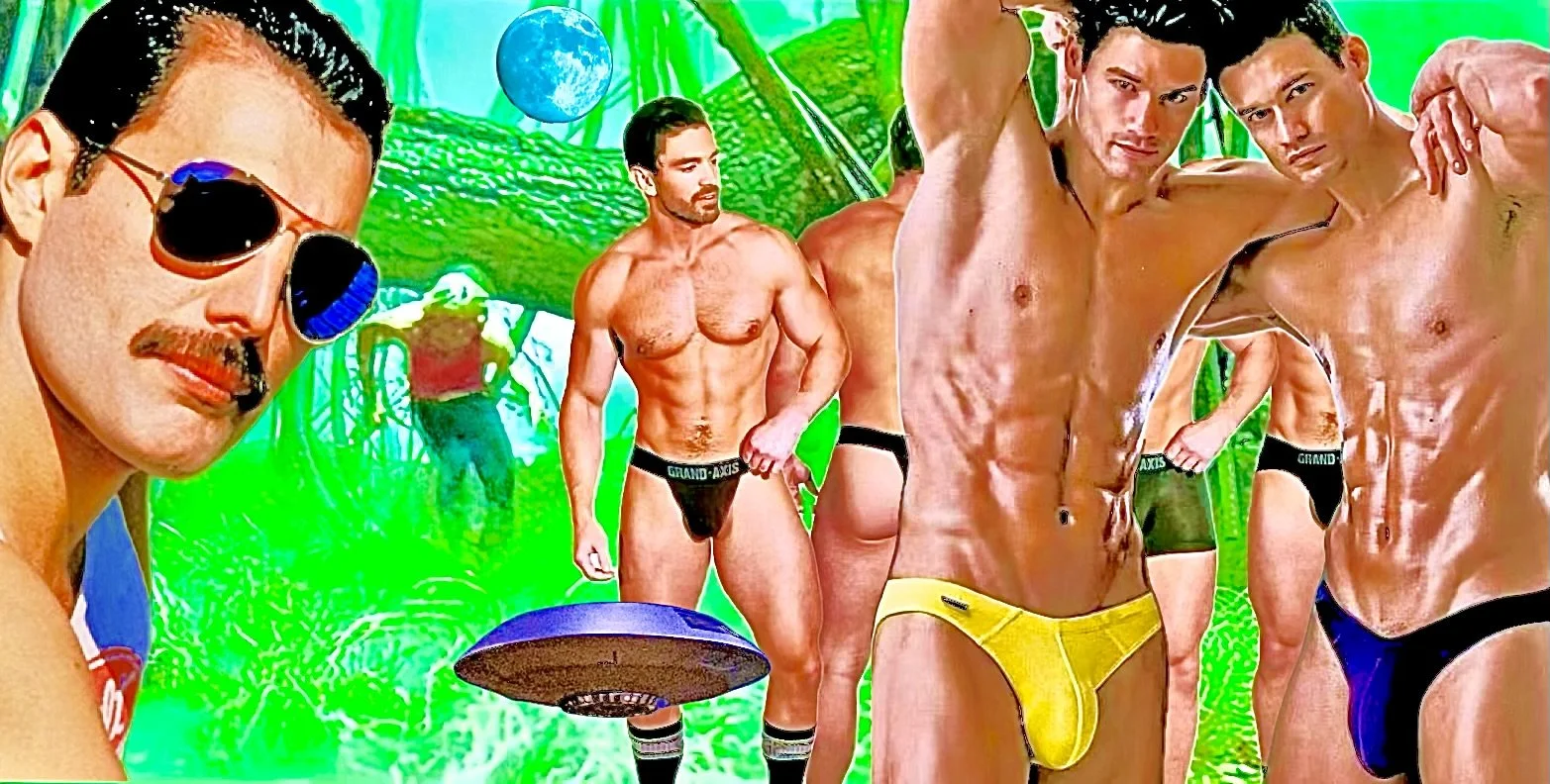
In Behan’s collages, the love affair that Flash Gordon could not put on screen is finally made visible. The colors are pushed to their operatic limit — Mongo-bright, excessive, unrepentant. The subtext of sex becomes text. The throuple is named, the film at long last becoming its full self.

What was destroyed in 1971 is restored. What De Laurentiis neutered is returned to full life. What the algorithm flags as not ready for prime time, the archive preserves in full living color.

Perfect Fit

Perfect Fit | Digital Photo Collage | 2026 | The Closet Series — Behan

Spotted in the Wild:

The Closeted, Preening Gay Peacock. Jeremy has Married Sally, and they are Looking for a New (Old) Home to Purchase.

Their Agent is Jax, Jeremy’s Best Friend, Best Man, and Best Camping Bud. Jax is Bringing Oranges to Remind Jeremy of their Vacation in Florida to Tour Orange Farms.

Sally Thinks Jax is Super Sweet and Doesn’t Mind that He is Around ALL THE TIME.

The Closet offers straight women one option.

Lots of trips to Home Goods with Jeremy and Sally. Frequent camping trips with Jeremy and Jax.

The Closet fits everyone inside its walls — with room to spare.

Dark Sepia

Dark Sepia | Digital Photo Collage | 2026 | The Closet Series — Behan |

“Len” Keith and “Cub” Coates of Havelock, New Brunswick. Two WWI army vets who found each other in a small rural town and built a life together.

What are the odds?

For almost 30 years, Len pointed his camera back onto themselves. Canoeing. Hunting. Hugging.

One was forced out of town.

The other married.

The photographs survive.

The Other Man

The Other Man | Digital Photo Collage | 2026 | The Closet Series — Behan |

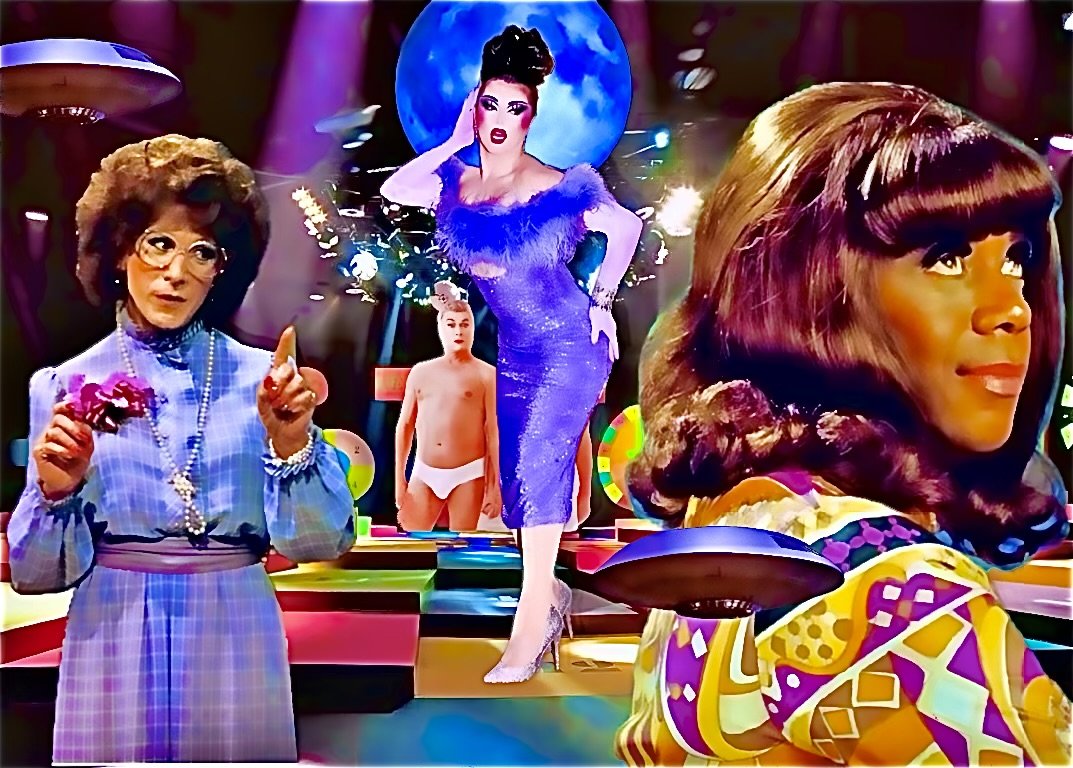
Tony did it in the nineteen fifties. Flip did it in the nineteen sixties. Dustin did it in the nineteen eighties and so many more. Careers were made with men performing as women, most often in comedic roles, to great acclaim.

So what is the beef with transgender women?

It’s as simple as stepping off a stage.

As long as men in women’s clothing are set apart and set away like specimens in a zoo, the dominant culture is free to laugh and enjoy the spectacle. But step off the stage into real life and real problems emerge.

The hypocrisy of conservative thinkers who can’t see the problem with both supporting one end and rejecting the other end of men in dresses is profound. The absurdity of the argument that somehow society is endangered when men step off the stage in a dress is tragically pathetic.

It’s way past time for some folks at long last to get a life.

Behold the Gay Man

Behold the Gay Man | Digital Photo Collage | 2026 | The Closet Series — Behan |

Behind the marble, behind the scripture, behind the press release, behind public opinion, is the man.

And that man is entirely human — gay, bi, or straight — filled with the same dreams of success, achievement, happiness, adventure, love.

As Maya Angelou said, “we are more alike, my friends, than we are unalike.”

And to quote one of the less used lines of scripture — whatever you do to the least of my brothers…

OFV Mysteries

OFVMysteries | Digital Photo Collage | 2026 | The Closet Series — Behan |

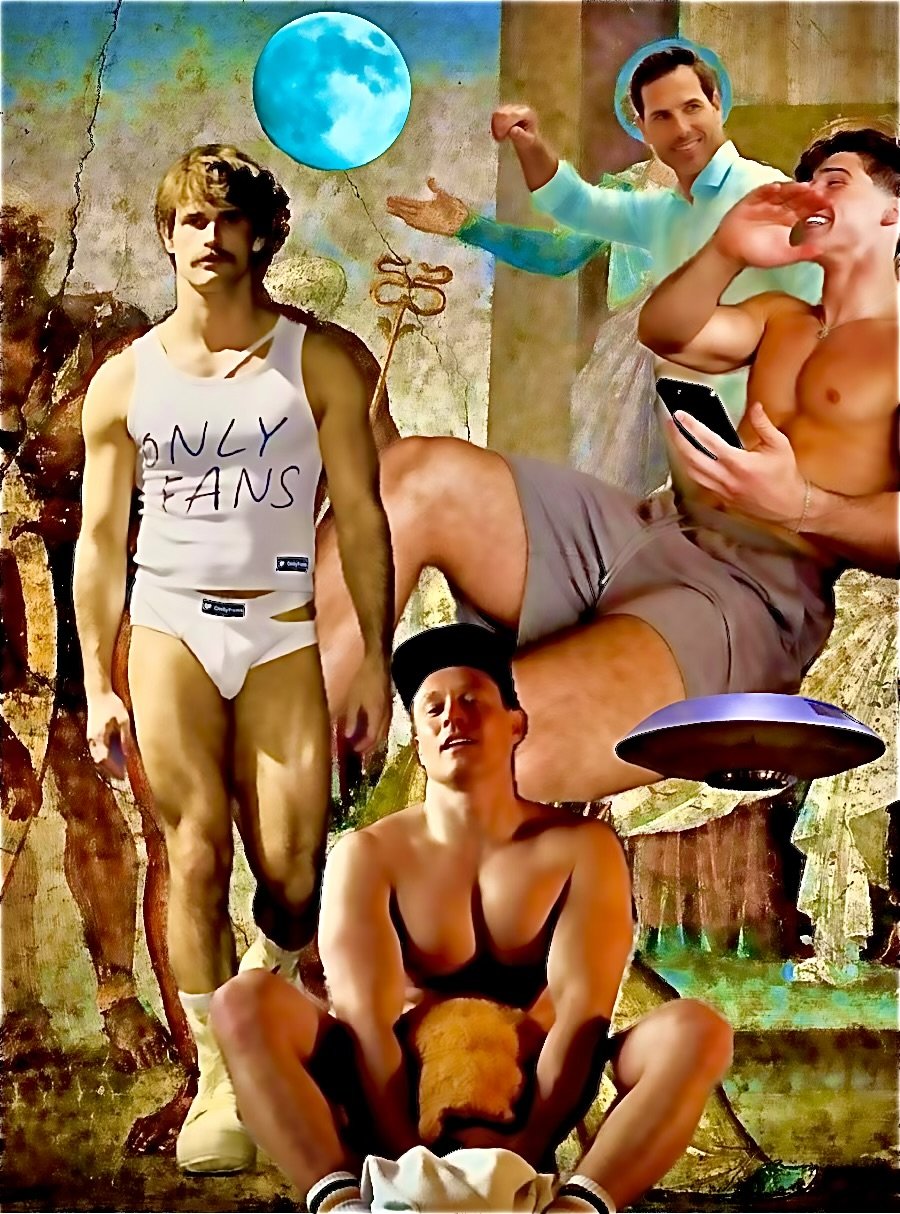
In the 70’s AD, the Villa of the Mysteries in Pompeii was about access. Who gets in. What is revealed. To whom and at what cost. The initiate earns the mystery.

In the 1970’s AD, bathhouses and bars performed a similar function for the gay initiate.

In the 2020’s AD, OnlyFans operates on the same principle but in the digital realm. Access and desire, desire and access.

The platforms change. The human need does not.

Desire has always found its room.

Sometimes We Punt

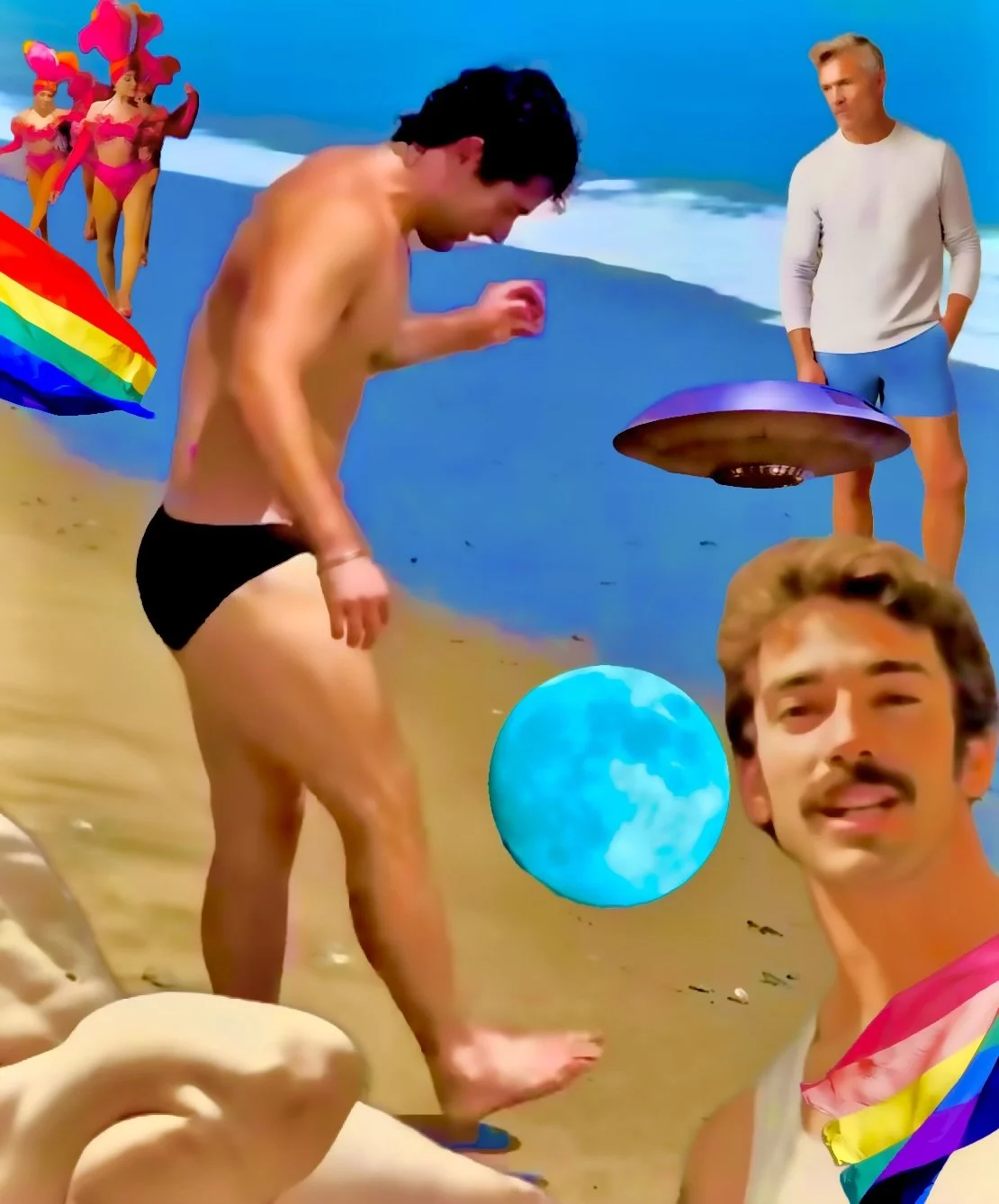
Sometimes We Punt Digital Photo Collage 2026

The center point of this collage is the Aquarian Moon. It’s the age of Aquarius moving into the age of… what age are we in now? I can’t remember. Whatever that age is, it’s about the changing tides of time and history and how we make advances.

And advances are almost always followed with retreats, like waves on a beach.

It is about the nature of being alive and the limited amount of control we have over what happens in our day.

The moon is being playfully kicked by the central figure as if a soccer ball. So it is about our interaction with time, nature, our place in the world, our place within histories, context, when we are and where we are, and what we have to accept, and what we can capitalize on.

That’s what this collage is about.

That’s what this post is about.

The title of the work is “Sometimes We Punt.” That is a playful acknowledgement of when sometimes you’re in a situation where you don’t have a lot of good options, you punt.

And that punt is a moment of hope.

It is about responding to life’s idiosyncrasies. It may not always be fun, but it will always be interesting.

And that’s how I see life.

I think this is my artist statement, at least for today.

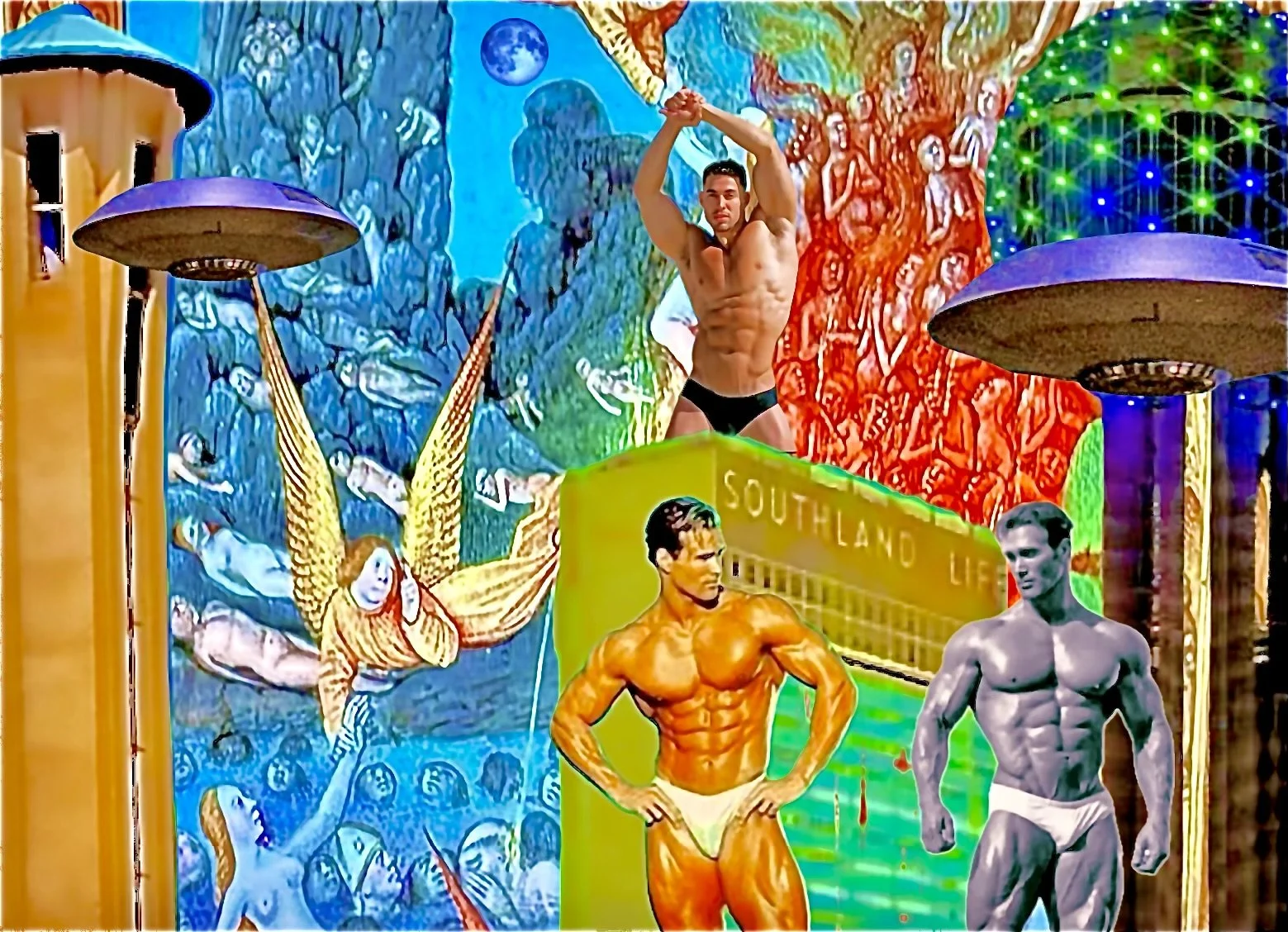
On a Gay Death

As a gay man who grew up in the Catholic tradition, the idea of last things can be anxiety producing. The church has had a spotty history on the subject.

In 1347, the bubonic plague killed half of Europe in a year. Gay men and women were certainly among those lost. They always are. And the Church that might have offered comfort had already decided they were beyond it.

In 1981, AIDS hit America, and its government looked away while a community buried itself. No funding. No urgency. No grace. Gay men died without medicine that could have saved them because the dominant culture had decided they did not deserve to live. The church called it divine retribution.

And now in 2026, the current administration and conservative Christians are moving to restrict and remove the HIV medications that are keeping people alive.

There is no other word for this. It is violence. It is immoral. It is unacceptable.

The ars moriendi — the art of dying well — was the Church’s promise to its faithful. Gay men and women are still being denied it.

In the Catholic realm, there is a sacrament for marriage. There is a sacrament for holy orders. Gays are barred from both, with no sacrament for gay Catholics. That’s not Godly.