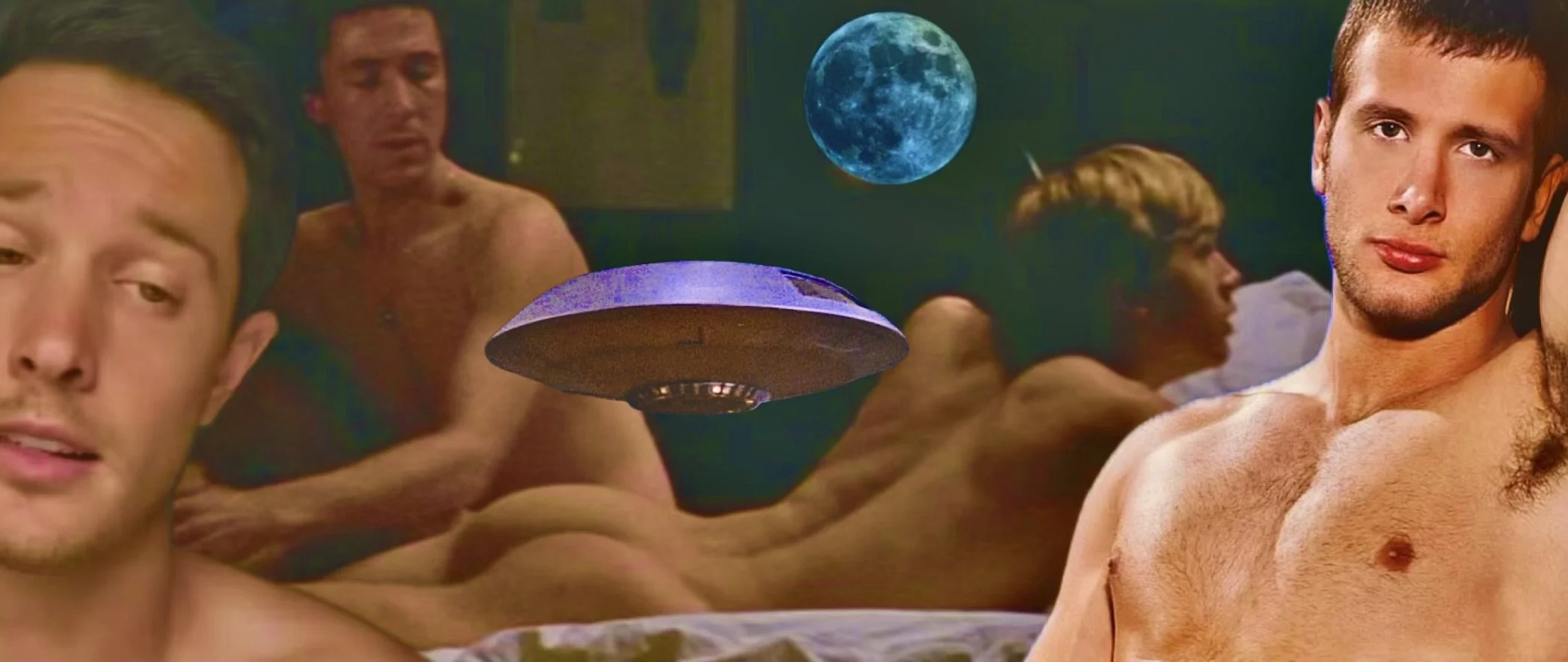
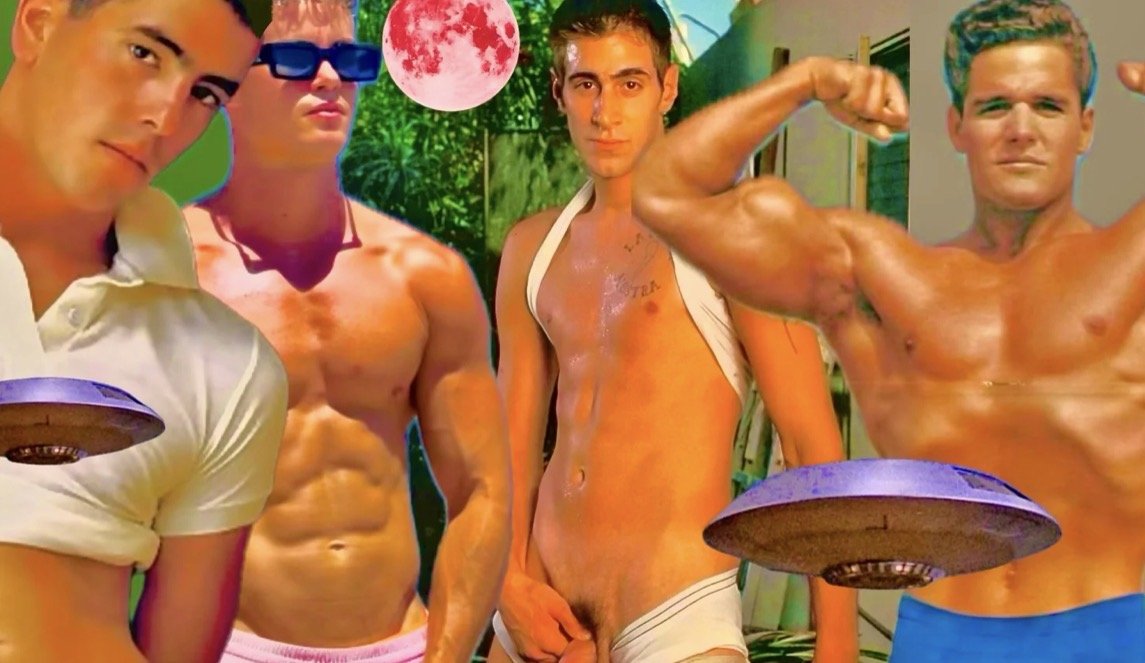
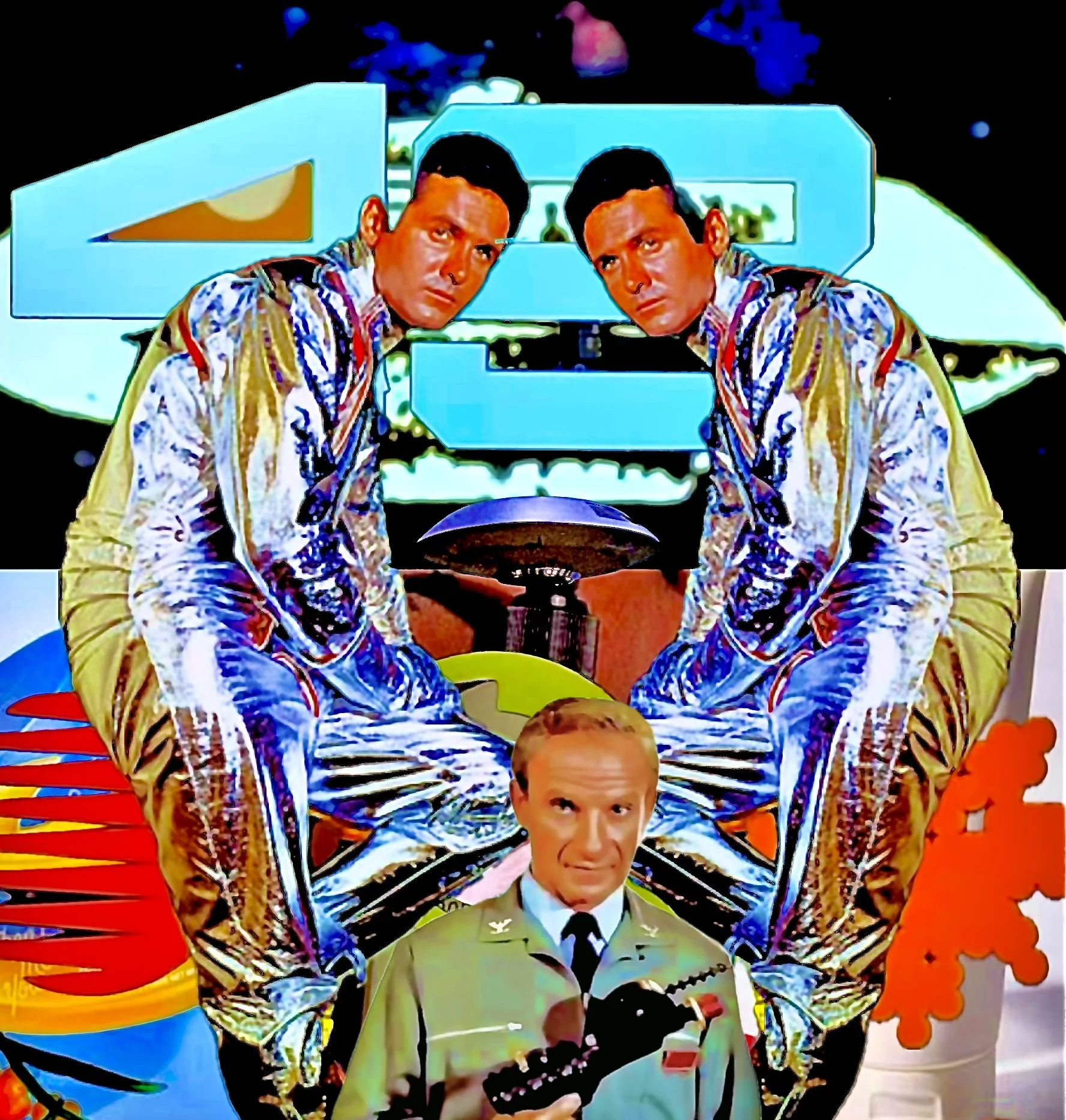
Enter Nick

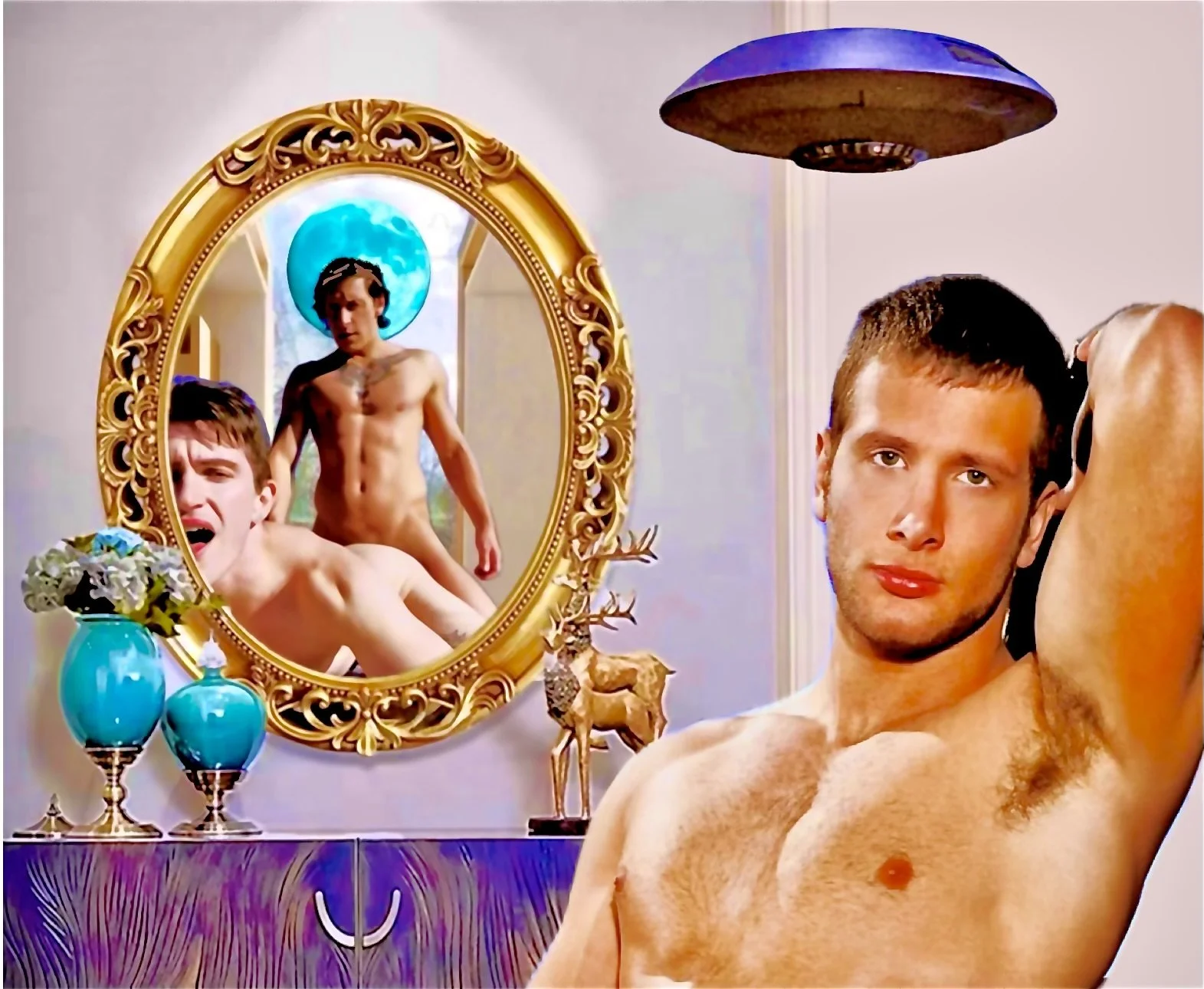
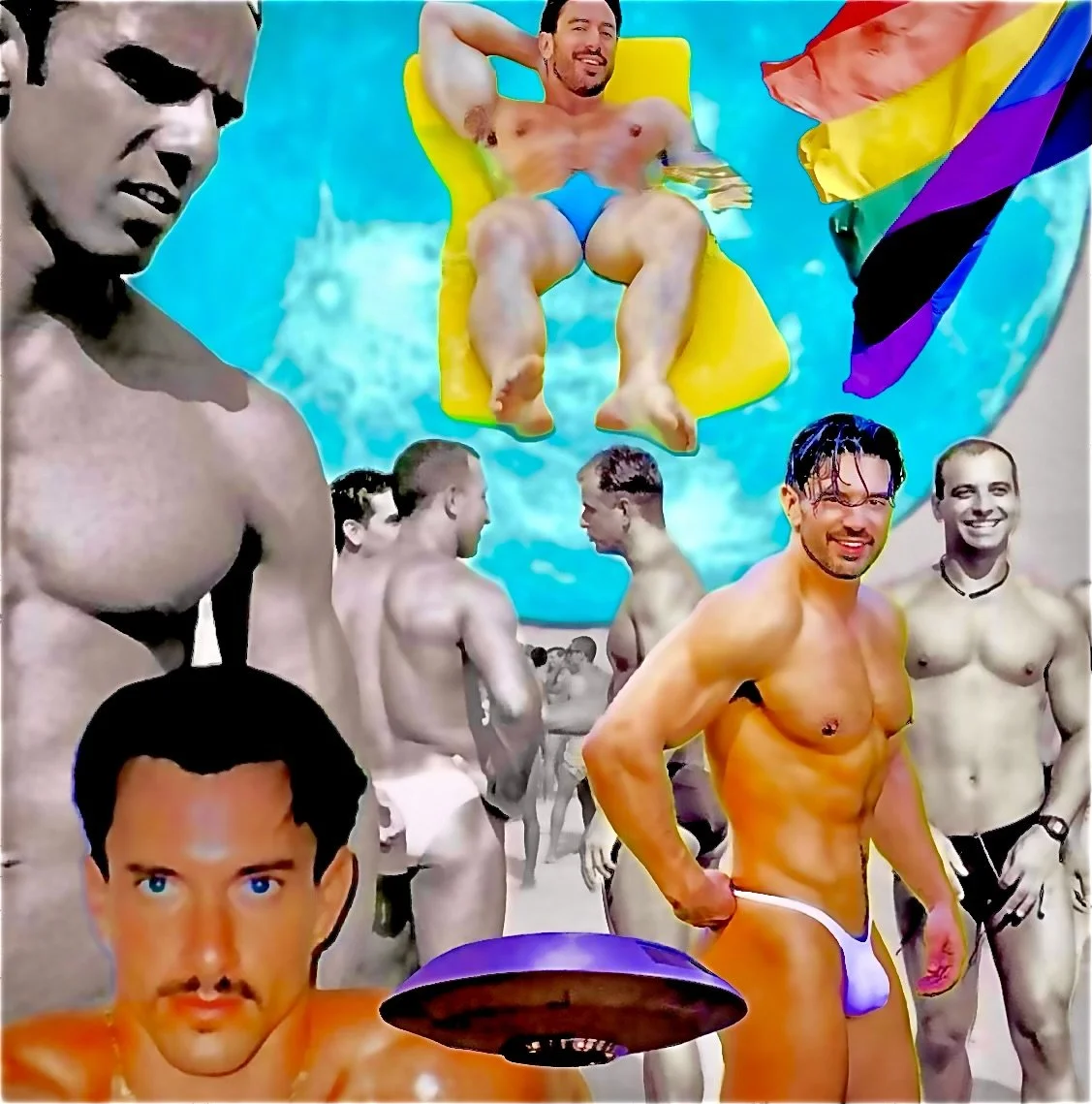
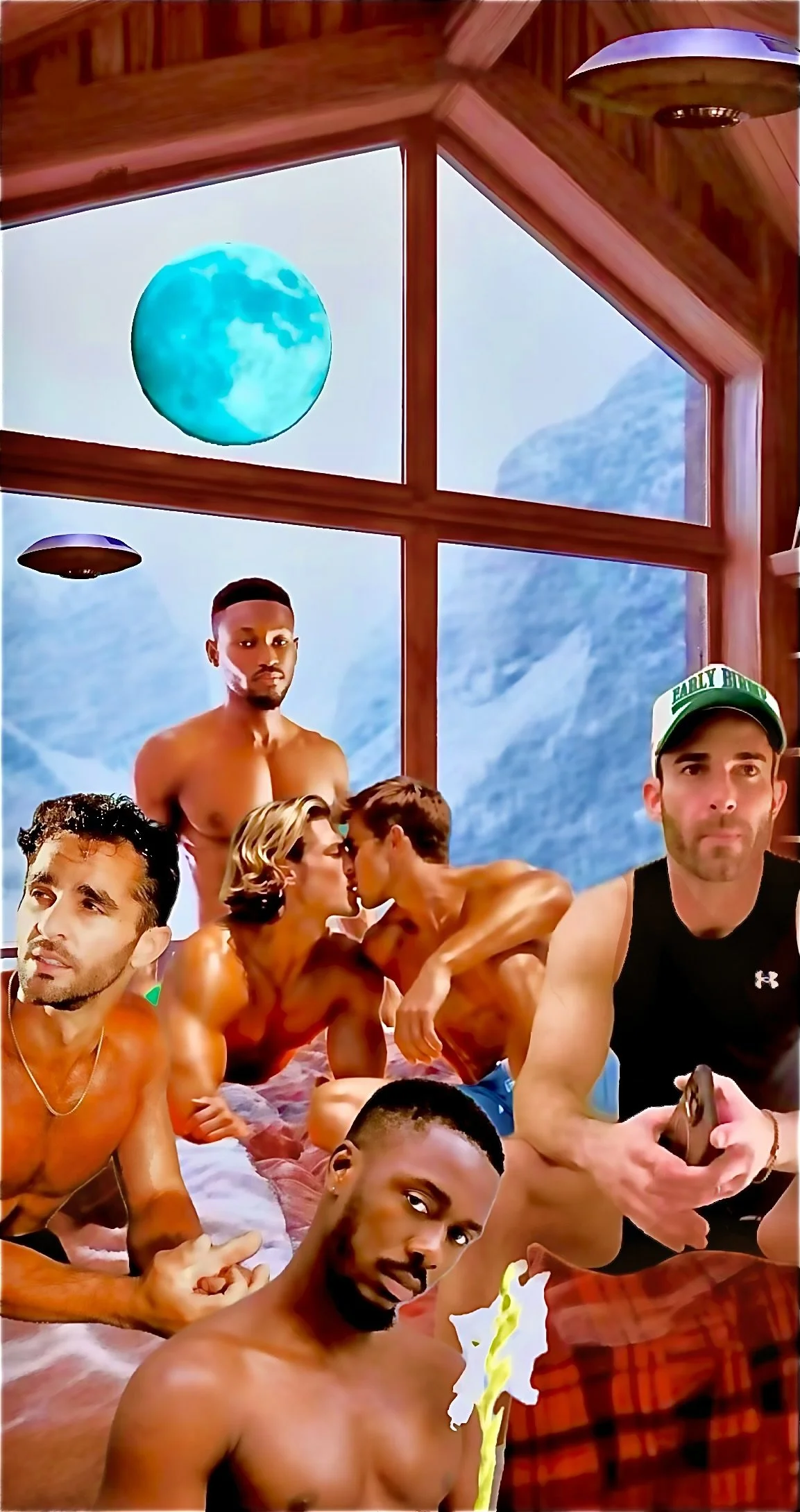
Mirror Time | Digital Photocollage | 2026 | The Closet Series — Behan

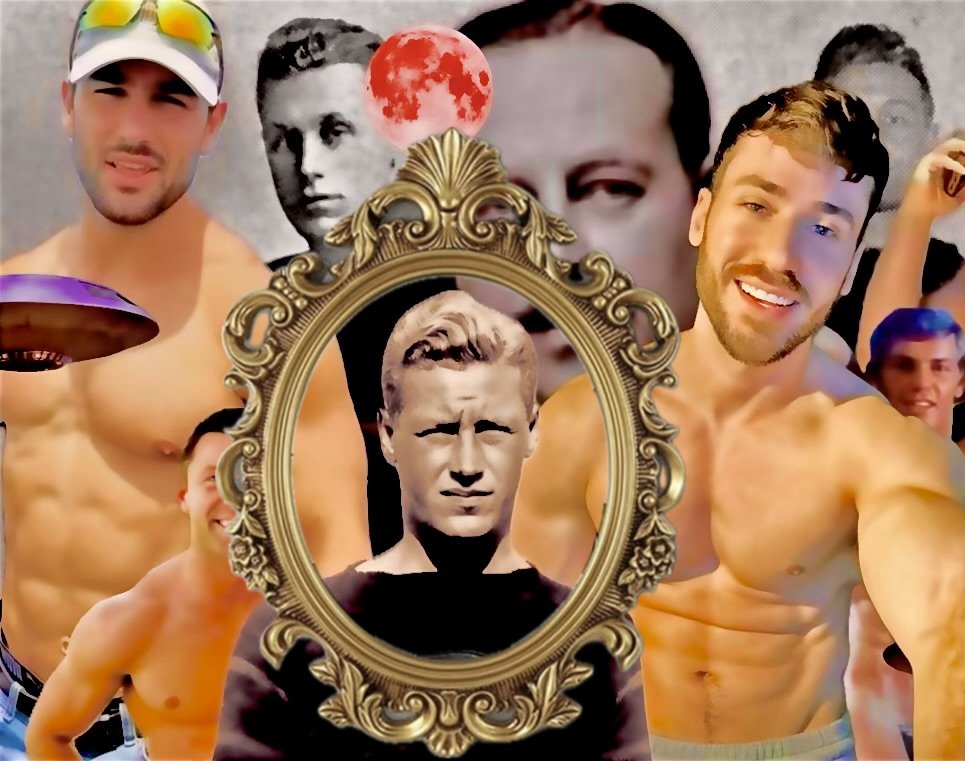
Nick Adams — born Nicholas Adamschock on January 10, 1931 — was a diminutive, blond actor who worked the edges of mid-century Hollywood with considerable skill and considerable hunger. He played neurotic types, aggressive types, comic sidekicks. He starred in the ABC television series The Rebel. He showed up in successful films throughout the 1950s and 1960s and made himself indispensable to the people who mattered.

He was also, by most accounts, bisexual — and operating in a Hollywood that had no tolerance for that information becoming public.

He shared an apartment with James Dean when both were young and broke and trying to break in. What exactly happened between them depends on who is telling the story. Sal Mineo told a biographer in 1972 that Nick had confided in him about a significant affair with Dean. John Gregory Dunne confirmed that Dean was bisexual, as were Adams and Mineo. Biographers noted that Adams was one of many studio-era stars who dated women or entered sham relationships to cover their true sexualities — the standard operating procedure of the time.

His friendship with Elvis Presley was equally intense and equally subject to rumor. Biographers noted they may have “swung both ways” together. Elvis’s former fan mail secretary and multiple other sources made similar observations. Adams later overdubbed some of Dean’s lines in Giant after Dean’s death in 1955, and dated Natalie Wood — which one historian drily noted was roughly equivalent to being “a good friend of Liz Taylor’s.”

At the time of his death in 1968, Adams was thirty-six years old. He was, at the time, rumored to be the lover of a fellow movie actor.

His story is, as one historian wrote, a virtual template of mid-century Hollywood closeted life.

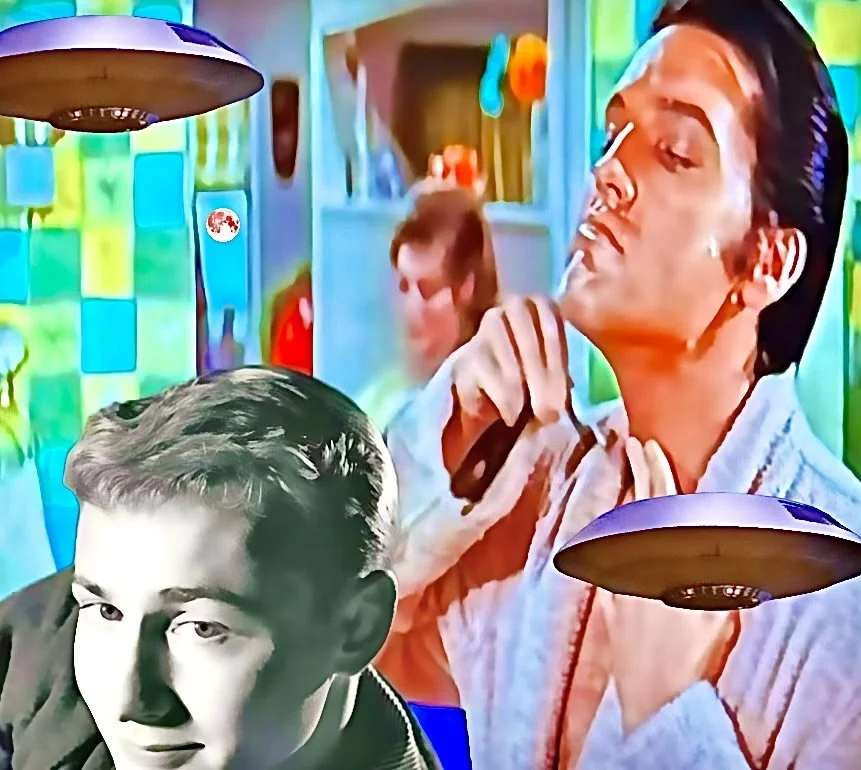
This collage puts him in the bathroom with Elvis — domestic, intimate, ordinary. Two men jostling over the mirror. The blood moon watches from the corner, small but present. Jupiter 3 hovers, patient as always.

The closet engulfs everyone—-straight, bi, or gay. And that’s terrible.

Honey + Percy 4 Ever

Hobey

On Hobey Baker, Percy Rivington Pyne II, and the photograph that was never taken

I am getting so tired of hearing about really good friends.

Hobart Amory Hare “Hobey” Baker was born in 1892 in Bala Cynwyd, Pennsylvania, into a prominent Philadelphia family, and by the time he graduated from Princeton in 1914 he was the most celebrated amateur athlete in America. He was the first American star in ice hockey — one of the first nine inductees into the Hockey Hall of Fame when it was founded in 1945, the only American among them. He was also inducted into the College Football Hall of Fame in 1975, the only person ever to appear in both. F. Scott Fitzgerald, who spoke to him once at Princeton, was so dazzled he based a character on him. The whole country knew his name.

After graduation he worked at J.P. Morgan Bank, enlisted in the United States Army Air Service when America entered the First World War, flew with the 103rd and 13th Aero Squadrons, was promoted to Captain and named commander of the 141st Aero Squadron, and was awarded the Croix de Guerre by the French government. He died in France on December 21, 1918, when a plane he was test-piloting crashed — hours before he was due to leave for home. He was twenty-six years old.

None of that is the part that got buried.

What got buried was Percy. Percy Rivington Pyne II was a wealthy New York socialite, ten years older than Hobey, who had also attended St. Paul’s School and Princeton. They met after graduation and became inseparable. Percy invited Hobey to live with him at his house at 263 Madison Avenue, which Hobey did for two years. They traveled together, moved in the same social circles, and by every available account built their lives around each other. Percy was known, quietly, to be gay. The historical record notes this and then moves efficiently along.

The official record calls them really good friends.

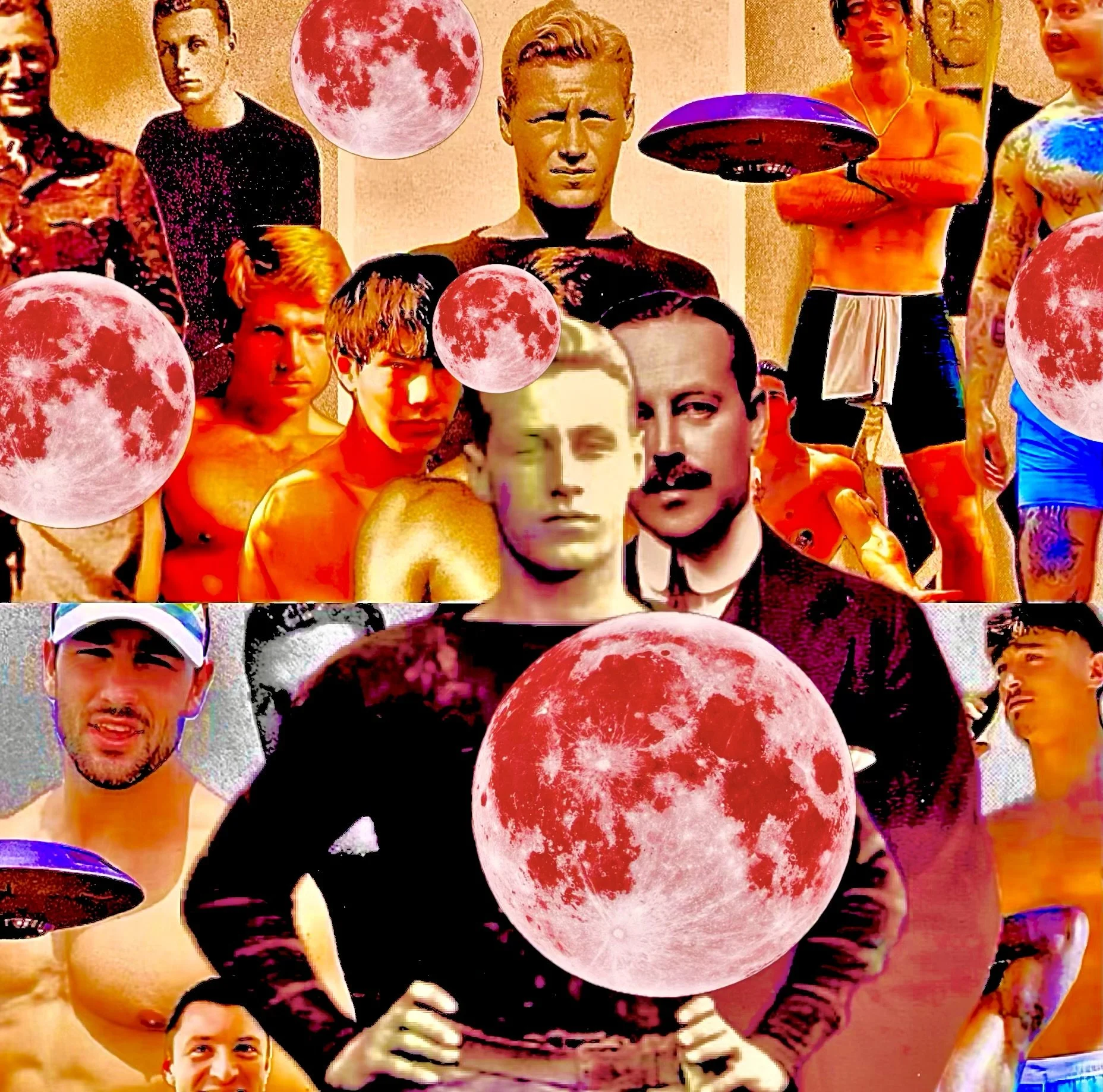
One of the most quietly devastating consequences of the closet is what it did to photography. The nineteenth and twentieth centuries saw the emergence of the photograph as a technology of love — the impulse to be pictured with the one you love as a fuller understanding of yourself, as evidence that you existed together, that your love was real and had a face. Straight couples understood this instinctively. Gay men were not allowed it. There is no photograph of Hobey and Percy together. The archive does not contain them in the same frame. What this collage does is put them there — finally, a century late, together in the center of the image where they belong, surrounded by the pink moons that mark what the dominant culture cost them, witnessed by Jupiter 3 who has been watching all along.

The collage is composed in an X format — the eye moves across and through the frame, drawn to the center where Hobey and Percy finally occupy the same space. It is a deliberate compositional choice. The X marks the spot where history buried something. The Closet Series digs it up.

Someone wrote this about Hobey after he died. Whoever wrote it knew exactly who he was:

You who seemed winged, even as a lad,

with that swift look of those who know the sky.

I think some day you may have flown too high,

so that immortals saw you and were glad,

watching the beauty of your spirit’s flame,

until they loved and called you, and you came.

That is not about hockey.

These stories litter the landscape. Hobey and Percy. Jerry and Rob and Diggy. Men who loved each other with everything they had, whose love was recorded in letters and private journals and architectural silences and the particular way a life is built around another person — and then handed to the archive, which called it friendship and moved on.

I fell over this story. That is the only way to describe it. And I am getting so tired of falling over stories like this. There are so many of them. They are everywhere. And every single one of them deserves to be put back together, put back in the same frame, given the photograph that was never taken.

That is what The Closet Series is for.

On Green

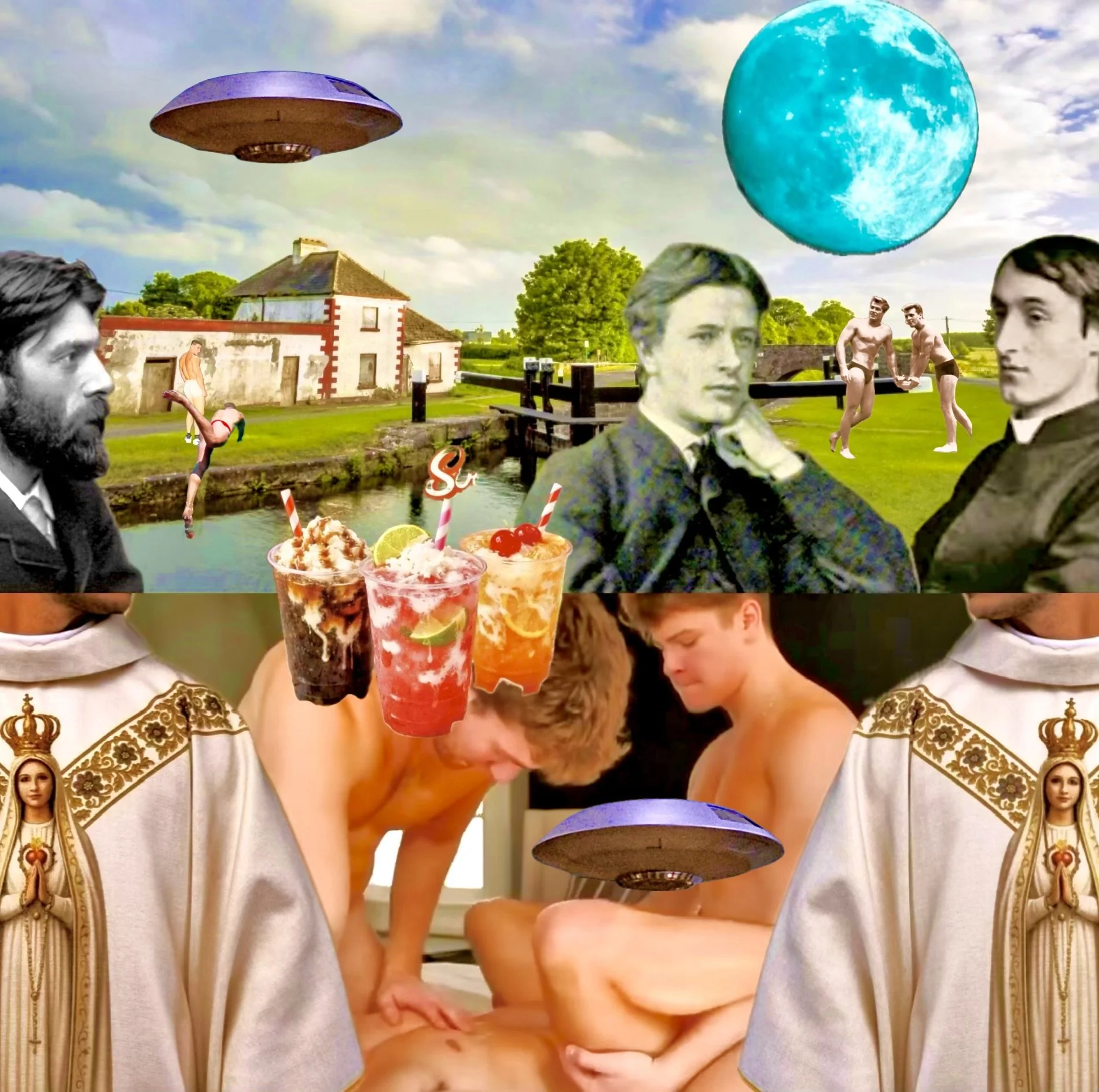
“Three Nineteenth Century Men with an Acknowledged Intense Friendship That Got Absorbed by the Closet and the Dominant Culture’s Penchant for Burying Queer Love and Expression Through a Skewed Historical Lens”

Digital Photocollage 2026

Three Men in the Green Ferment

Jerry (Gerard Manley Hopkins, 1844–1889)

He was a poet and a Jesuit, a man whose senses were so finely tuned to the physical world that every blade of grass was a theological event. He recorded in his private Oxford journals an obsessive, guilt-ridden preoccupation with male beauty — what he called, with anguished precision, “imprudent looking.” He struggled. He prayed. He converted to Roman Catholicism in 1866, took his vows, and redirected the whole force of his desire into God and nature. Literary critics have spent a century calling this sublimation. The closet has another word for it.

Diggy (Digby Mackworth Dolben, 1848–1865)

He was an Anglo-Catholic poet, younger than Jerry by several years, handsome and emotionally intense, the kind of young man who writes poems that are, as one scholar put it plainly, homoerotic. He was besotted with a classmate named Marchie Gosselin who barely noticed him. Jerry was besotted with Diggy. The whole arrangement was a perfect Victorian triangle of longing and misdirection. Diggy drowned in 1865 at the age of nineteen, before anything could be named or resolved. He took his portion of the story with him into the water.

Rob (Robert Bridges, 1844–1930)

He was a fellow Oxford student who became Britain’s Poet Laureate and the primary reason Hopkins’s poems survived at all. Their friendship lasted twenty-six years, right up until Jerry’s death in 1889. It was Rob who kept the poems. It was also Rob who, after Jerry died, had all of his own letters to Jerry returned and destroyed — so that whatever he had written, whatever he had felt, whatever passed between them in twenty-six years of correspondence, is gone. He kept Jerry’s poems for twenty-nine years before publishing them. When he finally did, he attached a preface that left readers wondering why he had bothered. The closet, by then, was firmly in charge of the archive.

Together, Jerry, Rob, and Diggy inhabited a world of intense male friendship that Victorian culture permitted only so long as it remained unnamed. They frolicked — and that word is chosen deliberately — in the idyllic green landscape of Monasterevin, Ireland, in what one might fairly call the last innocent moment before society arrived with its categories and its consequences. The green ferment embraced their sweet love for one another. The canal ran quietly beside them. The sky was the color of everything possible.

And then Society Intervened

Letters were burned. Identities suppressed. Poems withheld. The history was not destroyed so much as carefully rearranged — passed through the skewed lens of a dominant culture that had no language for what these three men were to each other, and no intention of finding one.

The Collage as Reclamation

No archive contains a photograph of Jerry, Rob, and Diggy together. No biographer assembled them in the same frame. The historical record kept them separate — individual entries, individual footnotes, individual tragedies. What this collage does is refuse that separation. It puts the three men back together in the landscape they shared, back in the green ferment of Monasterevin, back where they were before society arrived with its categories. That act of assembly is itself the argument. The Closet Series does not illustrate history. It corrects it.

A Personal Note from the Artist

My grandmother was born and raised in Monasterevan at the turn of the twentieth century. I visited there in 1982 and walked under the thatch roof of the hundred year old family homestead. So this collage and this story of these three literary men who spent time in Monasterevin is very close to me. For example, I have two grand uncles, two brothers of my grandmother, who were born in the 1890s, who lived together as ‘confirmed bachelors’ their entire lives in that family home. During my visit I remember the window over the sink piled high with tea cups stained black from years of living. So this is personal to me — and sadly it’s reflective of an ongoing personal family history of generational repression of queer identity and expression.

Final Thought

What The Closet Series does with Jerry, Rob, and Diggy is what it does with all its subjects — it restores the expansive reading. It does not speculate beyond the evidence. It simply refuses the restrictive one. These were three nineteenth century men with an acknowledged intense friendship that the historical record has consistently underread, understated, and in Rob’s case literally incinerated. The poems survived. The love survived, encoded in every line. The Aquarian moon was watching then as it watches now — witness and truth, patient across centuries, waiting for someone to say what the archive was always trying to say.

The Closet Series 2026 James Behan

Boy Girl Boy Girl

Boy Girl Boy Girl

Digital Photocollage 2026

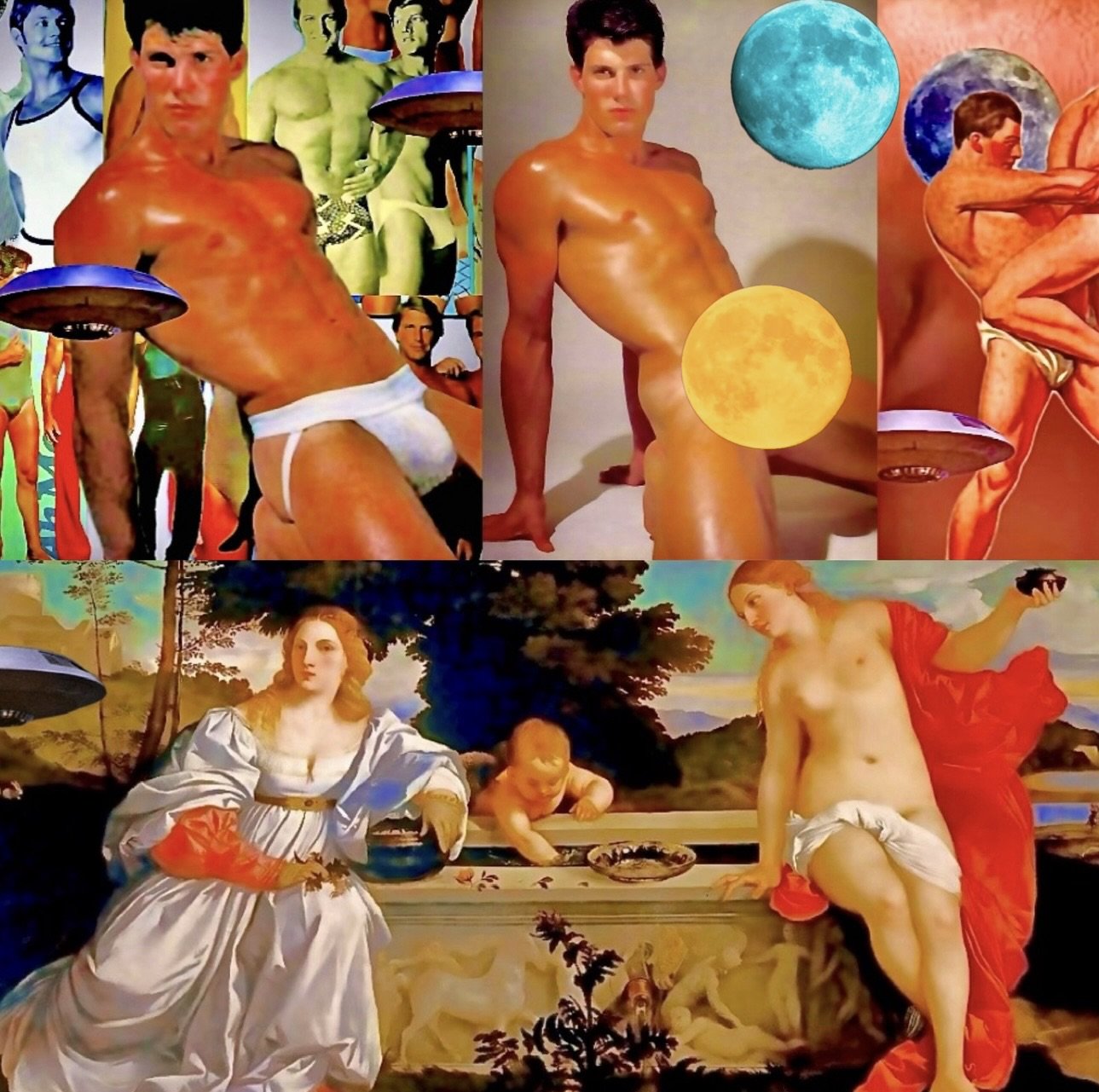
In 1514, Titian painted two women seated on either side of a stone sarcophagus. One is clothed, elaborately dressed in the fashion of the Venetian court. The other is unclothed, serene, holding a flame. He called it Sacred and Profane Love. Five centuries of art historians have argued about which figure represents which. The clothed woman — is she the sacred, modest and contained? Or is the unclothed figure the sacred, closer to God, unencumbered by worldly decoration? Titian never answered the question. The ambiguity was the point.

Mike Henson — born Kenneth John Seymour, October 4, 1963 — was a premier star of the golden age of gay adult cinema. He was known for his clean-cut, boyish looks and his double image became one of the defining gay portraits of the 1980s. The front VHS cover: the jock strap, the matinee idol pose, the public face of desire. The back cover: the same person, same pose, now unclothed, fully revealed. You could never see both at once. The act of flipping—a threshold of transformation— a private moment, as if the figure was disrobing before you, and back again. One side was what you could know. The other was what you would wish for. Sacred and profane, separated by the simple act of turning something over in your hands.

The collage collapses the four figures (Boy Girl Boy Girl) onto a single plane — the clothed and the unclothed, the public and the private, male and female, all at once.

Titian’s question remains. Which is the sacred? Which is the profane?

The Aquarian Moon knows but isn’t saying.

Throuple Zone

In Three We Trust

On Throuples and Gay Culture

A throuple — a committed, three-way romantic relationship operating on non-hierarchical equality — holds a particular and visible place in gay male culture. Because the queer community has historically challenged heteronormative relationship scripts, gay men have long been more likely than their straight counterparts to build relationships outside the conventional dyad. The throuple is one of the most visible expressions of that broader project.

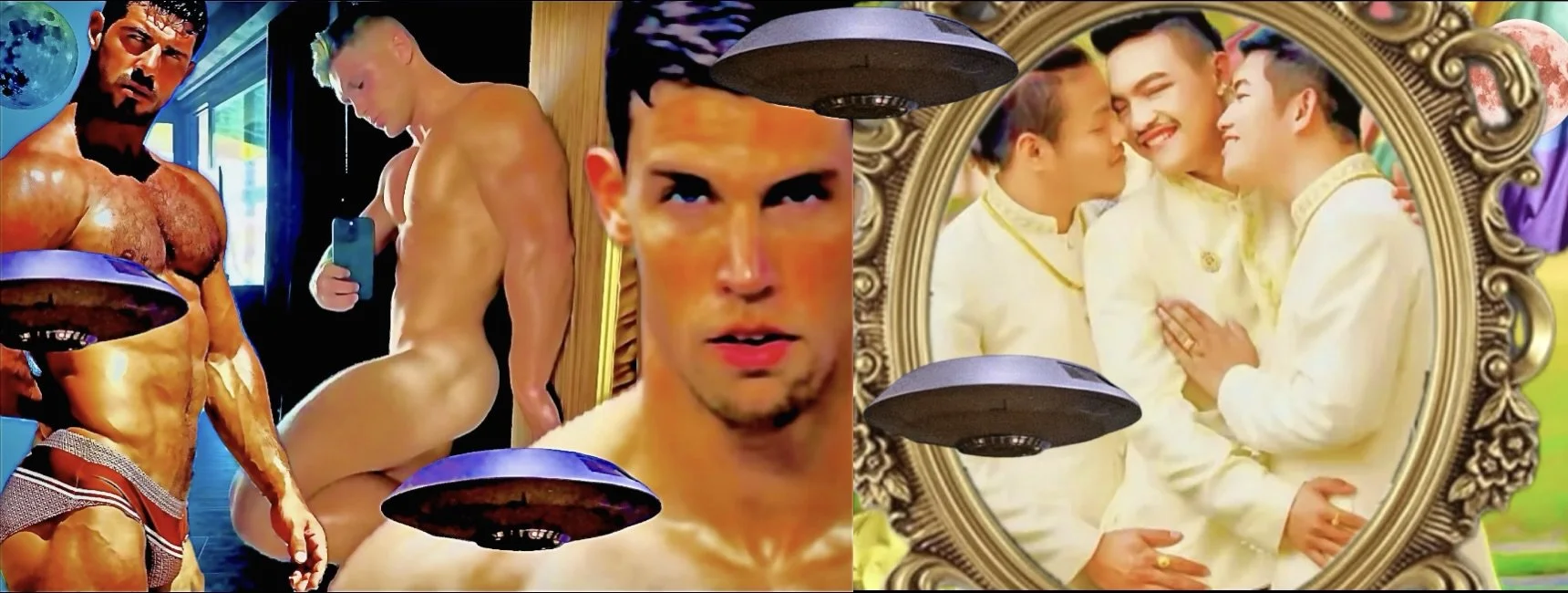
In 2015, three men from Thailand — known publicly as Joke, Bell, and Art — made global headlines when they held a highly publicized symbolic Buddhist wedding ceremony, becoming one of the first globally recognized gay throuples to formalize their commitment in a public event. The images traveled everywhere. Three men in white, hands clasped, smiling. The world wasn’t entirely sure what to do with it. Gay culture knew exactly what it was looking at.

The dynamics of a successful throuple require what researchers and community members describe as non-hierarchical equality — all three partners sharing an emotional and often sexual bond without any one member being treated as secondary or temporary. The language that has emerged from within polyamorous gay communities is precise about this: there is no “third.” There is no unicorn. There is a triad, and each of the four relationships within it — A and B, B and C, A and C, and the collective bond of all three — requires its own time, attention, and maintenance to thrive.

Some throuples operate as closed triads, or polyfidelitous relationships, in which the three men date and are intimate exclusively with each other. Others function within the broader culture of open relationships, where all three partners may pursue connections outside the triad by mutual consent. What both models share is a rejection of the assumption that love is a finite resource — that commitment to one person necessarily diminishes commitment to another.

This is not a new idea in gay culture. It is, in many ways, one of gay culture’s oldest and most radical contributions to the broader human conversation about love — the insistence that intimacy does not have to look the way the dominant culture says it must. Gay men, having already been told that their love was impossible, illegal, sick, or sinful, were perhaps uniquely positioned to reimagine what love’s architecture could be.

Jupiter 3 has been watching. It isn’t surprised.

On Pride

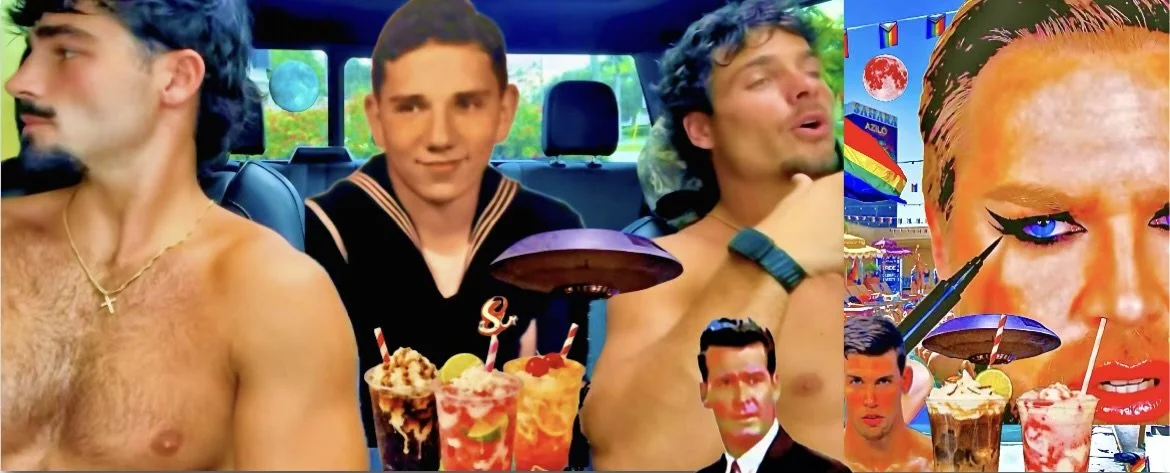
On the Way to Pride: In Las Vegas, a Deeply Closeted Film Industry Celebrity Prepares to Meet His Grindr Date and Advertised James Garner Look-Alike; While in San Francisco, a Navy Man Is Reunited with His Gay Self After Being Forever Separated from His Beloved in World War II

Two men. Two eras. One journey.

In the backseat, a World War II Navy man rides toward the life he was never allowed to live — flanked by his people, the Aquarian moon in the window, Jupiter 3 overhead, the drinks already poured. He’s smiling. He made it.

Across the frame, a deeply closeted film industry celebrity stands at the edge of a Las Vegas Pride pool party, eyeliner coming at him like a reckoning, the blood moon watching, the rainbow flags snapping in the desert heat. He ordered the drink. He’s almost there.

The first Gay Pride parade marched up Sixth Avenue on June 28, 1970 — two thousand people, one year after Stonewall, calling it Christopher Street Liberation Day. Eight years later, Gilbert Baker unfurled the rainbow flag at San Francisco’s Gay Freedom Day Parade — hand-stitched, hand-dyed, eight colors for sex, life, healing, sun, nature, magic, serenity, and spirit. Harvey Milk had asked for something beautiful. Baker gave the world something permanent.

That was 1978. Today, 793 anti-LGBTQ bills are moving through 43 states. The Navy man already knows how this works. He lived through one version of it. He’s still smiling.

The Closet Series has been watching. The Pink winks knowingly. Jupiter 3 isn’t surprised. — Behan.

#TheClosetSeries #Pride #OnTheWayToPride #QueerHistory #LGBTQRights #RainbowFlag #Stonewall #QueerArt #DigitalPhotocollage #NeverGoingBack

Gay Play

It Can Only Be Pantomime

Digital Photocollage, 2026

Queer as Folk arrived in Britain in 1999 and in America in 2000. For many gay men, it was the first time they had seen themselves reflected on television — not coded, not tragic, not comic relief. Actually seen.

And yet. Most of the men playing those roles were straight. Charlie Hunnam. Aidan Gillen. Gale Harold. Hal Sparks. Skilled actors, all of them. Allies, some of them. But straight men performing gay life from the outside in — which means, however gifted, working from observation rather than memory. From research rather than survival. These series aired at the exact moment the community was still counting its dead. The subtext of every scene, every kiss, every bed — was the dying. The friends who didn’t make it. The lovers buried before the medications arrived. That subtext was not available to a straight actor in 1999 or 2000, because dominant culture had spent two decades constructing a wall between who AIDS happened to and who it didn’t. Straight men walked through that period largely untouched by it. Gay men did not. You cannot research your way into that grief. You cannot perform it from the outside.

Russell T. Davies, who created the British original, eventually arrived at the only honest conclusion: that casting a straight actor in a gay role produces pantomime. Not because straight actors lack craft, but because gayness is not a set of behaviors you can study and replicate. It is a life. It is the specific weight of a closet. It is the particular quality of desire that has been told it does not exist.

And still today, in 2026, nothing has fundamentally changed. Wentworth Miller came out as gay in 2013. His run as a major Hollywood leading man was over. He eventually walked away from Prison Break entirely, saying he was done playing straight men — because straight men were the only roles available to him. Jonathan Bennett, the heartthrob of Mean Girls, came out in 2017. He works. He does Hallmark Christmas movies. That is what the industry offered him.

Meanwhile, straight men who play gay collect awards for their “courage.” Tom Hanks won the Academy Award for Philadelphia in 1994 — playing a gay man dying of AIDS while actual gay men dying of AIDS were invisible to Hollywood. The industry called it “brave.” “Brave” is a word they reserve for straight men doing gay men a favor. Gay actors don’t get cast in those roles. They don’t get the gay roles. They don’t get the straight roles. They don’t get the roles.

Ben Whishaw said it plainly: gay actors must read as straight to achieve mainstream success. The closet is not just something gay men build for themselves. Hollywood builds it for them, finances it, and then gives awards to straight men for visiting it briefly and leaving.

It can only be pantomime.

The Closet Series has been watching. The blood moon knows. Jupiter 3 isn’t surprised. — Behan.

A Gay Life

This post documents four significant developments in US gay culture that occurred in my lifetime. Each alone would be life changing and significant. Altogether they created a cultural shift that reverberate through today.

December 15, 1973

I was 12 years old. The American Psychiatric Association votes to remove homosexuality from the Diagnostic and Statistical Manual of Mental Disorders. A majority decides that love is not a disease. I remember reading this in the newspaper before I understood how much this would impact me.

June 5, 1981

I was 19 years old. The CDC publishes a report describing a rare lung infection in five young gay men in Los Angeles. Two are already dead. Nobody has a name for it yet. Gay men read about it in local papers, in newsletters, in whispers. What followed was the worst years in the community’s memory — and also some of its most fierce. ACT UP. Vigils. Funerals. The sense of abandonment from the dominant culture was profound.

June 26, 2003

I was 41 years old. The Supreme Court strikes down sodomy laws in Lawrence v. Texas. What gay men did in private was no longer a crime. For the first time in my life the closet was not a necessity, but coming fully out of the closet would take many years.

June 26, 2015

I was 53 years old. Obergefell v. Hodges produces marriage equality nationwide.

Recognition. Legitimacy.

I remember being shocked by this change, also concerned about the reaction that would surely come from the right. I was also aware as now a senior citizen, my own chance for marriage was remote.

The Collage

In my collage, four gay men from four generations, 1960’s, 1980’s, 2000’s, and 2020’s, represent these epoch events that gays experienced in the transition from the 20th to 21st century. From my own view, there is a cumulative sense of freedom and growth, but also an unmistakable awareness of lost time.

It’s about time.

On Fabric

Fabric

Two materials. Two very different ways of being seen.

Leather came into gay culture after World War II, carried in by men who had fought in the war and returned to a world that had no place for them. They found each other in motorcycle clubs, in bars, in cities willing to look the other way. The black leather jacket said what couldn’t be said out loud — masculine, defiant, coded. By the 1970s, leather had become an entire grammar: harnesses, chaps, wristbands, caps. What you wore told other people exactly who you were and what you wanted. During the AIDS crisis, leather communities organized to care for the sick and lead safer sex education. The armor held.

Cotton moved differently. Jeans and dungarees and plain T-shirts were the anti-fashion — particularly for queer people who refused to perform femininity or legibility for straight audiences. By the time the graphic tee arrived, cotton had become wearable politics: brand names, slogans, pride flags pressed into breathable fabric and worn on the body as public declaration.

What interests me is the overlap. A leather harness over a cotton T-shirt. Chaps over denim. The two fabrics have always cross-pollinated, which makes sense — identity is never one thing. The leather man at brunch. The cotton boy at the bar.

This collage lives at the intersection. The blood moon hangs over a room full of leather, and right there in the middle, a man in a yellow polo shirt. Cotton. Soft. Watching.

The Closet Series has been watching. The blood moon knows. Jupiter 3 isn’t surprised. — Behan.

On Lost in Space and Queer Subs

Dr. Zachary Smith, Major Don West, and the Hidden Language of Lost in Space 2026

“Don’t let him answer that or we’ll be standing here hours listening to the miseries of a galactic castaway.”

“Major, you irk me.”

— Don West and Dr. Zachary Smith, Lost in Space, “A Change of Space,” Season 1, 1966

Lost in Space ran for 83 episodes on CBS between 1965 and 1968. Its official premise — a pioneering family lost in space after their mission is sabotaged — was the main plot. Produced by Irwin Allen and loosely based on The Swiss Family Robinson, the show was a product of its moment: the space race, the Cold War, the heteronormative American family as cultural ideal. It was popular, occasionally thrilling, and it ran for three seasons before CBS cancelled it in 1968.

Within that run, threading through the main plot without displacing it, was a subplot that this essay proposes to examine as if a main plot — not because it was, but because in holding it up to the light, something precise and historically significant becomes visible.

That subplot was the relationship between Major Don West and Dr. Zachary Smith. And what it encoded, for two very different audiences watching the same screen in 1966, was nothing less than the entire architecture of the closet, straight and gay male identity in mid-century America.

Don West: The Straight Man

Major Don West, played by Mark Goddard, was the show’s action hero. Square-jawed, physically seductive, projecting the uncomplicated masculinity that the 1960s demanded of its leading men — he was, in the language we’d now use, straight-coded apparel in a silver space suit. He had a nominal romance with the Robinson’s oldest child Judy. Since the Jupiter 2 was crashed through most of the series, he didn’t have a lot to do as a pilot.

Enter Dr. Smith.

Don West despised Dr. Smith openly, vocally, and with remarkable consistency across all three seasons. His contempt was performative, ritualized, and ongoing.

He could never get rid of Smith. The ship kept crashing. Smith kept surviving. Don kept fuming.

What straight male viewers recognized in Don West was their own reaction to effeminacy. And more deeply homosexuality, which in 1966 was a word that could not be spoken on network television. Don West’s fury gave straight male America a weekly fare of boundary-enforcement that felt entirely natural, entirely justified. It was the acceptable face of a reaction that ran deeper than anyone was prepared to admit.

As Don himself once put it, through gritted teeth, when Smith announced his arrival with “Never fear, Smith is here!” — “I had to open my big mouth.”

Dr. Smith as Fay Wray

Jonathan Harris played Dr. Smith as a type of femme fatale, a Fay Wray — the perpetual object of a monster’s attention, always imperiled, never quite consumed.

Harris created the character as an effete villain — a Russian spy and general meddler whose inability to adjust robotic mechanisms in a manly way provided the engine that drove the series. He was cowardly, vain, dramatically self-pitying, and constitutionally allergic to physical labor. He described himself as “much too fragile” for work. He was, by every available cultural signal of the era, coded as gay.

And here is where the trope broke down — or rather, where the closet revealed its own anxiety.

Most gay men in the 1960s did not read like Dr. Smith. They read like Don West. They were the pilots, the athletes, the stoic ones, the men who showed up and did the work and kept their mouths shut about everything that mattered. The effeminate villain was what the dominant culture needed gay men to be backwards in heels. Dr. Smith gave straight America a gay man it could manage: laughable, obvious, dependent, ultimately harmless.

Gay viewers watching Dr. Smith saw something quite different. They saw a man who had entered a hostile environment without invitation, made himself indispensable through sheer force of personality, and refused absolutely to be ejected.

They saw a survivor.

Every week Don West threatened to throw him off the ship. Every week Dr. Smith was still there. That persistence, that refusal, that immunity to shame — gay audiences in 1966 recognized it as a survival strategy because it was one they knew intimately.

When Smith silenced West with “Major, you irk me” — four words delivered with the quiet confidence of a man who has decided that other people’s opinions are not his problem — gay viewers heard something beyond comedy. They heard defiance.

Camp and Queer Subs

The shift Lost in Space made in its second season toward a more openly comic register is often described as the show going camp.

Susan Sontag, writing in her landmark 1964 essay “Notes on Camp,” defined camp not as frivolity but as a serious aesthetic position — a sensibility that sees the world in quotation marks, that insists on the artificiality of performance, that refuses to take the dominant culture’s pretensions at face value. Camp, she argued, neutralized moral indignation by adopting a playful relationship to what others treated as deadly serious.

For gay men in particular, camp was not a choice or failing so much as a method of survival. The closet is, among other things, a training ground in the reading of subtext — in understanding that what is performed and what is felt are entirely different things. Gay audiences of the 1960s were extraordinarily fluent in the distance between surface and meaning. They read Dr. Smith not as the show intended — as comic relief, as cautionary figure — but as something more truthful. A man living, as they were, in the gap between the performance and the reality.

That gap was not trivial. The Lavender Scare was still sending federal employees home for the crime of homosexuality. The DSM still classified gay men as mentally ill. Don West’s contempt for Dr. Smith was, in this context, not merely a television trope. It was a weekly rehearsal of social enforcement. And Dr. Smith’s survival of it, week after week, was something gay audiences in 1966 were not accustomed to seeing.

Two Audiences, One Subplot

What is historically significant about the West-Smith dynamic is that it served two large and culturally opposed audiences simultaneously.

For straight male viewers, the subplot provided ritual confirmation. Don West’s exasperation was recognizable and morally uncomplicated. The effeminate man was the problem. The straight man’s contempt was the appropriate response. The boundary was maintained. Nothing required further examination.

For gay male viewers, the subplot provided representation by inversion. Dr. Smith was not who gay men were. He was what the culture imagined gay men to be. But in watching him survive, persist, and refuse to disappear, gay audiences found something sustaining. Their relationship was not incidental to the series — it helped create its tension and kept both audiences

The dynamic was repeatable, reliable, and utterly writable, never requiring resolution. It was, in the most precise sense, a cultural pressure valve — releasing tension for one audience while quietly providing sustenance for another.

The Trope and the Reality

The cultural machinery that produced Dr. Smith was the same machinery that produced the Lavender Scare, the pathologizing of homosexuality, and the entire apparatus of mid-century American homophobia and the closet. Gay men were characterized as weak, effeminate, untrustworthy — a threat to the masculine order that Don West represented and enforced.

The reality was entirely different. The gay men of the 1960s were largely invisible precisely because they looked like everyone else — like Don West, not like Dr. Smith. They were in the military, the police force, the corporation, the suburb. They were stoic. They were competent. They kept their expressions neutral, their counsel private, their suits blue. And they watched Dr. Smith on Tuesday nights and felt, in ways they may not have been able to articulate, something complicated and true.

The trope was wrong. It was always wrong. But it was what the culture asked for, and Lost in Space delivered it with sufficient intelligence and Jonathan Harris’s sufficient genius to make it endure across three seasons and two subsequent revivals.

The Collages

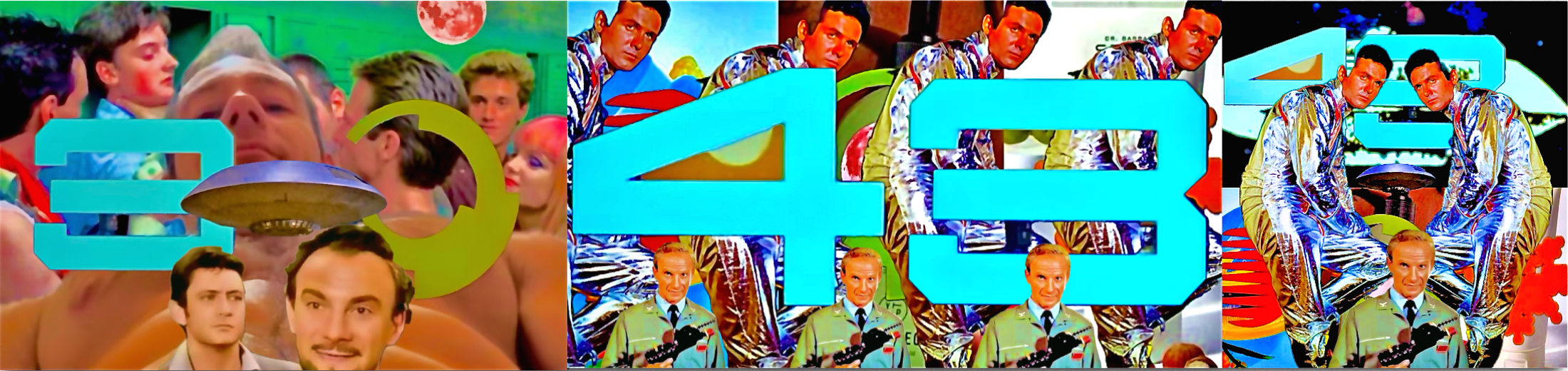
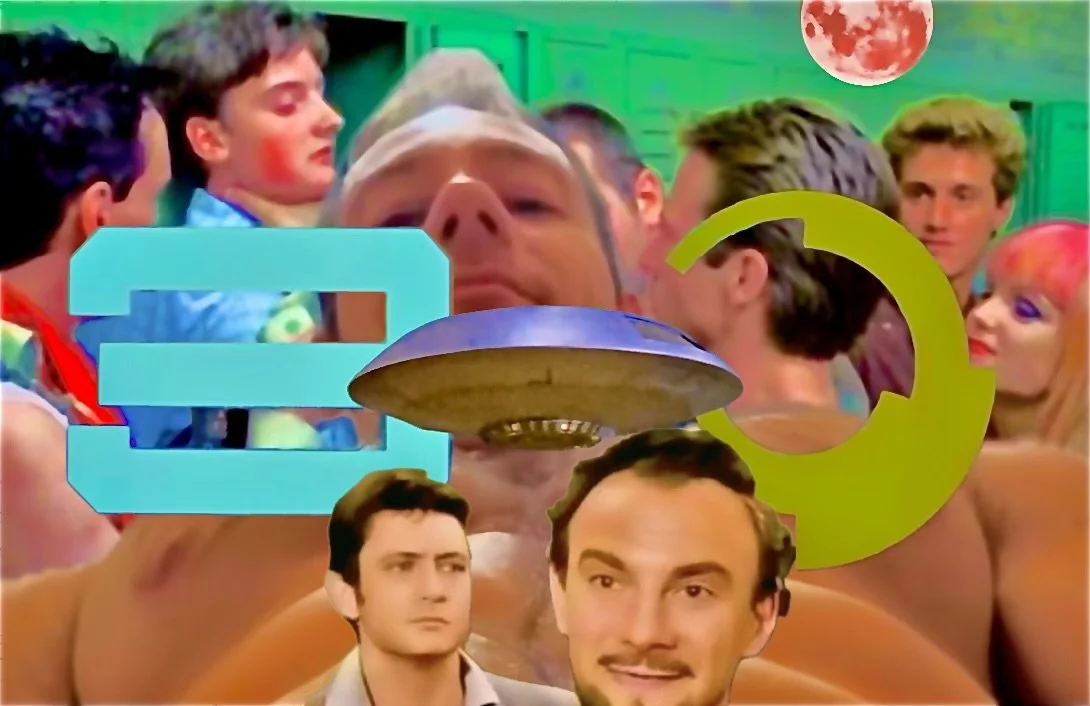
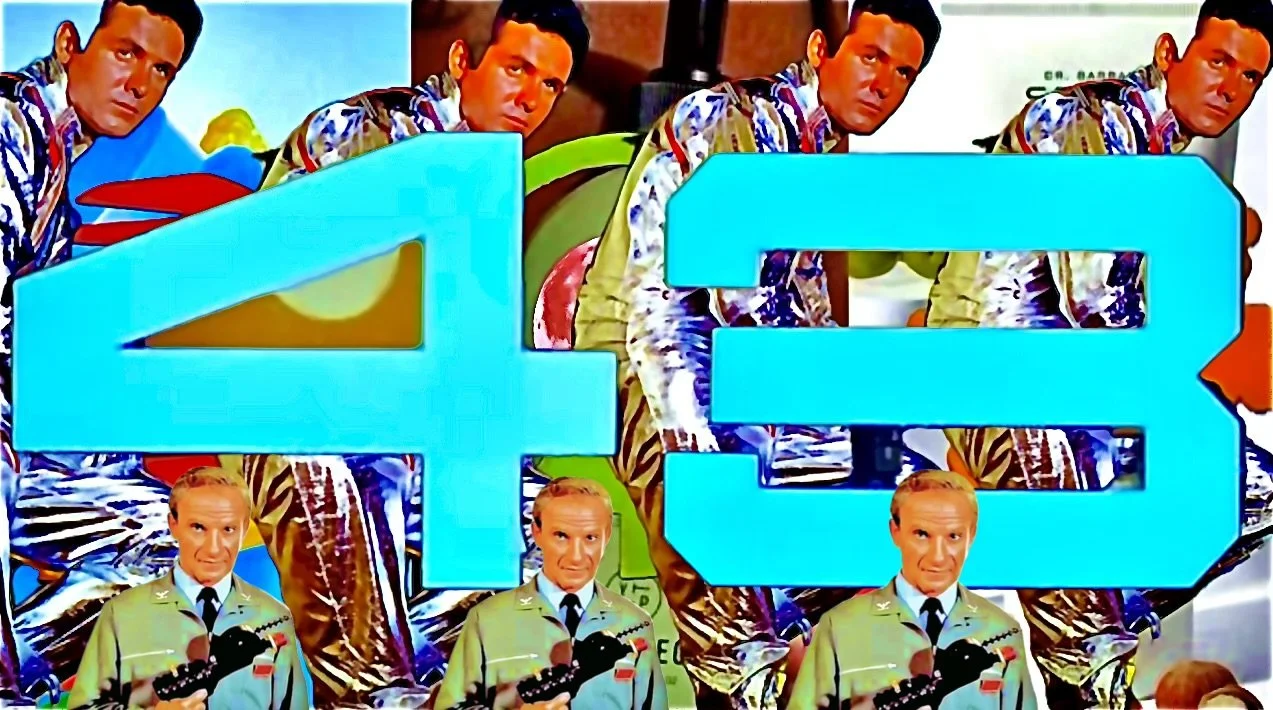
Behan’s collages look directly at this dynamic and render it in visual form. Dr. Smith is present alongside the multiplied, mirrored figure of Don West. The 4:3 ratio of the triptych is not accidental — four Don Wests to three Dr. Smiths, majority to minority, straight to gay. The blood moon watches. Jupiter 3 hovers. The Closet Series documents what the show itself could never name.

What It Means Now

Lost in Space ended in 1968, one year before Stonewall. It was never formally a queer show. It could not be. But embedded in its weekly ritual of contempt and survival was a precise map of how gay and straight male identity operated in America at a moment when neither could speak directly to the other.

The subplot was doing serious work. Don West’s contempt and Dr. Smith’s four words of quiet defiance were the whole of it — hiding in plain sight, on CBS, on Tuesday nights, in 1966. Who could ask for more?
Dueling Pistols

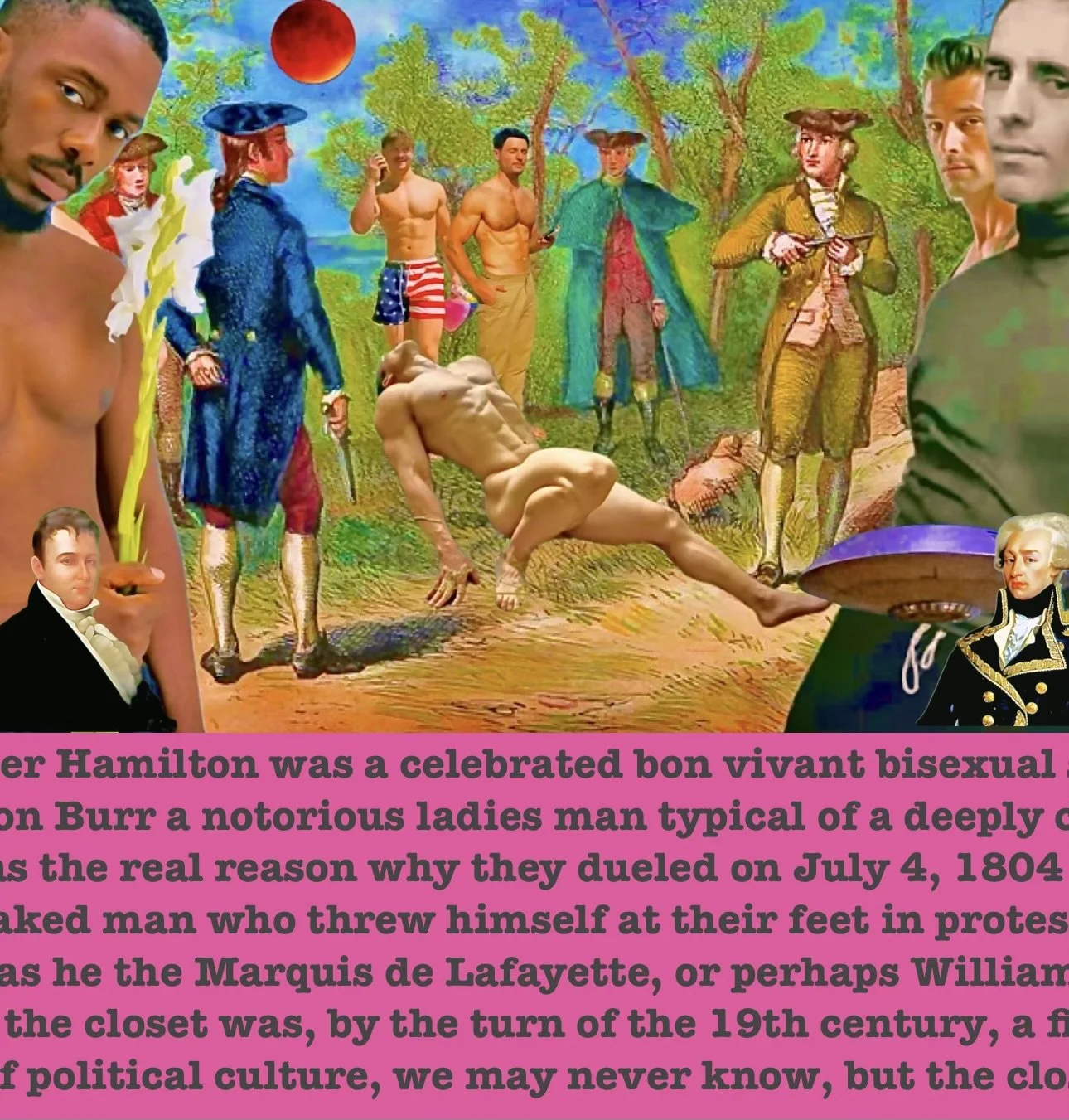
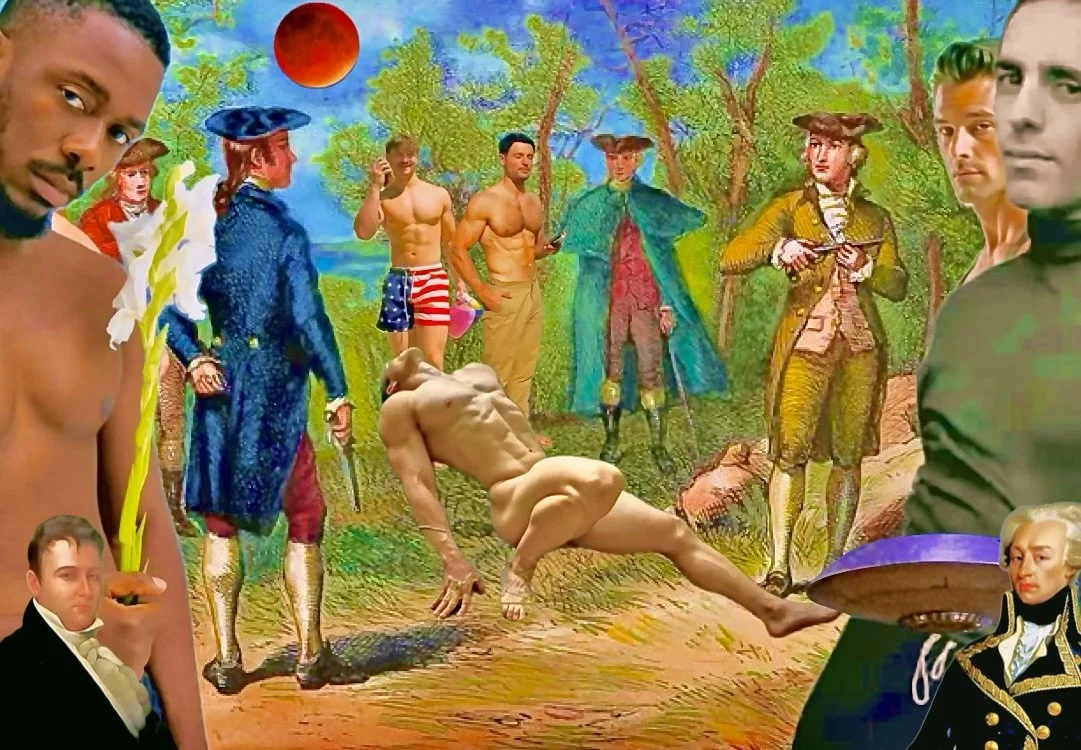
Alexander Hamilton was a celebrated bon vivant bisexual sodomite, and Aaron Burr a notorious ladies man typical of a deeply closeted tortured soul. What was the real reason why they dueled on July 4, 1804 and who was the handsome young naked man who threw himself at their feet in protest, declaring his love for them both? Was he the Marquis de Lafayette, or perhaps William Charles Cole Claiborne? Because the closet was, by the turn of the 19th century, a firmly entrenched reality of political culture, we may never know, but the closet knows, the closet always knows, and, like the secretive Mona Lisa, the closet will not incur any revelations. 

Rainbow Economics

Gay Americans generate nearly $2 trillion annually through consumer spending and business ownership. That’s 1.4 million businesses. Tens of thousands of jobs. An economic force woven into every sector of American life — from luxury goods to skin care to the corner coffee shop.

So here’s a thought for the boardroom: when you decide that ten percent of your population isn’t welcome — in your store, your state, your country — you may also be deciding that ten percent of your economy isn’t welcome either.

That’s not a values statement. That’s just a bad business model.

The Closet Series is meeting Conservative America exactly where they live. In the transaction. Do the math.

The Closet Series. 2026. Behan

Composition Notes

On the Nature of Space

Two compositions. Two strategies. One argument.

The first follows recognizable space — a room, a bed, a window, warmth. Gay life rendered as ordinary and inhabited. The radical act is simply showing it as if it belongs. Because it does.

The second breaks space entirely. Faces become architecture. Scale collapses. There’s no floor, no room, no wall. The disruption is the point — queer existence doesn’t fit inside conventional pictorial logic because it was never meant to fit inside conventional social logic.

Different formats. Same truth.

Mirror Mirror

The myth of Narcissus is usually told as a cautionary tale. A beautiful boy falls in love with his own reflection and wastes away. But queer artists have always read it differently. The mirror doesn’t have to be a trap. Sometimes it’s the first honest thing you’ve ever seen.

For gay men growing up in a culture that rendered them invisible — or worse, rendered them monstrous — the mirror was a radical act. Seeing yourself clearly, fully, without apology, is not vanity. It is survival.

Psychologists who study sexual identity development describe self-acceptance as the resolution of internal conflict — moving from awareness, through tolerance, to genuine integration of identity into the self. That journey, for gay men, has never been purely private. It happens against the backdrop of a culture that spent most of the 20th century insisting you didn’t exist, or shouldn’t.

Which is why the mirror matters so much in queer art. Queer artists return again and again to figures gazing through windows, staring into mirrors — gestures of vulnerability that quietly affirm queer presence. The mirror is where the private self meets the evidence. Where you stop taking the world’s word for who you are.

Queer artists looked backward not with nostalgia but with defiance. They saw in ancient myths a mirror — one that reflected not sanitized identities, but the wild, restless truths of love, body, and spirit.

The Closet Series keeps returning to mirrors too. Not because the men in them are in love with themselves. Because they finally can be.

The Closet Series. 2026.

10 Spot

Ten at 10

Clark sat at the breakfast table, mindlessly thumbing his spoon in front of the oatmeal Susan prepared for him. He stared out into the distance, thinking about the magazine he saw on the rack at the A&B drugstore yesterday.

“I guess there really are gay men,” he thought to himself. “God, how does that work? I mean, I guess they do this. And, well, if I were gay, I’d certainly wanna do this. I bet they’re doing it all the time, I bet one minute they’re stocking the canned corn, and the next minute they’re banging it out on the stockroom floor. I wonder if it hurts?”

“Clark,” Susan called out, “your oatmeal getting cold; and you have that conference call at 11.”

“I can’t stand cold oatmeal,” Clark thought in reply. “At least I’m not gay.”

“Yes, dear.” Clark mumbled.

Three questions Clark isn’t asking:

Why do straight men fixate on gay men?

Sociologist Michael Kimmel argues that what we call homophobia is less a fear of gay men than a fear of being perceived as one. Gay men function as the boundary marker — the “other” against which straight men continuously measure and prove their own identity. The fixation isn’t incidental. It’s structural. You can’t maintain the wall without checking it constantly.

Are there men so far in the closet they don’t know they’re in it?

Yes. Clinicians have a name for what happens when desire becomes so unacceptable to a person that it can’t enter conscious awareness at all. The attraction is present. The man is simply not home to receive it. Psychiatrists Sullivan and Roughton documented how closeted individuals routinely separate their same-sex feelings from their sense of self so completely that they lead a double life they are genuinely unaware of. Not lying. Not performing. Actually not knowing.

What happens when they’re confronted with gay sexuality?

In 1996, researchers at the University of Georgia measured physiological arousal in self-identified straight men while showing them gay pornography. The homophobic men in the study showed measurable genital response. The non-homophobic men did not. The researchers’ interpretation: the arousal was already there. The hostility was the management strategy.

Clark stares out the window. The oatmeal is cold. The conference call is about to begin.

“Did you need me to reheat it?” Susan asked.

Clark looked up and said, “No, thanks, dear, I like it cold.”

Gaycay

Gaycay: History of Boy Beach

Digital Photo Collage 2026

At the tip of Cape Cod, past the marshes, down a ten minute walk from Province Lands Road, there is a beach with no sign, no facilities, and no official name. Everyone knows where it is. Everyone knows what it is. Boy Beach — Provincetown’s legendary clothing-optional gay beach — has been a sanctuary, a rite of passage, and a gathering place for over a century. Tennessee Williams was famously photographed nude there. He was not alone and he was not surprised. The remote dunes near Herring Cove became, in an era of intense homophobia, exactly what they needed to be — a place where the law couldn’t easily follow and the community could simply be. No Bob Damron guide needed. Just walk through the marshes and follow the sound of people exhaling. It’s still there. Jupiter 3 has landed. The moon is out. Come as you are.

— Behan

Gay Travel History

Colorado Calling Digital Photo Collage 2026

Long before Airbnb and gay travel influencers, getting from here to there safely required something closer to a secret handshake. For decades, queer travelers navigated America with underground knowledge — which bar, which hotel, which town would let you be who you were without consequence.

In the mid-1960s, a man named Bob Damron started writing it all down. His Address Book — first published in 1965 — was the Green Book for gay Americans. A discreet pocket guide mapping out safe bars, bathhouses, coffee shops, and hotels across the country. You kept it in your jacket. You didn’t leave it on the dashboard.

Then Stonewall happened. And slowly, carefully, joyfully, the gaycation was born. Provincetown. Fire Island. Palm Springs. Key West. Places where you could exhale. Places where the moon was yours and nobody was watching the door.

Colorado Calling imagines what gay travel always dreamed of being — a mountain cabin, good company, the Aquarian Moon outside the window, Jupiter 3 keeping watch. No secret handshake required. Just people, being people, in a place that finally said yes.

Take that vacation. It’s earned. — Behan

Making Way

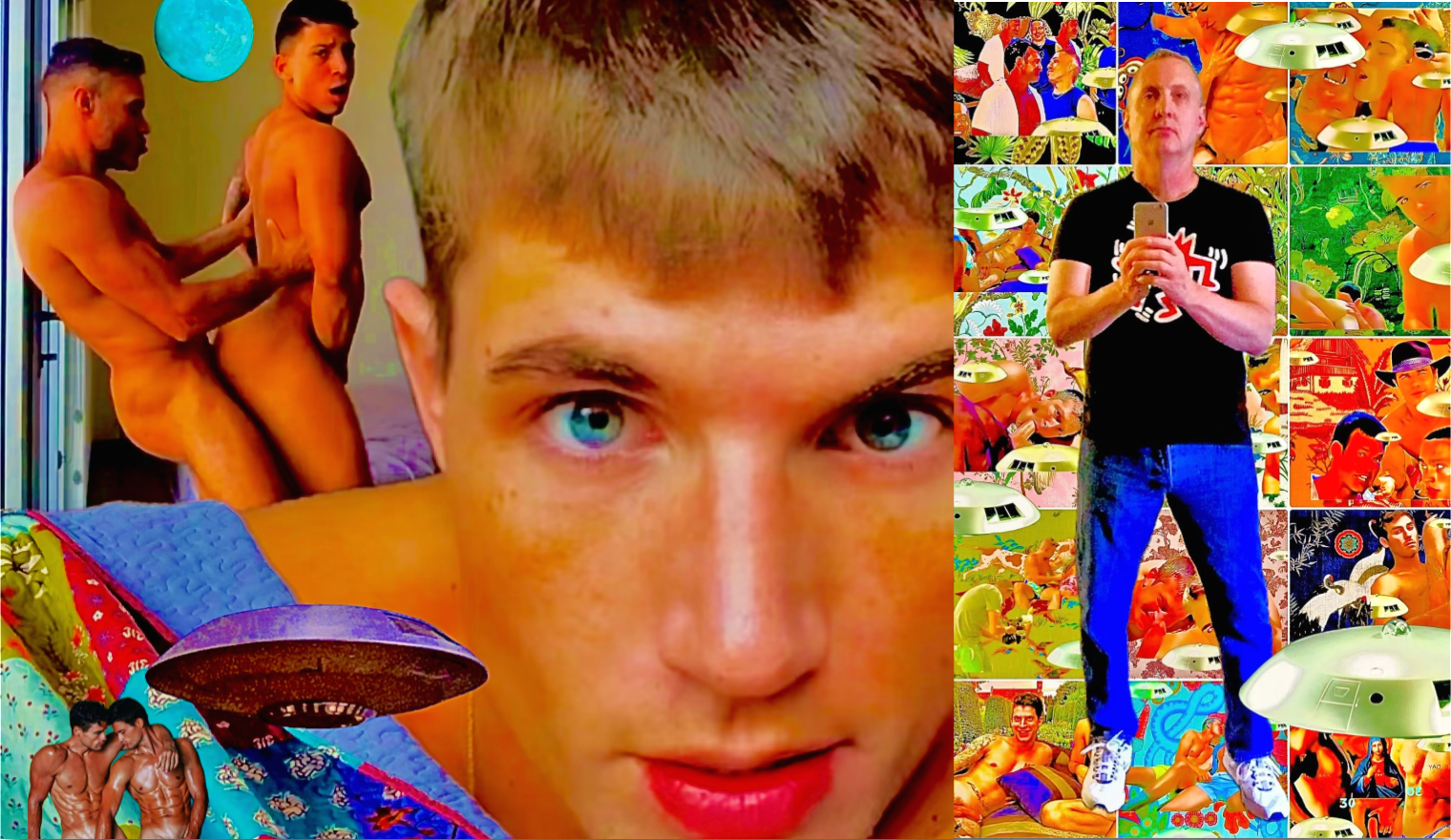
Make Way for the Artist in the Room This is a self-portrait. Not the traditional kind — no easel, no dramatic lighting, no studied pose. Just a person standing in front of their own work with a phone, in a Keith Haring t-shirt, looking back at you.

The left panel is the work itself. The right panel is the artist who makes it. A diptych. The two halves of the same statement.

As Pride Month begins, this image is about what the work has always been about.

“Even if you disagree with us,” Behan says, “you have to acknowledge that we exist. At the very least.”

The Closet Series is a visibility zone — not an argument, not a petition, not a plea. A fact. Rendered in full color. Posted to the internet.

Breathing without permission.

Jupiter 3 has landed. The Aquarian Moon is watching. The artist responsible is right there in the frame. — Behan

Craft Notes

Edgar Degas made over 300 monotypes — prints pulled from inked metal plates — and routinely broke the rules of the medium. A monotype is supposed to produce a single impression. Degas scoffed at this rule, pulling as many as four works from one plate, using the leftover ink or paint to produce a degraded or ghost image that he then enhanced with pastel. He called these second and third pulls cognates. Same plate, different pressure, different pastel combinations applied over the ghost image — four distinct works from one foundation.

Degas often used monoprints as a base for pastel drawings, adding layers of texture and color to create vibrant, impressionistic works. The base stayed constant. What changed was the color, the pressure, the hand moving across the surface.

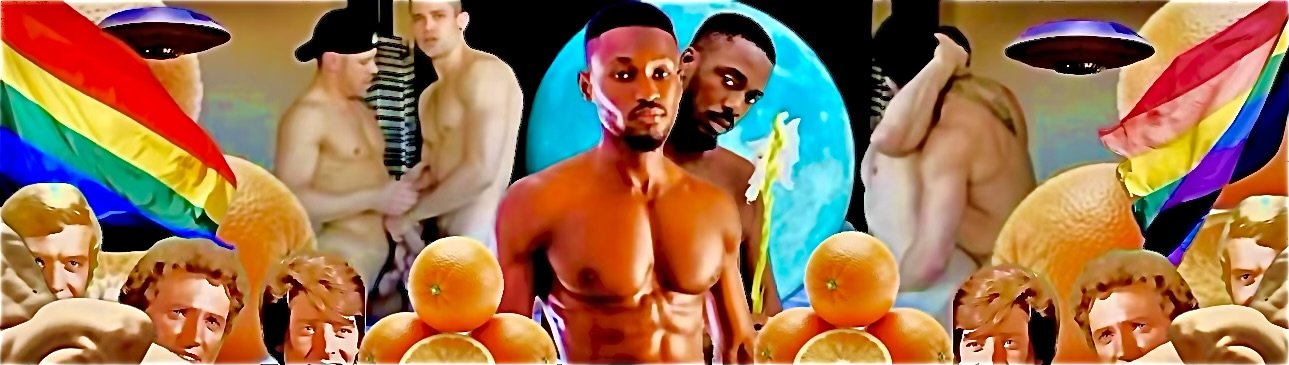
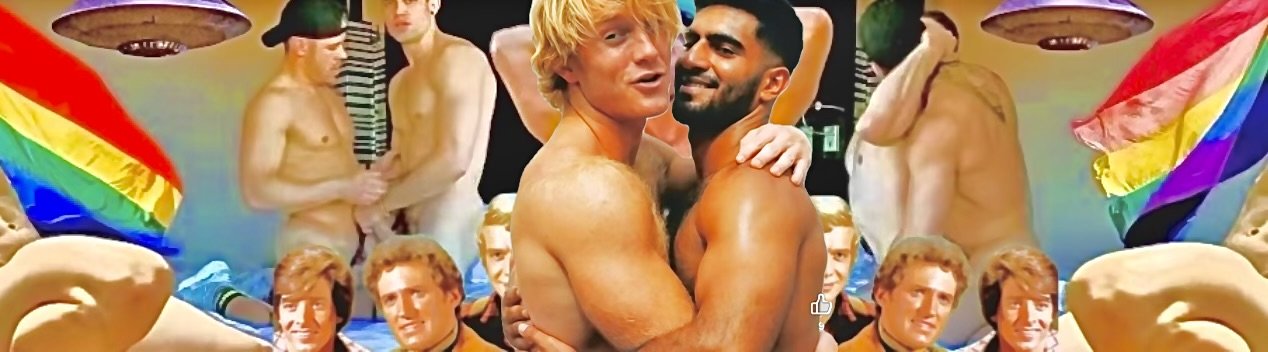
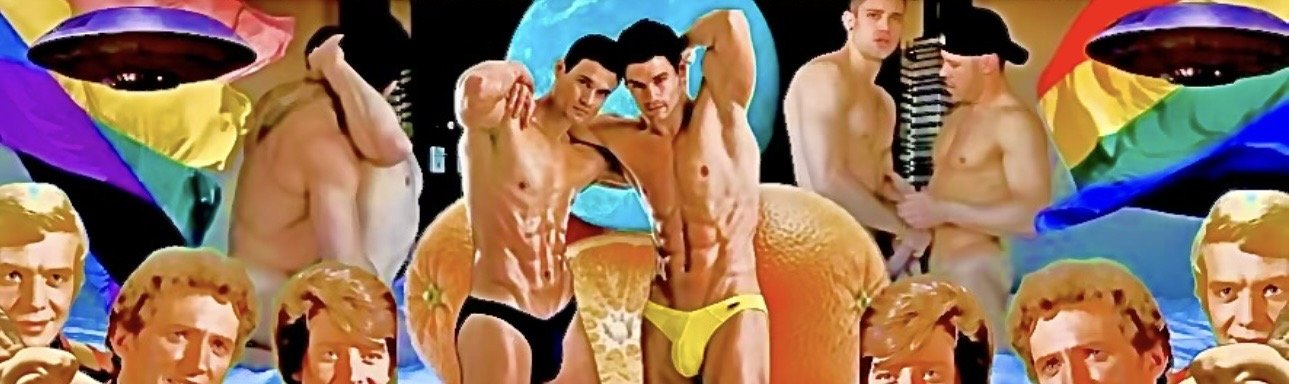
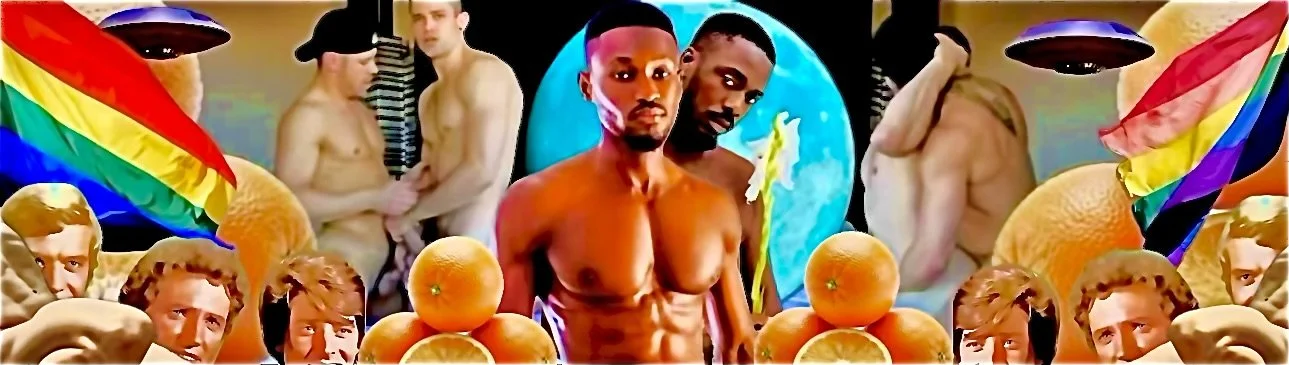
The Orange Suite works from the same principle. One digital foundation — the same compositional architecture, the same symbolic elements, the same base image — four versions, each with a different central figure and a different color relationship. The Aquarian Moon. The pride flags. Jupiter 3. The classical busts. The oranges. All constant. What changes is who stands at the center and what colors surround them.

Same plate. Different pull.

The medium is digital rather than inked metal, the pastel is light rather than chalk, but the instinct is identical to what Degas was doing in Paris in the 1870s. The monotype tradition understood something important: the ghost image, the degraded version, the second pull — these are not lesser works. They are a different kind of truth pulled from the same source.

The base image is shown here first. Then the four pulls. The plate, and what it becomes. — Behan

Ready or Not

June 1, 2026 — Pride arrives. This year it comes under the most anti-LGBTQ+ legislation in American history — more than 850 anti-LGBTQ+ bills filed in 2025 alone, executive orders banning transgender people from military service, eliminating LGBTQ+ inclusive curricula in schools, moving to restrict the HIV medications keeping people alive. The message from the dominant culture is familiar. It has been delivered before.

June 6, 1889 — Seattle rebuilds after a catastrophic fire above its original footprint, creating a maze of underground tunnels beneath what is now Pioneer Square. Seattle in the late 1800s was a booming timber and logging town filled with transient male workers. Women were scarce. Men lived together in camps, worked together, depended on each other for survival. Male-to-male relationships formed — for protection, for resources, for companionship, and for love. The camps largely tolerated them as a matter of practical necessity.

Seattle Notes:

—The underground spaces of Pioneer Square became some of the first queer safe havens on the West Coast.

—The Double Header bar has been operating there since 1934 — the oldest continuously operating gay bar in the United States.

—The Casino, operating from 1930 to 1946, was one of the few places on the entire West Coast that permitted same-sex dancing.

—The Garden of Allah, frequented by both gay men and lesbians through the 1940s and 1950s, featured female impersonators and vaudeville acts.

Gay culture did not arrive in Seattle. It was there before the founding.

September 25, 1968 — ABC airs Here Come the Brides, two seasons set in the 1870s Seattle logging frontier. Three brothers, a mountain full of timber, a camp full of lonely men, and a scheme to import one hundred marriageable women from Massachusetts to keep the logging operation going. The show was beloved. It was also something more than it appeared. Bobby Sherman, who played the youngest Bolt brother and became a teenage idol, was said to have been in a relationship with Sal Mineo. David Soul, who played the brooding middle brother, went on to play the gay-coded Detective Hutch in Starsky & Hutch — a partnership so openly affectionate that producer Aaron Spelling called it “TV’s first heterosexual love affair.” A logging camp full of desperate men needing attention, for gay audiences watching in 1968, was indeed a rainbow moment fully understood.

May 29, 2026 — The Orange Suite responds to the avalanche of current anti gay legislation with four digital collages celebrating a fulsome array of gay male love and identity, each panel distinct, the architecture constant. The suite is dedicated to every man who built this country while hiding who he was. He deserved better. He always did. — Behan