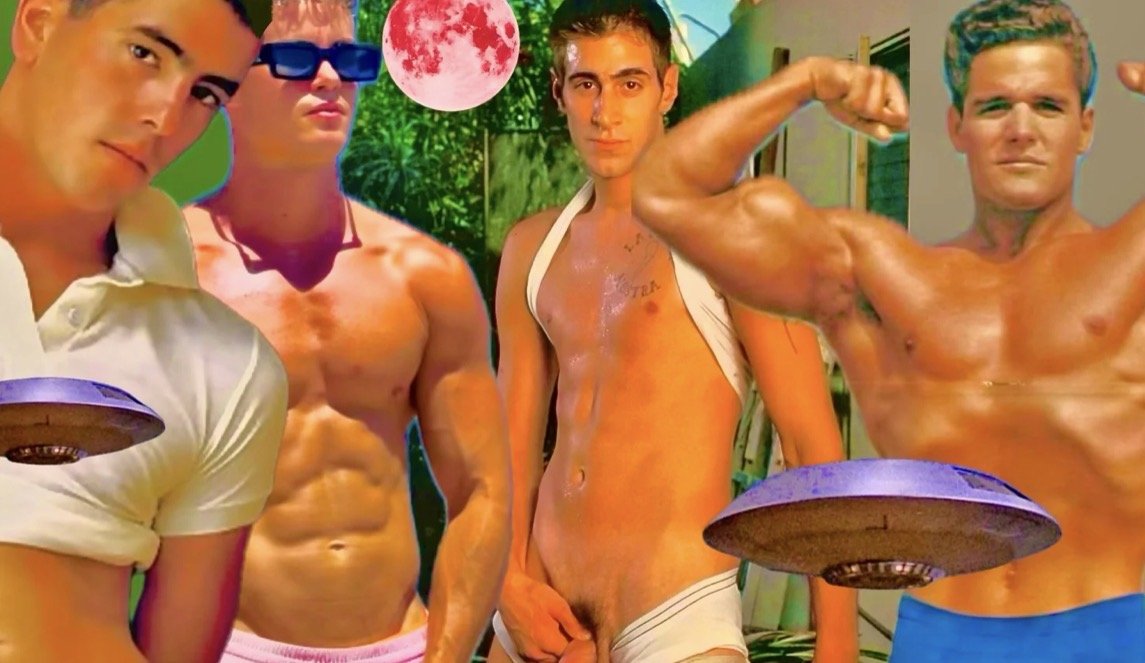
The American Pie is (Once Again!) on a Ledge
Digital Photocollage Series, 2026
The American living room has always has a sofa where the family presents itself — to guests, to neighbors — with a version of itself it most wants to believe. It is where uncomfortable things are said and quickly recovered from, where the television plays and nobody quite watches, and where my father once told us that if people just didn’t talk, everything would be fine. The American living room is the public face of the private family. It is where performance happens.
The American bedroom is where this performance ends — where the truth of who you are exists without an audience, where there is no version to maintain.
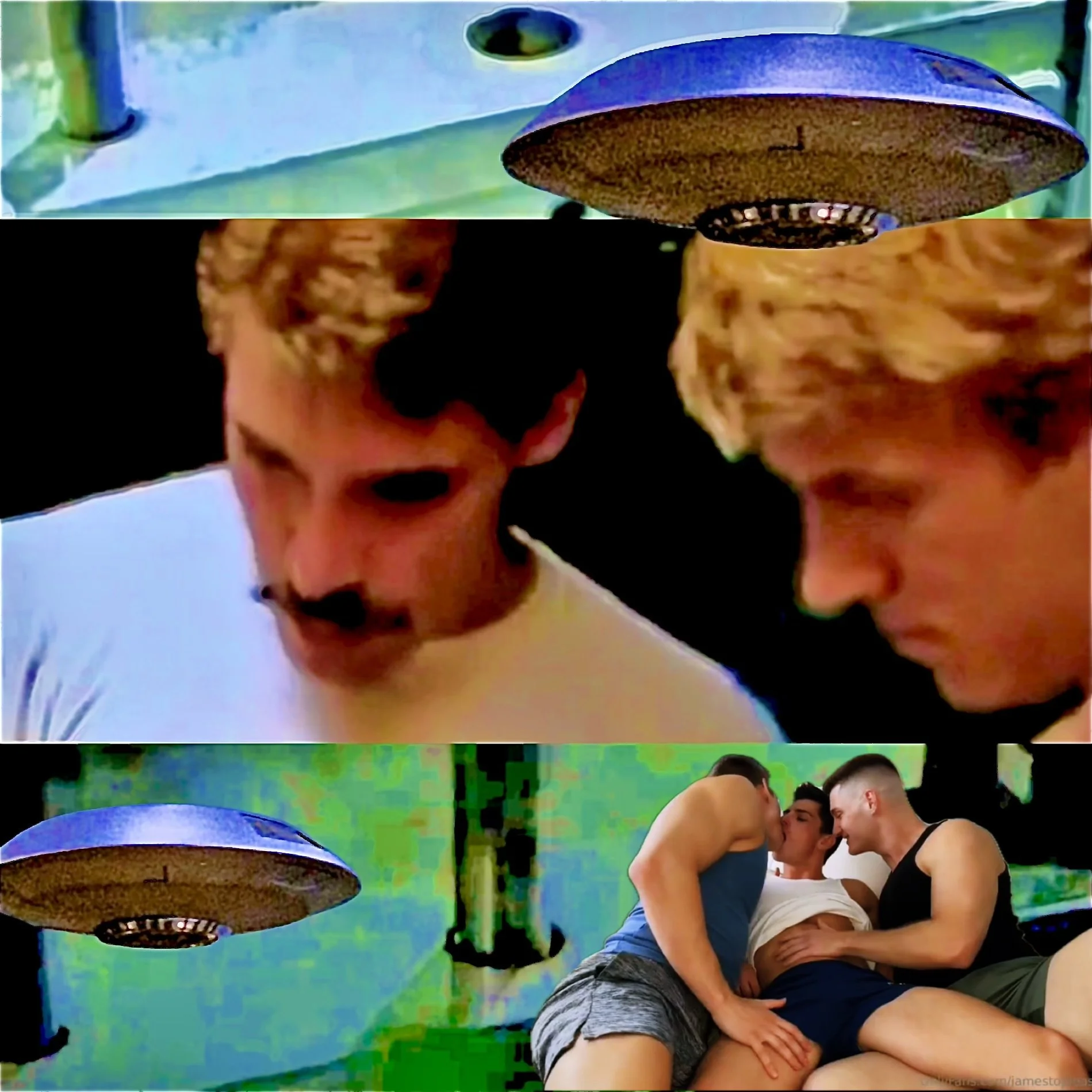
Gay men have always known the distance between those two rooms intimately, the living room where we behave and the bedroom where we relax. The collages presented in this post as well as this essay live in both these rooms simultaneously.
Fury and wit have always been the gay man’s tools for survival: the wit to deflect, the fury to sustain. Both are present in these collages. Both are necessary for what follows: a timeline of the distance between the promise America made in 1776 and the promise it has actually kept for its gay sons and daughters.
A Queer Timeline
July 4, 1776 — The Continental Congress adopts the Declaration of Independence. All men are created equal. Gay men are not included.
1778 — Baron Friedrich Wilhelm von Steuben, a gay Prussian general recruited by Benjamin Franklin, drills the Continental Army into a fighting force.
1955 — The American Law Institute votes to remove consensual sodomy from the Model Penal Code. Most states ignore it. Gay men remain criminals.
February 3, 1959 — Buddy Holly, Ritchie Valens, and the Big Bopper die in a plane crash in Clear Lake, Iowa. The day the music died.
June 28, 1969 — Stonewall. Greenwich Village, Manhattan. A police raid. A riot. The modern gay rights movement begins.
October 24, 1971, Don McLean’s American Pie is released. Gays sing along to the slow collapse of the American promises
December 15, 1973 — The American Psychiatric Association removes homosexuality from the DSM. By a vote, a majority decides that desire is not a disease. America continues without acknowledging this enormous change.
July 4, 1976 — The bicentennial. Two hundred years. America throws a party. Gay men are still criminals in most states. They watch from the margins.
June 26, 2003 — Lawrence v. Texas. The Supreme Court strikes down sodomy laws. The body, at last, belongs to itself.
June 26, 2015 — Obergefell v. Hodges. Marriage equality, nationwide. The promise inches forward.
July 4, 2026 — The 250th anniversary. The promise has never been more threatened. An autocratic president dismantles democratic norms in plain sight. We do not know, with certainty, whether we will have a functioning democracy in two years. Fifty years after the bicentennial. Fifty years after American Pie. The music is in worse trouble than McLean imagined.
The Only King in America is a California King
Like every other marginalized group in the United States, gay men and women have always been in the room — in the fight, in the field, in the foundational work of this republic. We did not watch from the outside. We built the inside.
Baron Friedrich Wilhelm von Steuben, Washington’s Inspector General, was gay. Historians consider him second only to Washington himself in importance to winning the Revolution. He drilled the Continental Army into a fighting force at Valley Forge during the darkest winter of the war. He wrote the drill manual that the United States Army used for more than a century. He helped secure the promise of 1776. He was never invited to enjoy that promise himself.
He was not alone in that arrangement.
The White House — the house that the current administration occupies while dismantling the rights of everyone who is not white, straight, and wealthy — was built by enslaved people. Black men and women whose labor constructed the seat of American power were not considered citizens. Were not considered fully human under the law. Were property. The promise of 1776 did not apply to them either, and the men who wrote it knew it and did it anyway.
The indigenous peoples of this continent were here before the promise was written. They fought for America too — in every war this country has declared, including wars fought against their own nations. In World War II, Navajo Code Talkers developed an unbreakable code that the military used throughout the Pacific theater. Their language, which the United States government had spent decades trying to eradicate through forced assimilation and boarding schools, became one of the most valuable military assets America possessed. They saved lives. They won battles. They came home to a country that still did not recognize them as full citizens in every state until 1948.
Women have been in every war this country has fought, in roles that were systematically minimized, erased, or denied. Black soldiers fought in segregated units, came home to Jim Crow, and were told their sacrifice did not earn them equality. Japanese Americans were interned while their sons volunteered to fight for the country that imprisoned their families — the 442nd Infantry Regiment became the most decorated unit in United States military history.
Gay soldiers fought in every war too. Closeted, silent, under threat of dishonorable discharge if discovered, they served anyway. They served because this was their country too, whatever the country thought of them.
This is the American pattern. Every marginalized group has contributed to the construction and defense of this republic. Every marginalized group has been told, at various points and by various factions, that their contribution does not entitle them to the full promise. That they are welcome to build but not to belong. To fight but not to lead. To serve but not to marry. To exist but not to be equal.
Right now, in 2026, transgender Americans who want to serve their country in the military are being barred from doing so by executive order. Black generals and women up for promotion are being passed over by a racist executive branch that is systematically purging the military of anyone who does not reflect its narrow vision of who an American soldier should be. Immigrant communities are being terrorized by detention and deportation. The institutions built over two and a half centuries of painful, incremental progress toward the promise of 1776 are being dismantled with deliberate speed.
This is not new. It is a very old pattern wearing new clothes.
Von Steuben won the Revolution for a country that would not let him love openly.
The enslaved built the White House for presidents who would not free them.
The Navajo saved the Pacific theater for a government that had tried to eradicate their language.
The 442nd bled in Italy for a country that had locked up their families.
And gay men buried their dead during AIDS while the government looked away.
The Collages
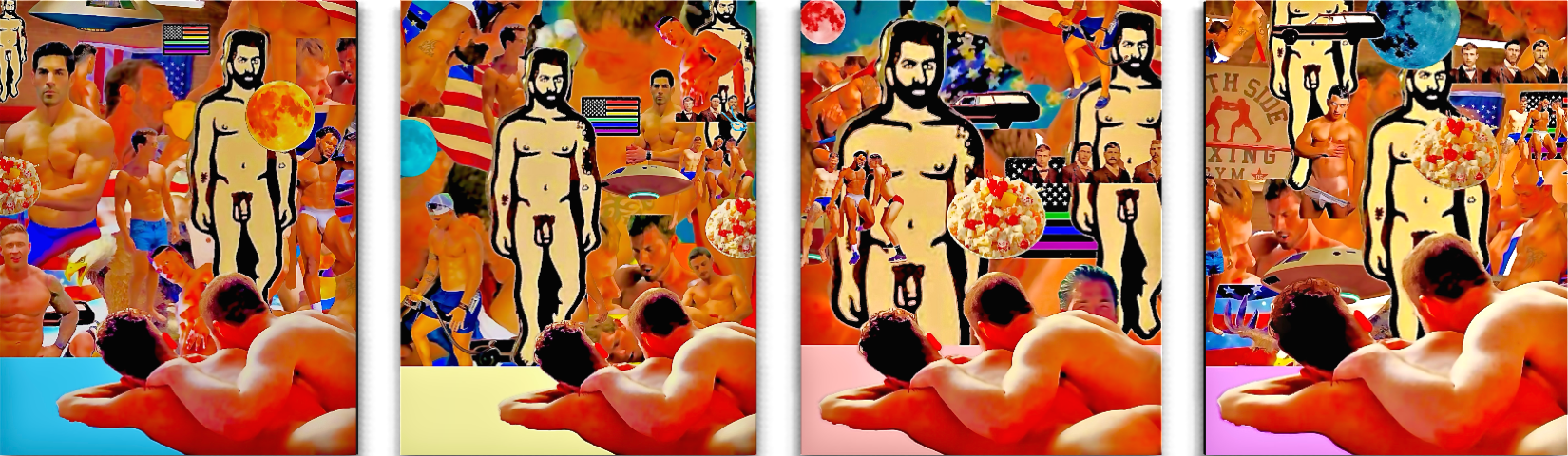
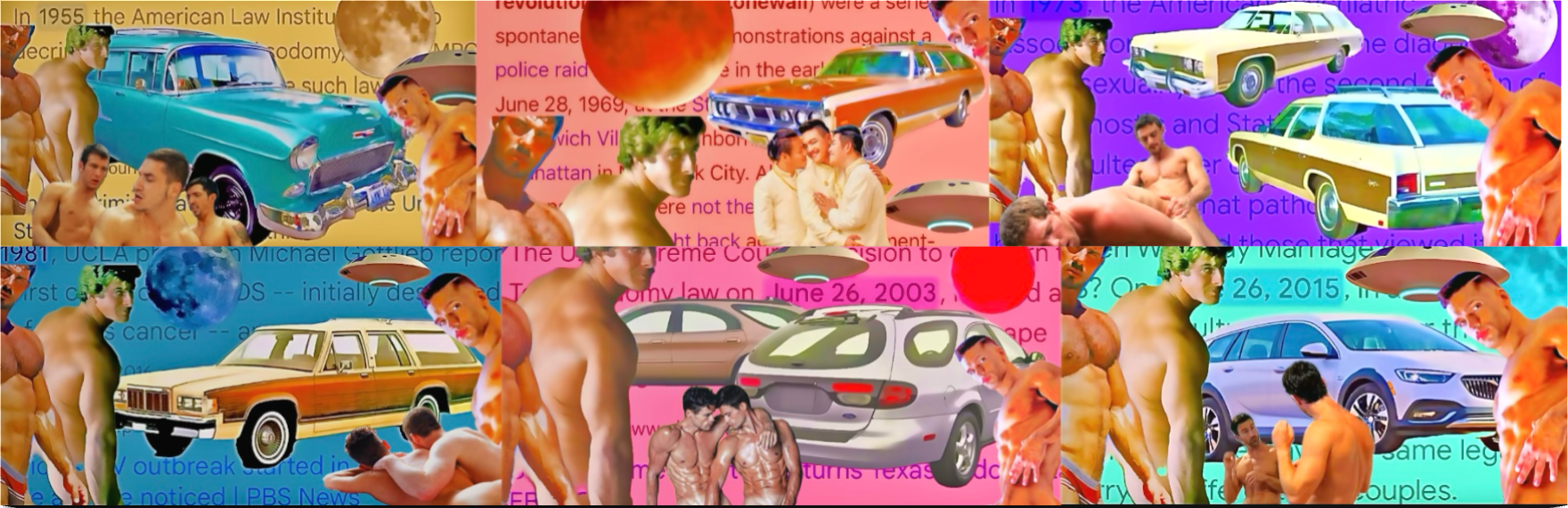
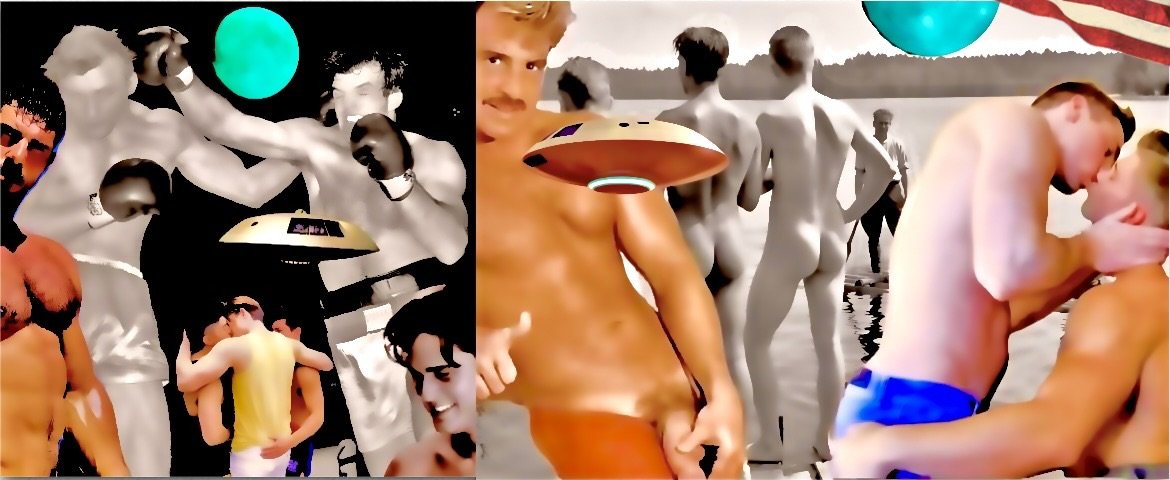
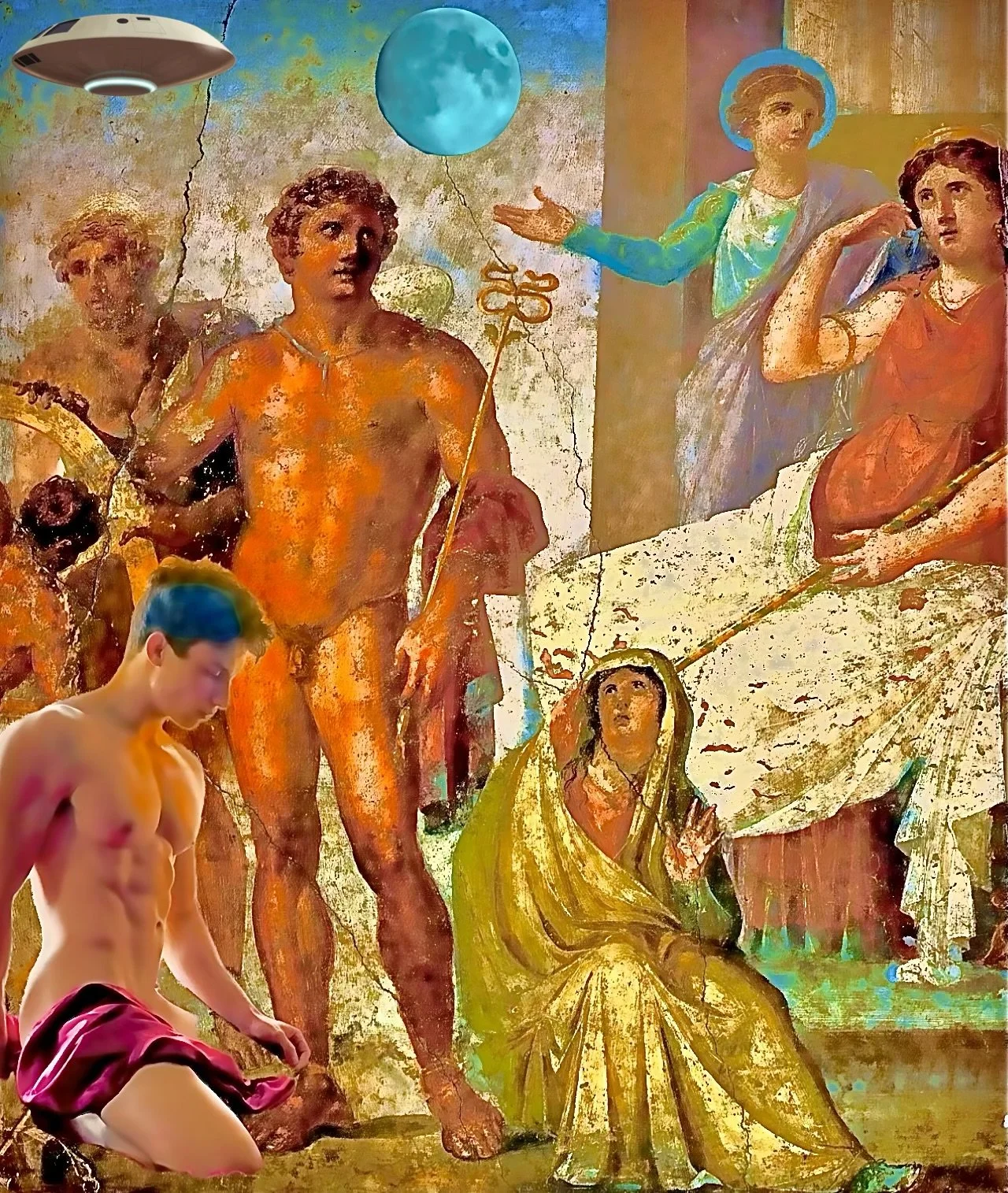
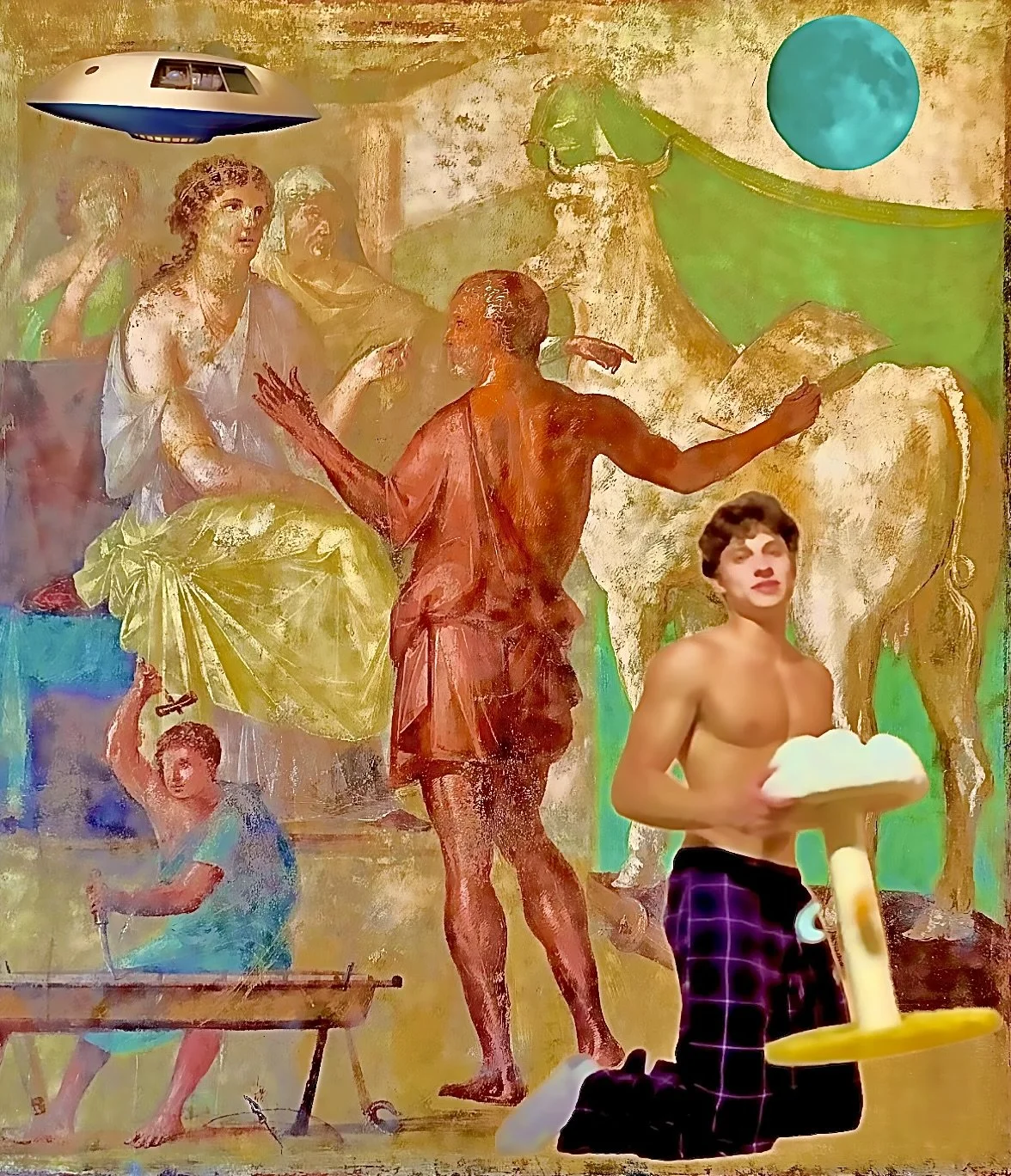
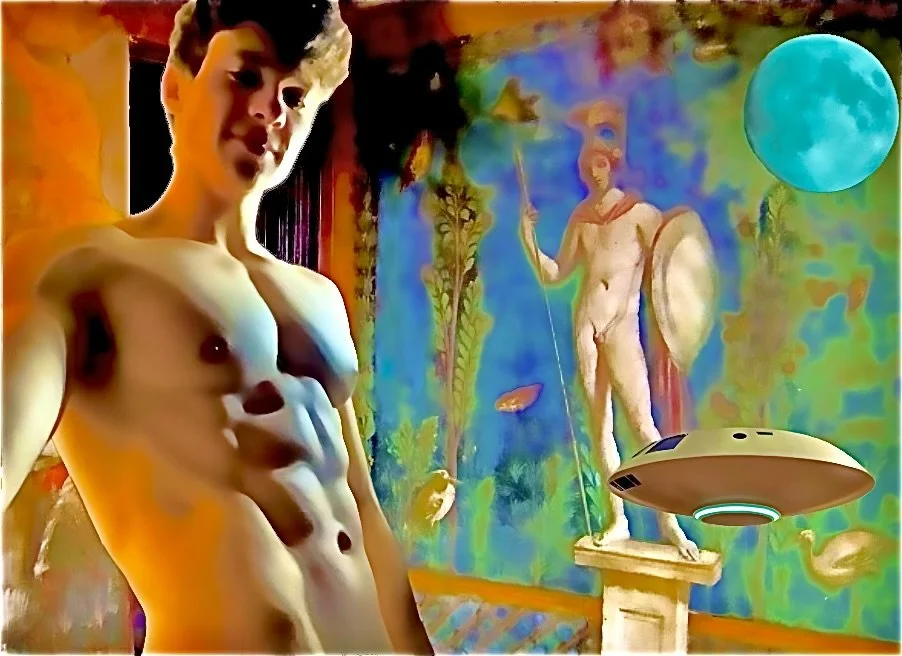
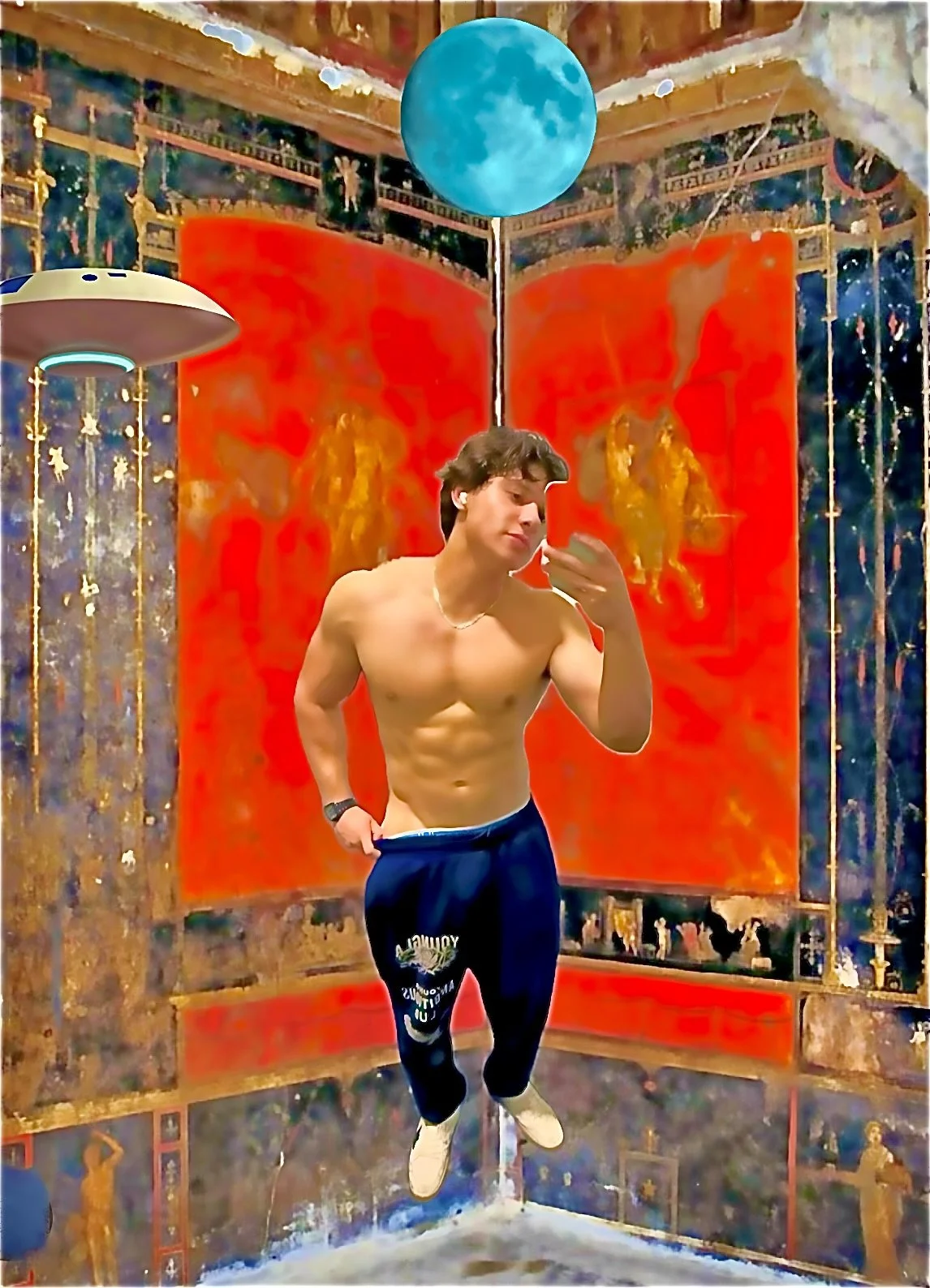
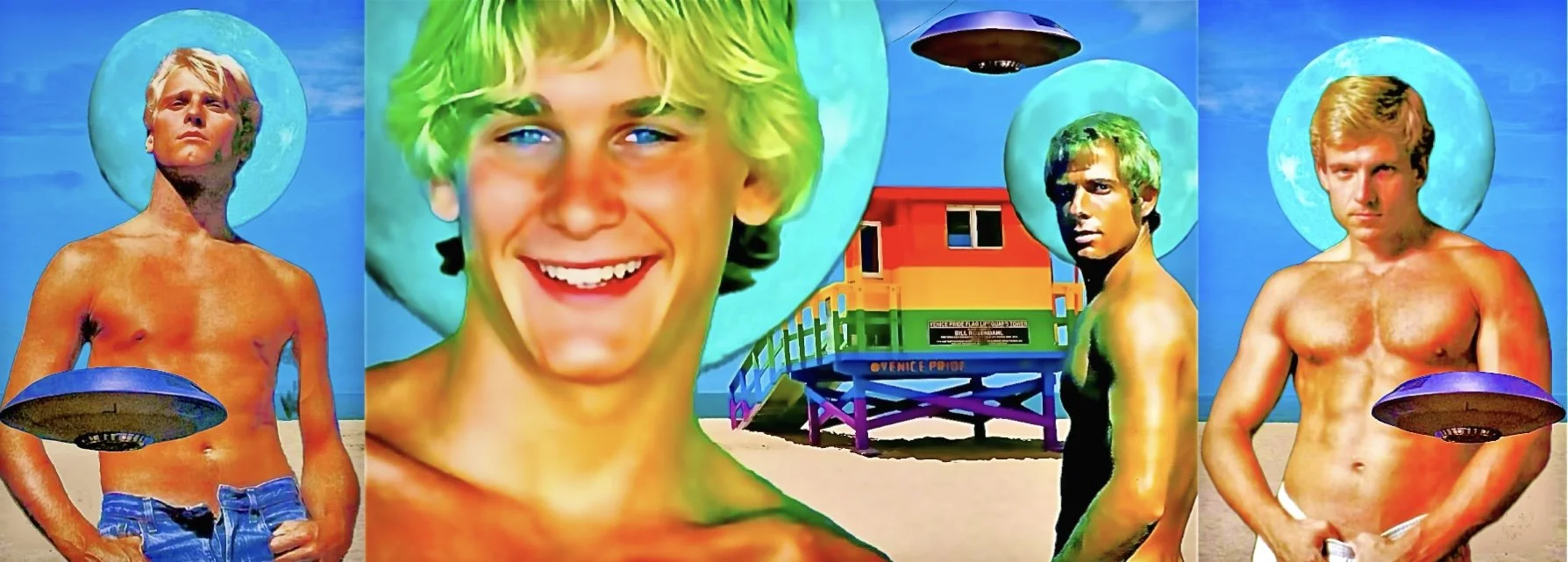
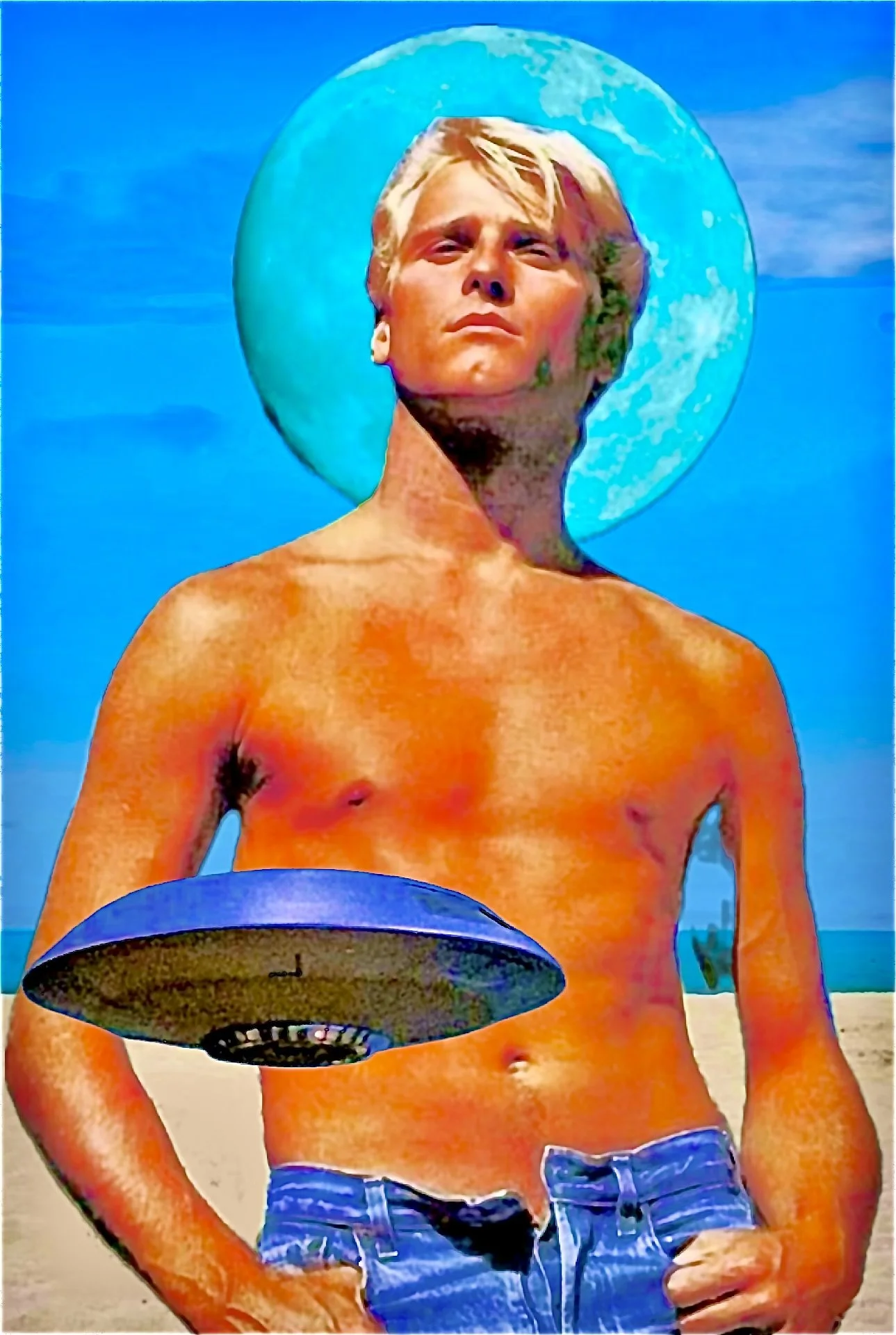
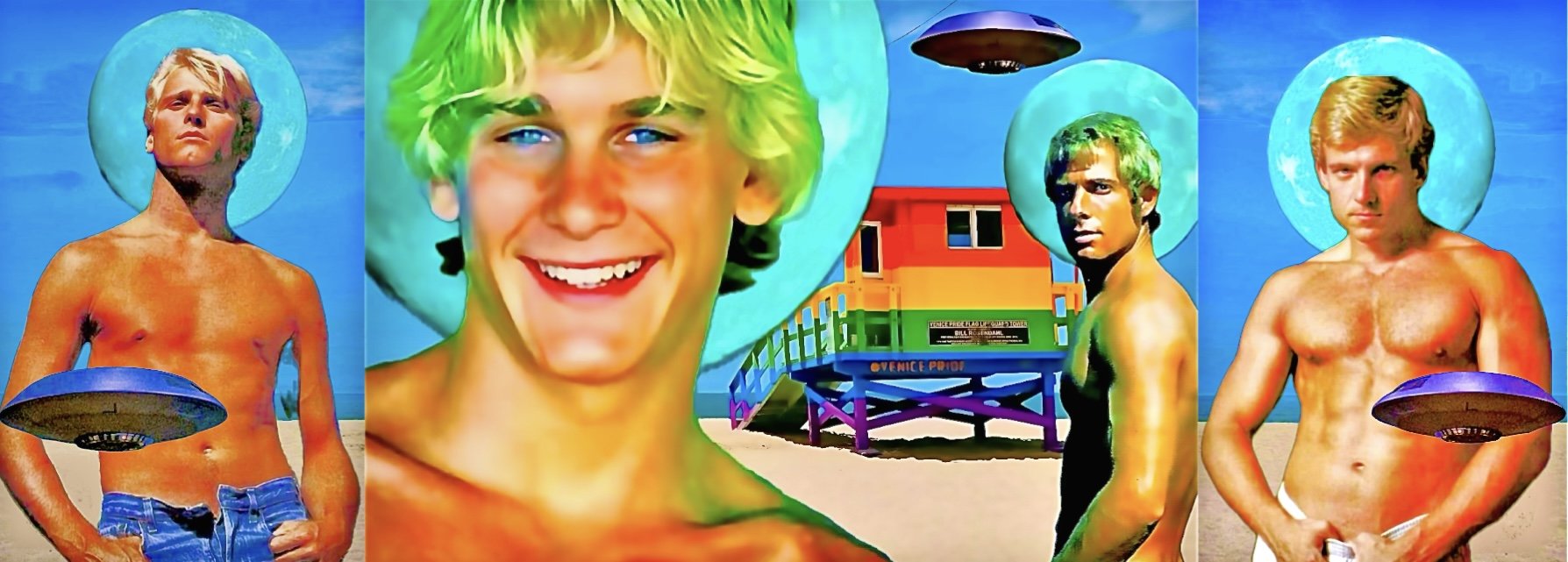
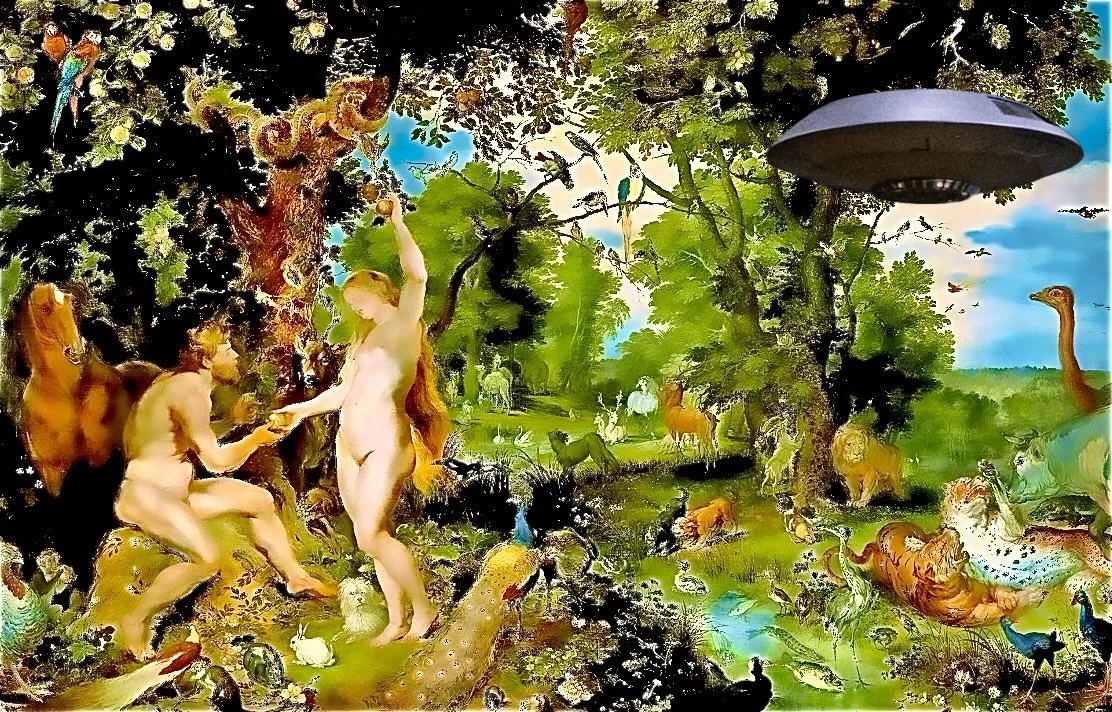
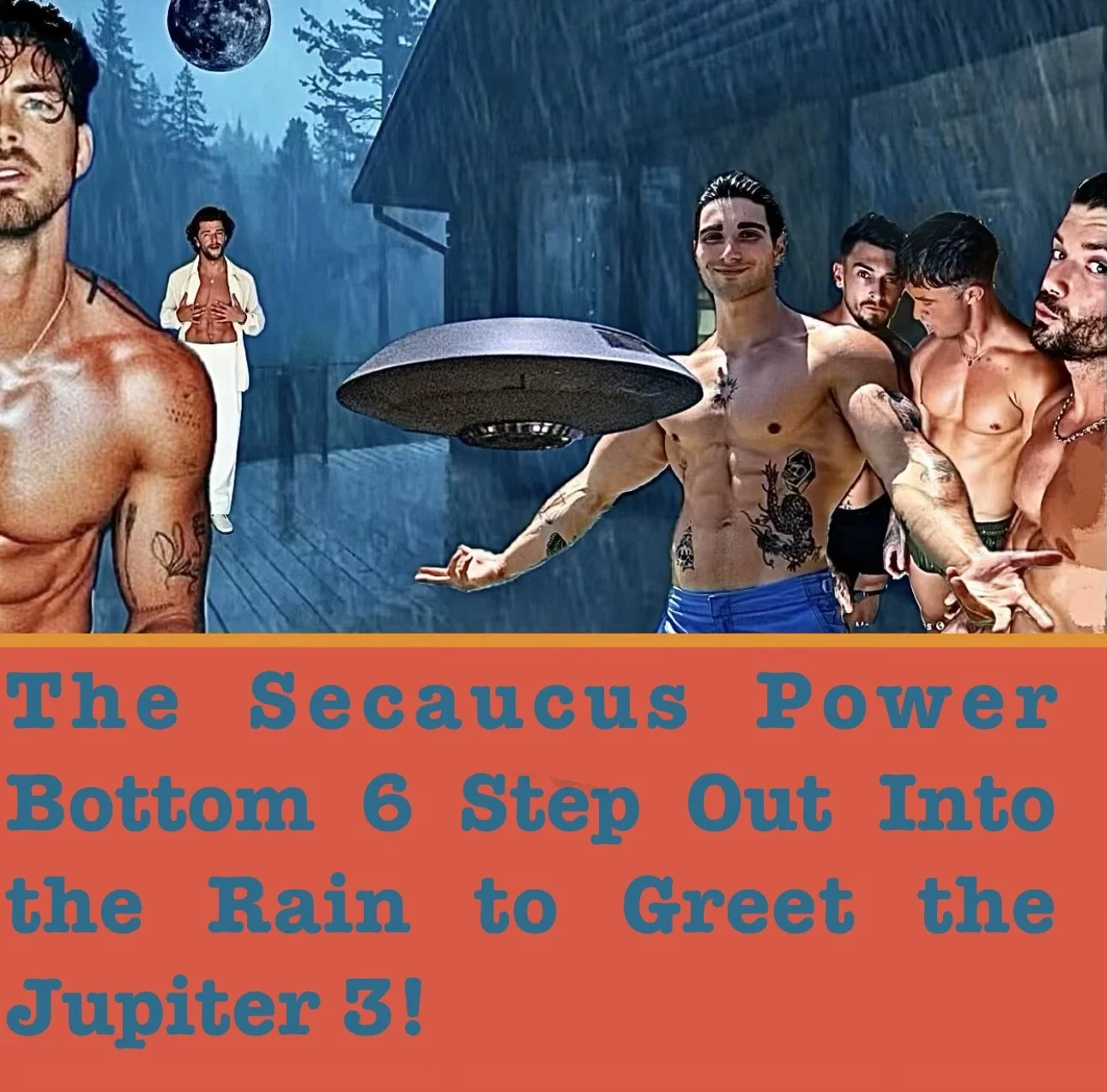
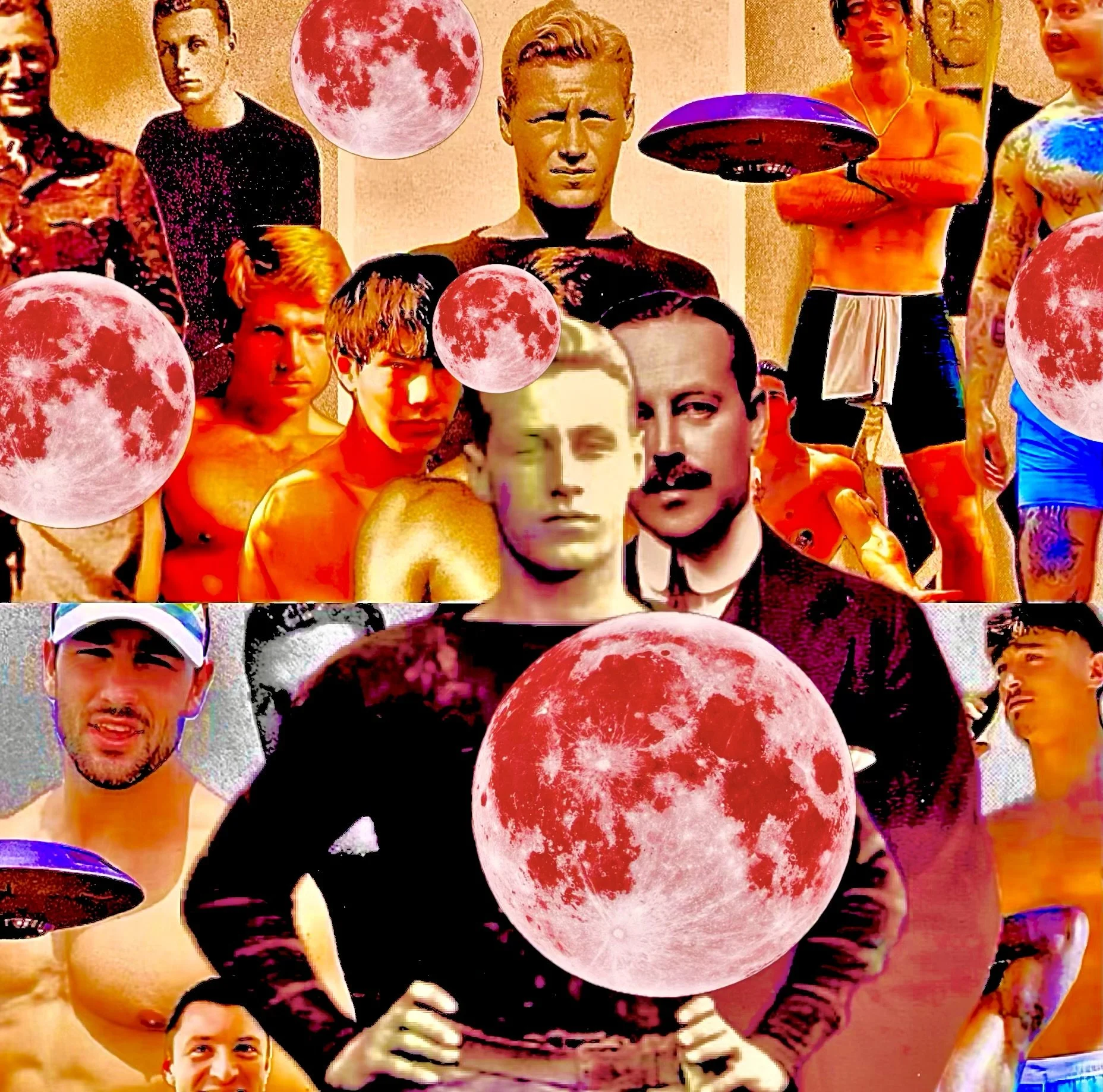
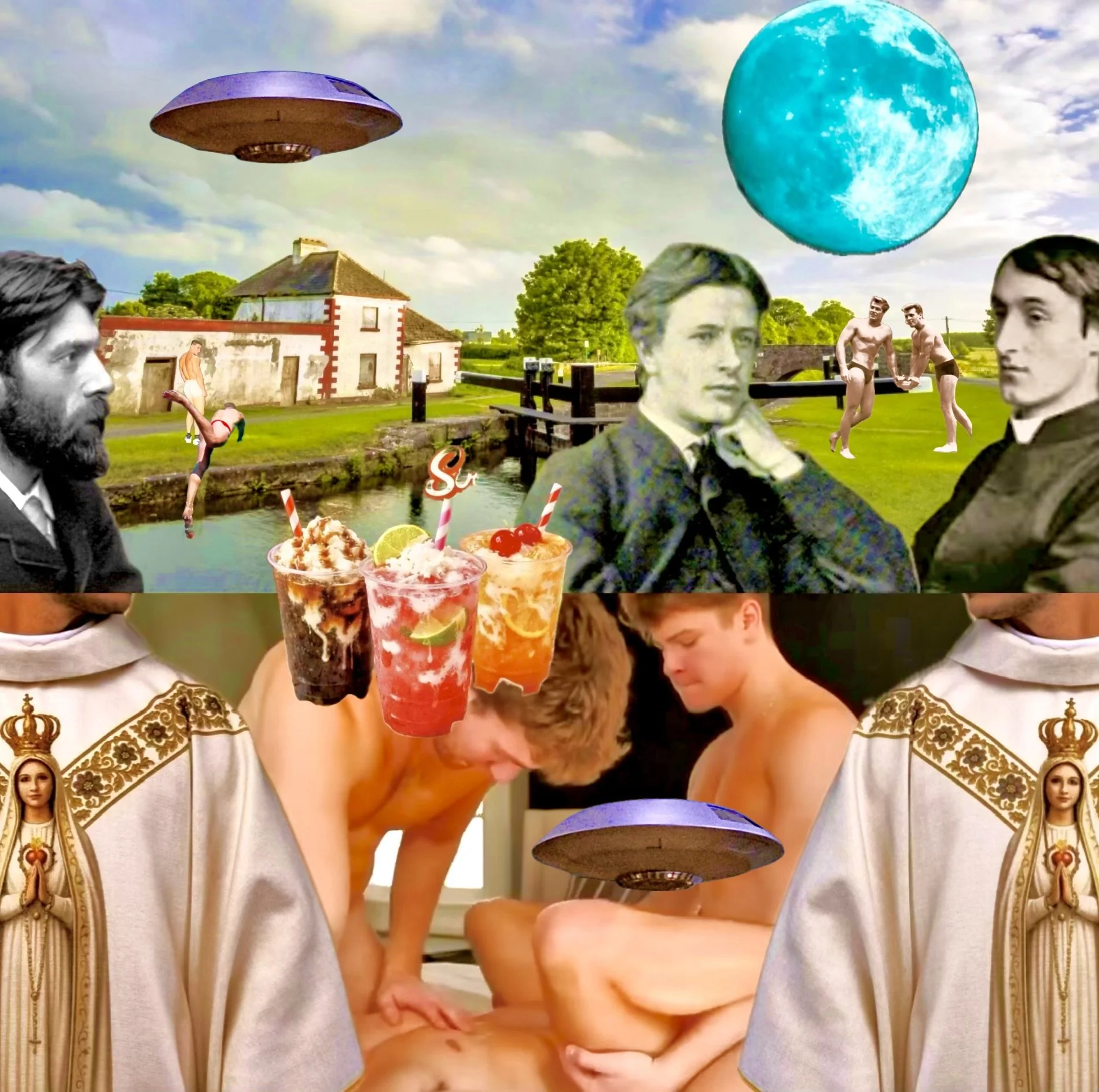
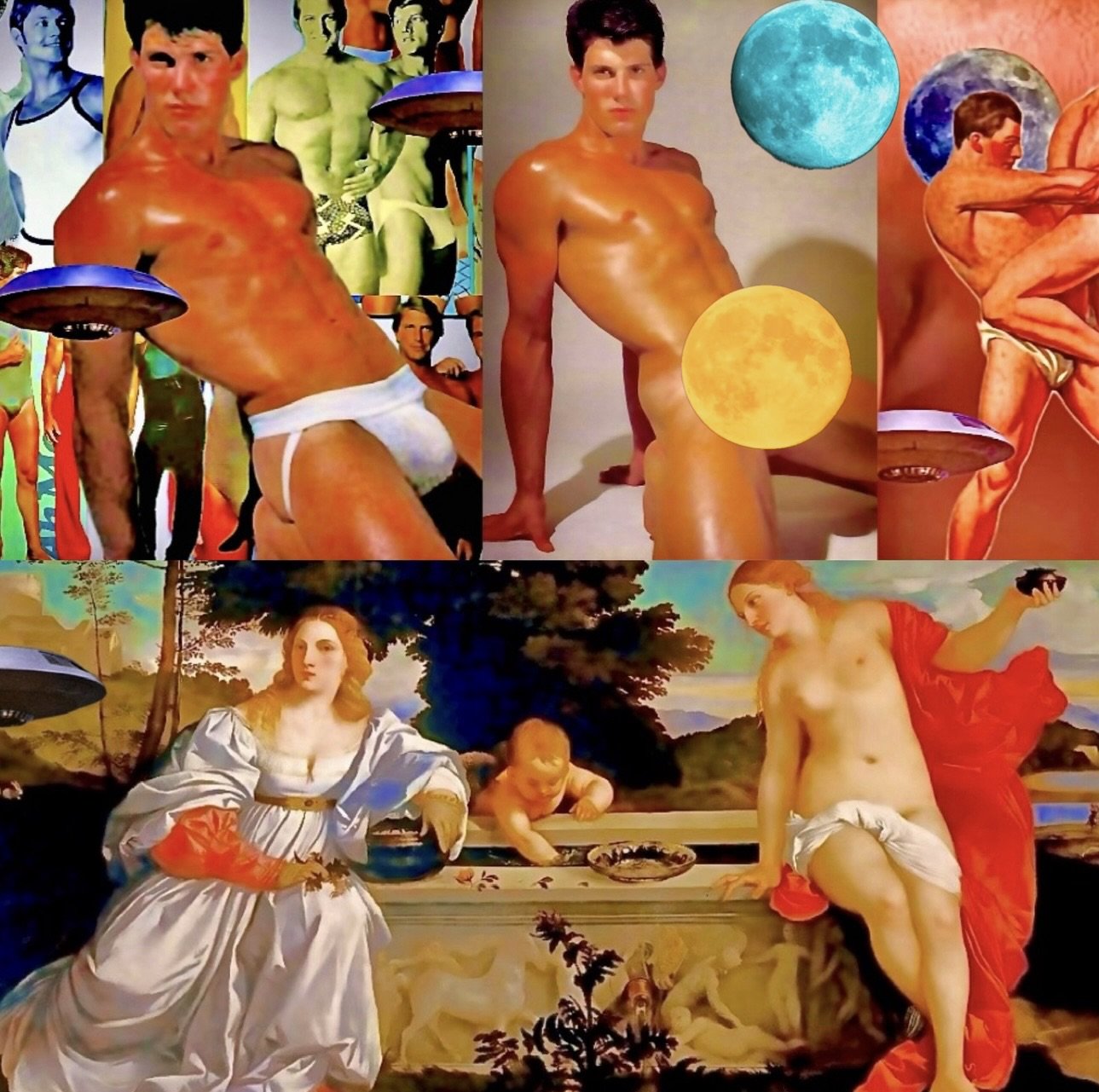
Color is prima facie. These are not quiet works. The public-facing collages — the station wagons, the eagle, the boxing ring — operate in a register of controlled chaos. Oranges and reds press against electric blues. American flags bleed into flesh tones. Figures from different eras and different visual registers are forced into the same plane at mismatched scales, their edges broken, their resolutions incompatible. Nothing quite fits. Everything insists on being present anyway.
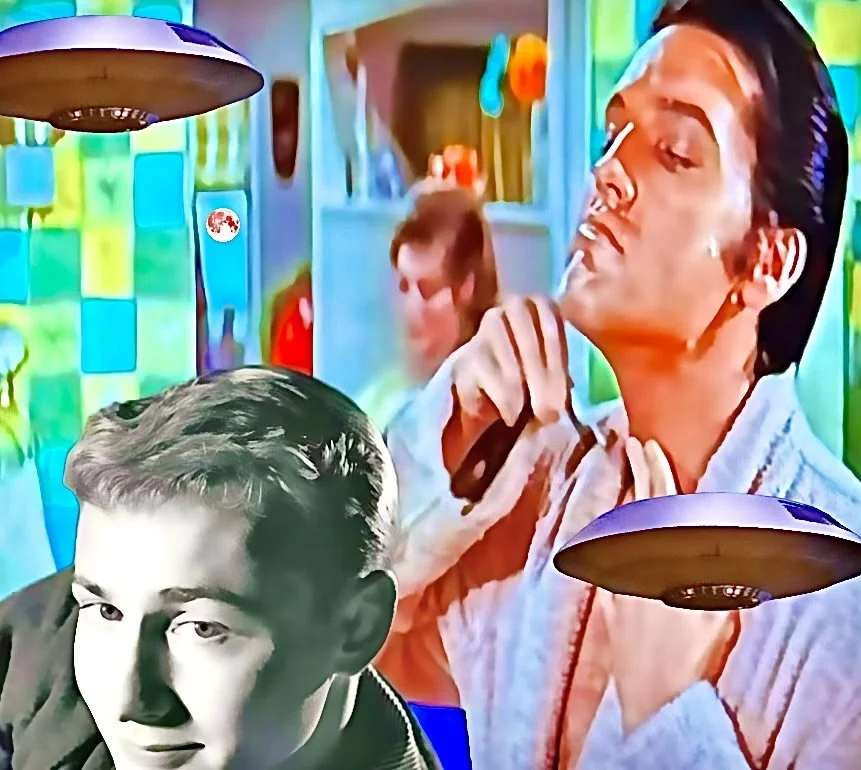
The visible seams are part of the argument. Digital photocollage as a medium makes its construction legible — you can see where the pieces come from, where they don’t align, where the scale breaks down. In these works, that visibility is not a limitation to be overcome but a formal choice that carries meaning. The incompleteness of the surface reflects the incompleteness of the American project. A culture that has never fully resolved its own contradictions should not be rendered in smooth, unbroken surfaces.
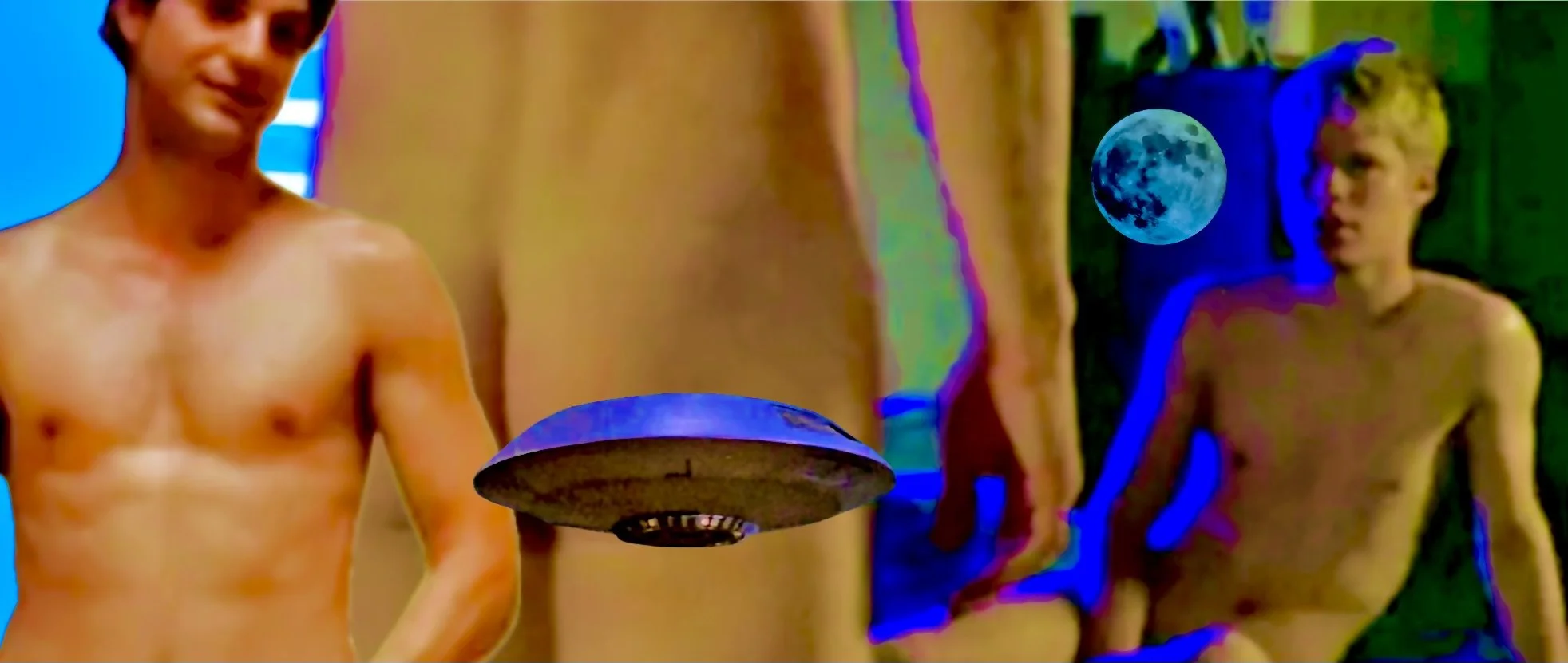
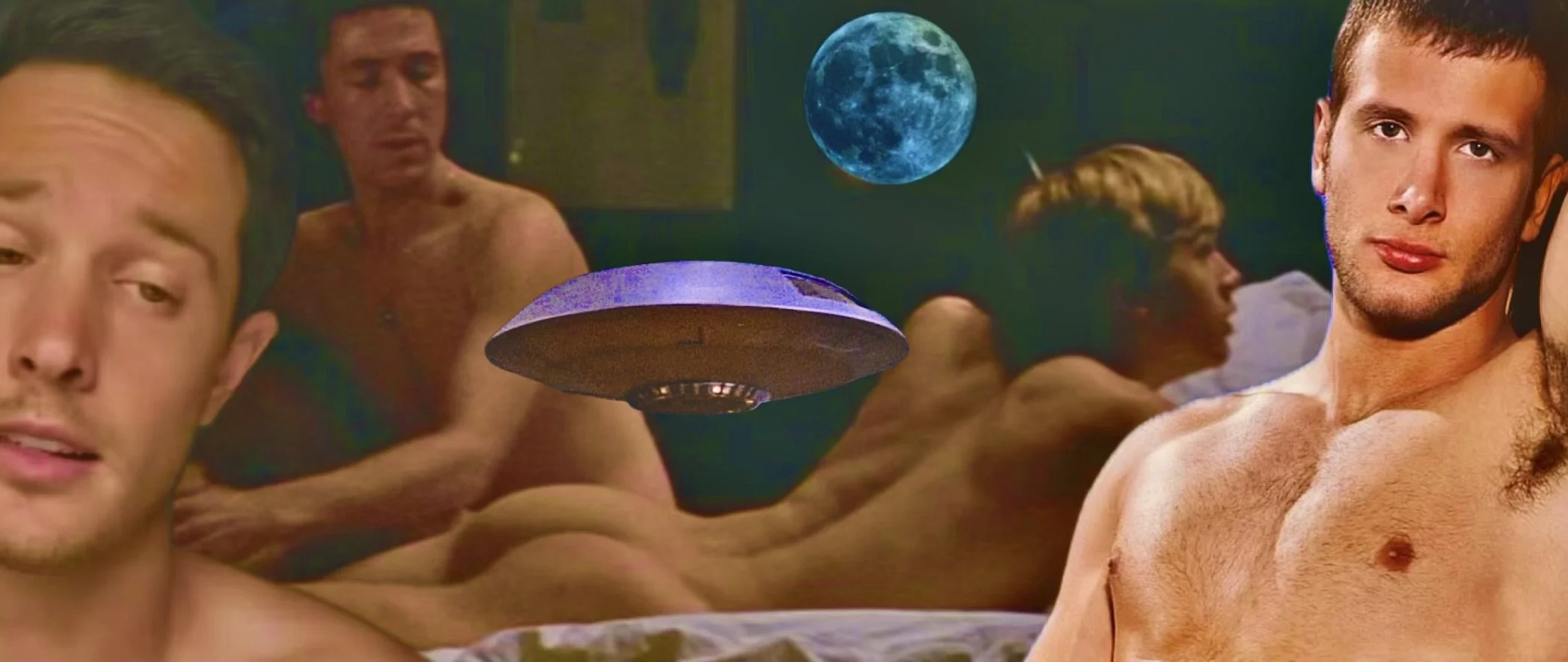
The chaos is controlled, however. There is compositional effort underneath the noise — figures anchored at the center, moons and spacecraft placed with precision, the horizontal panoramic format of the multi-panel works creating a reading sequence that moves like a timeline across the eye. The disorder is organized disorder. You know, the American kind.
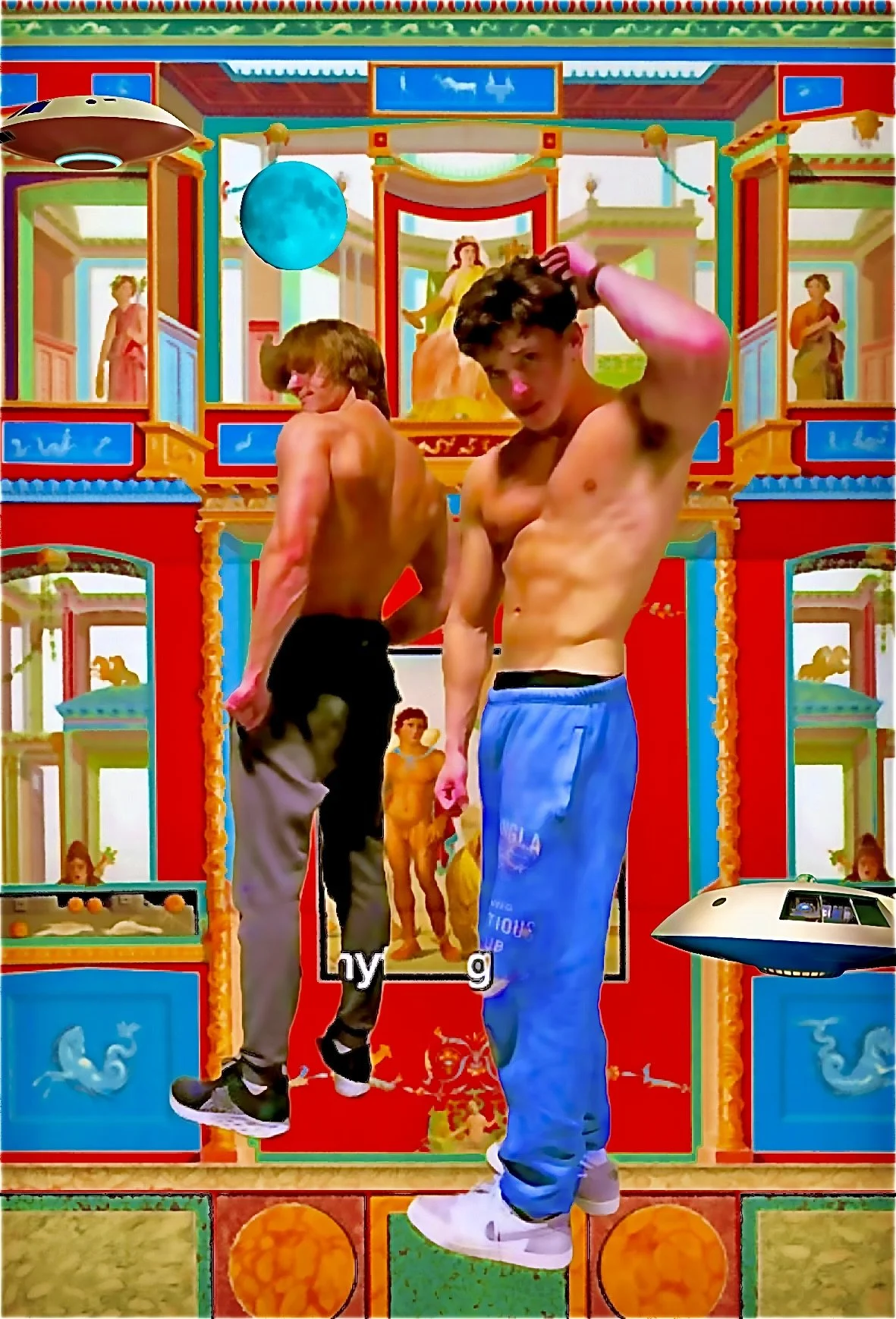
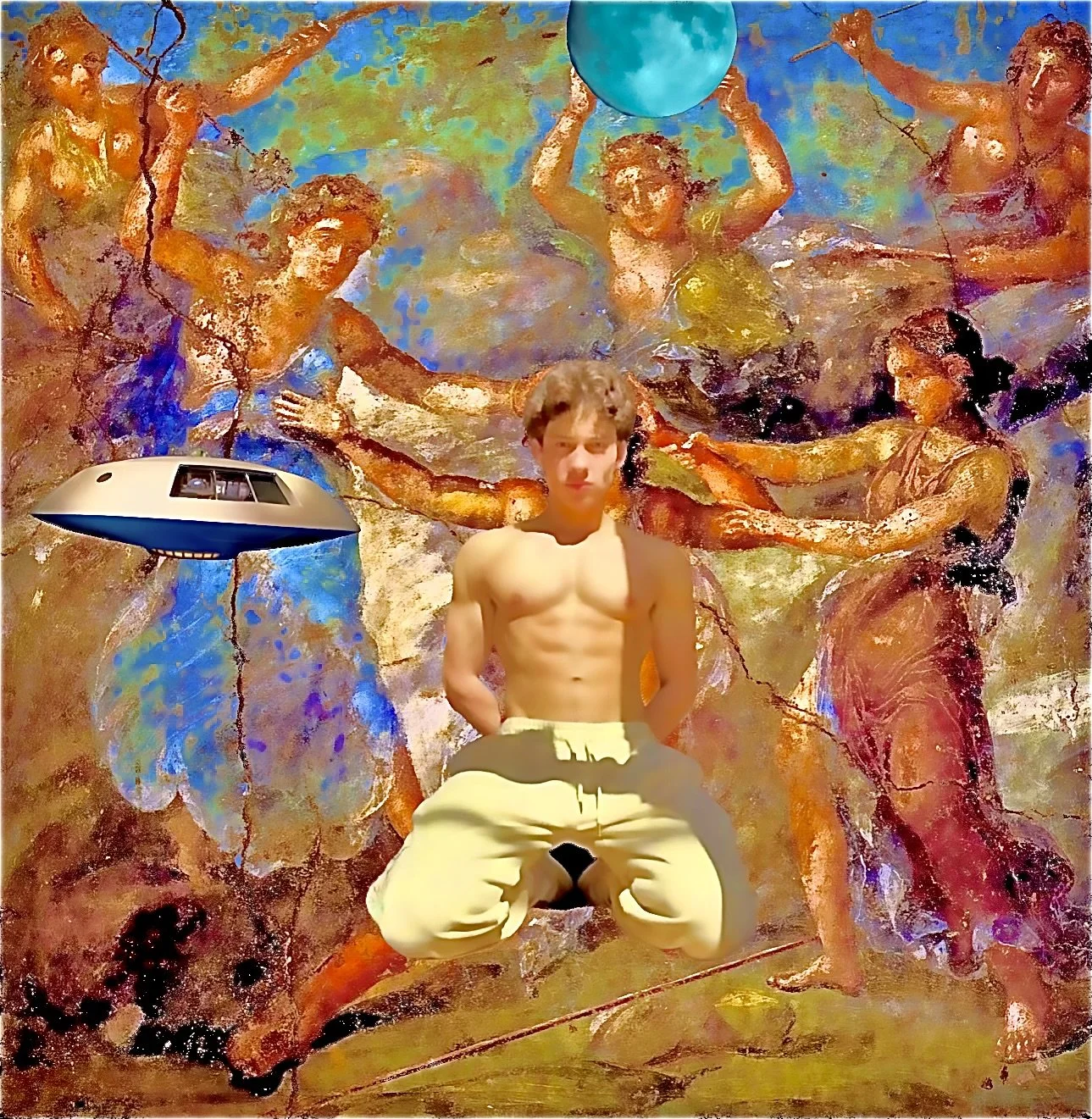
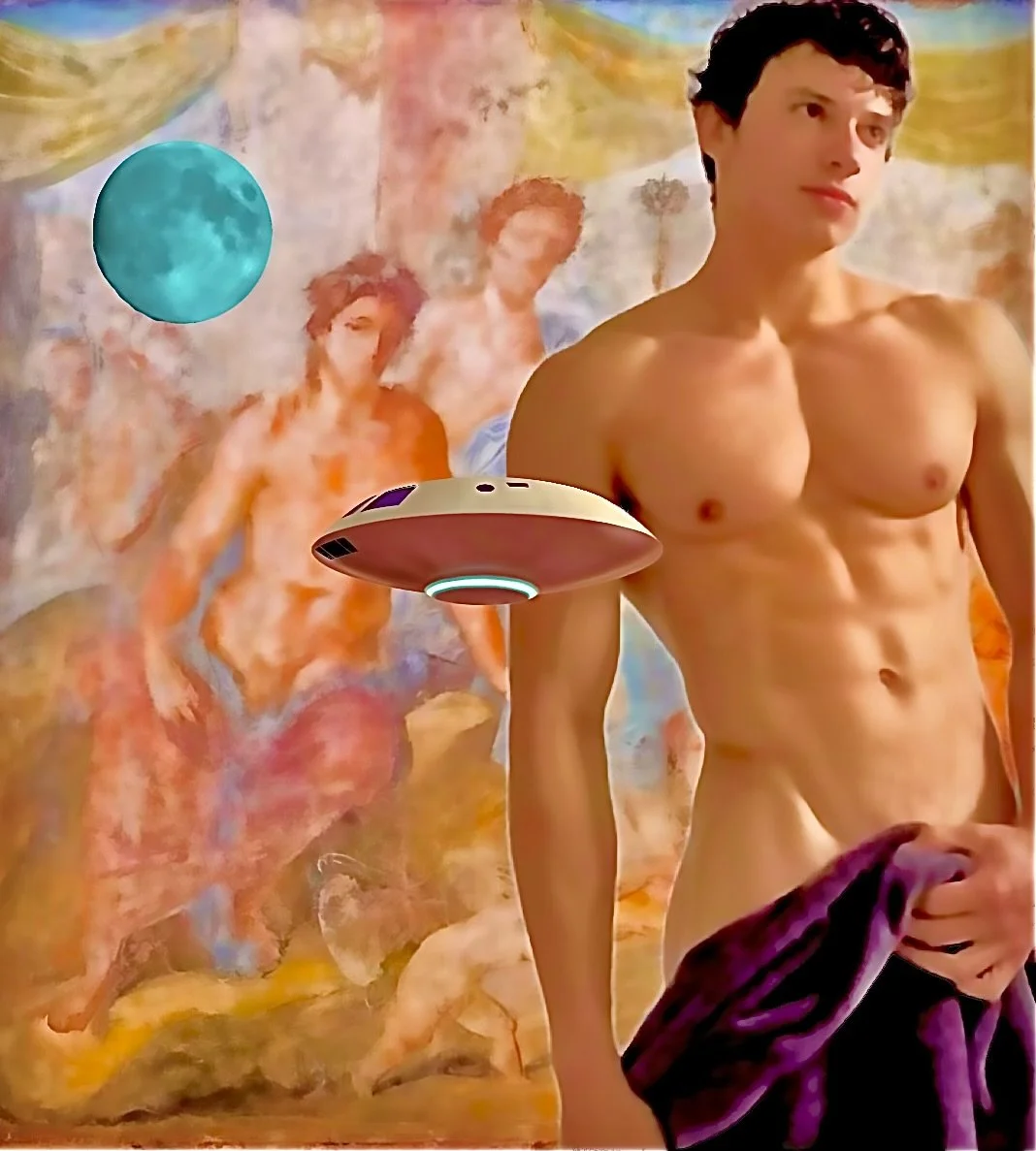
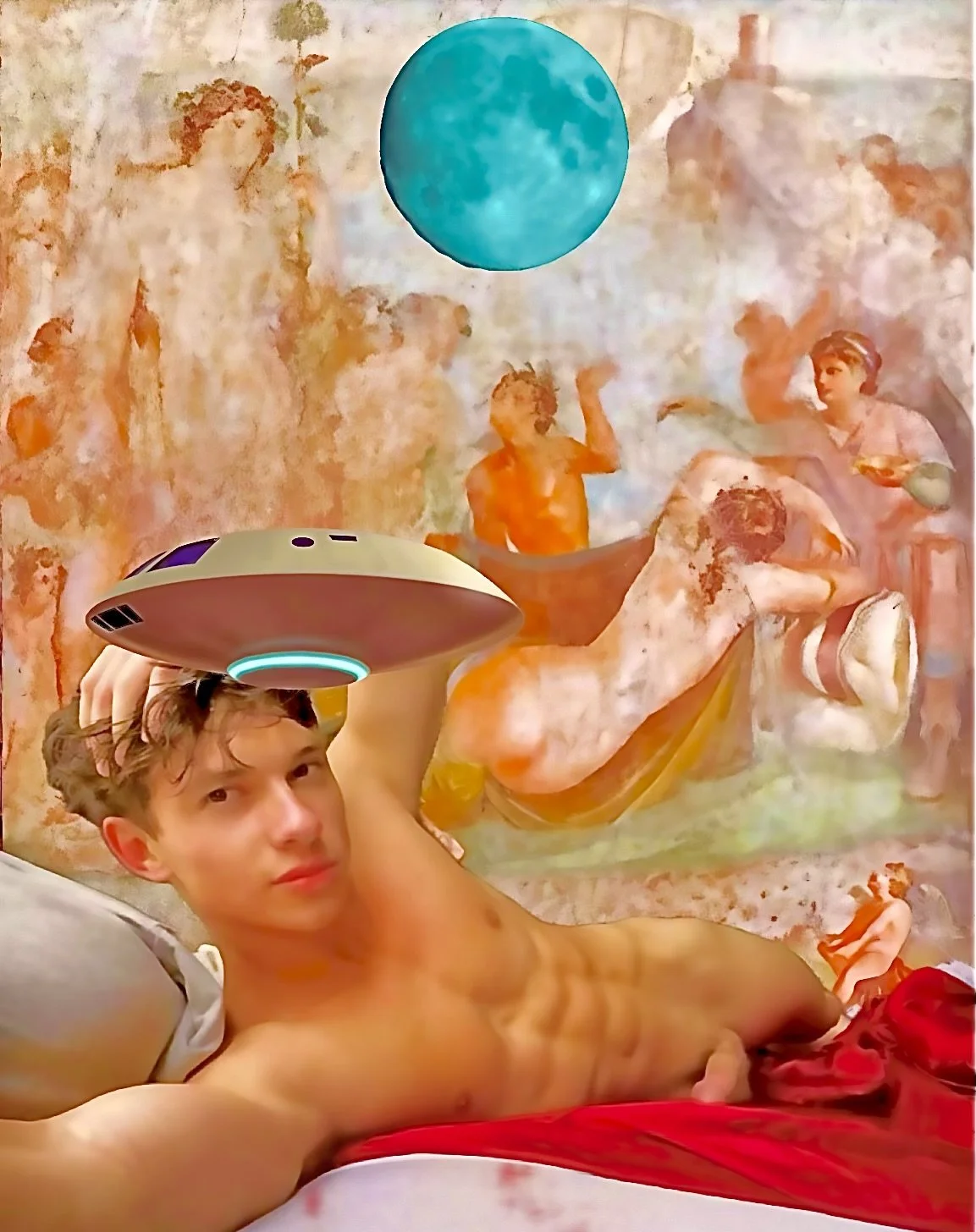
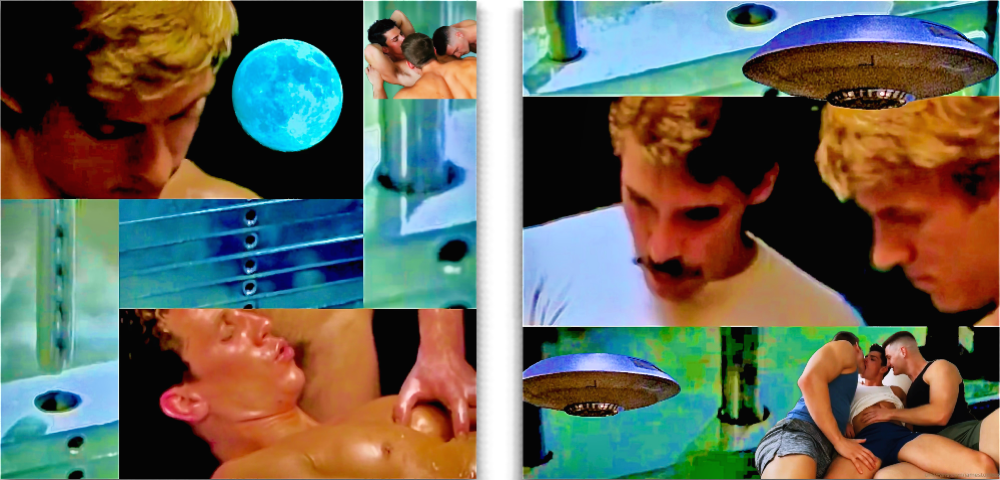
Against this, the private spaces are strikingly different in visual temperature. The bedroom triptychs and the intimate diptychs operate in cooler, quieter registers — blues and neutrals, softer light, figures at rest rather than in motion. The aquarian moon appears here, large and calm, presiding without judgment. Jupiter 3 hovers at the edge of the frame rather than cutting through it. The composition breathes. Where the public collages crowd the picture plane, the private ones allow space — between figures, between panels, between the viewer and the image.
This contrast is the formal argument of the series made visible. The chaos belonging to the public sphere and the calm belonging to the private sphere — gay men have always known this geography. These collages map it.
Repetition functions throughout as both rhythm and insistence. In the gas station work, a single figure multiplies across the surface — not quite wallpaper, not quite crowd, something between pattern and testimony. Repetition in visual art establishes comfort through familiarity. But when the repeated figure is one that dominant culture has historically criminalized or erased, the comfort curdles into something more complex. The eye settles into the pattern and then registers what the pattern is actually showing. That double response — ease and unease simultaneously — is exactly what the works are reaching for.
The diptych and triptych formats invoke the devotional tradition deliberately. These are secular altarpieces. The multi-panel structure asks for sustained attention, for the eye to move between panels and assemble meaning across the sequence.
The series questions and confirms simultaneously. It holds its contradictions in the same frame without resolving them — which is the most honest formal choice an American artwork can make right now. The bright colors celebrate. The broken edges mourn. Both are true. Both stay in the picture.
The American pie is still on the ledge, still a most precarious place to be. We are watching.