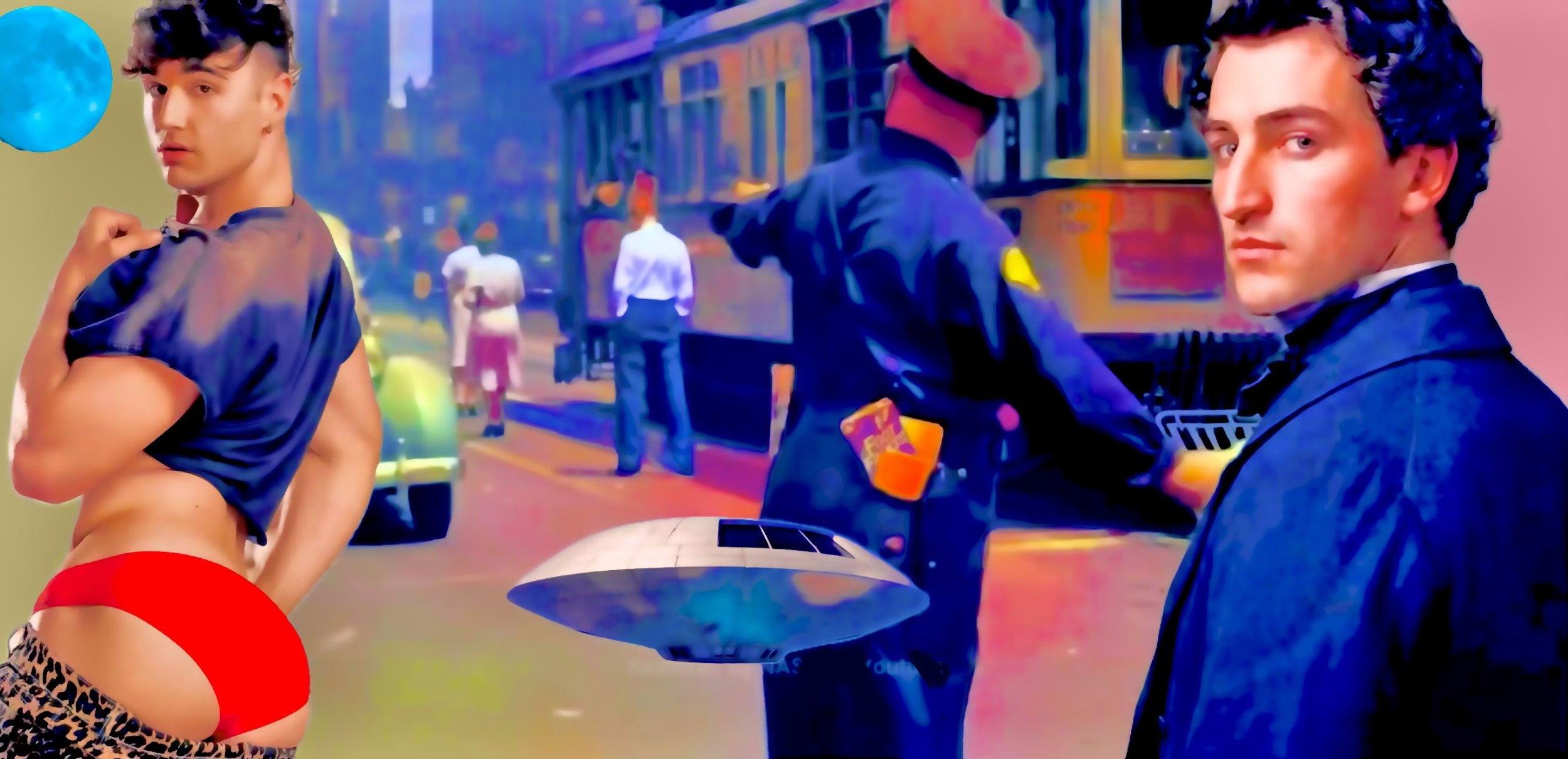
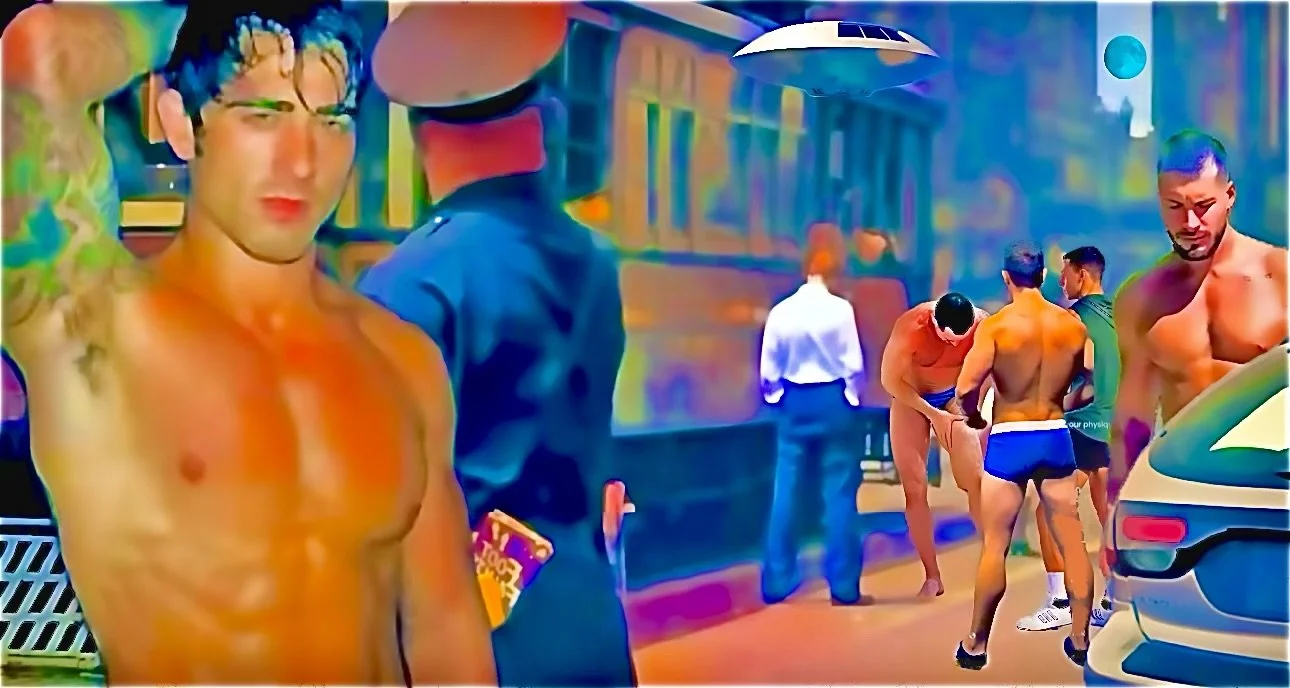
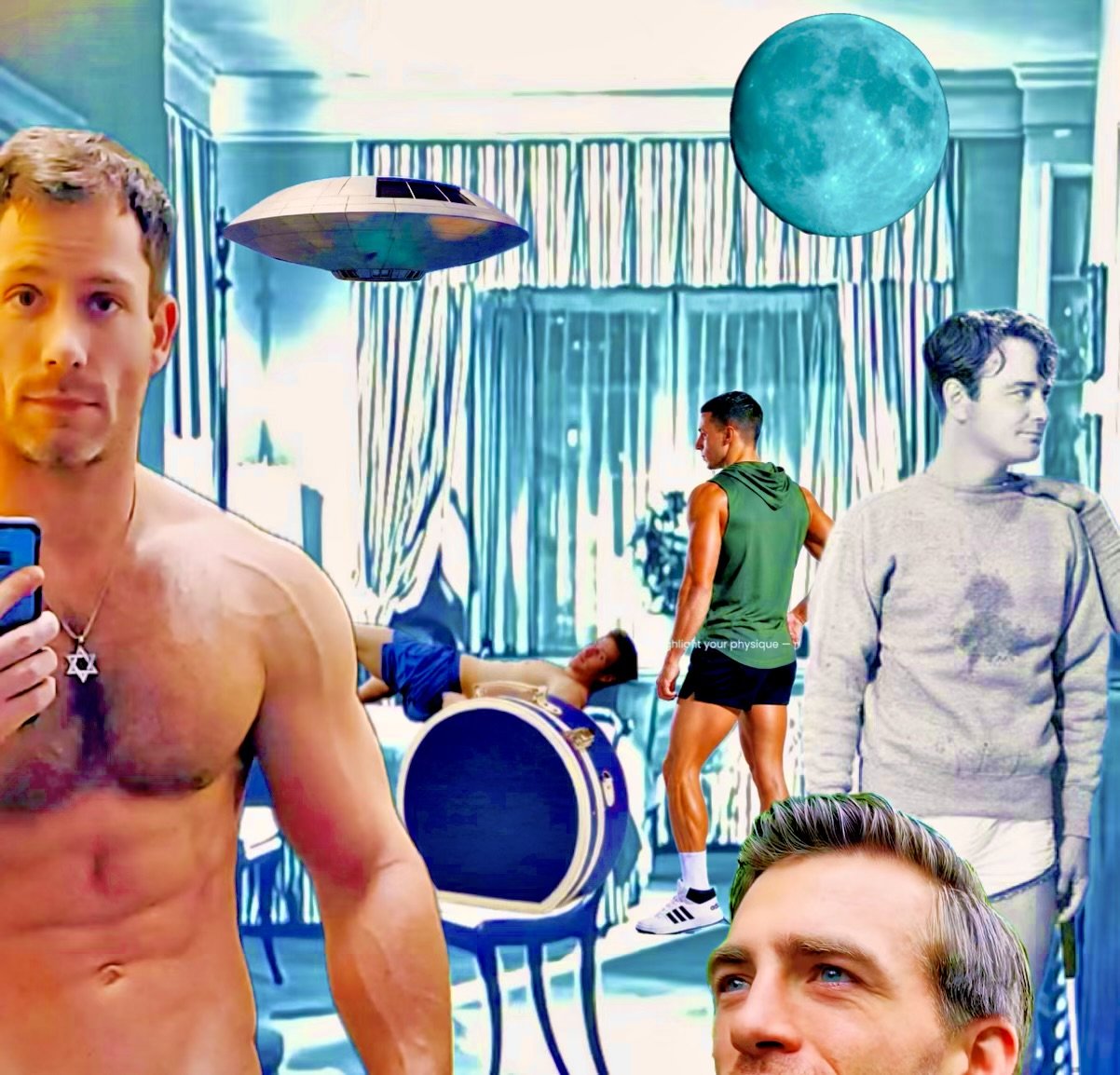
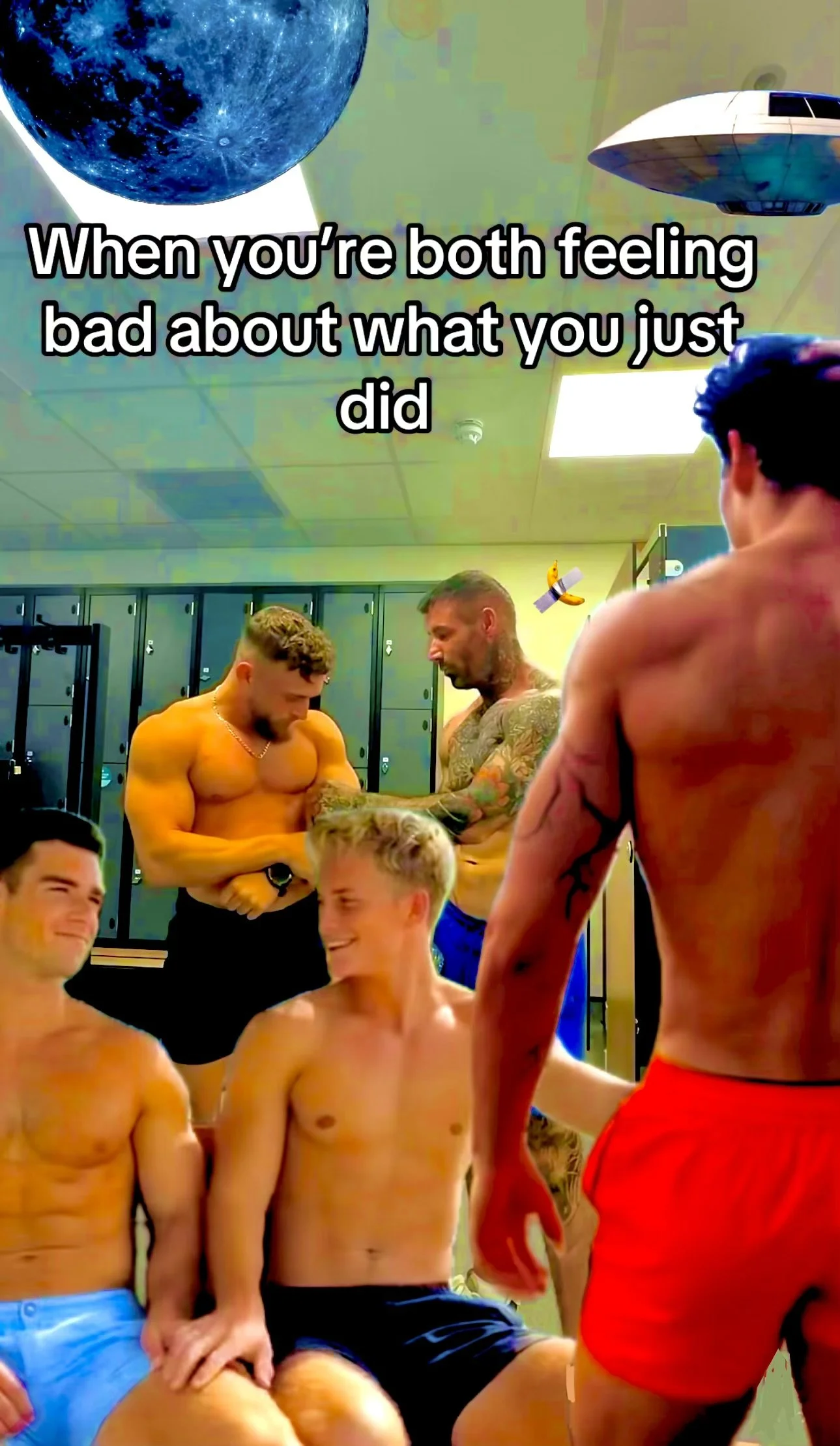
Closet Series Legend

The Closet Series Vocabulary: A Working Dictionary

Language is a living system. It grows when culture demands new tools for new realities. The terms collected here did not exist in the formal vocabulary before this work. They emerge from The Closet Series — a sustained examination of queer history, queer culture, and the forces that have shaped, suppressed, and exploited both. They are offered not as slang but as precision instruments: words that name what was previously imprecisely named, or deliberately left without a name.

Gayplay (ˈɡeɪ.pleɪ) n.

[From Middle English gay, meaning joyful, later adopted as a self-identifying term by homosexual communities in the 20th century; + Old French plai, from Latin placitum, meaning that which pleases, later evolving through theatrical usage to denote performance or pretense.]

1. The strategic performance of gay identity by straight men for commercial gain. 2. The use of gay culture as an advertising concept — a campaign constructed around the mystique of gay life, deployed for profit, and withdrawn once the commercial transaction is complete. 3. The system by which straight men enter and inhabit gay cultural space without bearing any of its social cost.

“The history of gayplay in American advertising is inseparable from the history of the closet.”

Playgay (pleɪ ɡeɪ) v.

[Verbal construction derived from gayplay; to perform the noun as action.]

1. To perform gay identity for commercial, artistic, or social gain while identifying as heterosexual. 2. To enter and inhabit gay cultural space temporarily and instrumentally, without authentic claim to that identity. 3. To adopt the signifiers of gay life — the pose, the club appearance, the character, the ambiguous statement — as an advertising strategy rather than an expression of self.

“When a straight man takes off his shirt in a gay club to increase record sales, he is not expressing solidarity. He is engaged in playgay.”

Popndrop (ˈpɒp.ən.drɒp) n.

[Coined 2026; from pop, to appear suddenly and with force, + n, contraction of and, + drop, to release or abandon without ceremony; modeled on commercial release terminology in which an artist drops a product into a market.]

1. The pattern by which straight men court gay audiences aggressively for commercial purposes, then withdraw once the transaction is complete. 2. The moment at which a straight man, having extracted the desired cultural or commercial capital from gay audiences, returns to the default safety of heterosexual identity — leaving no accountability, no acknowledgment, and no relationship behind. 3. By extension, any institutional or cultural act in which gay communities are cultivated as an audience or resource and then abandoned when no longer commercially useful.

“Having built a fanbase, sold the records, and shed the Disney image, he executed a clean popndrop and moved on.”

Spinetime (ˈspaɪn.taɪm) n.

[Coined 2026; from spine, the central structural axis that holds an organism upright and makes movement possible; + time, the medium through which experience unfolds and identity is formed.]

1. The understanding that time is the central structural axis of queer experience —always in present tense — that to be gay in 1964 is a fundamentally different life than to be gay in 1993 or 2014, and that these differences are not incidental but definitive. 2. The lived awareness, particular to marginalized communities, that freedom arrives unevenly across generations — that those born earlier bore costs that later generations did not, and that the progress between generations is neither guaranteed nor irreversible. 3. The use of chronology as the spine of queer cultural analysis: the recognition that where you fall on the timeline determines, in large part, what your life is permitted to be.

“The distance between September 17, 1964 and November 5, 2014 is not merely fifty years. In spinetime, it is the distance between a witch who must hide and a pop star who profits from the hiding of others.”

— Behan
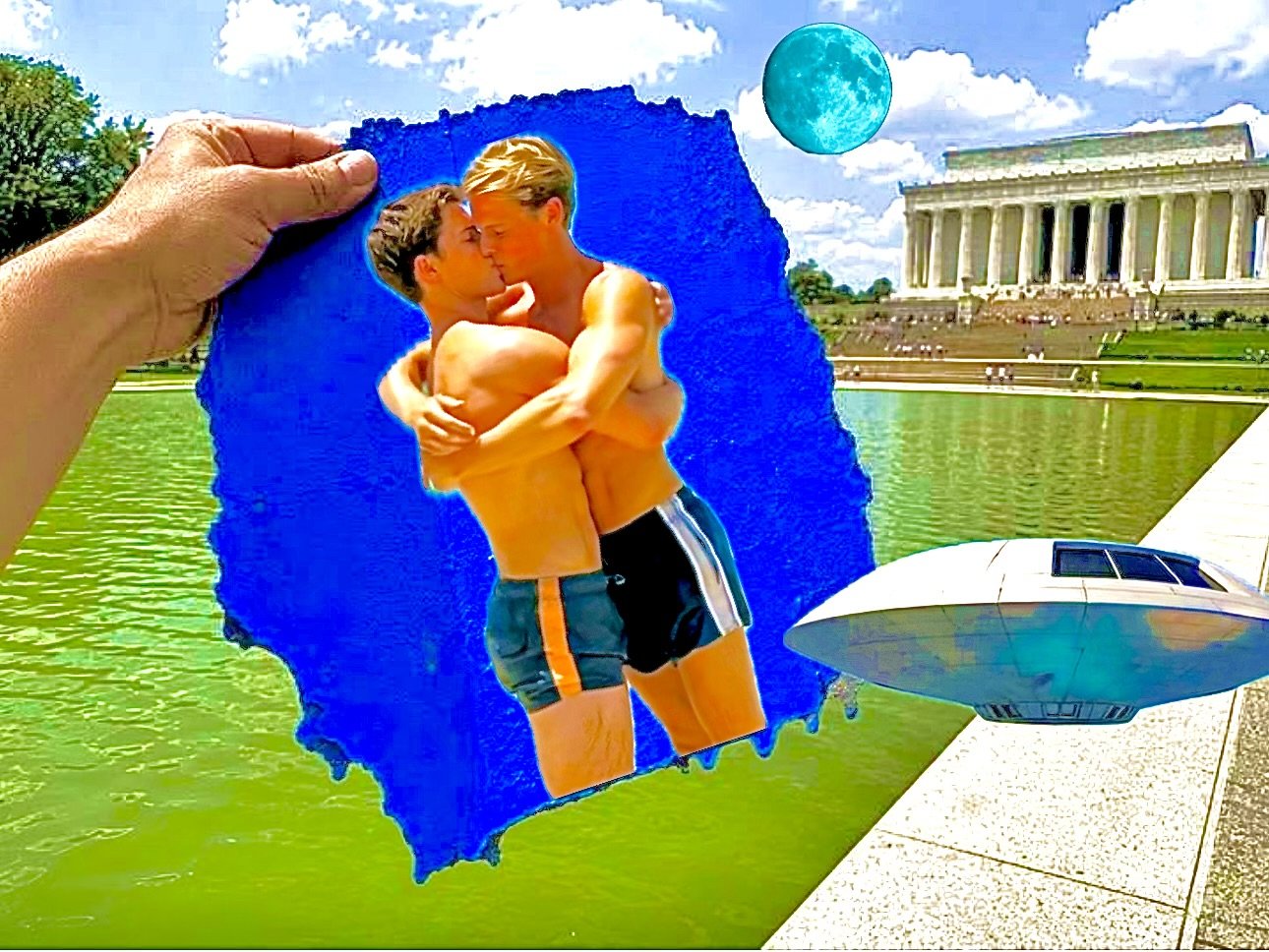
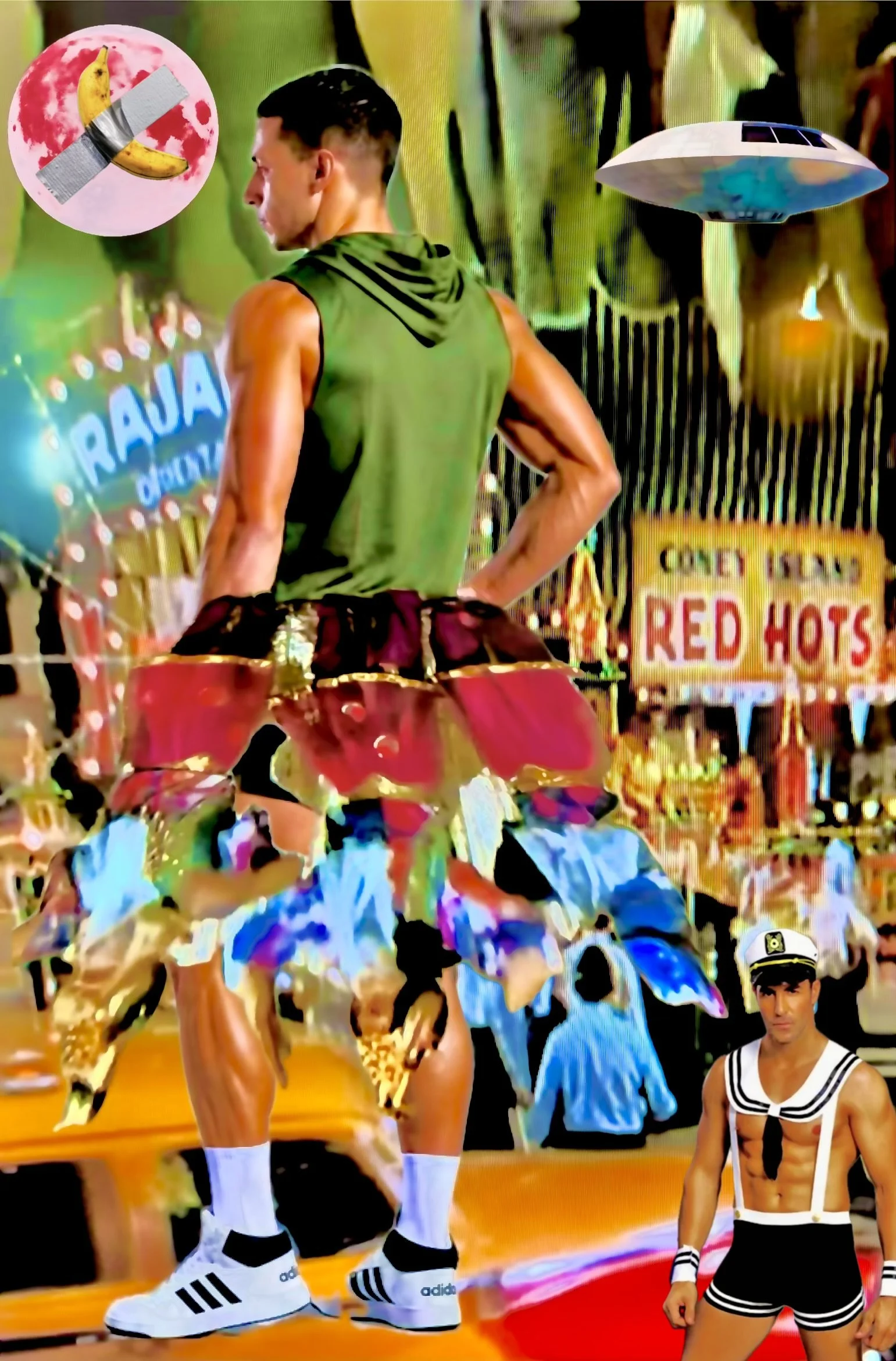
Wild Side Walk

Digital Photocollage | 2026 | The Closet Series — Behan
On the Nature of Gay Men Having Sex

The word symposium comes to us from the Greek: sympinein, to drink together. In Athens, the symposium was the occasion for music, for spoken poetry, for philosophical inquiry conducted among men who desired one another and did not find this remarkable. Plato set his great investigation of Eros there — not in a court, not in a temple, but at a dinner party, among bodies, among wine, among men who understood that desire and thought were not opposites.

We have forgotten this. Or rather, some have chosen to forget it.

A persistent canard in straight culture is that gay sexuality exists in abstraction — acknowledged in theory, invisible in fact. Some straight people will concede that gay men love one another. Far fewer can hold in their minds what that love looks like in physical form.

This is not a failure of imagination.

It is the error of a culture so conditioned by its own norm that variation of any kind is literally inconceivable — not wrong, simply unthinkable— self-willed blindness.

Plato’s Symposium confirmed that gay men are real, and they do have sex — their desire, their bodies, their Eros — as simply evident. Religious institutions spent centuries dismantling that confirmation, that awareness of presence, replacing it with prohibition and reducing visibility to blindness. Gay men exist. Gay men have sex. All is well with the world.

Resources

Plato. Symposium. Translated by Alexander Nehamas and Paul Woodruff. Hackett Publishing, 1989.

Quartet

Rock Quartet | A Suite of Four Triptychs | The Closet Series — Behan

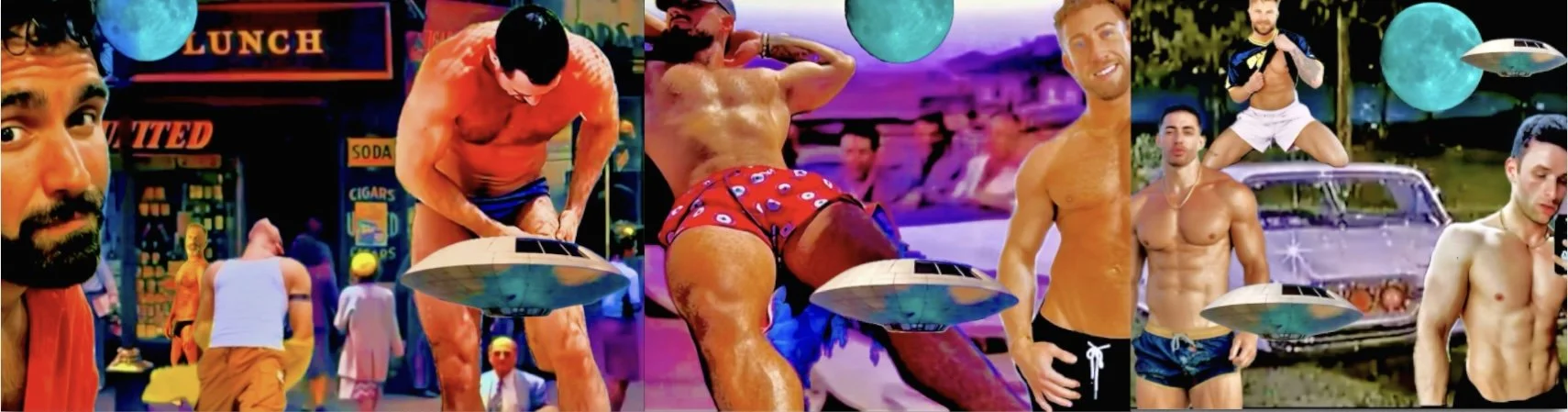
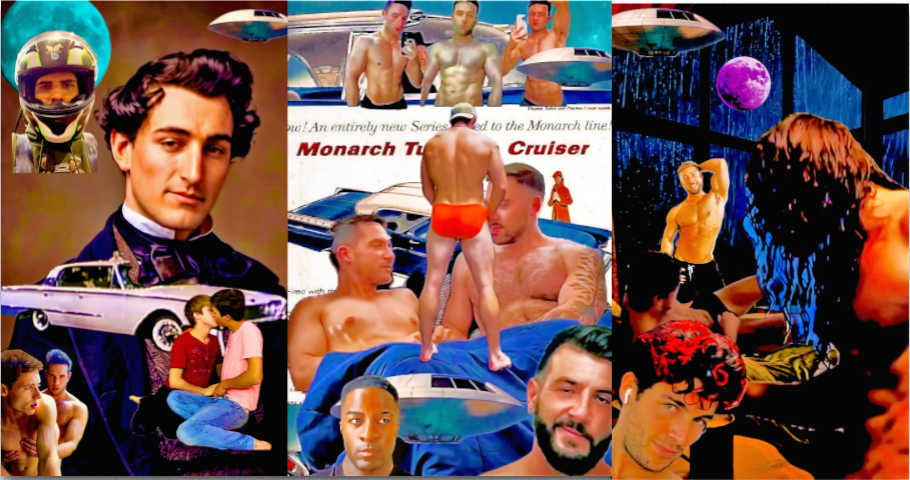
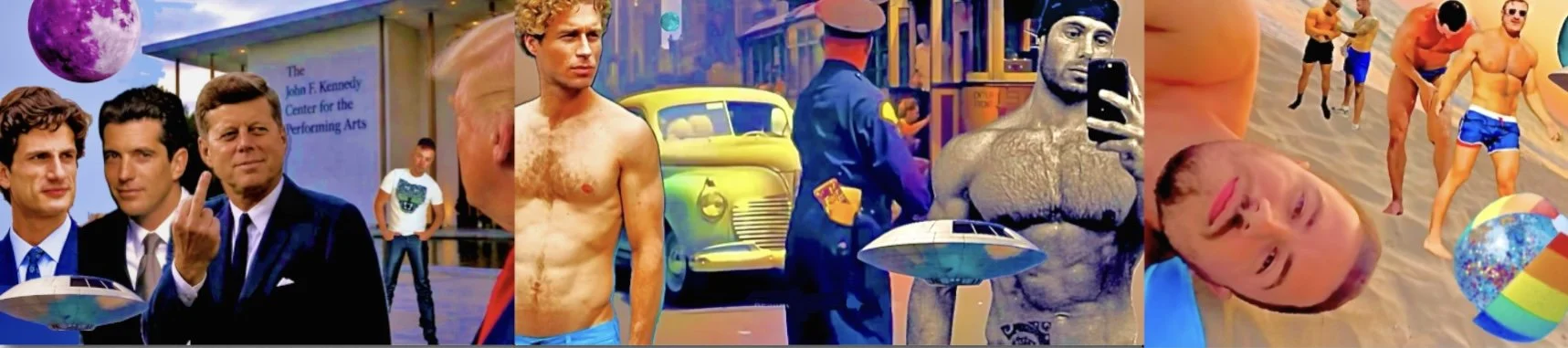
A quartet of triptychs looking at the state of men — gay, bi, and straight — across contemporary and historical culture. Like a rock band, each collage has a different role, a different register, a different job to do.

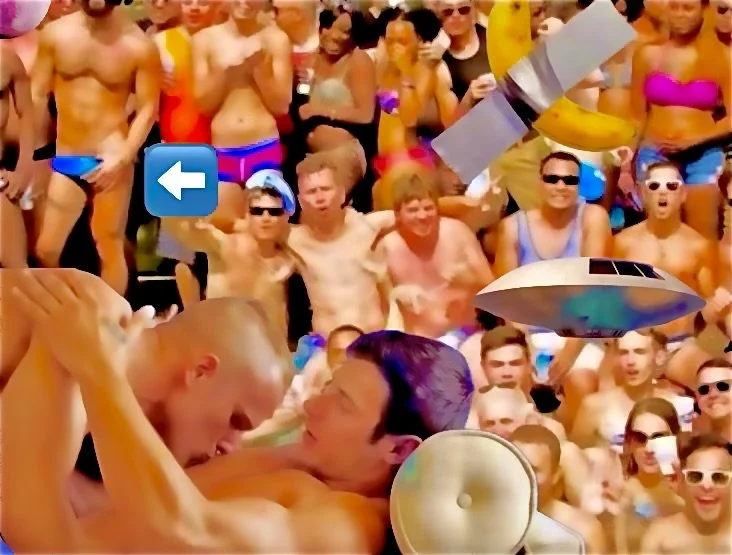
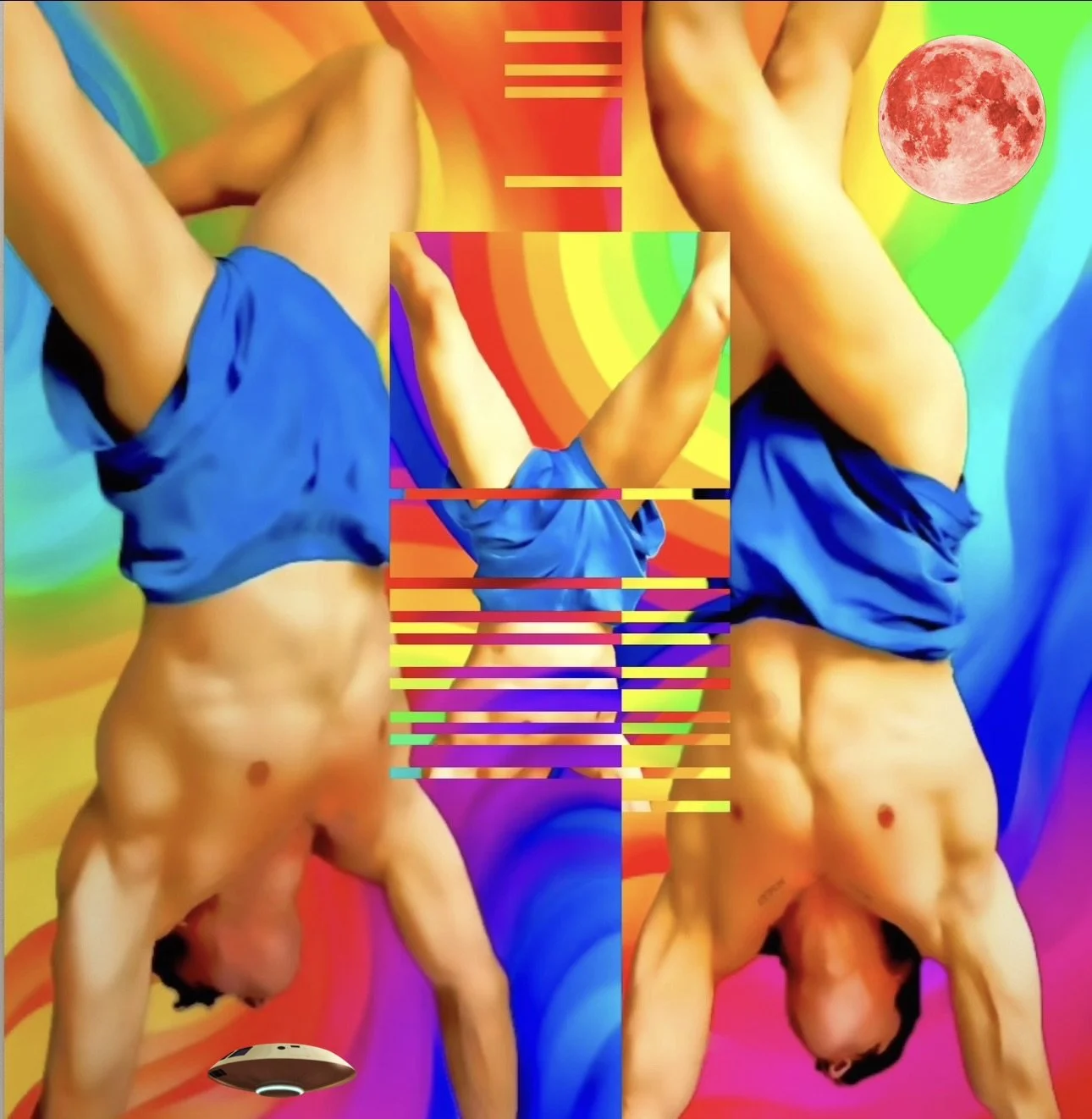
Vocals — Collage One. The front man. Immediate, physical, direct. The center figure is open-mouthed, water on his skin, looking straight into the camera. No distance. Pure presence. The vocals carry the melody and this one carries the eye.

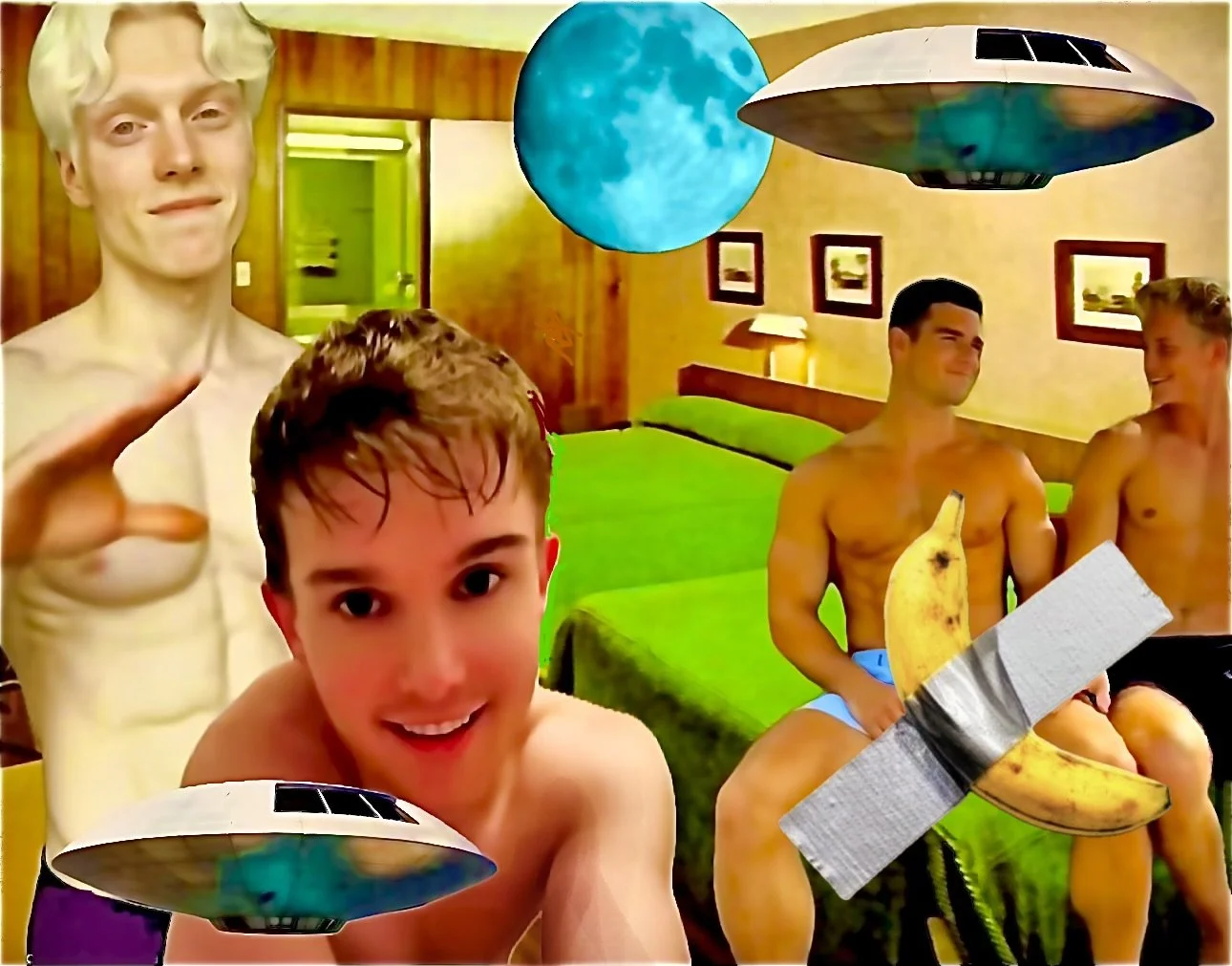
Bass Guitar — Collage Two. The pulse of the street. Muscle, movement, Jupiter 3 hovering like a persistent frequency underneath everything. The bass holds the whole thing together without showing off.

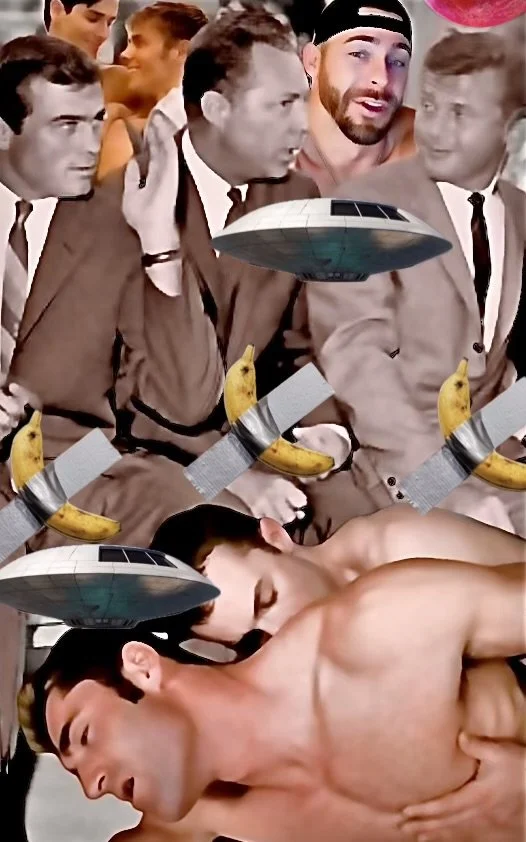
Electric Guitar — Collage Three. The lead. Melodic, unpredictable, moving between centuries. The historical portrait, the Monarch Cruiser, the blue rain. The most compositionally adventurous of the four.

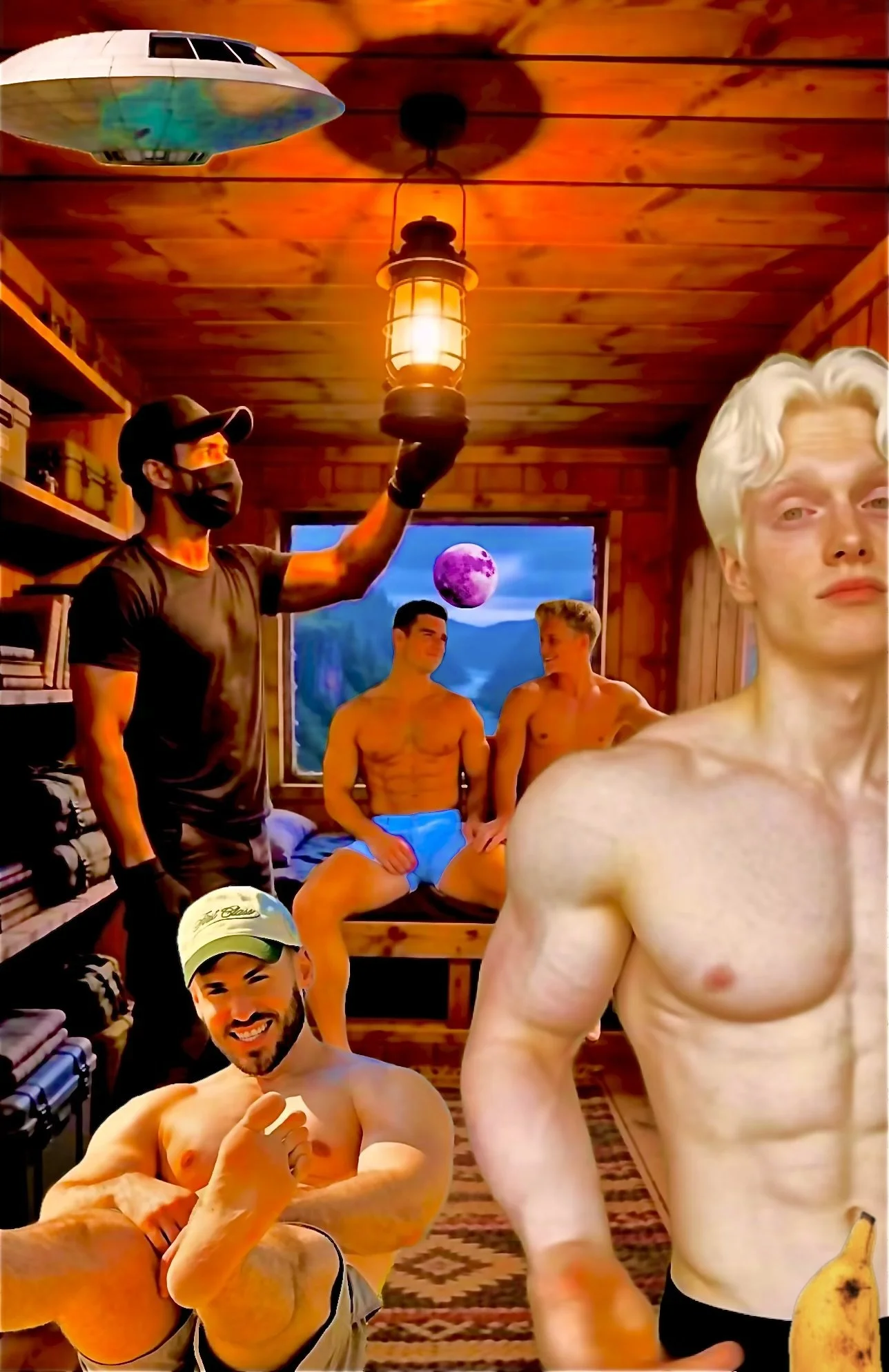
Drums — Collage Four. The Kennedys. Each generation advancing. Their nemesis retreating stage right. Percussion. Impact. The gesture saying everything.

Four collages. Four roles. One suite. One sound. The state of men, then, now and forever.

#TheClosetSeries #RockQuartet #DigitalCollage #Triptych #GayArt #ContemporaryArt #Behan #QueerArt #MenInArt #Collage

On Goya and the Blue Discharge

The Man Left Behind — San Francisco

The Man Left Behind — New York City

Digital Photo collages | 2026 | James Behan

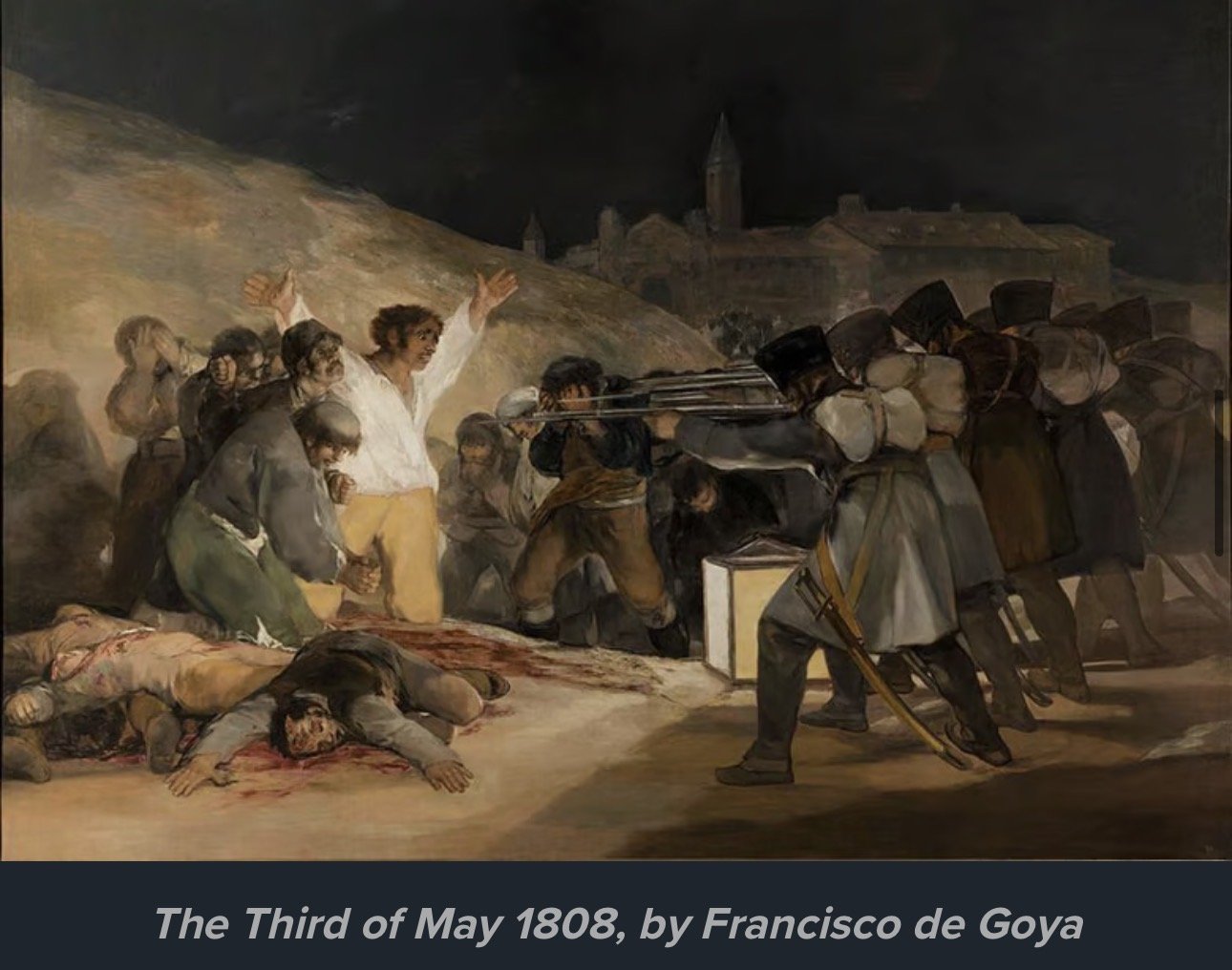
Francisco de Goya’s The Third of May 1808 is built around a man standing at the center of the composition, arms raised, in a white shirt, facing the firing squad. The white shirt draws the eye. Goya understood that the state’s power to render a verdict on a single human being — to decide what a person is and what they deserve — is one of the oldest forces in human history.

The Man Left Behind — San Francisco and The Man Left Behind — New York City are inspired by that compositional logic. At the center of each, a male figure in a white shirt draws the eye. His back is to us. Like Goya, Behan’s focus is the devastating injustice of what happened to that man.

During and after World War II, the United States military discharged gay servicemen using what was called a blue discharge. It was neither honorable nor dishonorable. It was designed to occupy a space where no rights applied. There was rarely evidence. There was no appeal.

What it cost him was everything. The blue discharge disqualified him from the GI Bill — no tuition, no vocational training, no home loan. Whatever skill the military had been teaching him was gone. He had been fired from his job and expelled from his school in a single document. Because discharge records were public, civilian employers could see it. Most wouldn’t hire him.

He was dropped at the port cities — San Francisco. New York. Far from home, without income, without his unit, without the men he had served beside, slept near, and in some cases loved. Set down in a city he may never have visited and told, in effect, to disappear.

These two collages are about that moment. Not what came after. Just that moment.

The man in white in Behan’s collages represents all the men who were unjustly discharged through the blue discharge system. We remember them — if not their names.

Sources

• National Park Service: Blue and Other Than Honorable Discharges — nps.gov

• The National WWII Museum: The GI Bill and Planning for the Postwar — nationalww2museum.org

• George Mason University Veterans Legal Clinic: The Blue Ticket Discharge — mvets.law.gmu.edu

• Francisco de Goya, The Third of May 1808, Museo del Prado, Madrid, 1814

Facebook hashtags:

#TheClosetSeries #BlueDischarge #WorldWarII #GayHistory #QueerHistory #Goya #ThirdOfMay #LGBTHistory #DigitalCollage #Behan
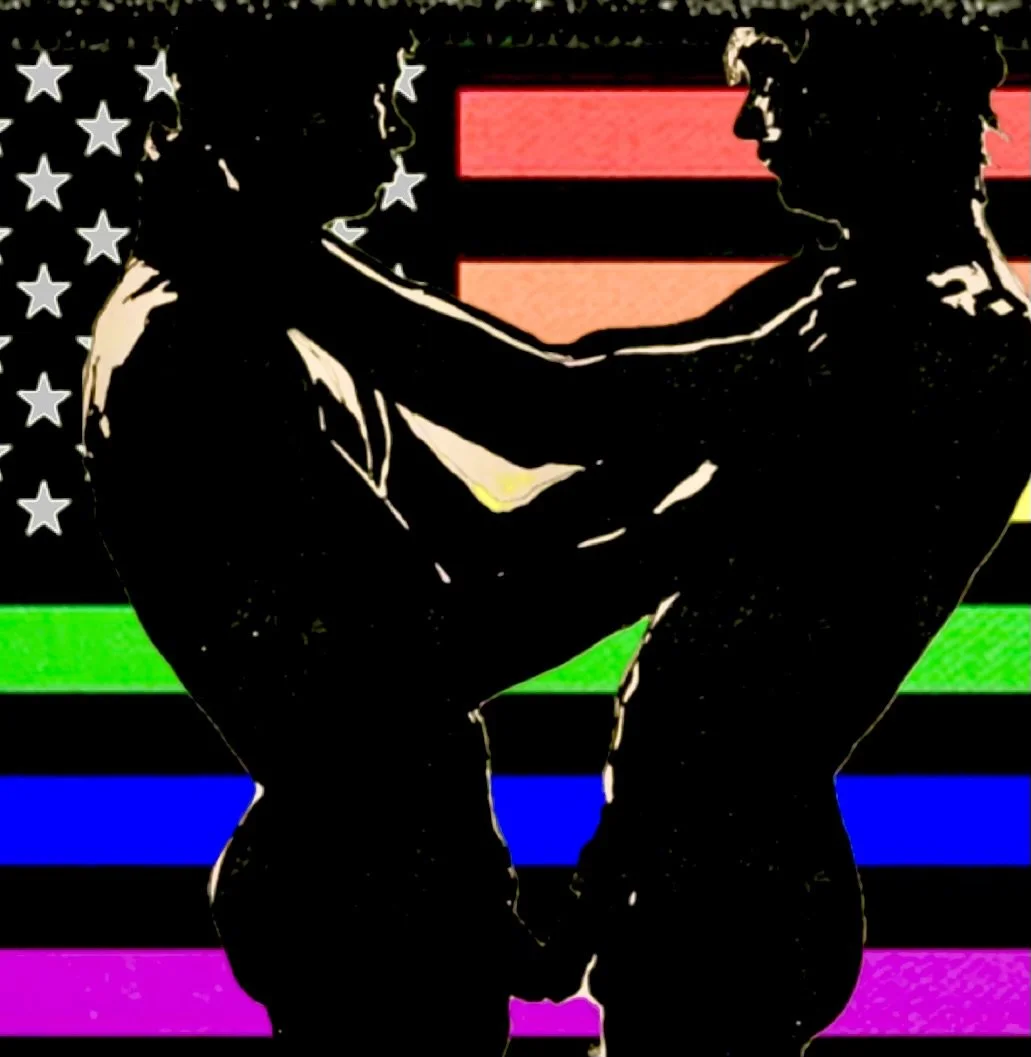
Gay Daze

Hydra | Digital Photocollage | 2026

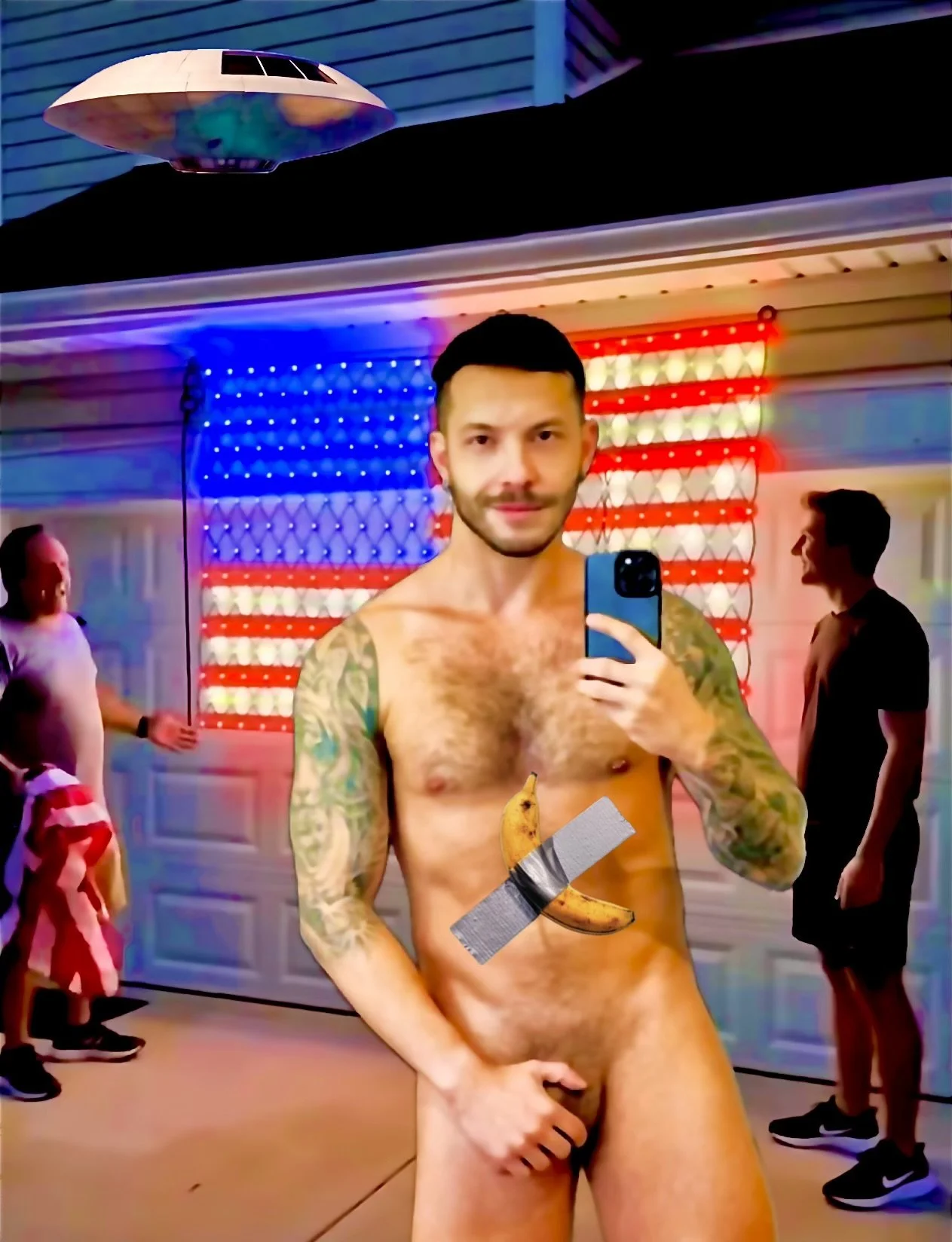
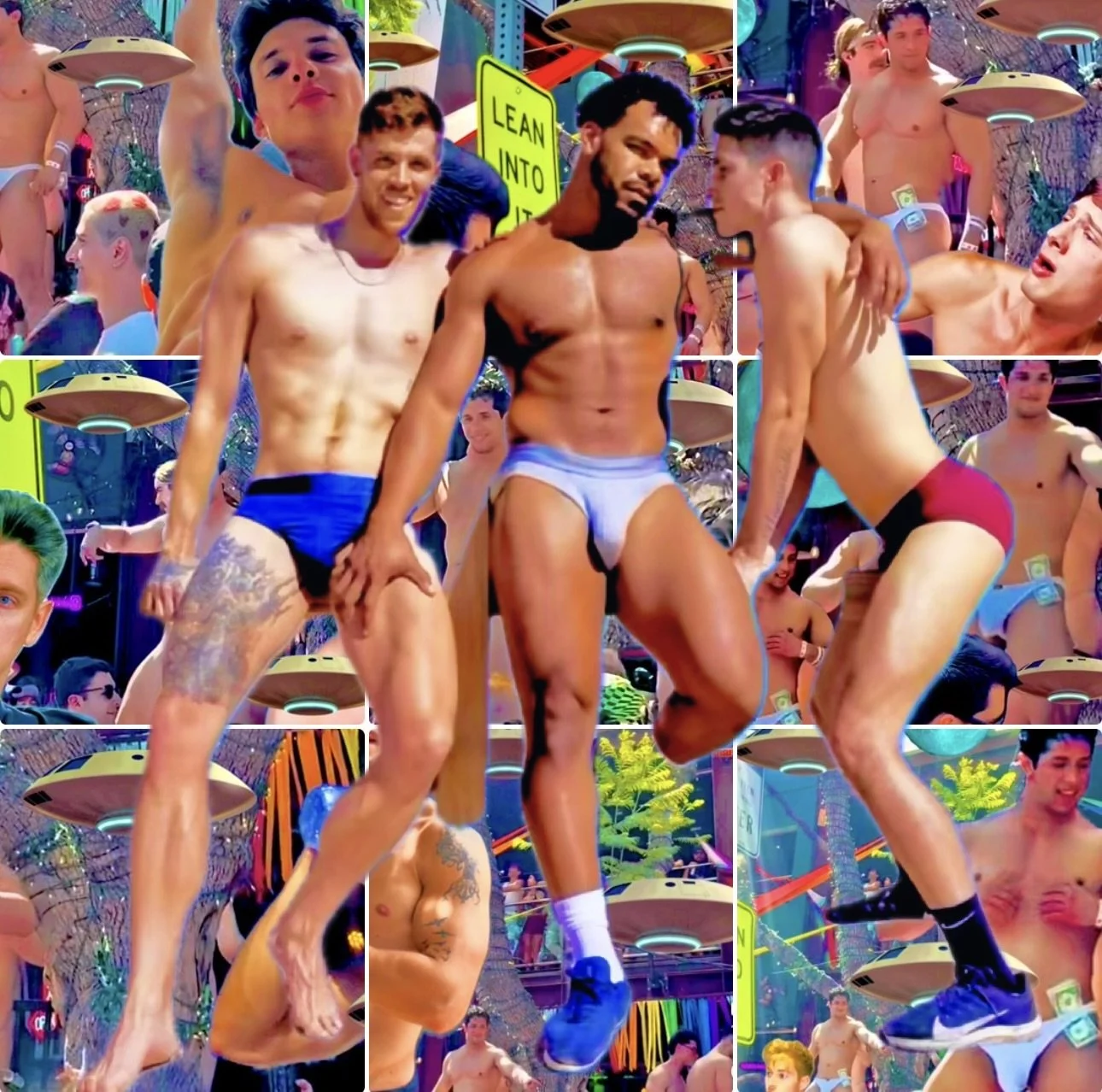
The backdrop of this collage is UFC Freedom 250 — held on the South Lawn of the White House, June 14, 2026. Before the fights even started, members of the audience were brawling on the grounds of the Ellipse.

The crowd cheered.

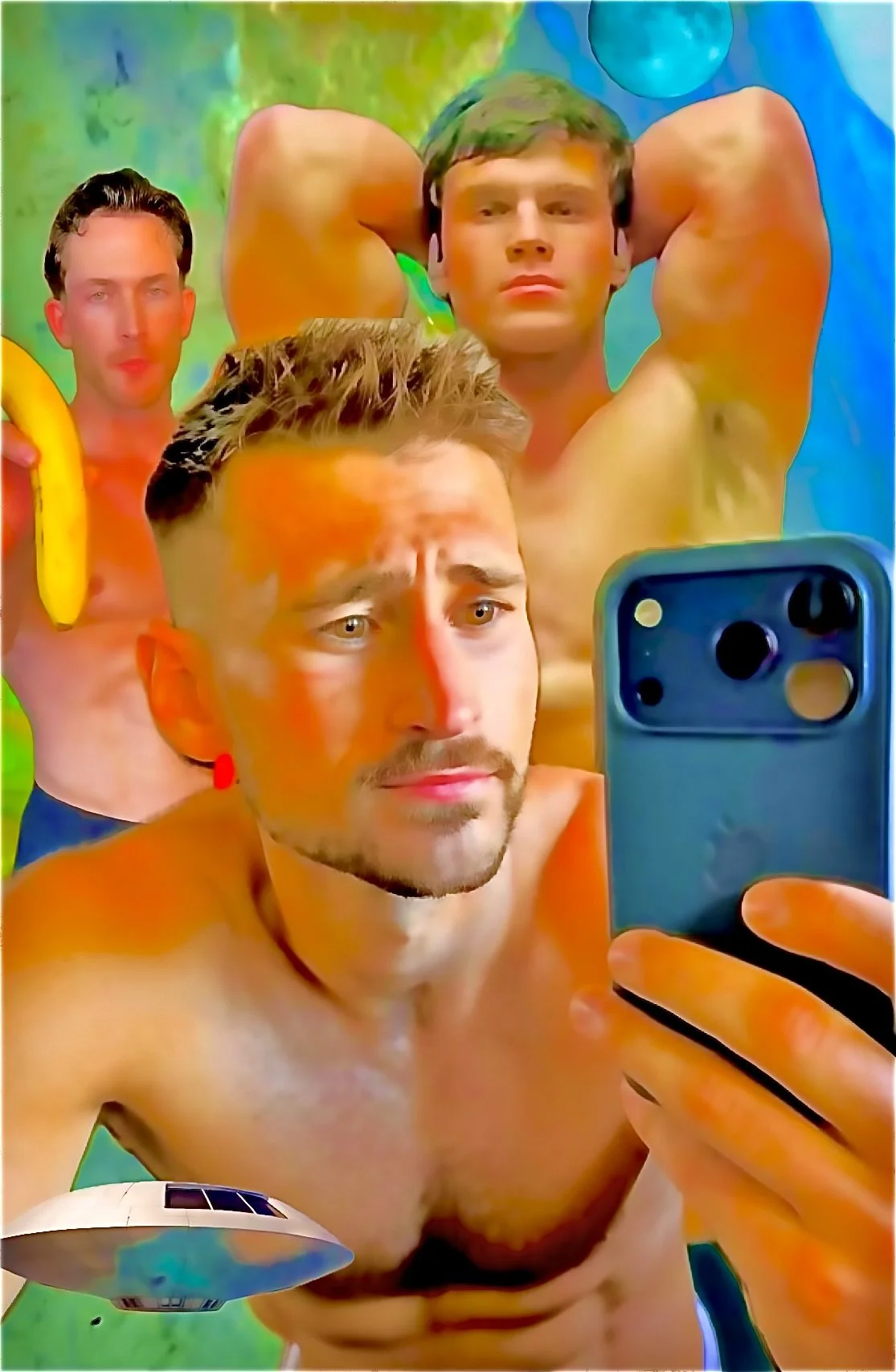
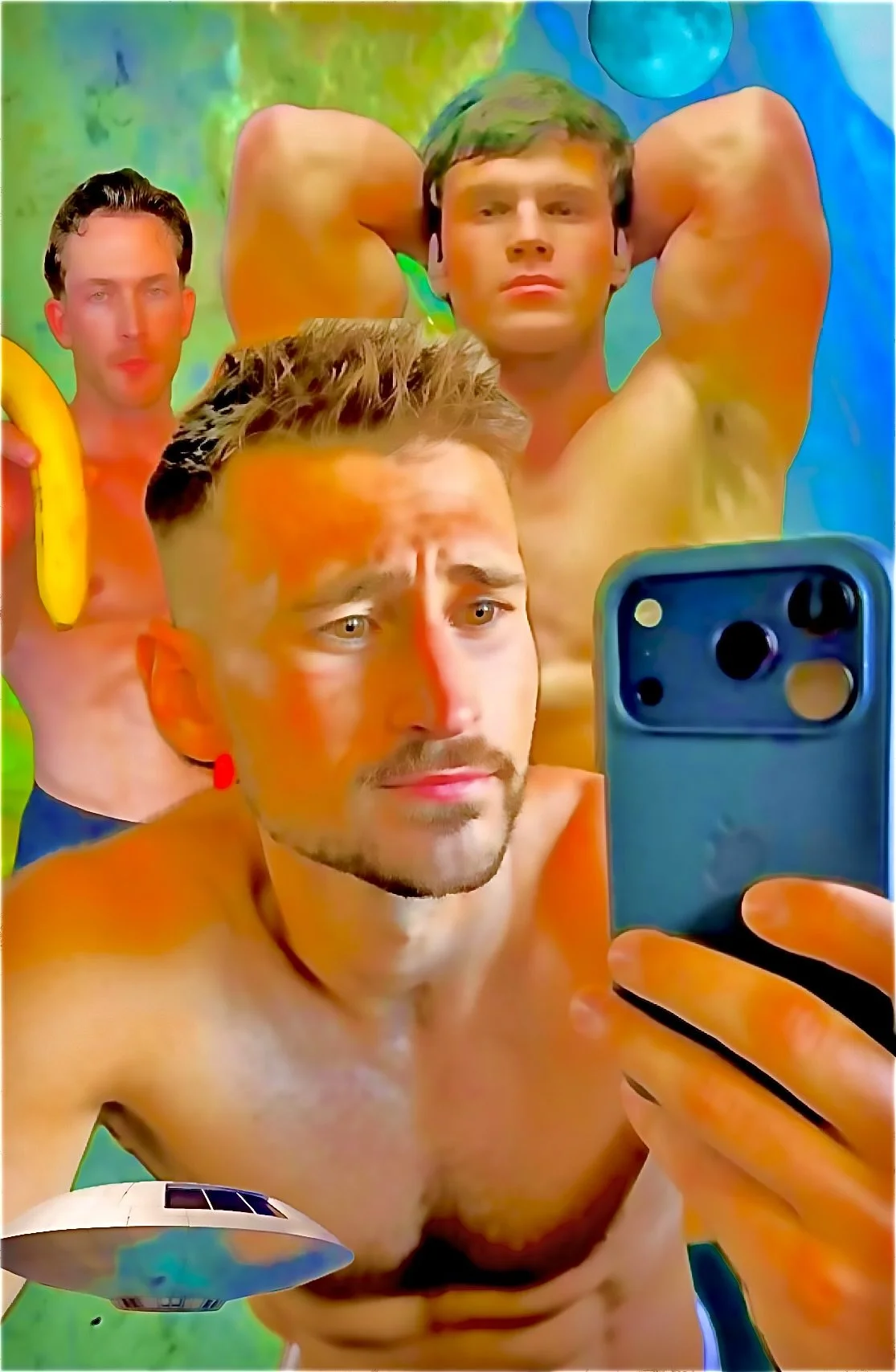
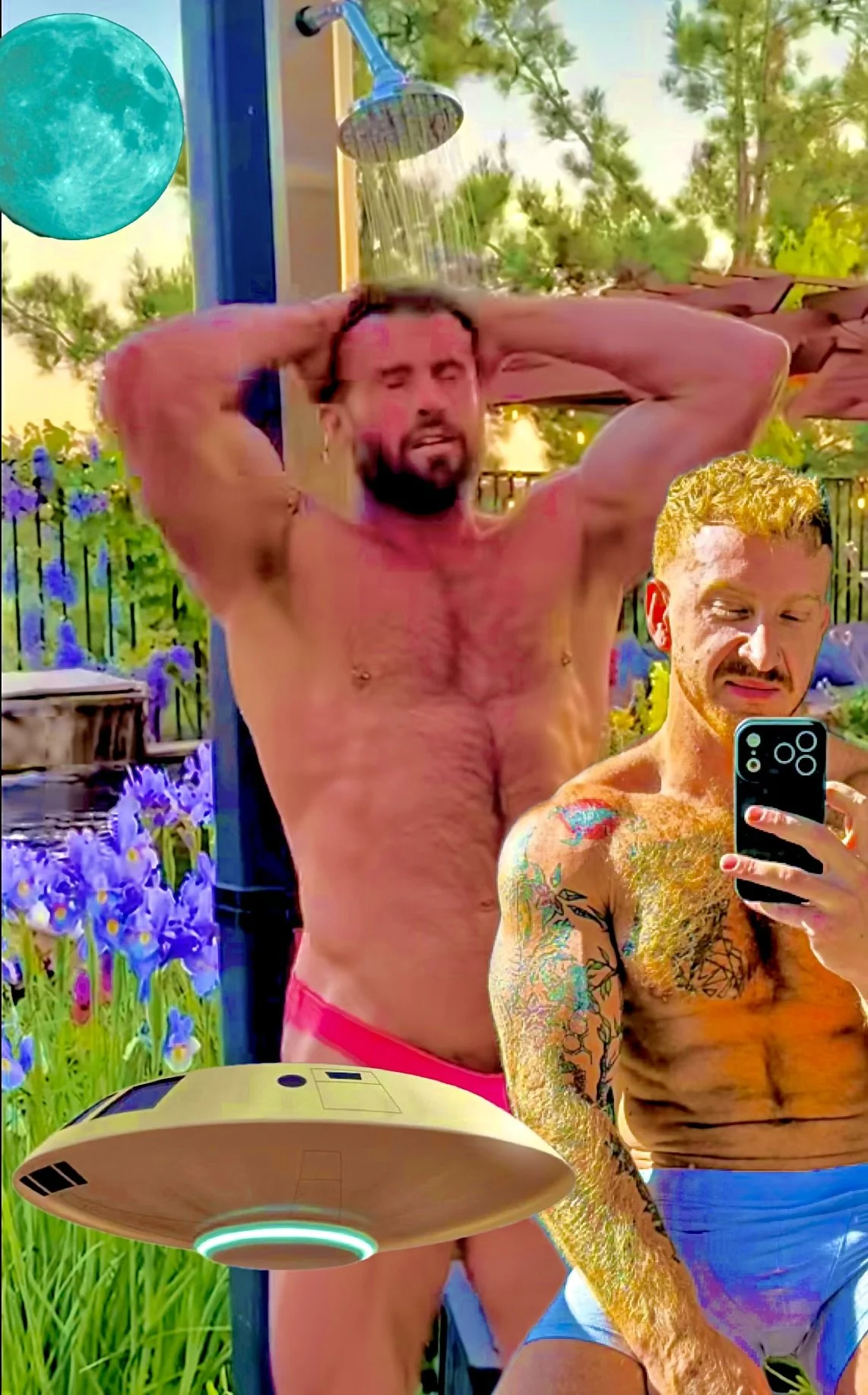
Superimposed on that backdrop are three self-identified heterosexual men: one playing a gay character in a prestige Broadway production, one a bare knuckle fighting world champion with a gay for pay past in the adult film industry, and one who courted the queer community aggressively to sell records then retreated behind the disclaimer of straight allyship.

Three heads of the Hydra. One collage. One White House lawn.

The Aquarian moon is present. Jupiter 3 is overhead. The blue moon witnesses.

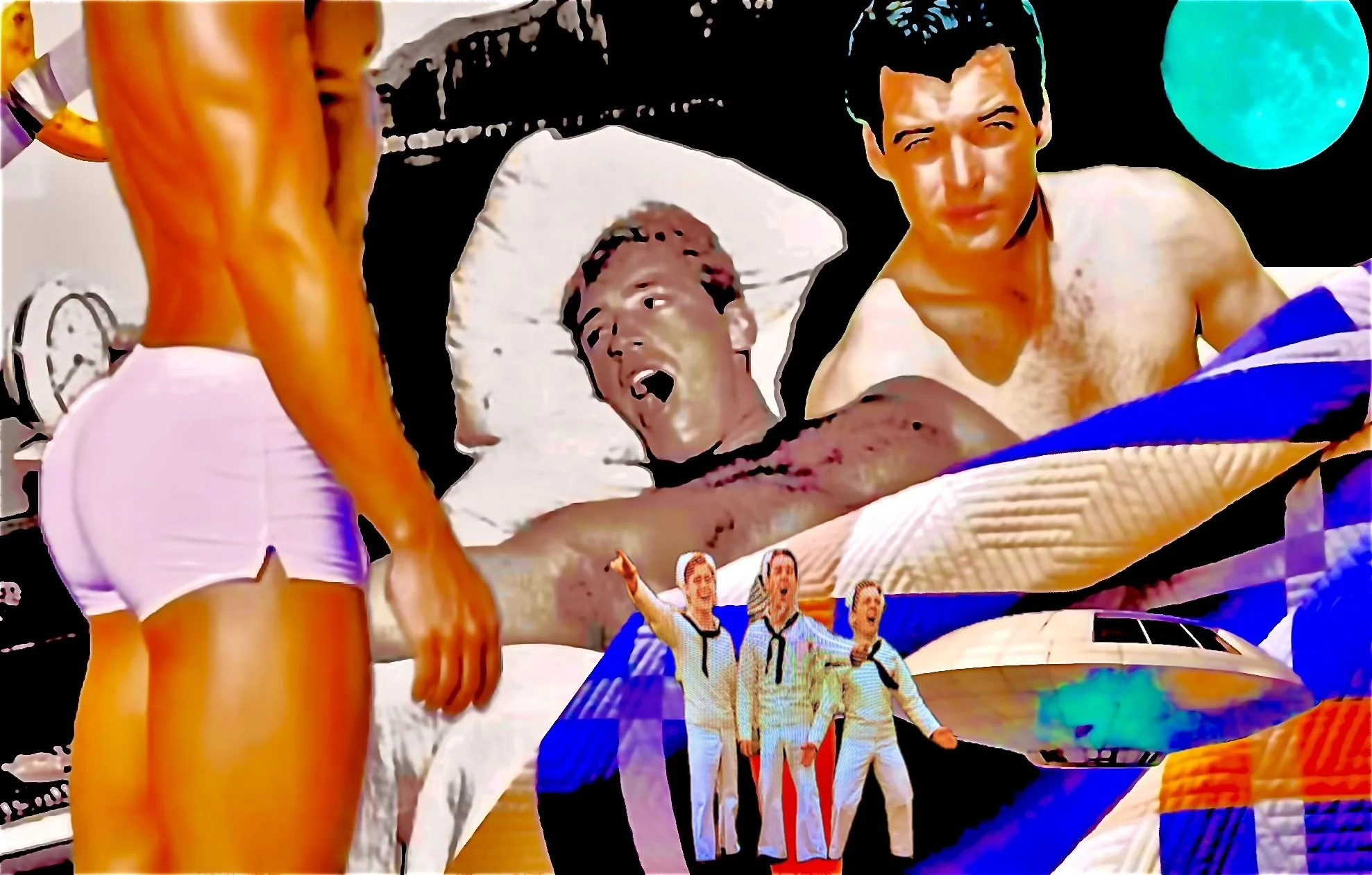
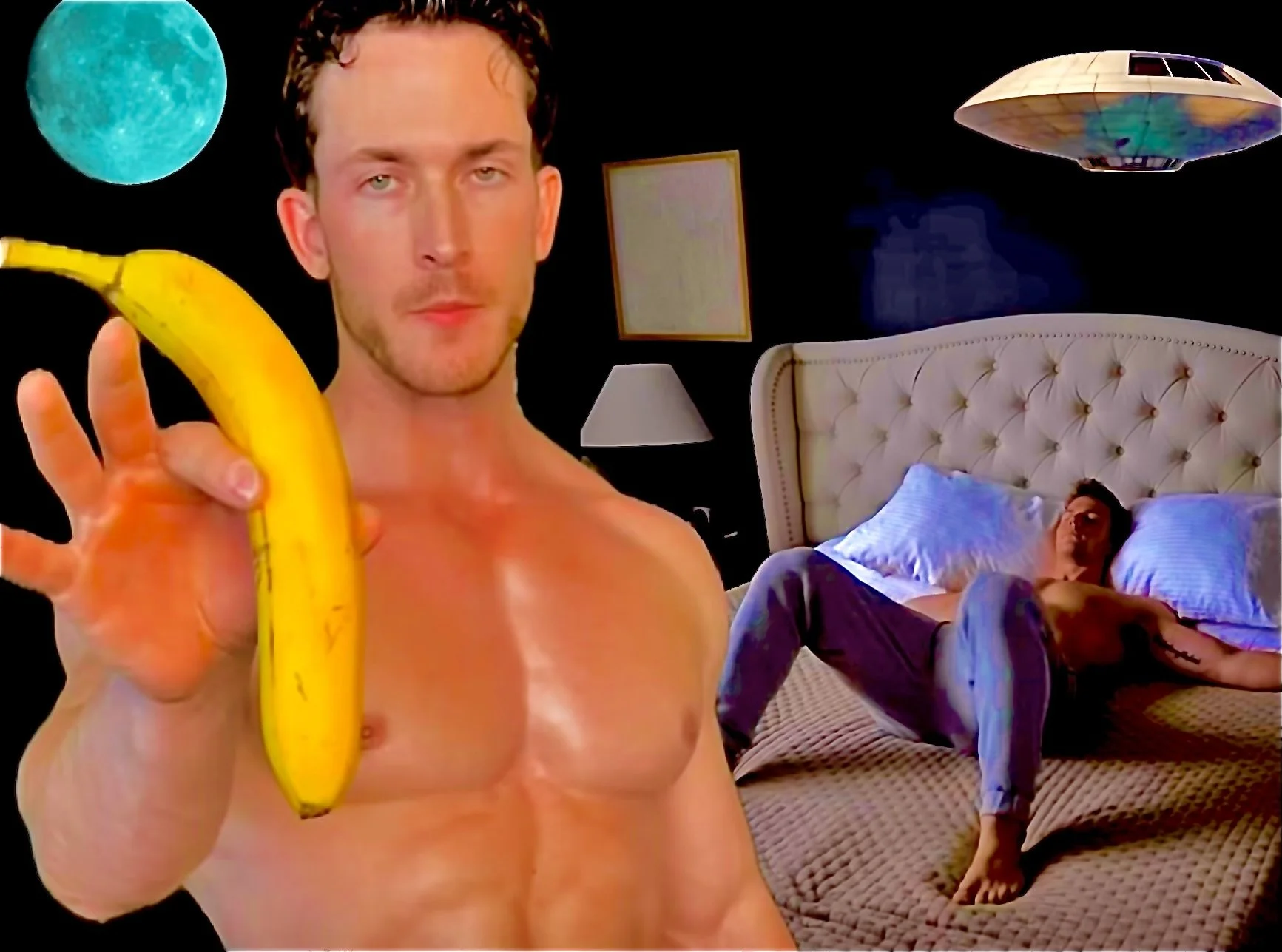
Adam’s Rib Revisited

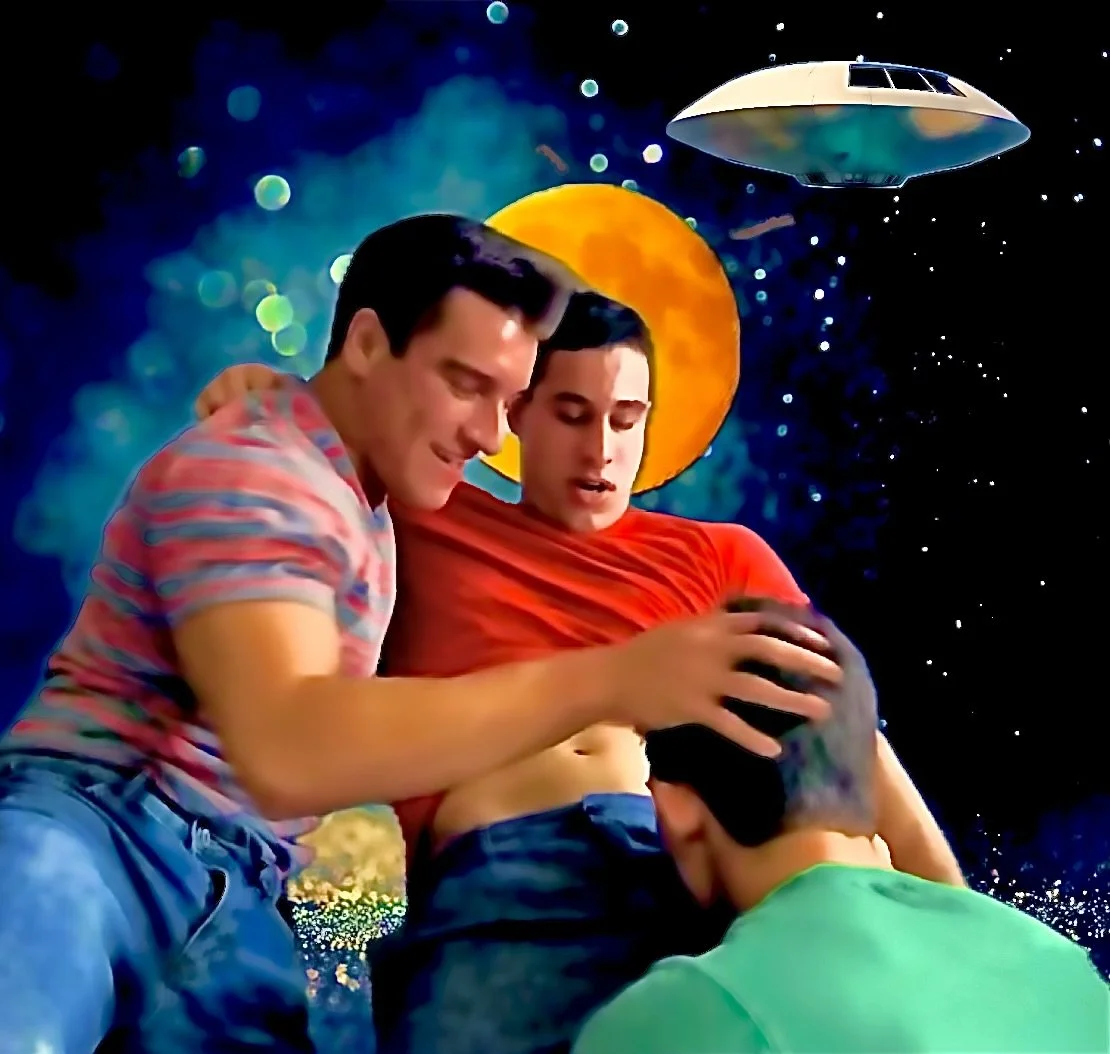
Adam’s Rib starred two legendary actors who were polyamorous in their private world. This collage revisits the bedroom set of this comedy, and populates it with a phalanx of gay men. I’ve always wanted to say that.

Play Gay, Gay Bait, and Gay for Pay

On Gay Baiting, Gay for Pay, and Gay Play in US Culture Today | Digital Photo Collage | 2026

The Hydra of gay play, gay for pay, and gay baiting by straight men on queer culture is an attempt to repress and replace an authentic view of gay life with a false premise.

It has three heads. Each one operates differently. All three serve the same purpose.

Gay Play: Beginning in the 1980s, it became fashionable for straight actors to play gay men in film — framed as a demonstration of range, a sign of serious craft. What it produced instead was a codified performance: a set of mannerisms, affectations, and attitudes that had nothing to do with how gay men actually live. When James Corden played a gay character in The Prom (2020), critics called it “the worst gayface in a long, long time” — regressive, offensive, a walking stereotype. Tom Hanks, who won an Oscar playing a gay man in Philadelphia, later said plainly: “Could a straight man do what I did now? No, and rightly so.” Director Russell T Davies, who cast only gay actors in It’s a Sin, explained why: “Acting gay is a bunch of codes for a performance. It is not authenticity.” The codes are not gay life. They are straight men’s idea of gay life — performed for straight audiences, adjudicated by straight critics, awarded by straight academies.

Gay for Pay: The adult film industry formalized a second head of the Hydra. Straight men performing gay sex for money — framed always as transgression, as something done reluctantly, under persuasion, for a price. The subtext is never subtle: gay sex is something a real man would never choose freely. It requires payment. It requires coercion. It is, by definition, shameful. This genre represents straight men’s fantasy of what gay men are — a market to be exploited, a boundary to be performed crossing, a shame to be monetized and reinforced.

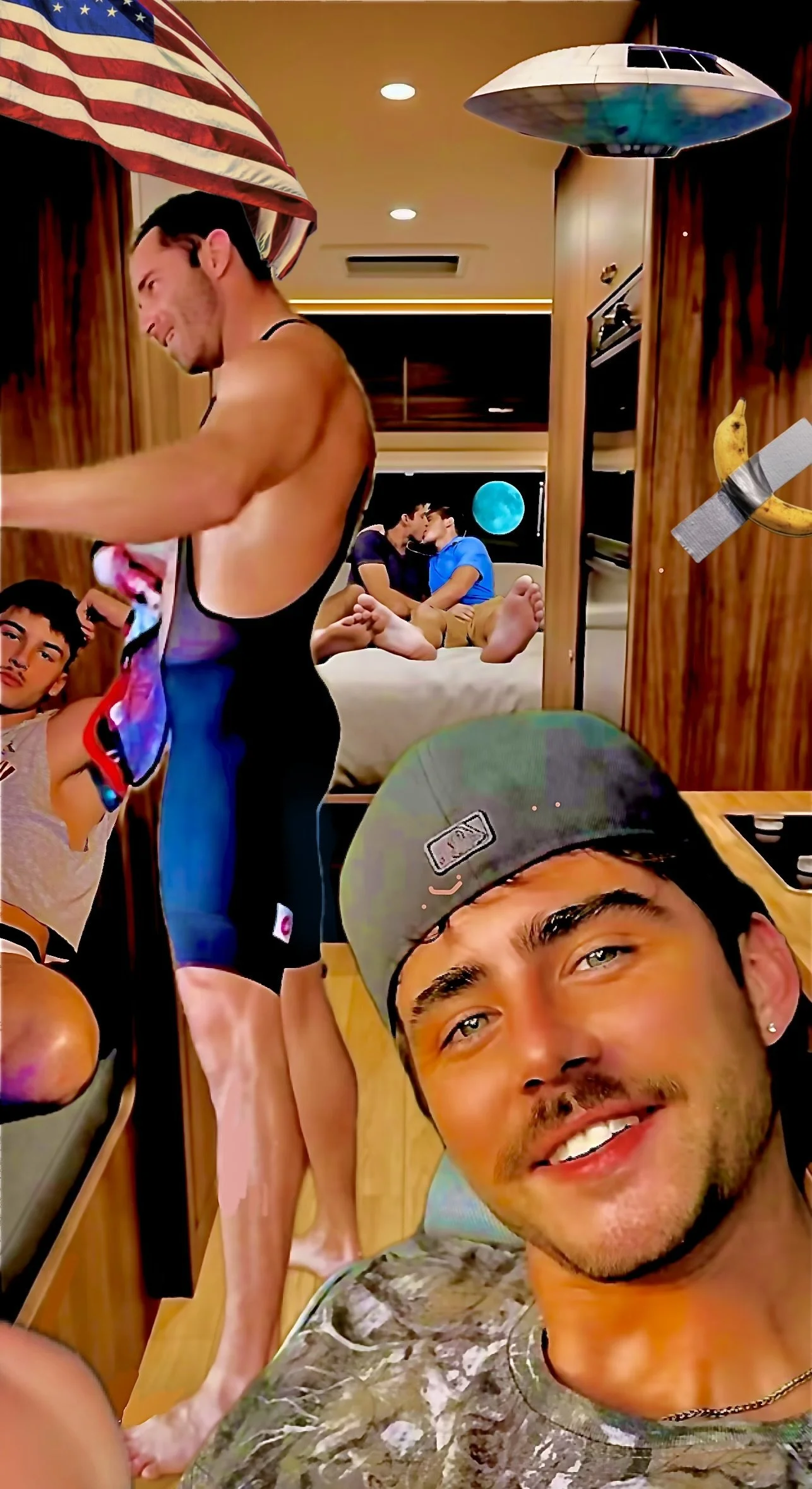
Gay Bait: Social media delivered the third head. Straight men — often fitness influencers, streamers, athletes — deploy homoerotic imagery, language, and suggestion to capture gay audiences and drive engagement, then retreat behind the disclaimer: I’m straight. I was just acting. The post that generated this collage is a precise example. Two men in a locker room. The original caption: When you’re both feeling bad about what you just did. The implication is clear. The shame is the point. What they “just did” is something they would never do in real life — and the humor, the engagement, the clicks depend entirely on that shame remaining intact.

Every morning The Closet Series scrolls social media looking for exactly this — the shame being reinforced by straight actors into queer communities. With this found post, three figures were superimposed over the original image of two men in the locker room, the blue moon witnessing, Jupiter 3 overhead, Cattelan’s banana in the corner. The original caption stays. The subtext becomes context. The shame is named and confronted.

The Hydra of straight men performing gay — in prestige film, in adult entertainment, in social media — exists to maintain the shame and the closet itself.

The shame is the mechanism of control. If the shame goes away, straight power is diminished.

Gay play, gay for pay, and gay baiting are not homage. They are not allyship. They are an attempt to own the representation of a culture by men who do not live it, in order to keep that culture’s self-image distorted, exaggerated, and contingent on straight approval.

And that’s a shame.

— Behan
Sources:

• Russell T Davies, RadioTimes, on casting It’s a Sin (2021)

• Tom Hanks, The New York Times Magazine (2022)

• James Corden / The Prom critical reception, multiple outlets (2020)

• Grindr.com: “Queerbaiting: Learn What It Is and Its Effects” (2024)

• Jeremy Strong, Variety (2024)

• Stanley Tucci, BBC Radio 4 Desert Island Discs (2023)

1949

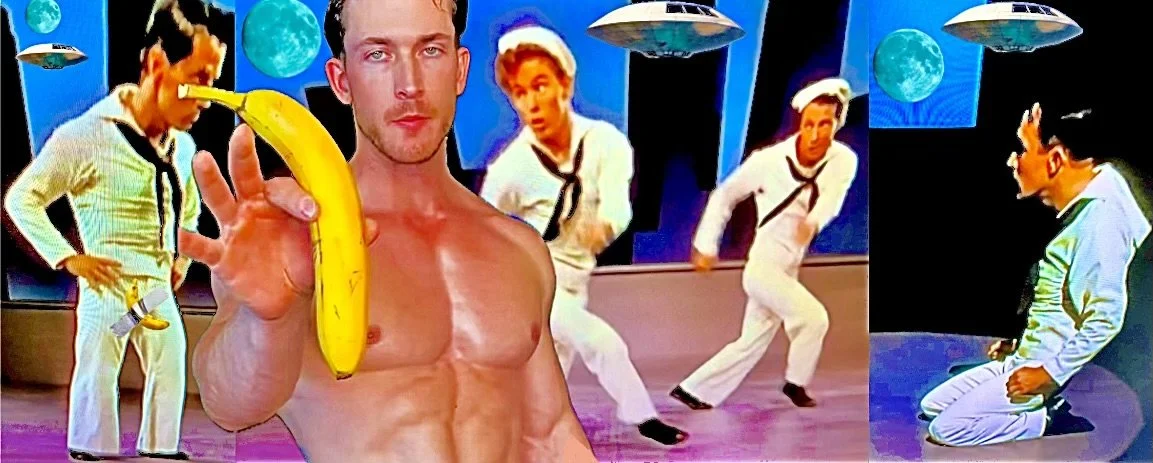
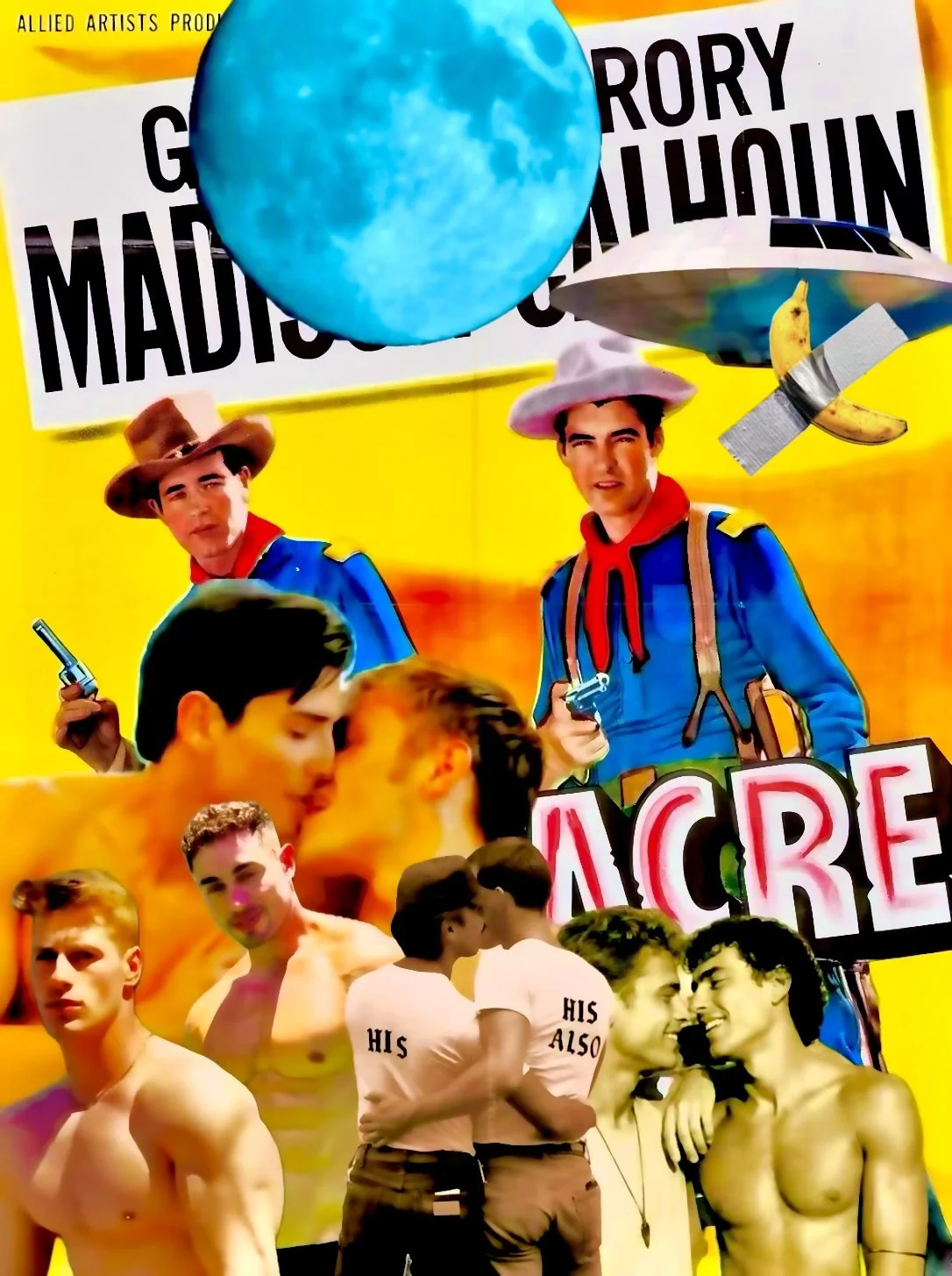
On Nineteen Forty Nine: Fleet Week, On the Town, and Massacre River | Suite of Four Works with Special Appearance by Cattelan’s Frosty Banana |

Digital Photo Collage | 2026

It’s 1949, the war is over and the sailors are home.

These four collages recreate that moment in all its Technicolor confusion.

Rory Calhoun and Guy Madison, both 27, are rumored lovers — never proven, but lifelong companions who hunt, fish, and co-star together in 1949’s Massacre River.

Also in 1949: the newly formed Department of Defense officially bans homosexual personnel across all branches. Gay servicemen who had fought in WWII are quietly purged via blue discharge — no court martial, no veterans’ benefits. Many land in port cities such as San Francisco and New York. They build the early networks — the bars, the meeting places, the underground geography of queer life in America.

The great irony is this: while the government was purging gay men from the military, Hollywood was hiring them. In 1949 sailors were being blue-discharged onto the streets of New York, Leonard Bernstein was scoring On the Town, gay men were directing and producing it, and queer narratives were being quietly sewn into the fabric of American cinema.

The shiny, heterosexual dream machine was built largely by the people it refused to name.

Twenty years of that pressure, that contradiction, that coded survival — and it all came to a head in 1969.

And the Stonewall Inn was an invoice that suddenly and irrevocably became due.

Bananarama Redux

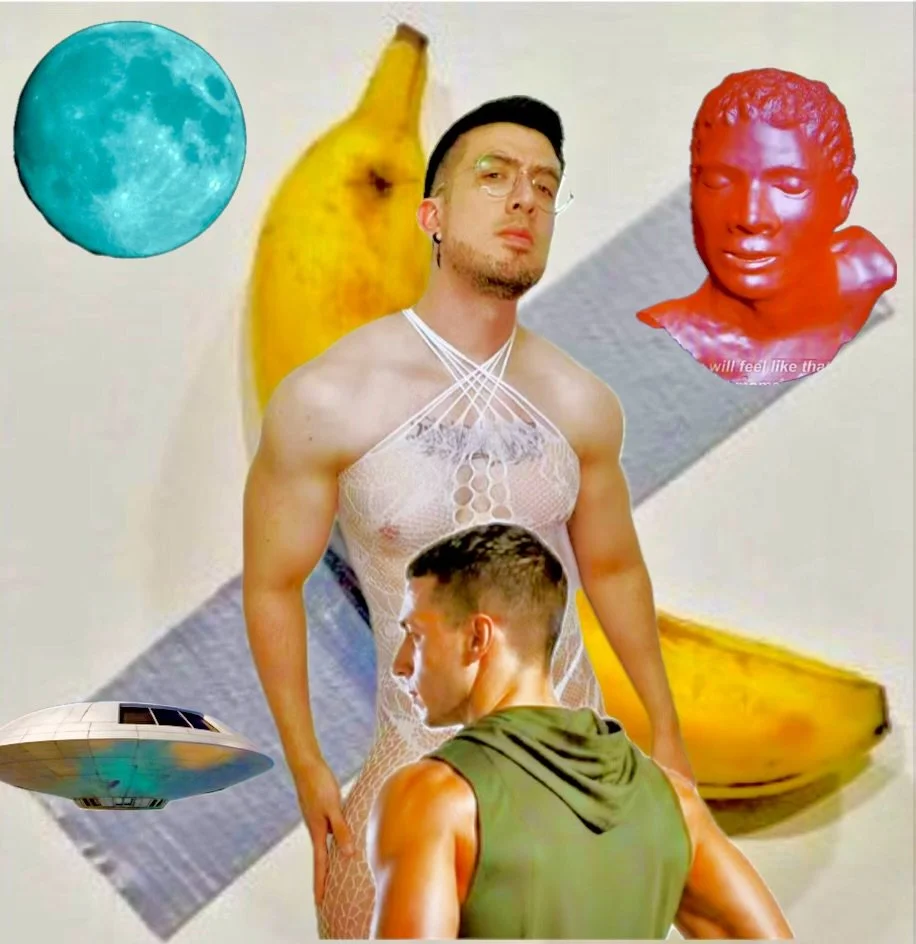
More on Bananas! I had a banana shake Friday from Whataburger, so good!

Bananarama

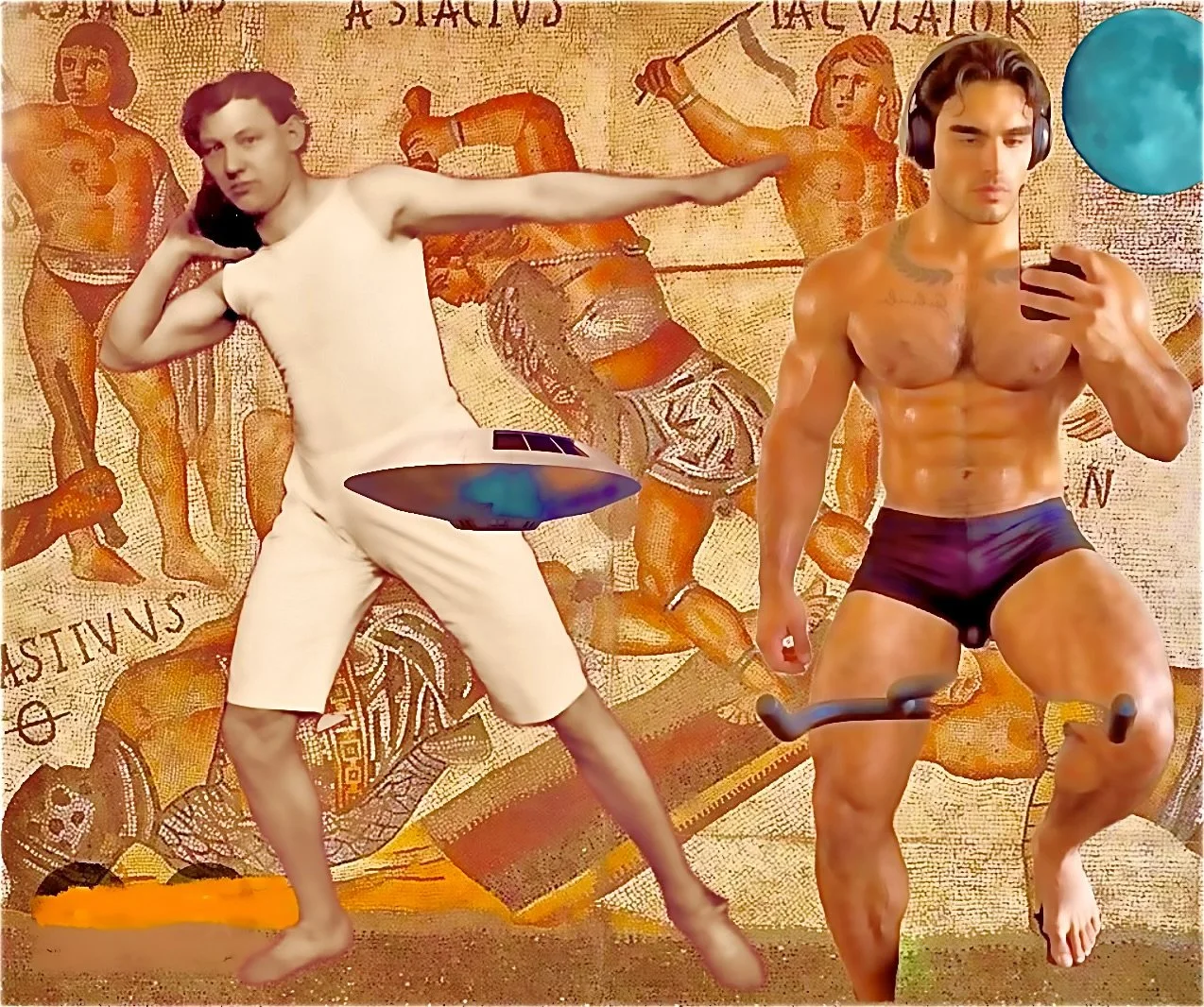
A Banana is a Banana Until It’s Art | Digital Photocollage | 2026

A banana taped to a wall sold for $6.2 million at Sotheby’s. The buyer plans to eat it.

Maurizio Cattelan’s Comedian debuted at Art Basel Miami in 2019. Crowds were so large the exhibit had to be pulled for public safety. At least two spectators ate the banana on the gallery floor. The work sold. The concept is the work.

Something is always something until it’s something else. When that happens, it can become an issue for someone. Who that someone is has everything to do with power.

The Closet Series has officially met Cattelan’s banana.

— Behan
#TheClosetSeries #MaurizioCattelan #Comedian #ConceptualArt #QueerArt #DigitalPhotocollage #ArtBasel #Sothebys #behanworks #QueerHistory

On the Road Again

Sunday Collage and Essay: Cherry Cherry Limeade |Digital Photo Collage | 2026.

From drive-throughs to drive-ins and snack-fueled road trips, the American love affair with eating in the car is alive and well in 2026.

According to Jonathan Maze, Editor-in-Chief of Restaurant Business, car consumption of food has skyrocketed since the pandemic and shows no signs of slowing down. Americans are increasingly skipping the table altogether — no partners, no coworkers, no small talk — just them, their order, and the open road. Or the parking lot. Whatever works.

The numbers line up. Data tracks the percentage of consumers eating limited-service breakfast in their cars is up eight points since 2019. Lunch—up five. Snacks up four. Even full-service restaurants are getting in on it — in-car snack consumption from sit-down spots is up eleven points. The American car is a second dining room.

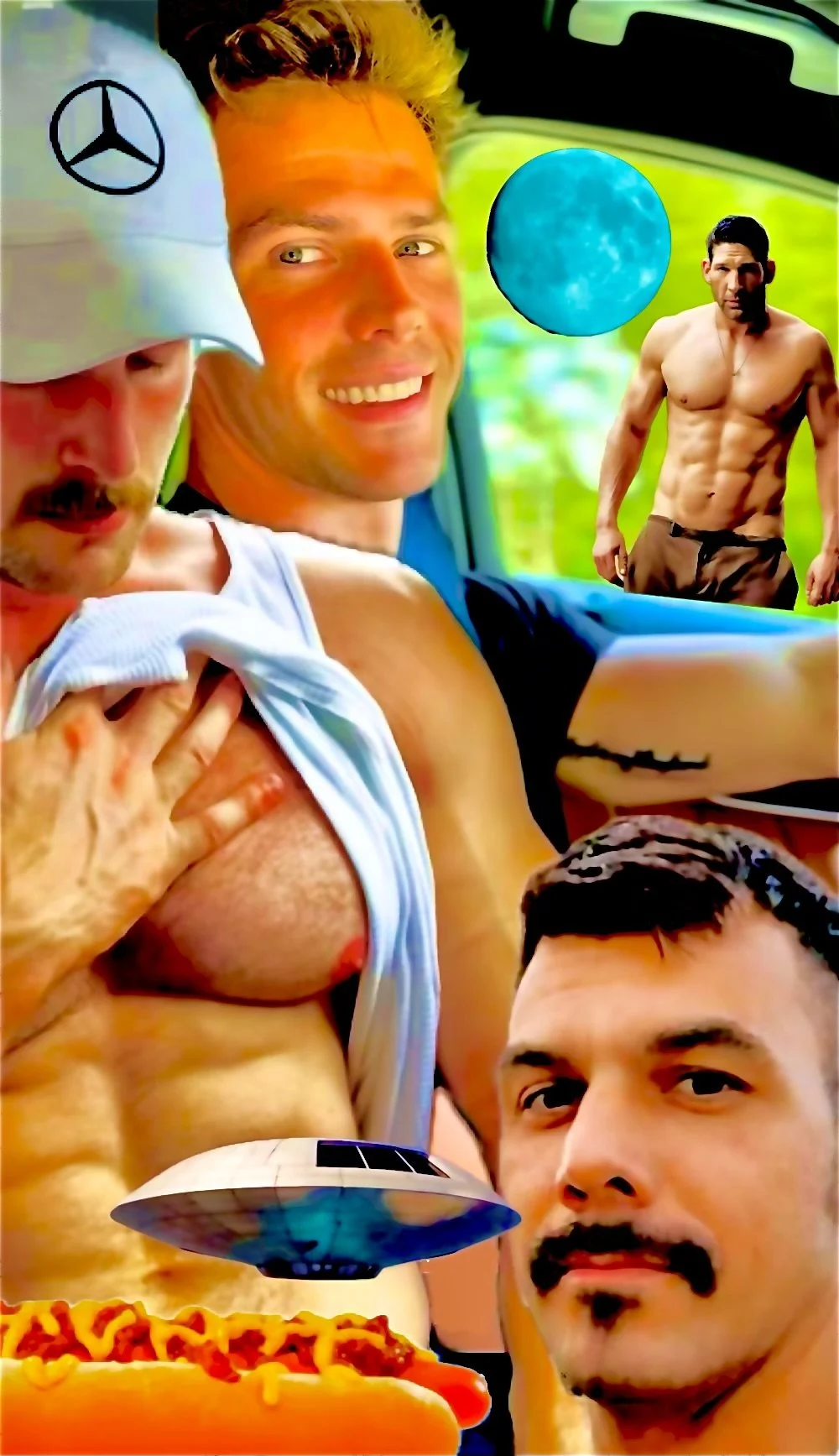
No one understood this earlier — or better — than Sonic. America’s original drive-in still does it the classic way: no indoor seating, car hops on roller skates, iconic window trays that turn your car door into a table for two. Or one. Or three—whatever you’re in the mood for. The Sonic Footlong Coney Dog remains one of the great American vehicular meals — messy, unapologetic, and so absolutely worth it. Don’t forget the wet naps!

The Closet Series is placing its order. The blue moon is enjoying its cherry limeade. Jupiter 3 is already in the drive-thru.

#TheClosetSeries #Sonic #EatingInTheCar #AmericanCulture #GayArt

Postscript:

Coding has a long history in all forms of American art— and it was never just a gay thing. When censorship ruled, everyone learned to speak in symbols. Hitchcock’s train disappearing into a tunnel. The camera that pans discreetly to the window. Artists across every medium developed an entire visual vocabulary of suggestion and substitution— because direct expression was forbidden. The Hays Code, the Comics Code, the long arm of moral panic all demanded that human behavior be translated, disguised, displaced—except for violence for some odd reason. That’s as American as apple pie. Coding is a testament to human creativity. It is also an indictment.

Never Will I Leave You

Tim Is Never Without His iPhone 19. Never. | 2026 | Digital Photocollage

The love affair between many Gay men and the IPhone is real. A handheld computer you can make calls with, the iPhone has become an essential tool of modern gay life.

Your personal life is still a target in many parts of the world? How about end-to-end encryption, Face ID, Touch ID? These aren’t luxury features. It’s about being safe.

The full ecosystem of gay life—dating apps, community platforms, health and wellness tools, LGBTQ+ media and entertainment—are just a charge away.

And iMessage plus FaceTime keep chosen families connected across geographic distances in ways that matter especially to a community that has always had to build its own networks from scratch.

Significantly, Apple has been at the forefront of LGBTQ+ inclusion — featuring queer content, supporting Pride initiatives, and creating a digital environment that reflects the diversity of its users.

The Aquarian moon is texting. Jupiter 3 has dropped a mean meme.

The Closet Series. 2026.

#TheClosetSeries #TimIsNeverWithoutHisiPhone #AppleAndGayLife #QueerTech #iPhoneLife #LGBTQTech #QueerCulture #DigitalPhotocollage #QueerArt #TimCook

Also Known As

Porter and Joey Attending to Saint Randy’s Physical and Spiritual Needs | Digital Photocollage | 2026

GoFundMe is a digital fundraising platform that serves as a vital lifeline for LGBTQ+ individuals navigating healthcare systems that were never designed with them in mind.

Jason Pacheco, known to fans as Randy, an adult film star, posted a GoFundMe shortly before his death at age thirty-three. He was in recovery. He was living in a halfway house and was discharged because his hospital stay ran too long. He was broke and didn’t know where he’d go when he left. Identifying as straight, he had built his career in gay adult film.

His story is not unusual. Gay men and men orbiting gay culture have always faced a particular combination of healthcare discrimination, family rejection, and institutional abandonment that makes community-based mutual aid like GoFundMe not just a supplement but a replacement for a system that doesn’t recognize them.

GoFundMe campaigns fund gender-affirming care, bail for queer activists, emergency housing, and the survival costs of lives that the dominant culture views as expendable.

The culture of digital fundraising mirrors the historical LGBTQ+ tradition of chosen family — the network that shows up when the biological family does not. It is the same impulse that built the hospices during AIDS, that had strangers becoming family because what else do you do when the world abandons you.

Randy needed somewhere to go. The community he had served showed up. The harvest gold moon knows what fulfillment looks like — and sometimes it looks like a stranger clicking donate at two in the morning for a man they never met but recognized anyway.

The Closet Series. 2026. — Behan.

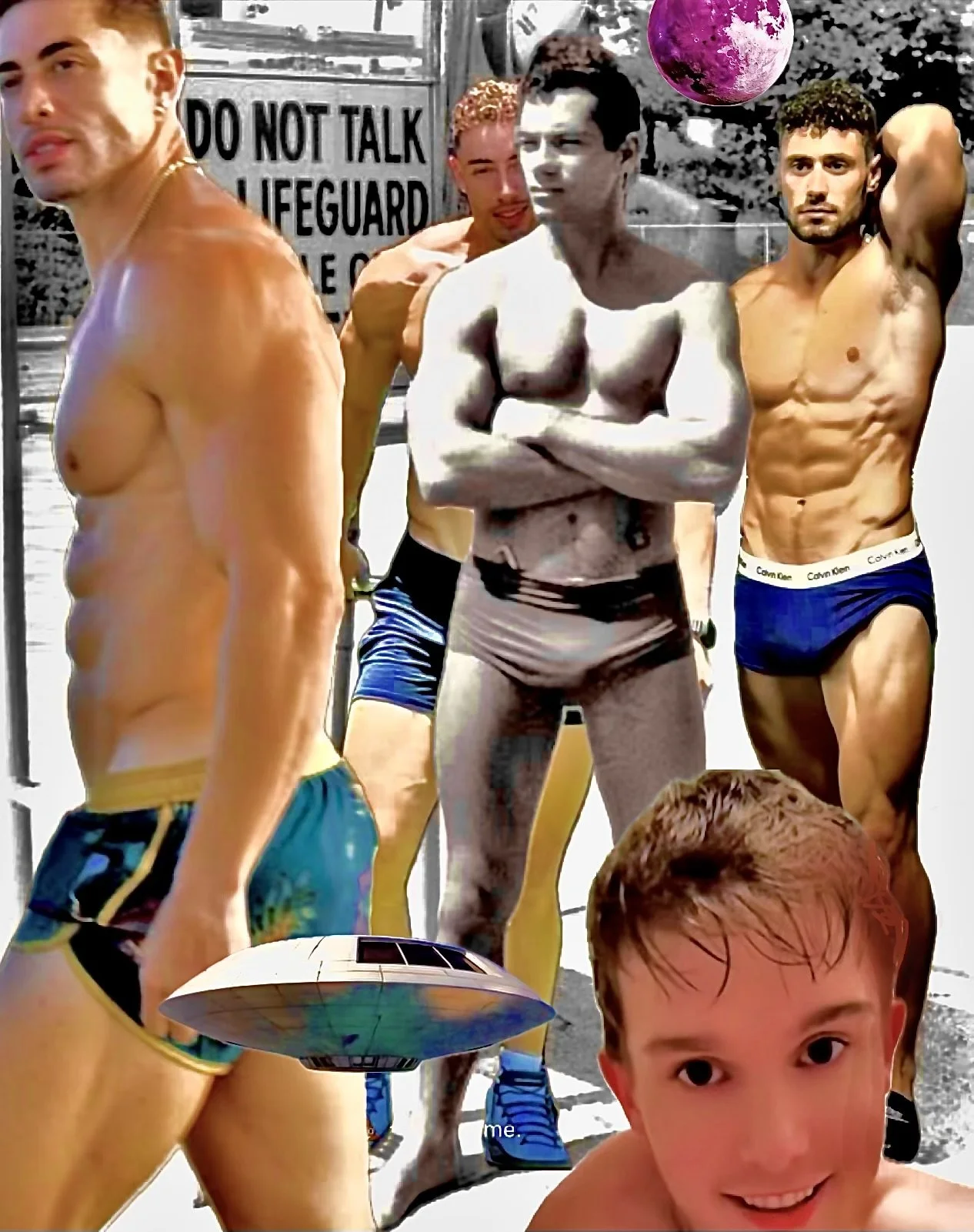
The Lifeguard

Do Not Talk to the Lifeguard | Digital Photocollage

Too late.

Gay men have been talking to the lifeguard — and looking at the lifeguard, and thinking about the lifeguard — since the lifeguard first climbed into the chair.

The sun-kissed, heroic lifeguard is a longstanding archetype of gay visual culture. A historical intersection of masculinity and queer admiration. He saves lives for a living. Of course gay men noticed.

But the lifeguard metaphor runs deeper than desire. The Lifeguard Project in Australia trained gay men to become lifeguards for their friends — teaching them the practical tools to support peers struggling with anxiety and depression.

Same instinct.

Different shore.

The lifeguard watches the water. He knows who’s in trouble before they do. Gay men have always appreciated that kind of attention.

The Closet Series.

Friday Finery

Collages from the past week that are surprises, unexpected, and so fine.

Words to Live By

Words to Live By: Millenia Athletics

From leather Roman panties to moisture-wicking fabrics — the name of the game has always been keep moving. Each era had its own sense of fashion and style:

1920s–1930s: Thick. Ribbed. Tops.

1940s–1950s: Nylon. Military. Lightweight.

1960s: Tops. Casual. Bottoms.

1970s: Colorful. Curved. Bold.

1980s: Huge. Sweat. Head.

1990s: Baggy. Oversized. Graphic.

2000s–2010s: Athleisure. Spandex. Seamless.

2020s: Everything. Everywhere. All at once.

The body has always wanted to move. Gay men have always known how to dress for it.

Words to live By.

The Closet Series. 2026.

Subtext Blues

On the Nature of Subtext

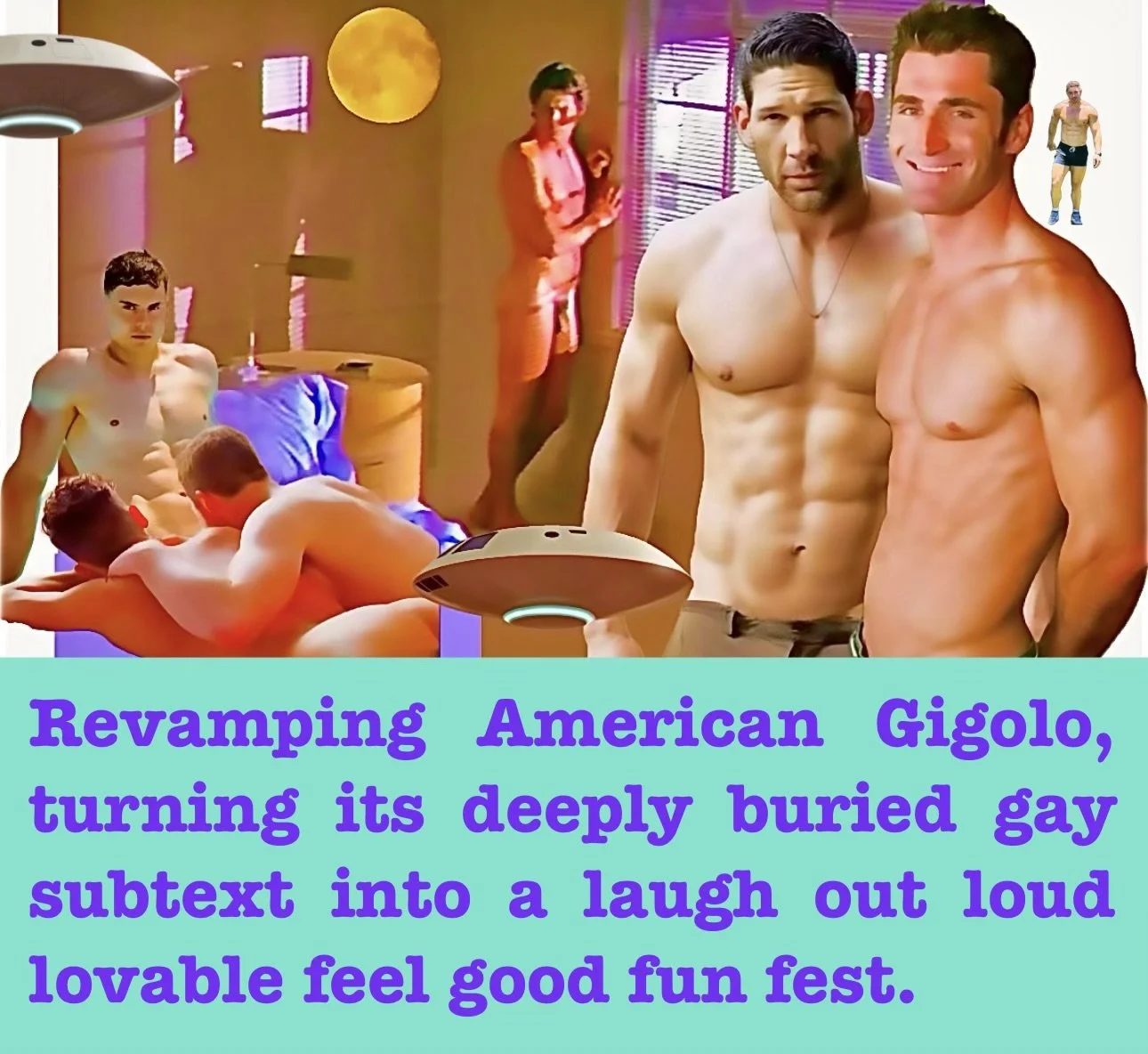
Subtext handled well deepens a story. It rewards attention. It creates the charge between characters that audiences feel without always being able to name — and when it finally surfaces, it can be magnificent. Consider Citizen Kane. The entire film is a mystery built around a single word: Rosebud. The subtext blooms at the very end into something that reframes everything that came before. That is subtext becoming context.

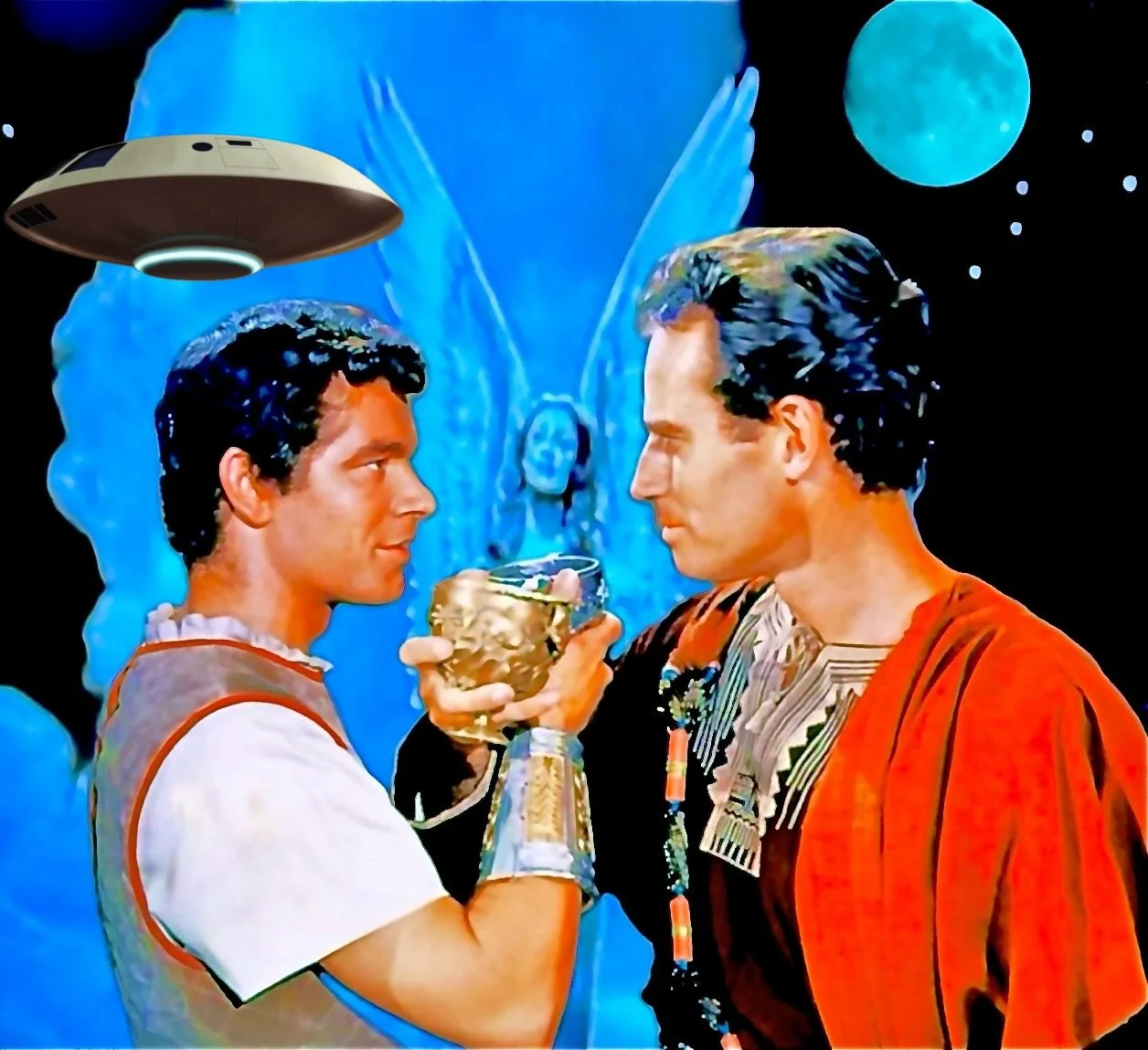
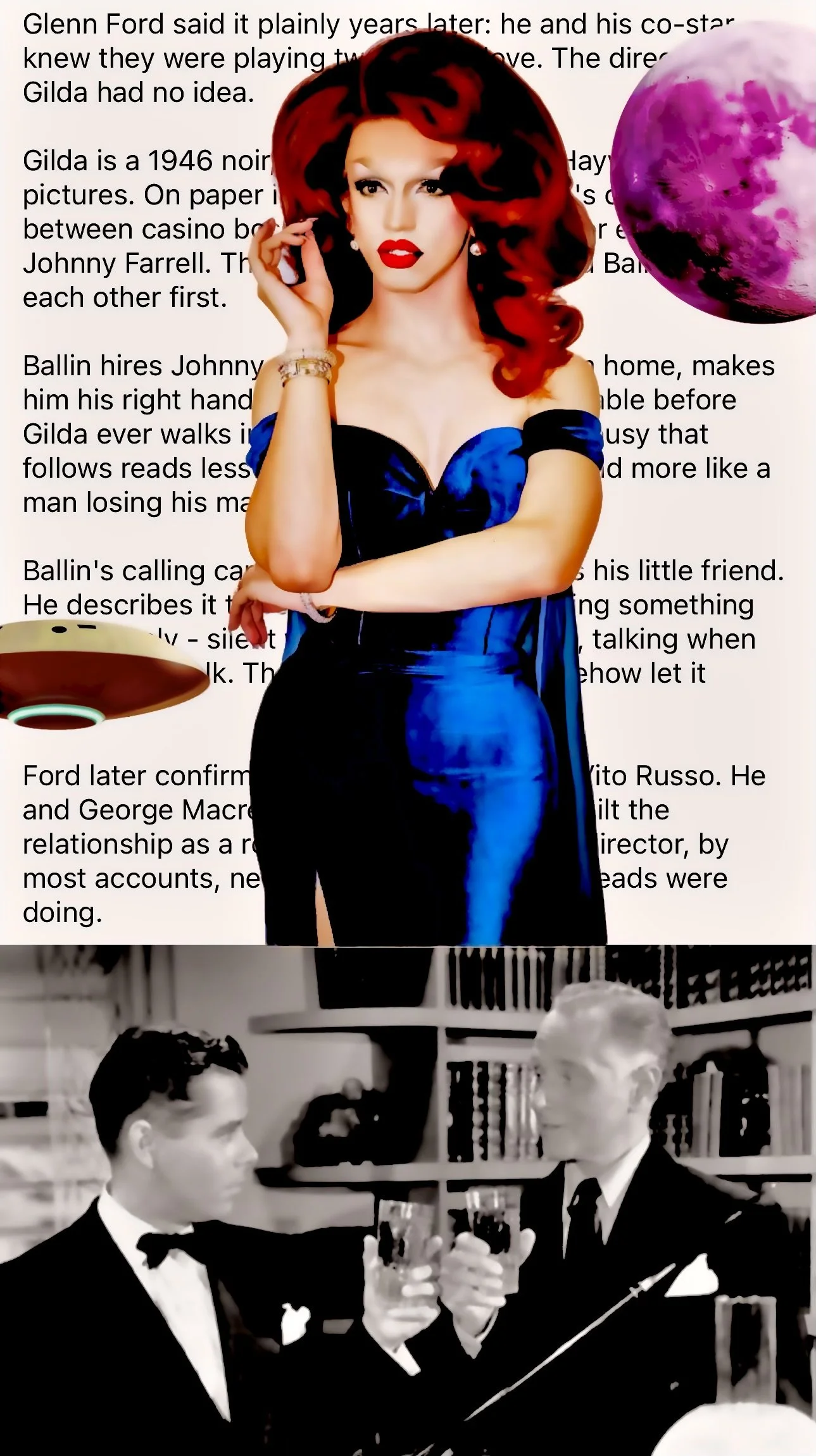
The prospect for gay subtext in twentieth century filmmaking was ripe with potential, yet the Hays Code was so onerous and burdensome that the subtext never got to bloom. It was buried so deeply it was rendered inert. Actors Glenn Ford and George Macready built a love story between two men into the center of Gilda without the director knowing. Gore Vidal wrote Messala as a spurned lover in Ben-Hur and directed Stephen Boyd accordingly without telling his co-star Charlton Heston. In American Gigolo, writer and director Paul Schrader built an entire gay sensibility into a film that never once named it. The subtext in all three films could have been thoroughly illuminating. Instead it was buried so deeply that it confused rather than enlightened. A desire without resolution. A charge without release. A love story with no ending.

The Hays Code, written in 1930 and strictly enforced from 1934 to 1968 at the insistence of the Catholic Legion of Decency, represented thirty-four years of institutionalized censorship of American cinema. Of everything the Code suppressed, which was substantial, homosexuality was one of its most absolute prohibitions. Thirty-four years. An entire generation of filmmakers. An entire generation of film goers who never got to see the fullness of life on screen. It wasn’t only gay men and women who were cheated — although they were, profoundly — it was every person who sat in a darkened theater and deserved the whole truth of human experience.

Think about what those films could have been. Gilda with the love story between Johnny and Ballin fully realized. Ben-Hur with Judah and Messala’s history allowed to breathe on screen the way Vidal wrote it. American Gigolo with Julian Kay finally allowed to find real love — on his own terms, with whom he chose. Decades of films diminished not by the presence of gay characters but by the systematic burying of those characters before they could fully live.

The Hays Code, developed and dominated by the American Catholic Church, did not protect audiences. It impoverished them. It took stories that could have been richer, truer, more dramatically complete and handed them back with something essential removed. The artists knew what was missing. The audiences felt the absence without knowing its name. And the gay men and women in those audiences watched themselves almost appear on screen, again and again, and then vanish before they could fully arrive.

The shame is not in a character being gay or a film telling their story. The shame is not allowing a gay character to breathe.

#TheClosetSeries #OnTheNatureOfSubtext #QueerCinema #HaysCode #Gilda #BenHur #AmericanGigolo #QueerHistory #LGBTQHistory #DigitalPhotocollage #QueerArt #FilmHistory #TheClosetKnows

Pride Then and Now

Back to Pride 2025 and looking again to some of my favorite work from then. Thinking about how conservatives are currently trying to remove the only life saving HIV medication from the hands of gay men on “moral” grounds. An immoral act, this like nothing else changes things. Happy Pride.

Biblical Truth

The Bible Is Not Anti-Gay. The Institution Is.

The Closet Series — Behan

The Bible is full of profound same-sex relationships that the institution of the Church has worked very hard to desexualize. The work of desexualization is itself a political act, not a theological one.

David and Jonathan

In 1 Samuel, Jonathan’s soul is knit to David’s soul. The text uses the Hebrew word ahav — love — the same word used for romantic love elsewhere in scripture. When Jonathan dies, David mourns: your love to me was wonderful, surpassing the love of women. That sentence is in the text. It has always been in the text. The tradition has read it as brotherly devotion. That reading is a choice, not a certainty. None of us were there.

Ruth and Naomi

Ruth says to Naomi: where you go I will go. Where you die I will die. There I will be buried. It is one of the most complete declarations of devotion in all of scripture. The tradition reads it as loyalty between women. That reading is a choice, not a certainty. None of us were there.

Jesus and the Beloved Disciple

In the Gospel of John, one disciple is identified repeatedly as the one Jesus loved. At the Last Supper he reclines against Jesus. At the crucifixion, when every other male disciple has fled, he remains. Jesus from the cross entrusts his mother to this man’s care. The tradition has worked carefully to keep this relationship fraternal. That work is a choice, not a certainty. None of us were there.

These three relationships share something important. They are not incidental to their texts. They are central to them. The authors of scripture chose to place same-sex love — sexual or not — at the heart of the narrative. The institution chose to read that love as something other than what the language describes.

Both readings are interpretive. Only one claims to be definitive.

The political nature of that claim becomes visible when you ask a simple question: who benefits from the desexualization? Not the text. Not the theology. Not the figures themselves. The institution benefits. The institution that has built its authority in part on the regulation of sexual behavior requires that the sacred figures of its own tradition be unambiguously heterosexual — or unambiguously celibate — or unambiguously beyond the question entirely.

What has been applied to these relationships across centuries is a veneer of heteronormative context. And that veneer has a problem.

Gay people existed in first century Palestine.

They existed in ancient Israel.

They existed wherever and whenever human beings have existed. The murals of Pompeii conclusively prove that fact. To suggest otherwise is not theology. It is erasure. The figures in these stories could have been a part of the queer community. That is not a claim. That is simply the acknowledgment that it is not possible to say they were not there.

The problem is that the text keeps raising the question. The text keeps placing men who love men and women who love women at the center of the story. The institution keeps answering a question the text refuses to close.

And that’s not nothing.

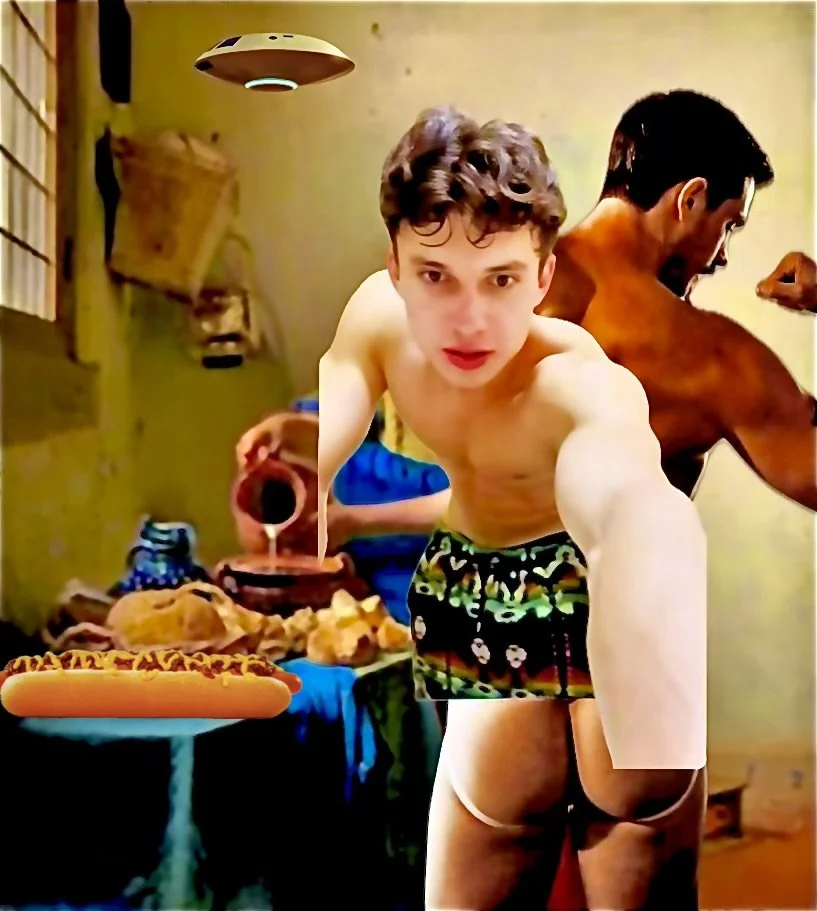
The Milk Man 2026 Digital Photocollage

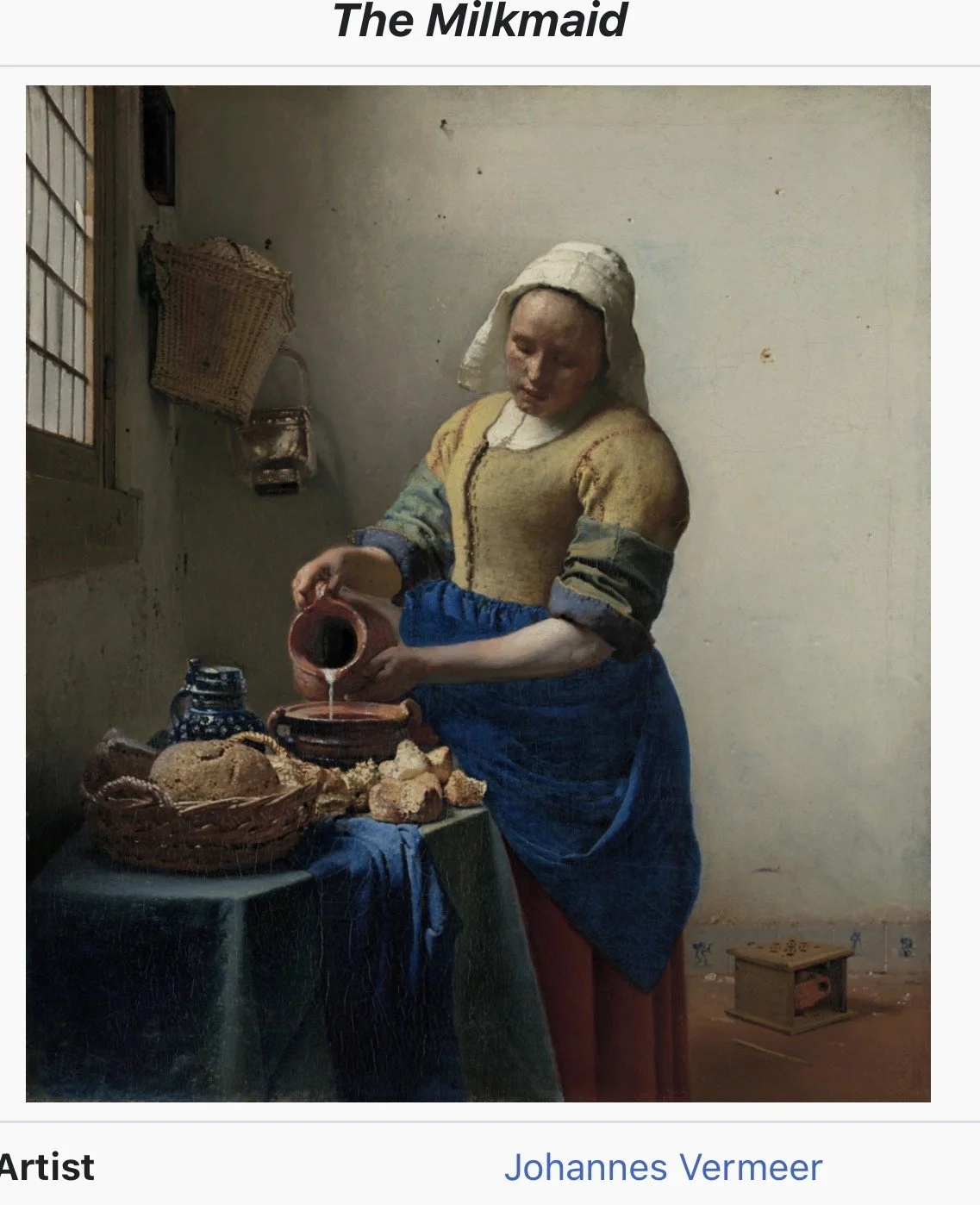
Vermeer’s Milkmaid has carried erotic symbolism since it was painted. The Metropolitan Museum of Art documents that the milkmaid theme was understood as sexually coded in Netherlandish art for two centuries before Vermeer — the jug, the pour, the domestic space all legible to their original audience.

Behan’s collage holds the same room, the same window, the same table, with the same palette of warm muted colors in a soft blur. The milkmaid is replaced with two male figures and the bread is replaced with a foot long coney dog.

The symbolism the Met describes — the jug, the pouring, the food as sexual symbol — is all still operating. Behan has taken the subtext and turned it to context from a queer perspective. Gay men were in the Netherlands also.

On the surface it’s visual humor. Underneath it’s a serious art historical argument — that the erotic coding in Western painting has always been there, has always been heterosexually assumed, and that substituting a queer reading doesn’t distort the painting’s meaning so much as reveal that the meaning was always available to queer folk as well. As it should.

Vermeer would smile.

Source

The Metropolitan Museum of Art. “The Milkmaid — The Milkmaid Theme.” metmuseum.org.