A Queer Timeline of US Athletics
• ~800–700 BCE — Nike appears in Greek mythology, in Hesiod’s Theogony, as the winged goddess of victory and patron of athletics, daughter of the Titan Pallas and the sea-nymph Styx.
• 1920 — Bill Tilden, openly gay, wins Wimbledon and goes on to be named the greatest tennis player of the half-century.
• 1971 — Blue Ribbon Sports, founded in 1964, rebrands itself as Nike, taking the goddess’s name and wings for its logo, the swoosh, and grows into one of the largest sponsors and patrons of athletics in the world.
• 1975 — David Kopay, a former NFL running back, becomes the first professional team-sport athlete in America to come out, three years after retirement.
• 1981 — Martina Navratilova comes out publicly as bisexual; Billie Jean King is outed the same year by a lawsuit.
• 1982 — Glenn Burke, former Dodgers outfielder credited with inventing the high-five, acknowledges he is gay after retiring, the first Major League Baseball player to do so.
• 2013 — Brittney Griner comes out at the start of her WNBA career and signs an endorsement deal with Nike, the first openly gay athlete to do so. Robbie Rogers comes out and joins the LA Galaxy, the first openly gay man to play in a top North American men’s league.
• 2014 — Having come out in 2013, Jason Collins plays for the Brooklyn Nets, the first openly gay athlete to be active in any of the four major North American men’s leagues. The Galaxy, with Rogers, win the MLS Cup. Michael Sam is drafted by the St. Louis Rams, the first openly gay player drafted into the NFL.
• 2016 — Nike ends its relationship with boxer Manny Pacquiao after he calls same-sex couples “worse than animals,” calling the remarks abhorrent.
• 2021 — Carl Nassib becomes the first active NFL player to come out as gay while still on a roster.
• 2026 — A record 49 openly LGBTQ+ athletes compete for Team USA at the Winter Olympics in Milano Cortina — about one in five of the team. The Olympics are largely individual and small-team events; the four major U.S. professional men’s team leagues — the NFL, NBA, MLB, and NHL — still have no openly gay active players at all.
Having one fifth of Team USA’s athletes at the Olympic level be openly LGBTQ+ is something worth sitting with. This is the tier where only the most disciplined, most physically capable athletes in the country qualify to compete at all. The old idea — that gay men in particular are somehow less athletic, less coordinated, less fit for competition than straight men — was never true, and the numbers make that plain once athletes are actually free to be visible.
On the Collages
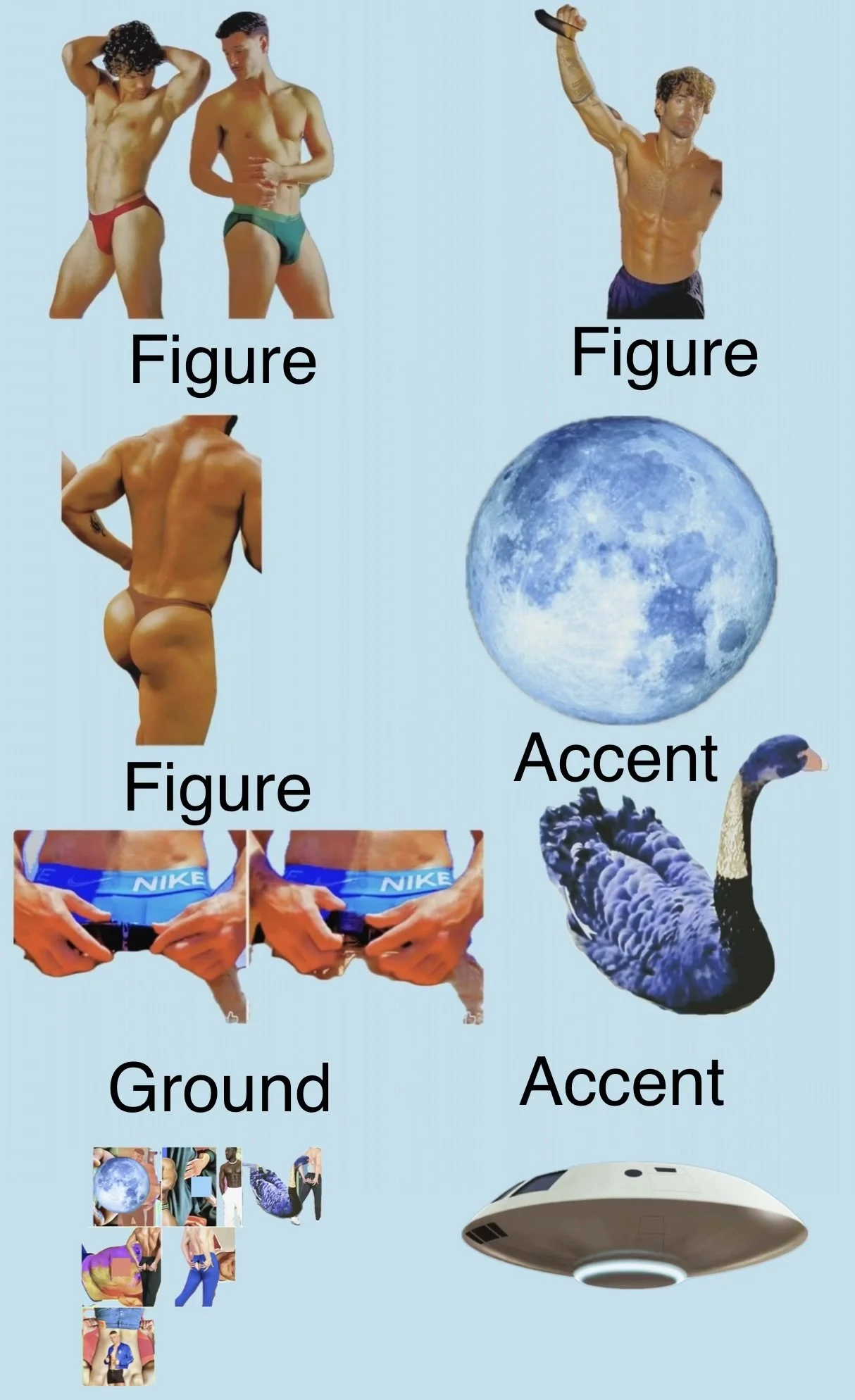
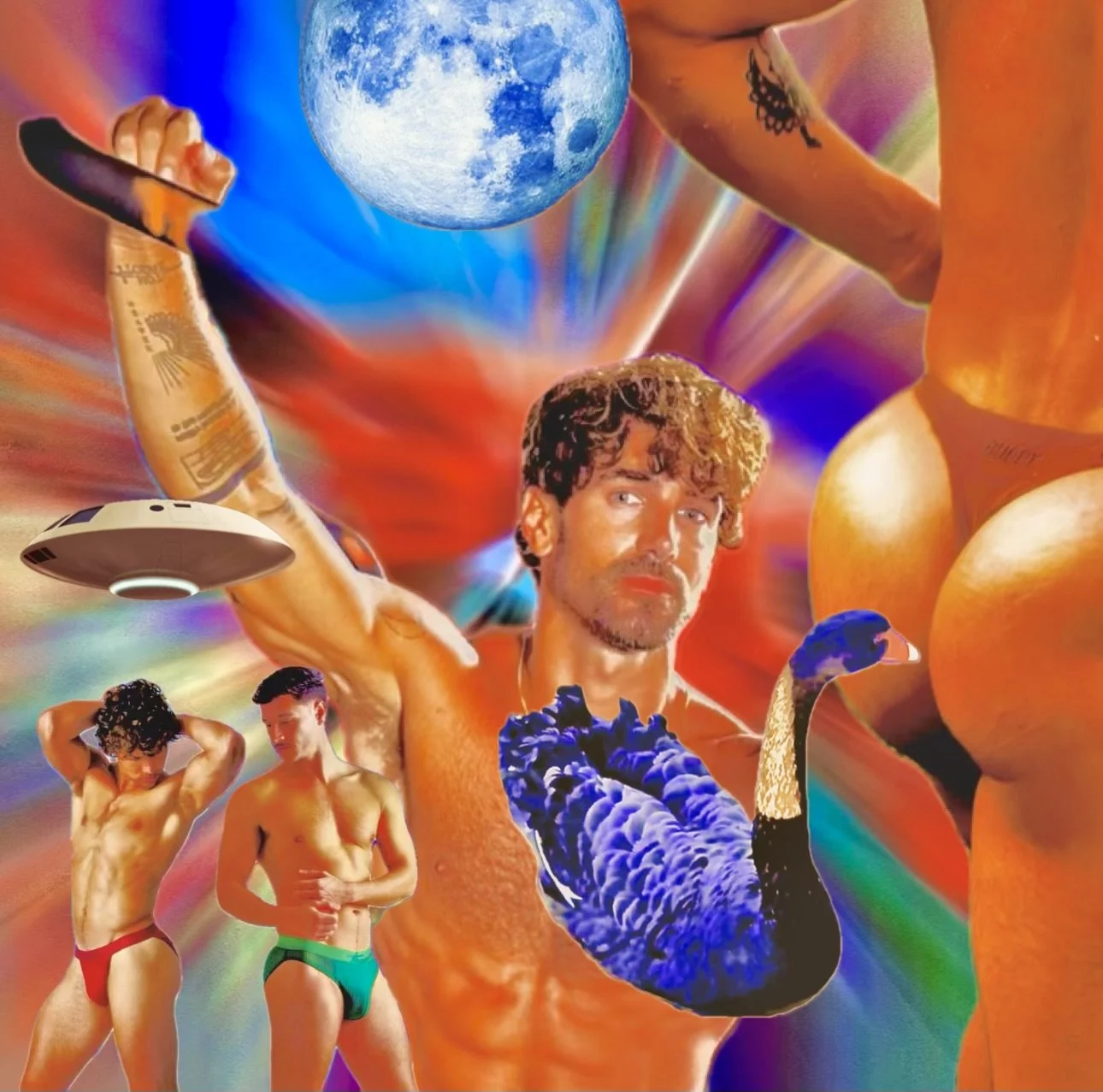
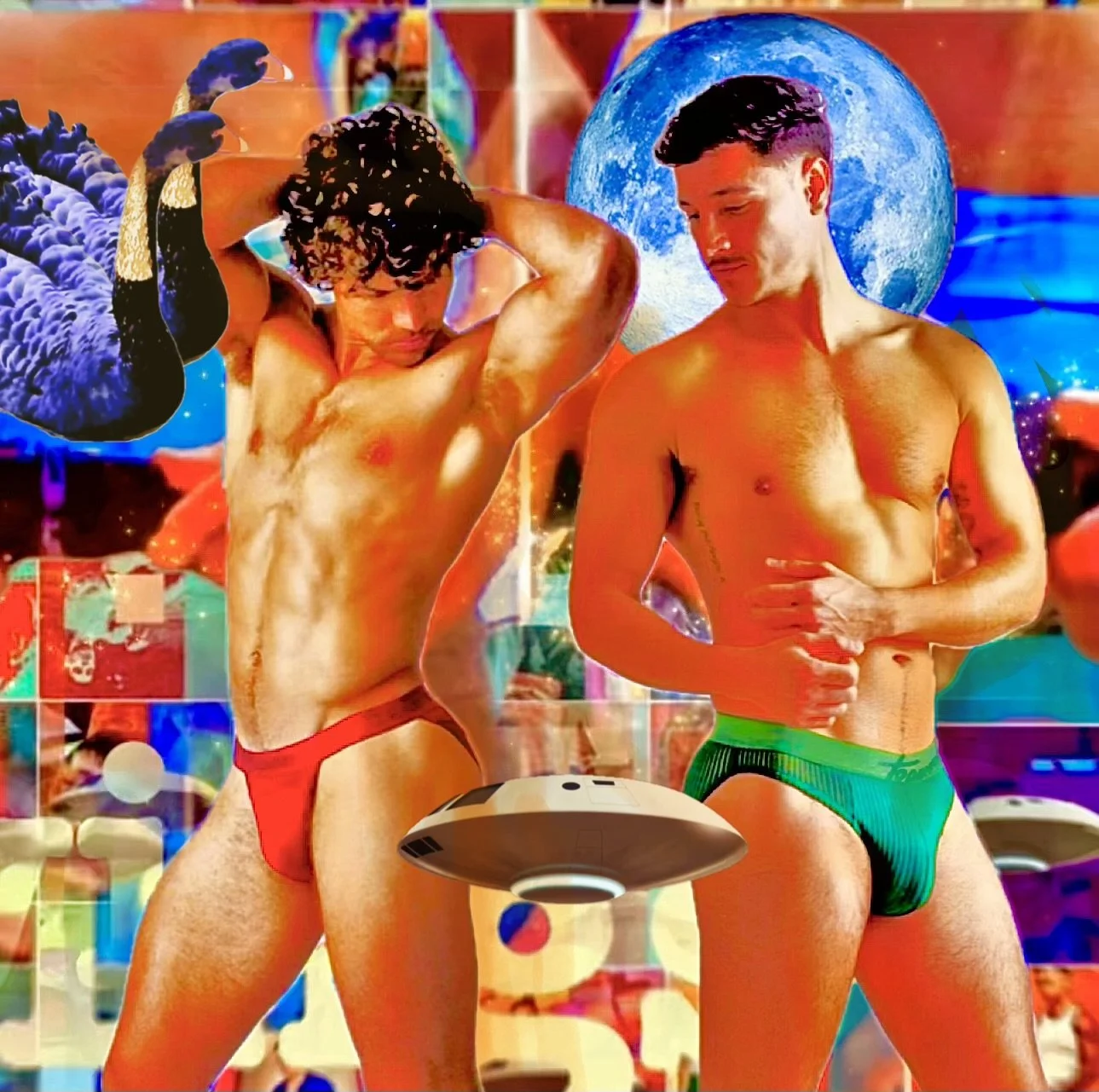
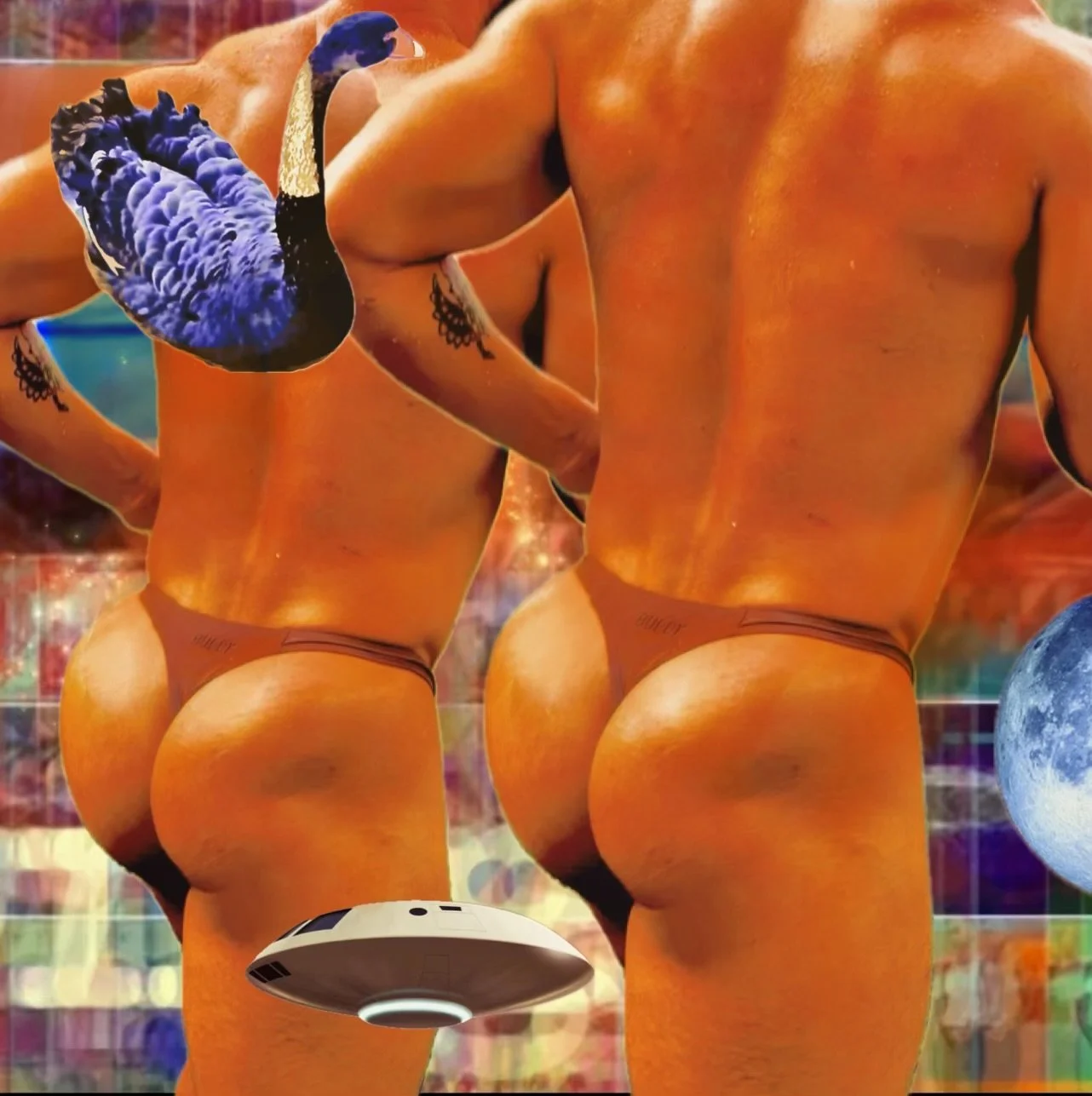
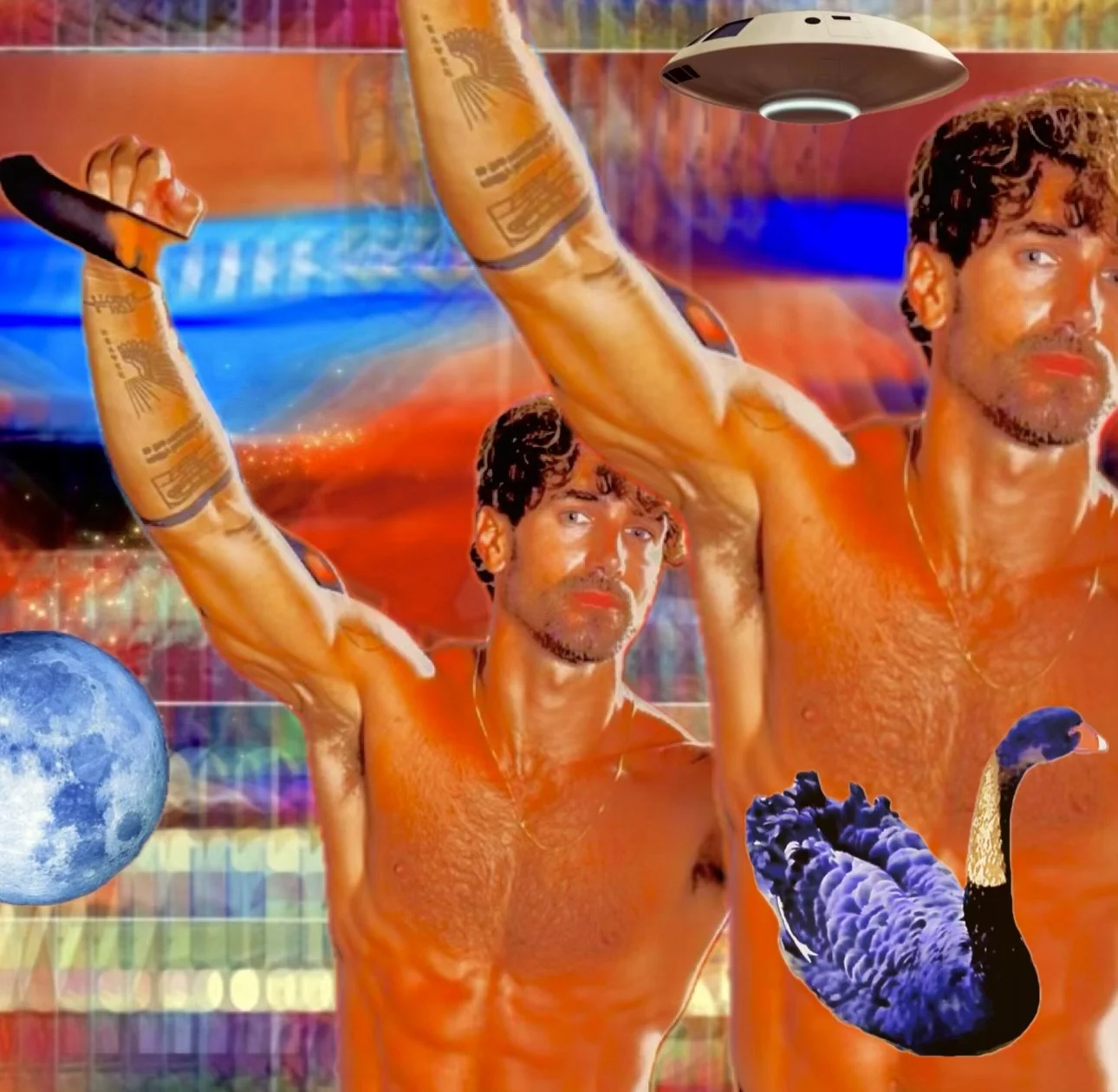
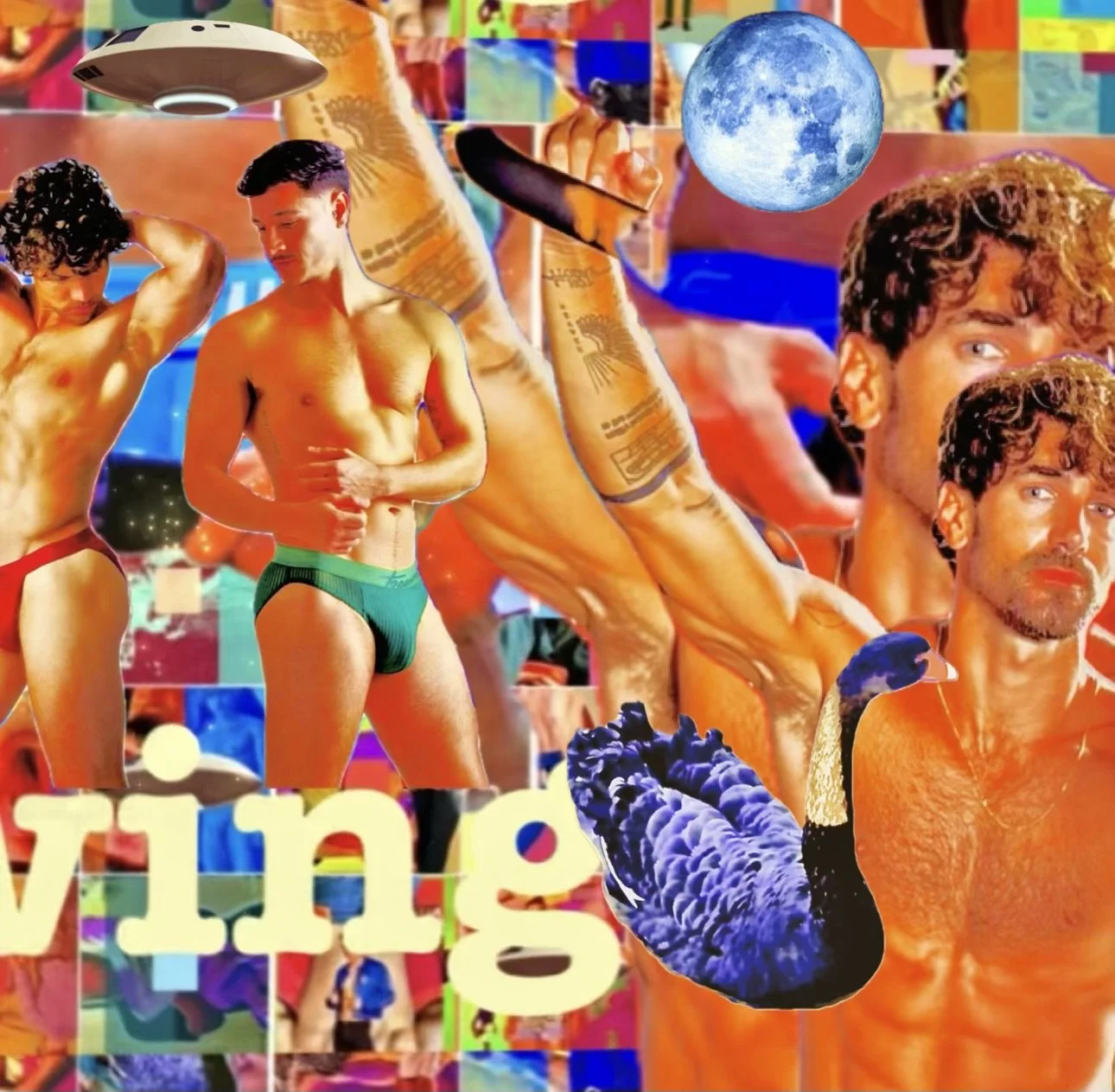
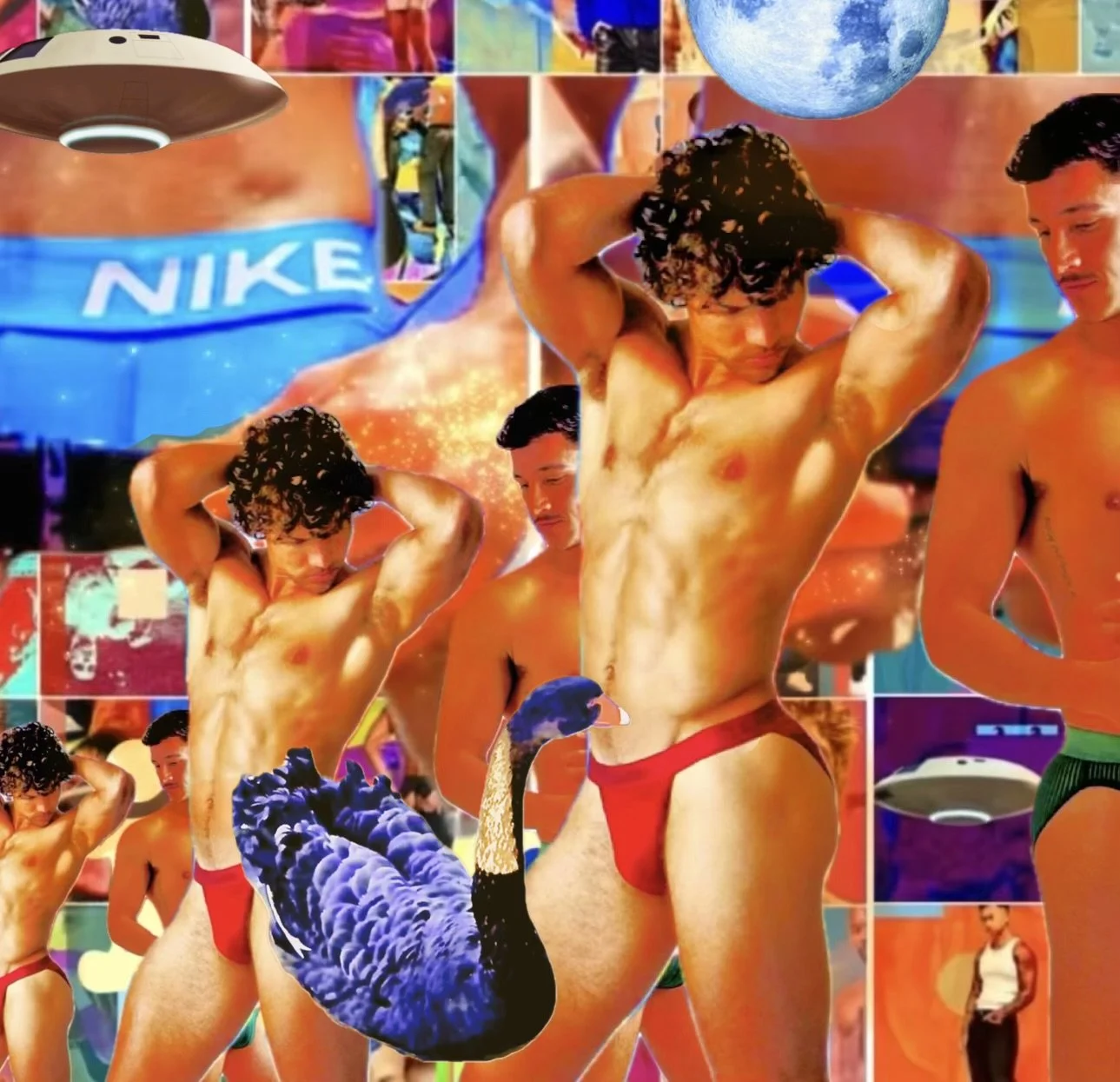
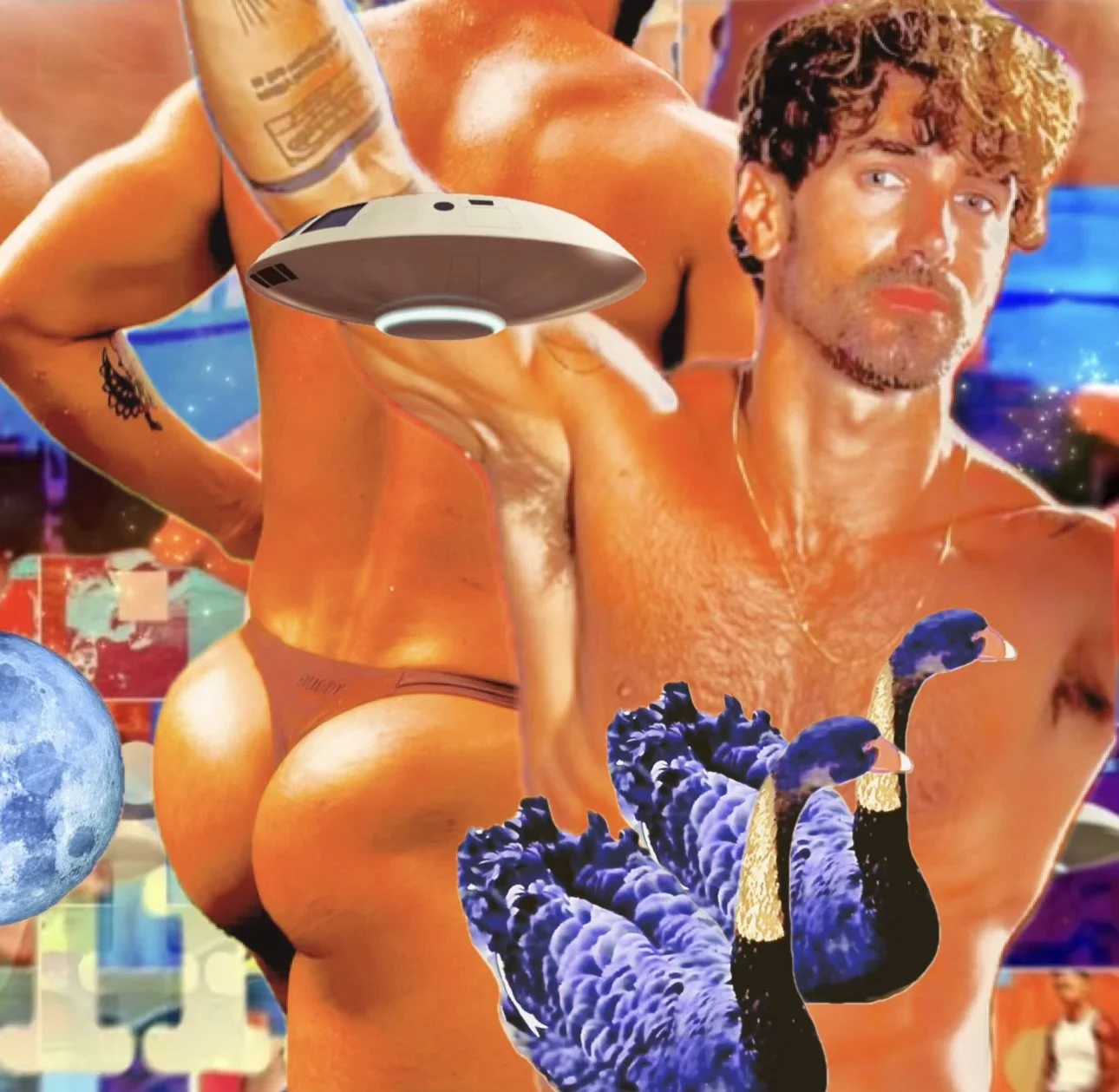
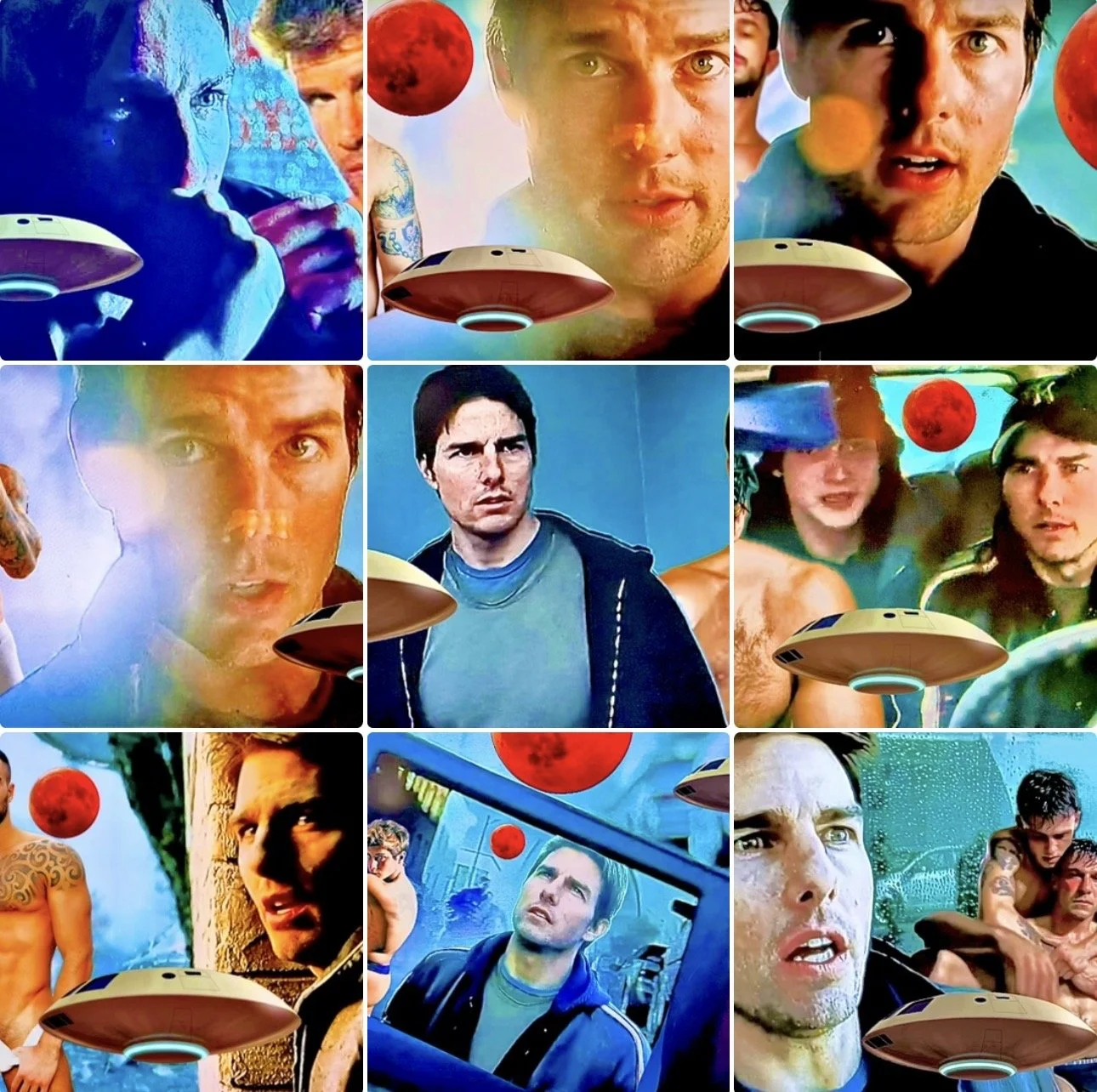
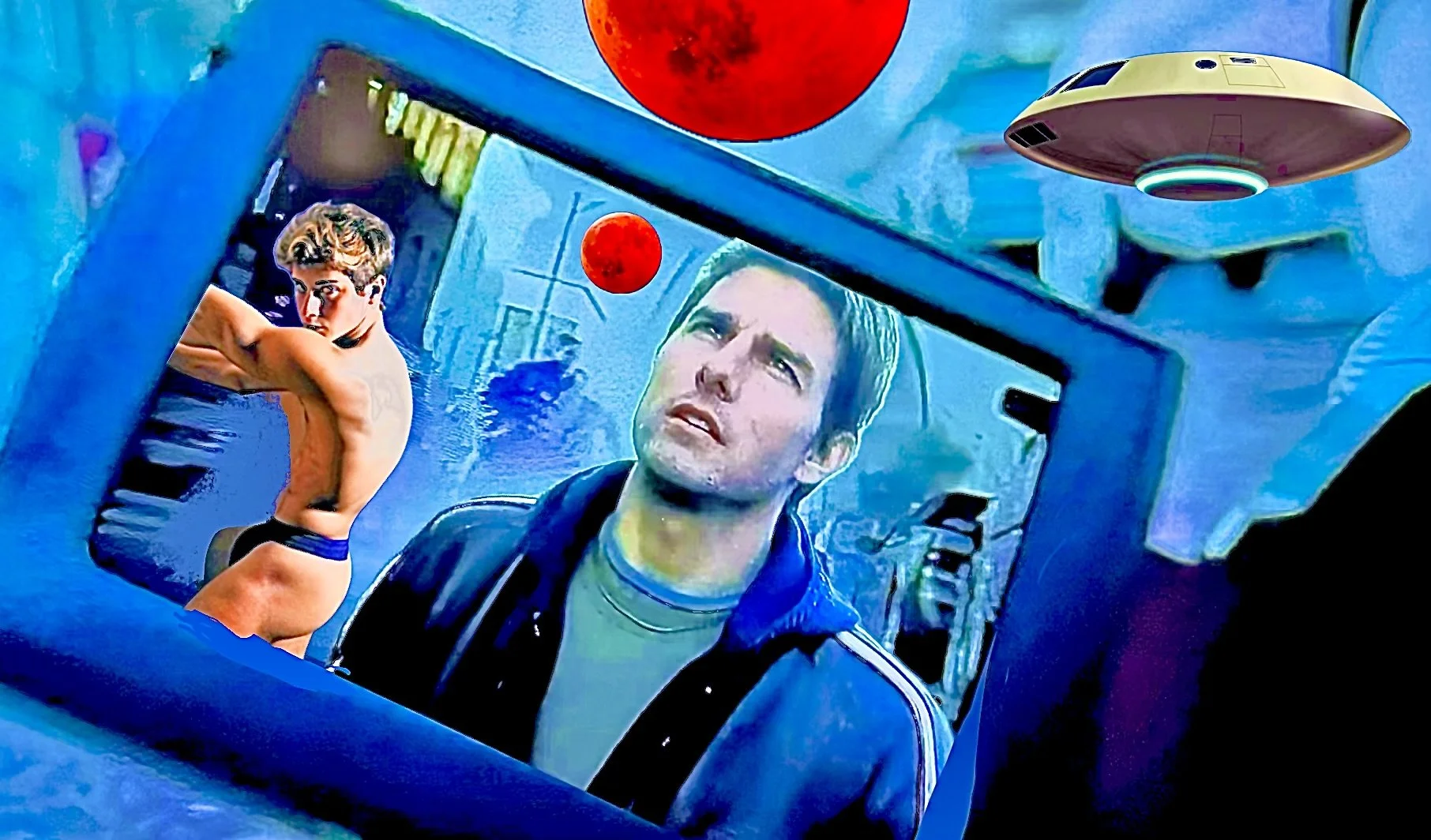
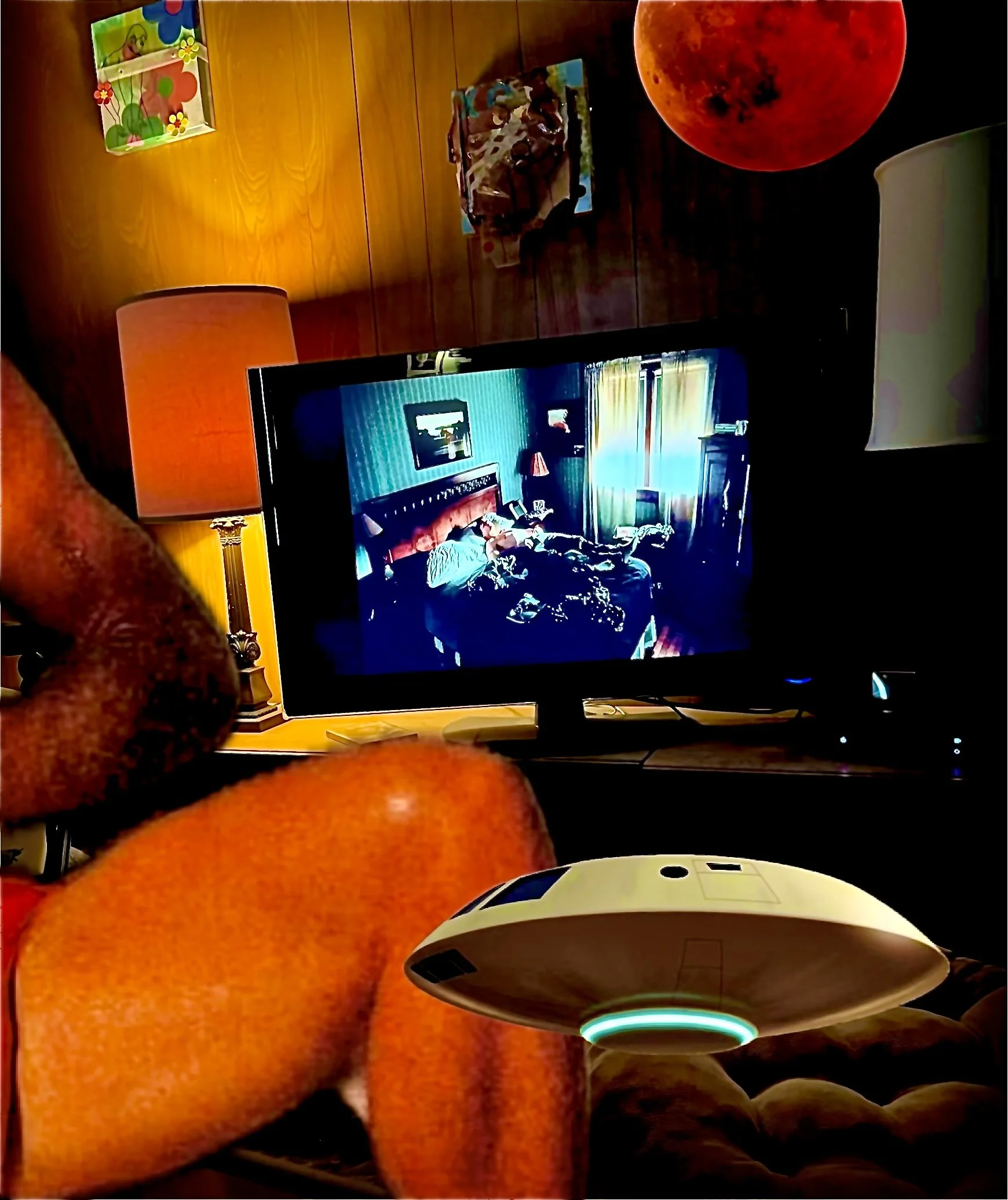
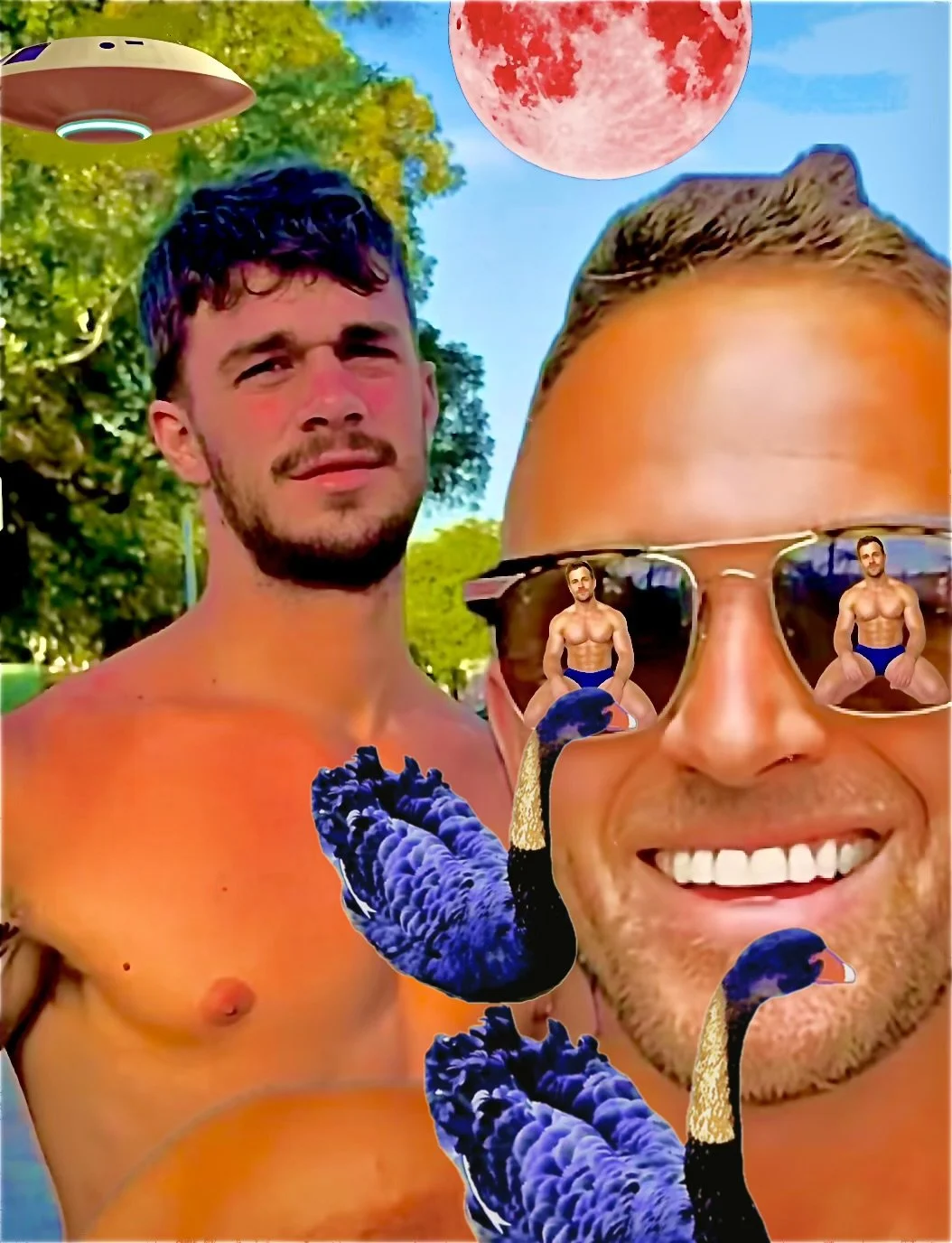
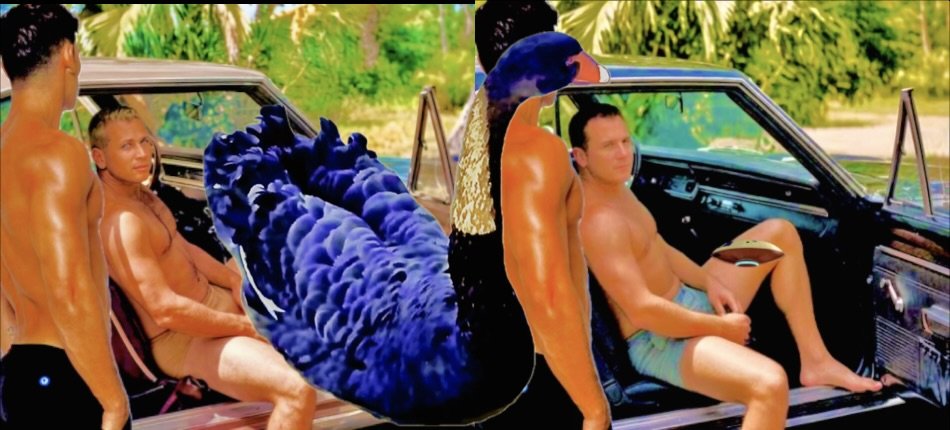
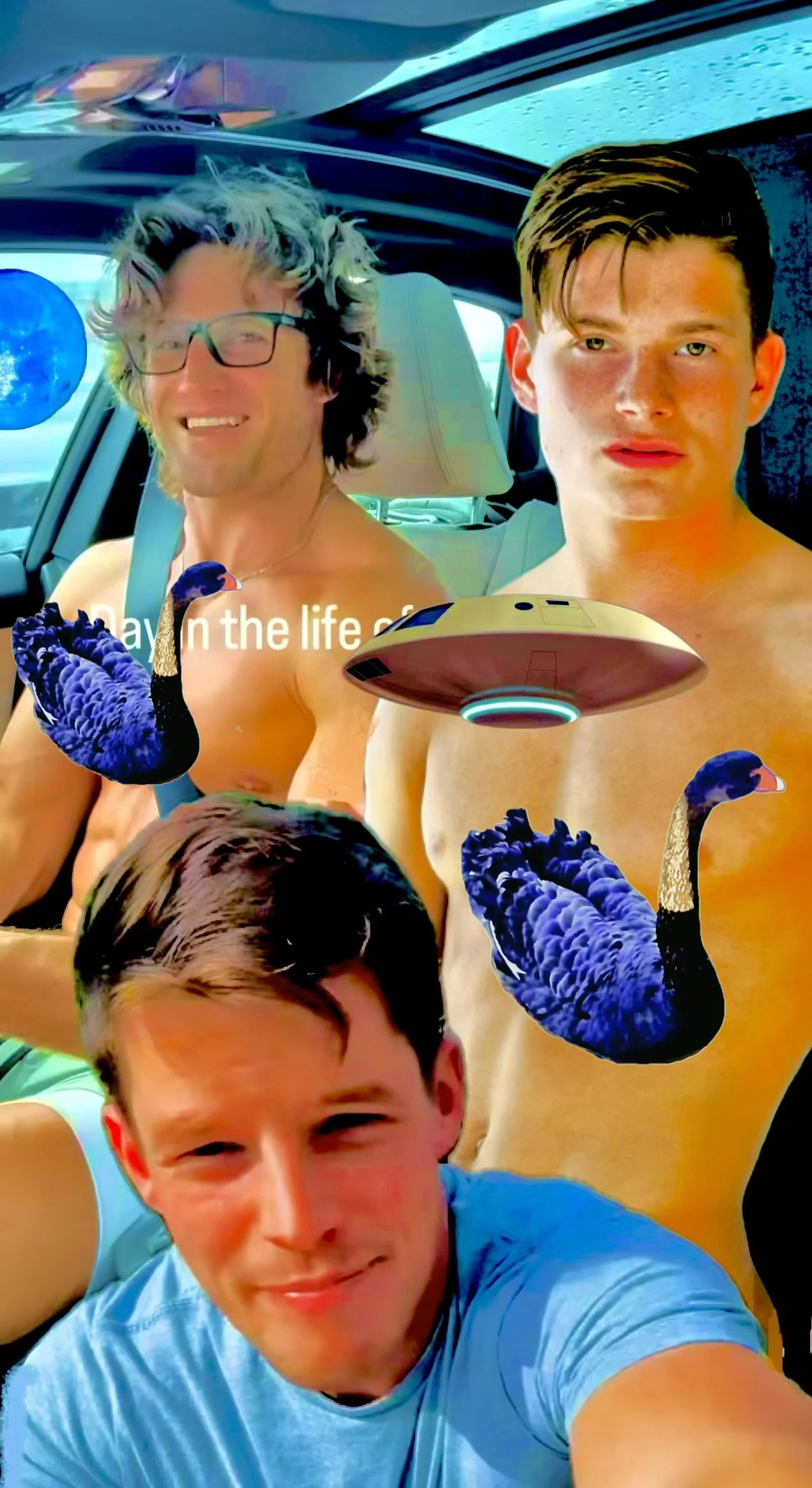
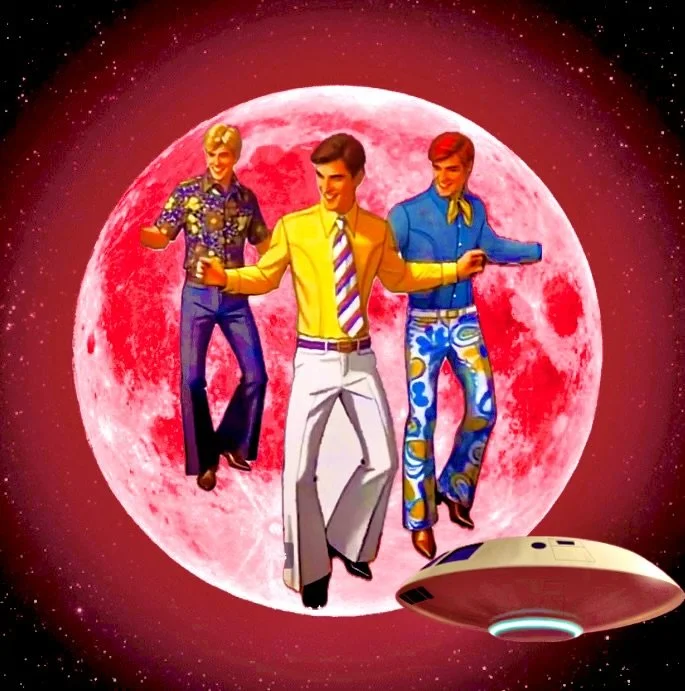
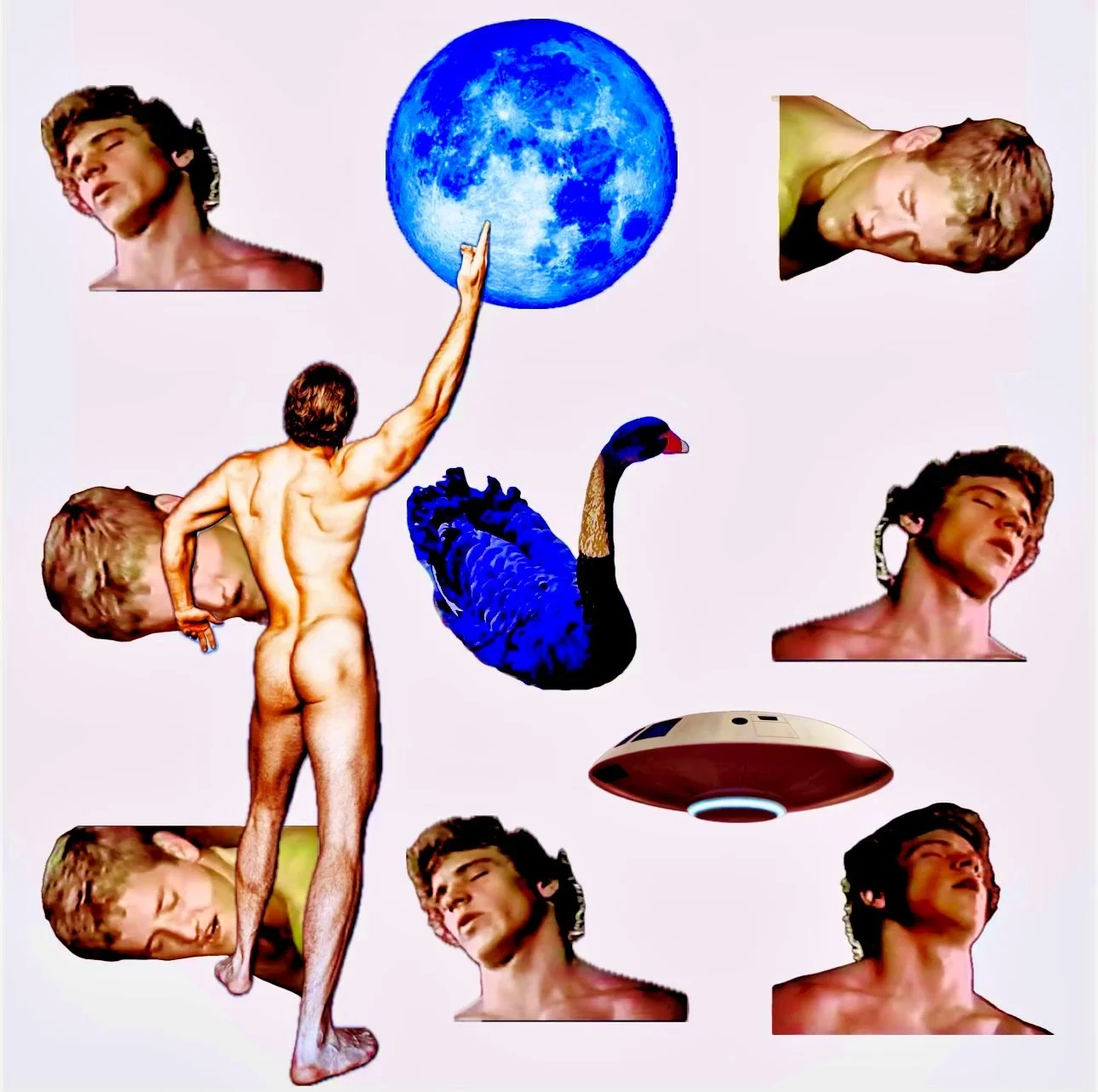
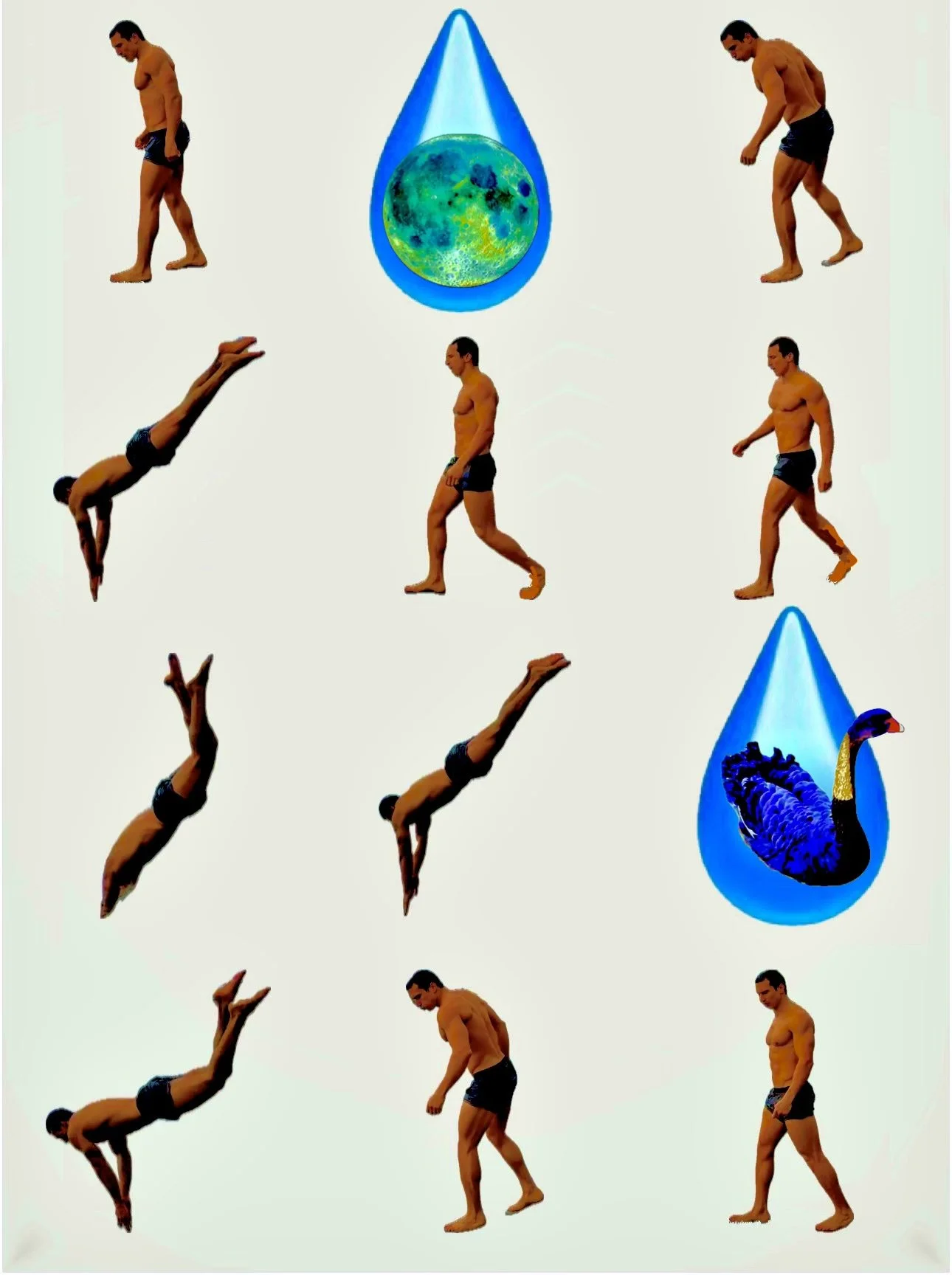
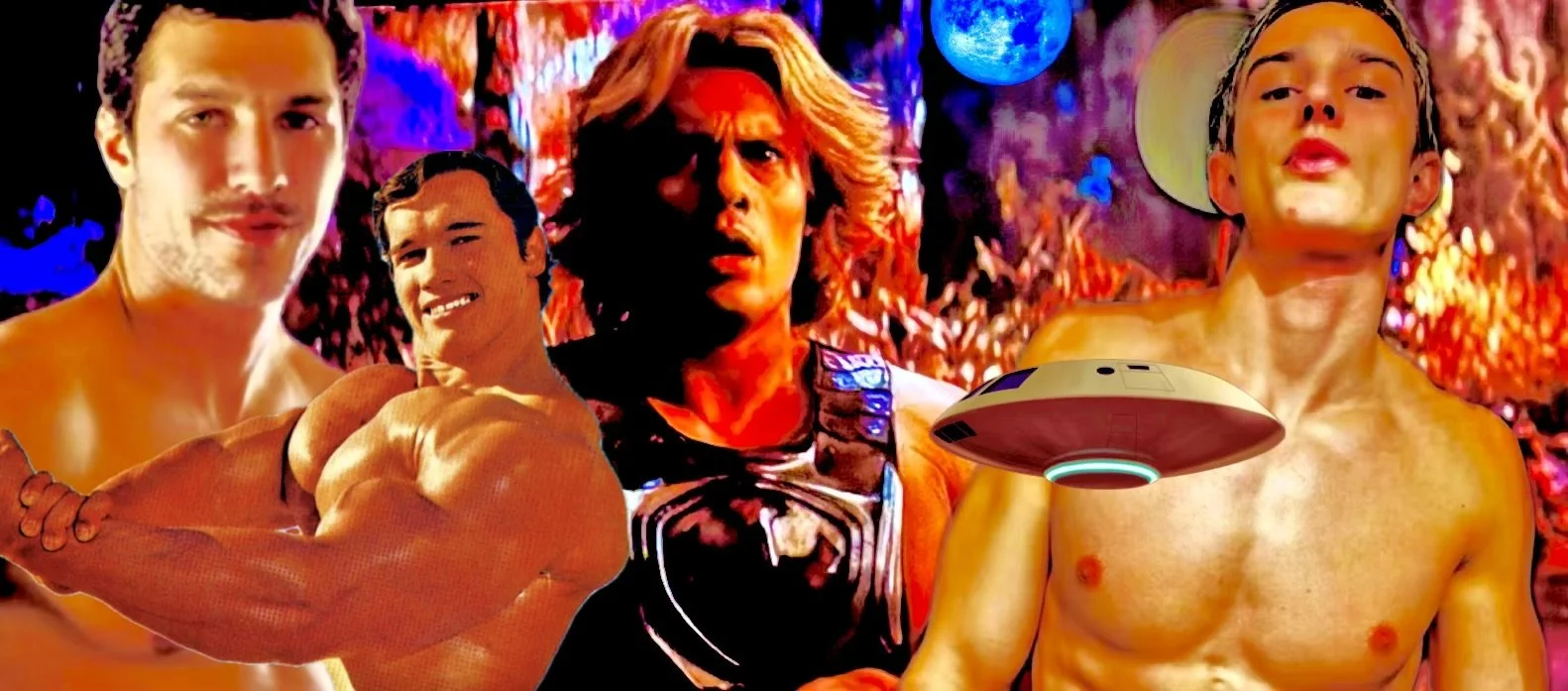
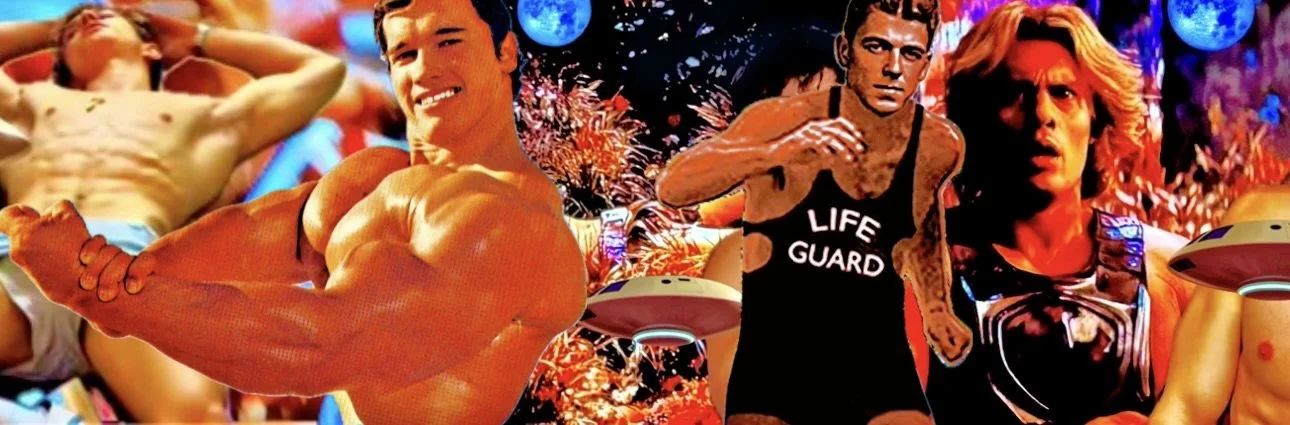
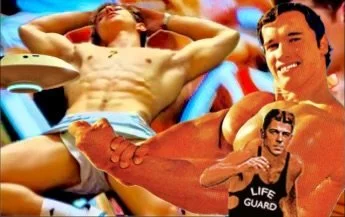
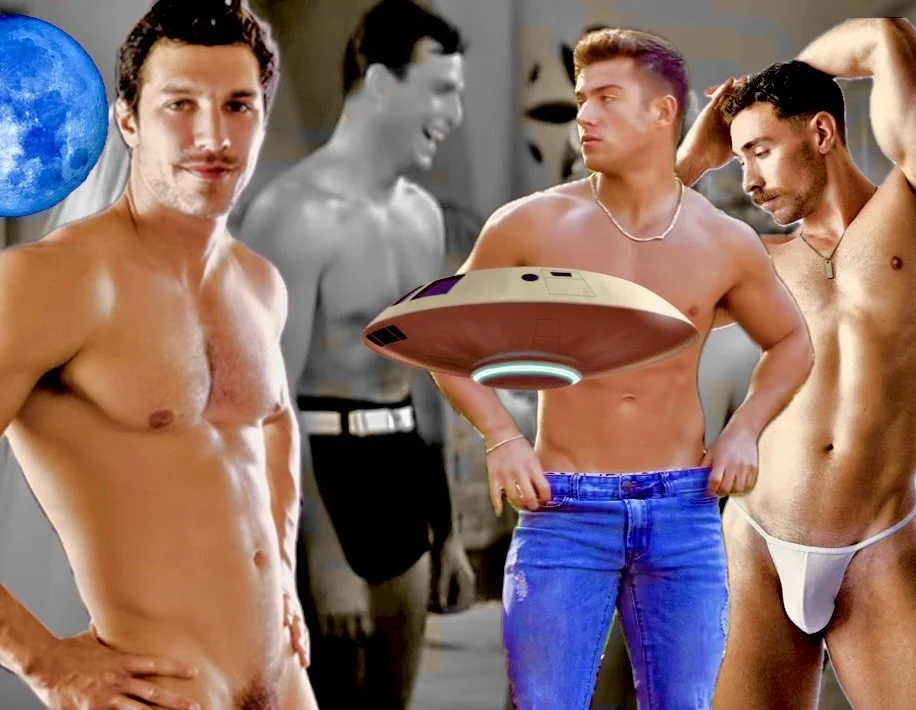
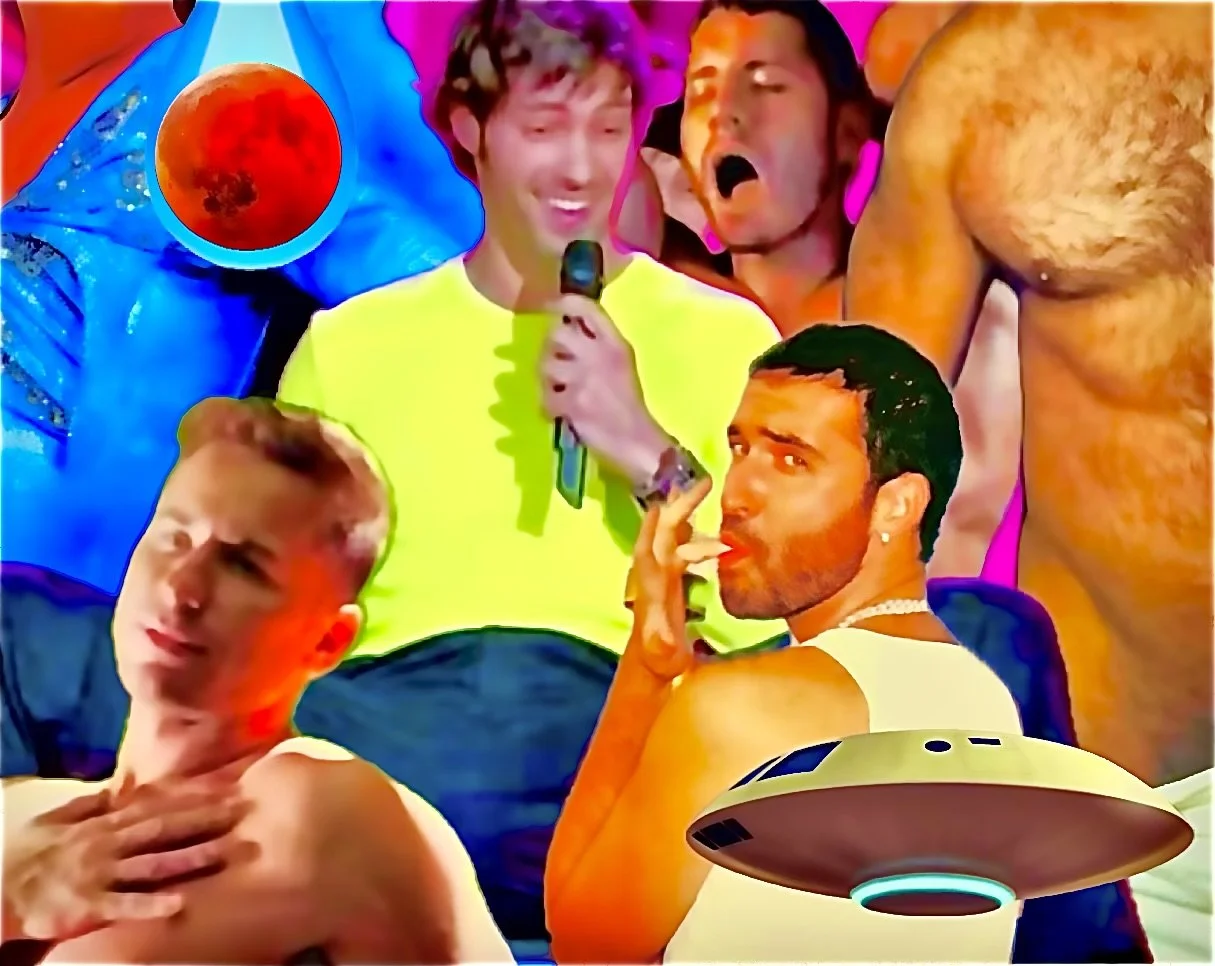
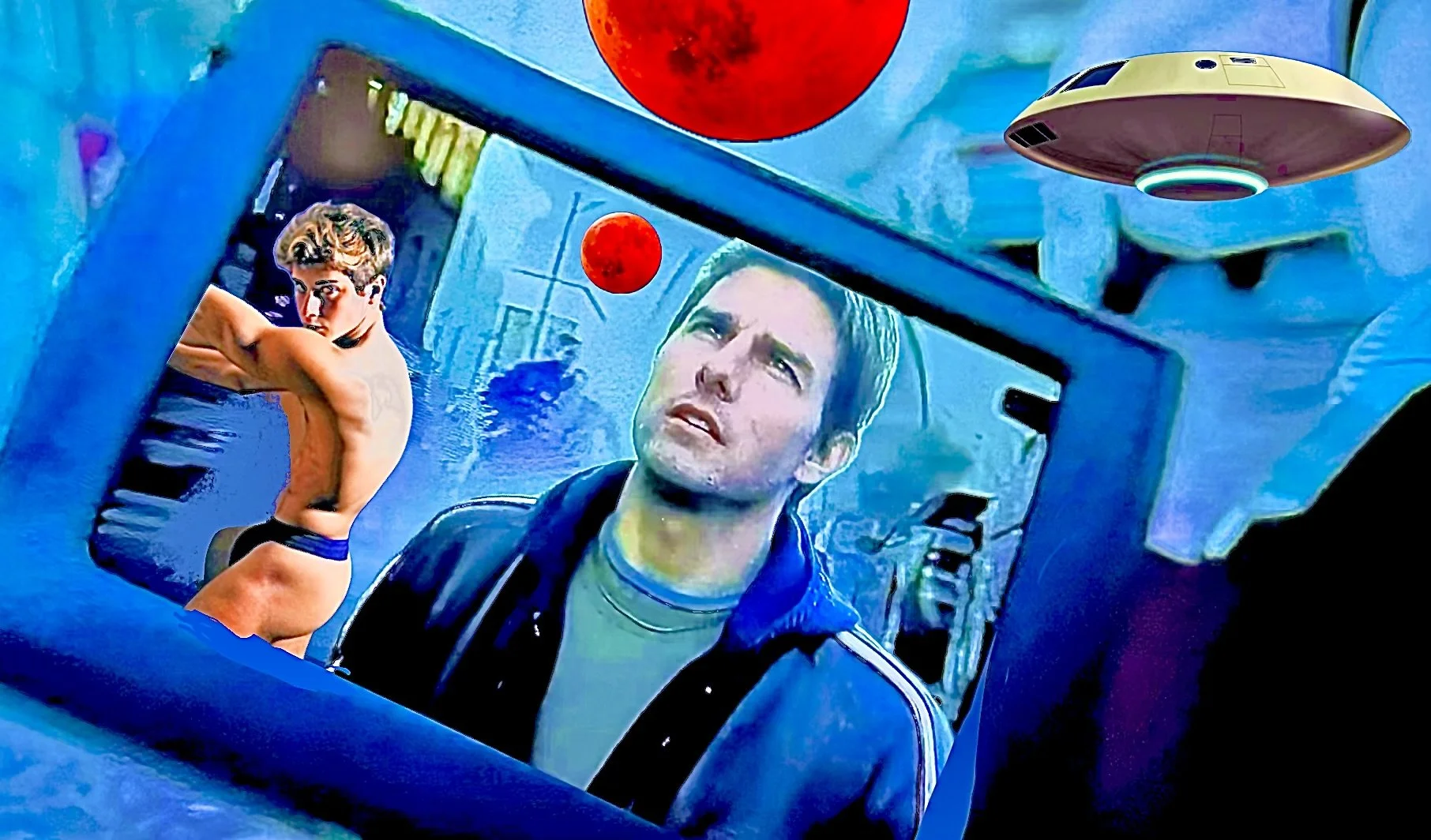
Eight collages make up this set, all built from the same three-part legend: Ground, Figures, and Accents.
The Ground is a grid of previously created collages, compressed into a single field that forms the foundation the new work is built on top of. It’s not a backdrop in the traditional sense — it’s the layer of past work underneath the present one, often only partly visible once the rest of the composition sits on top of it.
The Figures are found, sourced from social media — specifically Facebook — then cut, cropped, and reused. The same handful of bodies recur across all eight pieces, at different scales, rotations, and croppings, rather than one figure serving one collage. Figures are allowed to extend past the edge of the frame rather than being contained within it, keeping the composition open rather than closed, and no piece is built for symmetry — bodies, accents, and ground are balanced against each other unevenly, weight against weight, rather than mirrored.
The blue moon, the black swan, and Jupiter 3 are the three accents, and each carries its own charge rather than functioning as decoration. The blue moon stands for desire and longing. The black swan points to the positive natural occurrence of homosexuality across species, a fact of the animal world rather than an anomaly. Jupiter 3 acts as a witness to the scene, but also as a symbol of escape and freedom. None of the three appear at the same scale or position twice; they’re a fixed vocabulary, reinvented per each collage.
Color, value, rhythm, repetition, and balance are what hold each piece together formally. The collages function as a kind of playing field: a bounded space where figures act out the realities of gay life the way athletes act out a game. Nike patronized athletics without knowing which bodies would eventually stand on the field she named. These eight pieces put that question, does sexual orientation hinder athletic ability, back in front of her, and us.