In these three collages, the viewer is a witness, and the viewer is seen. In each piece, a dark-haired man turns over his shoulder and looks out of the frame, at whoever stands in front of the work.
Every figure comes from the feed. The over-the-shoulder pose is common on social media. It is made for an audience the person posting will never meet. In these collages, that audience is specific: the person looking.
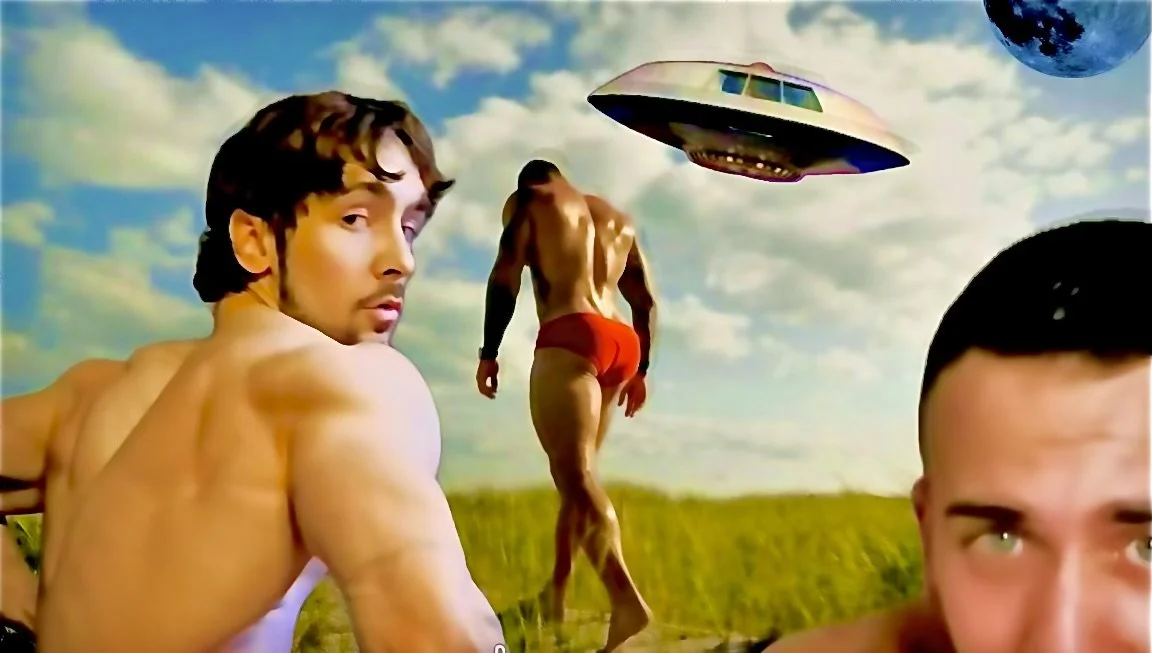
The settings change. The first collage is an open field, where a second man in red trunks walks away into tall grass. The second is the Dallas skyline. The third is a high-rise interior facing the Empire State Building at sunset. The glance repeats in all three.
Two other witnesses are present. The Jupiter 3 represents freedom and escape. The Blue Moon represents desire and longing. Both watch from above, and no figure looks at them. They are unseen witnesses.
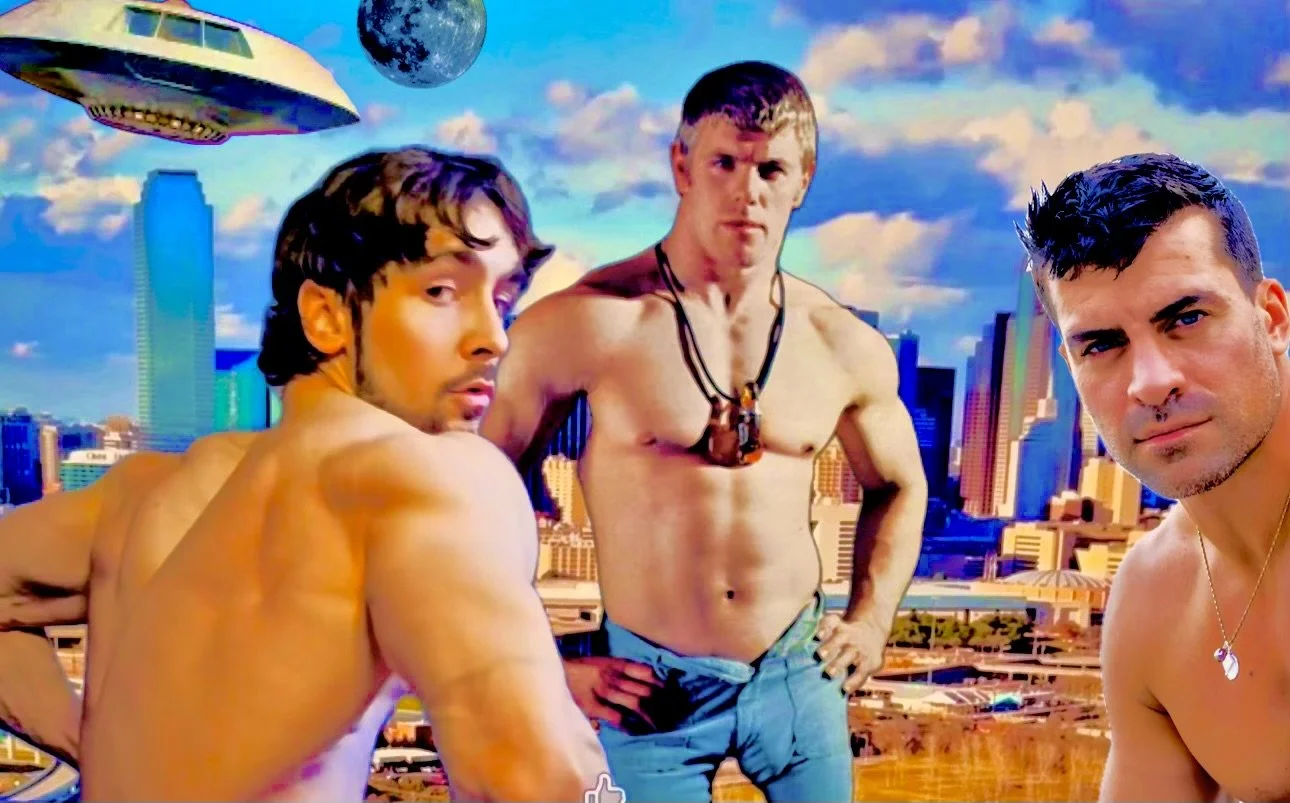
The viewer is the only witness any figure acknowledges.
That acknowledgment changes the act of looking. An unseen witness observes from a distance and remains uninvolved. A seen witness has been identified. Once the man turns and looks back, the viewer becomes part of the scene: part of the attention, the display, and the desire between men.
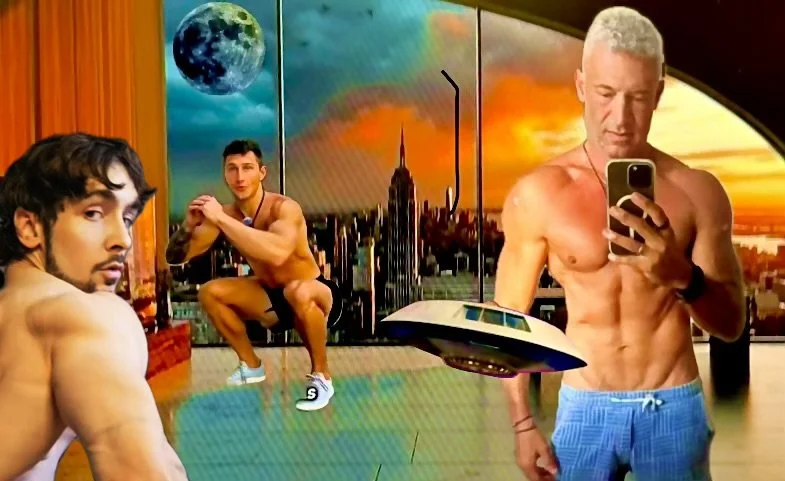
Each piece positions the viewer differently. In the field, a close-cropped face at the right edge also looks sideways, so the viewer stands between two looks. In Dallas, the other two men face forward, and all three look at the viewer. In New York, a silver-haired man photographs himself in a mirror, and the glance is the only look directed out of the frame.
My work takes subtext and makes it context. Here, the subtext is the viewer's own looking. The glance makes it part of the picture.