ride Alaskan motion, liberated they’re free to love who they wantThe Reclining Figure
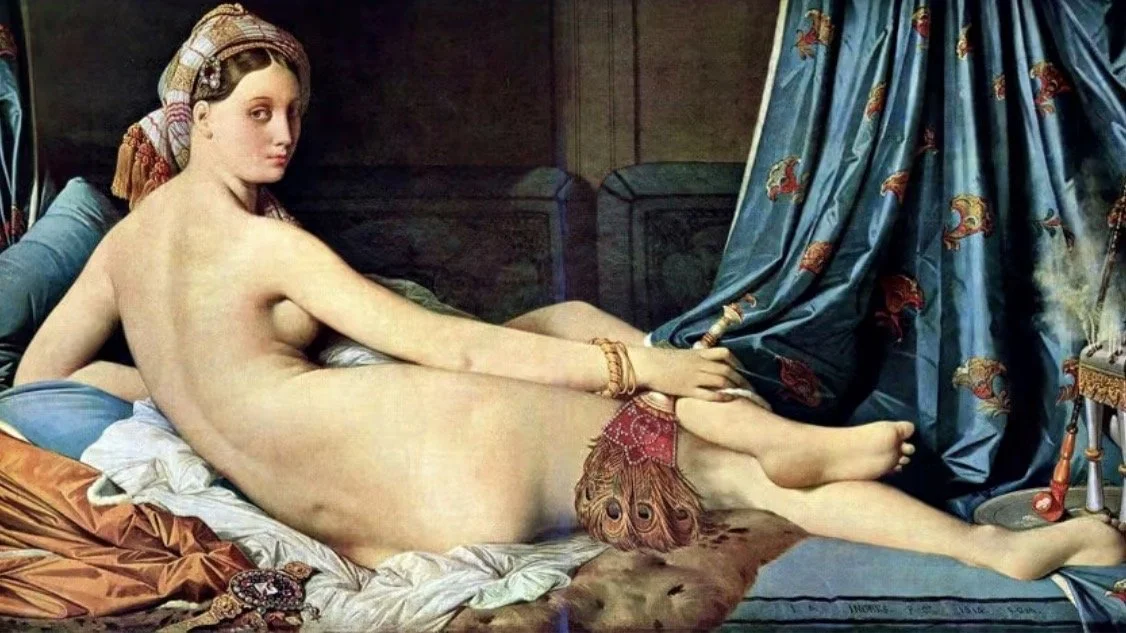
In 1814, Ingres paints a woman turned away, looking back over one shoulder. She is arranged to be seen, and the viewer is assumed to be a man.
Today the reclining figure is a young man on a phone screen. He identifies as straight. He has priced his body by the month.
What Masculinity Allows
A generation ago, a straight man who offers himself as an object of desire risks his standing. Display belongs to women. Looking belongs to men.
That line has weakened. Gym culture builds the male body for viewing, and social media rewards the result. The shame falls away. The body remains, shown openly.
Who Is Looking
The men who pay are most often gay. The straight performer knows this, adjusts to their requests, and accepts their money.
For centuries, the gay man looks at male bodies only through the cover of myth or athletics. Now he looks directly, and the man he looks at has agreed to be seen.
The Same Composition
The straight man takes the place of the odalisque. The gay man takes the seat of the patron. The composition is unchanged. Only the figures have traded places.
— Behan
References: Jean-Auguste-Dominique Ingres, Grande Odalisque, 1814, Musée du Louvre. Laura Mulvey, "Visual Pleasure and Narrative Cinema," Screen, 1975.