2026, Digital Photo
For gay men, the afternoon has long been the hour for desire. It fits inside a lunch break, an errand, a gym visit or the gap before the commute home, and it leaves the evening accounted for. Gay men organized much of their sexual lives around daylight long before a pop song gave the phrase to straight America. These five digital collages bring that hour indoors and into plain view, in the bedroom, the bathroom and the kitchen, with nothing hidden.
The phrase comes from a restaurant. The title came from the happy hour menu at Clyde's restaurant in Georgetown, Washington, D.C. The song was written by Bill Danoff of the Starland Vocal Band. It reached #1 on Billboard's Hot 100 on July 10, 1976, and the group won the Grammy for Best New Artist. Danoff said he wanted a fun song that hinted at sex rather than an all-out sex song. The band was two couples, so the song presented the afternoon tryst as a light secret between husbands and wives.
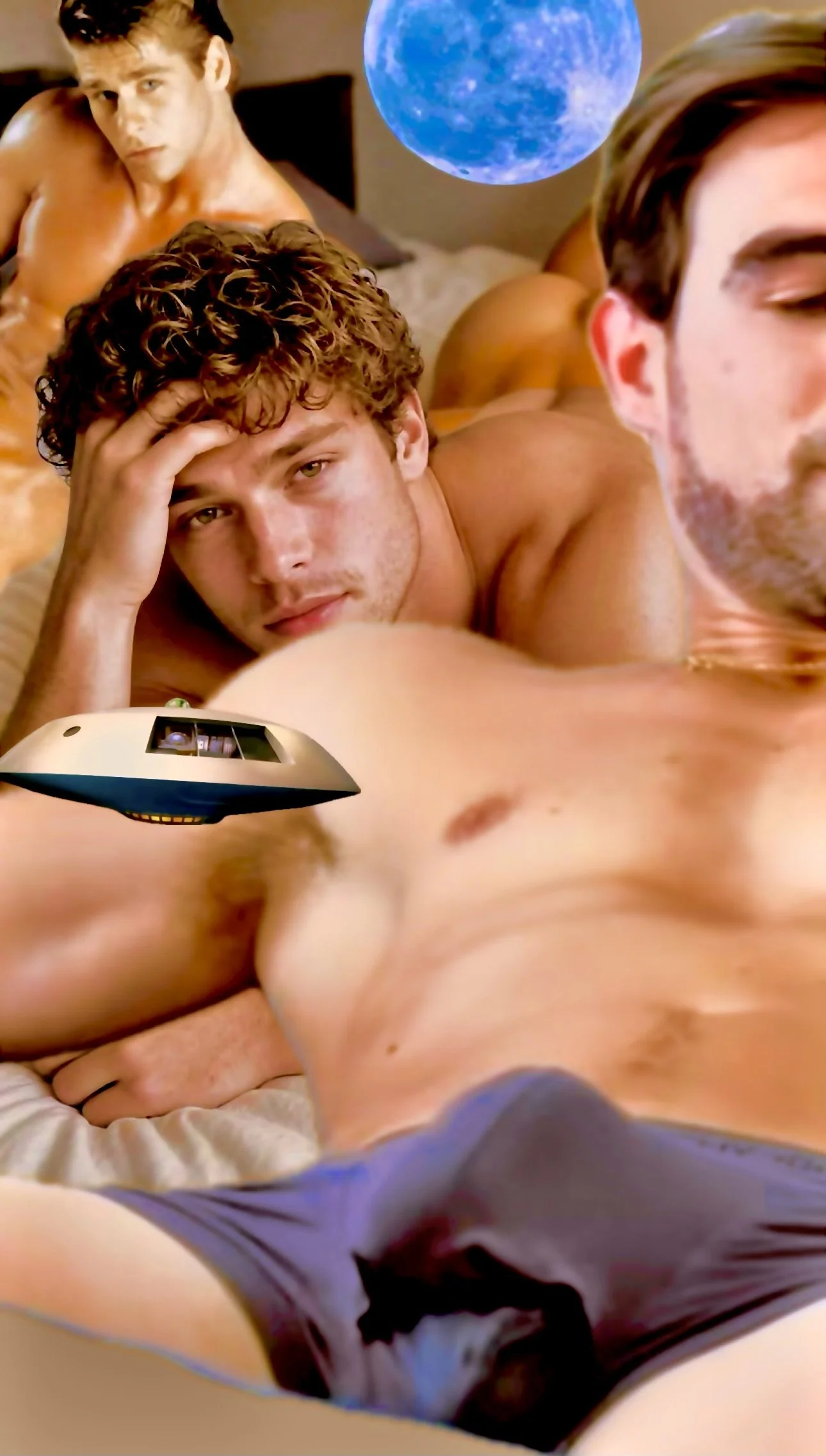
For many gay men in 1976, the afternoon was often the only time they could meet. A man living with a wife, a family or a landlord who asks questions cannot easily disappear at night. During the day, his absence goes unnoticed.
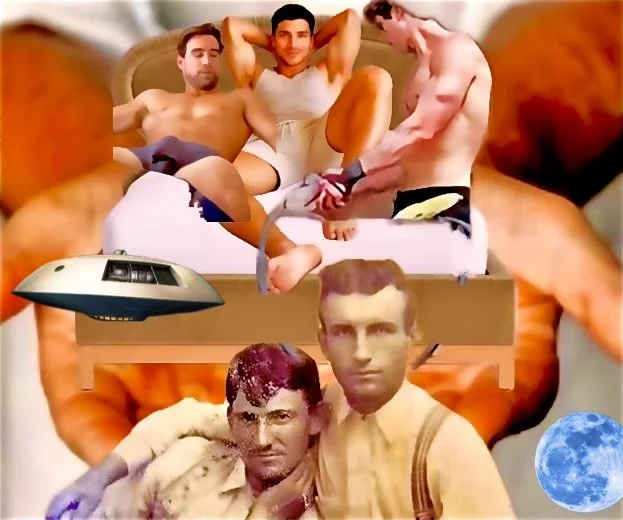
Sociology recorded this. In Tearoom Trade (1970), Laud Humphreys studied men who met in public restrooms. He confirmed that over 50% of his subjects identified as heterosexual men who were married to women. Many were family men who were well-educated and well-respected members of their communities. Humphreys concluded that the harm in these encounters came from police activity: arrests, blackmail and destroyed families.

Gay culture also built open institutions around the afternoon. The Sunday tea dance became a fixture in Fire Island and Provincetown, a daytime gathering where men danced together in the sun. The gym, the bathhouse and the long lunch each gave a man a reason to be somewhere else for an hour. Today, apps show which men nearby are available now, including at noon.
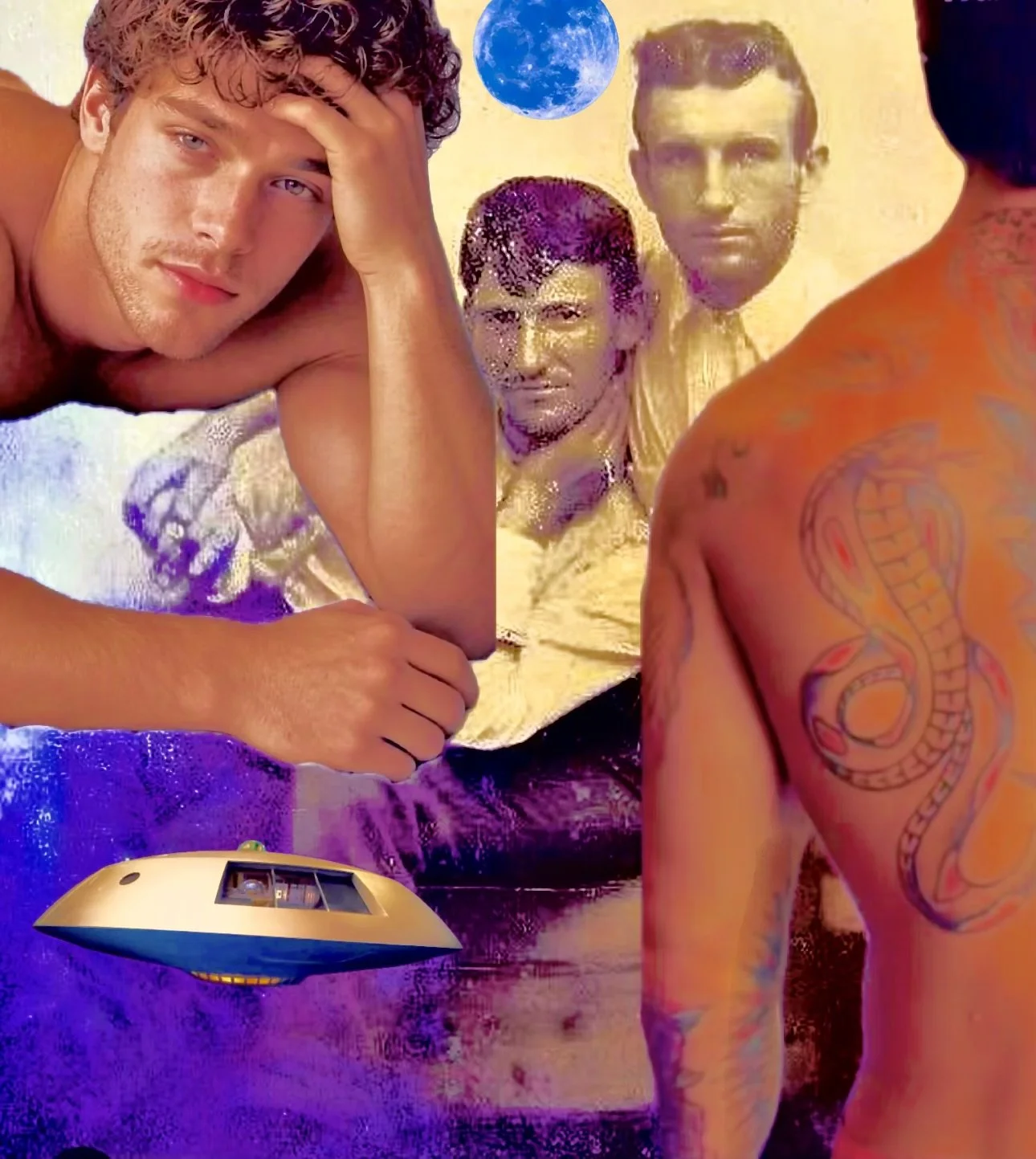
In these collages, the afternoon delight is no longer hidden from a household. It happens inside the household. Men lounge in a sunlit bedroom with nowhere else to be. One man takes a mirror selfie while another leans out from behind the shower curtain. Two men share a kitchen in their underwear. In two of the works, an early twentieth-century photograph of two men with their arms around each other stands among the men of today, in the same light.
Two icons appear in every work. The Blue Moon stands for longing and desire, and it hangs in a daylight sky. Jupiter 3 stands for escape, rescue and witness, and it hovers over each scene. The afternoon is an escape from the workday, and Jupiter 3 witnesses what happens in it.

The subtext of the afternoon delight was the hidden lives of men who could only meet by day. These collages make that subtext the context. Here the afternoon belongs to the men openly, in their own rooms.
— Behan
Sources: Wikipedia, "Afternoon Delight"; WTOP, "How a Georgetown restaurant's menu led to 1970s 'Afternoon Delight' earworm" (2023); Parade, "How a Restaurant Menu Inspired a No. 1 Soft Rock Hit in 1976"; Laud Humphreys, Tearoom Trade: Impersonal Sex in Public Places (1970); EBSCO Research Starters, "Study of Anonymous Gay Sex Leads to Ethics Scandal."