
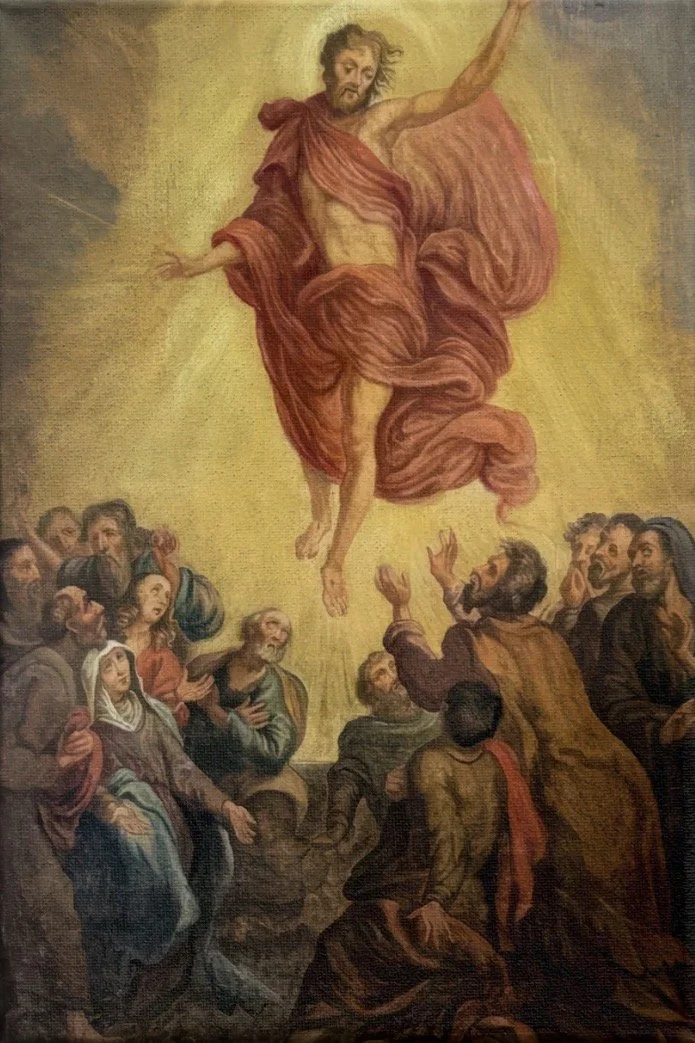
Ascension, after Rubens
In the Baroque Ascension, Christ's body is the subject. Rubens and his followers painted a muscular male figure in partial undress and placed it at the center of the composition for everyone to look at. My collage keeps the composition and puts that looking at the center.
In the painting, Christ rises in red drapery, with his arms open and gold light behind him. The apostles crowd the bottom edge with their hands raised, and every face is turned up toward him.
In the collage, the rising figure is a man in a white cap and gray running shorts, holding a racket. A blue moon takes the place of the halo, and an orange glow in a forest takes the place of the gold light. The drapery is gone, so the body that the painting partly covered is now in plain view.
The lower register changes the most. Wrestlers replace the apostles, and they are not looking up. Their attention is on each other: bodies locked together on the ground, in full contact. The painting separates the heavenly body from the people on earth. The collage puts both kinds of male body in one frame.
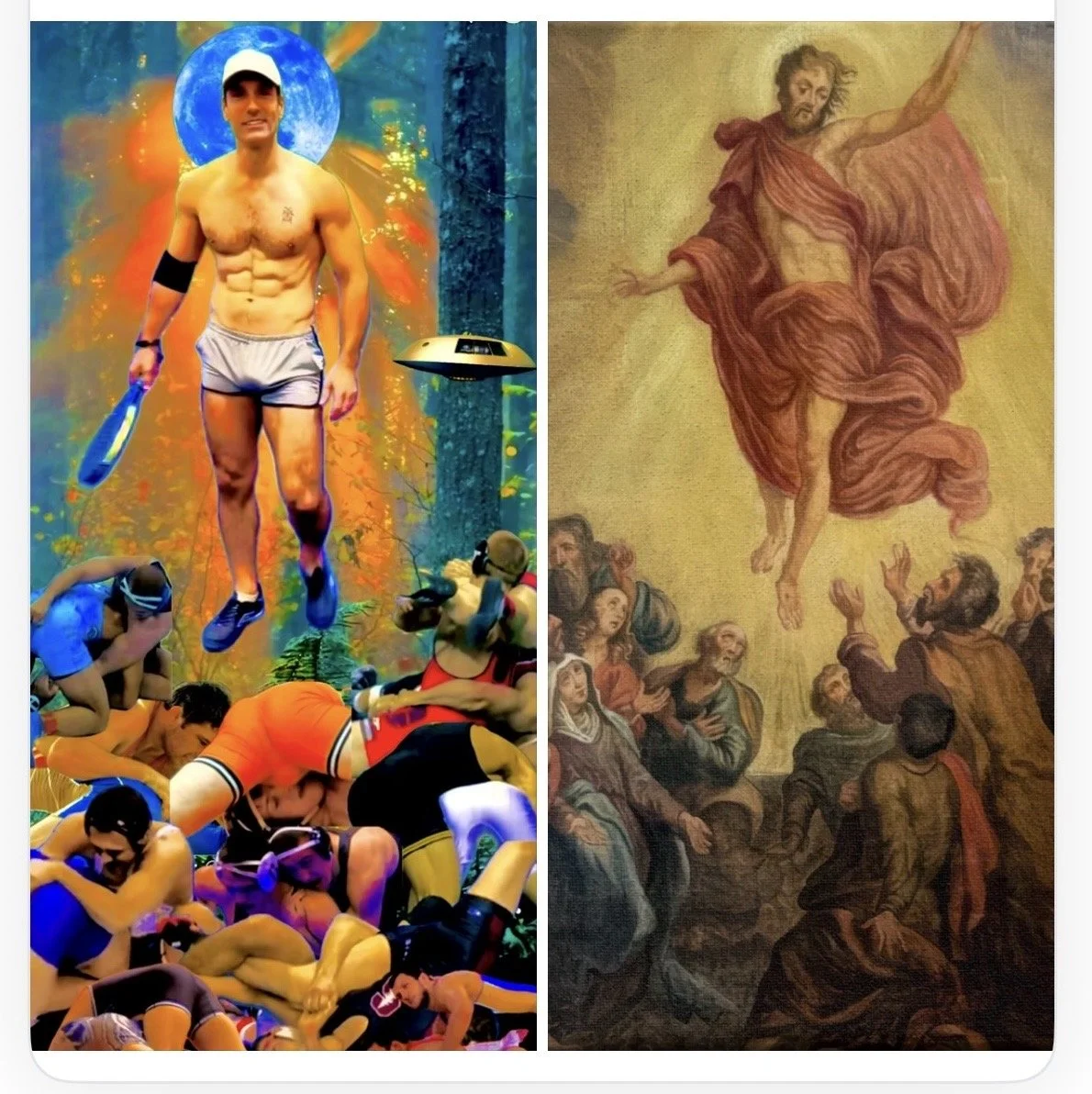
Two figures watch the scene. The blue moon stands for loyalty, love and desire. Jupiter 3, at the right, stands for freedom and escape. Both are unseen witnesses, and both represent you, the viewer.
The Ascension asks viewers to look at an idealized male body, and its religious subject presents that looking as devotion. The collage removes the religious framing, so looking at the male body becomes the stated subject. What the painting leaves unsaid, the collage says directly.
— Behan