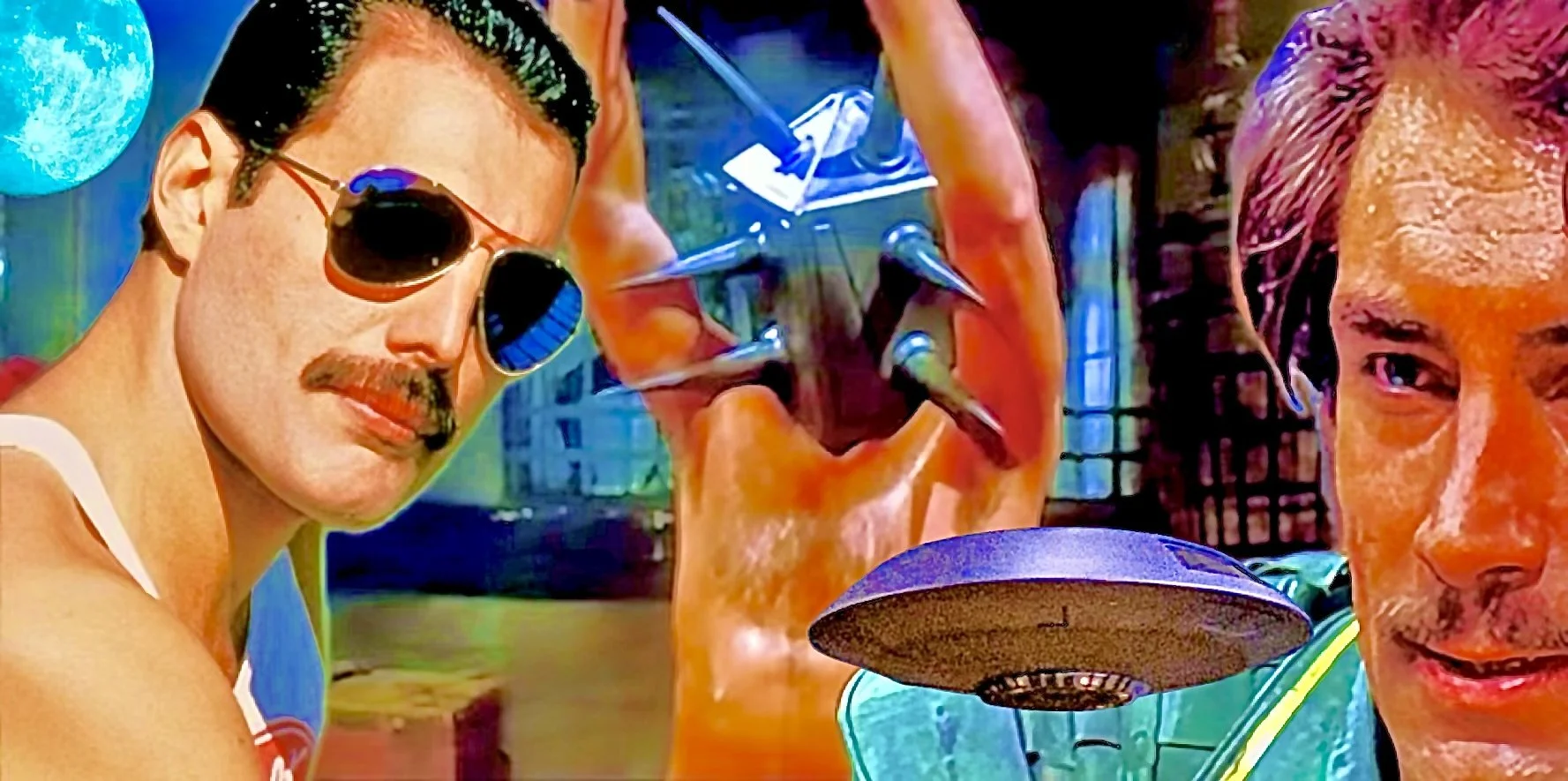
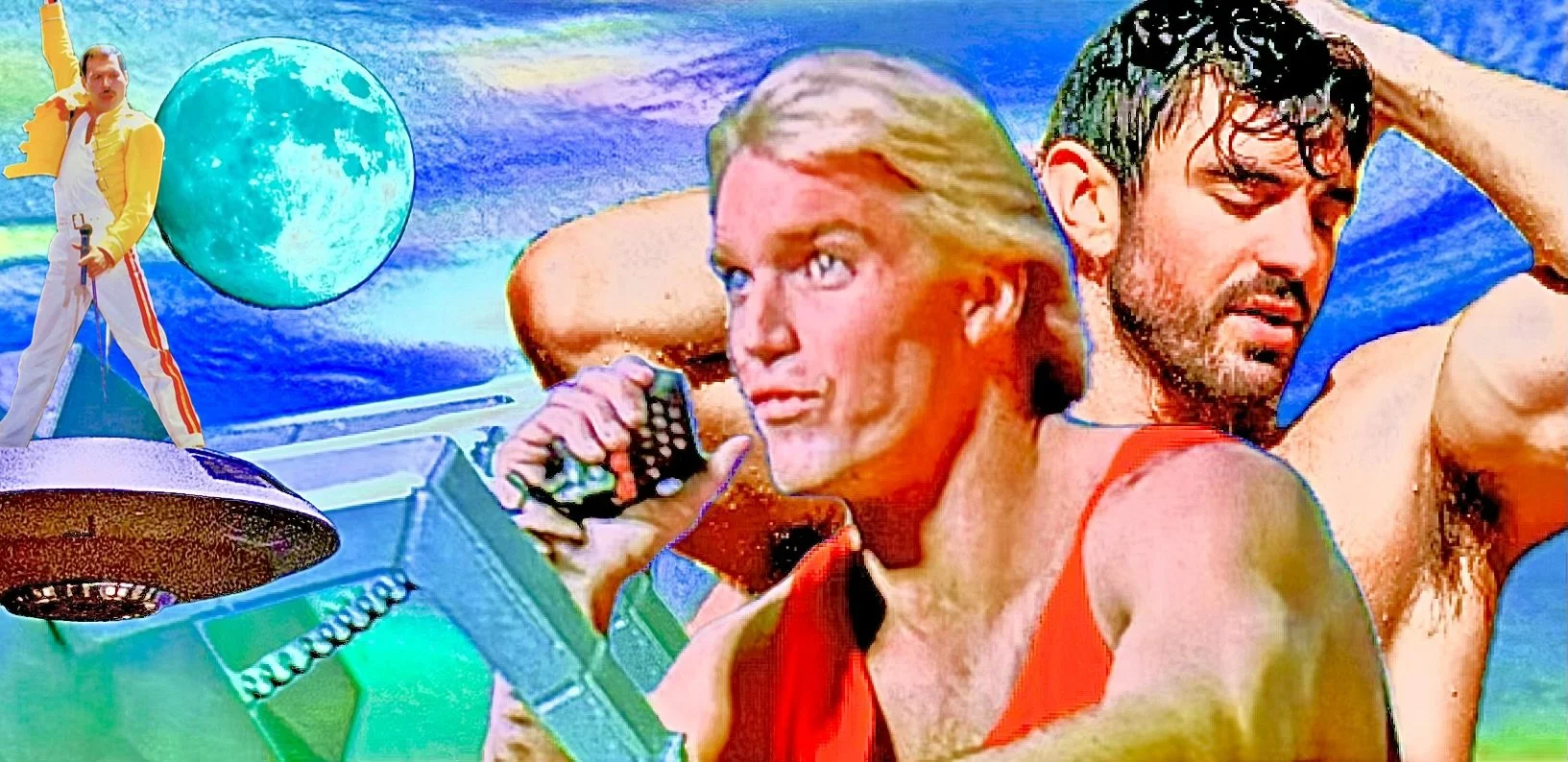
Freddie, Sam, and Timothy Were the 1980s’ Hottest Throuple Digital Photocollage series
In 1505 AD, Pope Paul IV ordered fig leaves and loincloths painted over Michelangelo’s nudes in the Last Judgment — because the Church knew exactly where the threat lived.
In 1971 AD, the makers of Flesh Gordon surrendered their hardcore footage to the Los Angeles Police Department’s Vice Squad. The police came. They took the film and destroyed it.
In 1980 AD, Dino De Laurentiis remade the same film with all the camp, leather, and dramatic excess intact — and none of the sex. He kept the body. He removed the desire.
And in 2026 AD, queer artists still have to decide what Facebook will permit or reject.
Five centuries of the same hand reaching for the same thing — the body, the desire, the image that says this exists and it is not shameful.
Flesh Gordon was explicit, raucous, X-rated — straight sex, gay sex, the whole salami. Made with genuine craft and genuine audacity — and reduced to a charge of pandering.
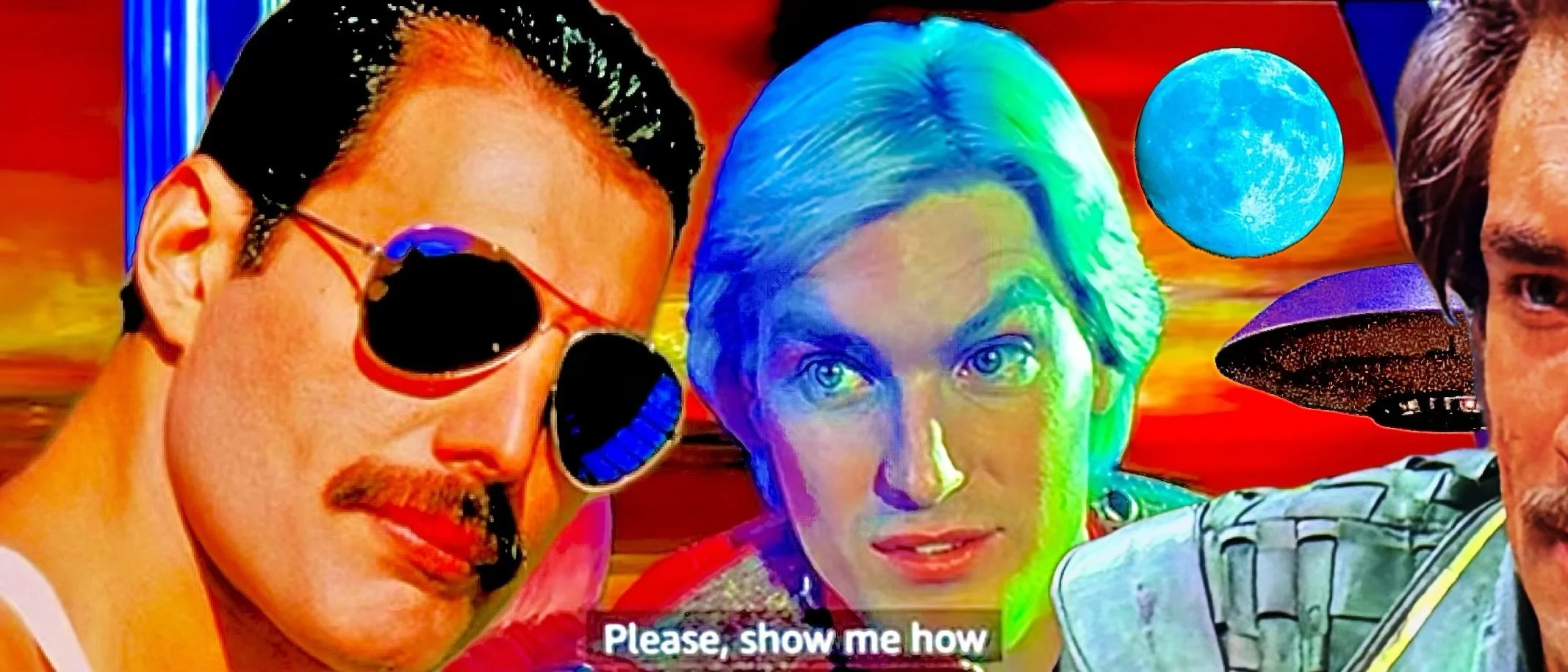
The band hired to score every frame of Flash Gordon was led by the singer Freddie Mercury. He was the only gay person known to be involved with the film. He was also an immigrant and a person of color. Being in the closet was a strategy of survival, not a choice to make. And yet there he is. Singing. Over every frame of the gayest straight film ever made in a band named Queen.
Flash Gordon can be considered the Wizard of Oz of its time, drained of color until the rocket launches, with Mongo arriving in full operatic excess. Dorothy becomes herself in Oz. Flash becomes himself on Mongo. Likewise Freddie Mercury becomes himself on the stage, the stage being his Mongo and his Oz.
Dino De Laurentiis did not know who Queen was when they were recommended for the soundtrack. He reportedly cried: “But who are the queens?” He meant it as a question. Freddie Mercury understood it as an answer.
Sam J. Jones, who played Flash, had five years earlier appeared as a full-frontal nude centerfold in Playgirl magazine. Whether he understood his primary audience is unrecorded.
Timothy Dalton played Prince Barin — brooding, green-clad ruler of Arboria, a man who fights Flash with a bullwhip on a tilting platform above a pit of spikes. He played it straight. He had no idea it was reading otherwise. That is, arguably, the hottest thing about it.
And over all of it — the leather, the tights, the tilting platform, the men with wings, the planet called Mongo — Freddie Mercury’s golden voice. The most hidden man in the room. The only gay man in the production. Singing.
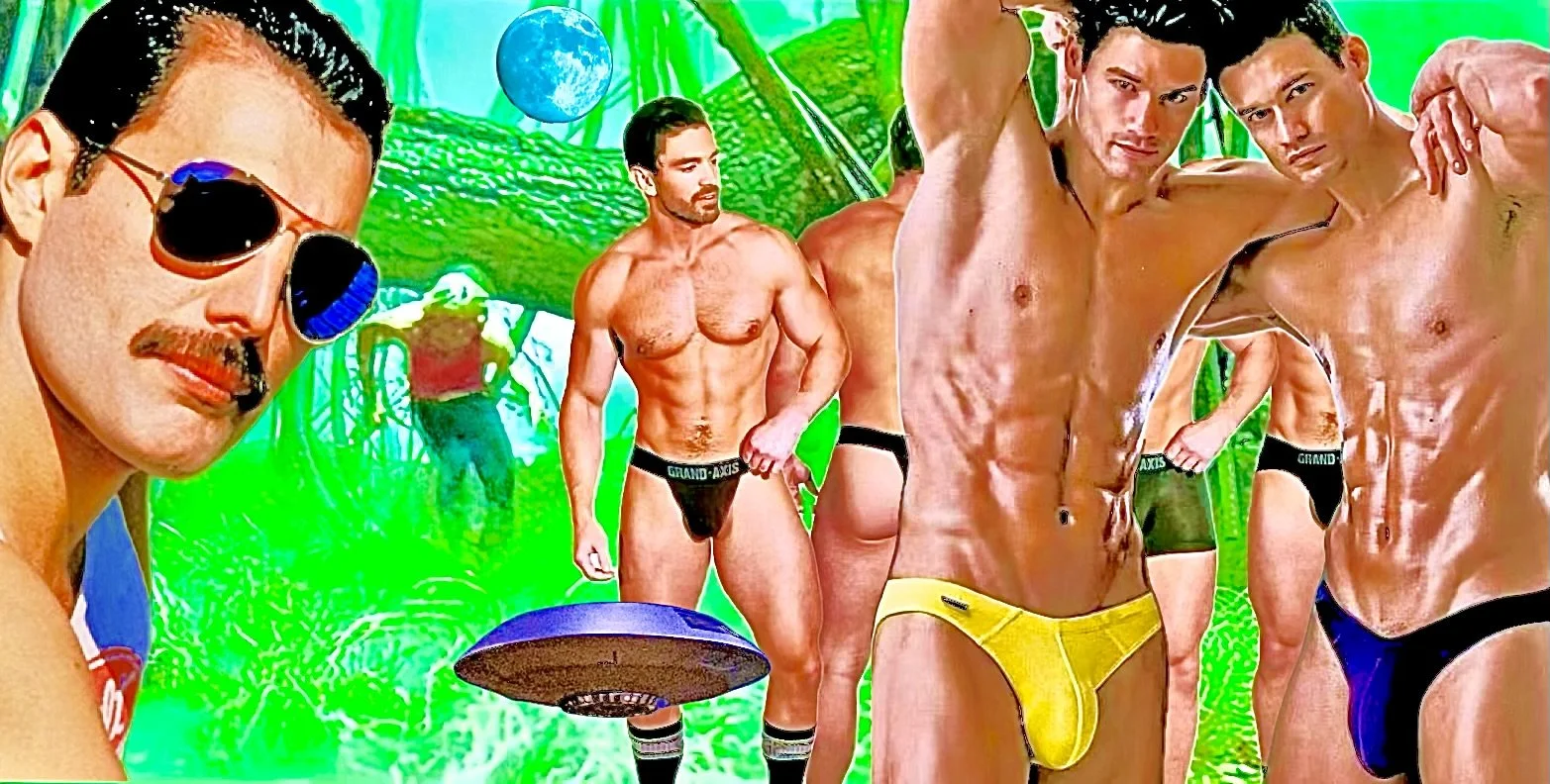
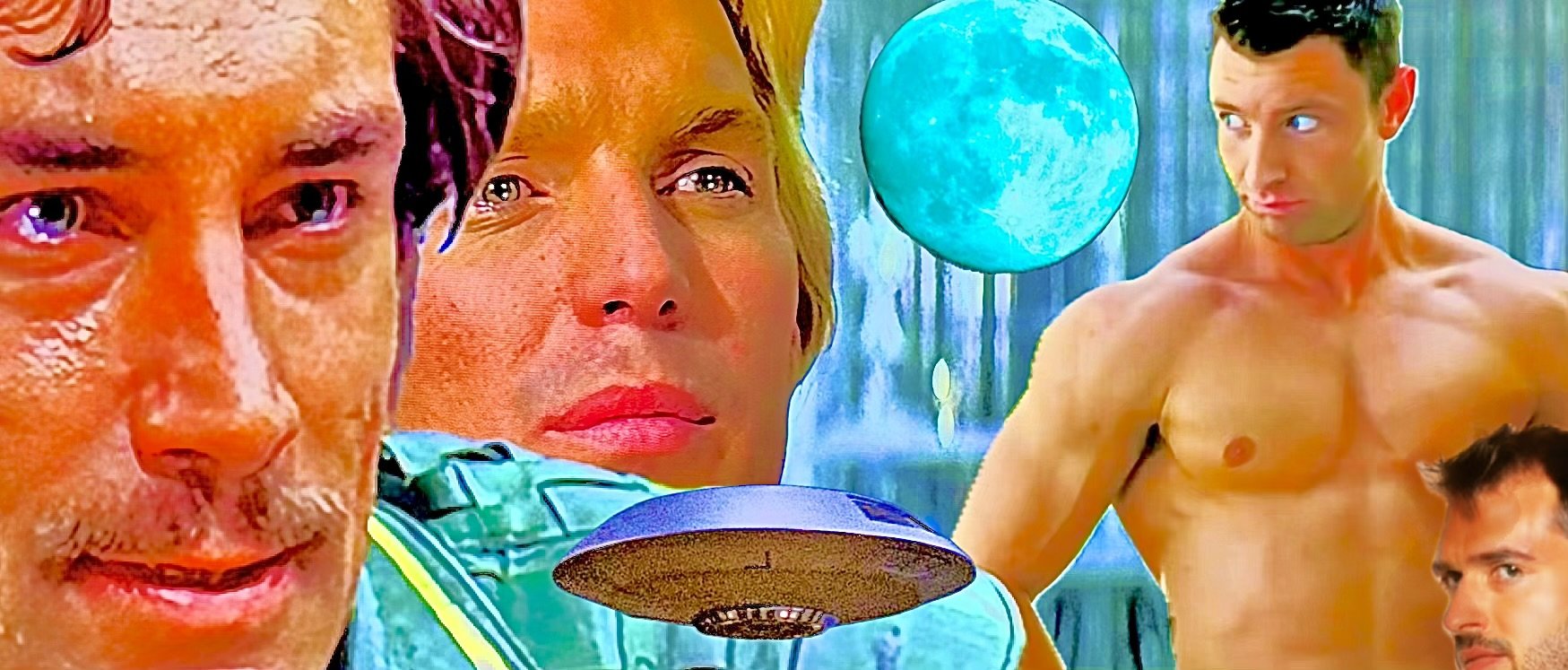
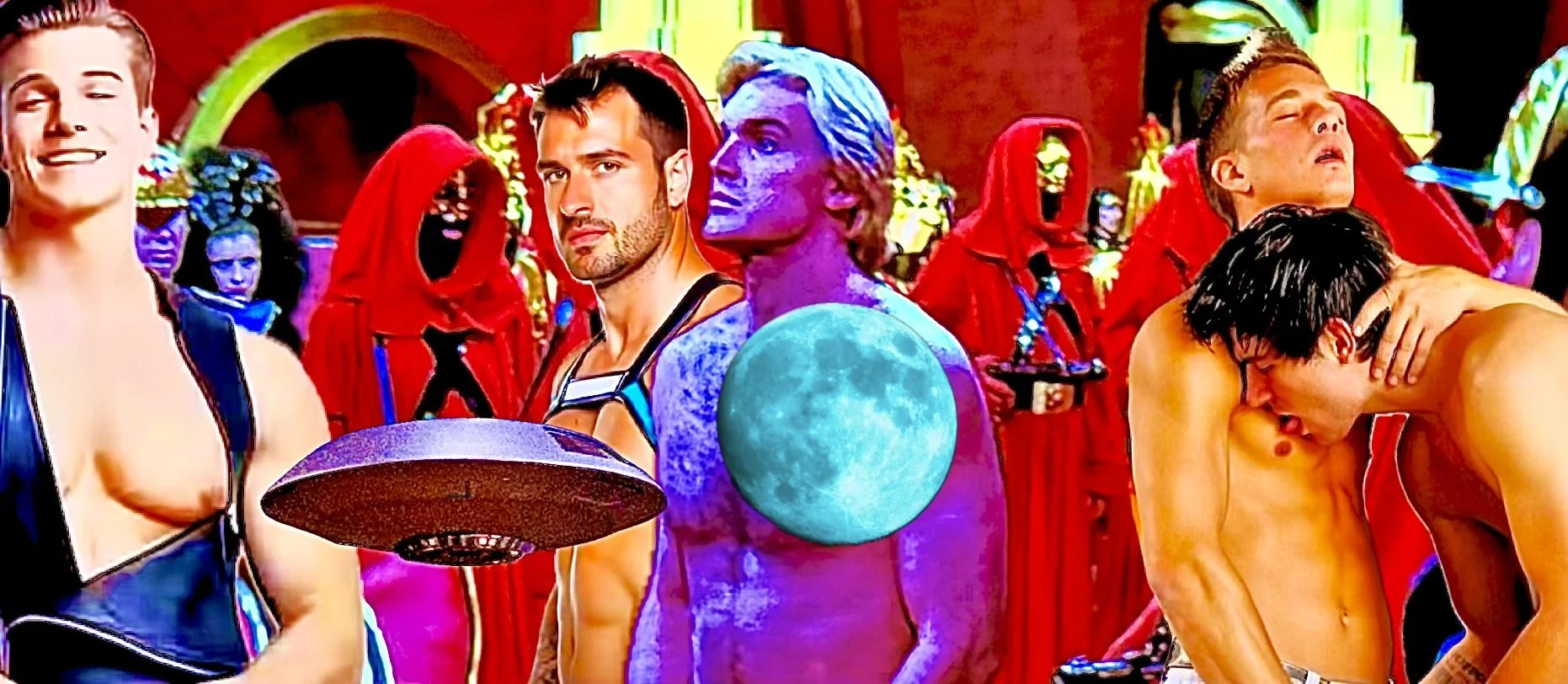
In Behan’s collages, the love affair that Flash Gordon could not put on screen is finally made visible. The colors are pushed to their operatic limit — Mongo-bright, excessive, unrepentant. The subtext of sex becomes text. The throuple is named, the film at long last becoming its full self.
What was destroyed in 1971 is restored. What De Laurentiis neutered is returned to full life. What the algorithm flags as not ready for prime time, the archive preserves in full living color.