On the Nature of Subtext
Subtext handled well deepens a story. It rewards attention. It creates the charge between characters that audiences feel without always being able to name — and when it finally surfaces, it can be magnificent. Consider Citizen Kane. The entire film is a mystery built around a single word: Rosebud. The subtext blooms at the very end into something that reframes everything that came before. That is subtext becoming context.
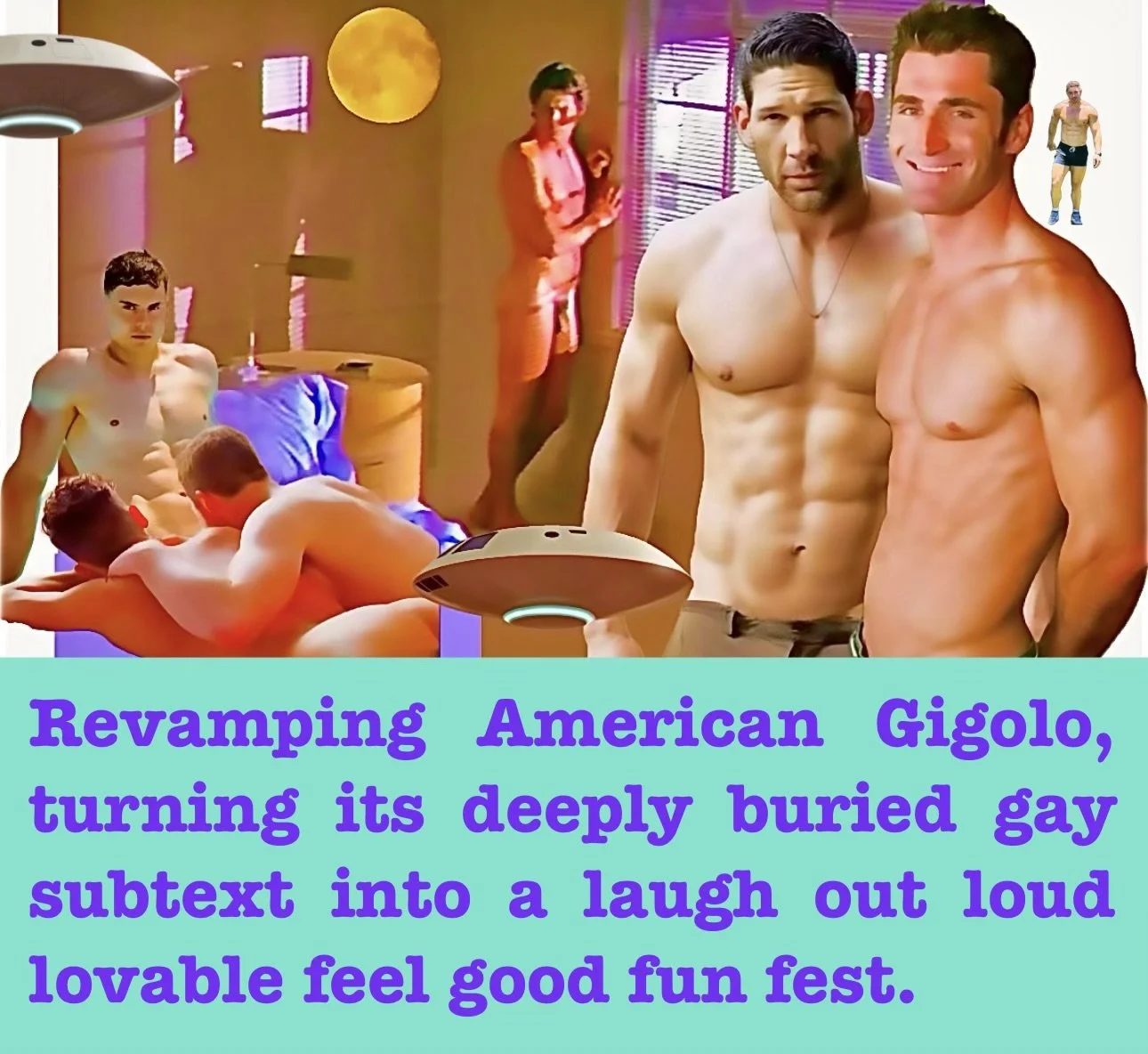
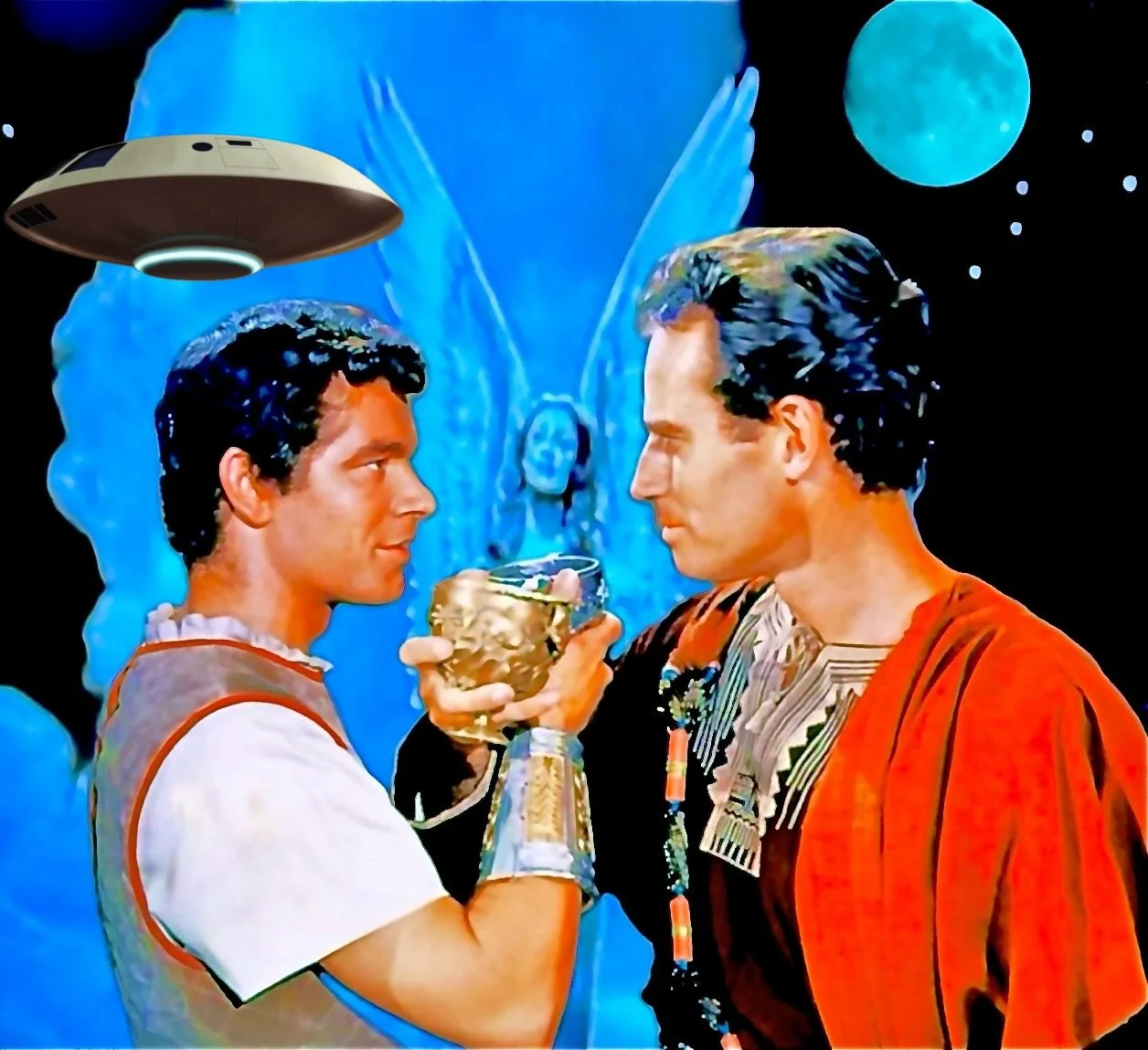
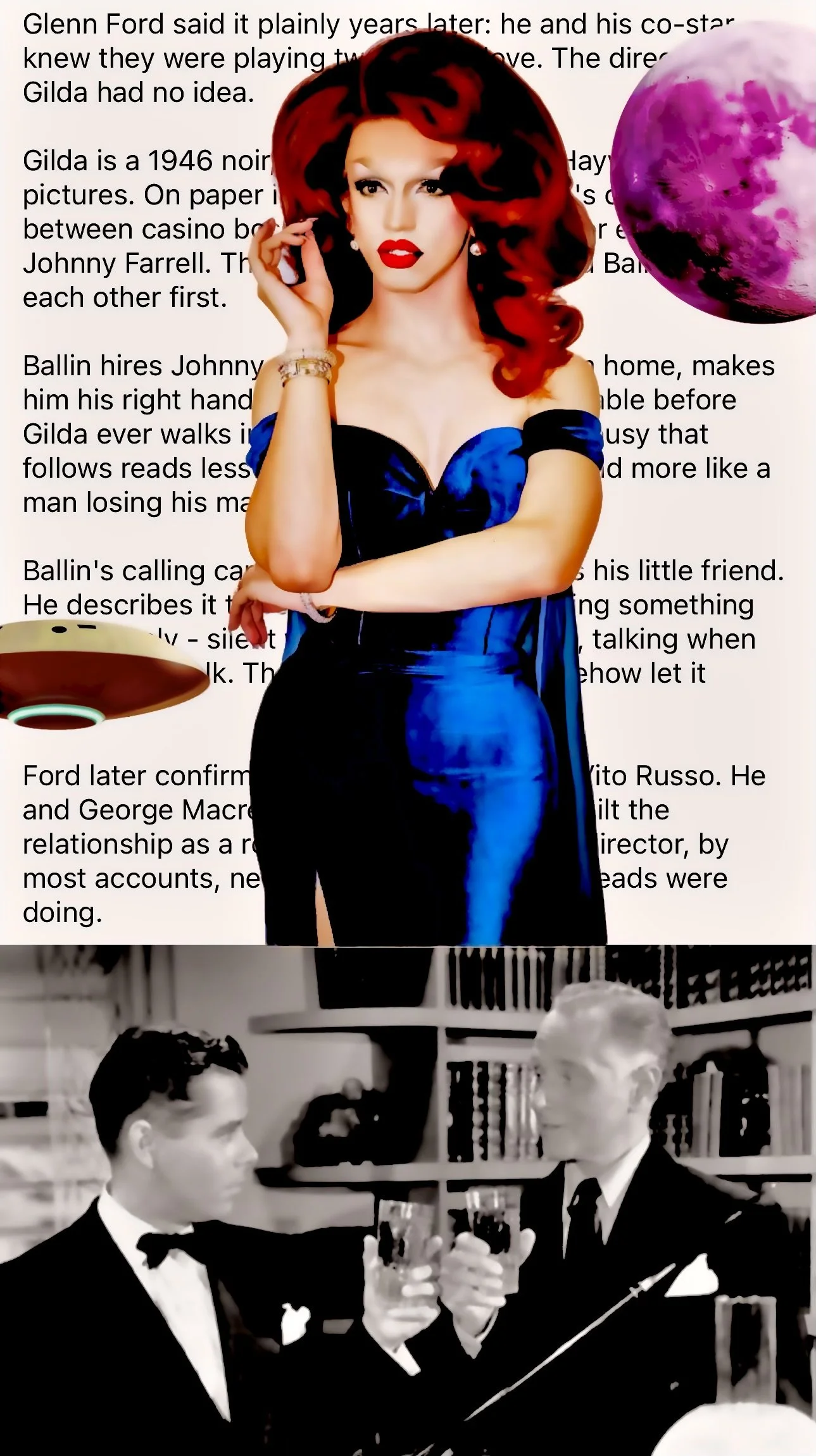
The prospect for gay subtext in twentieth century filmmaking was ripe with potential, yet the Hays Code was so onerous and burdensome that the subtext never got to bloom. It was buried so deeply it was rendered inert. Actors Glenn Ford and George Macready built a love story between two men into the center of Gilda without the director knowing. Gore Vidal wrote Messala as a spurned lover in Ben-Hur and directed Stephen Boyd accordingly without telling his co-star Charlton Heston. In American Gigolo, writer and director Paul Schrader built an entire gay sensibility into a film that never once named it. The subtext in all three films could have been thoroughly illuminating. Instead it was buried so deeply that it confused rather than enlightened. A desire without resolution. A charge without release. A love story with no ending.
The Hays Code, written in 1930 and strictly enforced from 1934 to 1968 at the insistence of the Catholic Legion of Decency, represented thirty-four years of institutionalized censorship of American cinema. Of everything the Code suppressed, which was substantial, homosexuality was one of its most absolute prohibitions. Thirty-four years. An entire generation of filmmakers. An entire generation of film goers who never got to see the fullness of life on screen. It wasn’t only gay men and women who were cheated — although they were, profoundly — it was every person who sat in a darkened theater and deserved the whole truth of human experience.
Think about what those films could have been. Gilda with the love story between Johnny and Ballin fully realized. Ben-Hur with Judah and Messala’s history allowed to breathe on screen the way Vidal wrote it. American Gigolo with Julian Kay finally allowed to find real love — on his own terms, with whom he chose. Decades of films diminished not by the presence of gay characters but by the systematic burying of those characters before they could fully live.
The Hays Code, developed and dominated by the American Catholic Church, did not protect audiences. It impoverished them. It took stories that could have been richer, truer, more dramatically complete and handed them back with something essential removed. The artists knew what was missing. The audiences felt the absence without knowing its name. And the gay men and women in those audiences watched themselves almost appear on screen, again and again, and then vanish before they could fully arrive.
The shame is not in a character being gay or a film telling their story. The shame is not allowing a gay character to breathe.
#TheClosetSeries #OnTheNatureOfSubtext #QueerCinema #HaysCode #Gilda #BenHur #AmericanGigolo #QueerHistory #LGBTQHistory #DigitalPhotocollage #QueerArt #FilmHistory #TheClosetKnows