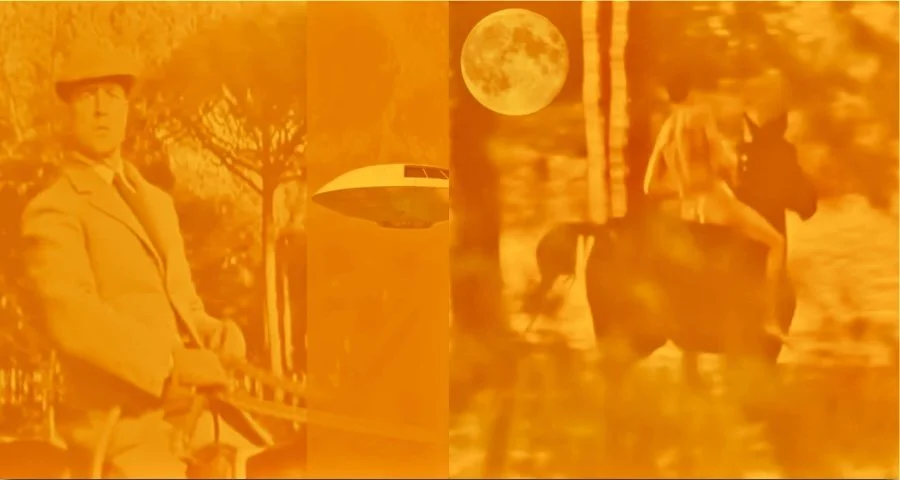
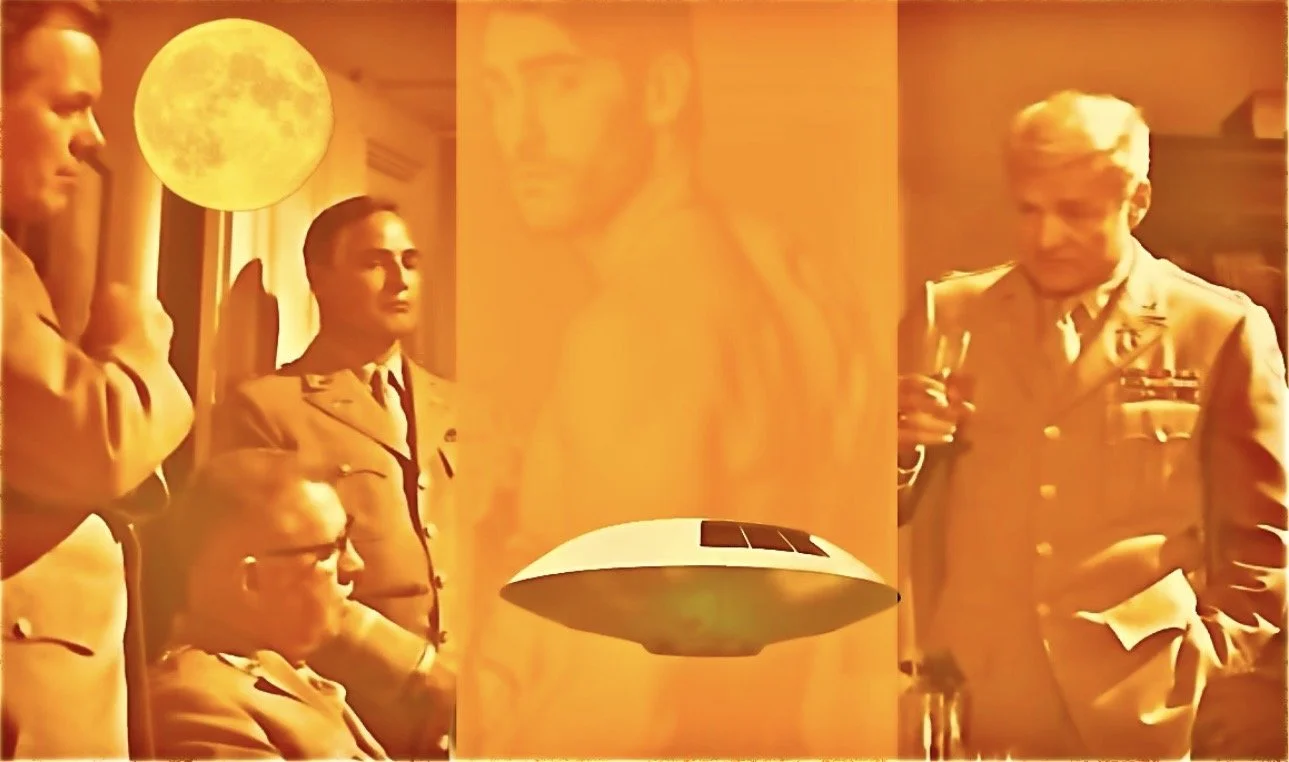
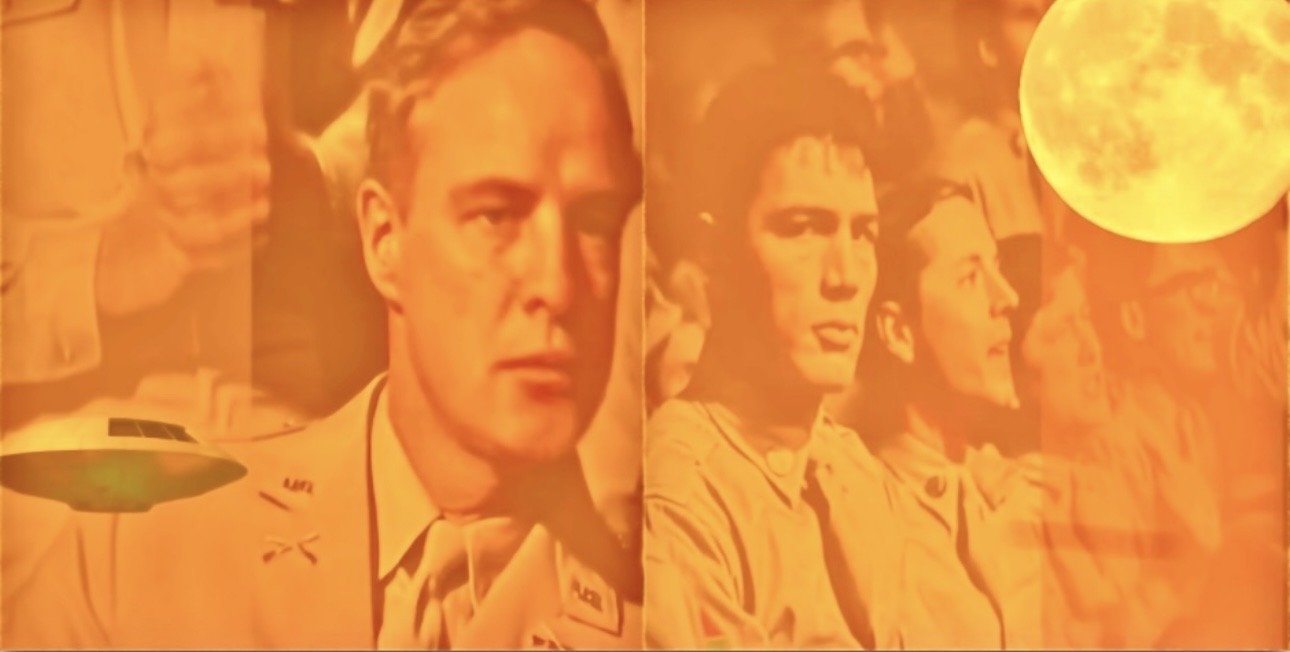
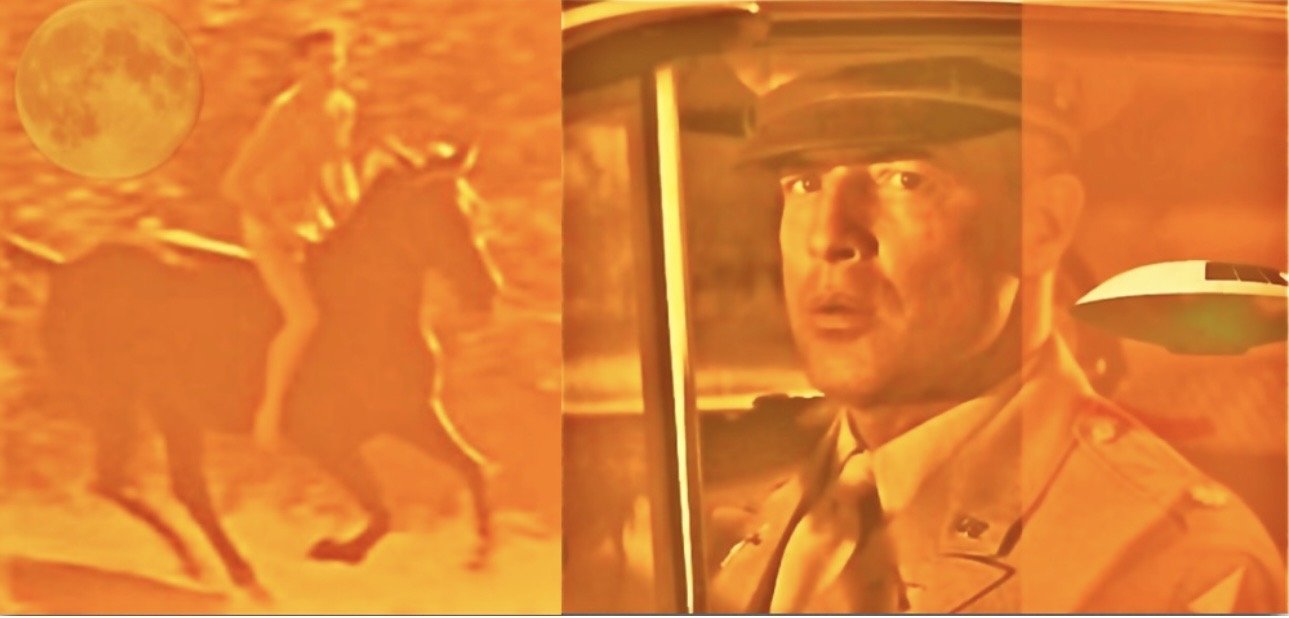
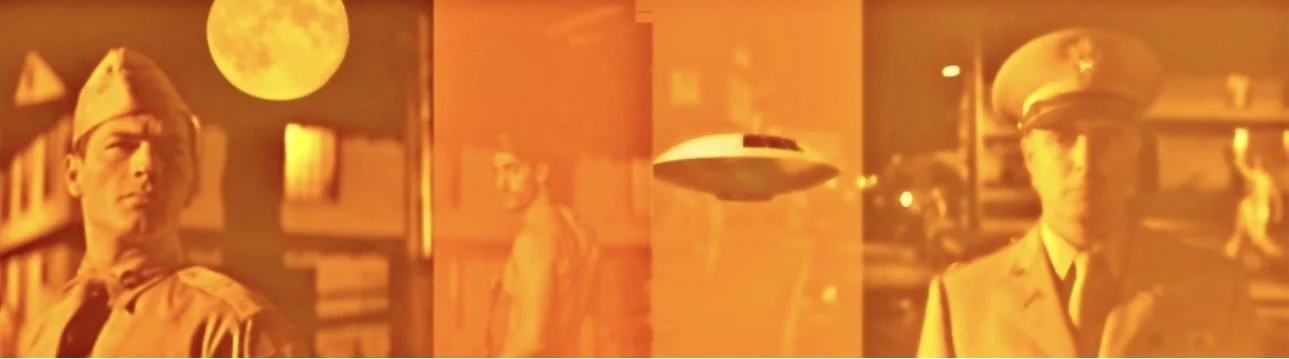
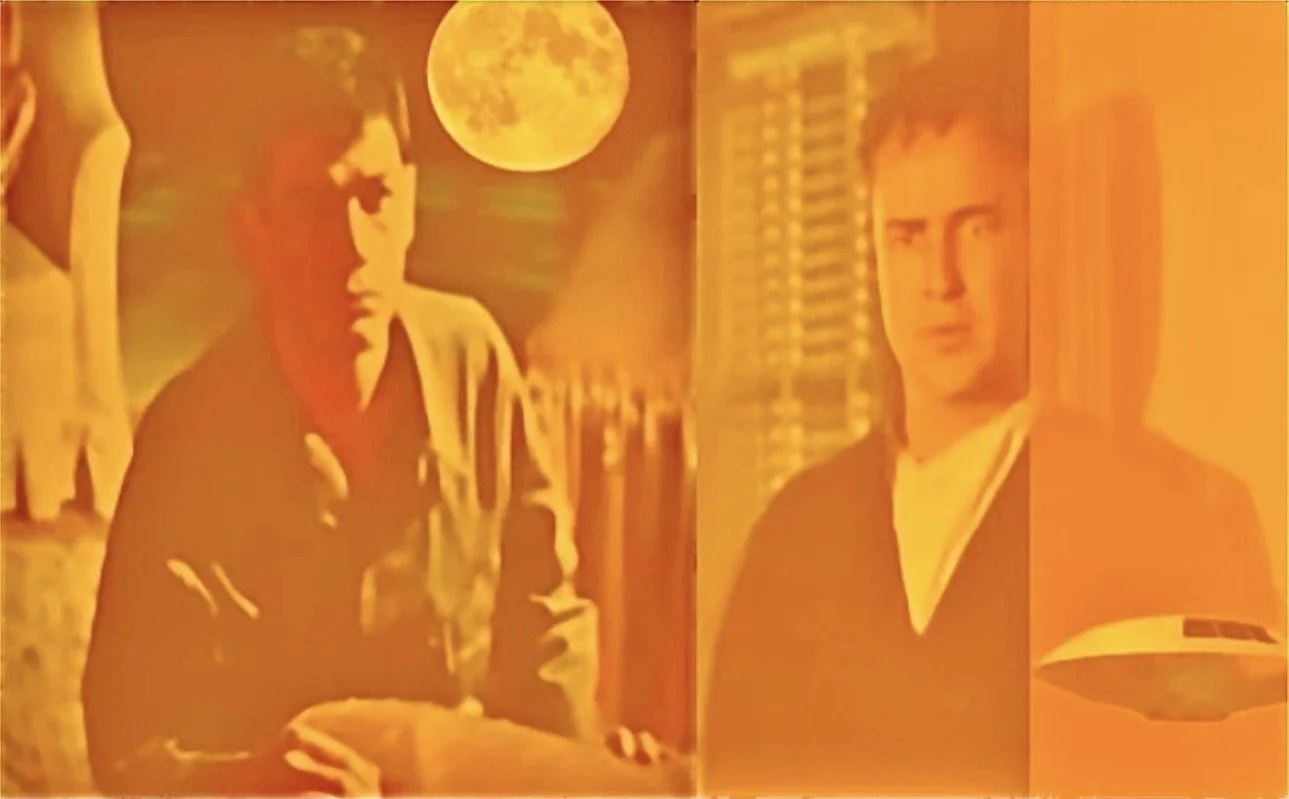
Golden | Digital Photocollage | Platinum Setting | 2026
In 1967, John Huston made a decision that almost no one saw. He released Reflections in a Golden Eye in two versions — one in standard color, one bathed entirely in gold. The gold version reached almost no one. The studios lost their nerve. Most prints shipped in color.
In Western art, gold has always defined the sacred, the beautiful, the highest order of human experience. In Greek mythology, Zeus comes to Danaë not as a man but as a shower of gold — radiant, impossible to ignore, transforming everything it touches. Andy Warhol’s Oxidation paintings turned the body’s own fluid into shimmering, luminous expanses of unexpected beauty. And Andres Serrano’s Piss Christ submerged the sacred in what the institution called contamination and produced something that glowed. Gold has always carried both transgression and holiness at once.
These works, the gold collages, tilt Huston’s mirror for a reframe. What comes into focus was already in the film — a closeted man falling in love with another man for the first time. A military man, a husband, more than halfway through his life, experiencing at forty what he should have been allowed to feel as a teen. The fears. The wonder. The helplessness of it. Marlon Brando plays it as a man moving from the abstract to the actual — desire for another man finally landing somewhere real. His world fills with radiant light. That is what falling in love does, whether or not that love is reciprocated.
These collages — gold layered into gold, possible only through the digital process — bring forward the story inherent in Huston’s film, a bright, brilliant tale of a closeted man, luminous with wanting for the first time in his life, experiencing every emotion that runs with it, beams of light shooting from his fingers and his toes.
Jupiter 3, a Huston fan, has been waiting for this moment all along.