Riding Under the Surf
On Gay Men, California Beach Culture, and the Heteronormative Script That Ran on Every Screen
The wave comes from Hawaii. Everything else was invented in Hollywood.
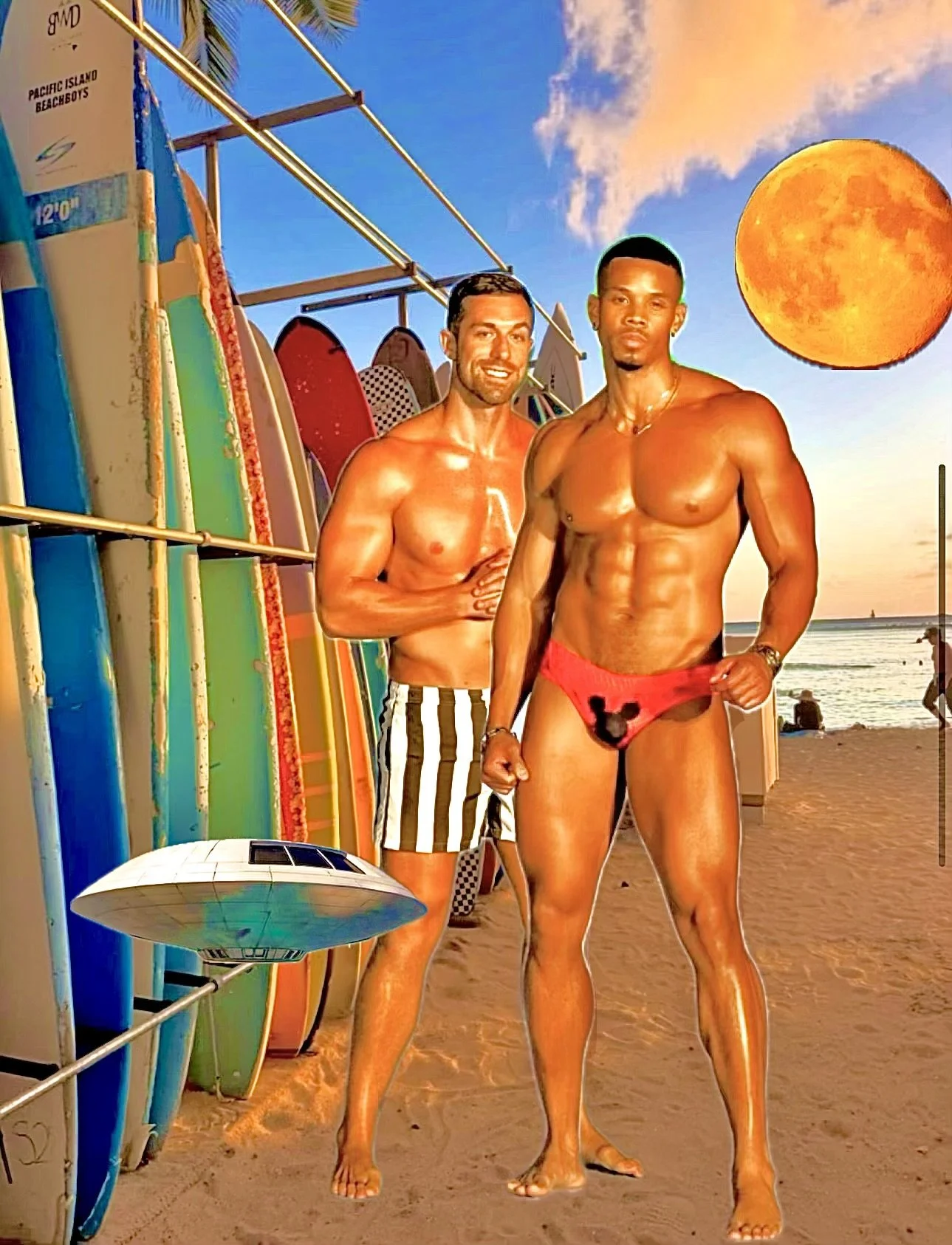
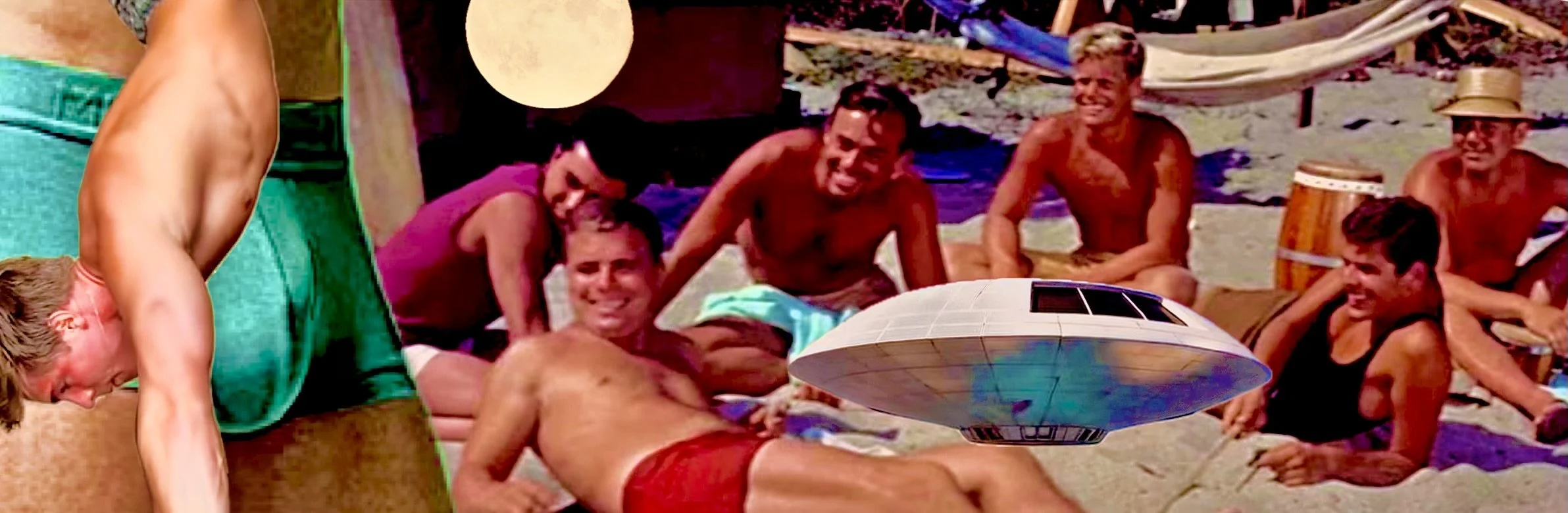
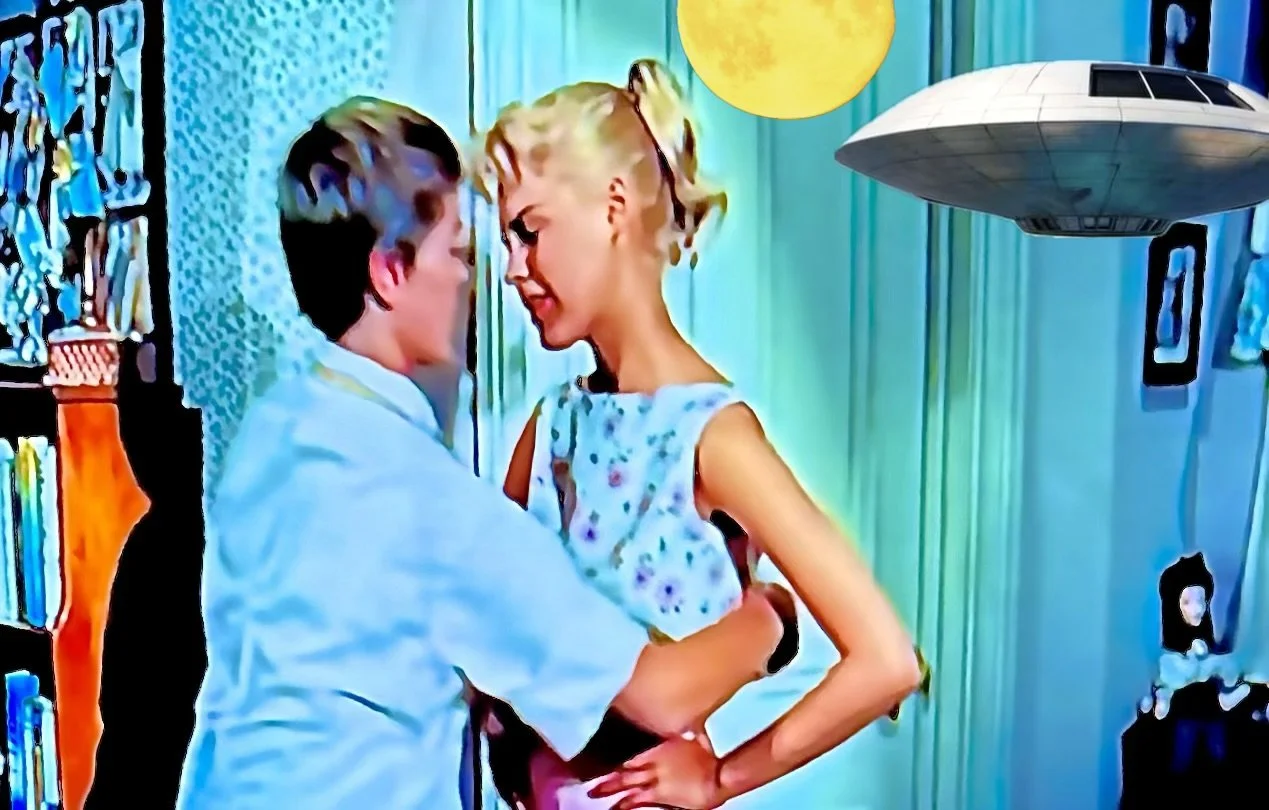
In 1907, an American industrialist hired George Freeth to demonstrate surfing at his Redondo Beach resort to promote a railway line. A Hawaiian man’s indigenous practice, commodified to sell real estate. Surfing’s popularity exploded in the 1960s as the baby boomers entered their teenage years, and Hollywood was ready for them. The AIP Beach Party films — Beach Party, Muscle Beach Party, Beach Blanket Bingo — were AIP’s sugarcoated vision of the coming generation, designed to assure mainstream society that young people were ultimately predictable and trustworthy and would fall in line. This surfing culture was predominantly male-oriented, with long-haired women in bikinis serving mostly as admirers on the periphery. Boys surfed. Girls watched. Gay men did not appear in any of these frames. They were not forgotten. They were edited out.
What Was Always in the Frame
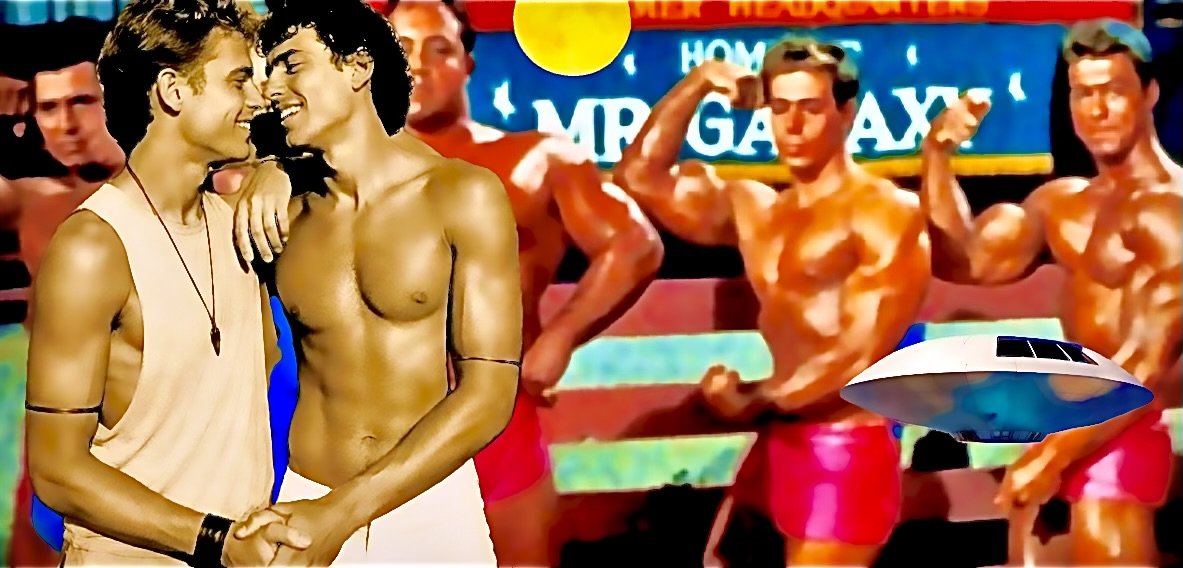
Film historian Tom Lisanti, writing for Cinema Retro and author of Hollywood Surf and Beach Movies: The First Wave, 1959–1969, documents what gay men already knew: the subtext was there from the beginning. The beach party films, Lisanti notes, functioned as titillation for homosexual men of the time — good-looking shirtless hunks frolicking bare-chested on sand and slopes, while gay actors Tab Hunter, Tommy Kirk, and Paul Lynde moved through the same frames in plain sight. Directors and screenwriters, he argues, slipped winks to the gay community in ways that sailed past oblivious producers and censors. Muscle Beach Party (1964) made the coding structural: its villain class was a cult of bodybuilders whose readers, in the physique magazines of the era, were understood to be predominantly gay men. Film historian Joan Ormond observed that homosexuality in this era was regarded as potentially more damaging to society than the wild antics of surfers — which is precisely why the bodybuilders, not the surfers, were cast as the corrupting threat. The gay gaze was not reading into these films. It was reading them correctly.
Under the Surf
And yet they were there. They had always been there.
As early as the 1940s, the stretch of Will Rogers State Beach in Santa Monica — soon nicknamed “Ginger Rogers Beach” by the gay community, in honor of the screen legend whose campy performances drag queens had been emulating since the 1930s — was a popular destination for gay men. In Gay L.A., Lillian Faderman and Stuart Timmons write that “for symbolic and functional reasons, the beach was especially attractive to gay people. It represented the very edge of the continent, far away from ‘back home’… During and after the war, veritable oases of gay life could be found in the open at many Los Angeles beaches, where the atmosphere was celebratory, carnival-like, even lawless.”
This is the counter-history running beneath the surf films. While Frankie Avalon was reassuring America that its sons would fall in line, at the start of the 1960s Los Angeles was home to nearly 150,000 gays and lesbians, many of them drawn to the same beaches, under the same California sun, with no representation in any film, any song, any television series produced within miles of where they stood.
Vice patrol began cracking down on queer beachgoers at Will Rogers State Beach as early as the 1950s, under the leadership of Chief of Police William Parker — called “Wild Bill Parker” by the gay community — whose LAPD doubled down on homosexual behavior and cross-dressing in public spaces throughout the decade. Gay men were not absent from California beach culture. They were present and being policed. The culture industry simply declined to film them.
In the 1960s, Main Beach in Laguna Beach was the epicenter of the city’s gay culture, home to two beachfront gay bars, Dante’s and Barefoot — situated in the very heart of Southern California’s surf country, surrounded by the landscape the AIP films were simultaneously mythologizing. Writer Christopher Isherwood and painter Don Bachardy had met on the beach in 1952, launching a lifelong partnership. Isherwood’s 1964 novel A Single Man memorialized the beach and Santa Monica Canyon’s gay culture in modern literature, describing gay beachgoers in 1946 as “dancing to the radio, coupling without shame on the sand.” The gay beach was not underground. It was not secret. It simply did not exist, as far as cinema was concerned.
Big Wednesday: The Script, Fifteen Years Later
In 1978 — fifteen years after Beach Party, three years after Stonewall had already changed the legal and cultural landscape of gay American life — John Milius released Big Wednesday. The film follows three California surfers facing life and the Vietnam War against the backdrop of their love of surfing, loosely based on Milius’s own experiences at Malibu. The setting moves from 1962 to 1974. The war comes and goes. Men age, drift apart, return. The film deals mostly with the theme of male friendship and all the things that come along in life that challenge it. The emotional register is genuine. The tenderness is real.
And every woman in the film exists as attachment or loss for one of these three men. The script has not moved. The ocean still belongs to men. The shore still organizes itself around their drama. Gay men remain nowhere in the frame — even as, by 1978, the Castro was in full flower forty miles up the coast, even as gay Californians had been visible on those same beaches for four decades.
The Record
In the long, decorated history of professional surfing, by 2010 only two professional surfers had ever openly shared the fact that they were gay: Matt Branson and Robbins Thompson. Two names. The entire count, across decades of tours, competitions, sponsorships, magazine covers, and surf films.
Thompson’s story tells you why the number stayed at two. Rated in the top five on the American professional circuit for four years and on track for major titles, Thompson was driven out of the sport in the 1990s after his sexual orientation became known on tour. Homophobic slurs were spray-painted on his car. Taunts followed him into the water. “Sometimes it was difficult trying to keep my concentration, wondering what everybody was thinking about me,” he said. “If I spent too much time with fellow surfers, accusations would start to fly. There were a couple of times when possible relationships with other gay surfers ended too quickly because of fear of getting caught.” In 2014, Thompson told his story in the documentary Out in the Line-Up, credited with initiating the first serious public conversation about homophobia in professional surfing.
Women have been more visible, if not more welcomed. Cori Schumacher, Keala Kennelly, Tyler Wright — the history of LGBTQ surfing runs deeper than most surfers realize, but it runs almost entirely through women. On the men’s side, the closet held. It held through the 1960s, through Stonewall, through the Castro, through AIDS, through the legal reforms of the 1990s and 2000s. The wave broke. The lineup did not change.
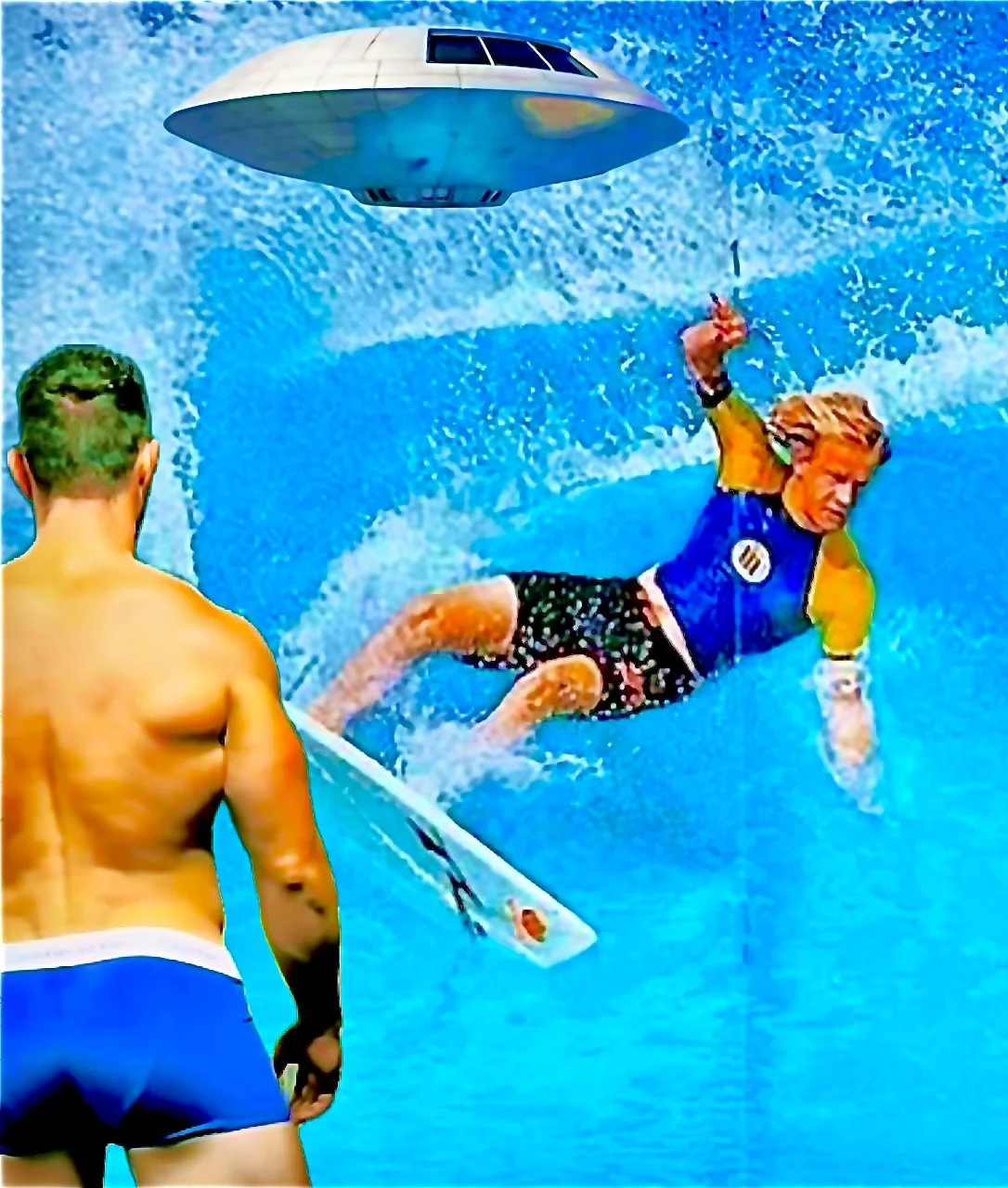
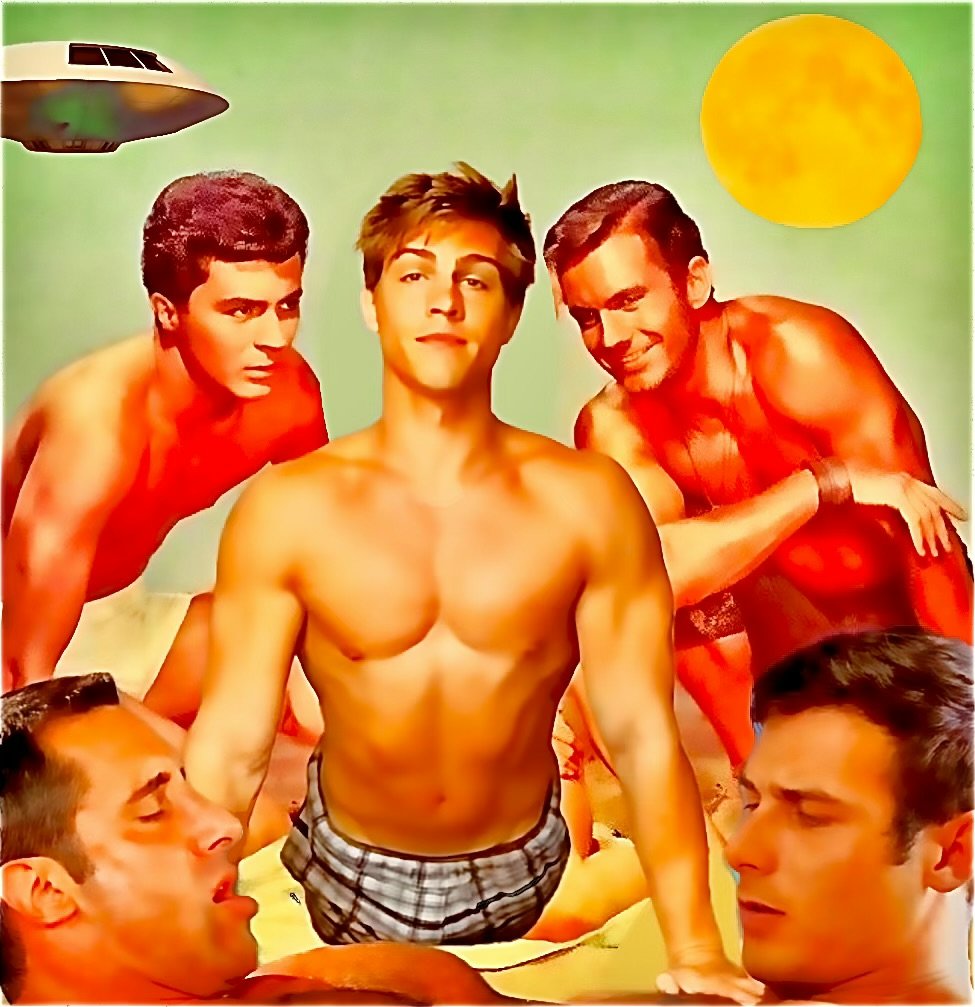
San Diego-based artist Stephen Milner eventually made the hidden architecture visible. His book A Spiritual Good Time appropriates old images from surf magazines and places them in an entirely new context — one that creates a vision of a far more queer-friendly surf culture. By combining materials from vintage surf and gay publications, cutting, cropping, and re-printing, Milner placed them into an entirely new context: that of queer reality. “When it comes down to it,” Milner says, “masculinity in surfing is extremely fragile — once you start poking at it, it just comes apart.”
Milner describes the process: “Instead of concentrating on the hero surfer getting barrelled on the perfect wave, I cut out the male camaraderie in the bottom left corner of the image and enlarged it.” The gay gaze had always been there, in the bottom left corner of every surf photograph ever printed. It simply required an artist willing to make the crop.
The Shore That Was Always Shared
The gay men on Ginger Rogers Beach in 1963 were breathing the same salt air as the boys in the AIP films. They were watching the same waves break from the same sand. A 1953 article in ONE magazine described the gay beach as a place where “hundreds of our people, peacefully enjoying themselves in public — no closed doors, no dim lights, no pretense… I think beaches like this are part of our liberation.”
Liberation was already happening on the beach. Hollywood was filming something else.
The Subdivision documents what was there. Jupiter 3 is always in the frame.
— Behan
Sources: ONE Institute, “Ginger Rogers Beach” (oneinstitute.org). Faderman, Lillian and Stuart Timmons, Gay L.A. (2006). Isherwood, Christopher, A Single Man (1964). Britannica, “Surfing.” Jacobin, “A People’s History of Surfing” (2022). PBS SoCal, “Riding Waves, Forging Communities.” Bright Lights Film Journal, “Surf’s Up! Beyond the Beach: AIP’s Beach Party Movies.” Visit Laguna Beach, LGBTQ History. SURFER Magazine, “The History of LGBTQ Surfing” (2020). Wikipedia, “Big Wednesday.” Lisanti, Tom, “Real or Imagined: Homoeroticism in 60s Beach Movies,” Cinema Retro. Lisanti, Tom, Hollywood Surf and Beach Movies: The First Wave, 1959–1969. The Guardian, “Out in the Line-Up” (2014). GaySurfers.net, Thomas Castets interview (2010).