Coney Dawg Daze
A Monday Essay
James Behan, 2026
Coney Island has been a refuge for queer people for well over a century. Not by design — by nature. The beach has always offered what the city withheld: open air, fewer clothes, the anonymity of the crowd, and the particular freedom of a place where the normal rules were understood to be temporarily suspended.
The art tells the story.
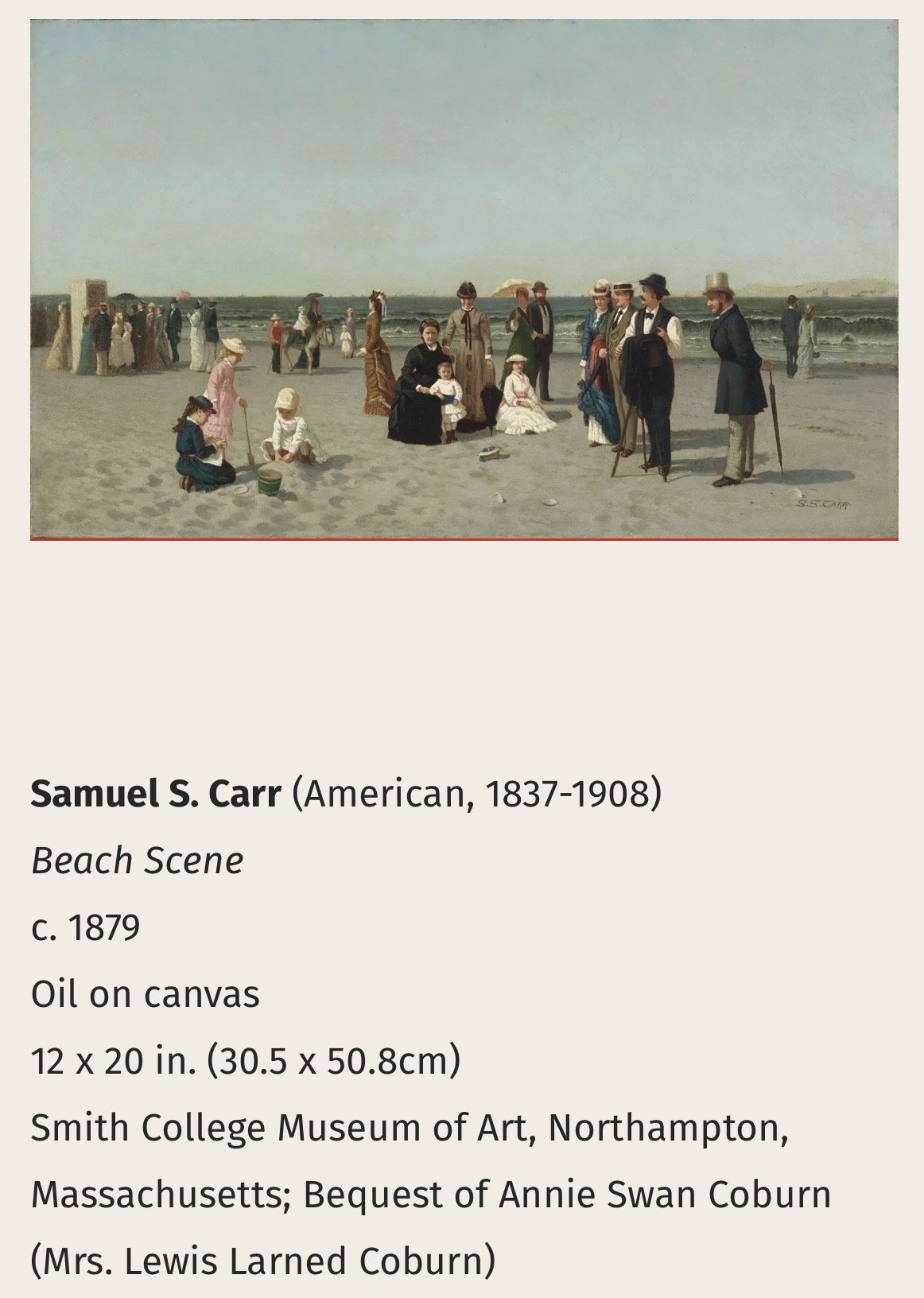
c. 1879 — Samuel S. Carr, Beach Scene, oil on canvas. The Victorian beach is studied, formal, fully clothed. The social codes are intact and visible. Human desire, of course, was present too — it always was — and Coney Island was already learning how to accommodate it.
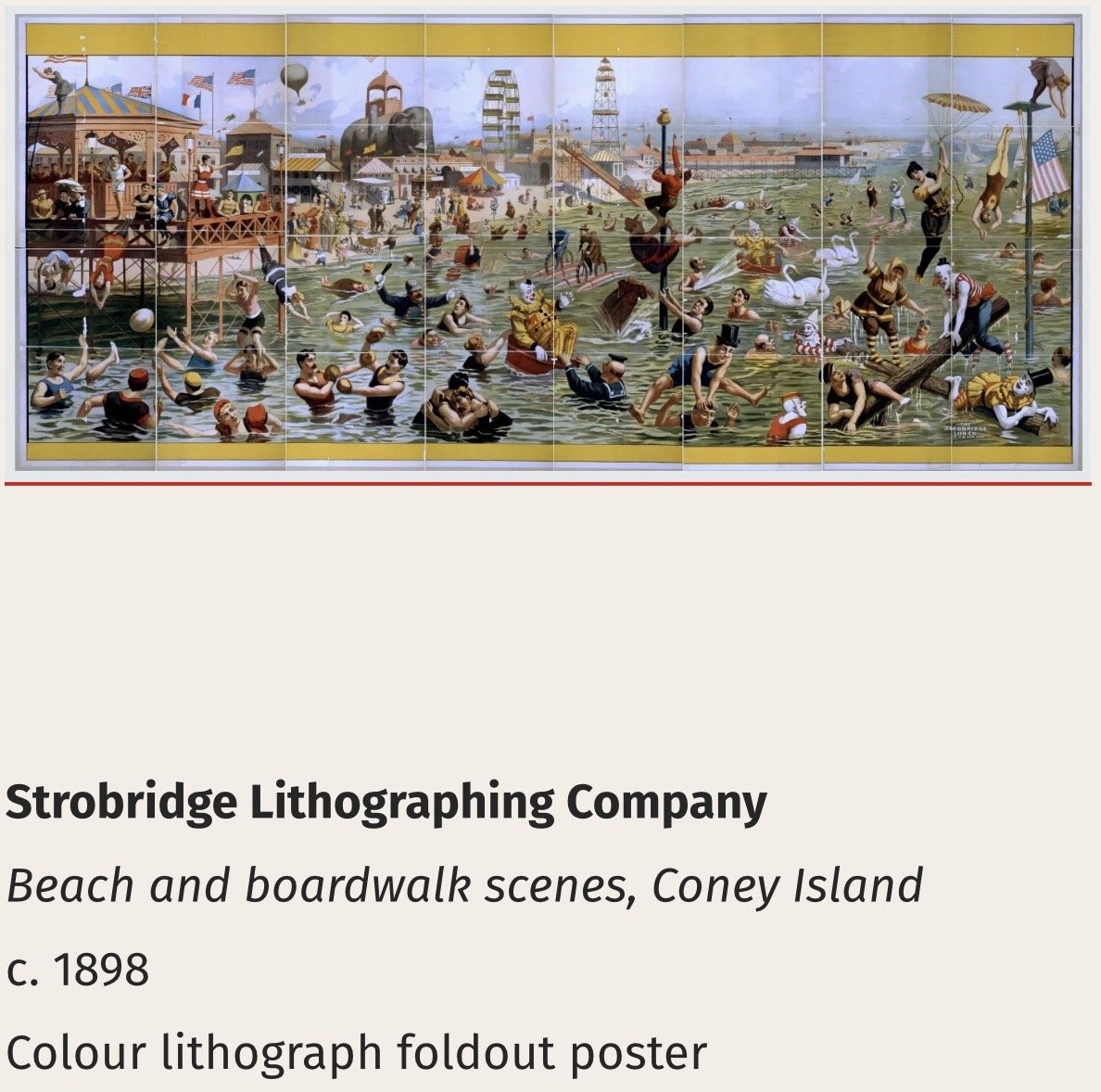
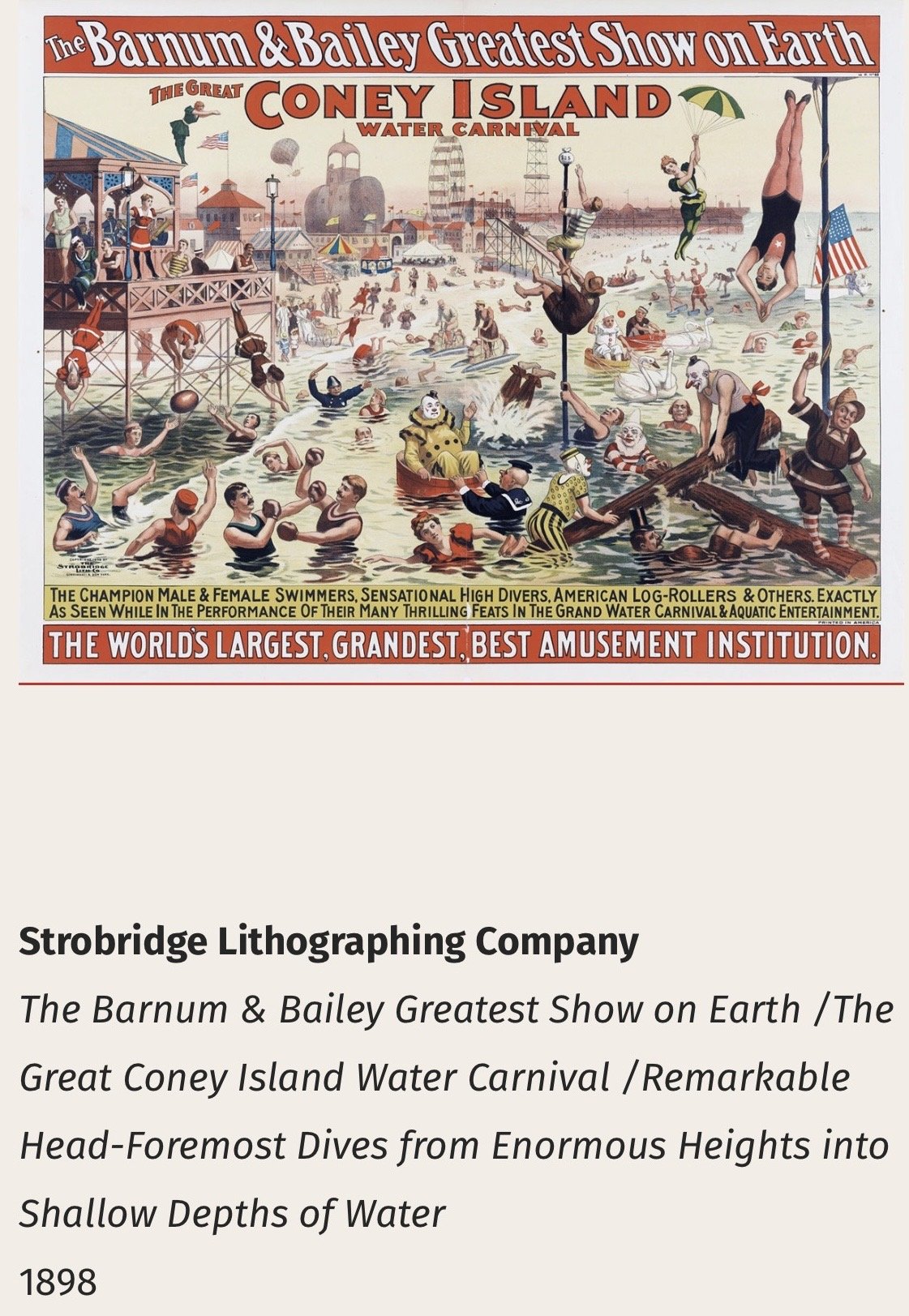
1898 — Strobridge Lithographing Company, Beach and Boardwalk Scenes, Coney Island, colour lithograph. The crowd has arrived. The amusements have arrived. The anything-goes atmosphere that would define Coney Island for the next century is already visible in the chaos of bodies, spectacle, and possibility.
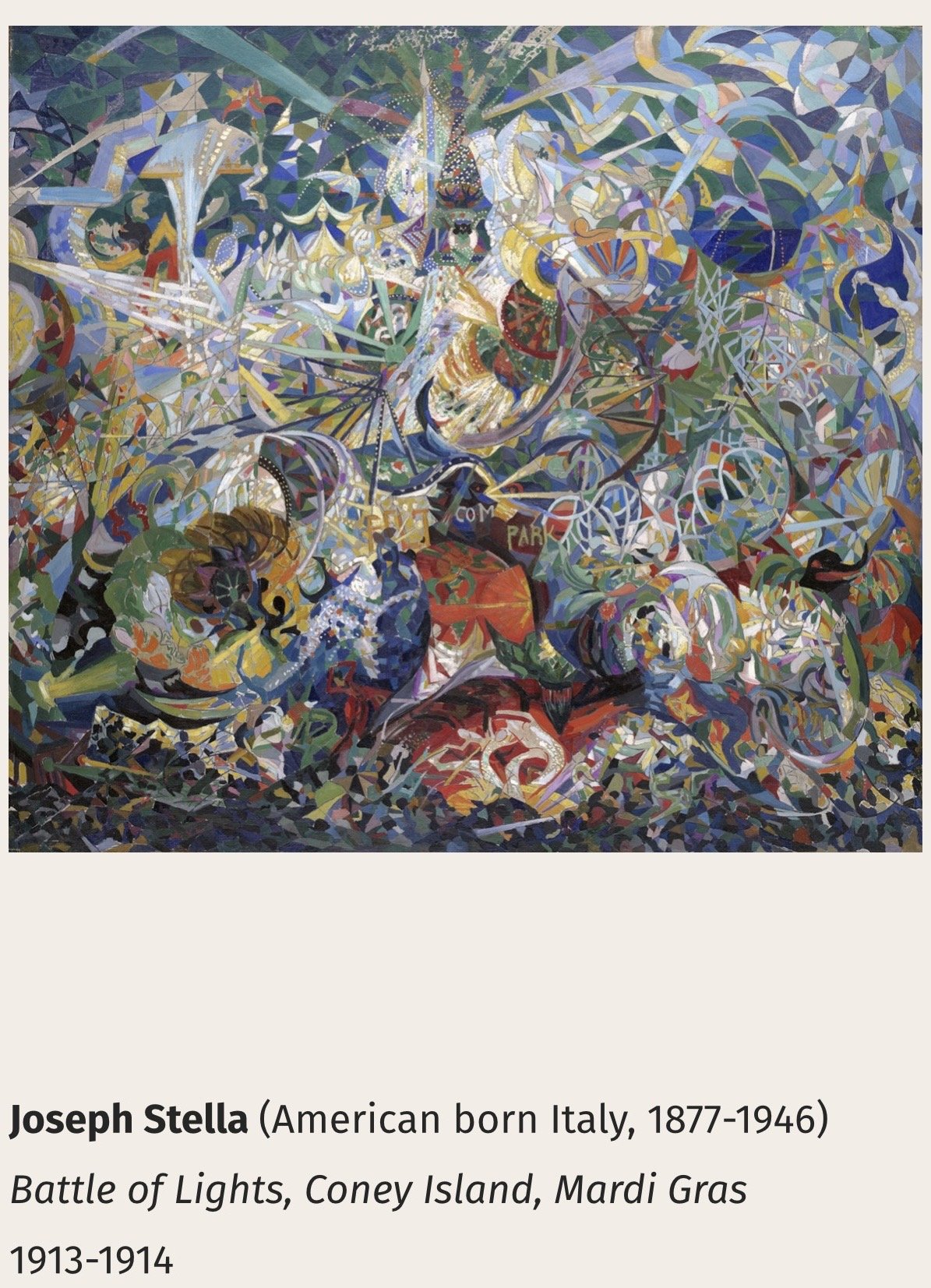
1913–14 — Joseph Stella, Battle of Lights, Coney Island, Mardi Gras, oil on canvas. A Futurist explosion — color, light, sensation, the individual dissolved into the collective energy of the place. Stella understood Coney Island not as a location but as a feeling. That feeling was freedom.
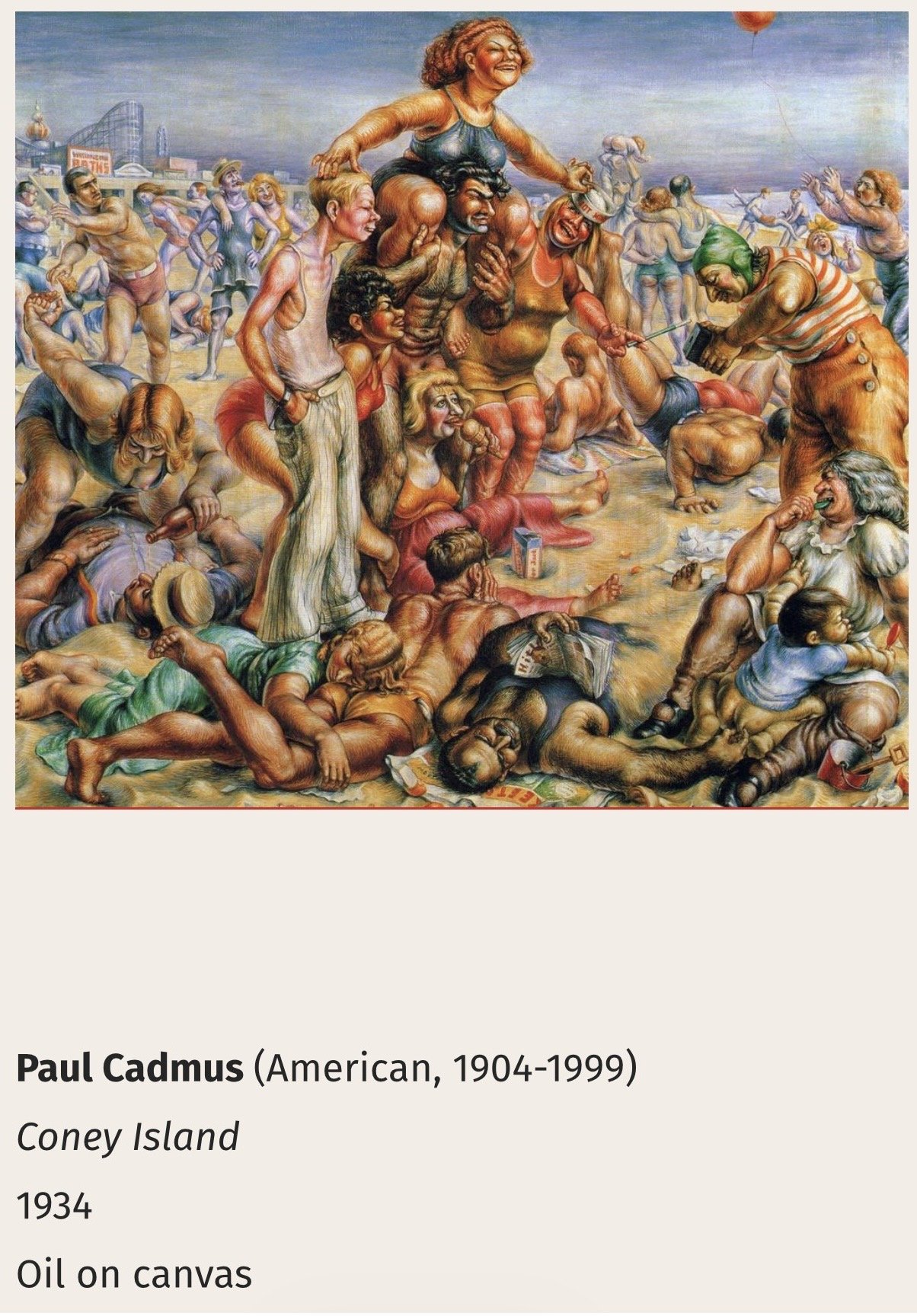
1934 — Paul Cadmus, Coney Island, oil on canvas. Cadmus, a gay artist of considerable courage, renders the beach as a scene of barely managed desire — bodies piled together, muscle and flesh and comic excess. It is the gay gaze fully deployed, visible to those who knew how to look.
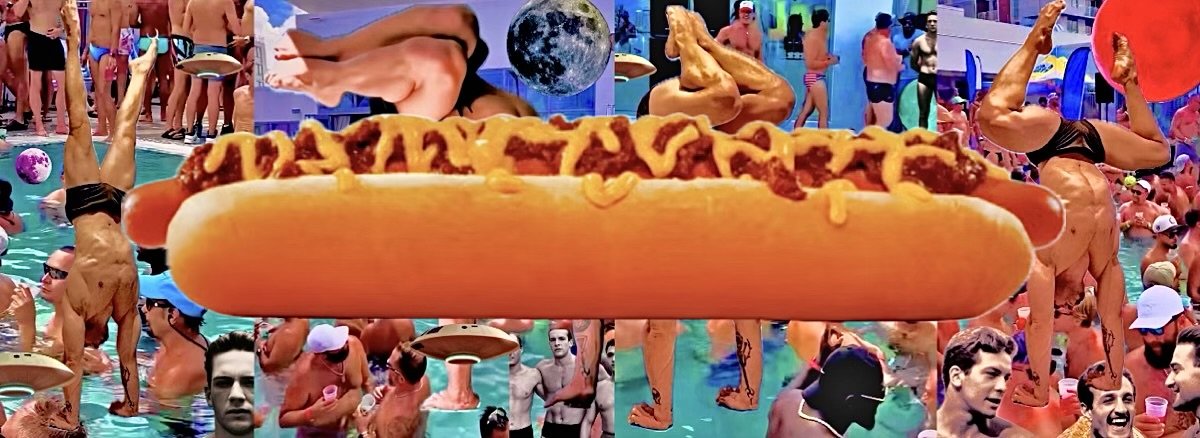
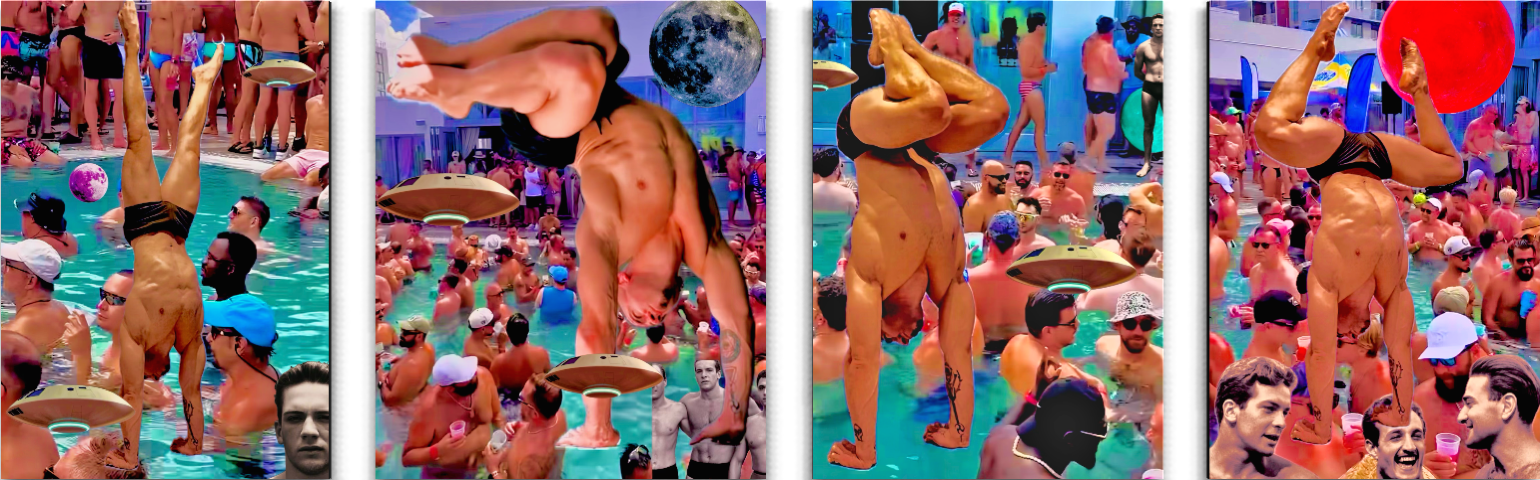
2026 — Behan, Coney Dawg Daze, digital photo collage. The gay pool party as contemporary beach scene. The acrobatic figure, the crowd, Jupiter 3, the moons, the Coney dog — democratic, excessive, joyful. A hundred and fifty years of queer beach culture arriving at full color and full volume.
What connects Behan’s collages to these works is not merely subject matter but formal instinct. The long horizontal format — the panoramic view that allows individual figures and scenes to play out across a wide field — runs from Carr’s Victorian beachgoers through the Strobridge lithographs to Stella’s explosive canvas and into Behan’s digital collages. It is the format of water itself. Shared too is the sense of organized chaos — figures caught in motion, in relation to each other, the whole scene vibrating with energy held just barely in check. And the color. From Stella’s Futurist fireworks to Cadmus’s flushed flesh tones to Behan’s digitally saturated palette, the beach has always demanded full color. These artists, across more than a century, understood that.
Whenever humans get close to water, things change. The codes loosen. The clothes come off. The body remembers something older than civilization. We spent our first nine months suspended in water. We are composed of it. The beach and the pool are not escapes from the human condition — they are returns to it. Every artist in this essay understood that. So did every gay man and woman who found their way to Coney Island across more than a century of American life.
Behan’s own connection to Coney Island is personal. “I was lucky enough to visit Coney Island in the 1990s for their annual Mermaid Parade. I enjoyed a Coney dog. I was able to see and experience and feel what my own father felt and experienced as a young man in the 1940s. This type of connection is so valuable and is a memorable experience to this day.” — Behan
The AI data centers now consuming extraordinary quantities of fresh water for cooling — water drawn from the same finite supply that fills our pools, our beaches, our bodies — represent a troubling new pressure on the most fundamental human resource. The beach has always been where people went to remember what mattered.
What happens when the water itself is at risk?
— Behan