The Gay Angle
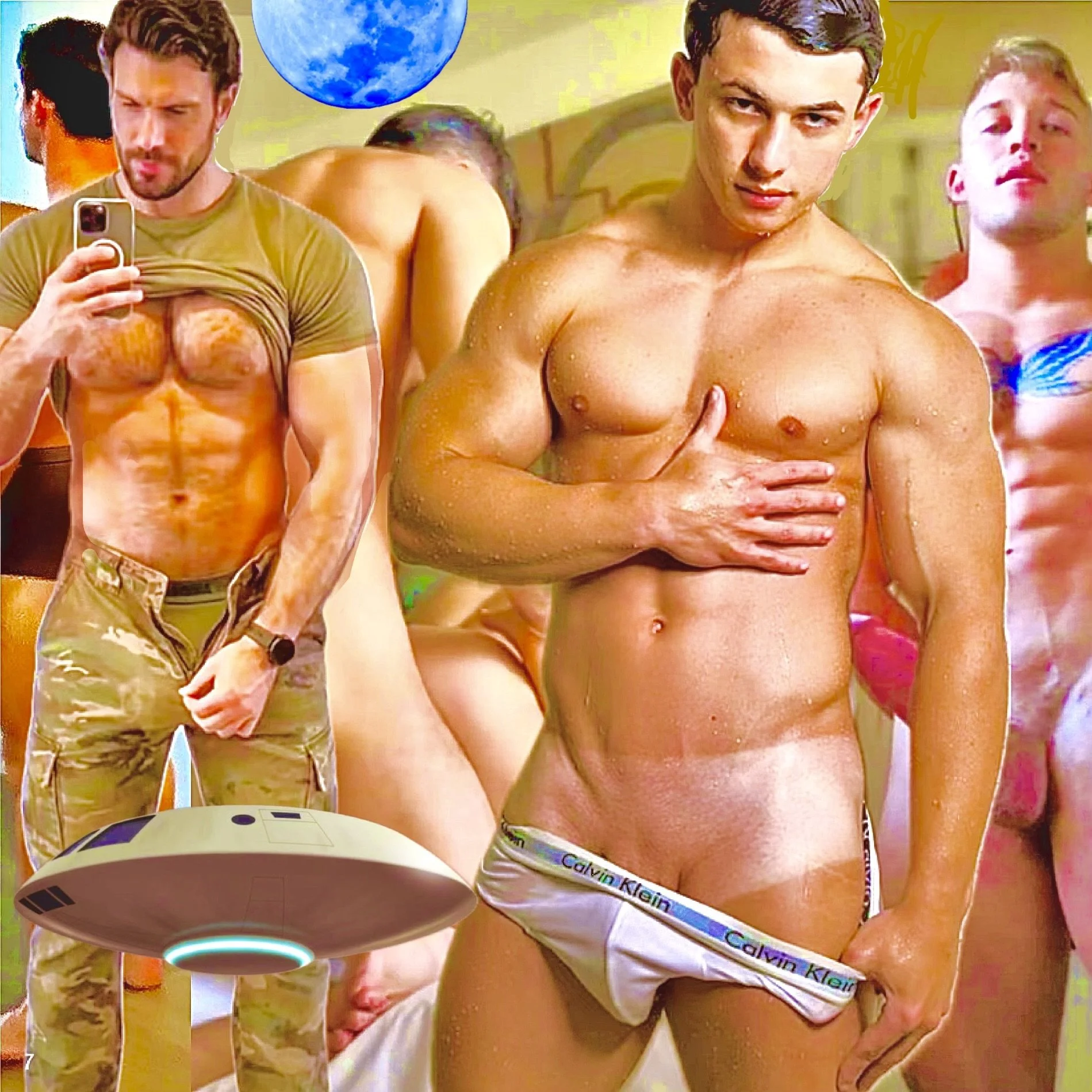
The men in this collage do not wait to be discovered. They compose themselves, arms crossed, eyes locked forward, claiming the frame before the viewer can claim it for them.
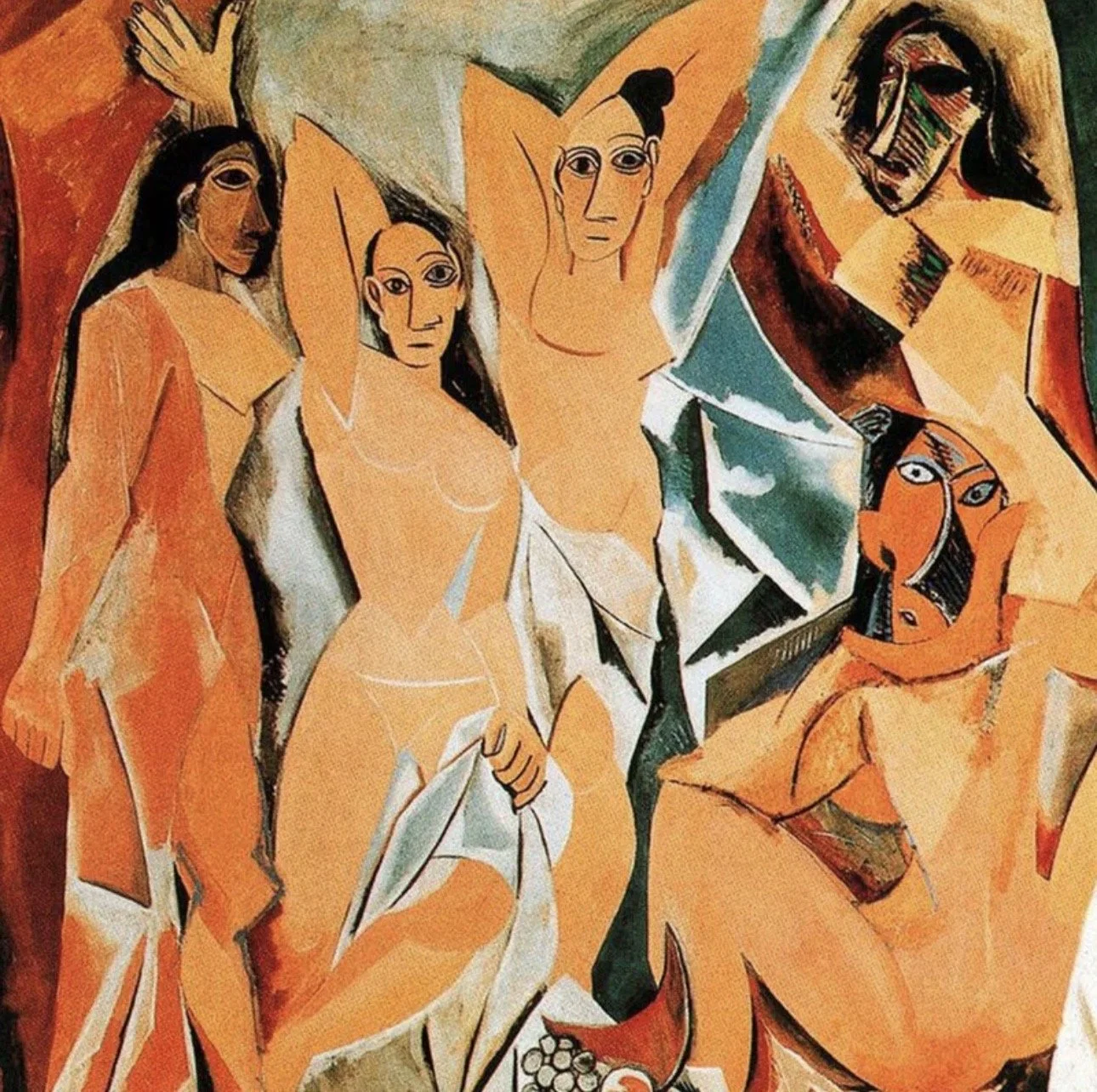
It is the same rupture Picasso staged in 1907, when his women stopped posing and started staring back — confrontation replacing invitation, presence replacing permission.
Both works rely on multiple fractured, doubled figures — Picasso’s mask-faced women confronting the viewer from multiple angles at once, this composition’s central figure similarly flanked and multiplied by reflection and background bodies — so the eye never settles on one correct vantage point.
The resemblance is not only formal. Both scenes are crowded and claustrophobic — pressed close. In both, the figures do not hide. They meet the eye without apology, defying the social contract of their respective centuries, the one that named them deviant and asked them to disappear.
Picasso’s women and history’s sex workers, the men gathered here and history’s homosexuals, were catalogued by the same era’s medicine and morality under a shared heading of deviation — filed side by side not by choice but by the taxonomies built to define what desire was permitted to be. What connects them is not camaraderie. It is a shared position: both made the material from which “normal” was drawn, and both, in these images, refuse to hold still for it.
That refusal of a single controlling perspective is the assertion itself. Nobody owns the angle from which these bodies are seen.
— Behan