On Ambience and Captured Natural Light
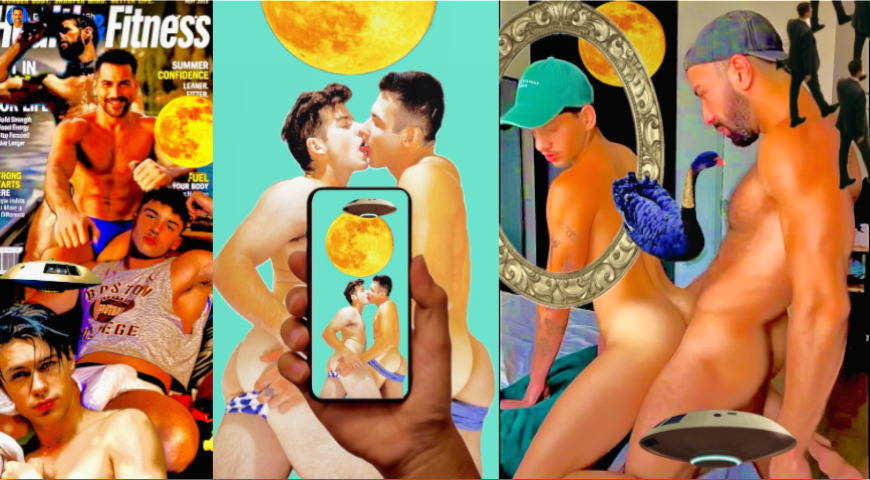
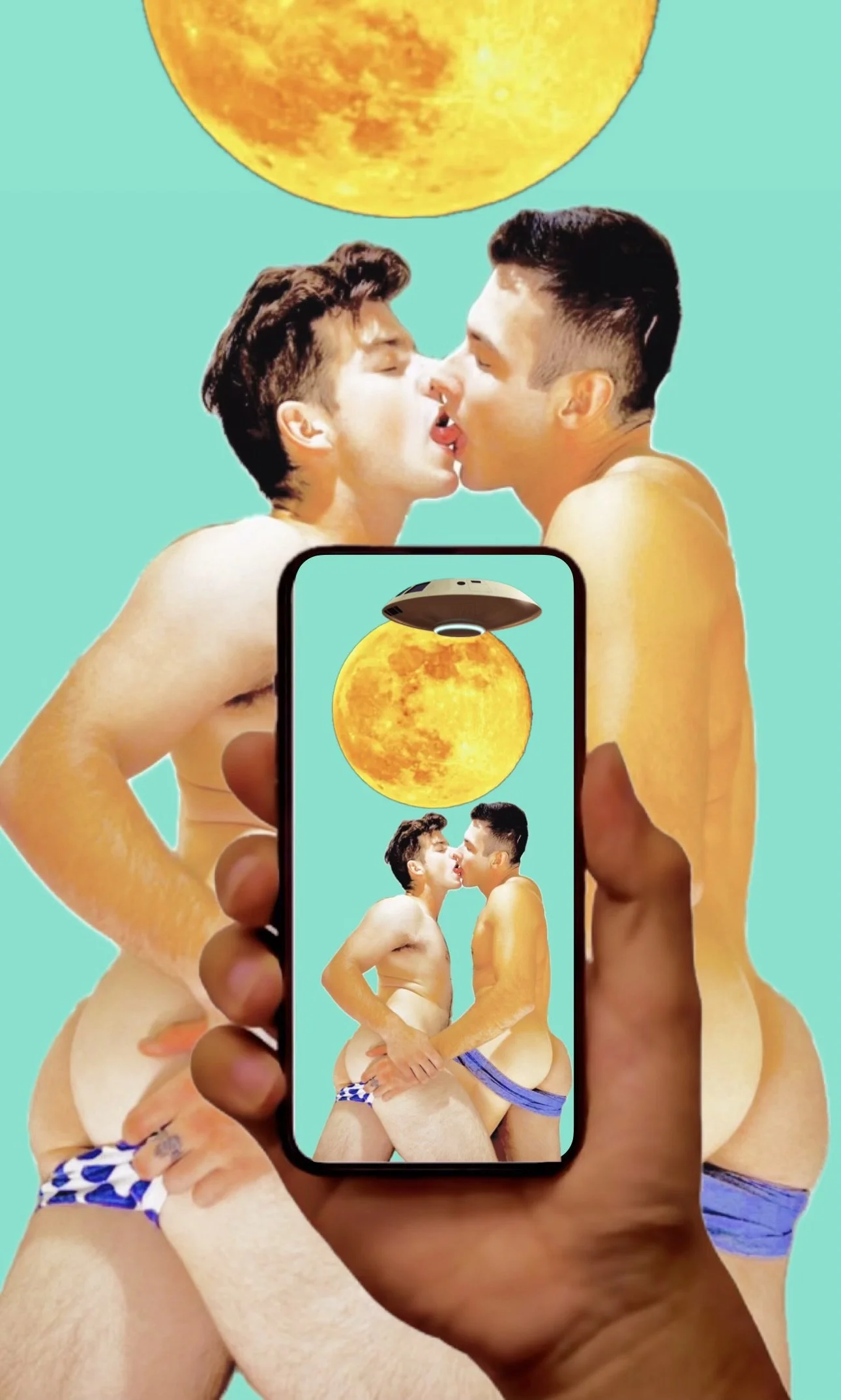
Light in these two triptychs is never simply available. It has to be caught. A phone screen holds a moon inside itself, a second smaller moon nested in the first, light captured and re-displayed rather than simply fallen on a scene. A gilded mirror frame catches a second version of the same man, his back turned, light bending around a doorway that leads nowhere the viewer can follow. Even the magazine covers are a kind of trapped light — glossy paper manufactured specifically to hold a shine that a real body, in a real room, could never quite hold onto for long.
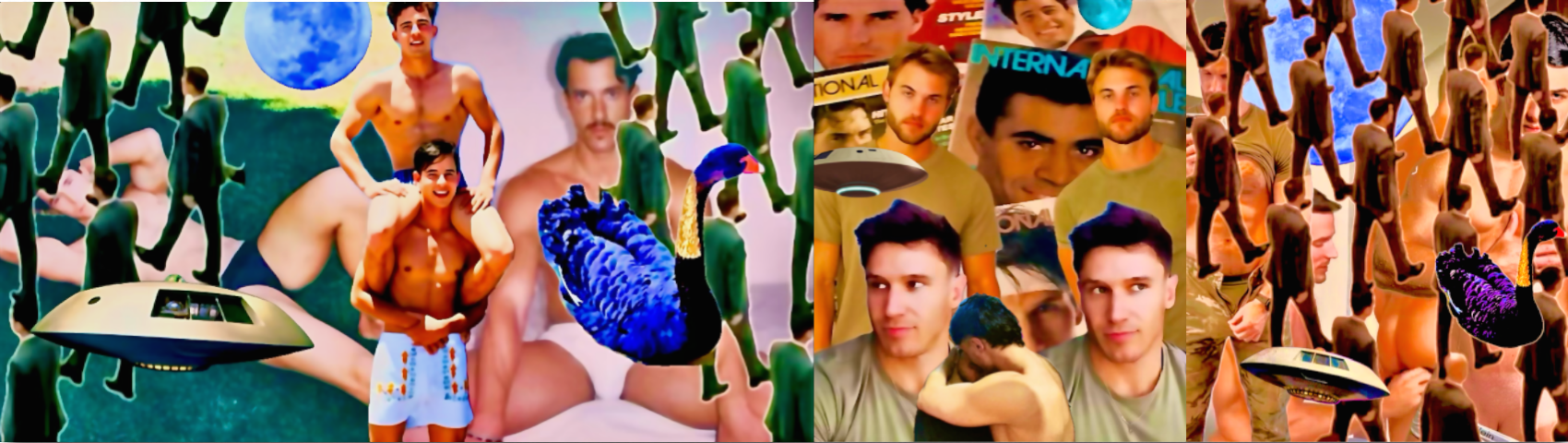
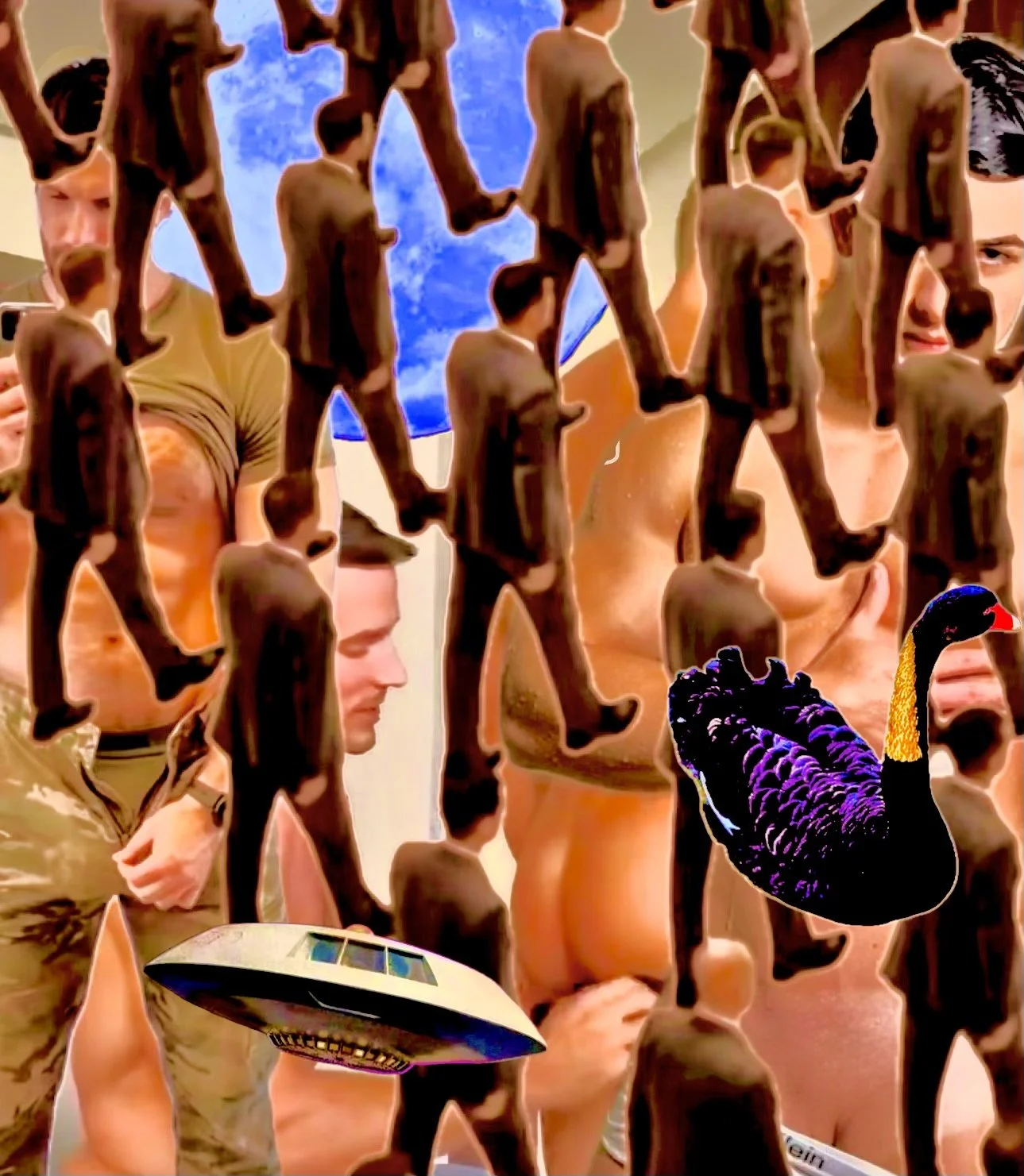
This is the throughline between the two assemblies. Neither is really about the marching suits, though the suits are in both, indifferent and endless, walking through frame after frame without once looking down. The suits are ambient. They are the room’s weather, not its subject. What claims the space instead is smaller and brighter — a kiss lit warm against cool teal, a swan’s neck catching gold exactly where the light gathers, two men in identical shirts photographed so close together the second man reads as an echo of the first rather than a separate person. Ambience is what the culture leaves running in the background. Claiming space means finding the one bright, specific thing inside that background and refusing to let it stay ambient.
Two diptychs, one goal, as the title says: identifying and claiming gay space inside a visual field built mostly out of other people’s indifference. The marching men never stop marching. They don’t need to. The work isn’t to make them stop. The work is to keep adding chairs to the table anyway — another kiss, another mirror, another magazine cover repurposed until it says something its editors never intended — until the table is full regardless of who’s still walking past it.
— Behan