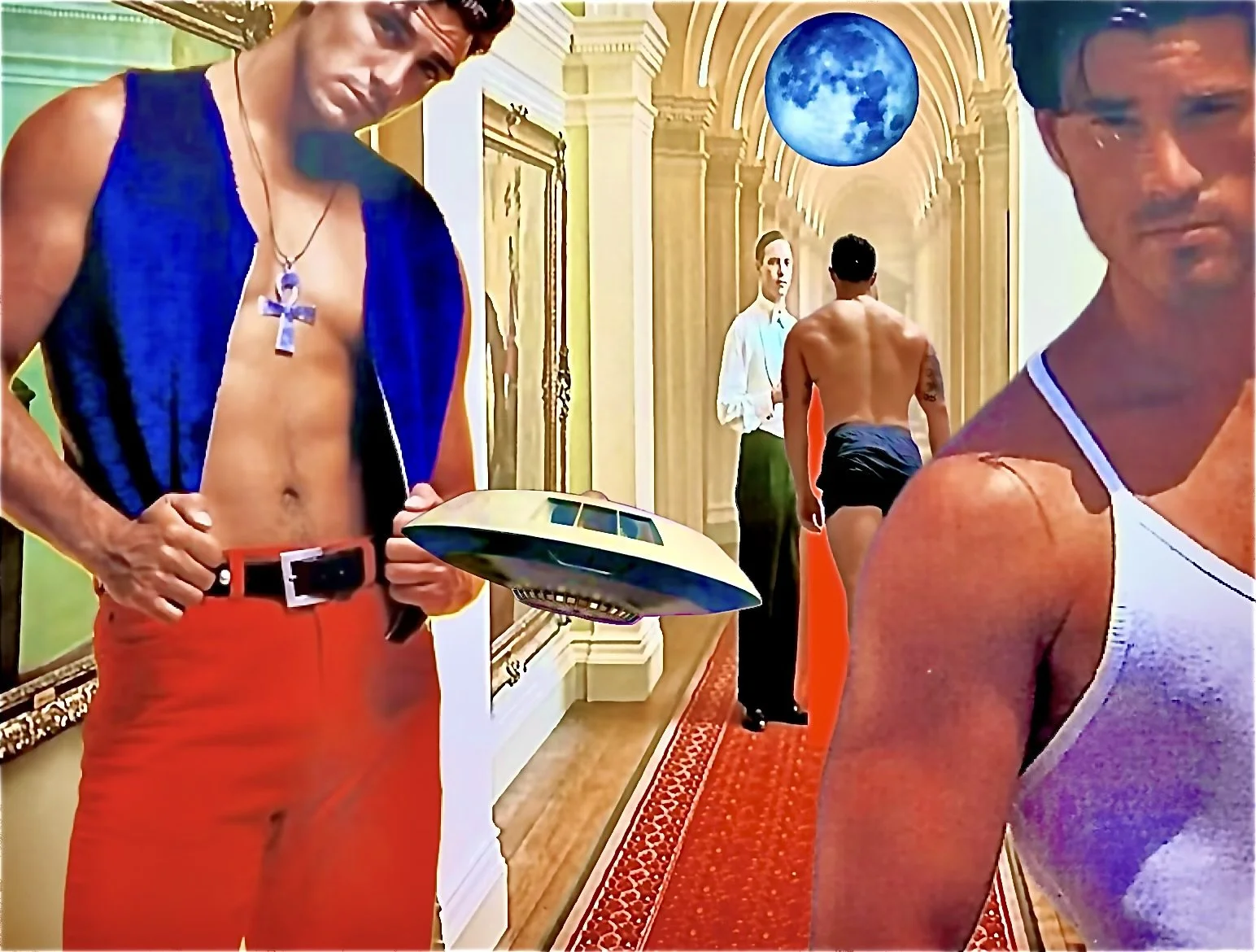
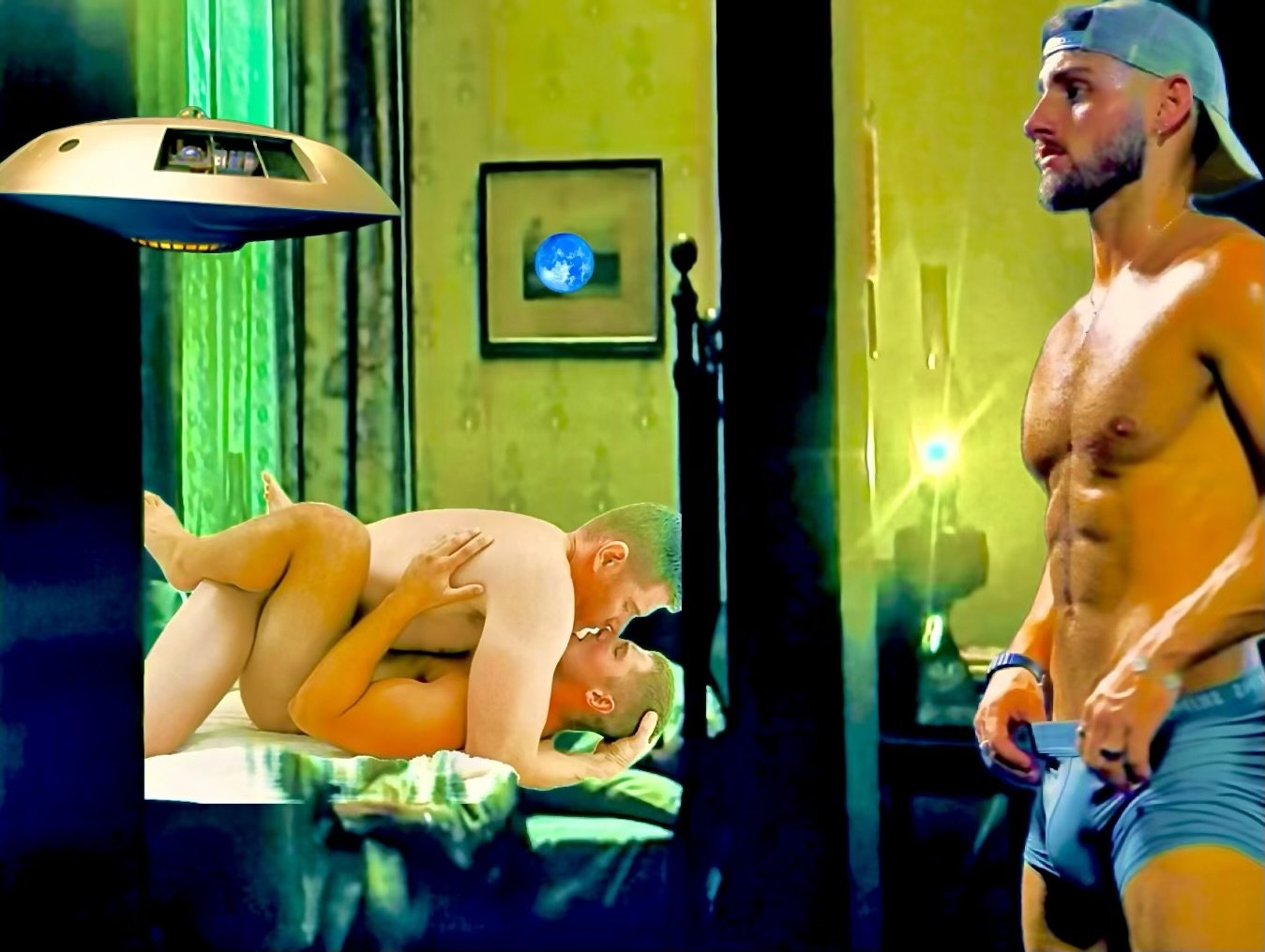
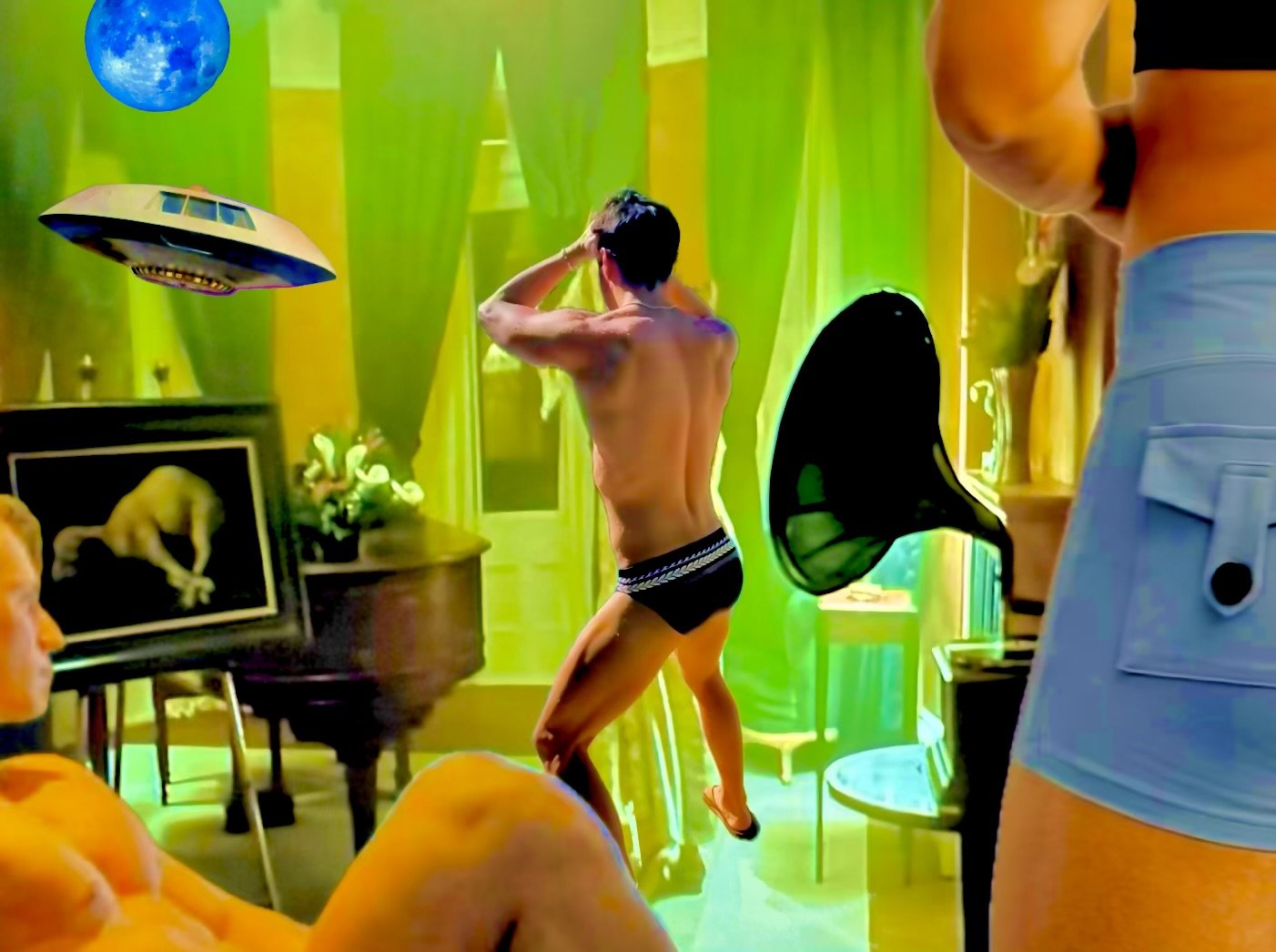
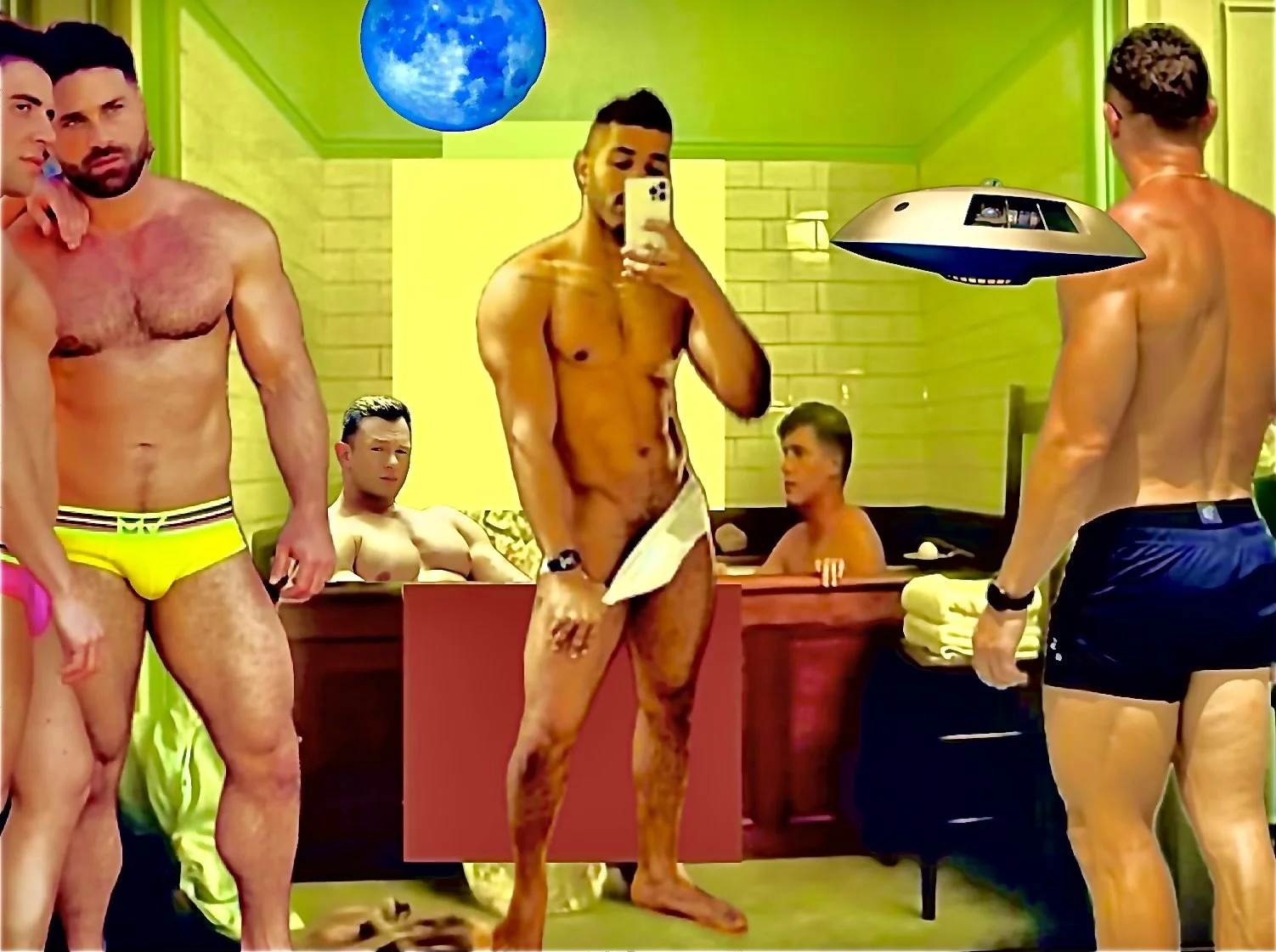
What If the Straight Character Were the Odd Man Out? | The Gay Domestic | The Subdivision | Digital Photocollage | 2026
Agatha Christie did not just write mysteries. She wrote England to itself. For four decades — the thirties, the forties, the fifties, the sixties — she was the country’s arbiter of manners, its national narrator, the voice that told the English who they were and how they behaved at a dinner party, in a drawing room, on the witness stand. Two billion copies. A play still running since 1952. When a culture rereads itself that many times through one writer’s eyes, that writer stops being an entertainer and becomes a mirror. The question is what the mirror leaves out.
Christie created, by conservative estimate, some three thousand named characters across sixty-six novels, a hundred and sixty-six short stories, and nineteen plays. Of those three thousand, three are openly gay — not coded, not “artistic,” not a knowing wink between women who share a house and a life. Three, named as such, on the page. Of those three, one is guilty of a crime.
That is one tenth of one percent of a fictional England standing in for the whole of it, against ninety-nine point nine percent who get to be everything else — heroes, victims, detectives, fools, lovers, killers, bores. A tenth of one percent who got to exist at all.
Was this cruelty? Probably not. Christie was educated, worldly, sharp enough to build the best-selling puzzle box in the history of publishing — she was not a woman who missed things by accident. Call it something closer to inherited blindness: a culture so certain of its own default setting that it never occurred to the culture, or its most famous novelist, that the setting was a choice.
So here is the visual experiment. Take one production of Witness for the Prosecution — the famous one, and a more recent film of it — and recast the ratio. Not one gay character in three thousand, but nearly everyone. The barrister, the wife, the accused, the men in the hallway, the man behind the camera. Heterosexuality becomes the rare exception instead of gay life. The shoe goes on the other foot.
The question these collages ask is not complicated: if the dominant culture were shown itself at one tenth of one percent, would it accept that as an accurate account of who it is? Or would it, finally, notice the mirror?