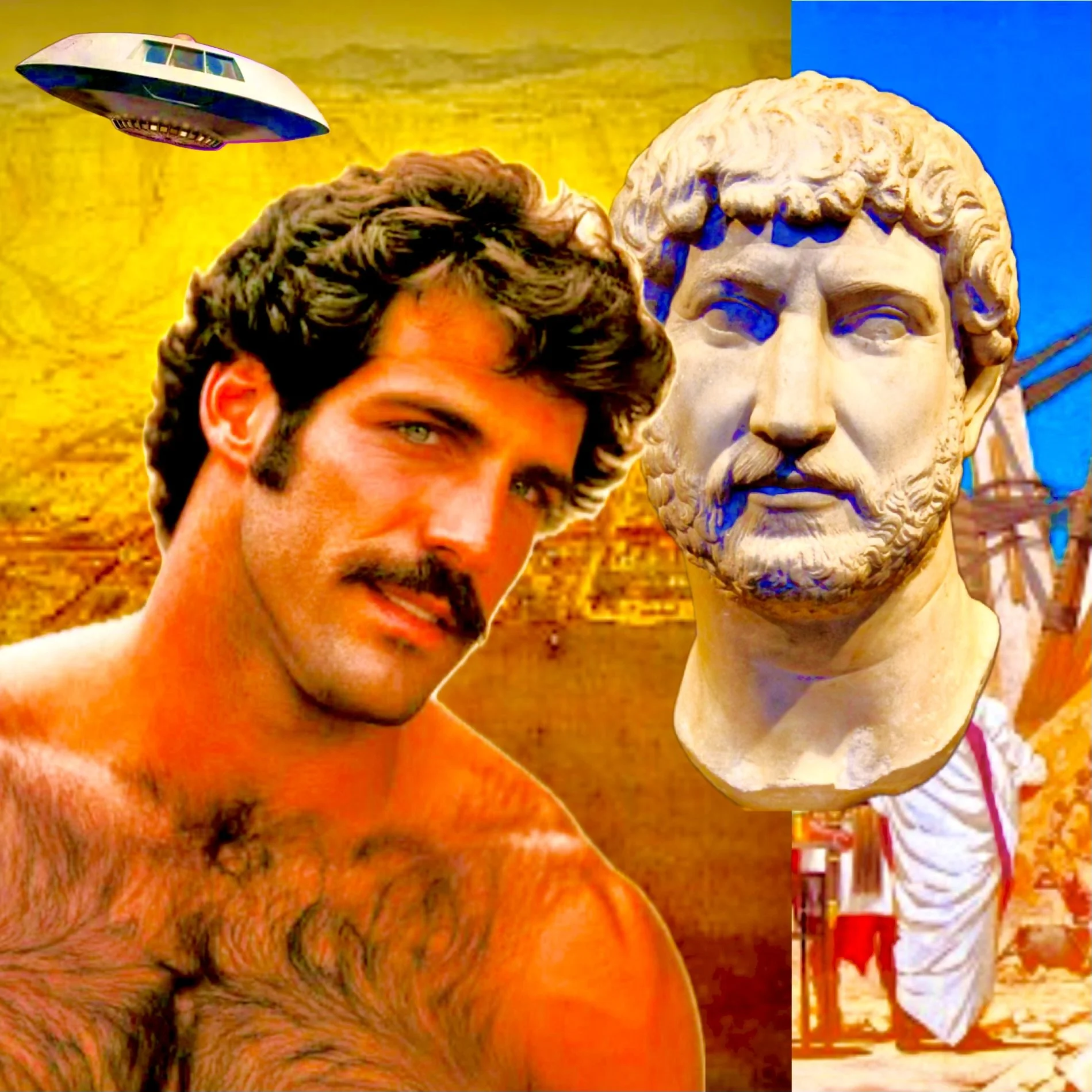
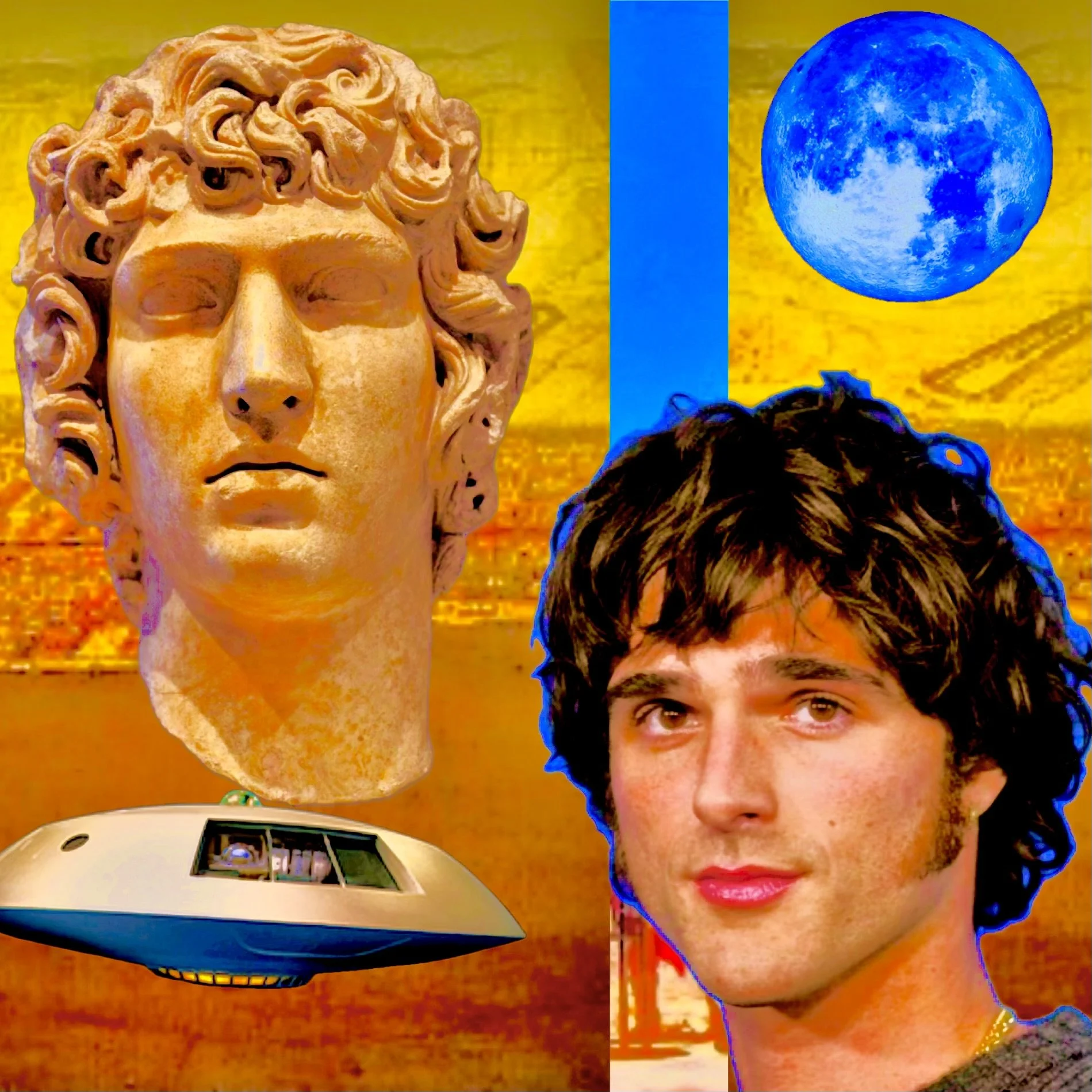
Hadrian never let the world forget Antinous. He built him a city, made him a god, and carved his face across an empire. Two thousand years later, the marble is still looking for its flesh.
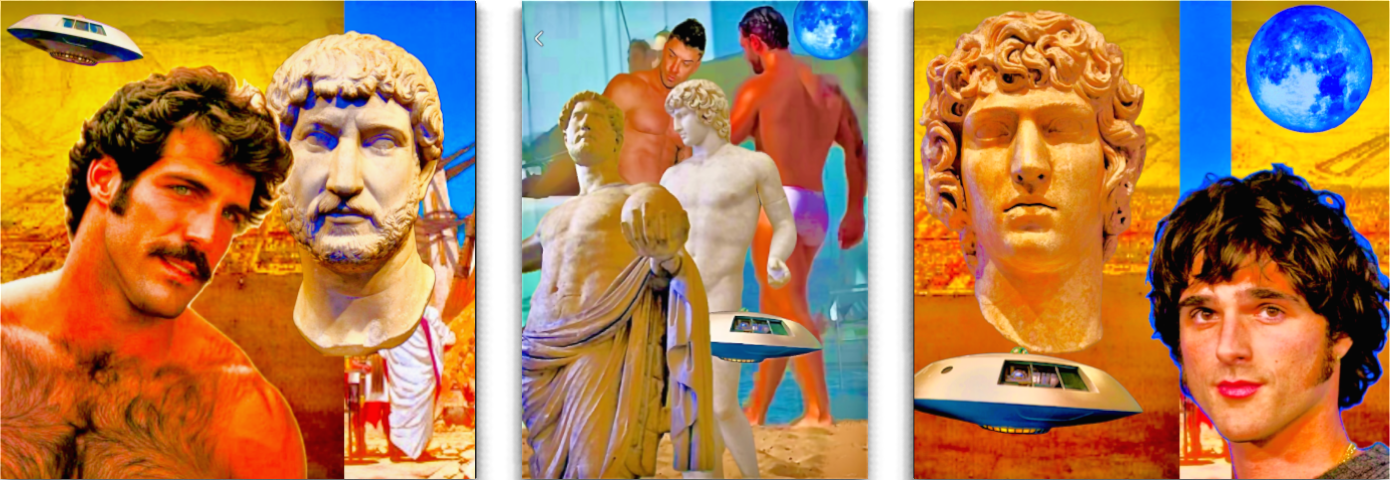
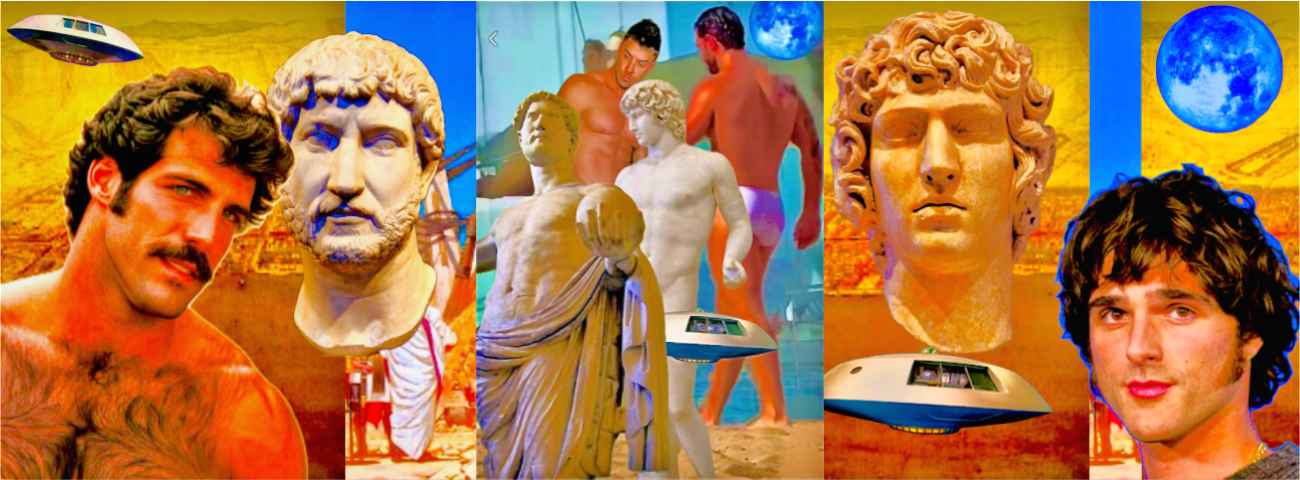
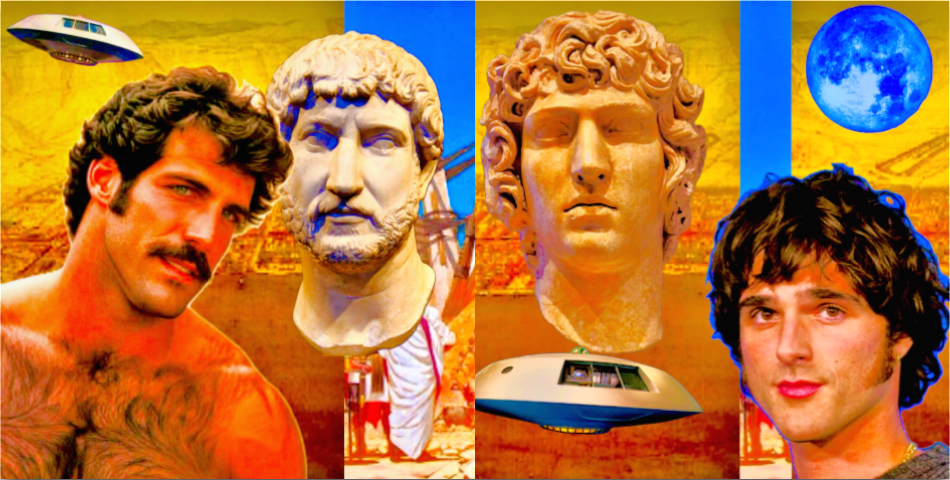
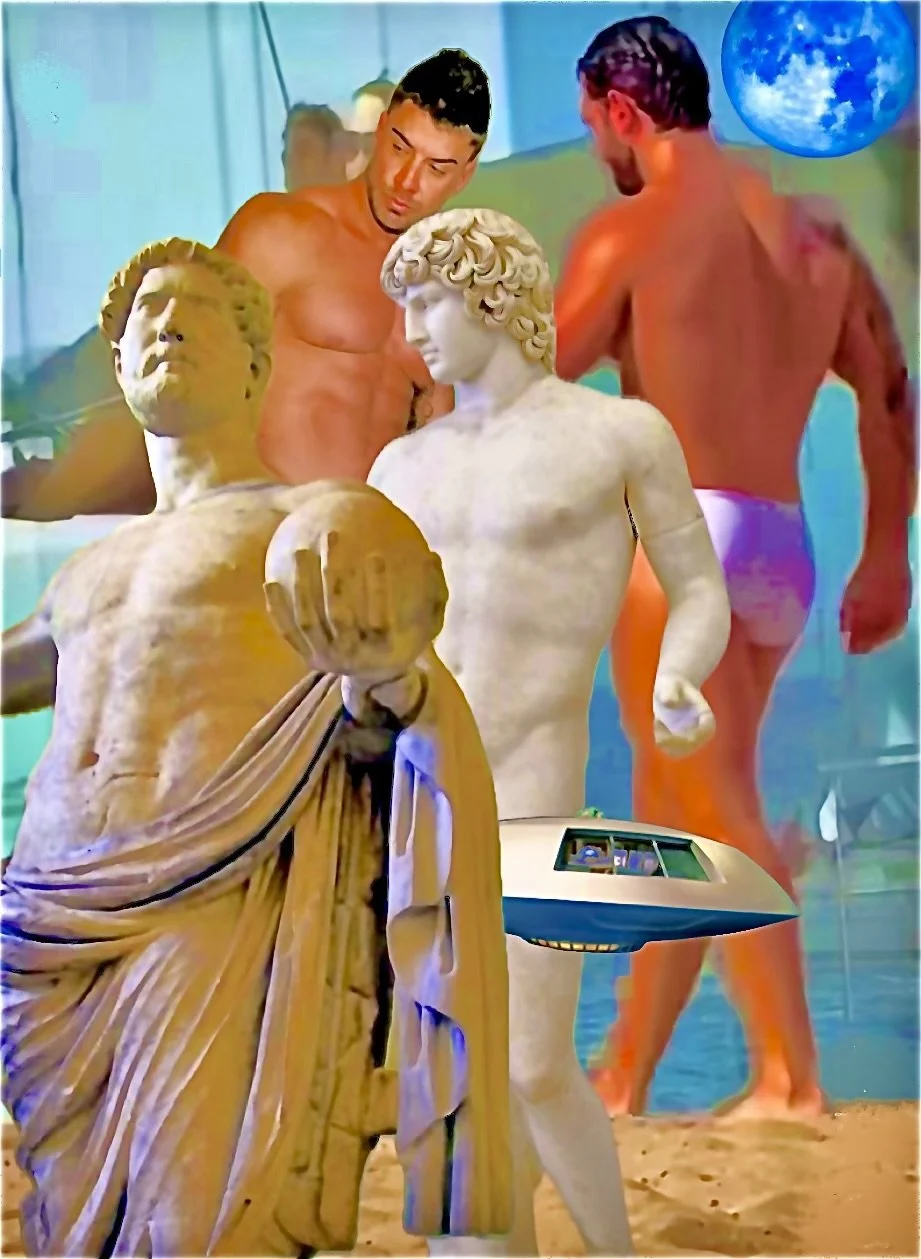
Marble Into Flesh: Hadrian and Antinous | Gay Domestic | The Subdivision | Digital Photocollage | 2026
Antinous drowns in the Nile in October of 130 CE, not yet twenty years old, and Hadrian — emperor of Rome, master of an empire that stretches from Britain to the Euphrates — does something no emperor does for a private citizen. He weeps, openly, reportedly “like a woman,” and then he acts. He has Antinous deified. He founds a city on the riverbank where the boy died and names it Antinoöpolis. He commissions statues, coins, and temples across the empire — all more surviving portraits of Antinous exist today than of almost any other non-imperial figure from antiquity. Archaeological evidence of his cult turns up in at least seventy cities, from Alexandria to Delphi. This isn’t a private grief kept behind closed doors. This is a Roman emperor turning his mourning into public architecture.
The paintings and busts of Antinous — the curled hair, the heavy-lidded, slightly melancholy eyes, the mouth set somewhere between calm and grief — became a template so consistent that later sculptors could copy it for centuries without ever having seen the boy. He is Bithynian, Greek, young, and beautiful, and that beauty is the entire reason any of this survives: Hadrian didn’t just love him, he made sure an empire looked at him and kept looking.
This new work sets those two-thousand-year-old faces — cast from the busts that survive, rendered as they were rendered then — beside contemporary men: gym bodies, beach bodies, a mustache and a bare chest lifted from the visual language of modern gay desire. The marble doesn’t get replaced. It gets accompanied. Hadrian’s grief built temples; this collage builds a bridge instead, letting the cold permanence of stone sit next to something warm-blooded and current, because the ache Hadrian felt in 130 CE isn’t actually that far from what gets photographed at a pool party in 2026. Same longing. Different material. The moon watches both.
— Behan
Sources: National Museums Liverpool; Encyclopaedia Britannica; TheCollector; Roman Empire Times; Prism & Pen (Medium).