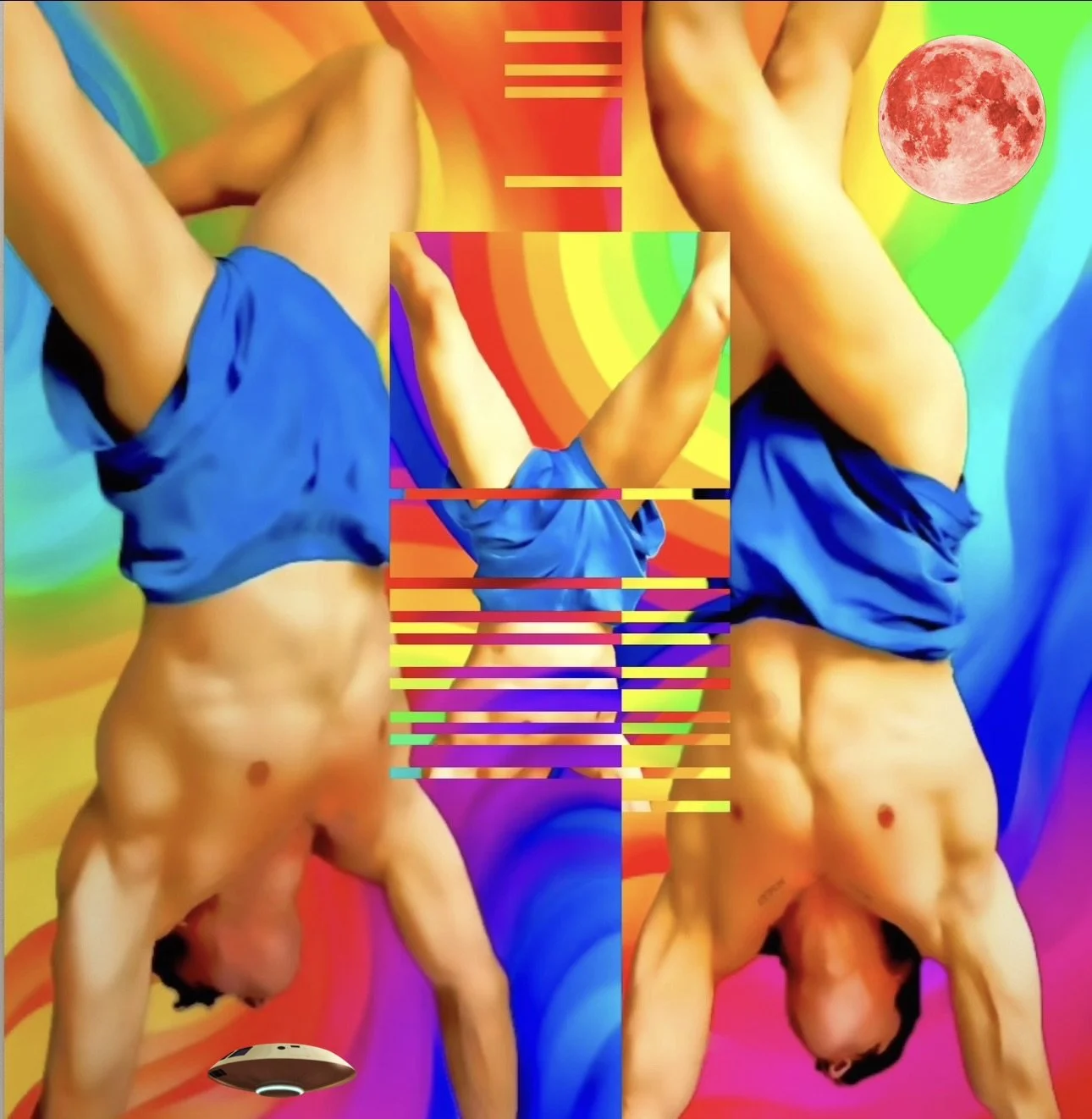
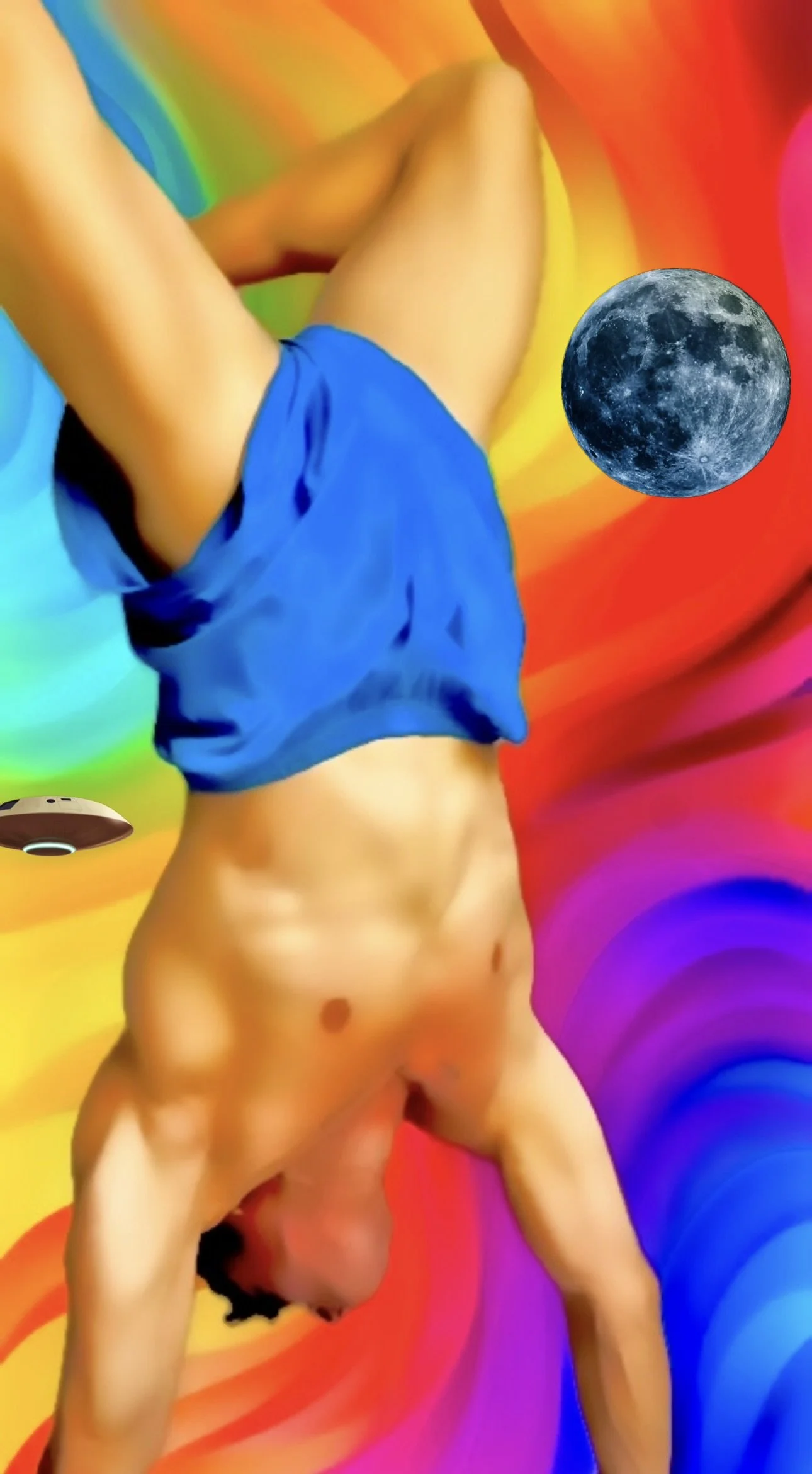
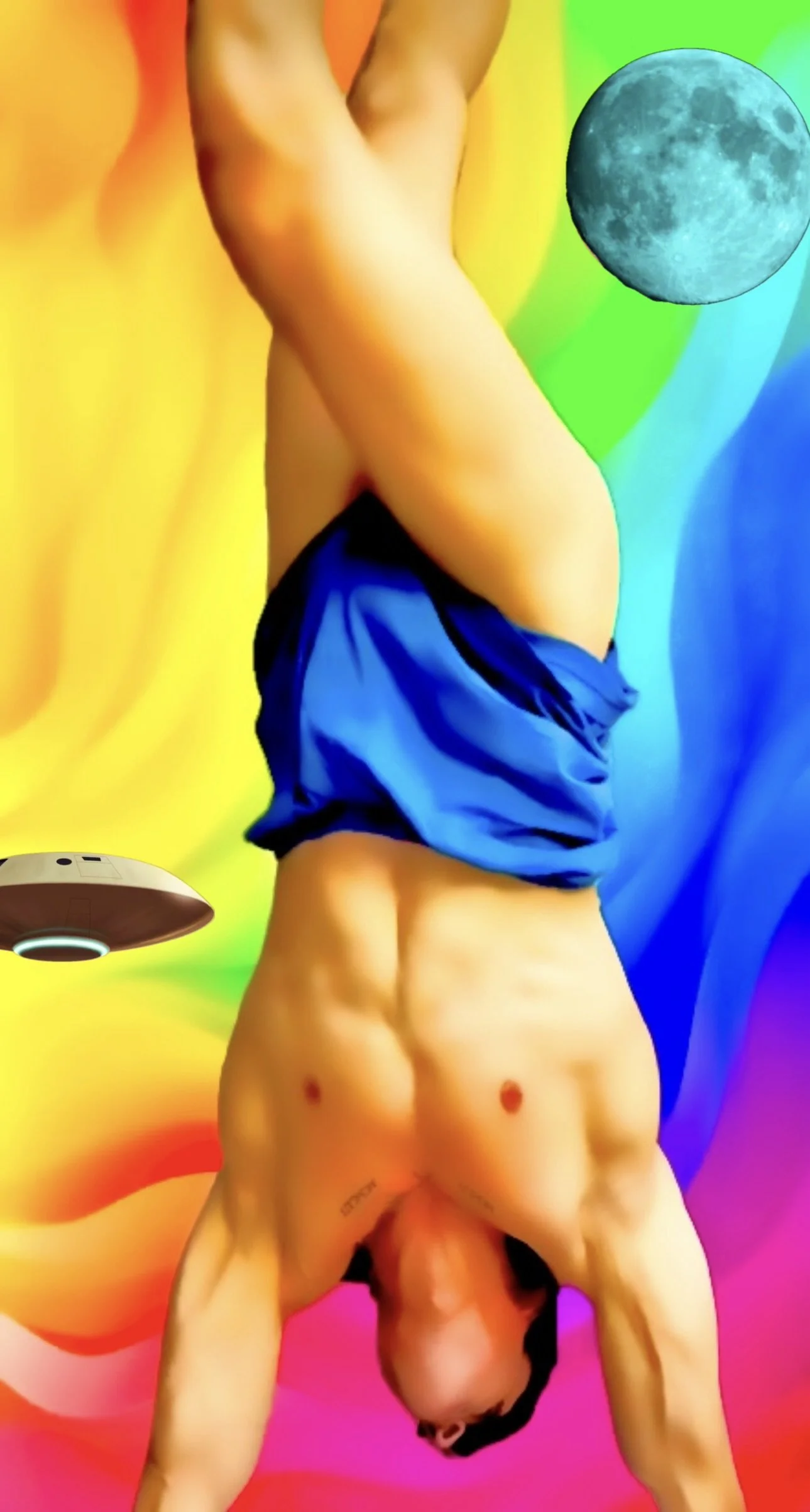
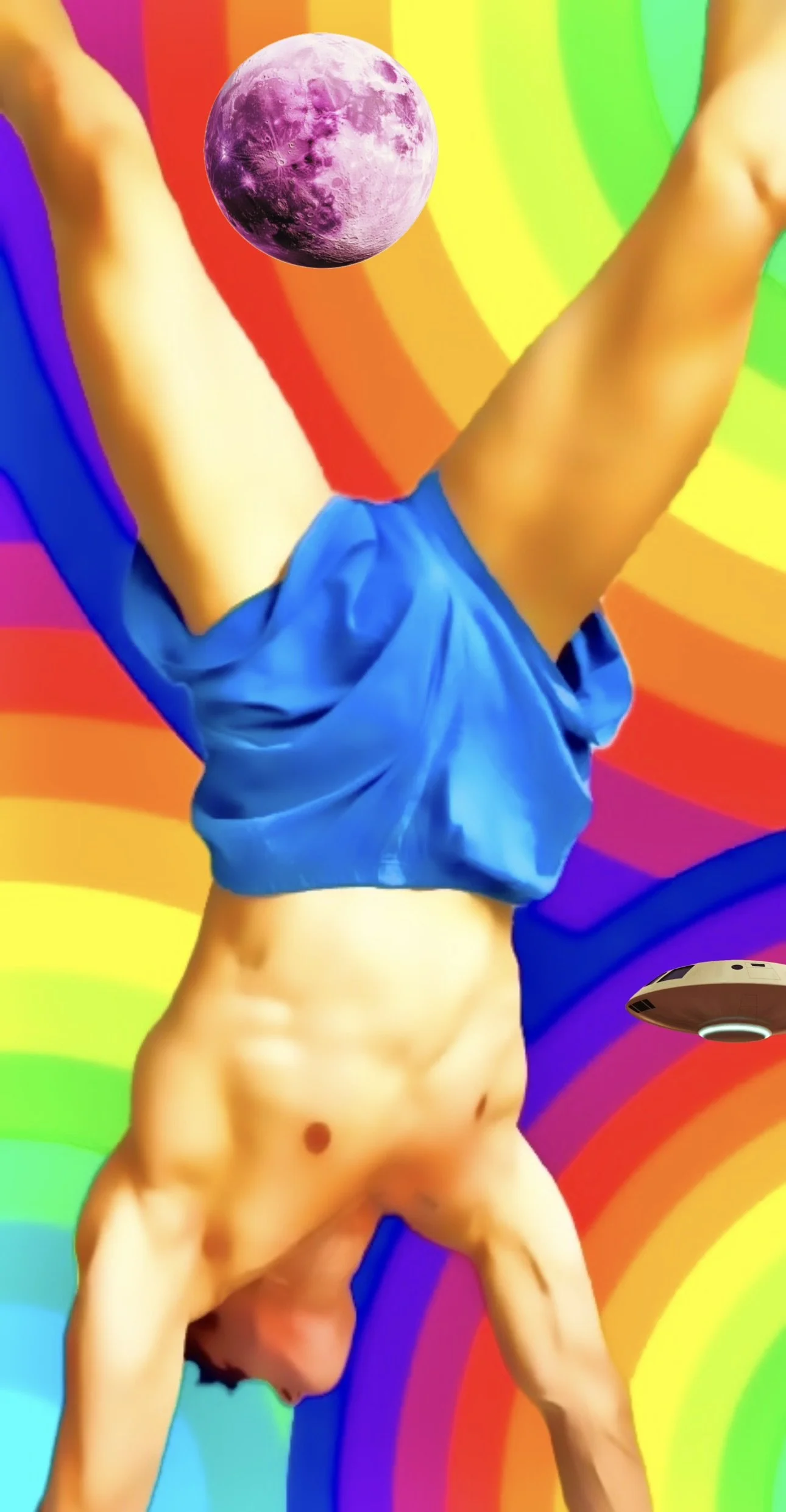
Words to Live By

Words to Live By: Millenia Athletics

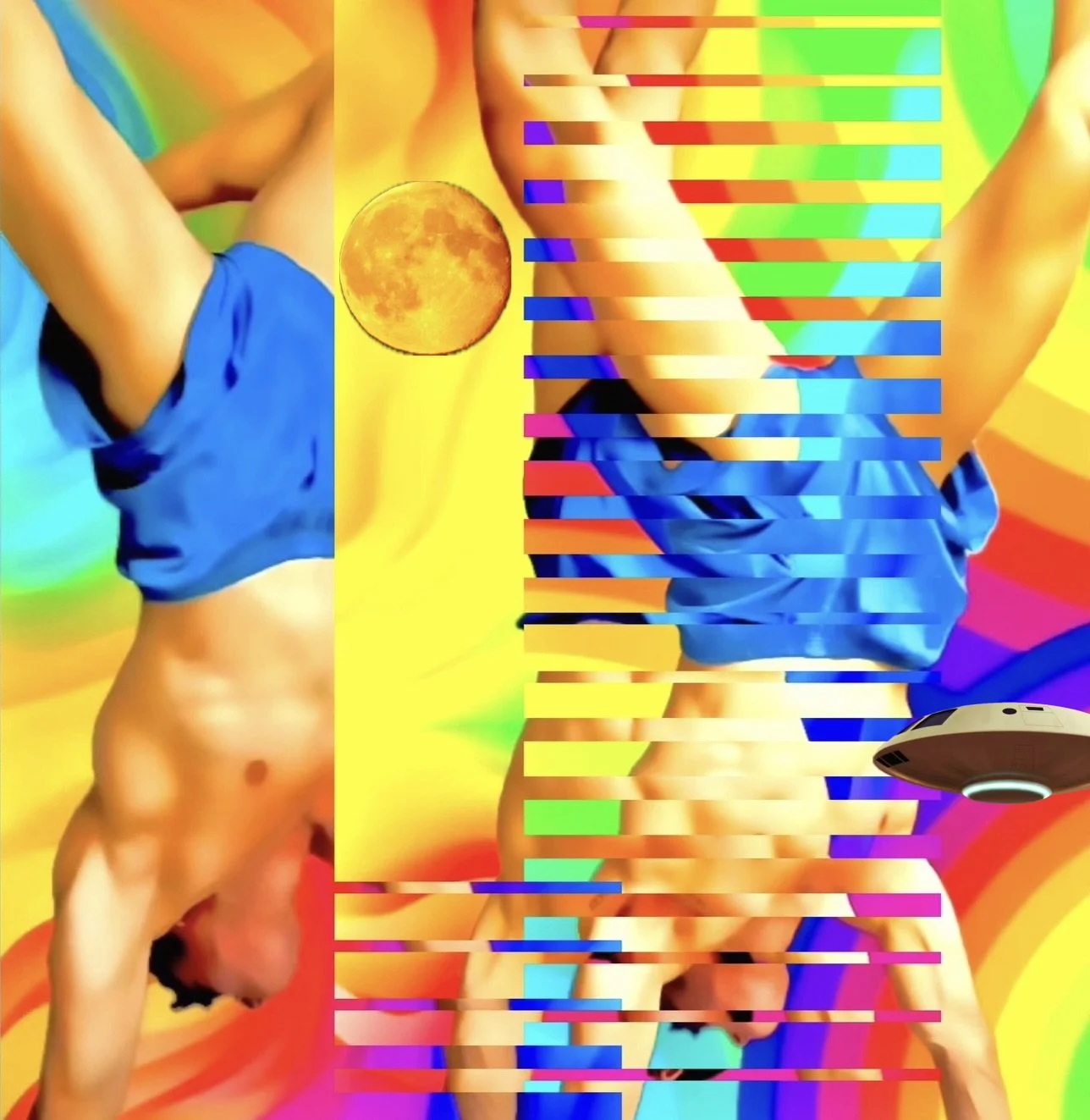
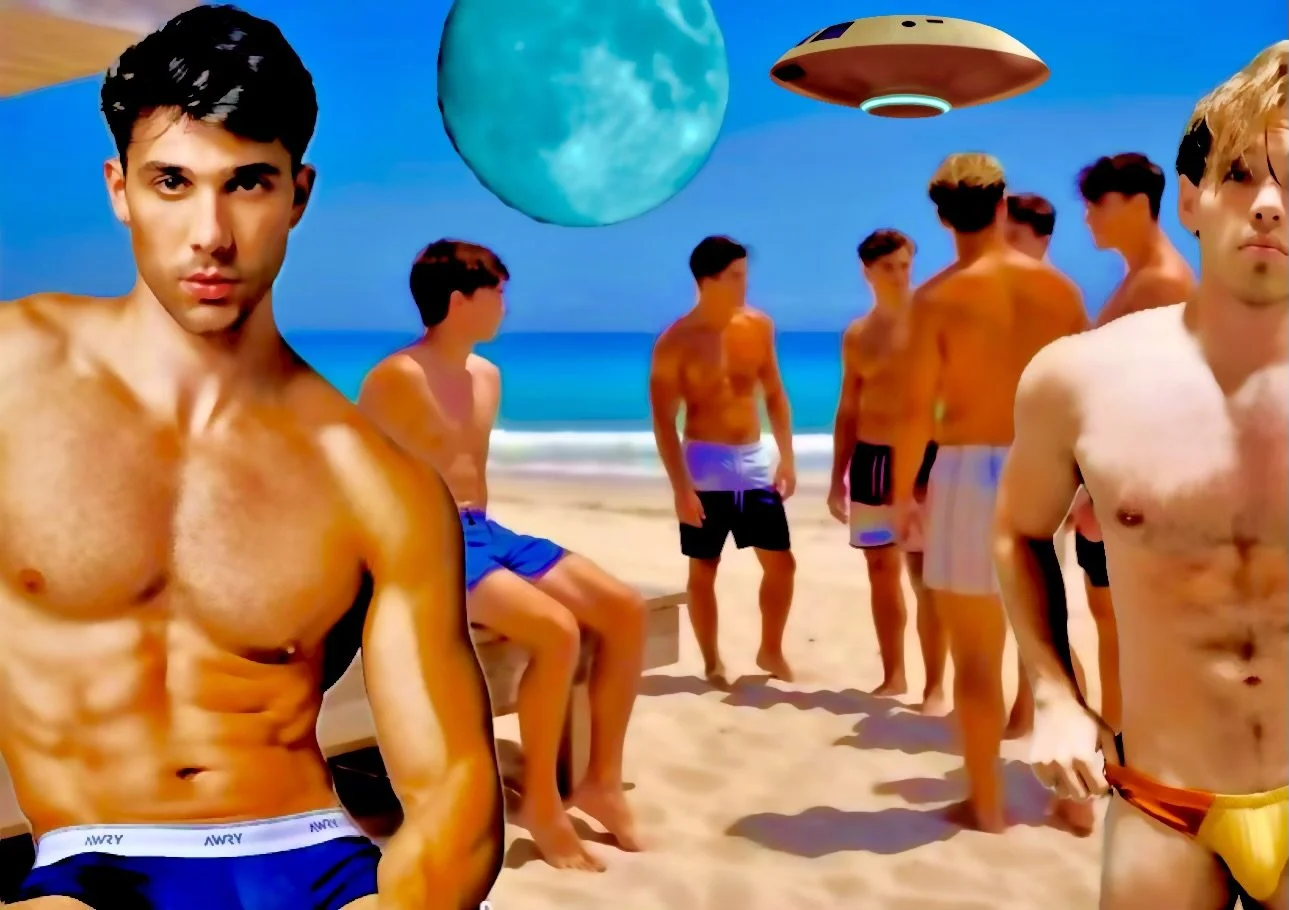
From leather Roman panties to moisture-wicking fabrics — the name of the game has always been keep moving. Each era had its own sense of fashion and style:

1920s–1930s: Thick. Ribbed. Tops.

1940s–1950s: Nylon. Military. Lightweight.

1960s: Tops. Casual. Bottoms.

1970s: Colorful. Curved. Bold.

1980s: Huge. Sweat. Head.

1990s: Baggy. Oversized. Graphic.

2000s–2010s: Athleisure. Spandex. Seamless.

2020s: Everything. Everywhere. All at once.

The body has always wanted to move. Gay men have always known how to dress for it.

Words to live By.

The Closet Series. 2026.

Subtext Blues

On the Nature of Subtext

Subtext handled well deepens a story. It rewards attention. It creates the charge between characters that audiences feel without always being able to name — and when it finally surfaces, it can be magnificent. Consider Citizen Kane. The entire film is a mystery built around a single word: Rosebud. The subtext blooms at the very end into something that reframes everything that came before. That is subtext becoming context.

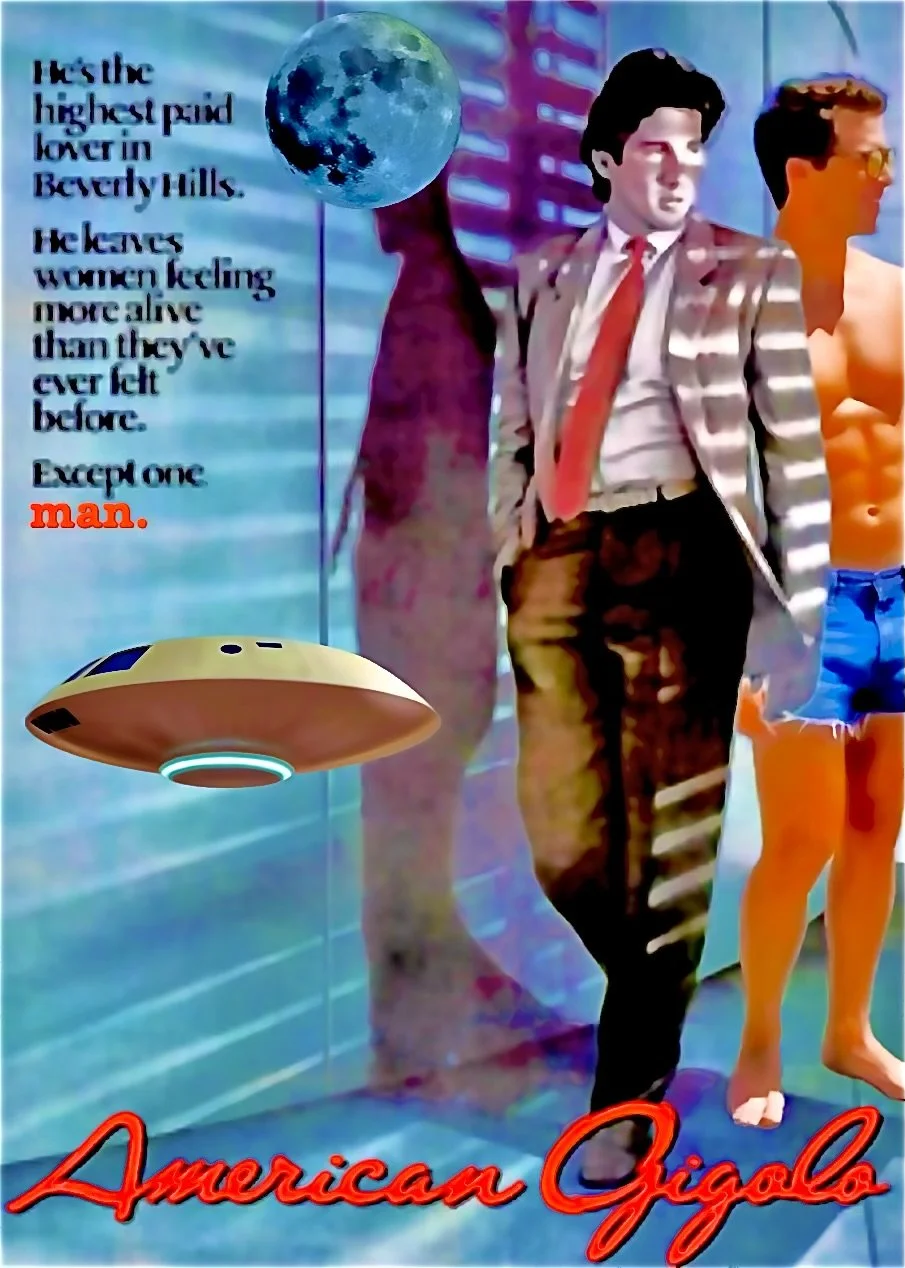
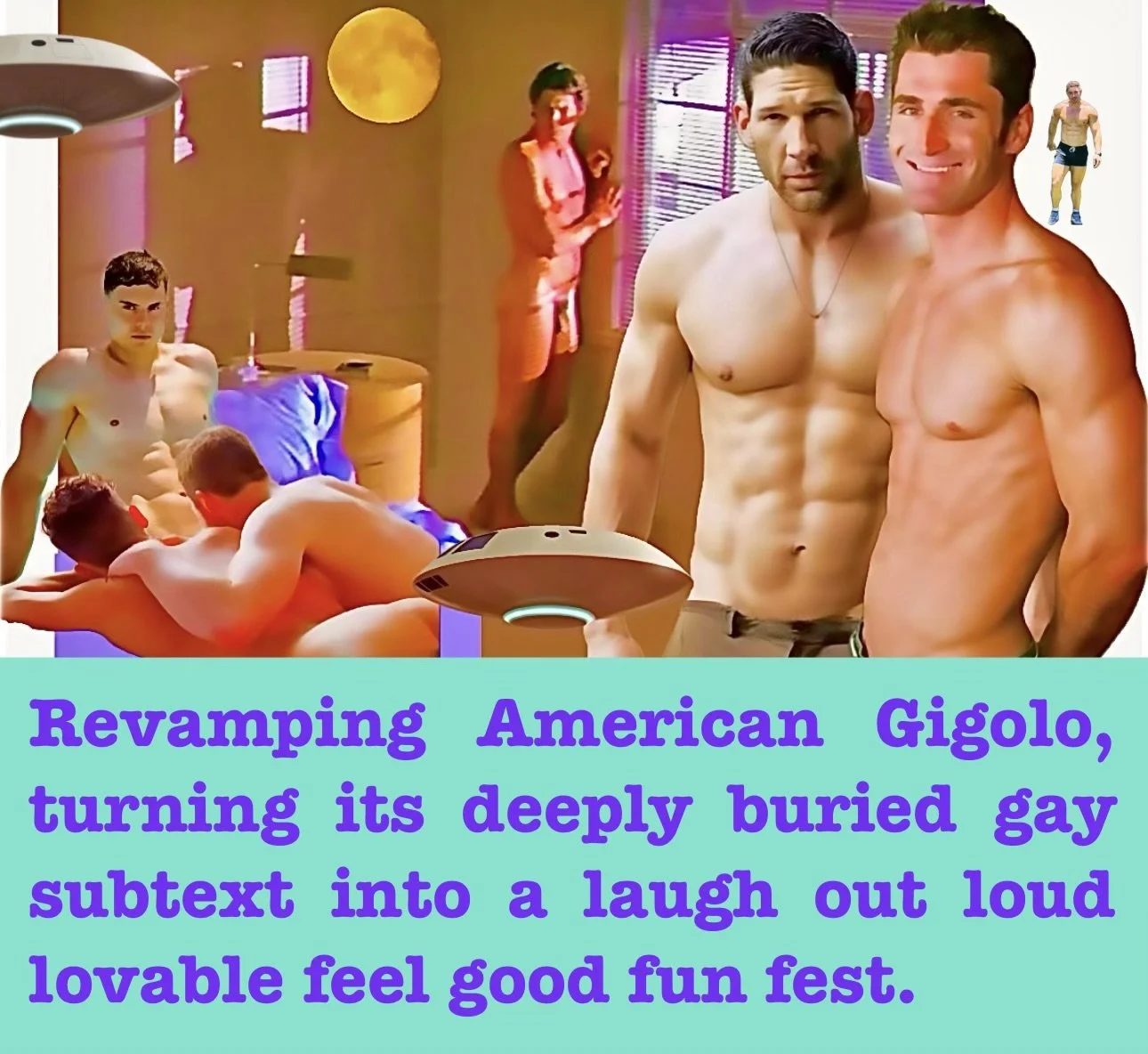
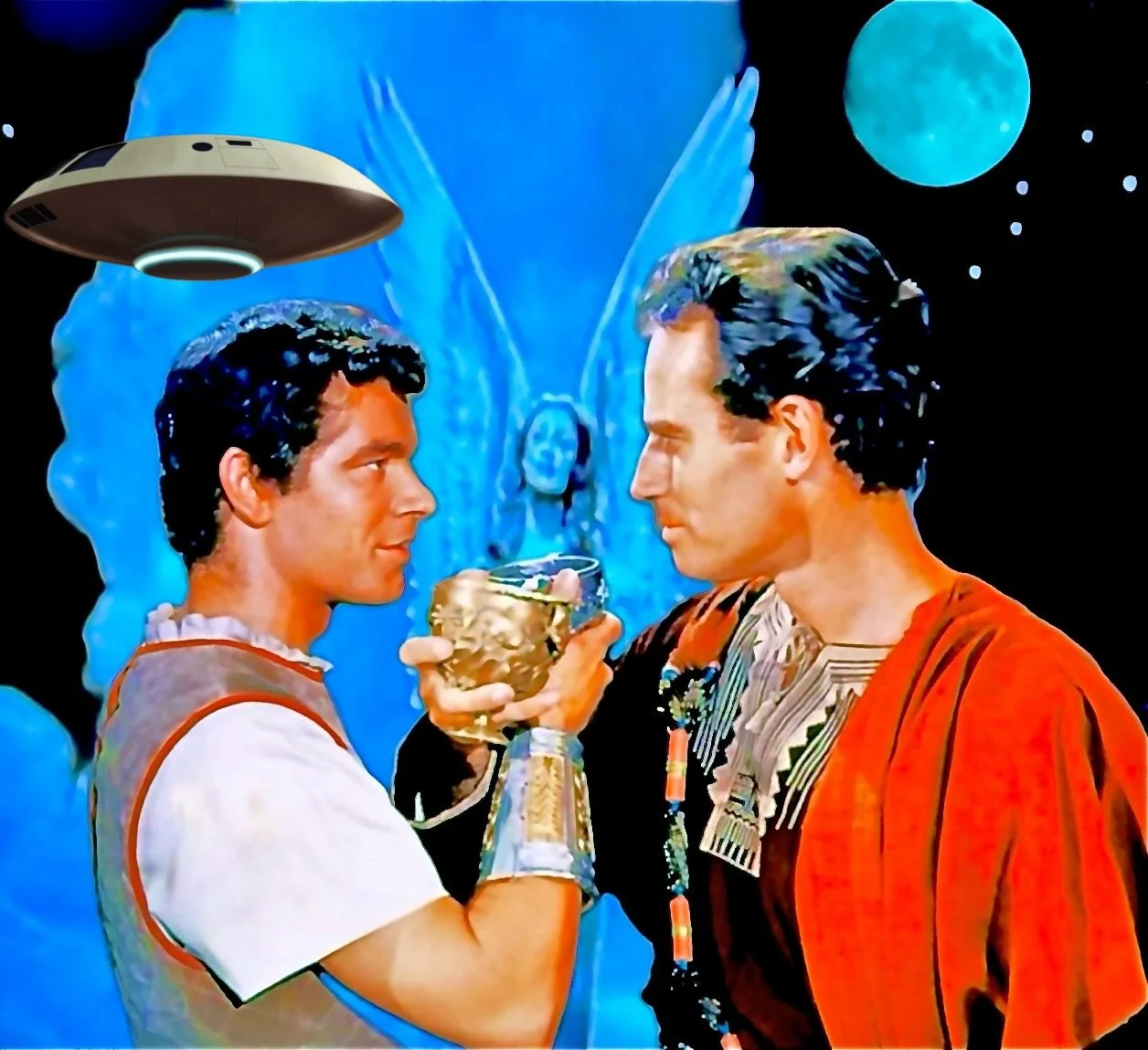
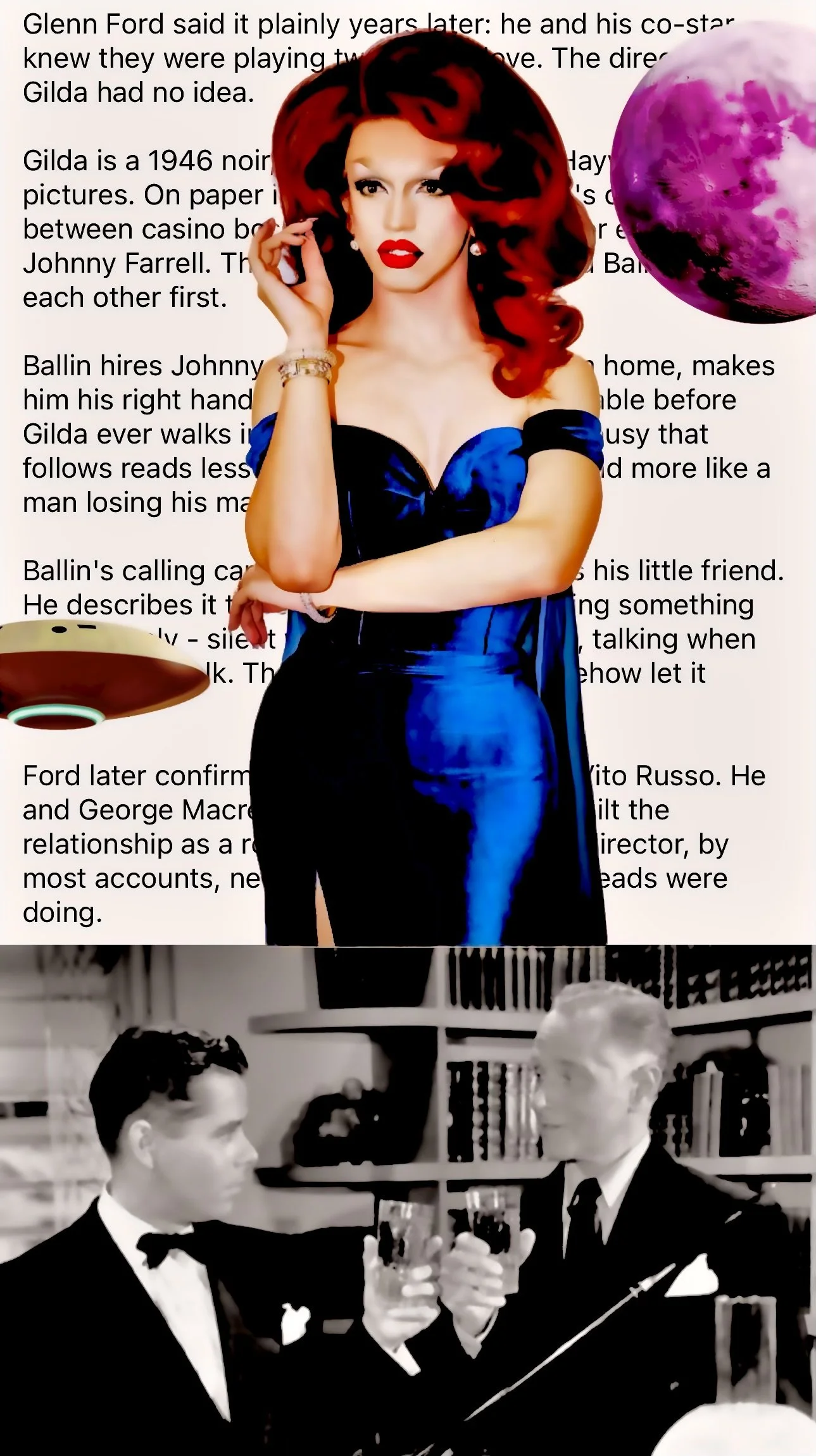
The prospect for gay subtext in twentieth century filmmaking was ripe with potential, yet the Hays Code was so onerous and burdensome that the subtext never got to bloom. It was buried so deeply it was rendered inert. Actors Glenn Ford and George Macready built a love story between two men into the center of Gilda without the director knowing. Gore Vidal wrote Messala as a spurned lover in Ben-Hur and directed Stephen Boyd accordingly without telling his co-star Charlton Heston. In American Gigolo, writer and director Paul Schrader built an entire gay sensibility into a film that never once named it. The subtext in all three films could have been thoroughly illuminating. Instead it was buried so deeply that it confused rather than enlightened. A desire without resolution. A charge without release. A love story with no ending.

The Hays Code, written in 1930 and strictly enforced from 1934 to 1968 at the insistence of the Catholic Legion of Decency, represented thirty-four years of institutionalized censorship of American cinema. Of everything the Code suppressed, which was substantial, homosexuality was one of its most absolute prohibitions. Thirty-four years. An entire generation of filmmakers. An entire generation of film goers who never got to see the fullness of life on screen. It wasn’t only gay men and women who were cheated — although they were, profoundly — it was every person who sat in a darkened theater and deserved the whole truth of human experience.

Think about what those films could have been. Gilda with the love story between Johnny and Ballin fully realized. Ben-Hur with Judah and Messala’s history allowed to breathe on screen the way Vidal wrote it. American Gigolo with Julian Kay finally allowed to find real love — on his own terms, with whom he chose. Decades of films diminished not by the presence of gay characters but by the systematic burying of those characters before they could fully live.

The Hays Code, developed and dominated by the American Catholic Church, did not protect audiences. It impoverished them. It took stories that could have been richer, truer, more dramatically complete and handed them back with something essential removed. The artists knew what was missing. The audiences felt the absence without knowing its name. And the gay men and women in those audiences watched themselves almost appear on screen, again and again, and then vanish before they could fully arrive.

The shame is not in a character being gay or a film telling their story. The shame is not allowing a gay character to breathe.

#TheClosetSeries #OnTheNatureOfSubtext #QueerCinema #HaysCode #Gilda #BenHur #AmericanGigolo #QueerHistory #LGBTQHistory #DigitalPhotocollage #QueerArt #FilmHistory #TheClosetKnows

Pride Then and Now

Back to Pride 2025 and looking again to some of my favorite work from then. Thinking about how conservatives are currently trying to remove the only life saving HIV medication from the hands of gay men on “moral” grounds. An immoral act, this like nothing else changes things. Happy Pride.

Biblical Truth

The Bible Is Not Anti-Gay. The Institution Is.

The Closet Series — Behan

The Bible is full of profound same-sex relationships that the institution of the Church has worked very hard to desexualize. The work of desexualization is itself a political act, not a theological one.

David and Jonathan

In 1 Samuel, Jonathan’s soul is knit to David’s soul. The text uses the Hebrew word ahav — love — the same word used for romantic love elsewhere in scripture. When Jonathan dies, David mourns: your love to me was wonderful, surpassing the love of women. That sentence is in the text. It has always been in the text. The tradition has read it as brotherly devotion. That reading is a choice, not a certainty. None of us were there.

Ruth and Naomi

Ruth says to Naomi: where you go I will go. Where you die I will die. There I will be buried. It is one of the most complete declarations of devotion in all of scripture. The tradition reads it as loyalty between women. That reading is a choice, not a certainty. None of us were there.

Jesus and the Beloved Disciple

In the Gospel of John, one disciple is identified repeatedly as the one Jesus loved. At the Last Supper he reclines against Jesus. At the crucifixion, when every other male disciple has fled, he remains. Jesus from the cross entrusts his mother to this man’s care. The tradition has worked carefully to keep this relationship fraternal. That work is a choice, not a certainty. None of us were there.

These three relationships share something important. They are not incidental to their texts. They are central to them. The authors of scripture chose to place same-sex love — sexual or not — at the heart of the narrative. The institution chose to read that love as something other than what the language describes.

Both readings are interpretive. Only one claims to be definitive.

The political nature of that claim becomes visible when you ask a simple question: who benefits from the desexualization? Not the text. Not the theology. Not the figures themselves. The institution benefits. The institution that has built its authority in part on the regulation of sexual behavior requires that the sacred figures of its own tradition be unambiguously heterosexual — or unambiguously celibate — or unambiguously beyond the question entirely.

What has been applied to these relationships across centuries is a veneer of heteronormative context. And that veneer has a problem.

Gay people existed in first century Palestine.

They existed in ancient Israel.

They existed wherever and whenever human beings have existed. The murals of Pompeii conclusively prove that fact. To suggest otherwise is not theology. It is erasure. The figures in these stories could have been a part of the queer community. That is not a claim. That is simply the acknowledgment that it is not possible to say they were not there.

The problem is that the text keeps raising the question. The text keeps placing men who love men and women who love women at the center of the story. The institution keeps answering a question the text refuses to close.

And that’s not nothing.

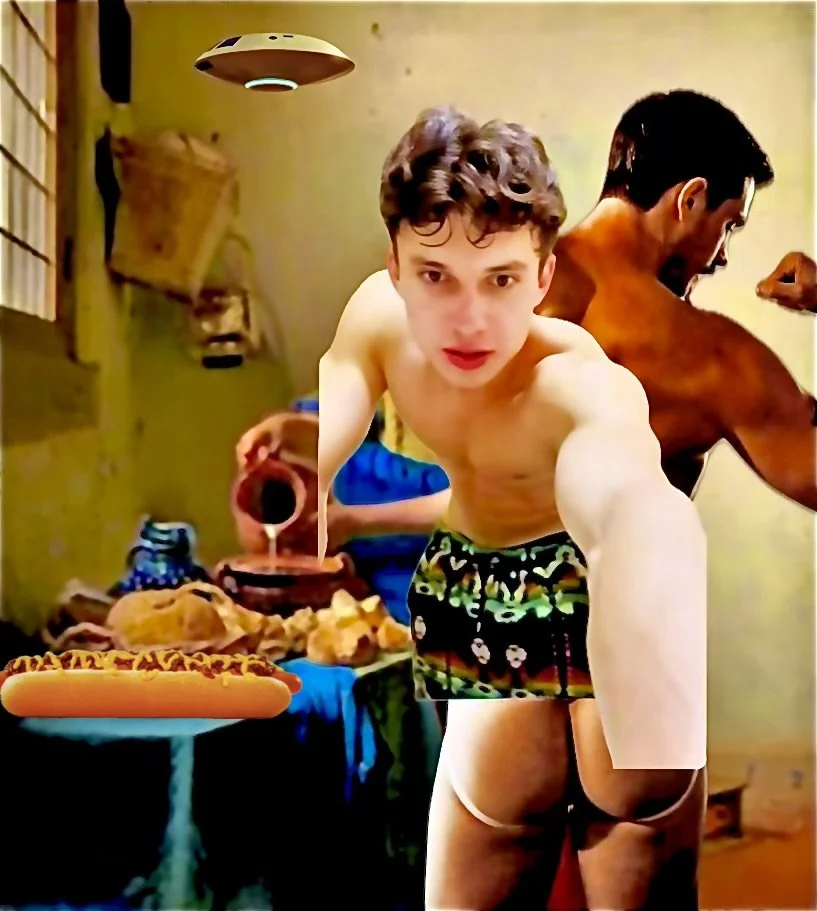
The Milk Man 2026 Digital Photocollage

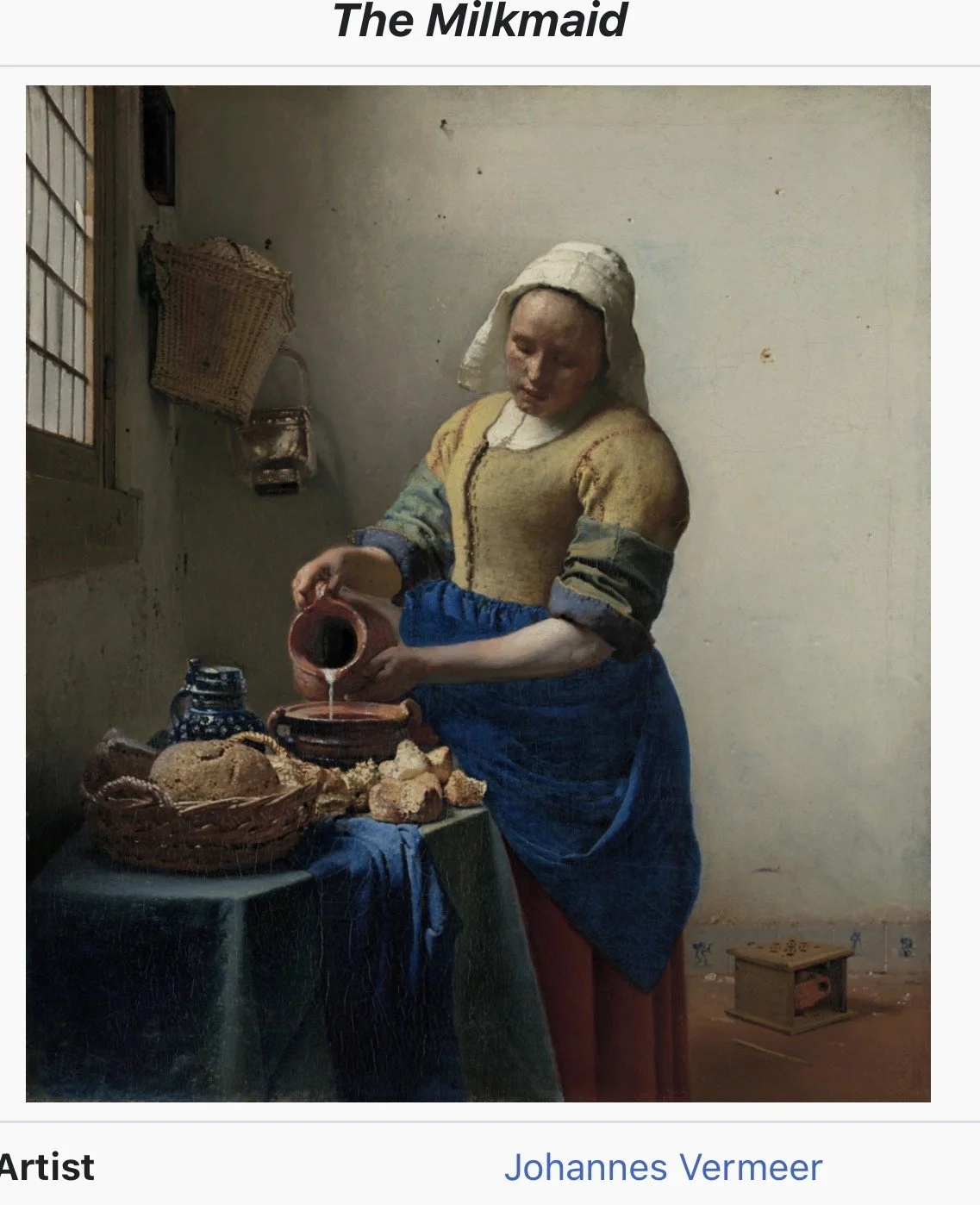
Vermeer’s Milkmaid has carried erotic symbolism since it was painted. The Metropolitan Museum of Art documents that the milkmaid theme was understood as sexually coded in Netherlandish art for two centuries before Vermeer — the jug, the pour, the domestic space all legible to their original audience.

Behan’s collage holds the same room, the same window, the same table, with the same palette of warm muted colors in a soft blur. The milkmaid is replaced with two male figures and the bread is replaced with a foot long coney dog.

The symbolism the Met describes — the jug, the pouring, the food as sexual symbol — is all still operating. Behan has taken the subtext and turned it to context from a queer perspective. Gay men were in the Netherlands also.

On the surface it’s visual humor. Underneath it’s a serious art historical argument — that the erotic coding in Western painting has always been there, has always been heterosexually assumed, and that substituting a queer reading doesn’t distort the painting’s meaning so much as reveal that the meaning was always available to queer folk as well. As it should.

Vermeer would smile.

Source

The Metropolitan Museum of Art. “The Milkmaid — The Milkmaid Theme.” metmuseum.org.

Male Mystique

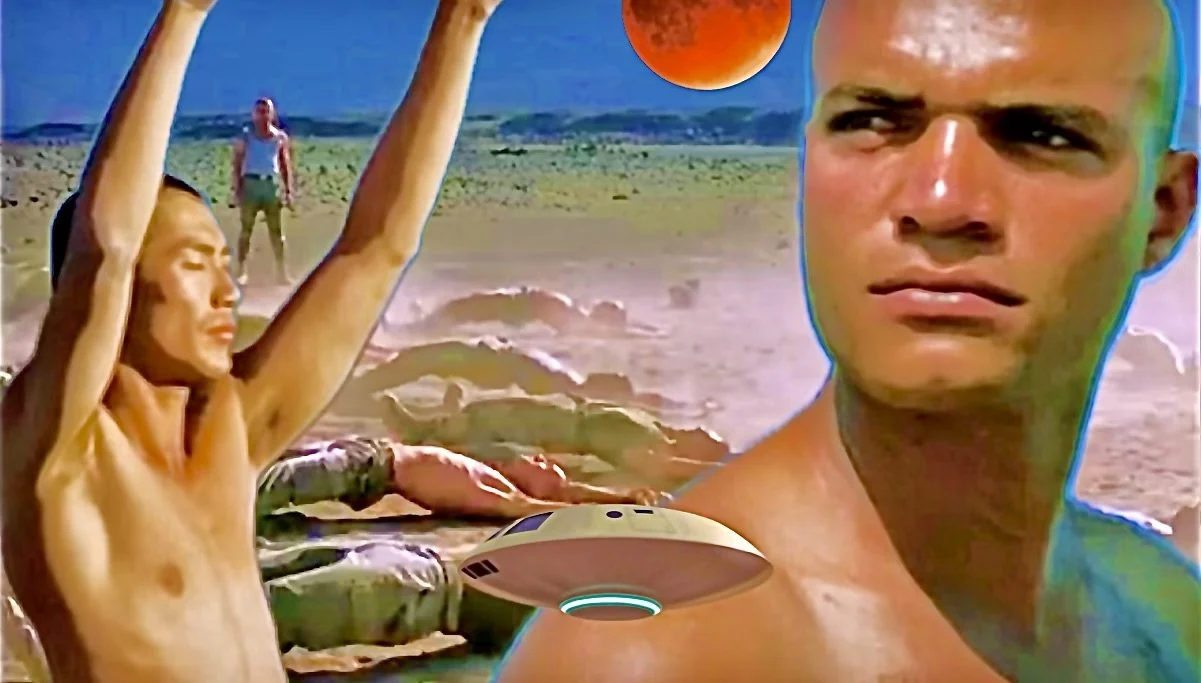
The Gay Gaze: On the Male Mystique | Beginning with Beau Travail | Digital Photo Collage Triptych | 2026 | The Closet Series — Behan

A new direction begins here.

The Closet Series has spent years looking inward — reclaiming queer history, naming the hidden, making the missing photographs. Now the gaze turns outward. Toward straight men. Toward the masculine body as subject. This is the Gay Gaze.

The starting point is Beau Travail, the 1999 film by French director Claire Denis. Denis trained her camera on French Foreign Legion soldiers in the desert of Djibouti. Almost no dialogue or plot. Only bodies. Moving, training, resting, watching each other. The male body as a landscape.

The Gay Gaze affirms that the masculine body is worth looking at. That looking is itself an act. That when the observer changes, so does what is seen.

These three collages are drawn from that film. They are not conclusions. They are an opening.

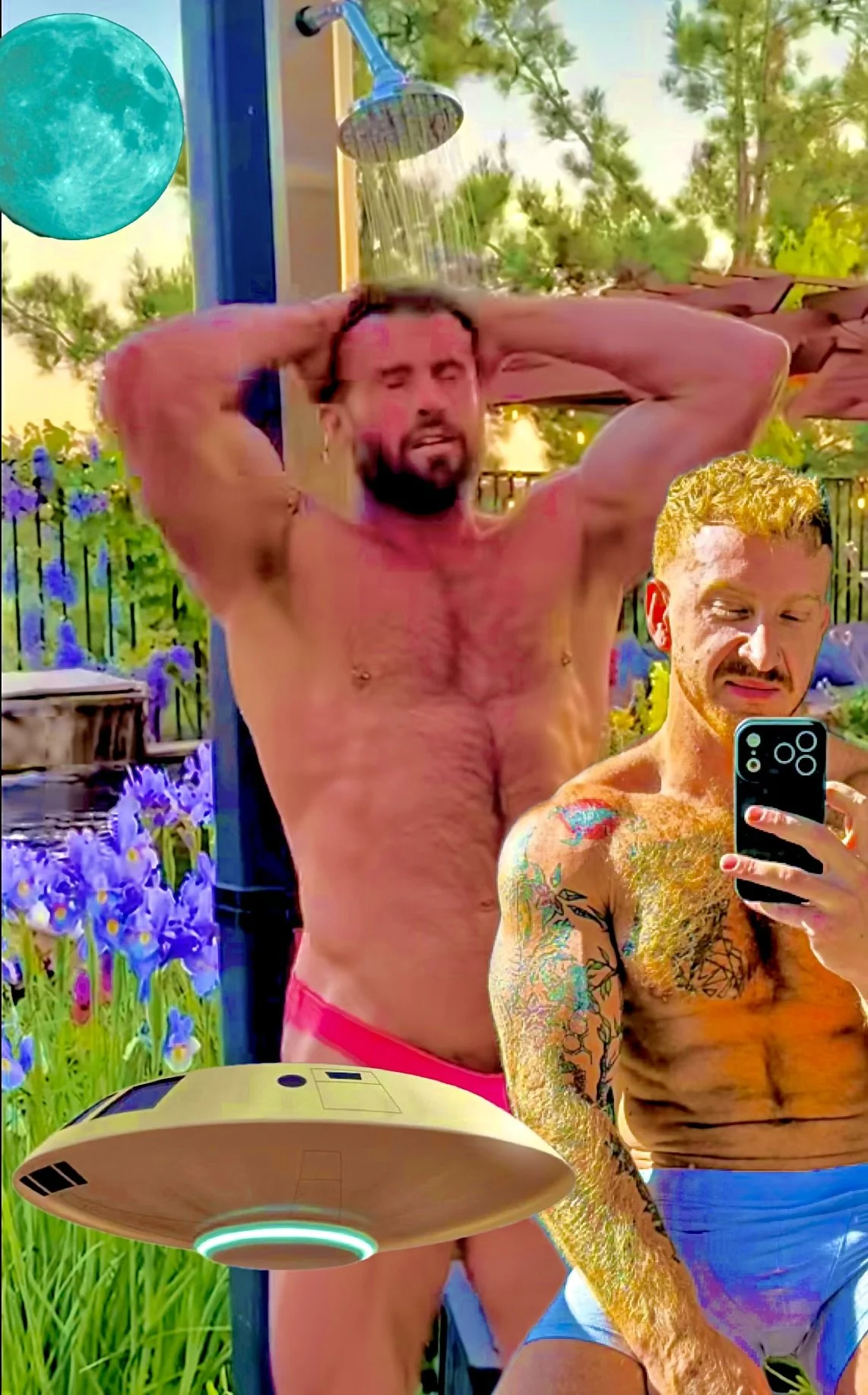
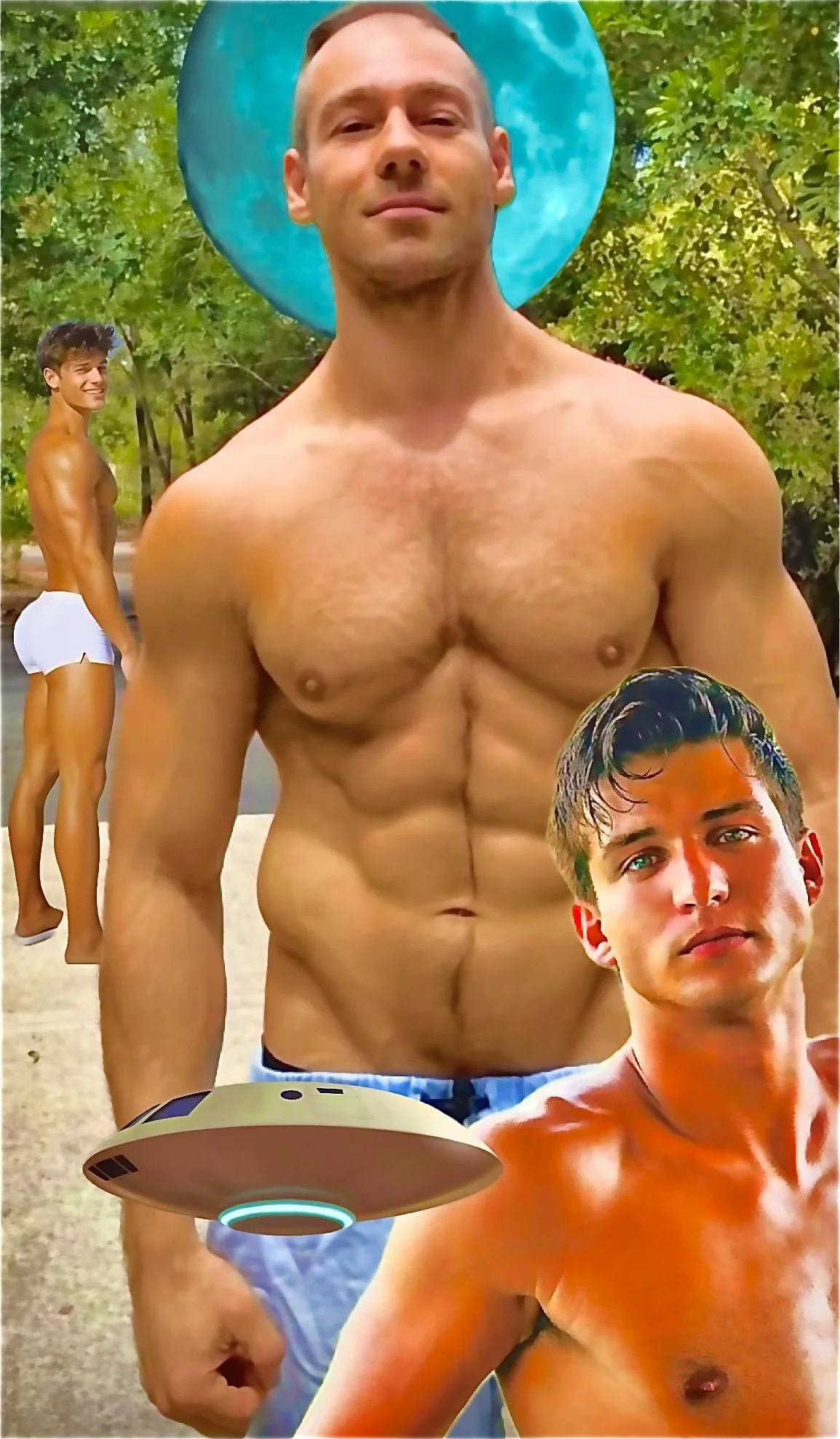
The blood moon is watching. Jupiter 3 is overhead. The gaze has just begun.

Gay Gazing

The Gay Gaze: A Timeline Documenting the Transition from “Behavior Is Identity” to “Identity Is Not Behavior” in American Culture, 1748–2025

The Closet Series — Behan

1748

The word masculinity enters the English language, initially as a grammatical term. It describes a category of nouns. It will take another century before it describes a category of men.

1868

Karl-Maria Kertbeny, a German-Hungarian journalist and physician, coins the words heterosexual and homosexual in a private letter to activist Karl Ulrichs. He is arguing against Prussia’s sodomy laws. He needs a category to defend. So he invents one. In doing so, he invents its opposite.

1892

The word heterosexual makes its first appearance in an American medical journal, in an article by Dr. James G. Kiernan. Heterosexuality is classified as a form of perversion — an excessive and misdirected appetite toward the opposite sex. The category arrives in America as a diagnosis, not a norm.

1901

Dorland’s Medical Dictionary defines heterosexuality as an “abnormal or perverted appetite toward the opposite sex.”

1934

Heterosexuality enters common American usage as a positive identity — the norm against which deviance is measured. From this point forward, behavior and identity are the same thing. You are what you do. The category is total or it is nothing.

1947

Los Angeles produces Vice Versa, the earliest known lesbian publication in the United States. It is typed and hand-distributed. It does not use the mail. It cannot.

1948

Alfred Kinsey, Wardell Pomeroy, and Clyde Martin publish Sexual Behavior in the Human Male. Kinsey’s scale runs from 0 to 6. Zero is exclusively heterosexual. Six is exclusively homosexual. The research finds that most men do not live at the poles. Significant percentages of men report same-sex experiences but identify as heterosexual. The behavior and the identity do not match.

1950

Harry Hay founds the Mattachine Society in Los Angeles — the first sustained gay rights organization in the United States.

1952

Dale Jennings, arrested in Los Angeles on a charge of sexual solicitation, becomes the first known gay man to contest the charge publicly rather than plead guilty to avoid exposure. The jury deadlocks. The judge dismisses the case.

1953

ONE Inc. begins publishing ONE Magazine in Los Angeles — the first nationally distributed homosexual publication in the United States.

1955

Del Martin and Phyllis Lyon found the Daughters of Bilitis in San Francisco — the first lesbian organization in the United States.

1958

The U.S. Supreme Court rules in One Inc. v. Olesen that the federal government cannot suppress a gay publication on grounds of obscenity. It is the first Supreme Court ruling in favor of gay rights. That same year, the first recorded gay riot in American history takes place at Cooper Do-nuts in downtown Los Angeles, when patrons fight back against routine LAPD harassment.

1967

On New Year’s Eve, undercover LAPD officers raid the Black Cat Tavern in Los Angeles’s Silver Lake neighborhood, beating patrons and arresting sixteen people. On February 11, approximately 200 people march in protest — one of the first organized public demonstrations for gay rights in American history.

1969

On June 28, patrons of the Stonewall Inn in New York City resist a police raid. The uprising lasts several days. The gay community seizes behavior — resistance, visibility, presence — and makes it identity. Pride marches follow the next year in New York, Los Angeles, San Francisco, and Chicago.

1973

The American Psychiatric Association removes homosexuality from its Diagnostic and Statistical Manual of Mental Disorders. Same-sex attraction is no longer a pathology. The binary holds.

1978

Fritz Klein publishes The Bisexual Option, proposing a seven-variable grid that measures attraction, behavior, fantasy, emotional preference, social preference, self-identification, and lifestyle — separately, across time.

1981

On June 5, the Centers for Disease Control reports five cases of a rare pneumonia among young gay men in Los Angeles. On July 3, twenty-six cases of Kaposi’s sarcoma are reported among gay men in New York, Los Angeles, and San Francisco. The disease will be called GRID — Gay-Related Immune Deficiency — before it is renamed AIDS. Behavior is immediately coded as the cause, the vector, and the identity of the epidemic. To have it is to be identified by what you did.

1986

The U.S. Supreme Court rules in Bowers v. Hardwick that states may criminalize sodomy between consenting adults of the same sex. The state’s position is explicit: the behavior defines the person, and the person may be criminalized for it. The closet receives federal endorsement.

1996

Congress passes the Defense of Marriage Act, signed by President Clinton. Marriage is federally defined as a union between one man and one woman. Identity, at the level of the state, requires the correct behavior to qualify.

2003

On June 26, the U.S. Supreme Court rules 6-3 in Lawrence v. Texas, striking down the remaining sodomy laws in fourteen states. For the first time in American history, the law formally declares that behavior is not identity. The majority opinion holds that the state cannot demean anyone’s existence or control their destiny by making their private sexual conduct a crime. The transition is official. The country has crossed from “behavior is identity” to “identity is not behavior.”

That same year, Jeffrey Escoffier publishes Gay-for-Pay: Straight Men and the Making of Gay Pornography — the first formal academic study of straight-identified men performing in gay adult film. The law has just separated behavior from identity. Academia is already documenting men who have been living that separation all along.

2010

Researchers Reback and Larkins formally define and study heterosexual-identified men who have sex with men — H-MSM. The finding is clinical: these men are not closeted gay men. They retain their heterosexual identity across time and across contexts. The discordance between identity and behavior is sustained. It does not resolve.

2015

On June 26, the U.S. Supreme Court rules 5-4 in Obergefell v. Hodges that same-sex couples have a constitutional right to marry in all fifty states. Identity is granted full legal standing independent of what the dominant culture has historically required behavior to prove. Lawrence and Obergefell are both decided on June 26, twelve years apart.

2022

On June 7, Nick Fitt, then head of production at Falcon Studios, announces he will no longer hire gay-for-pay performers. The backlash is immediate. Falcon Studios publicly denounces the position as discriminatory. Fitt exits the company. The industry has made its ruling: straight men in gay adult film are not a contradiction. They are a market.

2024–2025

Peer-reviewed research estimates that heterosexual-identified men who have sex with men comprise approximately 0.5 to 3.5 percent of heterosexual men, and between 1.26 and 5.4 percent of all men who have sex with men. A separate estimate places H-MSM at approximately 8 percent of sexually active cisgender males in North America. Contemporary sexuality researchers now define orientation by three components — identity, attraction, and behavior — and understand these as potentially independent of one another.

2025

The Braidwood Management case reaches the U.S. Supreme Court, challenging the ACA requirement that insurers cover PrEP — the medication that reduces HIV transmission by approximately 99 percent — without cost-sharing. The original lawsuit is described by advocates as an attack initiated by conservative plaintiffs who sought to ensure that gay men could not access PrEP, on the grounds that the medication encourages and facilitates homosexual behavior. On June 27, the Court rules 6-3 to uphold the coverage requirement. The Trump administration simultaneously moves to defund CDC HIV and hepatitis prevention programs. The argument against PrEP is the argument against the behavior. The argument against the behavior is the argument against the identity. The logic is 1934. The year is 2025.

Sources

Kertbeny, Karl-Maria. Private letter to Karl Ulrichs, May 6, 1868.

Kiernan, James G. “Responsibility in Sexual Perversion.” Chicago Medical Recorder, 1892.

Dorland’s American Illustrated Medical Dictionary. 1901.

Kinsey, Alfred C., Wardell B. Pomeroy, and Clyde E. Martin. Sexual Behavior in the Human Male. W.B. Saunders, 1948.

Klein, Fritz. The Bisexual Option. Arbor House, 1978.

Centers for Disease Control. Morbidity and Mortality Weekly Report, June 5, 1981.

Bowers v. Hardwick, 478 U.S. 186 (1986).

Defense of Marriage Act, Pub. L. 104-199 (1996).

Escoffier, Jeffrey. “Gay-for-Pay: Straight Men and the Making of Gay Pornography.” Qualitative Sociology, 2003.

Lawrence v. Texas, 539 U.S. 558 (2003).

Reback, Cathy J., and Steven Larkins. “Maintaining a Heterosexual Identity: Sexual Meanings Among a Sample of Heterosexually Identified Men Who Have Sex With Men.” Archives of Sexual Behavior, 2010.

Blank, Hanne. Straight: The Surprisingly Short History of Heterosexuality. Beacon Press, 2012.

Obergefell v. Hodges, 576 U.S. 644 (2015).

Scheadler, Travis R., et al. “Identity Development, Attraction, and Behavior of Heterosexual-Identified Men Who Have Sex with Men: A Scoping Review.” Sexuality Research and Social Policy, 2024–2025.

Kennedy v. Braidwood Management, U.S. Supreme Court, decided June 27, 2025.

The Timeline is Always Present.
Timeline

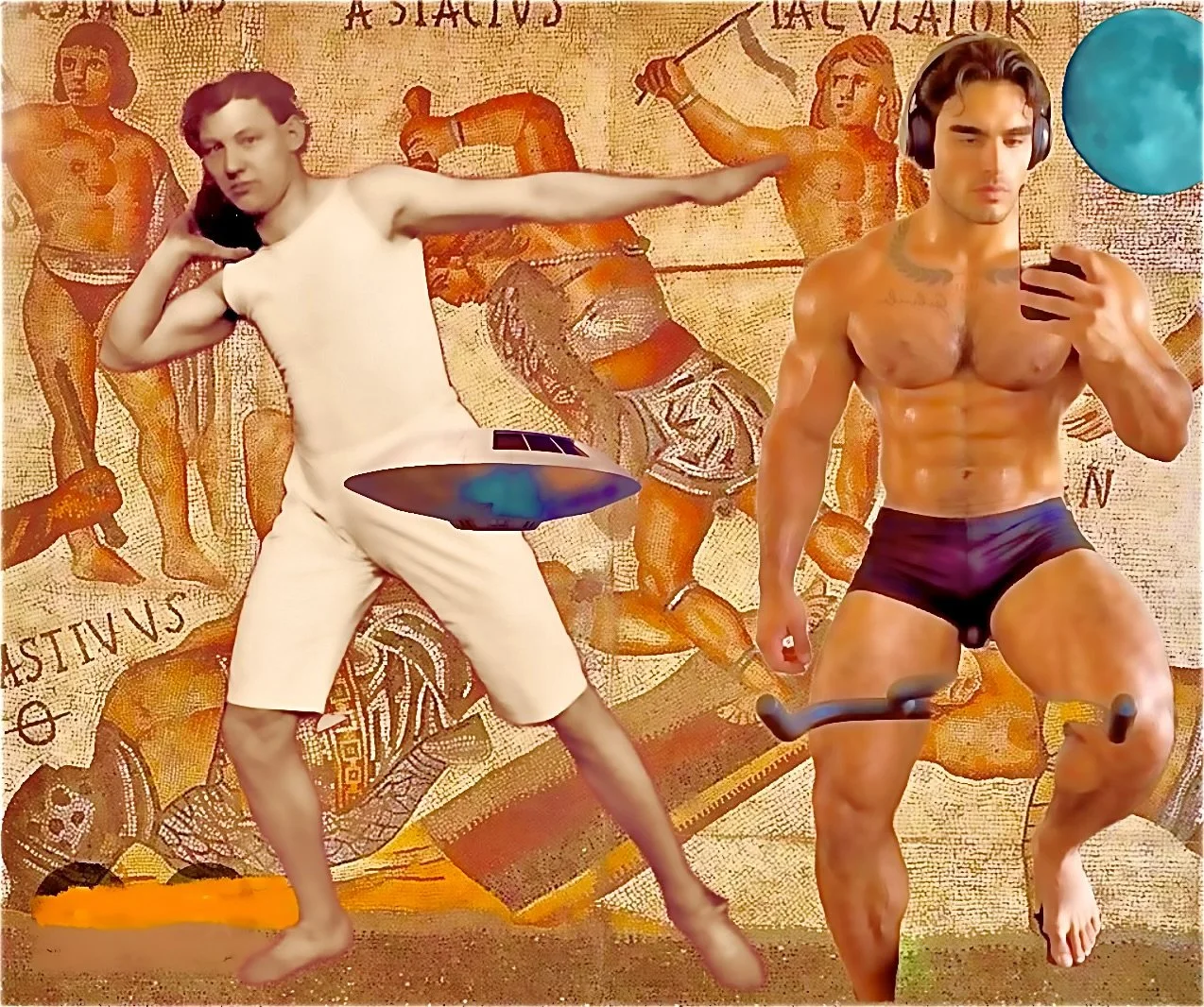
Figures Across Fields of Time | Digital Photo Collage | 2026 | The Closet Series — Behan

The Timeline is Always Present

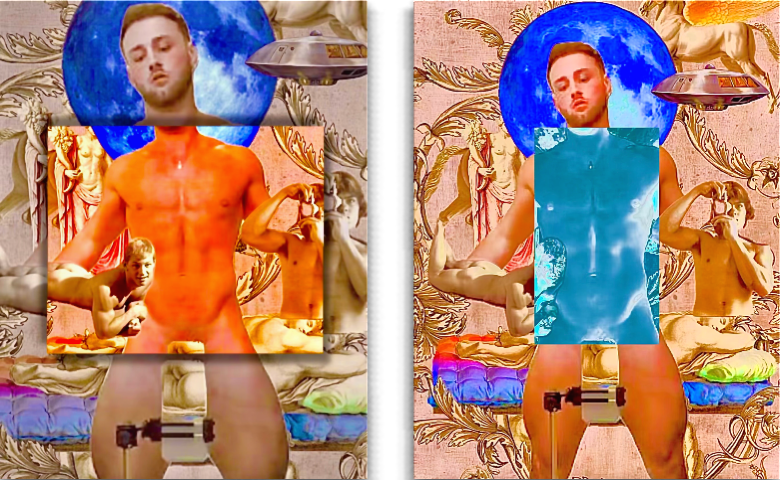
79 AD — Pompeii, Italy

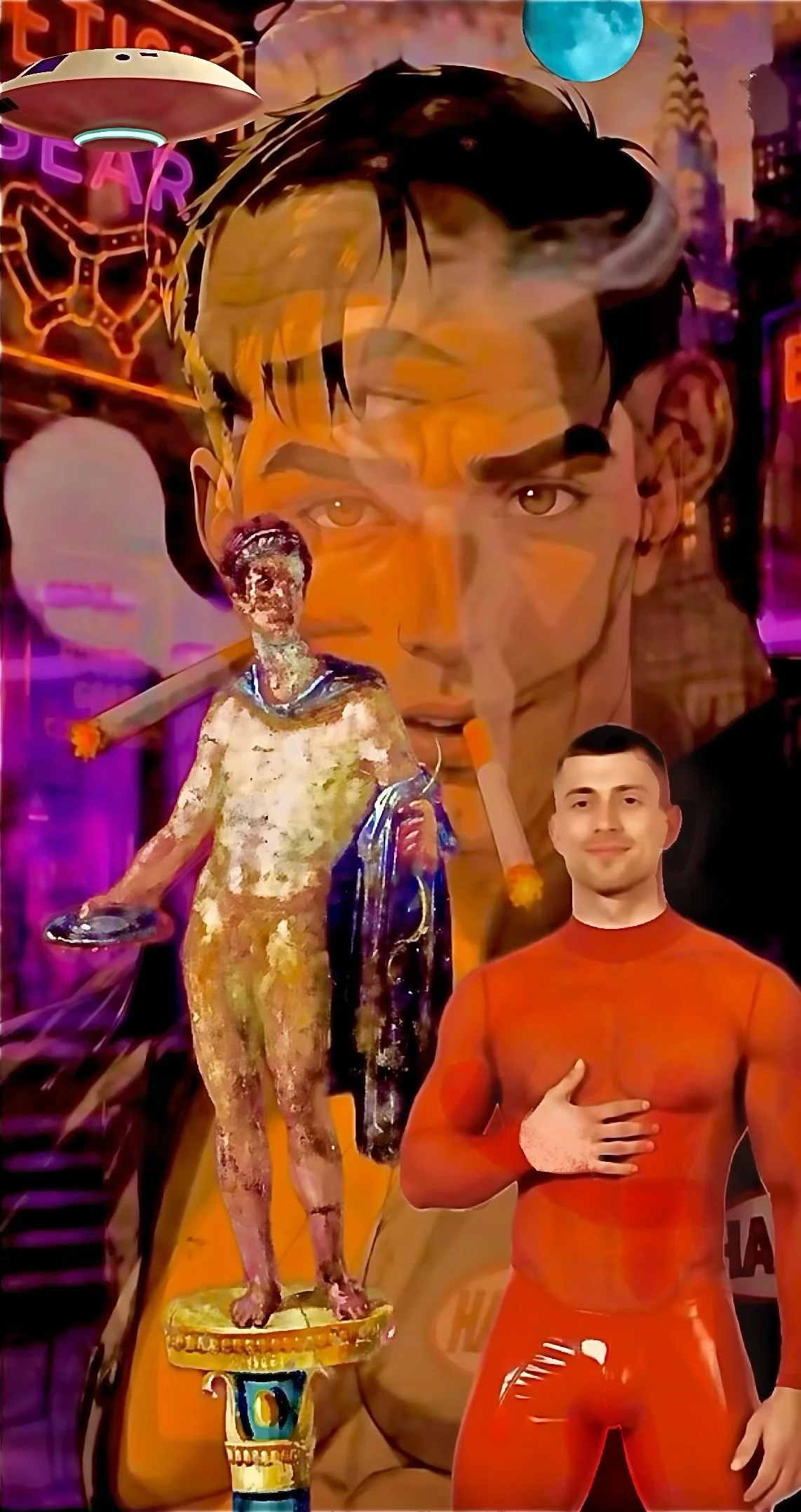
A volcanic eruption buries a city in a single day. Everything stops. The ash preserves what it destroys. Centuries later, a figure emerges from the excavation — scarred, incomplete, still standing on his gilded pedestal. He does not know he has survived an apocalypse. He simply has. He carries no explanation for his survival. Only the evidence of it.

June 10, 2026 — Dallas, Texas

A man in red latex appears in a social media feed. He is selling something. He is also, without knowing it, making a statement. Hand over heart. Full color. Fully present. The artist sees him, makes him a sticker, and pulls him into a collage. The present tense is an act of curation.
Somewhere in the Future

A face assembles itself from code and light. AI. Anime. The not-yet. He has no fixed date. He rises behind the other two, watching, still being rendered. We don’t know what he sees from where he stands. We don’t know what world he is looking out at.

This collage has three figures because that’s where we are at this point in time. Fifty years from now, perhaps a new figure can be added to this collage, one that answers the question. I would love that.

A central question: Will the rights gay men have fought for hold?

We don’t know. That is why this collage remains forever open.

For the answer.

On Red Flags

Here it is:

On Red Flags

Digital Photocollage, 2026 | The Closet Series — Behan

Clothing makes us okay, as long as the clothing is pre-approved.

Who made these rules? Turns out Mark Zuckerberg did.

January 7, 2025: Meta CEO Mark Zuckerberg announces a complete overhaul of content policies across Facebook, Instagram, and Threads. The new policies end fact-checking, gut content moderation, and rewrite the hateful conduct policy to expressly permit abuse against LGBTQ+ people while forbidding the same abuses against all other communities. Users can now call gay people mentally ill, call for their exclusion from professions, and refer to transgender people as “it.” Leaked Meta training materials obtained by The Intercept include examples of newly permitted speech: “Gays are freaks.” That is now allowed. A shirtless gay man in a Pride crowd is not.

May 13, 2025: GLAAD releases its fifth annual Social Media Safety Index. Facebook and Instagram each score 45 out of 100. The report documents unprecedented hate speech policy rollbacks actively undermining the safety of LGBTQ+ people online and offline. The Electronic Frontier Foundation documents a surge in LGBTQ+ account takedowns, describing it as “algorithmic silencing.” Over 200 LGBTQ+ and reproductive health accounts are removed or restricted in 2025 alone — more than double the 81 documented in all of 2024. “This has been, to my knowledge, one of the biggest waves of censorship we are seeing,” said Martha Dimitratou of Repro Uncensored.

Sources

• GLAAD: Social Media Safety Index 2025

• Human Rights Campaign: Meta’s New Policies — How They Endanger LGBTQ+ Communities (2025)

• LGBTQ Nation: Meta Accused of Banning LGBTQ+ Accounts in One of Its Biggest Waves of Censorship (December 2025)

• Axios: Zuckerberg’s New Policies for Facebook and Instagram Open Door to Hate Speech (January 2025)

• Electronic Frontier Foundation / Bay Area Reporter: LGBTQ+ Censorship on Instagram Has Surged (2025)

• Prism Reports: Social Media Users Grapple With Anti-LGBTQIA+ Policy Changes (2025)

Quartet

2 by 4 | Quartet

Digital Photocollage Series, Four Works, 2026 | The Closet Series — Behan

Being gay in 2026 means navigating a world of startling contradictions. Nearly 9% of American adults now identify as LGBTQ+, a figure that has more than doubled since 2012. One in five adults under thirty identifies as queer. Gay marriage is considered among the most stable of all marriages. And yet ninety percent of LGBTQ+ young people report that recent anti-LGBTQ+ laws and political debates have caused them stress or anxiety. The unemployment rate for gay and bisexual men is nearly double that of heterosexual men. This is the world these four collages inhabit — expansive, joyful, erotic, playful, and under constant pressure from an uncaring culture.

The Playful

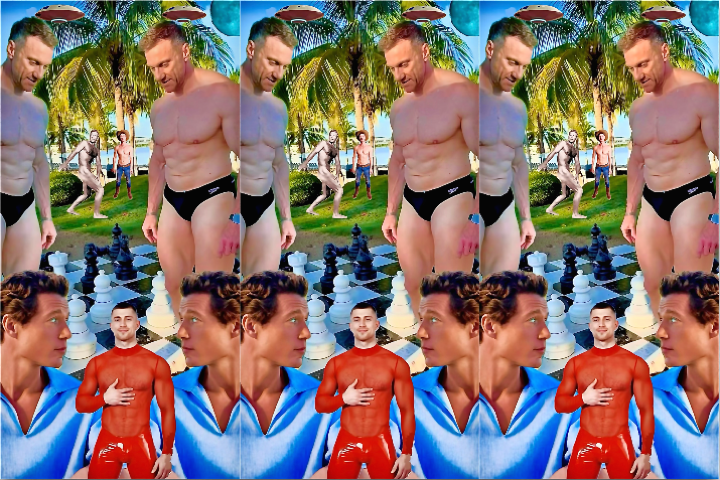
Chess in Speedos. Three figures repeated across the panel, Jupiter 3 hovering overhead, the aquarian moon watching from the upper corners. The repetition is the joke and the argument simultaneously — look again, and again, at men at play, at ease, at home in their own skin. Gay men have always known how to play. The world has not always let them.

The Revealed

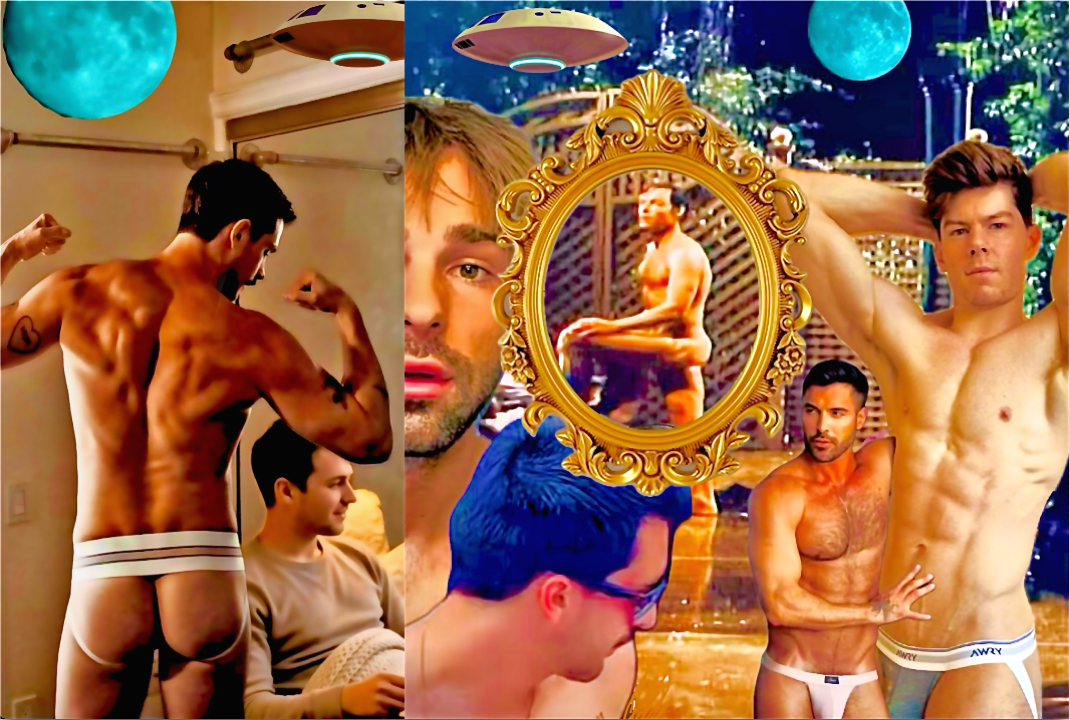
Richard Chamberlain, disrobed, in chiaroscuro — the warm browns, blacks, and whites of the composition spreading across the panel like light finding its subject at last. Paired with a figure flexing on the left, the collage is about the act of revealing oneself. Chamberlain played Father Ralph de Bricassart in The Thorn Birds (1983) — a priest torn between God and forbidden desire, the closest he ever came on screen to playing his own interior life. But this image goes further. Here he is unclothed, present, fully himself on camera — and for a gay man who spent decades hiding, that has a particular weight. He wrote in his 2003 memoir: “I disliked myself intensely and feared this part of myself intensely and had to hide it and became ‘Perfect Richard, All-American Boy’ as a place to hide.” He came out near the end of his life. He died in March 2025 at ninety. This collage is about what it costs to hide, and what it means to finally be seen.

Expression and Suppression

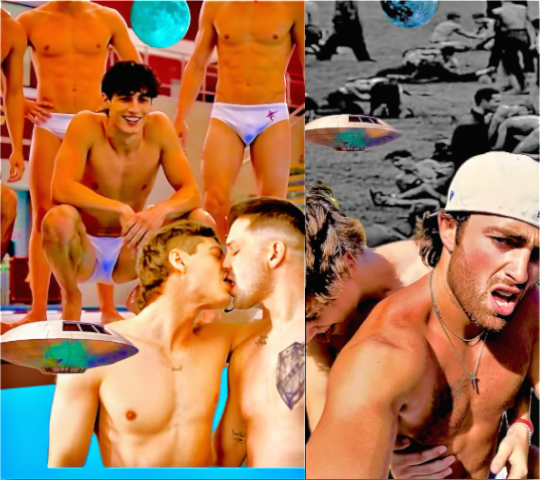
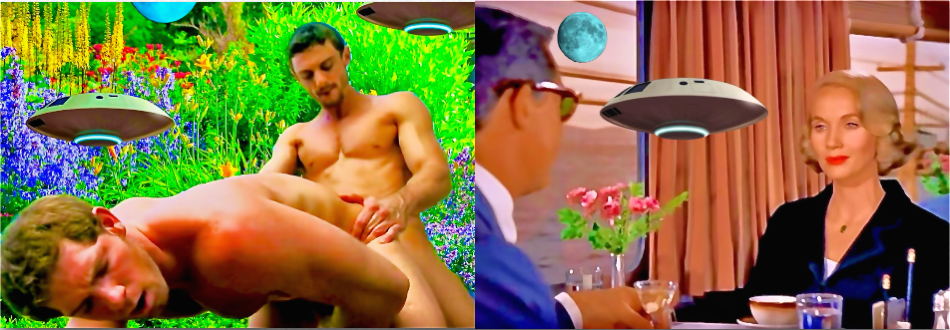
One diptych, two registers of desire. On the left, two men making love — fully present, surrounded by an edenic garden in full flower, the aquarian moon overhead, Jupiter 3 at the periphery. Frank, unhurried, given space and light. On the right, Eva Marie Saint and Cary Grant at dinner in North by Northwest, Hitchcock’s most elegant exercise in suppressed desire. Hitchcock famously ended the film with a train entering a tunnel — his own winking shorthand for what the censors would not allow him to show. The erotic is present in both panels. On the left it is expressed. On the right it is encoded, sublimated, buried inside the grammar of a genre that could only speak in metaphor. Expression and suppression. The same desire, two different worlds. What The Closet Series has always been making: the missing photographs.

Straight Men Know a Good Thing

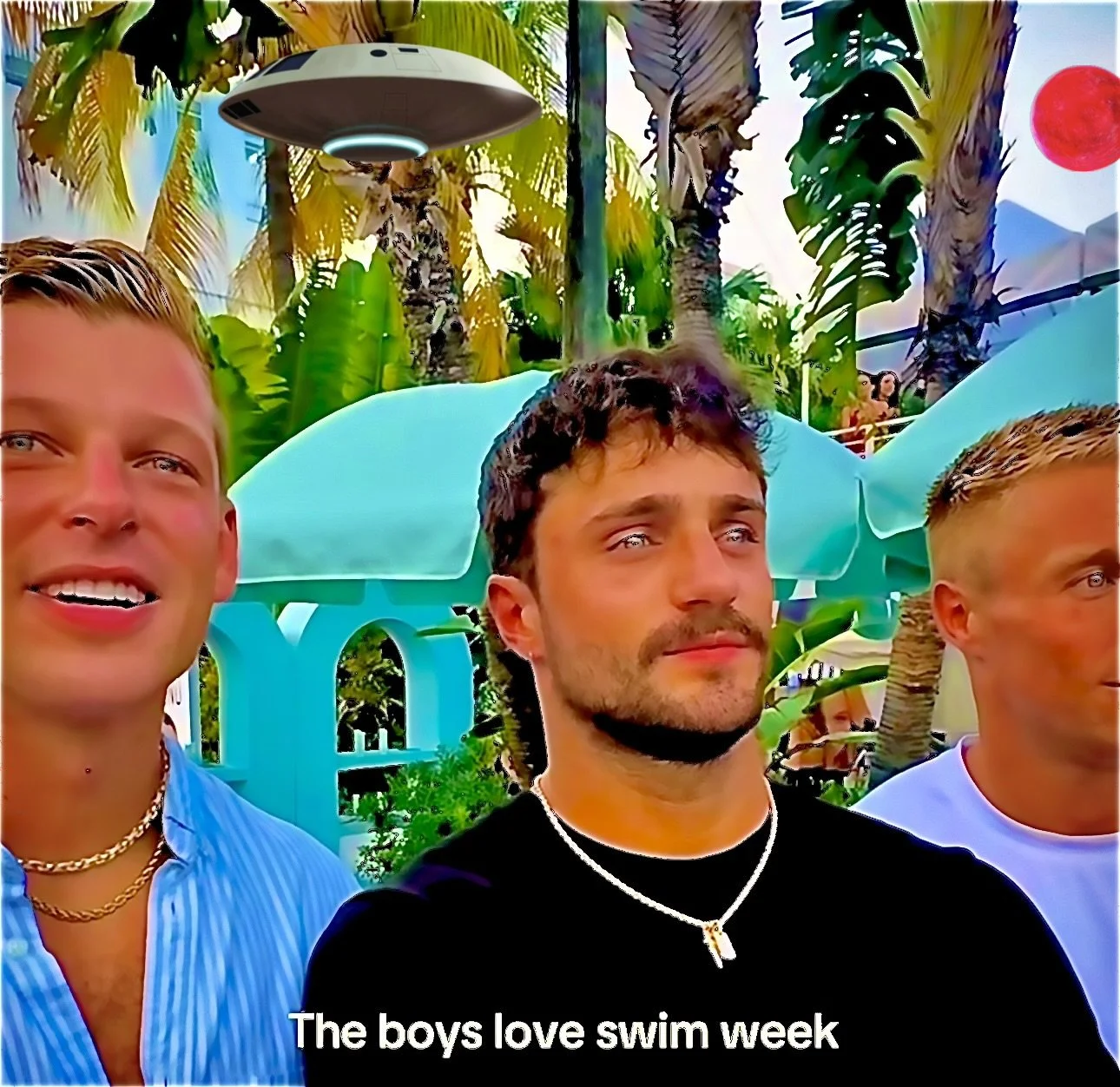
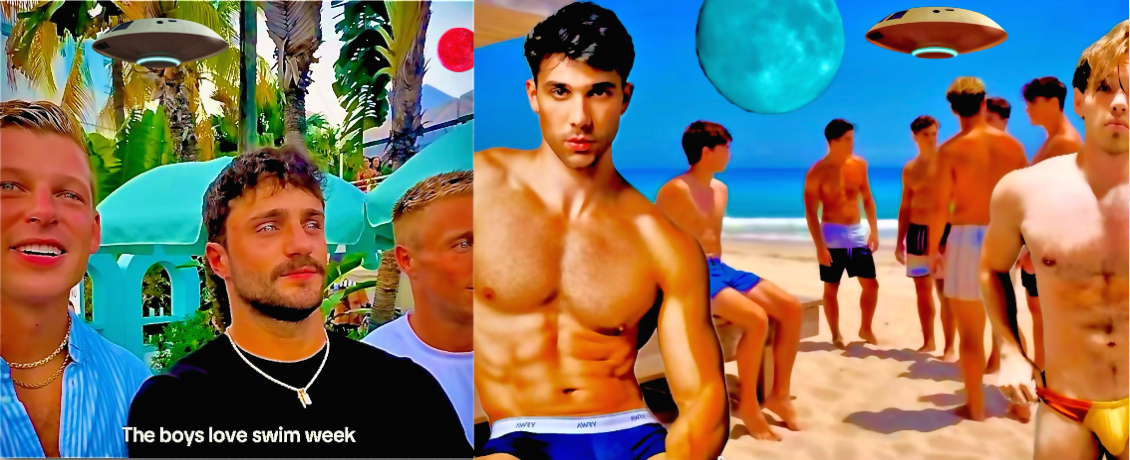
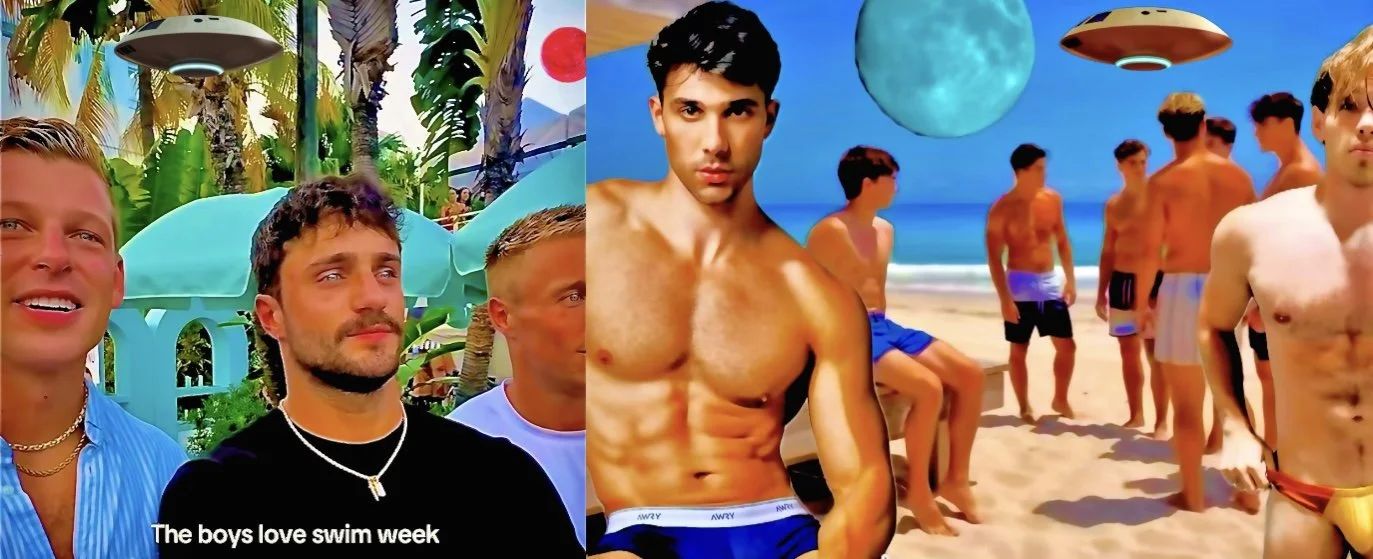
Straight men have always known where the money is. Gay male content on OnlyFans expanded 40% in revenue between 2022 and 2023 alone. Gay audiences subscribe at a 68% retention rate and pay premium rates. Straight men figured this out fast. Sites like OnlyFans and JustForFans made it straightforward for straight men to upload content explicitly marketed to gay followers, collecting checks while making sure everyone knows they are, in fact, straight. Gay baiting as economic strategy. The seductive pose, the shirtless selfie, the swim week caption — performed for a gay male audience and a straight female audience simultaneously, with one hand always on the exit sign that reads: not gay, just entrepreneurial. Gay culture created the market. Straight men monetized it. This collage puts twelve of them in a single frame. The boys love swim week. The boys know a good thing.

As of 2026, the number is growing. The acceptance is growing. The legislation against that acceptance is also growing. Gay men are chess players and priests and swim week regulars and lovers in gardens. They are all of these things at once, in a world that still cannot quite decide what to do with them.

Sources

• Gallup: LGBTQ+ Identification in U.S. Rises to 9.3% (2025)

• The Trevor Project: 2025 U.S. National Survey on the Mental Health of LGBTQ+ Young People (2026)

• WorldMetrics: Gay People Statistics (2026)

• Mental Health Stats: LGBTQ+ Mental Health Statistics (2026)

• Hollywood Reporter: Richard Chamberlain Advises Other Gay Actors: Stay in the Closet (2010)

• Windy City Times: Gay Actor Richard Chamberlain Dies at 90 (2025)

• Gitnux: Male OnlyFans Statistics (2026)

• EDGE Media Network: Straight Men Are Profiting from Gay Fans on OnlyFans

Love and Fear

Love and Fear

Digital Photocollage Series, Seven Works, 2026 | The Closet Series — Behan

These seven works take as their subject two fundamental emotions — love and fear. In visual art, figure and ground define each other. Neither exists without the other. Here, that formal relationship becomes a philosophical one. The ground is fear. The figures are love. One cannot exist without the other. We all love something, and fear something, they are endemic to our nature, two sides of the same sword.

The ground for all seven works is drawn from La Horde (2009), a French film widely considered one of the greatest zombie films ever made. Beneath its genre surface, the film is an allegory for the French Indochina War of 1946 to 1954 — an eight-year conflict in which France, attempting to reassert colonial rule over Vietnam, Cambodia, and Laos, was defeated by the Viet Minh independence forces led by Ho Chi Minh. The war ended at the Battle of Dien Bien Phu in May 1954. France lost approximately 55,000 men. The cost of colonial hubris, rendered in blood.

Death hungry for life.

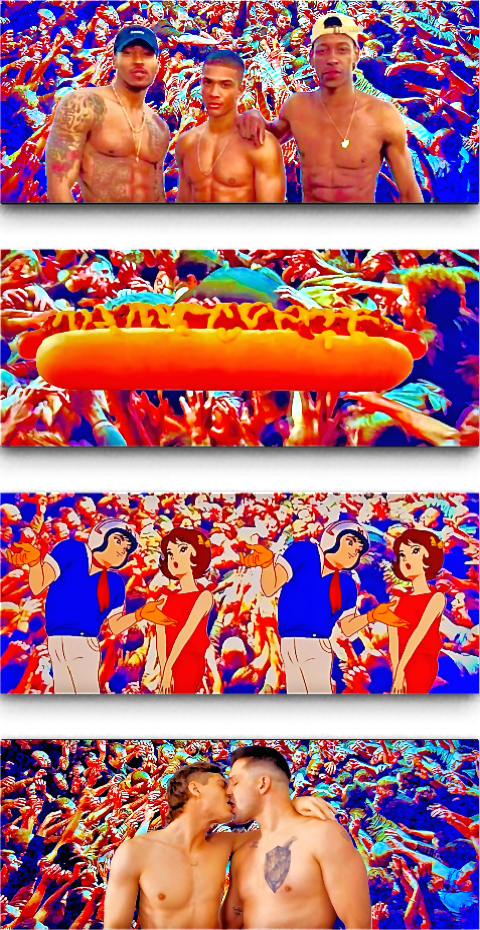
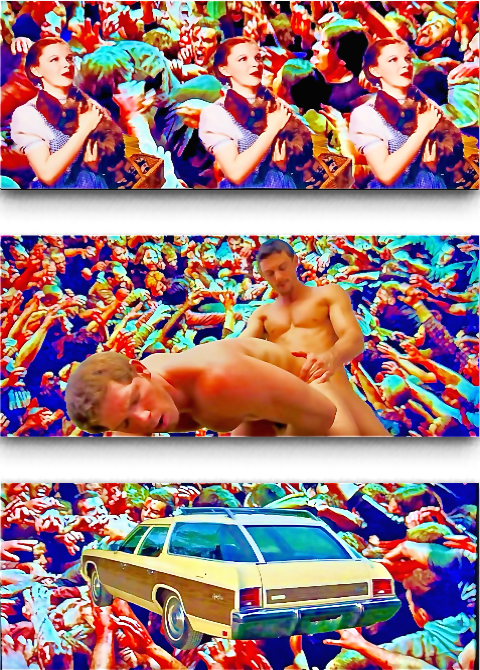
Against that ground, seven figures and objects are placed. A kiss. Two men making love. A station wagon. Dorothy. Three men standing together. An animated couple. A coney dog. Each one something familiar, something ordinary, something that belongs to love.

The ordinary moments of human connection are not diminished by the horde pressing in around them. They are illuminated by it. We see what they are worth because we see what surrounds them. The figures are the lifeboats from a sinking vessel, the ground the indifferent body of water. Where there is love, there is hope, the antidote to fear.

Two forces.

One frame.

As they always seem to be and perhaps need to be.

• La Horde (La Horde, 2009) — directed by Yannick Dahan and Benjamin Rocher

Mile High | Digital Photocollage I 2026

Mile high?

Heck yeah.

A Stratos Jets survey of 2,000 regular flyers found that nearly 17% had done something sexual on a plane beyond kissing, and an additional 52% had fantasized about it. The term itself dates to 1914, when a young aviator named Lawrence Burst Sperry invented the autopilot system — which, as it turns out, freed up his hands for other things.

Nobody broke down the mile high club statistics by sexual orientation. Nobody thought to ask. Which is interesting, because it would have been a genuinely useful question. As of 2025, 9% of U.S. adults identify as LGBTQ+. Gay people have always been on those planes. The 17% who admitted to sky-high activity? We have no idea who they were going home to. Some of them may have been going home to each other. While this domain seems largely a heterosexual affair, we have to imagine there are some queer connections made.

This collage imagines just that.

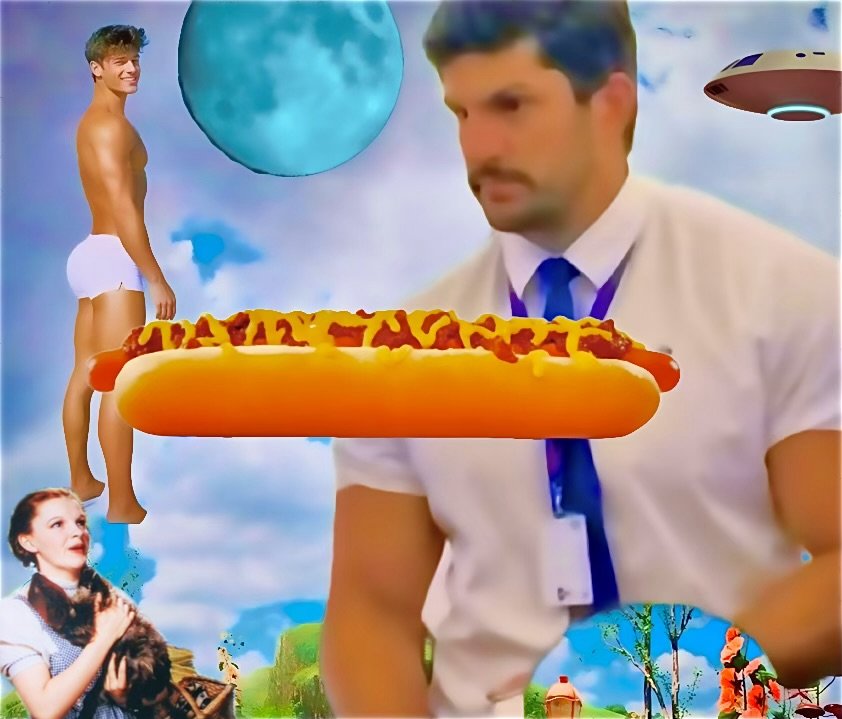
Operating in a register of cloud like dreaminess — soft sky blues, pale creams, warm lavender—the work opens with a color palette that reads as almost pastoral. The flight attendant dominates the foreground, large beefcake and gloriously blurred. A twink in focus stands nearby noticing. Dominating the composition, narrative, and innuendo is the fabled foot long hot dog, connecting the two figures front to end, pun definitely intended.

It’s that kinda flight.

Last but never least, the quintessential gay heroine—Dorothy with Toto—she’s flown before. It’s all about the rainbow.

Classic.

Stratos Jets: The Truth About Mile-High Romance

HUD App Blog: The Mile-High Club — Is It Worth It?

Lonely Planet: Mile High Club Membership

Gallup: LGBTQ+ Identification in U.S. Rises to 9.3% (2025)

Chameleon

“Jeremy Has a Problem. No One Knows He’s Gay” | Digital Photo Collage | 2026

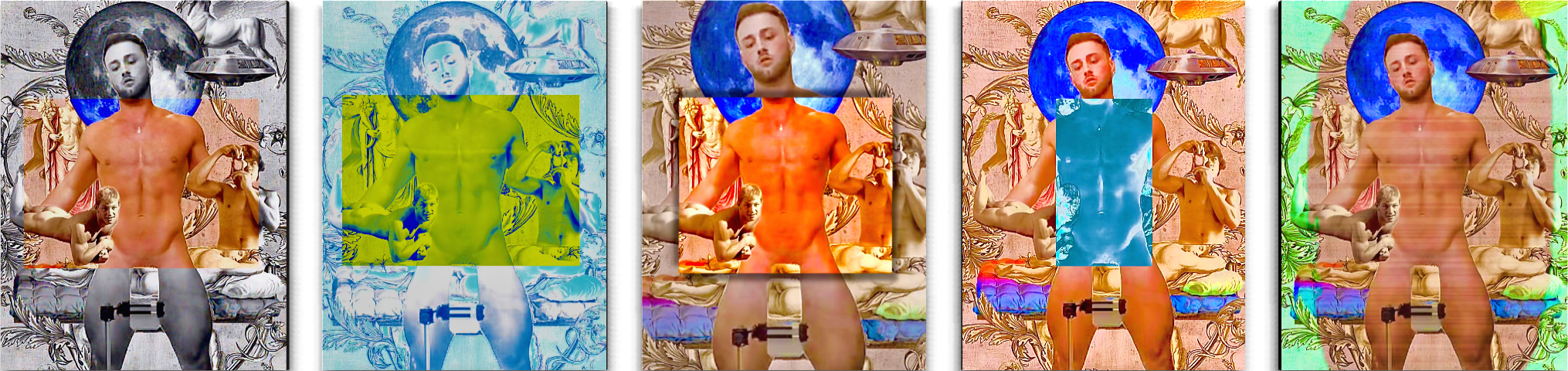
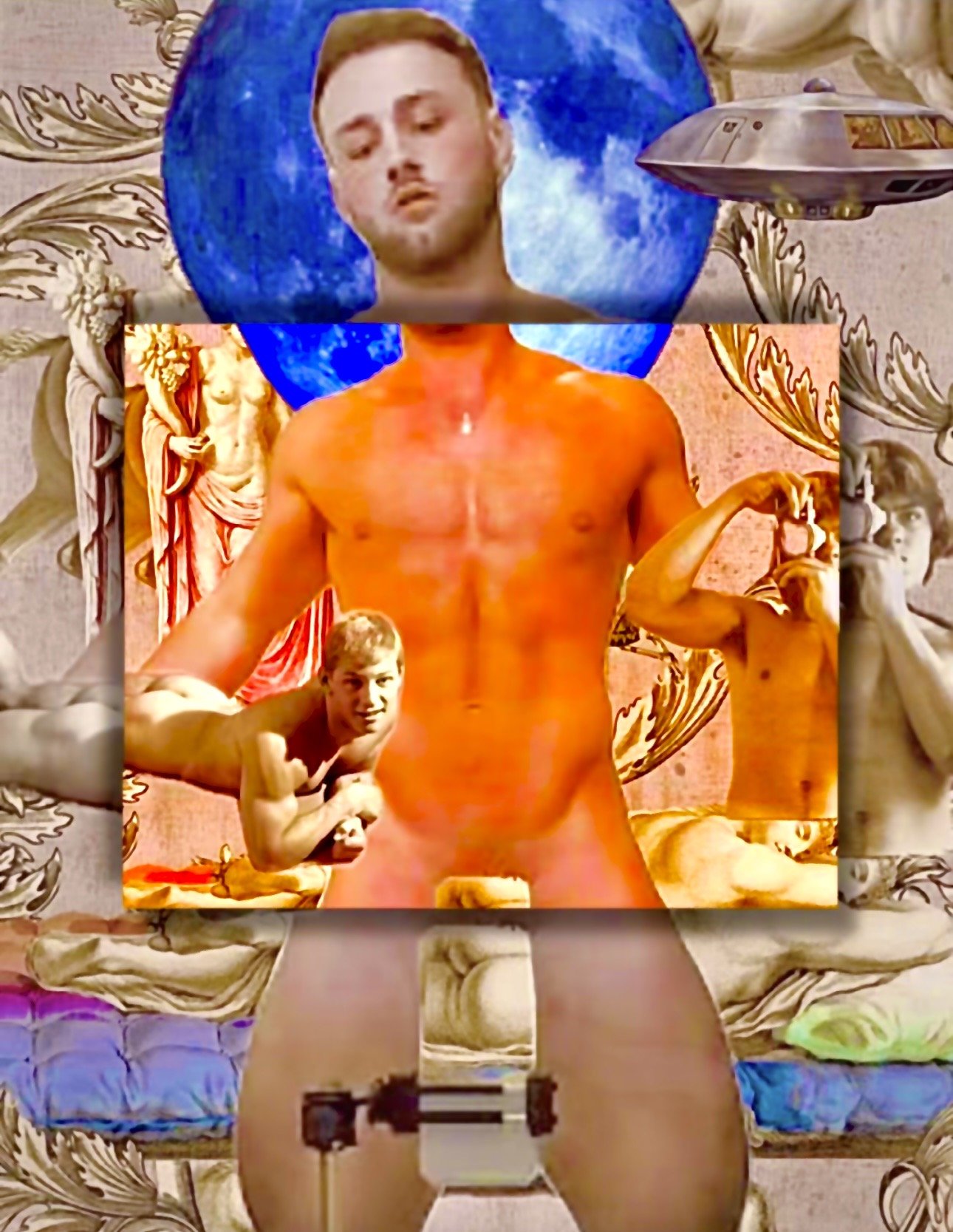
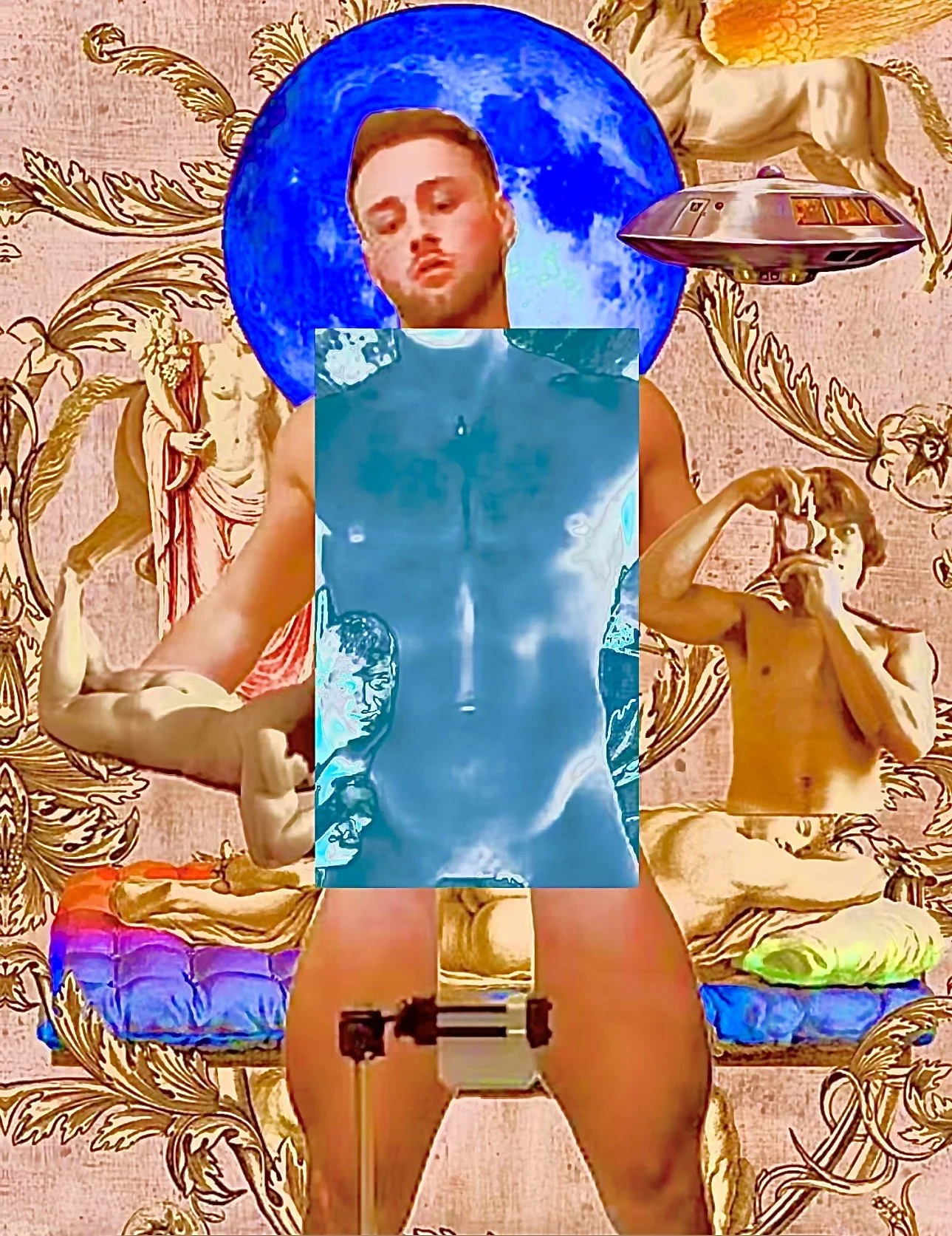
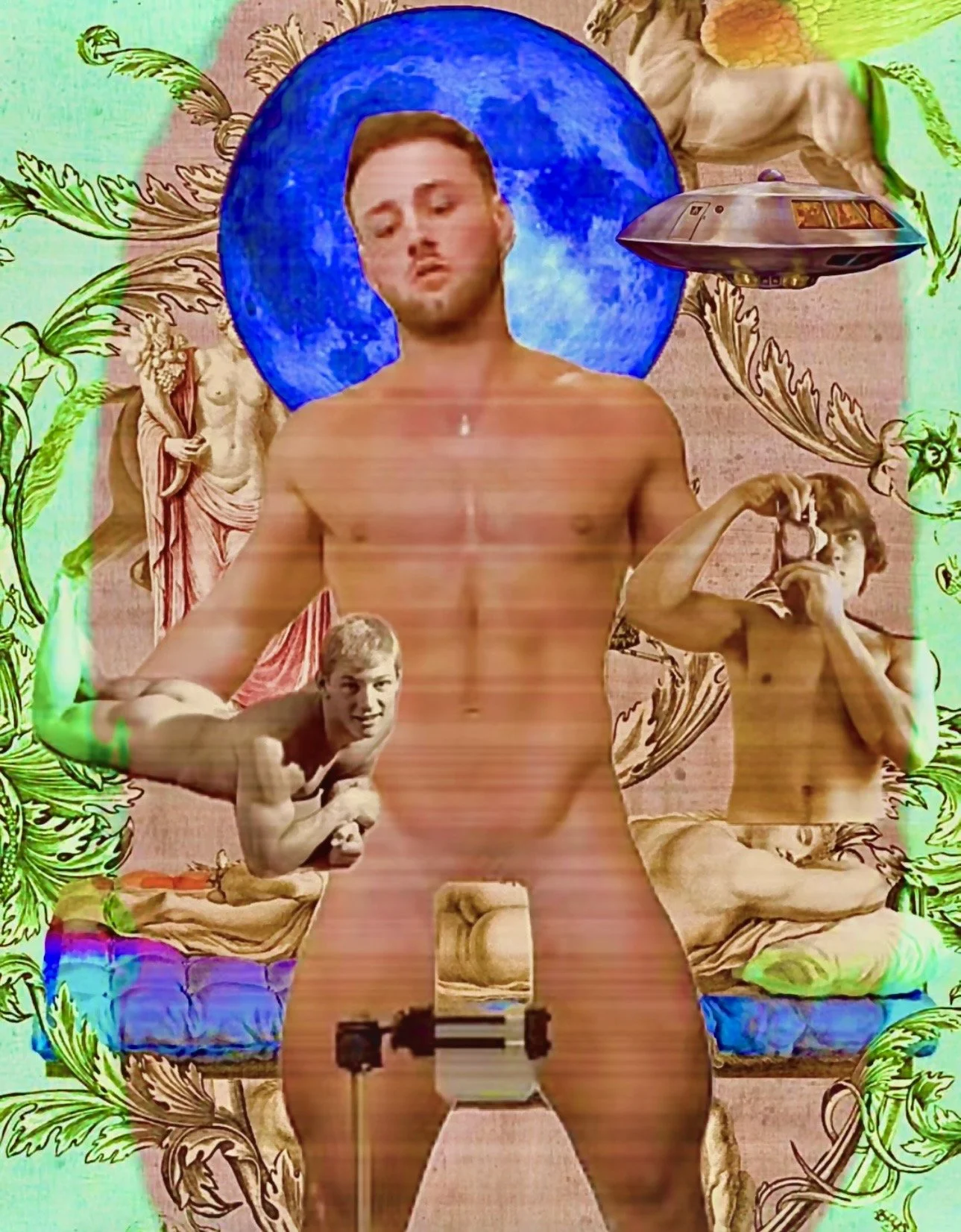
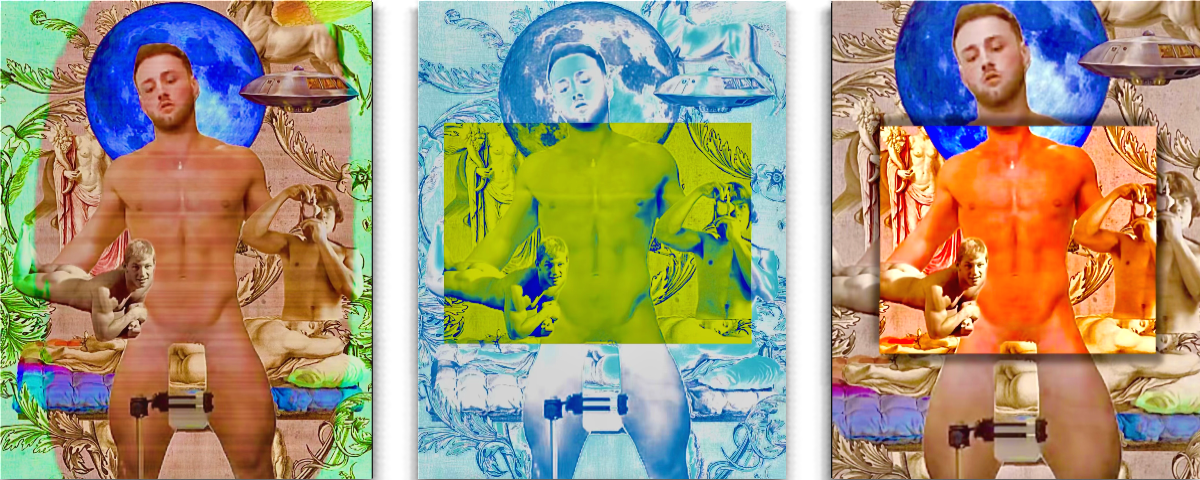
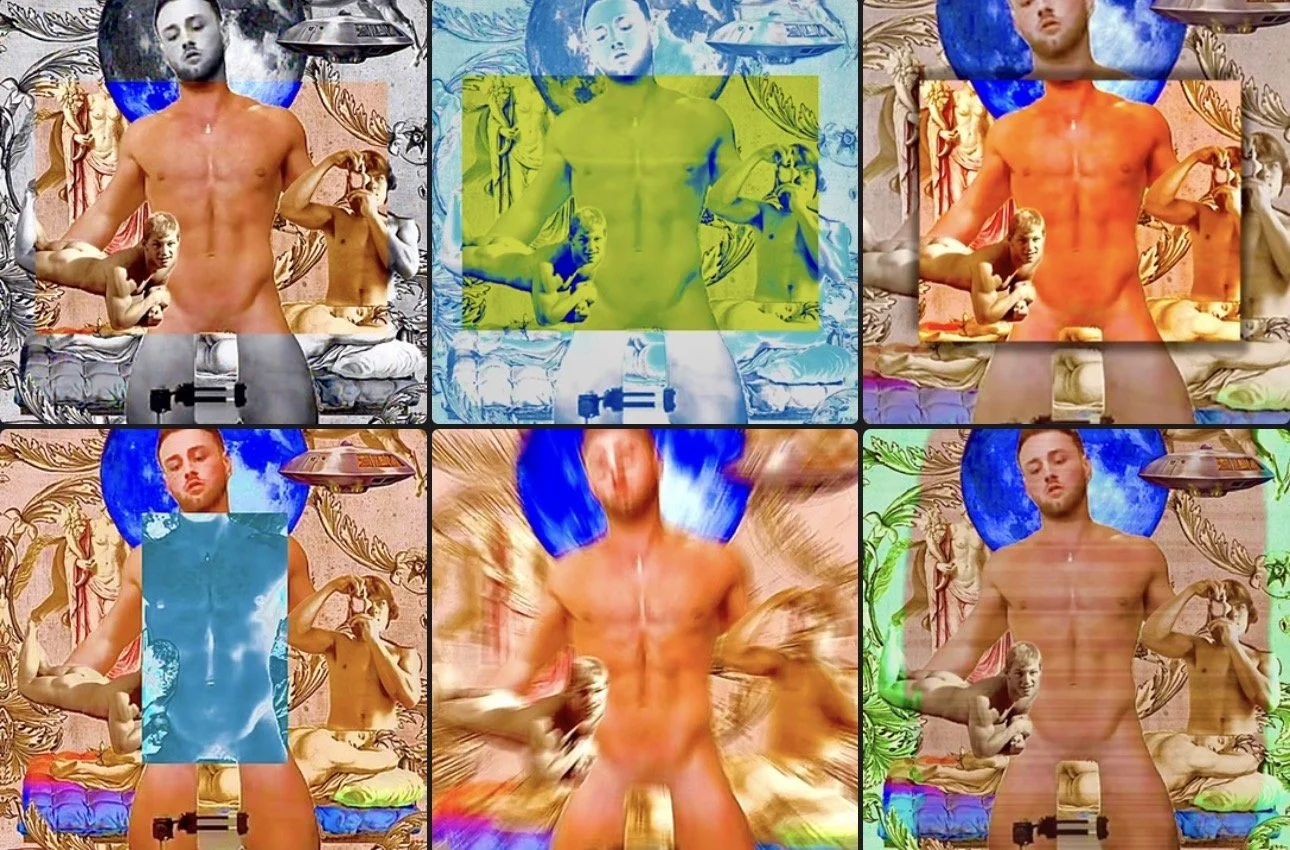
Jeremy stands at the center of every version of this collage. Eyes closed or nearly so. Chin slightly lifted. The blue moon behind him like a halo he didn’t ask for. Jupiter 3 overhead, logging everything.

He appears here in five colorways, two arrangements, countless combinations. Orange. Teal. Chartreuse and blue. Silver and ash. Natural. Radiating. The same man, the same pose, the same classical surround — acanthus scrollwork, reclining figures, a Pegasus in the corner — and yet each version reads differently. Cooler. Hotter. More distant. More present. Flattened into icon. Exploded into light.
That’s the formal argument. But the title is doing something else entirely.

No one knows he’s gay.

Which means Jeremy knows. Jeremy has always known. The problem isn’t the secret — it’s the performance of not having one. The daily calibration. The slight adjustment of register in every room, every conversation, every photograph. The closet isn’t a place you live in. It’s a filter you apply to yourself, over and over, in every available color.

The Closet Series has been making this argument since the beginning: that the labor of concealment is its own kind of art. Exhausting, meticulous, and invisible to everyone except the person doing it. Jeremy stands still at the center of each variation and lets the color do the work his face cannot.

The closet is not a static place. It is active, restless, constantly shifting — a chameleon that changes colors not by choice but by necessity. Often dazzling. Never boring. And never quite revealing the person at its center.

That is what this set of collages is. Not five versions of Jeremy. Five versions of the performance. The colorways don’t represent moods or aesthetics — they represent the daily costume changes of a life lived in translation. The work is available in any combination: diptych, triptych, full sequence, framed or unframed. However you arrange it, you are arranging the closet itself — its rhythms, its repetitions, its gorgeous, exhausting variety.

The Closet Series has been watching. The blood moon knows. Jupiter 3 isn’t surprised. — Behan

Shooting the Moon

Moon Shot

Digital Photocollage, 2026 | The Closet Series — Behan

NASA did not accidentally exclude gay astronauts. NASA deliberately, systematically, and institutionally shut the door on them. Not because they weren’t qualified. Not because they didn’t want to go. Because NASA decided they were disqualified by who they were, and built a bureaucratic apparatus to make sure of it.

Early NASA astronauts in the Mercury, Gemini, and Apollo programs were required to take two mandatory heterosexuality tests. Apollo astronaut Jim Lovell recalled one of them: “When the inkblots came up, we looked at them and, sure enough, we’d always see some feminine anatomy in there to make sure that we gave the proper sexual response.” The Rorschach inkblot test — administered by NASA to screen out gay men. In 1994, NASA asked a flight surgeon to formally include homosexuality as a psychiatrically disqualifying condition for astronaut selection.

NASA recruits heavily from the US military, which banned openly gay people from serving entirely until 1993 — and even then only partially, under Don’t Ask Don’t Tell, which itself wasn’t fully repealed until 2011. The pipeline from military service to astronaut corps meant that the military’s exclusion of gay people became NASA’s exclusion of gay people by default. You could not be openly gay and serve. You could not serve and become an astronaut. The closet was built into the system at the foundation.

It was not until 2016 that NASA created an LGBTQ Special Emphasis Program. Sixty years after the space program began.

Sally

Sally Ride was firmly ensconced in the closet when she became the first American woman in space in 1983, and is now recognized after the fact as the first LGBTQ+ person to have left the atmosphere. She stayed in that closet for the rest of her life. She died in 2012 — twenty-nine years after her first mission, nearly three decades after she looked down at Earth from space and saw it whole — and she never once said a word publicly about who she loved. Think about what that tells you. Not about Sally Ride, whose courage in every other dimension of her life was beyond question. But about the closet itself. About the weight of intolerance so severe, so sustained, so credible in its threats, that one of the most celebrated and accomplished women in American history calculated that silence was still the safer choice in 2012. The Republican Party, which spent those same decades legislating against gay existence at every level of government. The religious right, which spent those same decades declaring gay people unfit for public life. The Reagan administration, which watched gay men die of AIDS by the thousands and said nothing for years. NASA itself, which required heterosexuality tests of its astronauts and as recently as 1994 sought to classify homosexuality as a disqualifying psychiatric condition. These were the forces that held the closet door shut. Sally Ride did not choose silence. She was silenced. She came out at her own funeral because that was the first moment it was safe enough to tell the truth.

The Number

791 people have flown into space.

Only one has come out as gay.

Only one.

The Collage

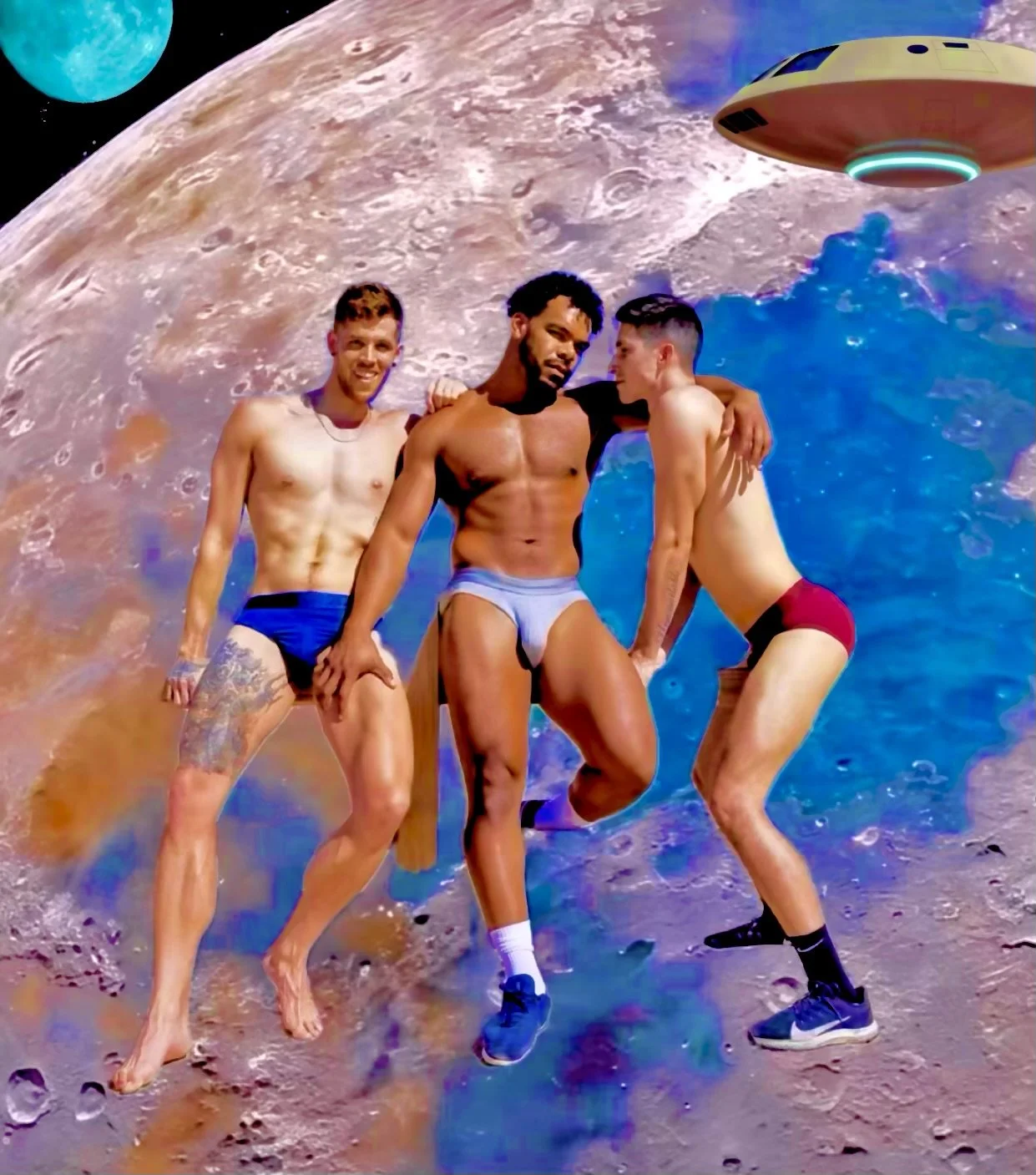
Three men on the lunar surface. The Aquarian Moon overhead, large and patient. Jupiter 3 bearing witness from the upper right corner of the frame, as it always does — present, watching, unhurried. The lunar surface they stand on is not imaginary. The question of who belongs there is not rhetorical.

The question isn’t whether gay people belong in space. The question is when are they going to be allowed to go.

Sources

• Space.com: Why Aren’t There Any Openly Gay Astronauts? (2012)

• Live Science: Why Aren’t There Any Openly Gay Astronauts? (2012)

• Slate: Sally Ride Lesbian — Why Did the First American Woman in Space Stay in the Closet? (2014)

• LensCulture: The Gay Space Agency — Mackenzie Calle

• PhMuseum: The Gay Space Agency — Mackenzie Calle

• SentIntoSpace.com: LGBTQ+ People in the Space Industry (2023)

• QueerBio.com: The Queer Presence in Space Exploration

• CBC News: Astronaut Sally Ride Comes Out Posthumously (2012)

• Pink News: Documentary About Trailblazing Lesbian Astronaut Sally Ride (2025)

Go Speed Racer Go!

Go Speed Racer Go Queer!

Digital Photocollage, 2026 | The Closet Series — Behan

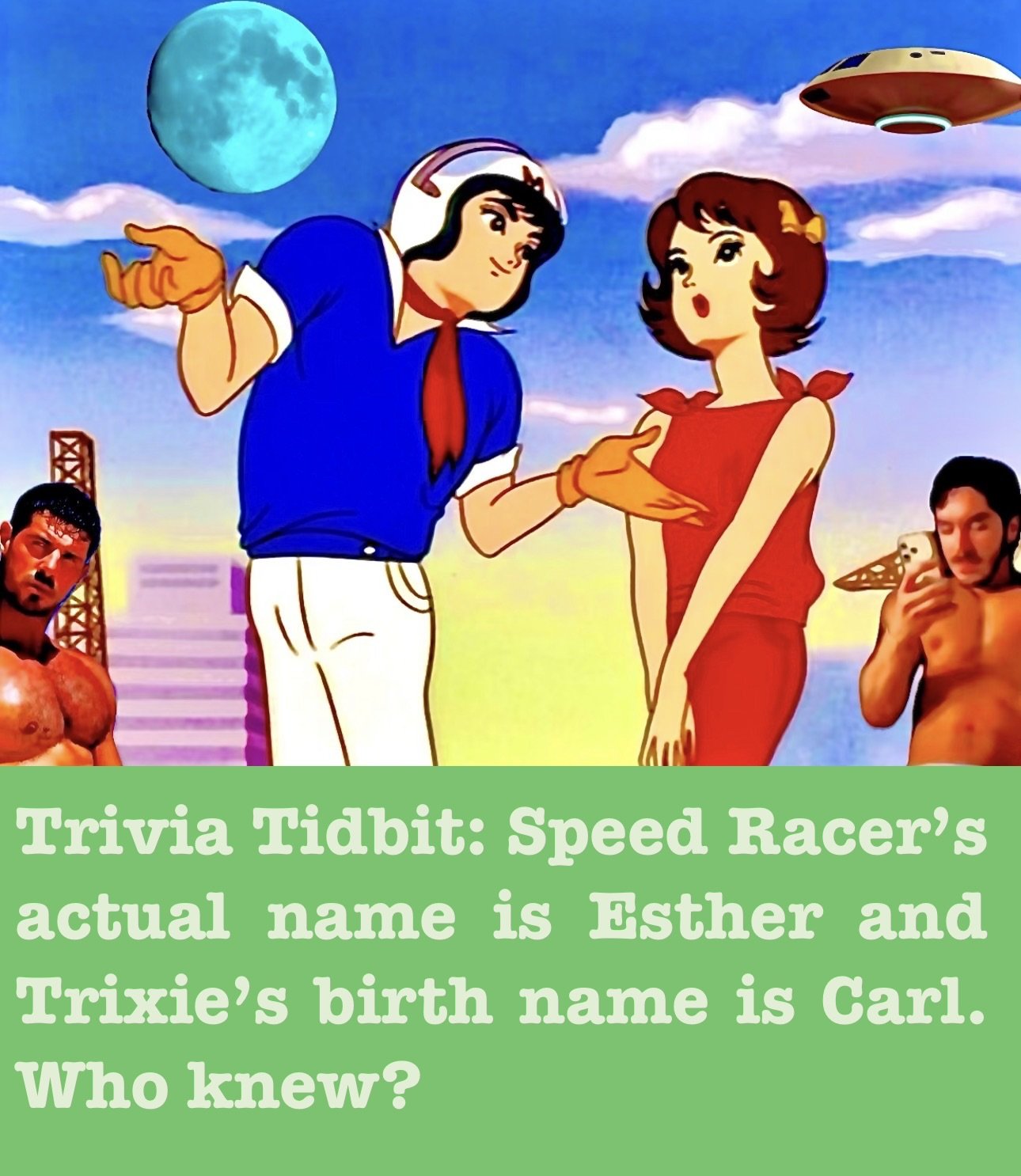
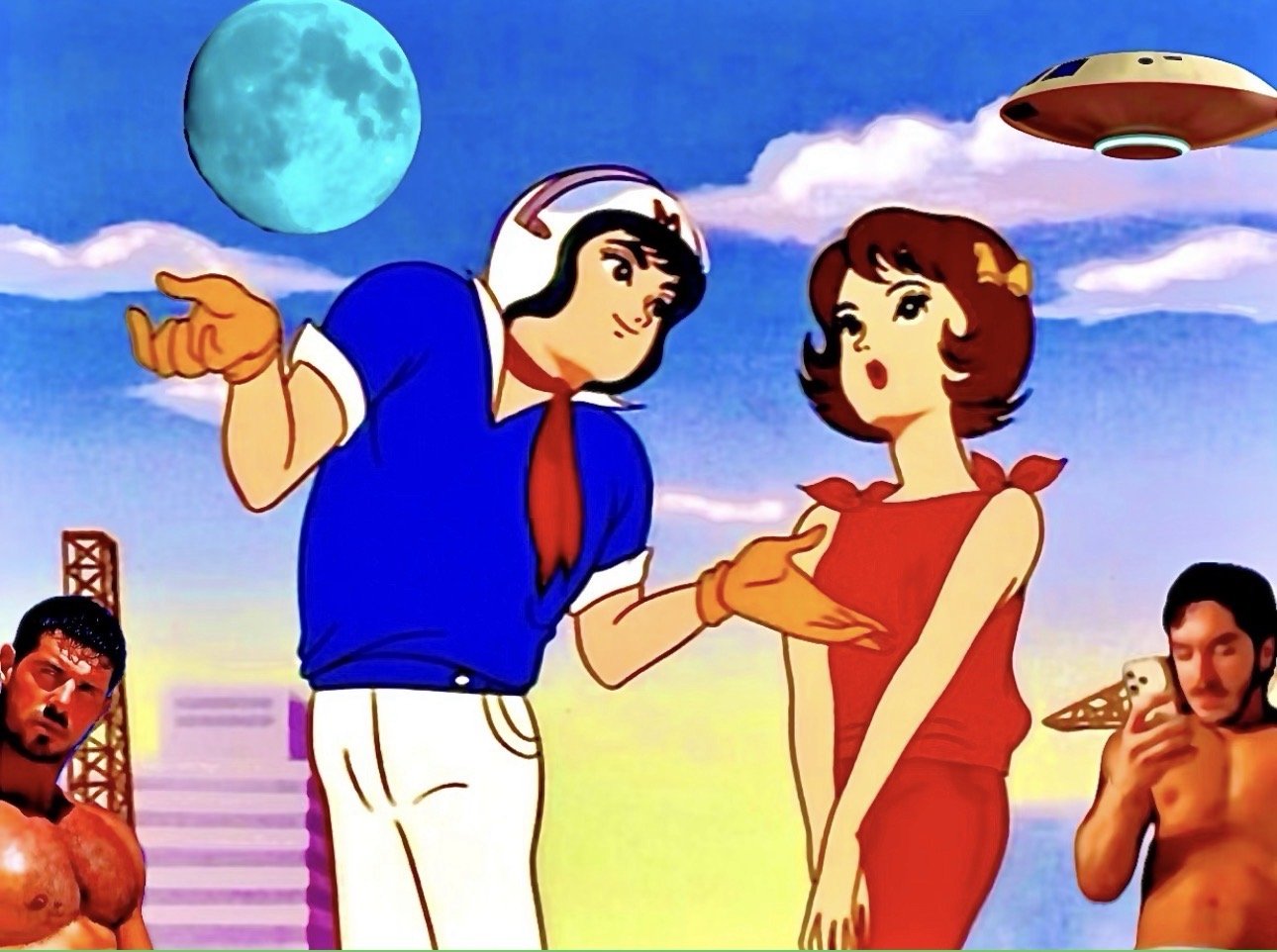
Trivia Tidbit: Speed Racer’s actual name is Esther and Trixie’s birth name is Carl. Who knew? The Aquarian Moon knew. Jupiter 3 always hoped. The Closet Series watched every episode.

And while watching, noticed something.

Gay people were always in cartoons. They just weren’t allowed to be gay.

What they were allowed to be was a joke. The mincing villain. The lisping sidekick. The character whose gender nonconformity existed purely for the audience to laugh at. From the earliest days of American animation, queerness was present — encoded, weaponized as comedy, and never taken seriously.

Bugs Bunny appeared in drag on at least 45 separate occasions. Chuck Jones, one of the creators of the character, admitted in the 1990s that he always imagined Bugs as transgender. And yet Bugs was never gay. He was a gag. The dress was the punchline, not the person. He married a man in at least three cartoons in the 1950s — and nobody called it what it was.

Disney’s Ferdinand the Bull (1938) was described by scholars as “not necessarily gay, but definitely queer” — a bull who refused to conform to expectations of masculinity. The Reluctant Dragon (1941) was called “extremely queer.” These characters were present. They were just deniable. Queer enough to register, straight enough to defend.
The pattern held for decades. Effeminate characters populated Saturday morning television as figures of gentle ridicule — too precious, too dramatic, too much. Their queerness was the costume, not the character. They existed to be laughed at, not identified with. Gay children watching these cartoons absorbed the message that was being transmitted: people like you are funny. People like you are not serious. People like you are not the hero.

It wasn’t until 2013, when Steven Universe aired, that a mainstream animated series made queer characters central rather than peripheral — ultimately featuring over 39 LGBTQ+ characters, with a nonbinary, bisexual showrunner behind the whole thing. That is eighty years of American animation between Bugs Bunny in a dress and a cartoon that actually meant it.

Speed Racer and Trixie are just fine.

The question is: how is their straight audience?

Sources

• Wikipedia: History of LGBTQ Characters in Animation

• Messy Nessy Chic: How Bugs Bunny Became a Queer Icon

• SpiritLive Radio: Queer Representation in Cartoons: A Trip Through Time

Lean LA

Leaning Into Pride

The Timeline is Always Present

Digital Photo Collage | 2026

November 11, 1950 — Los Angeles

Harry Hay and six other gay men hold the first meeting of what will become the Mattachine Society — the first sustained gay rights organization in the United States. They name it after a medieval French society of masked men who criticize ruling power from behind disguise. The masks are the point. The closet is the mask. They wear it and organize anyway.
August 1966 — San Francisco, Tenderloin District

One August evening, transgender women and gay men at Gene Compton’s Cafeteria fight back against a police officer who has harassed one of them. It is one of the first LGBTQ riots in United States history — three years before Stonewall. The exact date is lost. No news outlet covers it. No arrest records survive. We don’t even know the name of the trans woman who throws the first cup of coffee. History erases her. The Closet Series is making the missing photographs.
June 28, 1969 — New York City, Greenwich Village

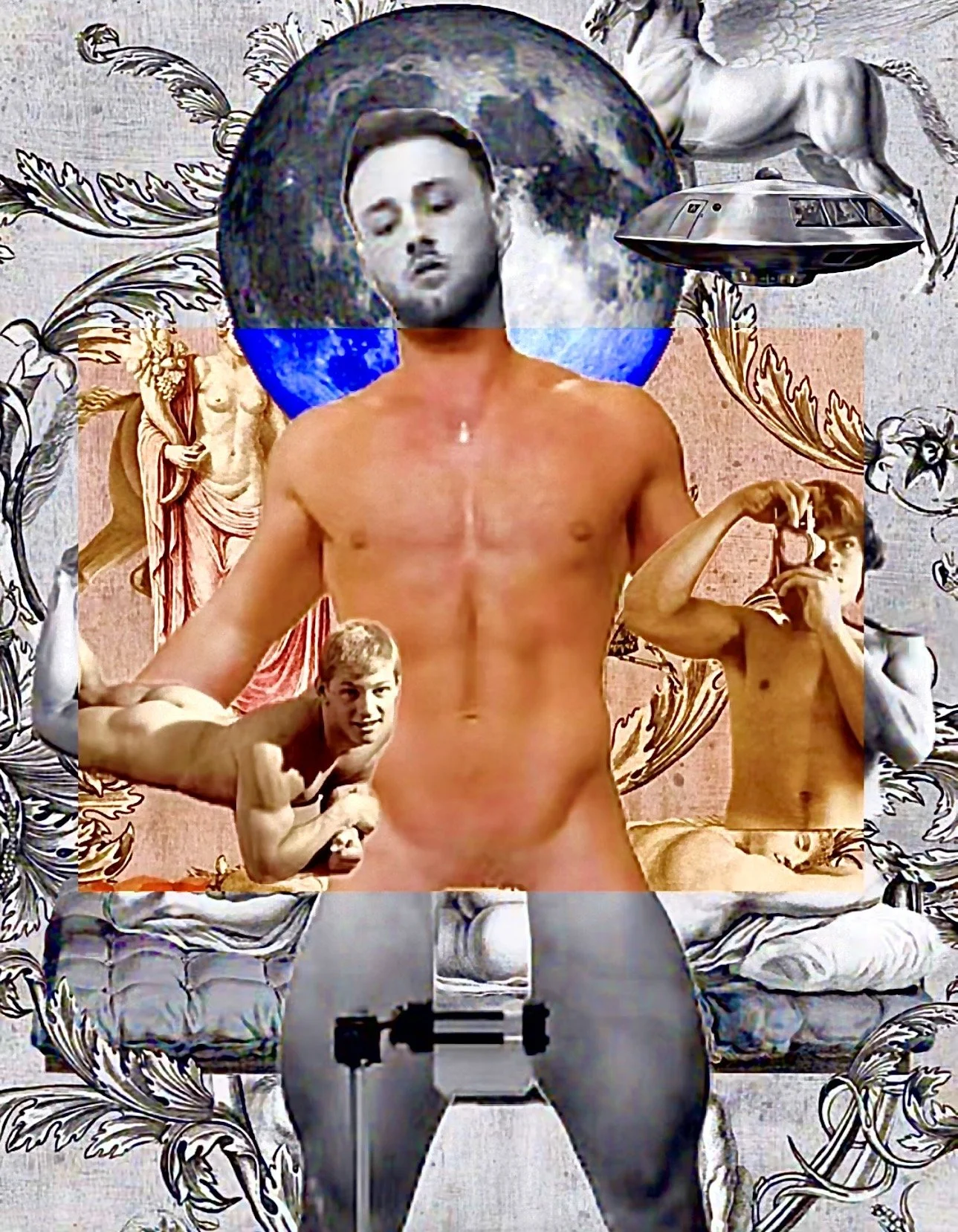
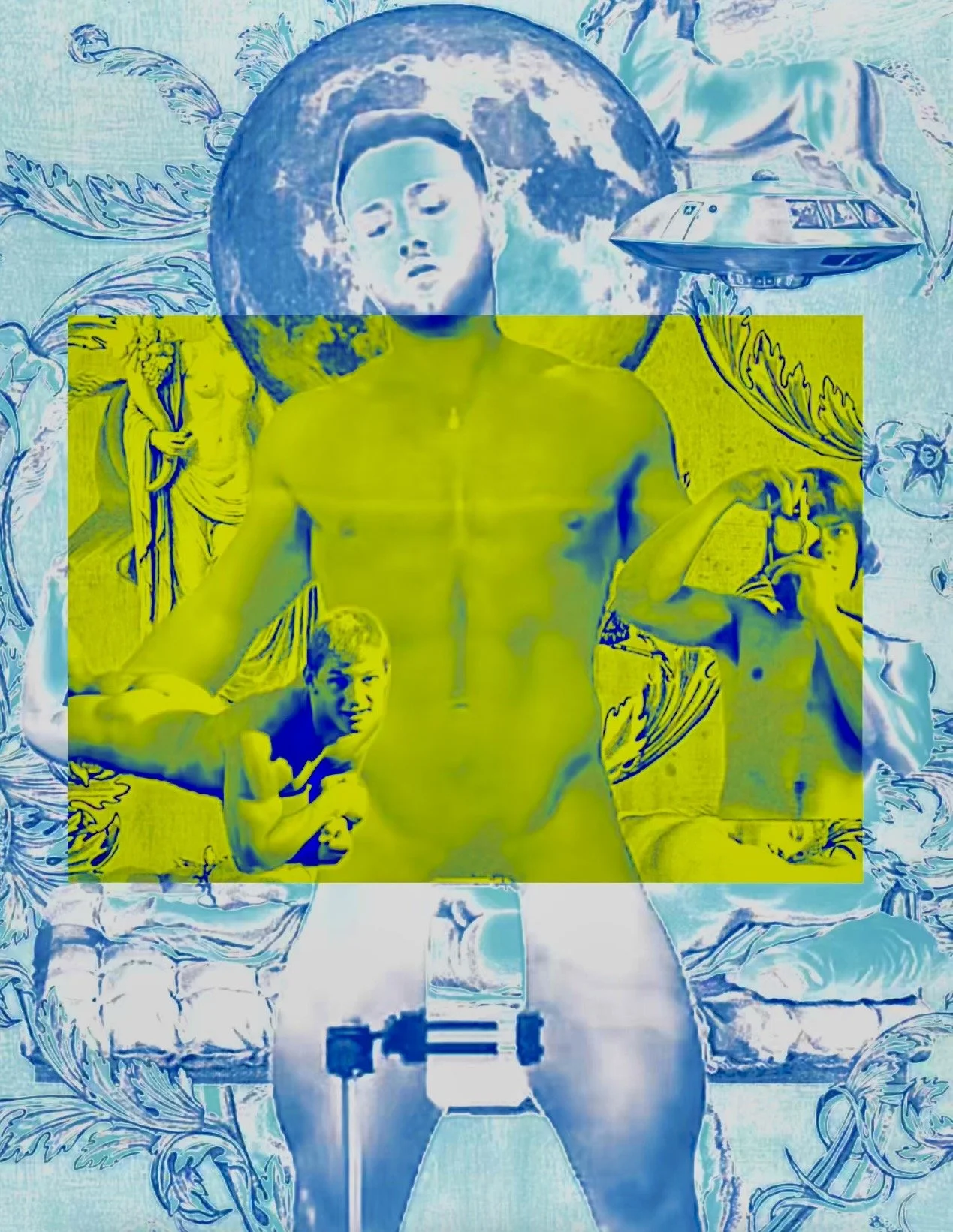
Police raid the Stonewall Inn. Six days of riots follow. The date matters. June 28. Write it down. It is the reason we are here — in Los Angeles, in June, in 2026 — with Jupiter 3 overhead and the Aquarian Moon watching.

June 28, 1970 — Los Angeles and New York

One year after Stonewall, the first LA Pride parade rolls down Hollywood Boulevard. One of the first permitted Pride parades in the world. Twelve hundred marchers: drag queens, a woman on horseback, a giant python. Los Angeles is there from the beginning.

Late 1970s–1980 — Fire Island and beyond

The afternoon Tea Dances of Fire Island evolve into something larger. The Saint in New York. Trocadero Transfer in San Francisco. Then AIDS arrives and the dance floor becomes a place of protest, mourning, and refusal to disappear. The first circuit parties are born out of tragedy — fundraisers, rallies, declarations. Joy is always an act of resistance.

1989 — Palm Springs

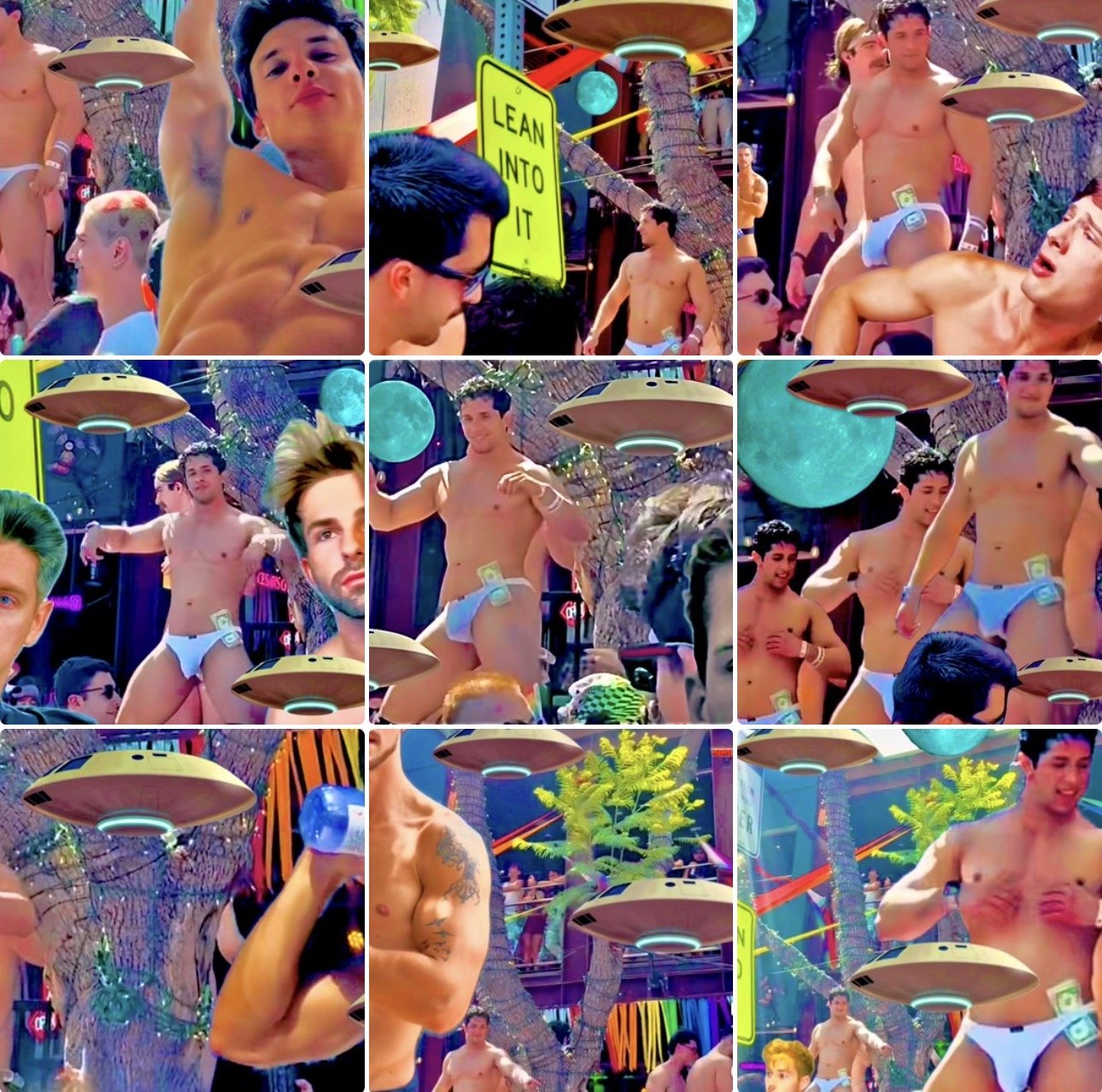
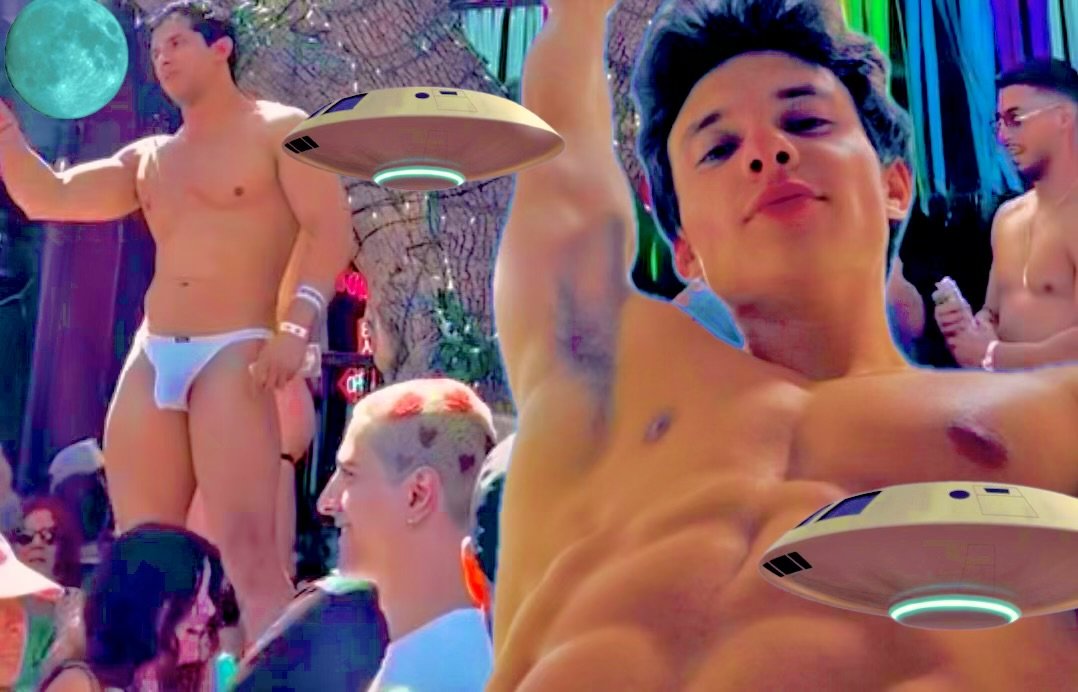
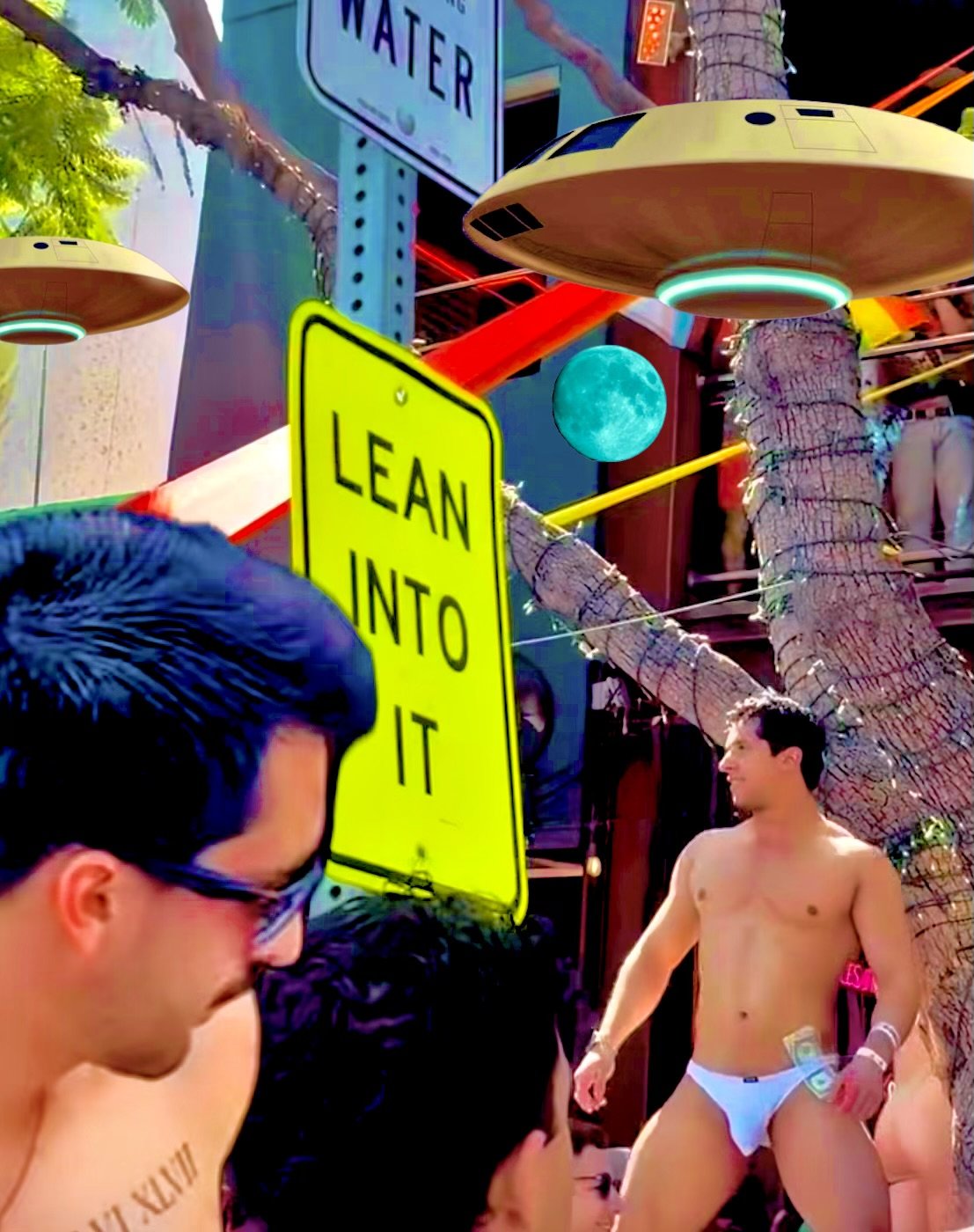
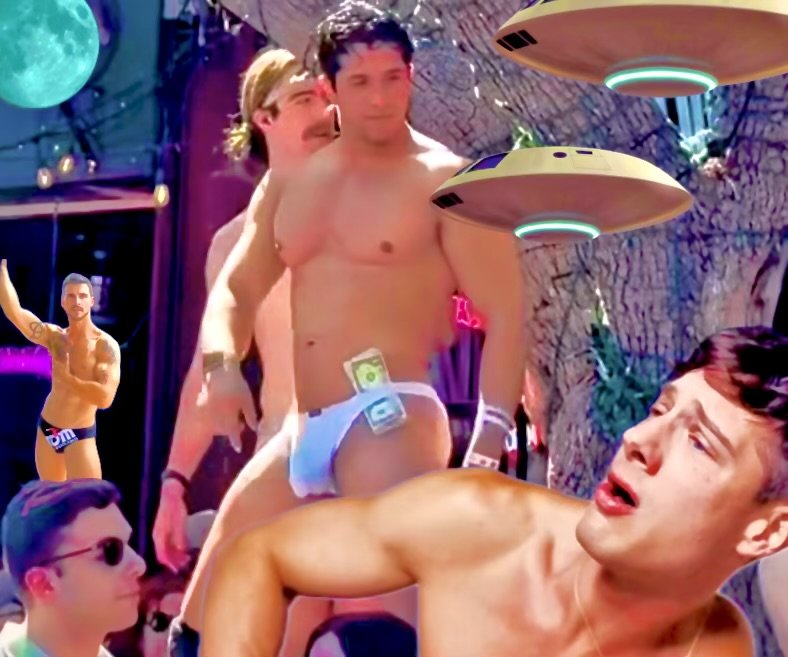
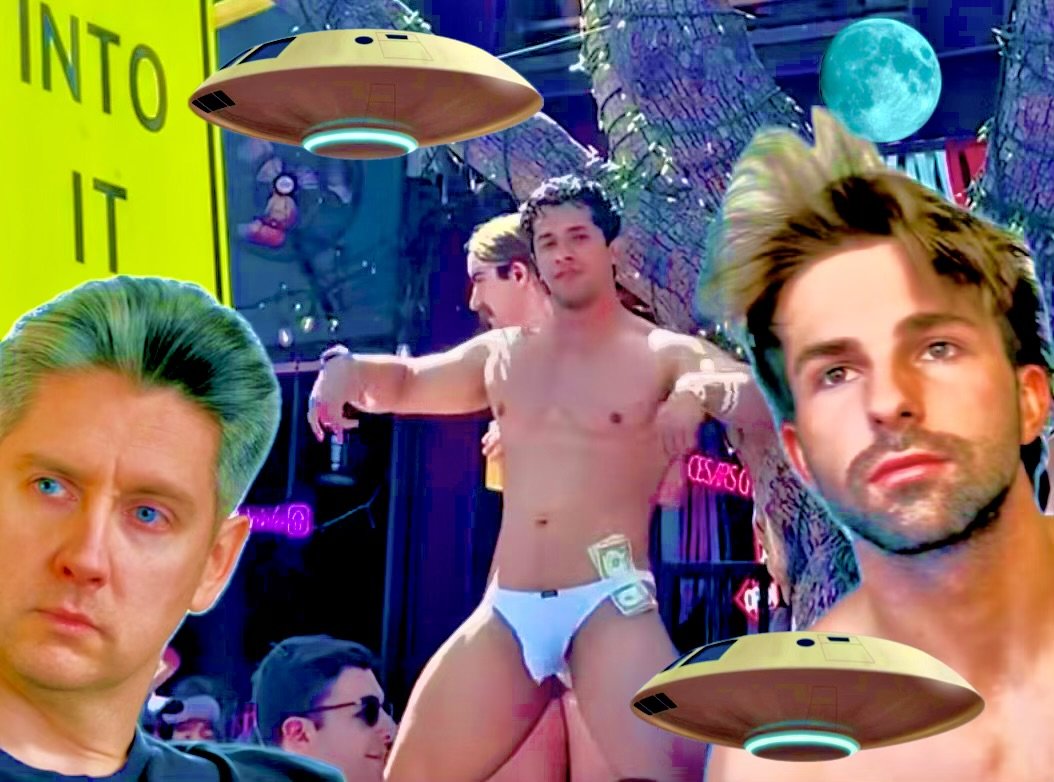
The White Party is established. The circuit has arrived — formally, nationally, beautifully. Gay men in the sun. Dollars in their briefs. Saucers overhead. The blood moon says no. They dance anyway.

June 2026 — Los Angeles

The sign says: LEAN INTO IT.

Still not a suggestion.

Jupiter 3 is in the sky. The Aquarian Moon is watching. The boys are on the platforms, the crowd is vast and alive, and someone is kissing someone in the middle of everything, and someone has a laurel wreath, and the rainbow streamers are still hanging, and LA Pride is fifty-six years old, and we are still here, still leaning — all the way in.

The Closet Series has been watching. The blood moon knows. Jupiter 3 isn’t surprised. — Behan

Resources

Mattachine Society — Zinn Education Project / Library of Congress

Compton’s Cafeteria Riot — Susan Stryker, Screaming Queens (documentary, 2005)

Stonewall Riots — Britannica / Library of Congress / History.com

First LA Pride Parade, 1970 — LA City Historical Society / LAmag

Circuit Party History — The Advocate / Vice / Nexus Radio

White Party Palm Springs — established 1989

Um, Yeah.

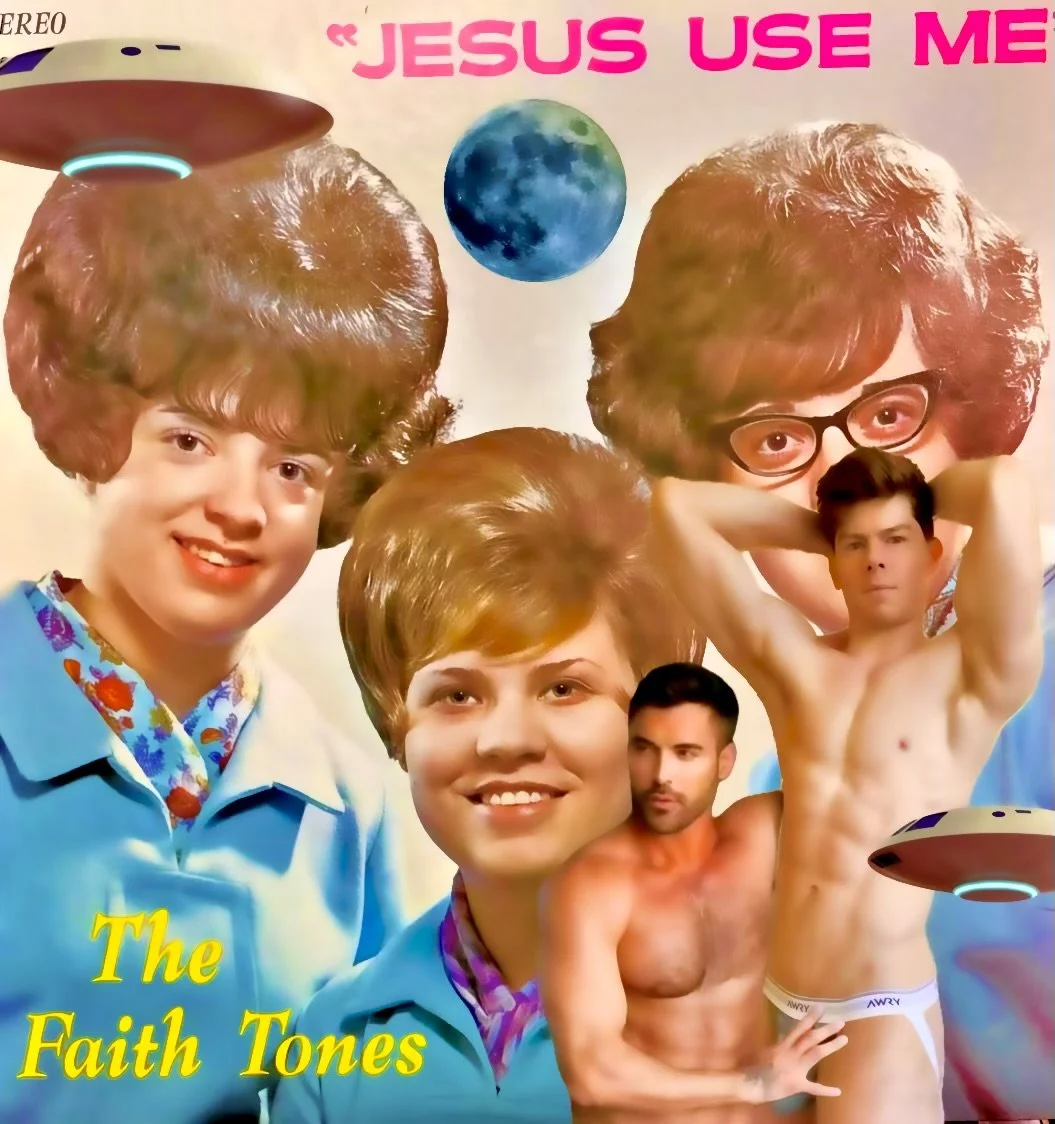
Jesus Use Me | Digital Photo Collage | 2026

Who doesn’t want to be used by Jesus? I mean, come on.

— Behan

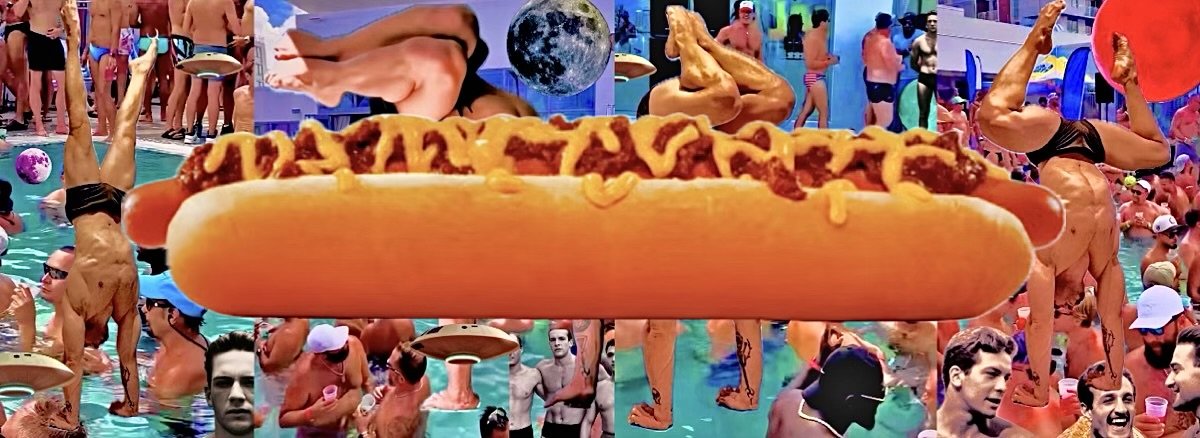
CONEY DAWG DAZE 2026 BEHAN

Coney Dawg Daze

A Monday Essay

James Behan, 2026

Coney Island has been a refuge for queer people for well over a century. Not by design — by nature. The beach has always offered what the city withheld: open air, fewer clothes, the anonymity of the crowd, and the particular freedom of a place where the normal rules were understood to be temporarily suspended.

The art tells the story.

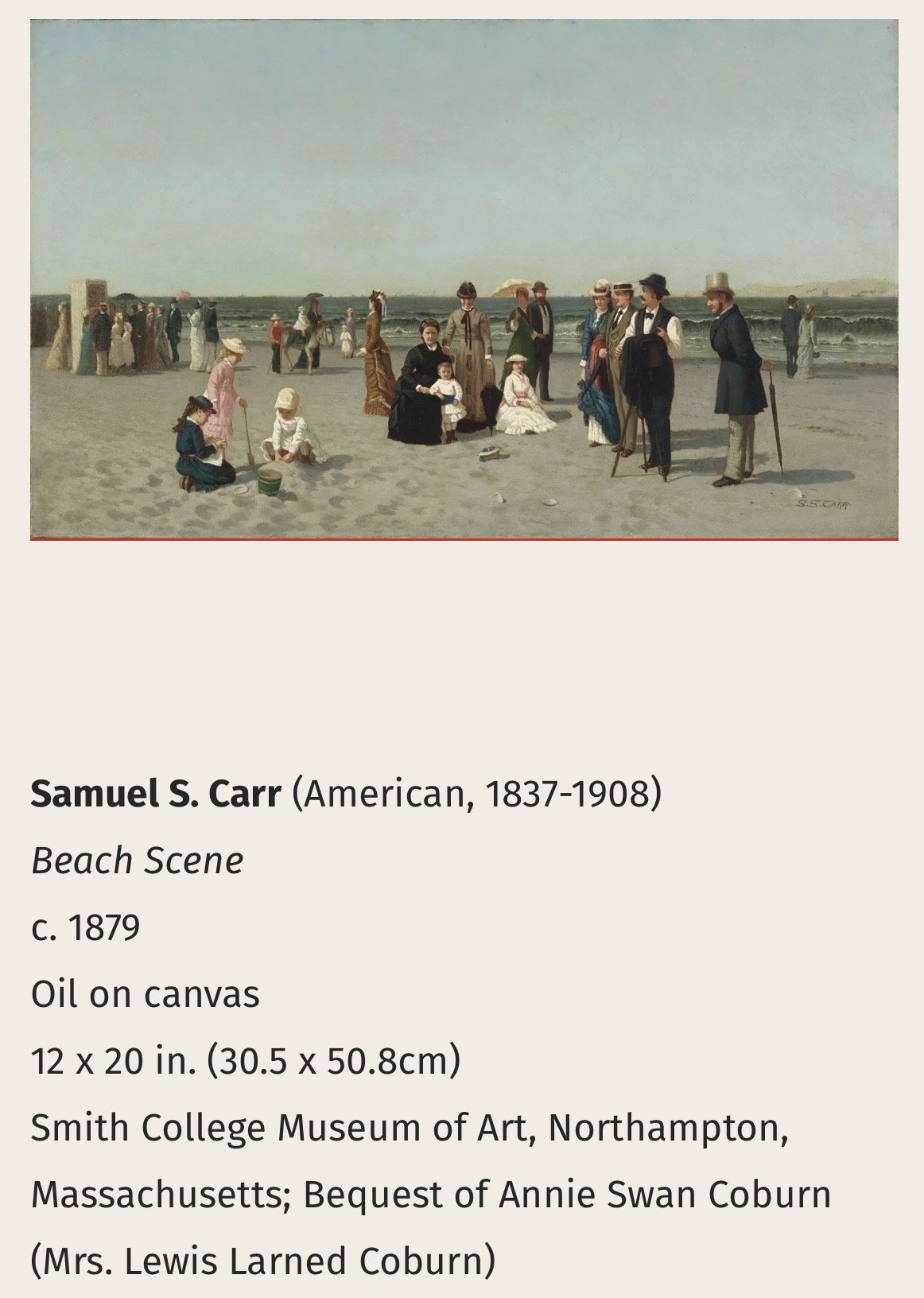
c. 1879 — Samuel S. Carr, Beach Scene, oil on canvas. The Victorian beach is studied, formal, fully clothed. The social codes are intact and visible. Human desire, of course, was present too — it always was — and Coney Island was already learning how to accommodate it.

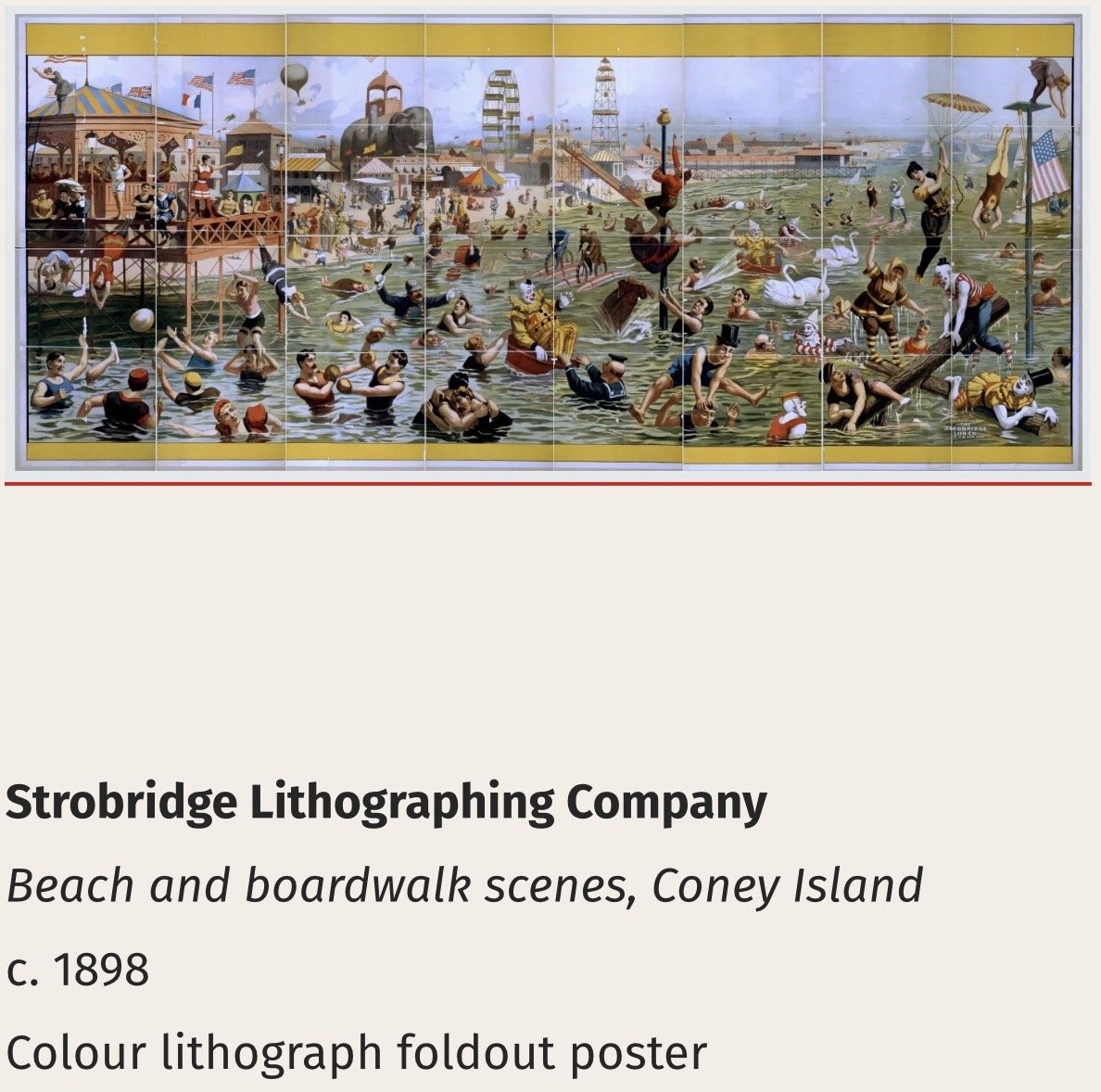
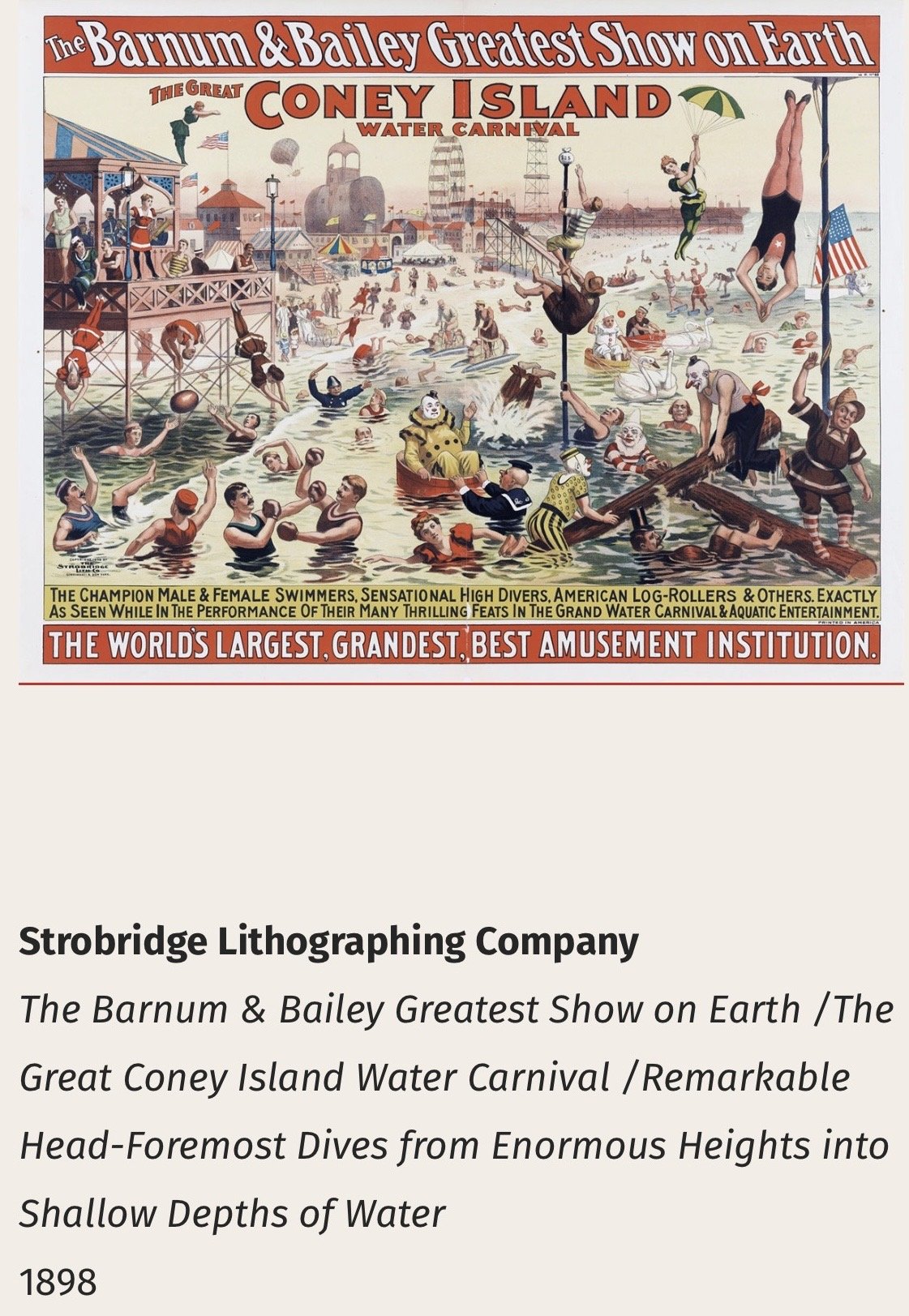
1898 — Strobridge Lithographing Company, Beach and Boardwalk Scenes, Coney Island, colour lithograph. The crowd has arrived. The amusements have arrived. The anything-goes atmosphere that would define Coney Island for the next century is already visible in the chaos of bodies, spectacle, and possibility.

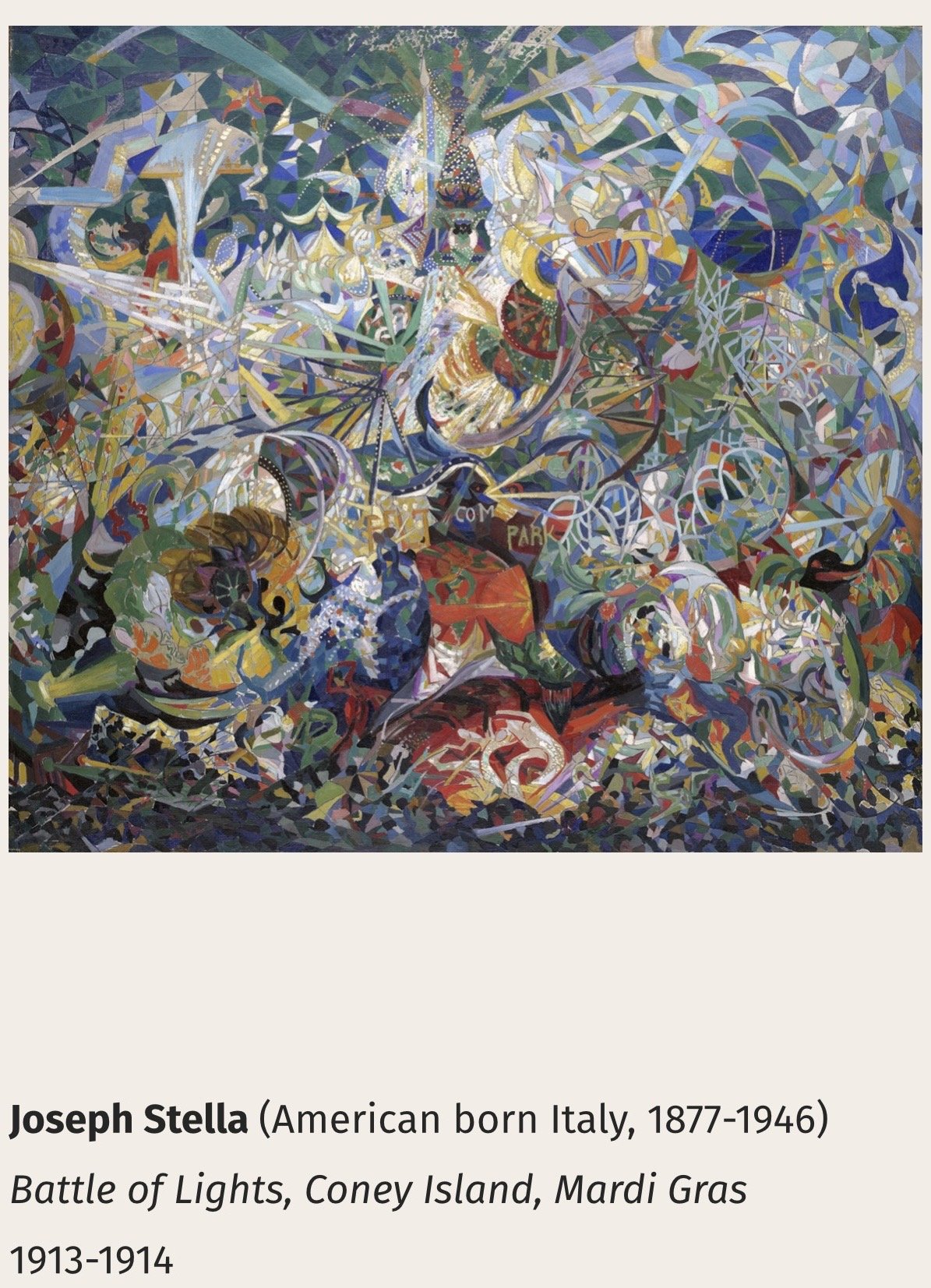
1913–14 — Joseph Stella, Battle of Lights, Coney Island, Mardi Gras, oil on canvas. A Futurist explosion — color, light, sensation, the individual dissolved into the collective energy of the place. Stella understood Coney Island not as a location but as a feeling. That feeling was freedom.

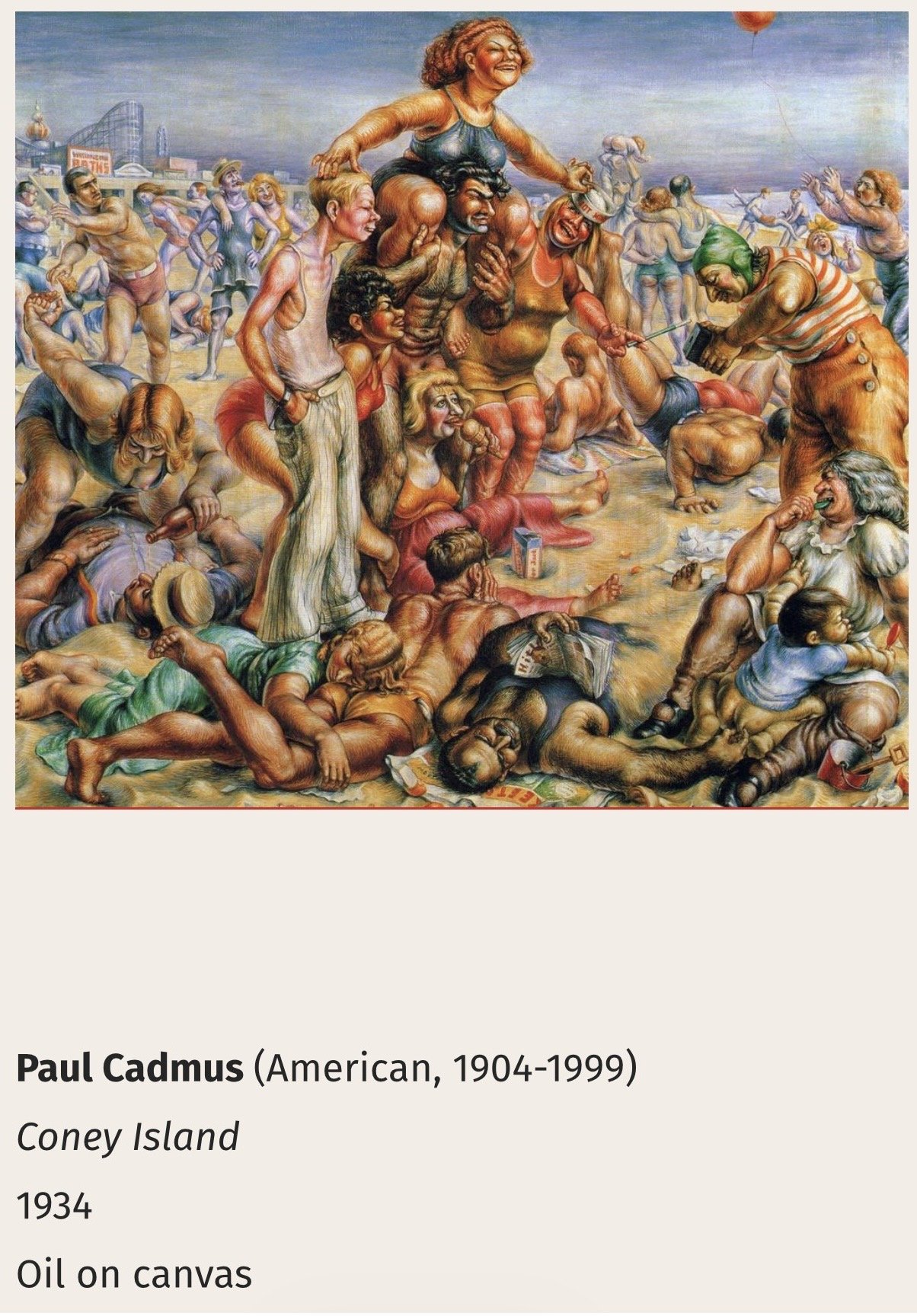
1934 — Paul Cadmus, Coney Island, oil on canvas. Cadmus, a gay artist of considerable courage, renders the beach as a scene of barely managed desire — bodies piled together, muscle and flesh and comic excess. It is the gay gaze fully deployed, visible to those who knew how to look.

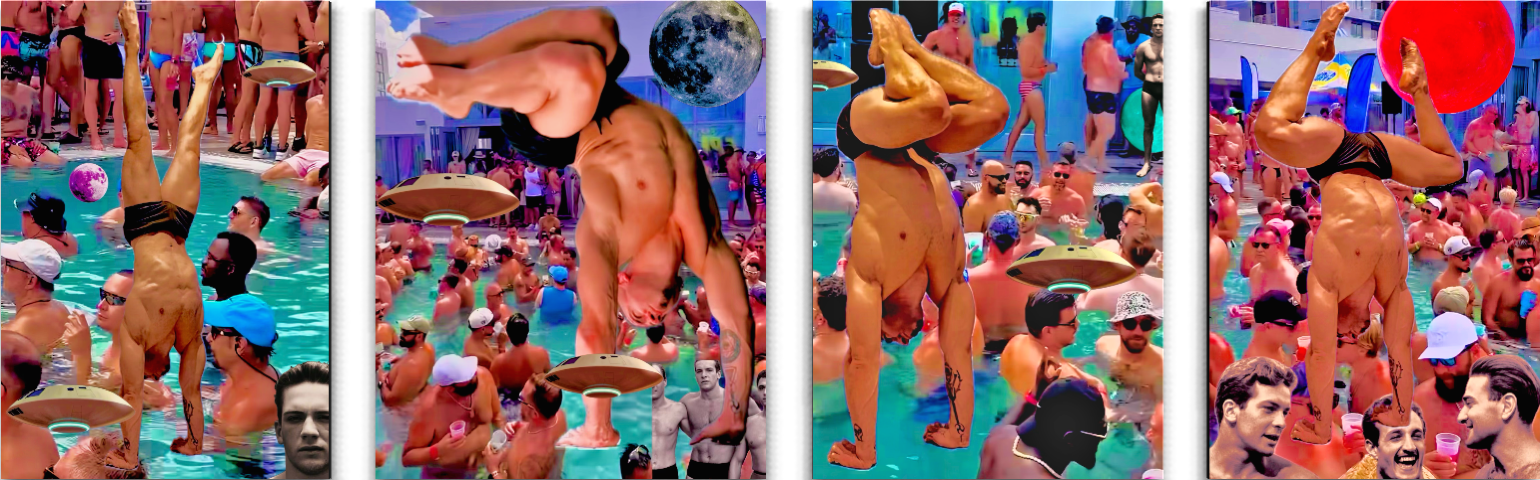
2026 — Behan, Coney Dawg Daze, digital photo collage. The gay pool party as contemporary beach scene. The acrobatic figure, the crowd, Jupiter 3, the moons, the Coney dog — democratic, excessive, joyful. A hundred and fifty years of queer beach culture arriving at full color and full volume.

What connects Behan’s collages to these works is not merely subject matter but formal instinct. The long horizontal format — the panoramic view that allows individual figures and scenes to play out across a wide field — runs from Carr’s Victorian beachgoers through the Strobridge lithographs to Stella’s explosive canvas and into Behan’s digital collages. It is the format of water itself. Shared too is the sense of organized chaos — figures caught in motion, in relation to each other, the whole scene vibrating with energy held just barely in check. And the color. From Stella’s Futurist fireworks to Cadmus’s flushed flesh tones to Behan’s digitally saturated palette, the beach has always demanded full color. These artists, across more than a century, understood that.

Whenever humans get close to water, things change. The codes loosen. The clothes come off. The body remembers something older than civilization. We spent our first nine months suspended in water. We are composed of it. The beach and the pool are not escapes from the human condition — they are returns to it. Every artist in this essay understood that. So did every gay man and woman who found their way to Coney Island across more than a century of American life.

Behan’s own connection to Coney Island is personal. “I was lucky enough to visit Coney Island in the 1990s for their annual Mermaid Parade. I enjoyed a Coney dog. I was able to see and experience and feel what my own father felt and experienced as a young man in the 1940s. This type of connection is so valuable and is a memorable experience to this day.” — Behan

The AI data centers now consuming extraordinary quantities of fresh water for cooling — water drawn from the same finite supply that fills our pools, our beaches, our bodies — represent a troubling new pressure on the most fundamental human resource. The beach has always been where people went to remember what mattered.

What happens when the water itself is at risk?

— Behan

Velocirapting

End of Oak Street: A Series

Digital Photo Collage 2026

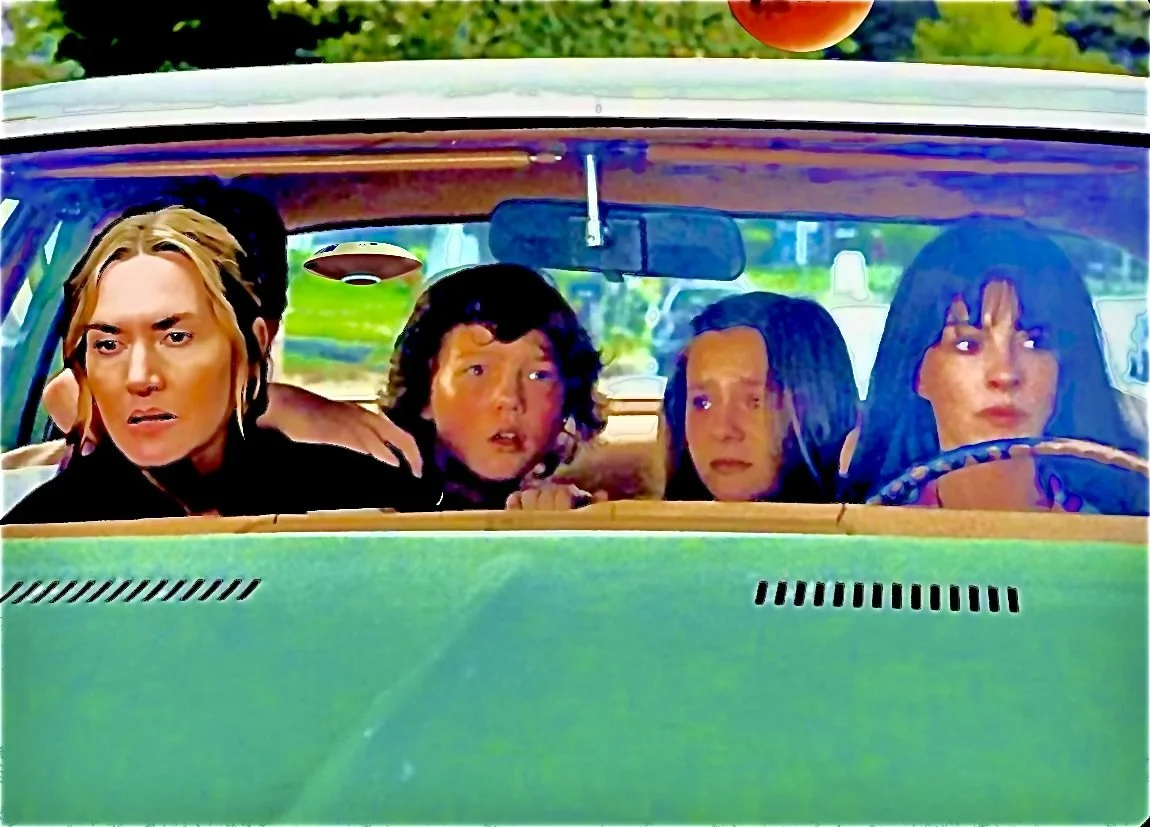
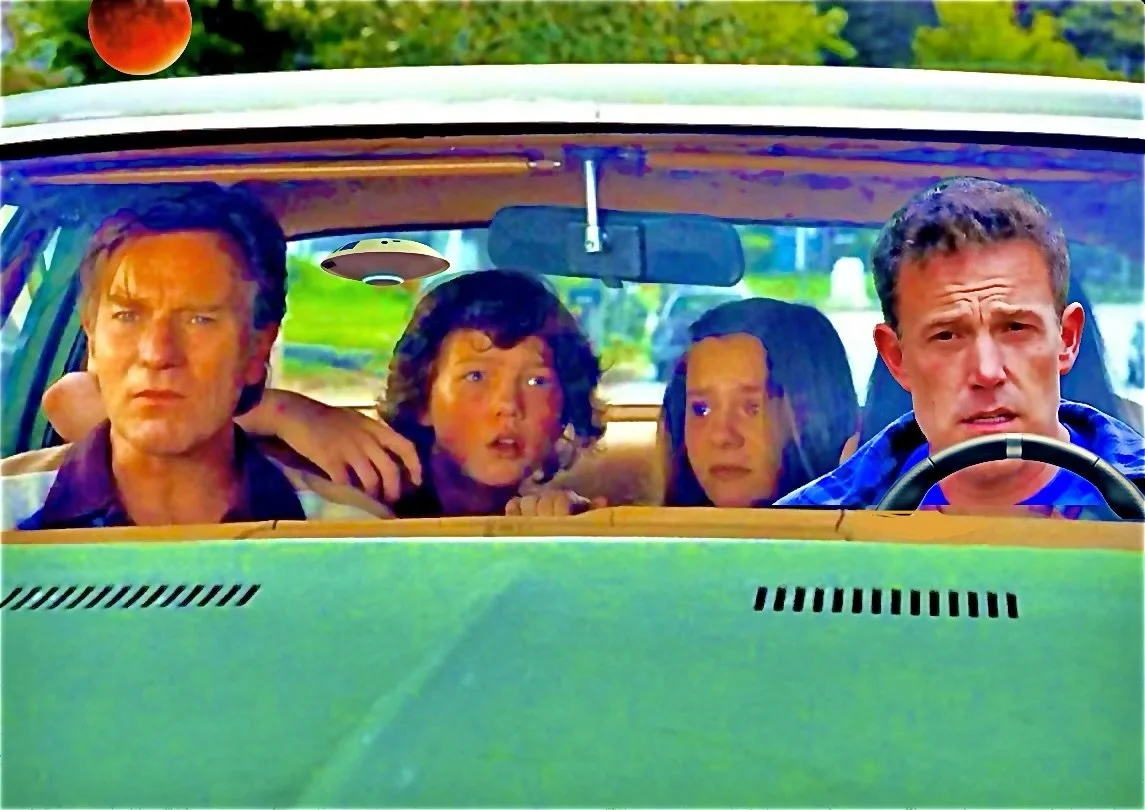
This August, Warner Bros. releases The End of Oak Street — directed by David Robert Mitchell, starring Anne Hathaway and Ewan McGregor as the Platt family, transported by a mysterious cosmic event to a prehistoric world where survival depends on sticking together. It looks terrifying. It looks thrilling. It looks like exactly the kind of film that should exist in every possible configuration of family.

So the Closet series has some casting suggestions:

The Alternative Casting collages recast the Platt family twice — once as a gay married male couple, once as a married lesbian couple, legal and permissible in the United States. The visual continuity of the original film doesn’t suffer. If anything, the heteronormative family structure that anchors most big-budget action cinema is looking a little tired. Both castings work. Both would make money. Both would win awards. Neither exists because Hollywood decided they wouldn’t before they tried.

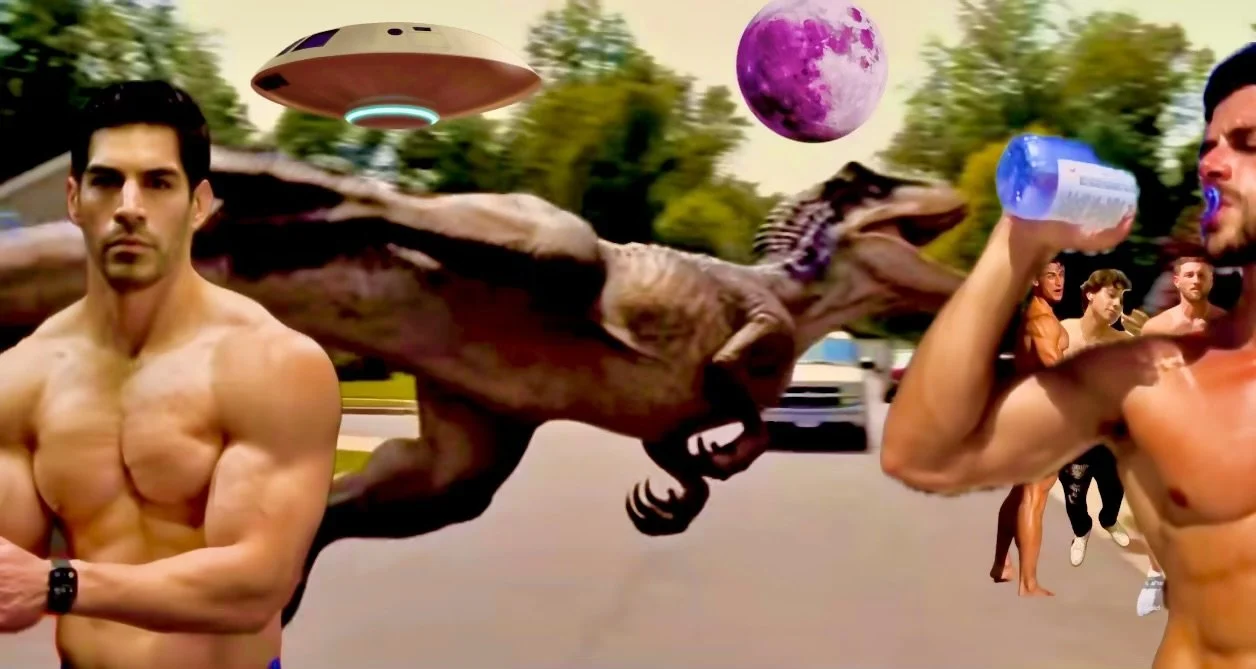
The Gay Guys collage takes a different approach. Rather than recasting the family, it simply adds gay men to the neighborhood — present, unbothered, fully capable of handling a prehistoric situation. Hollywood has been running on queer coding for fifteen years while promoting itself to an audience that won’t set foot in the theater. Democrats go to movies at more than twice the rate of Republicans. The gay audience has been showing up and buying tickets for decades. Hollywood cashed the check yet never said the word.

We should just be there. On Oak Street. Battling the dinosaurs. Fierce in the fight and fabulous in the fashion.

That’ll sell some tickets.

— Behan

Turtle Creek

What Up? | Digital Photo Collage | 2026

Before Grindr, before apps, before any of it, gay men found each other the old fashioned way. A look held too long. A knowing glance. A car parked in exactly the right place at exactly the right time.

Cruising — the search for connection and sex in public or semi-public spaces — has been part of gay culture for at least two hundred years. The term itself emerged in the 1960s as gay slang, a code word that shielded what it described. Parks. Bathrooms. Waterfronts. Truck stops. The car was always part of it — mobile, private, deniable. You were just parked. Just sitting.

Just two guys in a truck.

The car was also an avenue of escape. An hour of being exactly who you were before driving back to the office, the house, the life that didn’t have room for this. Some guys kept their cars stocked — lube, paper towels, the essentials. A rolling station of possibility. In Dallas it was the noon hour in Turtle Creek or Reverchon Park. Every city had its version. Every city still does.

The man outside the window is a recurring figure in that history too. The one who walks up. The one who sees. The one whose cross doesn’t quite explain the expression on his face.

What up?

— Behan