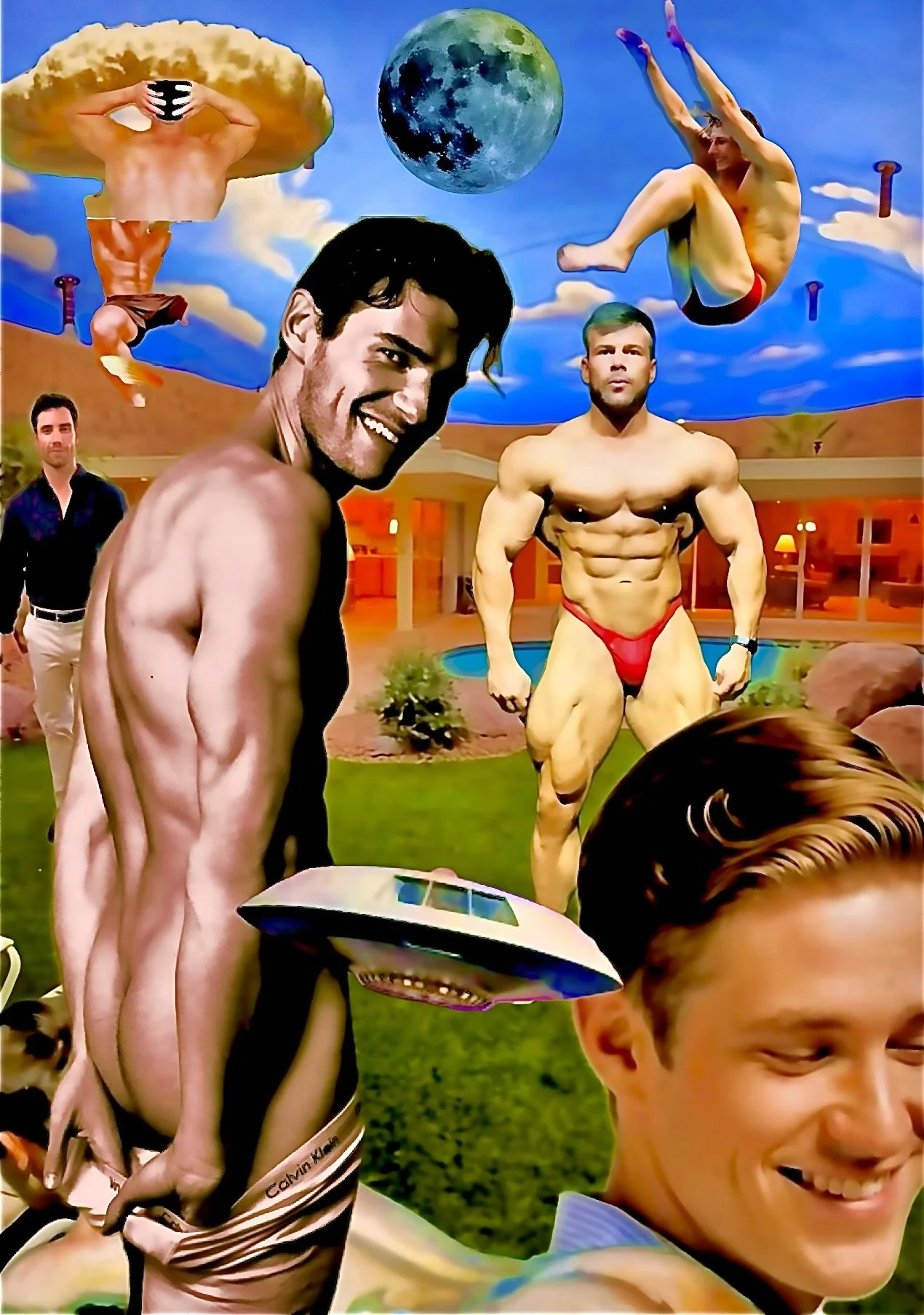
A new collage places a family of choice inside the luxury bunker
Bunkers are a popular subject in social media reels. The shelters are well appointed and well stocked, and the people in them are almost always a heterosexual family: a mother, a father, a son and a daughter, like the Fisher-Price play sets of the 1960s, 70s and 80s.
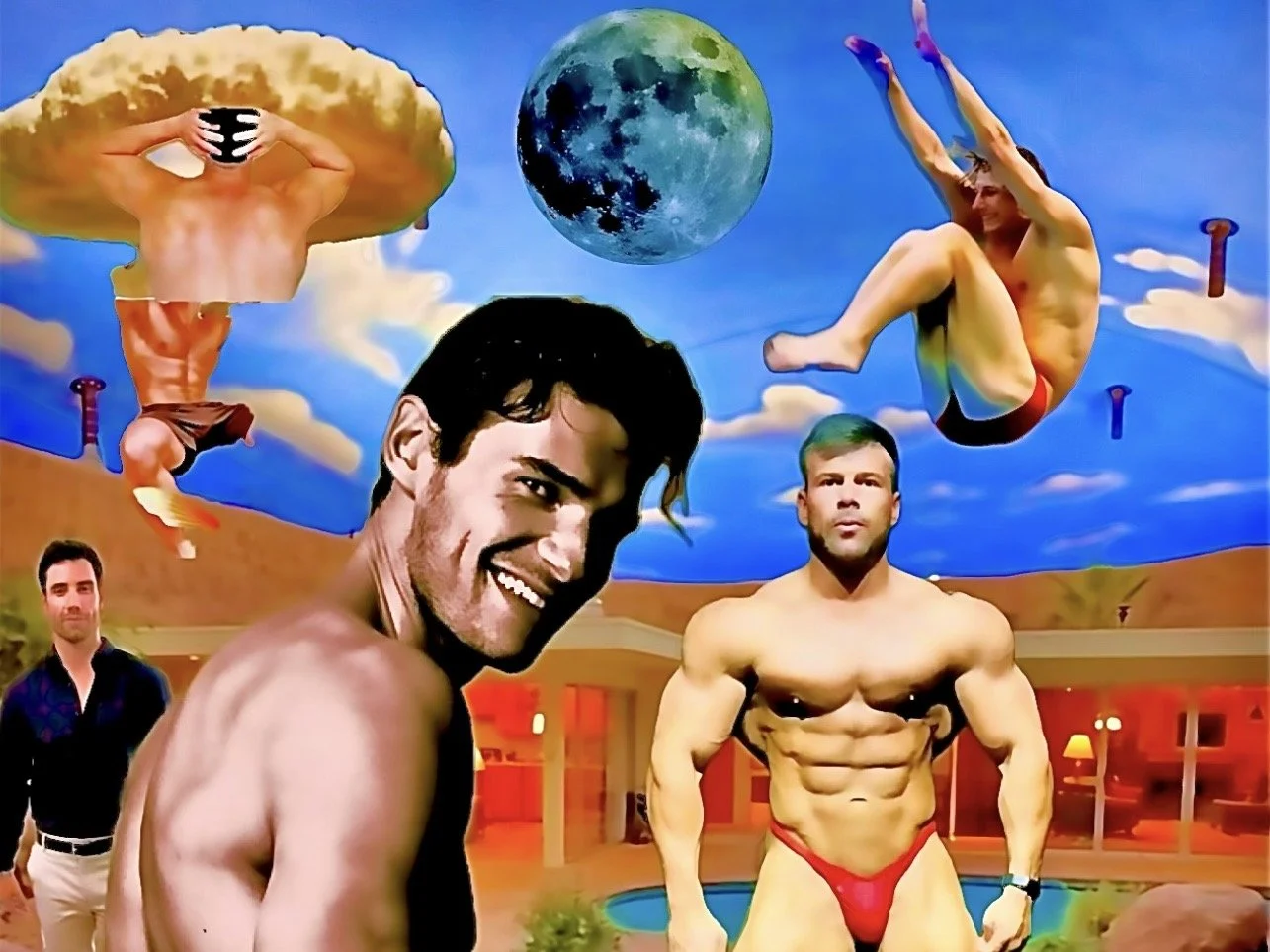
My new collage shows a luxury bunker that centers on a pool and a lawn beside a mid-century house, under a painted sky. A mushroom cloud represents the breakdown of society outside. Inside is a family of choice: a group of gay men who are safe and happy together.
The bunker in the reels protects the family society expects. Mine protects the family these men chose.
Why Gay Theory Is Bucking Bunkers
While the bunker remains an option for many people, gay theory currently rejects the private bunker in favor of communal survival.
Survivalism usually centers on preserving the nation, race, gender or the existing social order. Gay theory questions who survives and how.
Post-apocalyptic stories also repeat eugenic ideas of survival of the fittest. Queer survival includes people outside the standards of fitness and health, and queer kinship organizes survival around the collective rather than the individual.
This position comes from experience. During the AIDS crisis, when families and government withdrew, gay men built their own networks of care.

The practice continues. In Houston, the Montrose Mutual Aid Coalition maintains solar-powered charging stations in members' homes. Researchers find that LGBTQ+ communities are largely invisible in disaster planning, and they recommend that LGBTQ+ community centers qualify as emergency shelters. A recent essay identifies small, self-sufficient communities as the strongest defense against collapse.
A bunker determines who gets in. Gay theory asks how many people can be cared for.
— Behan