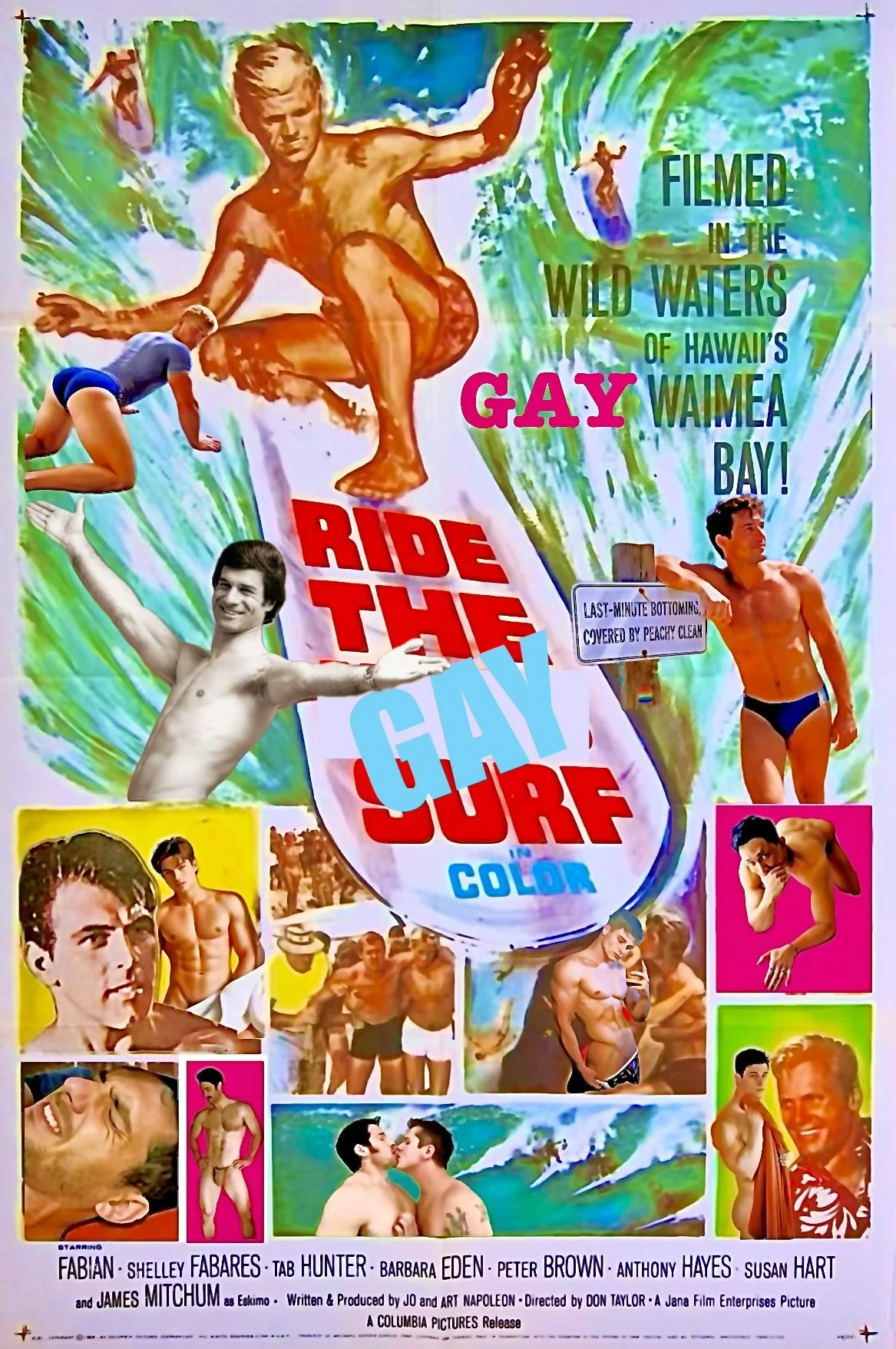
FOR IMMEDIATE RELEASE — HOLLYWOOD, 1964
Columbia Pictures Presents "Ride the Gay Surf," the Summer's Breakout Hit
Columbia Pictures heads to Hawaii this summer with "Ride the Gay Surf," a story of surfing, friendship, and romance on the North Shore of Oahu!
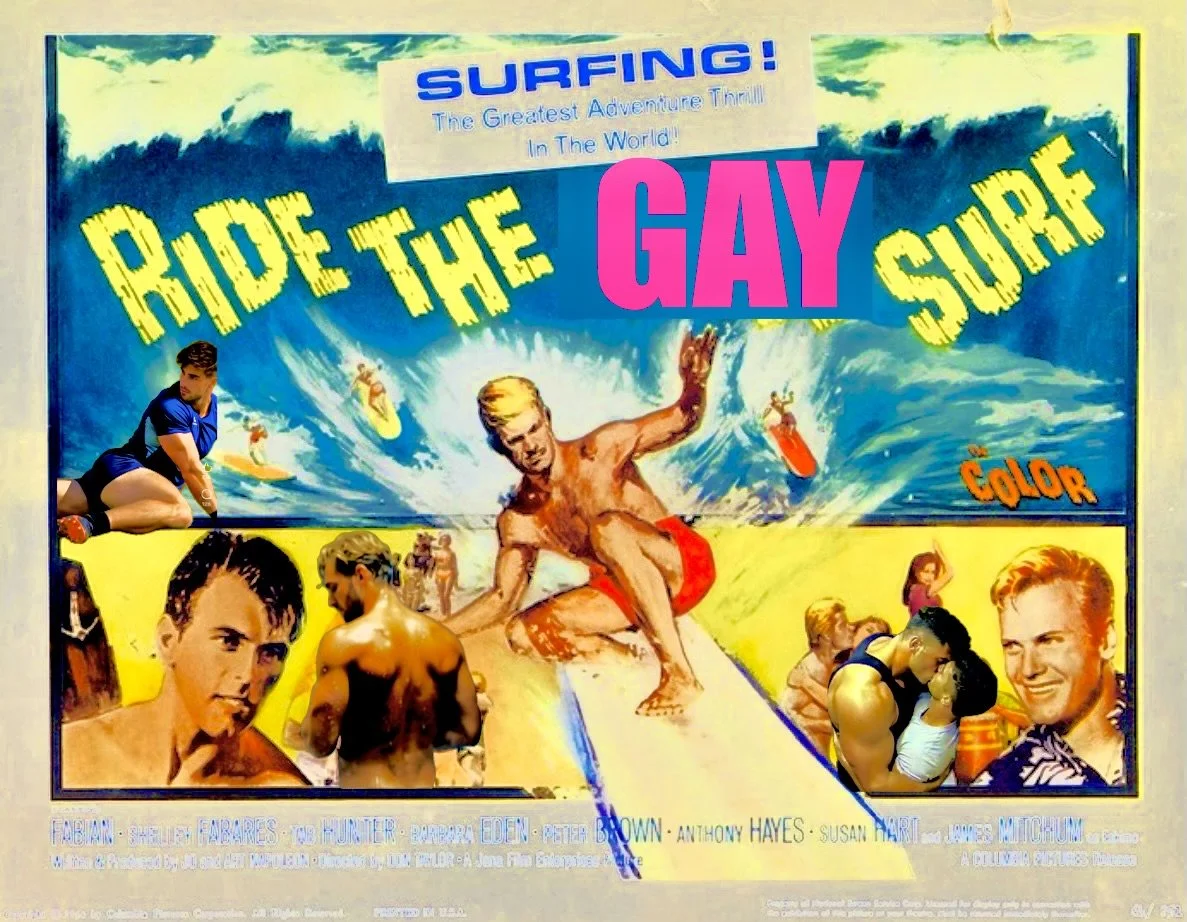
The Stars
Tab Hunter and Fabian lead the cast as two mainland surfers who travel to Waimea Bay to test themselves against the biggest waves in the world. They find more than waves. Shelley Fabares, Barbara Eden, Peter Brown, and James Mitchum round out the cast as the friends who cheer them on from the beach.
Filmed on Location
Every surfing scene is filmed in the wild waters of Waimea Bay, in full color.
The Look of the Summer
Hunter and Fabian model the newest Jantzen swimwear line throughout the picture. Audiences will want to leave the theater and head straight to the beach.
Opening This Summer
"Ride the Gay Surf" opens in theaters nationwide. Bring your friends. Bring your boyfriend.
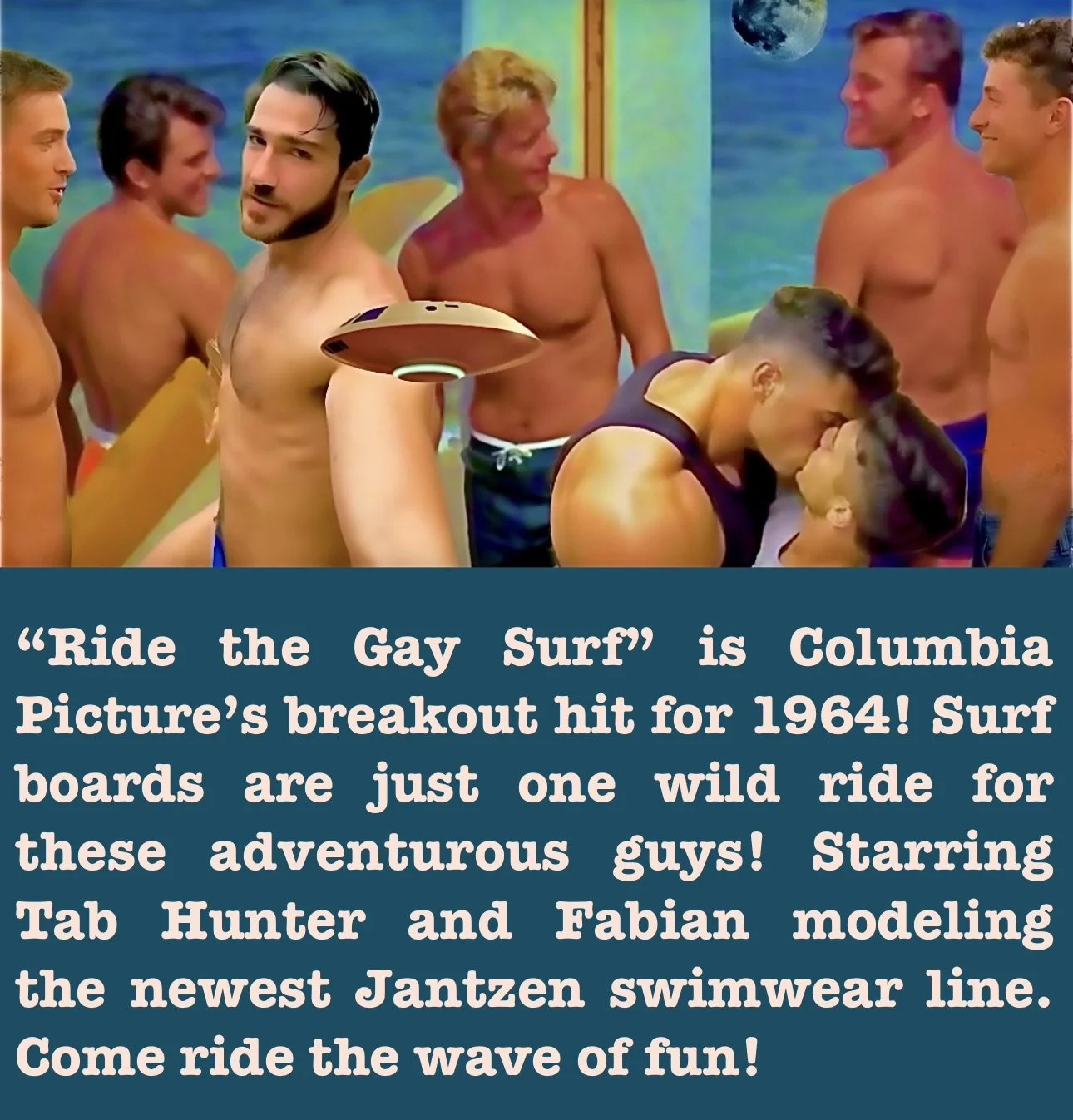
Artist's Note
The Real Film
"Ride the Gay Surf" is based on "Ride the Wild Surf," a 1964 Columbia Pictures release starring Fabian, Tab Hunter, Shelley Fabares, and Barbara Eden, filmed at Waimea Bay. It was one of the many beach films that studios produced in the early 1960s for teenage audiences.
The Law in 1964
In 1964, homosexual acts were illegal in every state except Illinois, which had repealed its sodomy law in 1961. The Hollywood Production Code had banned any depiction of homosexuality until 1961, and after that it allowed the subject only if handled with "care, discretion and restraint." In practice, gay characters in films of the period were punished, killed, or presented as tragic.
Tab Hunter
Tab Hunter was gay. He was arrested at a gay party in 1950, and Confidential magazine reported the arrest in 1955. He did not speak publicly about his sexuality until his 2005 memoir, "Tab Hunter Confidential." In 1964, he played the heterosexual leading man because the studios and the law required it.
Follow the Money
Studios made beach films because beach films made money. If being gay had been legal and socially accepted in 1964, the studios would have made gay beach films for the same reason. These collages show that version: same stars, same location, same swimwear tie-in, and an open gay romance at the center of the story.
Subtext becomes context.
— Behan