Most of my collage work looks outward: at other men, other places, other decades. In my recent work, I place myself in the picture with the model. This is an old practice in painting. Three works show how artists have handled it.
Courbet: The Artist at the Center
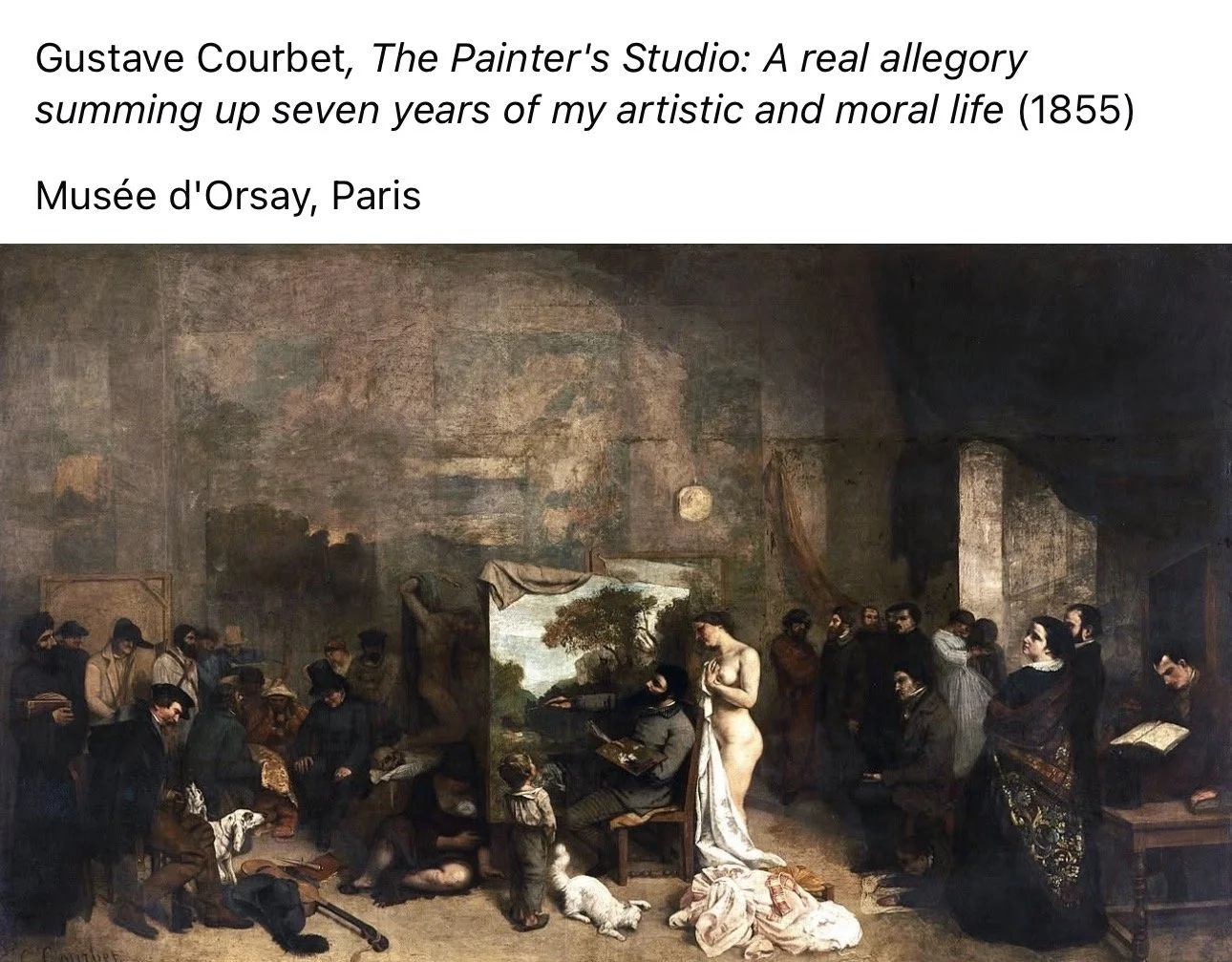
Courbet paints himself seated at his easel, working on a landscape. A nude model stands behind him and watches. A boy looks up at the canvas.
On either side of the studio are the people of Courbet's life. On one side are ordinary working people. On the other are his friends, critics and supporters, including the poet Baudelaire, who reads at the far right.
The full title calls the painting an allegory of seven years of his artistic and moral life. The Exposition Universelle of 1855 rejects it. Courbet shows it in his own pavilion instead.
The model in this painting looks at the artist, not at the viewer.
Velázquez: The Viewer Takes the Model's Place
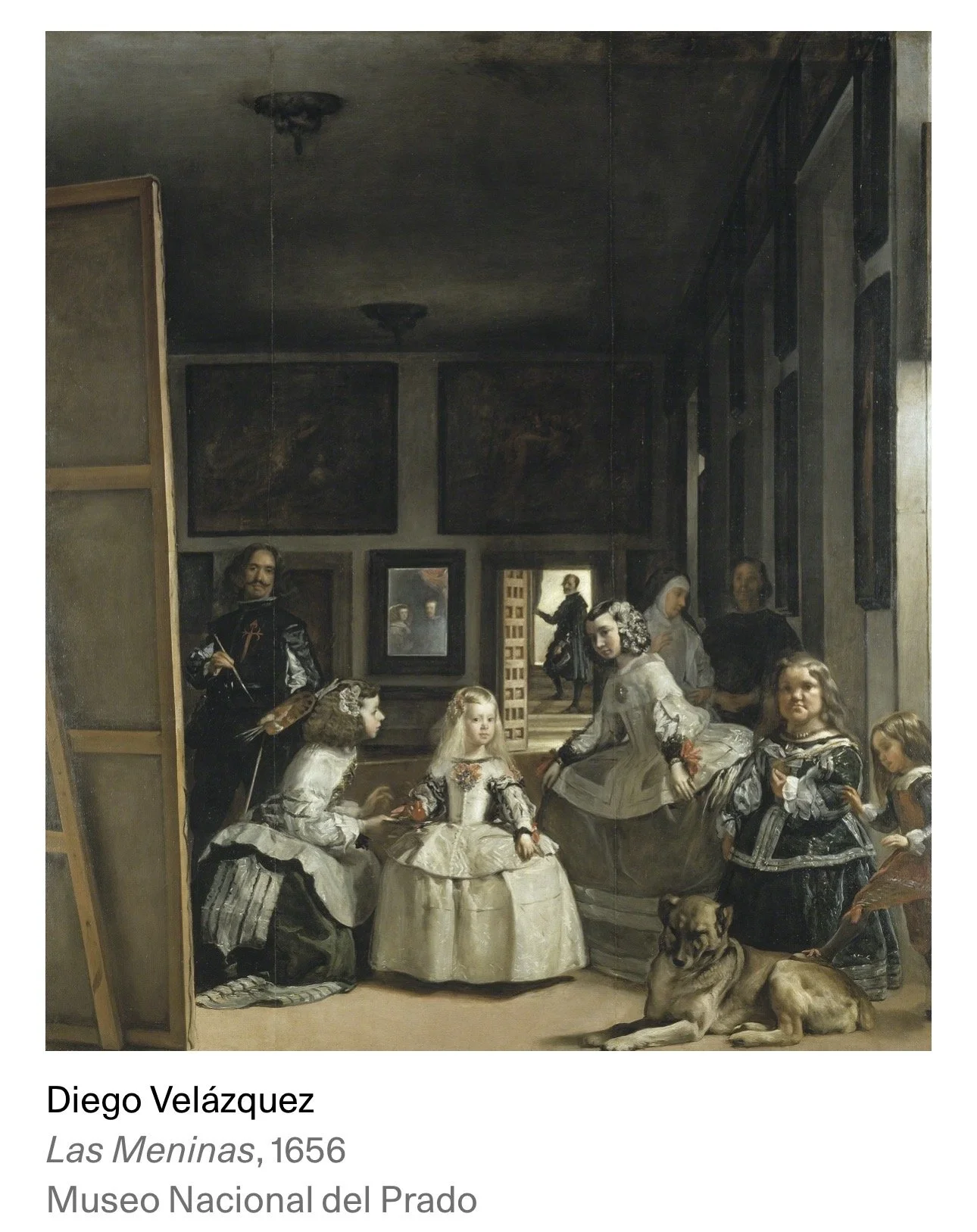
Velázquez stands at a large canvas, brush and palette in hand. The young Infanta Margarita and her attendants fill the room. A mirror on the back wall shows the king and queen.
The king and queen stand where the viewer stands. They appear to be the models. The canvas faces away from us, so we never see what Velázquez paints.
The artist looks out of the picture at his models, and at us.
Hockney: The Artist Becomes the Picture
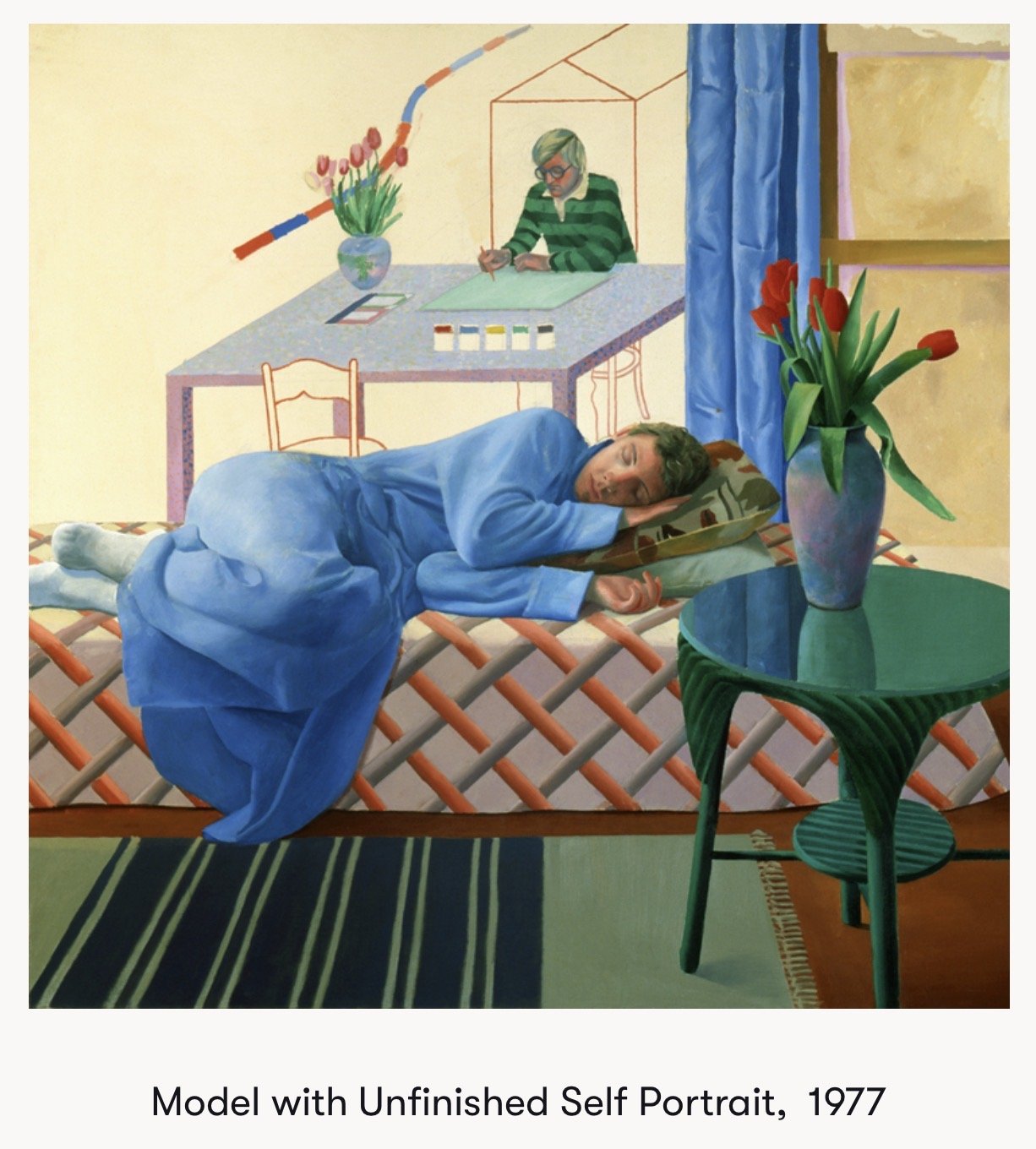
Hockney's model is Gregory Evans, his partner at the time. Evans sleeps in a blue robe in the foreground.
Behind him is a painting of Hockney at work, drawing at a table. The painting is unfinished. Parts of the table and chairs remain outlines.
Here the artist is the image within the image. The model is a man the artist loves, painted in an ordinary, private moment.
My Collage: The Brush Becomes an iPhone
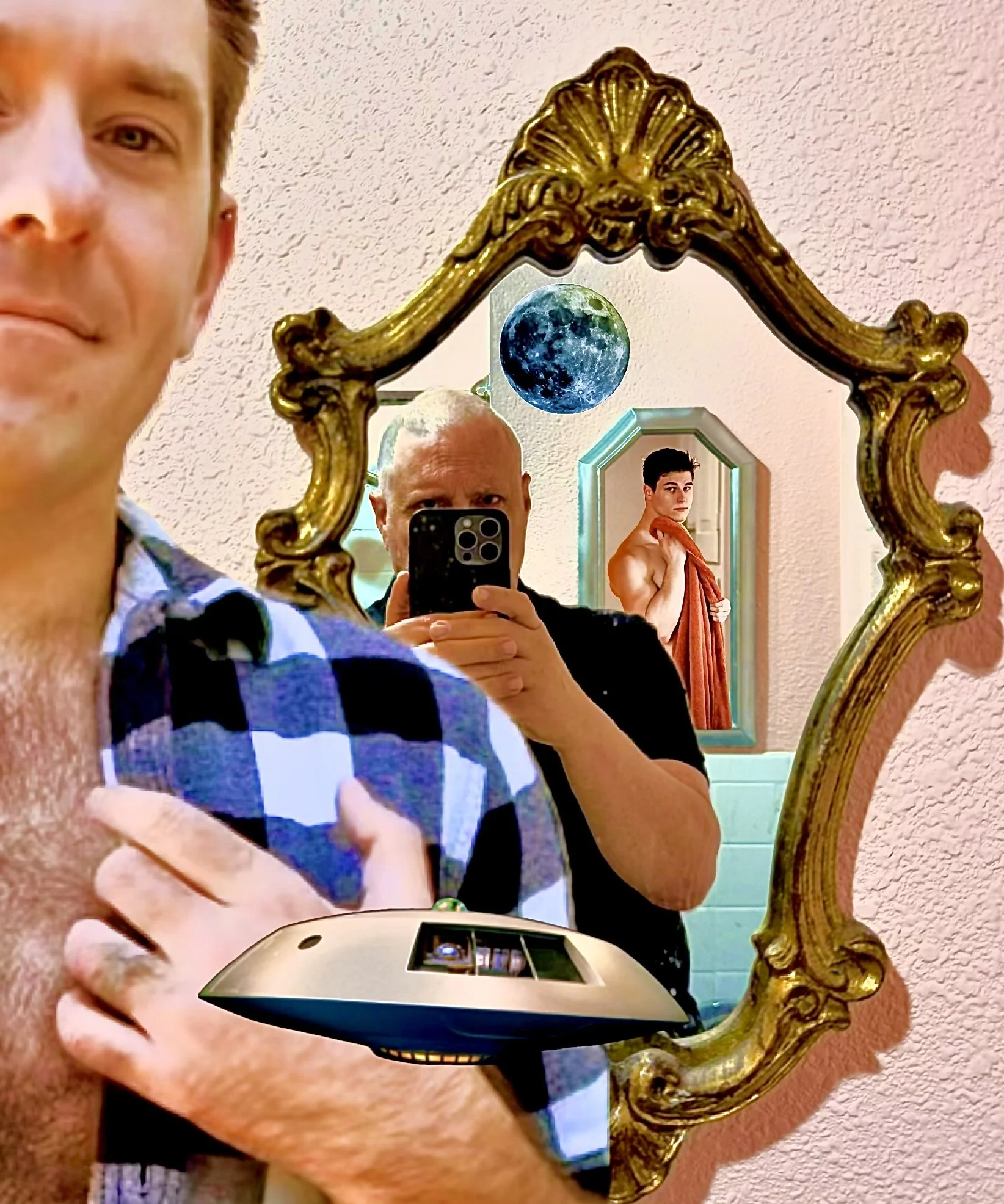
My piece starts with a mirror selfie. I stand in an ornate gilt mirror, holding my iPhone. Behind me, a second mirror shows a young man with a towel. In the foreground, another man holds a plaid towel to his chest.
The Blue Moon as longing and love and the Jupiter 3 as freedom and autonomy inhabit the space as unseen witnesses except to the audience.
Where Velázquez and Courbet hold a brush, I hold a iPhone. The tool stays in the frame. It records the moment and the person making the image.
Why the Artist Appears
Collage is built from images of other people. The artist can easily stay out of view. A self-portrait puts the artist back into the record.
Courbet surrounds himself with his world. Velázquez places the viewer in the position of the model. Hockney shows himself next to the man he loves. I show where I am, what I am doing, and that I am the one choosing these images.
My work takes subtext and makes it context. The artist and model theme makes that visible. The person looking is part of the subject.