A clothing ad sold a jacket with a rugged man and a pickup truck. This collage turns it into a lamentation for Kyle McKenna in an homage to Giotto.
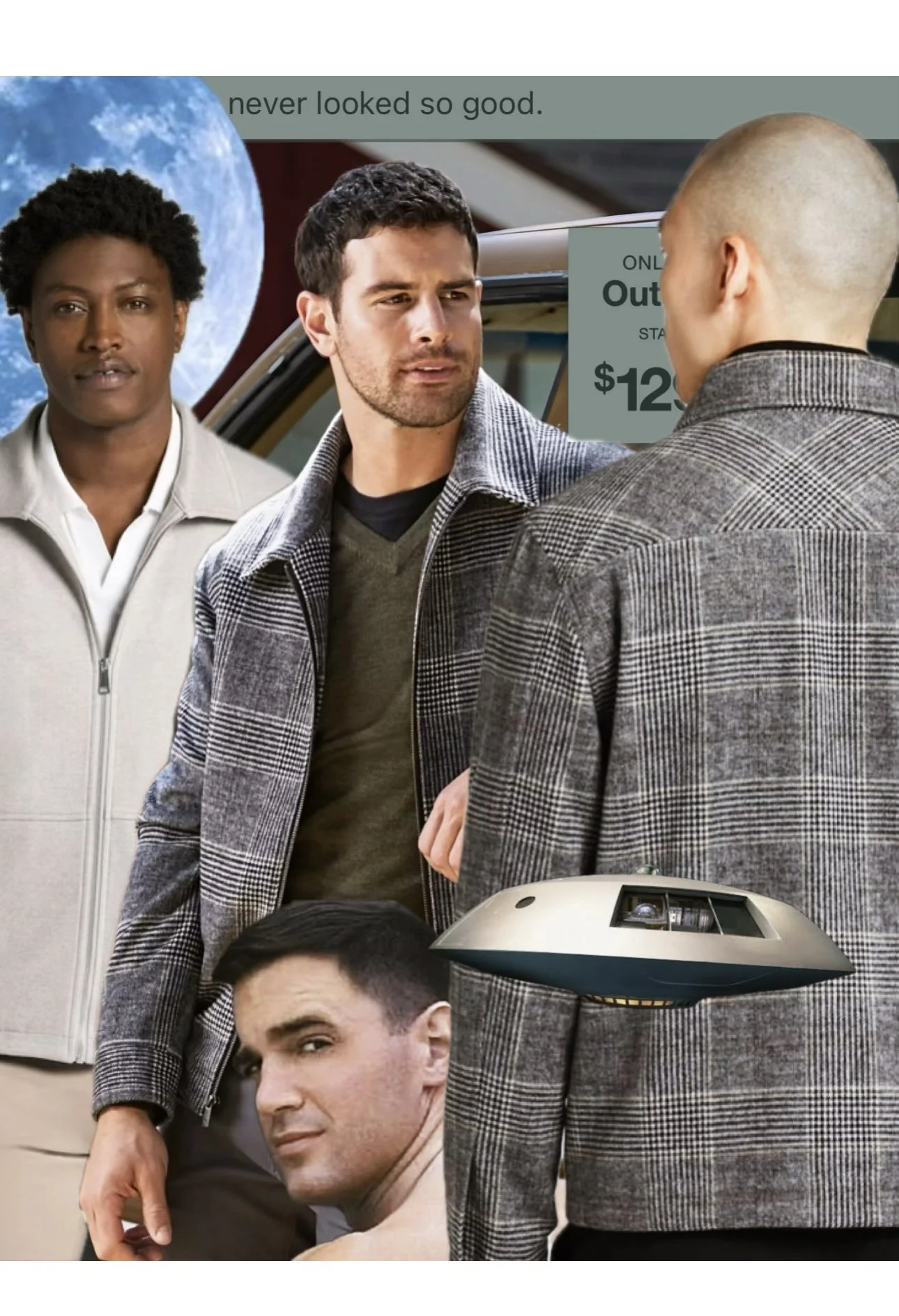
McKenna appears at the lower center, bare-shouldered, looking back over his shoulder at the viewer. He was a gay adult film star of the 1990s. In this collage, he takes the place of Christ in Giotto's Lamentation. Tragically, he died in 2000 at the age of 31, and his death is the loss this scene laments. Like Jesus of Nazareth, he experienced an untimely death in his early thirties. The cause of his death was never made public. He died during the years when the AIDS crisis took the lives of many young gay men, and the collage mourns him alongside them.

His presence also makes explicit what the advertisement only implied. The ad sells desire, and McKenna's place in the scene states it openly.

The Source
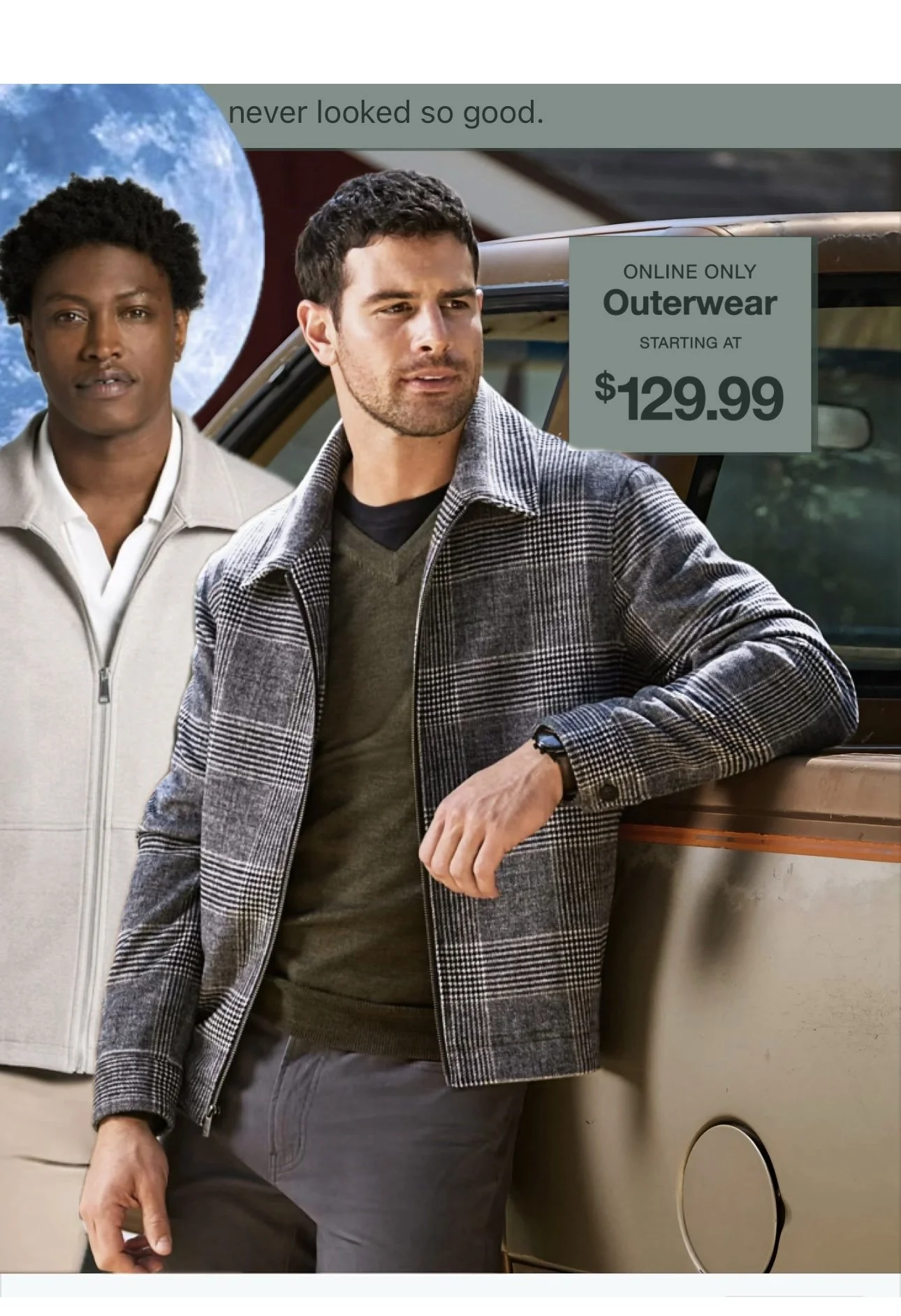
The advertisement came through the social media feed, the same way that clothing ads arrive in the mail. It offers online-only outerwear starting at $129.99. A model in a gray plaid zip jacket leans against a two-tone vintage pickup truck. The tagline reads: "Staying warm never looked so good."
The truck carries the message. A pickup truck stands for a particular kind of American manhood: work, self-reliance, and life outdoors. The ad attaches that manhood to a rugged, attractive model, and attaches both to the jacket.
The truck became the ground of the collage.


The Process
The same company's product pages supplied two more figures: a model in a light zip jacket, and a back view of the plaid jacket, worn by a man with a shaved head. Placed in the right foreground, the bald man faces the leaning model, and the two appear to be in conversation. His head covers the price.
McKenna was added below them. With him in the scene, the ad's attractive men are no longer only selling a jacket. They are gathered around a man whose career was the open depiction of gay desire.
The tagline was cropped to "never looked so good." The line now describes the men, not the jacket.
A blue moon and the Jupiter 2, the spacecraft from the 1960s television series Lost in Space, were added as unseen witnesses to the scene. They represent the viewer.
Color was set with the iPhone's editing tools. A high-contrast pass pushed the plaid into purple and blue and turned the top band teal. A final adjustment brought the skin tones back toward natural color while keeping the purple and blue in the jackets.

The Reference
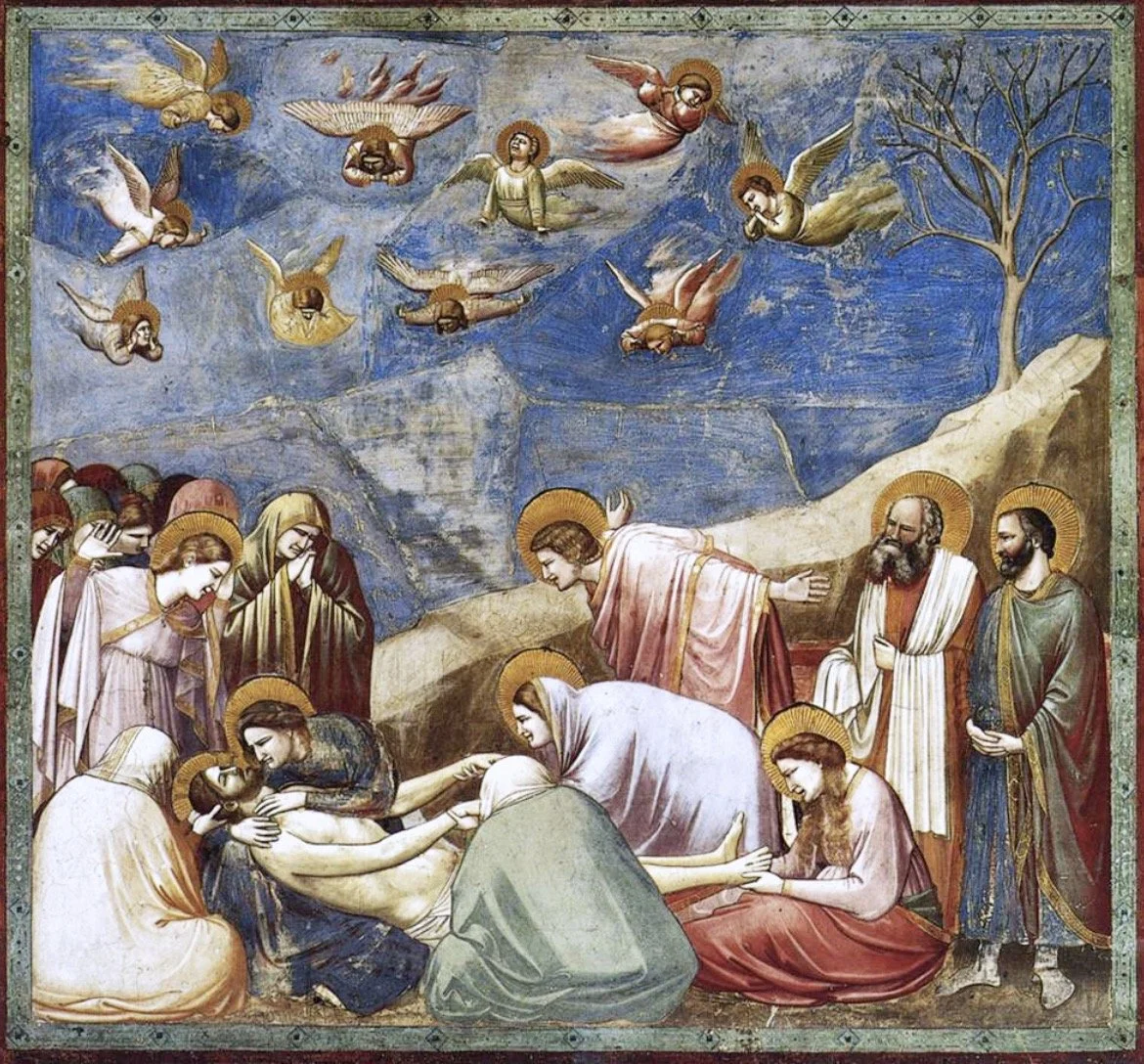
Giotto painted The Lamentation of Christ around 1305 in the Scrovegni Chapel in Padua. Giotto was also selling a product: salvation. The banker Enrico Scrovegni paid for the chapel, in part to atone for his family's wealth from moneylending. The frescoes presented salvation through a man, Jesus, a historical figure who lived and died in first-century Judea.
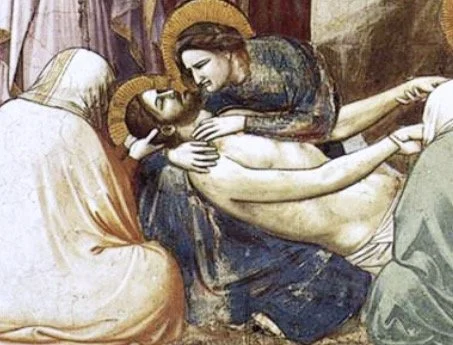
Giotto's fresco is crowded with mourners and angels. At its center are four figures: the body of Christ, Mary leaning over his face, and two mourners seated in the foreground, one on each side. The collage condenses the crowd into those four figures, each recreated with a man from the advertisement or the feed. McKenna takes the place of Christ, low in the frame. The man in the plaid jacket stands directly above him, in the position of Mary. The man in the light jacket stands at the left, in the place of the mourner who supports Christ's head. The bald man stands at the right with his back to the viewer, as the mourner in the green cloak does. This condensation drives the transition from subtext to context: with the crowd reduced to four men, desire between men becomes the visible subject of the scene.
Above the mourners, angels fill the sky as witnesses. In the collage, the blue moon and the Jupiter 2 take their place and stand in for the viewer, who watches the scene without being seen.

The Final Image
The advertisement used a truck and a rugged model to sell a jacket. Giotto used the body of Christ to sell salvation. The collage keeps the ad's materials and puts a gay man who died young at the center of the scene. What the ad kept as subtext, desire between men, becomes the context, and McKenna's death becomes the subject of a lamentation.