Subject to Context: A Summer Scene
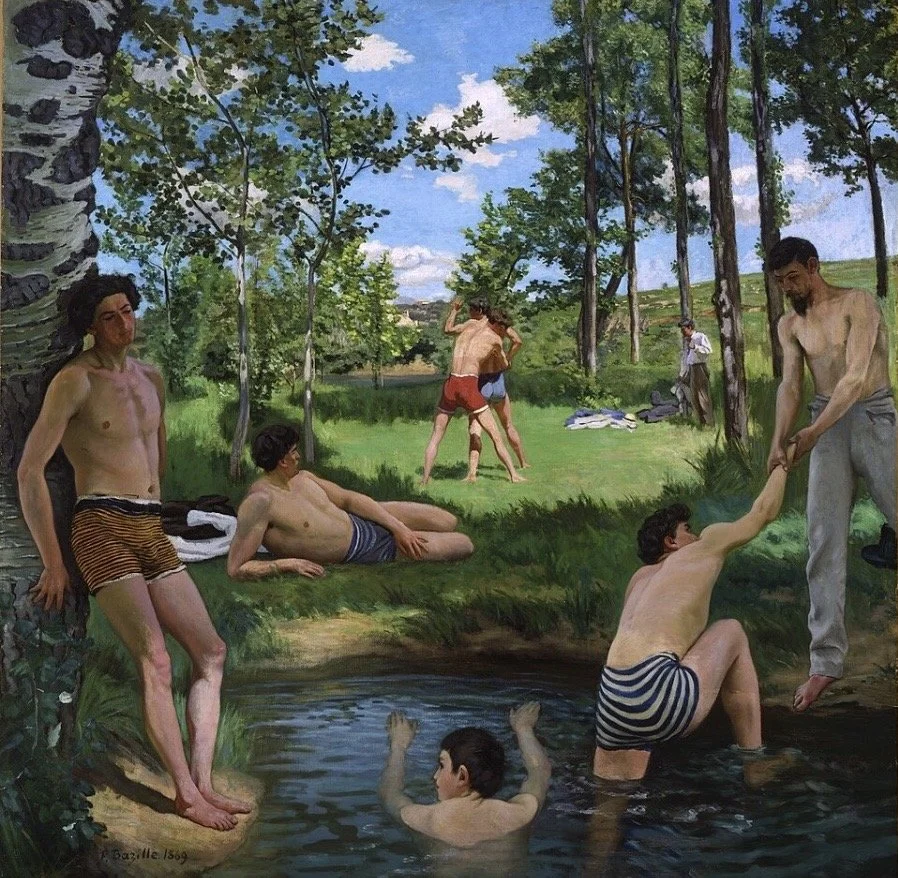
1869
Frédéric Bazille paints young men bathing on the banks of the Lez, near his family’s estate in the south of France. Two of them wrestle in the grass, bodies pressed close, watched by nothing but trees. Nothing in the painting names what it shows. It doesn’t have to. Bazille chooses contemporary men in contemporary swimwear rather than reaching for the usual cover of Greek myth — a mythological alibi would have made the homoeroticism safe, distant, classical. He paints his own moment instead and leaves the subject exposed rather than costumed. Historians now count Summer Scene among the earliest visual precedents for a specifically modern gay gaze: not allegory, but the thing itself, barely veiled.
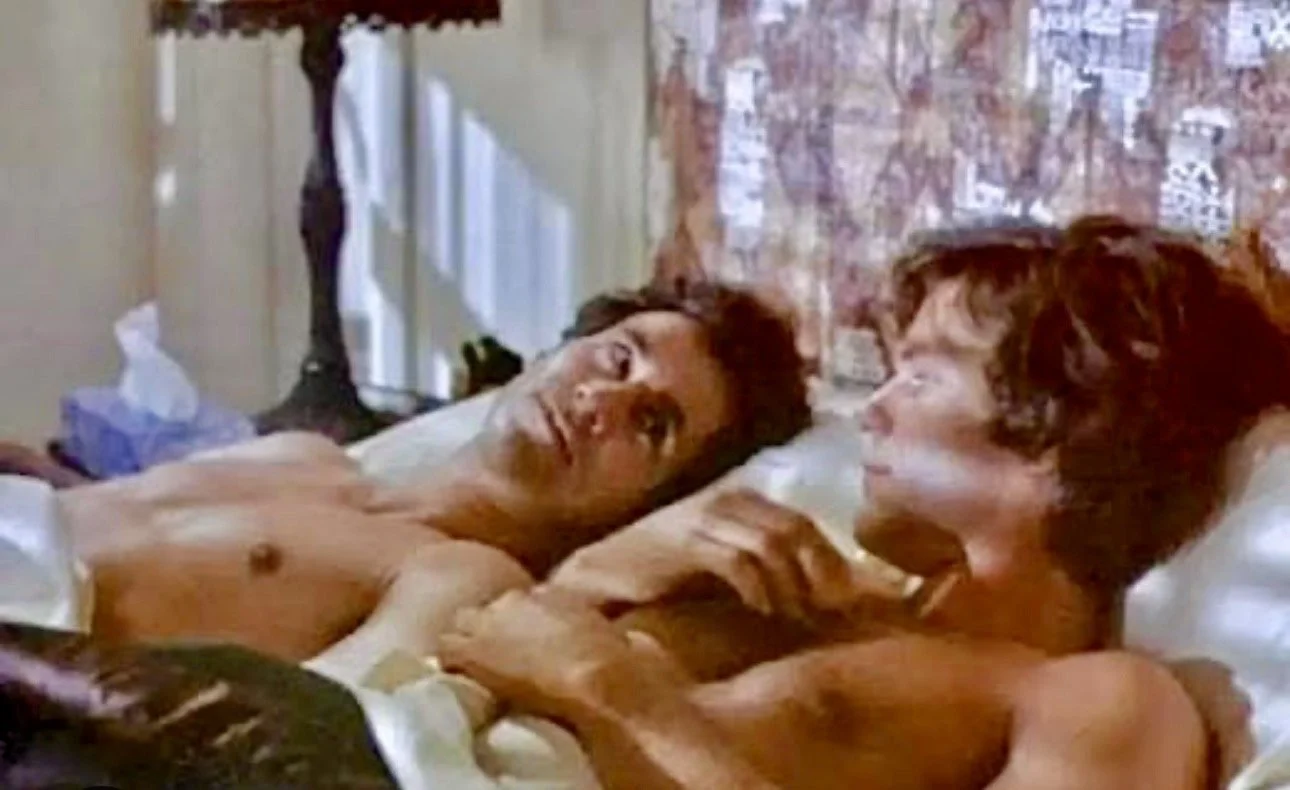
1982
Making Love becomes the first major studio release to put a gay romance at its center rather than its margins. Michael Ontkean and Harry Hamlin, a Los Angeles doctor and a writer, a marriage that comes apart because a man finally admits what he wants. The film is clumsy in places, cautious in others — but first. It proves a mainstream American audience could be handed a gay love story as the main event, not the subplot, not the joke, not the warning. Between Bazille’s canvas and this screen sit over a hundred years of the same subject learning, slowly, how much it was allowed to say.
2026
The Subdivision takes up Bazille’s move and finishes it. Where his wrestling men gesture toward desire, Behan’s kiss. Where his river became a private grove out of time, Behan’s becomes a water park — gaudy, contemporary, unmistakably now, the same instinct toward modernity Bazille had a century and a half earlier, since a pastoral setting would have let the eye look away. The subtext becomes context. Nothing here needs decoding.
Firsts are rarely fully realized. They just have to happen. Someone has to go first so the next one doesn’t have to negotiate the terms all over again.
Sources: Bazille’s Summer Scene (1869), Fogg Museum, Harvard Art Museums; on the painting’s place in early queer visual history