Score | Gay Gaze | The Subdivision | Digital Photocollage Set of Seven | 2026
A diatonic scale has seven notes. Not six, not eight — seven. It is the oldest, most universal shape music has ever settled into: the major scale, the minor scale, nearly every hymn, blues, and pop chorus ever hummed, built on the same seven-note frame. Musicians call it heptatonic, but the plainer truth is simpler: seven is the number of notes it takes before a scale stops sounding like a fragment and starts sounding like a complete world.
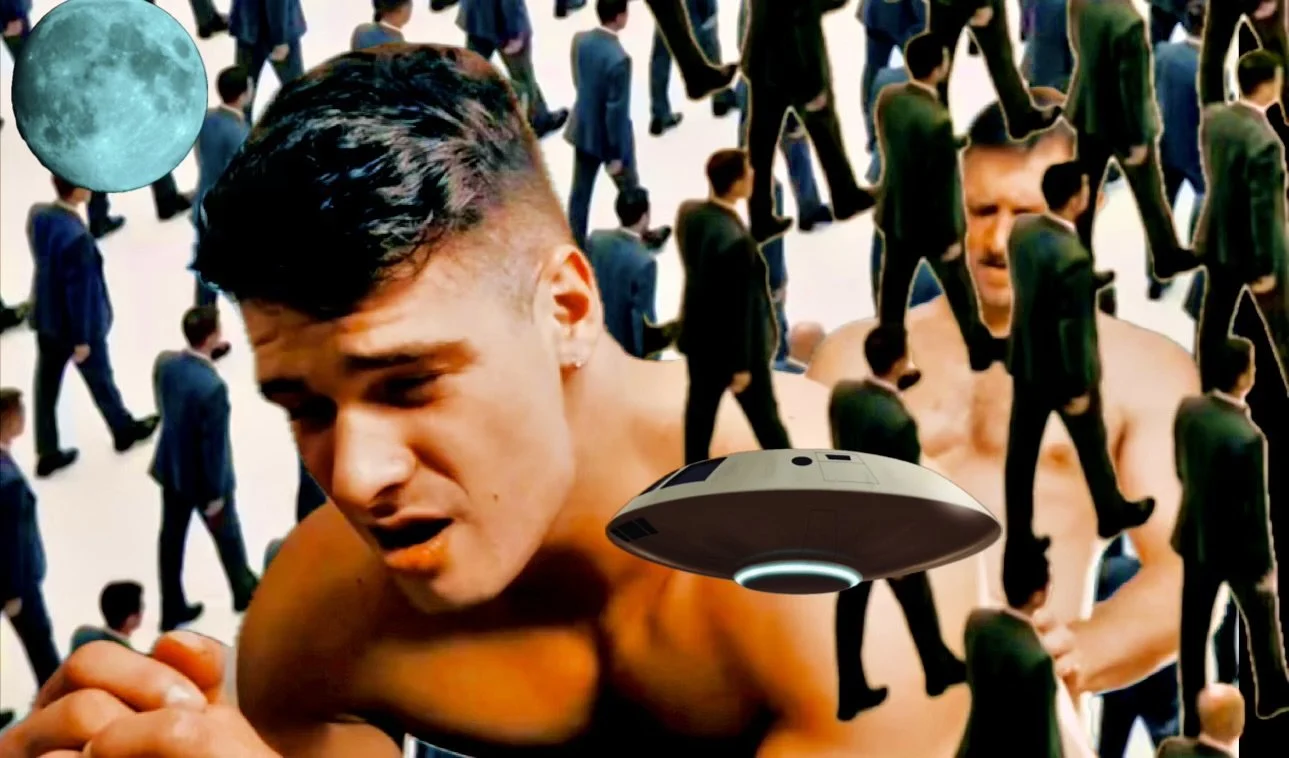
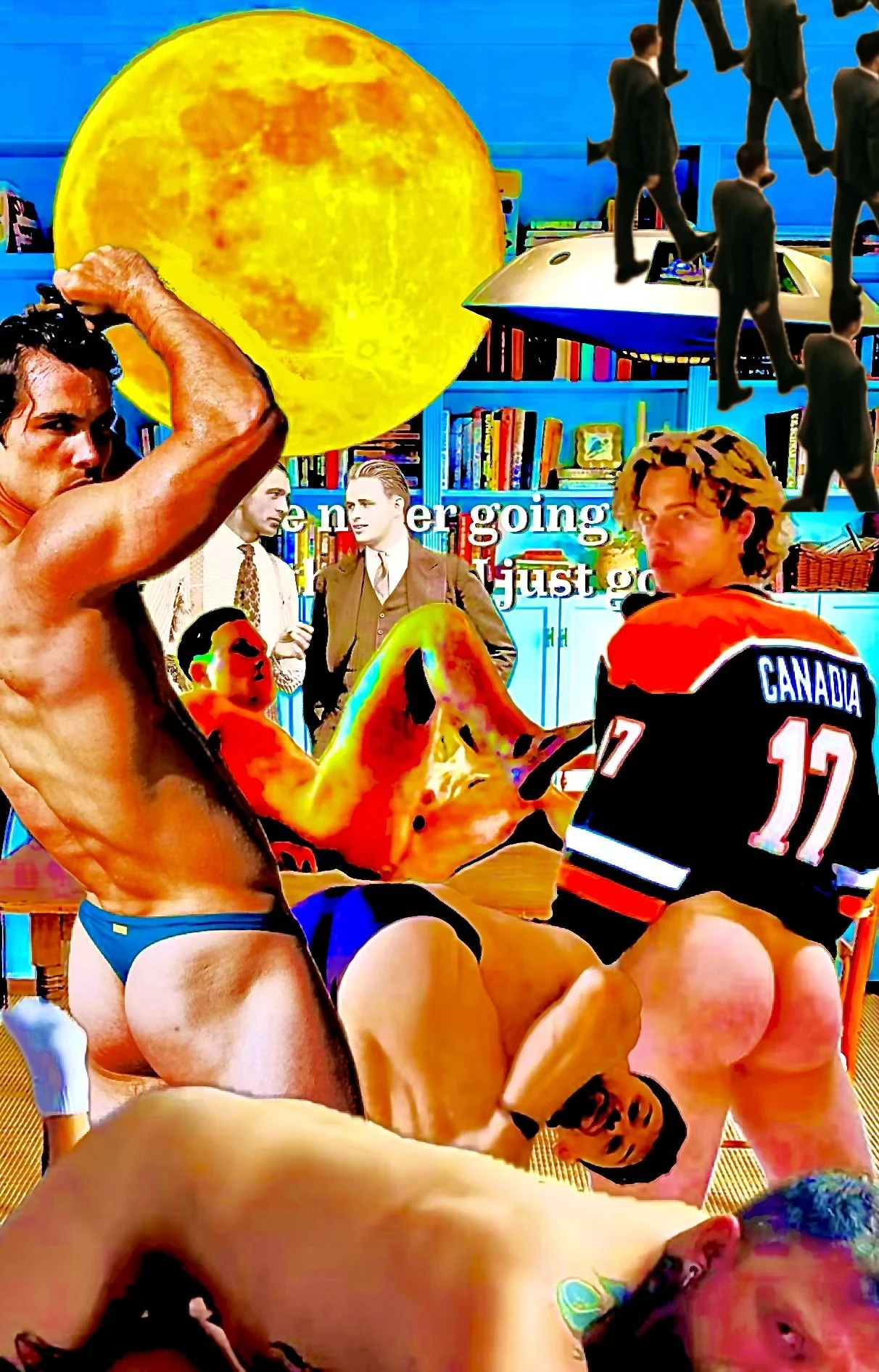
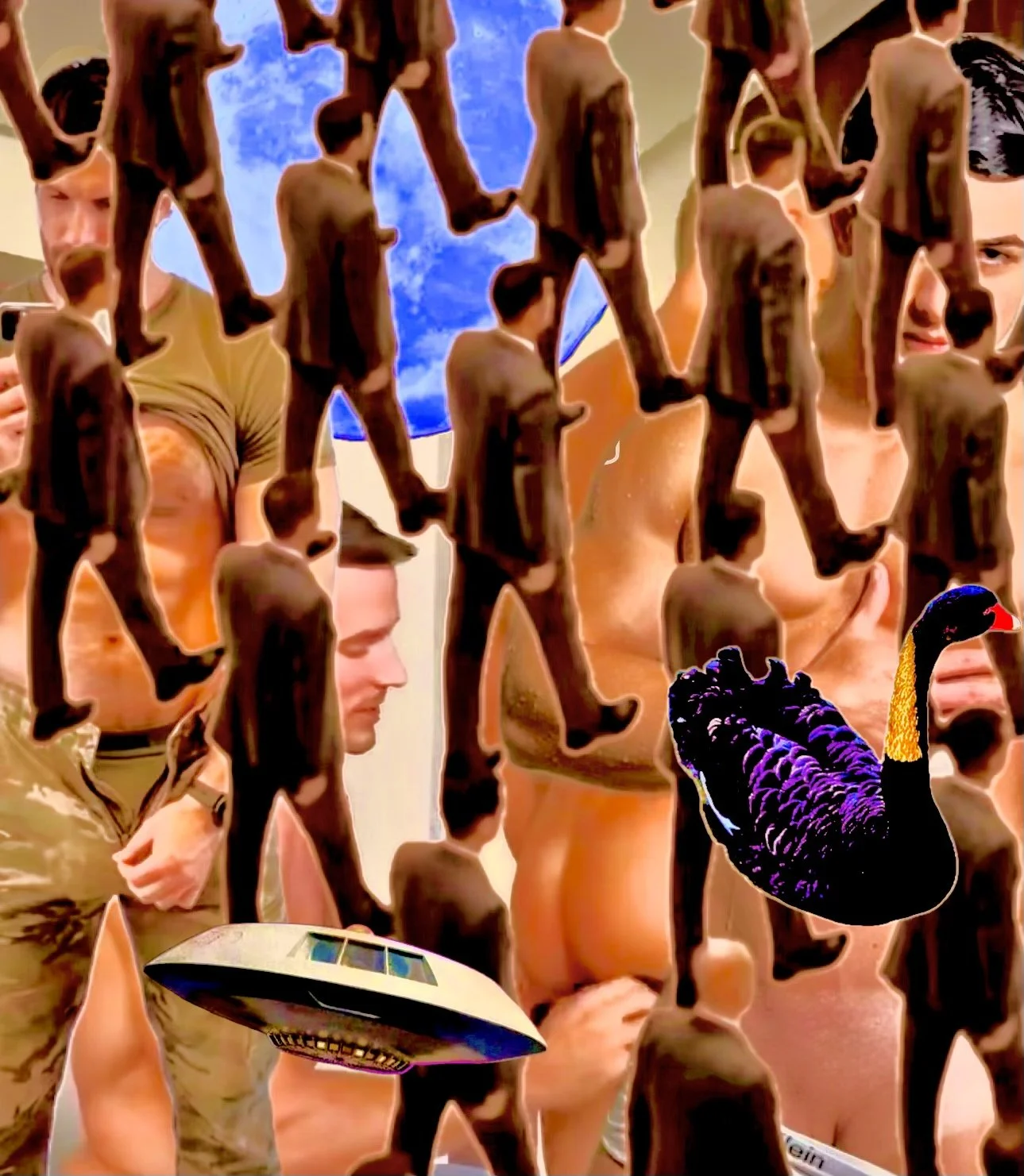
This piece works from seven collages. And underneath all seven, in every single one, the same two elements recur: the marching men in suits, and the moon. Call this the drone — the held note, the pedal tone a piece of music sustains beneath everything else, present whether the melody above it is quiet or crowded, tender or chaotic. A drone doesn’t develop. It doesn’t resolve. It just persists, indifferent to what’s happening above it, and that indifference is the point. Here, it is a wall of identical men in identical suits, walking in the same direction, in every frame, regardless of what tenderness or chaos is happening in the foreground. The moon changes color from frame to frame — pink, blue, gold — the way a drone can be voiced slightly differently each time without ever stopping being the same note.
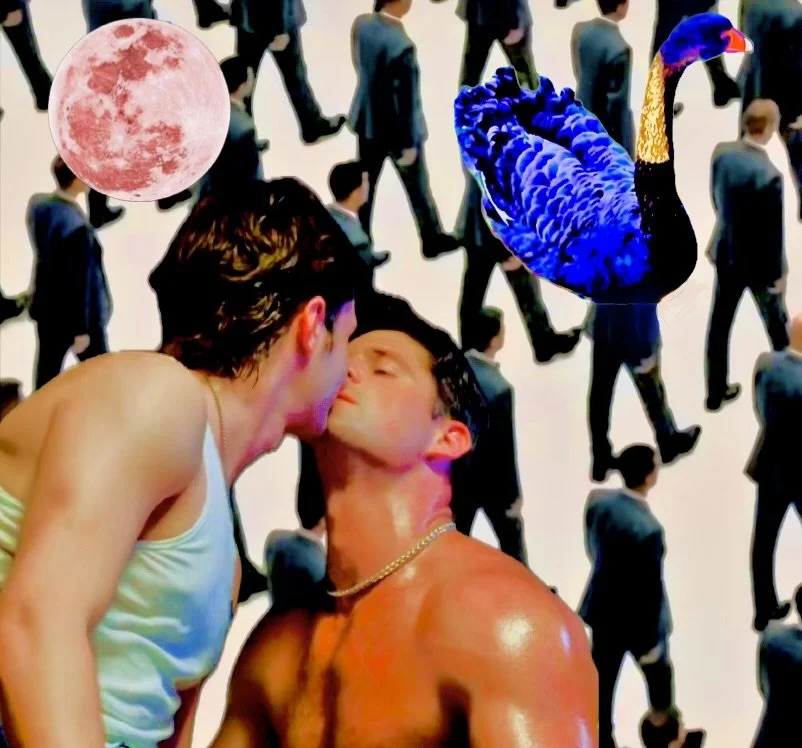
The kiss — two men, warm-lit, foreground — states the tonic against that drone for the first time. Intimacy, held in place against a moon gone the color of blood and a river of suits that do not see it happening three feet away. Every image after this one is heard in relation to this first interval.
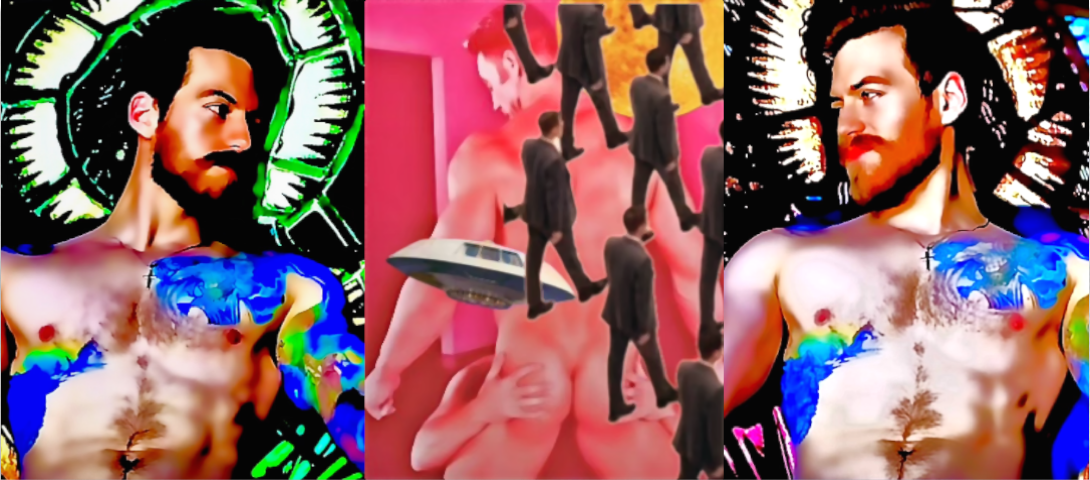
The triptych — one bearded face repeated left and right, a UFO and a bare back sandwiched in the panel between — is the piece’s most literal act of composition: theme and variation as structure, not metaphor. The same man, twice, is not the same phrase twice.
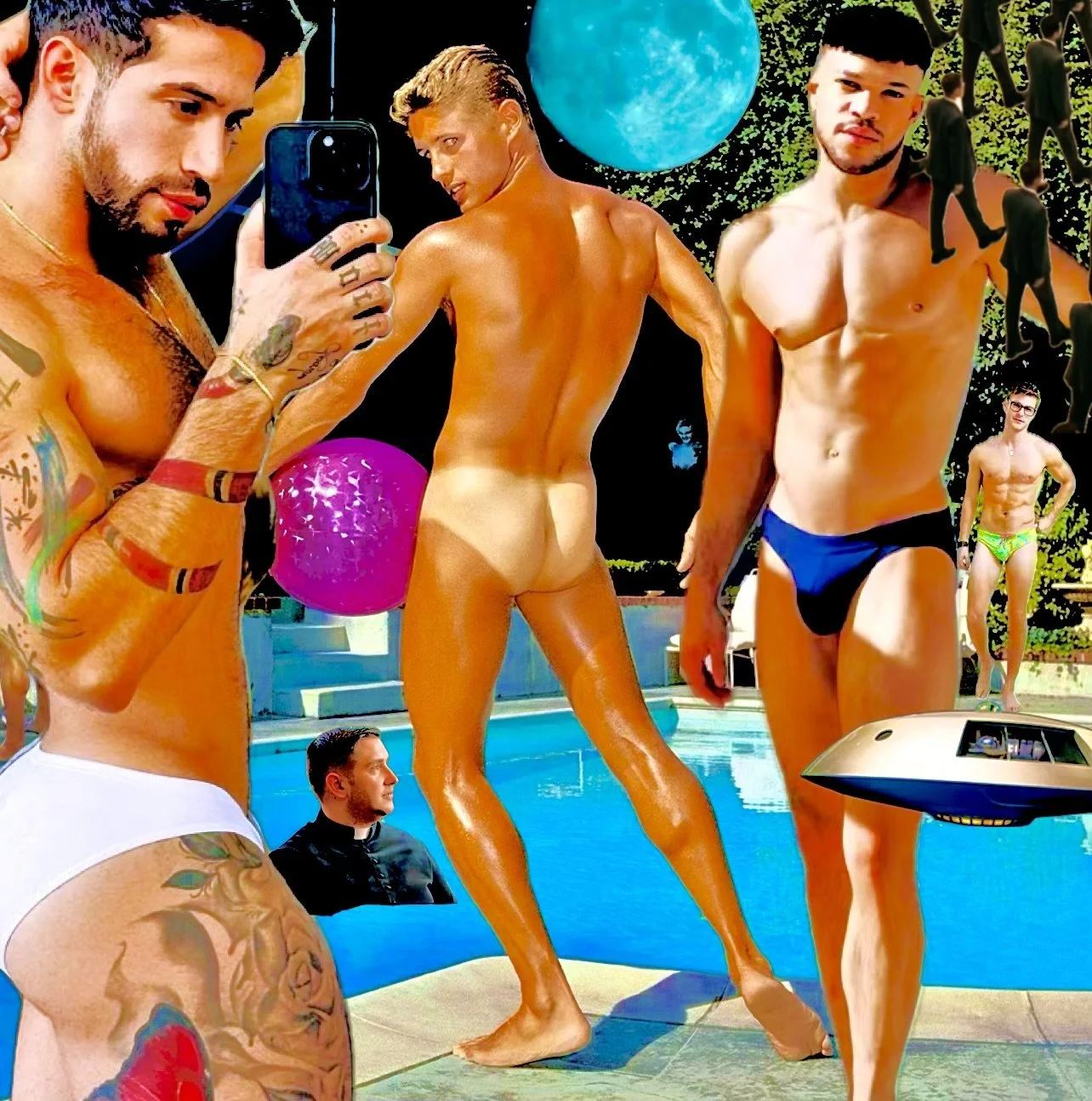
The poolside scene is the densest chord in the set — four men, a priest inset small and watching, a moon held against water — and now, for the first time in this version, the suits appear here too, tucked into the upper corner as though the drone had found its way even into the one frame that felt, in the earlier draft, briefly exempt from it.
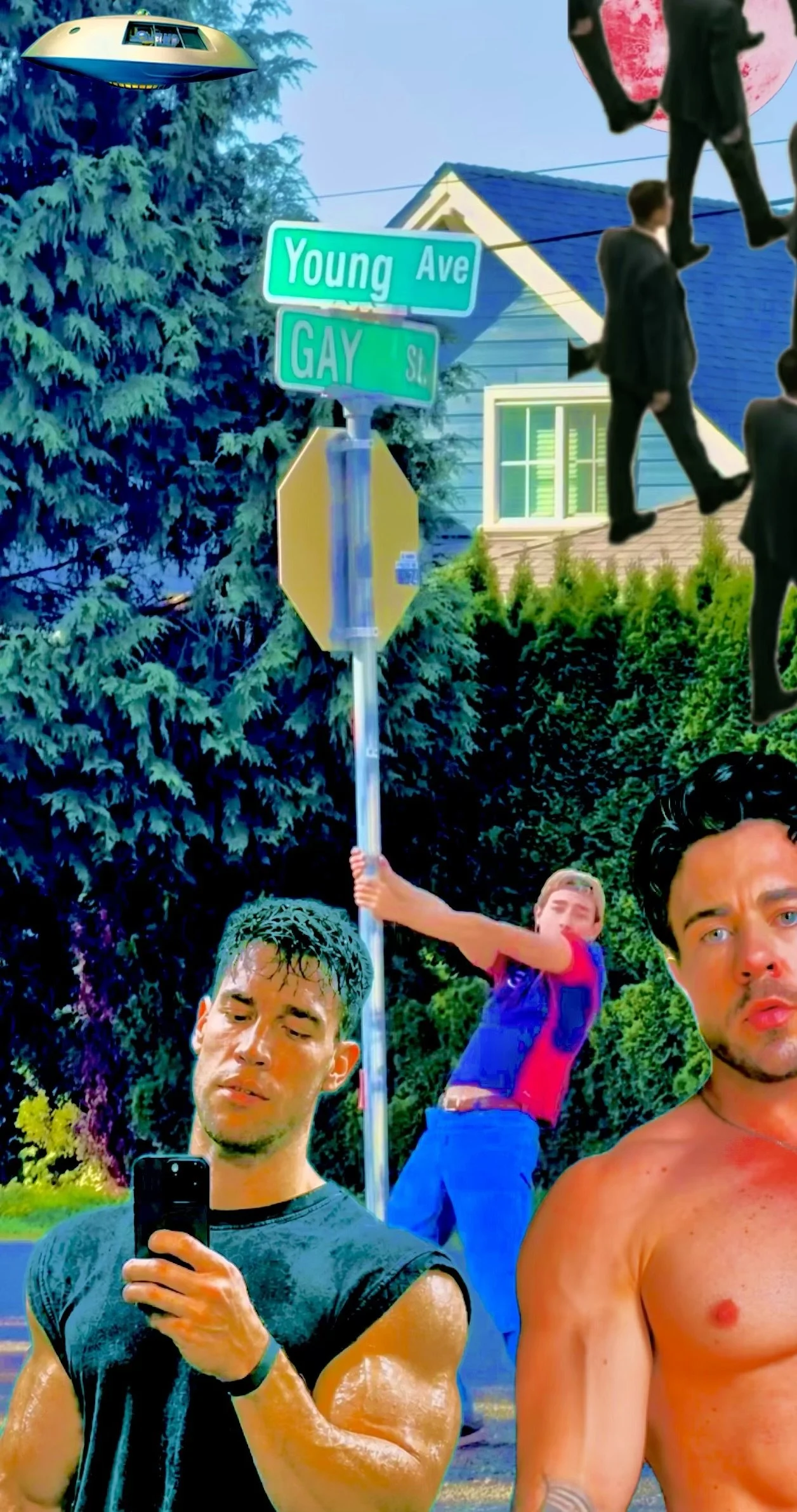
The street sign, Young Ave crossing Gay St, is the wit in the composition, the pun a soloist slips in for four bars before returning to the changes — and the suits still walk, this time descending a rooftop, never quite in the frame’s center but never absent either.
The crowd and the bare shoulder is the rest — the bar where density drops out and the ear is allowed to breathe. It is the frame where the drone is most exposed, closest to the surface, hardest to ignore, because almost nothing else is competing with it.
The last two collages are the improvisational risk the set needs — the moon held overhead like a weight in one, a wall of marching legs closing in around a nude figure and a swan in the other. Here the drone stops being background and starts closing in, the suits pressing close enough to fragment the body they surround into slivers glimpsed between shoulders and knees.
Seven notes. Seven images. One note held under all of them, never resolving, the shape the whole scale is built against.
— Behan