Sidewinder
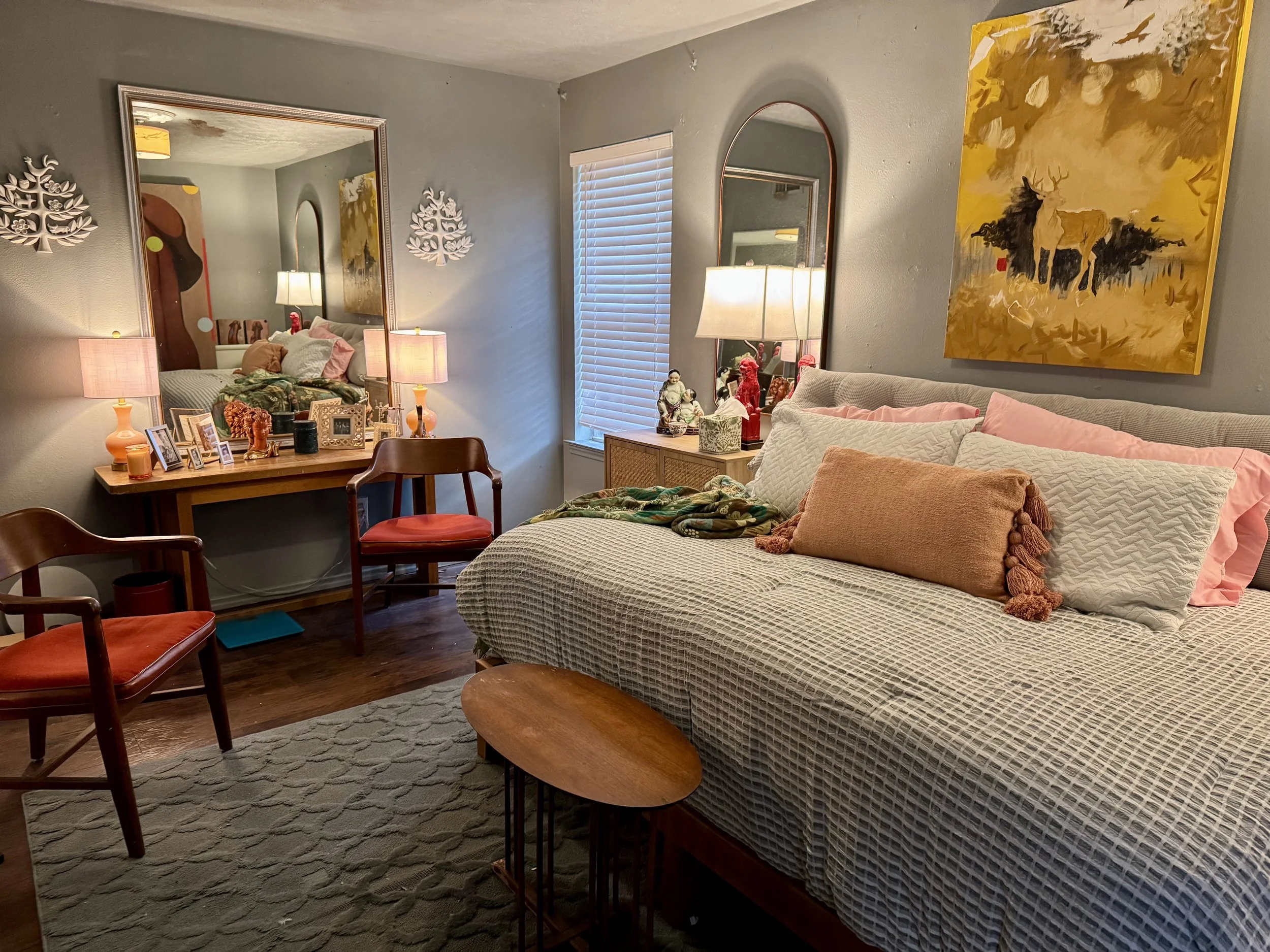
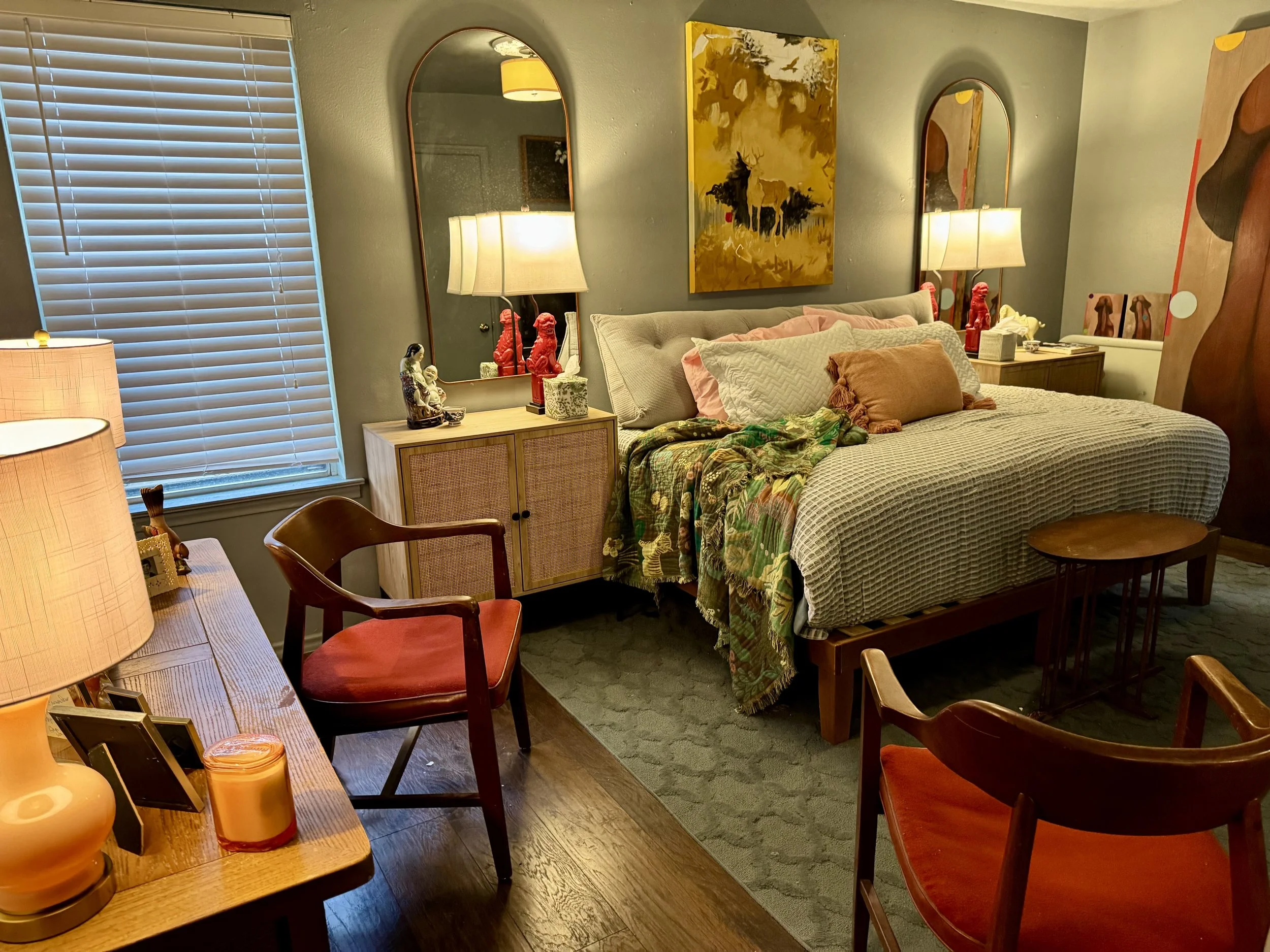
A bed, by convention, faces the door. Two sides, two pillows, furniture arranged around a fixed idea of how a room should be used. This one has been turned. It runs the space diagonally now, corner to corner instead of wall to wall, and the whole room reorganizes itself around that single decision the way a sentence changes meaning when you move one word.
The house has always been the largest artwork in this practice — an ongoing installation, reworked the way a canvas gets reworked. This room is the latest revision. Two arched mirrors flank a gold-toned painting of deer moving through underbrush, doubling the room’s depth back at itself. A console holds framed photographs, ceramic figures, lamps lit low and amber. None of it is staged for a rigid, formal use of the space. It’s staged for lounging, reading, actually being in the room — a bedroom that also functions as a den, sleeping space and living space folded into one.
That’s the real logic of the turn. A bed set the conventional way announces a fixed function and nothing else. A bed set at an angle opens the whole room up — it stops being only a place to sleep and becomes a place to simply be, day or night. It moves the way a sidewinder moves: not in the straight line a room is expected to follow, but at its own angle, doing more than one thing at once.