Into the Clouds
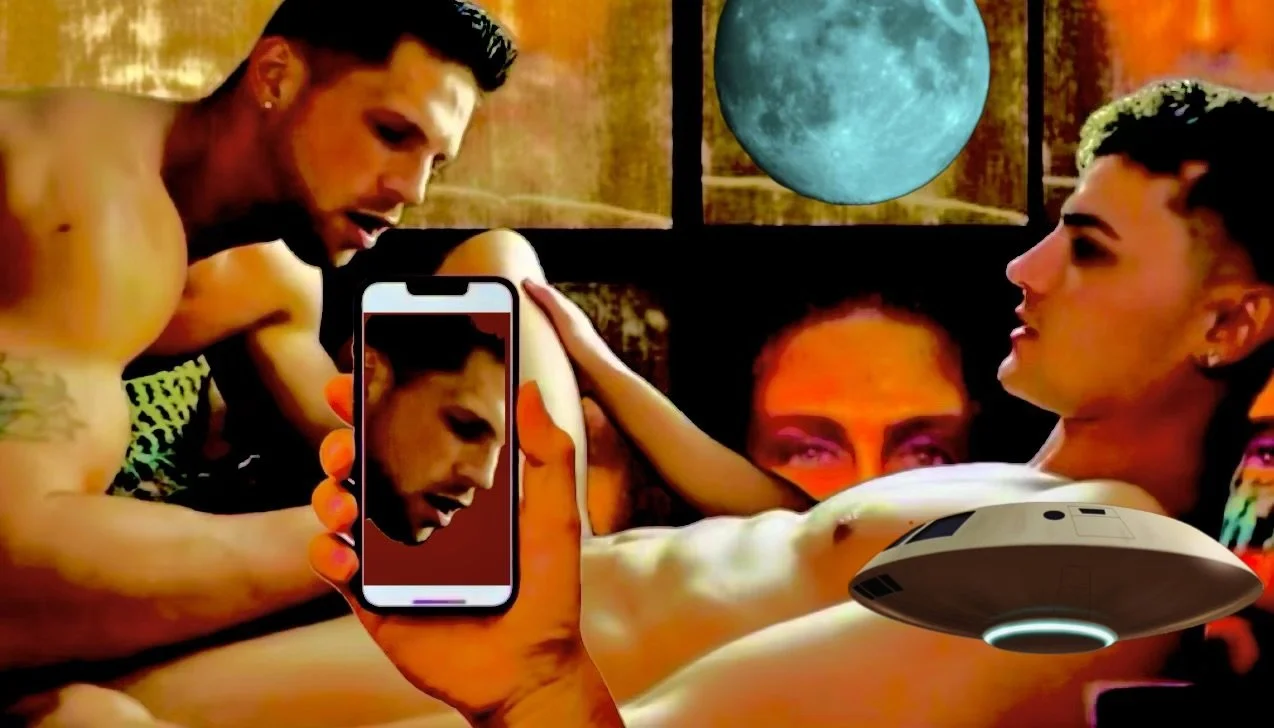
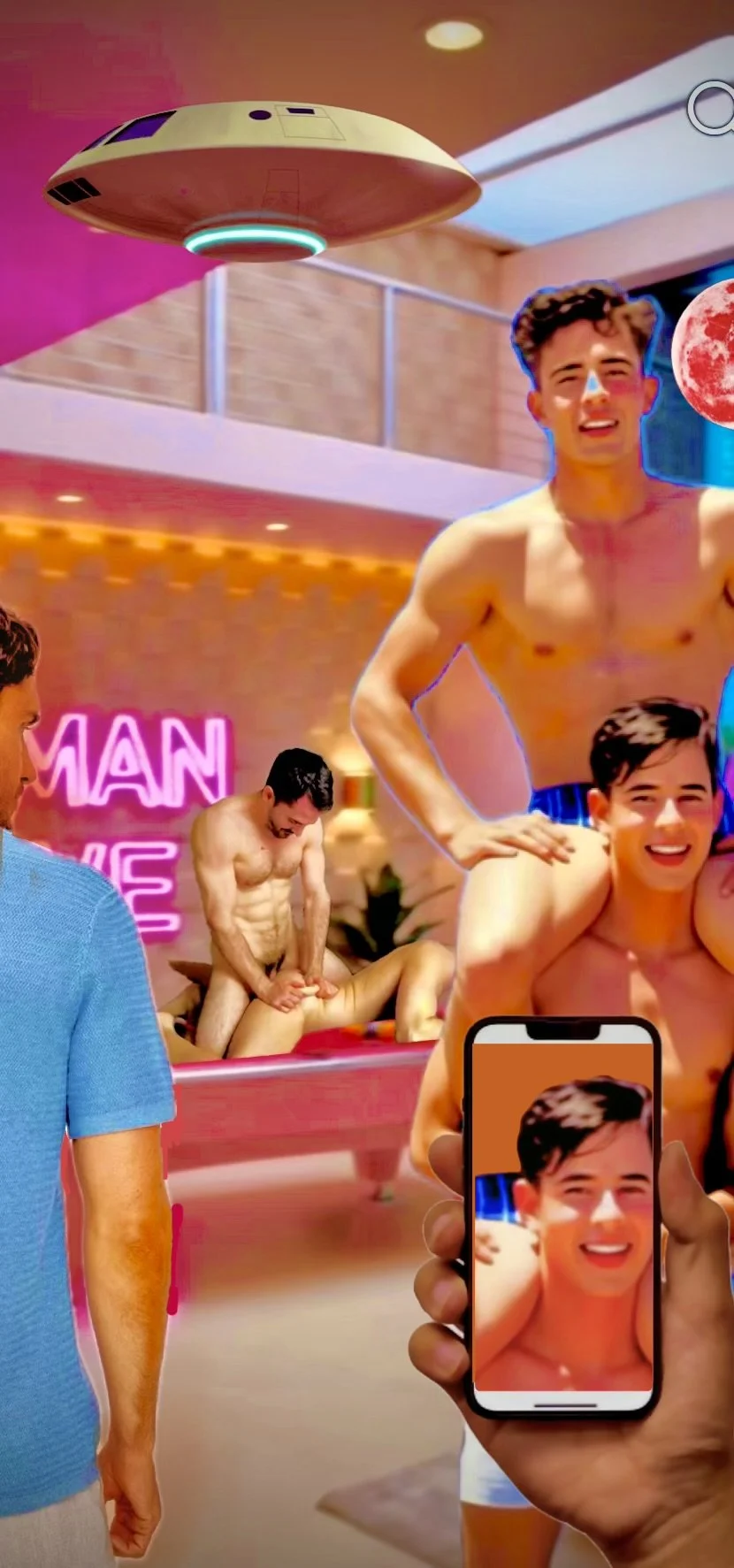
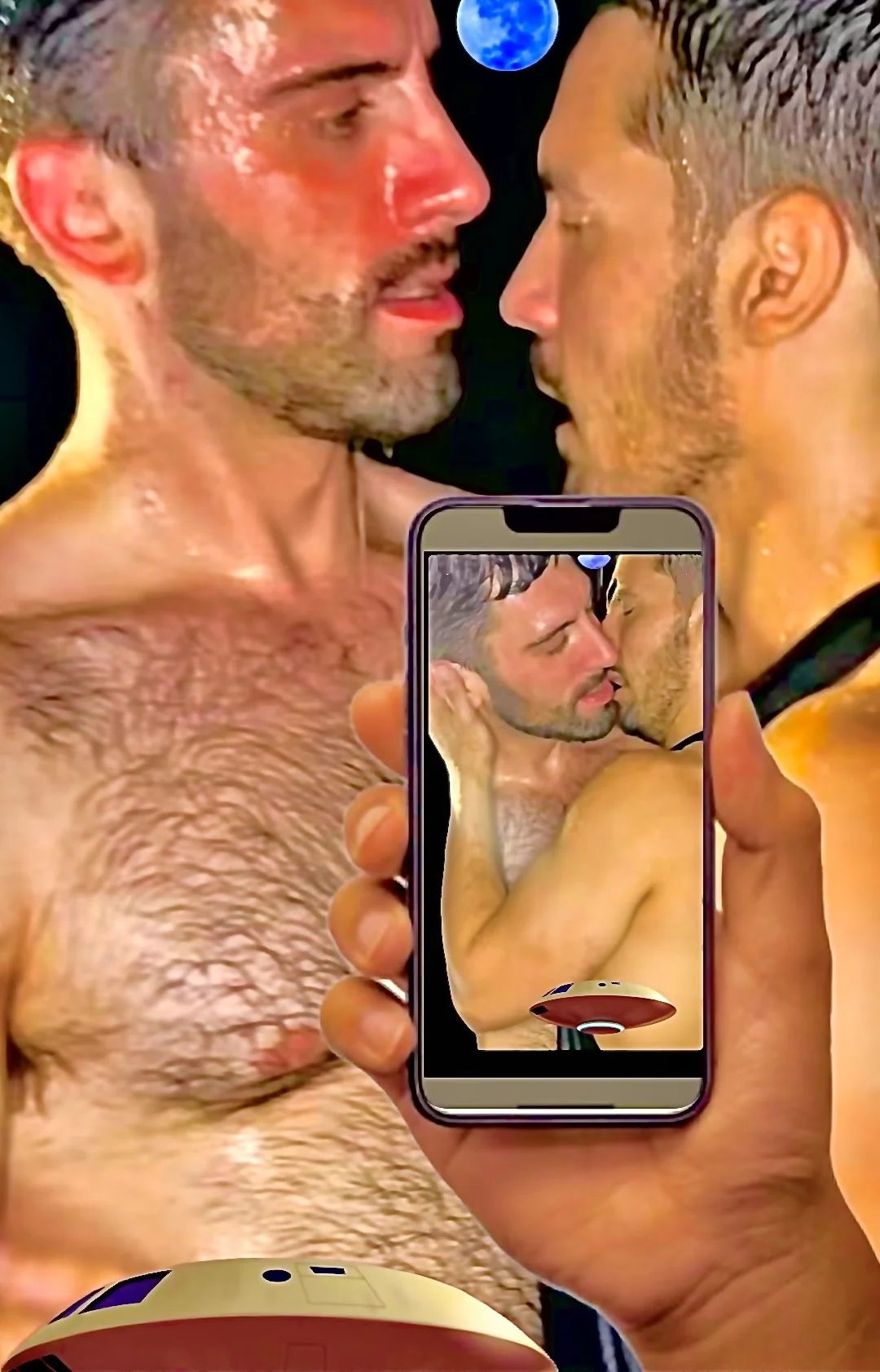
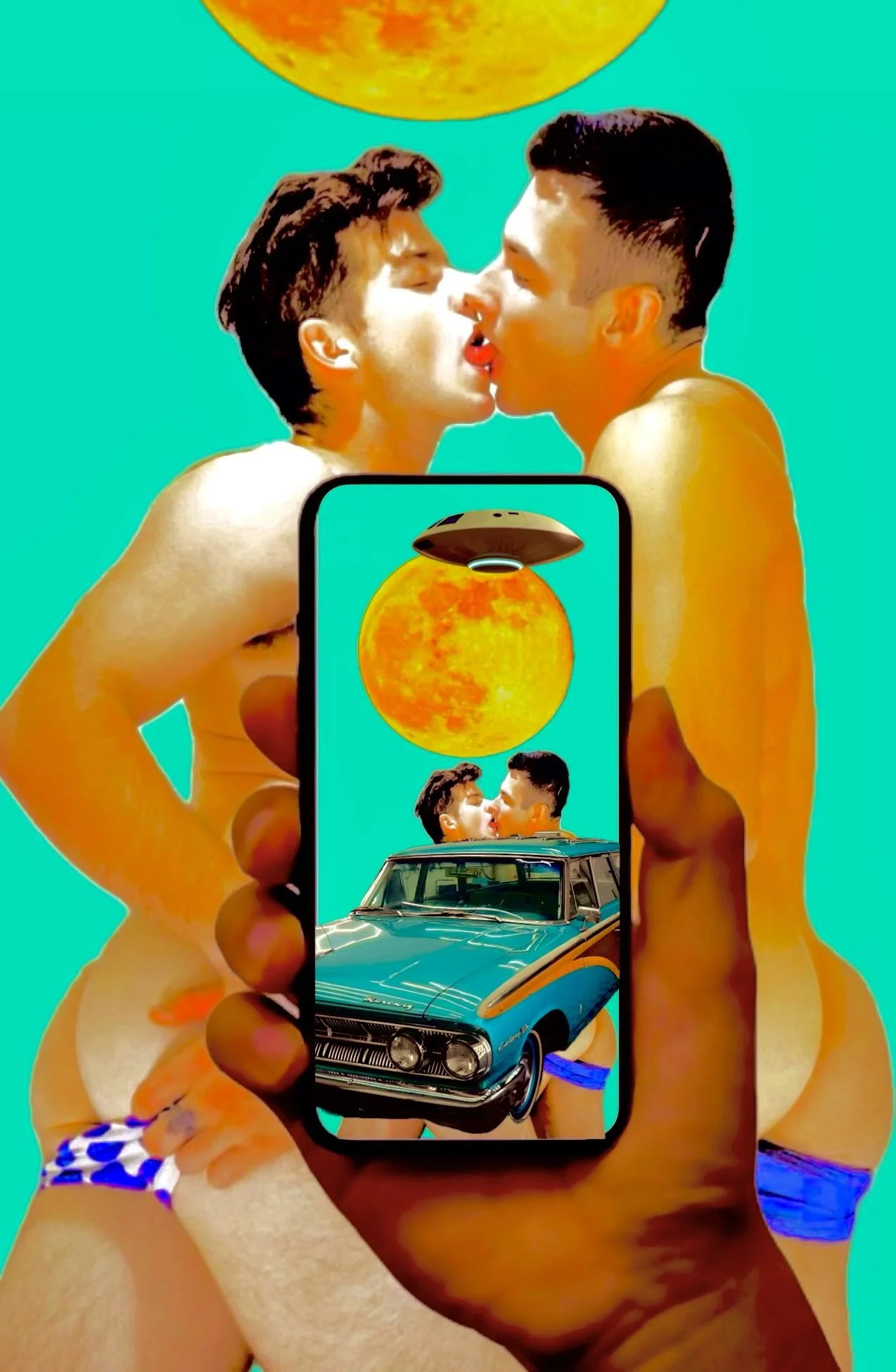
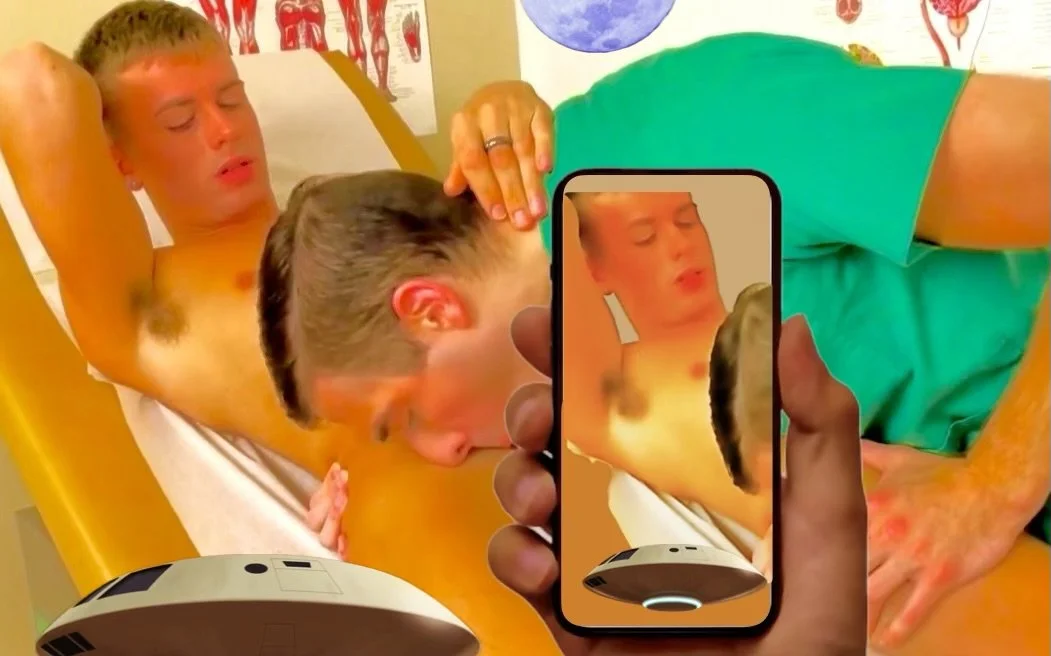
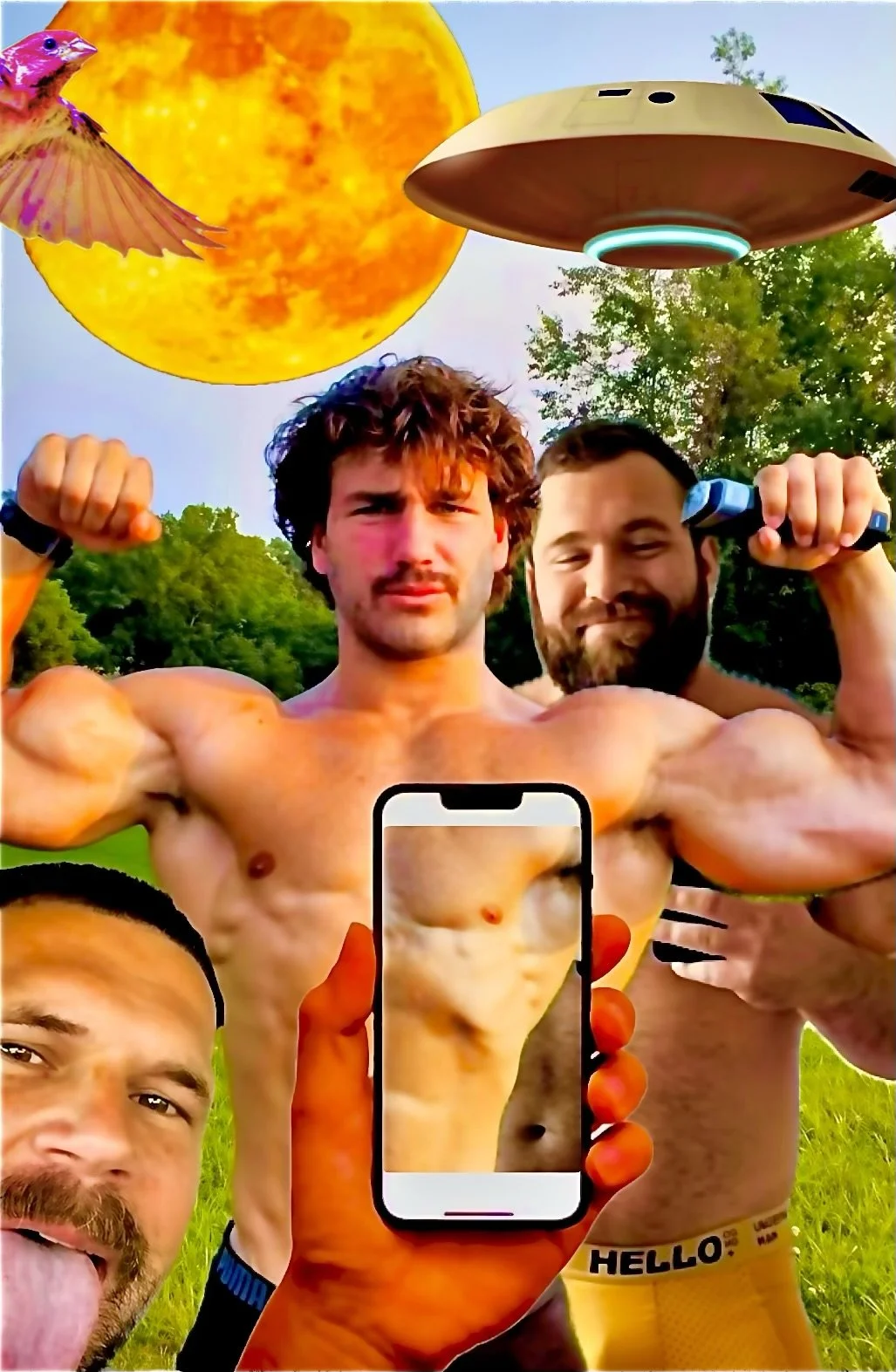
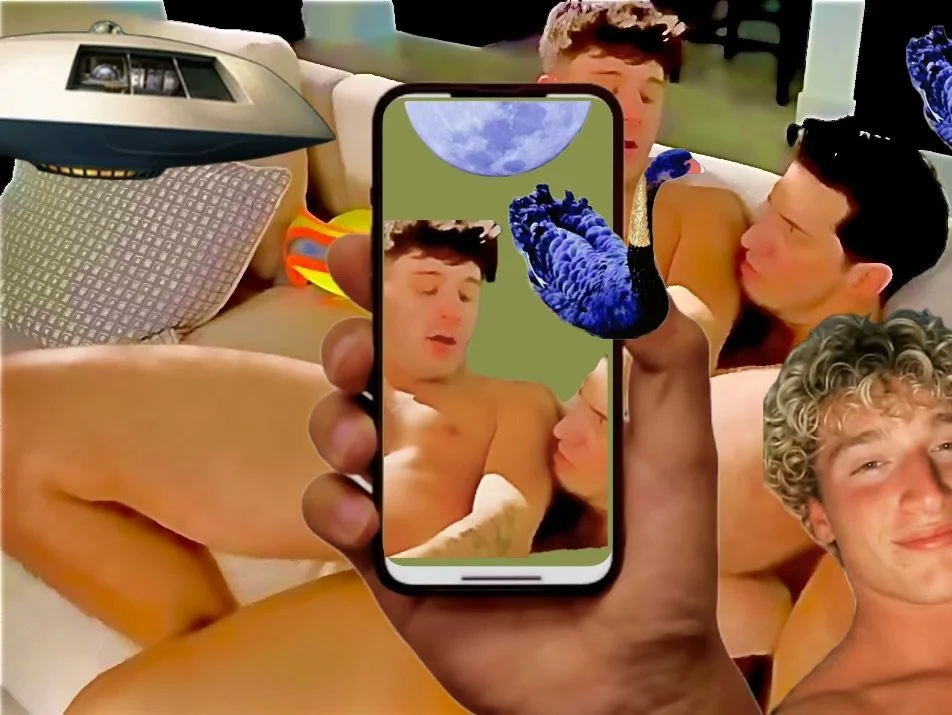
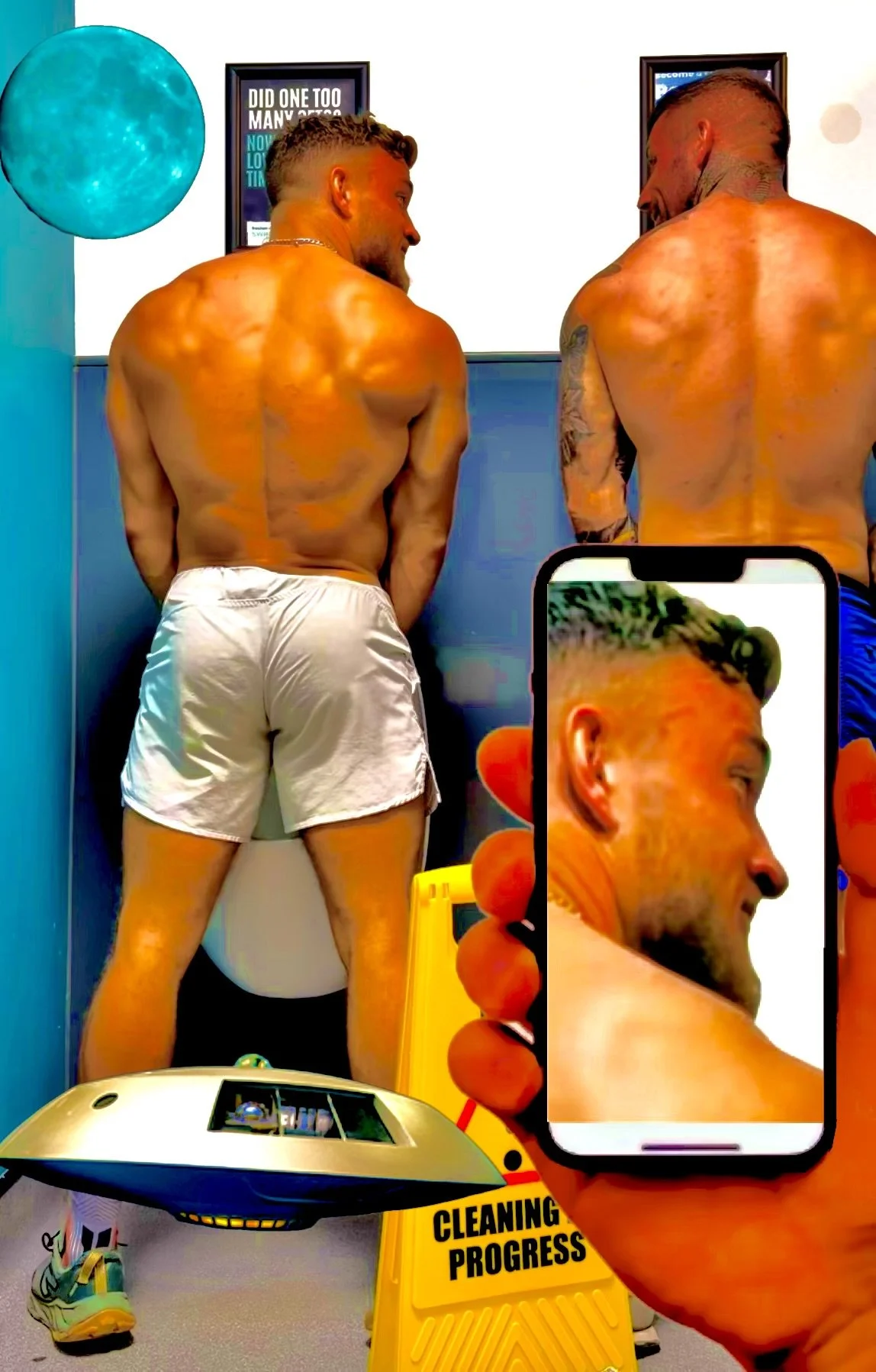
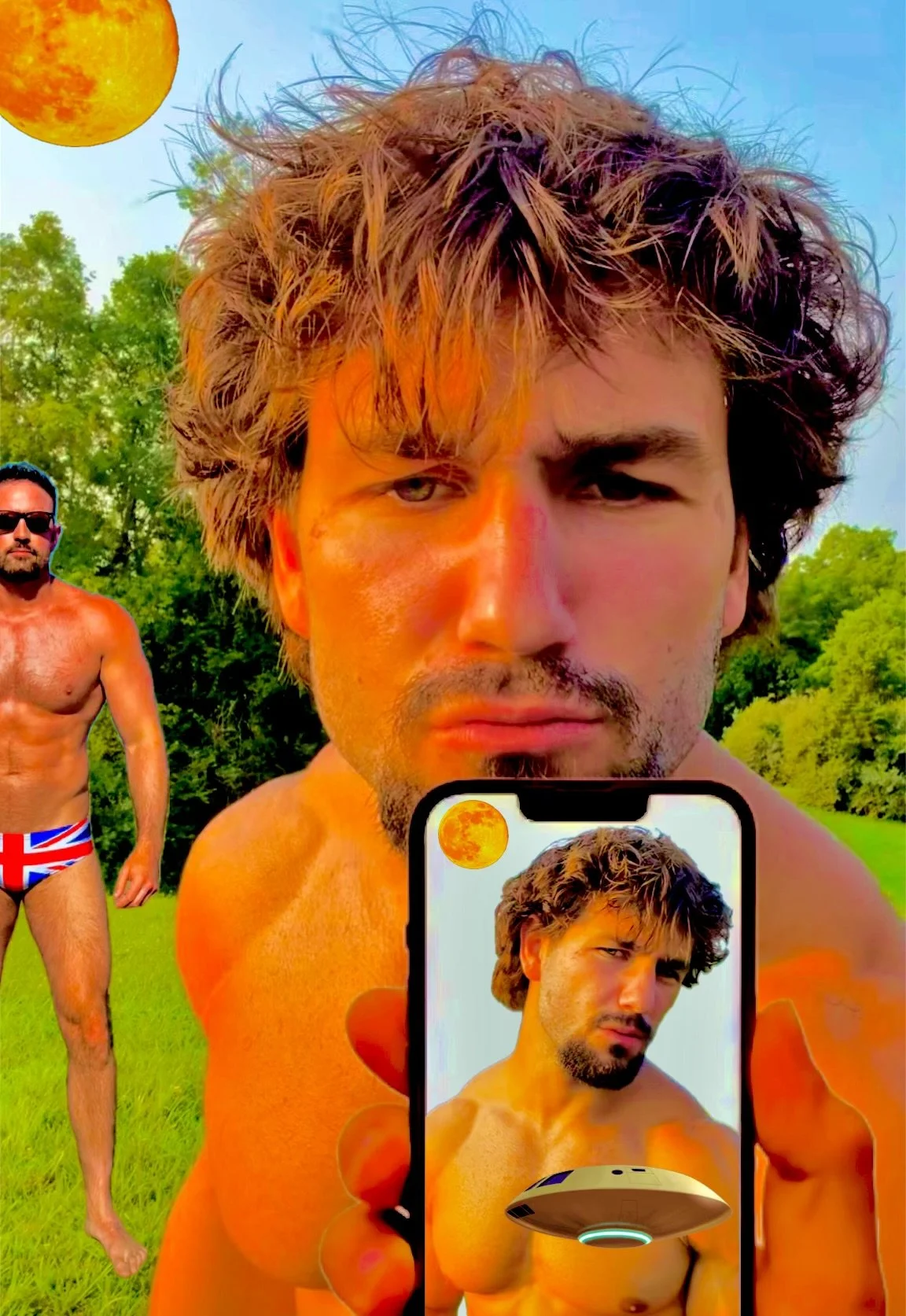
Every day, the world takes roughly 5.3 billion photographs. Fourteen billion images move across social platforms in that same twenty-four hours — shared, reposted, transformed into something else, scattered further than any single photographer intended. Somewhere inside that flood, a small and specific tributary: images of men kissing, men touching, men simply existing beside each other without apology, captured on a phone, held up inside another photograph, folded into itself like a mirror catching a mirror. That folding — the phone within the frame, the image reflecting the act of making the image — isn’t a formal trick for its own sake. It’s the actual subject. The phone is the portal. What passes through it becomes, whether anyone intended permanence or not, evidence.
The window this essay is named for is not metaphorical in the abstract, disaster-proof way these arguments sometimes get made. It is a specific, measurable, currently-narrowing window. As of this year, watchdog groups are tracking well over five hundred active anti-LGBTQ bills moving through American state legislatures — a number that has climbed essentially every year since 2015, the year marriage equality passed and the backlash organized in response. Meta itself has rolled back protections it once offered, loosening its own hate-speech policy in ways that now permit language once banned outright, and quietly removing LGBTQ-specific features from its own products. Roughly nine in ten of these bills fail in any given year — the advocates fighting them are winning far more often than losing — but the volume itself is the story. This is not paranoia. It’s documentation of a trend line, and the line points toward more restriction, not less.
Against that backdrop, an iPhone in a man’s hand is a small, almost absurdly modest piece of technology to be carrying this much weight. But it is currently the mechanism by which a kiss between two men becomes something other than a private, disposable moment. It becomes a file. The file gets backed up automatically, without anyone deciding to preserve it — Google alone now holds more than nine trillion photos and videos in its cloud storage, an archive scaled beyond what any single institution, censor, or legislature could plausibly comb through and erase entirely. This is the argument the images in this piece keep making formally, frame after frame: the phone-within-the-photo isn’t just documenting the moment, it’s documenting the act of the moment entering permanence. Once uploaded, once backed up, once shared even once, a photograph becomes extraordinarily difficult to fully delete — copies fork off into other people’s devices, other clouds, other countries’ jurisdictions, faster than any single authority could plausibly chase them all down.
That is the bet underneath this whole series: that the sheer scale of what gets uploaded daily works, paradoxically, as a form of protection. A culture cannot easily un-happen five billion photographs. It can restrict Pride flags on government buildings, ban books, defund clinics, pass law after law — and still not touch the trillions of images already scattered across a thousand clouds, backed up on servers in a dozen countries, held on devices belonging to people no legislature can subpoena all at once. The volume itself becomes a kind of witness protection program for the images inside it.
None of this is guaranteed to last. That’s the honest, uncomfortable center of the piece, and probably the reason it needed making now rather than later. The window is open. It has been open for roughly two decades, since smartphones put a camera and a broadcast tool in the same object, and it is narrowing at the legislative level even as it widens at the technical one — more storage, more bandwidth, more places for an image to hide, set directly against more laws attempting to make the thing being photographed illegal to display at all. Whether the technical trend outpaces the legal one is not something this essay can answer. What it can do is add to the volume. One more file. One more kiss, one more mirror, one more hand holding a phone up to a moon. Whatever happens next, these images are already in the clouds.
Epilogue
Some notes on process, since the numbers in this piece aren’t only cultural, they’re personal.
This practice began in January 2024. As of this writing, that’s roughly a thousand days. At a pace of about ten collages a day — focused, always, on gay positivity, gay presence, the simple insistence of two men existing in frame together without apology — that arithmetic comes out to somewhere near ten thousand images. Ten thousand small, specific additions to the flood this essay just spent several paragraphs describing.
There are days that volume feels like too much. Days it seems smarter to make less and make it better — fewer images, sharper ones, more time spent on each. But this piece, in the writing of it, clarified something about why the pace has stayed what it is. This was never only about any single image being perfect. It’s about volume. It’s about the fact that a culture cannot easily un-happen ten thousand photographs, any more than it can un-happen the trillions the rest of the world produces every year. Each one is just one small output of what amounts to an insurgency — quiet, cumulative, running almost entirely on repetition rather than any single decisive strike.
Every one of those ten thousand images is something to be proud of, not because each is a masterpiece, but because each is now, permanently, somewhere in the clouds. Whatever happens next — to the laws, to the platforms, to the culture’s current willingness to look — that record already exists. It cannot be legislated back out of existence.
— Behan
Into the Clouds is a nine-piece set of digital photo collages, made in 2026, part of The Gay Gaze within The Subdivision. Available individually, or as diptychs and triptychs per the collector’s preference. For availability, reply by email or DM.
Sources: Photutorial, “Photo Statistics 2026.” Google, cloud storage figures, 2025. ISD Global, “Five-Year Overview of the Online and Offline Anti-LGBTQ+ Landscape,” 2025. ACLU / GLAAD, 2026 legislative tracking.