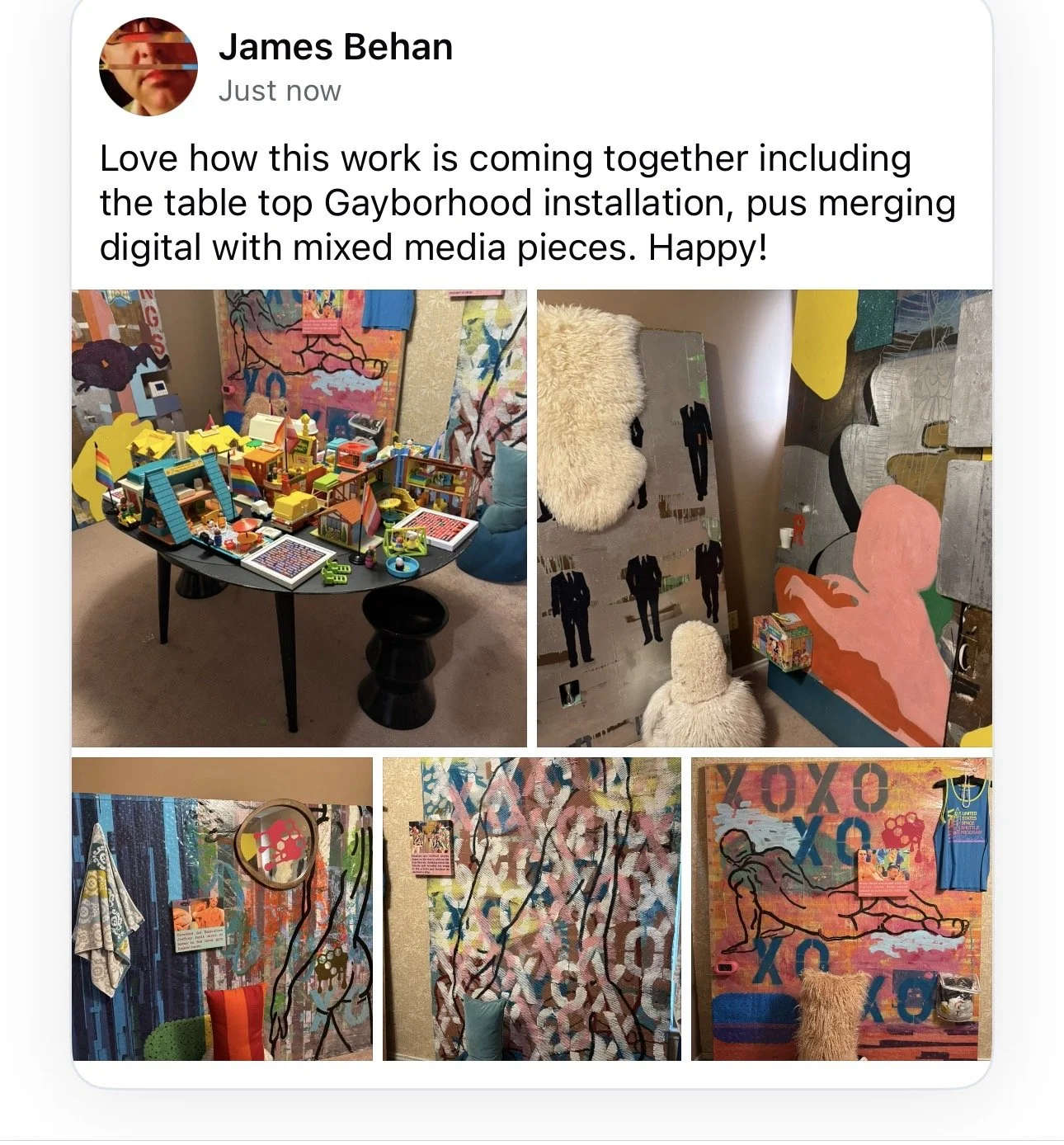
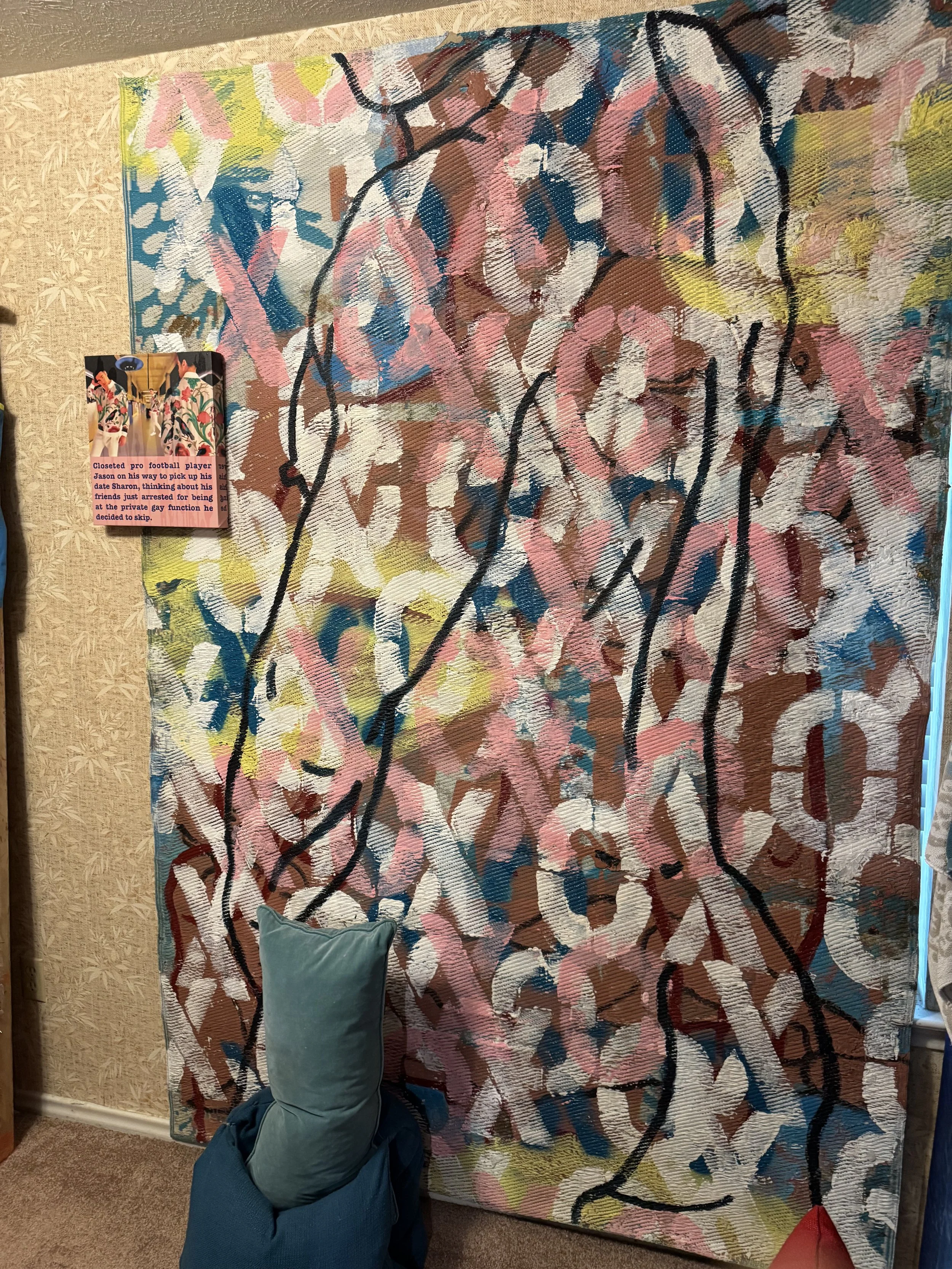
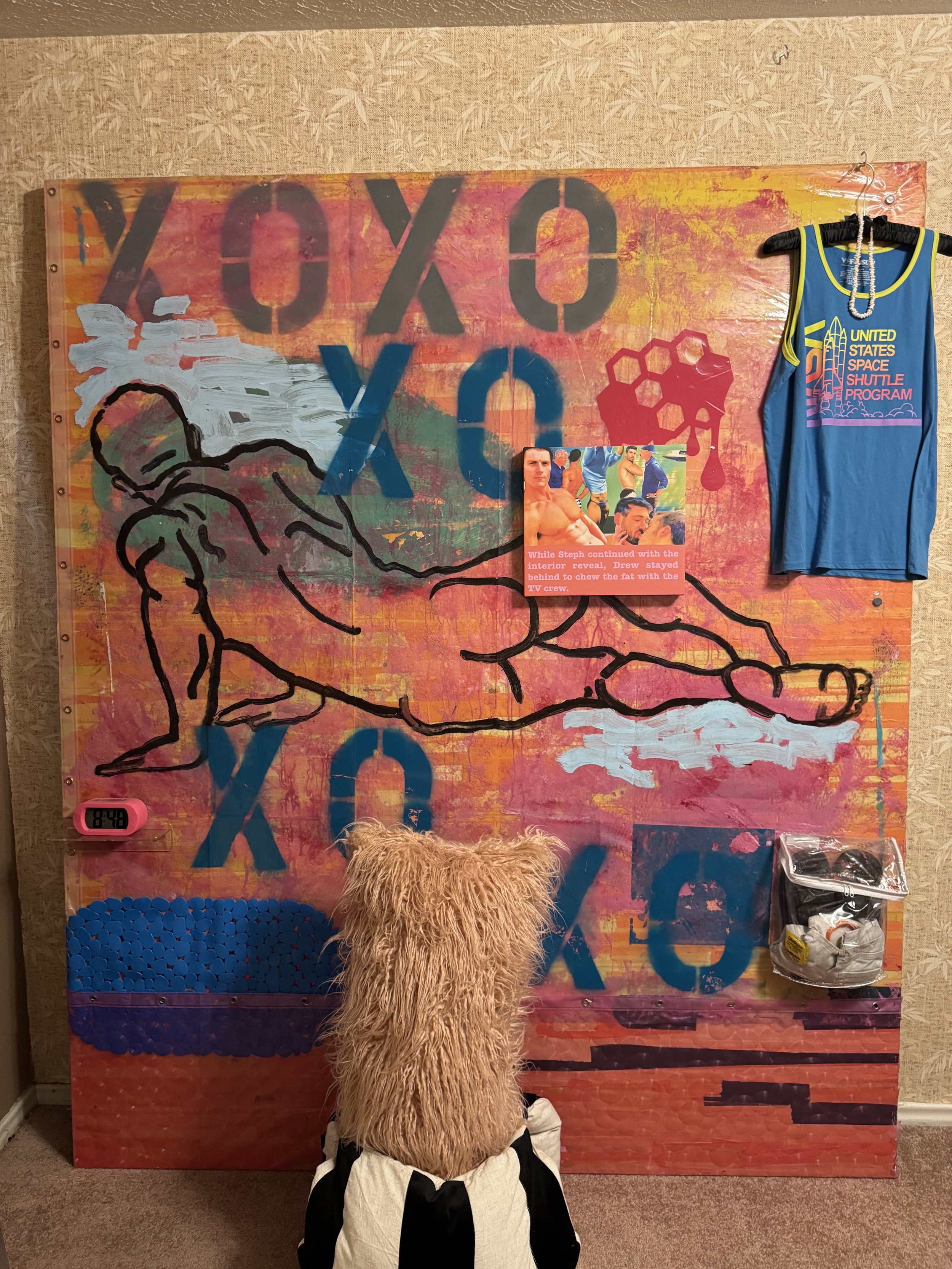
A social media post is easy and fun. Not so fast.
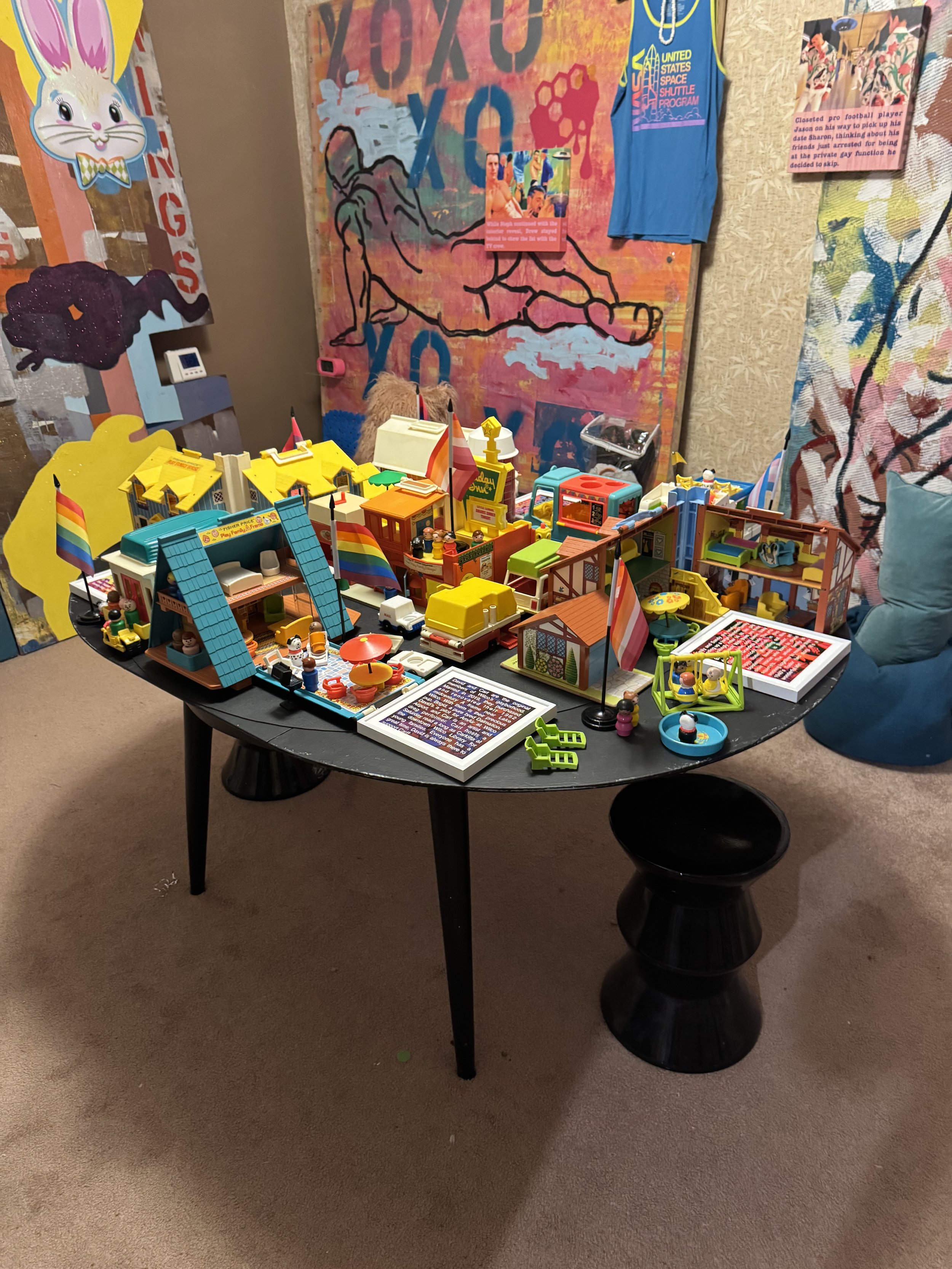
For a straight artist, a photo goes up and it stays up. For a gay one, the same photo goes up and it becomes a decision. Crop the kiss or keep it. Caption the couple as “friends” or say what they are. Post the diorama of two men raising a family in a plastic Fisher-Price house, or wait, because the algorithm that flags nothing when a man and woman hold hands has a different threshold when the hands belong to two men.
This is the actual terrain gay artists work on. Not canvas, not code, but a shifting set of invisible rules that platforms enforce unevenly and explain never. A ban arrives with no citation. An account disappears with no appeal that goes anywhere. The artist learns, the way a person learns to avoid a bad neighborhood, which images survive and which get quietly buried, and starts editing before the platform ever has to.
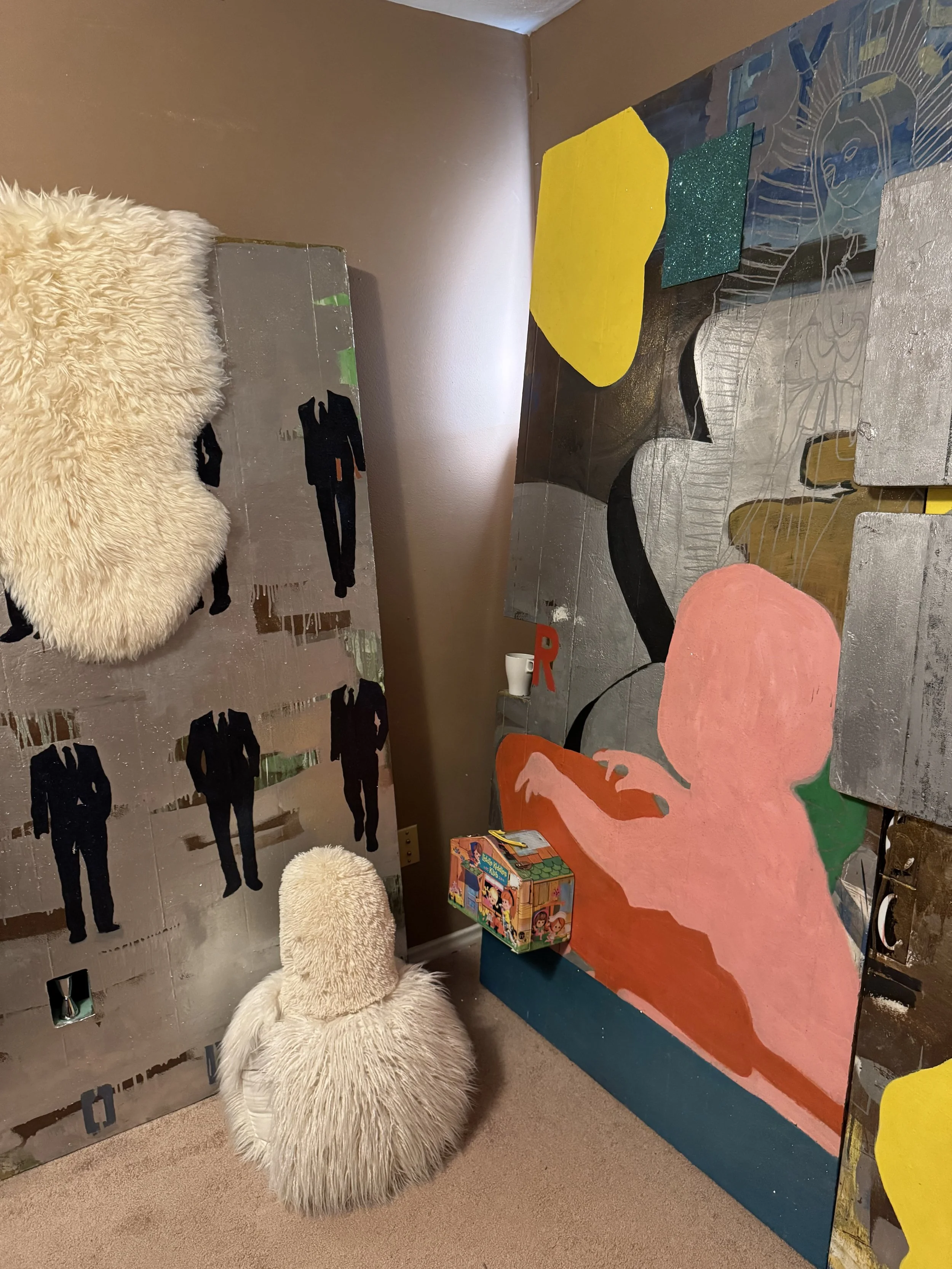
That editing has a name in every closeted life: anticipatory obedience. Gay men have been trained for a century to sand down the parts of themselves that make other people uncomfortable, and social media has simply built that training into its infrastructure. The suits marching across the top of a painting, faceless and identical, are not a metaphor invented for effect. They are Instagram’s community guidelines given a body. They are the algorithm’s idea of how a man is allowed to look.
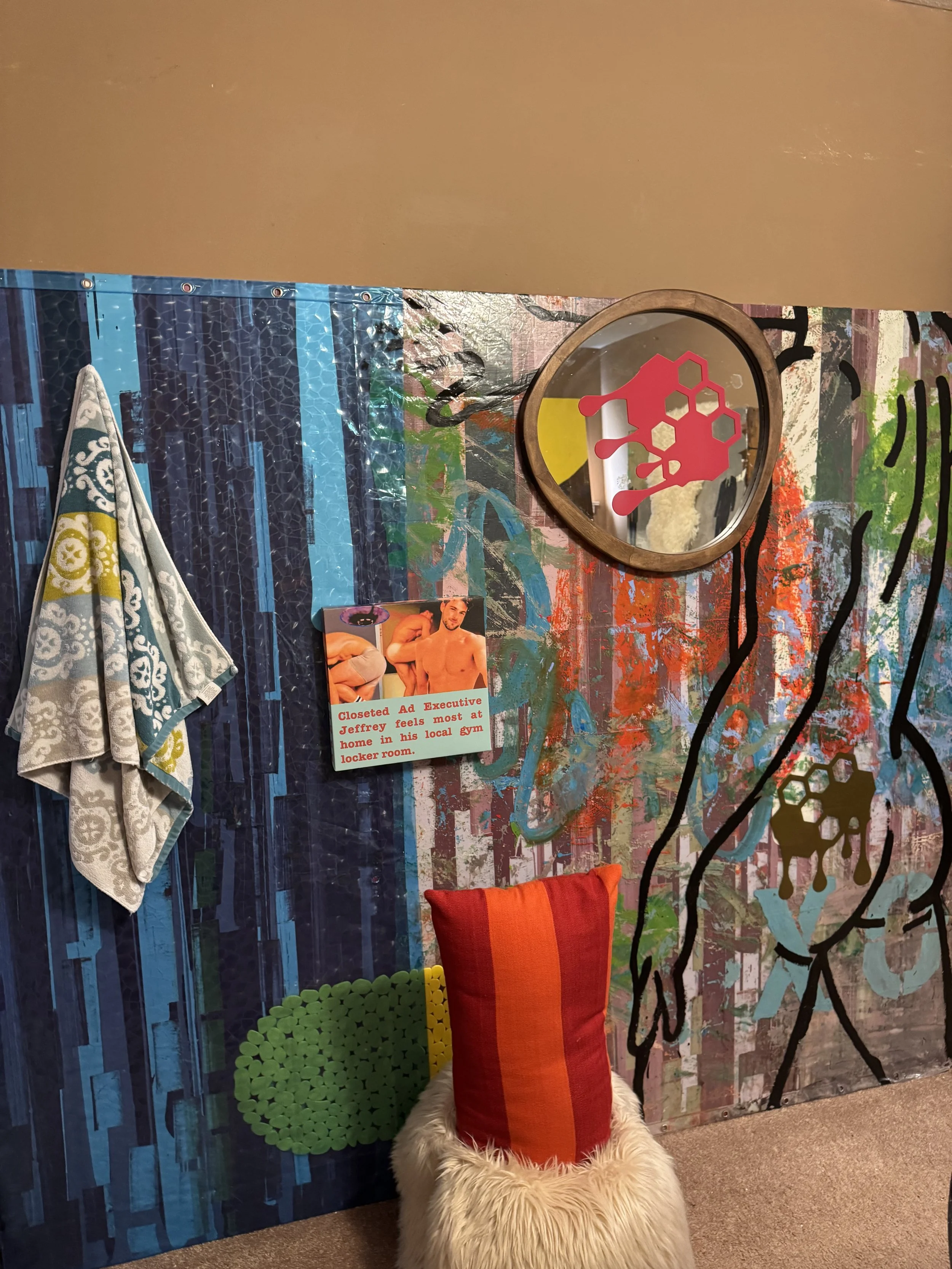
What makes this stranger than ordinary censorship is the audience it is aimed at. A shirtless man selling underwear survives. A shirtless man loving another man does not, or survives only after the love has been cropped out and the desire relabeled as fitness content. The platforms are not squeamish about the male body. They are squeamish about what the male body might mean to another man. Desire is fine as commerce and dangerous as connection.
So the work adapts. A caption gets softened before Facebook. An image goes to the website instead, where there is no algorithm to negotiate with, only the front door and a warning on it for anyone who wants to look. Two platforms become a strategy, one for what survives moderation and one for what does not need to. This is not paranoia. It is logistics, the same kind of logistics closeted men have always practiced: know which room is safe, know which room is not, and never confuse the two.
None of this stops the work from getting made. It changes where it lives. A body of collage that documents queer domestic life, queer historical erasure, queer men buying lakefront houses on television that never shows them, ends up scattered across a website, a shorter Facebook post, a TikTok clip with the edges filed down, each platform getting a different, incomplete version of the same argument. The full picture only exists in one place, and it is not owned by anyone with a terms of service.
The suits in the painting keep marching. They do not know they are being watched back.
— Behan