What Happens in Act II
Jack Straw and Peter Ochello have last names. Skipper does not.
That small asymmetry is where this piece starts. Of the three men Cat on a Hot Tin Roof marks as gay or gay-leaning, two are already dead when the play opens and the third exists only as a story other characters tell about him, in a room he isn’t in. Straw and Ochello get a shared bed, a shared history, decades on the land. What they don’t get is a scene. Williams gives them the fact of a life together and withholds the sight of it.
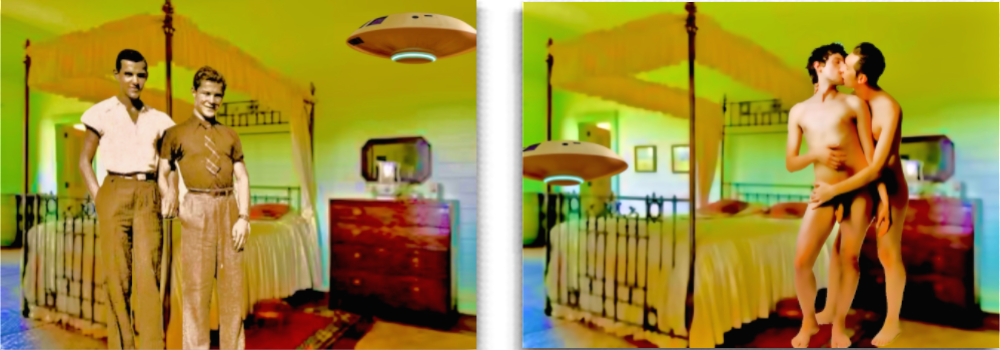
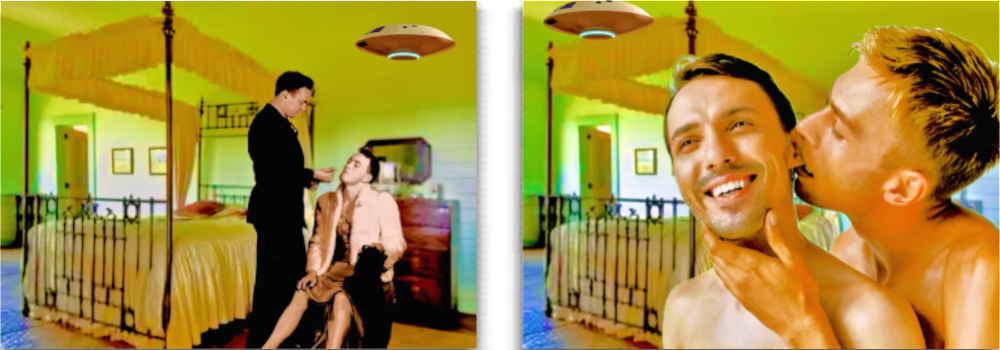
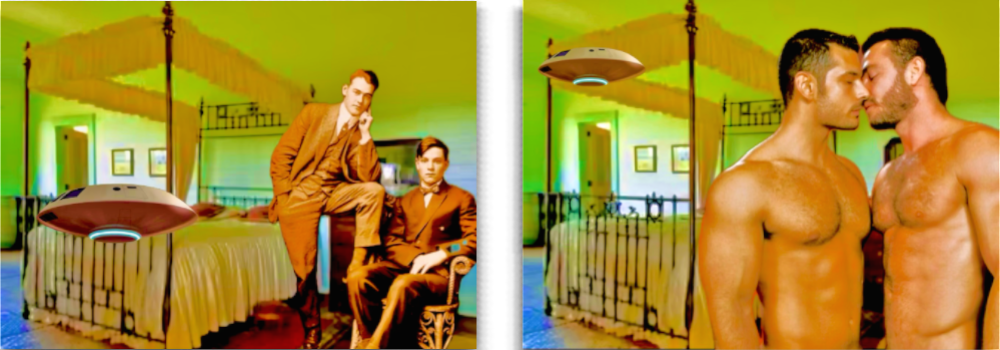
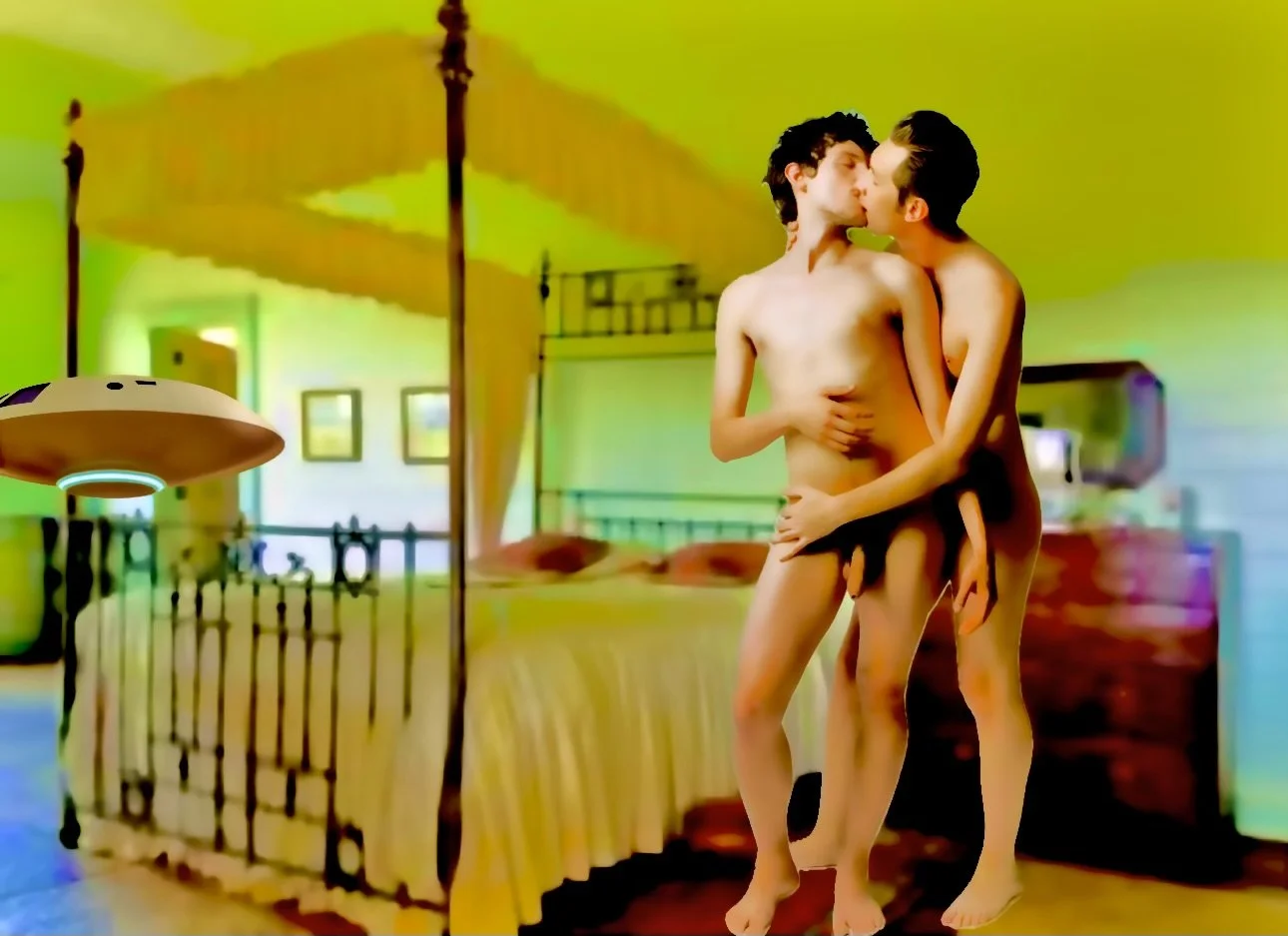
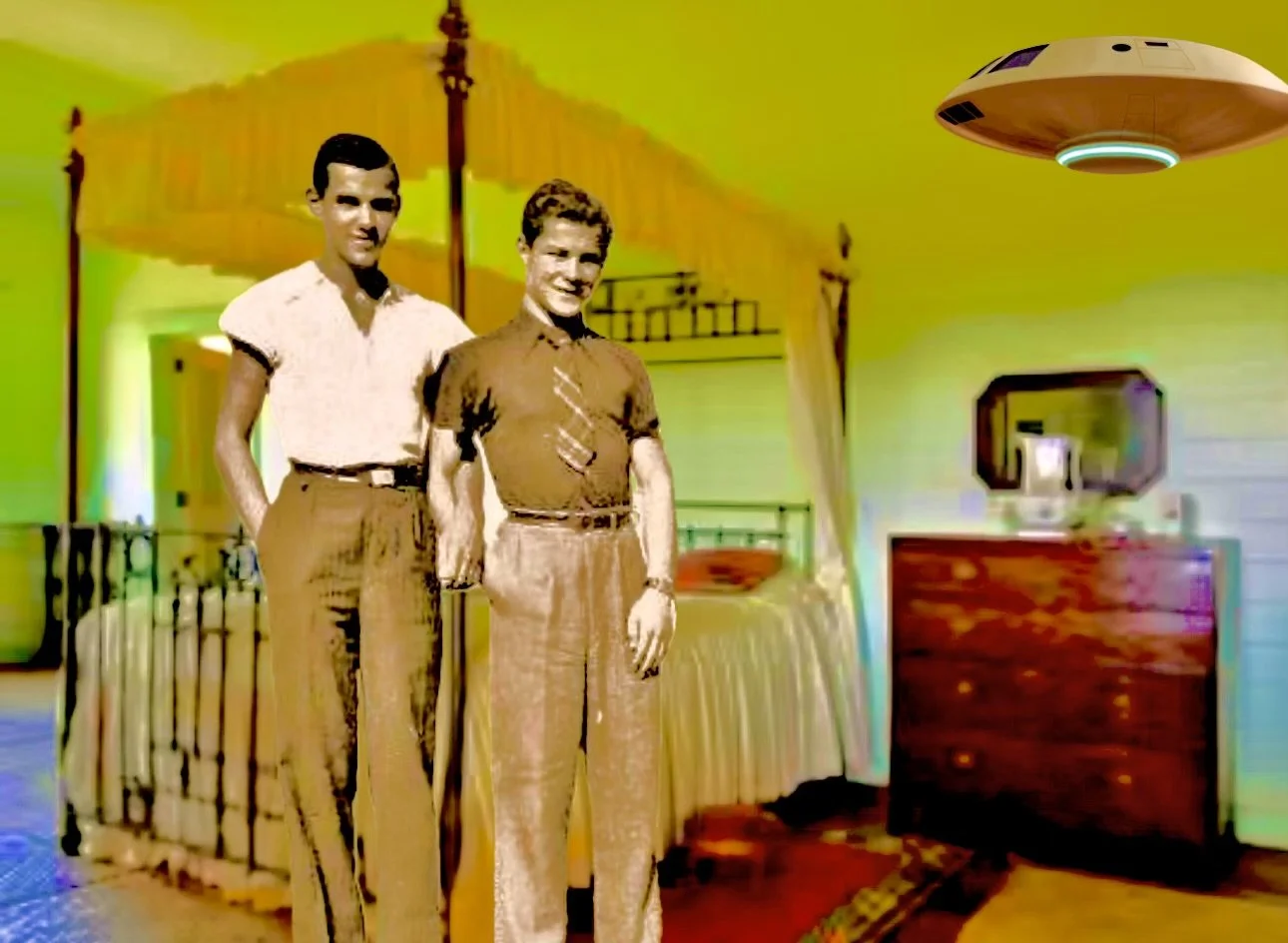
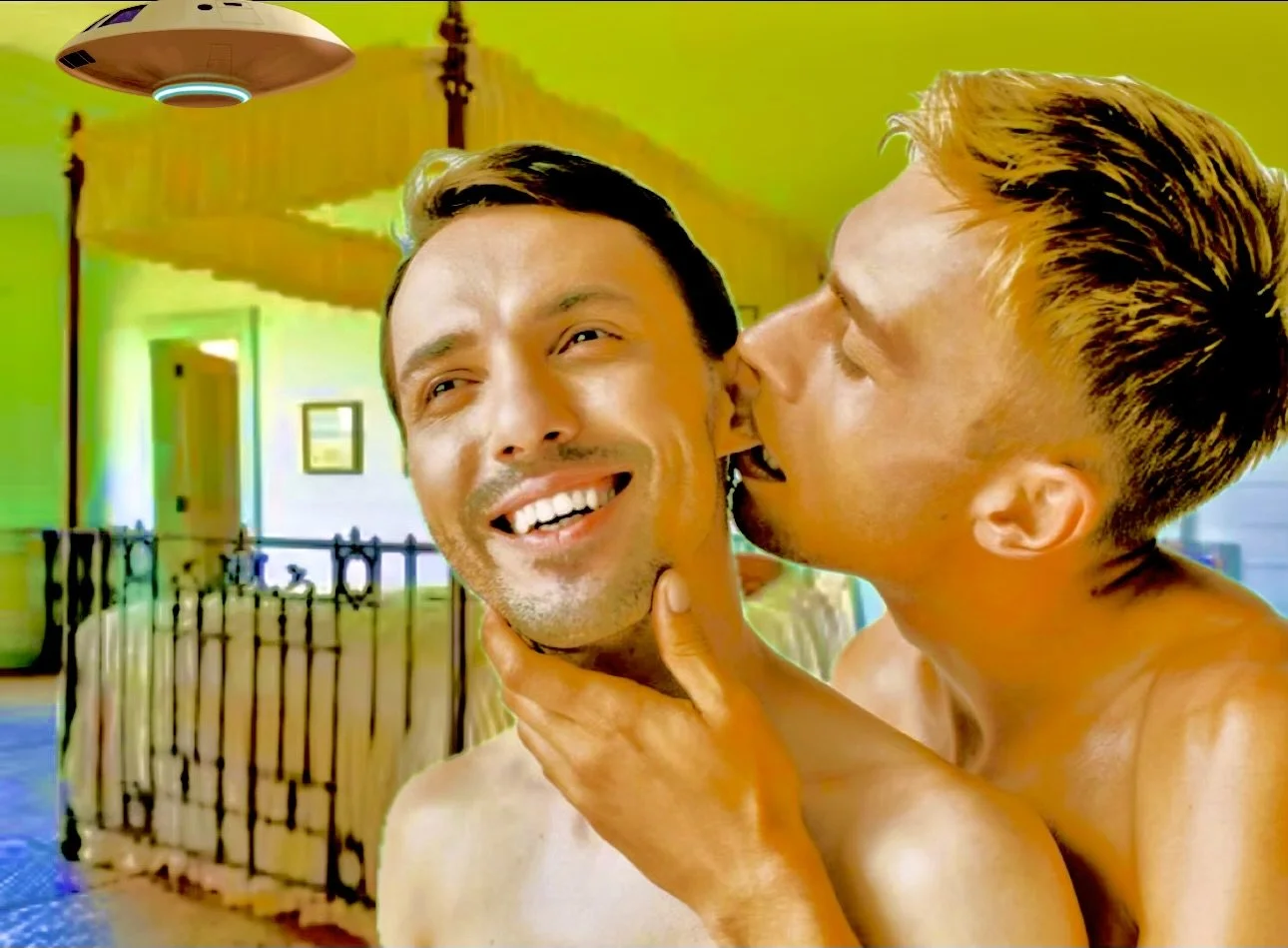
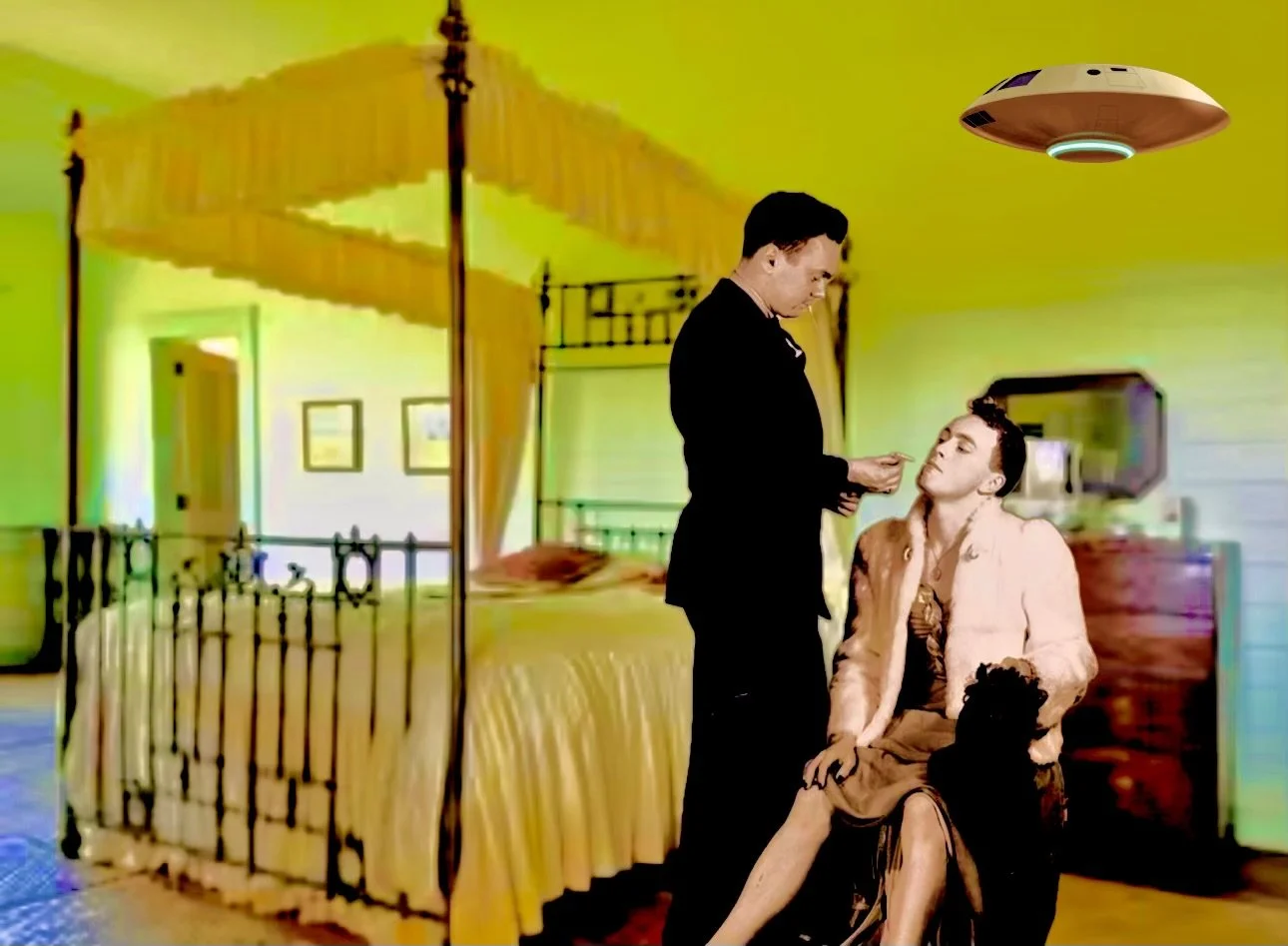
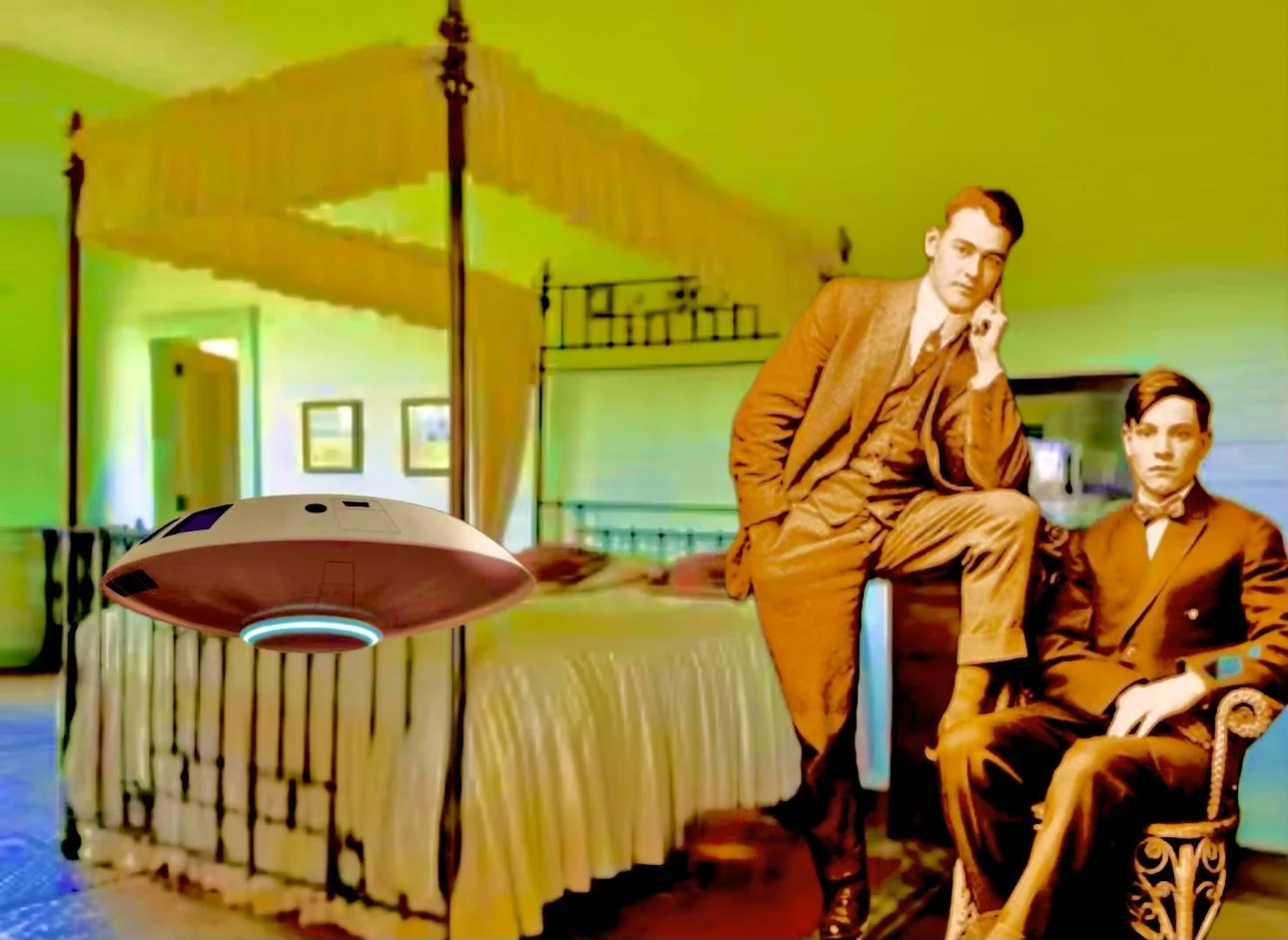
This triptych of diptychs stages the scene the play never wrote. Scene One, an ordinary day in the 1930s, in the bedroom that will later belong to Maggie and Brick. Same bed. Same house, modeled on Robert Louis Stevenson’s home in Samoa, itself the source for the play’s Victorian setting. Jupiter 3 hovers overhead, visible only to whoever is looking at the image — not a prop the men could see, but a witness standing in for the audience, the way Straw and Ochello themselves have always stood in for something the play refuses to look at directly.
Each pair of men is a different casting choice, a different answer to the same audition: who plays Jack, who plays Peter, what does this ordinary day look like across three attempts at the same two people. Each diptych runs the same idea twice — once with the ambiguity intact, once with it removed. Left panel, suggestion. Right panel, the thing suggested. That’s the entire method here: subtext moved into context, nothing invented that the play didn’t already imply.
If Williams had opened his play this way — a quiet, unremarkable morning between two men who loved each other without incident — Act Two would have landed differently. Brick’s collapse, Maggie’s hunger, Big Daddy’s fury at his own son’s silence: all of it would have played against a real image of what intimacy between men could look like, instead of against nothing. The contrast was always there in the writing. It just never got staged.
Given a production, Straw and Ochello wouldn’t leave the room. They’d stay through Act Two, silent, watching Brick fail to become what they already were.
The bed is the same bed. Someone was happy in it first.
— Behan