On Cloth and Armor
A fabric does not know what gender it is. It knows thread count, dye lot, the weight of gold in its brocade. Someone else decides, later, what body it is permitted to touch.
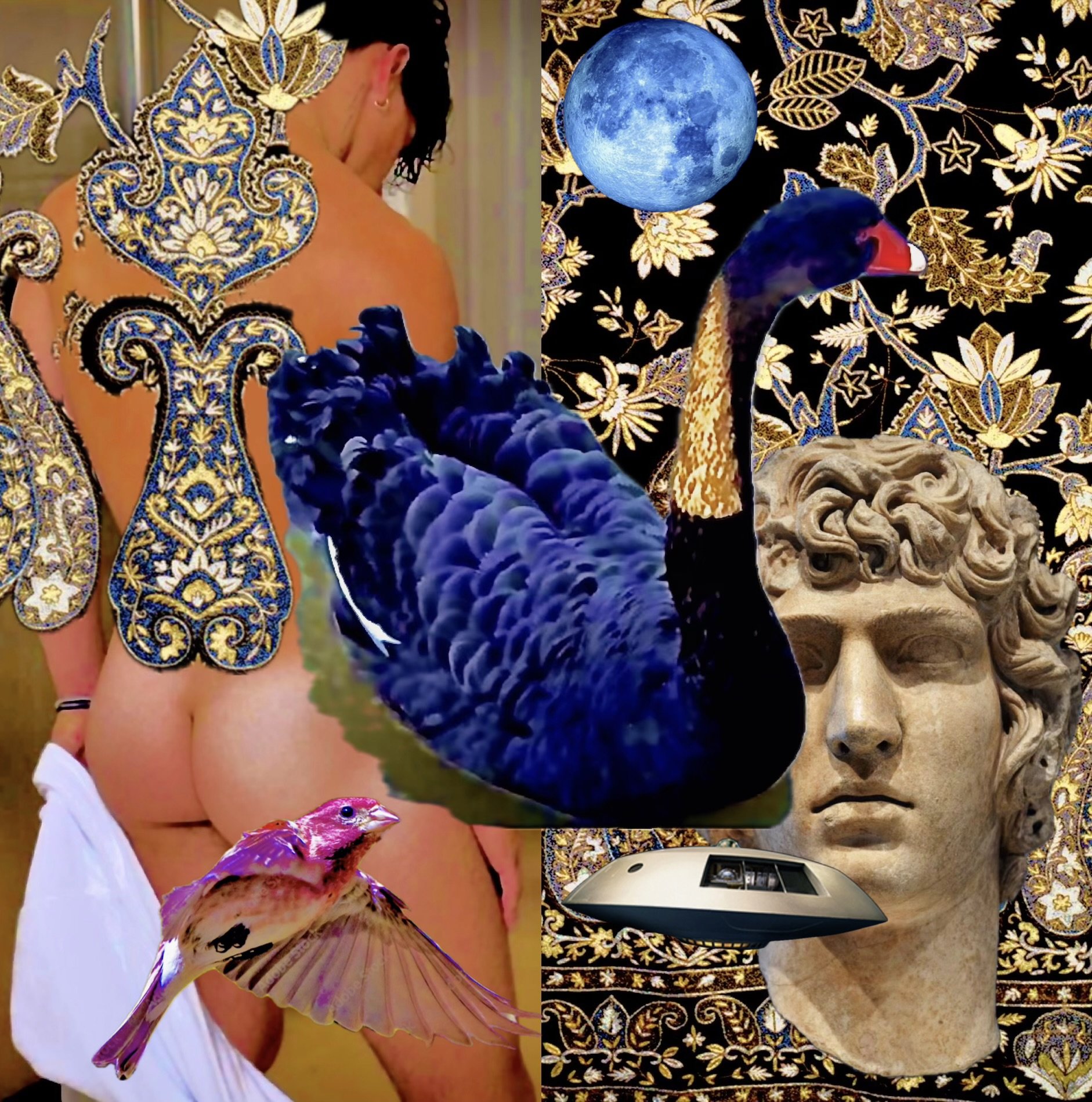
This piece begins with a length of luxury brocade — the kind of paisley once woven for Persian and Kashmiri courts, worn by men of rank as a public announcement of wealth and standing. Ornament, on a man, was not always suspect. For centuries it was the opposite: proof.
Something happened to that. Somewhere in the passage from court dress to the modern West, men’s clothing was stripped down and men’s ornament was reassigned — handed to women, to interiors, to the feminine-coded register of “decorative.” What remained for men was the suit: dark, unpatterned, cut close, built to signal seriousness through the absence of beauty rather than its presence. Call it contemporary armor. It protects by refusing to be looked at too closely.
Antinous is placed here as the counter-argument the historical record already contains. A body permitted — required, even — to be beautiful, adorned, gazed upon, memorialized in stone precisely because it was gorgeous. No renunciation asked of him. No fabric too ornamental for a man to wear.
Between the sculpture and the suit stands the male nude — not as provocation, not as an erotic object, but as the plain fact the armor exists to cover. This is the condition of being a man before any tailor gets to it: skin, back, the particular vulnerability of a body with nothing arranged over it yet. The brocade, lifted from its ground and laid across that back, is the moment the decision gets made — the moment the body stops being simply a body and starts being dressed in someone else’s idea of what a man is allowed to wear.
The photographs show both stages: the fabric as ground, and the fabric as it lands on the figure. Process, left visible, because the argument is in the transition as much as the result.