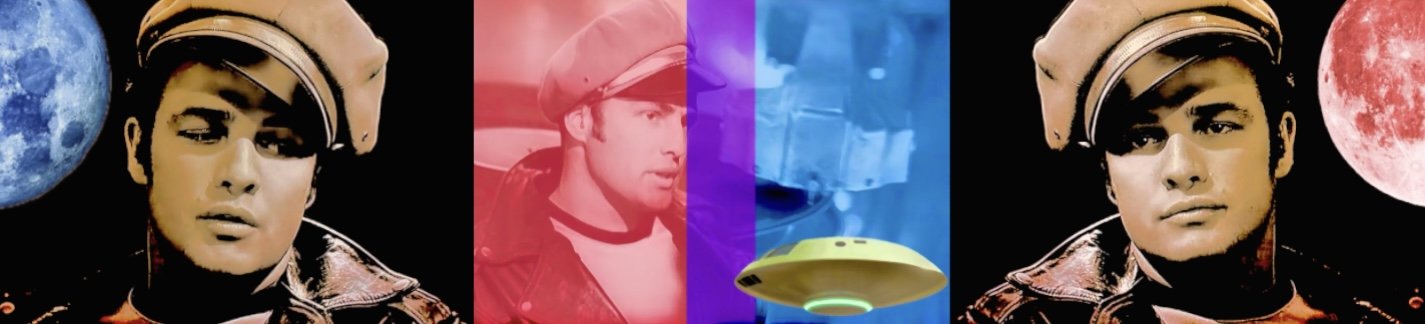
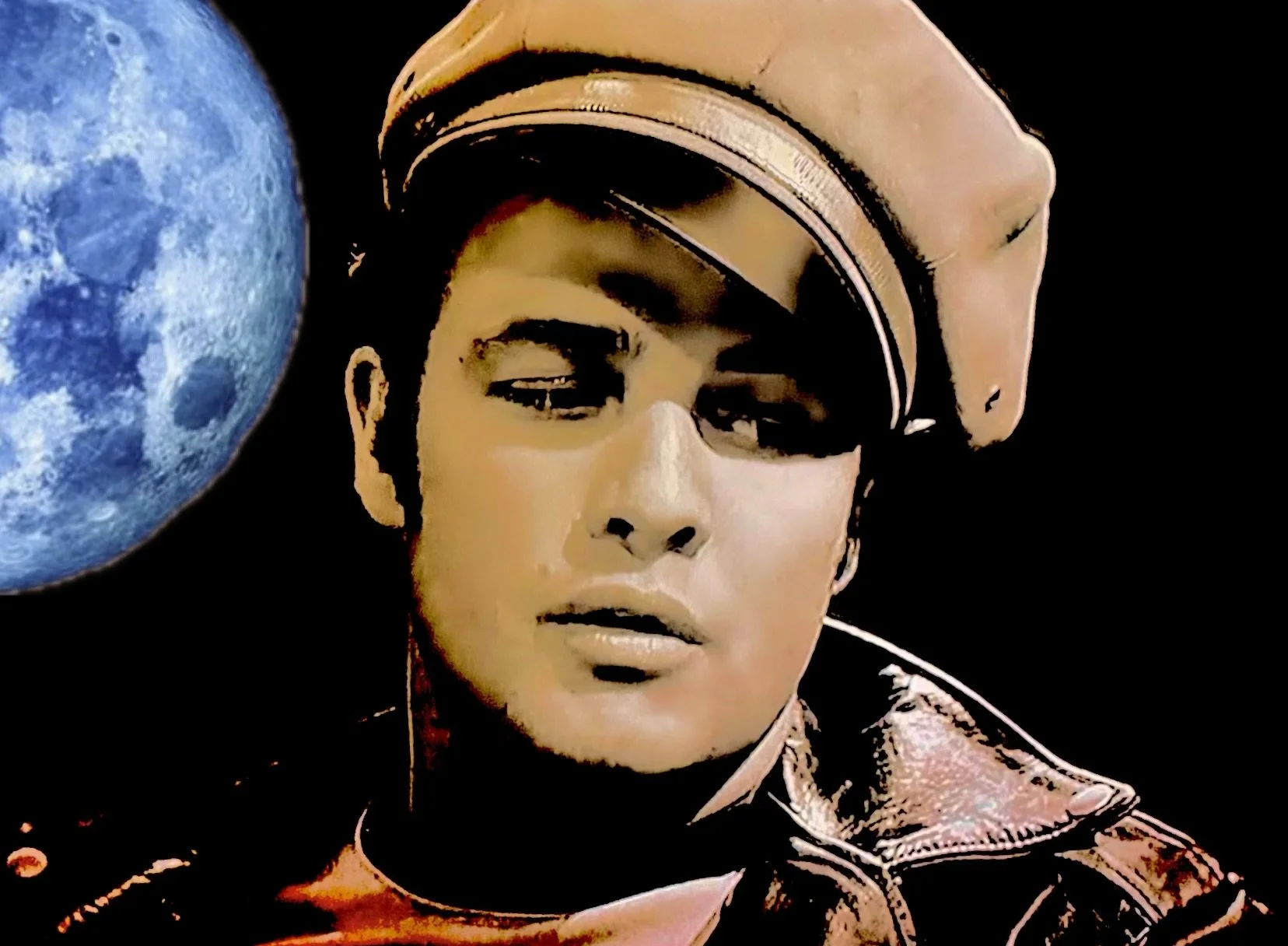
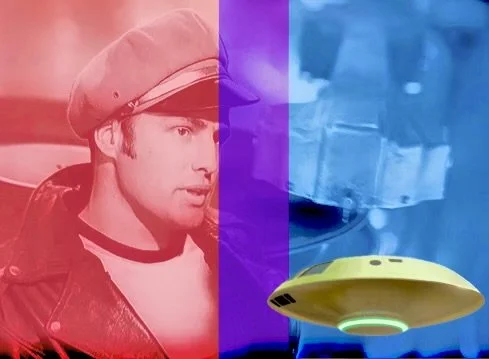
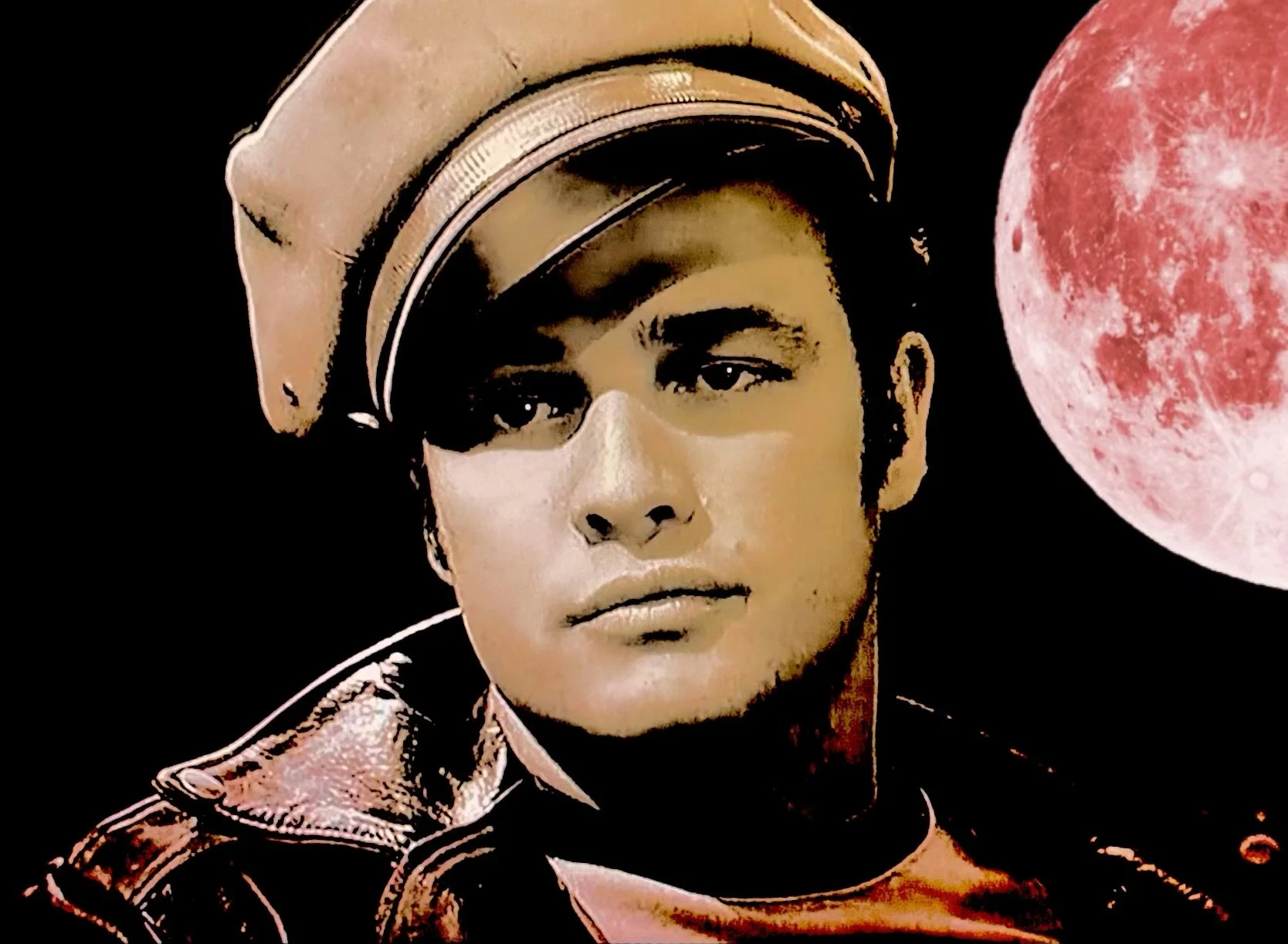
The Wild One as a Queer Manifesto
The Wild One was a seminal film in the 1950s, which introduced the masculinity of Marlon Brando to the American public. It also functions as a queer manifesto. The homoerotic content in the film is not a later projection. It is on the screen, and it is intentional.
Johnny Strabler Was Not a Costume
The character of Johnny Strabler from The Wild One was a bisexual man, as played by Marlon Brando, per the actor’s own accounts of the role and the film. In fact, in the building of the costume for Johnny Strabler, Brando himself chose clothes from his own wardrobe that emphasized masculinity, a statement in itself on how he saw a bisexual man: strong, confident, aggressive, a he-man. He was acting as his own costume designer, in the tradition of other queer men who shaped that trade: Adrian, Travis Banton, Orry-Kelly, Howard Greer. Choosing your own wardrobe, building your own look piece by piece rather than having it handed to you, is not a neutral act. It is an act of self-fashioning, a queer skill before it is anything else.
The Fight With Chino
The physicality of the fight with Chino is only matched by their emotional intensity toward one another, with Chino repeating often that he loves him, telling Johnny that the club misses him, and asking him to come inside and have a beer. Meanwhile, Kathie, the sheriff’s daughter, pursues Johnny, not the other way around. She tells him she has been waiting for someone to take her away. Johnny turns her down flat. In turning her down, he rejects the conventionality of the heterosexual arc she offers him, and rides off alone, back toward the club, and toward Chino. A film built around the conventional Hollywood arc would have ended with the two of them together. This one gives Johnny a beautiful woman who wants him, and has him walk past her unbothered.
The World It Came From
The Wild One was released in December 1953. Brando at that time was living and working in Los Angeles, the same city where two of the earliest gay motorcycle clubs would soon form after the release of the film: the Satyrs in 1954, and Oedipus in 1958. Both clubs modeled themselves directly on the look Brando had just put on the screen as Johnny Strabler.
In the forming of these clubs, gay men in Los Angeles were not projecting a reading onto Brando’s performance from a distance. They recognized almost immediately a version of masculinity that was already theirs, and built organizations around it within a year of seeing it on screen.
Los Angeles in the 1950s was not a large city. That a bisexual man was playing the role of Johnny Strabler in this city, at this moment, gave other bisexual and gay men something they had not had on screen before: a permission structure. Seeing that kind of masculinity performed by a man who was living it authentically made it easier for others to express themselves the same way.
What the Manifesto Says
The manifesto The Wild One makes is simple: gay and bisexual men exist, in every form, from effeminate to the most aggressively masculine, and there is nothing wrong with any of it. The film does not argue this in words. It embodies it, in the person of a bisexual actor playing the most masculine man on American screens, and in a gang that rolls into a small town and refuses to apologize for taking up space. Johnny Strabler is a bisexual man not afraid to be bisexual, in a world that defined such a thing as uncivil. That such a film was made in 1953 is remarkable, and it indicates that the 1950s were not as buttoned-down as they are remembered.
Oh, and By the Way
Four years later, mainstream American film said the same thing again, more plainly. The title number in Jailhouse Rock (1957) puts Elvis Presley in a cell block set surrounded entirely by men, and has one inmate tell another, “You’re the cutest jailbird I ever did see,” inviting him to dance. Music scholars have identified that line as a direct reference to prison sex, sung and staged in a film aimed at the same teenage audience The Wild One had reached four years earlier. Two major studio releases, Columbia and MGM, four years apart, both built around a masculine icon, both carrying real coded content aimed at teenagers, in the decade everyone remembers as the most buttoned-down in American history. That’s not a stretch anymore. It’s a pattern.