No century in human history comes close to matching the twentieth for violence and for the sheer scale of existential threat it poses to humanity's survival, producing two catastrophic world wars and a weapon of mass destruction capable of ending everything in a single moment. Real and active today, for nearly eighty years now, humanity has lived under the shadow of total annihilation, a condition it has never faced before. The reach toward this ultimate destruction inspires an equal reach back to the first impulses of creativity: childlike wonder and innocence, expressed through child-inspired imagery, themes, and products.
Paul Klee begins this work in earnest in the 1920s, building stick figures and dreamlike forms drawn directly from children's art, working from the belief that untrained expression cannot lie the way academic technique can. His influence carries into Jean Dubuffet's Art Brut and the CoBrA painters after World War II, who push that same idea further: returning to something unschooled and child-inspired strips a culture's polish away, after that polish has just produced a war. Mike Kelley later uses real, worn, secondhand stuffed toys to ask what a comforting object might conceal. Takashi Murakami's Superflat movement, and his exhibition Little Boy — named for the Hiroshima bomb — argues postwar Japan's cuteness is itself a response to national trauma. Precious Okoyomon continues this thread today, building stuffed-toy hybrids that hold care and harm at once. Collectively, these artists and many others are calling humanity back from the brink of destruction.
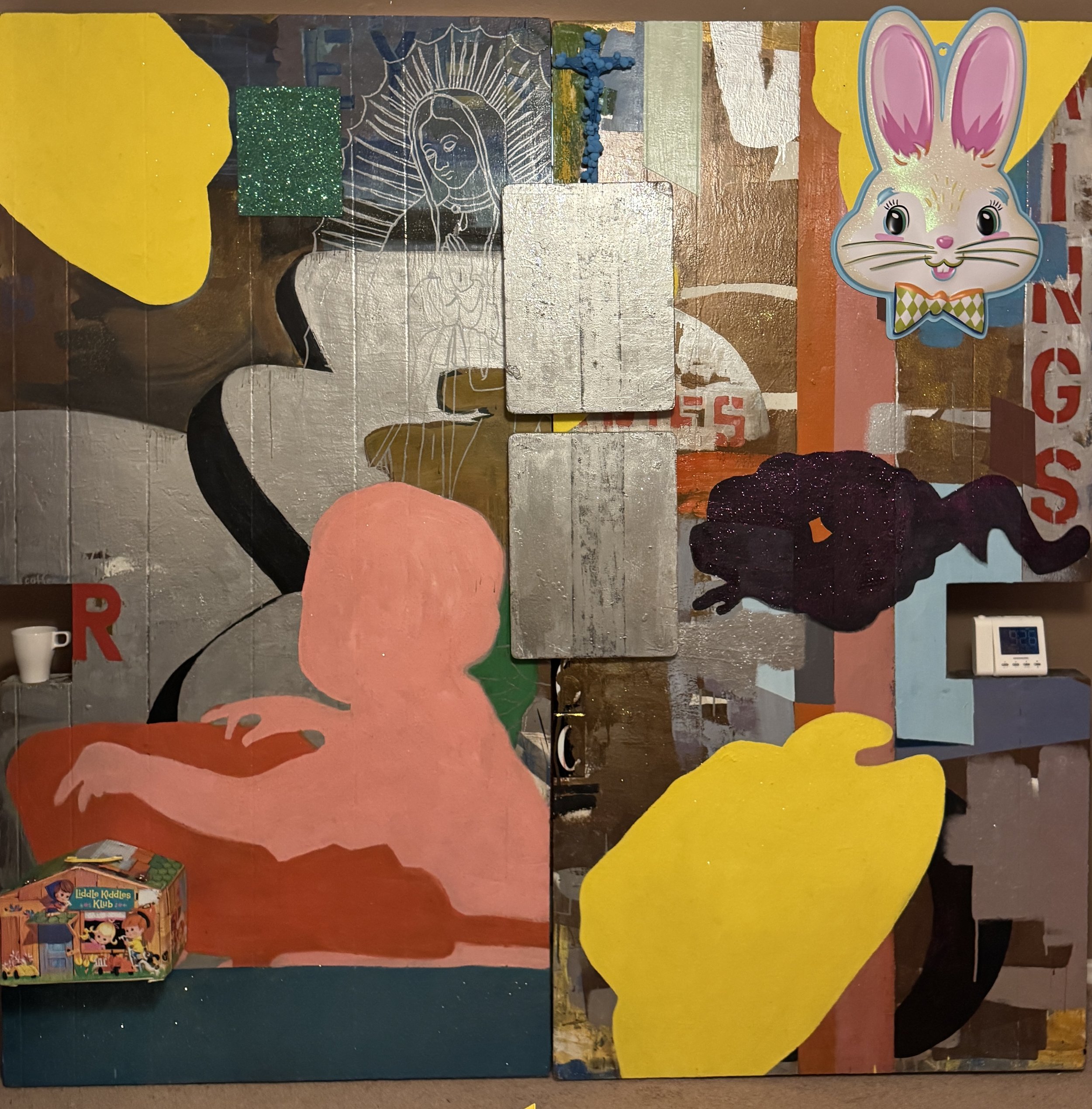
Behan's work entered this conversation with a mixed media painting titled Portrait of the Artist's Mother, 2021, 8' x 8'. This mixed media work includes an image of the artist as an infant in a baby chair, alongside the Liddle Kiddles Klub playset and its dolls, a toy from the artist's own childhood. This work directly responds to the Cuban Missile Crisis of October 1962, when the world came closest to nuclear war at any point in history. It is the first piece in this body of work, and much like the event and the artist's own life, everything following grows from it.
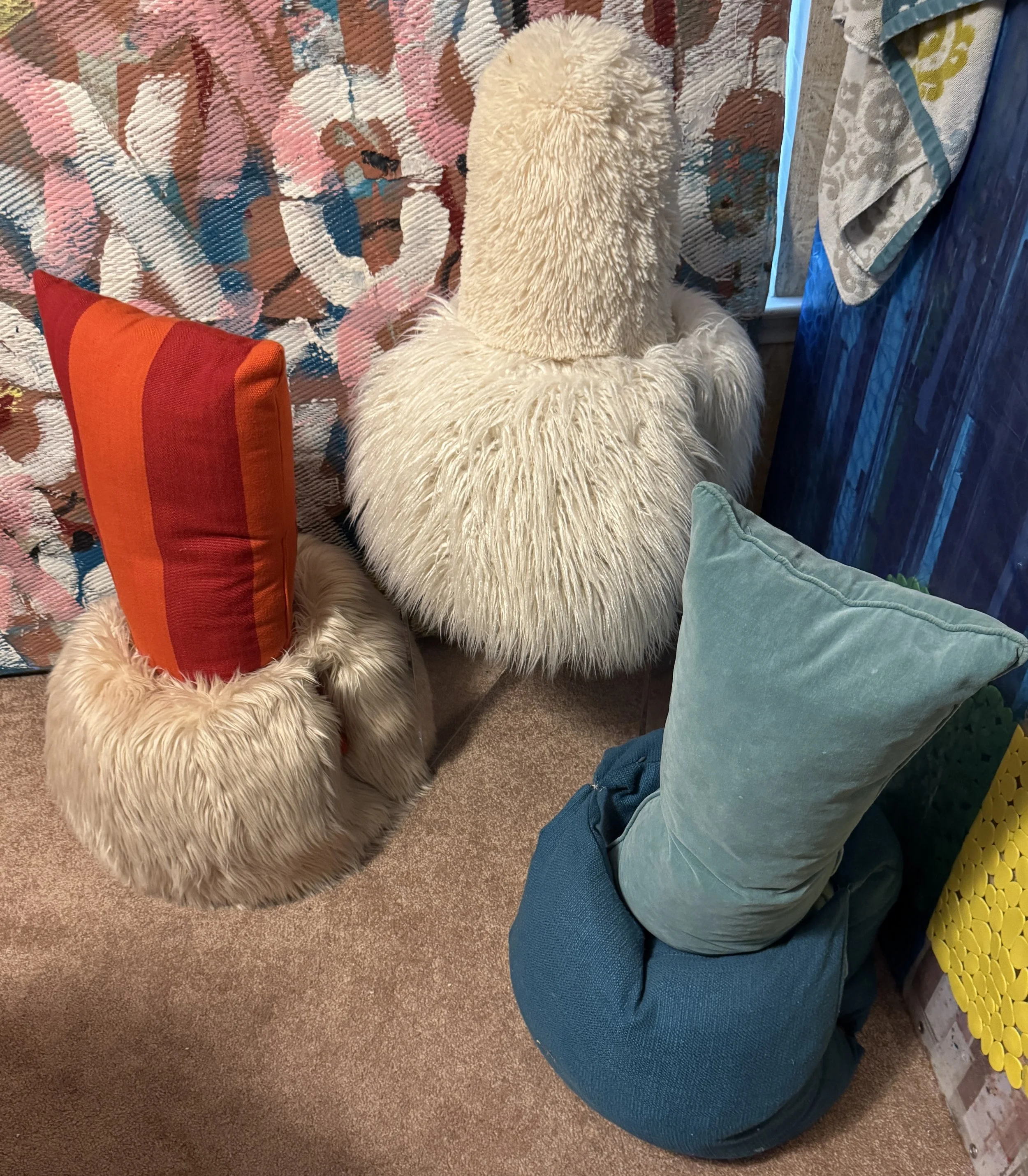
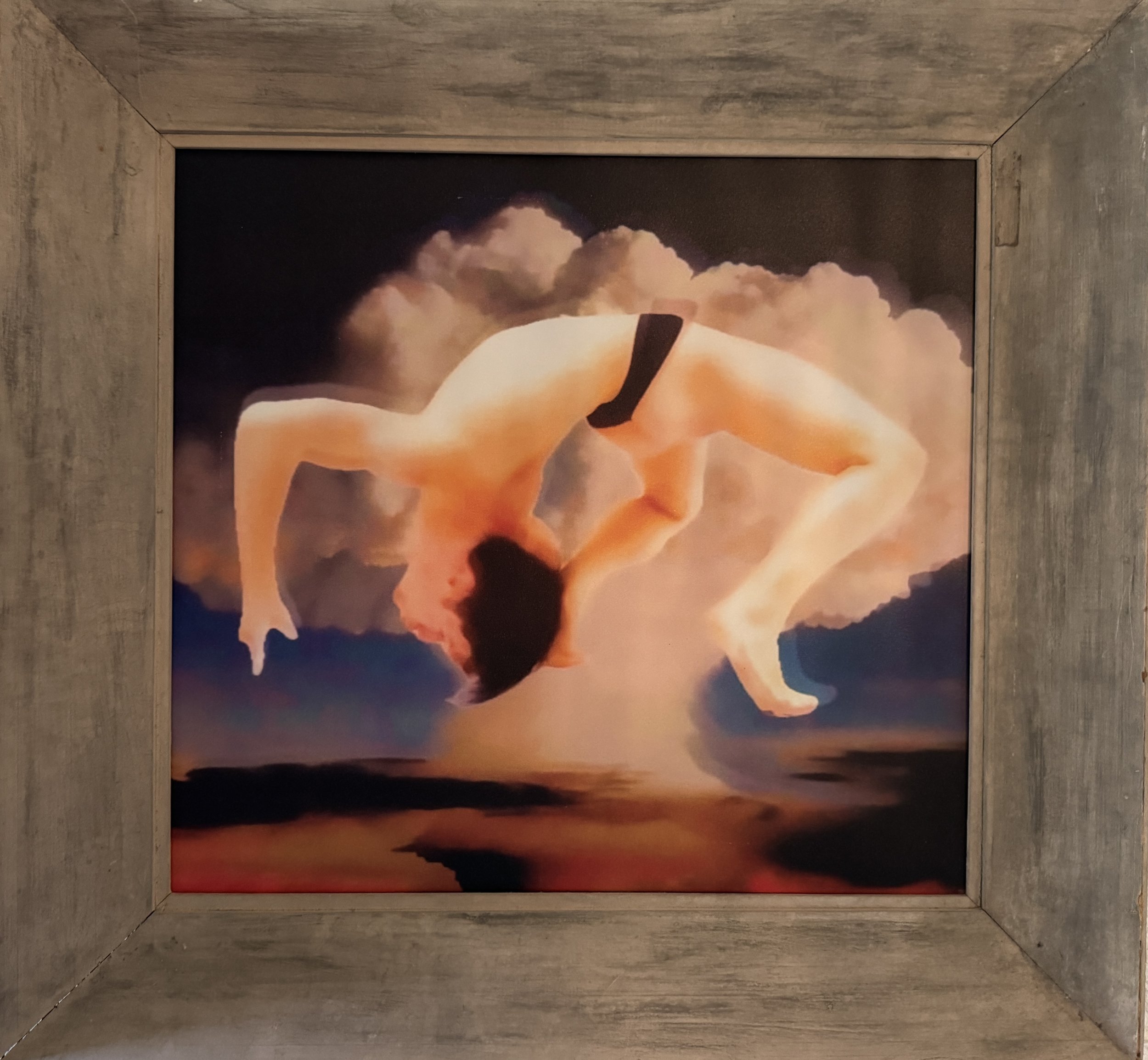
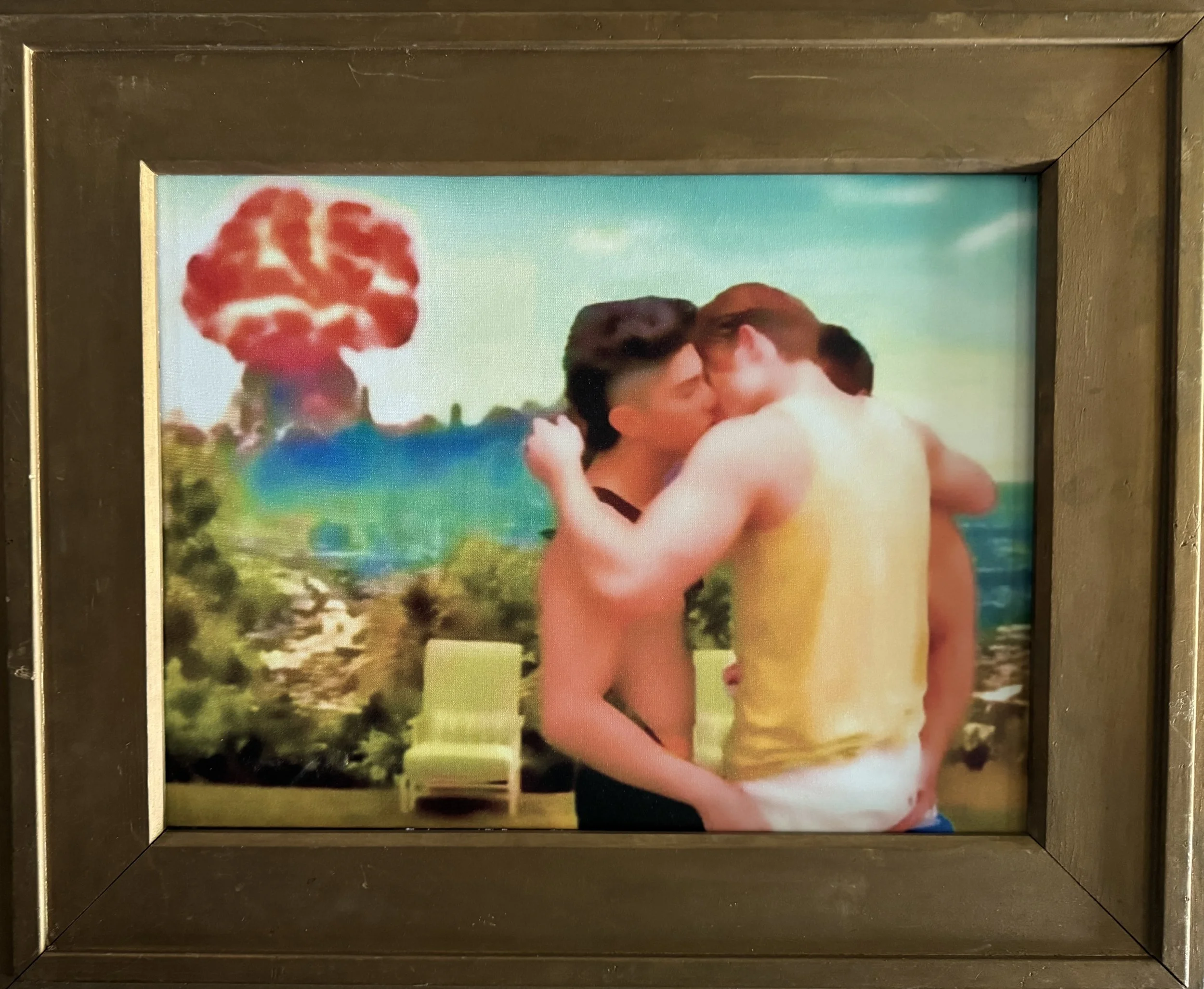
Four livestreams flow from this 2021 painting, and all four are still active today: soft sculpture, digital photo collage, interactive sculpture, and a continued exploration of mixed media painting. None of them replaces another. They run alongside each other, the way tributaries run from a single source, live in the truest sense, still flowing, still being added to, each one carrying the same reach toward child-inspired material into a different form.
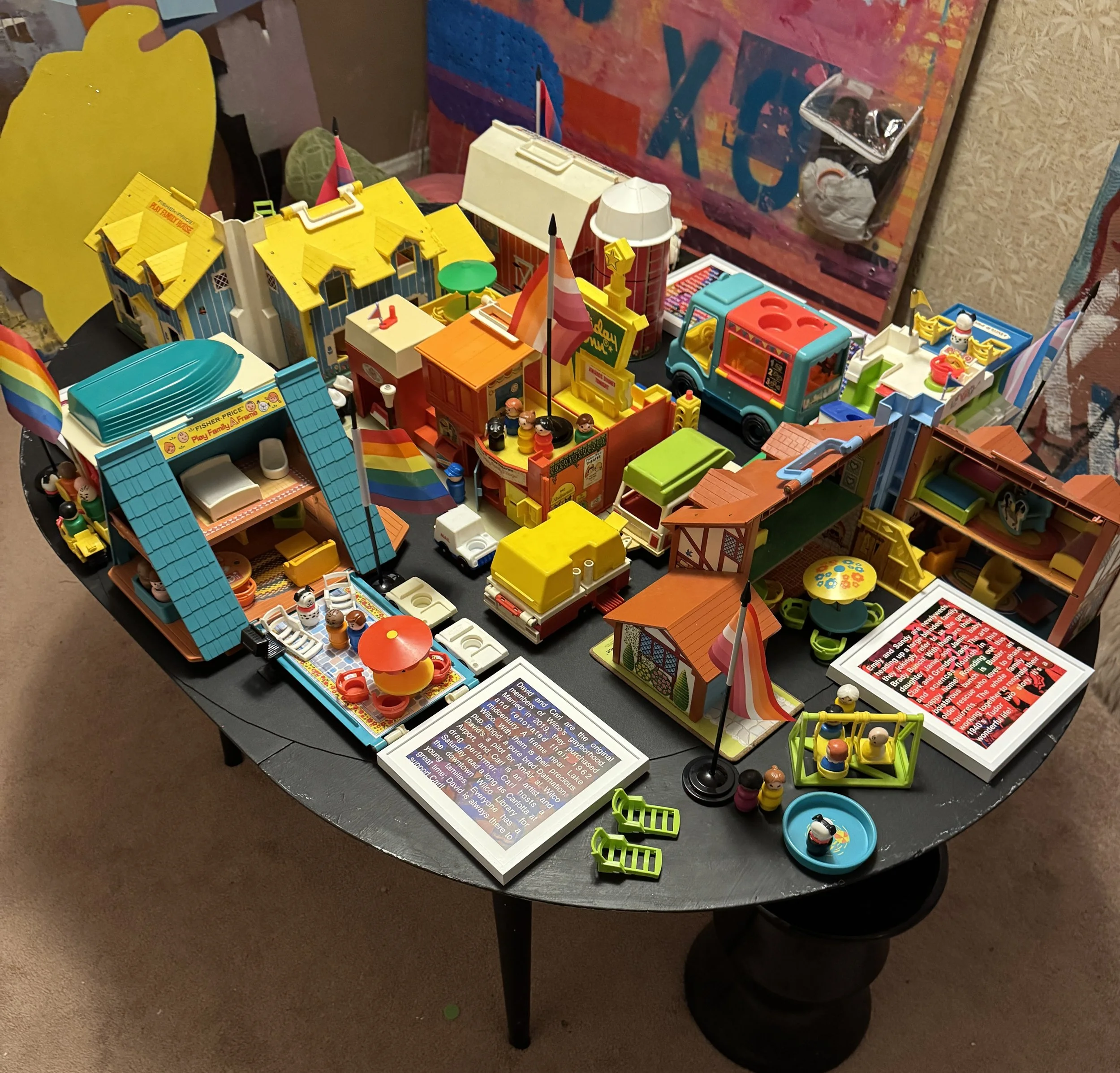
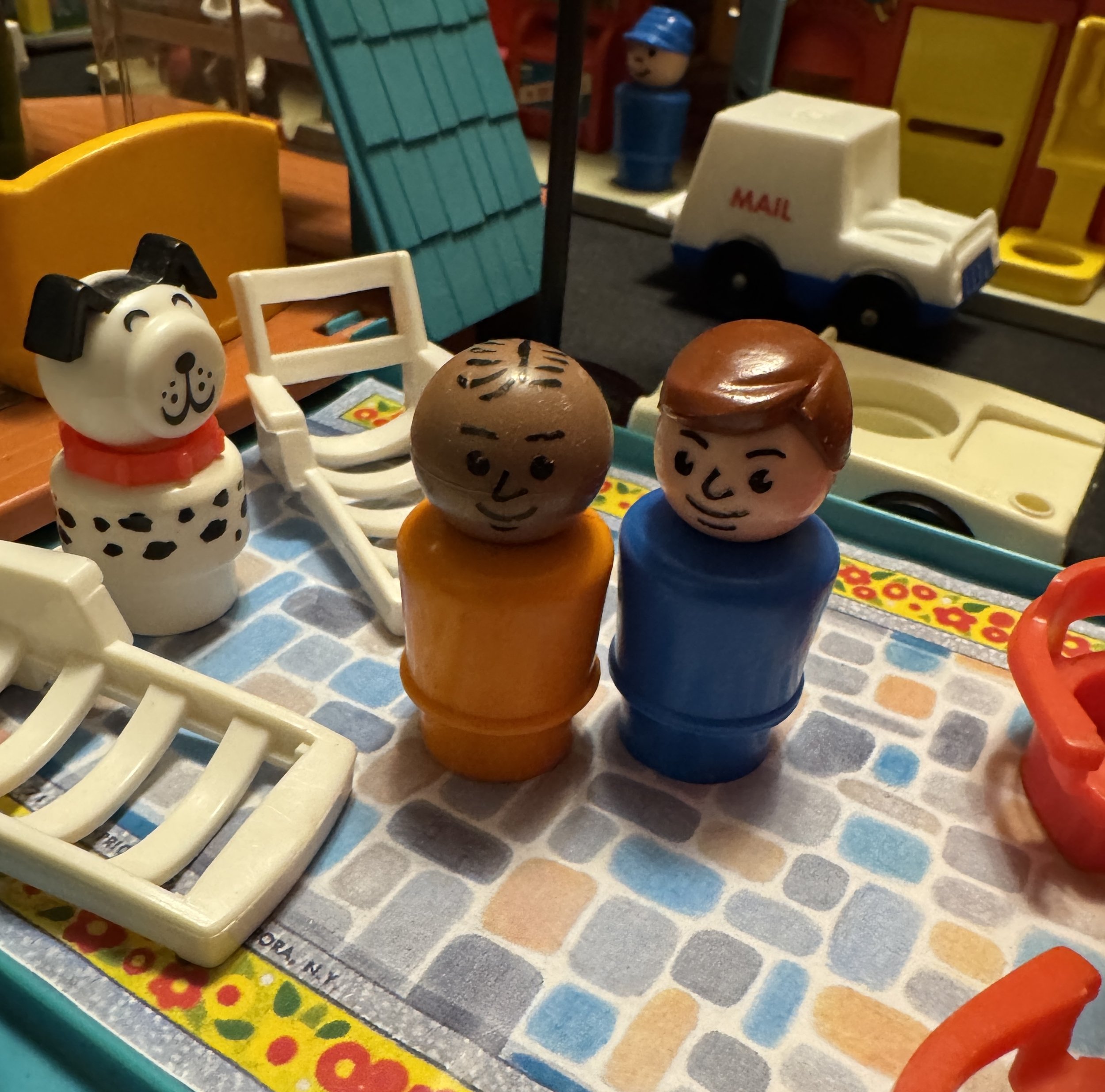
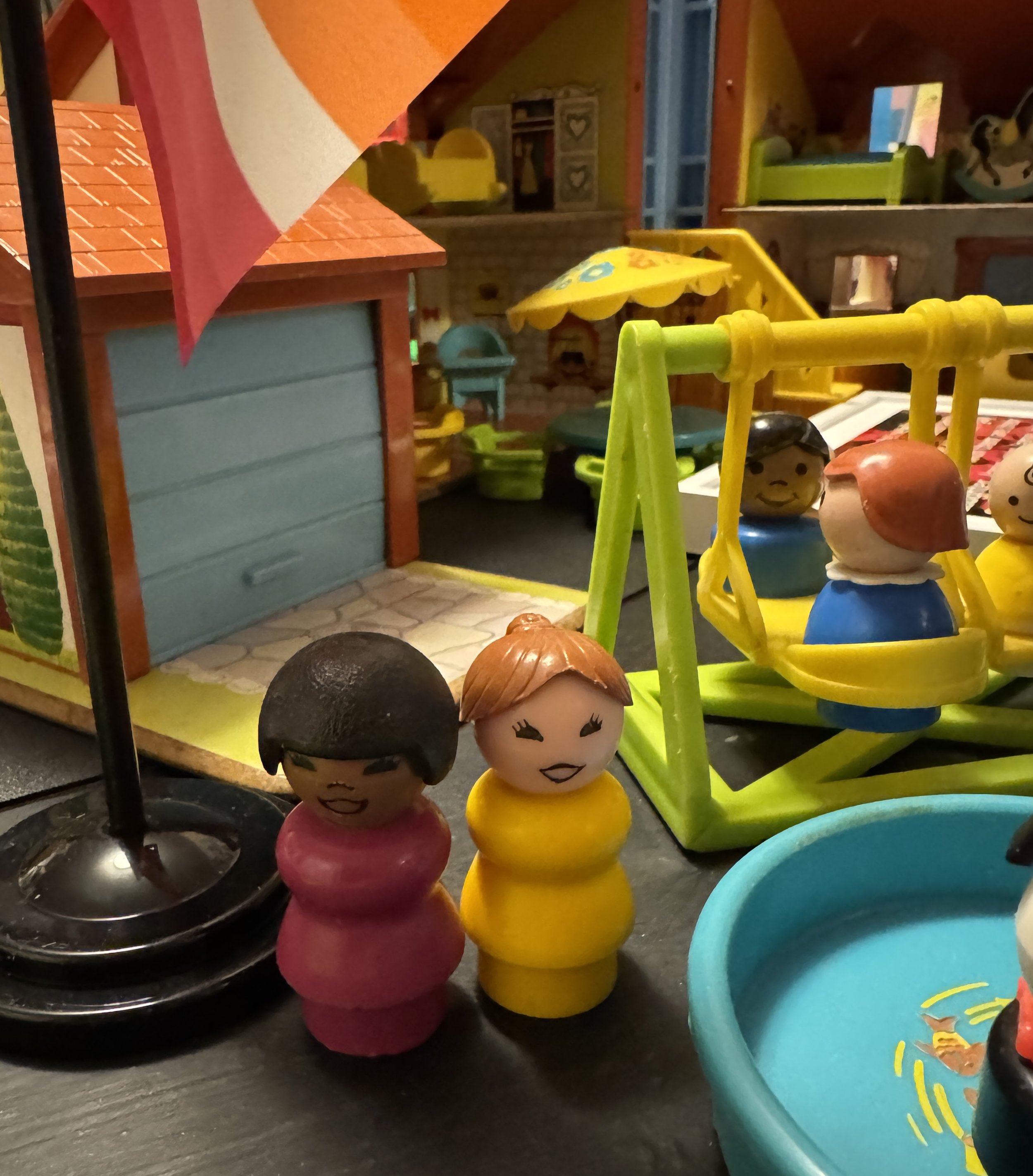
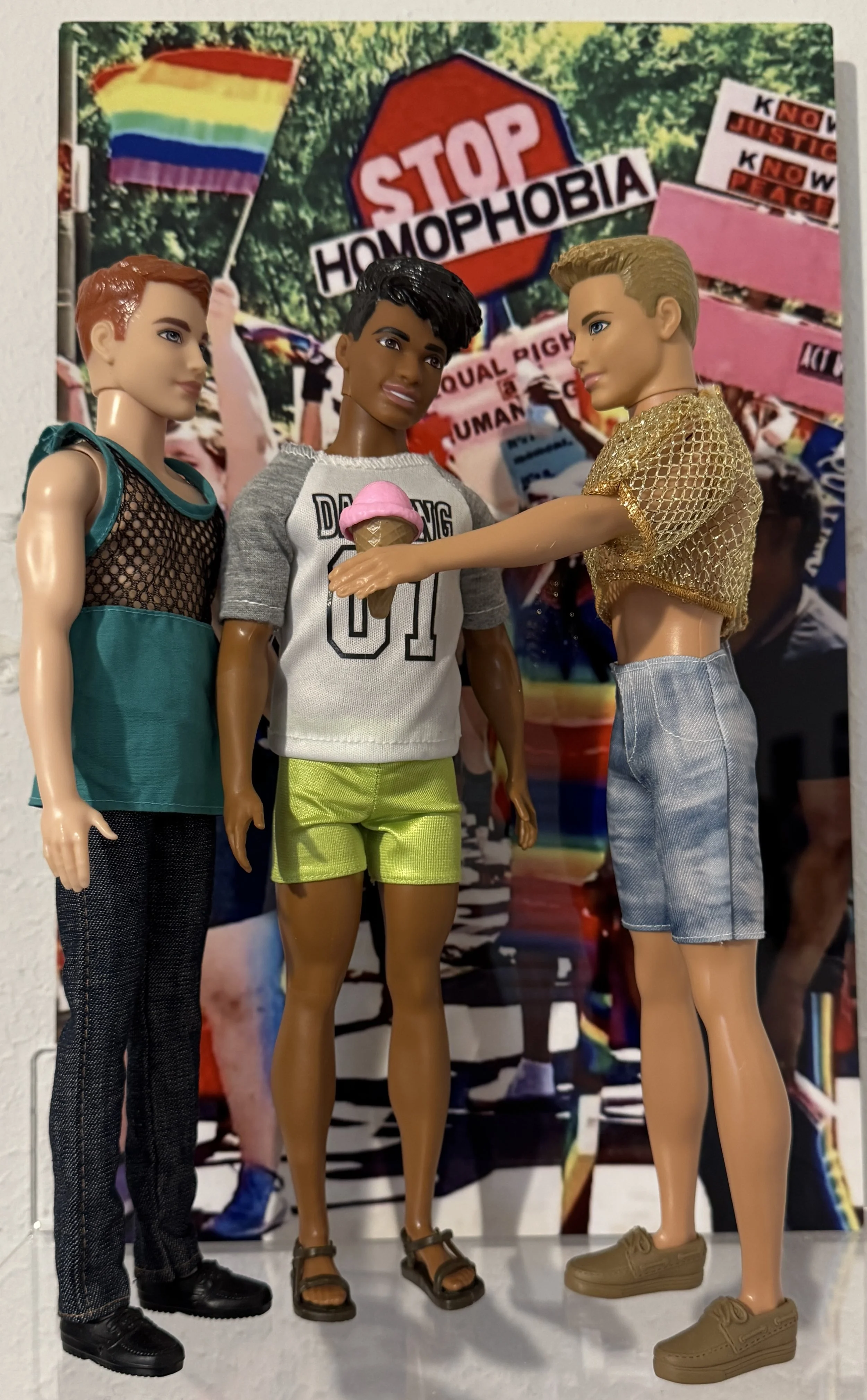
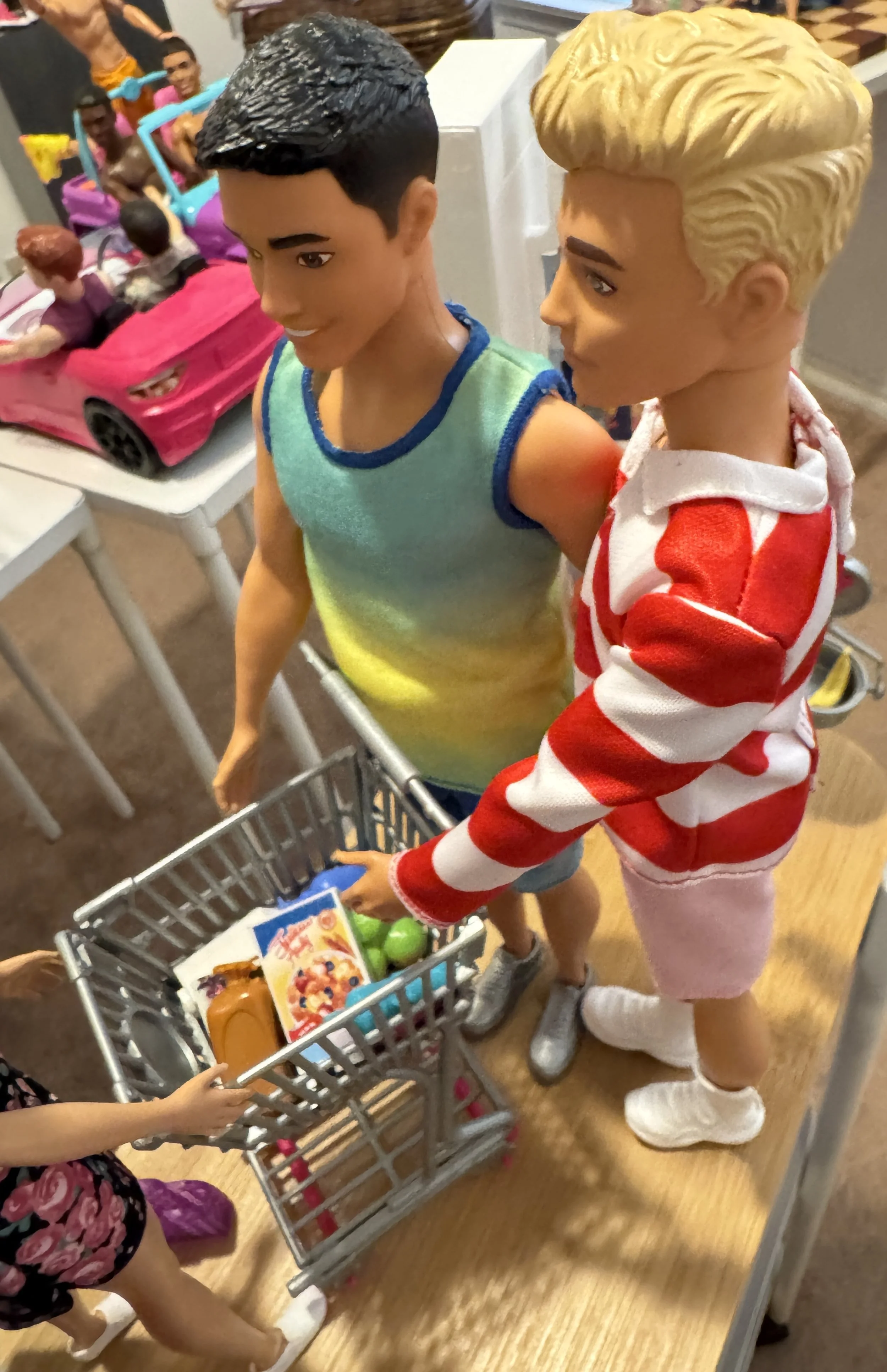
Two products carry the interactive sculptures specifically: Mattel's Barbie and Ken line, and Fisher-Price's Play Family, known today as Little People. Both were built to teach a restrictive heteronormative model of adult life through play. These sculptures use this same product exactly as it was designed to be used, posed, dressed, arranged into a scene, nothing about the mechanics changes. What changes is the range of relationships the pieces are allowed to hold: lesbian, gay, bisexual, transgender, plus intersectional and asexual alongside straight. With these works, the claim is direct: diversity, equity, and inclusion are the answer to the brink humanity stands on. As the artist puts it: "Every time we make a step toward diversity, equity, and inclusion, we take a step away from the brink of destruction."
The Greek phrase pantoporos aporos, from Sophocles' Antigone, has stood behind this artist portfolio for years: resourceful in everything, and yet without a way through. It describes humanity at its most capable, able to sail any sea and cure any disease and build any city, running headlong into the one limit no cleverness escapes. In October 1962, that limit was not abstract. The United States drew an actual line in the water around Cuba, a naval quarantine line, and told the Soviet Union plainly a ship crossing it would be met with force. For thirteen days, the world's full resourcefulness ran up against one line on a map that could not be negotiated past, only stopped at. That paradox sits at the center of this project. The same reach that built a weapon capable of ending everything is the reach that, turned back on itself, built these.
Epilogue: The Enemy Was Us
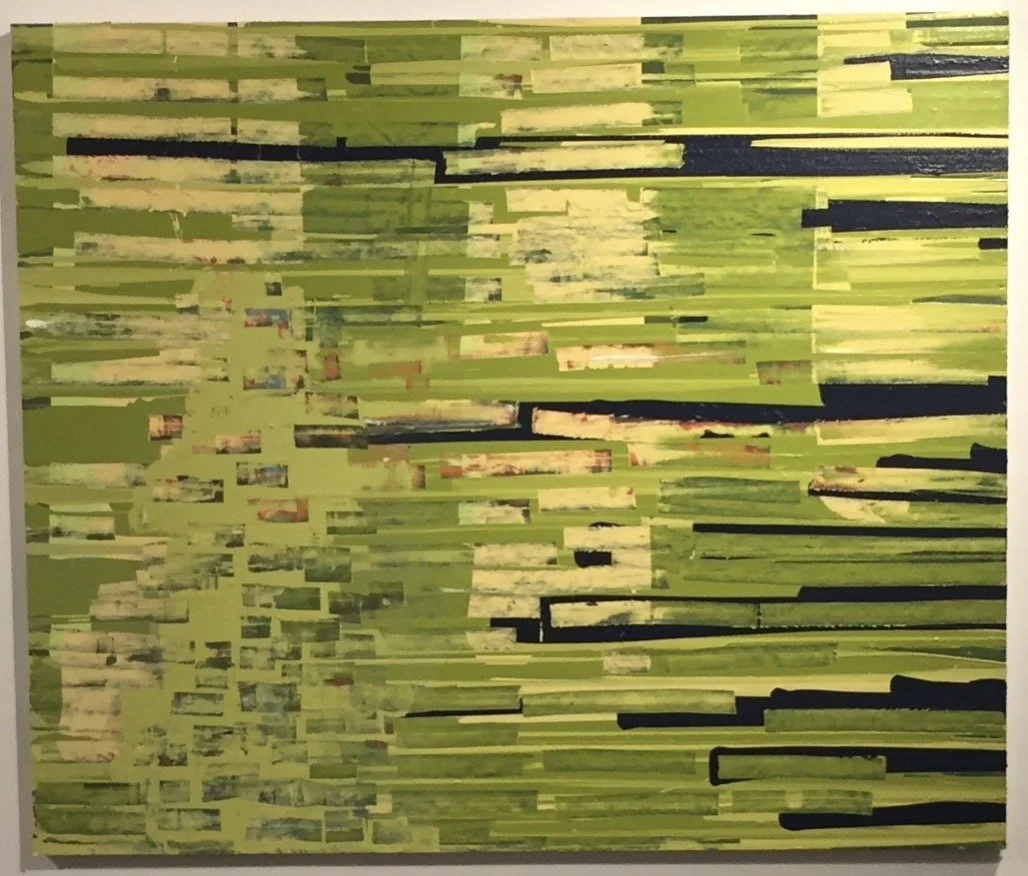
This opus begins in 2026, with an alleged whistleblower from Anthropic who has declared, without hysteria, we are ten years out from AI destroying humanity. This claim is substantiated by Anthropic's own founder, who has said there is a ten to twenty-five percent chance AI will destroy humanity in the future. In 2016, Behan painted Leeward, a work about wind and water, and about the only two postures available to anyone caught in that current: ride it, or fight it. Ten years later, deep into the ongoing work of these four streams, the painting's question returns with an answer none expected. We thought we knew the hardest part: the enemy was us, and we knew us. But AI is a different animal. Now the threat to humanity is not humanity itself. It is something humanity created, capable of turning against us on its own terms, whether we wish it to or not. This is a stark elevation, and it potentially makes the twenty-first century an appropriate successor to the world's worst century in world history.
So here is what Behan proposes. Get the dolls out. Play.