For most of Western art history, an artist could not paint two men in a romantic context and expect the work to survive, let alone hang in a public gallery.
Social exile was the real consequence of open depiction. But a handful of genres carried enough institutional legitimacy to shield content that would otherwise be illegal or career-ending: the academic nude study, the Greek myth subject, the bather scene, and the man at his toilet.
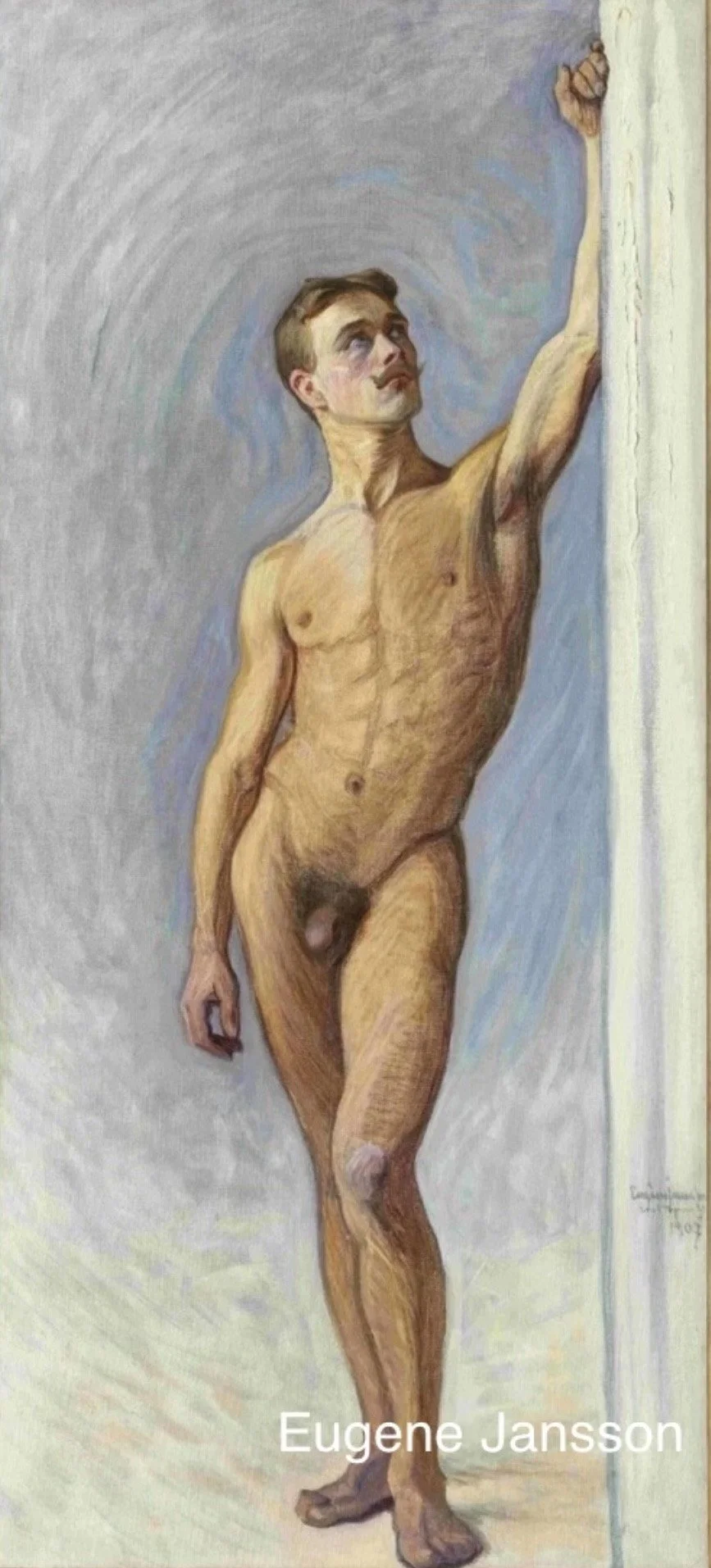
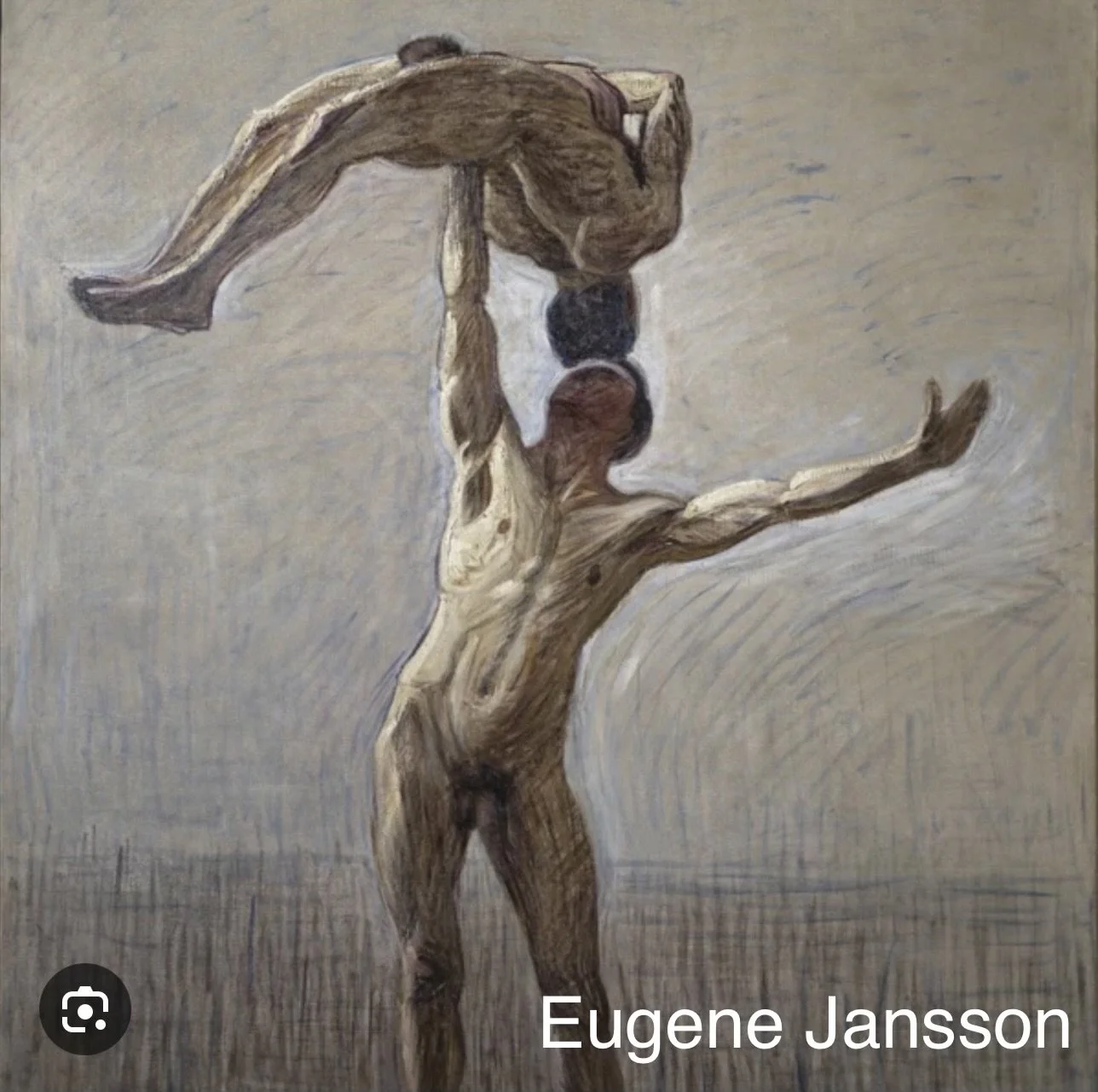
The Nude Study: Eugène Jansson and Osmar Schindler
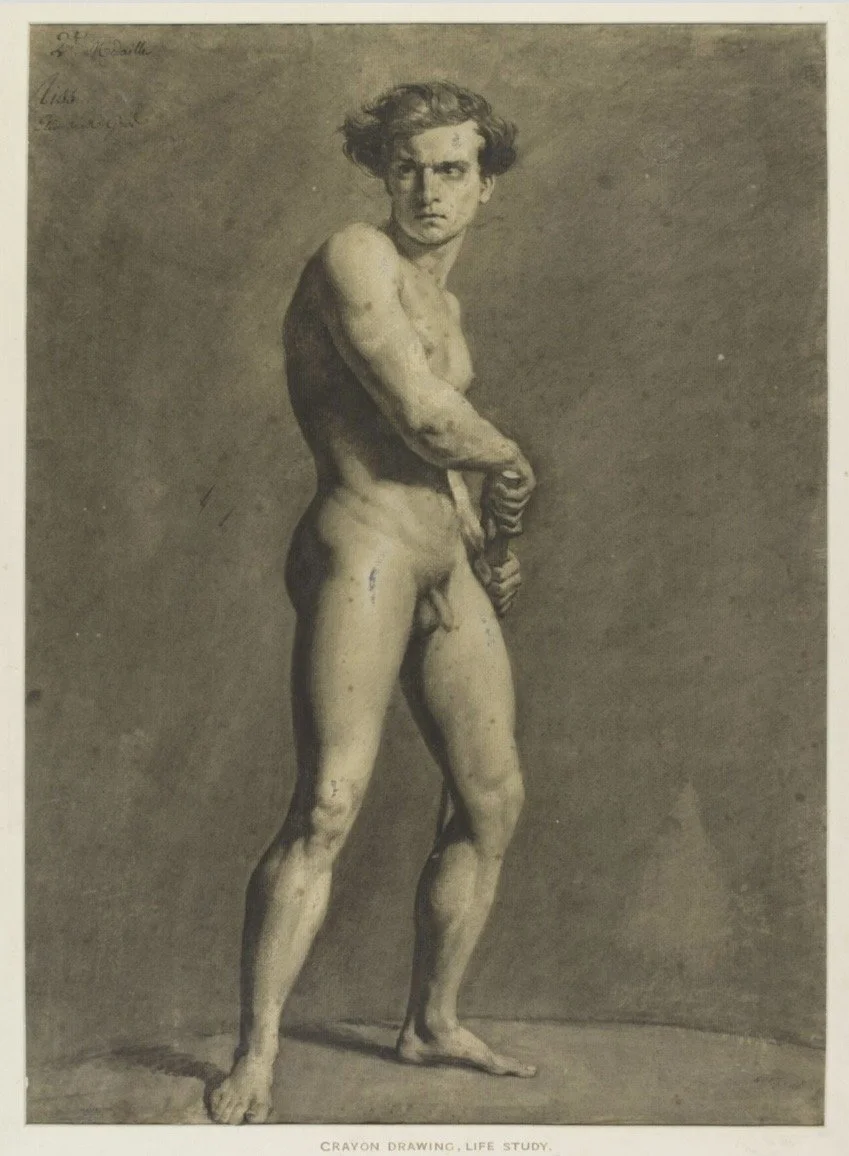
Academic art training required life drawing from nude models, and until well into the twentieth century, those models were almost always male. Male anatomy was considered more revealing of muscle and structure, and propriety kept female models scarce in mixed or public settings.
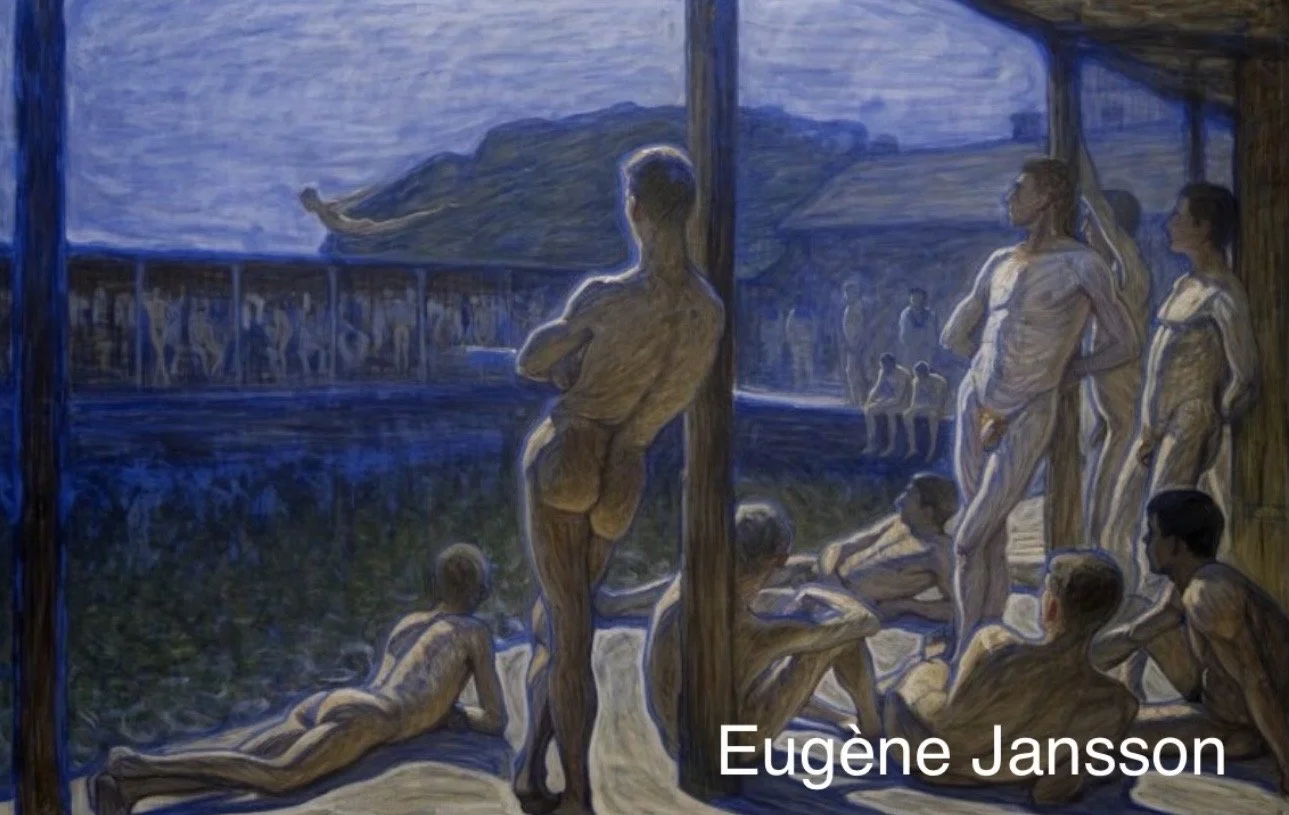
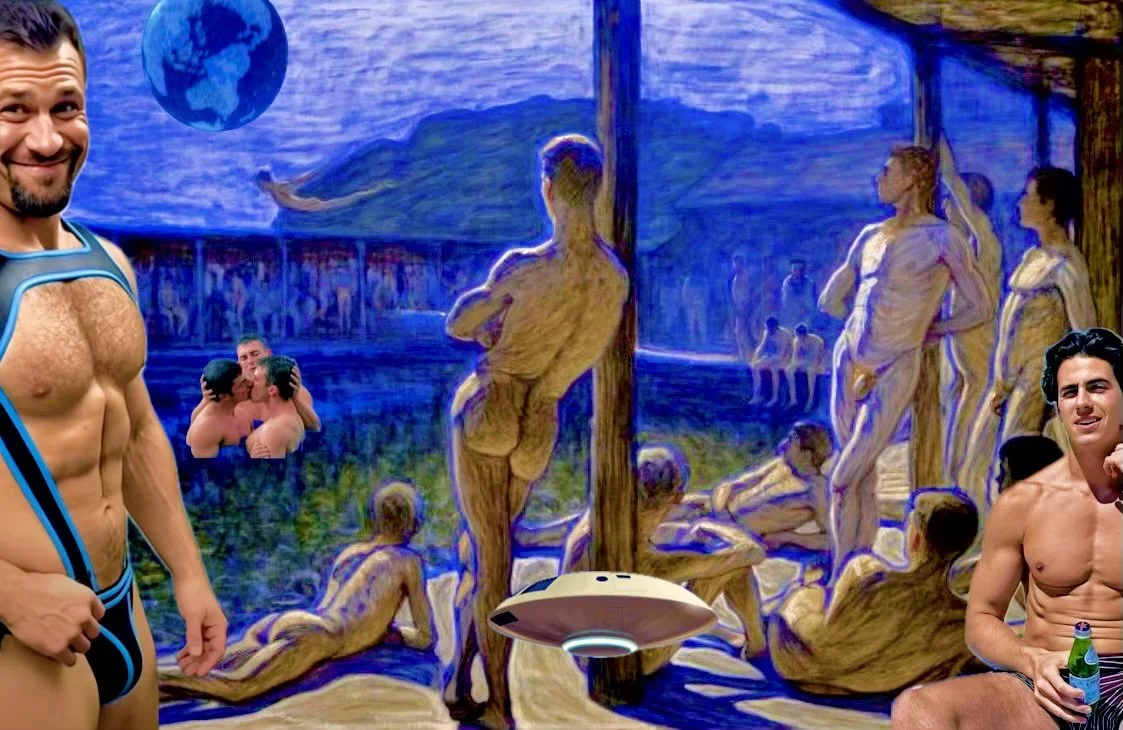
The Swedish painter Eugène Jansson took the nude study further than most. After building a reputation on moody nighttime cityscapes, he shifted around 1904 to painting nude gymnasts, sailors, and swimmers at Stockholm’s naval bathhouse, where he had become a regular. His 1907 painting “Naval Bathhouse” shows a crowd of nude men in the pool and around it, their glances and postures arranged with a charge that critics at the time were reluctant to name.
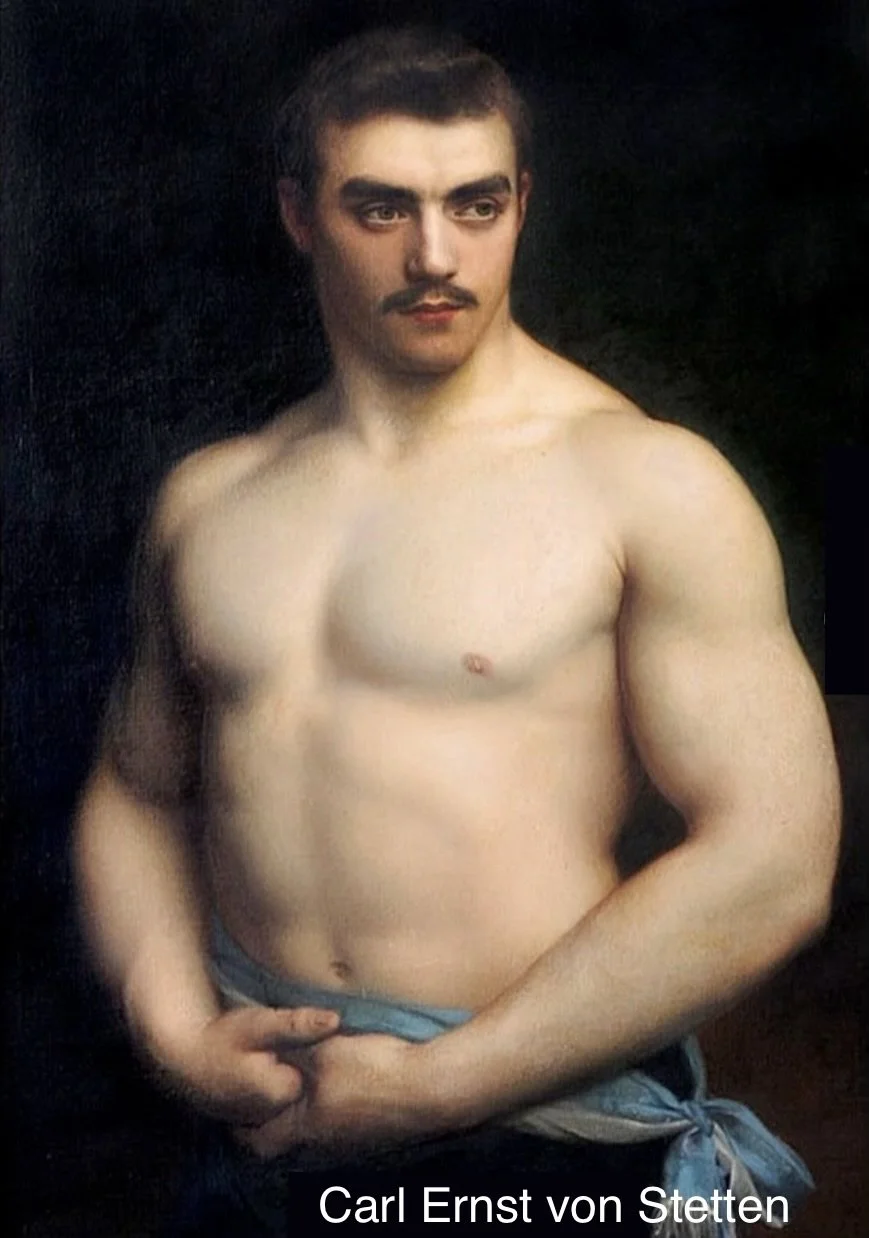
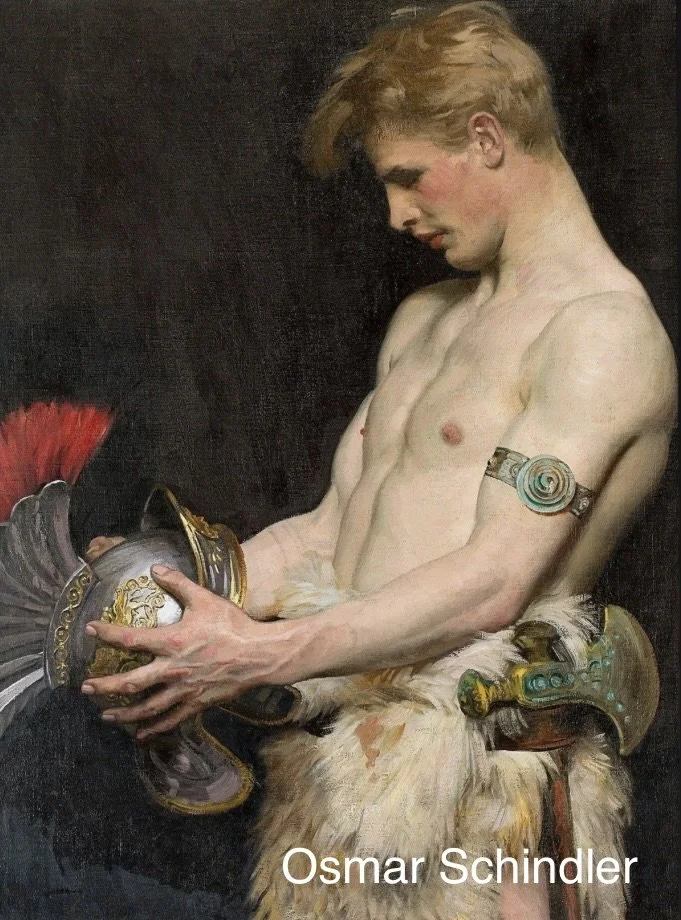
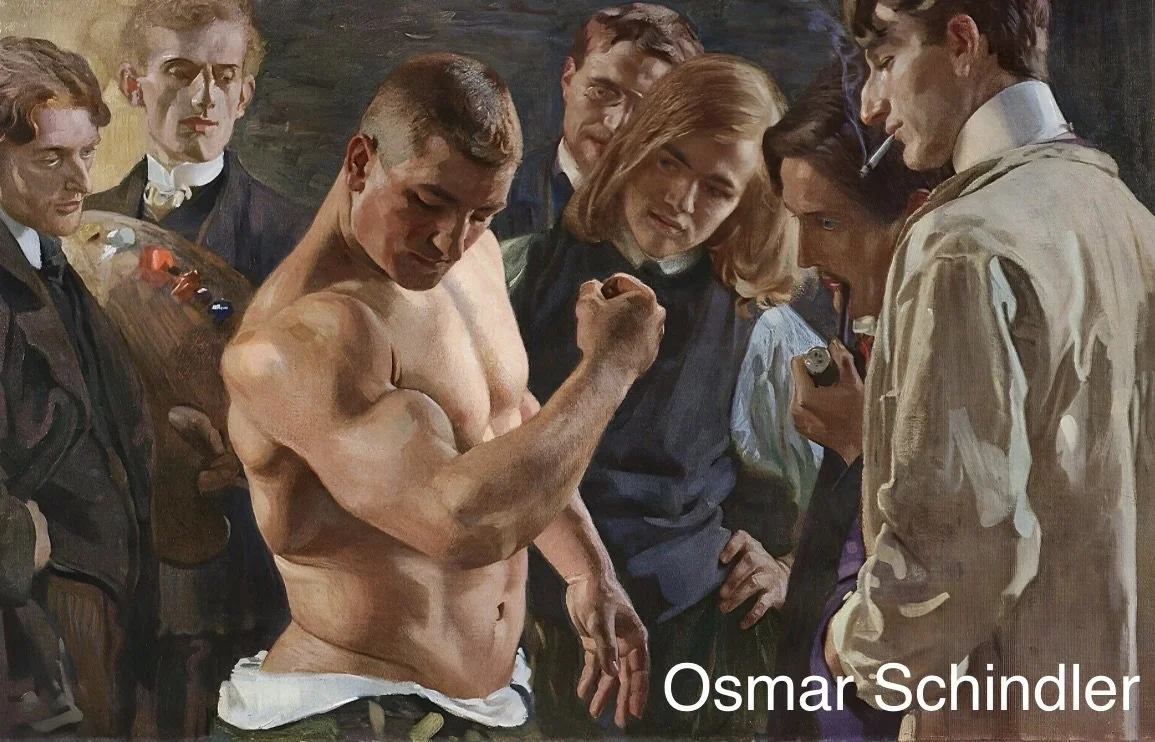
The German painter Osmar Schindler worked the same territory from inside the academy itself, teaching life drawing at the Dresden Art Academy alongside Sascha Schneider, whose own male nudes made him a landmark figure in queer German art history once scholars began to look. Schindler’s 1902 painting “Germanic Warrior with Helmet” shows a shirtless young fighter absorbed in polishing his own helmet, using national myth rather than classical Greek myth as its cover. He never married, and later scholarship has read his recurring male nudes and mythological subjects as part of the same homoerotic current running through Schneider’s work, though Schindler left no explicit statement about it.
The Greek Myth: Hippolyte Flandrin
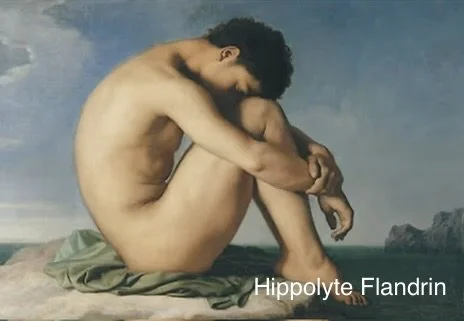
Hippolyte Flandrin’s 1836 painting “Young Man Seated by the Sea,” now in the Louvre, is the clearest case of the Greek-myth cover at work. It shows a nude youth alone on a rock, knees drawn to his chest, head bowed, eyes closed, with no myth or story identified in the title. Critics have long read the solitary, inward pose against the myth of Narcissus, the youth so absorbed in his own beauty that he could love no one else. The painting has been reproduced, copied, and claimed by gay artists and viewers for more than a century, including by the photographer Wilhelm von Gloeden, who restaged the same pose for his own classical-themed photographs decades later.
The Bather: Thomas Eakins
The bather scene extended the nude into a narrative setting. A man bathing, swimming, or drying off after a swim had a built-in reason to be undressed, so a painter could show desire without depicting anything as explicit as an embrace.
Thomas Eakins used this device in his 1885 painting “Swimming,” showing himself and five male students and friends nude at a swimming hole outside Philadelphia, gazing up at the other men from the water. The composition is one of the most cited examples of homoeroticism in American painting. Eakins pushed the same territory too far the following year, removing a male model’s loincloth in front of a mixed class at the Pennsylvania Academy of the Fine Arts; he was forced to resign, and rumors about his sexuality followed him for the rest of his career.
The Man at His Toilet: Gustave Caillebotte
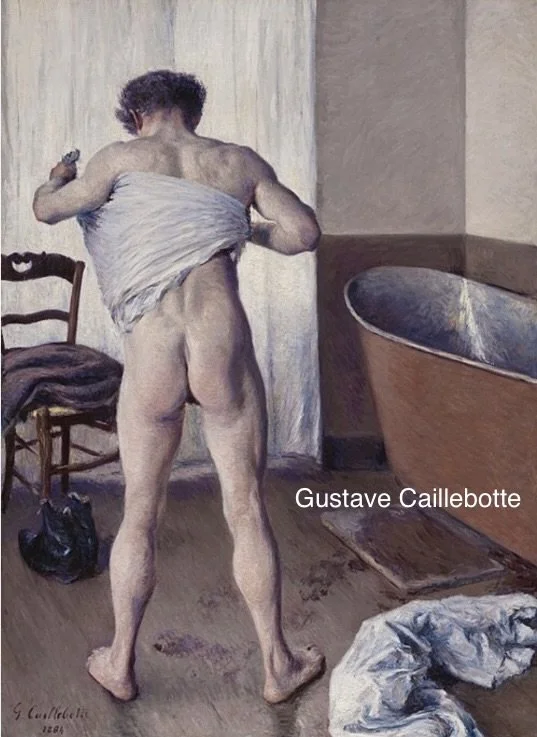
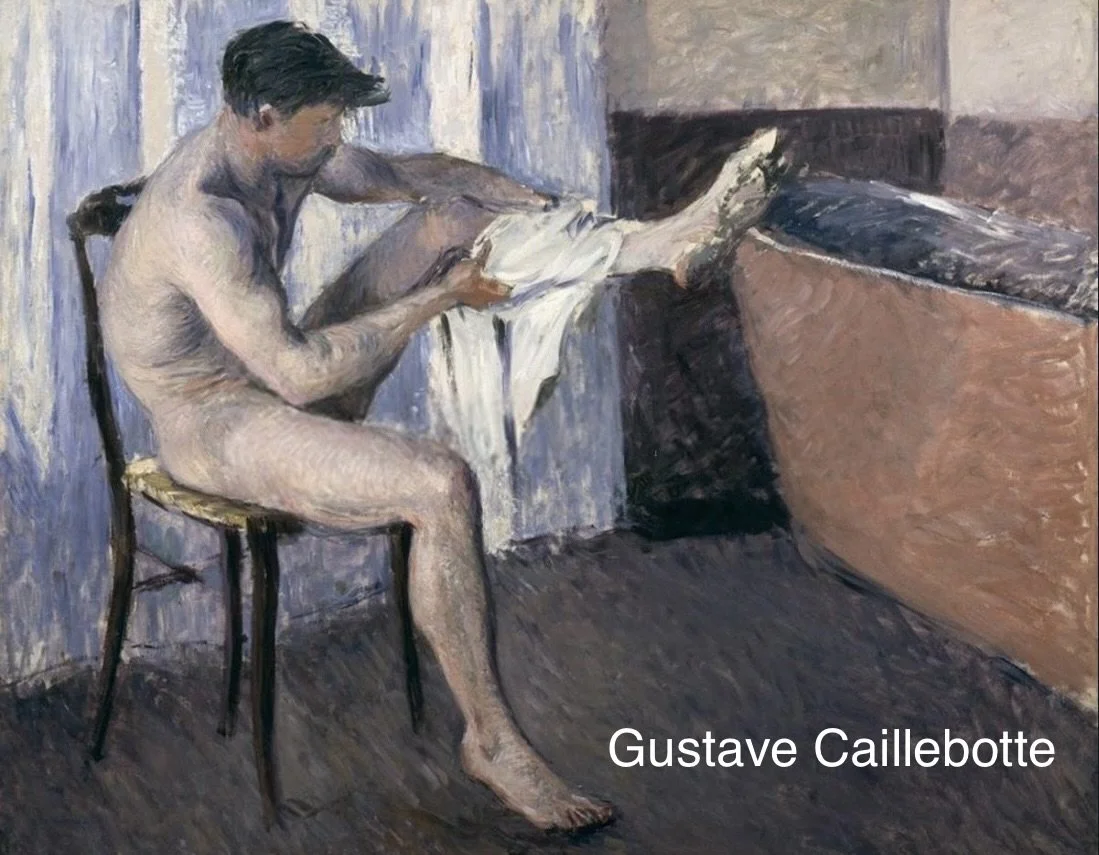
The fourth genre — a man washing, shaving, or drying off in a private domestic setting — offered a different kind of cover. Where the bather scene used outdoor leisure as its excuse, the toilet scene used ordinary domestic realism. A man alone in his bedroom was simply going about his morning.
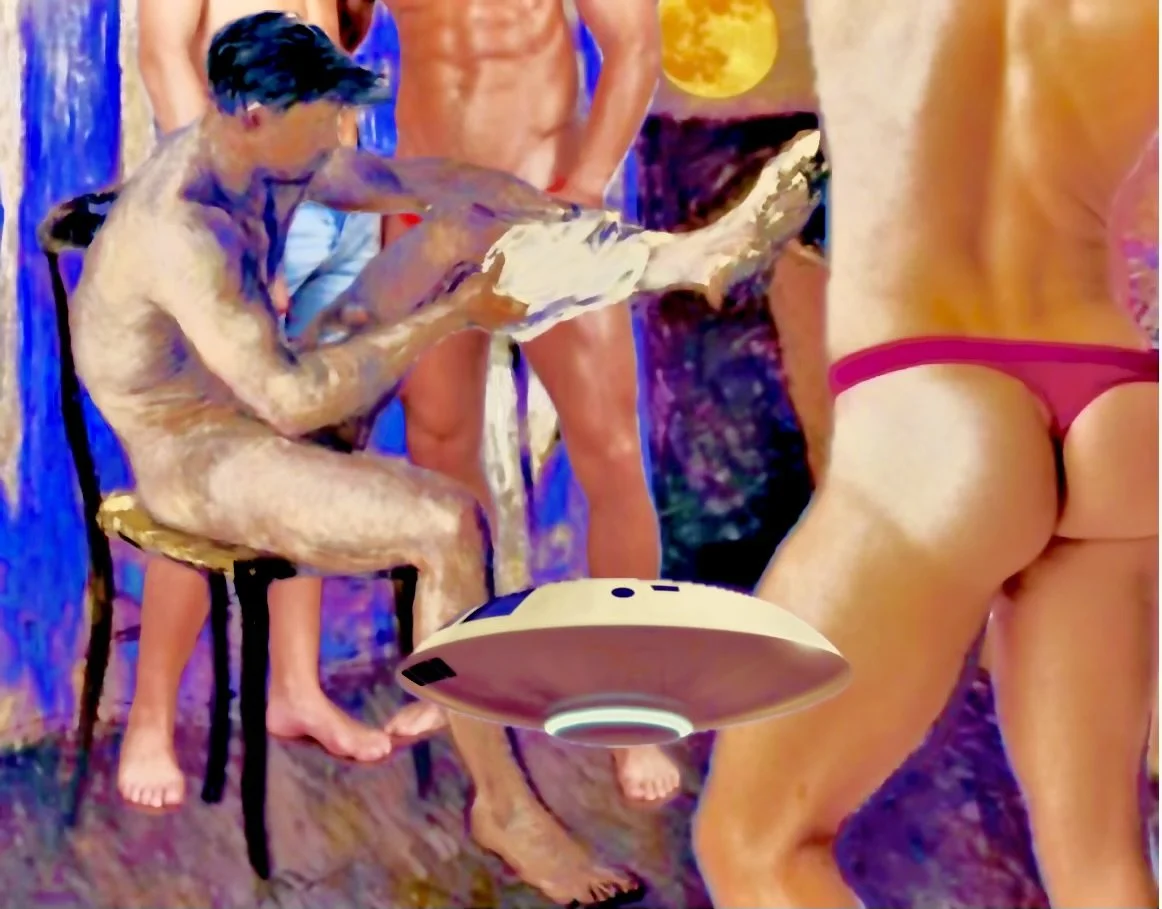
Gustave Caillebotte made the genre’s most direct use of this cover in two 1884 paintings, “Man at His Bath” and “Man Drying His Leg,” showing a nude, muscular man alone in an ordinary bathroom, cropped close around his buttocks and groin. Bathing scenes were understood at the time as a genre reserved for female subjects; putting a man in that same intimate framing broke an unwritten rule. When a Brussels artists’ association exhibited “Man at His Bath” in 1888, they hung it in a side room rather than the main galleries, and recent scholarship reads the paintings as an explicit invitation to a homoerotic viewer.
What This History Means Now
Contemporary gay artists in the United States and much of Western Europe are not required to route desire through a swimming pool or a shaving mirror to avoid prosecution. That freedom is recent and remains uneven, both within Western countries and especially outside them, where sodomy laws and censorship of LGBTQ content are still active tools of state repression.
The coded-era record matters because it is genuine evidence of gay life in periods when almost no other documentation was possible — a diary could be burned, but a painting hanging in a national academy survived by definition. For artists working openly today, the choice is different in kind: coded work was built to pass as something else to a general audience while signaling clearly to an informed one, while open work addresses a general audience directly. Some contemporary artists still use the old vocabulary of the nude, the myth, and the domestic interior, not to hide behind it, but because it connects their work to a documented lineage of gay artists who came before them.
Putting the Romance Back In
Every artist in this essay was already doing the hard part. The desire is there in Jansson’s bathhouse, in Eakins’s swimming hole, in Caillebotte’s bathroom mirror. It just had to be folded down small enough to pass as anatomy, myth, or plumbing.
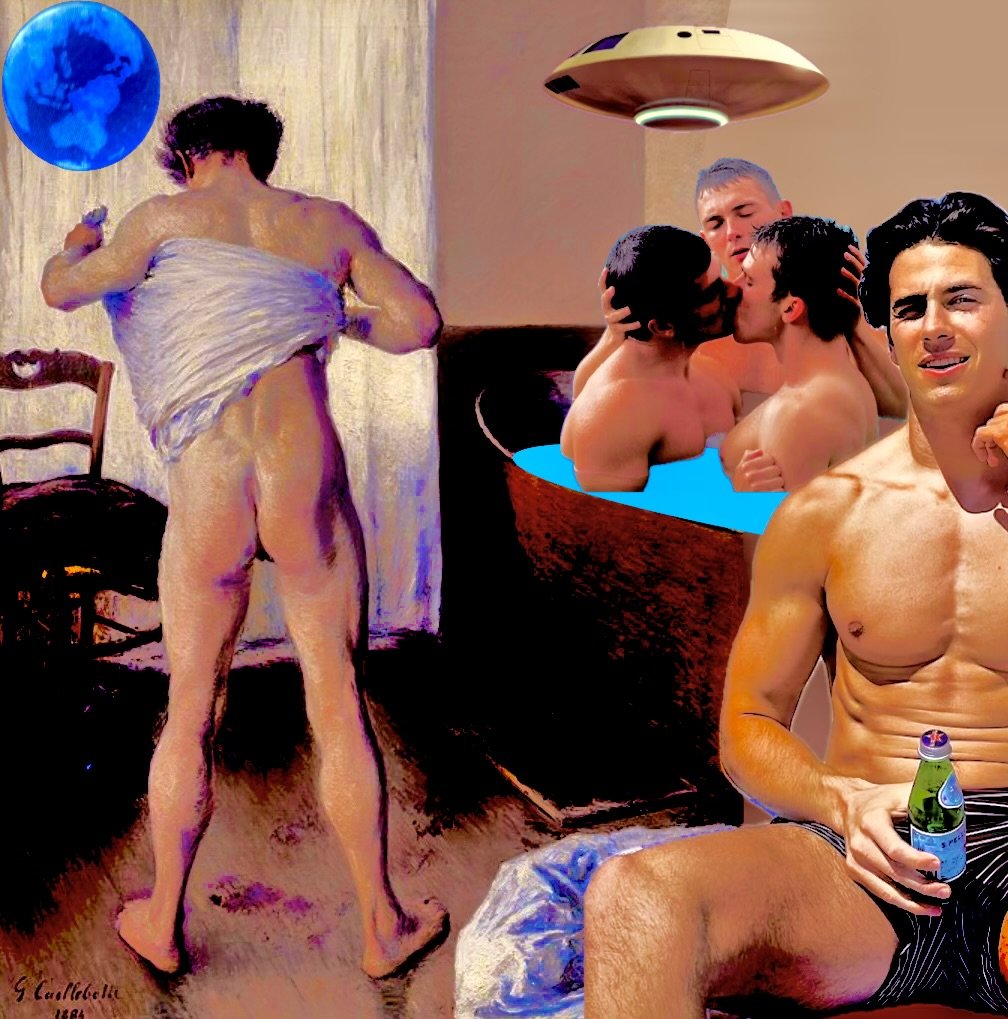
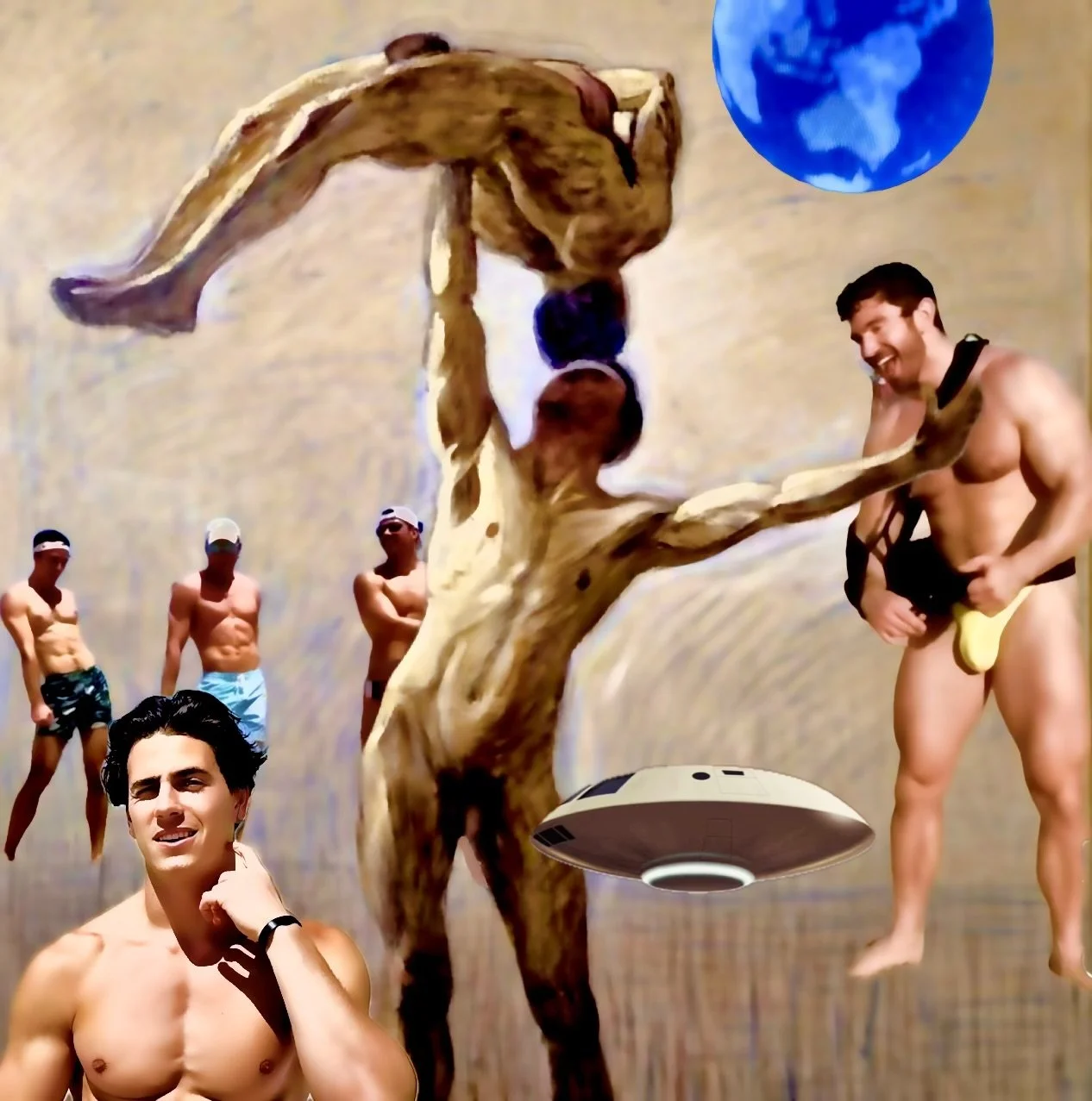
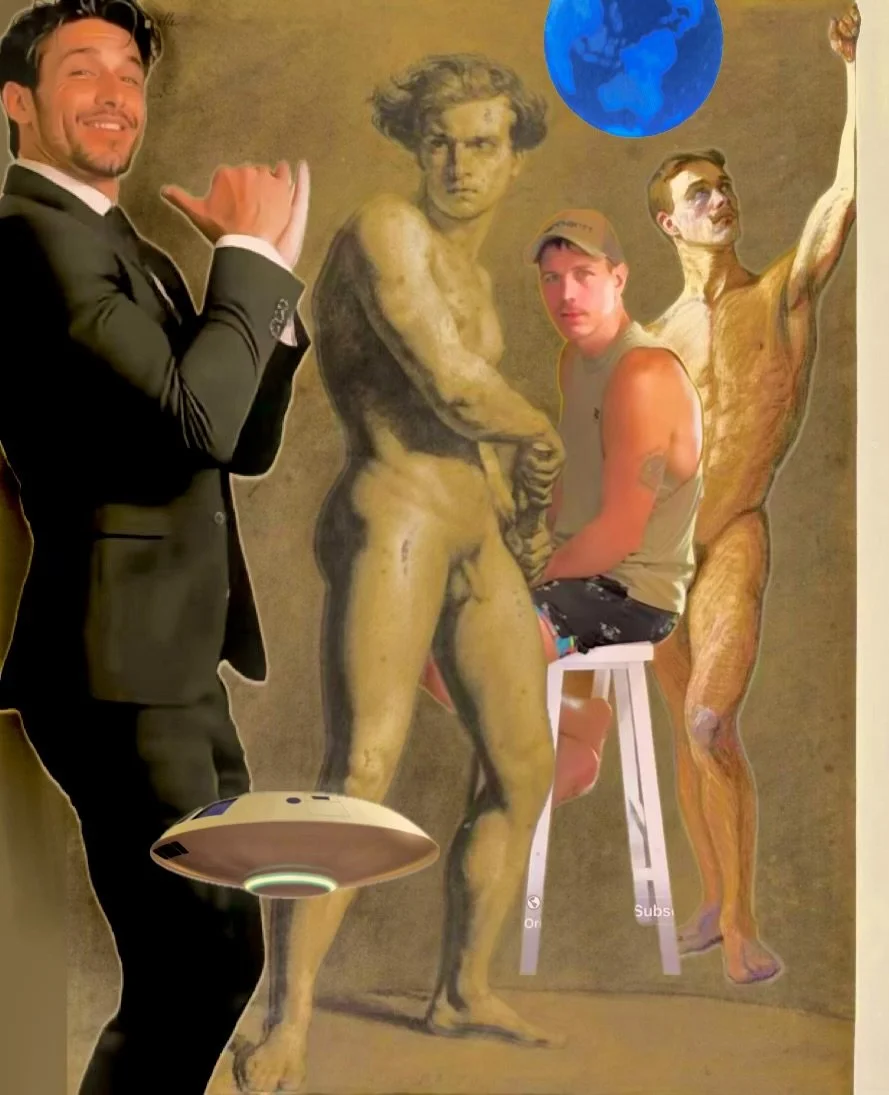
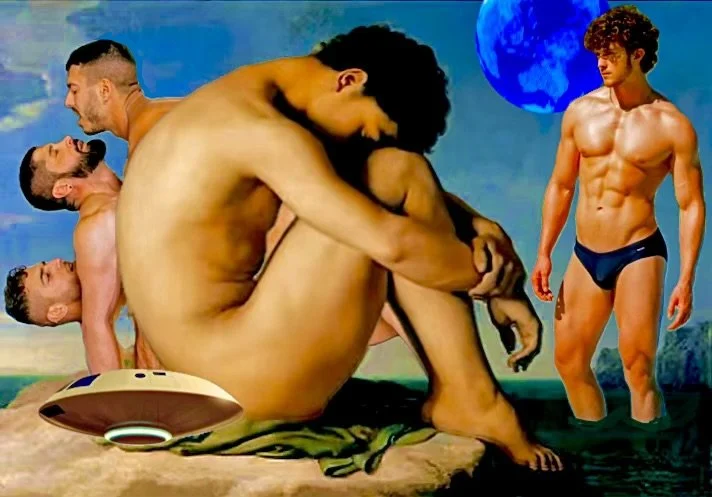
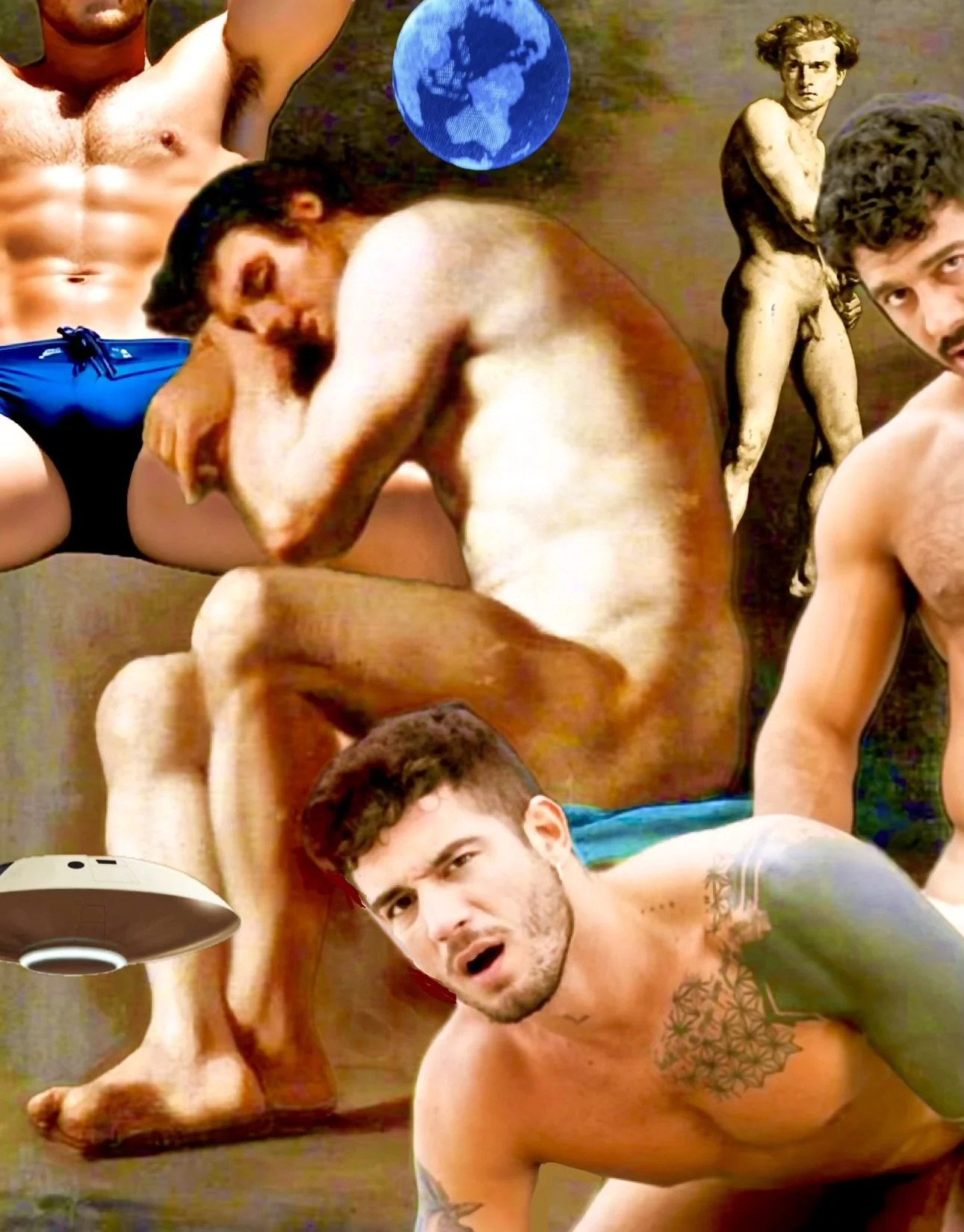
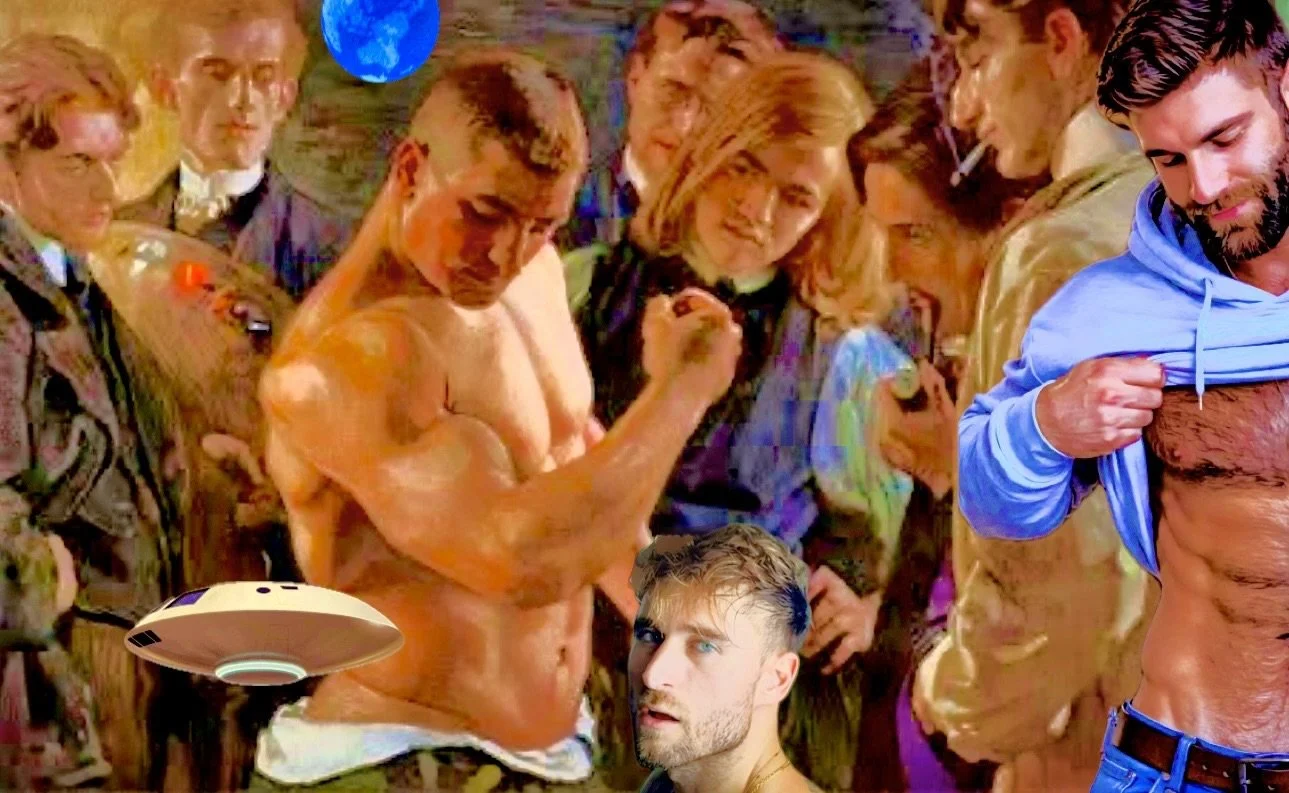
I’ve been unfolding it. Using several of these same paintings as a starting point, I’ve built a series of digital collages that take the coded version and finish the sentence it was always circling. Where the original artist could only imply two men wanted each other, I put the romance in the painting.
The pieces work best side by side: the original genre painting on one side, my reworked version on the other, so the change is easy to see and easy to name. Nothing about the source material had to be invented. It just had to stop pretending.
• Wikipedia and glbtqarchive.com, on Eugène Jansson and the Naval Bathhouse paintings
• Grokipedia and artblart.com, on Osmar Schindler and his Dresden Academy contemporary Sascha Schneider
• Wikipedia and Web Gallery of Art, on Hippolyte Flandrin’s “Young Man Seated by the Sea”
• Smithsonian Magazine, WikiArt, and the Journal of Philosophy and the Visual Arts, on Thomas Eakins’s “The Swimming Hole” and its homoerotic reception
• Pennsylvania Academy of the Fine Arts and Wikipedia, “Art Students’ League of Philadelphia,” on the 1886 Eakins dismissal
• The Art Newspaper, Artforum, and The Advocate, on the 2024–2025 “Gustave Caillebotte: Painting Men” retrospective
— Behan