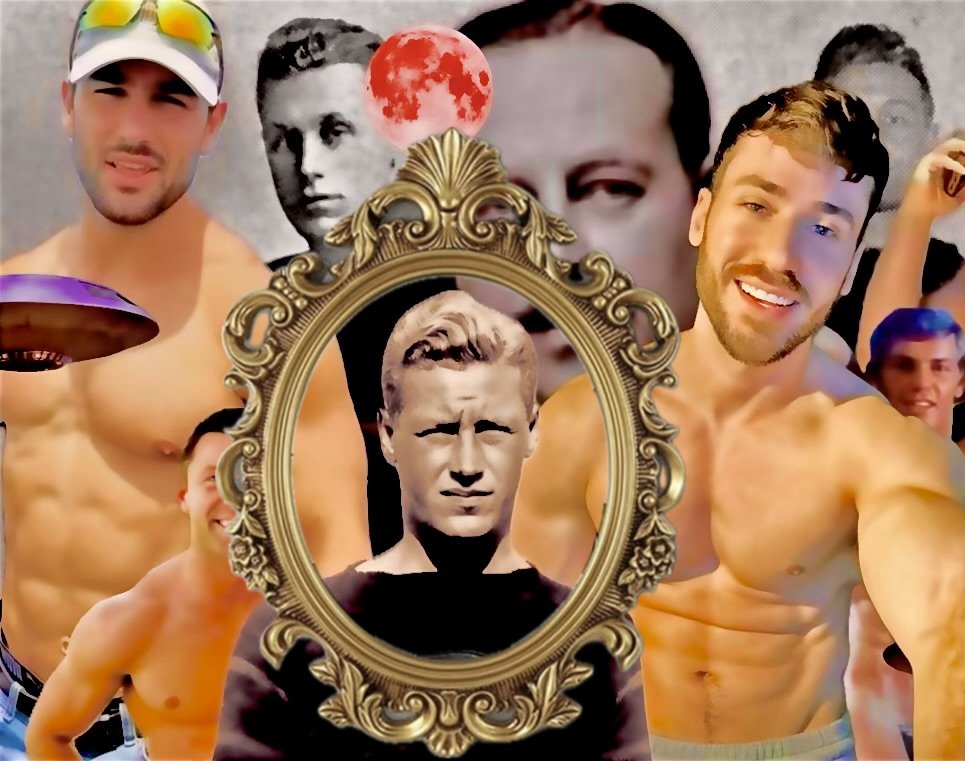
The myth of Narcissus is usually told as a cautionary tale. A beautiful boy falls in love with his own reflection and wastes away. But queer artists have always read it differently. The mirror doesn’t have to be a trap. Sometimes it’s the first honest thing you’ve ever seen.
For gay men growing up in a culture that rendered them invisible — or worse, rendered them monstrous — the mirror was a radical act. Seeing yourself clearly, fully, without apology, is not vanity. It is survival.
Psychologists who study sexual identity development describe self-acceptance as the resolution of internal conflict — moving from awareness, through tolerance, to genuine integration of identity into the self. That journey, for gay men, has never been purely private. It happens against the backdrop of a culture that spent most of the 20th century insisting you didn’t exist, or shouldn’t.
Which is why the mirror matters so much in queer art. Queer artists return again and again to figures gazing through windows, staring into mirrors — gestures of vulnerability that quietly affirm queer presence. The mirror is where the private self meets the evidence. Where you stop taking the world’s word for who you are.
Queer artists looked backward not with nostalgia but with defiance. They saw in ancient myths a mirror — one that reflected not sanitized identities, but the wild, restless truths of love, body, and spirit.
The Closet Series keeps returning to mirrors too. Not because the men in them are in love with themselves. Because they finally can be.
The Closet Series. 2026.