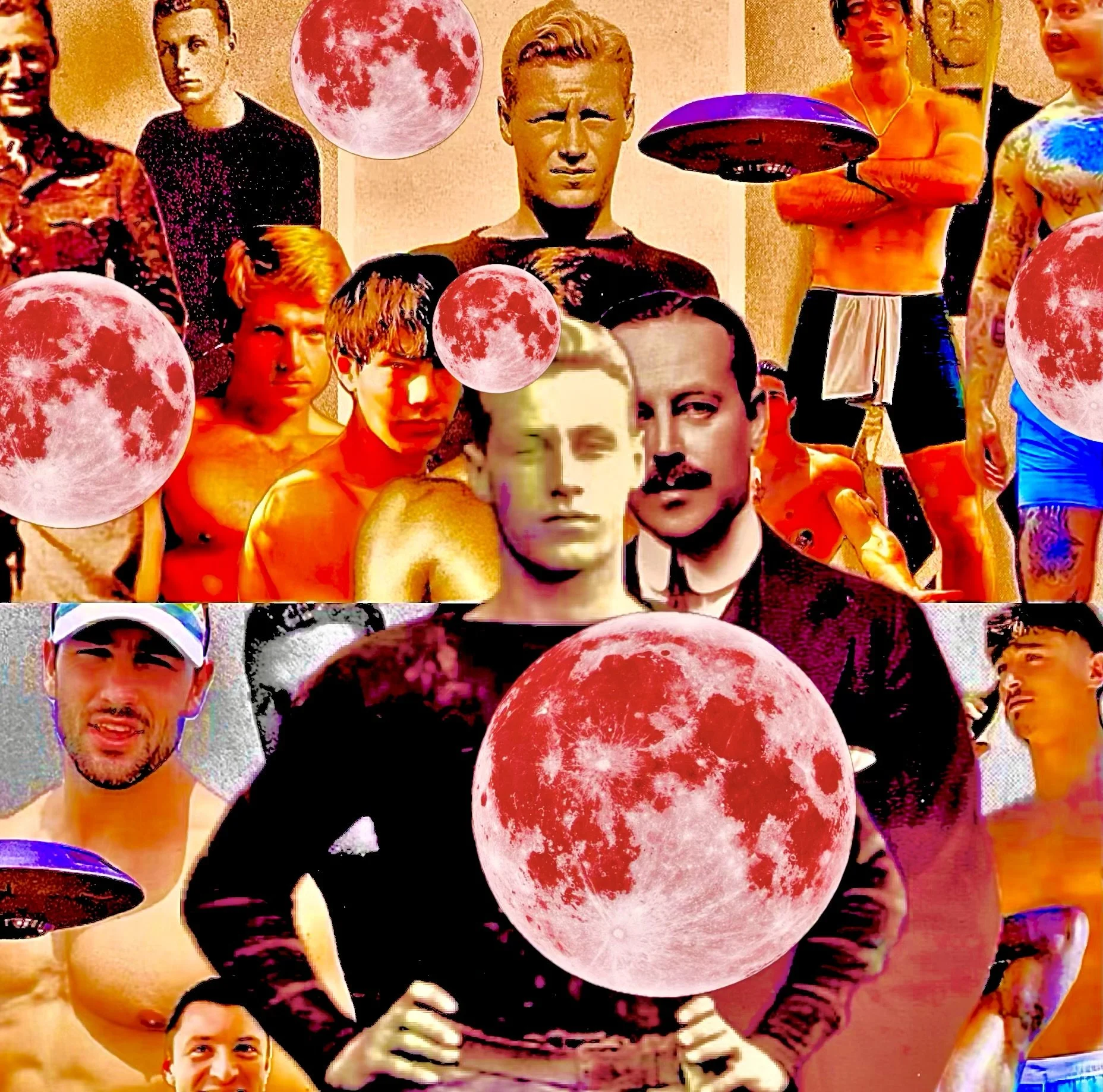
Hobey
On Hobey Baker, Percy Rivington Pyne II, and the photograph that was never taken
I am getting so tired of hearing about really good friends.
Hobart Amory Hare “Hobey” Baker was born in 1892 in Bala Cynwyd, Pennsylvania, into a prominent Philadelphia family, and by the time he graduated from Princeton in 1914 he was the most celebrated amateur athlete in America. He was the first American star in ice hockey — one of the first nine inductees into the Hockey Hall of Fame when it was founded in 1945, the only American among them. He was also inducted into the College Football Hall of Fame in 1975, the only person ever to appear in both. F. Scott Fitzgerald, who spoke to him once at Princeton, was so dazzled he based a character on him. The whole country knew his name.
After graduation he worked at J.P. Morgan Bank, enlisted in the United States Army Air Service when America entered the First World War, flew with the 103rd and 13th Aero Squadrons, was promoted to Captain and named commander of the 141st Aero Squadron, and was awarded the Croix de Guerre by the French government. He died in France on December 21, 1918, when a plane he was test-piloting crashed — hours before he was due to leave for home. He was twenty-six years old.
None of that is the part that got buried.
What got buried was Percy. Percy Rivington Pyne II was a wealthy New York socialite, ten years older than Hobey, who had also attended St. Paul’s School and Princeton. They met after graduation and became inseparable. Percy invited Hobey to live with him at his house at 263 Madison Avenue, which Hobey did for two years. They traveled together, moved in the same social circles, and by every available account built their lives around each other. Percy was known, quietly, to be gay. The historical record notes this and then moves efficiently along.
The official record calls them really good friends.
One of the most quietly devastating consequences of the closet is what it did to photography. The nineteenth and twentieth centuries saw the emergence of the photograph as a technology of love — the impulse to be pictured with the one you love as a fuller understanding of yourself, as evidence that you existed together, that your love was real and had a face. Straight couples understood this instinctively. Gay men were not allowed it. There is no photograph of Hobey and Percy together. The archive does not contain them in the same frame. What this collage does is put them there — finally, a century late, together in the center of the image where they belong, surrounded by the pink moons that mark what the dominant culture cost them, witnessed by Jupiter 3 who has been watching all along.
The collage is composed in an X format — the eye moves across and through the frame, drawn to the center where Hobey and Percy finally occupy the same space. It is a deliberate compositional choice. The X marks the spot where history buried something. The Closet Series digs it up.
Someone wrote this about Hobey after he died. Whoever wrote it knew exactly who he was:
You who seemed winged, even as a lad,
with that swift look of those who know the sky.
I think some day you may have flown too high,
so that immortals saw you and were glad,
watching the beauty of your spirit’s flame,
until they loved and called you, and you came.
That is not about hockey.
These stories litter the landscape. Hobey and Percy. Jerry and Rob and Diggy. Men who loved each other with everything they had, whose love was recorded in letters and private journals and architectural silences and the particular way a life is built around another person — and then handed to the archive, which called it friendship and moved on.
I fell over this story. That is the only way to describe it. And I am getting so tired of falling over stories like this. There are so many of them. They are everywhere. And every single one of them deserves to be put back together, put back in the same frame, given the photograph that was never taken.
That is what The Closet Series is for.