Friends and Lovers: From Film to Digital, 1985–2025
In 1985, a filmmaker named Ron Pearson (1959–2001) produced, directed, and starred in a gay adult film called Friends and Lovers. The film followed two boyfriends through a day at a spa and gym, documenting the romantic and sexual encounters they had along the way. Director of photography Tom Howard shot it with genuine cinematic intention — careful framing, considered lighting, a visual vocabulary that understood the difference between documentation and filmmaking. Running through the film as a recurring visual metaphor was the weight machine at the gym — its bars and counterweights and mechanical resistance standing in for the rhythms of sex and desire without ever needing to announce itself. That is the work of a cinematographer and a director who understood what images can carry when you trust them.
Friends and Lovers was not unusual for its era. The golden age of gay adult cinema — roughly 1970 through the late 1980s — produced filmmakers with genuine aesthetic signatures. Wakefield Poole. Peter de Rome. William Higgins. Arthur Bressan Jr. These were directors who brought narrative structure, visual design, and thematic intention to work the dominant culture classified as pornography and refused to take seriously. For gay men in that era, these films were not pornography in the pejorative sense. They were the only cinema in which gay men appeared as full human beings — desiring, loved, present, alive. Hollywood was not making those films. The mainstream was not making those films. Ron Pearson was making those films, in a gym, with a cinematographer, and a weight machine that knew exactly what it was saying.
Forty years later, Seth Peterson (1997–2026) was one of the most prominent gay adult content creators working. He rose through Helix Studios, earned multiple industry award nominations, and eventually expanded to OnlyFans, where he produced, directed, and starred in his own work. He could play an entire Beethoven Sonata from memory — not a casual piece, but one of the most technically demanding works in the piano repertoire, requiring years of serious study. That detail matters. It tells you something about the range of creative intelligence and artistic hunger that lived inside a person the dominant culture filed under a single reductive category. What else might he have made, had he lived.
The tradition passes the way traditions always pass — not through conscious inheritance but through the accumulated weight of everyone who did the work before you. Pearson didn’t know Peterson. Peterson almost certainly knew Pearson’s work, or the world that work helped make possible. One man founded his own production house in San Francisco in the 1980s so he could control his own image. Forty years later another man opened an OnlyFans account for exactly the same reason, with different tools, in a world the Ron Pearsons had quietly helped build. That is how a tradition moves forward. Not handed. Carried.
The arc from Ron Pearson to Seth Peterson is forty years. It is also the arc from film to digital, from crew to iPhone, from cinematographer to content creator, from 16mm to OnlyFans. What was gained in that arc is real — autonomy, accessibility, volume, the ability for any gay man anywhere to produce and distribute his own image without a studio, without a distributor, without a gatekeeper. The democratization of the image is not nothing.
What was also lost is worth naming. The collective artistic ambition. The cinematographer in the room. The understanding that the apparatus of filmmaking — the frame, the light, the edit — could itself carry meaning. Ron Pearson used a weight machine as a visual metaphor for sex. That required a director of photography who understood the assignment and a director who trusted the image to do the work without explanation.
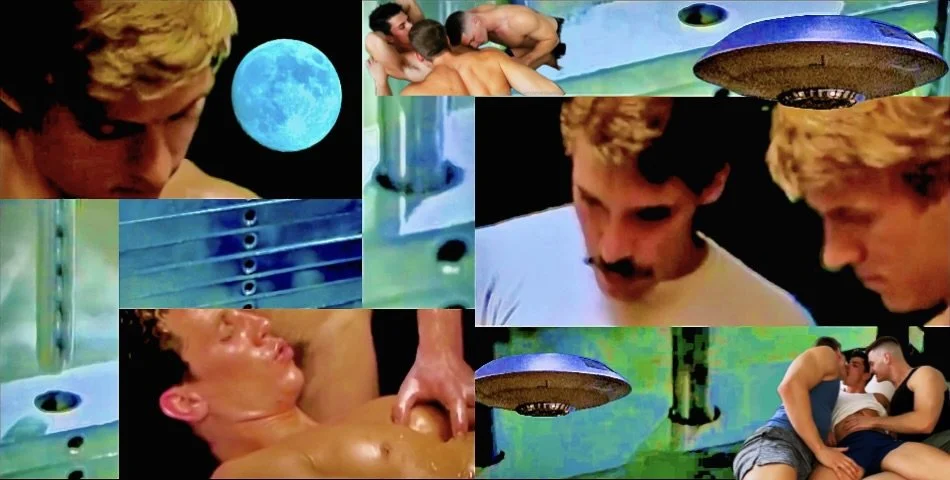
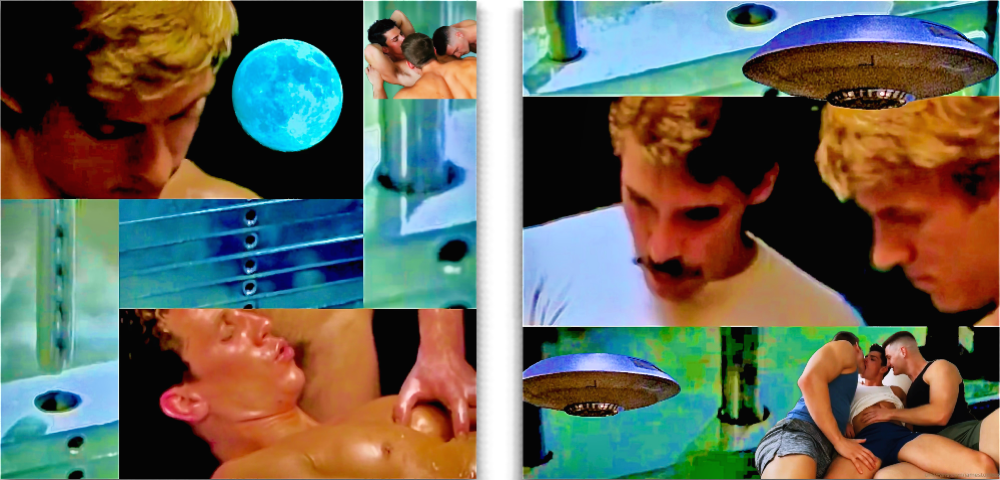
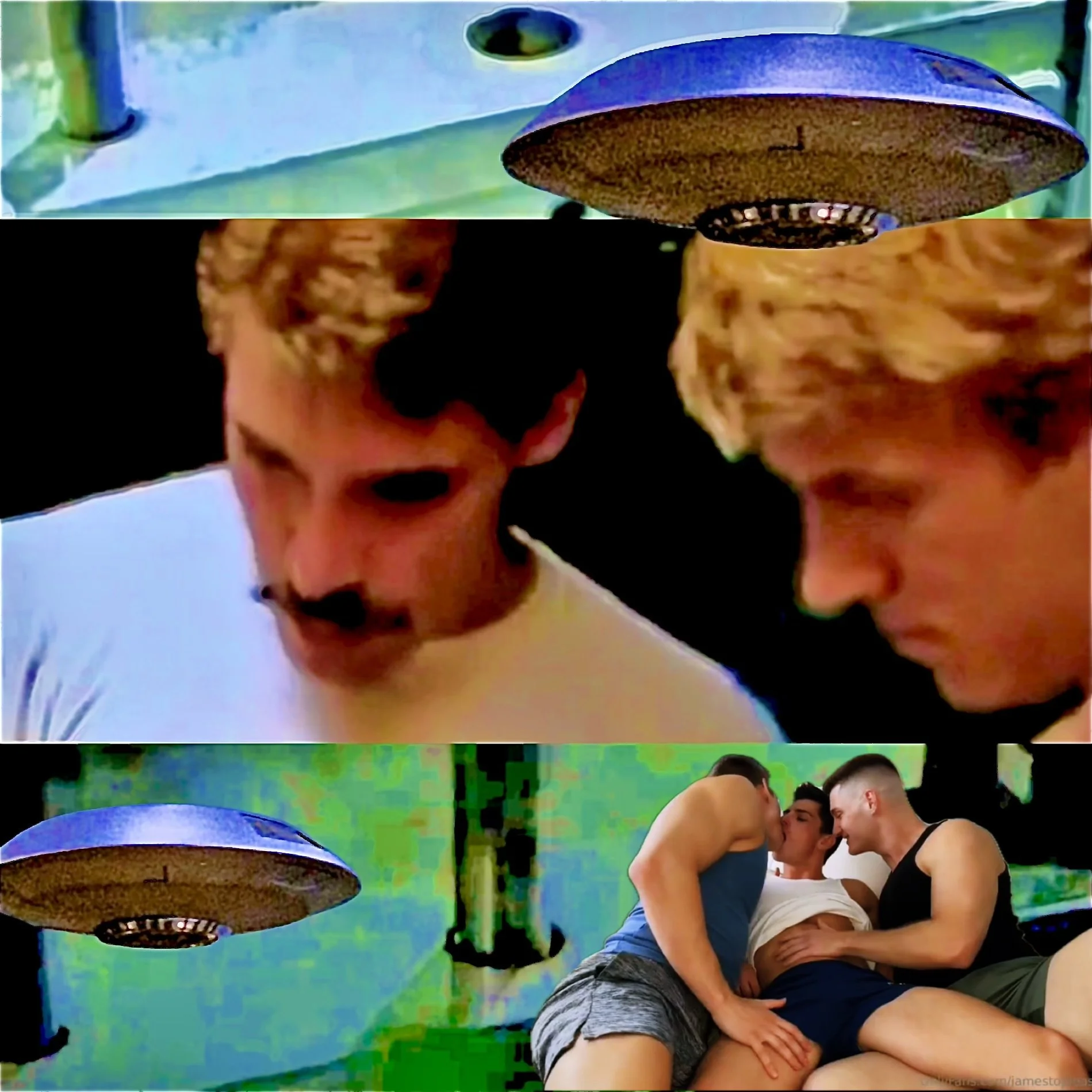
The Closet Series archives both men. The collages built from Friends and Lovers place the weight machine, the Aquarian Moon, and Jupiter 3 in conversation with footage from Peterson’s work — traditional filmmaking and digital content creation in the same frame, forty years apart, the same impulse, different apparatus, different world.
From film to digital. From crew to creator. From 1985 to 2025. The tradition continues. The men in it deserve to be seen and acknowledged.
— Behan