The Nude and the Chair
The Gay Domestic — The Subdivision
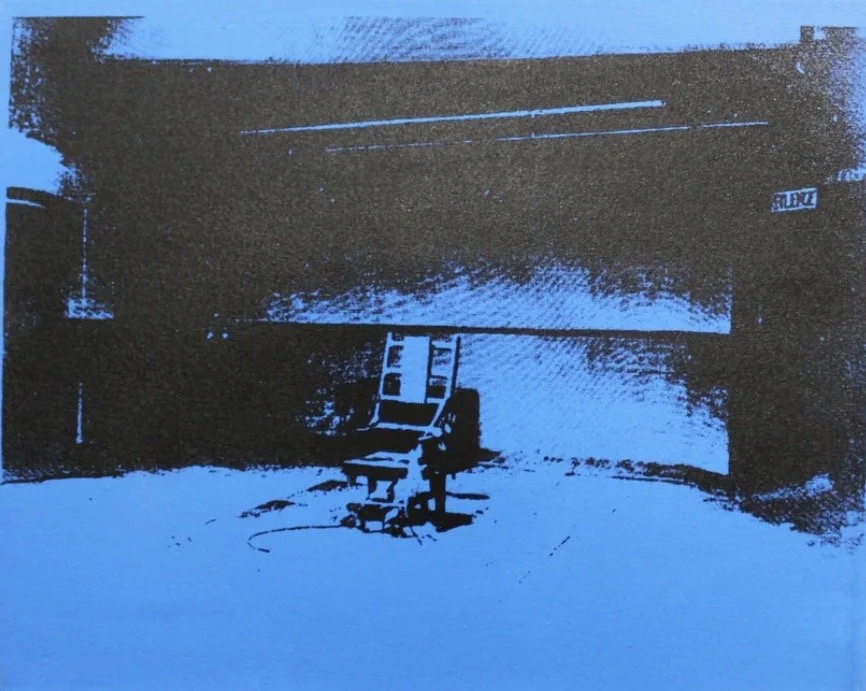
Andy Warhol’s Electric Chair series, ten screenprints made across the 1960s, shows an empty room and an empty chair — no prisoner, no execution, just the machine itself, lit in colors that have no business being there. Acid green, lavender, teal. The palette actively works against the horror of the image, and that friction is the whole point: cheerfulness laid over catastrophe, so the viewer has to do the work of holding both at once. The chair is a stand-in for a body that isn’t shown, an absence doing the emotional labor a figure normally would.
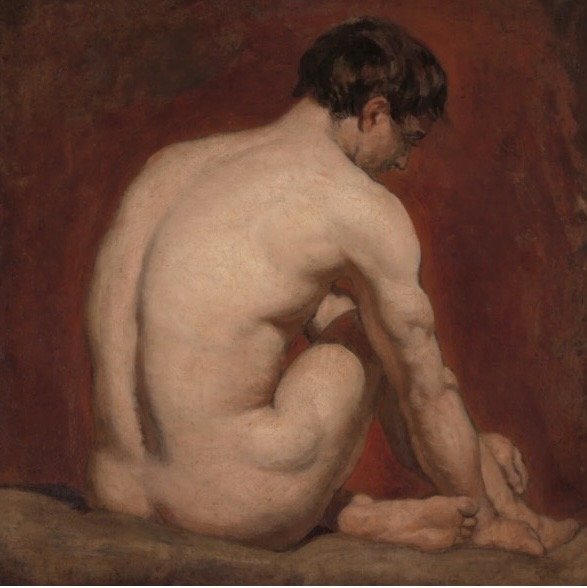
William Etty’s nudes work the opposite direction — full bodies, exhaustively present, and yet the man himself disappears behind them. Etty never married, kept a private life so secluded that art historians still debate what it concealed, and was known to frequent public bathhouses specifically to recruit men to model nude for him. His most acclaimed, publicly exhibited work drew outrage for “indecency.” His private, uncommissioned studies — quiet, unglamorous, academic in title only — are the ones that carry the real charge, men alone, turned away, offered up under the cover of life-drawing technique. The body is on full display. The man behind it stays hidden. That’s not incidental. That’s the whole survival strategy: paint desire disguised as pedagogy, because pedagogy was permitted and desire wasn’t.
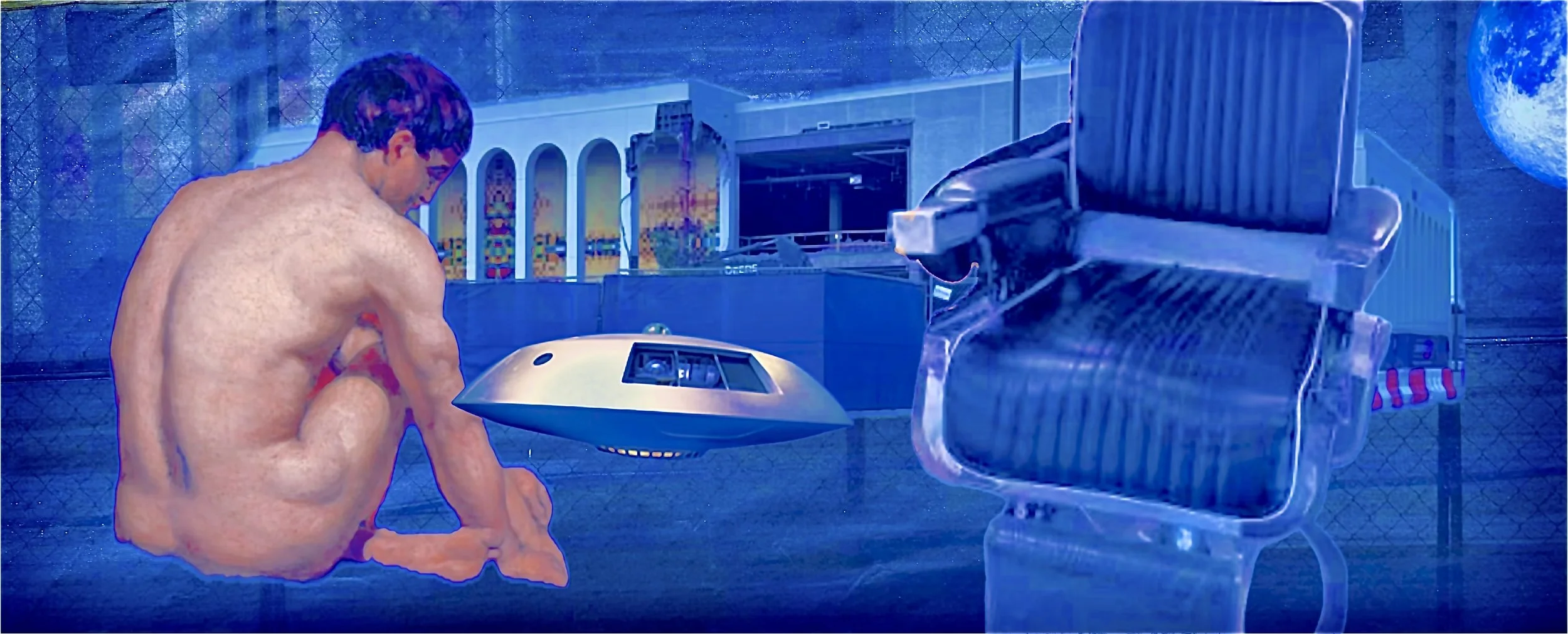
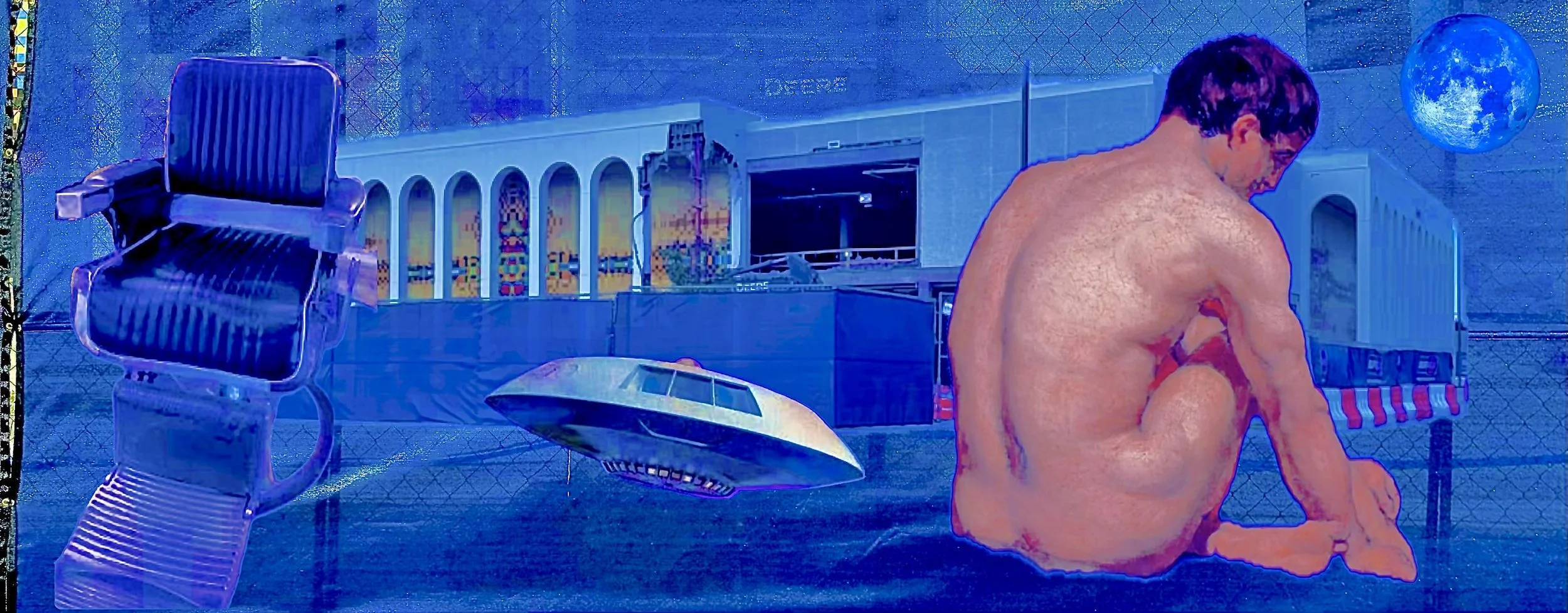
James Behan’s two collages put these two vocabularies in the same frame, and in Warhol’s own palette — monochrome blue, the whole scene drenched in a single cold cast the way the Electric Chair prints are drenched in wrong-feeling color. On the right, the chair: not Warhol’s original, but the same ornate barber chair from the previous piece, empty now, thrown into Warhol’s blue and given his gravity. It’s not a barber chair anymore. It’s a throne with nobody sitting in it, echoing an execution device with nobody strapped to it — both waiting, both charged precisely because they’re vacant. On the left, an Etty figure, seated, turned inward, alone on cracked pavement in front of a building falling apart — a crumbling arcade that could be a resort, a bathhouse, a piece of the old world going under. Jupiter 3 idles between them. The Blue Moon watches from the corner, patient, the way it always is in this work.
What connects them is what both artists had to leave unsaid. Warhol’s chair speaks about death and disaster in a country that punished, executed, made spectacles of bodies it didn’t want — and he coded that horror in candy colors so it could be shown at all. Etty’s bodies speak about desire in a country that would have destroyed him for saying so directly — and he coded that desire as anatomical study so it could be shown at all. Both men built entire careers on the same maneuver: say the true thing by making it look like something else. A disaster becomes wallpaper. A love becomes an art class.
— Behan
Sources: Yale University Art Gallery, catalog entry for Andy Warhol’s Electric Chair (1971); Tate, William Etty biography; Art UK, William Etty overview