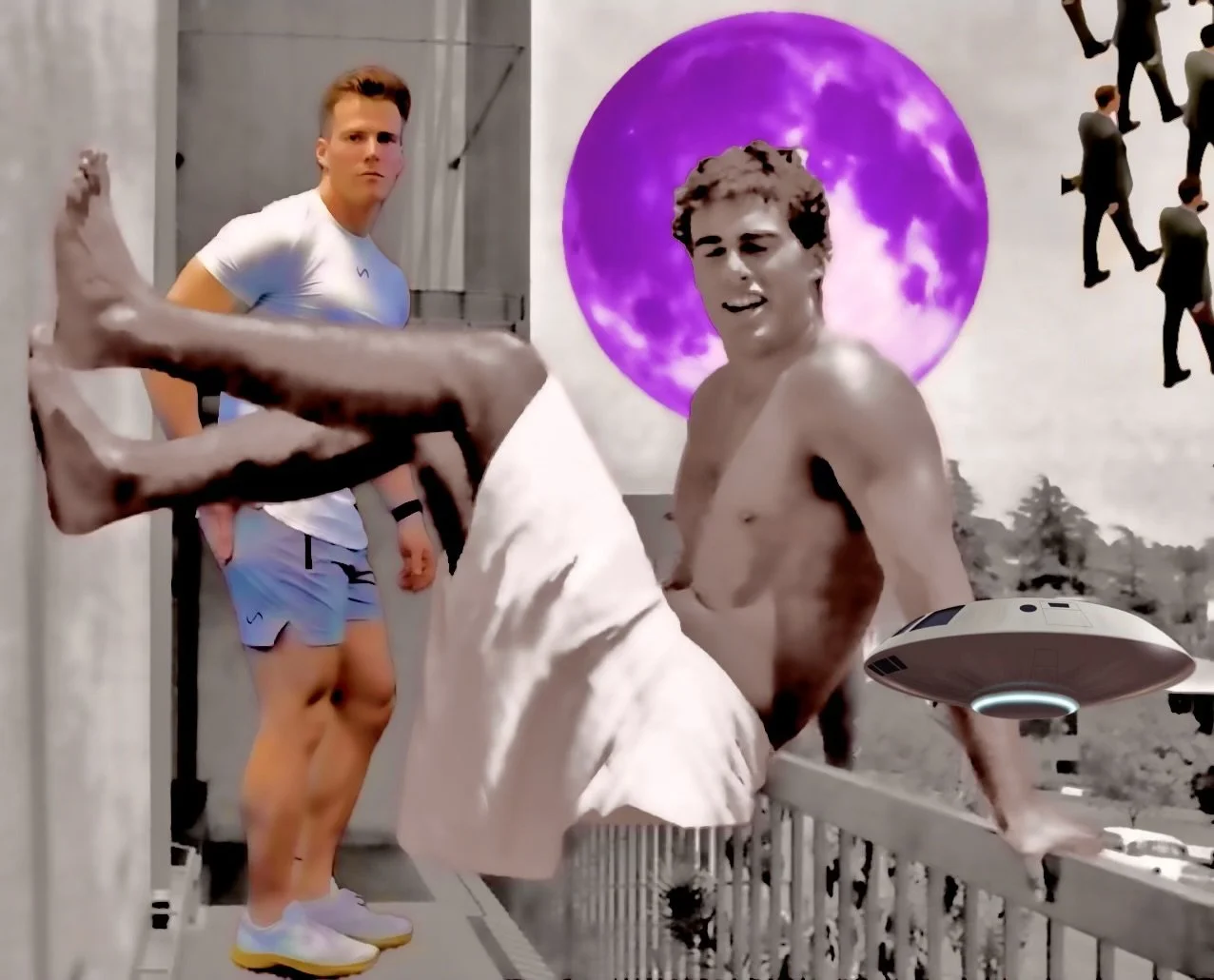
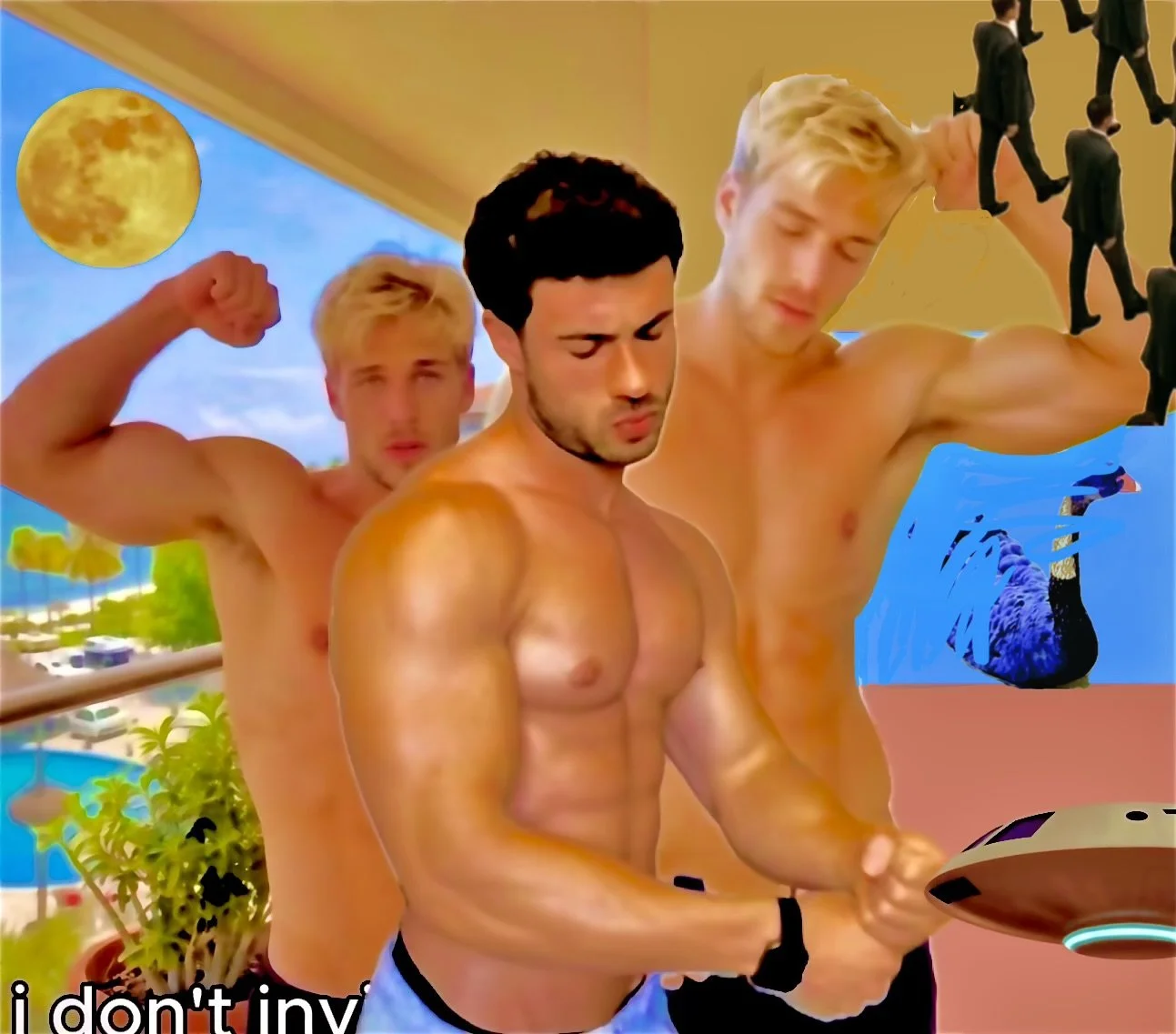
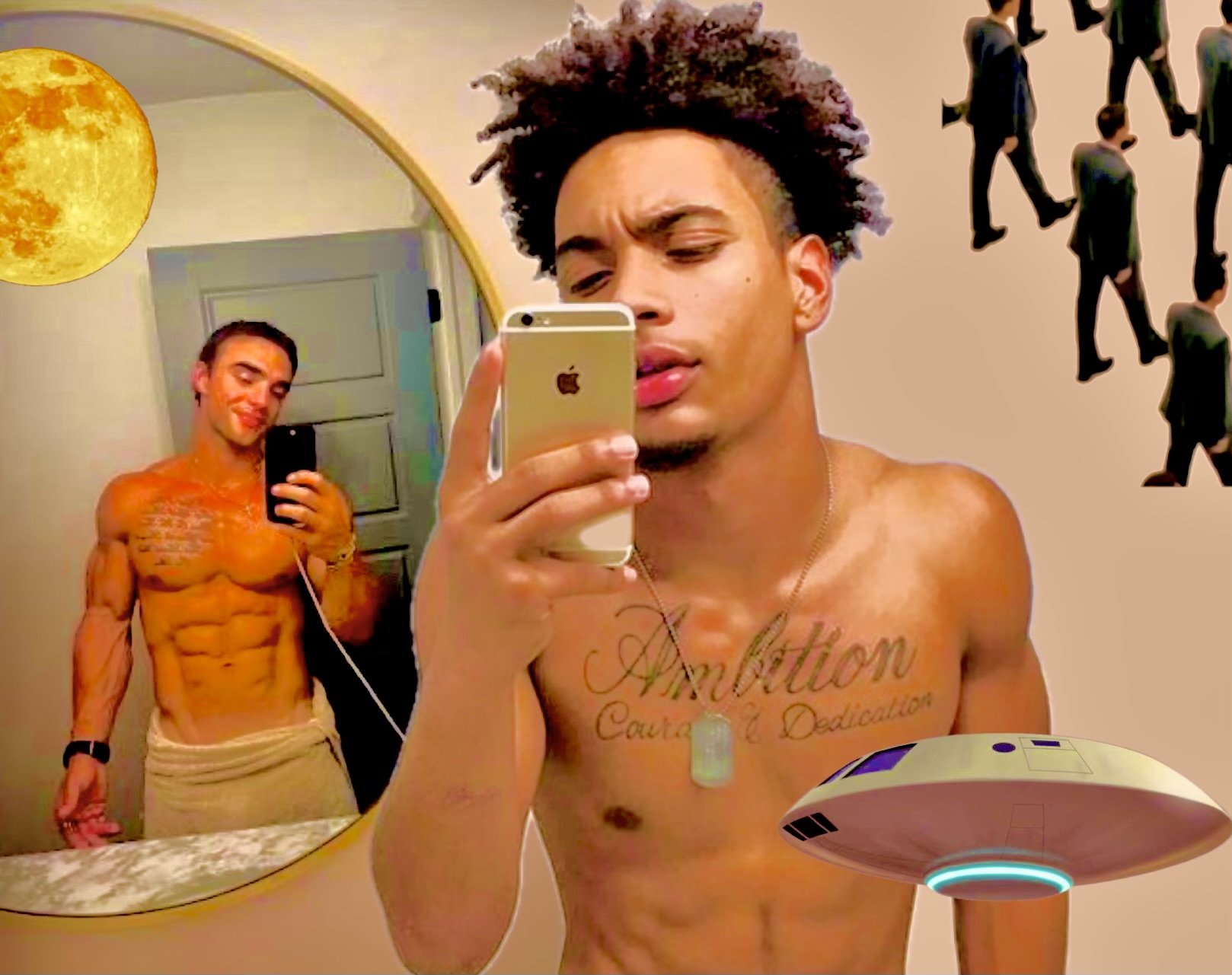
Marching Orders
In and among the content creators featured in these four collages is one historical figure of note—Sean Flynn. The son of Errol Flynn — movie star looks, a famous last name, a straight shot into filmmaking if he wanted it. Instead, he spit out the silver spoon, picked up a camera, photographing a war nobody at home wanted to look at. Then he vanished into Cambodia in 1970 and was never seen again.
That’s one particular American man who rejected the script he was handed. Which is really the whole subject here.
Stand like this. Move like this. Want this, in this order. Follow it long enough and it stops feeling like an instruction — it feels like personality, like nature, like who you always were.
Straight men have carried that weight for a long time. Gay men got something heavier: the closet, built specifically to keep an entire population quiet and out of sight. It held for centuries, and it held well.
All four collages share one detail — a line of men in suits marching across the upper right corner, in step, going nowhere in particular. Think of them as the escort that walks beside every man, pointing at the line and what happens if he steps off it. Flynn stepped off it, camera first, and a purple moon hangs behind him here — the color this work saves for queer allies. Given what’s known of his politics, he’s earned it.
Marching orders, plural, then: the ones issued to everyone, and the harsher second set issued to some. The men in these four collages are still here to receive them.