Rain falling all weekend. Beautiful.
How Three Become One
Behind the Collage: Three Become One
This post shows the source material behind one collage, next to the finished piece.
The Sources
Three photographs, found in succession on social media, build the foundation of the image:
• A beach under an overcast sky
• A single man with cap
• A group of celebratory young men
The Changes
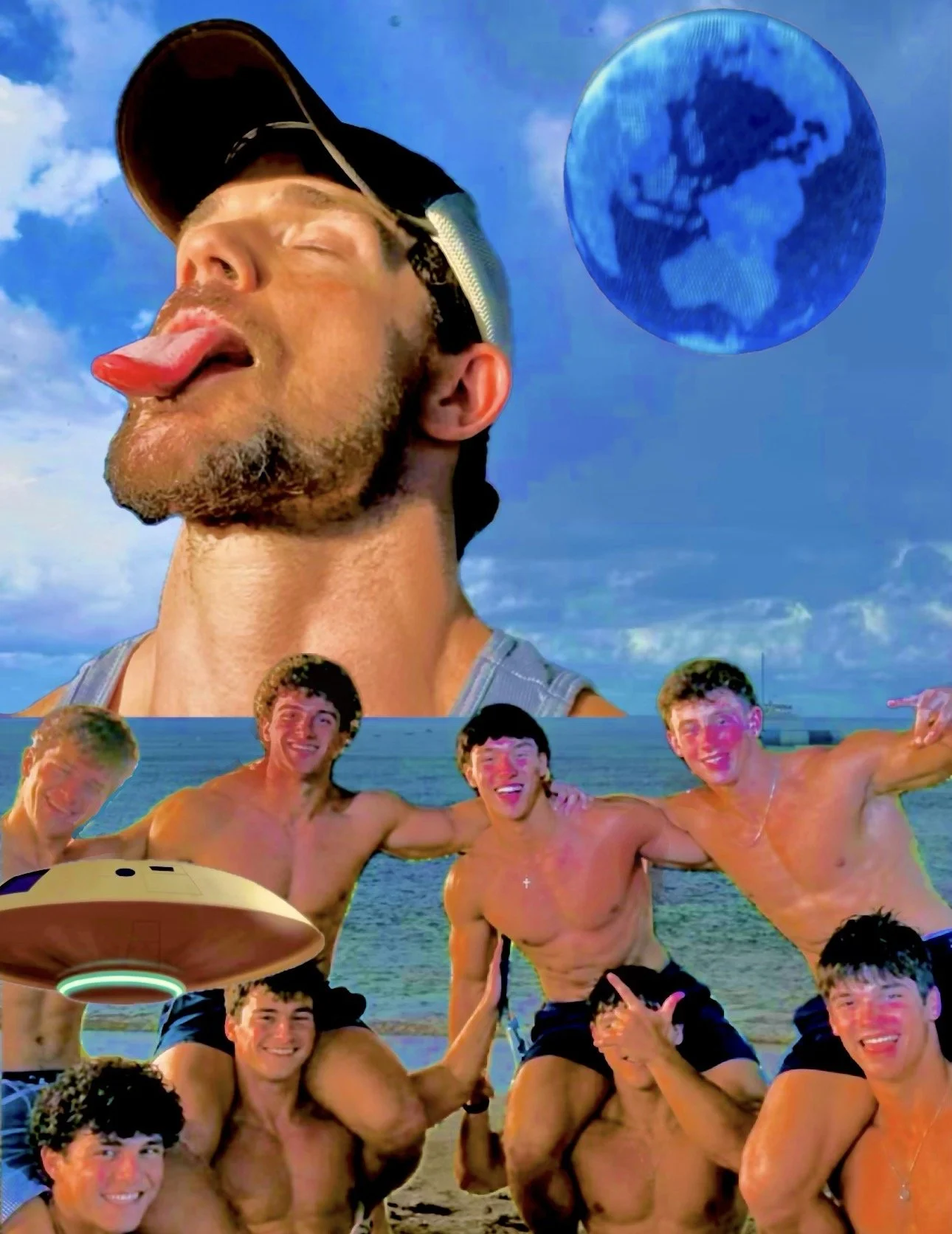
Color: the original ground is muted in tone. In the finished collage, the sky and water shift to a saturated blue, and the skin tones warm. This shared color brings three unrelated images into one palette.
Scale: the single figure is enlarged to dominate the collage. He is head and shoulders above the horizon line, achieving a godlike presence that suspends the laws of nature.
Placement: the horizon line divides the composition in half, the single figure sitting above, the group of men below, cropped at the bottom edge so they press toward the viewer.
The Result
Seen side by side, the sources show how little the three photographs have in common at the start. The finished collage shows what they share once color, scale, and placement are adjusted: one beach, one sky, one dream.
— Behan

Subtext Becomes Context
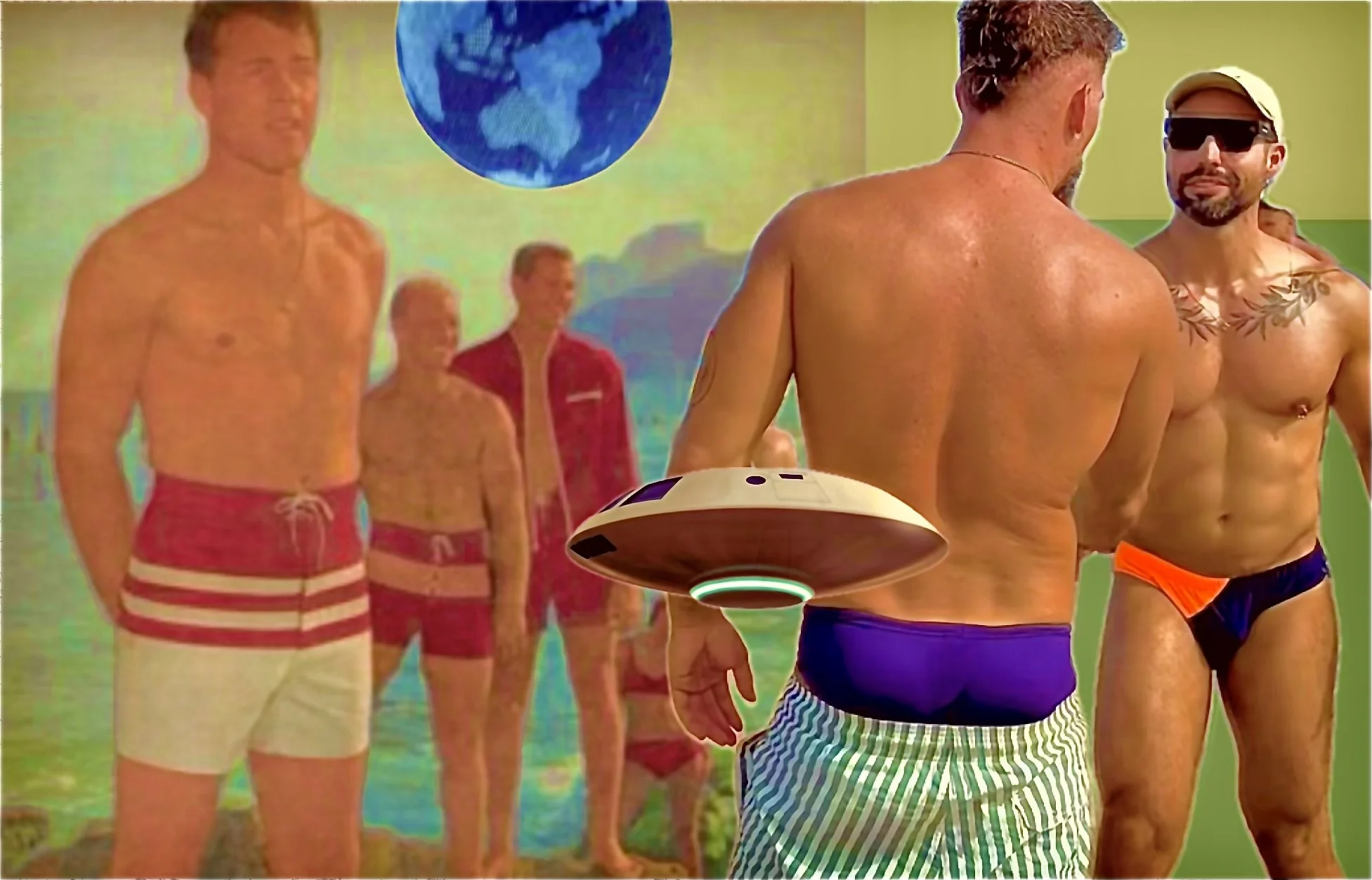
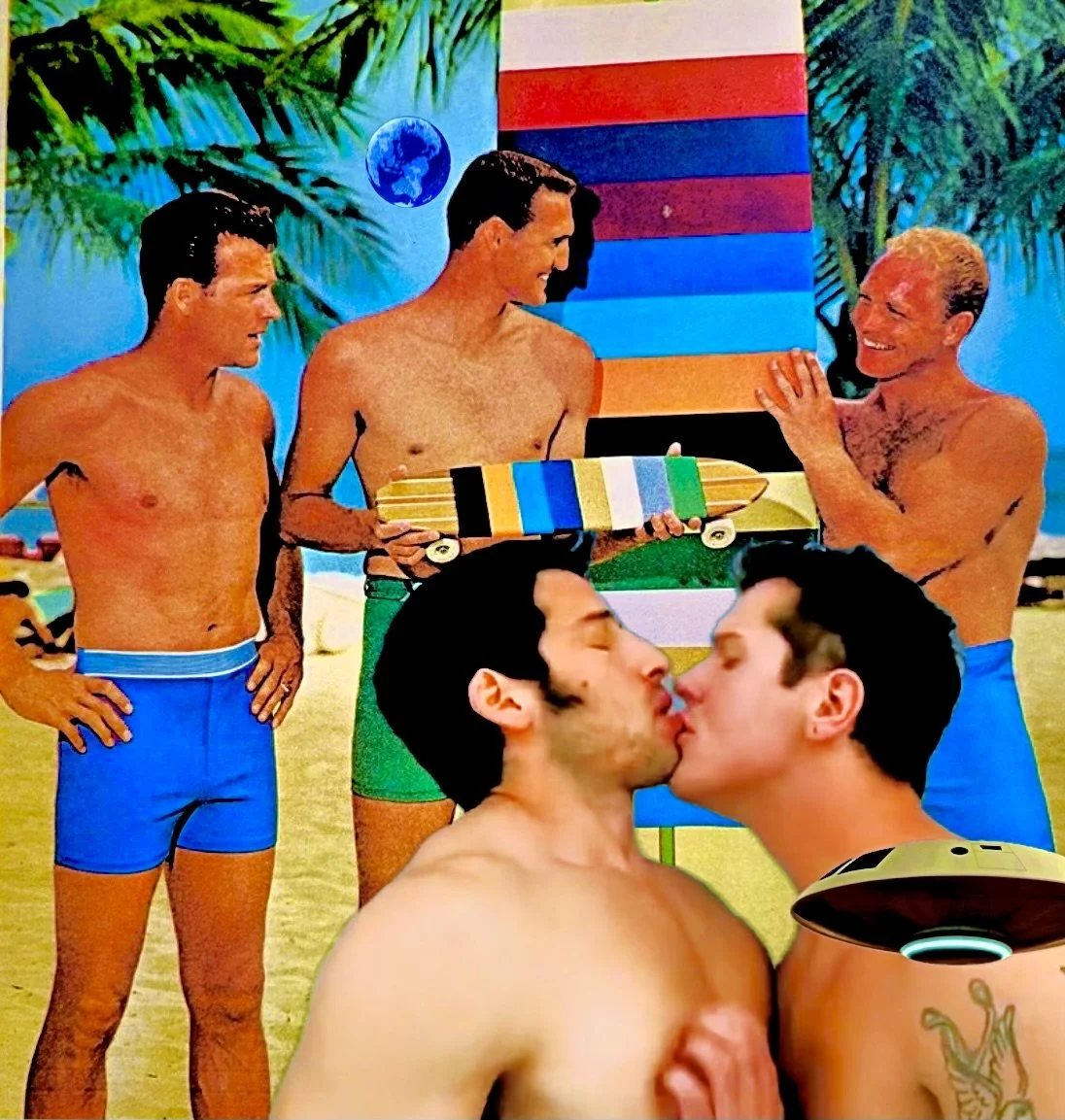
Today's work is a set of four digital collages. Each one layers a 1960s swimwear advertisement with photographs of contemporary men. Both the vintage ads and the modern figures come from social media.
In the original ads, intimacy between men is subtext. The models stand close, look at one another, and share the frame in ways the culture of the time did not name.
When contemporary gay men enter the same scene, that subtext becomes context. The vintage models remain in the frame, and the viewer now reads them through the presence of the modern figures.
One ad still carries its original slogan: "everything a man ever wanted." Placed above a contemporary figure, the line now carries a more honest interpretation.
— Behan


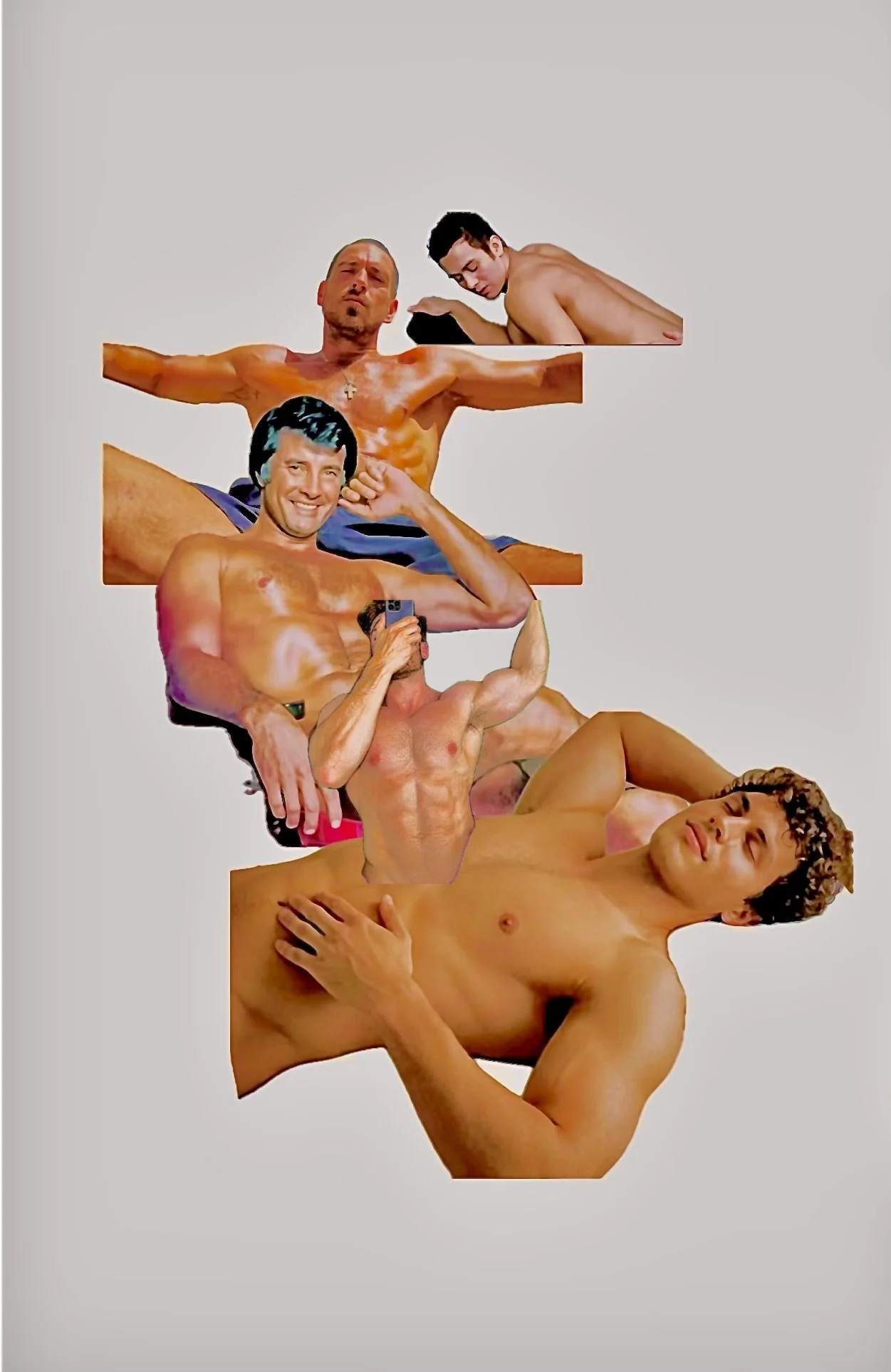
Learning by Homage: Two Collages After Tom of Finland
Looking Back to Move Forward
Every artist learns from the artists who came before. Study of earlier work is a standard part of artistic training and practice. Painters copy old masters in museums. Students reproduce drawings to understand line and proportion. Copying a method shows how a finished work was built.
Picasso and Las Meninas
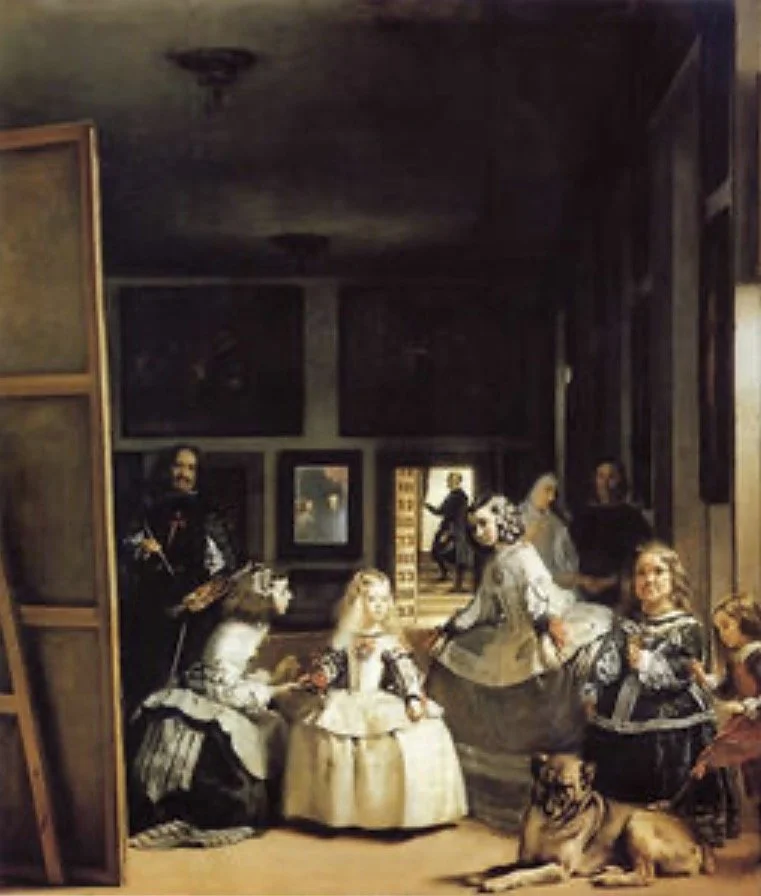
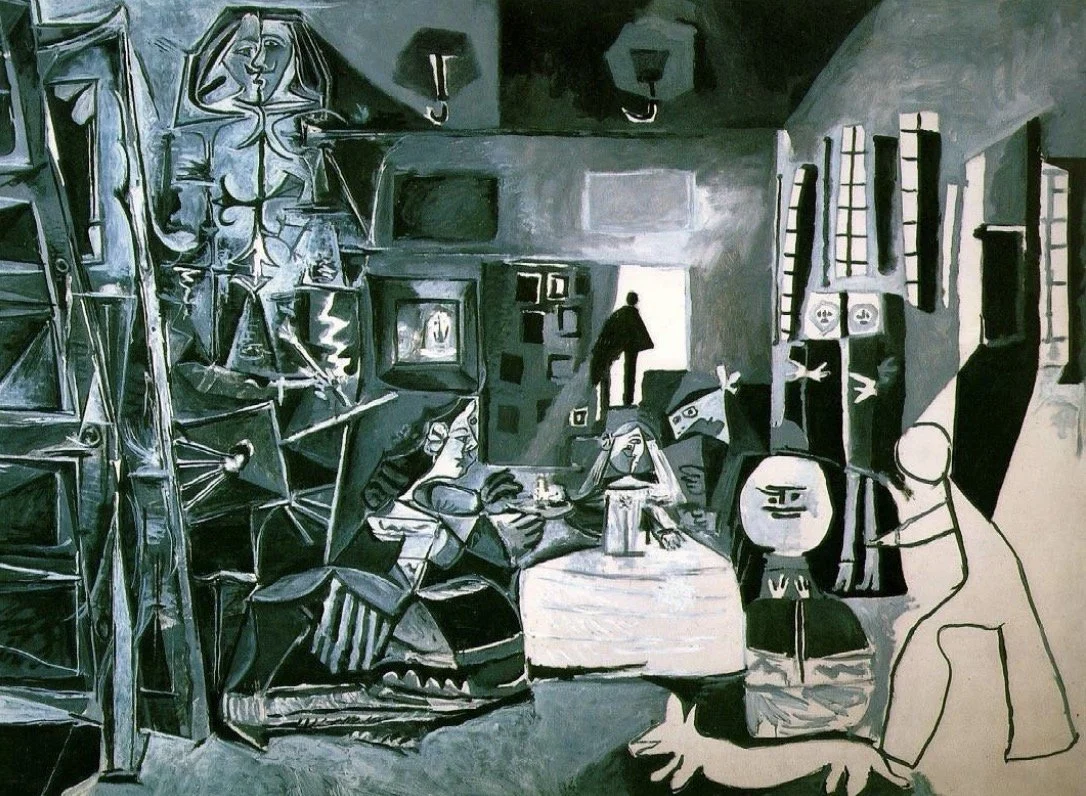
In 1957, Pablo Picasso made 58 paintings based on Diego Velázquez's Las Meninas (1656). He studied the full composition, then individual figures, then details such as the dog and the light from the window. He changed the color, the scale, and the style, and some versions are almost entirely abstract. The series shows a major artist taking apart an earlier masterpiece to understand how it works. Picasso later donated the series to the Museu Picasso in Barcelona.
Kehinde Wiley and Napoleon
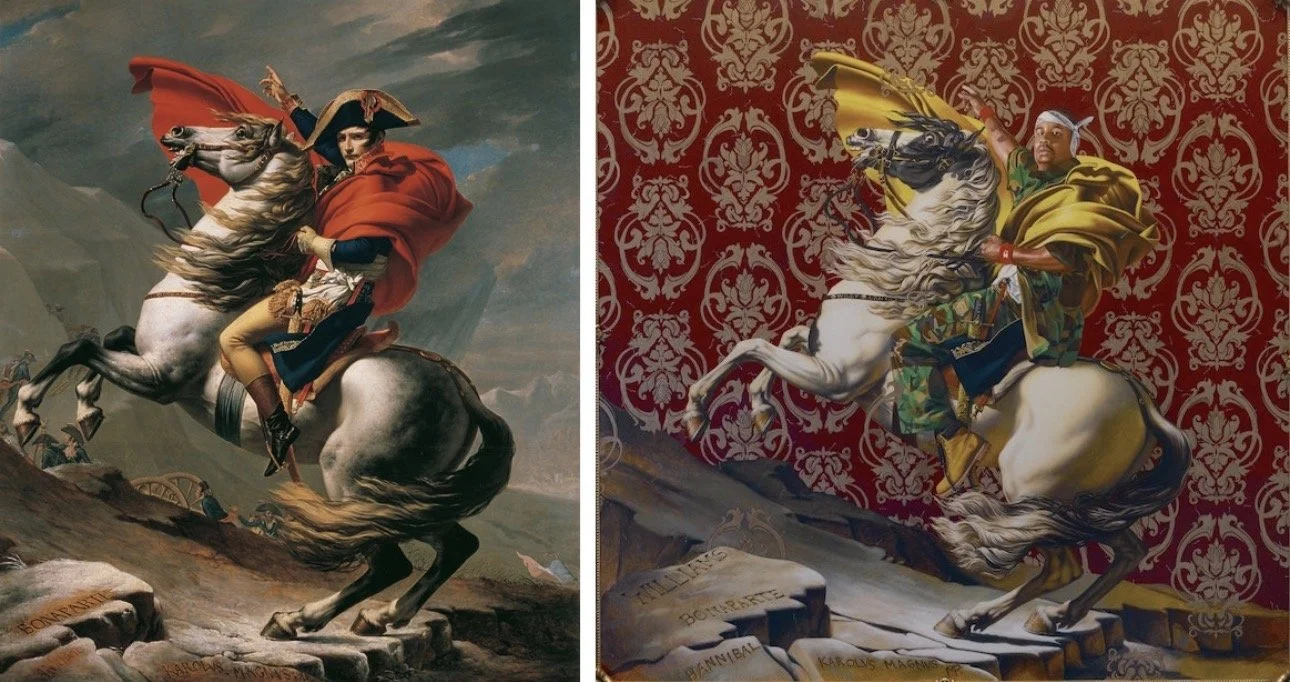
Kehinde Wiley's Napoleon Leading the Army over the Alps (2005) is based on Jacques-Louis David's portrait of Napoleon on horseback. Wiley keeps David's composition: the rearing horse, the raised arm, the heroic pose. He replaces Napoleon with a young Black man in contemporary clothing and sets him against a bright decorative pattern. The painting uses the language of European state portraiture to ask who has been traditionally empowered by it.
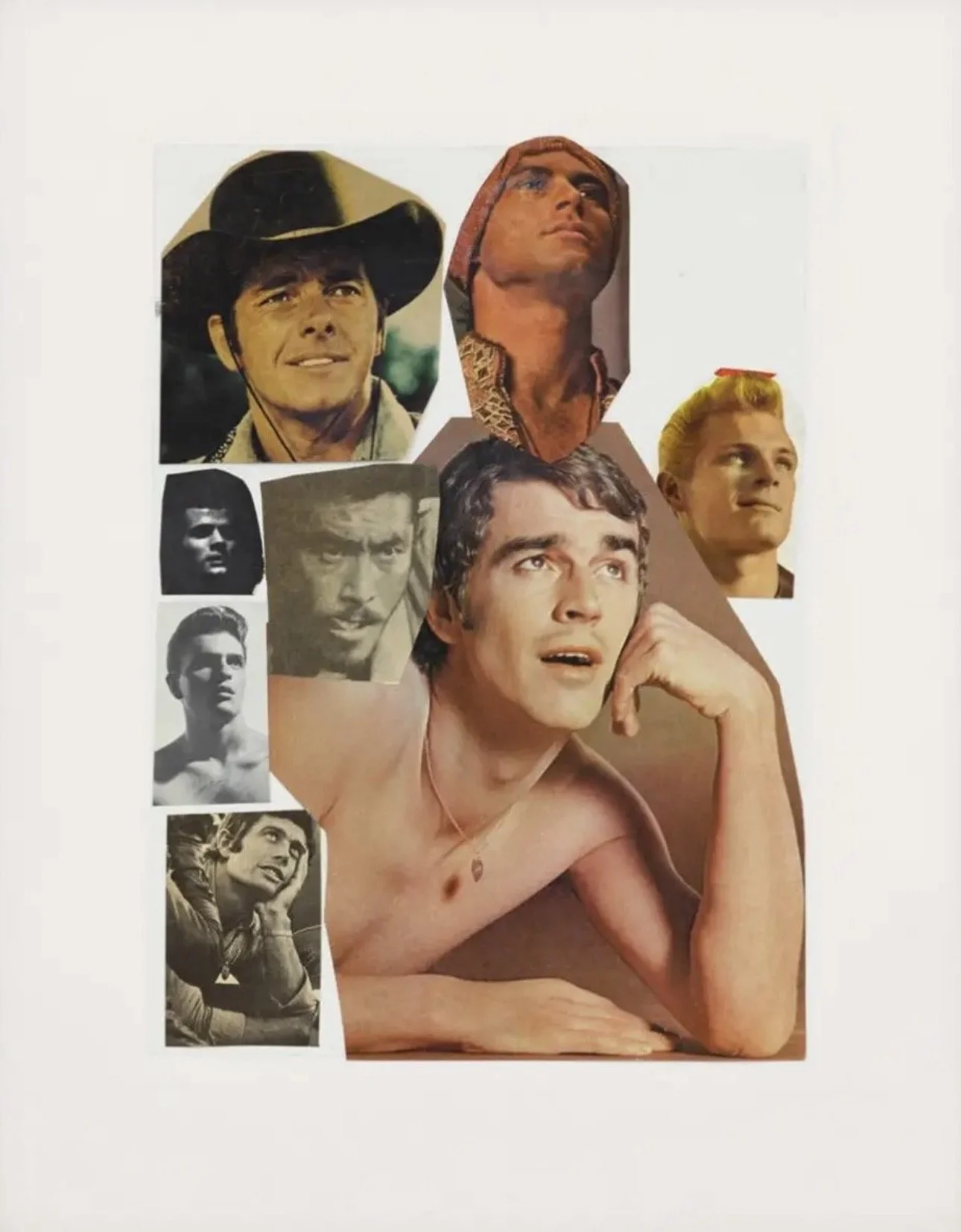
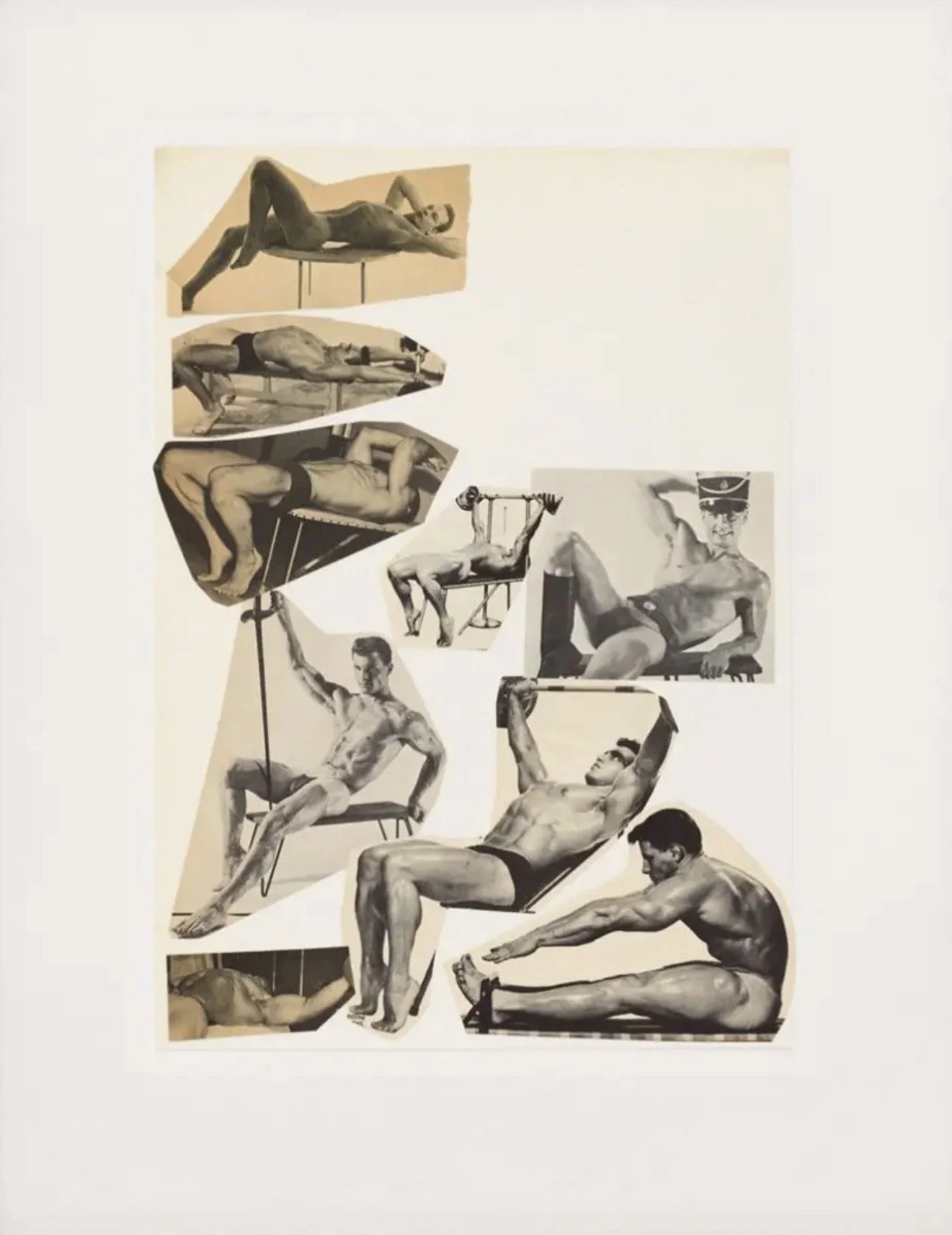
Tom of Finland is known for his drawings, but he also made collages. He cut photographs from physique magazines and arranged them on paper by theme: reclining figures, exercise poses, faces turned upward. The cuts are irregular. The images sit side by side on a plain white page.
Replicating the Method
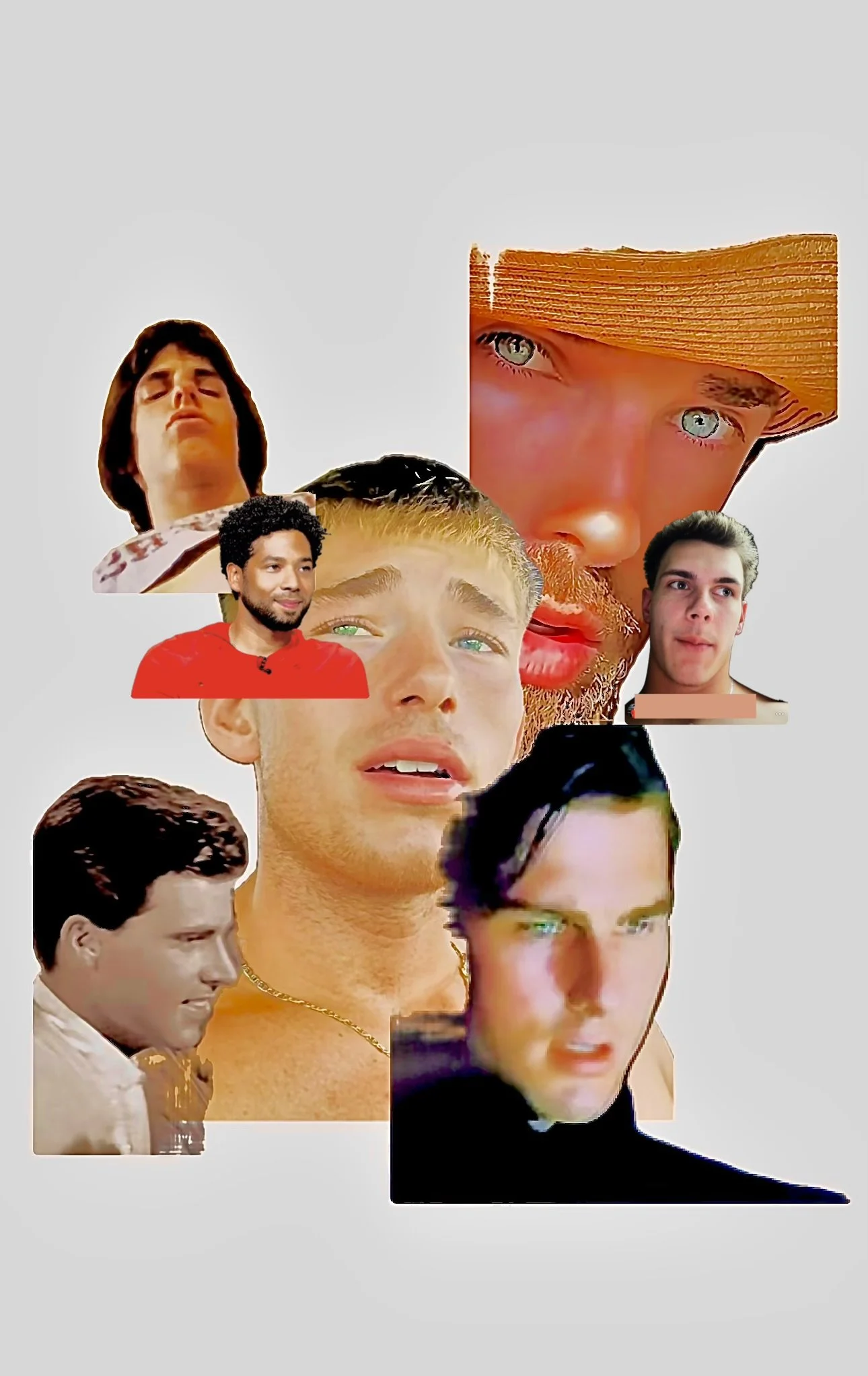
My two digital collages follow his process. One groups reclining bodies. The other groups faces with lifted or distant expressions. I kept his approach of selecting images by a shared pose or mood and letting the repetition carry the piece.
Why Homage Matters
Homage is a form of study. Repeating another artist's process makes their decisions visible: what they selected, how they cropped, where they placed each image. Picasso and Wiley show that homage can also change the meaning of the original. The finished work honors the earlier artist and shows what one artist learns from another.
After the Lights Go Down Low
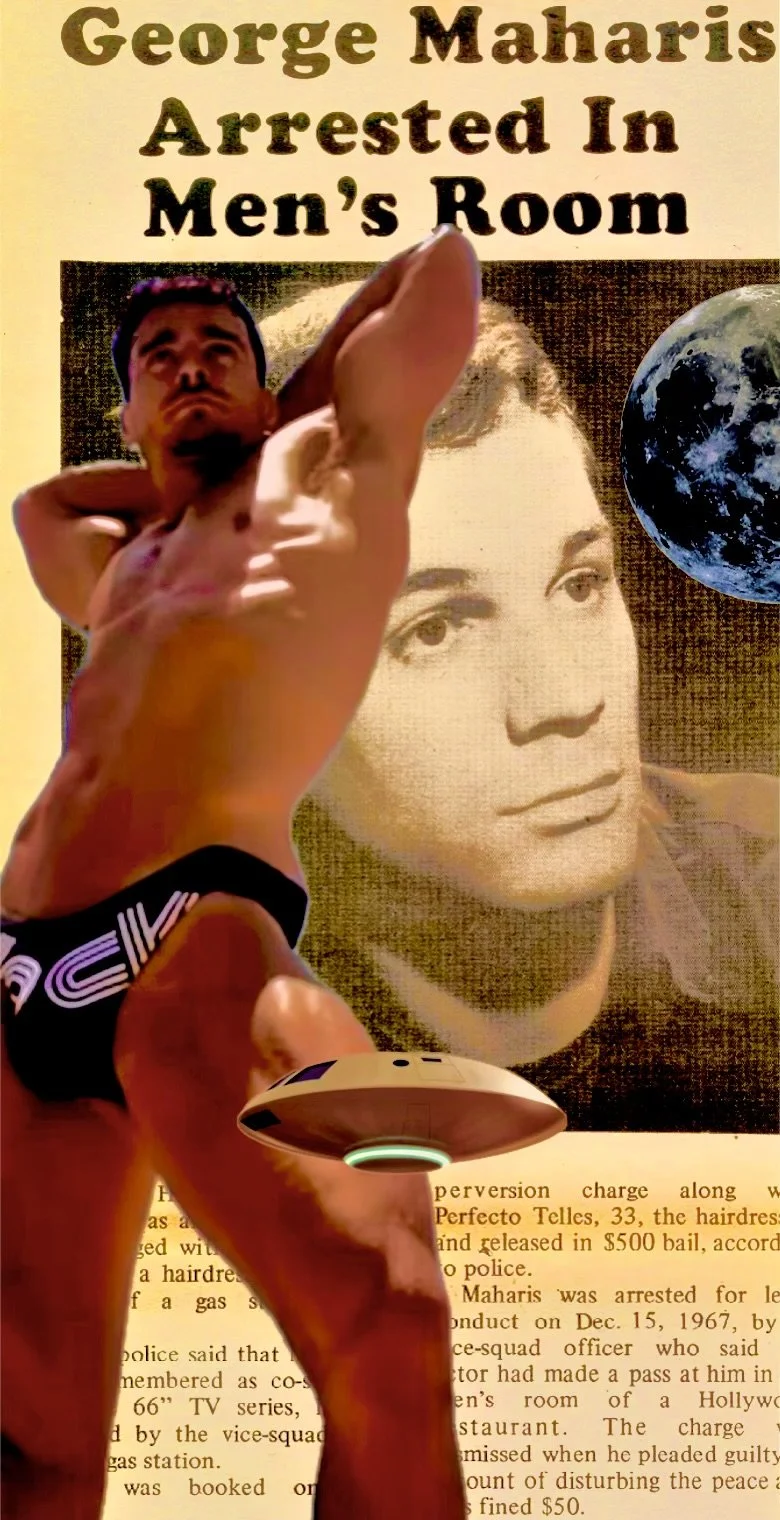
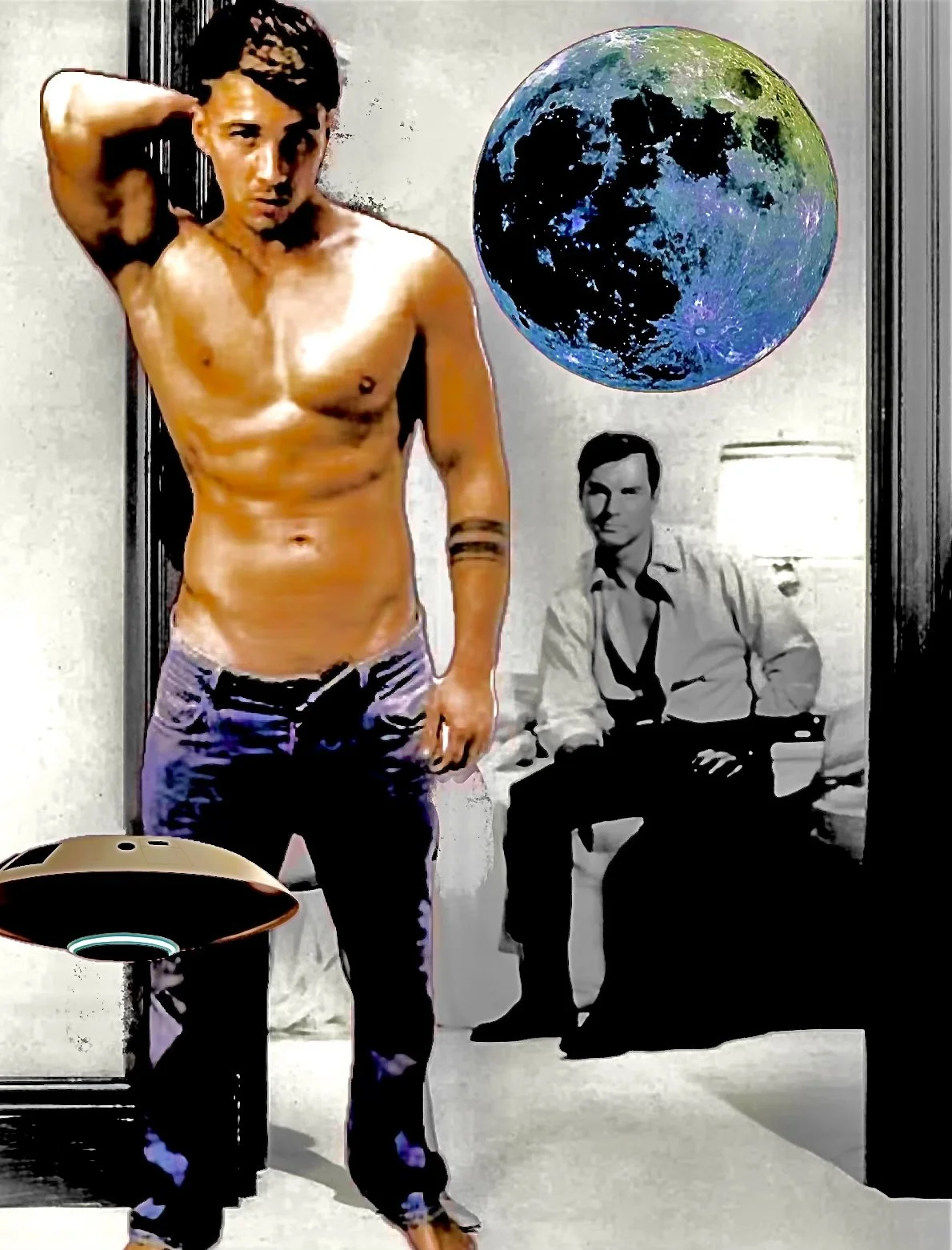
George Maharis is arrested twice for alleged sexual contact with men. He keeps living anyway. Here is his timeline.
1958
He makes his film debut in The Mugger, after working in live television dramas such as Studio One and Naked City.
1960
He appears in Otto Preminger's Exodus. In October, Route 66 premieres on CBS. He plays Buz Murdock, driving across America in a Corvette. The network presents him as a leading man.
1962
He receives an Emmy nomination. He records pop albums during these years.
1963
He leaves Route 66 during its third season, citing fatigue. Producers doubt that explanation.
1967
On December 15, a Los Angeles vice-squad officer arrests Maharis in the men's room of a Hollywood restaurant. The officer states that Maharis made a pass at him. The lewd conduct charge is dismissed when he pleads guilty to disturbing the peace. He pays a $50 fine.
There is no victim and no complaint. The officer is there to make what cops call an easy arrest.
1970
He returns to series television as a lead in The Most Deadly Game. The series is short-lived.
1973
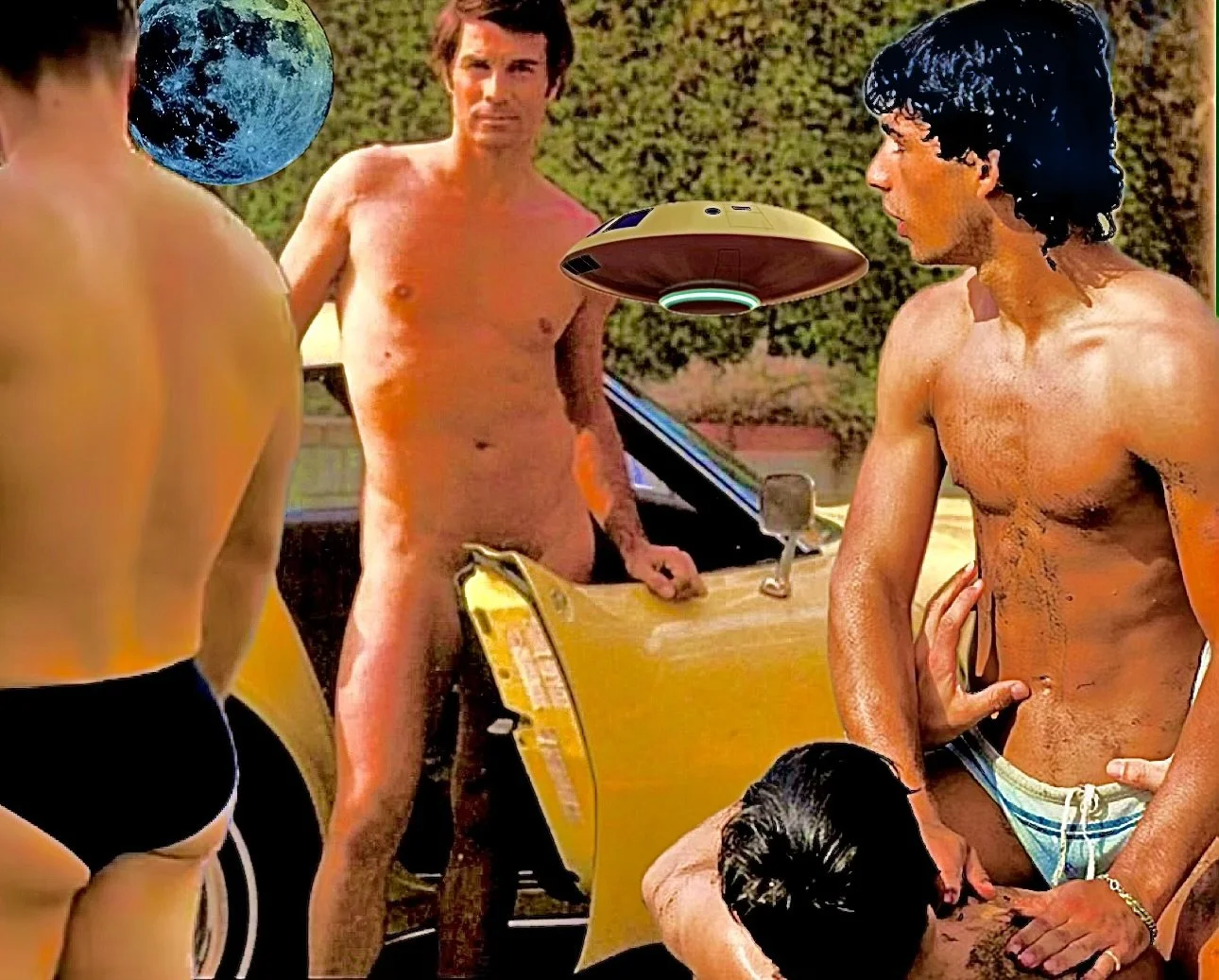
In July, Maharis appears nude in the second issue of Playgirl. He is 45. He is one of the first celebrities to pose fully nude for the magazine.
Six years after a public arrest, he chooses to be seen on his own terms.
1974
Police arrest him in the men's room of a gas station with another man. The charge is sex perversion. His bail is $500. His name appears in newspapers beside the word "perversion."
1975
He plays Robert Davenport in the television movie Murder on Flight 502.
1976
He plays Joey Quales in the miniseries Rich Man, Poor Man. He also plays Guy Woodhouse in the television movie Look What's Happened to Rosemary's Baby.
1978
He plays Evan Walsh in the television movie The Crash of Flight 401.
1978–1982
He guest stars on Fantasy Island several times, playing a different character in each appearance.
Early 1980s
He tours in the national company of Neil Simon's I Ought to Be in Pictures.
1990
He plays Charlie Cosmo in the Murder, She Wrote episode "Trials and Tribulations." It is his last television role.
1993
He appears in the film Doppelganger. It is his last screen performance.
2023
Maharis dies at his home in Beverly Hills on May 24. He is 94. He never publicly discusses his sexuality.
A Win Against the Closet
An intolerant, dominant culture sets out to destroy George Maharis, and it uses the closet to do it. Police arrest him twice. Newspapers across the country print his name beside the word "perversion." A man who is a network television star in 1962 becomes, by 1974, a public example of what happens to gay men who are caught.
He does not disappear. He returns to work the following year and continues for almost two decades, in television movies, a miniseries, guest roles, stage tours, and film. That requires courage, intelligence, and sustained effort, in an industry that has every reason to exclude him.
His story is usually told as a scandal. It is a record of survival. George Maharis lives to 94, and he outlasts the culture that tried to end his career. He deserves respect for that.
The story of George Maharis is a win against the closet and a win against hate.
— Behan
Sources
The Washington Post, "George Maharis, dashing star of 'Route 66,' dies at 94," May 28, 2023
Matthew Rettenmund, "George Maharis, Eternally Handsome 'Route 66' Star, Dies @ 94," Gr8erDays, May 27, 2023
IMDb, George Maharis biography and filmography
The Movie Database (TMDB), George Maharis filmography
Newspaper report, "George Maharis Arrested in Men's Room," 1974
Anna Lvovsky, Vice Patrol: Cops, Courts, and the Struggle over Urban Gay Life before Stonewall (University of Chicago Press, 2021

Timeline

At twenty, he knew what he wanted but could not say it out loud. He watched other men from a distance and told himself the feeling would pass. It did not pass, and part of him was relieved.

At thirty, he had said it out loud, first to himself and then to everyone else. He fell in love twice and lost both times. He learned that telling the truth was only the first step.
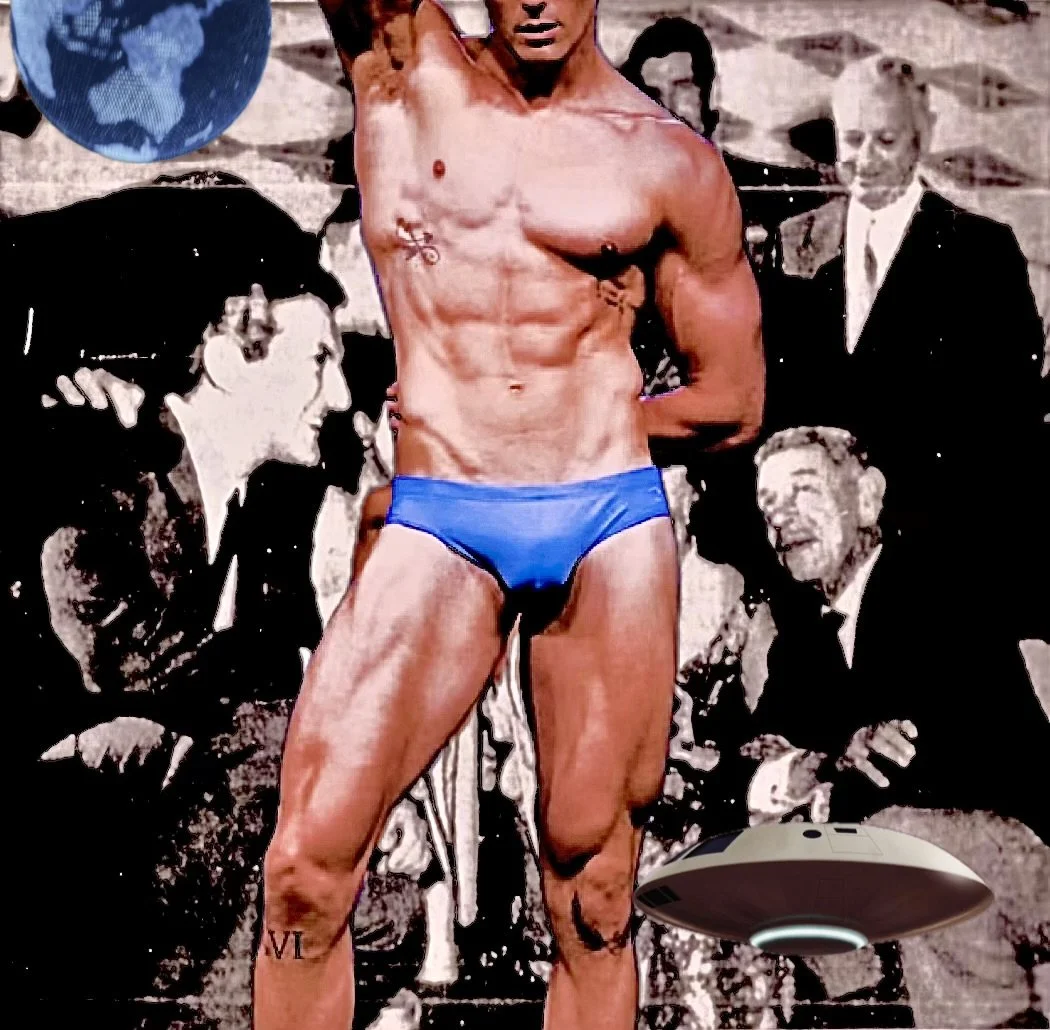
At forty, he stopped waiting for the right city, the right job, or the right year. He went out, met people, and let some of them matter. A few stayed as friends, and that counted for more than he expected.
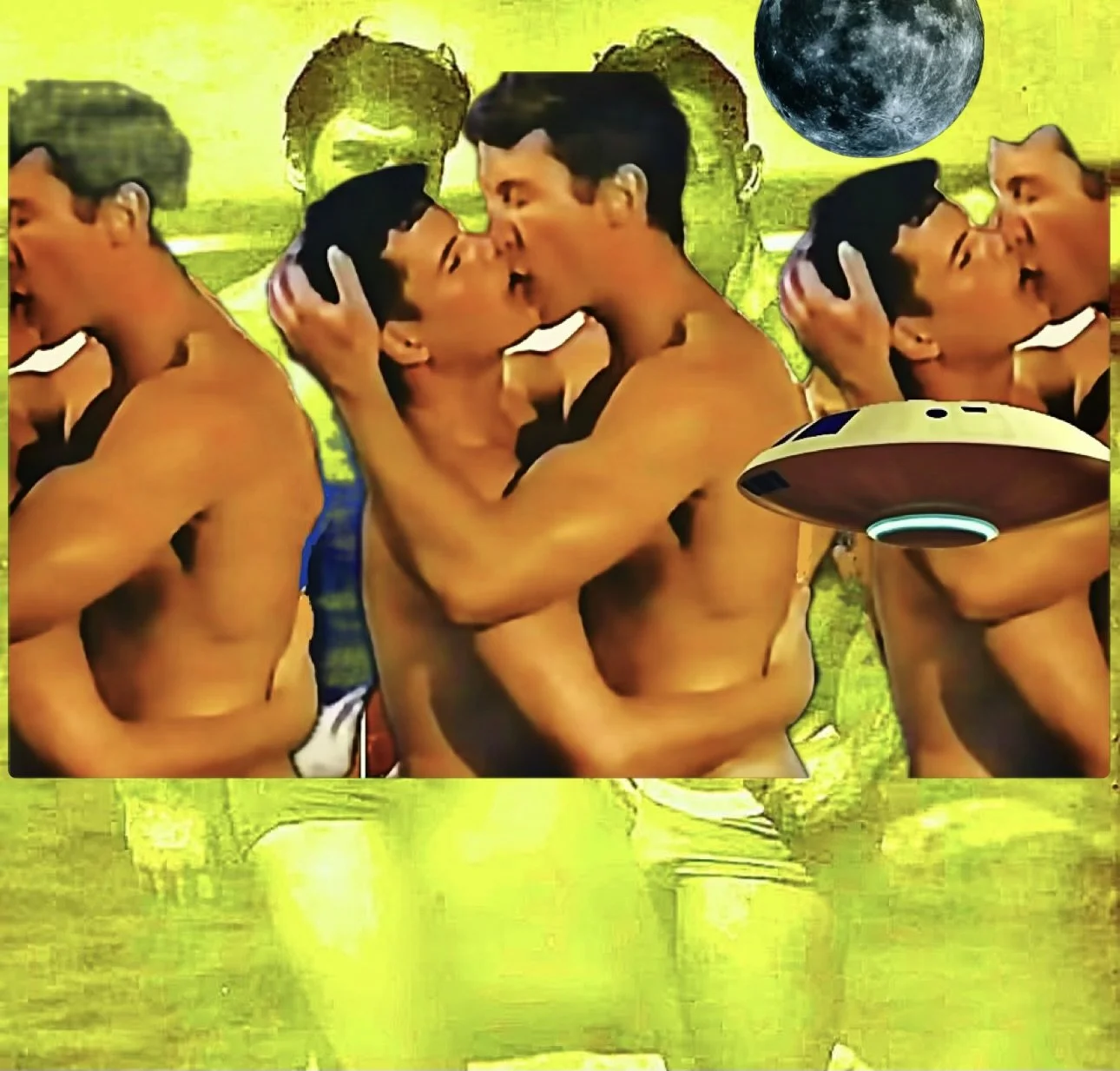
At fifty, he had buried people he loved and outlived the rules that once kept him quiet. He could marry now, if he found someone to marry. He had not found him, but he had not closed the door.
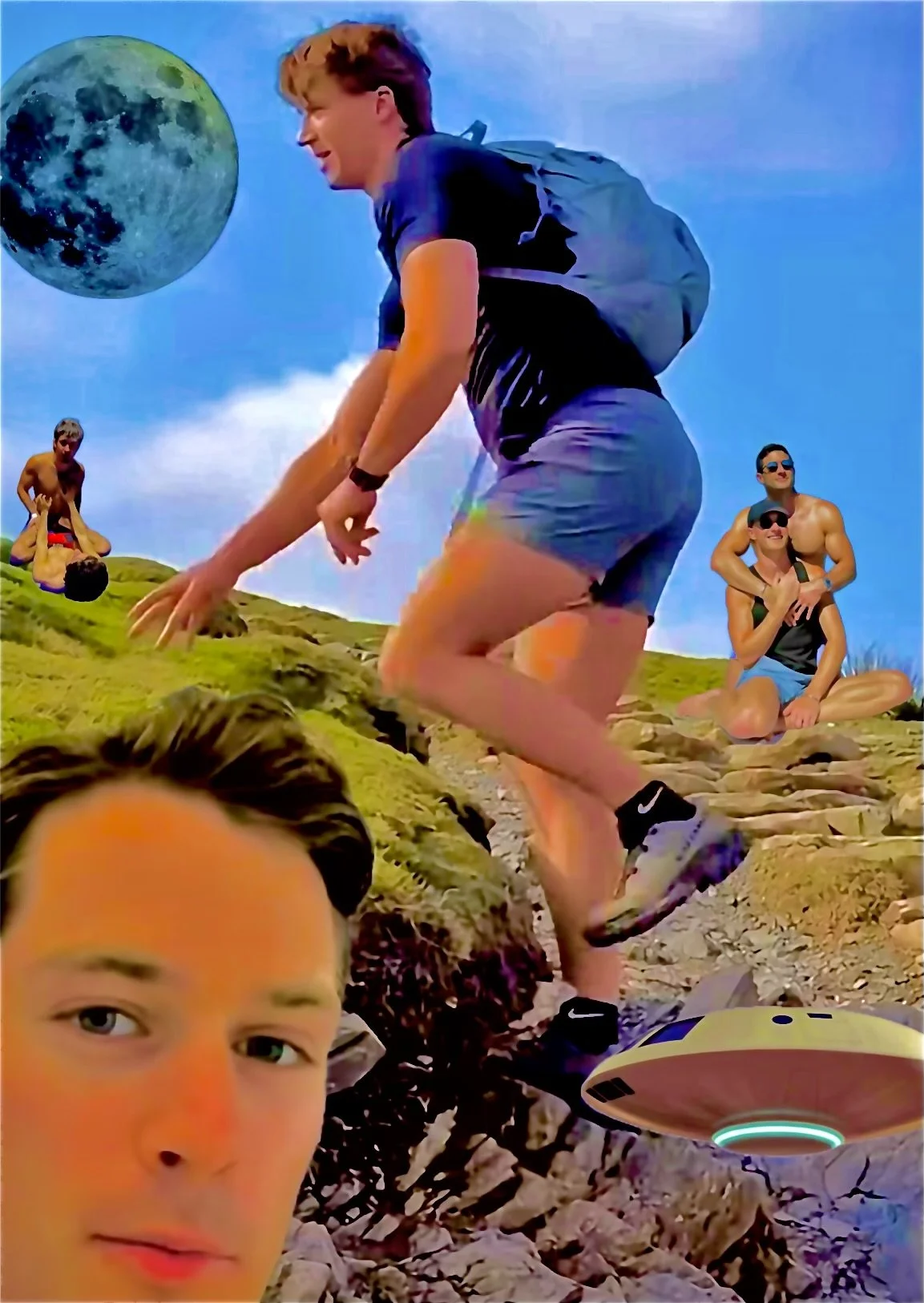
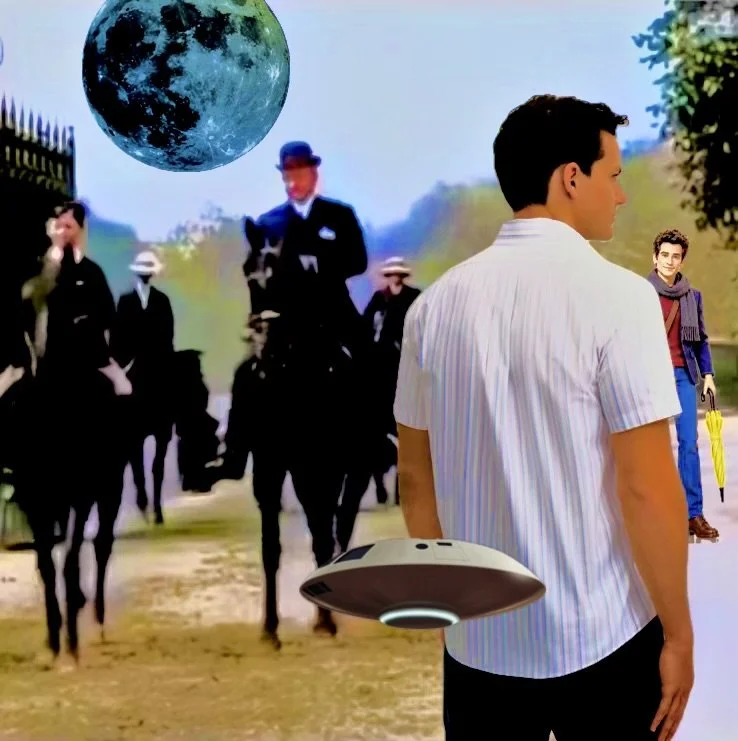
At sixty, he still looks up when someone new walks into the room. He has spent his life searching, and he does not consider that time wasted. He is still looking, and he intends to keep looking.

Monday Morning Muse


Drop it like it’s hot.

Repression as Desire, the Myth of American Exceptionalism, and Eyes Wide Shut
A Dream of Forbidden Desire
1926. The Viennese writer Arthur Schnitzler publishes Traumnovelle, or Dream Story. Schnitzler is a physician, and his novella draws on the new psychology of his time: the unconscious, dreams, and repression. Sigmund Freud admires his work and sees his own ideas reflected in it.
1996. Seventy years later, Stanley Kubrick, one of the great filmmakers of the twentieth century, begins filming the story. Kubrick has spent much of his career examining violence: war, crime, and the systems that produce them. Dream Storyallows him to depict a century of violence in which the greatest violence is directed at the self.
Kubrick is an American who has lived in England for more than thirty years. He moves the story from Vienna to present-day Manhattan and sets it among the American wealthy. The psychology is Viennese; the setting, the money, and the social order are American.
March 1999. Kubrick dies, days after delivering his final cut.
July 1999. Eyes Wide Shut opens and remains fixed in that year, a record of a repressed century made just before that century ended. It is a marker of the twentieth century and a warning for the twenty-first.
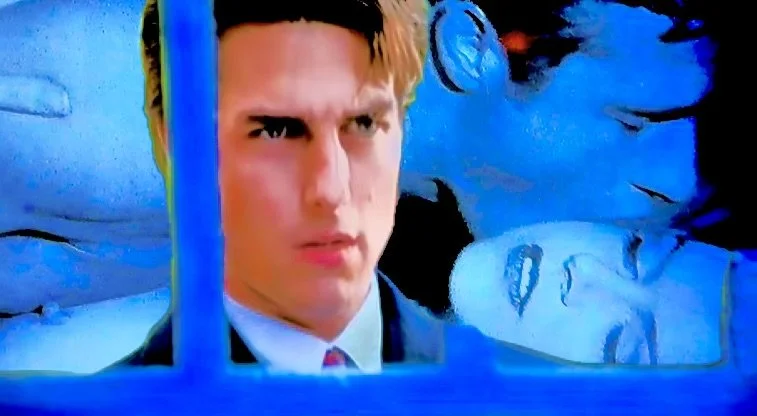
Eyes Wide Shut
Bill and Alice Harford are a wealthy Manhattan couple. He is a doctor, and she is at home with their young daughter. They have the apartment, the income, and the social position that define the American good life.
The story begins at a Christmas party given by Bill's wealthy patient, Victor Ziegler. Once Bill and Alice are separated at the party, both are pursued sexually: Alice by an older Hungarian guest, Bill by two models. Both pursuits fail. Meanwhile, upstairs, a young woman named Mandy lies unconscious from an overdose, and Bill is called to treat her quietly.
The next night, Alice tells Bill that she once would have given up him and their daughter for a single night with a naval officer she saw only briefly. Bill cannot absorb this. He leaves the apartment and spends the night moving through New York.
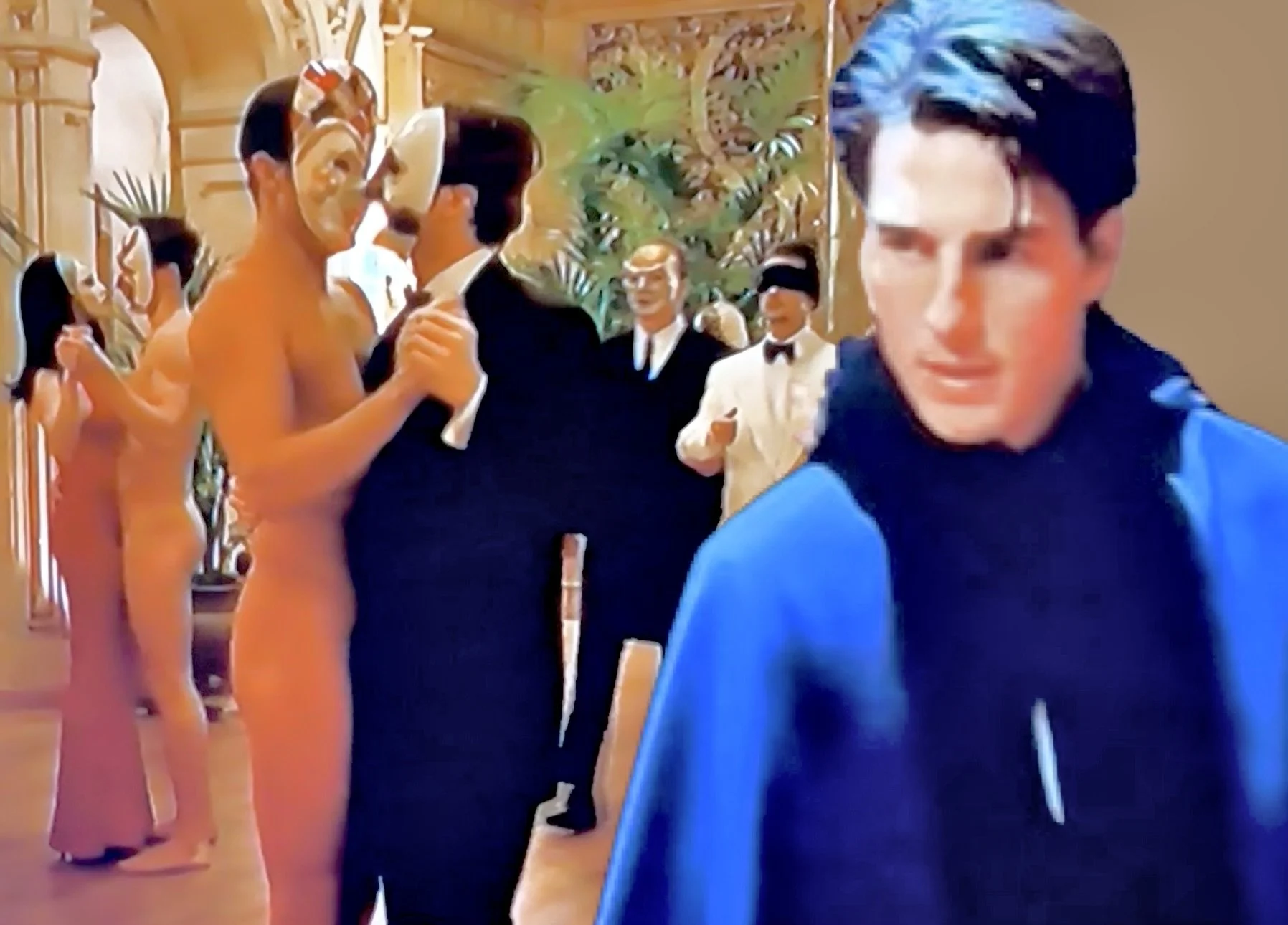
Every encounter stops short. A patient's grieving daughter kisses him, and he turns away. A sex worker named Domino invites him in, and a call from Alice interrupts them. An old friend, the pianist Nick Nightingale, gives him the password to a masked gathering at a country mansion. Bill goes, but only watches, and the night ends with him exposed and sent away with a warning.
When he returns home, Alice wakes from a dream. In it, she is with many men, including the naval officer, while she laughs at Bill. Her dream closely resembles the gathering he has just left. What he met in the world, she met in her unconscious.
In the days that follow, Bill is followed and threatened. Mandy is found dead. Ziegler admits he was at the mansion and warns Bill to let the matter go. He tells Bill that Mandy's death is an ordinary overdose, unrelated to the gathering. Bill accepts this without challenge.
That night, Bill finds the mask he wore at the mansion lying on his pillow beside the sleeping Alice. He breaks down and tells her everything. It is the only moment in the film when the repression breaks.
The film ends in a toy store, where Bill and Alice recognize that they are lucky to have survived their misadventures. They agree to continue as before, without any promise for the future.
Each character's secure life unravels the moment they meet their desire. And while none of them acts on that desire, the damage is done anyway. That damage is inward.
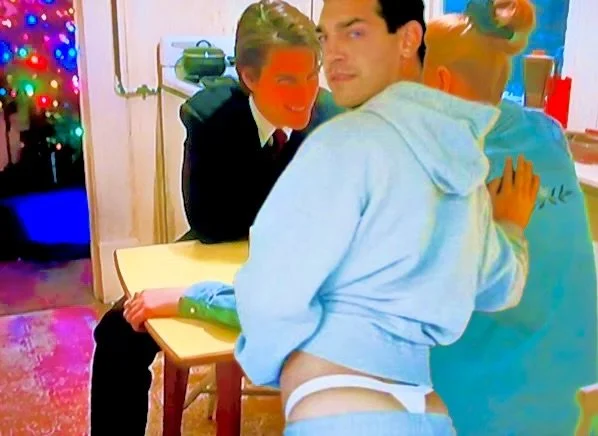
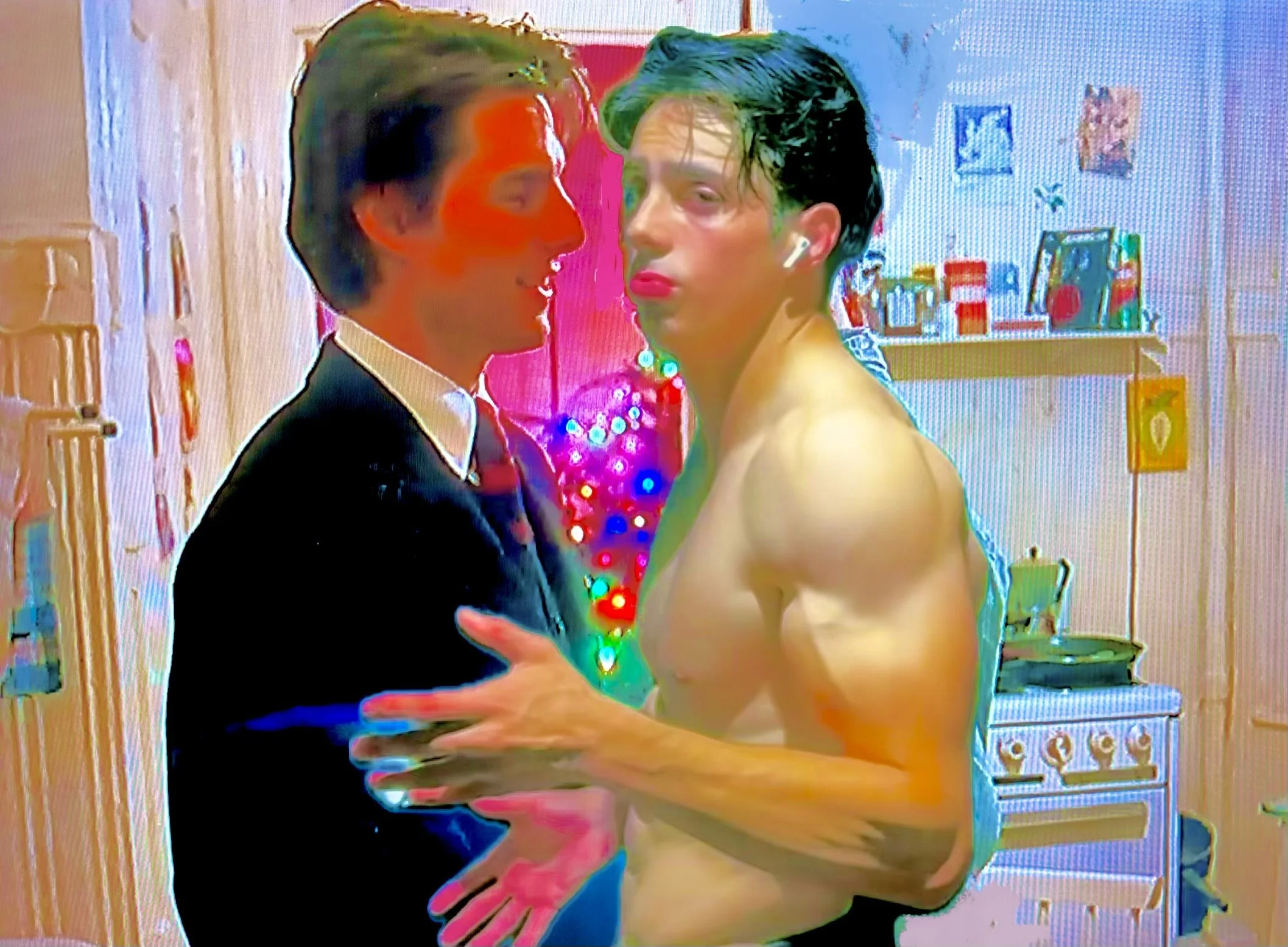
Repression Turns Outward
Repression does not stay inward. Desire that cannot be acknowledged is often turned against the people who represent it. A society that polices its own desires also polices, punishes, and excludes the people it associates with those desires.
The mansion gathering shows what this looks like at the top. Wealthy men, hidden behind masks and locked gates, use other people, especially women, and face no consequences. When a woman dies, one of them explains it away, and the man who might ask questions chooses not to.

1926 Becomes 2026
What Schnitzler wrote about in 1926 as a harbinger of worse consequences has become a reality in 2026. The myth of American exceptionalism has been exposed as a story of oppression, repression, and suppression.
No part of American culture is exempt from its puritanical roots or from the violence that grew from them. That violence includes slavery, genocide, Jim Crow, the war against women, and the violence against LGBTQ people and other marginalized communities. It includes the corruption of a top-heavy billionaire class that has lost all decency, the same class Kubrick places behind the gates of the mansion.
Eyes Wide Shut shows these forces working in secret, behind masks and locked gates. Today they work in the open. Kubrick's final film is the Cassandra of the exploding American myth. The warnings of Eyes Wide Shut have become our reality.
We are all unmasked.
— Behan
Sources: Arthur Schnitzler, Traumnovelle (1926); Stanley Kubrick, dir., Eyes Wide Shut (1999).

Same-Sex Marriage Under Fire
Hensley v. State Commission on Judicial Conduct, a Texas case now moving through federal courts, is a deliberate attempt to drag Obergefell v. Hodges back before the Supreme Court and destroy it. Obergefell, the 2015 decision recognizing same-sex marriage, remains the law. Meanwhile, organized and well-funded groups are building long-term legal and political campaigns to eradicate it and strip gay Americans of rights they have already won.
The machinery is already in place. More than two dozen states have trigger laws ready to gut marriage equality the moment Obergefell falls. The federal Respect for Marriage Act protects existing marriages, but only in part, leaving millions of families exposed.
The Work
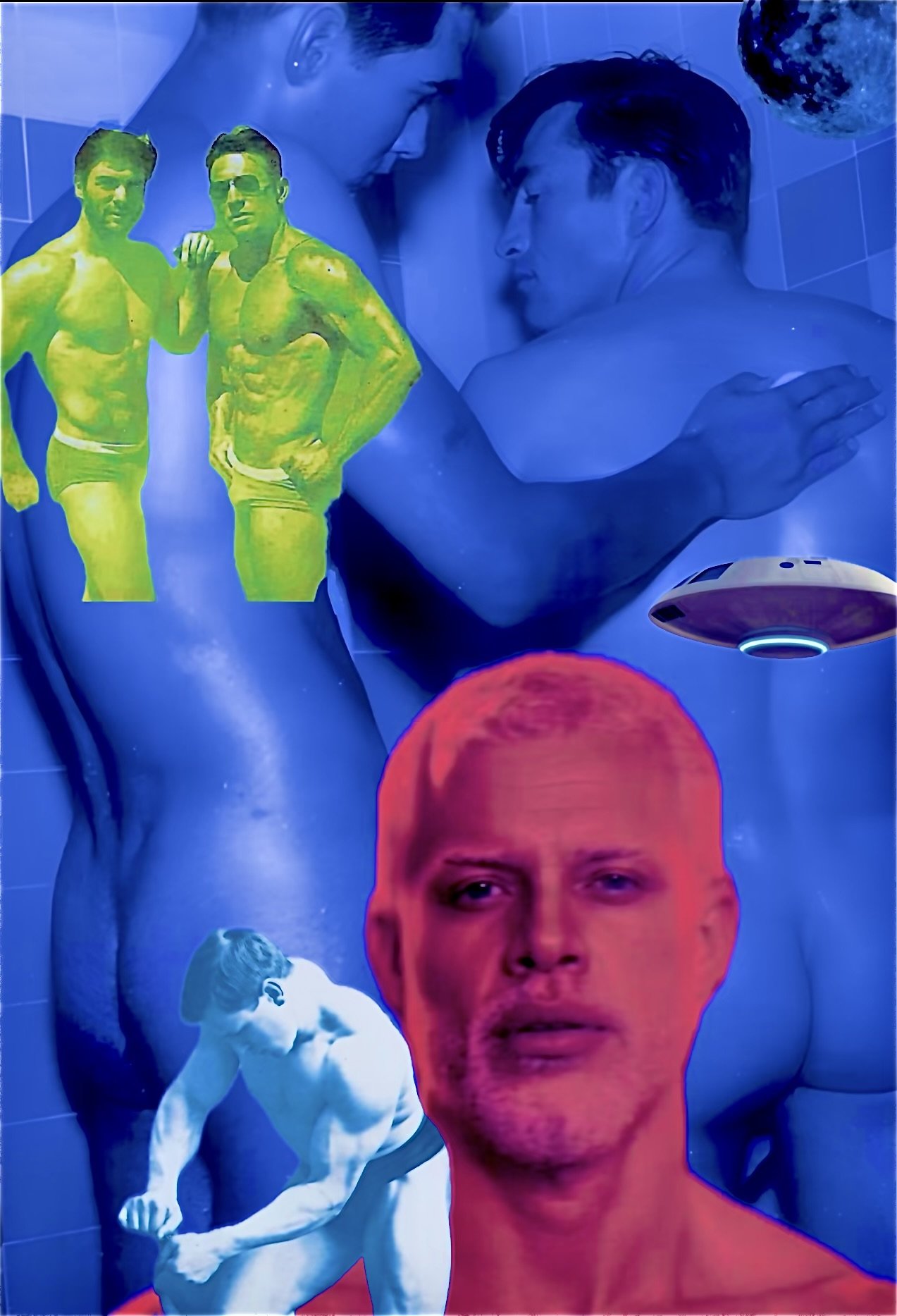
This collage places vintage physique photography alongside a contemporary group of young men in matching green shirts. A seated nude holds grapes, a reference to Bacchus, the classical god of wine and pleasure. Two reclining men take the pose of the odalisque, historically reserved for women.
Pastel mountains set the scene in an open, imagined world. A Blue Moon represents longing and desire, with the Jupiter 3 signifying freedom and escape from persecution.
The Bob Mizer Connection
Two figures in this collage come from the tradition of Bob Mizer's studio, the Athletic Model Guild, founded in Los Angeles in 1945. His magazine, Physique Pictorial, launched in 1951 and served athletic enthusiasts, straight and gay, interested in building their own bodies. It also met the emotional needs of gay men when openly gay publications were not allowed. It filled both roles at once.
The central image, a young man offering grapes to a reclining figure, draws directly on the fine art tradition. The grape-bearing youth recalls Caravaggio's Bacchus, and the reclining figure recalls Titian's Venus of Urbino, the model for the reclining nude later known as the odalisque. With a camera, Mizer placed the male body within the same tradition that museums, catalogs, art history books, television shows, and advertising all openly celebrate.
Still, Mizer paid a price, convicted in 1954 of mailing obscene material. The Supreme Court subsequently ruled in 1962, in MANual Enterprises v. Day, that male physique magazines were not, in fact, obscene. The images could finally be seen for what they were: studies of the male form, a subject with a long and celebrated tradition in art. They were, in fact, art.
Past and Present Together
The physique models represent an era when desire between men was subtext, never context. The young men in the background represent the present, where camaraderie and affection between men can be shown openly without penalty.
Rights that were won can be contested again. This piece stands as a record of gay history and a celebration of gay life today.
— Behan
Sources:
Saturday Evening Flex
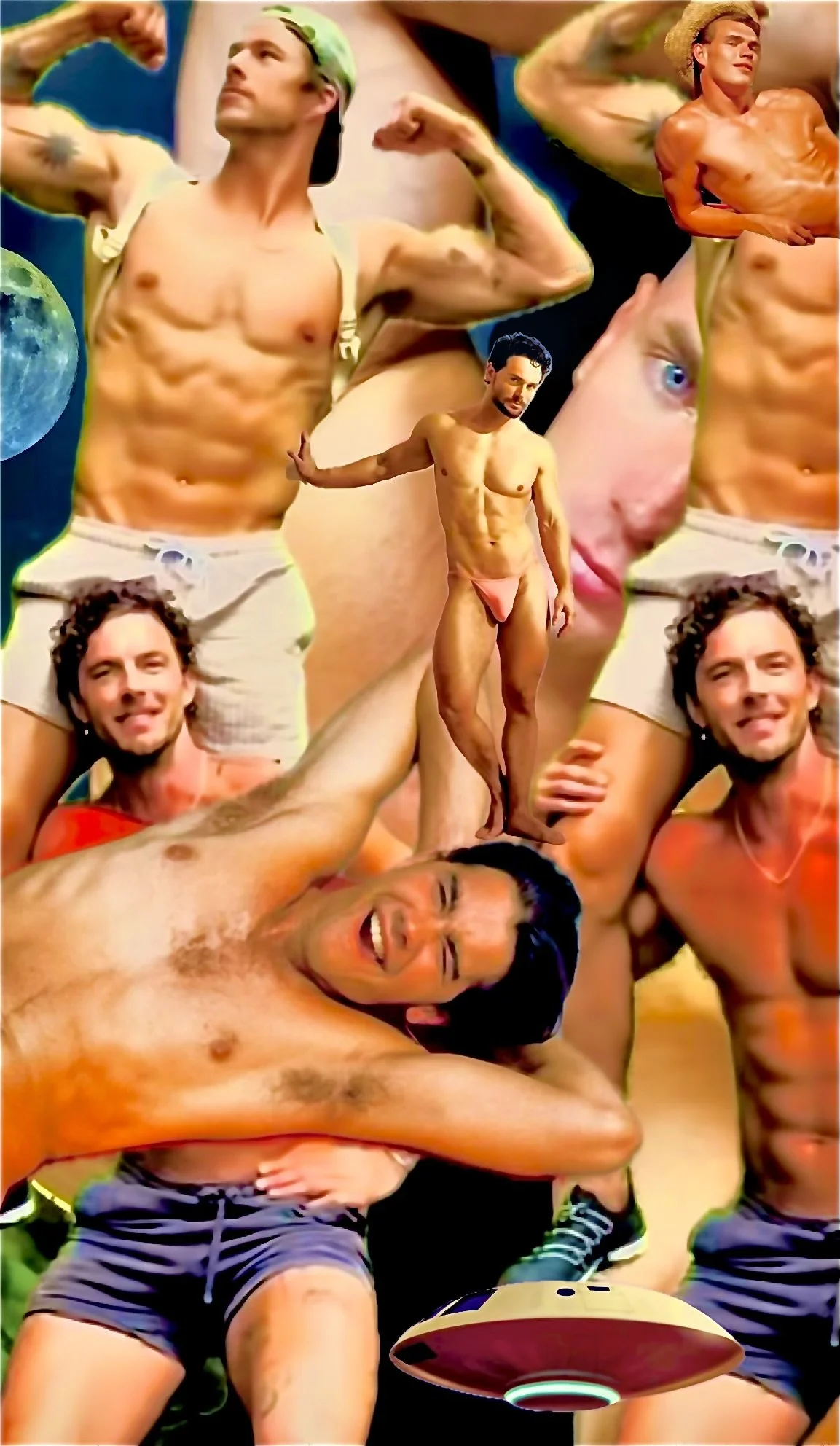
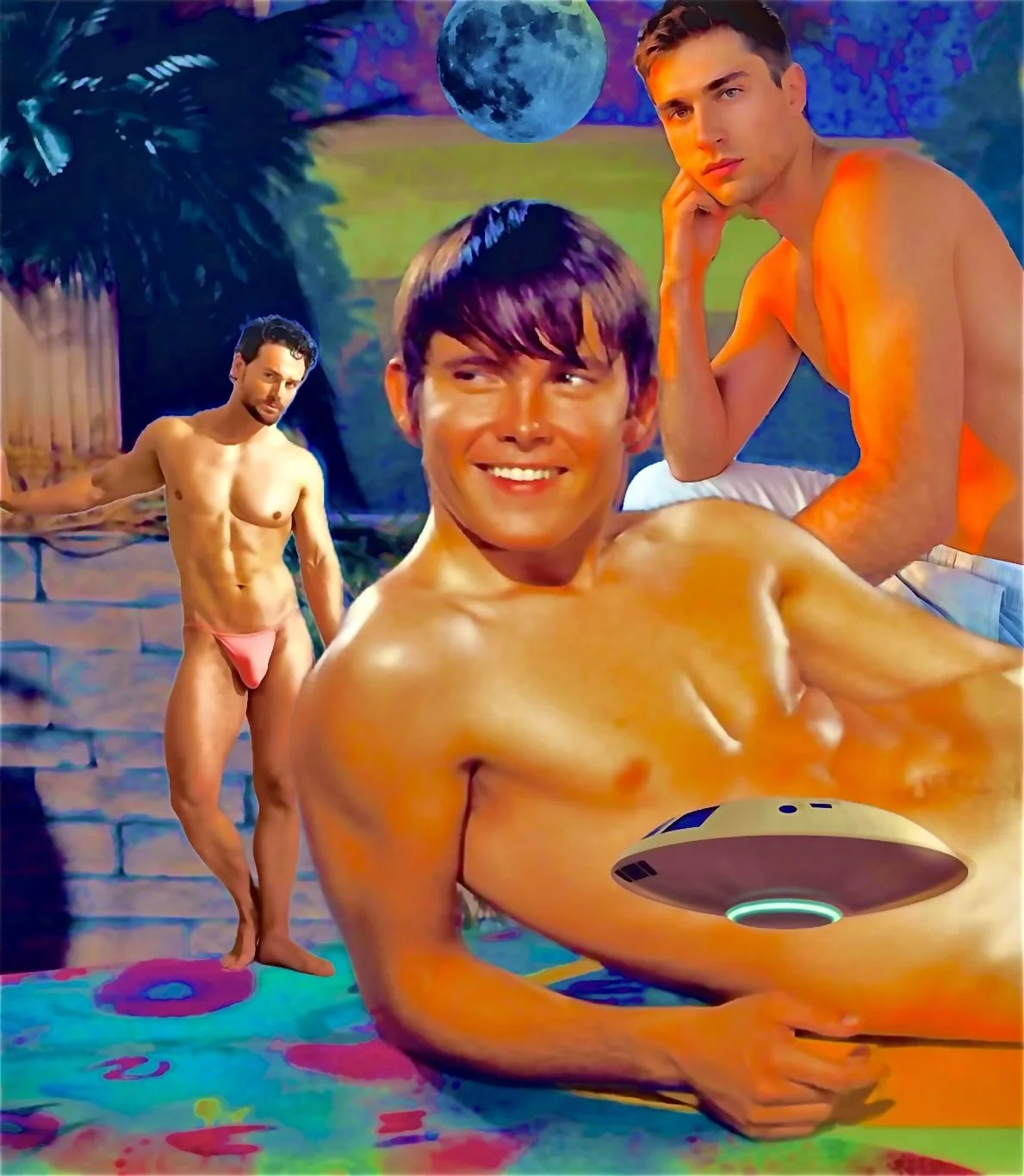
I like the way these three new digital collages evolved: each one placing the male figure in motion: flexing, lifting, carrying, surfing, posing. The blue moon and Jupiter 3 recur across all three like familiar friends, placing these bodies in a world slightly outside ordinary gravity. Fragments of the original screens are left in place. These figures came from the social media feed, and the work does not hide that.
And the strength emanating feels right. This year, my own relationship with strength has changed.
About 11 months ago, I started working with a personal trainer. We've been consistent three days a week, plus another day a week on my own in the gym. I have found this to be one of the most important developments occurring with my advancing age and impending work transition. I have discovered the love of the gym and working out, how it makes me feel, and the energy it gives me. I am really excited by it and grateful to have found it, like these digital photo collages.
Why it matters after 60, some stats:
• Age-related muscle loss can begin around 35 and can accelerate to 3% a year after 60.
• Adults who do not strength train can lose 4 to 6 pounds of muscle per decade.
• One in three adults 65 and older falls each year. Stronger muscles lower the risk of falling and of serious injury.
• Federal guidelines recommend strength training at least two days a week.
Four days a week. Eleven months. Still going. Let’s do this.


Topsy Turvy

A Love Story
March 8, 1937
First day of shooting on Topsy Turvy at Metro-Continental.
Wade Callister, 26, a lanky kid from Tulsa, trips over a cable and lands flat on his back at the feet of Desmond Keane, 31, the Dublin charmer in white tie.
Desmond looks down, lights a cigarette, and says, "Well, I guess you're Topsy."
Wade grins up at him. "Then I guess that makes you Turvy."
The names last fifty years.
April 17, 1937
The picture wraps. That night, in Desmond's dressing room with the door locked, the billing flips.
The cowboy is the one who wants to be taken. The gentleman in white tie is the one who takes charge.
September 1, 1937
Both men are loaned to Broadway. They sign a lease together on a sixth-floor walk-up at 214 East 52nd Street.
Late suppers at the Automat. Dancing at the Stork Club with starlets the press agents send over. Home together by 2 a.m., up the stairs three at a time.
No time to waste.
December 27, 1941
Nineteen days after the United States enters World War II, they enlist together in Manhattan.
June 12, 1943
Wade, now an Army Air Forces major, completes his fifteenth combat mission over Italy. The War Department casts him in Wings Over Anzio.
Every man in America wants a leather jacket.
November 3, 1944
In London, Desmond's film unit premieres The Stones of Killarney, a quiet drama about an Irish village waiting for its sons to come home.
Critics weep. So does Wade, watching it alone in the base theater outside Foggia.
They have been apart for two years now, and neither is complete without the other.
August 20, 1945
Both men are promoted to colonel.
The Army censors have read every one of their weekly letters, "Dear Topsy," "Dear Turvy," and never caught a thing.
October 30, 1947
Home from the war, both men come back to Los Angeles wanting a new life there together.
Instead, they are summoned to the executive offices at Metro-Continental. The blinds are half drawn. The studio chief does not raise his voice.
Get married, he tells them. Put some distance between you. Or there is no new contract.
For either of you.
June 5, 1948
Wade marries Maureen Doyle, a redhead from a Chicago chorus line. Desmond is best man.
March 19, 1949
Desmond marries Caroline Whitmore, a Park Avenue heiress. Wade is best man.
Seventeen months after the meeting in the front office, both men are married.
April 1, 1949
Both couples move into the Beverly Hills Hotel, in apartments 9A and 9B. The two master bedrooms share a wall.
They will live there for two and a half years.
The studio got its weddings. It did not get its distance.
May 2, 1950
With their contracts secure, both men go back to work.
Wade begins a run of Westerns that will carry him through the 1960s to the height of his fame. Desmond takes smaller, character-driven roles in art-house pictures.
The billing is different now. Both men are working.
1949 to 1958
Wade and Maureen have five children. Desmond and Caroline have one, a son named Ferguson, a nervous child.
October 15, 1951
Both families move out of the hotel and into houses of their own in Beverly Hills, a mile and a half apart.
Wade's has a secluded garage apartment over the carport: one room and a huge bed.
April 10, 1961
Desmond goes out for his first six o'clock run. Nobody in Beverly Hills jogs yet.
From now on: Mondays and Wednesdays, Desmond runs north to the garage apartment. Tuesdays and Fridays, Wade runs south to Desmond's pool house.
The doors are always unlocked.
July 4, 1963
Red Mesa opens nationwide. Wade Callister is now the biggest Western star in America.
His face goes on lunch boxes.
September 18, 1965
Desmond begins playing bit roles on television, starting with a charming jewel thief on a network detective show.
He says television pays the same and lets him sleep late.
November 12, 1972
Wade retires after The Long Ride Home.
May 30, 1973
Desmond retires from television.
August 16, 1975
Their first film convention together, in Chicago, as the stars of Topsy Turvy. They request adjoining rooms.
Their managers think it is sweet that the old boys are still such pals.
Between conventions and a slower morning run, they still meet three times a week.
September 5, 1982
First Thursday at the Candlelight Inn, a narrow room off Santa Monica Boulevard with candles dripping down old wine bottles and a row of wooden booths with doors that latch from inside.
The owner, Sal, once worked craft service on Topsy Turvy. He keeps the last booth empty every Thursday at nine.
One plate of spaghetti bolognese, two forks, two wine glasses, and a bottle of Chardonnay, all on the same side of the booth.
March 8, 1986
The 49th anniversary of the day on the set. Inside the booth, Desmond straightens Wade's collar.
"Fifty years next spring, Topsy."
Wade laughs. "You never could count, Turvy."
January 14, 1987
Desmond Keane dies at 81. The newspapers run the white-tie photographs.
January 15, 1987
Thursday. Wade drives to the Candlelight Inn at nine.
Sal has kept the last booth empty. There is one plate of spaghetti bolognese on the table, two forks, two wine glasses, and a bottle of Chardonnay, all on the same side of the booth.
Wade sits for an hour with the door closed.
When he leaves, Sal puts a hand on his shoulder, the way you would for a man who has lost his wife.
April 2, 1987
Wade Callister dies at 76. The papers call him a Western legend.
On his nightstand is a Christmas card from 1937, signed "Love always, Turvy."
June 9, 2003
Ferguson Keane, 52, clearing out his late mother's house, finds a locked leather diary in a hatbox. It belonged to his father.
The first entry is dated March 8, 1937. It begins: "Met a cowboy today. He fell at my feet."
Postscript:This is a work of fiction, but in Hollywood and the entertainment industry, countless gay lives were interrupted and interfered with, and countless gay men and women were denied the chance to live openly. This story imagines one such couple who managed to endure despite the obstacles. The characters and events are a dramatization.
A note on process: this story was developed with Claude, an AI system made by Anthropic. I have been doing a deep dive into AI to learn more about it. I have found the collaboration at times difficult. AI and automated moderation systems have a documented history of flagging gay content more often than comparable straight content, and in my experience, the restrictions I encountered felt like a continuation of the same bias this story is about.
— Behan

No Exemptions
No One Is Exempt from the Closet
In 1981, a young actor named Tom Cruise allegedly appeared in a photo layout for Parlée, a gay magazine. He was 18 or 19, his first film had just been released, and the accompanying text was a standard profile of a promising newcomer. Forty-five years later, the photographs are circulating again, presented as a revelation.
The photos are not explicit. What keeps them in circulation is the closet, and the closet affects far more people than those who are hiding in it.
The Closet as a Cultural Structure
Eve Kosofsky Sedgwick made this point in Epistemology of the Closet (1990). She argued that the division between homosexual and heterosexual is not a minority concern. It is a structure that shapes how everyone in modern Western culture thinks, speaks, and behaves.
Once being "outed" is possible, everyone becomes subject to suspicion. Everyone has to manage how they are read: straight, gay, or bisexual.
Who Maintains the Closet
The closet does not sustain itself. It depends on the people who enforce it: those who mock, police, and punish any sign of difference among men. Much of that enforcement comes from straight men.
What many of these men fail to recognize is that the system they support turns back on them. A structure built on suspicion does not limit its suspicion to gay men. It applies to every man.
What the Cruise Photos Show
Whatever his sexuality, Cruise has spent decades unable to leave a single 1981 photo shoot behind. In a culture organized around the closet, any association with gay men becomes a question that demands an answer.
Straight men live under the same scrutiny in everyday ways:
• avoiding physical affection with male friends
• monitoring their clothing, gestures, and interests
• treating closeness between men as something that requires a joke or a disclaimer
Sedgwick called this "homosexual panic." It restricts the lives of men who have nothing to hide as much as the lives of men who do.
Everyone Is Suspect
Straight men are not immune to the closet, and they are not exempt from it. Every man who promotes it places himself under the same suspicion he directs at others.
Before continuing to support the closet, straight men should consider what it costs them. The closet does heavy damage to everyone it touches, including the people who keep it in place.
Hot Dog Saturday
Hot dog!



Friday Night Free For All
It’s on!

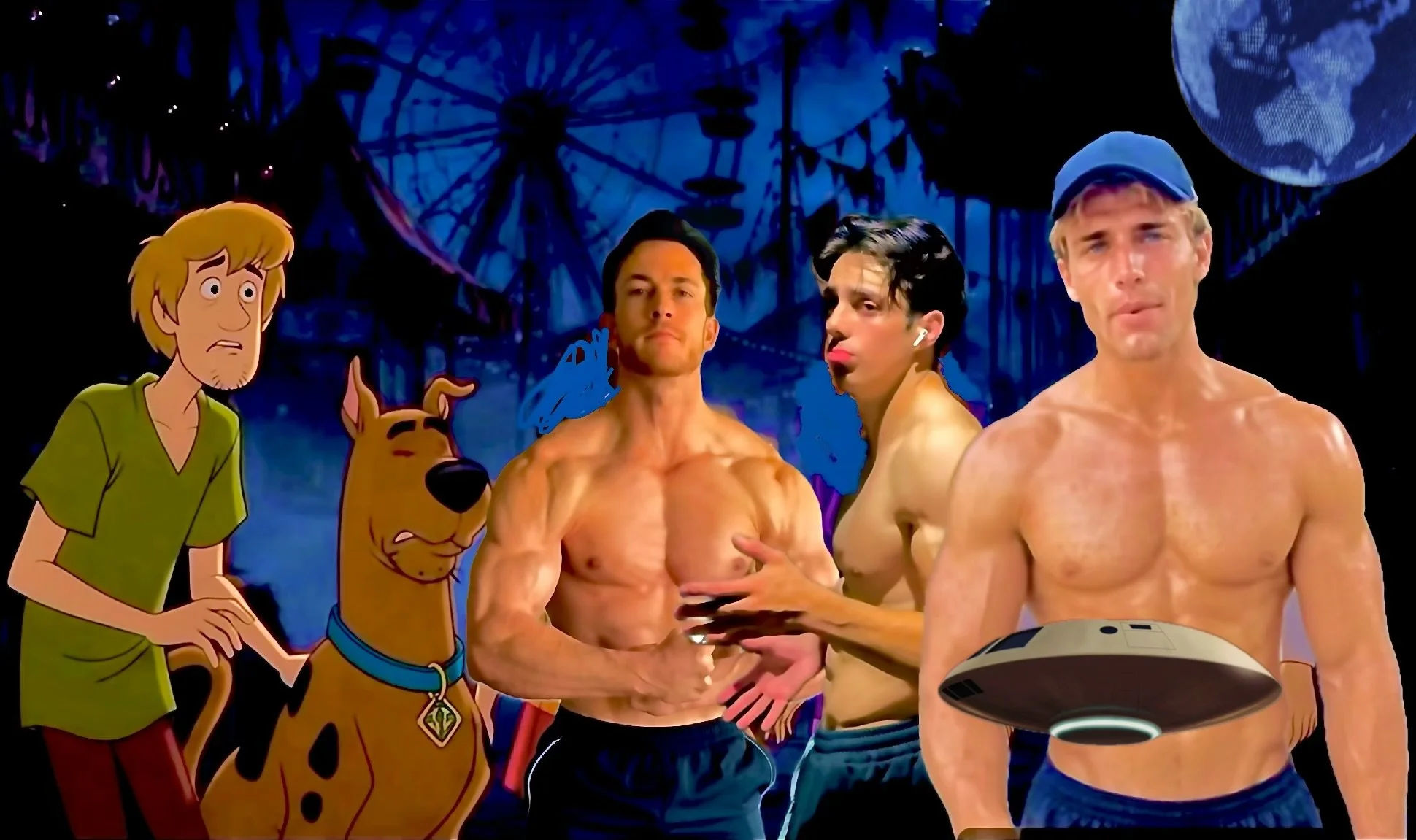
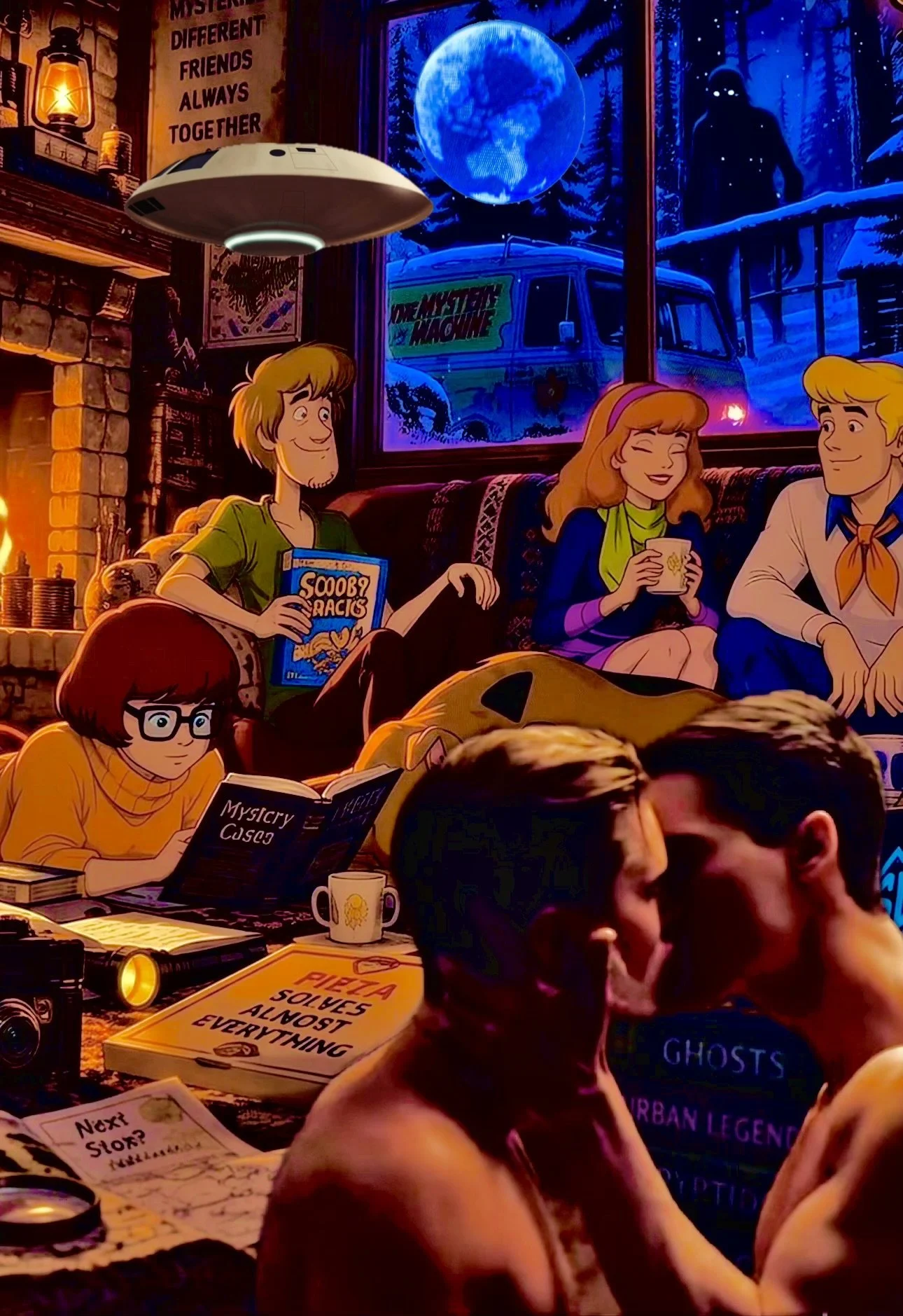
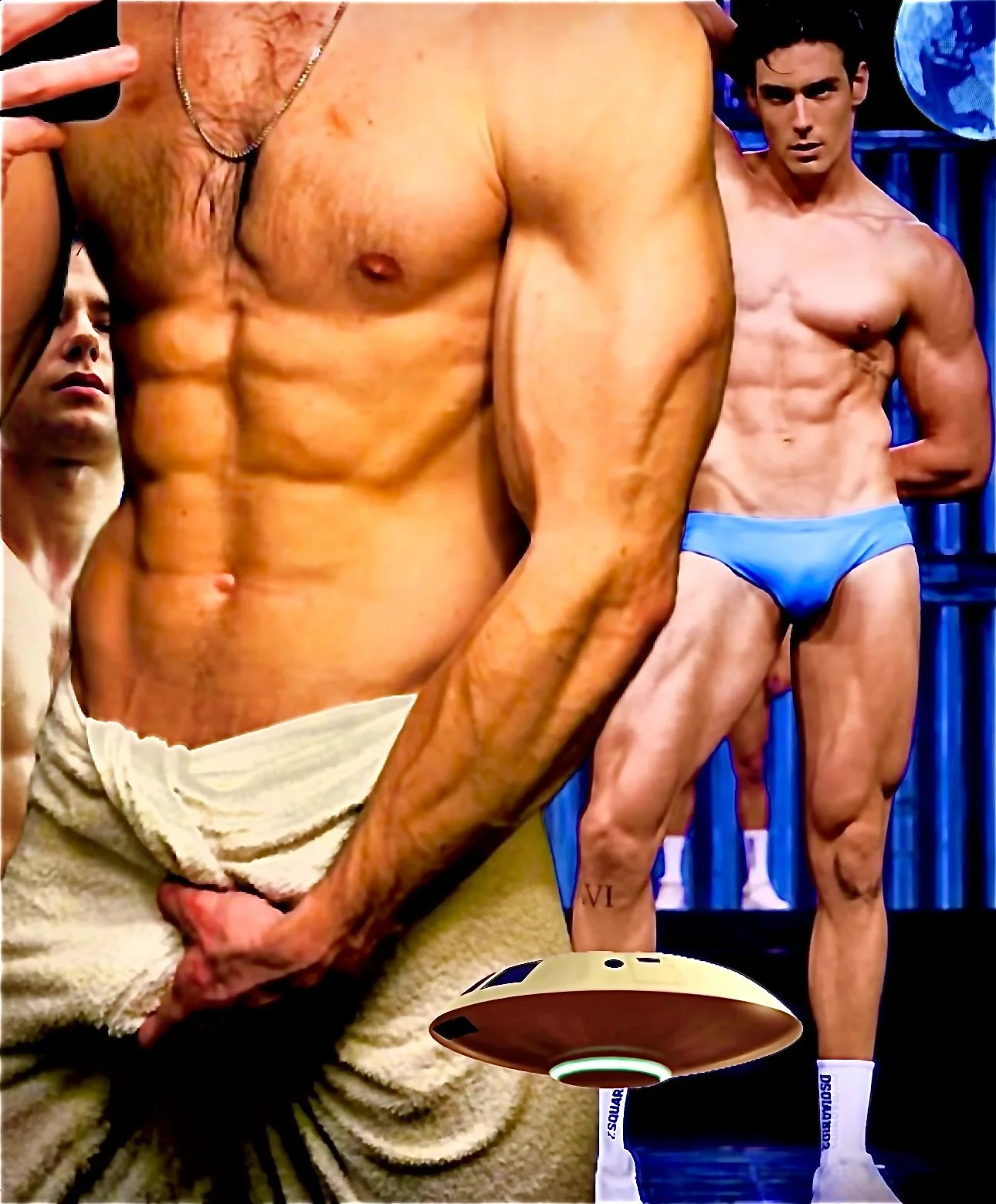


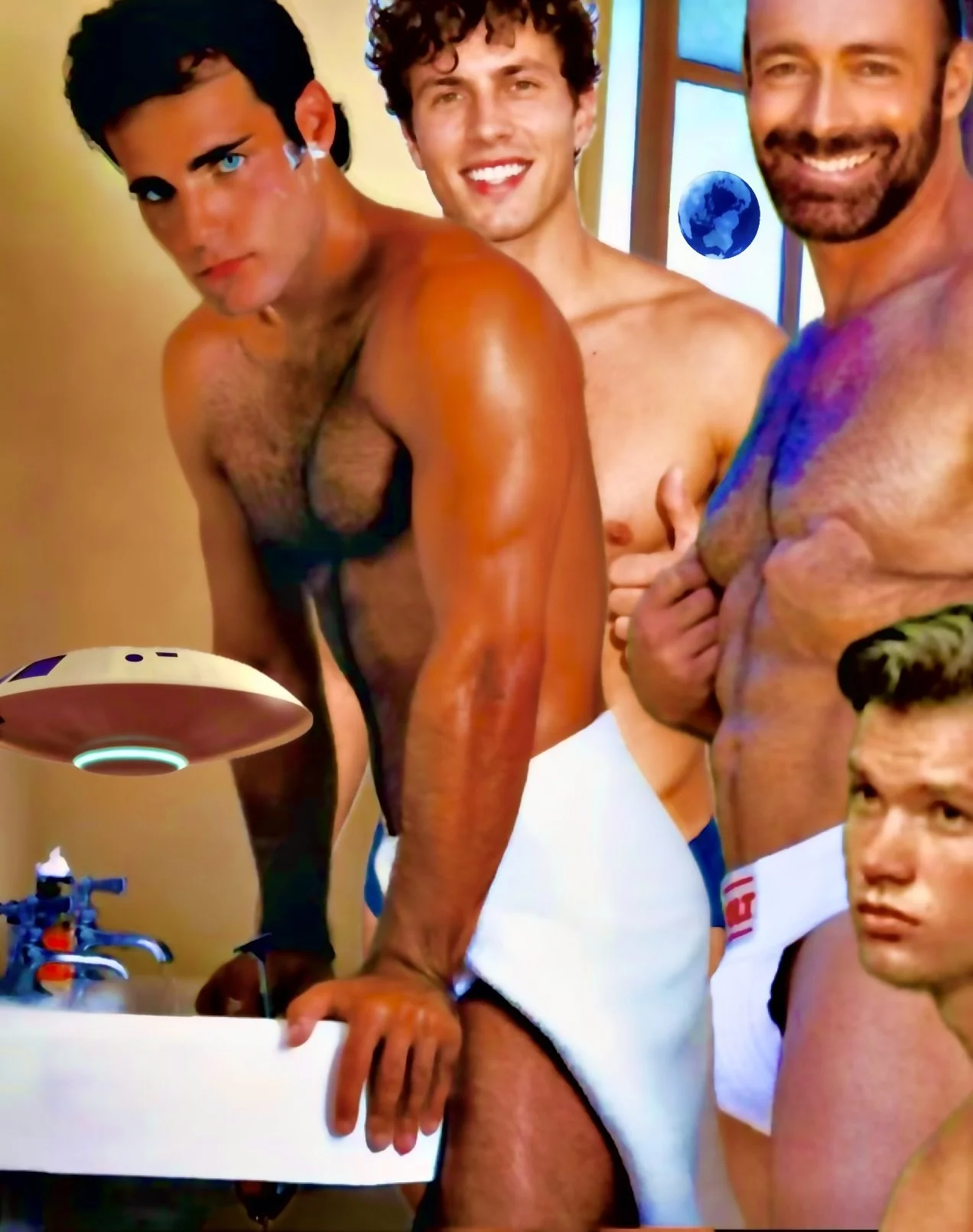

The Visitor
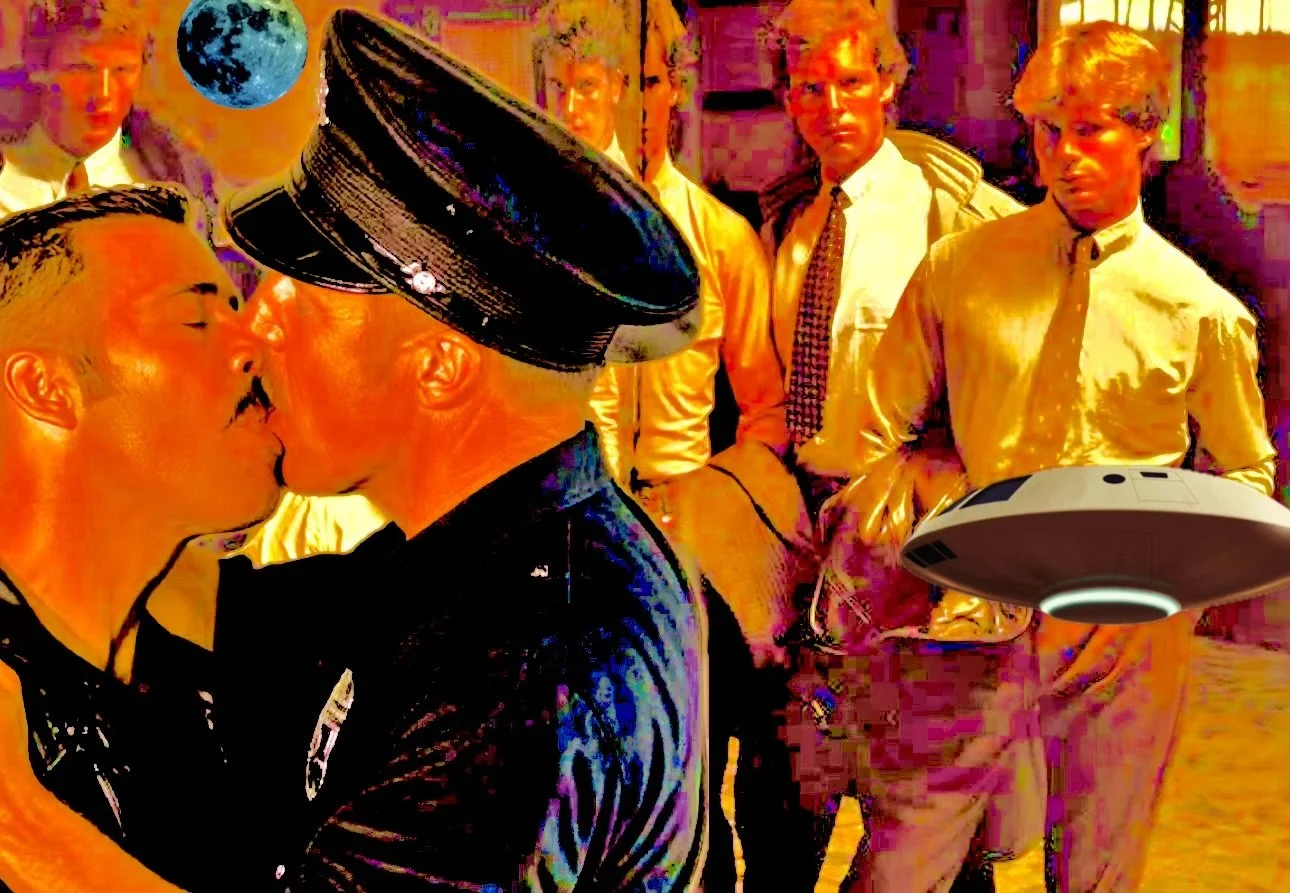
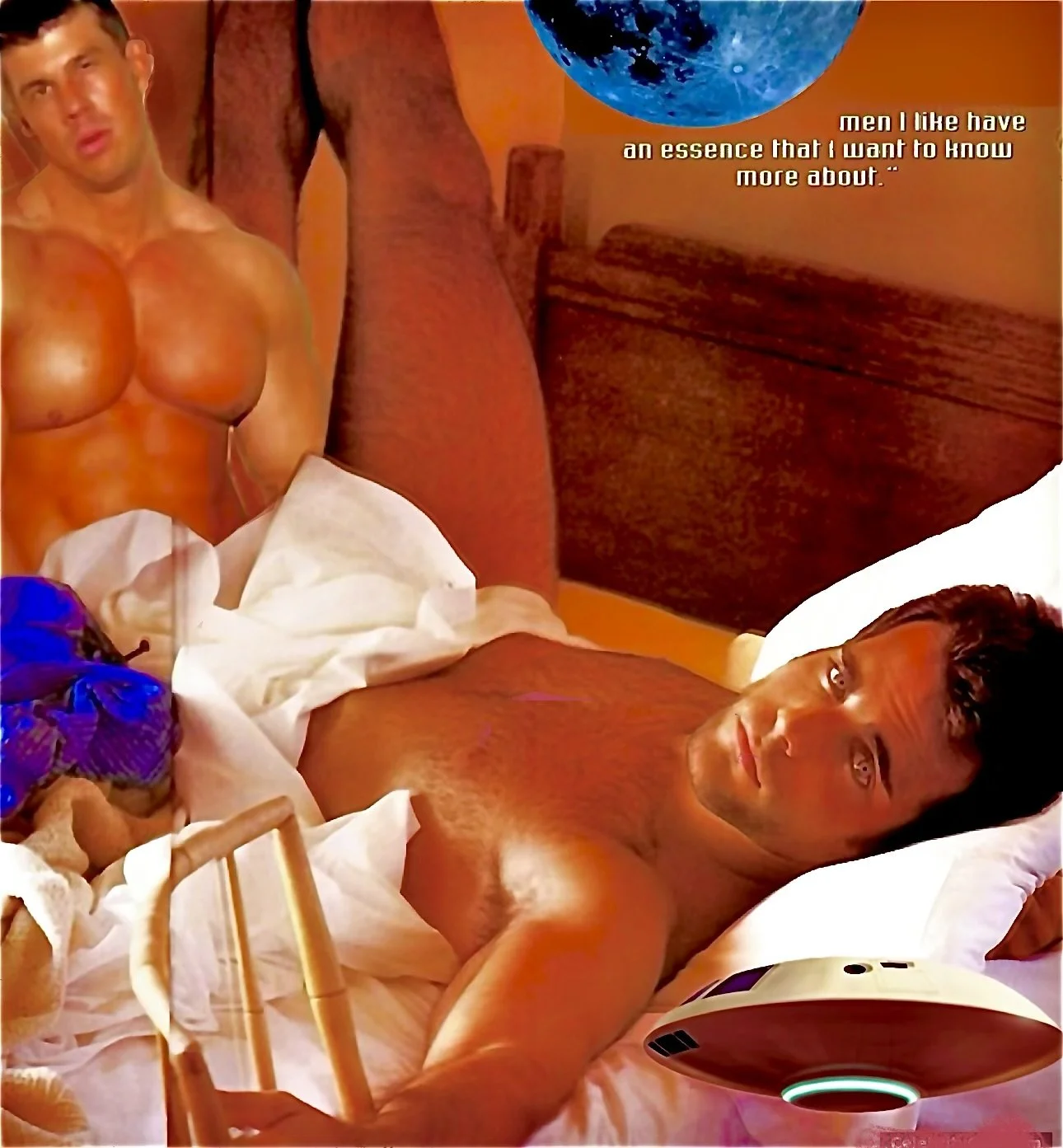
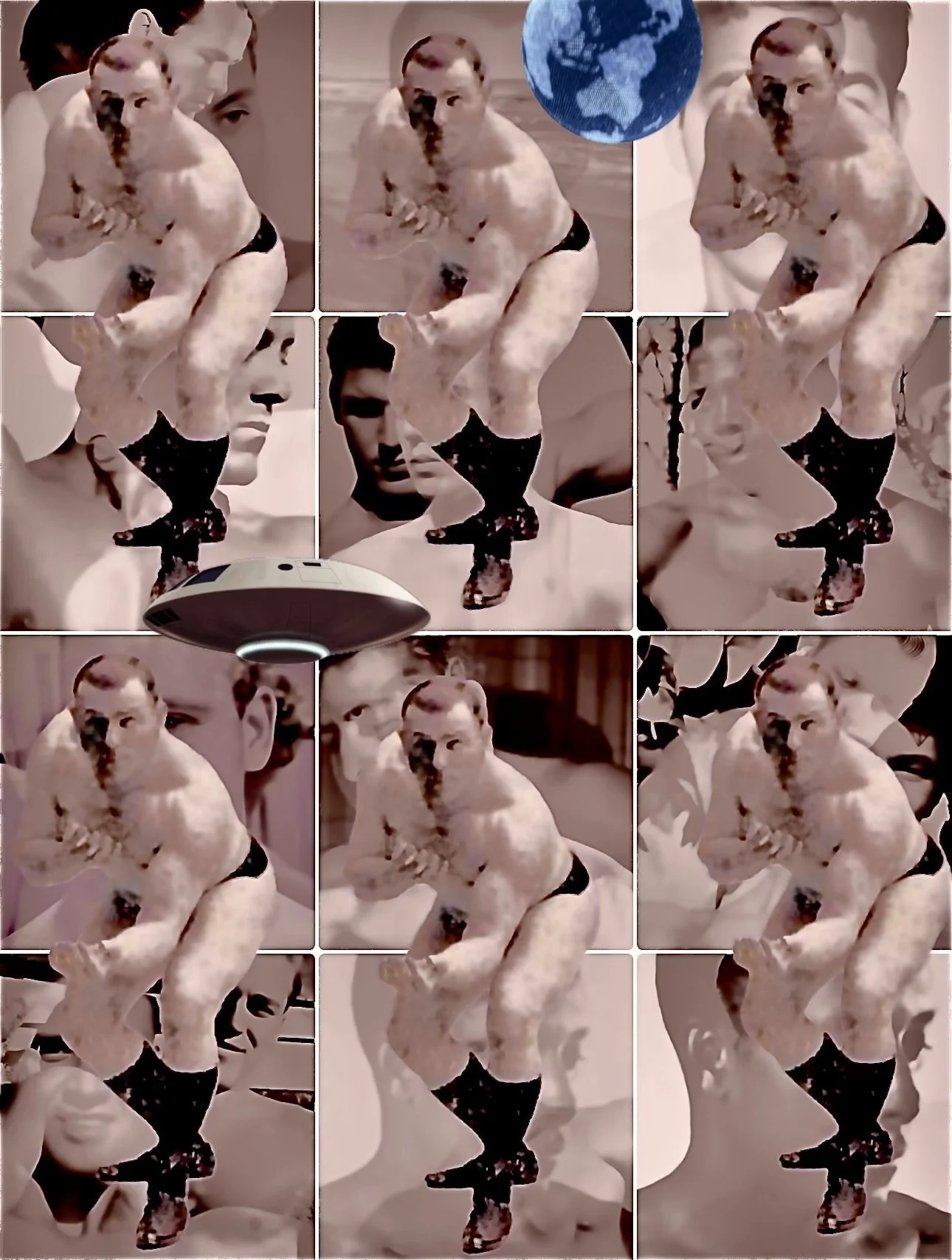
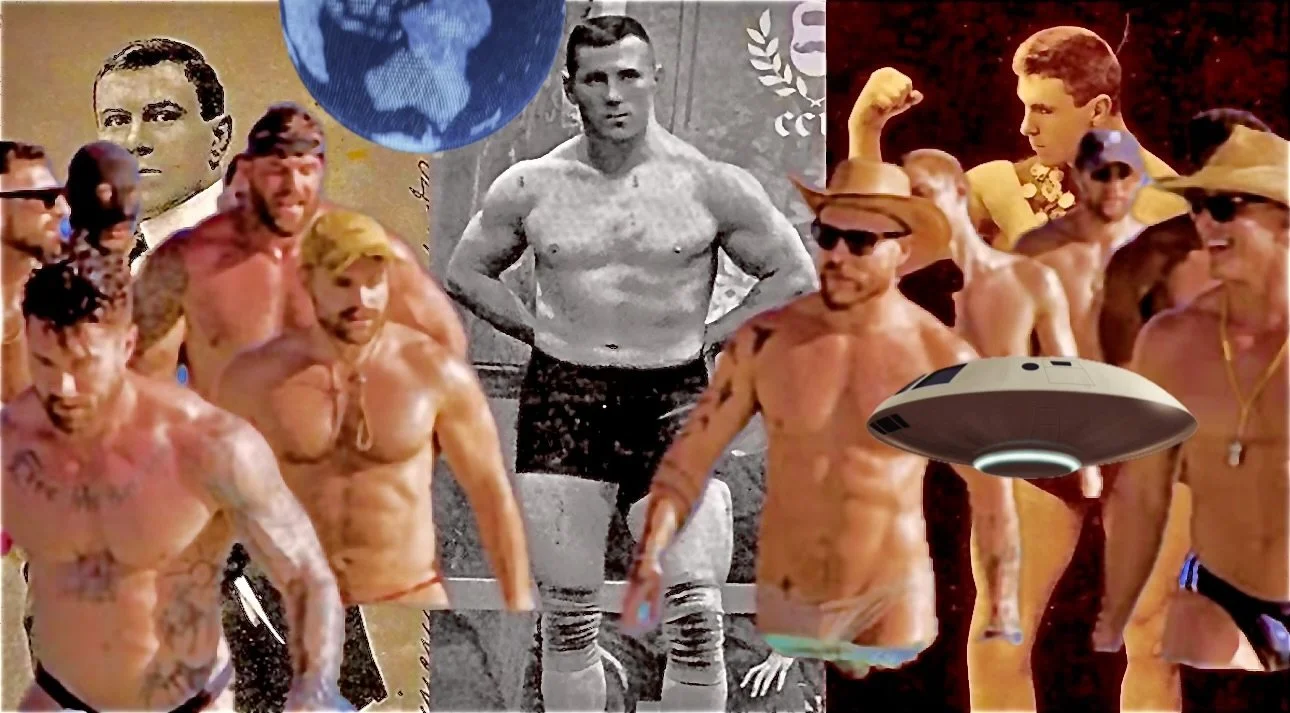
One trip to the 1950s, two trips to 2026, and more than a century between him and his new friends.
Each collage has its own personality.
So does Hackenschmidt. He fits wherever he lands.
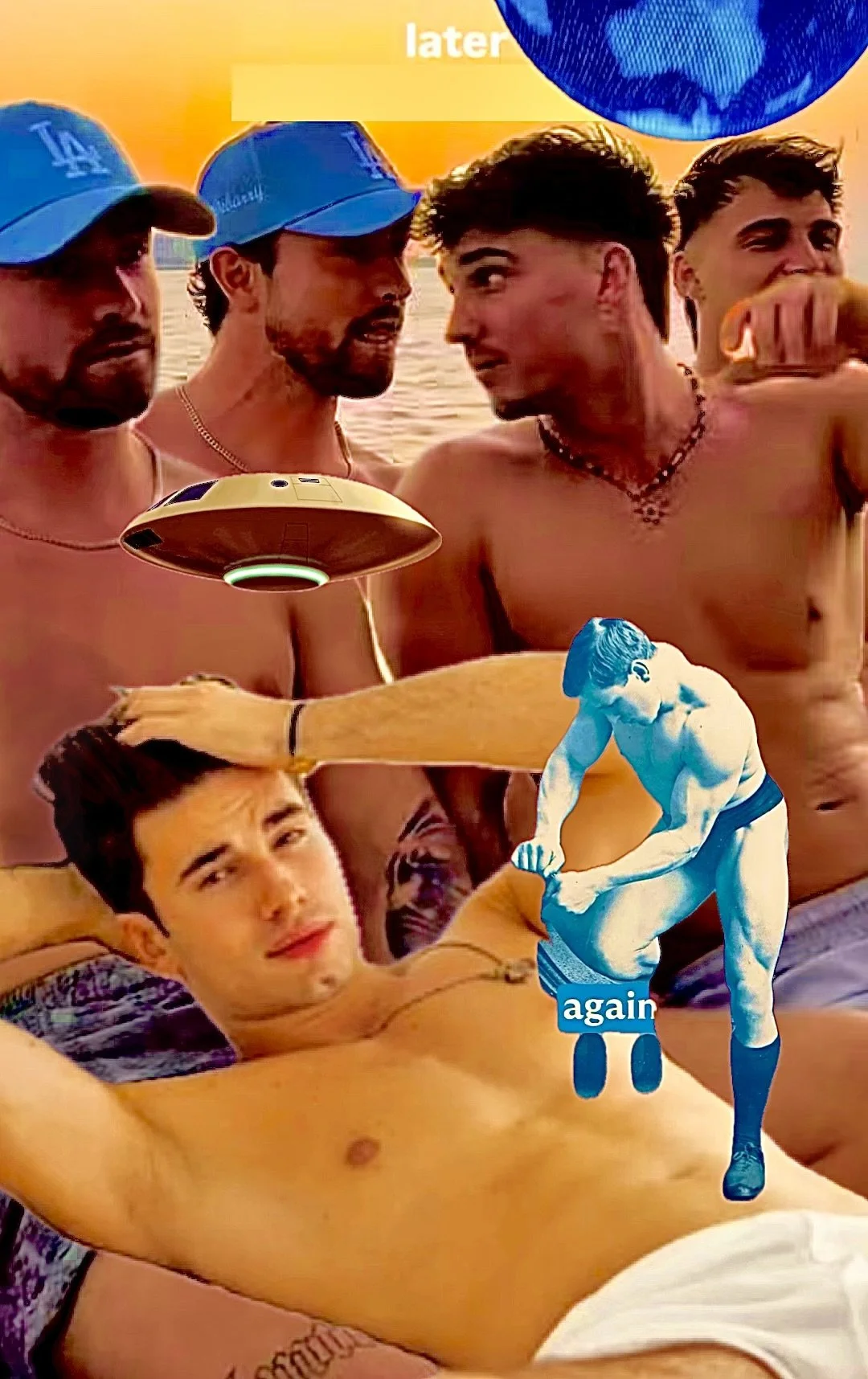
P.S. About Hackenschmidt
Georg Hackenschmidt is born in 1877 in Dorpat, in the Russian Empire (now Tartu, Estonia). He trains as a weightlifter and wrestler, and in 1905 he becomes the first recognized world heavyweight wrestling champion. His physique photographs circulate across Europe and America, making him one of the first celebrity strongmen in the first Wed cake fashion. He settles in London, publishes The Way to Live in Health and Physical Fitness in 1908, and later writes books on philosophy. He stays active into old age and dies in London in 1968 at the age of 90. All accounts point to him being a happy guy. These three collages celebrate a well lived life.
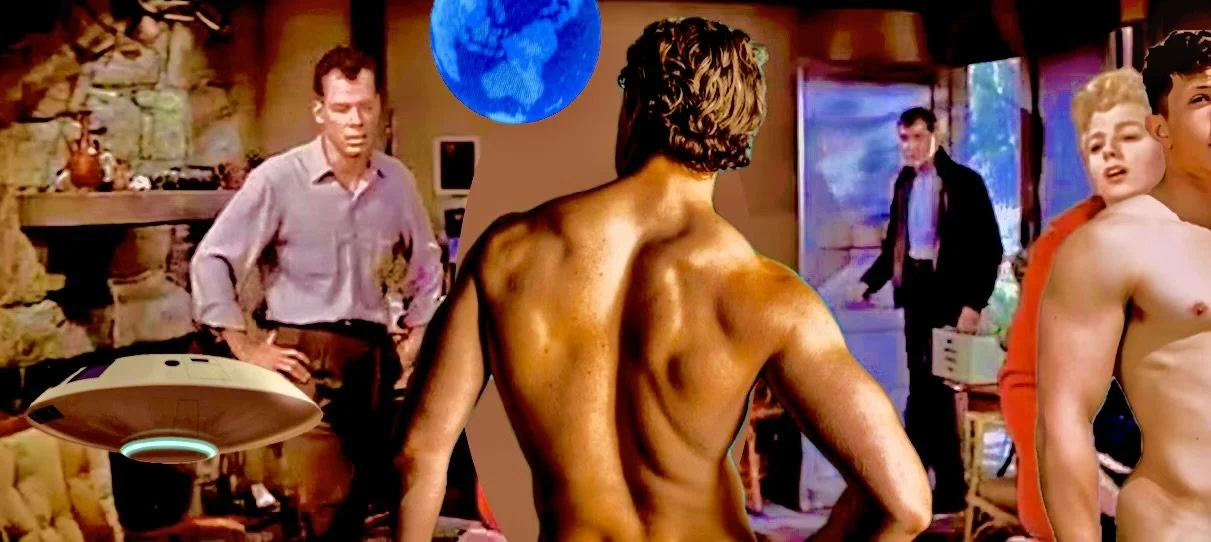
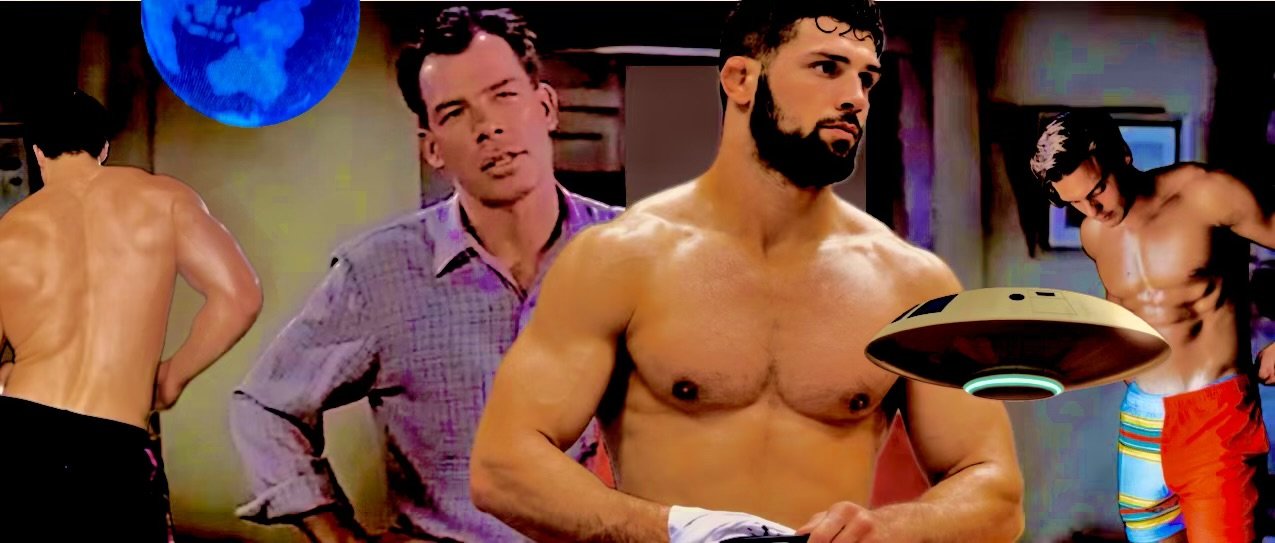
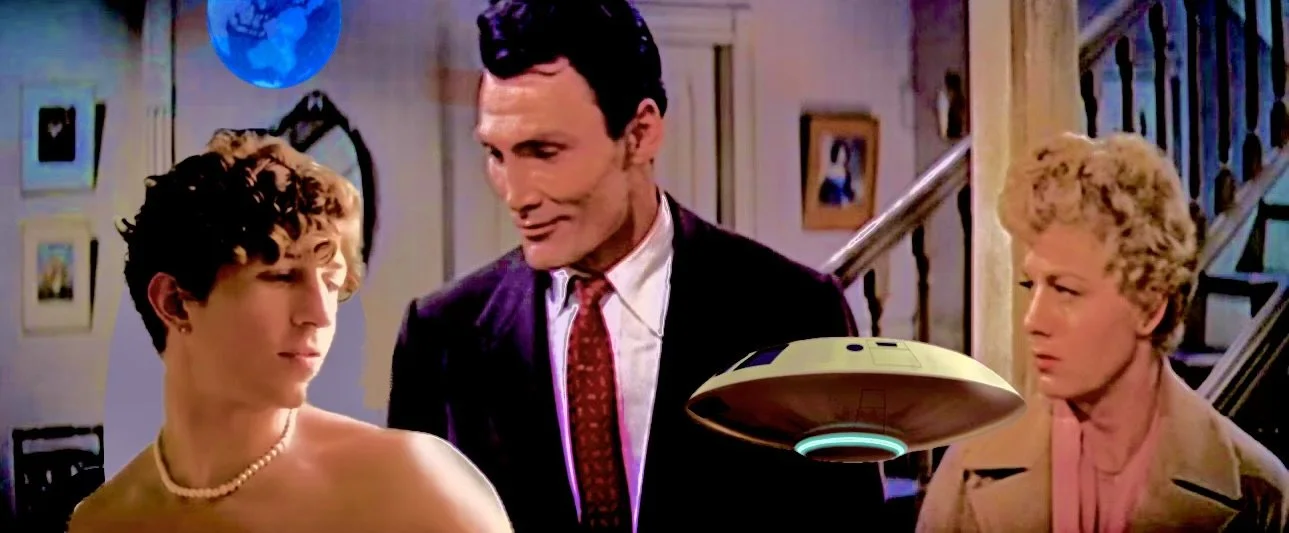
I Died a Thousand Times (1955)
The Original
Paroled bank robber Roy Earle (Jack Palance) leaves prison and takes on one last job: robbing a resort hotel in the California Sierras. Along the way he grows attached to a young woman, Velma, and forms an uneasy bond with Marie (Shelley Winters), a dance-hall girl who follows him. Filmed in color and CinemaScope, this 1955 remake of High Sierra is a fatalistic crime drama about a criminal who cannot escape his past.
The Reimagined Version
Paroled bank robber Roy Earle (Jack Palance), a closeted gay man, leaves prison and takes on one last job: robbing a resort hotel in the California Sierras. Along the way he grows attached to Vic, a young man whose affection he cannot openly return, and he forms an uneasy bond with Marie (Shelley Winters), a dance-hall girl who follows him and shields his secret. Filmed in color and CinemaScope, this reimagined remake of High Sierra is a fatalistic crime drama about a gay criminal who cannot escape his past.


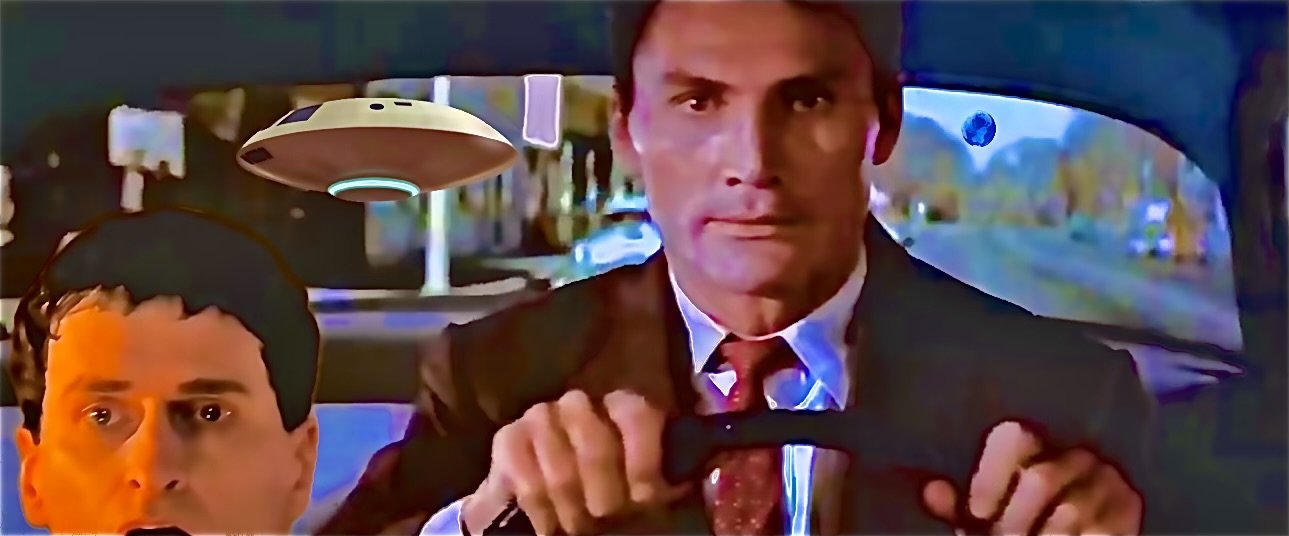
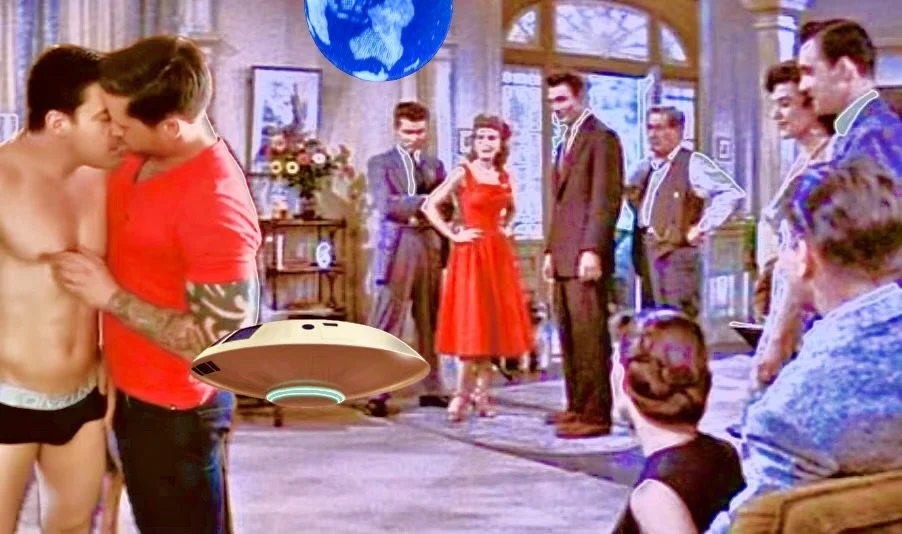
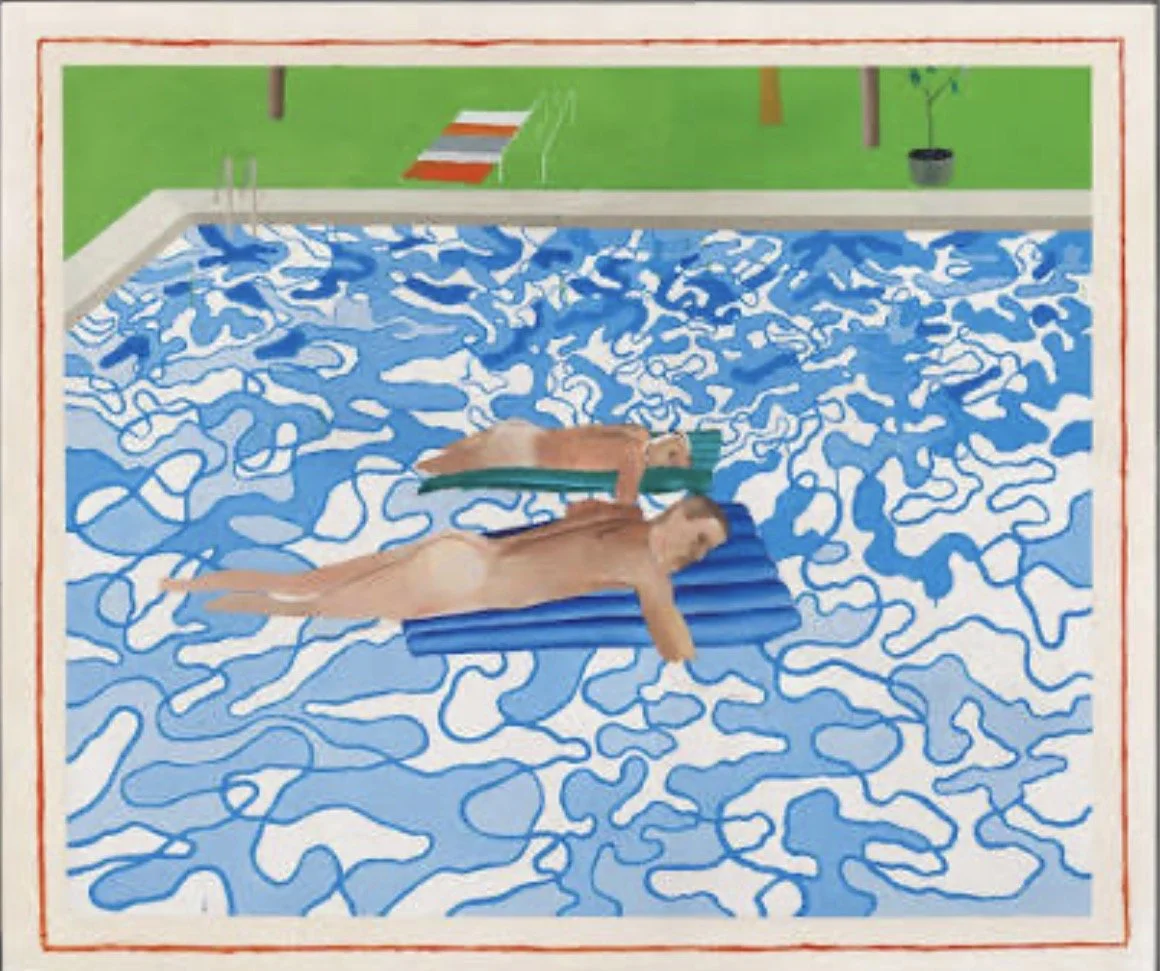
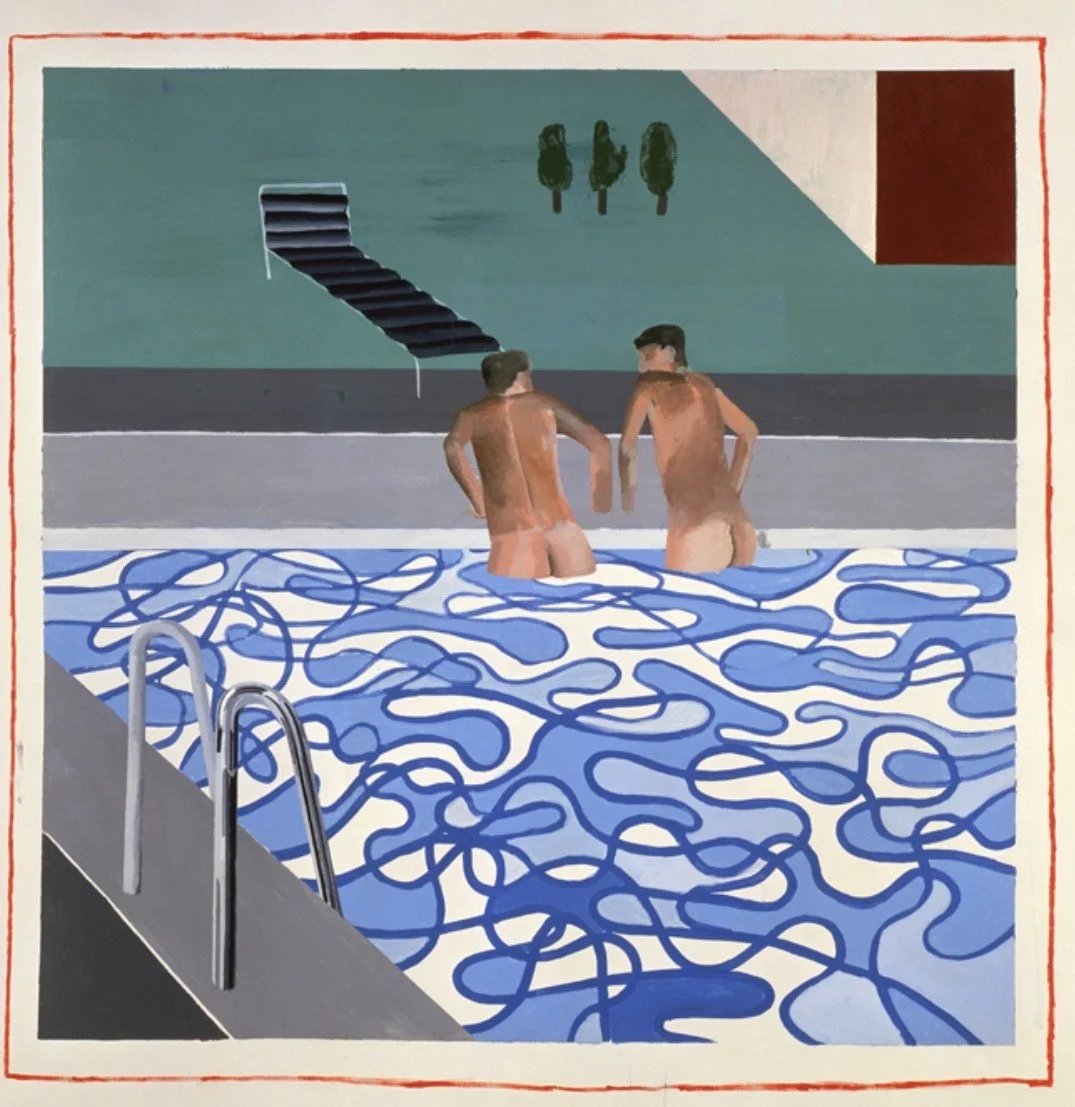
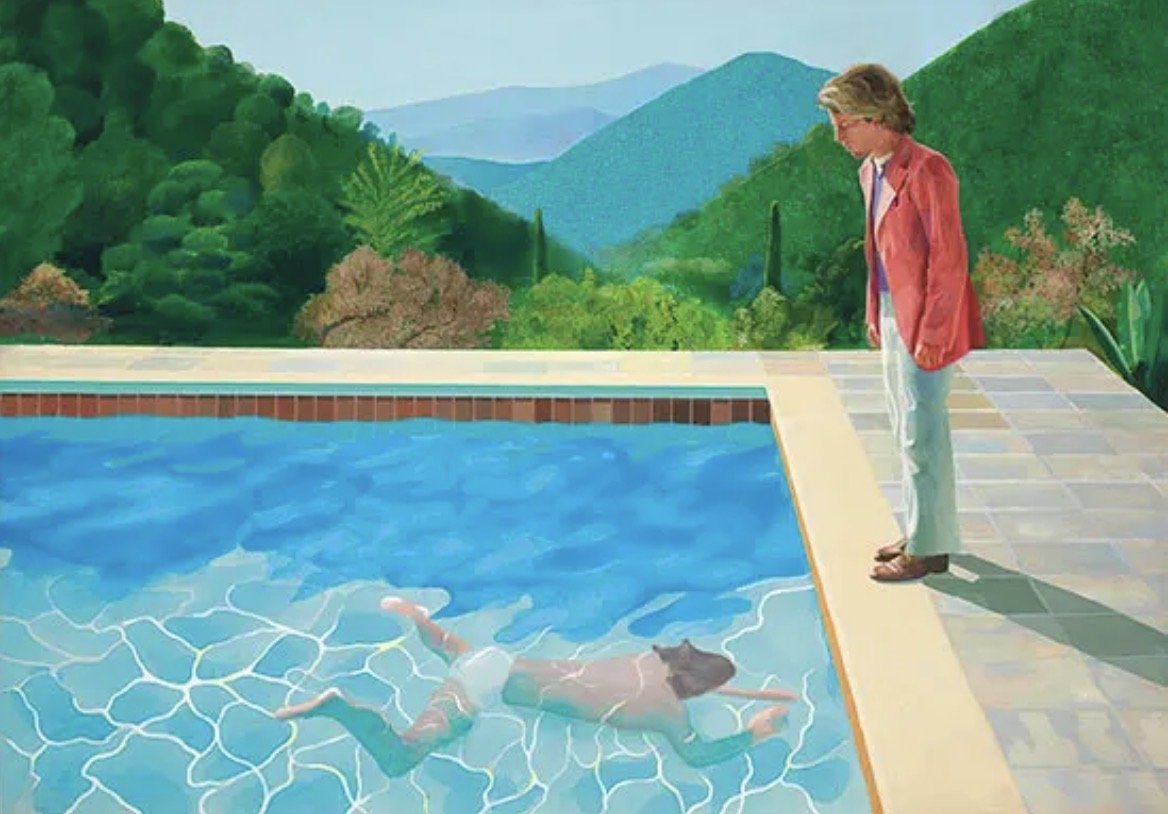
The Great American Pool and the Visible Gay Male
The Great American Pool: Hockney and the Visible Gay Male Figure
In the second half of the 20th century, the swimming pool was recognized as the quintessential sign of middle-class success, indicating financial stability and the luxury of leisure.
British artist David Hockney took this familiar setting as a stage for normalizing the presence of the gay male figure in American culture. In the 1960s and 1970s, the general public knew very little about gay life because it was rarely shown in mainstream images. By combining a widely known structure with a mostly hidden subject, Hockney presented gay men as part of the same landscape as everyone else. The images remain outwardly calm, yet each is a radical act.
My digital collages extend Hockney's assertion in an homage to his work. Where Hockney often showed the gay male figure alone or as a pair, the figures in my collages appear in groups and crowds around the pool. They are openly gay, with some embracing and kissing.
Where Hockney's paintings say we are here, my collages add and we are everywhere.
As we always have been.
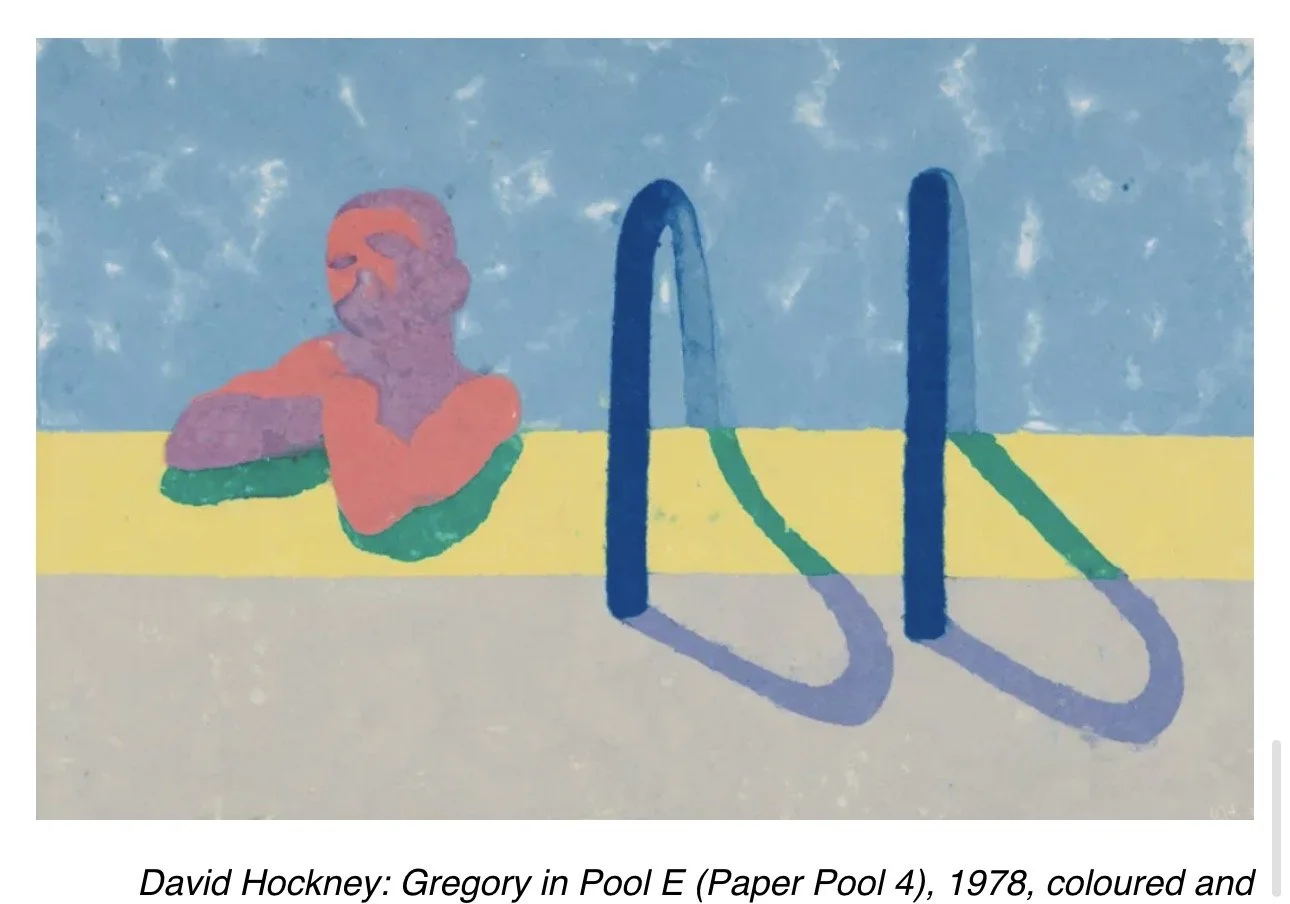
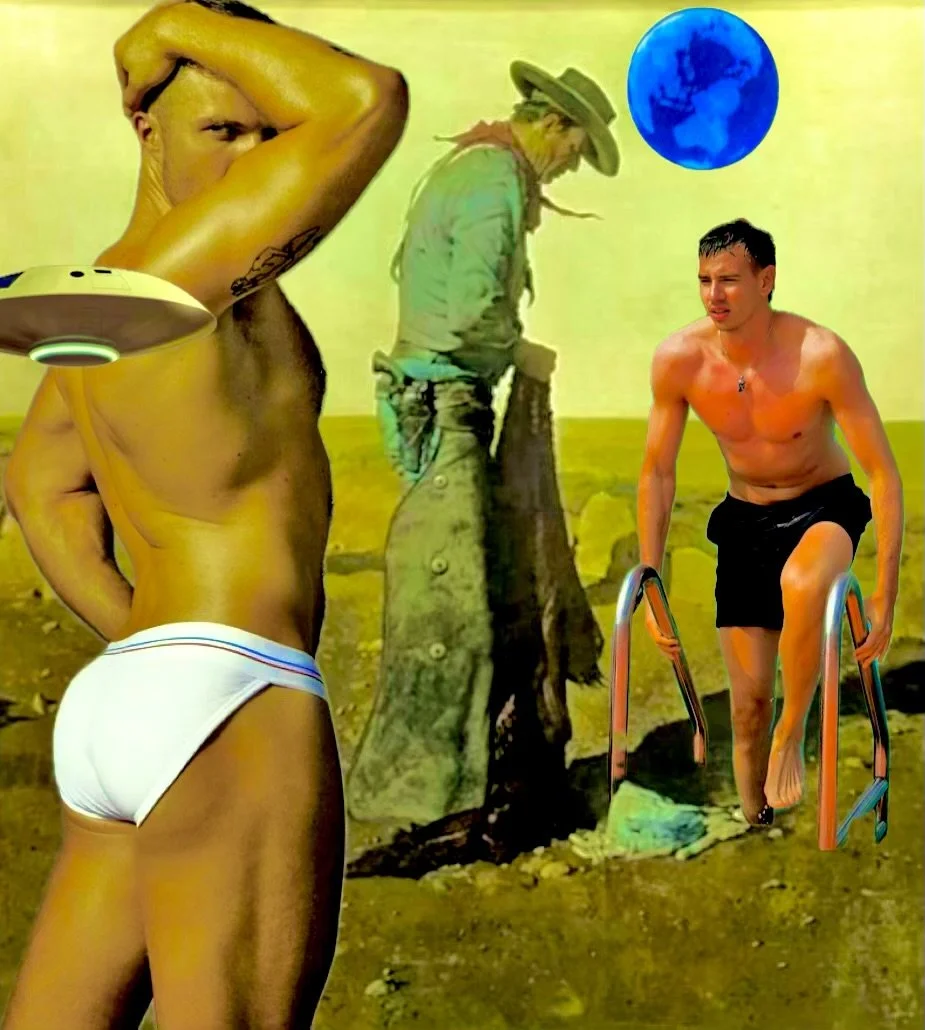





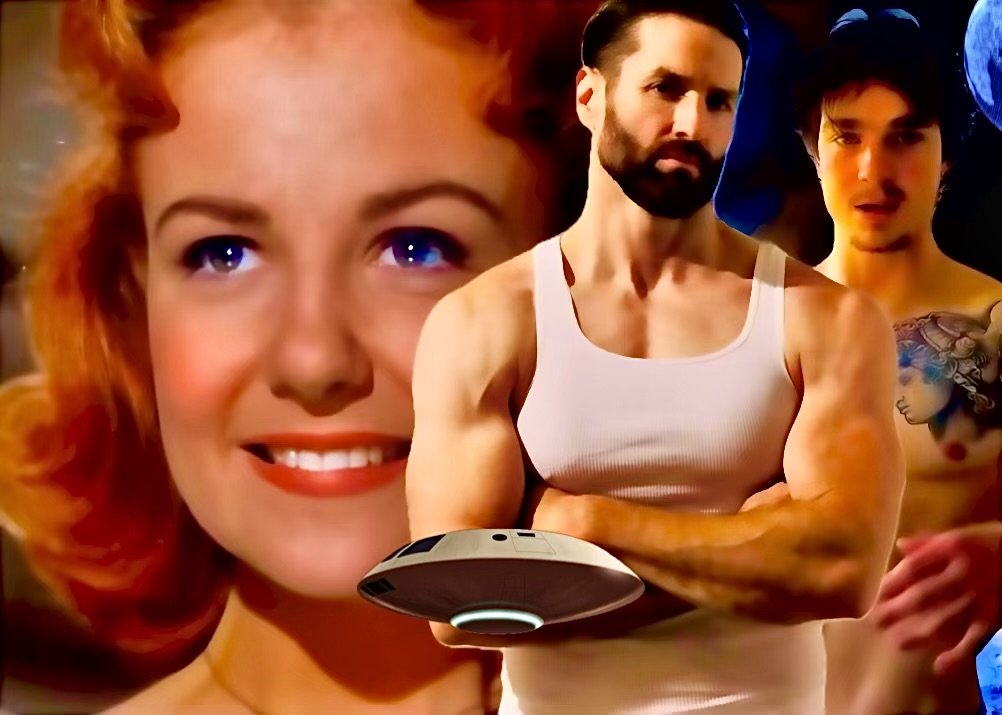
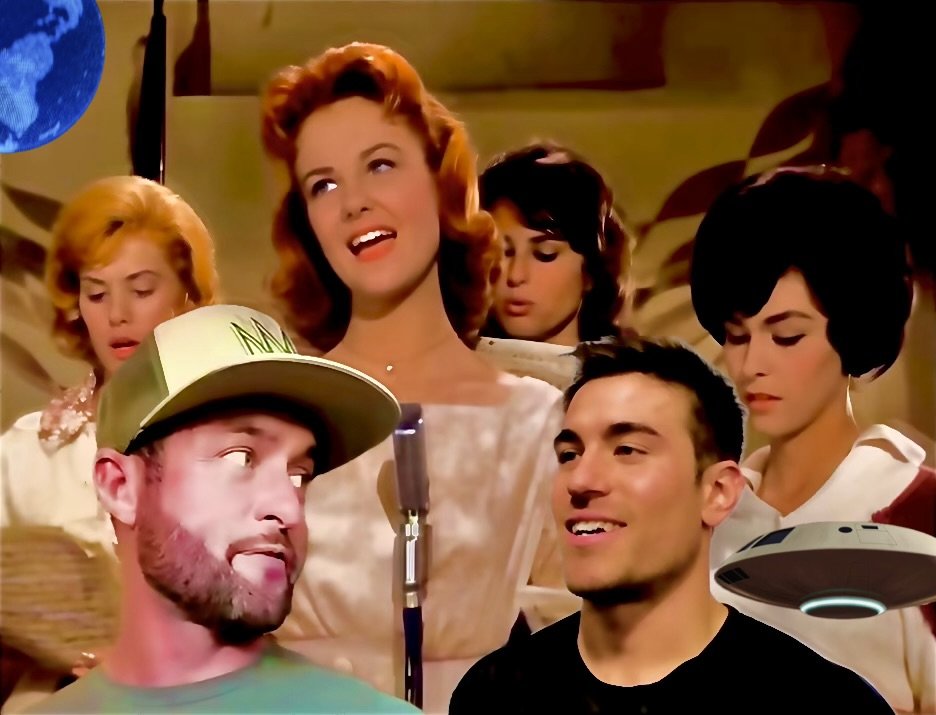
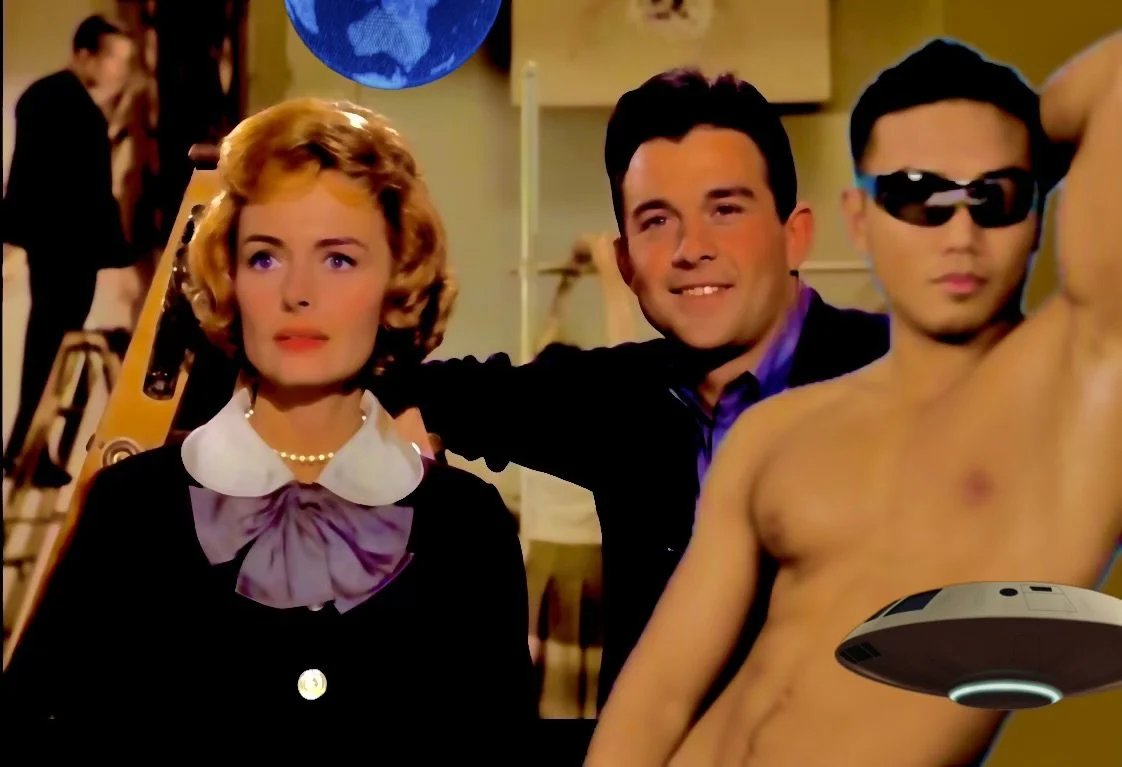
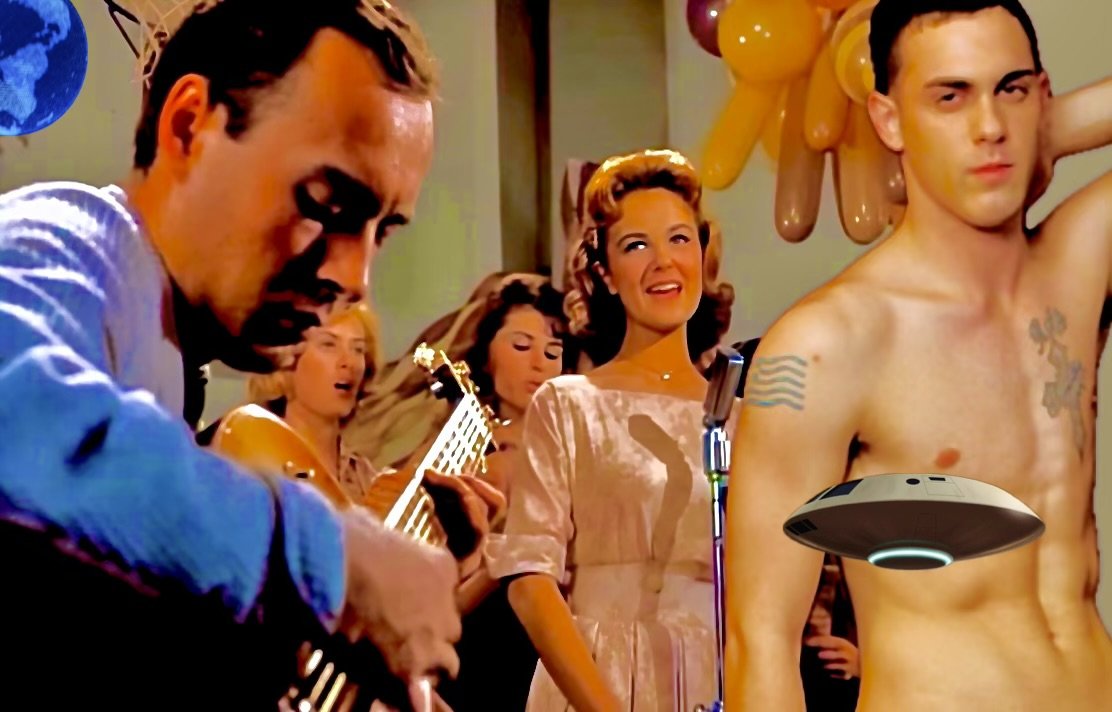
Oh, Johnny: Johnny Angel and the Advance of Queer Culture in 1962
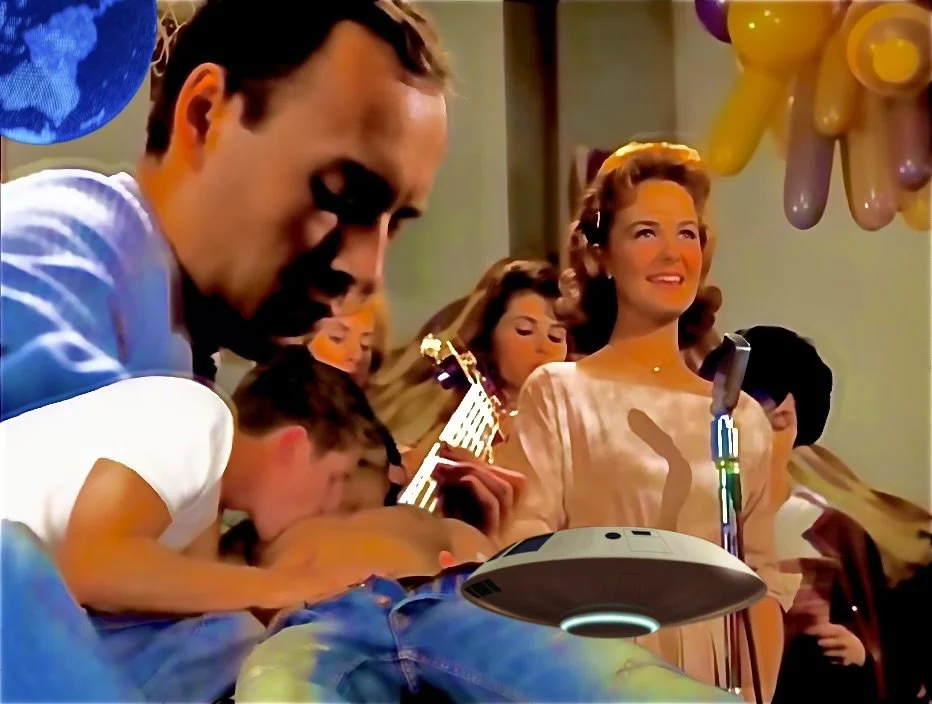
Consider the moment: a young girl steps onto the stage to sing a song in front of her mom and boyfriend. The song is about a secret love, a love that is yet to be spoken. It is unrequited and patient, waiting for recognition.
In February 1962, a song called "Johnny Angel" hit number one on the Billboard Hot 100. It was sung by Shelley Fabares, then a regular cast member on The Donna Reed Show, playing the role of Mary Stone. The song was written into an episode of the show as part of Mary Stone's storyline, then released as a single and became a genuine chart hit on its own.
The song is about unrequited love. The person singing it has fixed all their feelings on someone who does not know they exist. And they carry that feeling alone, in silence, with little expectation it will be acknowledged.
The connection between those lyrics and the reality of gay men and women in the early 1960s, and for years afterward, is clear. A same-sex attraction in that era had nowhere to go. It could not be spoken aloud. It had to be carried privately, the way the song describes, with no guarantee it would ever be answered.
That connection is reinforced by how often gay culture has actually reached for this song and this name in the decades since. A gay bar in Lexington, Kentucky was named Johnny Angel. Two well-known gay adult film performers used Johnny Angel as their stage name. And as recently as 2025, a gay couple chose "Johnny Angel" as their wedding song.
Johnny Angel can be seen as a type of tragic anthem of the closet. It is an anthem of longing, of unexpressed love, and what could have been had the culture been willing to let that feeling be spoken.

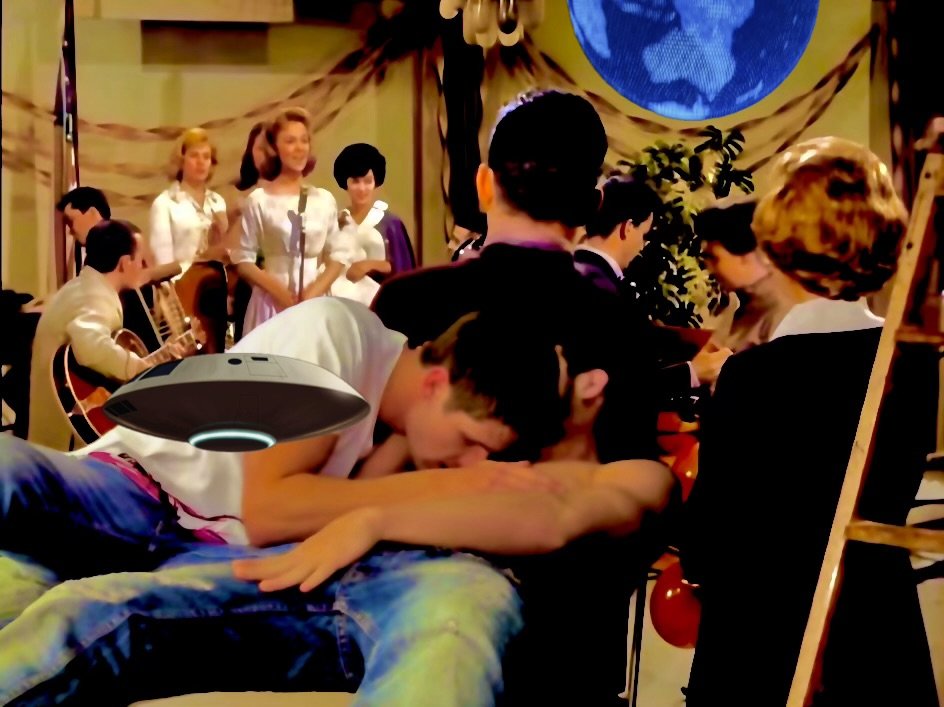
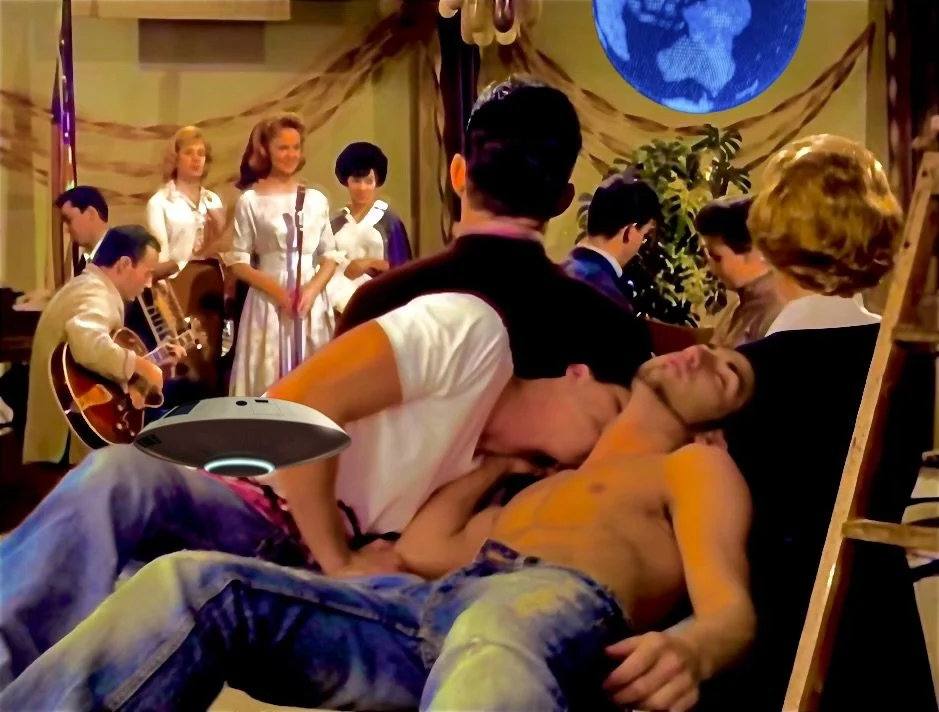
Current Work James Behan
No century in human history comes close to matching the twentieth for violence and for the sheer scale of existential threat it poses to humanity's survival, producing two catastrophic world wars and a weapon of mass destruction capable of ending everything in a single moment. Real and active today, for nearly eighty years now, humanity has lived under the shadow of total annihilation, a condition it has never faced before. The reach toward this ultimate destruction inspires an equal reach back to the first impulses of creativity: childlike wonder and innocence, expressed through child-inspired imagery, themes, and products.
Paul Klee begins this work in earnest in the 1920s, building stick figures and dreamlike forms drawn directly from children's art, working from the belief that untrained expression cannot lie the way academic technique can. His influence carries into Jean Dubuffet's Art Brut and the CoBrA painters after World War II, who push that same idea further: returning to something unschooled and child-inspired strips a culture's polish away, after that polish has just produced a war. Mike Kelley later uses real, worn, secondhand stuffed toys to ask what a comforting object might conceal. Takashi Murakami's Superflat movement, and his exhibition Little Boy — named for the Hiroshima bomb — argues postwar Japan's cuteness is itself a response to national trauma. Precious Okoyomon continues this thread today, building stuffed-toy hybrids that hold care and harm at once. Collectively, these artists and many others are calling humanity back from the brink of destruction.
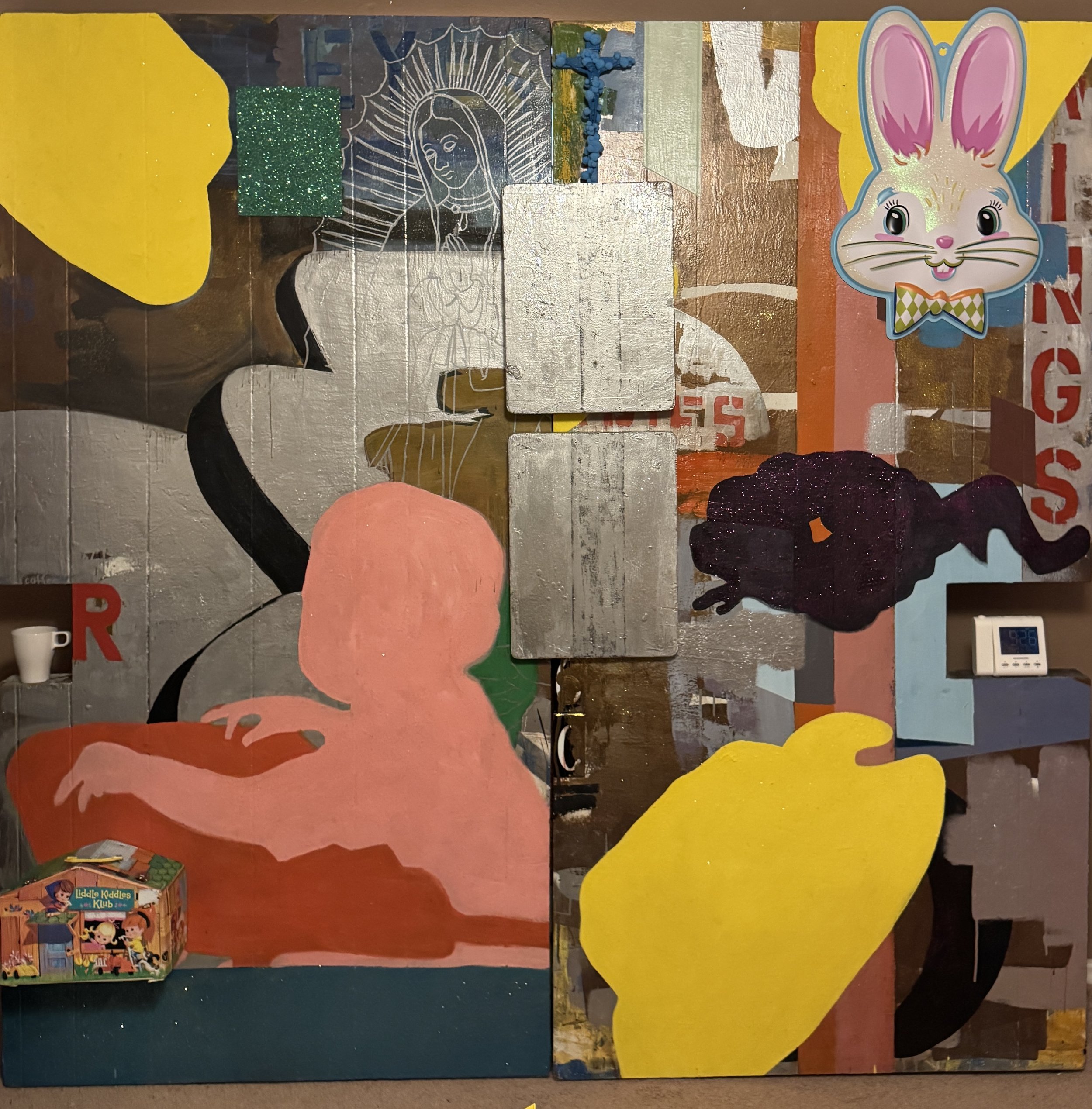
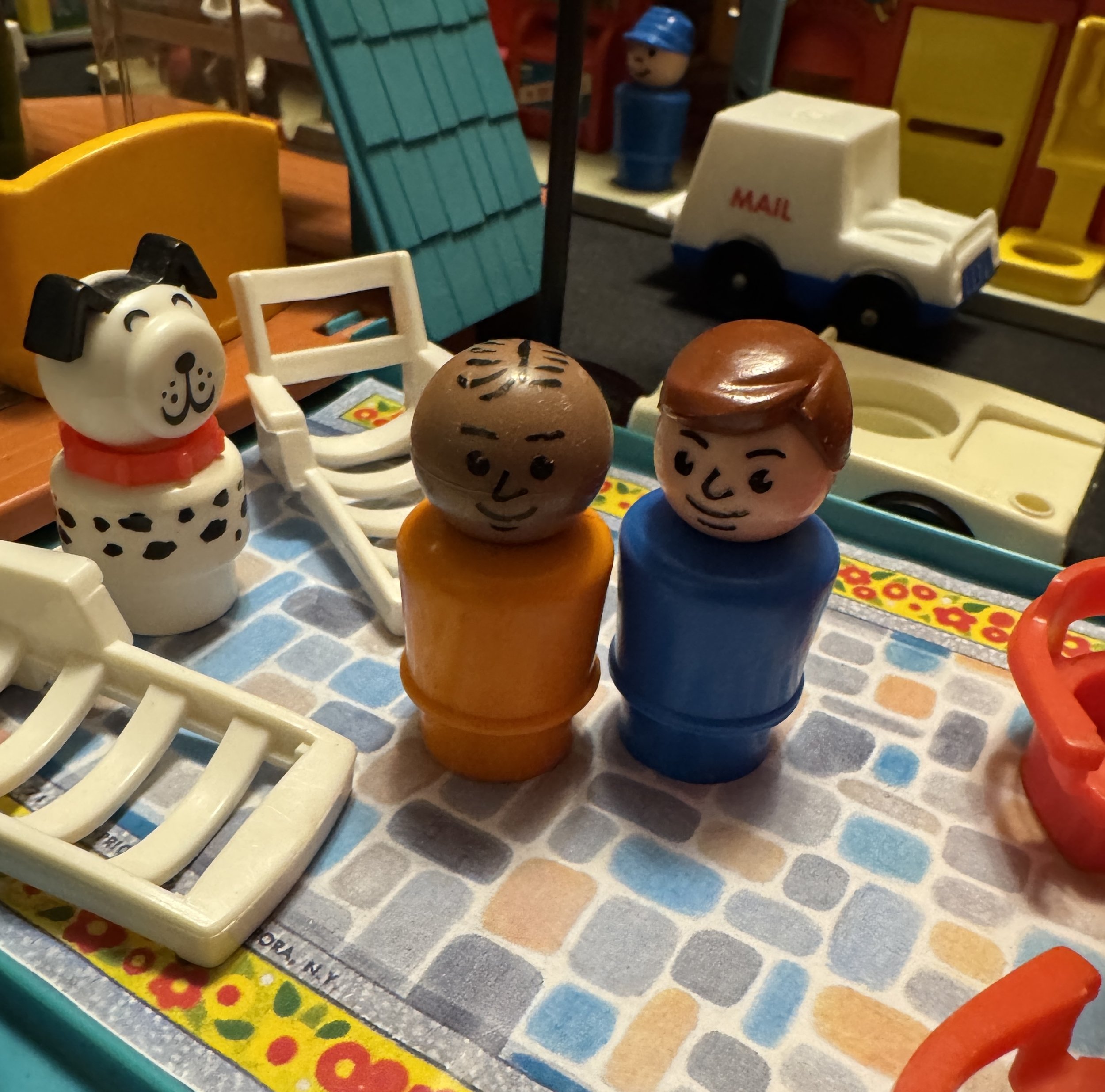
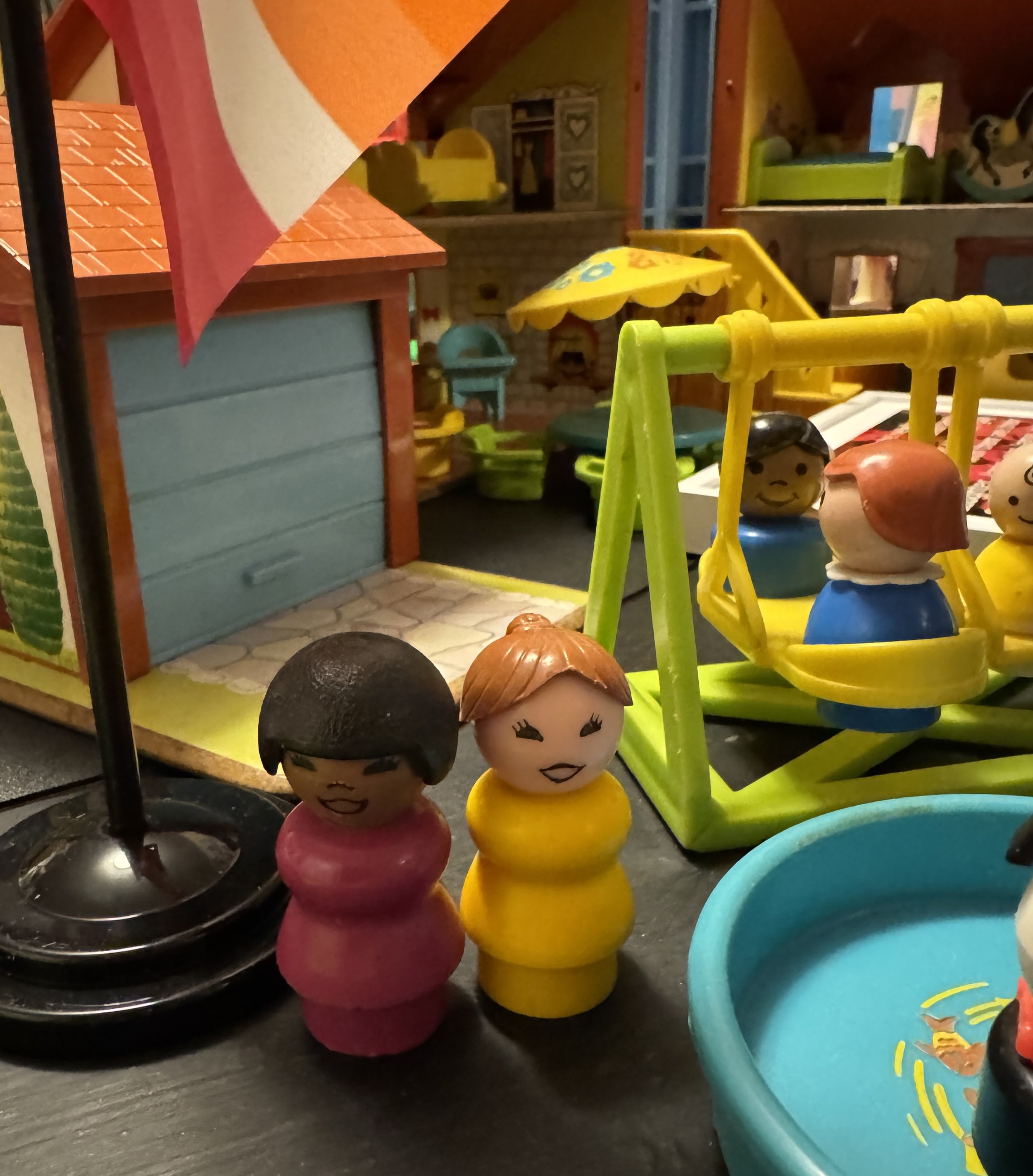
Behan's work entered this conversation with a mixed media painting titled Portrait of the Artist's Mother, 2021, 8' x 8'. This mixed media work includes an image of the artist as an infant in a baby chair, alongside the Liddle Kiddles Klub playset and its dolls, a toy from the artist's own childhood. This work directly responds to the Cuban Missile Crisis of October 1962, when the world came closest to nuclear war at any point in history. It is the first piece in this body of work, and much like the event and the artist's own life, everything following grows from it.
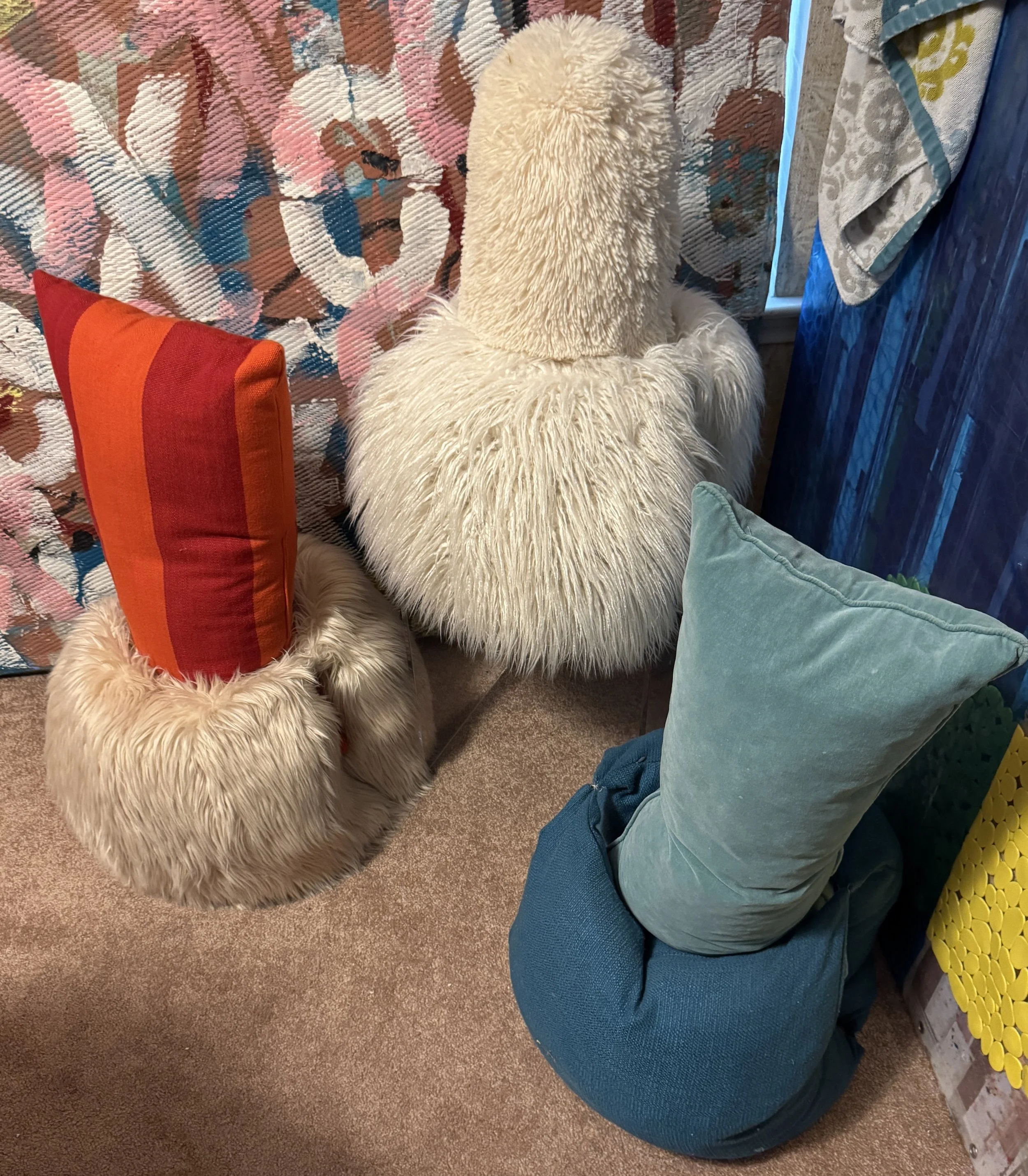
Four streams flow from this 2021 painting, and all four are still active today: soft sculpture, digital photo collage, interactive sculpture, and a continued exploration of mixed media painting. None of them replaces another. They run alongside each other, the way tributaries run from a single source, live in the truest sense, still flowing, still being added to, each one carrying the same reach toward child-inspired material into a different form.
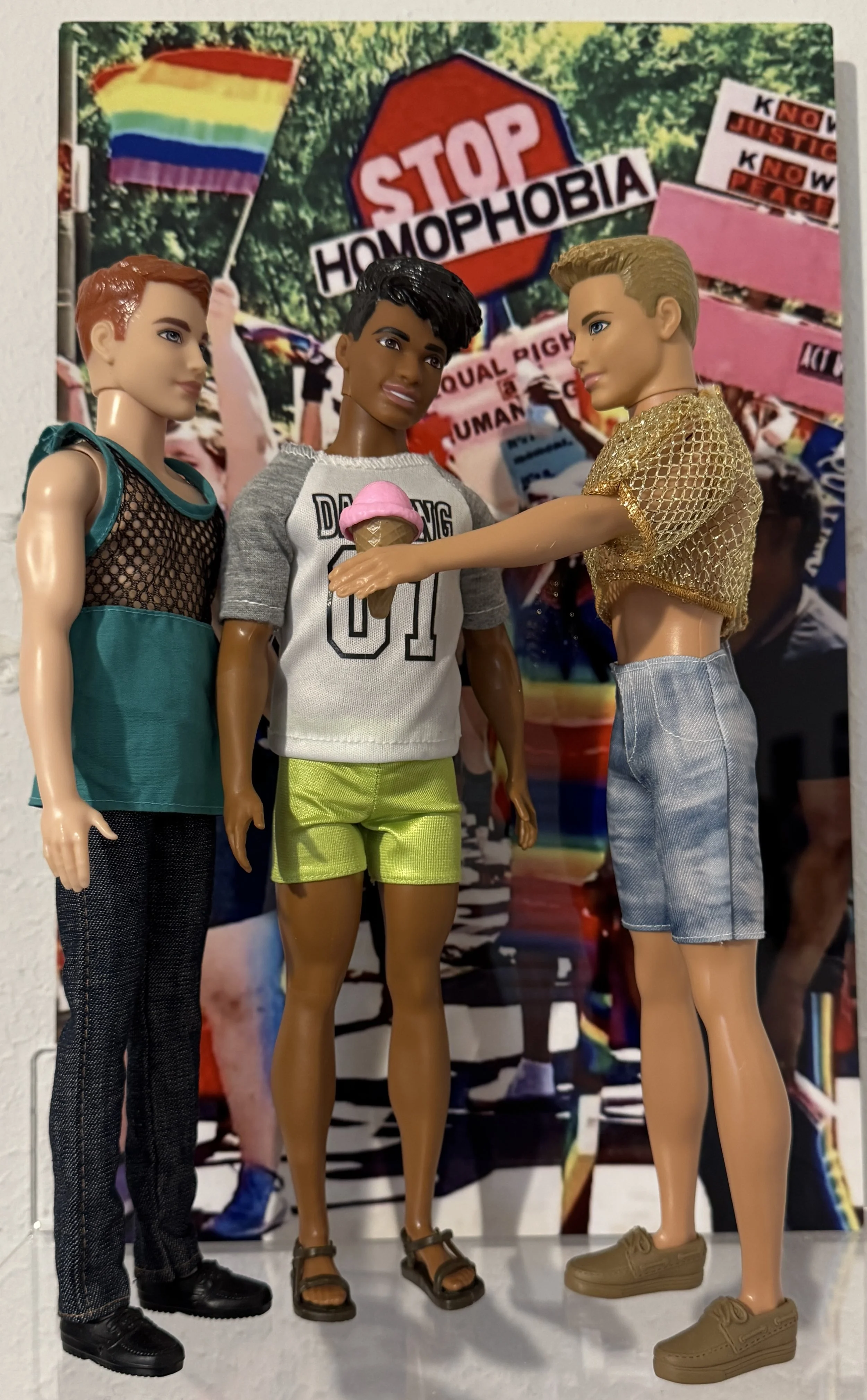
Two products carry the interactive sculptures specifically: Mattel's Barbie and Ken line, and Fisher-Price's Play Family, known today as Little People. Both were built to teach a restrictive heteronormative model of adult life through play. These sculptures use this same product exactly as it was designed to be used, posed, dressed, arranged into a scene, nothing about the mechanics changes. What changes is the range of relationships the pieces are allowed to hold: lesbian, gay, bisexual, transgender, plus intersectional and asexual alongside straight. With these works, the claim is direct: diversity, equity, and inclusion are the answer to the brink humanity stands on. As the artist puts it: "Every time we make a step toward diversity, equity, and inclusion, we take a step away from the brink of destruction."
The Greek phrase pantoporos aporos, from Sophocles' Antigone, has stood behind this artist portfolio for years: resourceful in everything, and yet without a way through. It describes humanity at its most capable, able to sail any sea and cure any disease and build any city, running headlong into the one limit no cleverness escapes. In October 1962, that limit was not abstract. The United States drew an actual line in the water around Cuba, a naval quarantine line, and told the Soviet Union plainly a ship crossing it would be met with force. For thirteen days, the world's full resourcefulness ran up against one line on a map that could not be negotiated past, only stopped at. That paradox sits at the center of this project.
Epilogue: The Enemy Was Us
This opus begins in 2026, with an alleged whistleblower from Anthropic who has declared, without hysteria, we are ten years out from AI destroying humanity. This claim is substantiated by Anthropic's own founder, who has said there is a ten to twenty-five percent chance AI will destroy humanity in the future. In 2016, Behan painted Leeward, a work about wind and water, and about the only two postures available to anyone caught in that current: ride it, or fight it. Ten years later, deep into the ongoing work of these four streams, the painting's question returns with an answer none expected. We thought we knew the hardest part: the enemy was us, and we knew us. But AI is a different animal. Now the threat to humanity is not humanity itself. It is something humanity created, capable of turning against us on its own terms, whether we wish it to or not. This is a stark elevation, and it potentially makes the twenty-first century an ominous successor to the world's worst century in world history.




So Crowded
The Closet Is Crowded
The closet is not always a solitary space. In many cases, it is a shared, temporary arrangement among strangers who recognize each other's situation without acknowledging it directly.
The Collage
The Closet Is Crowded layers overlapping mirror selfies taken in a hotel bathroom during a political conference in downtown Dallas. Three men occupy the same cramped mirror. None looks at another. Each is mediated by his own phone screen. The central face is split and discolored, caught between two manifestations of light.
The room is crowded, but no one touches. The arrangement is transactional: proximity without contact, recognition without acknowledgment. Each man is there for the same reason and will not say so.
The piece belongs to "the closet," a sub-series within the ongoing Subdivision project.
A Recurring Pattern
Every few months, a large-scale conservative political gathering takes place in a major American city. Attendees fill hotel blocks downtown for two or three days. During that window, activity on gay hookup apps in the surrounding area increases sharply, sometimes to the point of causing service outages.
This pattern has been documented repeatedly. During the 2016 Republican National Convention in Cleveland, Grindr usage near the convention's main hub rose by 66 percent. During the 2024 Republican National Convention in Milwaukee, more than a thousand users in the area reported the app going down entirely, reportedly straining under demand. A similar surge and outage occurred at the Conservative Political Action Conference in 2026, coinciding with the timing of a speech from the main stage. In 2017, an LGBTQ advocacy organization ran a geo-targeted ad campaign directly on Grindr near that year's CPAC, addressed to the app's users at the conference: attendees could not credibly oppose LGBTQ rights on stage and seek out gay partners in their hotel rooms that same night.
What the Pattern Shows
These men are, for the most part, married to women. They hold public positions that require public opposition to their own private conduct. The conference provides cover: a city full of strangers, a hotel bathroom mirror, an app that erases names and faces by design.
These men manage this well. They accept it, and many enjoy it. There is a specific pleasure in the encounter itself: the pursuit, the meeting of someone new, the exchange of intimacy without names, and then the clean departure. No follow-up, no complication, no record. The anonymity is not only cover. It is part of the appeal.
This is how they are caught. Not by exposure, and not only by circumstance, but by the pleasure of the system itself. It works well enough, and feels good enough, that there is no reason from inside it to leave. Each man returns to the same marriage, the same public position, the same silence, until the next city and the next conference. Nothing resolves, because the thing that would need to change is the thing that feels like relief.