The Lingering Shot

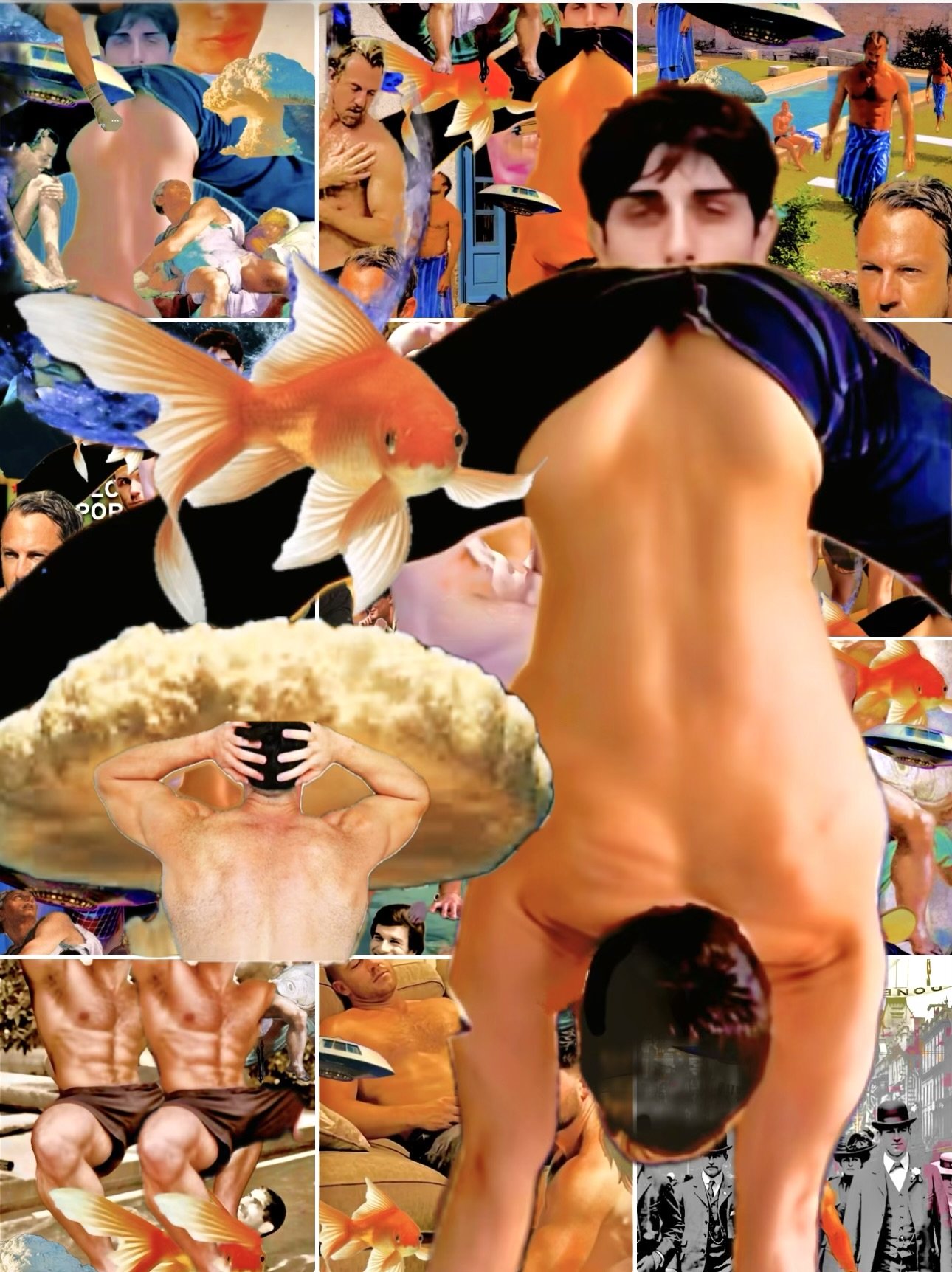
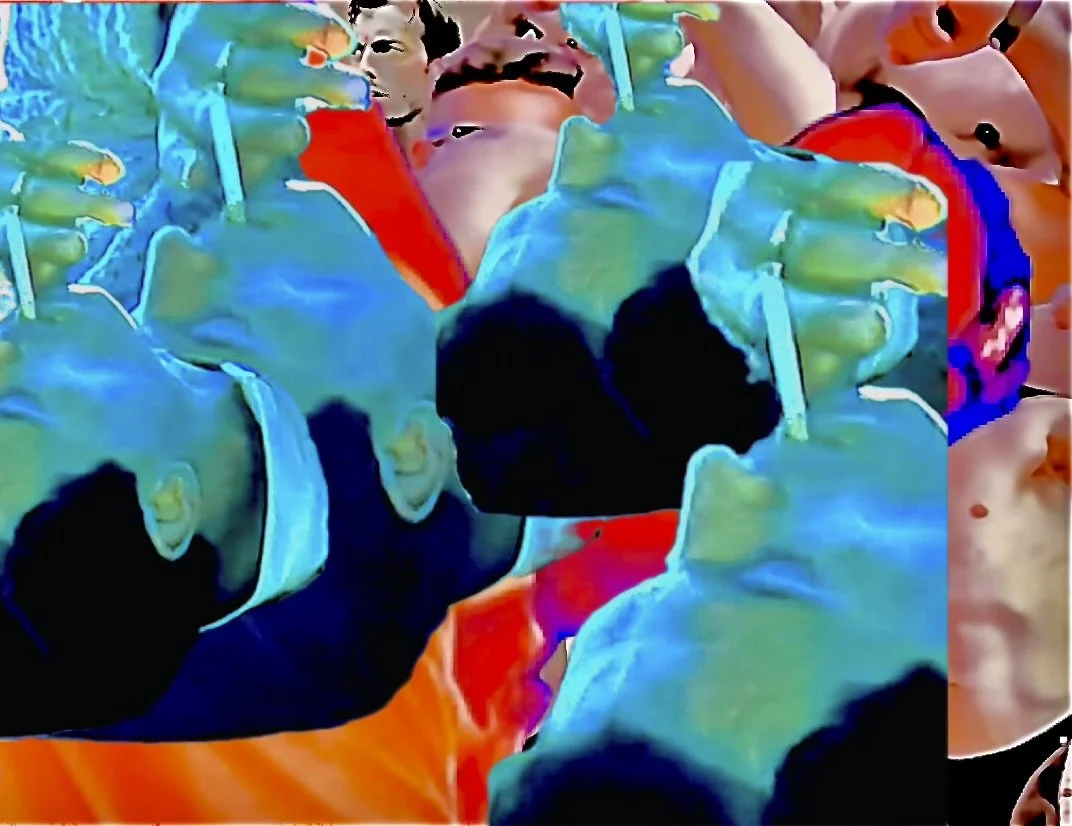
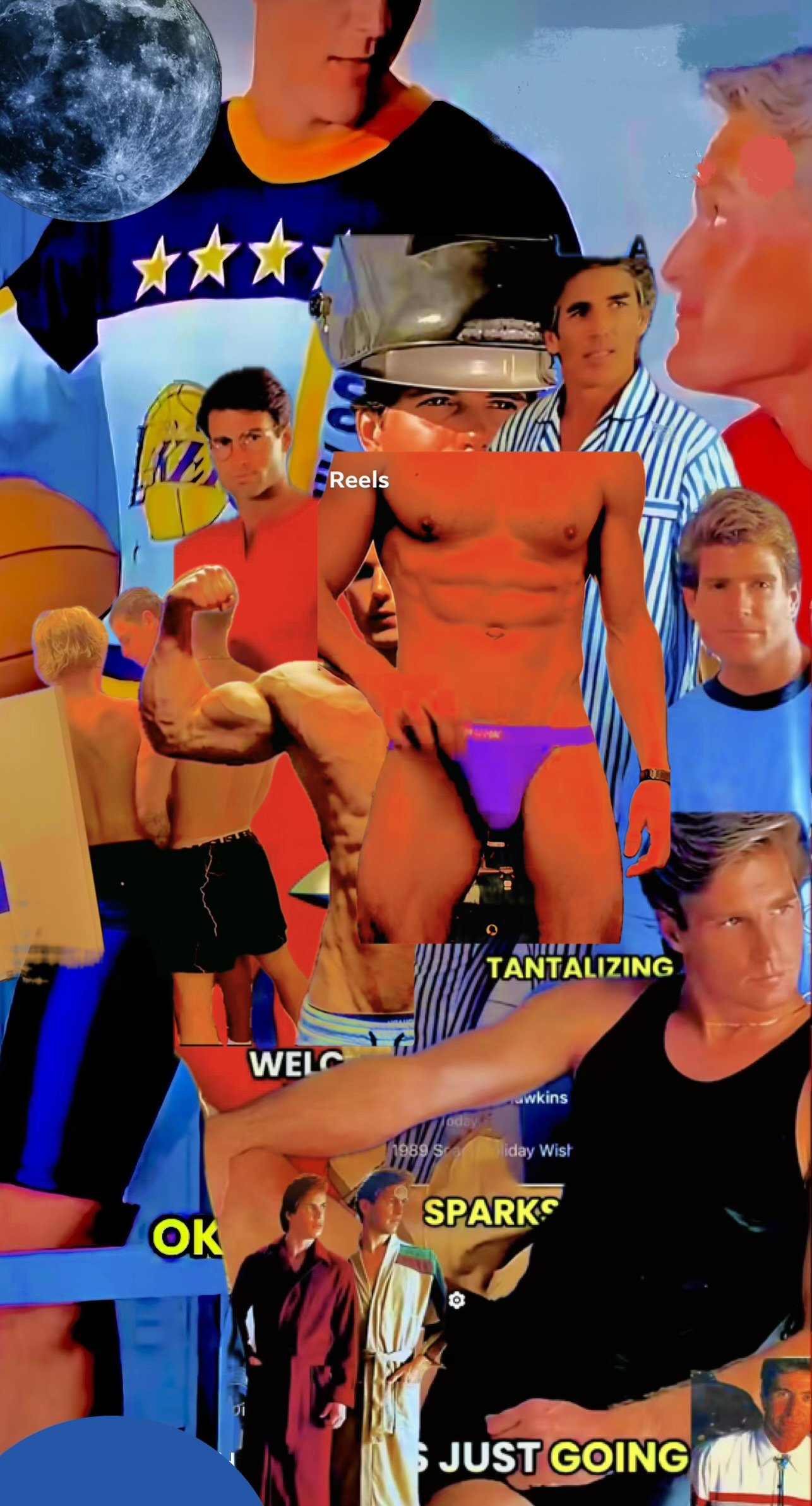
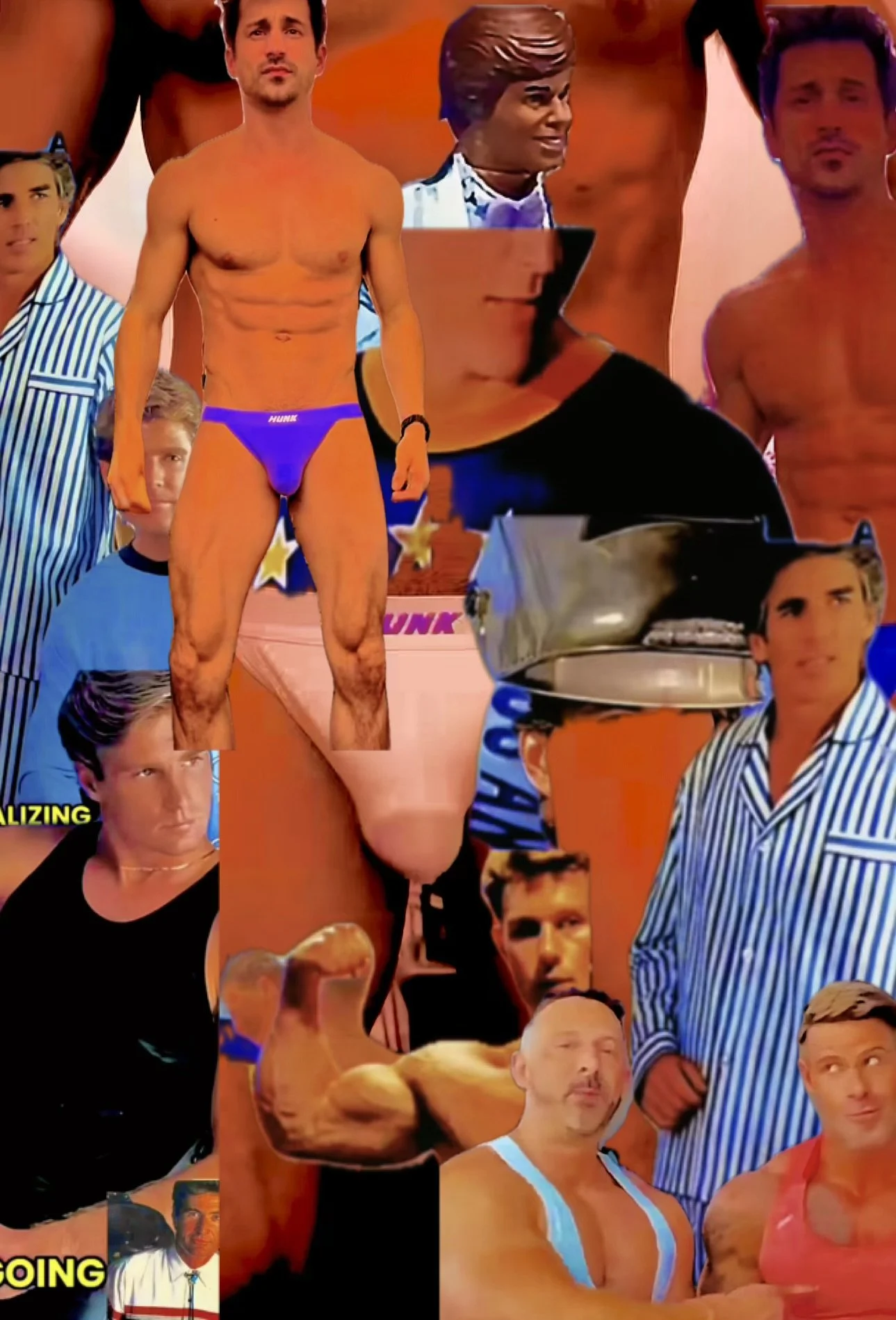
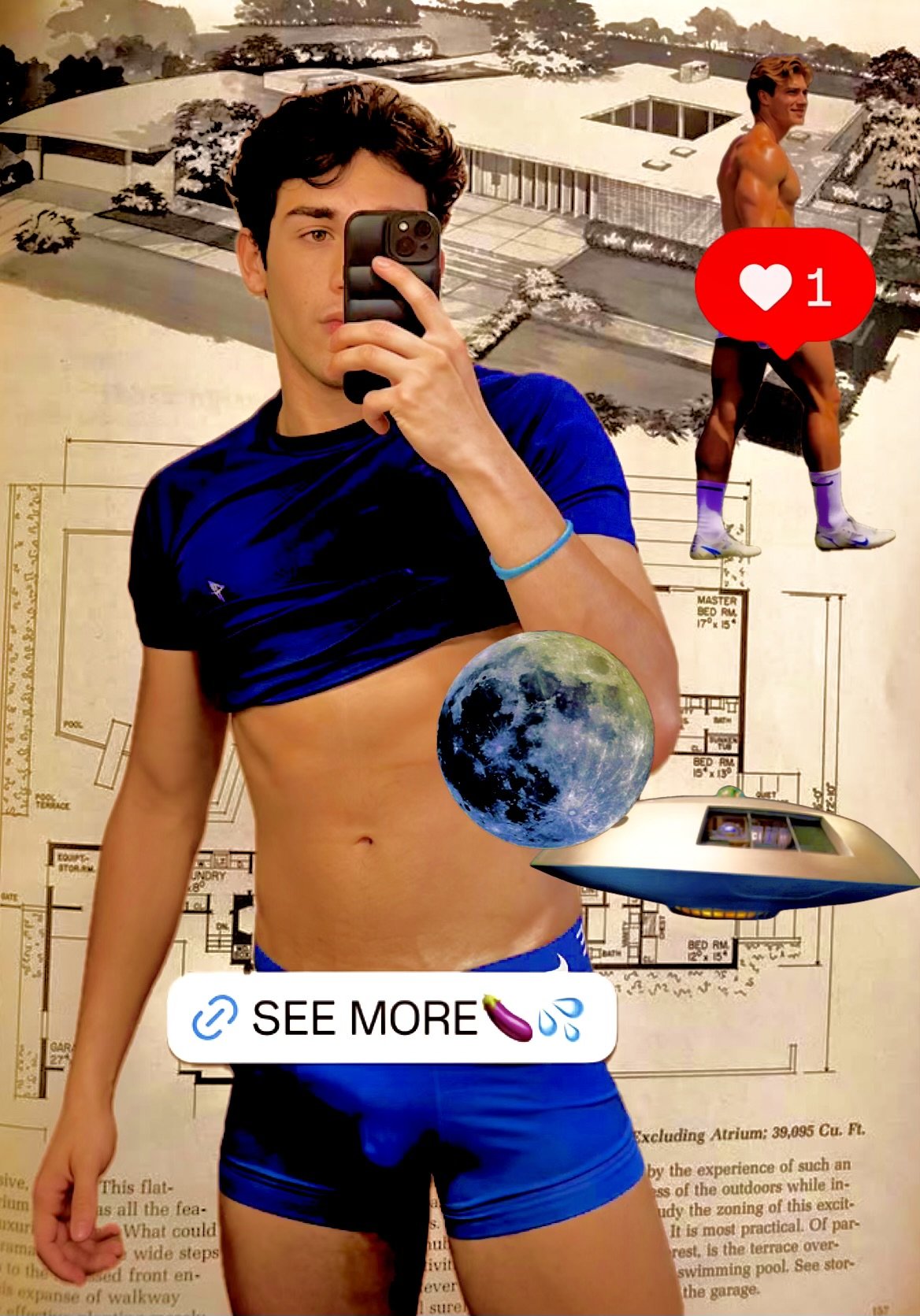
In a scene from the 2024 series Earth Abides, Alexander Ludwig slowly undresses. The narrative pauses, the camera holds an inverted full shot, a peekaboo framing that film has usually reserved for women.
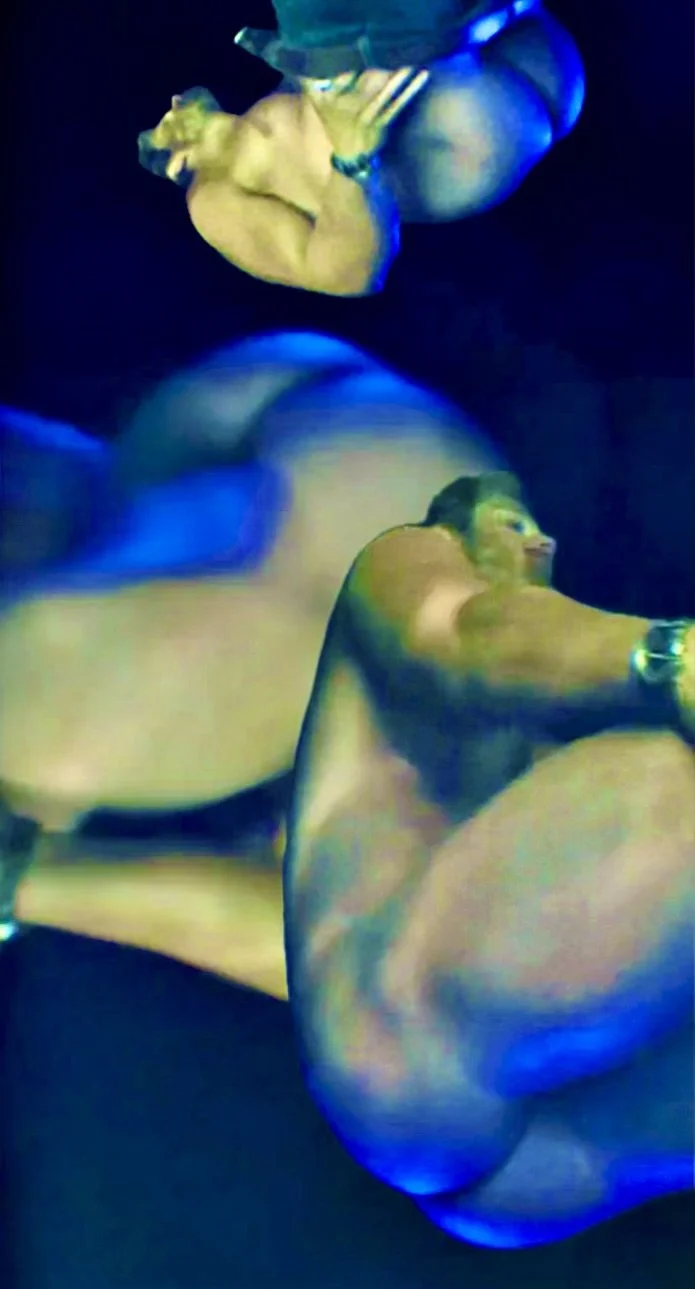
The original dark ground is kept. It reads as flat space and infinite space at once. This simultaneous compression and extension produces ambiguity, and with it, unease.

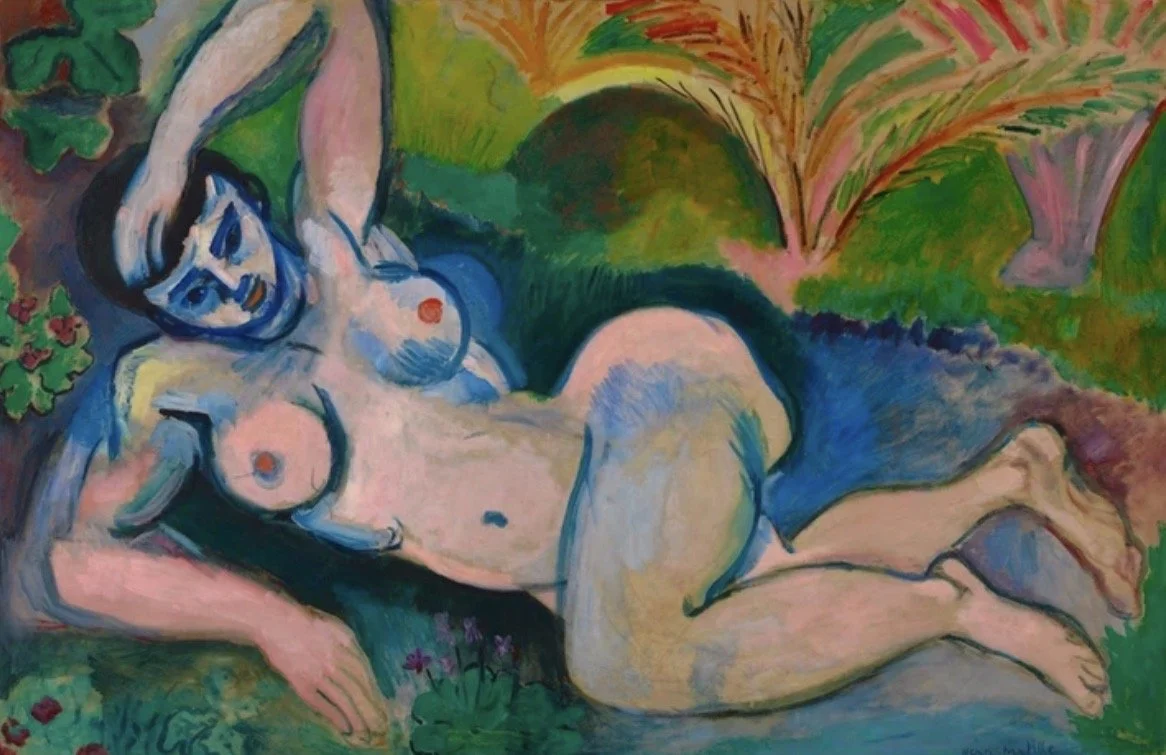
The natural color of the darkened shot is heightened into a palette reminiscent of Matisse's Blue Nude. The questions asked of Matisse apply here: is this a new understanding of beauty, or a distortion of the human form?

The collages extend the 3-second shot with multiple views of the scene, combined, inverted, overlaid, and repeated, to ask the question: if this scene had been filmed for a male audience instead of a female one, would it have been called inappropriate?
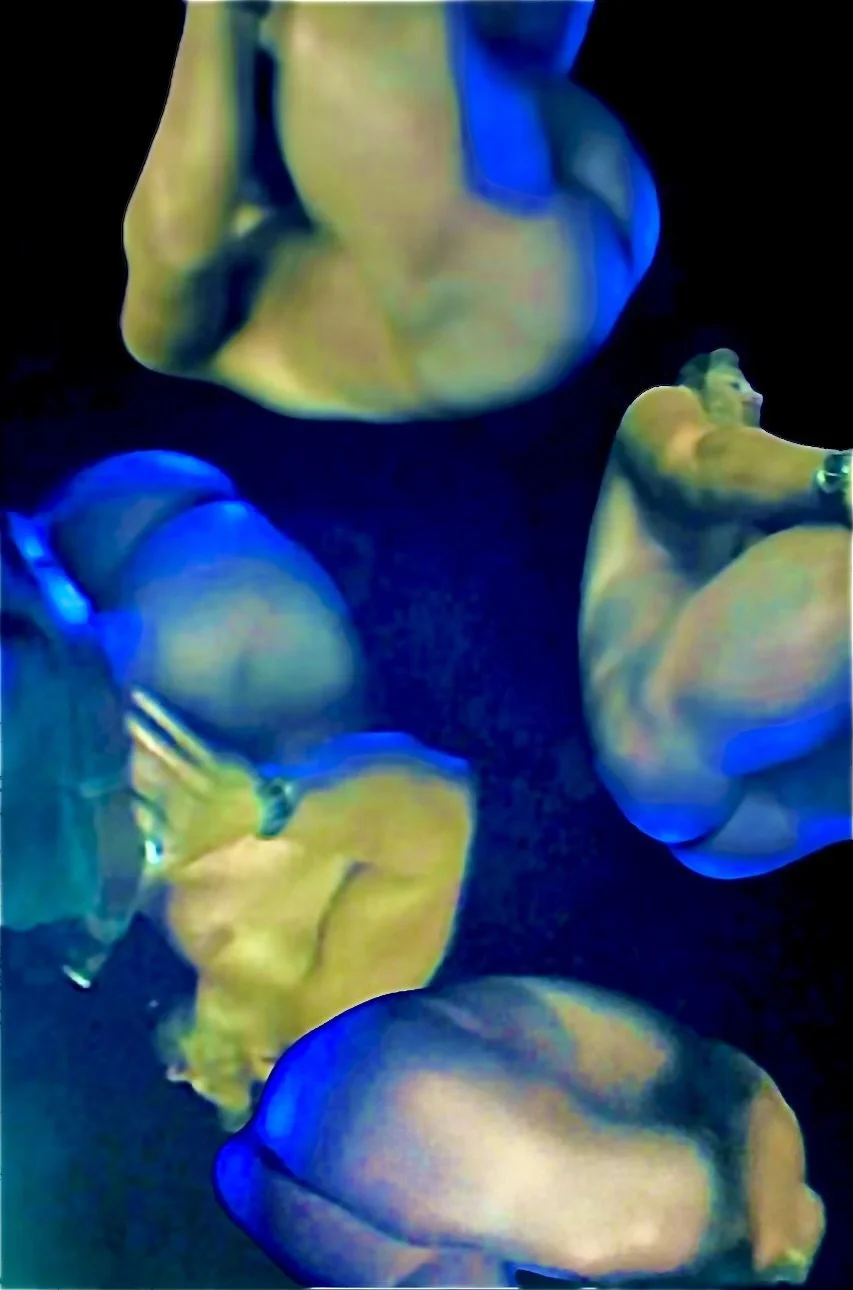
Other questions follow. How does this scene serve the narrative? Viewers interested in Ludwig capture the moment and repost it, which drives views and revenue for the series. Is the scene only about money?

Compare the nude bathing scene in the 2021 film The Power of the Dog. That film drew criticism, including from actor Sam Elliott, for its homoerotic content. Ludwig's slow strip passed without apparent objection. The only difference is the implied audience, women for one, men for the other.

This returns to the long debate over the naked and the nude. What counts as appropriate is often decided by the intention behind an image, not the image itself. That judgment usually rests on one assumption: heterosexual attraction is acceptable, homosexual attraction is not.

The objection, then, is not to the nude body. It is to LGBTQ+ people.

Singularity

A singularity is a point at which known rules stop applying.

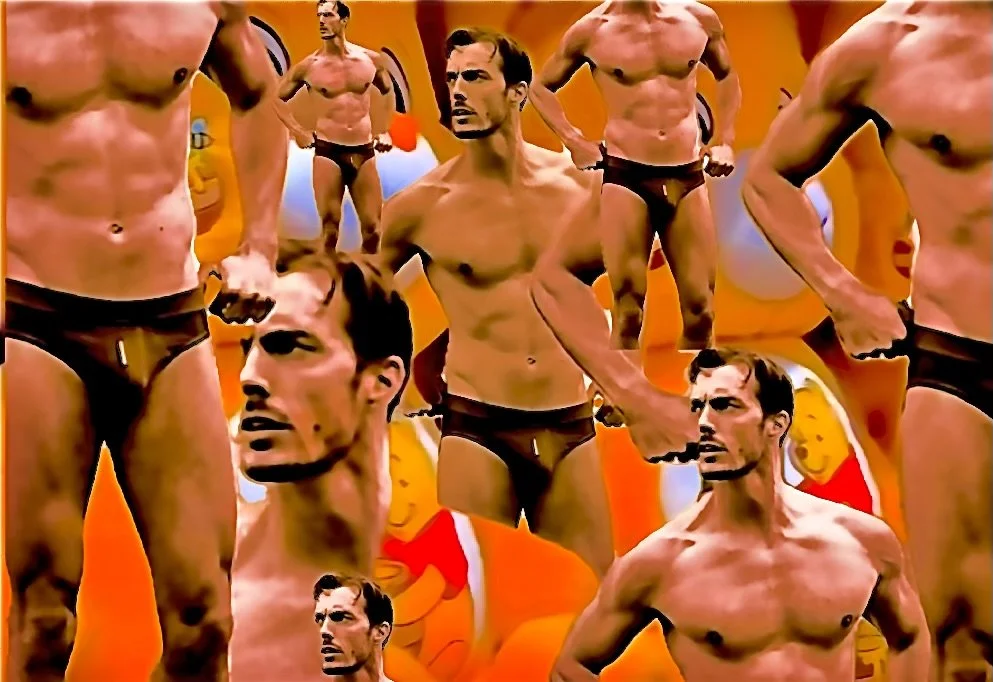
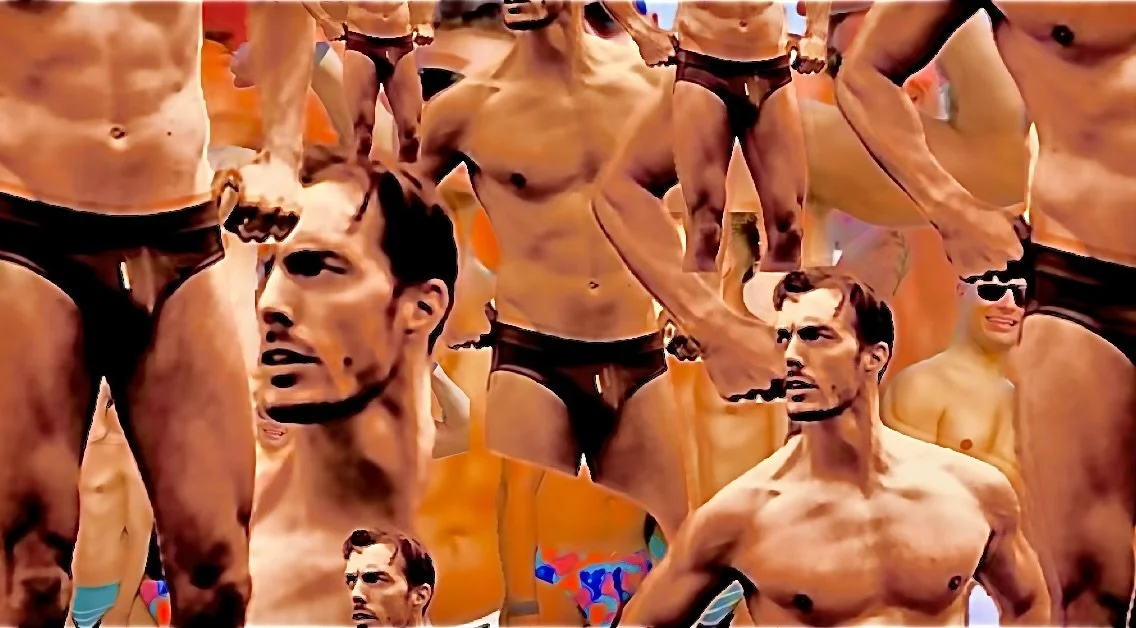
The two collages below are built around that point.

Both began as advertisements. A mid-century Masonite ad that sold aspiration: a home and a room built by hand. A 2001 Italian shower gel ad selling desire: the body, a scent, and the company of men known as "the boys."

Into each space I added men from different times to compliment those from the original ads. Within this compression, the rules that separated one period from another necessarily stop applying. The experience of being human becomes all present, all at once.

Two separate collages, one of aspiration and one of desire, each compressed and combining to complete the other.

Symbiosis.

Fall and Winter 1974

In the 20th century, gay men had almost no way to see themselves in publications or in print. When they did appear, they were shown in the most negative light.

One source of positive male imagery was the department store catalog of the 1960s, 70s and 80s. Within those pages were images of men together, presented as subtext. For gay men, seeing those images was powerful.

These three digital collages use the actual Fall and Winter 1974 catalog covers of JCPenney, Sears and Montgomery Ward, and make the subtext context.

Since 1974, Montgomery Ward has closed, Sears is down to five stores, and JCPenney survives as part of a larger company. Perhaps if they had published covers like these, all three would still be thriving today.

Kittens a Go-Go

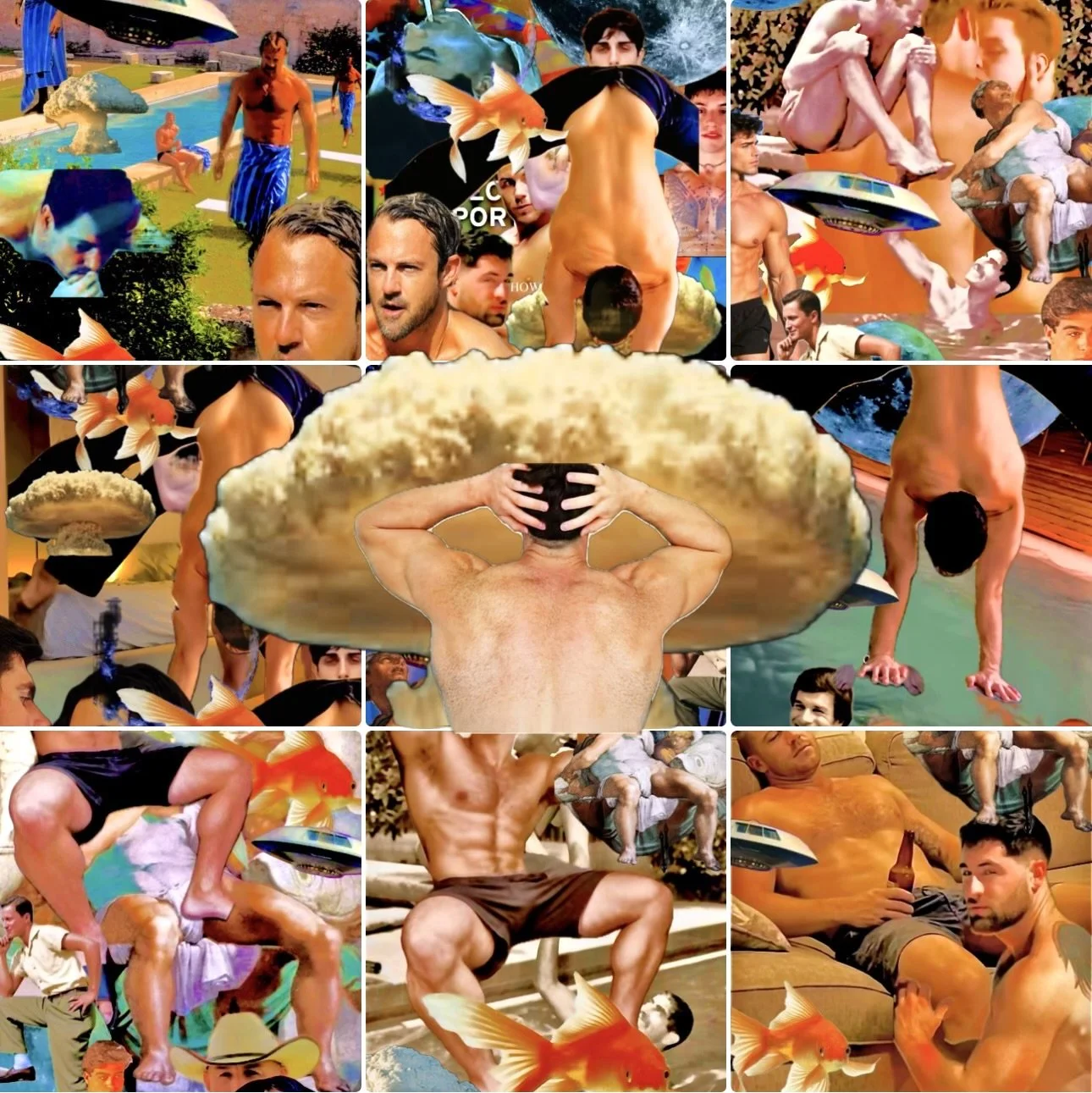
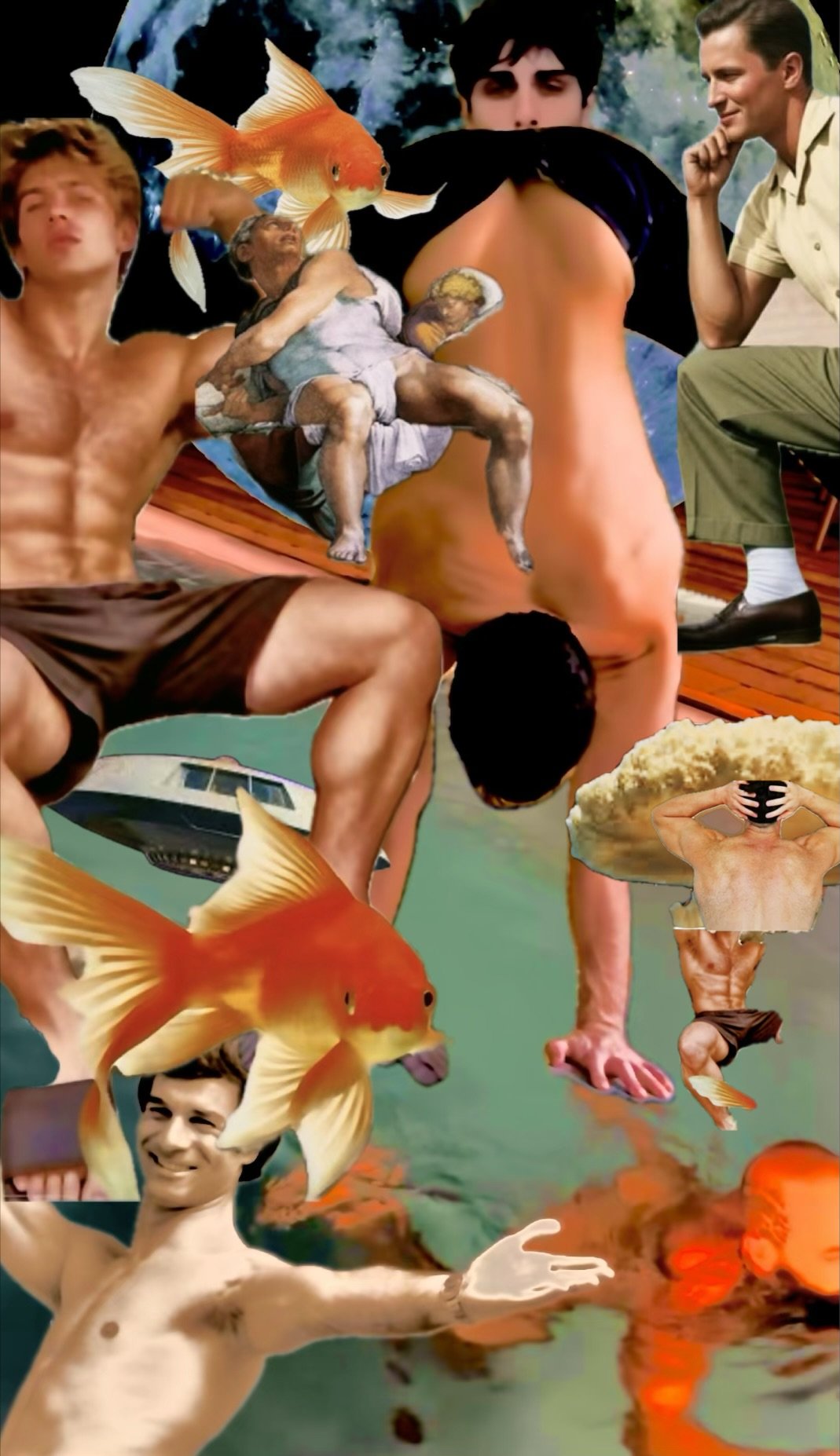
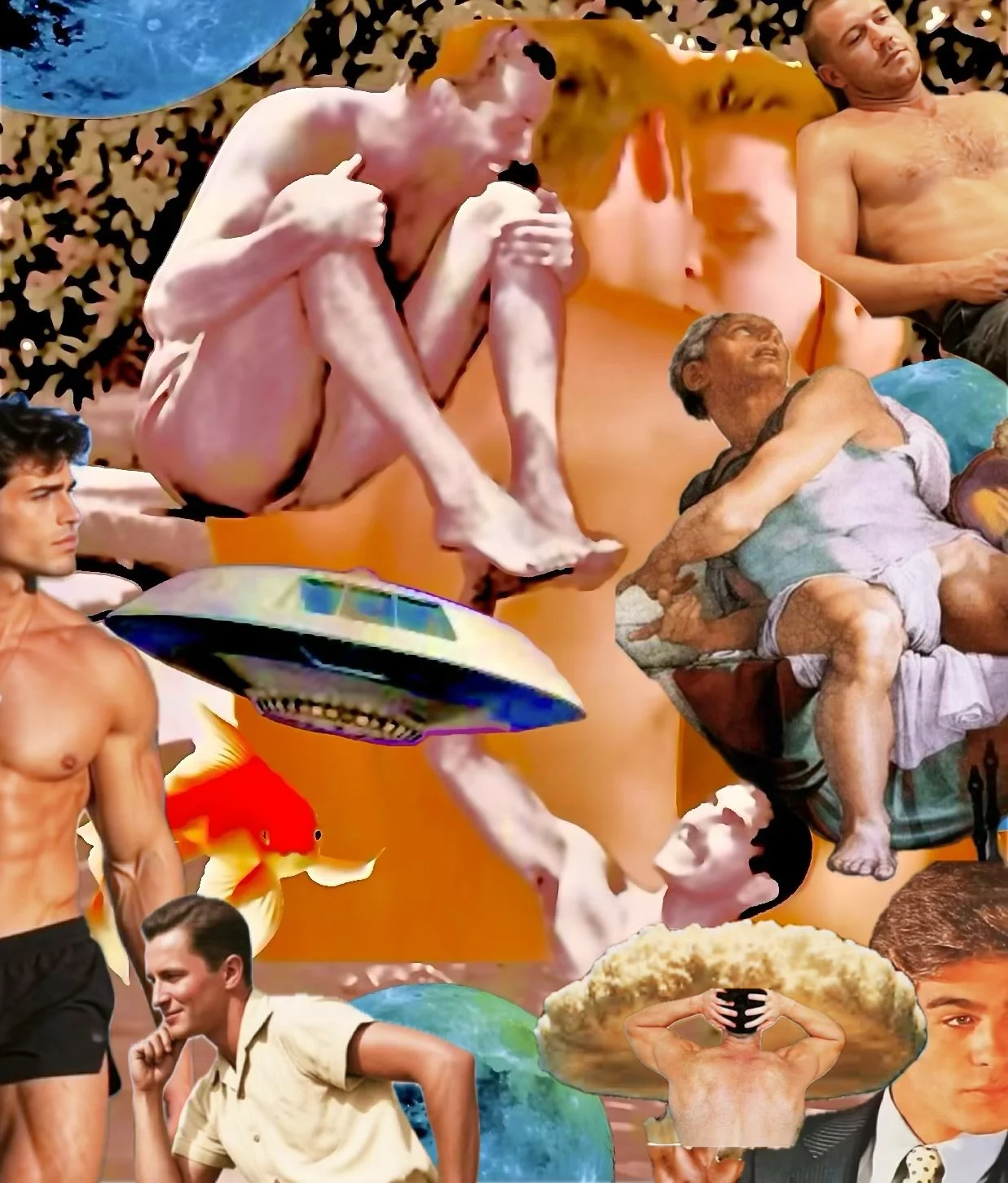
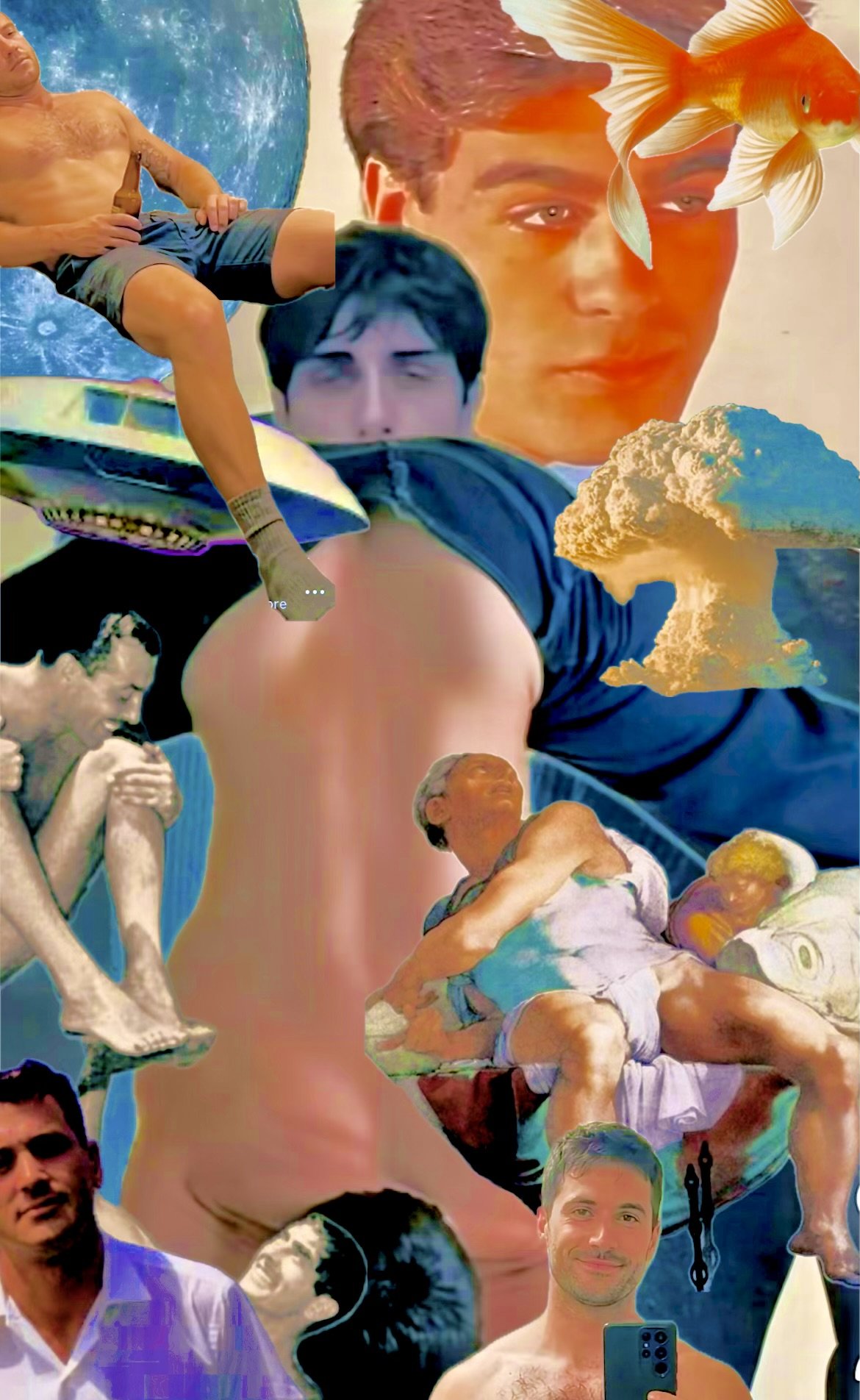
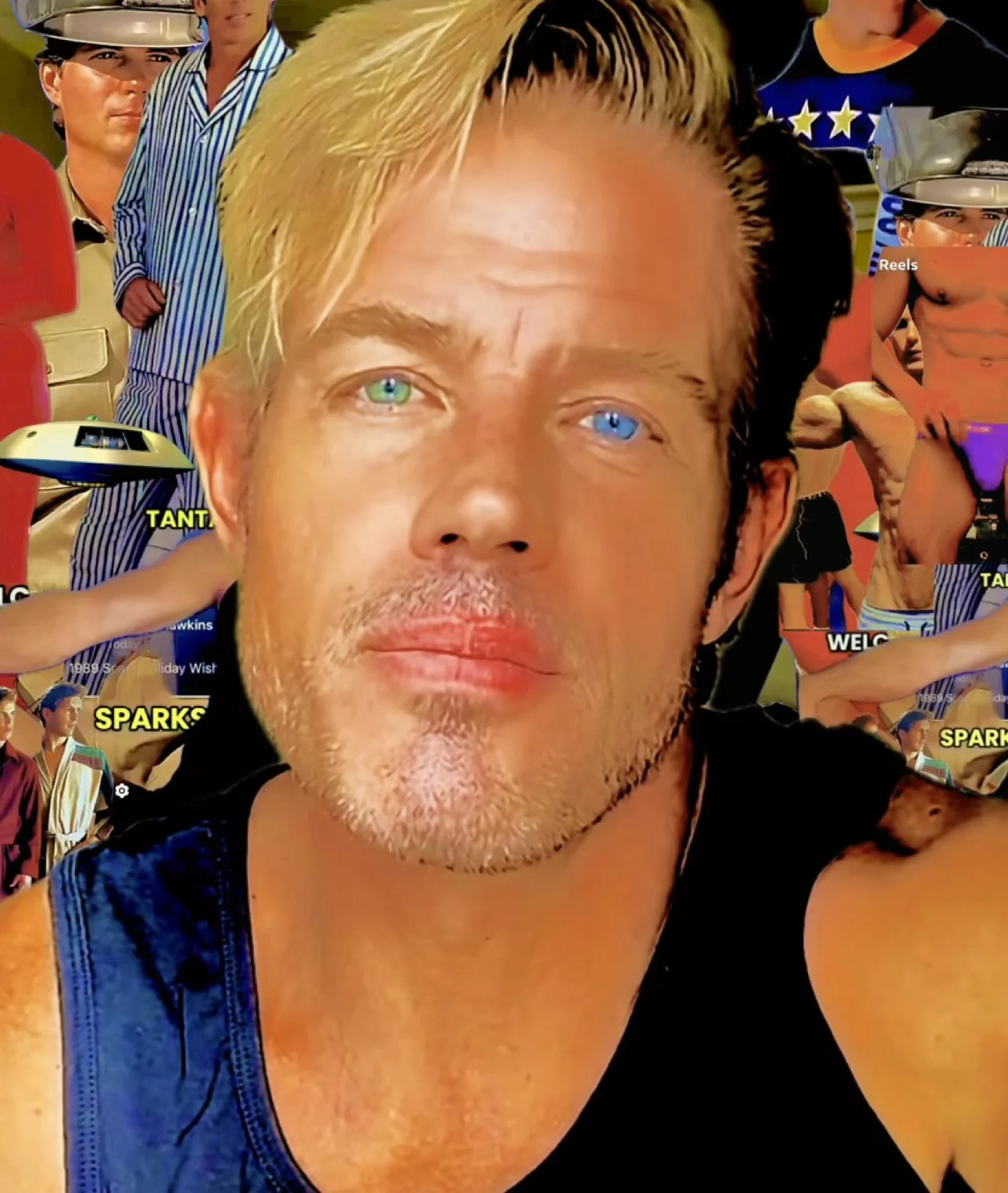
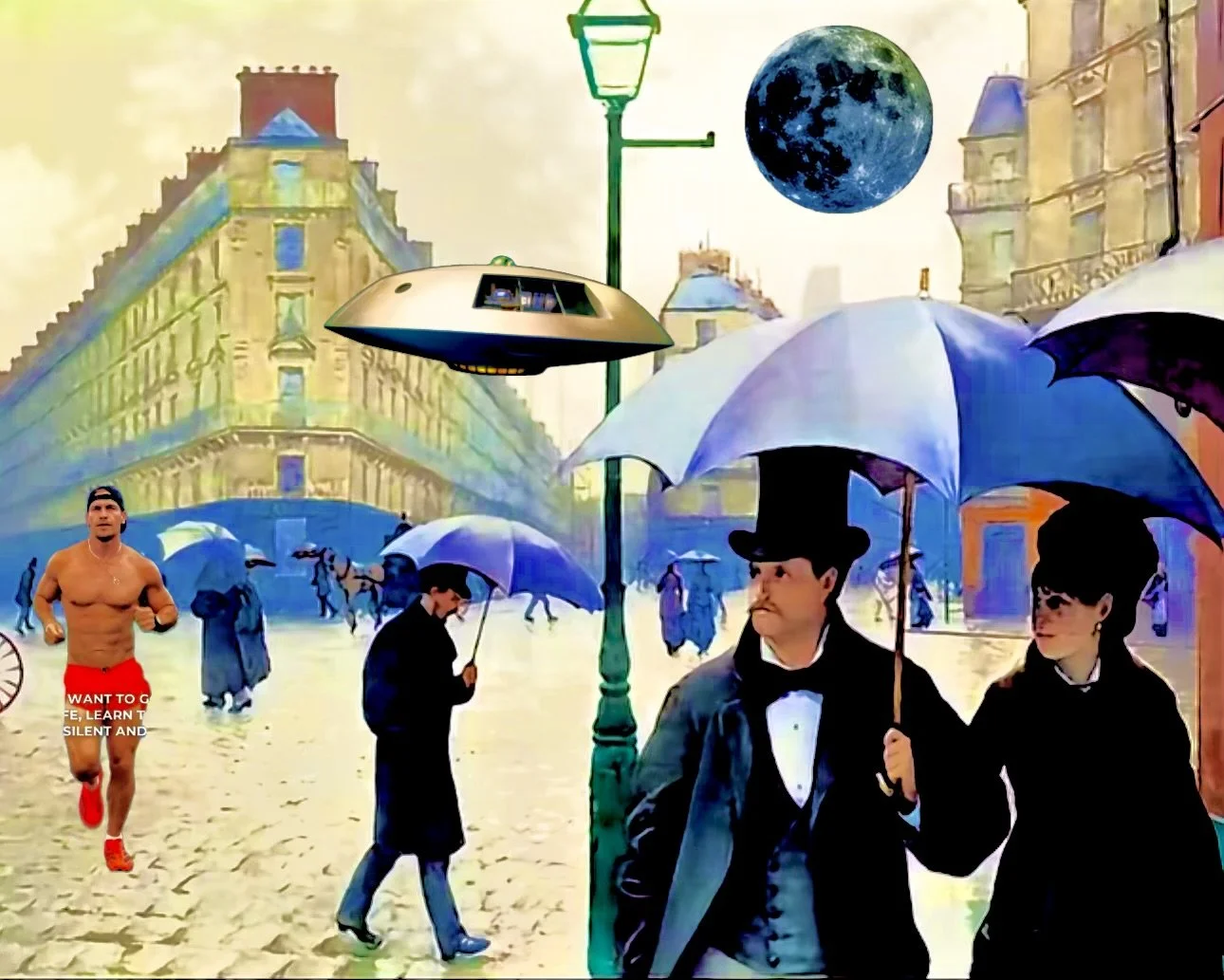
Three new collages bring together kittens, an atomic mushroom cloud, and a man flexing his bicep.

The kittens come from paint-by-number canvases. The hobby began in the early 1950s and filled American homes with sentimental, domestic images..

The mushroom cloud comes from the same decade. It is the defining image of the Cold War, the threat that existed alongside postwar comfort.

The flexing man comes from social media today. He displays his strength in front of the blast.

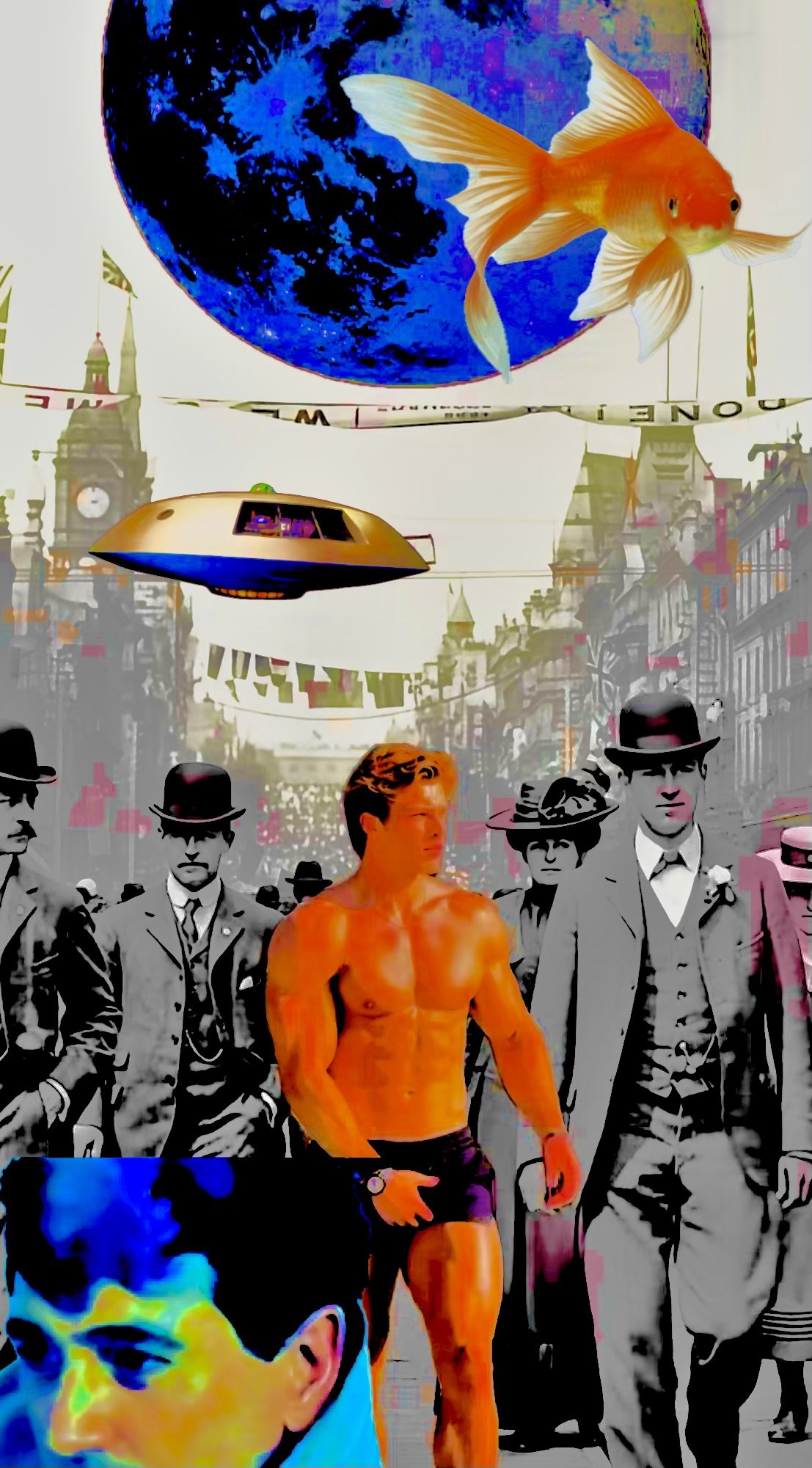
Two recurring symbols complete each piece. The blue moon stands for desire and transformation. The Jupiter 3, the next version of the Jupiter, built for gay people, stands for freedom and movement.

Together the five elements form a sequence: comfort, threat, strength, desire, escape. The 1950s told men to protect the home and to fear what could destroy it. These collages place a contemporary gay man at the center of that picture and give him a ship to leave in

Balla Duchamp Behan

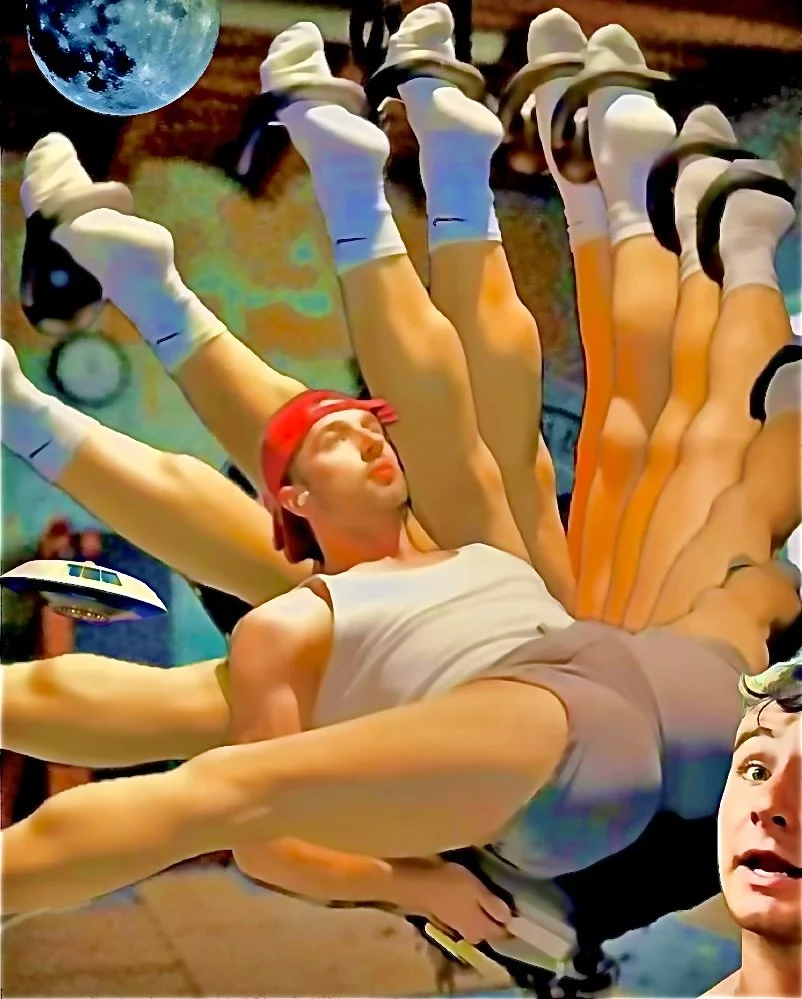
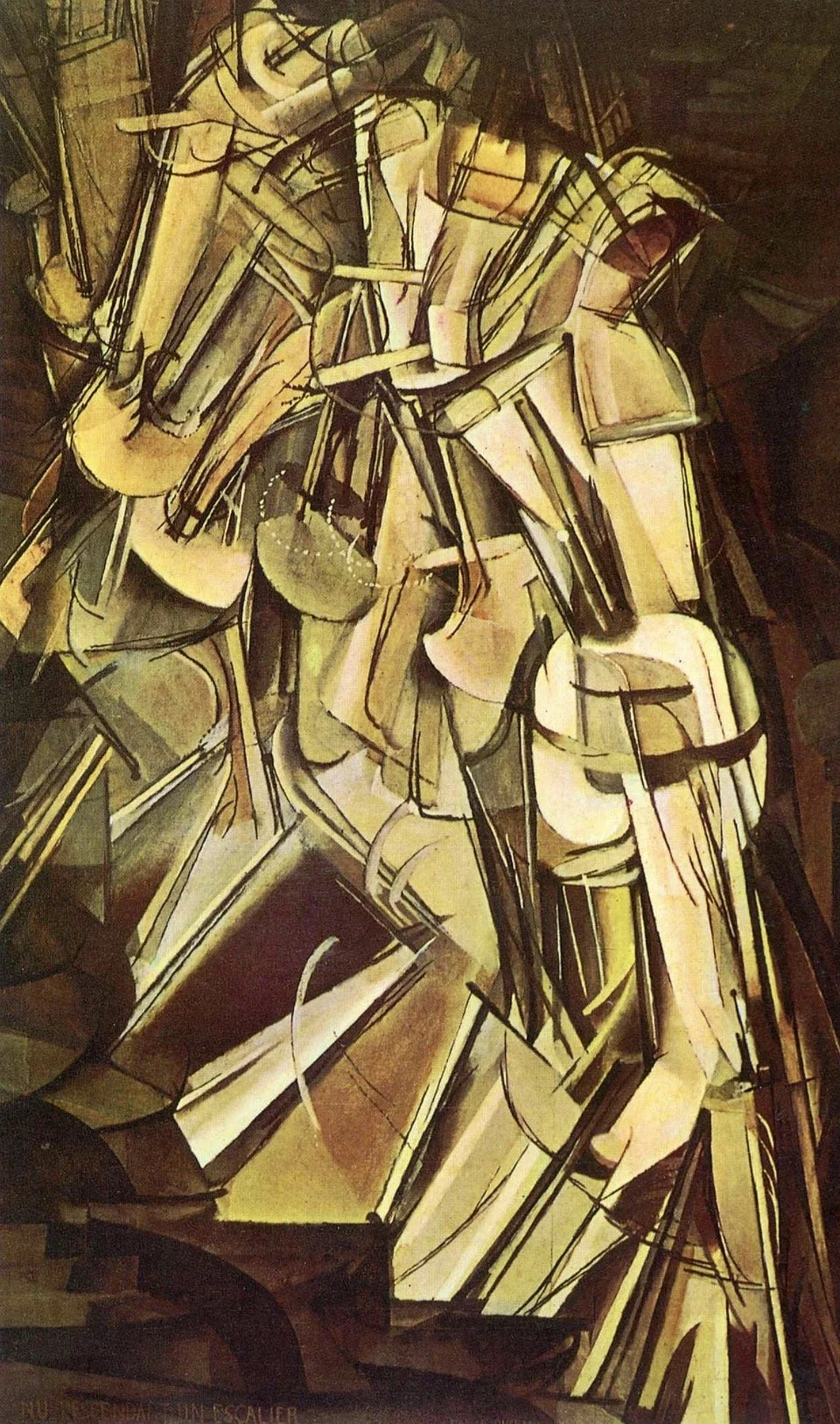
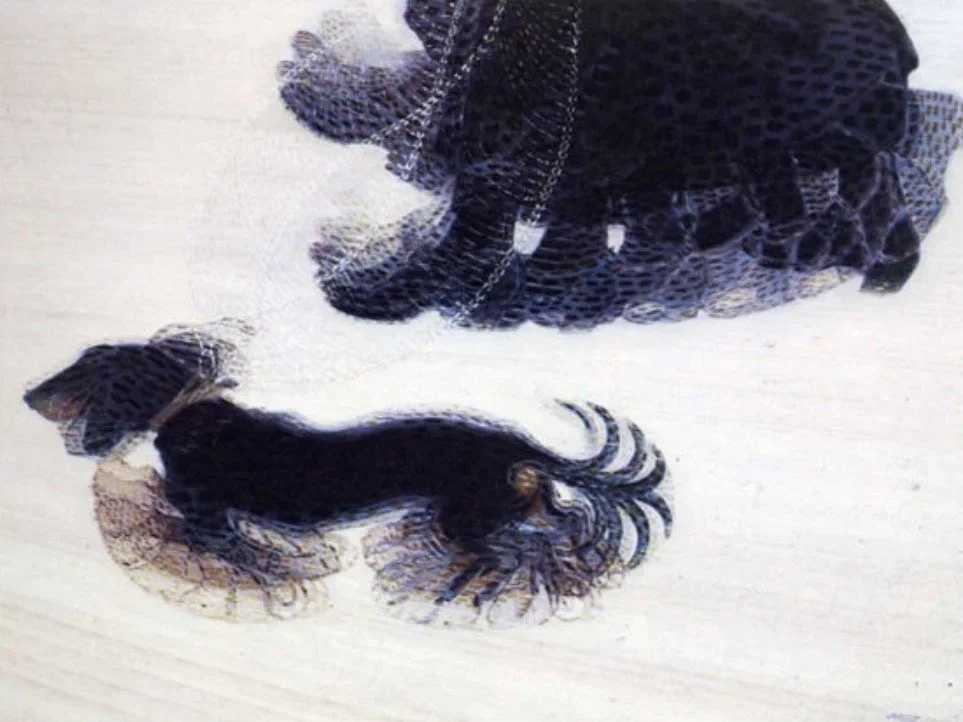
Duchamp in 1912, Balla in 1912, Behan in 2026: three artists, more than a century apart, working on the same question: how to show the figure in motion on a two-dimensional surface.

Behan, Leg Day (2026). The repeated legs fan out in arcs that echo the dog's feet in the Balla. Duchamp and Balla painted their motion studies in muted tones from an observed or imagined model. Leg Day builds its motion from a photograph in the feed, in full color, with the figure a man at the gym.

Duchamp, Nude Descending a Staircase, No. 2 (1912). A single figure broken into overlapping planes as it moves down the stairs. The painting caused a scandal at the 1913 Armory Show in New York, where one critic mocked it as an explosion in a shingle factory.

Balla, Dynamism of a Dog on a Leash (1912). Painted the same year, it shows motion as repetition: the dog's feet, the tail, the leash, and the walker's skirt all multiply into blurred arcs. Both painters drew on the chronophotography of Muybridge and Marey.

Making Endurance Pay

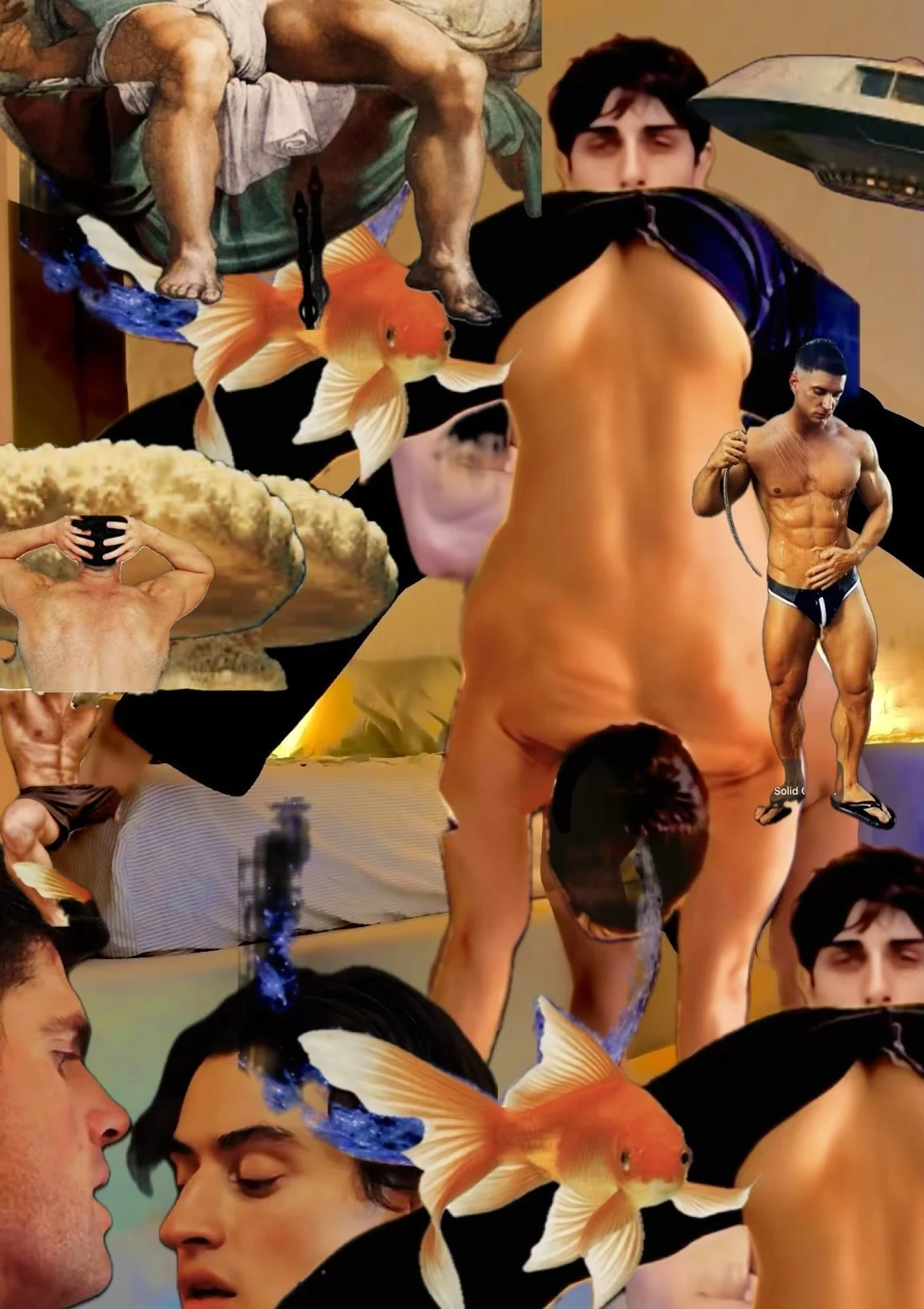
Every morning begins with my feed, which brings me images and spaces to consider for collaging. This collage uses three of them.

One comes from an outdoor shower. One comes from a gym. The room comes from a news article with tips for decorating a small space.

An algorithm selects each one and sends it to me.

Each presents a version of the good, at least to the people who made it.

The collage places them in one composition. The flexed arm is the foreground, the showering figure the middle ground, the furnished room the background. Three flat images produce the illusion of depth on a two-dimensional surface.

Editing on the iPhone unifies them. Focus, sharpness, and softness are adjusted until the three sources read as one space.

At the bottom edge, a fragment of caption remains from the source: "Solid G…" I leave it in because it identifies the image as coming from social media, and because the word states what all three sources promise. "Solid" means firm, full, and complete: a solid body, a solid build, a solid home.

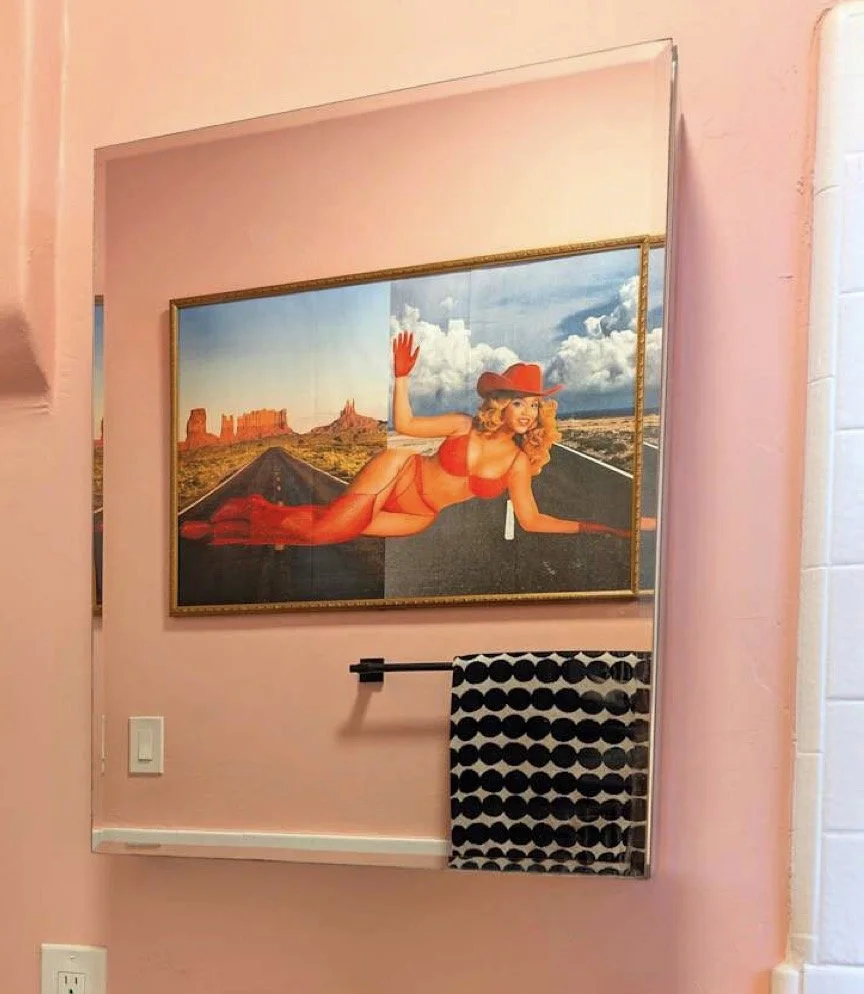
The source of inspiration is an artwork seen in the same article on best practices in home design: in a pink bathroom, a reclining figure in red on a desert highway, reflected in a mirror. Two things in that work hold my attention: the intensity of the color and the relation of the figure to the ground. As an artist, it is important for me to find other artists who are pushing the same boundaries, each in a distinct way.

For many artists, the payoff is found in the long road. It may come as a future audience, a better understanding of the purpose behind the work, or both. Endurance is critical to building a successful portfolio. Artists make endurance pay by defining a unique visual point of view and by finding the audience that connects with that view.

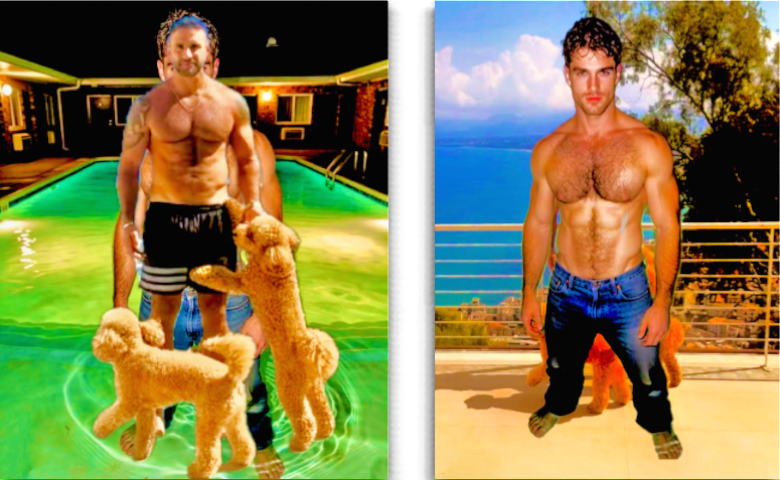
Swapping Spit (Diptych), 2026

Swapping spit is an act of intimacy and connection in gay culture. It is the sharing of body fluids between two men. This act is both poignant and celebratory after decades of HIV, when gay men were taught to fear and avoid the exchange of body fluids. Saliva has never transmitted HIV, but for years the fear extended to any fluid exchange between men.

Intimacy through Exchange

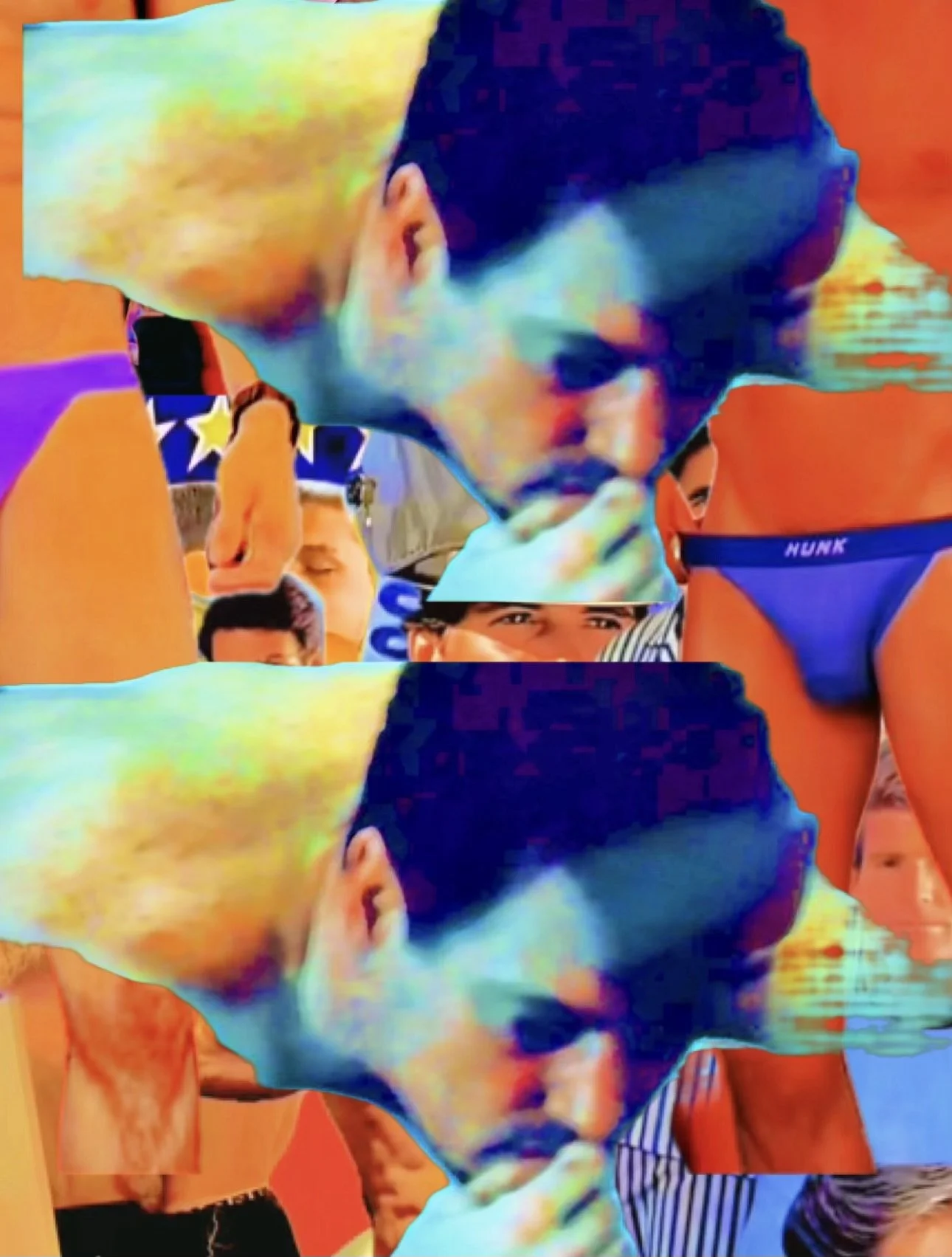
This diptych recreates that act of intimacy by swapping the images of two single shirtless men between their original settings. A young man in jeans stands barefoot in a motel pool at night. An older man in striped swim trunks stands on a terrace above the sea with his two poodles. Each man is placed into the other's scene. That exchange is the only action.

The action creates what painting has traditionally called pentimento: traces of the former figure remaining in the original setting, partly covered by the new figure. Behind the older man in the pool, the younger man's arms, jeans, and bare feet remain visible. Behind the younger man on the terrace, the poodles remain.

The viewer is left to consider the intimacy of entering another person's space: how each figure is changed by its new environment, and how it stays the same.
Swapping has a long and celebrated history in American culture.

From the 1960s onward, suburban heterosexual couples held key parties, where married couples swapped partners for an evening. This activity was treated as harmlessly as a Tupperware party.

One of the most popular films of the late 1960s was Bob & Carol & Ted & Alice (1969), in which a wealthy California couple decides to try swinging and wife swapping and brings their best friends into the idea. It was an enormous success and showed that swapping in heterosexual culture had moved into the mainstream.

Ironically, gay men in similar settings were often raided and harassed for the same behavior, which continues today. In April 2026, Dallas police served a search warrant on a warehouse hosting a party for gay men, detained 48 people, and arrested the two promoters.

The deeper contradiction is that while gay men were condemned for swapping body fluids, heterosexual couples were swapping themselves. What is apparent is a lack of understanding and empathy in the dominant culture, and an inability to see its own part in behavior it considered unnatural or unsavory.

The diptych Swapping Spit is about making a connection where there was none, whether through a body fluid, a partner, or a setting, creating intimacy through exchange, popular with gay and straight people alike.

— Behan

Sources: Encyclopaedia Britannica, "Bob & Carol & Ted & Alice"; KWTX/KLTV, "Dallas police raid 'sexual encounter center'" (April 20, 2026).

The Feed

On a daily basis, millions of people move through the images, advertisements, and stories contained in social media, the feeds themselves becoming self-portraits of the viewers. In my own case, from that encounter, I gather grounds and figures to create collages that express a specifically queer point of view. And in these collages, I see both myself and the larger culture, revealed through what other people choose to make and to post. This is communion.

— Behan

Behind the Process

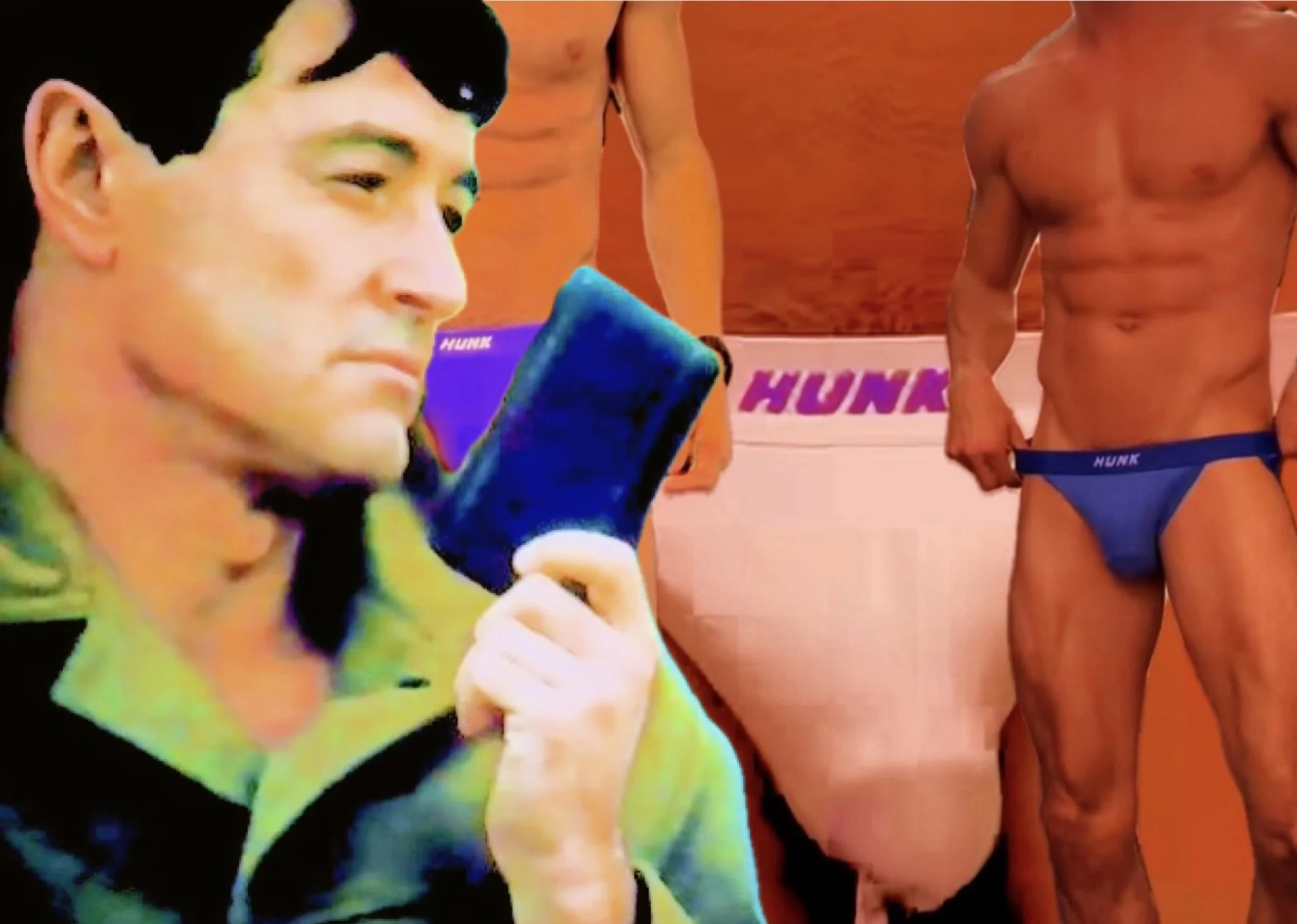
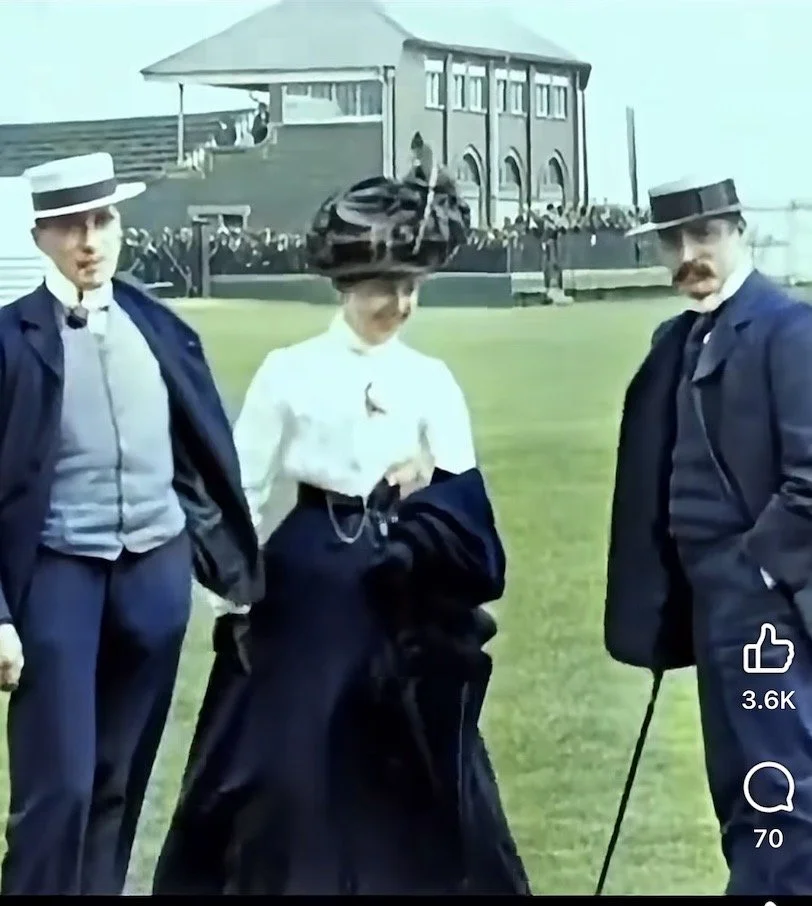
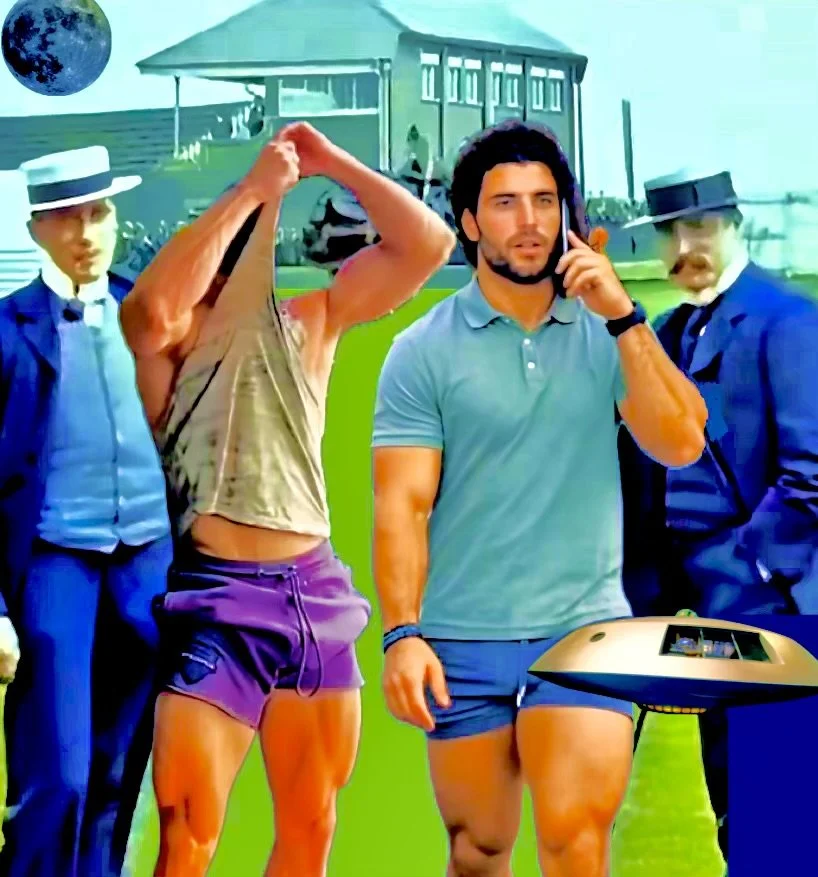
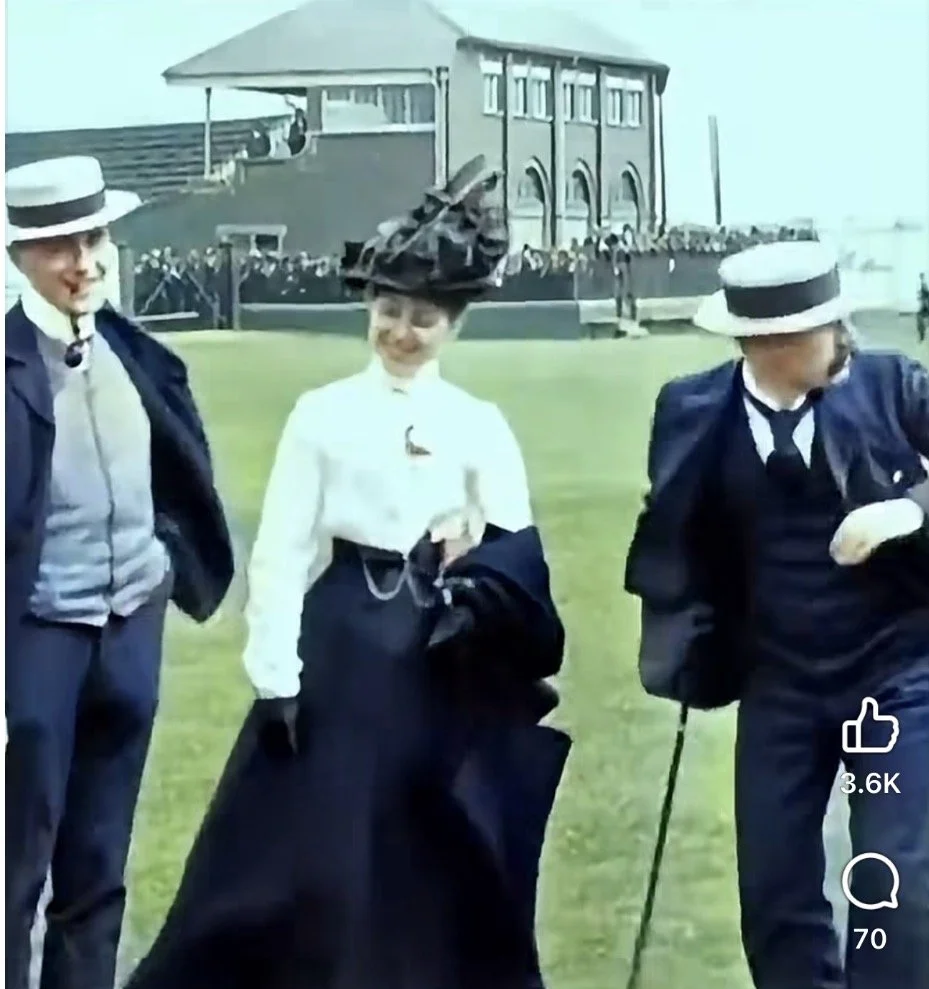
These two collages start with images from 1899. Two men in straw boater hats stand on a racecourse lawn, with a woman between them. A grandstand full of spectators sits behind them. It follows the usual format: boy, girl; boy, girl.

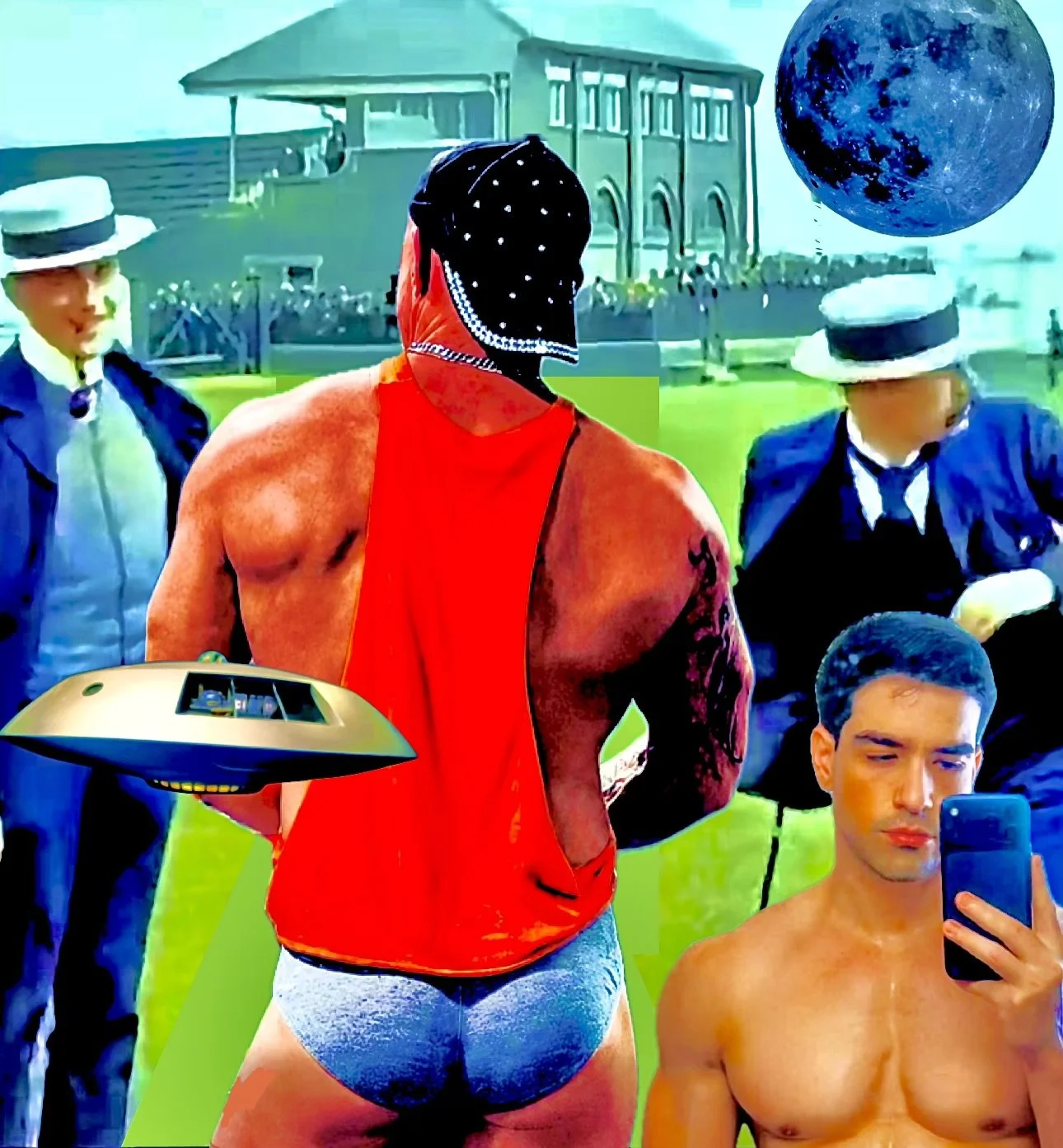
Then the woman steps out while the two men stay to meet up with some new friends. In the space between them, men from 2026 appear. One pulls his shirt over his head to wear even less. Another takes a phone call, or is it a mirror selfie? The Blue moon and Jupiter 3 witness it all.

The new seating arrangement: boy, boy; boy, boy.

The result is the same image, queered. Like squared, but queered.

The clothing shows 127 years of change. In 1899, the men are fashionably dressed in high collars, waistcoats, jackets, ties and straw hats. In 2026, the men leisurely don tank tops, shorts and briefs, or nothing above the waist at all. In 1899 they carry canes and pipes. In 2026 they carry phones.

The original images had room for one story. Now they have room for another.

— Behan

Homage to Hartley and His German Lover

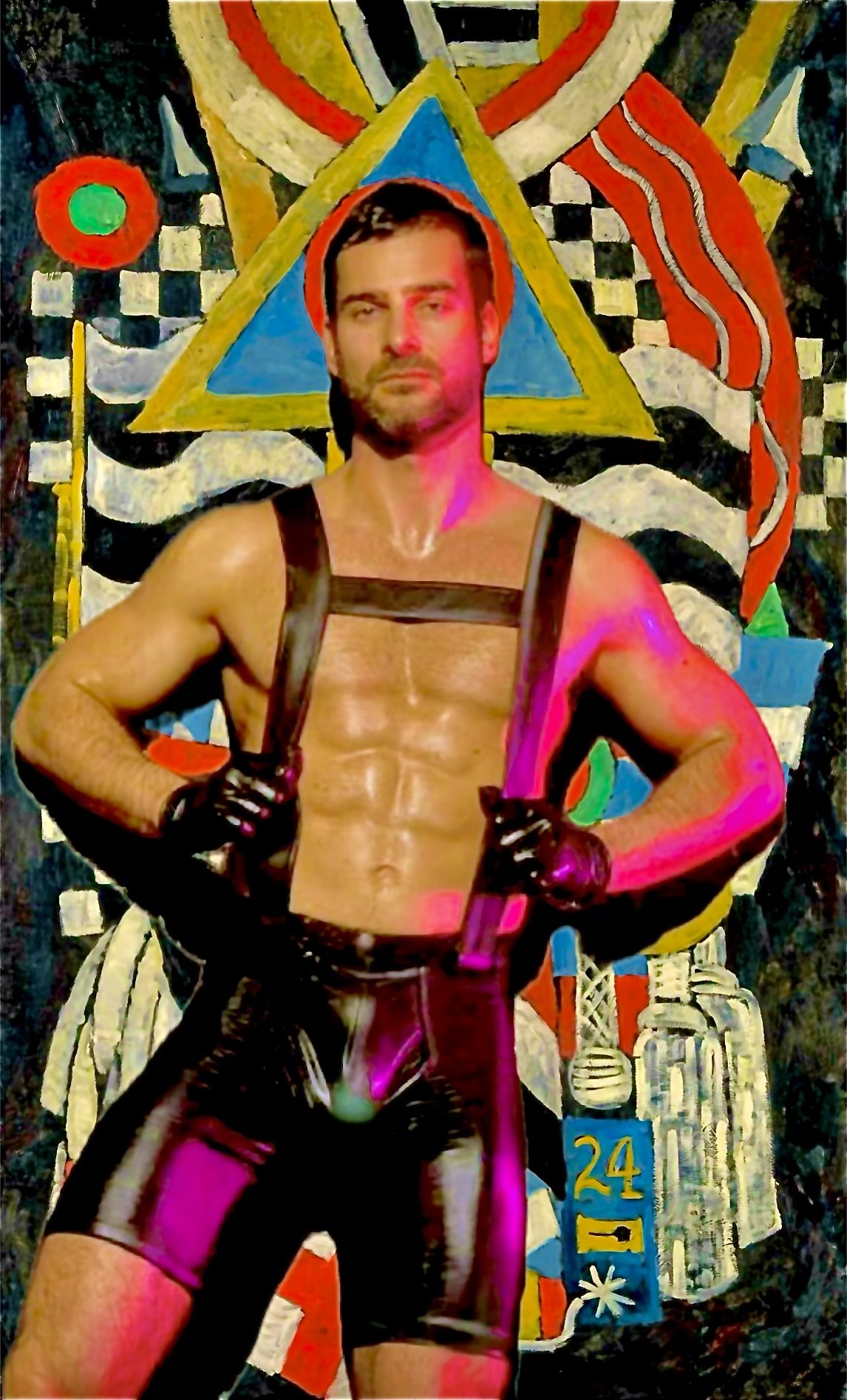
In 1914, the American painter Marsden Hartley was living in Berlin. There he loved Karl von Freyburg, a young Prussian lieutenant. In October of that year, in the first months of the First World War, von Freyburg was killed in battle. He was 24.

Hartley responded with Portrait of a German Officer. The painting contains no face and no body. It is built from flags, epaulets, military insignia, letters and numbers. For decades it was described as an abstraction about war.

The painting is a portrait, written in code. "KvF" is von Freyburg's initials. "24" is his age. "4" is his regiment. The Iron Cross is the medal he was awarded after his death. Hartley put the man he loved into the painting in the only form the time allowed: as coded information.
This collage brings the code out. Hartley's composition remains, and in front of it stands Dirk Yager, a German gay adult film star. His head is framed by the painting's central yellow triangle. He wears a black leather harness, shorts and gloves, and the straps over his shoulders follow the lines of a uniform. Beside him, the number 24 is still visible. The painting Hartley built to leave the body out now contains a living, breathing body.

Making this collage further revealed something in Hartley's painting. Beside Yager hangs a form from an officer's uniform: a tassel with a long shaft above a rounded base. The painting is composed as a torso, and this form sits where the groin would be. As a painter, I read it plainly as genitalia. This then is not only a portrait. It is a nude portrait, which makes sense, as Hartley was painting his lover.

I have not seen this formally discussed. That is not surprising. Art history has a long habit of looking away from queer sexual content. A coded language is also meant to be read by very few people: the artist, and those closest to him. Hartley coded his lover's name as initials and his age as a number. He also coded his body.

The two figures, von Freyburg and Yager, are two German men separated by more than a century. During his lifetime, von Freyburg could only be recorded as initials and numbers, while Yager is photographed openly as a gay man by his own choice. The collage places them in the same frame to honor both of their realities.

Layering onto an existing work is not new. In 1919, Marcel Duchamp drew a mustache on a reproduction of the Mona Lisa. I also work on a reproduction, in my case a digital one.

This is the method of all of my work: take the subtext, the code, and make it context, make it legible. Hartley named his lover in letters and numbers. This collage brings the idea of him into corporeal form, so that we can see him the way Hartley no doubt saw him when he looked back at this painting. Hartley did not see numbers and initials. He saw his beloved, Karl.

Sources: Marsden Hartley, Portrait of a German Officer (1914), Metropolitan Museum of Art, Alfred Stieglitz Collection; Marcel Duchamp, L.H.O.O.Q. (1919).