Classic Collage Wednesday
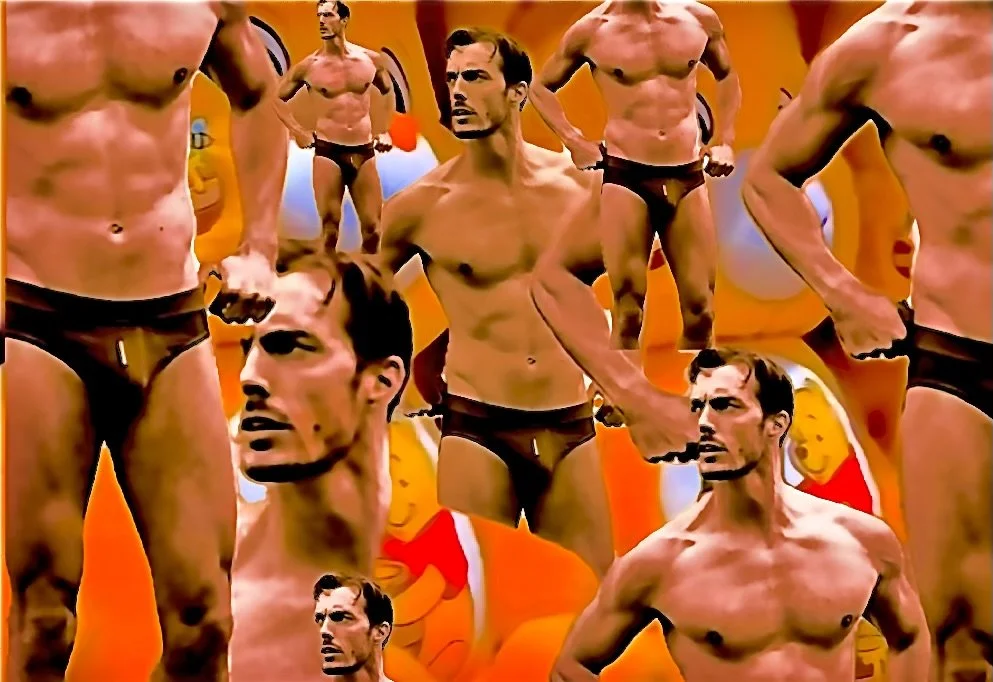
Classic Collage Wednesday: classically styled collages of the inundating male form.
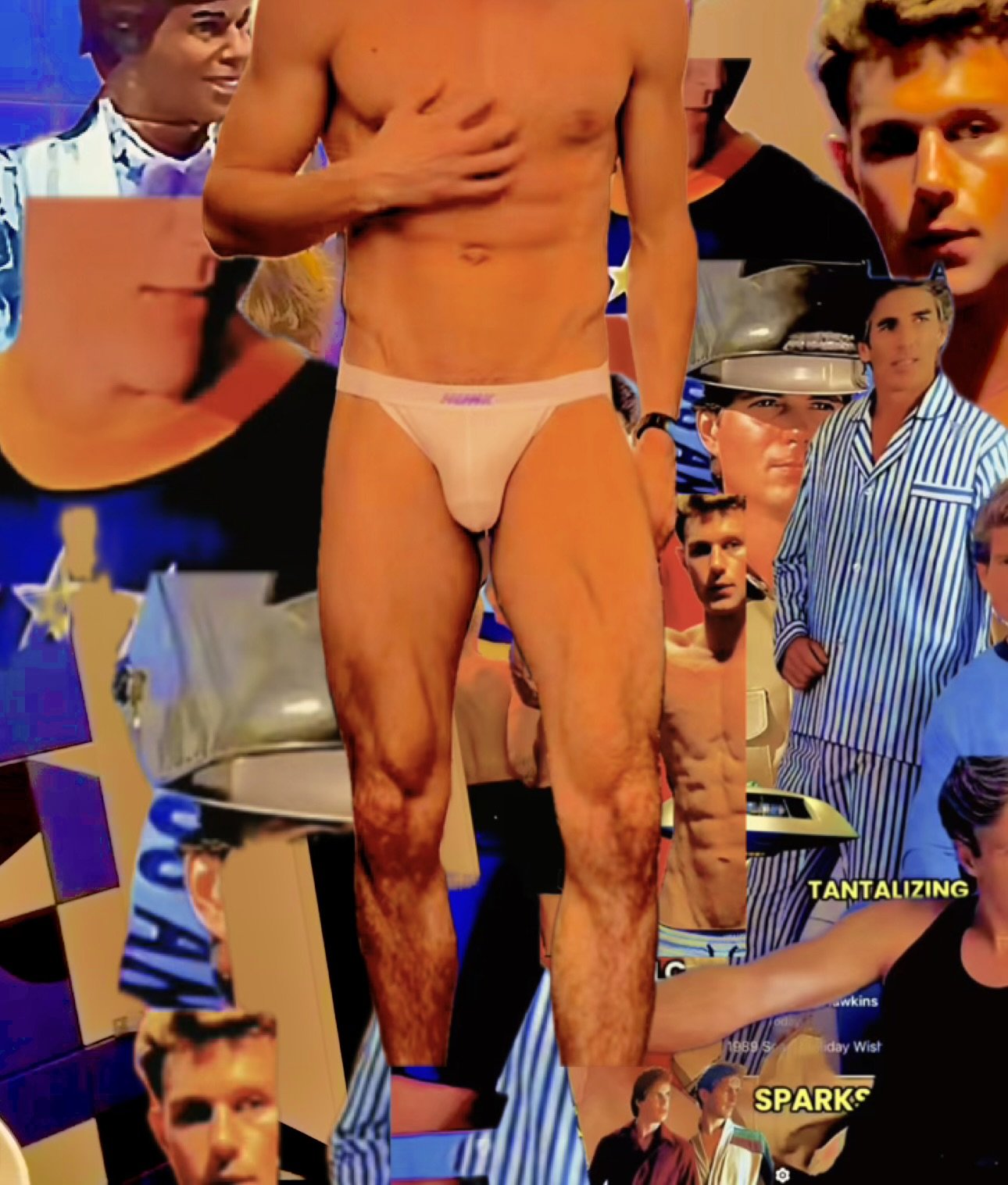
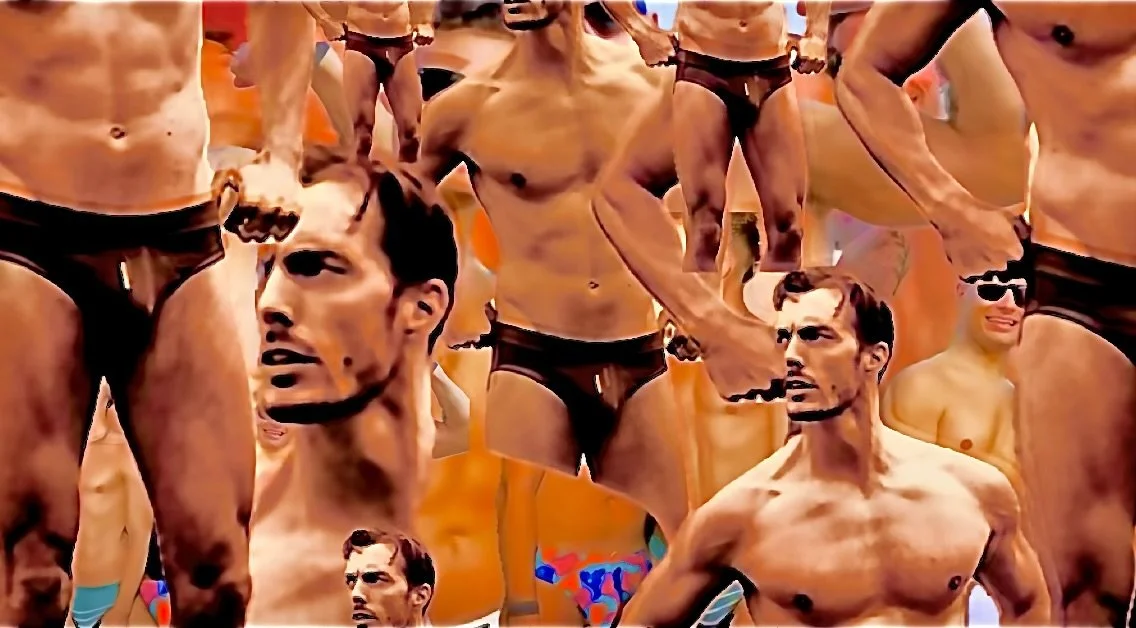
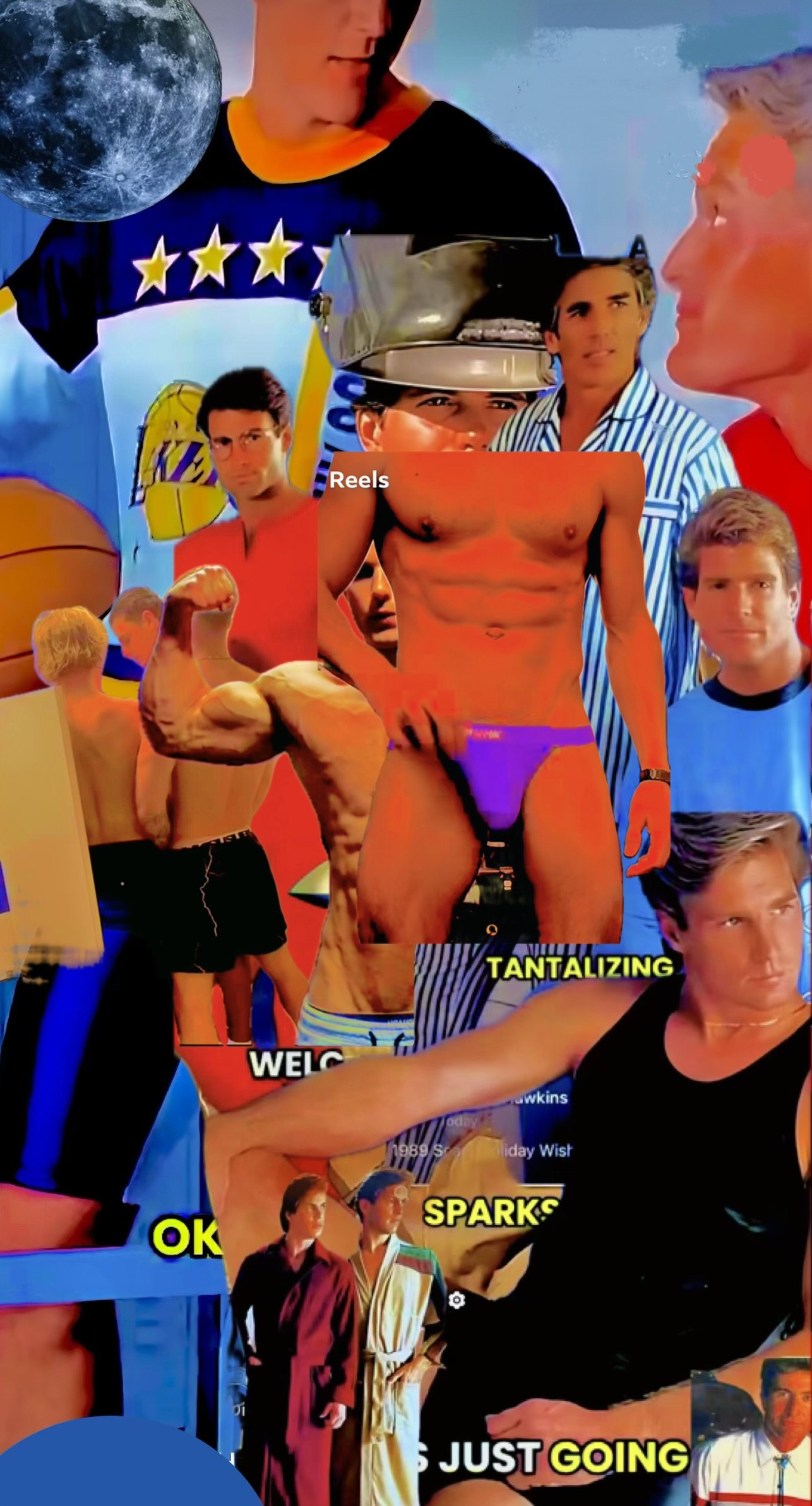
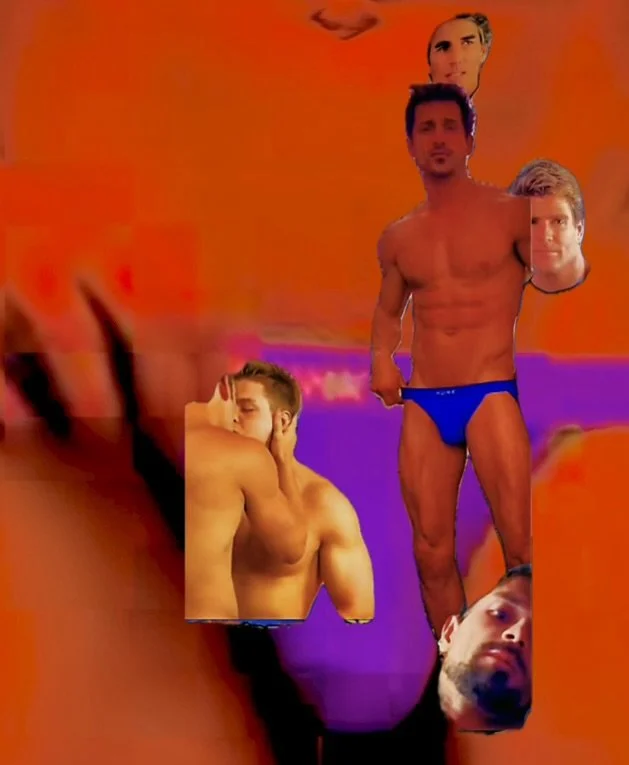
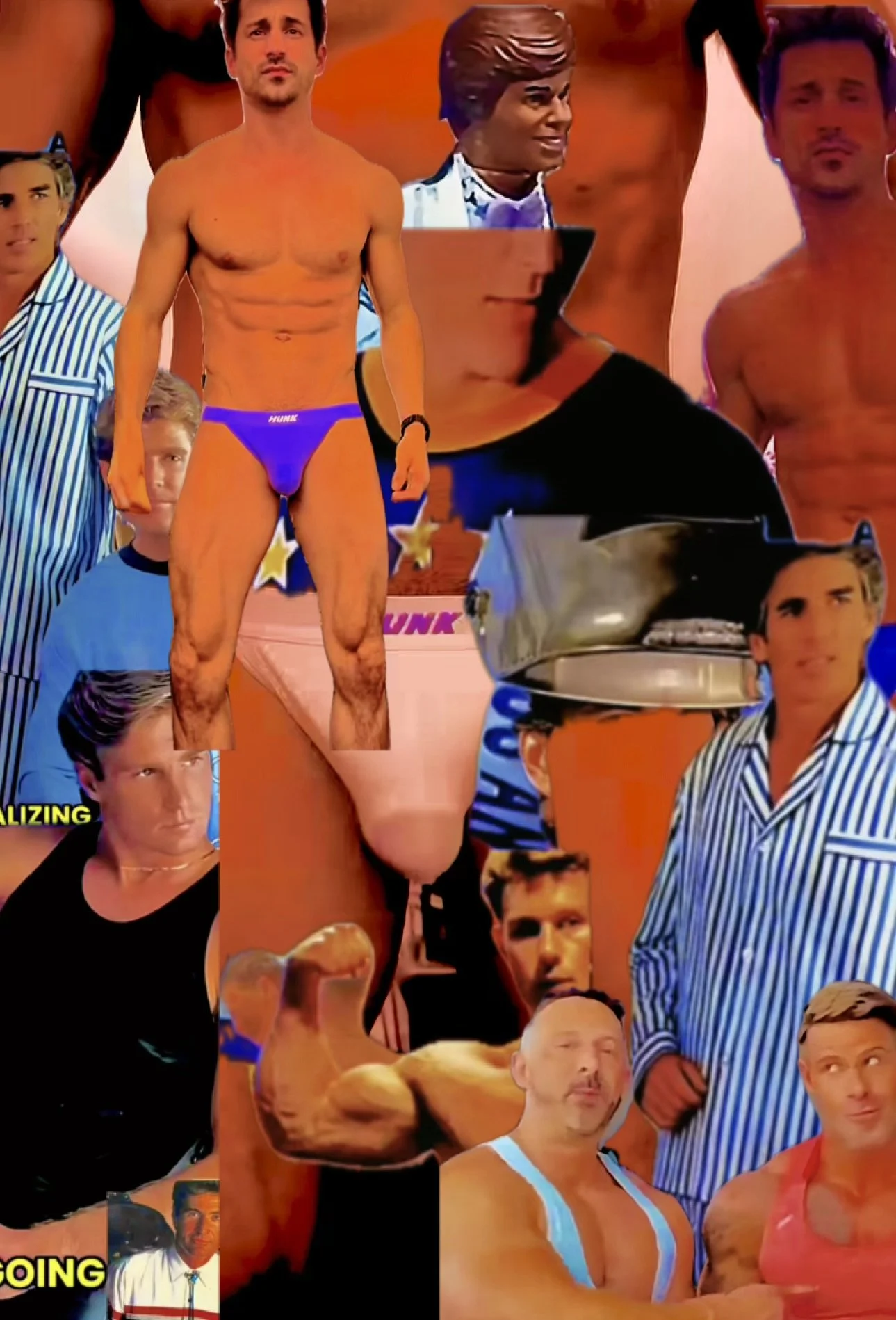
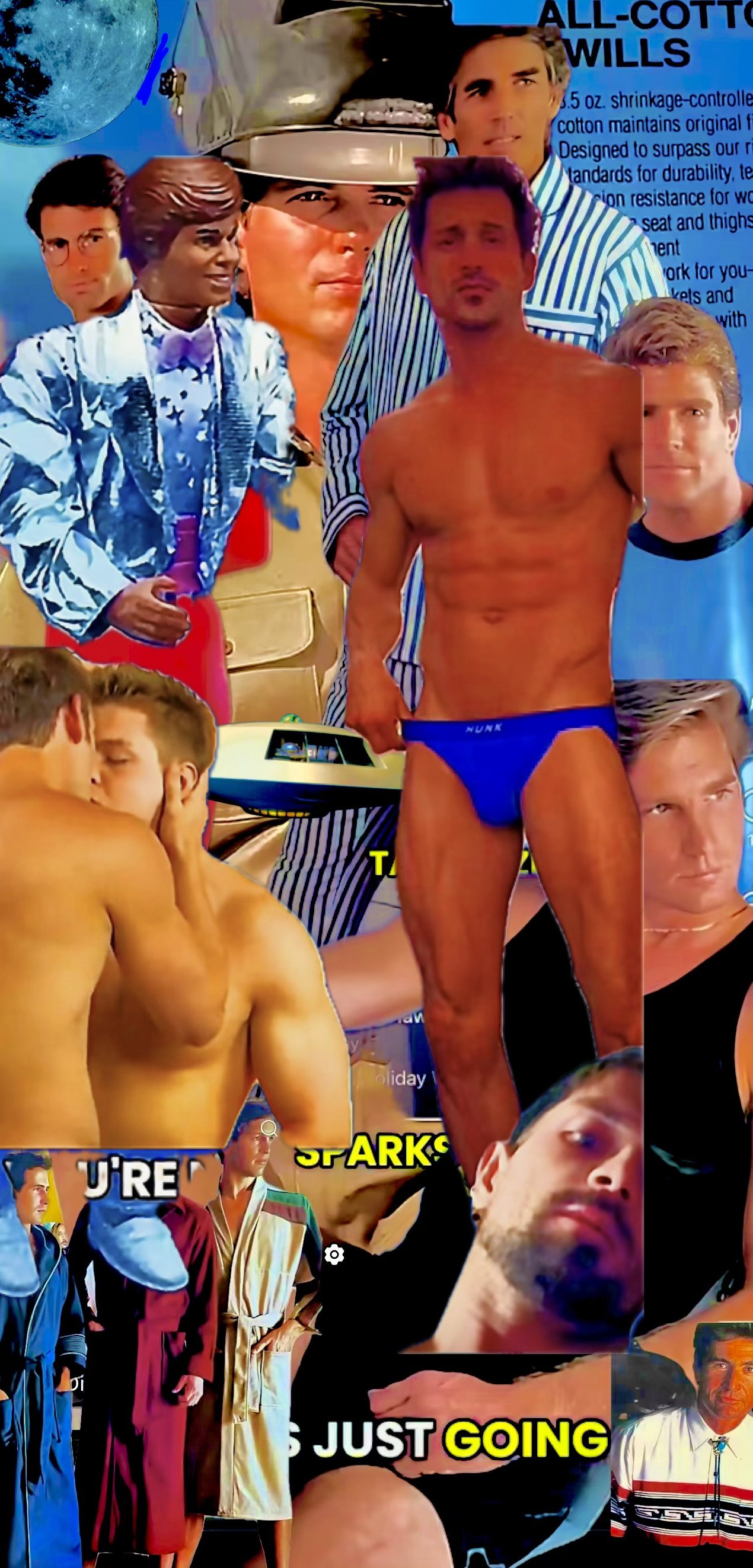
These collages are built from what the feed delivers. Catalog models from the 1980s in striped pajamas and robes stand beside men from this week's Reels. A Ken doll in a tuxedo, a peaked cap, a moon and a basketball appear among them.
The same figures repeat at different scales. A face appears large in one corner and small in another. A torso fills half the frame and then returns as a background figure. The repetition is the point. The feed does not present one man. It presents the same type again and again until he fills every edge of the screen.
The interface text stays in. "Tantalizing." "Sparks." "Just going." "Reels." These fragments show where the images came from and how they arrived.
Collage has a long queer history. Hannah Höch, one of the founders of photomontage in Berlin Dada, lived with the Dutch writer Til Brugman for nine years. Joe Brainard made collages in New York in the 1960s and 1970s that drew on popular imagery and his own life as a gay man. In 2020, the Armory Center for the Arts in Pasadena offered a class on how artists have used collage to interpret queerness. The class examined how collage strips images of their original social and political context and how the practice moves between public and private. Peter Platel's 2026 book Collage Fantastique! goes further and calls collage an inherently queer art form.
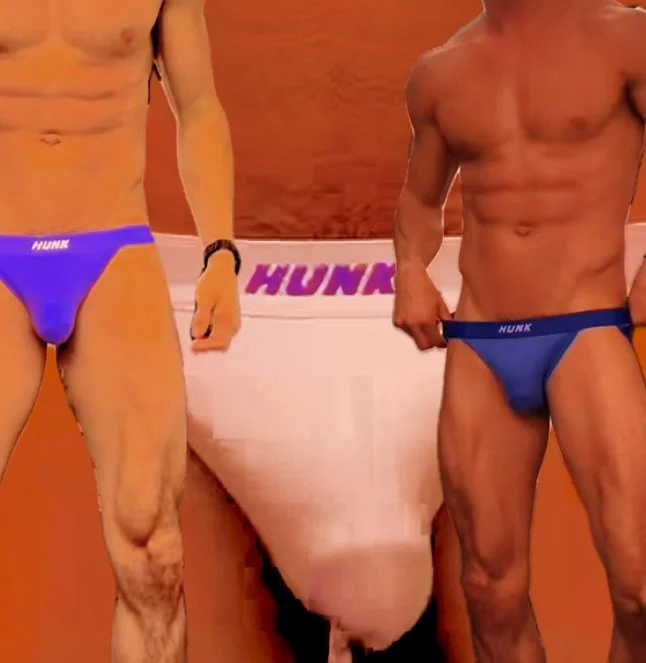

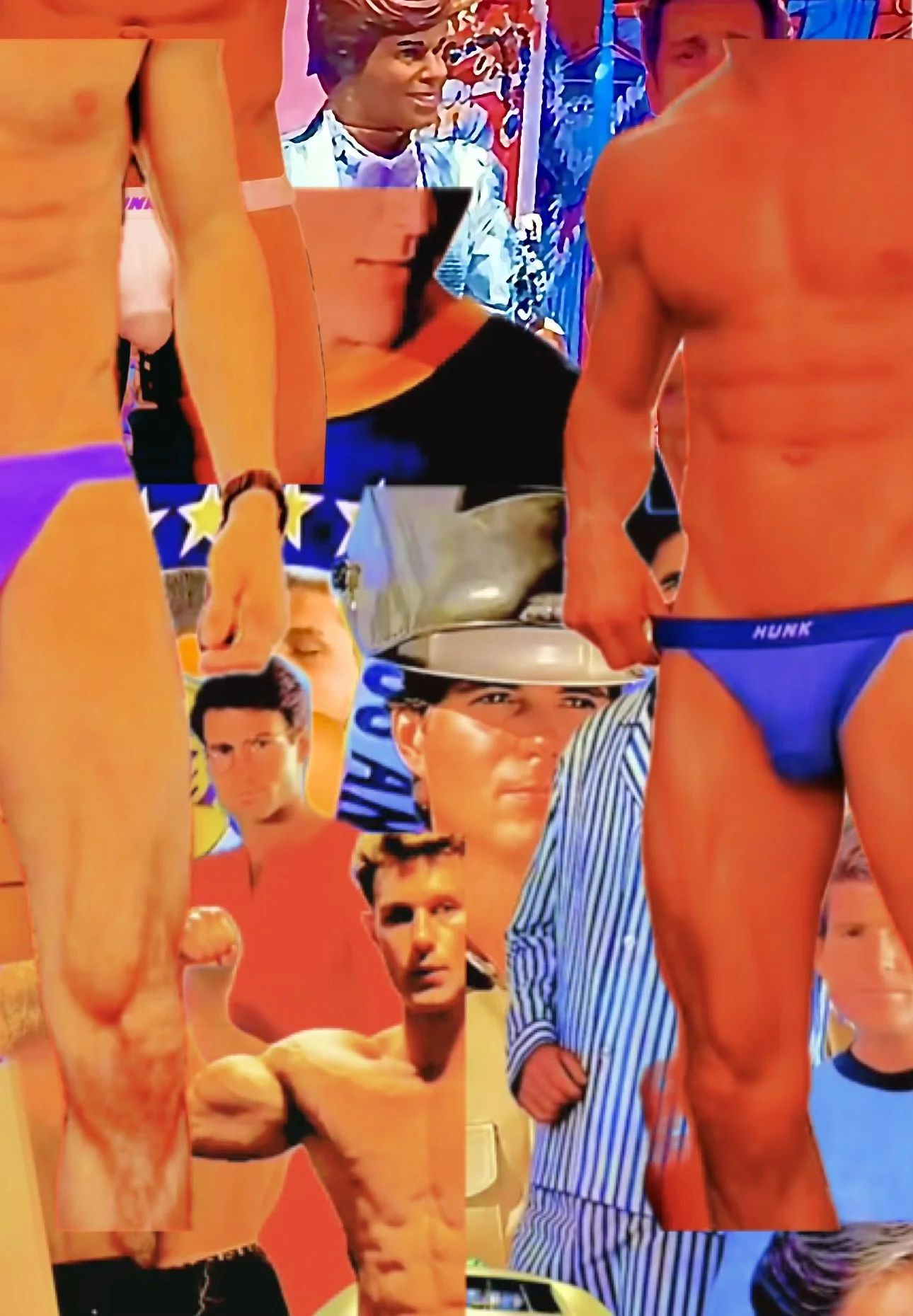
These works take advertising, toys and social media images made for a general audience and reassemble them around the male figure. The original context is removed. The new context is stated openl
When I came out in 1981, homemade queer collaging including formal work and guerrilla collaging in men’s public restrooms were the only visual form I could see that hid me I was not alone. That was important.
Sources
Vitalicio, Andy. "Discover the History of Queer Collages at Armory Center for the Arts." Published November 5, 2020.
Platel, Peter. Collage Fantastique! Quercus Publishing, 2026. ISBN 9781529447569.