Straight-washing is the practice of presenting historical figures as heterosexual by default, and removing or renaming evidence that complicates that picture. Close bonds between men become "friendship." Shared homes become "studios." Love letters become "admiration."
The practice is documented. When Michelangelo's poems were first published in 1623, his grandnephew changed the pronouns. Sonnets written to a young Roman nobleman, Tommaso dei Cavalieri, were printed as poems to a woman. The original texts were not restored until the nineteenth century, when scholars returned to the manuscripts.
In 1914, Marsden Hartley painted Portrait of a German Officer, a dense arrangement of flags, numbers and military insignia. For decades it was described as an abstraction about war. It is a memorial to Karl von Freyburg, a young officer Hartley loved, killed in the first months of the fighting. The initials and his age are in the painting.
In the autumn of 1888, Gauguin and Van Gogh moved in together to share a studio and a home in Arles. Van Gogh lovingly decorated Gauguin's room with sunflowers. Their arguments, he told Theo, were "terribly electric." In the joint letter of November 1888, Van Gogh writes that Gauguin interests him "greatly as a man — greatly." Two months later, when Gauguin prepared to leave, Van Gogh collapsed.
The standard account reduces this to rivalry and mental illness. The brothel visits are cited as proof that settles every question. For many men of the period, they settled nothing.
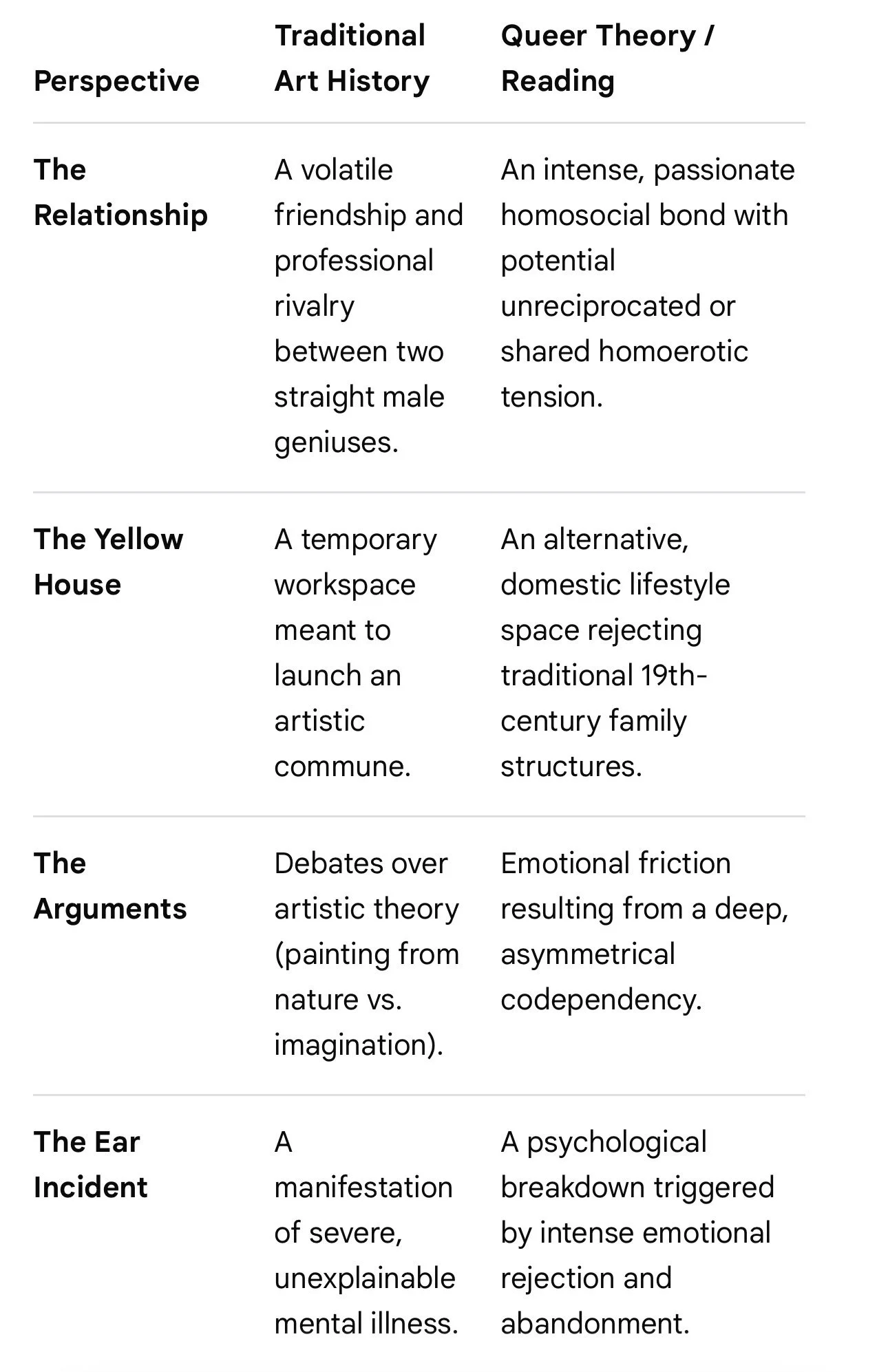
The table below sets the two readings side by side. The same four events appear in both columns: the relationship, the Yellow House, the arguments and the ear. Traditional art history describes a professional rivalry, a shared workspace, debates over theory and an unexplained illness. A queer reading describes an intense bond, a domestic life outside the family structures of the time, emotional friction and a breakdown that followed rejection. The facts in each row are the same. Only the interpretation changes.
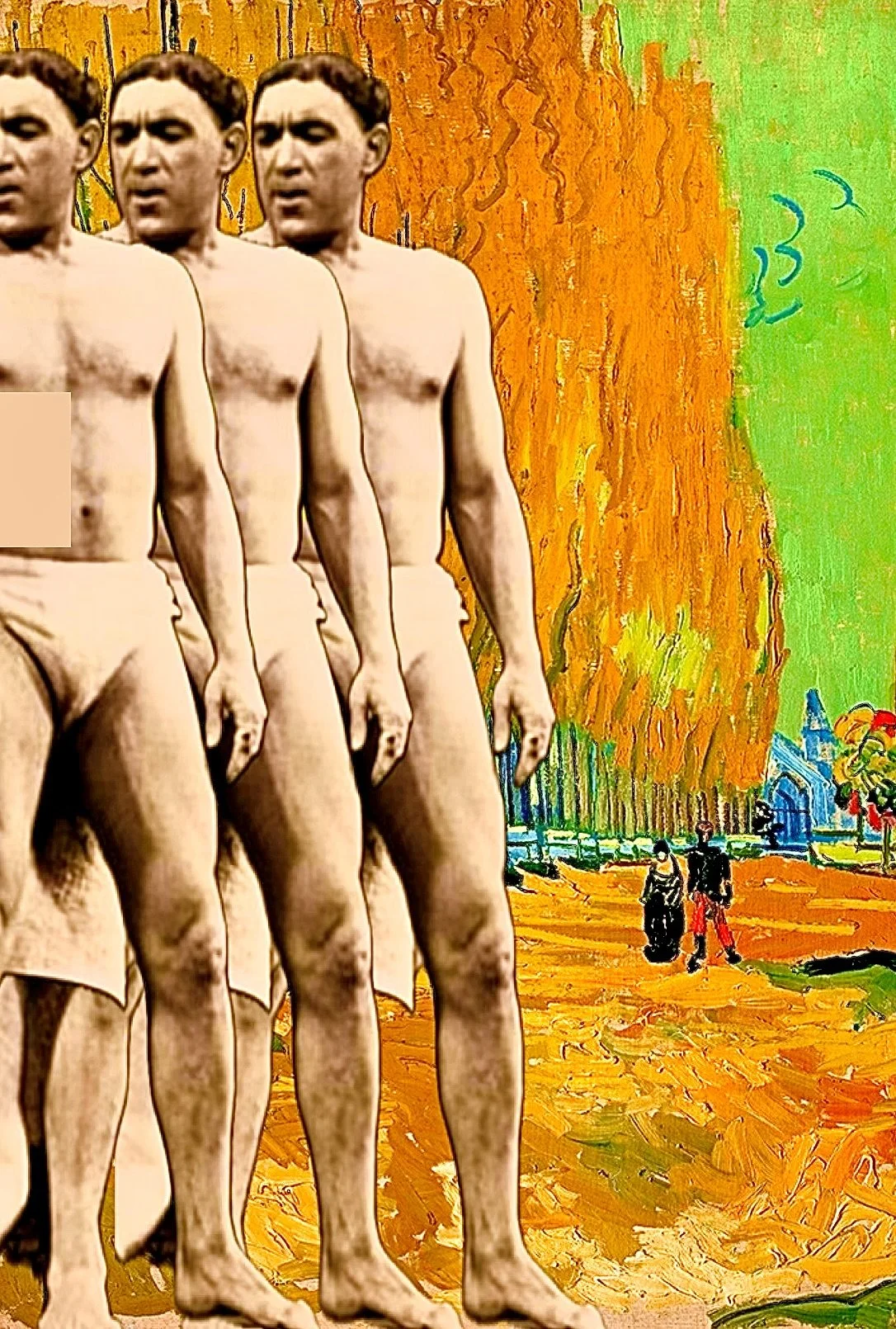
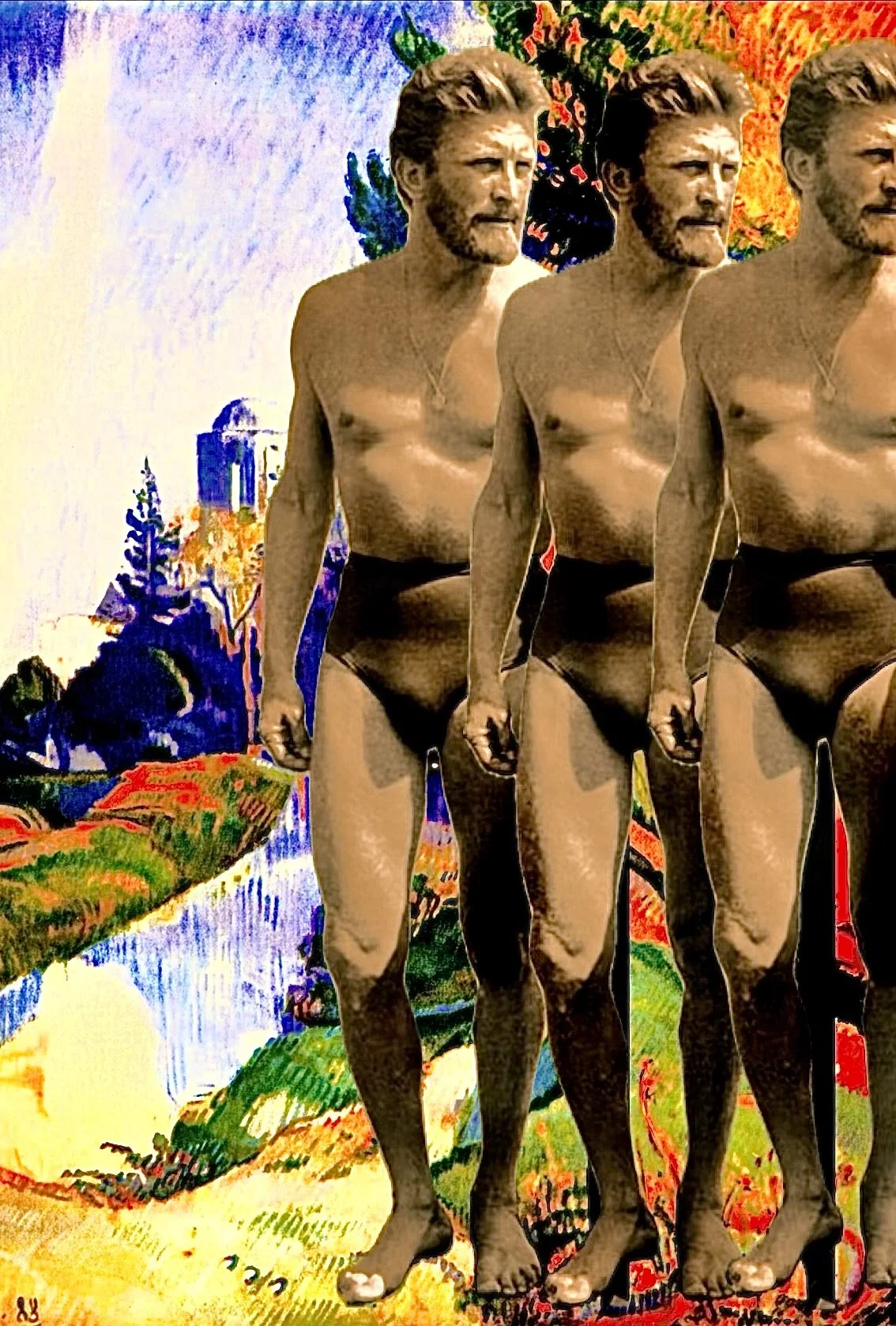
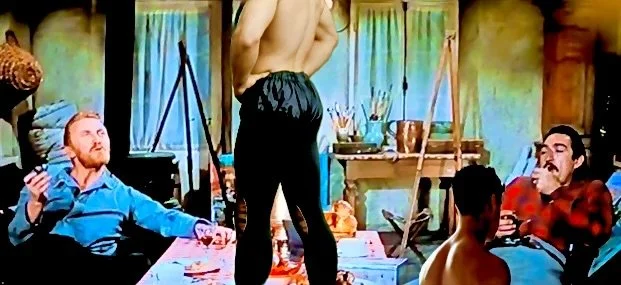
The 1956 film Lust for Life fixed the standard account in popular memory. Kirk Douglas plays Van Gogh as a tormented genius. Anthony Quinn, who won an Academy Award for the role, plays Gauguin as a brawling, confident man. Both are presented as heterosexual by default, at the height of Hollywood's production code.
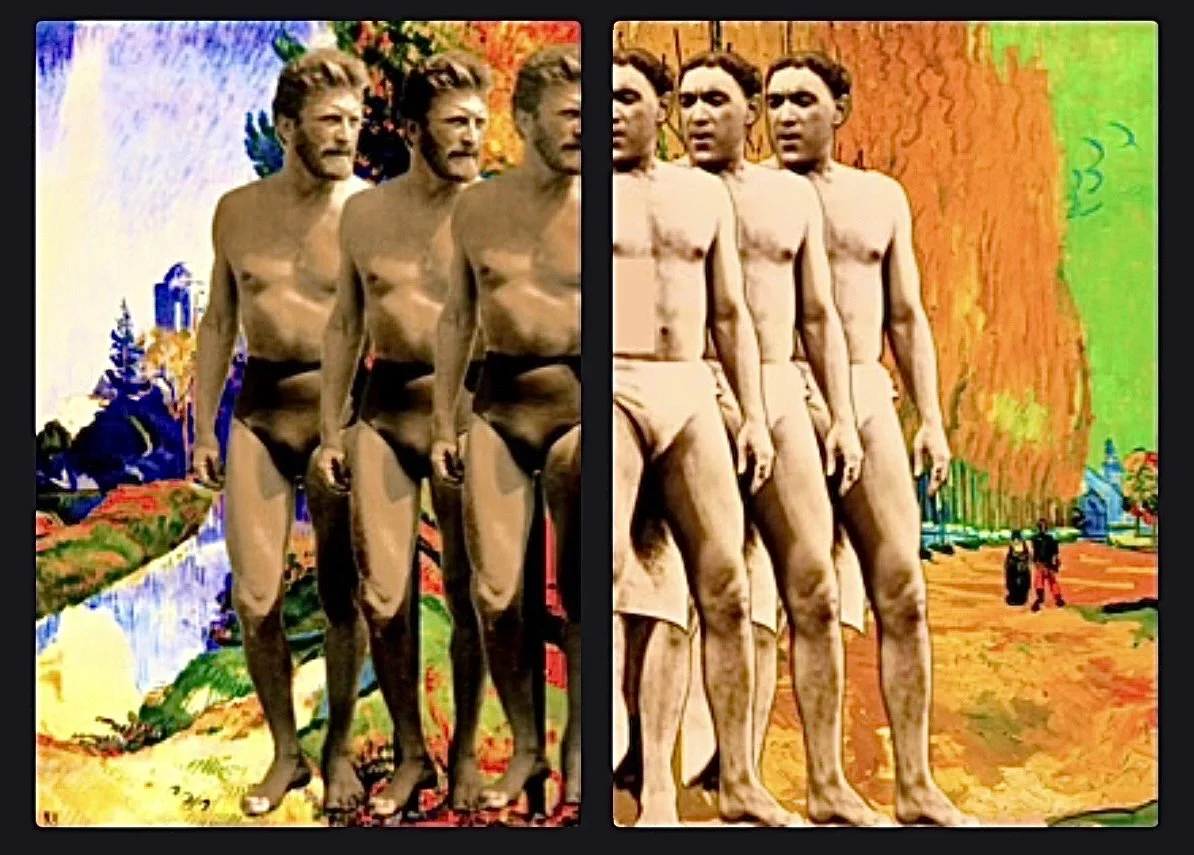
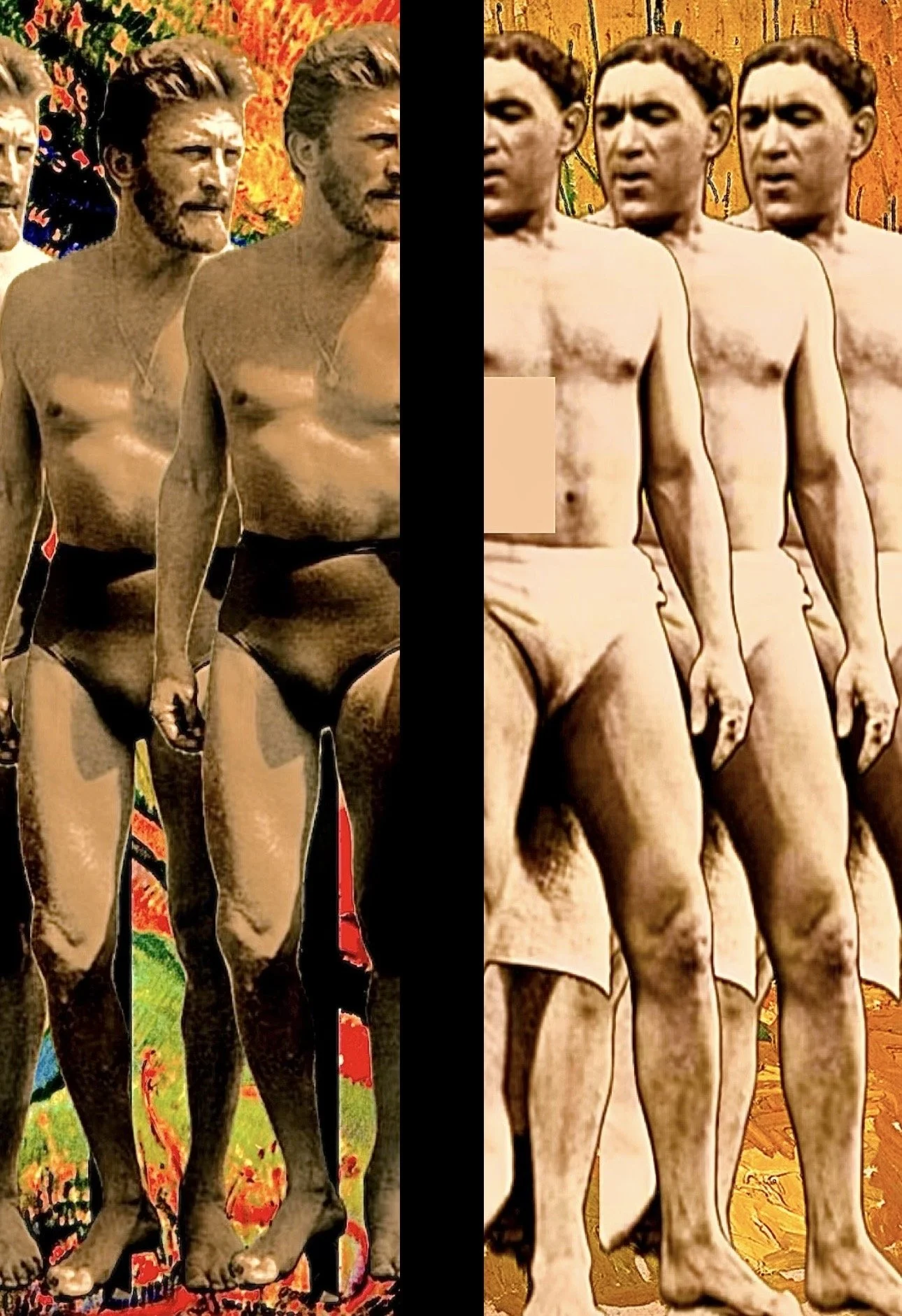
These collages reverse the arrangement. The actors are stripped to their bodies and repeated in rows. Douglas, the screen Van Gogh, stands in a Gauguin landscape. Quinn, the screen Gauguin, stands in Van Gogh's Les Alyscamps, the avenue the two painters worked on side by side in the autumn of 1888. Each man is placed in the other's world.
The bodies the film presented as rivals are presented here as subjects. What the official account omits is now in the picture.
Sources: Vincent van Gogh and Paul Gauguin to Émile Bernard, 1–2 November 1888, letter 716, Van Gogh Museum, vangoghletters.org; Vincent van Gogh to Theo van Gogh, December 1888; Michelangelo Buonarroti the Younger, ed., Rime (1623); Marsden Hartley, Portrait of a German Officer (1914), Metropolitan Museum of Art; Lust for Life, dir. Vincente Minnelli (MGM, 1956).