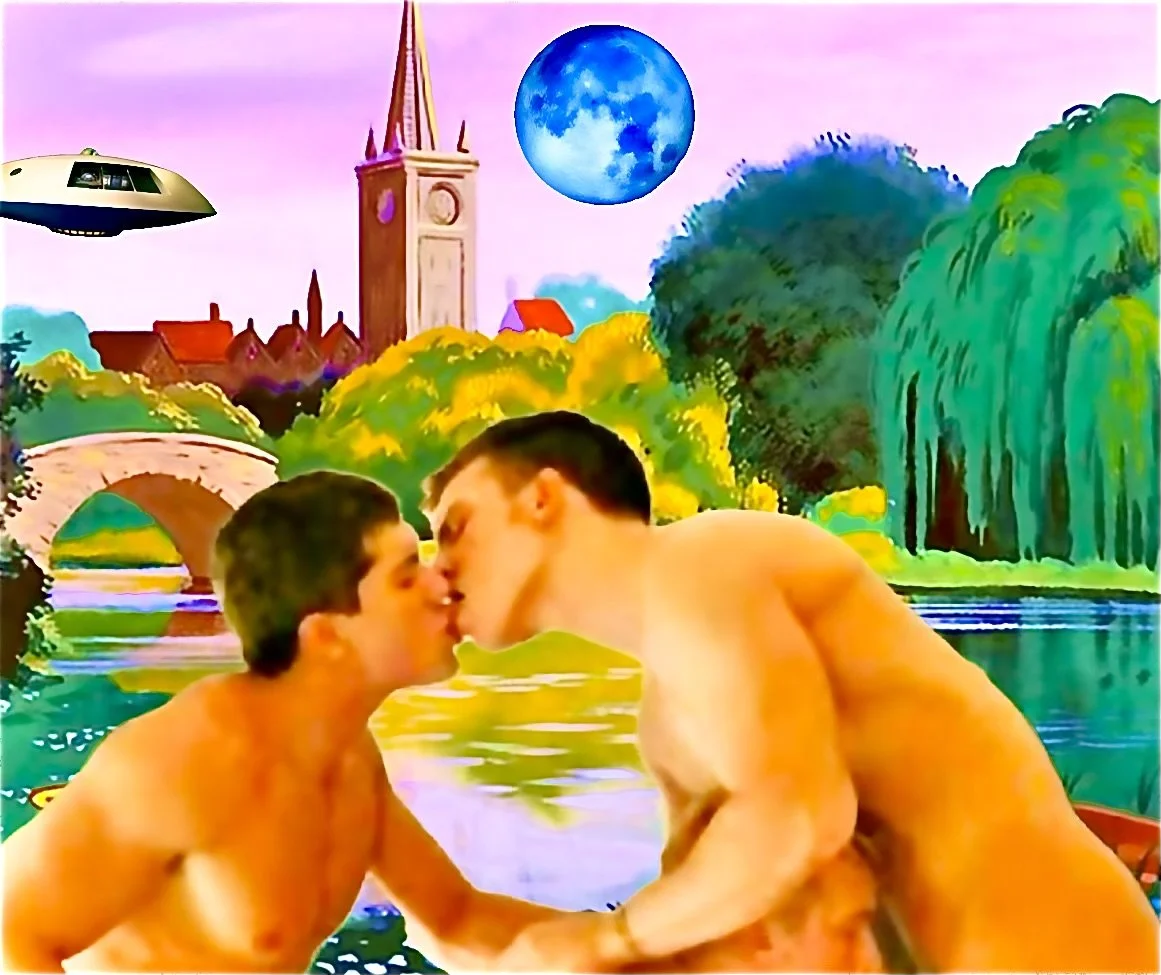
American film and image making have long cast gay love as suspicious, dangerous, or immoral. This collage asserts the opposite: gay love is as normal and as wholesome as straight love, and its wholesomeness lies in the love itself, whatever form its expression takes.
How Gay Love Was Cast
From 1934 to 1968, the Hollywood Production Code barred any inference of "sex perversion" from American films, and gay characters disappeared from the screen or appeared only in code. When they returned, they were most often villains, victims, or punchlines. Film historian Vito Russo documented this pattern in The Celluloid Closet (1981). Gay characters were dubious, subhuman creatures, rarely normal, healthy people in love.
The romantic imagery of American culture was reserved for straight couples. The prince and the princess, the kiss at the end of the story, and the storybook setting all belonged to them.
The Mashup
This collage combines two images that American culture keeps apart.
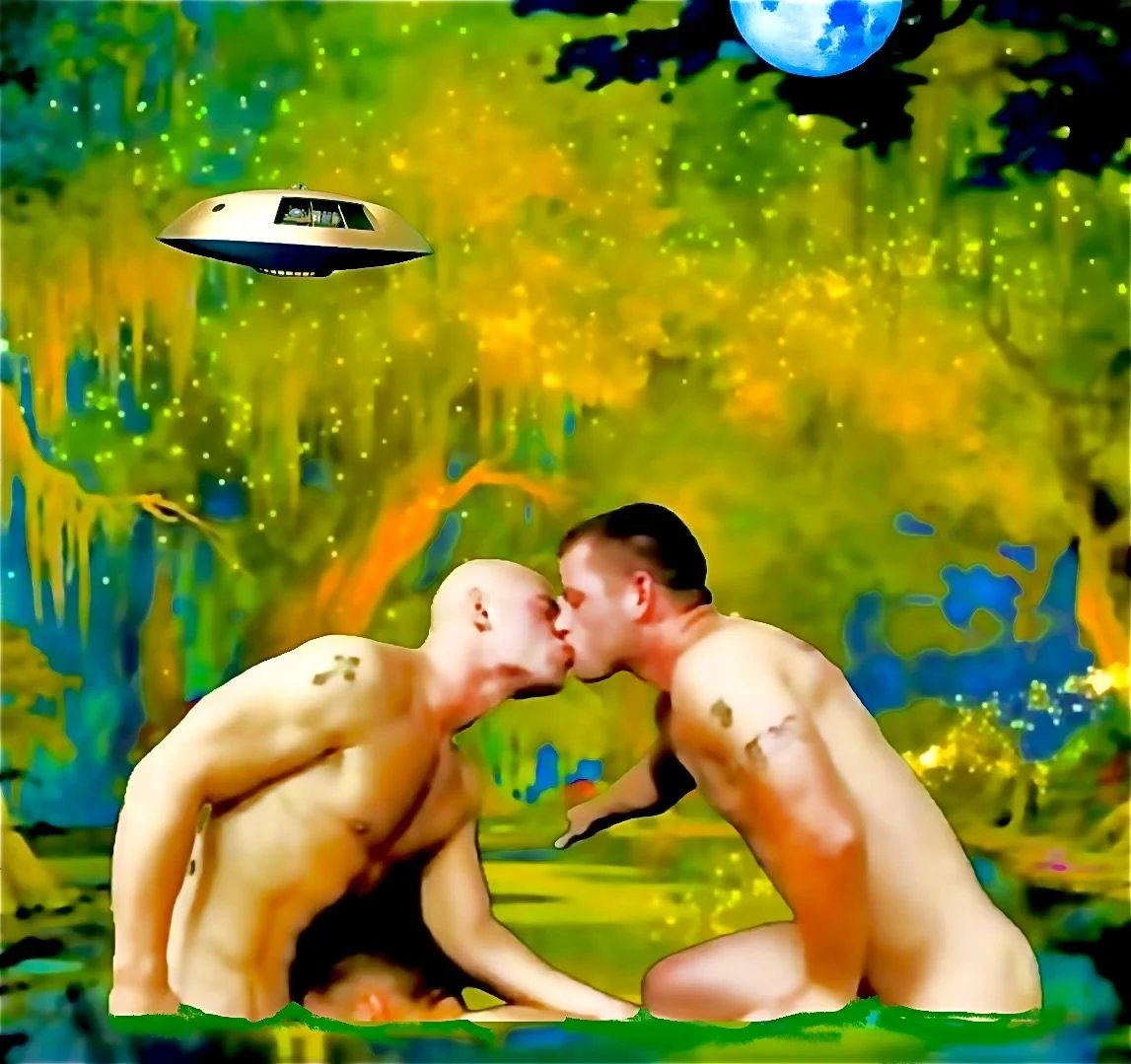
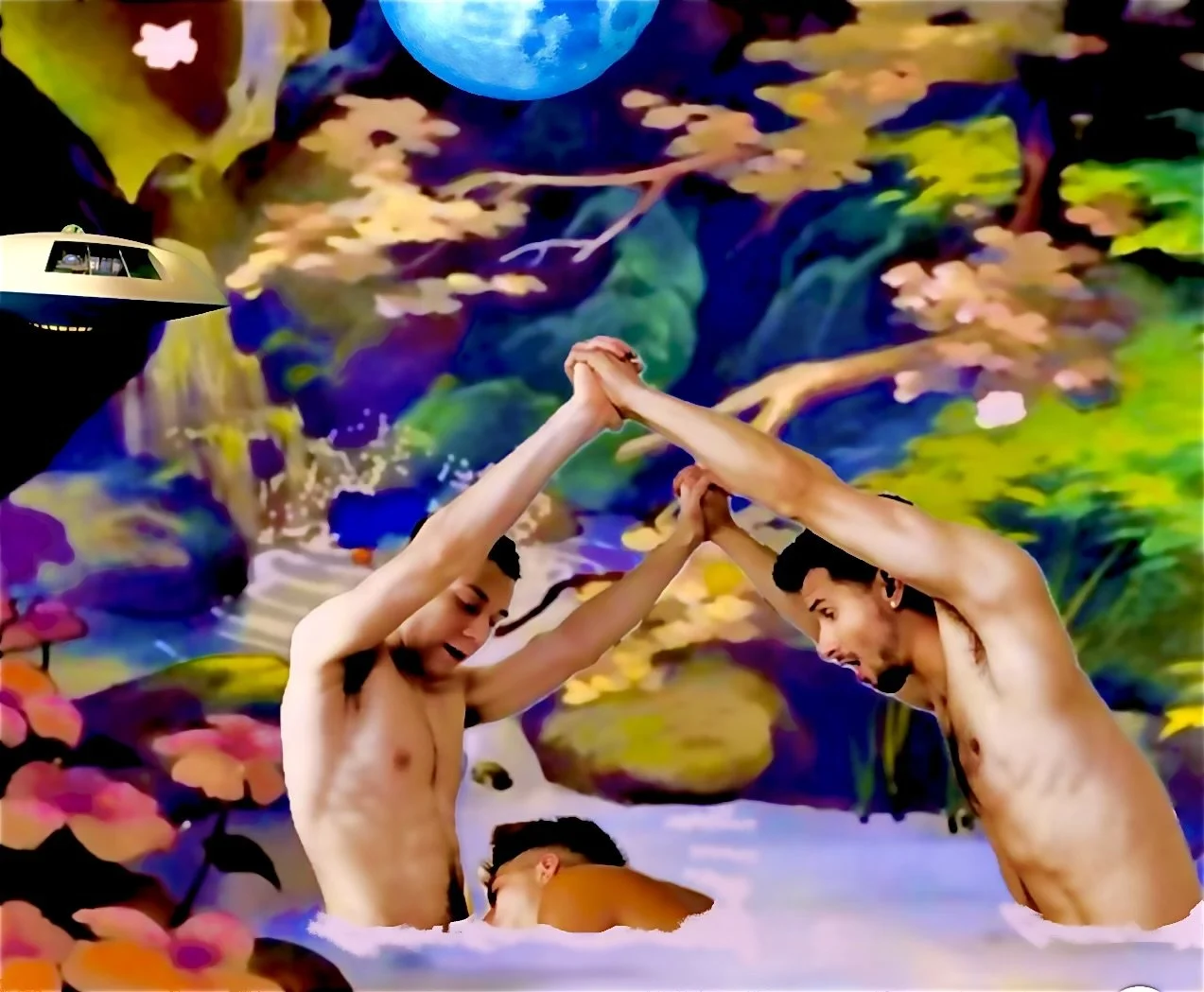
The ground is a Disneyesque landscape: a river town with a stone bridge, willows, glowing foliage, a pink and lavender sky, and a church spire in the distance. It is the visual language of romantic innocence, the setting American audiences associate with wholesome love.
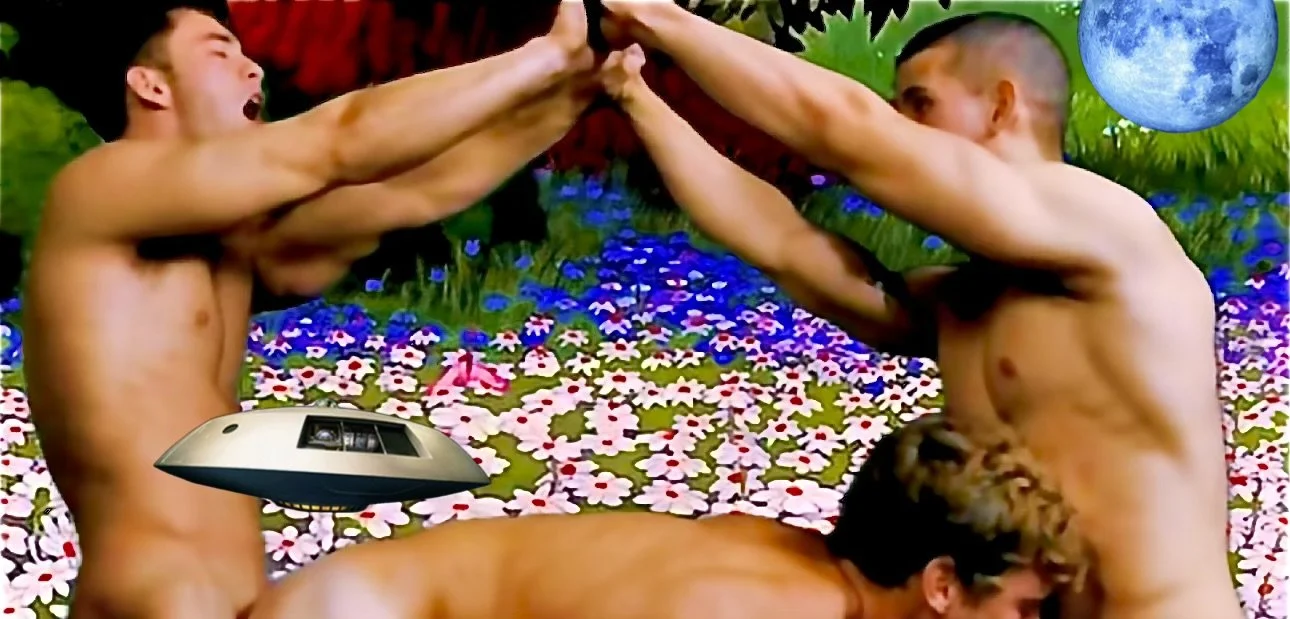
In the foreground, three men form the "Eiffel Tower," a sexual position named in current gay culture. Two men join above a third, and their bodies form a tall triangle like the Paris landmark. In the collage, the two men meet in a kiss, and the third man is below them.

The Juxtaposition
The pairing is meant to look like a contradiction. American culture assumes that gay sexuality is not wholesome, so placing it inside a storybook landscape should feel wrong.
The collage asserts that it is not wrong. The landscape does not change its meaning when the couple changes. The light, the color, and the setting that signify romantic innocence for a prince and a princess signify the same thing for these men. What makes love wholesome is that it is love.
The contradiction the viewer feels does not come from the image. It comes from the assumption the viewer brings to it.
The blue moon and the Jupiter 3 appear above the town as unseen witnesses, standing in for the viewer.
— Behan