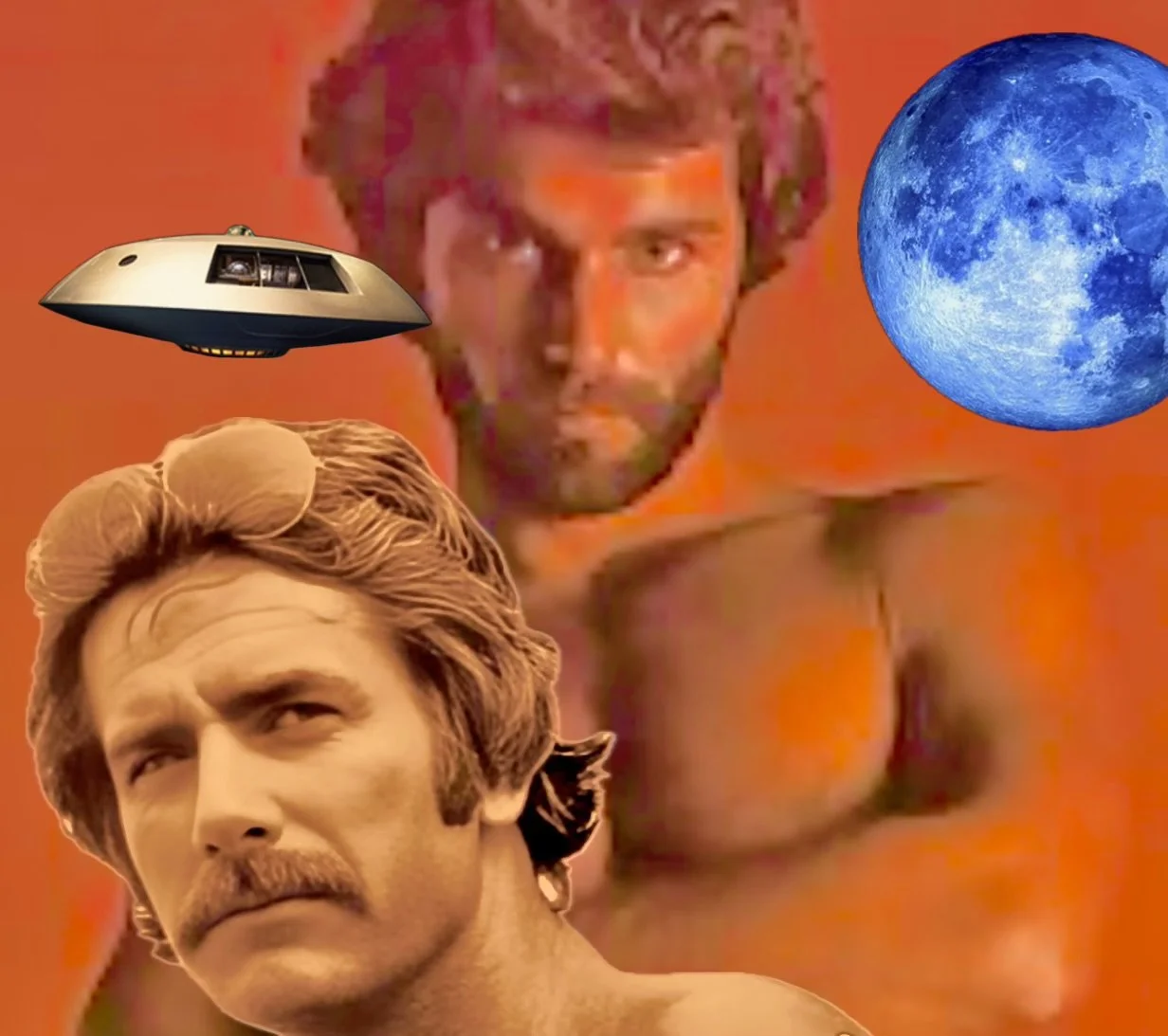
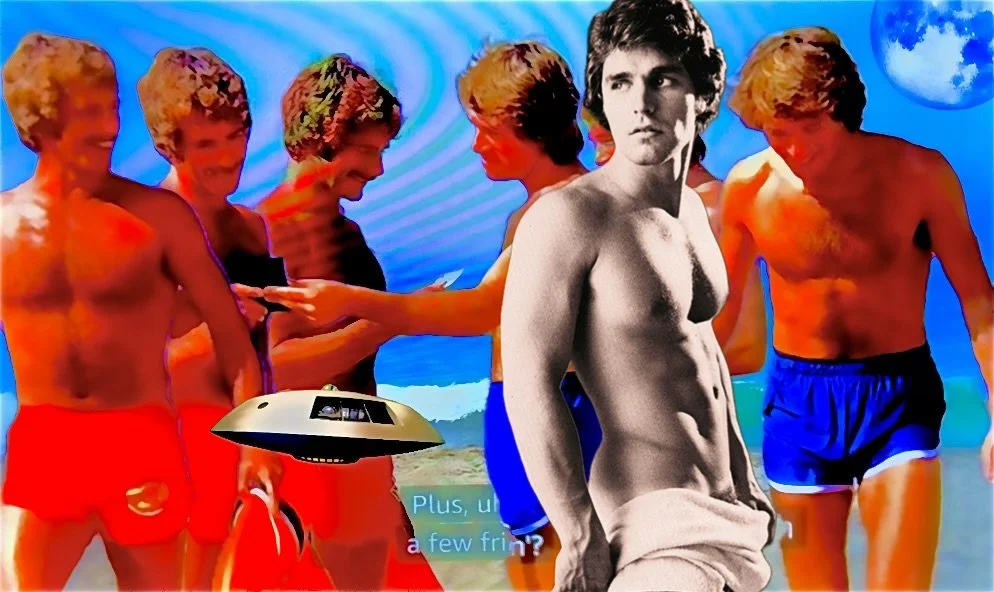
Sam Elliott and George Payne are two leading men and stars of the 1970s. Side by side, they are hard to tell apart. Which man is more masculine? Which is more rugged? Which one belongs to Hollywood, and which to gay film? Both are equally rugged and equally masculine, and neither looks like the lesser version of the other. That is the point of these eight collages.
In the 1970s, two films are made. One is about a man watched on a beach. The other is about a man watched in a subway. The first is Lifeguard (1976), starring Elliott. The second is The Back Row (1973), starring Payne. In each film, the subject is the man's body.
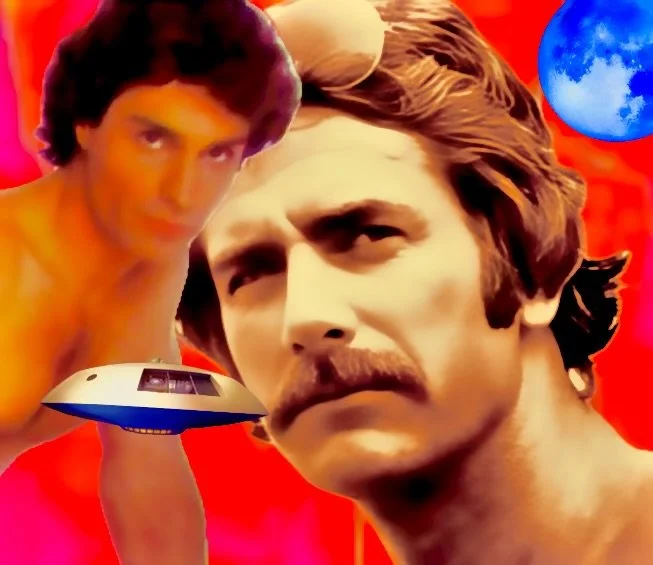
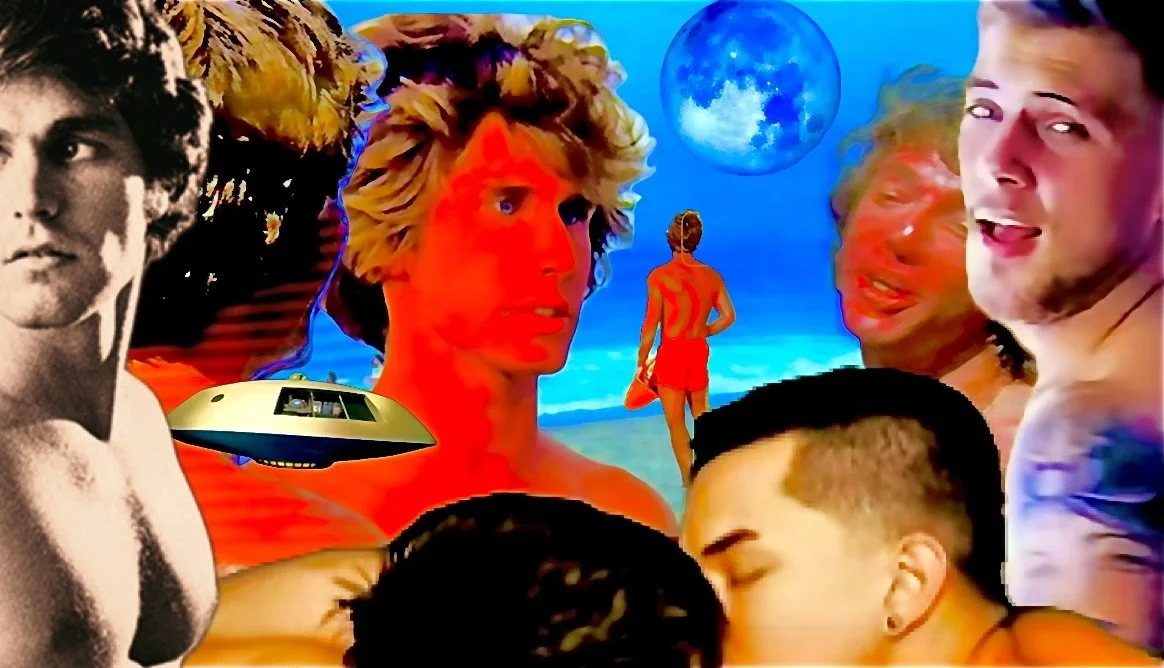
Both have thick hair, a mustache or beard, broad shoulders, a full chest, and a steady, unsmiling gaze. This is the archetypal masculine male of the decade. Each is offered as a male odalisque, an ideal of masculine beauty posed to be looked at. Each is an object of desire twice over: for the audience, and for the characters on screen.
Elliott plays Rick Carlson, a Southern California lifeguard. He spends much of the film shirtless in red trunks on the lifeguard tower.
Payne plays The Kid from Montana, a young cowboy just off the bus in New York, in an explicit takeoff on Midnight Cowboy.
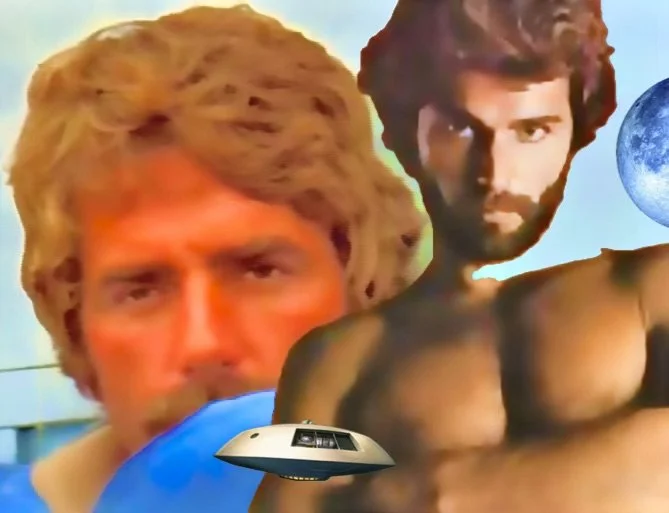
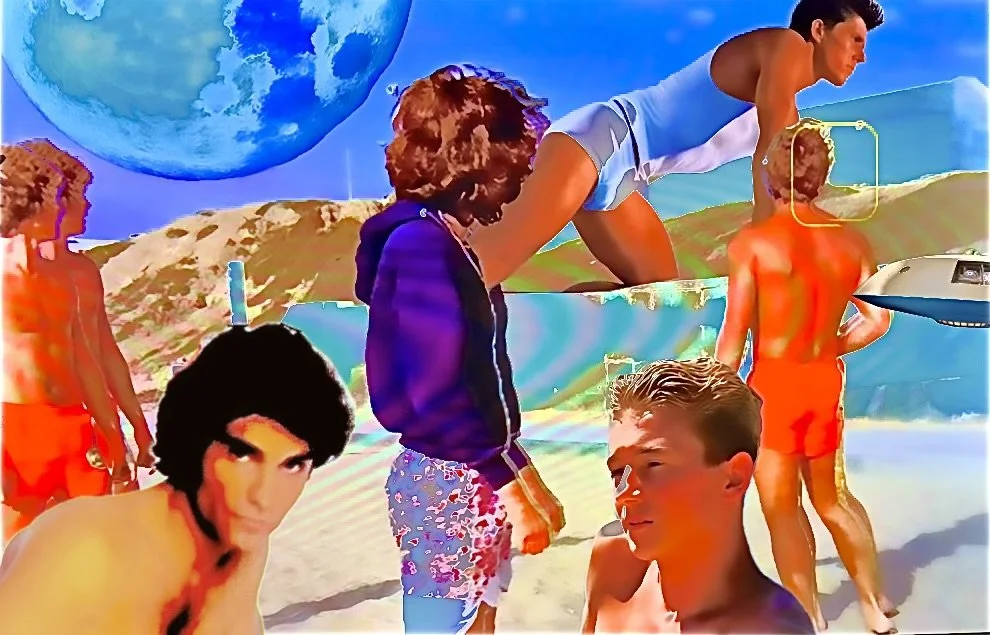
In both films, the actors project the same attitude: ease, confidence, and an open awareness and enjoyment of being watched. The difference is who is watching. Elliott is aimed at women. Payne is aimed at gay men.
The first collage sets the premise. Elliott is in the foreground, with sunglasses pushed up on his head, and Payne stands behind him, bearded and bare-chested. The two faces turn the same direction with the same stare they are two halves of a whole.

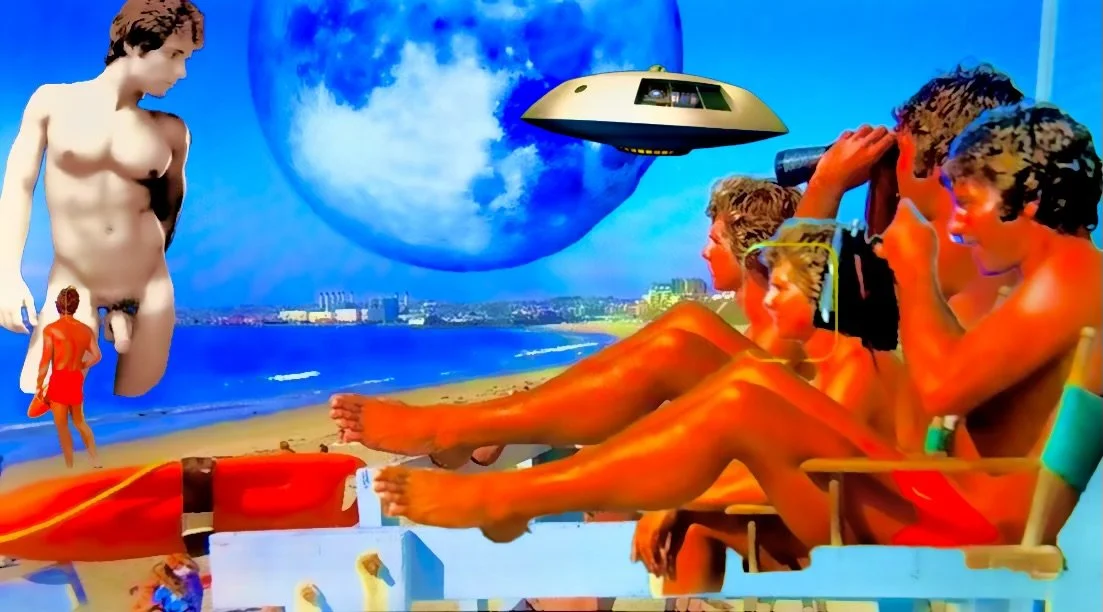
In the films, each man is watched. In these collages, the two men are now watching each other.