Time Upon Time Zones
“Forever separated, forever alone.”
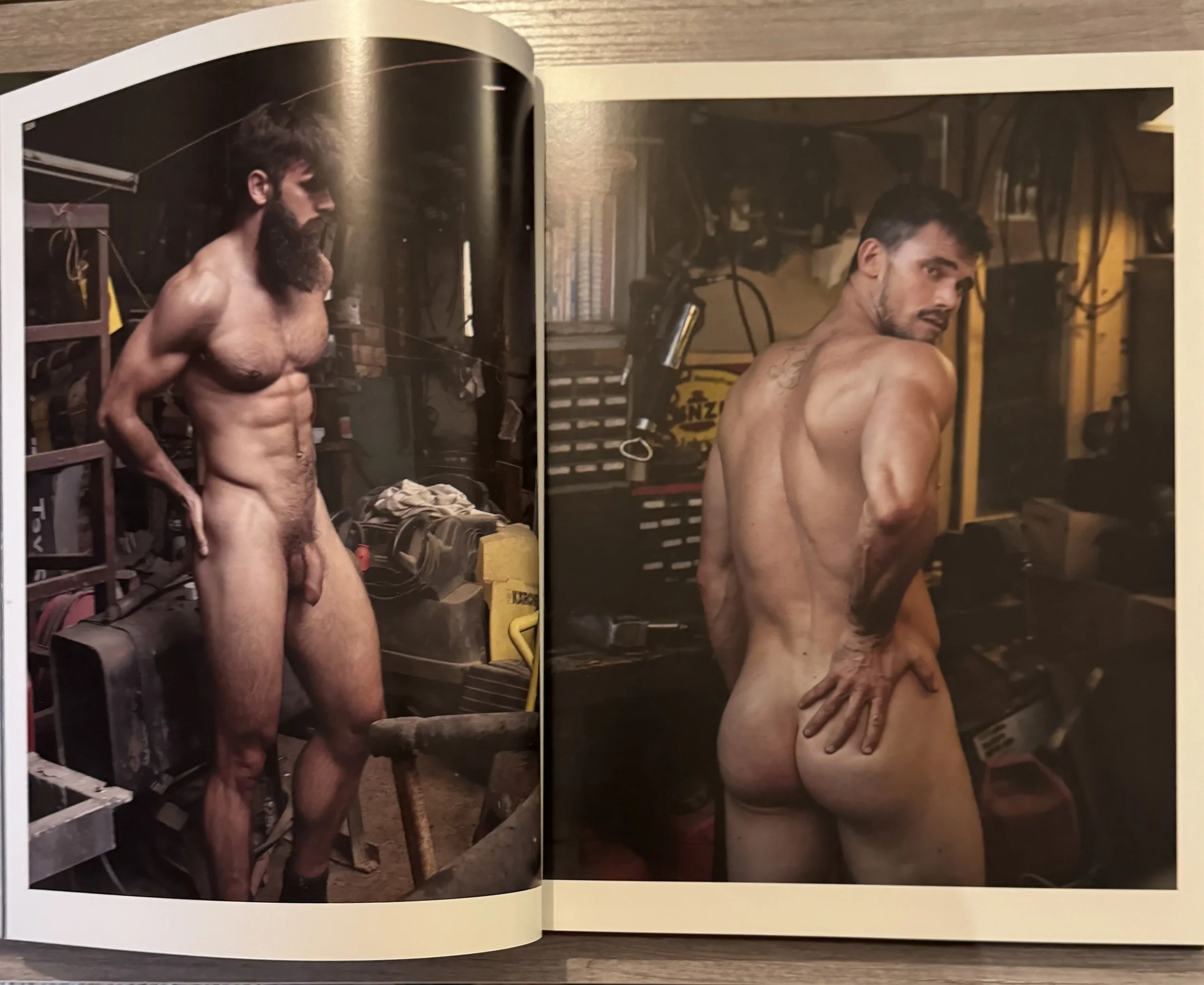
The first timezone this collage crosses is the picture book — that familiar architecture of gay representation where two men are photographed separately, then paired across a spread, held together only by proximity and layout. They share a page. They never share a frame. The spine runs down the middle like a border nobody asked for, and the two men on either side of it are, as Behan puts it, forever separated, forever alone.
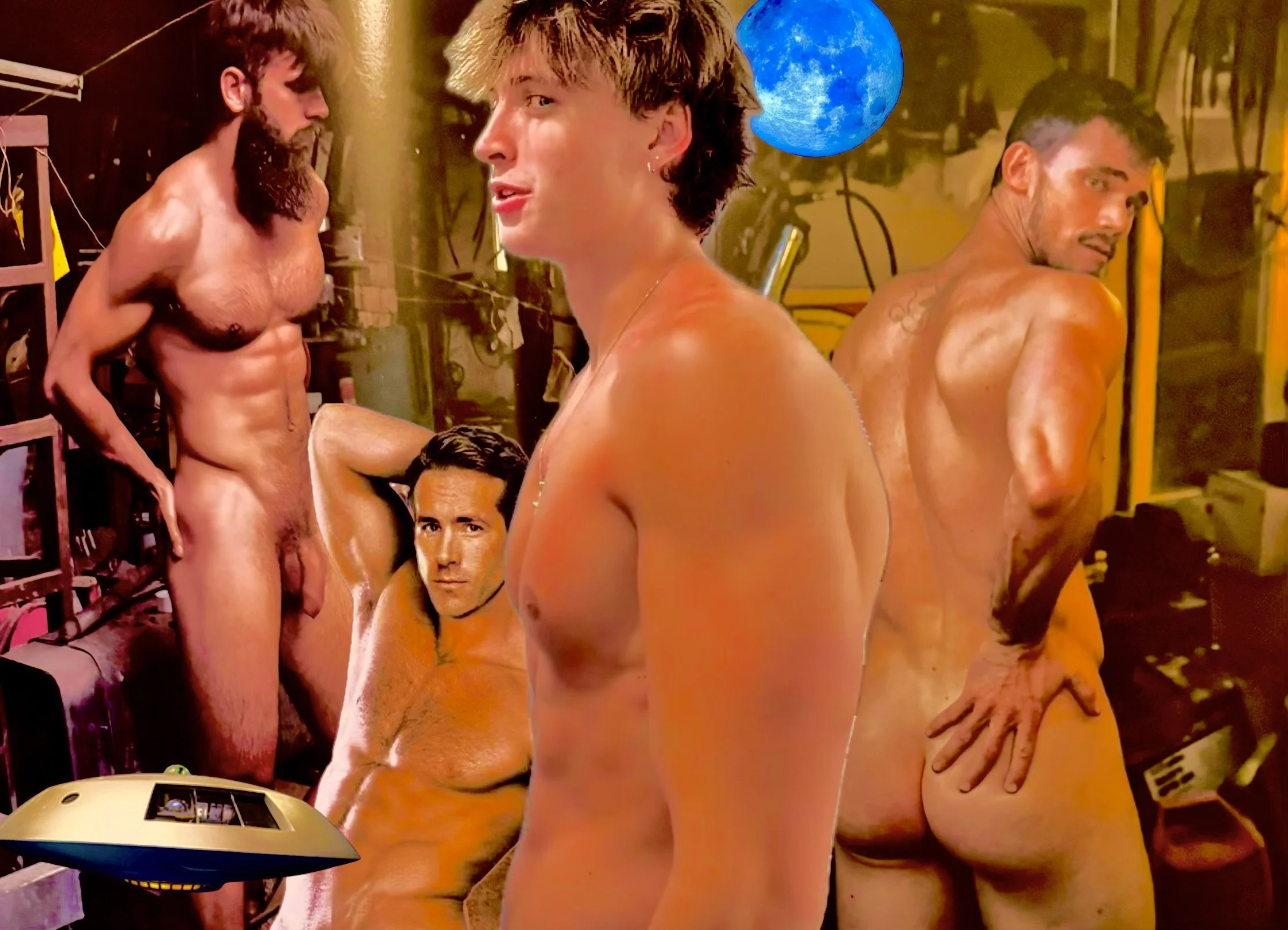
The Subdivision refuses the spine. It takes the separation the picture book enforces and undoes it — populating the space between the two men with others, closing the gap that publishing convention insisted on keeping open. No one is paired-but-distant here. They occupy the same garage, the same light, the same body of collaged time.
The second timezone belongs to persona rather than person. Deadpool’s pansexuality wasn’t incidental — his director said so on record, and Reynolds himself pushed to have it quoted. Off-screen the bit continues: a Family Guy cameo built around fixating on another man, a running habit of on-camera kisses with men from Andrew Garfield to Conan O’Brien, the joke always hovering at the same close distance without ever quite landing anywhere. The Subdivision isn’t interested in what any of this says about the man. It’s interested in what the performance says about the culture — that even a straight man’s brand can be built, in part, on flirting with gay legibility, because the flirtation itself has become valuable.
Two timezones, one closet, with its’ architecture of separation, corrected, and the culture’s ongoing flirtation with the thing it claims not to be.
— Behan