Somebody’s curb pull becomes somebody’s centerpiece. The transaction is that old and that simple.
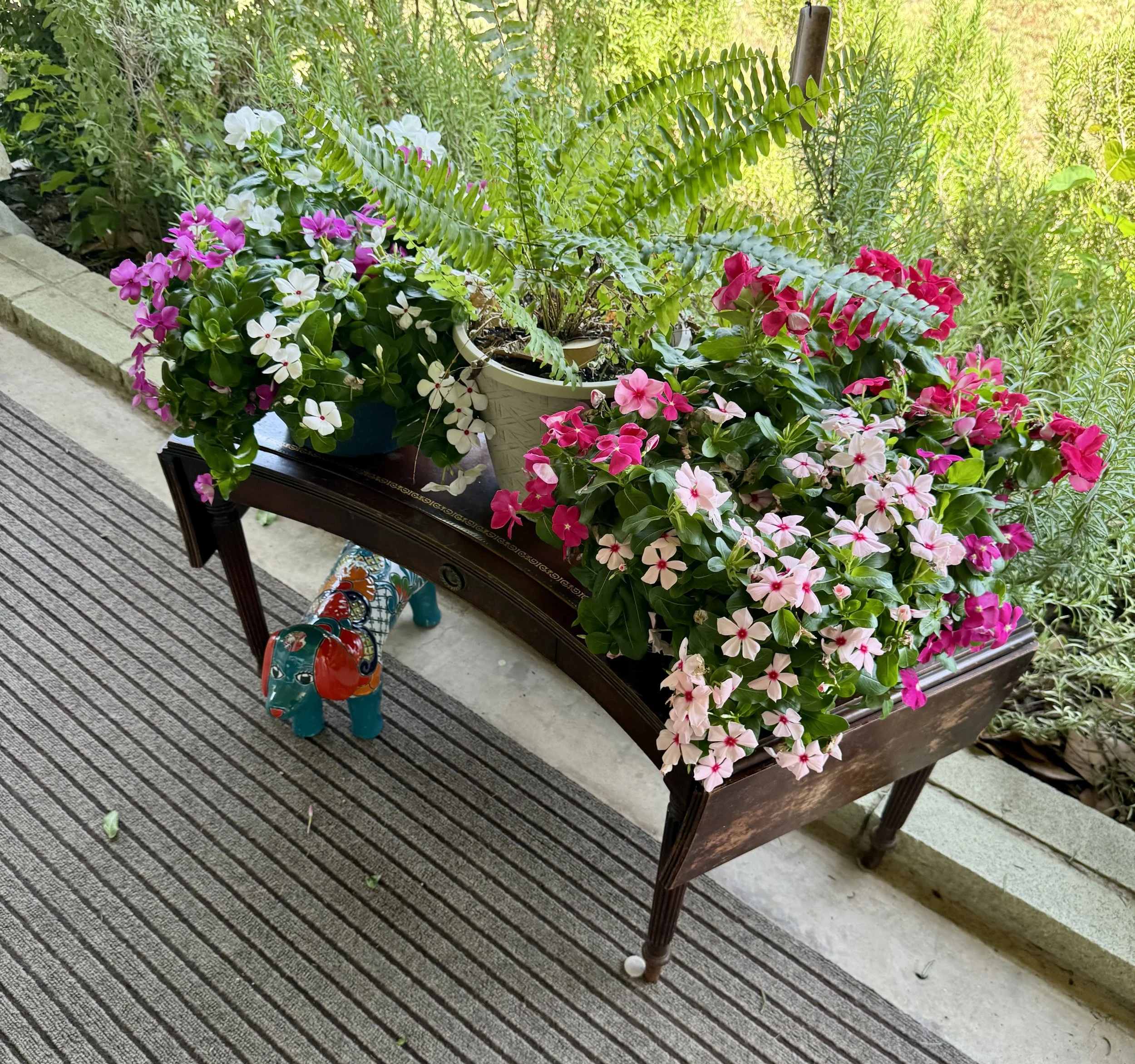
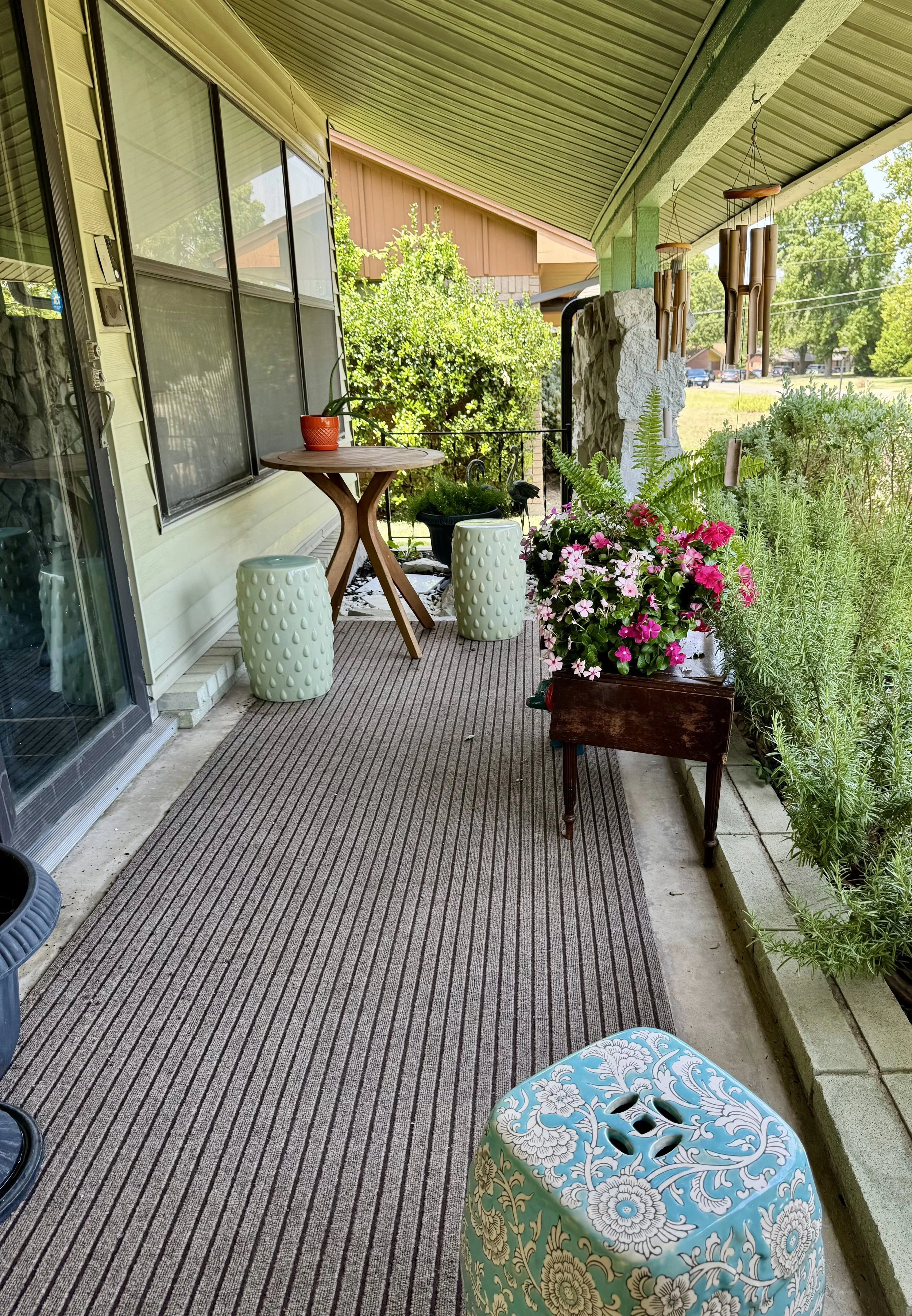
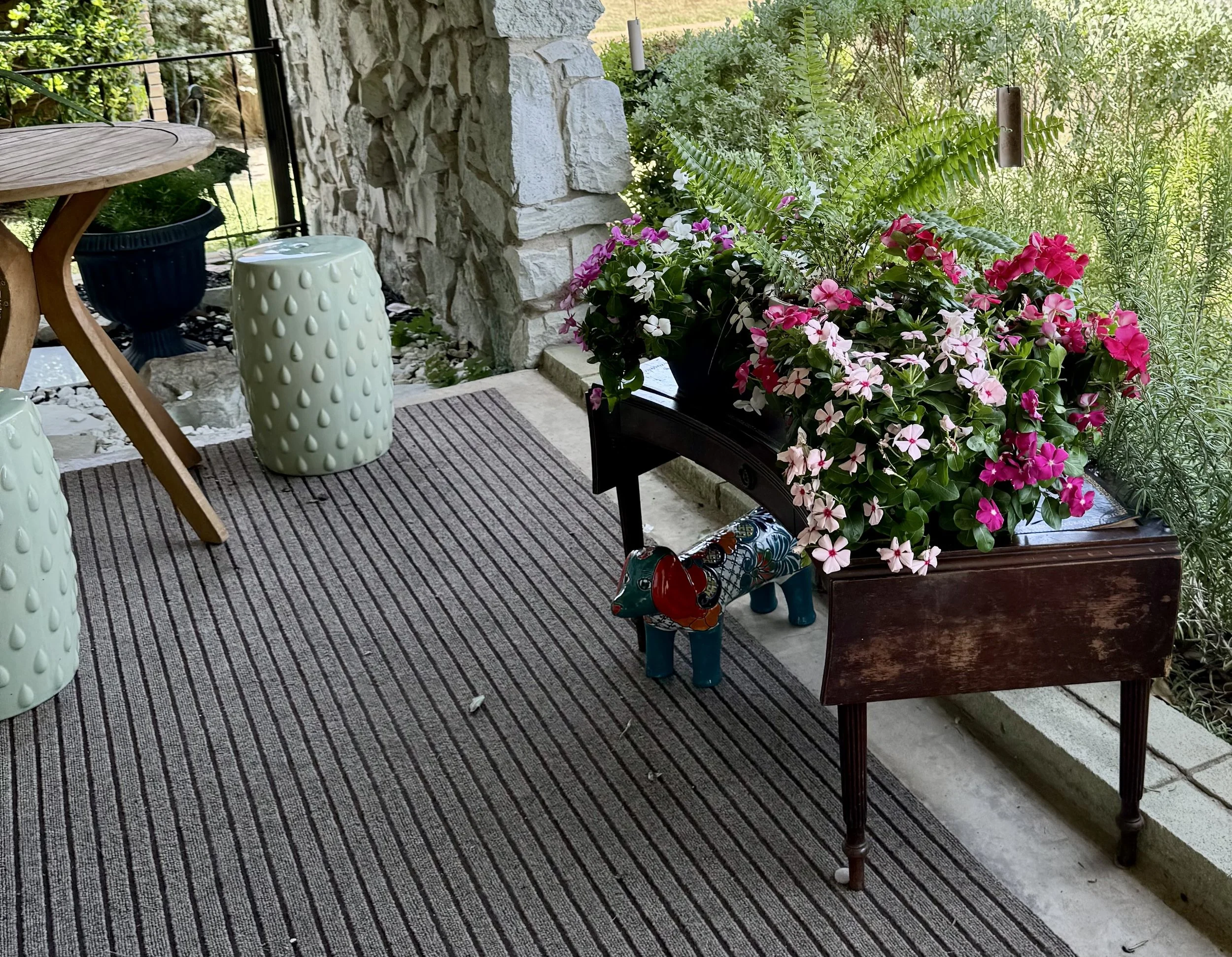
This curved mahogany piece — reeded legs, brass casters, a shallow well built for something other than flowers — sits at the curb one week and holds court on the covered porch the next. No sanding, no stripping, no new finish. Just water, soil, and vinca spilling over the rail where a drawer or a tray used to sit. The wood keeps its scars. The shape does the rest of the work.
Furniture like this gets discarded for reasons that have nothing to do with its bones. A stain, a wobble, a style out of fashion in a particular decade. The frame outlives all of it. Set among ferns and impatiens, the piece stops being furniture in the conventional sense and becomes structure — something the plants grow into rather than sit on top of.
The instinct isn’t rare right now. Furniture repair and reupholstery is a market measured in billions, growing on the strength of people choosing restoration over replacement. Antique furniture restoration in particular is having a moment, driven by collectors and casual owners alike who want the object to keep going rather than start over. None of that is new information to anyone who has ever hauled something home from the curb. It just means the instinct now has a market size attached to it.
The dog underneath is Talavera — tin-glazed earthenware out of Puebla, hand-painted in the cobalt and ochre the tradition has carried since Spanish potters and local craft merged four centuries ago. The table above it used to be someone’s problem. Now it’s holding pink.
— Behan
Sources: Furniture Repair Service Market Size, Share & Forecast (Verified Market Research); Key Trends in the Antique Furniture Restoration Service Market (STATS N DATA); Furniture Repair & Reupholstery in the US, IBISWorld