Buster Crabbe had it all: Olympic gold-medal swimmer, matinee idol, straight, with a wife and three kids, living the technicolor dream in sunny Hollywood.
But what it had been different? What if Buster had been gay, and, miraculously, it was ok to be gay in 1930’s America? What would life had been like for him?
In this alternate 1930s — this imagined timeline, Hollywood in the golden age didn’t just tolerate a gay leading man. It fell head over heels for one.
A Paradise for an Olympic Champion
If the culture had simply let him be, Buster’s life would’ve been a dream.
• Body Culture — No hiding behind “athlete” as a cover story. He was proud of the body that won him gold, and nobody batted an eye.
• Poolside Parties — His Hollywood Hills house became legendary for pool parties that ran till sunrise, guest list a who’s-who of the era’s brightest names.
• Fashion Freedom — Skin-tight swimwear, open collars, tailored linen suits — he wore what looked good, and the papers loved him for it.
• Public Romance — He walked every premiere red carpet arm in arm with whoever he was seeing, flashbulbs popping like it was the most natural thing in the world.
The Ultimate Eligible Bachelor
Buster wasn’t just accepted — he was the catch of the decade.
• Social King — The most sought-after bachelor in a town built on sought-after bachelors.
• Famous Peer Circle — He ran with the era’s other openly gay icons, no whispers, no code words needed.
• No Fake Marriages — The studio never once floated a sham engagement to “clean up his image,” because there was nothing to clean up.
• Fan Adoration — Millions of fans — of every stripe — idolized him precisely as he was.
Career Boost Instead of Ruin
The thing that could have ended a real career instead built his.
• Tailored Roles — Studios wrote parts for him, not around a secret.
• No Blackmail — The tabloid vultures who thrived on threatening actors had nothing to hold over him.
• Authentic Living — He spent his energy on stunts and scripts instead of managing a double life.
The Movies of a Gay Action Star
His filmography looked different, too — bigger, bolder, a little more romantic.
• Reimagined Sci-Fi — His signature space-serial franchise gave him a male co-lead as his romantic interest, turning ray-gun battles into genuine swoon-worthy adventure.
• The “Beefcake” Hero — Directors leaned into it. Lingering shots of Buster emerging from the surf sold tickets to everybody, no apologies.
• Co-Star Dynamic — Instead of the damsel-in-distress formula, his pictures gave audiences a hero who rescued — and fell for — his equally dashing male co-star.
• Subverting Genre — Even his westerns got the treatment: two ranch hands, one shared horizon, and audiences ate it up.
How the Culture Around Him Shifted
Buster wouldn’t have just lived in this world — he helped shape it.
• Men’s Fashion Revolution — Suddenly every young man in America wanted to dress like him: colorful, close-cut, a little daring.
• Redefining Masculinity — “Man’s man” got a lot bigger as a category. Turns out you could win Olympic gold, punch out movie villains, and be openly gay — who knew.
• Open Nightlife — L.A. and New York sprouted upscale, legal gay clubs and resorts, A-listers included, no back doors required.
• Media Representation — Life and Look ran glossy spreads of Buster and his partner at home, rivaling their friends Cary and Randolph, treated with the same warm, glamorous coverage as any other Hollywood couple.
Of course we know none of this happened, and if Buster had been gay, he would have kept it a secret, and married his wife, had his children, and lived a lie his entire life. Because that was what was only available to men, gay, bi, or straight, in 1930’s America.
Because gay men weren’t free to be gay, straight men weren’t free to be straight either — not really. Everyone performed the one script allowed. It’s just for some it was an easier part to play. But everyone played. That’s the real cost of the closet: not just the lies it forced some men to tell, but the freedom it never let anyone experience.
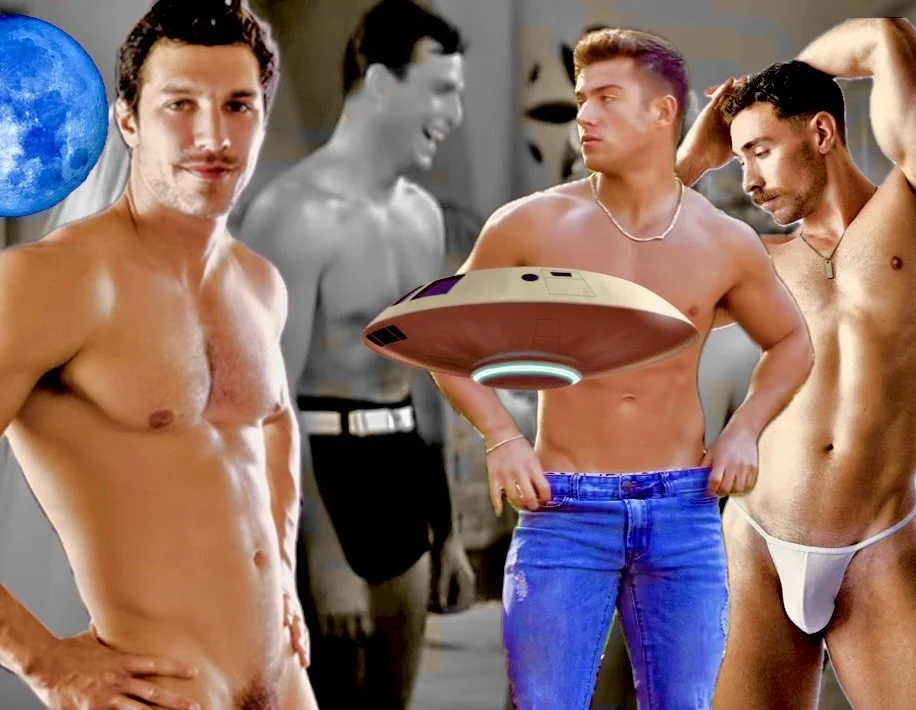
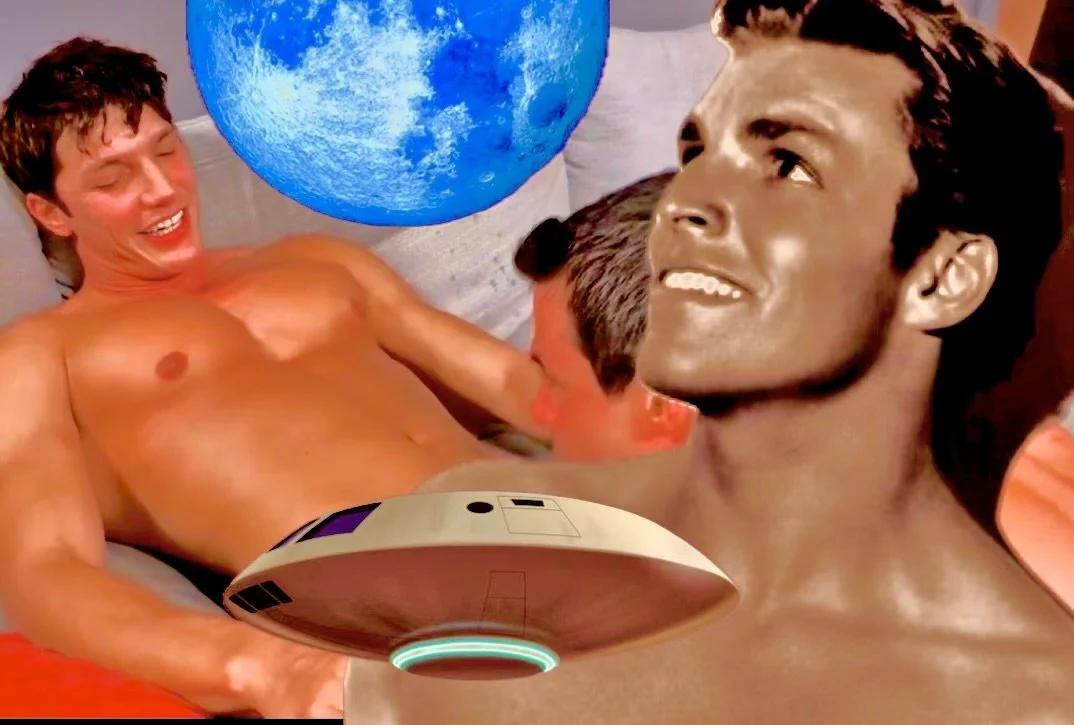
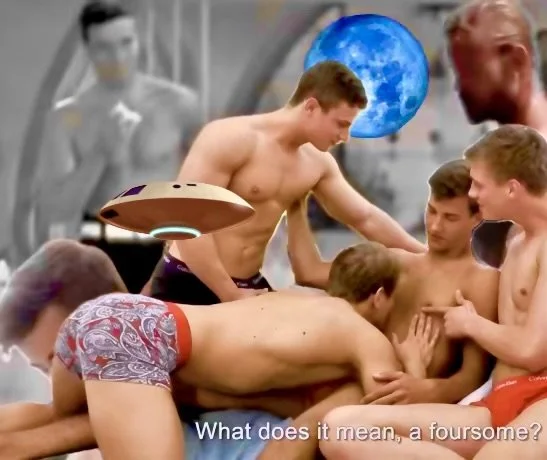
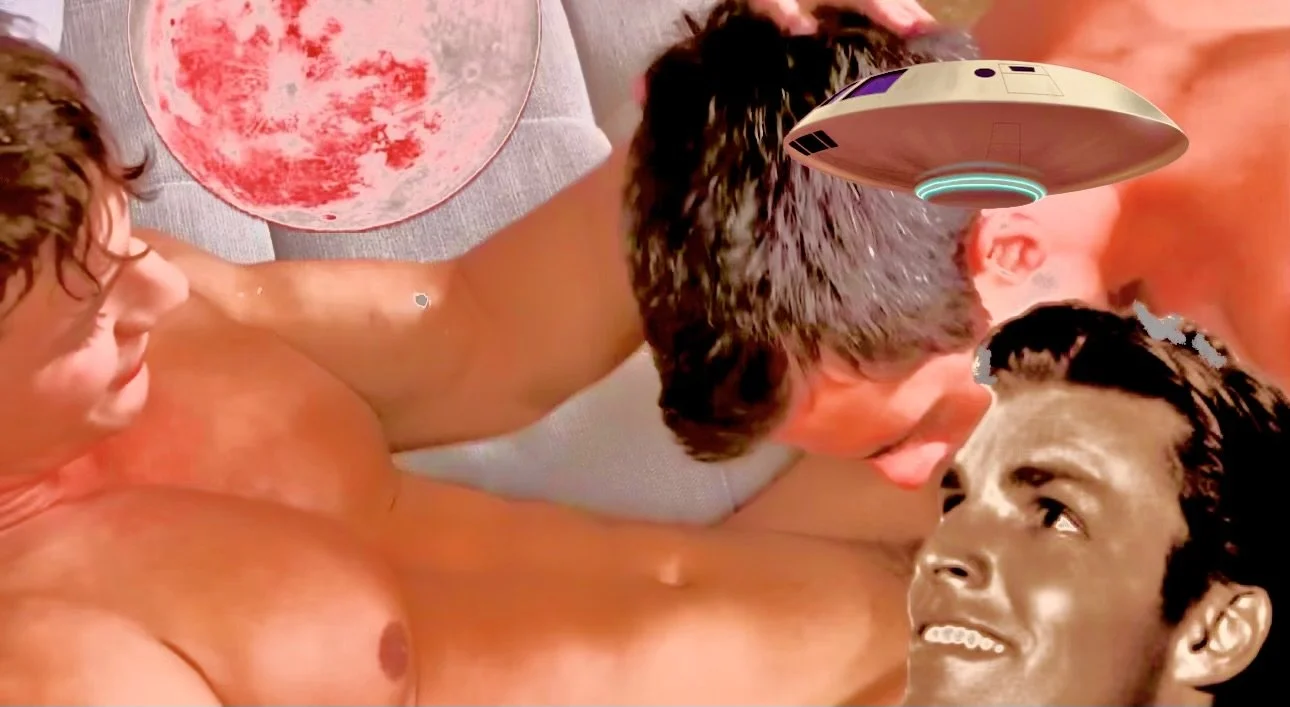
So for a moment, these collages reimagine a film Buster made, and instead of chasing the girl, he’s chasing the guy. Sure looks happy to me.