Les Valeurs Personnelles et la Table à Manger (Personal Values and the Dining Table)
There’s a quiet contest that’s been playing out in American homes since the 1950s: the TV tray versus the dining room table.
The TV tray stand introduced something new. Before it, eating with the family meant sitting together at a shared table. The TV tray offered another option: the same room, the same show on the same screen, each person on their own small surface instead of one shared one. It continued with cable, VHS, and now streaming, all giving people more reasons to eat wherever the screen is — tray or lap or coffee table. As part of the dynamic of a living culture, the last forty years have seen a remarkable change, with the table no longer being the only place dinner happens.
Keeping the Nook
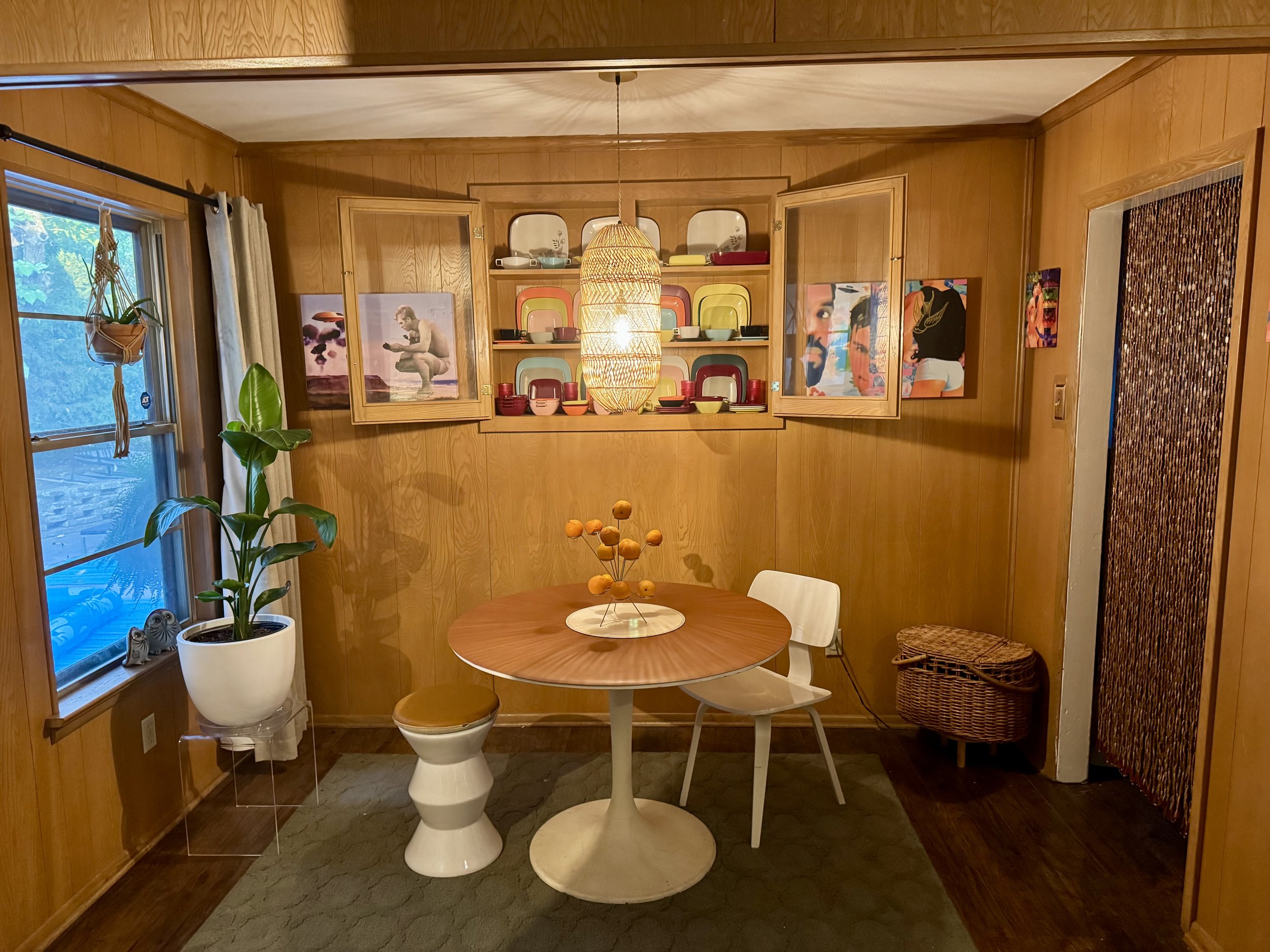
My 1962 ranch rambler on the sunny southern side of Dallas, Texas, is a lot like houses from that era. It came with two distinct eating spaces: a formal dining room up front, and a breakfast nook off the kitchen.
There’s a real renovation trend right now of absorbing the breakfast nook into the kitchen itself — knocking it out for more cabinetry, a baking zone, even a small island. I thought about doing exactly that. But I’ve committed to keeping this nook as a nook, original to the mid-century design of the house, rather than turning it into an extension of the kitchen.
What I let go of instead was the formal dining room. Between two separate dining spaces, I didn’t need both, so the formal dining room became a casual lounge, and the breakfast nook stayed the breakfast nook. To me, that’s the room with the real job to do — the small, human-scaled space that’s perfect for a cozy cup of coffee in the morning, the kind of table that shows up as a central gathering point in classic sitcoms, whether it’s the kitchen table on The Golden Girls or the breakfast nook on Leave It to Beaver. Real estate opinions on breakfast nooks are pretty mixed — some buyers love the coziness and built-in storage, others would rather have the open counter space or an island — but for me, the nook won.
The Cabinet That Changes With the Seasons
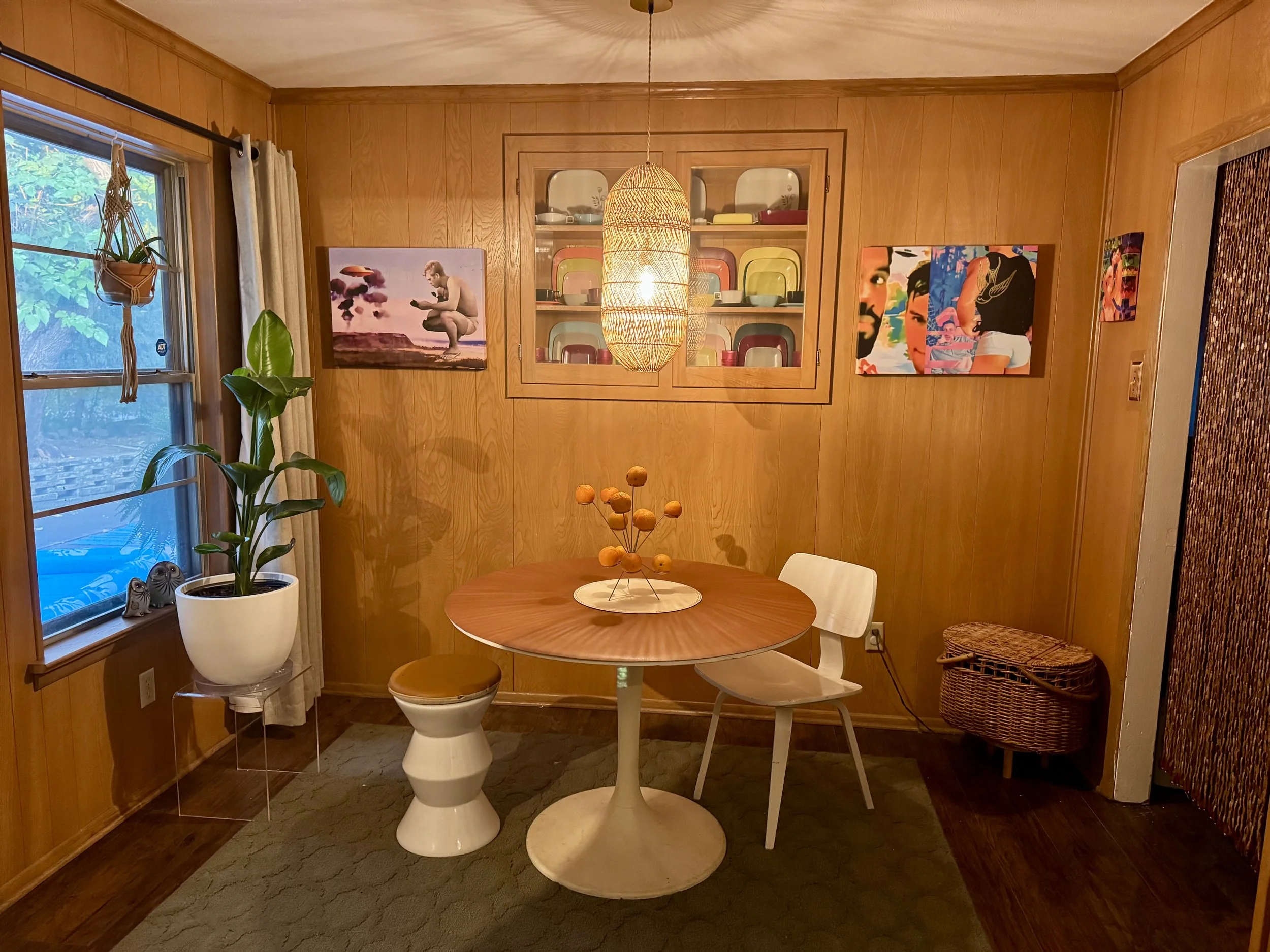
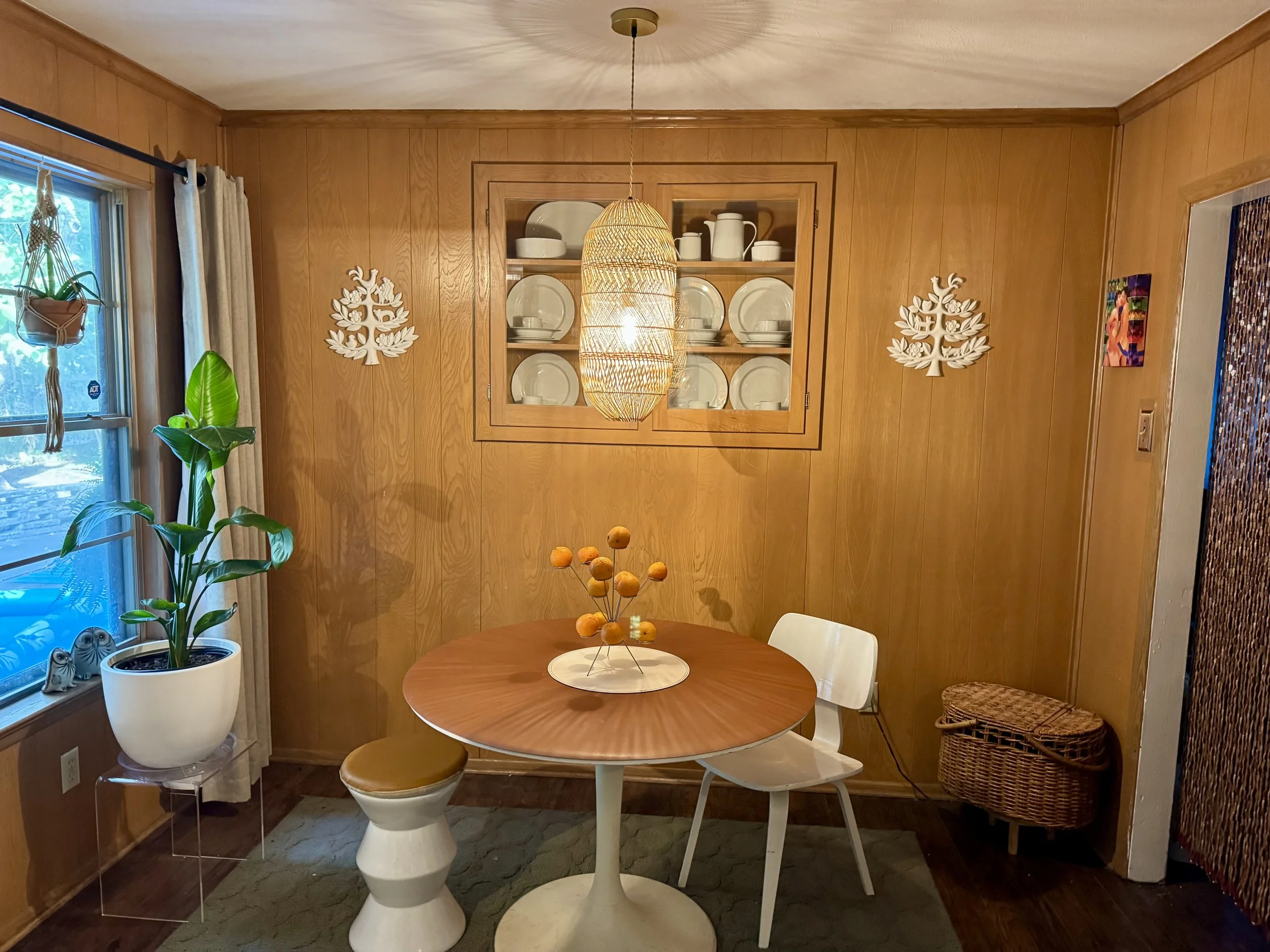
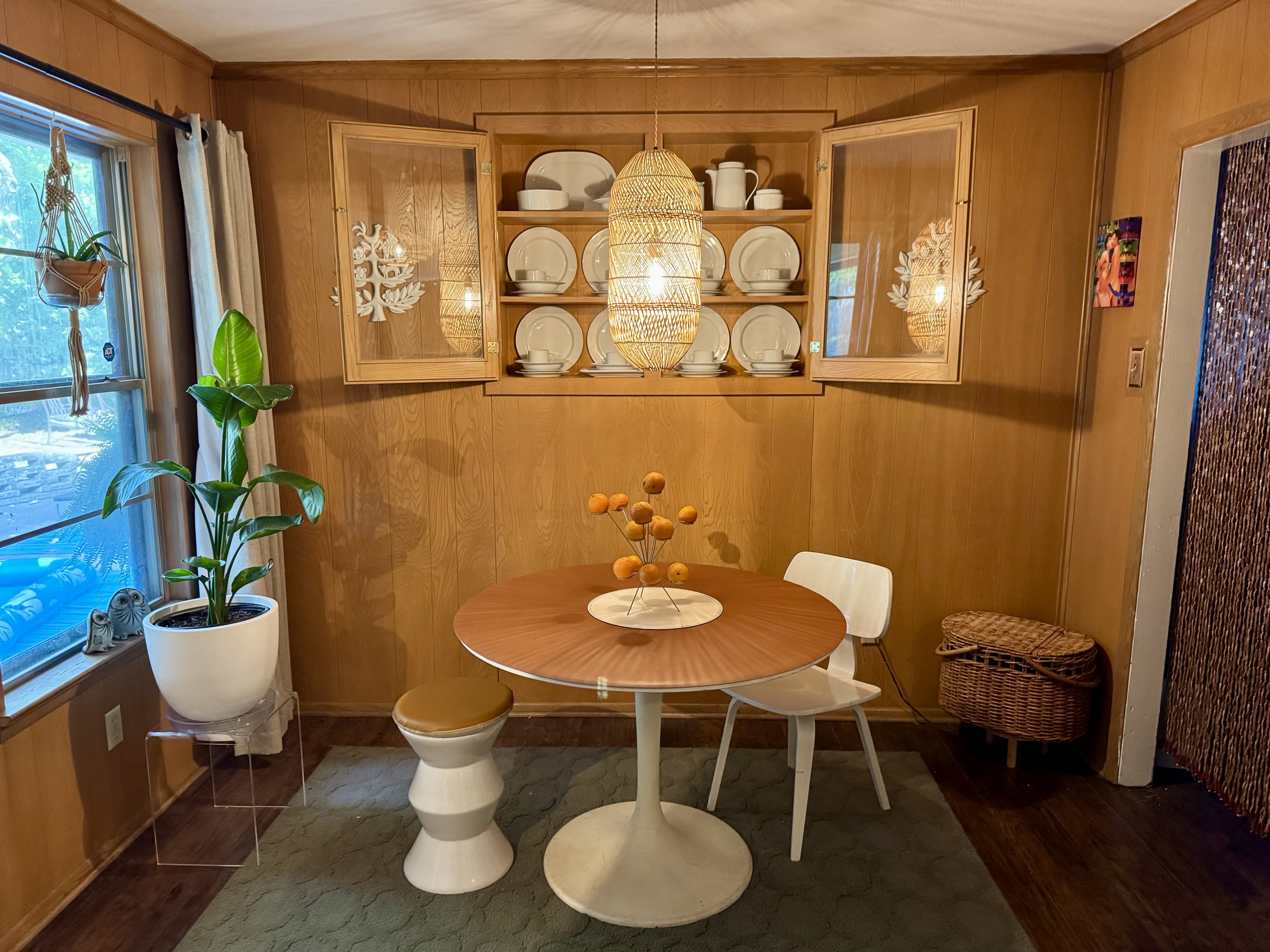
The feature that makes this room work for me is the built-in china cabinet, original to the house. Instead of settling on one look, I treat it as a rotating display and swap between two dinnerware collections about every six months.
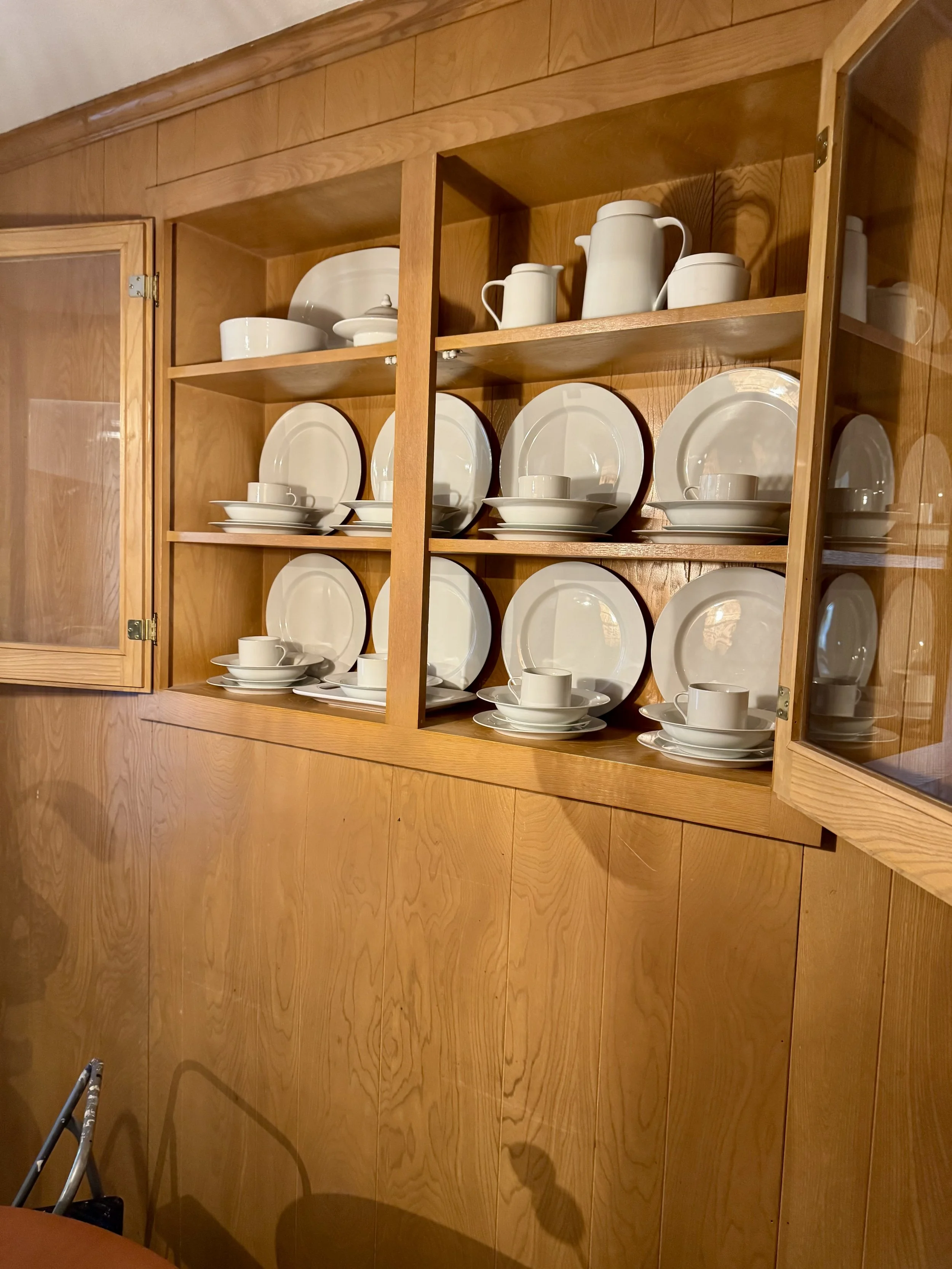
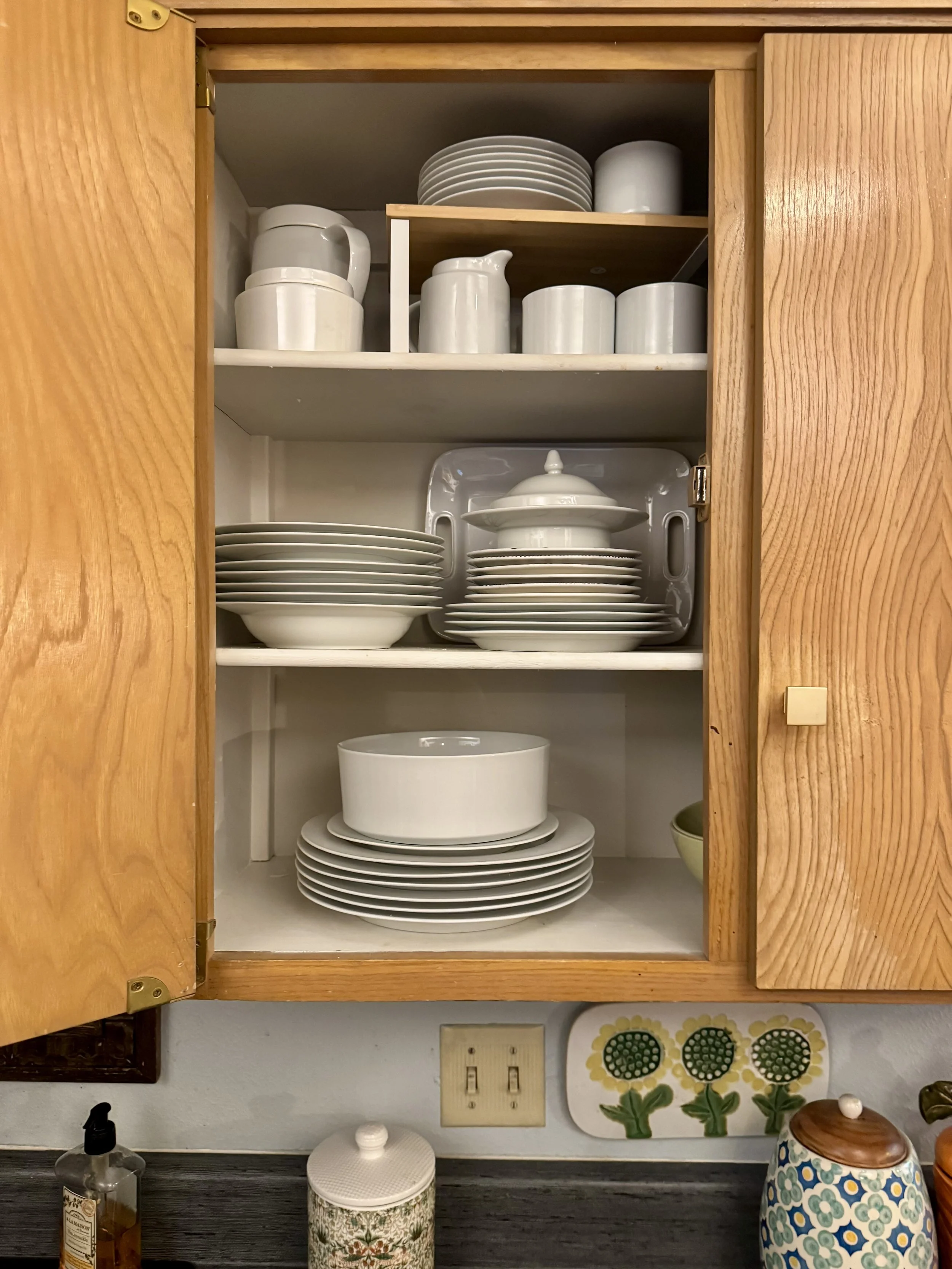
With fall coming, I have placed the Tienshan Prelude on display — an all-white, untrimmed porcelain pattern with a clean, pared-back look that leans into the stripped-down side of mid-century modernism.
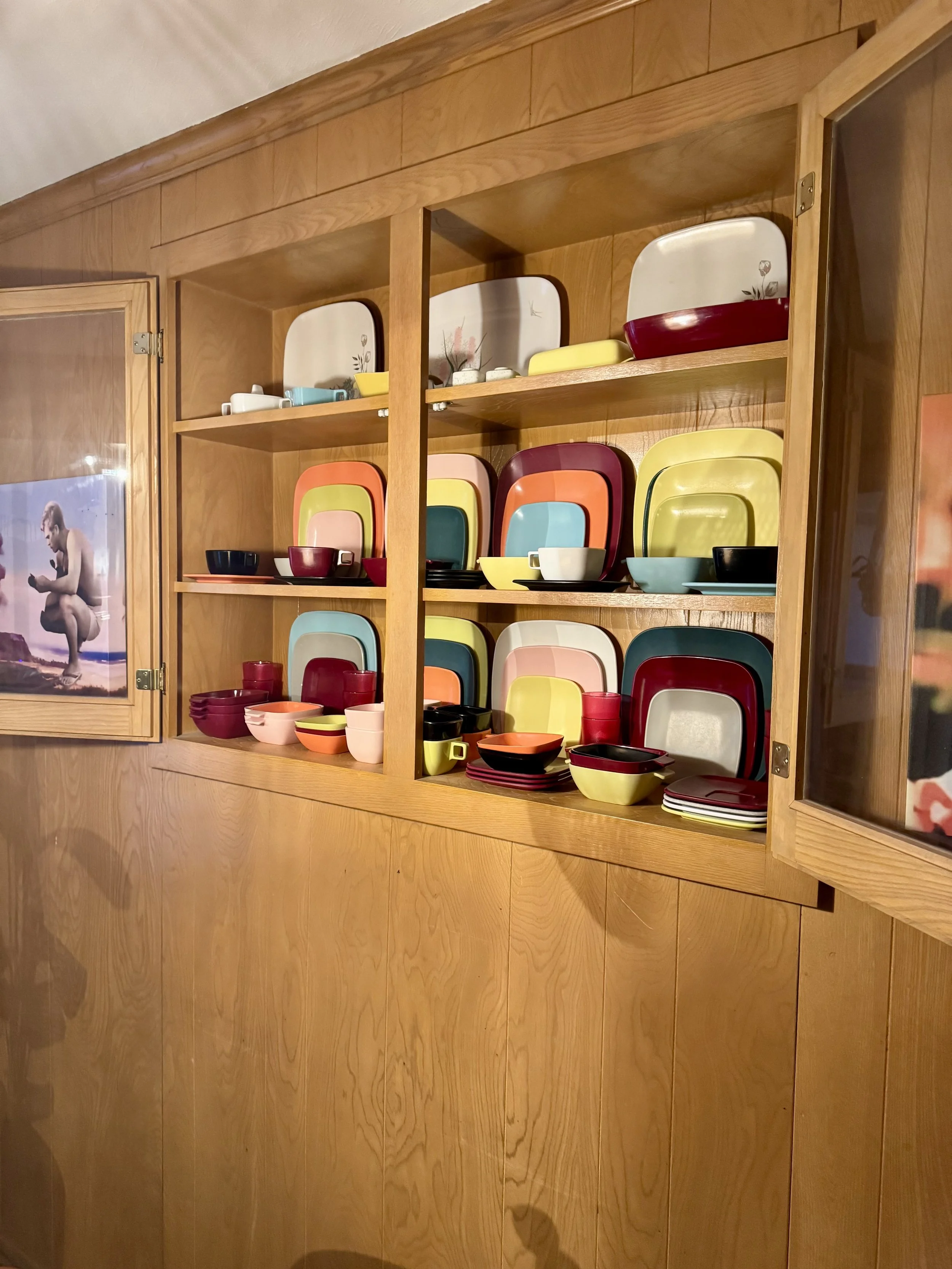
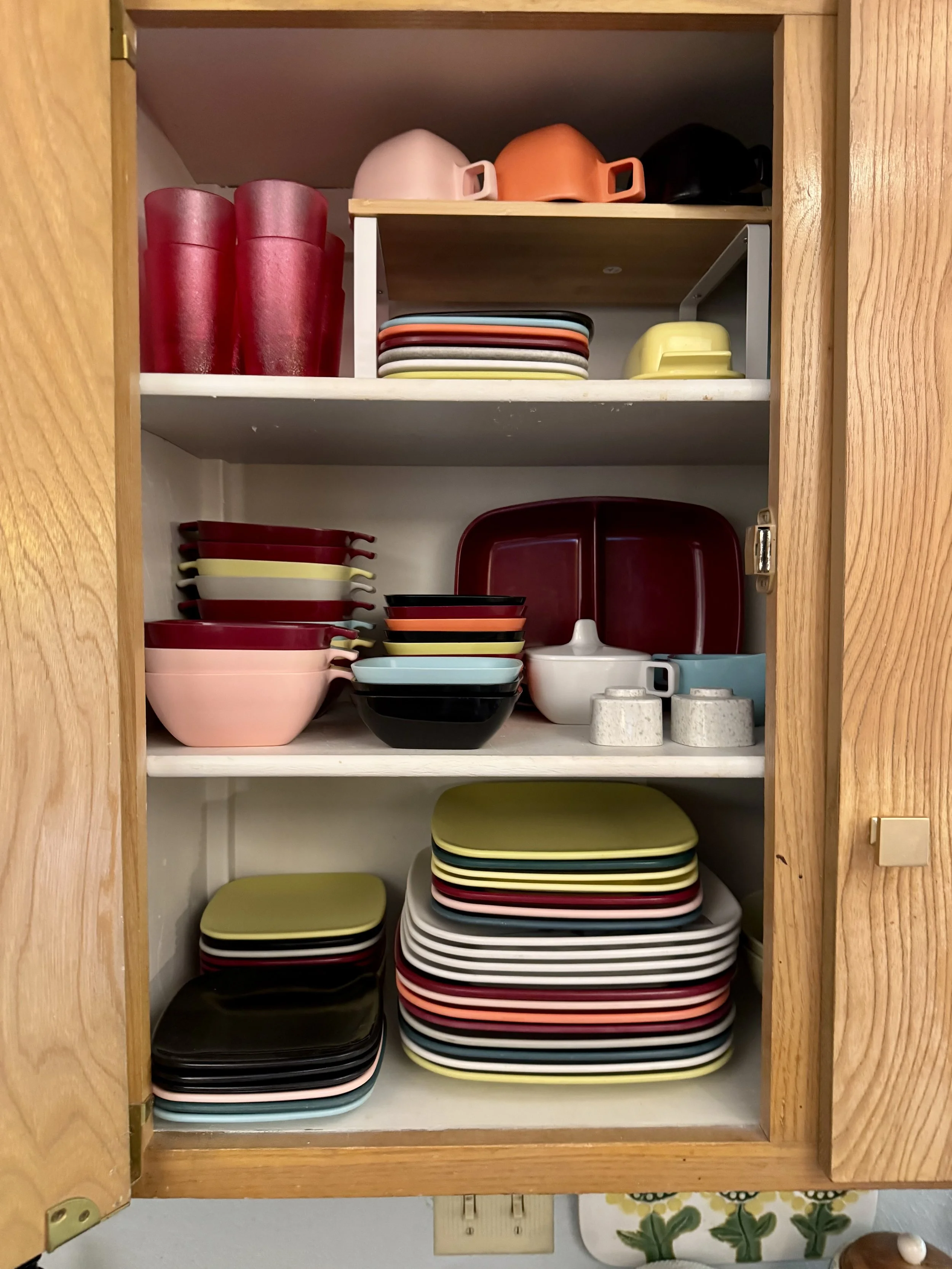
My Brookpark melamine collection, designed by Joan Luntz for the International Molding Company starting around 1950, is now in the kitchen cabinets for daily use. Luntz was one of the few women designing for the plastics industry at the time, and her Brookpark line stood out for its confident use of square forms when almost everything else on the market was round or oval. Her work went on to earn real design recognition, including from the Museum of Modern Art, and it’s now considered a meaningful chapter in the history of American melamine dinnerware.
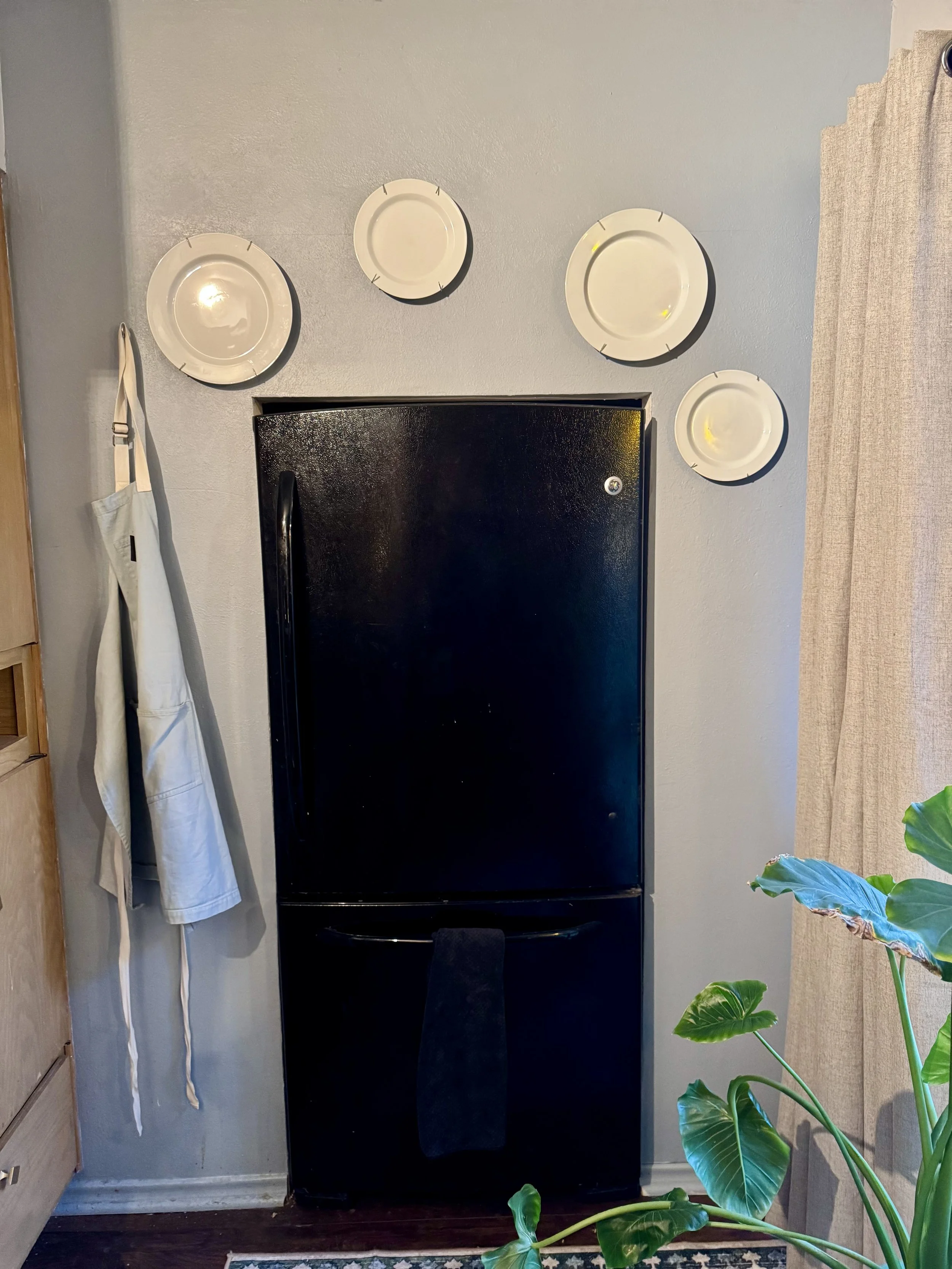
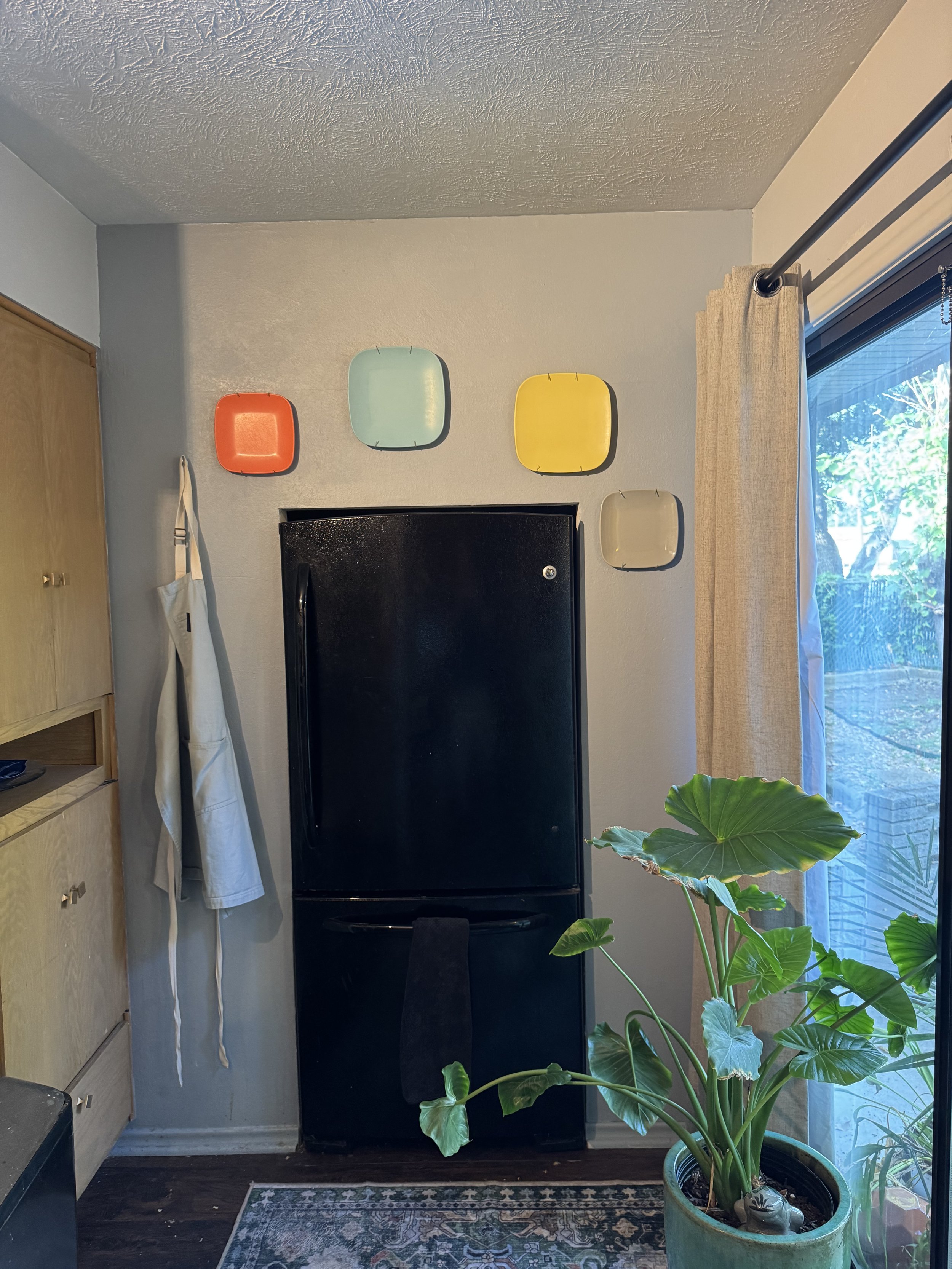
Twice a year, the two collections trade places — one moves into the glass-front display cabinet, the other into everyday storage — along with a rotation of the artwork on either side of the cabinet and a smaller decorative dishware display I keep above the refrigerator.
Why Collect the Whole Line
For some, the question might be: why does a single gay man need two complete dishware collections? Well, any well-equipped home has both casual and formal dining options, so it’s really a matter of the nature of the home itself. Also, you never know who’s going to show up, and it’s always good to be prepared.
But finally, and this is what matters most to me as an artist, it’s about seeing the complete vision of the designer — how they addressed the salt and pepper shaker, how they handled the salad plate versus the soup bowl versus the cereal bowl versus the dinner plate. Seeing the full expression of a design helps you understand not just the designer, but the era they worked in.
That’s the appeal for me — not owning a few nice pieces from each pattern, but assembling the whole line as completely as I can: the teapot, the sugar and creamer, the bowls, the mugs, the salt and pepper shakers, whatever that pattern originally offered. It’s about honoring the full design intention behind each collection, not just a curated fragment of it.
My hope is that someday each one lands with someone who wants a complete set of their own — one more way of keeping this design history in circulation instead of letting it sit in storage.
Setting the Tableau
Beyond the cabinet, the room itself is deliberately staged. The seating is an Eames chair paired with a white garden stool, pulled up to an IKEA tulip table — all white, all clean lines. Wicker shows up twice, in quiet conversation with itself: the woven pendant light overhead, and a woven basket to the right of the table. On the left, living plants are the one unstyled, organic element in the room — proof of life against all that white and wicker. And at the center of the table sits a modern, almost sculptural take on the traditional fruit bowl, standing in for the bowl of fruit you’d expect on a breakfast table without actually looking like one.
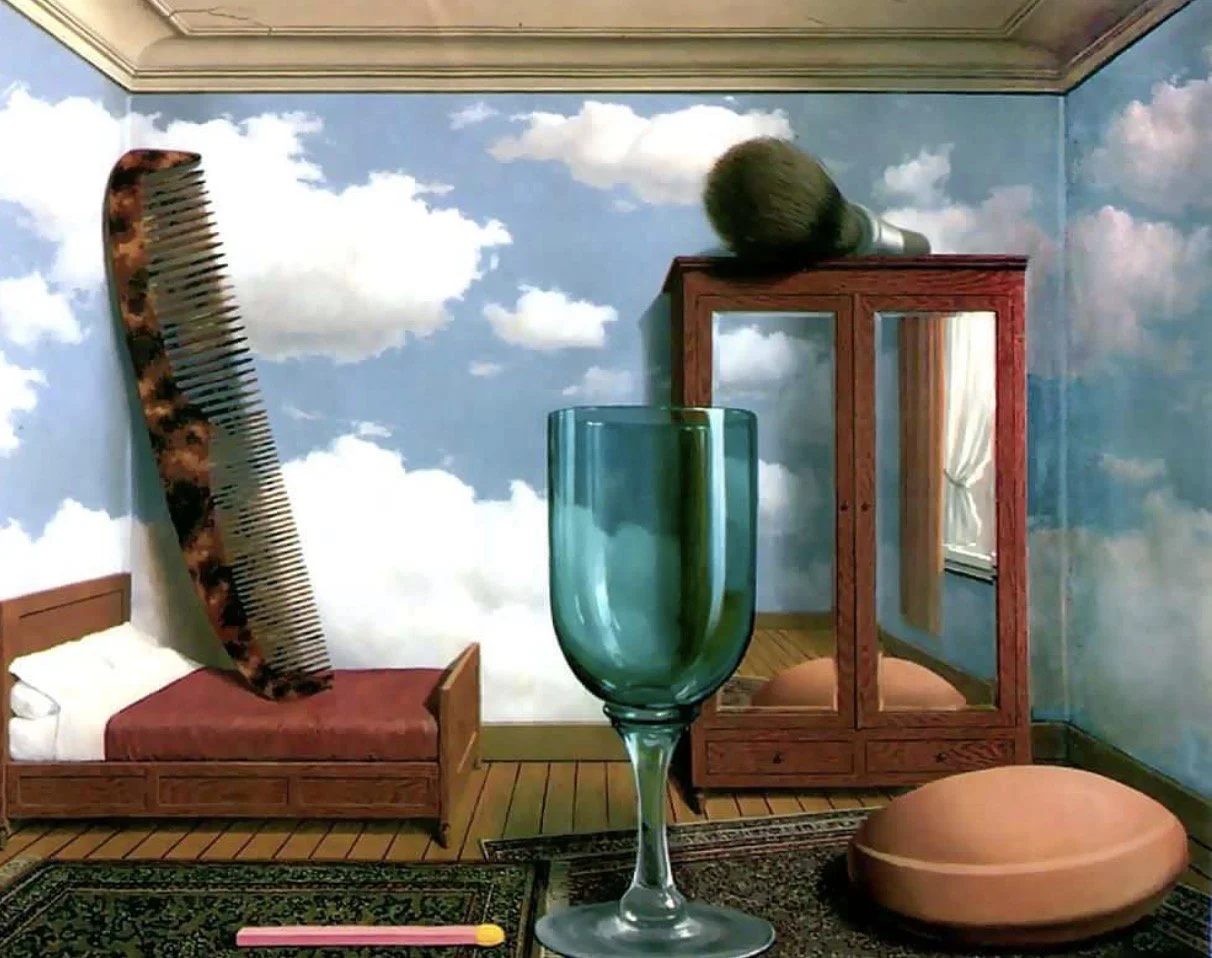
I can’t set up a room like this without thinking of René Magritte’s 1952 painting Personal Values (Les Valeurs personnelles). It’s a bedroom with the walls papered in blue sky and clouds, where a handful of ordinary objects — a comb, a shaving brush, a wine glass, a bar of soap — are blown wildly out of scale, dwarfing the actual furniture around them. I love that painting — it’s such a wonderful play on scale — but what really draws me to it isn’t the surrealism so much as the staging: a small room where every object has been placed with intention, so the whole thing reads as one scene rather than a collection of furniture.
That’s the instinct I was chasing here. The Eames chair, the garden stool, the tulip table, the wicker pendant and basket, the plants, the fruit bowl — none of it is incidental. Every object in this nook is doing double duty as furniture and as part of a small, deliberate scene. That’s what sets the tone for the room, and honestly, for how I think about the rest of the house.